
BOGOTA, Colombia — The conflict in Iran has revealed a critical weakness in the world’s economy: our reliance extends beyond oil, gas and coal for energy to include petrochemicals that form the foundation of everything from agriculture to plastic goods.
While energy markets experience significant disruptions, the conflict demonstrates how fossil fuels reach far beyond transportation and power generation. In the immediate term, this widespread dependency will drive up costs for countless products, while the long-term environmental impact from petrochemicals will worsen climate change.
A two-week ceasefire announced Tuesday evening offers hope that both the conflict and energy market disruptions may ease. However, regardless of when the war concludes, environmental advocates and energy specialists view this crisis as clear evidence that fundamental changes are needed.
“We cannot continue relying on fossil fuels neither for energy nor for material,” said Delphine Lévi Alvarès, global petrochemicals campaign manager at the Center for International Environmental Law. “We cannot continue relying on fossil fuels for absolutely everything around us.”
Petrochemicals will take center stage at discussions in Santa Marta, a coastal city in northern Colombia, where government representatives will convene April 24-29 for an international summit on moving away from fossil fuels. Specialists anticipate conversations will focus on demand reduction since this sector represents a major source of future fossil fuel consumption. Environmental groups have long contended that fossil fuel corporations, recognizing threats from electric vehicles and renewable technologies like solar power, view petrochemicals as a growth market for their products.
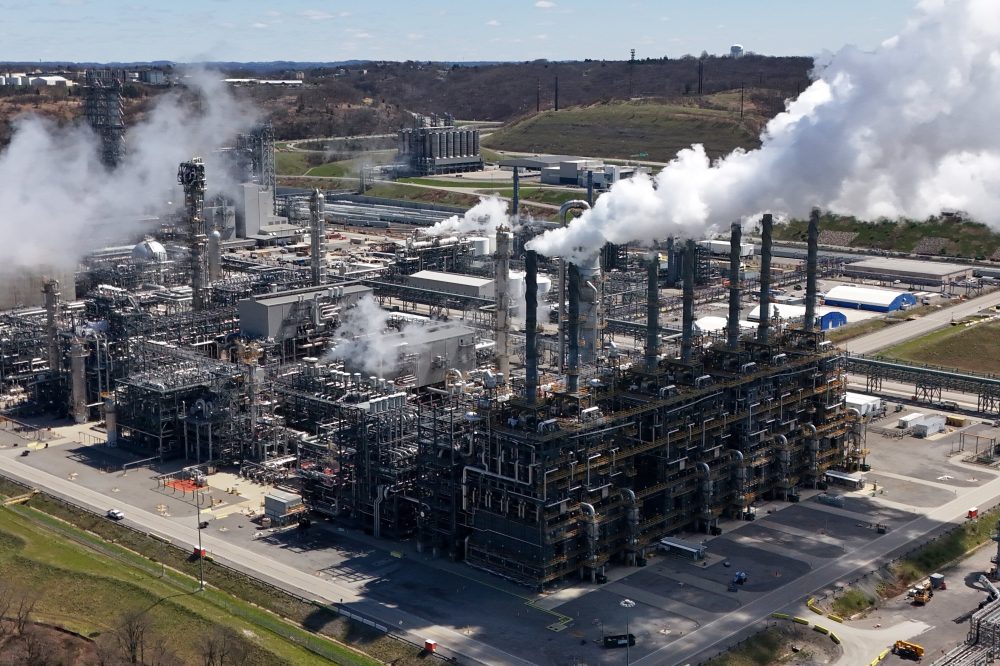
Created mainly from oil and natural gas, petrochemicals manufacture an extensive array of common items, including plastic containers, synthetic fabrics, fertilizers, paints and medical devices. Unlike fuels burned for energy, petrochemicals become materials, making their presence less obvious but equally embedded in everyday existence.
A large portion of global petrochemical production centers in the Persian Gulf area of the Middle East, including major fertilizer producers and companies making plastic-manufacturing chemicals.
Petrochemicals currently represent a substantial portion of worldwide oil consumption and continue expanding rapidly, even while some nations reduce fuel usage in electricity generation and transportation.
Fredric Bauer, a senior lecturer at Lund University in Sweden who researches industrial changes in chemicals and plastics, described the sector as increasingly vital to the fossil fuel framework.
“Petrochemicals are not just a sort of byproduct or something that happens on the side,” Bauer said.
He noted petrochemicals comprise 15%-16% of oil demand and rank among the fastest-growing applications, with new industrial plants increasingly built to maximize chemical output rather than fuel production.
For everyday consumers, this demand remains largely hidden. Petrochemicals form the basis of common products like plastics, fertilizers and synthetic materials, making their economic importance easy to miss.
Outside fuel markets, interruptions to oil and gas supplies can rapidly affect industries dependent on petrochemical components — especially agriculture, which relies heavily on fossil fuel-derived fertilizers.
Bauer explained that the Middle East serves a crucial function not only in oil and gas exports, but also in providing petrochemical raw materials and fertilizers like ammonia and urea. Any interruption during planting periods can spread throughout global food networks.
“It’s not just a disruption in the global trade of oil,” he said. “It’s also a disruption in the global trade of chemicals.”
This situation, he cautioned, can result in increased food costs and wider economic pressure.
Trisia Farrelly, an environmental anthropologist at the Cawthron Institute in New Zealand, explained that the crisis highlights how vulnerable global systems remain after decades of fossil fuel dependency.
“For me, this is like another COVID wake-up call,” she said, referencing threats to food security and livelihoods connected to rising prices and supply chain problems.
She noted that agriculture represents one of the most challenging sectors for moving away from petrochemicals, considering its dependence on fertilizers, pesticides, plastics and fuel.
Although reducing petrochemicals could substantially decrease fossil fuel dependency, specialists say no single answer exists.
Farrelly stated that cutting petrochemical usage — especially in plastics — would “certainly” reduce fossil fuel reliance. However, she warned against assuming that alternatives like plant-based plastics can simply substitute for them.
“We need to be regulating out nonessential plastics,” she said, maintaining that demand reduction is crucial alongside any material replacement.
International talks on plastic pollution in recent years have failed to achieve consensus, largely because major oil-producing nations have resisted any efforts to limit plastic production.
Plant-based plastics typically cost more to manufacture than traditional plastics made with fossil fuels and chemicals, restricting their large-scale adoption, according to the European Commission Joint Research Center, the European Union’s science and knowledge service. They currently represent approximately 0.5% of global plastic production, the center reported.
Farrelly warned that switching to alternatives without adequate protections risks generating new environmental and social issues, particularly if it causes land use changes or increases agricultural input demand.
Bauer said similar concerns apply throughout the sector. Renewable energy sources like solar, wind and geothermal can reduce production greenhouse gas emissions, but replacing fossil-based raw materials proves much more challenging. Recycling can assist, he said, but only combined with overall consumption reductions.
Lévi Alvarès explained that decreasing petrochemical dependency will also require consumption changes, suggesting steps like using fewer heavily packaged products, supporting local food networks and connecting more directly with farmers and producers who rely less on synthetic fertilizers and pesticides.
The petrochemical industry maintains that demand will likely stay strong, contending that their products are vital to modern life and the energy transition.
The American Chemistry Council, representing U.S. chemical manufacturers, told The Associated Press in written responses that petrochemicals are used in products from medical equipment and semiconductors to construction materials and packaging, and are also essential to renewable technologies including wind turbines, solar panels and electric vehicles.
The organization said companies are working to reduce emissions through efficiency improvements, recycling and new technologies, and dismissed the notion that demand must decline, describing petrochemicals as “foundational” to sectors like healthcare, food production, clean water and infrastructure.
Lévi Alvarès, the campaign manager from the Center for International Environmental Law, said petrochemicals have become so integrated into daily life that many people don’t recognize their dependence on them, but individuals and communities can start by reconsidering consumption and engaging more closely with local systems.
“It is not a choice of the consumer,” she said, acknowledging that many people are limited by available options, but can still begin examining everyday products differently.