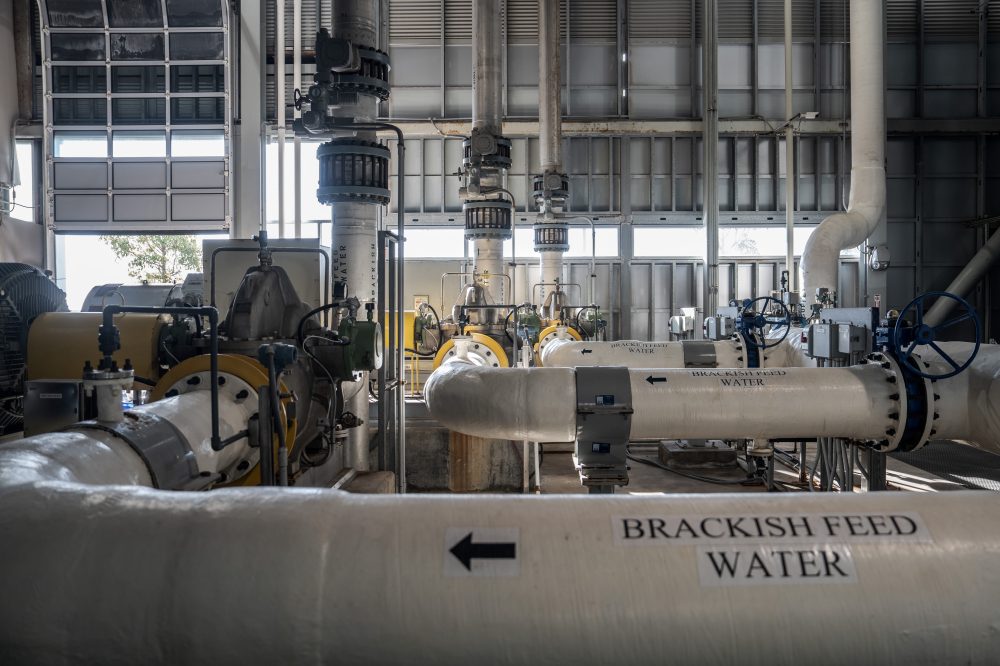

With climate change bringing more severe droughts, altered precipitation, and devastating wildfires, communities worldwide are increasingly looking to the ocean as a source of drinking water.
The technology that strips salt from ocean water provides a solution for areas where rainfall, rivers, and underground water sources cannot satisfy local needs. This water treatment method now serves hundreds of millions of people across the globe, from Middle Eastern nations to American communities, and its adoption continues expanding as freshwater shortages worsen.
The majority of contemporary facilities use a technique called reverse osmosis. Ocean water gets pushed under intense pressure through specialized membranes that permit water molecules to flow through while stopping salt and other contaminants. This creates clean water on one side and a concentrated salt mixture, called brine, on the other.
Prior to reaching these membranes, ocean water undergoes filtration to eliminate particles and microbes that might damage machinery. Following the salt removal, the clean water receives additional treatment to satisfy drinking standards, which often includes adding back essential minerals.
A previous method, thermal processing, works by heating ocean water until it turns to steam, then cooling the vapor back to liquid form while leaving salt deposits behind. Though some areas still employ this approach, it typically demands more energy.
According to a 2022 analysis by the French Institute of International Relations think tank, Middle Eastern nations including Kuwait and Oman obtain over 85% of their drinking water through salt removal technology.
The process is also common across portions of Africa and Australia, plus American regions, especially drought-affected coastal zones like California and Texas. For certain Pacific Island communities where ocean level rise has contaminated underground freshwater with salt, this technology represents an increasingly vital water source.
Over 20,000 salt removal facilities currently function around the world, with the sector growing approximately 7% each year since 2010, reports the International Desalination and Reuse Association.
The operation demands substantial energy, with global facilities generating between 500 and 850 million tons of carbon emissions each year, based on a 2025 research paper in Water Research journal. This approaches the roughly 880 million tons released by the worldwide airline industry, according to estimates from the Air Transport Action Group.
The concentrated salt waste from this process typically gets released back into oceans, where it can damage seafloor environments and coral formations by raising salt levels and introducing treatment chemicals. Additionally, water intake systems can capture and destroy fish eggs, tiny marine organisms, and other creatures that form the foundation of ocean food chains — creating losses that spread throughout ecosystems, reducing fish populations and larger marine predators that rely on them.
Several companies are operating facilities using clean energy sources, while others develop improved membrane technologies to cut energy requirements. Some are testing deep-sea operations where natural ocean pressure assists the reverse osmosis process, reducing additional energy needs.
Numerous specialists recommend prioritizing water recycling and conservation efforts first, pointing out that wastewater treatment typically requires much less energy than ocean water processing and significantly reduces harm to marine ecosystems.