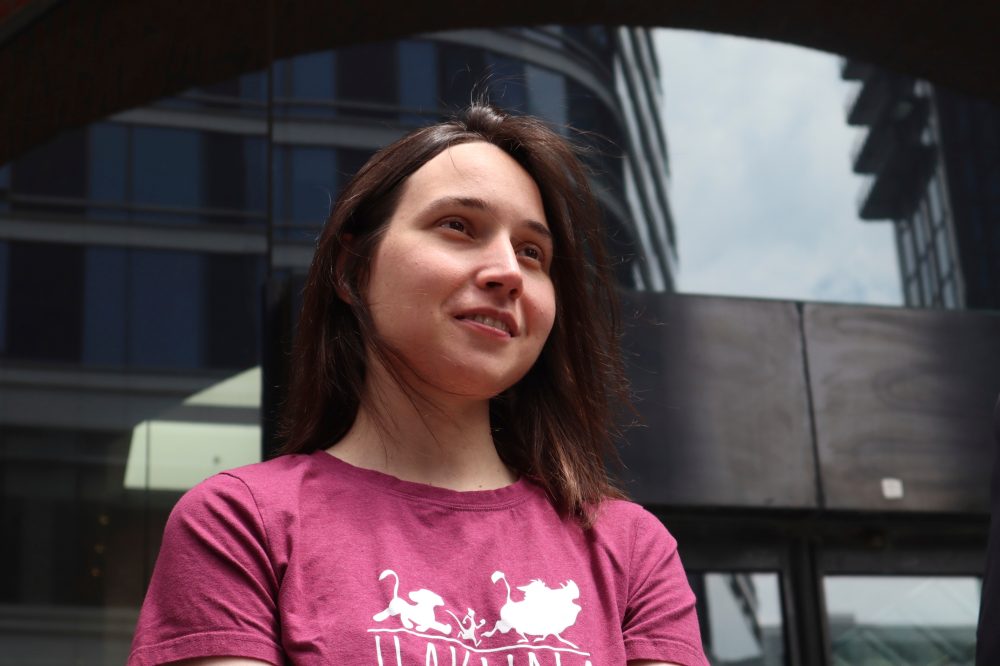

A federal judge determined Tuesday that border protection agents overstepped their authority when they revoked the visa of a Russian-born Harvard researcher who was found carrying frog embryo samples at an airport checkpoint.
U.S. District Court Judge Christina Reiss concluded that the visa cancellation of Kseniia Petrova was both arbitrary and unreasonable in her written decision. The judge noted that Customs and Border Protection agents have restricted powers to revoke visas and cannot take such action based on suspected biological sample violations.
“The undisputed facts reveal that Ms. Petrova’s visa was impermissibly canceled because of the frog embryo samples and for no other reason,” Reiss wrote.
The Department of Homeland Security, which oversees Customs and Border Protection, has not responded to requests for comment.
The incident occurred in February of last year when Petrova was returning from a French vacation. During her trip, she had visited a laboratory that specializes in creating ultra-thin sections of frog embryos and collected research samples. Border agents questioned her about these materials when she arrived at Boston Logan International Airport.
Following the questioning, officials informed Petrova that her visa would be revoked.
Immigration authorities briefly held Petrova in Vermont, where she submitted a legal request for her freedom. She was subsequently transferred to an Immigration and Customs Enforcement detention center in Louisiana.
In a previous interview with The Associated Press, Petrova explained that she was unaware the samples required declaration and had no intention of illegally bringing materials into the United States. According to her lawyer Gregory Romanovsky, Petrova returned to her Harvard research position in January after successfully petitioning the court for permission to resume her work.
Romanovsky described Tuesday’s decision as a significant step toward “correcting what should never have happened in the first place.”
Academic researchers are monitoring Petrova’s situation closely, with concerns that the outcome could affect universities’ ability to recruit and retain international scientists.