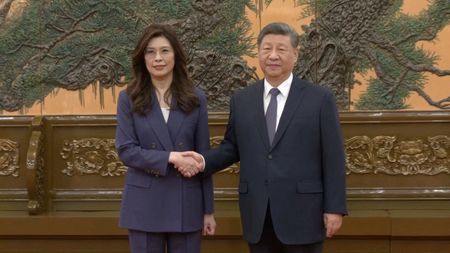
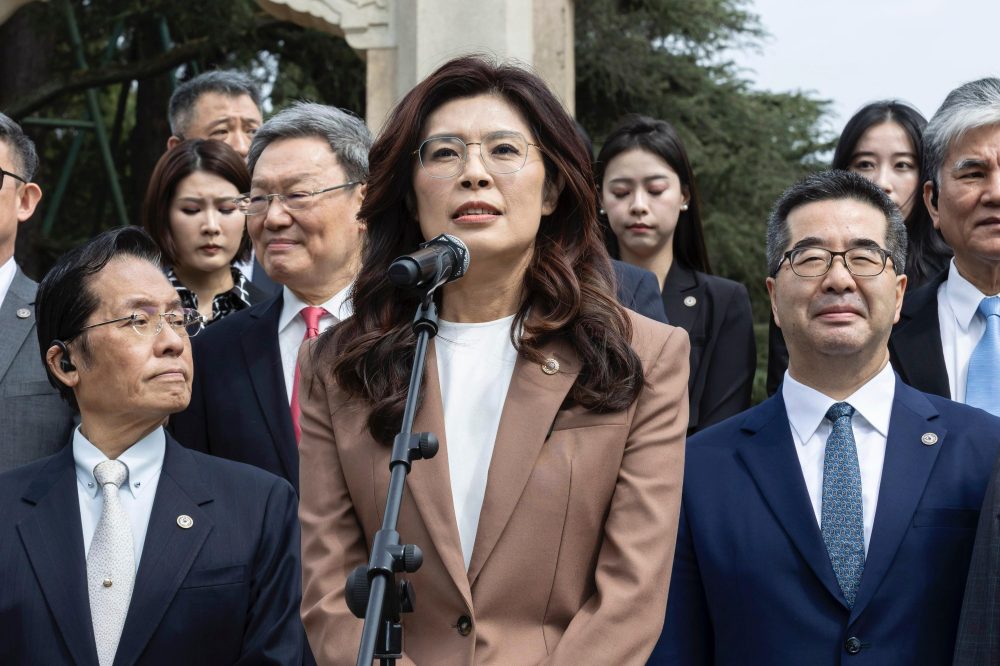
Taiwan’s defense ministry reported detecting 16 Chinese military aircraft flying near the island on Friday, coinciding with a high-level diplomatic meeting between Chinese President Xi Jinping and a prominent Taiwanese opposition figure in Beijing.
The aircraft activity occurred from mid-morning through mid-afternoon Friday, according to Taiwan’s daily military monitoring report. This timing overlapped with an 11 a.m. meeting where Xi hosted Cheng Li-wun, who leads Taiwan’s main opposition party, the Kuomintang (KMT).
During their Beijing discussion, Xi declared he “absolutely would not tolerate” Taiwan’s independence, reinforcing China’s position that the island belongs to Chinese territory. Cheng characterized her diplomatic visit as an effort to reduce regional tensions and expressed hopes for greater cooperation between the KMT and Communist Party to establish “institutionalisation” of peace in the Taiwan Strait.
A Taiwanese government official criticized the military display, calling it part of China’s standard approach. “So on one hand we see them sending out messages of peace, while on the other hand they continue to use military force to pressure Taiwan without letup,” said Shen Yu-chung, a deputy minister at Taiwan’s Mainland Affairs Council. He described military intimidation as China’s “go-to tactic” for political pressure.
KMT Vice Chairman Chang Jung-kung, speaking from Beijing, argued that meaningful dialogue with China creates “peace with dignity” rather than submission. He suggested Taiwanese citizens should choose between reconciliation and conflict, contrasting this approach with Taiwan President Lai Ching-te’s policies.
President Lai’s administration responded critically to the Xi-Cheng summit, claiming it aimed to promote the idea that “Taiwan is part of the People’s Republic of China” and advance “the annexation of Taiwan.” Presidential spokesperson Karen Kuo emphasized that “Taiwan’s future can only be decided by the Taiwanese people themselves.”
Chinese officials did not provide comment on the military aircraft deployment or the diplomatic meeting’s timing.
American intelligence sources have detected signs that China is getting ready to ship new air defense missile systems to Iran in the coming weeks, according to a CNN report published Friday evening that cited three individuals with knowledge of recent intelligence evaluations.
The report indicates that Chinese officials are working to send the weapons shipments through other nations in an effort to hide where the weapons are coming from.
Neither the U.S. State Department, the White House, nor China’s embassy in Washington provided immediate responses when Reuters reached out for comment.
According to CNN’s unnamed sources, China is preparing to send portable anti-aircraft missile systems called MANPADs, which can be fired from the shoulder.
The United States and Iran are scheduled to conduct high-level diplomatic talks on Saturday in Islamabad, Pakistan’s capital city, as they search for solutions to end their ongoing conflict that has lasted six weeks.
The aftermath of the recent war between the United States and Iran continues to create ripple effects worldwide, leaving the Middle East in turmoil and reshaping global political and economic dynamics as both nations head into weekend peace talks in Pakistan.
The conflict has disrupted regional stability, put stress on international partnerships, and triggered significant changes in global economic and military power structures that are still developing.
Iran’s religious leadership remains damaged but functional, now wielding new economic influence. Both American and Israeli leaders face upcoming elections where voters may judge them harshly for not achieving their stated military objectives. The NATO partnership faces additional strain, while Gulf Arab nations must contend with a more aggressive Iran nearby.
As diplomatic discussions prepare to begin, journalists covering the region and Washington offer their analysis of how the war continues to impact communities worldwide during this fragile ceasefire period.
Israeli Prime Minister Benjamin Netanyahu would receive an incomplete grade if his war performance were evaluated academically.
When fighting began on February 28th, Netanyahu outlined bold objectives including eliminating threats from Iran’s missile and nuclear capabilities, ending support for hostile proxy organizations, and fostering conditions for Iranian citizens to rise against their government. These ambitious targets remained unmet.
During a broadcast following the ceasefire announcement, Netanyahu admitted “we still have goals to complete.” However, he still declared “immense achievements.”
“Iran is weaker than ever, and Israel is stronger than ever. This is the bottom line of this campaign,” he stated.
With elections approaching later this year, Netanyahu must determine whether Israeli citizens share his positive evaluation.
Israeli citizens strongly backed the military action against their longtime enemy Iran, particularly during the campaign’s initial phase. However, as fighting continued, war fatigue set in as constant air-raid warnings interrupted normal routines and forced residents into protective shelters continuously.
Netanyahu now hopes upcoming ceasefire negotiations will help the United States transform military gains into lasting agreements protecting Israeli security interests. He must also maintain his working relationship with President Donald Trump following an inconclusive conflict that proved highly unpopular among Americans.
Without success in these areas, Netanyahu may face job security concerns when his war-weary country votes.
Iran, despite suffering from nationwide demonstrations in January and extensive bombing during the war, now holds a surprisingly powerful position.
Simply by threatening to deploy sea mines and potential Revolutionary Guard attacks, Iran has deterred shipping from the Strait of Hormuz, effectively closing this vital international energy transportation route.
Even conservative political factions have transformed the death of 86-year-old Supreme Leader Ayatollah Ali Khamenei into an opportunity to install his son Mojtaba as a younger, more hardline replacement.
Iranian leadership has presented their own extreme demands before the Islamabad discussions, including maintaining uranium enrichment activities in their nuclear program – one of Trump’s primary justifications for military action.
However, Iran’s military installations now lie destroyed, their missile stockpiles significantly reduced, and future citizen protests remain a constant threat. Such unrest could intensify due to massive destruction of Iran’s energy sector and attacks on steel production and other economic facilities.
Despite requesting and demanding that Iran exclude them from the conflict, Gulf Arab nations still became targets as Iran launched drone and missile attacks on airports, energy infrastructure, military installations, and civilian areas throughout the region.
Multiple countries had to shut down refineries or announce inability to meet promised oil production levels due to wartime disruption. Even with ceasefire terms in place, Iran’s new control over the Strait of Hormuz through intimidation alone prevents Gulf states from shipping energy products to international markets.
These nations don’t share identical viewpoints, ranging from Oman’s diplomatic initiatives to the United Arab Emirates condemning Iranian hostility and declaring the current situation unacceptable.
Lebanon has experienced devastating consequences from the regional conflict, and ceasefire prospects now create more uncertainty than clarity.
The United States and Israel disagree with Iran about whether their ceasefire agreement covers the ongoing war between Israel and Hezbollah in Lebanon. Iran claims it does; America and Israel maintain it doesn’t.
Meanwhile, Lebanese and Israeli representatives have agreed to begin direct discussions, which Lebanon hopes will produce a ceasefire and Israel hopes will result in Hezbollah’s disarmament. Netanyahu announced these negotiations would also address potential peace agreements between the two nations, which currently lack diplomatic relations.
While these talks represent meaningful progress, reaching agreements won’t be simple. Lebanon demands Israel halt airstrikes before negotiations begin, a condition Israel seems unlikely to accept.
Most experts believe Lebanon lacks capacity to forcibly disarm Hezbollah or enforce ceasefire agreements without Hezbollah’s cooperation.
Currently, the Israel-Hezbollah conflict that has displaced over one million people and killed nearly 1,900 individuals continues.
Trump has repeatedly challenged the 32-nation alliance.
He eliminated direct American military aid to Ukraine, threatened to seize Greenland’s Arctic territory from NATO partner Denmark, and pressured members to increase defense spending.
His disagreements with NATO partners regarding Iran now raise fresh concerns about whether this alliance, established to address post-World War II instability, can endure.
Since beginning military operations, Trump has criticized allies as “cowards,” attacked NATO as “a paper tiger,” and compared U.K. Prime Minister Keir Starmer to Neville Chamberlain, the former leader remembered for appeasing Nazi Germany.
Trump feels frustrated that member nations ignored his requests for assistance as Iran effectively blocked the Strait of Hormuz, and that Spain and France restricted American forces from using their airspace or joint military facilities for Iranian operations.
Trump describes this moment as “a mark on NATO that will never disappear.”
Trump returned to the White House promising to reduce inflation, lower prices Americans considered excessive, and create employment growth. The Iranian war has produced opposite results, increasing gasoline costs, destabilizing financial markets, and shocking the broader economy as job markets weaken and inflation rises again.
With November’s midterm elections approaching, these developments harm Republicans attempting to maintain Congressional control. Trump initially tried addressing economic concerns by visiting competitive states. However, he first dismissed affordability issues as fraudulent, then abandoned those visits entirely as war consumed his administration’s attention.
Successfully maintaining ceasefire agreements might eventually stabilize energy prices and financial markets, but reversing global economic damage may require much longer, potentially influencing voters closer to Election Day.
Opinion polls indicate most Americans believe military action in Iran exceeded appropriate limits. The war has even created divisions within Trump’s previously solid MAGA supporter base.
The conflict has essentially stopped ship traffic through the Strait of Hormuz, which handles approximately one-fifth of global oil transportation, and has damaged energy production facilities across the Middle East.
Consequently, oil prices have increased worldwide. Brent crude oil, the international benchmark, rose from approximately $70 per barrel before late February fighting to over $119 during peak periods. Brent increased 0.7% to $96.58 Friday.
Gasoline pump prices have also jumped, reaching about $4.15 per gallon in America, up from just under $3 before conflict began. Higher fuel costs can reduce Americans’ spending on other products and services, slowing economic growth and potentially worsening unemployment.
American consumer prices increased 3.3% in March compared to one year earlier, rising sharply from 2.4% in February and representing the largest yearly increase since May 2024. Gasoline price surges will strain lower- and middle-income household budgets.
Diplomatic efforts to resolve the ongoing conflict between the United States and Iran face uncertainty as both nations prepare for crucial negotiations in Pakistan’s capital of Islamabad.
The talks, aimed at ending a six-week military confrontation, hit a potential roadblock when Iranian officials indicated they would not proceed without prior commitments regarding Lebanon and economic sanctions relief.
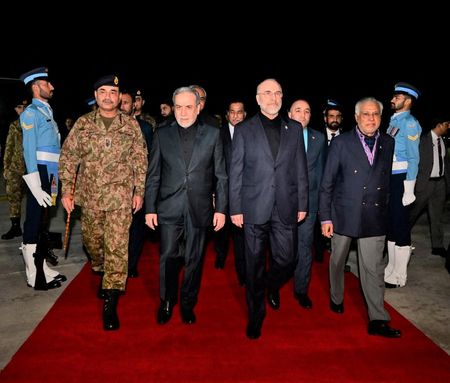
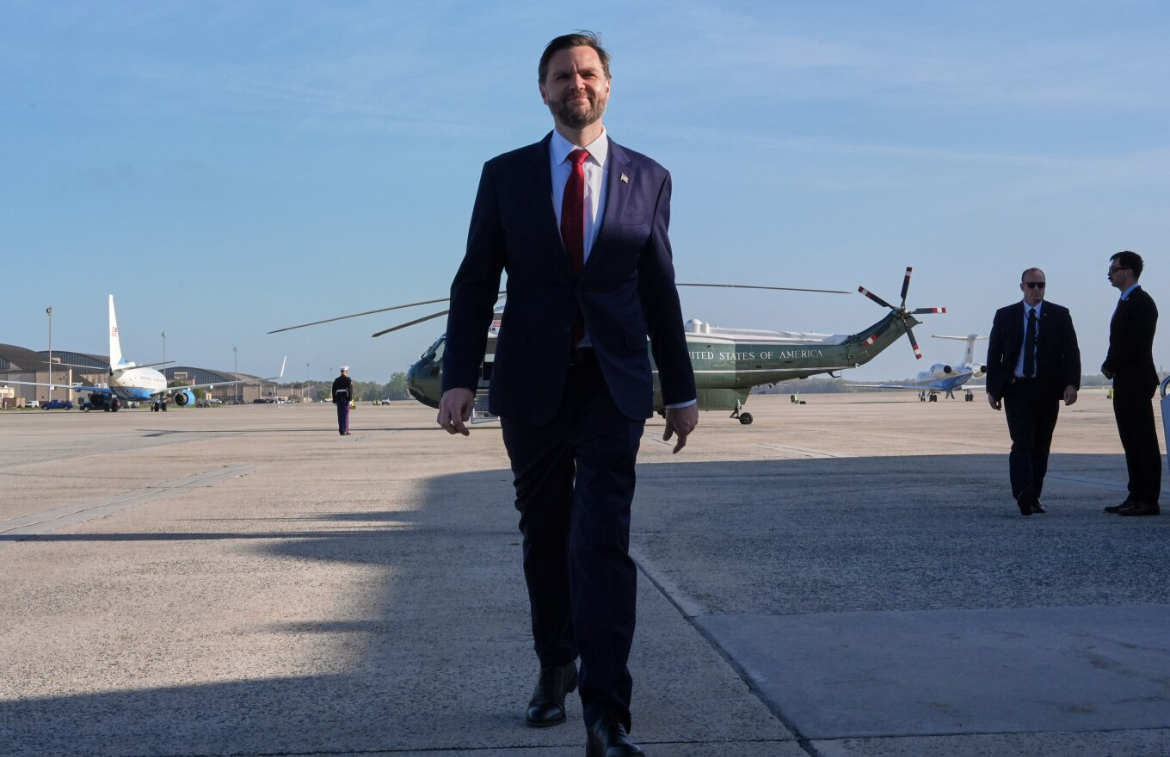
A high-ranking American delegation featuring Vice President JD Vance, special envoy Steve Witkoff, and Jared Kushner made their way to Pakistan after a fuel stop in Paris. Meanwhile, Iran’s representatives, including parliamentary Speaker Mohammad Baqer Qalibaf and Foreign Minister Abbas Araqchi, touched down in Islamabad on Friday.
TRUMP CLAIMS IRAN ‘HAS NO CARDS’
Through social media posts, Qalibaf stated that Washington had previously promised to release frozen Iranian financial assets and establish a ceasefire in Lebanon, where Israeli military operations against Iran-supported Hezbollah forces have resulted in nearly 2,000 deaths since fighting erupted in March. He emphasized that negotiations would remain stalled until these commitments were honored.
While Israel and the United States maintain that the Lebanese conflict falls outside the scope of Iran-U.S. ceasefire discussions, Tehran considers it an integral component.
According to Iranian state media reports, Qalibaf indicated separately that his country stood prepared to reach an agreement provided Washington presented what he characterized as an authentic deal that recognized Iran’s legitimate rights.
The White House has not yet responded to Iran’s conditions, though President Trump took to social media to assert that Iran’s only purpose for existing was to engage in negotiations.
“The Iranians don’t seem to realize they have no cards, other than a short term extortion of the World by using International Waterways. The only reason they are alive today is to negotiate!” he declared.
During his journey to Pakistan, Vice President Vance expressed optimism for successful outcomes while warning: “If they’re going to try to play us, then they’re going to find the negotiating team is not that receptive.”
Pakistani authorities implemented extraordinary security measures throughout Islamabad, deploying thousands of paramilitary forces and military personnel in anticipation of what Prime Minister Shehbaz Sharif described as “make-or-break” negotiations.
Earlier this week, President Trump declared a two-week pause in hostilities, effectively stopping American and Israeli air operations against Iran.
Despite this temporary halt, Iran continues its blockade of the strategically vital Strait of Hormuz, creating unprecedented disruptions to worldwide energy markets, while the separate conflict between Israel and Iran-backed Hezbollah in Lebanon persists.
LEBANESE FIGHTING PERSISTS
Israeli Ambassador to the United States Yechiel Leiter and Lebanese Ambassador Nada Hamadeh Moawad are scheduled to meet in Washington next Tuesday, though officials from both countries offer conflicting descriptions of the meeting’s purpose.
Lebanese officials described Friday phone conversations between the ambassadors as focusing on ceasefire announcements and establishing timelines for bilateral discussions under American mediation. However, Israel’s Washington embassy characterized the upcoming talks as the beginning of “formal peace negotiations” while rejecting any ceasefire discussions with Hezbollah.
Israeli military strikes continued throughout southern Lebanon on Friday, including an attack on a government facility in Nabatieh that claimed the lives of 13 Lebanese state security personnel, according to President Joseph Aoun’s official statement.
Hezbollah responded through its Telegram communications channel, announcing rocket attacks targeting northern Israeli communities.
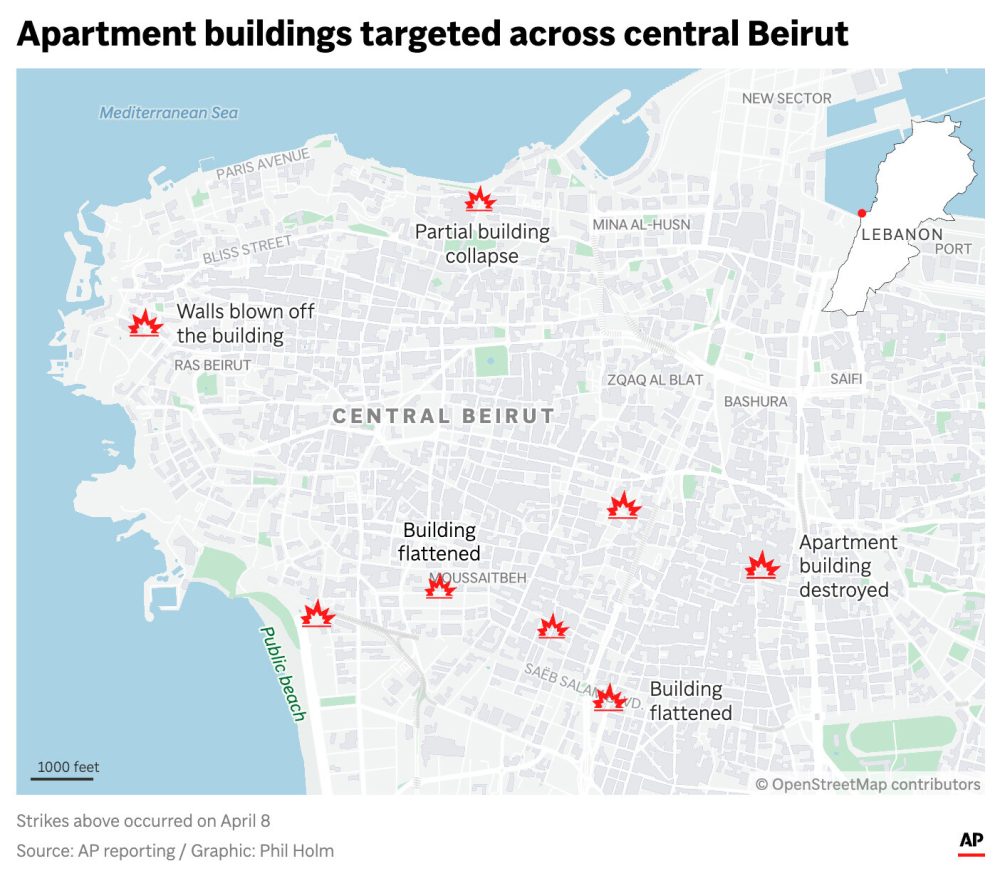
Following the ceasefire announcement, Israel conducted what officials described as the conflict’s largest military operation, with Lebanese authorities reporting more than 350 casualties from surprise attacks on densely populated areas.
Iran’s negotiating position includes demands for substantial concessions, such as complete sanctions relief to restore their damaged economy and recognition of their authority over the Strait of Hormuz, where they seek to impose transit fees and control passage rights in what would represent a significant shift in regional influence.
Iranian vessels continued moving freely through the strait on Friday, while ships from other nations remained trapped.
Energy supply disruptions have contributed to rising inflation and global economic slowdown, with effects anticipated to continue for months regardless of negotiation outcomes.
Iran’s firm stance before the talks follows defiant statements from new Supreme Leader Ayatollah Mojtaba Khamenei on Thursday.
Khamenei, who has not appeared publicly since assuming leadership following his father’s death on the conflict’s opening day, announced Iran would seek compensation for all war-related damages.
“We will certainly not leave unpunished the criminal aggressors who attacked our country,” he stated.
While President Trump has proclaimed victory and significantly damaged Iran’s military infrastructure, the conflict has not accomplished many of his initial objectives: eliminating Iran’s ability to threaten neighboring countries, dismantling their nuclear program, and facilitating domestic regime change.
Iran retains missile and drone capabilities for regional strikes and maintains stockpiles exceeding 400 kilograms of uranium enriched close to weapons-grade levels. The country’s religious leadership, which faced popular protests just months earlier, survived the military campaign without visible organized resistance.
BEIJING (AP) — Gone are the days when China’s Communist Party relied on stiff, doctrinaire messaging. After establishing strict internet controls domestically, Beijing has embraced social media platforms and artificial intelligence to craft its global narrative — frequently taking aim at America and its leadership.
Chinese state media recently produced a five-minute computer-generated video inspired by traditional kung fu films, creating an allegory about Middle Eastern conflicts. The animation features a majestic white eagle symbolizing America, which releases a sinister cackle before commanding forces to assault Persian cats in dark robes representing Iran. The felines pledge resistance following their leader’s death and block vital shipping lanes.
This metaphor-laden production exemplifies China’s recent surge in AI-created content designed to portray America as an international aggressor, including critiques of President Donald Trump’s Greenland acquisition threats and his plans for Western Hemisphere dominance.
The sophisticated animation strategy aligns with Chinese President Xi Jinping’s long-standing initiative to enhance the nation’s global communication capabilities, expand its international influence, and challenge Western media coverage that Beijing considers prejudiced or insulting toward China. Similar Iranian-aligned organizations have deployed polished AI-created content to ridicule America and Trump.
This represents part of an escalating worldwide information conflict, with America pledging to strengthen its response to foreign anti-American content and opposition to perspectives that undermine American interests.
Recent State Department communications have cautioned that international messaging operations conducted through digital channels by foreign government-controlled outlets “pose a direct threat to U.S. national security and fuel hostility toward American interests.”
AI-produced “infotainment” distributed through social platforms will likely prove more successful in convincing younger global audiences to embrace Chinese perspectives and is becoming standard practice in the country’s communications strategy, according to Shi Anbin, professor and director of Israel Epstein Center for Global Media and Communications at Tsinghua University.
“It is a new way for Chinese mainstream media to engage global Gen Z audience and social media users to understand Chinese standpoint and viewpoint of international affairs,” Shi said.
The Middle East conflict animation represents perhaps the most polished production from China’s government media outlets.
Distributed by state broadcaster China Central Television across social platforms, the video became widely popular domestically and received enthusiastic praise from Chinese viewers for simplifying complicated international politics into digestible content. The clip reached English-speaking audiences when an X platform user added subtitles and shared it online, accumulating over one million views within days.
“It’s hardly even like propaganda — it almost seems more just a historical fiction dramatization of the situation,” said Andrew Chubb, a senior lecturer in the School of Global Affairs at Lancaster University whose studies include political propaganda.
This approach marks a dramatic departure from China’s previously monotonous communications style. State publications once featured slogan-heavy, empty-sounding addresses praising national achievements while condemning Western influences. Students and government workers criticized the tedious educational materials required for examinations covering party history and beliefs.
Recognizing young people’s rejection of formal party rhetoric, Beijing initiated changes.
Officials now welcome playful internet terminology rather than discouraging it, using such language to reframe party narratives and incorporating rap music to celebrate organizational accomplishments. The government recruits popular musicians and performers for patriotic productions, relying on star power instead of mandates or complimentary admission to attract youth audiences. Even anti-corruption programming has achieved success through compelling storylines, memorable dialogue, and excellent performances.
Encouraged to develop attractive and impactful messaging, government media outlets are testing unconventional approaches, including brief, digitally-focused material utilizing artificial intelligence, explained Wang Zichen, deputy secretary-general for the Beijing-based think tank Center for China & Globalization.
“Whatever one thinks about the format, the message itself clearly resonates with increasingly larger audiences, which helps explain why such content gains traction online,” Wang said.
China has invested substantially in promoting narratives aimed at international audiences, with party leadership establishing an extensive “matrix” of social media profiles — operated by diplomatic staff, government media, content creators, and automated accounts — across multiple platforms including X and Facebook. Officials capitalize on opportunities to broadcast their positions.
In February, official Xinhua News Agency published an AI-created musical video mocking American threats regarding Greenland acquisition.
“Anything I want, I’ll get it. One way or another, I’ll get it,” sings a bald eagle character dressed in military uniform.
In March, following Trump’s “Shield of the Americas” conference, Xinhua released a brief video showing a bald eagle confining smaller birds under security pretenses.
“Sometimes, security comes with a little control,” the suited bald eagle tells the caged birds.
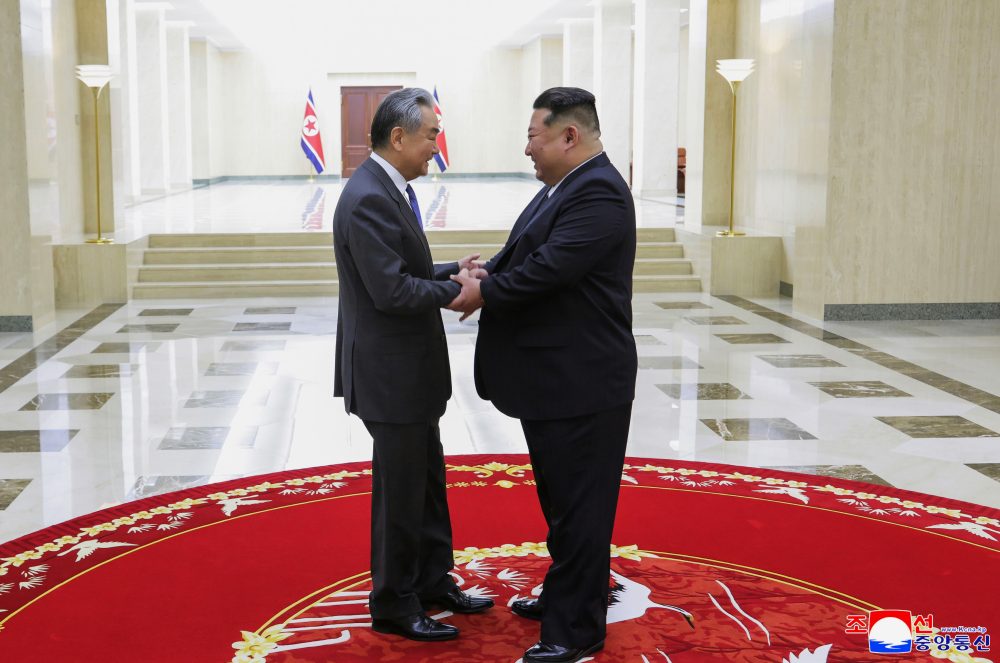
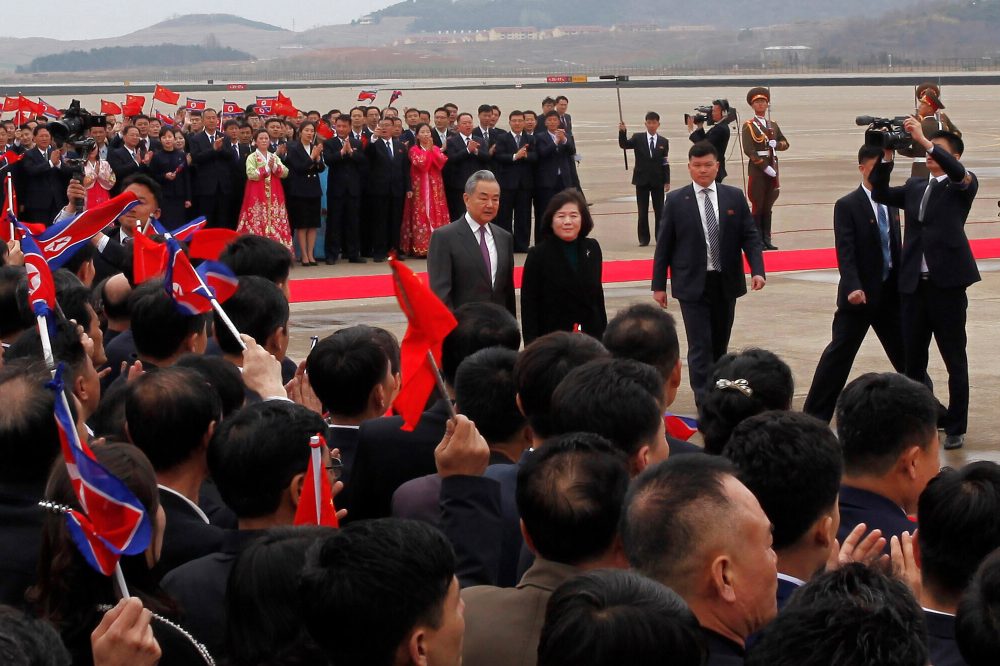
SEOUL, South Korea — North Korean dictator Kim Jong Un expressed backing for China’s efforts to establish a multipolar global order and advocated for strengthened relations between the longtime allies during discussions with Chinese Foreign Minister Wang Yi, according to state media reports released Saturday.
The Friday meeting saw Kim pledge his administration’s complete backing for Chinese initiatives to maintain territorial unity under Beijing’s “one-China principle,” which refers to China’s official stance that Taiwan represents an integral part of Chinese territory, the Korean Central News Agency reported.
Kim also presented North Korea’s stance on various regional and global matters of shared interest and emphasized that continued strengthening of bilateral relations has gained greater importance given today’s geopolitical climate, KCNA stated.
Wang, conducting a two-day visit to North Korea, described the nations’ relationship as moving into a “new phase” after last year’s summit between Kim and Chinese President Xi Jinping.
By adopting concepts of a “new Cold War” and a “multipolarized world,” Kim has worked to escape international isolation and pursue a more aggressive foreign policy through expanded relationships with nations in conflict with the United States.
Although Russia has become Kim’s primary foreign policy focus recently, with North Korea providing thousands of soldiers and substantial weapons supplies for Moscow’s Ukraine conflict, he has simultaneously strengthened connections with China, the North’s historic primary partner and economic supporter.
Kim participated alongside Russian President Vladimir Putin in a World War II commemoration in Beijing during September and conducted his first meeting with Xi Jinping in six years, actions that reinforced his efforts to present North Korea as part of a coalition opposing Washington.
North Korea and China reestablished direct aviation and rail passenger connections last month, services that had been halted since the COVID-19 pandemic began in 2020.
Wang reached Pyongyang on Thursday for his first North Korean visit in seven years. He previously met with North Korean Foreign Minister Choe Sun Hui to explore methods for enhancing cooperation and exchanges while conducting comprehensive discussions on international matters, according to state media from both nations.
The official media sources did not indicate whether Wang and North Korean representatives addressed topics concerning the United States or the continuing Middle East conflict.
Wang’s North Korean trip occurred ahead of U.S. President Donald Trump’s planned Beijing visit for a rescheduled summit with Xi Jinping in May. Several South Korean officials have expressed optimism that the Trump-Xi meeting might create diplomatic opportunities with Pyongyang.
Kim has halted all significant communication with the United States and South Korea following the breakdown of his diplomatic efforts with Trump in 2019 during the American president’s initial term. Kim has since adopted an uncompromising position toward South Korea, which he now characterizes as his “most hostile” opponent, and has declined U.S. proposals to restart negotiations, demanding Washington abandon its requirement for North Korean denuclearization as a condition.
UNITED NATIONS (AP) — Economic inequality between wealthy and developing nations continues to expand as international commitments made in 2024 to transform major global financial systems remain unmet, according to a new United Nations assessment.
The evaluation examines progress on a framework established in Seville, Spain last June designed to reduce global inequality and meet UN sustainable development targets by 2030. The findings were released before upcoming spring conferences in Washington featuring the International Monetary Fund and World Bank, the primary international organizations focused on promoting economic development.
IMF Managing Director Kristalina Georgieva indicated the organization was ready to enhance global economic growth, but noted that the Iran conflict has created uncertainty for worldwide economic prospects.
UN Undersecretary-General for Economic and Social Affairs Li Junhua explained that international tensions are making it harder for developing nations to secure necessary funding. “This is an extremely perilous time for international cooperation, as geopolitical considerations are increasingly shaping economic relations and financial policies,” he said.
The assessment identified increasing trade restrictions and recurring climate disasters as additional factors contributing to the expanding inequality.
During last year’s Seville conference, leaders from numerous countries worldwide, excluding the United States, unanimously approved the Seville Commitment targeting the closure of a $4 trillion yearly development funding shortfall. The agreement emphasized expanding investment in developing nations and restructuring international financial frameworks, including the World Bank and IMF.
UN Secretary-General António Guterres has consistently advocated for significant reforms to both organizations, arguing that the IMF has favored wealthy nations over impoverished ones, while the World Bank has fallen short of its mission, particularly throughout the COVID-19 crisis that left many countries with substantial debt burdens. His concerns mirror those of external observers who point to developing nation frustration with U.S. and European control over financial institution decision-making.
The UN assessment of Seville Commitment progress describes it as “the best hope” for addressing the expanding financial disparity.
However, Li reported that 25 countries reduced their development aid to poorer nations in 2025, resulting in an overall 23% decrease from 2024, marking the steepest annual reduction ever recorded. The most significant cut came from the United States at 59%, he noted.
Using preliminary information, Li projected an additional 5.8% decline expected in 2026.
The assessment highlighted how tariffs, including those implemented during the Trump presidency, have significantly affected developing countries. Average tariffs on goods exported from the world’s most impoverished nations jumped from 9% to 28% in 2025, while developing countries excluding China saw average tariffs rise from 2% to 19%.
Medical officials in Gaza report that six people were killed and multiple others wounded when an Israeli military strike targeted a police checkpoint in Bureij camp during the early morning hours of Saturday.
The attack occurred in the central region of the Gaza Strip, though medical sources could not immediately confirm whether all casualties were members of the police force. Israeli military officials have not yet responded to requests for comment regarding the incident.
Since October, medical personnel and police sources report that dozens of members of the Hamas-controlled police force have died in a series of Israeli military operations.
The violence continues despite a ceasefire agreement brokered by the United States last October that was designed to end hostilities in the Palestinian territory. Each side claims the other has violated the terms of the agreement.
According to casualty figures, Israeli military actions have resulted in the deaths of at least 700 Palestinians since the ceasefire was implemented, while militant attacks have killed four Israeli soldiers during the same timeframe.
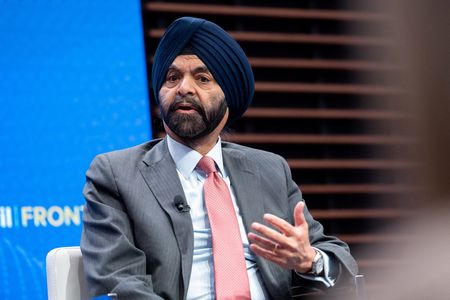
The ongoing conflict in the Middle East will create widespread economic consequences across the globe, regardless of whether the ceasefire announced by President Donald Trump holds, World Bank President Ajay Banga warned during a Friday interview with Reuters.
According to Banga, the economic damage will become significantly worse should the ceasefire collapse and fighting intensify.
During a Tuesday briefing, Banga outlined projections showing worldwide economic growth could decline by 0.3 to 0.4 percentage points under the best-case scenario with an early conclusion to hostilities. However, if warfare persists, growth could drop by a full percentage point. Meanwhile, inflation rates may climb by 200 to 300 basis points, potentially reaching 0.9 percentage points higher if combat continues.
The World Bank has revised its forecasts for emerging markets and developing nations, now expecting 3.65% growth in 2026 compared to the previous October projection of 4%. Under worst-case conditions with prolonged warfare, growth could plummet to just 2.6%. Inflation estimates for these countries have increased to 4.9% in 2026, up from the earlier 3% prediction, with extreme scenarios potentially pushing inflation to 6.7%.
The conflict has claimed thousands of lives throughout the Middle East region and triggered a 50% spike in oil prices. Supply chains for oil, natural gas, fertilizer, helium, and other essential commodities have faced major disruptions, while tourism and aviation industries have also suffered significant impacts.
The two-week ceasefire Trump announced remains fragile, as Israel and Iran continue military strikes against each other. On Friday, Iranian officials stated that frozen Iranian assets must be unfrozen and a Lebanese ceasefire established before U.S.-Iran negotiations, set for Saturday in Pakistan, can move forward. Trump responded by saying American naval vessels were being resupplied with weapons in preparation for potential talks failure.
“The question really is, does this current peace and the negotiations that are going to be happening this weekend – will this lead to a lasting peace and then a reopening of the Strait (of Hormuz)?” Banga stated. “If it doesn’t lead to that, and if conflict were to break out again, would that have an even larger impact, or longer-term impact on energy infrastructure?”
Banga revealed that the world’s premier development institution has begun conversations with several developing nations, particularly small island countries lacking domestic energy resources, regarding access to emergency funding through existing “crisis response windows.”
The World Bank’s emergency response mechanisms enable nations to access previously authorized but unused funds without requiring additional board approval, providing greater operational flexibility during crises.
However, Banga emphasized the bank is advising countries against implementing energy subsidies they cannot sustain financially, which could create larger problems down the road.
“I worry about making sure that they can come through this crisis, targeting what they need to do, but not doing anything that further deteriorates that fiscal space,” he explained.
Numerous developing countries face substantial debt burdens while dealing with elevated interest rates, limiting their capacity to secure loans for addressing increased energy costs and other war-related price increases.
This crisis has renewed focus on the importance of diversifying energy sources and enhancing domestic energy independence, Banga noted. Last June, the World Bank lifted its longtime prohibition on financing nuclear energy projects as part of efforts to address growing electricity demands.
Nigeria, despite facing longstanding challenges, is positioned to benefit from a $20 billion investment by the Dangote Group in refinery infrastructure, which has actually increased production during the conflict and now provides aviation fuel to surrounding nations.
“Nigeria should be breathing a sigh of relief. They’ve built up the ability to have energy security for themselves through that huge investment,” he said. “It’s actually a really good example of the right thing being done in terms of energy self-sufficiency for them, but also for their neighbors.”
The World Bank is also collaborating closely with Mozambique to enhance that African nation’s energy production capacity in both natural gas and hydroelectric power sectors.
Multiple energy initiatives are currently in development, Banga reported, including discussions with countries interested in extending their nuclear reactor operations and others exploring entry into nuclear power generation.
“If you don’t get nuclear and hydro and geothermal going at scale, along with wind and solar, they will end up doing more with traditional fuels, and nobody really wants that,” he concluded.
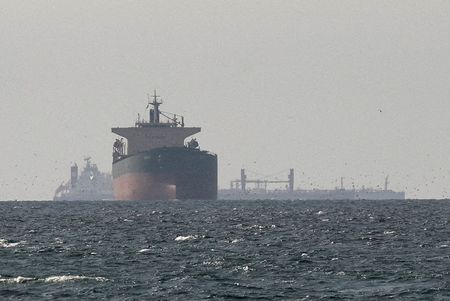
President Donald Trump announced Friday that America will work to reopen the blocked Strait of Hormuz shipping corridor in the coming period, though he cautioned the task would present significant challenges.
Speaking to the press, Trump indicated that international partners have stepped forward to assist with the effort, but he did not specify which nations had offered support.
“Other countries use the strait. So we do have other countries coming up, and they’ll help out,” Trump said.
“It won’t be easy … I would say this – we will have that open fairly soon,” Trump added.
Iran’s closure of the vital waterway since the conflict began has created an unprecedented disruption to worldwide energy markets. The strategic passage serves as a critical route for approximately 20% of the world’s oil and liquefied natural gas transportation.
The president has expressed frustration with NATO partners for their lack of assistance in securing the shipping lane. According to reports, NATO Secretary-General Mark Rutte recently informed European leaders that Trump is seeking firm commitments from allies to help protect the strait within a matter of days.
Military action between the United States and Israel against Iran occurred on February 28. Iran retaliated with strikes targeting Israeli territory and American military installations in Gulf region countries. The ongoing military operations involving U.S.-Israeli forces against Iran and Israeli actions in Lebanon have resulted in thousands of casualties and millions of displaced civilians.
The conflict has driven up petroleum prices and created instability in international financial markets. Trump revealed Tuesday that a tentative ceasefire agreement with Tehran had been reached, following earlier threats to completely devastate Iran’s society. Maritime traffic through the contested waterway continues to remain at a standstill.
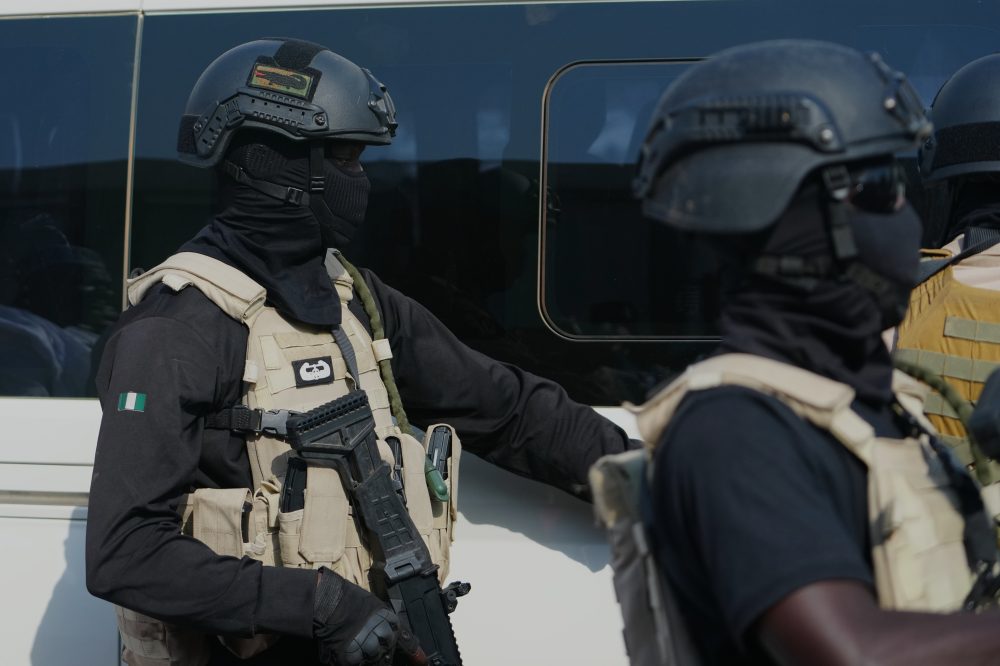
ABUJA, Nigeria — More than 300 individuals accused of terrorism were found guilty by a Nigerian court during a four-day mass proceeding that concluded Friday in the nation’s capital.
The large-scale judicial process started on Tuesday, with numerous defendants entering guilty pleas to terrorism-related charges filed by Nigerian authorities.
A panel of 10 judges handed down prison sentences of up to two decades to many of those convicted during the proceedings.
“In total, we brought about 508 cases. Of these 508, we were able to secure 386 convictions,” Nigeria’s attorney general said to reporters following Friday’s conclusion of the mass trial. “We have been able to bring justice to them, or bring them to justice. So this is the clear signal that we are sending.”
The West African nation continues to face significant security challenges, particularly in northern regions where a decade-long insurgency persists alongside various armed organizations engaged in kidnapping for ransom operations. This northeastern insurgency has continued for more than ten years.
The most well-known Islamic extremist organizations include Boko Haram and a splinter group connected to the Islamic State, called Islamic State West Africa Province. Additionally, the IS-affiliated Lakurawa organization operates in northwestern communities along the border with Niger Republic.
Conflicts over land use and cattle grazing between predominantly Muslim Fulani herders and primarily Christian agricultural communities regularly turn violent in north-central and northwestern regions.
Organized criminal networks specializing in kidnapping for financial gain also remain active throughout these areas.
According to United Nations reports, the northeastern insurgency has resulted in numerous deaths and mass displacement of civilians.
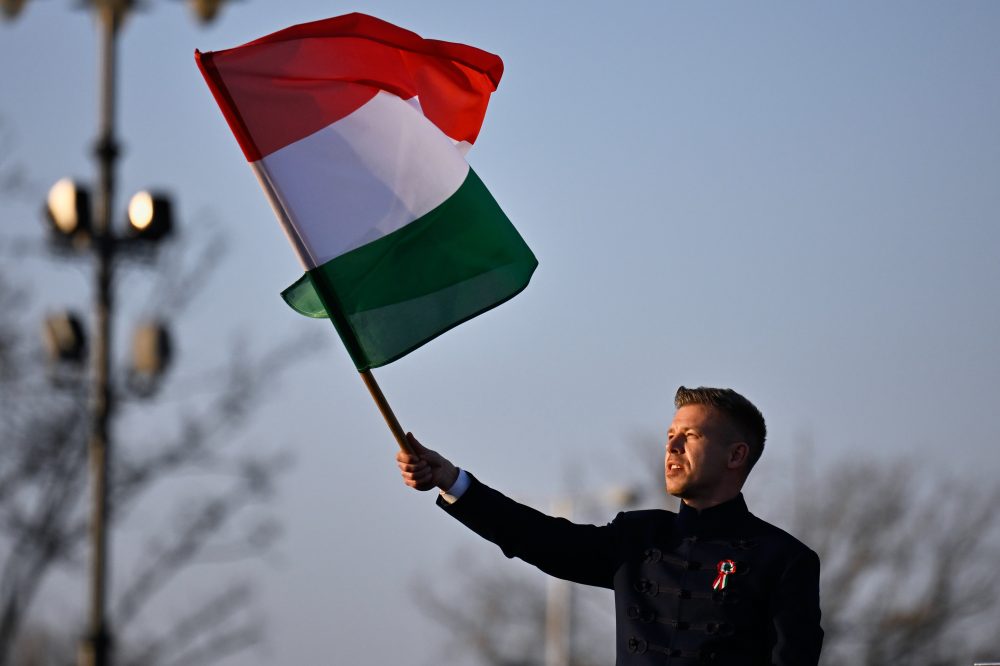
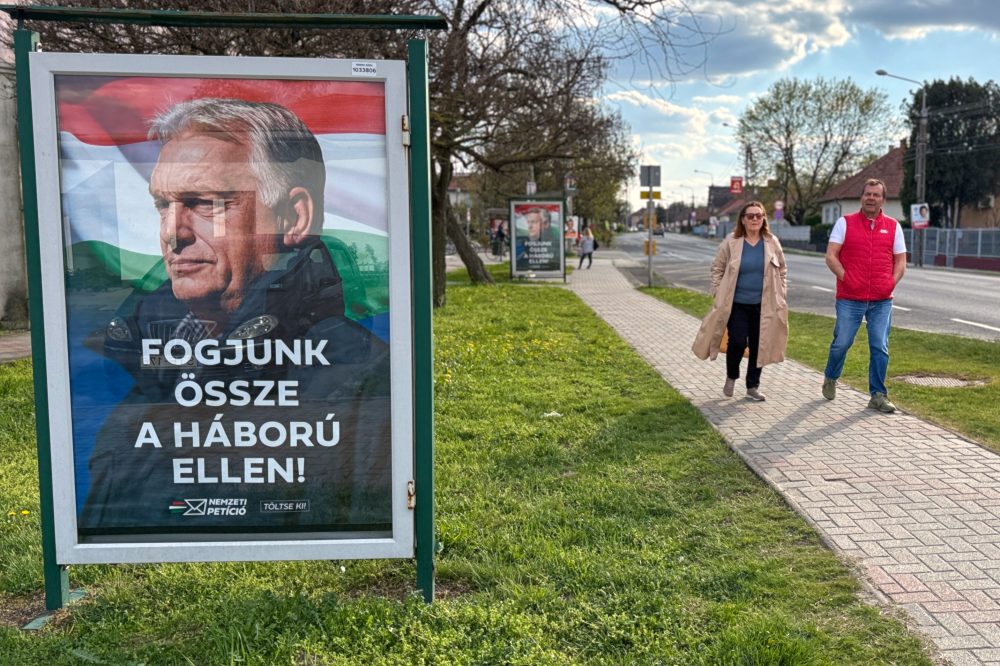
BUDAPEST, Hungary — A massive musical demonstration drew more than 100,000 people to Budapest’s Heroes’ Square on Friday, as citizens gathered for a marathon concert demanding political change just 48 hours before Hungary’s pivotal election.
The seven-hour musical marathon featured more than 50 of Hungary’s top artists, each performing a single song in what organizers called a “system-breaking” event aimed at mobilizing voters to reject Prime Minister Viktor Orbán’s administration on Sunday.
The predominantly young crowd repeatedly chanted anti-government slogans, including “Ruszkik haza!” meaning “Russians go home!” — a phrase echoing Hungary’s 1956 uprising against Soviet control that has gained fresh relevance as Orbán strengthens ties with Moscow.
Heléna Sugár, a 19-year-old attendee, explained her motivation for joining the demonstration. “I listen to these performers every day. But now the most important thing here is the political goal,” she said. “I think it is important to show how many of us think this way, how many of us think that the time for this system is over and it is time for us to change.”
The Civic Resistance Movement, which coordinated the event, stated that every performance was “critical of the corrupt regime” and designed to “demonstrate to the masses of voters and make them realize that the era of impunity is over.”
The enormous turnout at the capital’s iconic square, combined with more than 100,000 additional viewers watching online, highlighted widespread discontent with Orbán’s administration, especially among Hungary’s younger generation.
Hungary faces a growing divide between generations, with young citizens overwhelmingly seeking an end to what they view as Orbán’s authoritarian leadership, while older voters continue supporting the longtime prime minister.
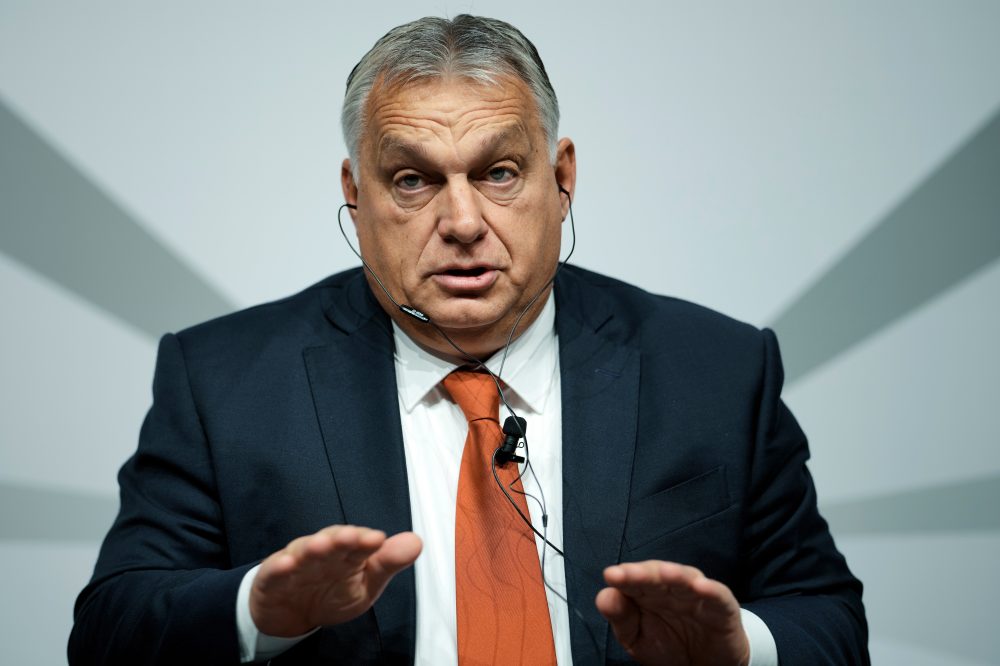
Orbán and his Fidesz party face mounting challenges including economic difficulties, corruption allegations, and the emergence of a formidable opposition force that represents the strongest challenge to his authority in nearly two decades.
The center-right Tisza party, led by Péter Magyar, has energized voters nationwide who view him as the most viable alternative to Orbán’s 16-year tenure in power.
Recent polling data from 21 Research Center reveals that 65% of voters under 30 back Tisza, while just 14% support Orbán.
Noel Iván, 22, who relocated from Hungary to Austria in search of better opportunities, shared his hopes for change. He said he “would like to move back and plan the future at home, which is currently hopeless and deeply sad.”
Despite not identifying as conservative, Iván expressed his intention to “contribute to regime change by voting for the Tisza party.”
The concert lineup included Hungary’s biggest musical stars: vocalist Azahriah, hip-hop artists Beton.Hofi and Krúbi, and rock groups Quimby and Ivan and the Parasol.
Benedek Szabó, who leads the popular band Galaxisok, told The Associated Press that Hungary’s growing alignment with Moscow represents “selling out the EU allies to Russia.”
“Everyone’s fed up, and everyone’s ready to finally change this system, to finally send a message,” he said. “Not only today, but the day after tomorrow, that we’ve had enough, and we want to belong to Europe.”
Galaxisok delivered a performance reflecting on what they perceive as lost potential and squandered time during Orbán’s leadership.
The song concluded with a rebellious message: “Whispered on trams, written on factory walls, on rain-drenched autumn streets, secretly everyone knows,” the lyrics declared. “We’ve had enough, once and for all. In the end, all regimes fall.”
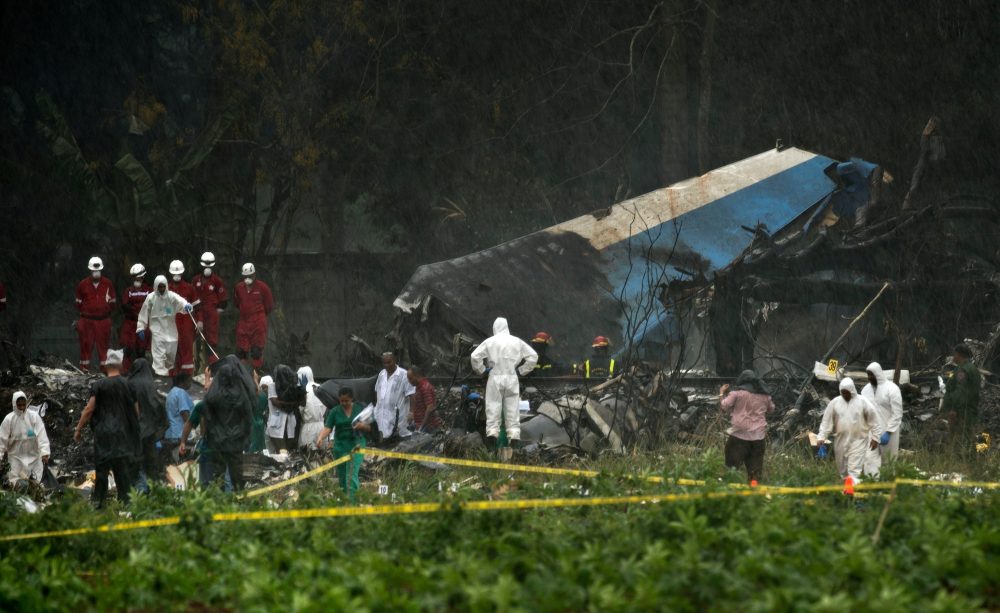
A court in Mexico has determined that inadequate maintenance caused a devastating 2018 aircraft accident in Cuba that claimed 112 lives, ordering the charter company responsible to compensate victim families with millions in damages.
Court records from March 31, obtained by The Associated Press, reveal that an independent aviation expert concluded the tragedy was an “institutional accident” resulting from maintenance neglect. The expert’s analysis, which supported the families’ claims, characterized the flight crew as a “final line of defense” who could not overcome the aircraft’s low-altitude emergency.
The ruling requires Mexican charter company Aerolíneas Damojh to provide $1.5 million in compensation to each family of the four Mexican crew members who initiated the legal action. The airline did not participate in court proceedings and was judged without representation present. While the aircraft’s insurance company was included in the lawsuit, it was ultimately exempted from financial responsibility.
The Boeing 737 aircraft crashed into a field shortly after takeoff from Havana’s José Martí International Airport, becoming one of Cuba’s most devastating aviation tragedies in recent history. Out of 113 passengers and crew aboard, only one Cuban woman survived the impact. The majority of those killed were Cuban nationals.
Cuban investigators concluded one year later that pilot error caused the accident. Mexican officials had previously suspended Aerolíneas Damojh temporarily and launched their own inquiry. Mexico’s Secretariat of Communications and Transportation did not respond to AP inquiries about their investigation’s current status.
Under the business name Global Air, Damojh had leased the Boeing 737 and Mexican flight crew to Cuba’s national airline, Cubana de Aviación. This leasing arrangement put the aircraft into operation despite documented concerns about the company’s operational history before the fatal crash.
Attorney Samuel González, representing the victim families, called the court decision a hard-fought and “groundbreaking ruling for Mexico.” He stated the judgment confirms what Damojh’s own maintenance supervisor admitted immediately in Havana when he told relatives the aircraft should not have been airborne.
“That plane flew over our heads for 10 years without maintenance,” González stated. “It crashed in Cuba, but it could have happened anywhere.”
AP reporters were unable to reach airline representatives for comment.
González indicated the airline may be pursuing bankruptcy protection, adding, “If it’s a fraudulent bankruptcy, we will press charges for that as well.”
In addition to this initial case, González confirmed that a broader class-action lawsuit representing all crash victims is proceeding. At the same time, criminal homicide charges have been filed with Mexico’s Attorney General’s Office targeting the company and other potentially liable parties.
González reported that the criminal probe has stalled because Cuban officials have not shared requested information. The Attorney General’s Office did not immediately respond to AP requests for updates on the case status.
A Pakistani government official found himself at the center of an international controversy this week after posting inflammatory comments about Israel on social media platforms.
Defense Minister Khawaja Muhammad Asif removed a controversial message from his X account on Wednesday following strong criticism from Israeli leadership. The post contained accusations of genocide against Israel and included references to “European Jews” that critics described as carrying antisemitic undertones.
Israeli Prime Minister Benjamin Netanyahu’s administration characterized the comments as “outrageous” and claimed they questioned Israel’s fundamental right to exist. Foreign Minister Gideon Sa’ar and additional Israeli officials also spoke out against the post, particularly criticizing the “European Jews” terminology as crossing acceptable boundaries.
The timing of the social media controversy proved particularly problematic for Pakistan’s government. While the nation has historically backed Palestinian interests, Pakistani leadership has simultaneously worked to establish credibility as a neutral mediator in complex Middle Eastern diplomatic efforts. Asif’s comments undermined these efforts and raised questions about Pakistan’s claimed impartiality in regional conflicts.
The defense minister quietly removed the message from X without providing any public explanation for his decision. However, as of April 10, 2026, the identical content continued to appear on his Facebook profile, leading to speculation that internal government or military pressure may have influenced the partial removal, though no official confirmation has emerged.
While Pakistani leadership continues to voice opposition to Israeli military operations in Gaza and Lebanon, sources indicated that Asif’s deleted post used exceptionally harsh language during a period when the government was attempting to demonstrate diplomatic moderation.
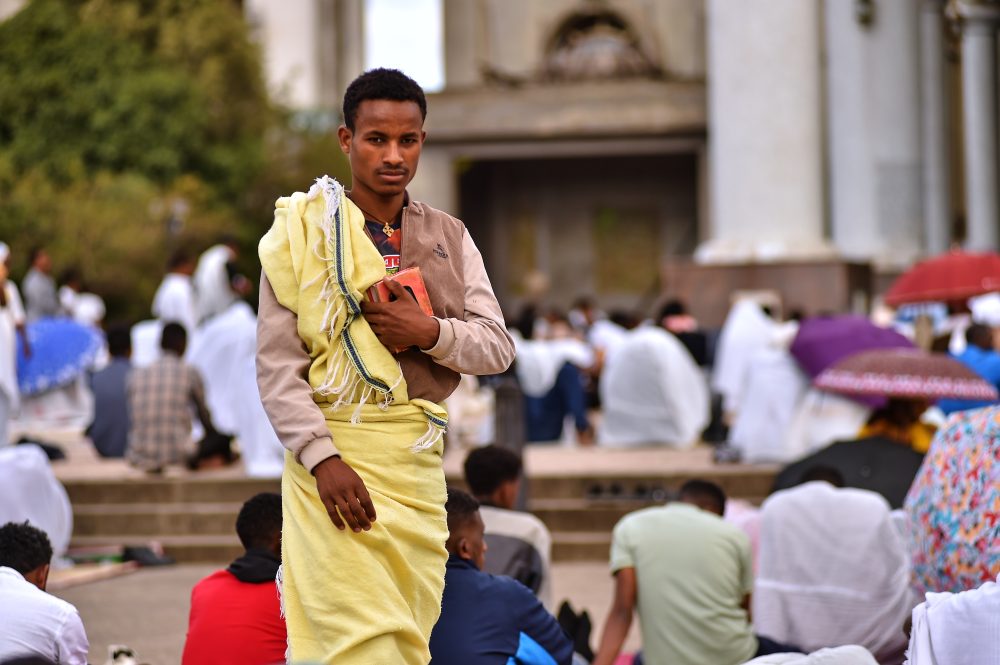
ADDIS ABABA, Ethiopia — Ethiopian Orthodox Christians marked Good Friday in the nation’s capital with muted celebrations as ongoing conflict has triggered severe fuel shortages and skyrocketing food costs that are disrupting traditional Easter preparations.
Ethiopian Orthodox believers follow a different liturgical calendar than most Christian denominations worldwide, who celebrated Easter on April 5 this year.
The Good Friday observance caps off a 55-day fasting period called Abiy Tsom, characterized by collective worship services where many faithful wear customary white garments. The day leads into an all-night prayer vigil where congregants pray for absolution and tranquility before Easter Sunday arrives.
However, inflated costs have significantly impacted both transportation and the traditional animal sacrifice ceremonies.
Local resident Samuel Teshome explained that sheep prices have nearly doubled, putting them beyond his family’s financial reach.
Fellow resident Sirawdink Admaus noted that rooster prices have similarly skyrocketed to nearly twice their previous cost.
Livestock vendors attribute these increases to dramatically higher transportation expenses for bringing animals from countryside locations.
The country is grappling with severe fuel shortages, with most service stations lacking adequate supplies. Some entrepreneurs have resorted to black market purchases, where costs are substantially higher.
Minibus operator Tefera Aragaw described how extended waits at fuel stations have devastated his earnings and expects a subdued Easter observance.
“We have been waiting for three days, and we spent the nights here. There is also a possibility that we may not be able to get fuel at all,” he said.
Government officials have implemented emergency conservation strategies, including permitting most civil servants to telecommute and directing available fuel supplies toward critical services first.
Israel’s highest-ranking military official declared Friday that the nation continues active warfare against Hezbollah, despite upcoming diplomatic discussions announced by Prime Minister Benjamin Netanyahu.
Lieutenant General Eyal Zamir, the Israel Defense Forces Chief of Staff, addressed military commanders near Bint Jbeil in southern Lebanon, stressing that combat missions are still underway. “The IDF is in a state of war. We are not in a ceasefire, we continue to fight here in this sector, this is our main combat sector,” he said. “We are in all the places. Just as we are in Gaza, just as we are in Syria – we are also here in Lebanon.”
Fighting persisted on Friday despite Netanyahu’s Thursday announcement that direct negotiations would commence “as soon as possible.” Israeli officials clarified these talks would proceed “under fire” rather than following a traditional ceasefire arrangement.
Warning sirens sounded in the Ashdod region Friday after missiles and rockets were fired from Lebanon. Similar alerts were activated in Kiryat Shmona as military operations expanded across several areas.
Power failures affected northern Israel Friday morning after a high-voltage electrical line sustained damage, according to Israeli news outlets. Reports suggest rocket fragments may have caused the infrastructure damage.
The Israeli military issued warnings about Hezbollah’s tactics involving civilian resources. Colonel Avichay Adraee, the IDF’s Arabic spokesperson, posted on X Friday demanding Hezbollah cease using ambulances in their operations. He cautioned that “if this conduct is not halted, Israel will act in accordance with international law against any military activity carried out by the terrorist Hezbollah using those facilities and ambulances.”
According to CBS News reporting from multiple diplomatic sources, ceasefire negotiations have experienced significant changes. The network reported that President Donald Trump initially supported including Lebanon in ceasefire arrangements, which Pakistani Prime Minister Shehbaz Sharif had also confirmed.
A White House representative told CBS that Israel had accepted the Pakistan-brokered ceasefire conditions when they became effective, but American policy shifted after a telephone conversation between Trump and Netanyahu.
Kuwait’s foreign ministry has confirmed that drone attacks hit critical infrastructure within the country Thursday evening, even as a ceasefire with Iran remains in effect. The strikes have raised new concerns just days before scheduled diplomatic negotiations in Islamabad aimed at resolving the ongoing Iran conflict.
According to a statement released through Kuwait’s state-operated KUNA news agency, the unmanned aerial attacks “targeted some vital Kuwaiti facilities Thursday night.” The timing of these incidents has cast doubt on the stability of current peace efforts, with important talks set to begin Saturday in Pakistan’s capital.
Meanwhile, regional energy infrastructure continues to face threats. Saudi Arabia’s official news service reported through an unnamed government source that the East-West pipeline – a crucial backup route that serves as an alternative to Strait of Hormuz shipping – sustained damage in a recent assault.
President Trump has openly condemned Iran’s handling of maritime passage commitments, stating the country was doing a “very poor job” in maintaining open shipping lanes through the strait. “This is not the agreement we have,” Trump declared, expressing frustration with Iran’s performance on maritime access.
The president’s criticism intensified Thursday when Iran announced plans to charge fees for vessels using the waterway. Trump responded on Truth Social, warning Iran to “better stop now” and emphasizing that passage through the strait should remain free of charge.
The Strait of Hormuz stands at the heart of this dispute, functioning as a vital shipping corridor that connects oil-producing Gulf nations with international markets. Approximately 20% of global oil supplies pass through this narrow waterway, making any disruption a serious threat to worldwide economic stability.
Throughout this conflict, the strategic waterway has remained a flashpoint, with Iran limiting vessel passage while Trump has threatened significant military action if normal access isn’t restored. The recent attacks and damage to backup energy transportation routes have intensified pressure on ongoing diplomatic initiatives.
BRASILIA, Brazil (AP) — Native communities from throughout Brazil converged on the nation’s capital this week for their yearly Free Land Encampment demonstration, calling on government officials to fulfill decades-old commitments regarding Indigenous territorial boundaries.
The annual gathering brings together tribal representatives and activists who continue pushing for official recognition and protection of ancestral lands that remain in legal limbo.
Security forces in Belarus conducted their largest single detention sweep of 2025 this week, arresting 52 workers from a prominent architectural company in what human rights advocates are calling an intensified campaign of government repression.
Officers raided the Minsk headquarters of ZROBIM Architects on Thursday, taking into custody dozens of employees including company founder Andrei Makouski on allegations of disloyalty, the Viasna human rights organization reported Friday.
Before his arrest, Makouski had revealed on social media that government officials were pressuring his private company to employ a permanent “ideologist” whose job would be to surveil the workforce, according to Viasna.
“The situation in Belarus is deteriorating, and we see that even suspicions of disloyalty are enough to trigger the largest single roundup of creative people this year,” Pavel Sapelka, a lawyer with Viasna, told The Associated Press. “This is a new practice for the authorities: first arresting people, hacking their phones and computers, and only then bringing charges.”
Government officials have expanded their use of “extremism” labels to prosecute opposition voices, with sentences reaching up to a decade for anyone connected to individuals or organizations deemed extremist. Sapelka noted that officials recently branded 22 online discussion groups used by inmates’ family members as extremist organizations, describing it as “a blow to solidarity within the country” that puts thousands of households at risk of criminal charges.
Belarus, which maintains close ties with Russia, has faced international isolation for years. Alexander Lukashenko has maintained authoritarian control over the nation of 9.5 million people for more than thirty years, with Western nations imposing multiple rounds of sanctions both for human rights violations and for permitting Russia to launch attacks on Ukraine from Belarusian soil in 2022.
Lukashenko’s grip on power faced its strongest challenge following the 2020 presidential race, when massive crowds filled the streets to denounce what they considered fraudulent election results. The protests represented the most significant unrest since Belarus gained independence after the Soviet Union’s dissolution in 1991.
The government’s subsequent crackdown resulted in more than 65,000 arrests, widespread beatings of protesters, and the closure of hundreds of independent news organizations and civic groups. Leading opposition voices either escaped the country or were jailed. According to Viasna’s count, 913 political detainees remain incarcerated.
Five years after those massive street demonstrations, Lukashenko secured a seventh presidential term in an election that opposition groups dismissed as illegitimate.
In recent months, Belarus has freed some political detainees in apparent efforts to improve relations with Western nations. Following Donald Trump’s return to the presidency, Lukashenko has released hundreds of prisoners, including Nobel Peace Prize winner Ales Bialiatski and prominent opposition leaders Siarhei Tsikhanouski, Viktar Babaryka and Maria Kolesnikova.
Lukashenko’s most significant gesture came last month when he freed 250 political prisoners as part of an agreement with Washington that resulted in the lifting of certain American sanctions, marking the country’s largest single prisoner release.
Washington responded to these releases by removing sanctions from Belarus’s potash fertilizer sector and the state carrier Belavia.
However, human rights organizations report that oppressive measures persist. Viasna has documented cases where authorities have canceled the passports of freed political prisoners who traveled overseas, including Bialiatski, whose travel document was revoked after he left Belarus following five years of imprisonment.
“This is yet another form of transnational repression aimed at complicating the lives of deported political prisoners outside the country,” Bialiatski told the AP. “The authorities continue their repression and are trying to ritually sever our ties with Belarus.”
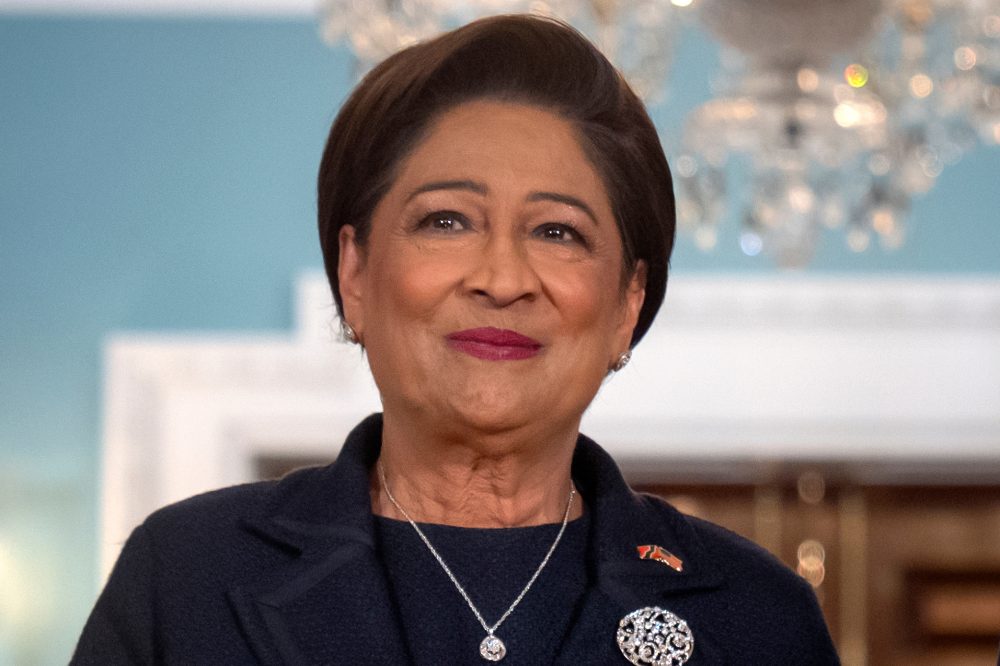
A diplomatic conflict between Trinidad and Tobago and its Caribbean partners reached a boiling point Friday when Prime Minister Kamla Persad-Bissessar called for the departure of the Caribbean Community’s top official when her term expires in August.
The dispute within CARICOM, a trade organization representing 15 Caribbean nations, intensified in recent months following disagreements about American military operations in the South Caribbean and a significant U.S. military presence deployed near Venezuela to apprehend former President Nicolás Maduro.
While other Caribbean leaders advocated for maintaining the region as a peaceful zone, Persad-Bissessar rejected what she termed efforts at creating a false sense of peace. Instead, she backed American military operations and the Trump administration’s broader efforts to combat international drug trafficking and organized crime.
The Trinidad leader has now set her sights on CARICOM’s leadership structure, calling for Secretary-General Carla Barnett to leave office when her five-year appointment ends in late August.
Following her electoral victory a year ago, Persad-Bissessar has consistently advocated for Barnett’s departure, emphasizing that Trinidad contributes approximately 22% of the organization’s yearly funding, totaling about $20 million.
The prime minister has voiced ongoing frustration with how the regional bloc operates, questioning why Caribbean nations sided with Venezuela and Maduro instead of backing the United States.
“Caricom has chosen to support the Maduro narco-government through the fake zone of peace narrative,” she stated in late 2025 while the U.S. prepared operations against Maduro and regional governments criticized alleged illegal maritime attacks.
Her sustained criticism of the organization and its leadership prompted Friday’s urgent session to address Barnett’s potential reappointment.
South Africa’s Department of Communications and Digital Technologies released a comprehensive draft artificial intelligence policy framework on Friday, opening it for public feedback as the nation seeks to advance its position in the global AI landscape.
The proposed policy framework represents a major milestone in the country’s broader digital modernization efforts, with officials aiming to establish South Africa as the leading AI innovator across the African continent while simultaneously tackling ethical, social, and economic concerns.
Citizens and stakeholders have until June 10 to submit their feedback on the draft proposal.
Among the framework’s key recommendations is the creation of several new oversight bodies: a National AI Commission, an AI Ethics Board, and an AI Regulatory Authority. These organizations would work together to coordinate policy implementation, establish and enforce ethical guidelines, oversee compliance monitoring, and create systems for addressing grievances and providing compensation when AI systems cause harm.
The government plans to offer various financial incentives including tax relief, grants, and subsidies to foster collaboration with private companies, with particular emphasis on supporting local startup companies and small enterprises.
A cornerstone of the policy involves substantial investment in robust and affordable supercomputing capabilities to advance AI research and innovation. The plan also emphasizes strategic investments in digital infrastructure, including potential partnerships with international cloud service providers and regional supercomputing centers.
The draft policy acknowledges security risks, noting that “reliance on foreign infrastructure could compromise the security of sensitive South African data.” It emphasizes the need to develop strategies that would decrease South Africa’s “current hardware dependence on the U.S. and China” given the ongoing geopolitical tensions between these superpowers.
Violence between Israel and the militant organization Hezbollah escalated Friday as both sides prepare for direct negotiations planned for next week.
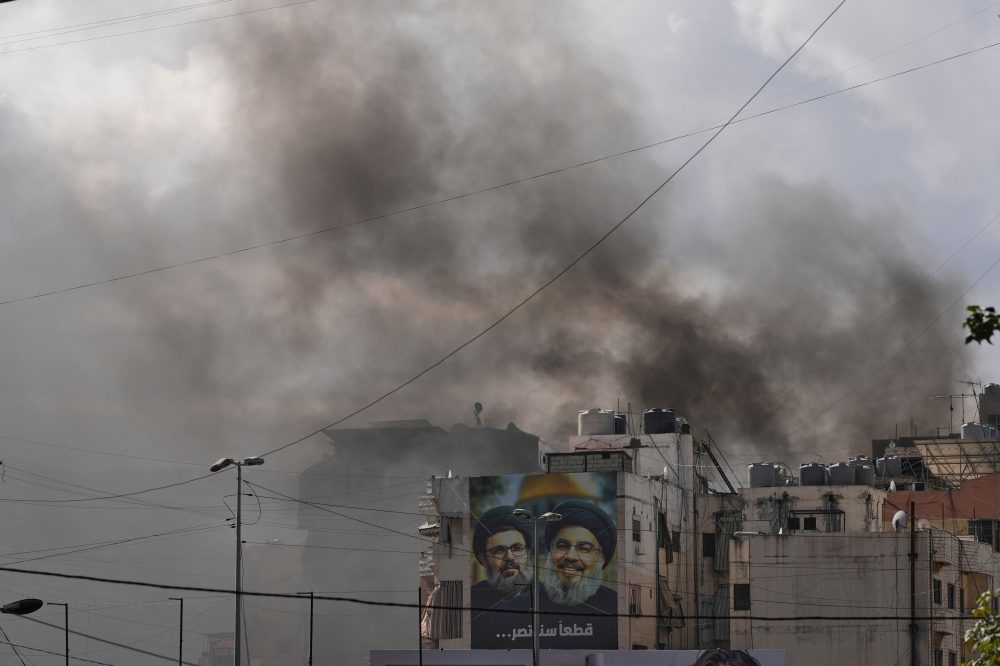
Thirteen Lebanese State Security personnel died in an Israeli airstrike in southern Lebanon on Friday, while Hezbollah launched an assault on a naval facility in the Israeli coastal city of Ashdod, located approximately 90 miles from the Lebanese border.
Israeli forces conducted airstrikes on multiple southern Lebanese communities, including a government facility in Nabatieh where the security officials were killed. Hezbollah reported conducting 31 separate attacks against northern Israeli targets and Israeli ground forces operating in southern Lebanon.
The current conflict began when Israel initiated its air campaign and ground offensive in southern Lebanon following Hezbollah’s rocket attacks on northern Israel on March 2, launched in support of Iran, the group’s primary supporter.
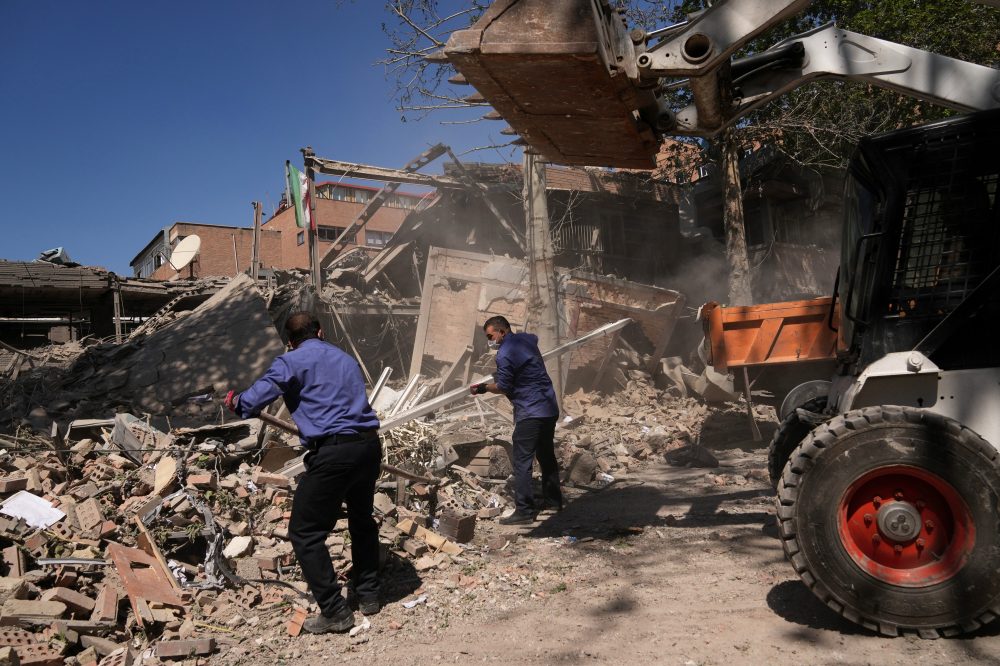
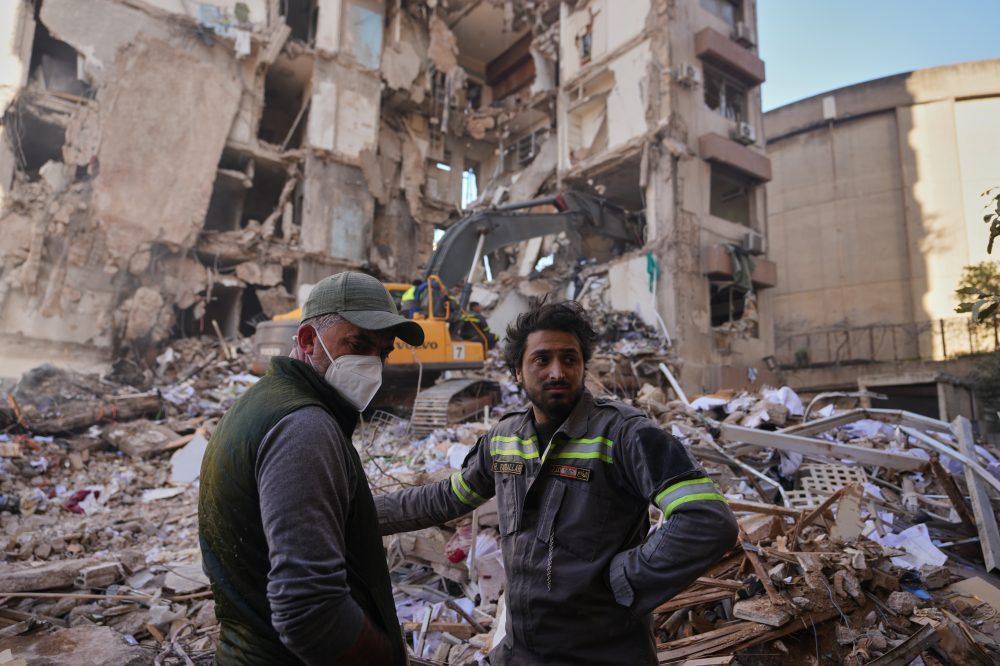
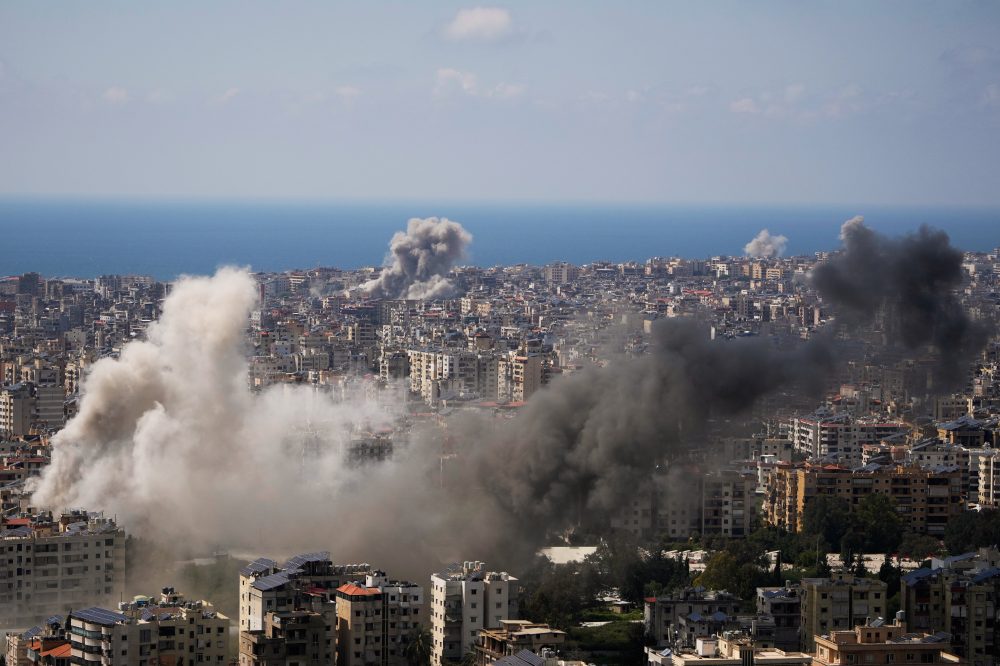
Lebanese Health Ministry data shows Israeli strikes have claimed at least 1,888 lives in Lebanon. The deadliest single day occurred Wednesday when 303 people perished in 100 rapid-fire strikes across the country within a 10-minute span, hitting densely populated residential and commercial districts in central Beirut. Emergency crews continue searching for victims buried in debris throughout Lebanon’s capital.
Hospital officials at Beirut’s primary government medical facility on the capital’s southern outskirts worry about potential targeting after Israeli forces issued evacuation orders for nearby suburbs, including the Jnah district where Rafik Hariri University Hospital operates. Israeli attacks have previously struck Jnah, sometimes with advance warning and sometimes without.
The World Health Organization has urged protection for the hospital and advised against evacuation. WHO representatives confirmed Friday they received guarantees the facility would not be targeted. Despite continuing operations, medical staff remain anxious as their commute requires traveling roads that could face strikes at any moment, according to emergency department chief Dr. Mohammad Cheaito.
“The entire zone around the hospital was threatened and deemed dangerous,” he told the AP. “But at the end of the day, we have a humanitarian duty.”
Lebanese officials have not responded to Israeli Prime Minister Benjamin Netanyahu’s Thursday announcement regarding the upcoming negotiations. Netanyahu stated the discussions would focus on dismantling Hezbollah’s military capabilities and establishing “peaceful relations” between the nations.
A Lebanese government source familiar with the situation indicated that ending hostilities remains essential for Lebanon’s participation in direct discussions with Israel, similar to recent U.S.-Iran dialogue. Lebanon has not yet named a negotiation representative, according to the official who requested anonymity due to protocol requirements.
Lebanese President Joseph Aoun had originally suggested direct negotiations early in the conflict under comparable conditions, hoping to prevent Israeli airstrikes from escalating and avoid a ground invasion. That initial proposal, supported only by France, was unsuccessful.
On Wednesday, the United States and Iran declared a temporary halt to fighting that started February 28, covering Lebanon and other nations affected by the broader regional crisis, according to mediator Pakistan. However, Israel and subsequently the United States rejected this announcement, preferring to keep diplomatic efforts for the two conflicts separate.
Hezbollah views Israeli operations in Lebanon as ceasefire violations, while Beirut seeks inclusion in Lebanon-related negotiations as part of efforts to disarm Hezbollah and establish complete national sovereignty.
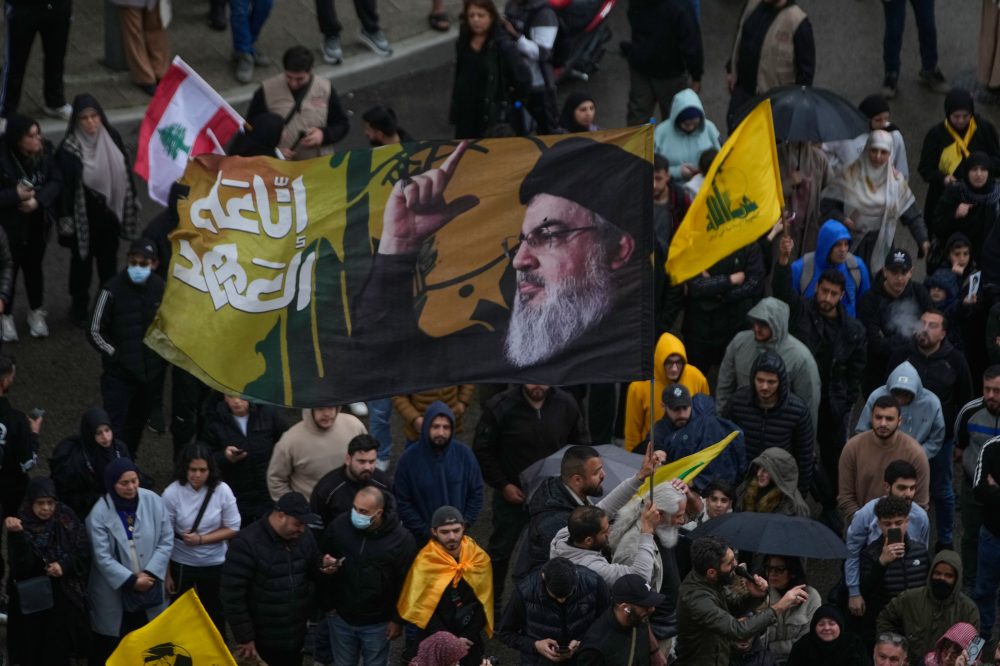
Hezbollah leader Naim Kassem avoided directly addressing potential Israel-Lebanon talks in Thursday remarks but urged the Lebanese government to “stop giving free concessions” to Israel.
Dozens of supporters of the Iranian-supported organization demonstrated outside the Lebanese prime minister’s Beirut office. The protesters view the planned direct negotiations as capitulation to Israel, which maintains its forces will remain in Lebanon indefinitely.
“Our blood has been spilled on this land, and our state is conspiring against us,” protester Hassan Shuaib said. “Our state wants to kill us; our state wants to strip us of our weapons.”
LONDON — Prince Harry finds himself in legal trouble with an organization he helped create to commemorate his mother, Princess Diana, as the African charity has taken him to court on defamation charges following his departure as patron last year.
Court documents examined on Friday reveal that Sentebale, an organization dedicated to helping HIV-positive youth in Botswana and Lesotho, initiated legal proceedings against the Duke of Sussex last month through London’s High Court.
The legal filings indicate that both Harry and Mark Dyer, who serves as a trustee for the organization and is a close friend of the prince, face accusations of either libel or slander, though specific documentation remains unavailable to the public.
Internal conflicts within the charity became apparent in 2023 when disputes arose regarding a proposed new approach to fundraising. Both Harry and his co-founder, Prince Seeiso of Lesotho, resigned from their patron positions in March 2025.
During their departure, the co-founders stated that the working relationship with the board and its chairwoman, Sophie Chandauka, had deteriorated beyond any possibility of reconciliation. Chandauka subsequently alleged that Harry had led a systematic effort involving intimidation and harassment aimed at forcing her resignation.
Following an official review by the Charity Commission for England and Wales, investigators found fault with both parties for allowing their internal conflicts to become public knowledge, thereby causing damage to the organization’s standing. However, the investigation uncovered no proof of systematic bullying or gender-based discrimination within Sentebale.
“Sentebale’s problems played out in the public eye, enabling a damaging dispute to harm the charity’s reputation, risk overshadowing its many achievements, and jeopardizing the charity’s ability to deliver for the very beneficiaries it was created to serve,” commission CEO David Holdsworth said in a statement in August 2025.
While Harry’s representative expressed disapproval of the commission’s findings, Chandauka praised the report’s conclusions.
British law enforcement officials took a Sudanese national into custody Friday in connection with a tragic migrant crossing that left four people dead in the English Channel waters.
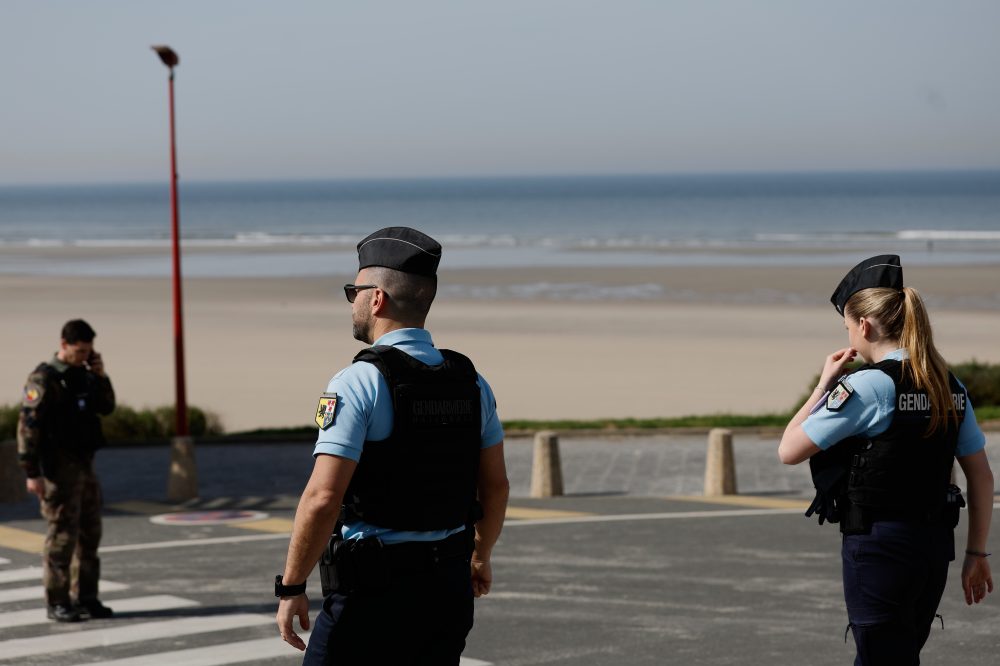
The deadly incident unfolded Thursday when four migrants – two men and two women – drowned after being caught in powerful currents off a French shoreline. Emergency crews managed to save 38 other individuals from the water near Calais where the group had been attempting to reach a small inflatable vessel for their dangerous journey to Britain.
The 27-year-old man now facing charges was among more than 70 migrants who successfully completed the crossing. Officials apprehended him at a migrant intake facility along England’s southeastern coastline, charging him under recent border legislation that makes it a crime to endanger lives during sea voyages to the United Kingdom.
Authorities have not disclosed what specific role the detained man allegedly played in organizing or facilitating the crossing.
The tragedy took place at Equihen Beach in the Calais area as migrants attempted to wade through waters to reach what officials describe as a “taxi-boat” – small motorized inflatable craft that collect passengers along France’s northern coastline.
This pickup method has gained popularity among smuggling operations as French police increase efforts to prevent launches by damaging the larger rafts that migrant groups traditionally inflate and transport to the water themselves.
French maritime officers avoid intercepting boats already in the water due to safety protocols that recognize such actions could endanger lives.
The suspect continues to be held for questioning by the National Crime Agency, officials confirmed. Investigators also plan to conduct interviews with other individuals who made the channel crossing.
The past week has witnessed a spike in crossing attempts and fatalities, with rescue operations saving 102 people during two separate incidents Wednesday. Another two migrants lost their lives last week under similar conditions in waters north of Calais.
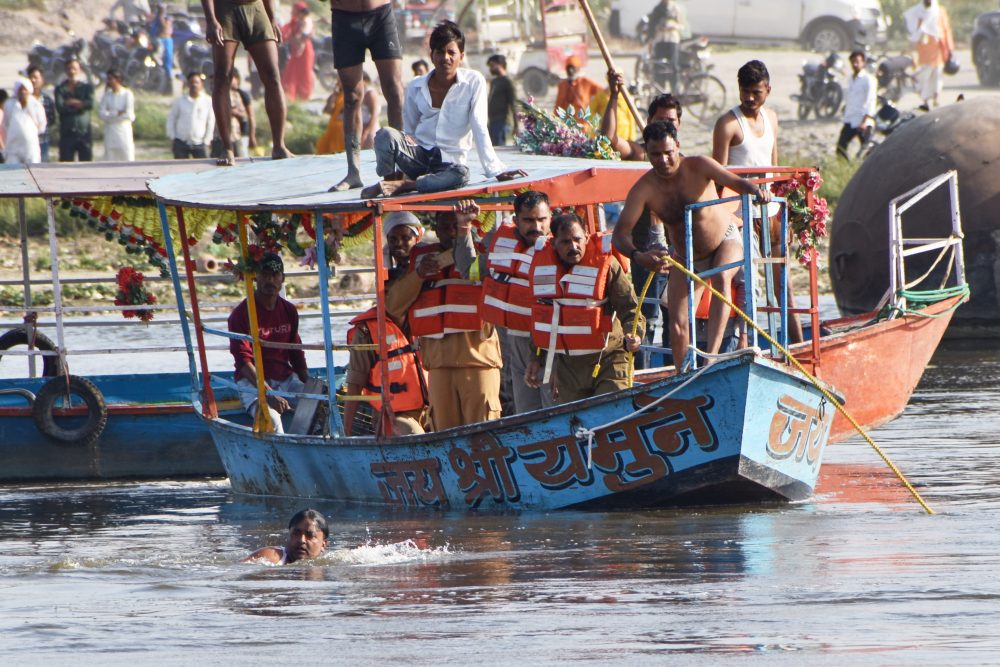
LUCKNOW, India — A fatal boating accident claimed the lives of at least 10 people Friday when a passenger vessel overturned in northern India’s Yamuna river, according to local authorities.
The tragedy unfolded close to Vrindavan, a sacred Hindu pilgrimage destination located in Uttar Pradesh state.
Authorities report the privately-run vessel was dangerously overloaded, carrying approximately 25 individuals despite being designed for only 15 passengers. Initial investigations suggest powerful wind gusts caused the boat to rock violently before colliding with a pontoon bridge and flipping over in the middle of the waterway.
Senior administrative officer Chandraprakash Singh confirmed that rescue teams pulled 15 survivors from the water, with four requiring emergency medical treatment for serious injuries. All fatalities were Indian nationals, including six women, Singh reported.
Safety violations were apparent at the scene, with authorities noting that the majority of passengers lacked proper life vests and the watercraft showed signs of poor upkeep. The boat’s operator abandoned the area following the incident, officials stated.
The victims were among a much larger tourist group of roughly 150 visitors exploring the religious site that day.
Such maritime disasters occur frequently across India, where passenger boats routinely exceed safe capacity limits and lack proper safety gear.
A similar tragedy struck southern India in 2023, when another tourist boat accident resulted in at least 22 fatalities.
Lebanese President Joseph Aoun is moving forward with direct negotiations with Israel following a devastating month of conflict that has displaced more than one million Lebanese citizens, destroyed sections of Beirut, and sparked sectarian tensions throughout the country.
While Israeli Prime Minister Benjamin Netanyahu has agreed to participate in peace discussions, analysts believe Lebanon enters these unprecedented talks from an extremely compromised position with limited ability to secure meaningful results.
Hezbollah, currently engaged in combat with Israeli forces in southern Lebanon, remains opposed to direct negotiations, raising serious questions about whether the militant group would honor any ceasefire agreement reached by Lebanese government officials.
“The talks that will take place between Lebanon and Israel are frankly pointless, because those conducting them in the name of Lebanon have no leverage to negotiate,” a Lebanese official close to the group told Reuters on condition of anonymity.
DEVASTATING STRIKES CLAIM HUNDREDS OF LIVES
Israeli air campaigns against Lebanon escalated after Hezbollah launched missiles into Israel on March 2, occurring three days after the U.S.-Israeli conflict with Iran began. Israeli forces have since expanded their ground operations.
Members of Lebanon’s Shi’ite Muslim population, which forms Hezbollah’s primary support base and has suffered the heaviest casualties from Israeli attacks, expressed to Reuters their lack of confidence in a government they view as unable to protect them.
Netanyahu’s directive to his cabinet regarding direct negotiations came following Israeli airstrikes throughout Lebanon that claimed over 300 lives, marking one of the deadliest single days for the country since its civil war concluded in 1990. Emergency responders continued recovering bodies from destroyed buildings on Friday while families conducted funerals nationwide.
Israeli bombing campaigns have devastated public infrastructure throughout southern Lebanon and resulted in the deaths of multiple Lebanese security personnel on Friday.
“Israel’s brutality does not distinguish between one civilian and another, nor between Muslim and Christian, in this country. We must all stand together to confront this barbarity and this aggression,” said Hassan Saleh, a Lebanese man attending a funeral in the southern city of Tyre.
GOVERNMENT AUTHORITY CONTINUES TO ERODE
Numerous Lebanese citizens, including two government officials speaking anonymously to Reuters, characterized Netanyahu’s delayed agreement to negotiations as a political maneuver designed to improve relations with Washington as the United States prepares for discussions with Iran this weekend, while maintaining military operations in Lebanon.
“Just because Israel agreed to negotiate with us doesn’t mean it’s going to be easy. The problem is that we don’t have any other option,” said Nabil Boumonsef, deputy editor-in-chief of Lebanon’s Annahar newspaper.
Lebanon’s central government has traditionally struggled with limited authority, weakened by widespread corruption, a sectarian power-sharing structure that frequently results in political gridlock, and recurring internal conflicts and wars involving Hezbollah and Israel.
While Lebanese citizens have voiced concerns about governmental weakness for decades, recent crises have further undermined public confidence in official institutions.
The country’s banking system collapsed in 2019, and a chemical explosion at Beirut’s port in 2020 killed more than 200 people. Authorities have not held anyone accountable for either catastrophe.
A September 2024 Arab Barometer survey revealed that 76% of Lebanese citizens expressed no confidence whatsoever in their government.
The following month, Israel deployed ground forces into Lebanon and intensified bombing operations after a year of cross-border exchanges with Hezbollah. Lebanese casualties exceeded 3,700 people during this period.
INTERNAL DIVISIONS PERSIST
Despite a U.S.-mediated ceasefire agreement in November 2024, Israeli forces remained in Lebanon while continuing strikes against what they identified as Hezbollah infrastructure. Residents who returned to demolished towns in southern Lebanon used personal funds to rebuild their homes without government assistance.
Thousands of displaced citizens unable to return home blamed their own government for failing to secure Israeli withdrawal through diplomatic channels.
The United States and Israel criticized the Lebanese government and military for not fulfilling ceasefire commitments to completely disarm Hezbollah.
Lebanese officials argued that forcibly disarming Hezbollah would trigger civil conflict, and diplomatic efforts to persuade the group to surrender its weapons were unsuccessful while Israeli forces continued occupying Lebanese territory.
Following Hezbollah’s entry into the regional conflict on March 2, Lebanon declared the group’s military operations illegal. However, the army did not prevent Hezbollah’s missile attacks, with officials again citing concerns about internal warfare.
Netanyahu has indicated that negotiations would address Hezbollah’s disarmament and establishing a formal peace treaty between Israel and Lebanon, who have remained technically at war since Israel’s establishment in 1948.
However, both objectives appear unlikely following such a destructive period of violence.
Michael Young of the Carnegie Endowment’s Middle East Center described Lebanon as approaching negotiations while internally fractured.
Disarming Hezbollah “means entering into a confrontation with the entire Shi’ite community, which will not accept Hezbollah’s disarmament because they feel they are surrounded by enemies”, he said.
“We’re weak because we’re unclear on the terms of reference of negotiations, divided over the question of negotiations, because our demands will be rejected and because we cannot do what we need to do to secure an Israeli withdrawal.”
MADRID — Emergency responders in Spain’s Canary Islands reported that a tourist-filled bus crashed into a ravine on Friday, resulting in one death and sending 27 people to the hospital with injuries.
The majority of those aboard the vehicle were tourists from Britain.
The crash occurred on La Gomera, which is part of the eight-island Spanish chain located in the Atlantic Ocean west of Africa’s coast.
According to emergency officials, all injured passengers were transported to a hospital on the island where they received medical care for their wounds.
La Gomera ranks among the smaller islands in the Canary chain and features challenging geography including volcanic peaks, thick forests, and communities perched on cliffsides. These Atlantic islands attract numerous British and European vacationers throughout the year due to their consistently mild climate.
Kuwaiti military officials announced Friday that Iran carried out strikes against multiple National Guard installations within the country, leaving several service members injured and causing extensive damage to the targeted sites.
The assault on the strategic military facilities represents a significant escalation in regional tensions, according to statements from Kuwait’s armed forces leadership.
President Donald Trump’s ambitious initiative to rebuild Gaza has encountered a severe financial obstacle, with sources revealing that his Board of Peace has collected less than $1 billion of the $17 billion promised by international donors.
The funding shortage has effectively halted Trump’s strategy for the devastated Palestinian territory’s reconstruction, according to Reuters sources familiar with the situation.
Just ten days prior to U.S.-Israeli military operations against Iran that escalated regional tensions into full conflict, Trump organized a Washington conference where Gulf Arab nations committed billions toward Gaza’s governance and rebuilding efforts following two years of Israeli bombardment.
The reconstruction blueprint calls for extensive rebuilding of the coastal territory following the disarmament of Hamas, the Palestinian militant organization whose attacks on Israel sparked the Gaza offensive, and the complete withdrawal of Israeli forces.
The promised financial contributions were also designated to support operations of the National Committee for the Administration of Gaza (NCAG), a U.S.-supported group of Palestinian technocrats designed to take governmental control from Hamas.
A source with direct access to the peace board’s operations revealed that among ten nations that made funding commitments, only three have actually delivered money: the United Arab Emirates, Morocco, and the United States.
The Iran conflict “has affected everything,” the source explained, making existing funding challenges even worse.
Security concerns and insufficient funding have prevented NCAG from entering Gaza, the source noted. Despite a ceasefire agreement reached last October, Israeli military actions have resulted in at least 700 Palestinian deaths according to Gaza health officials, while militant attacks have claimed four Israeli soldiers’ lives.
A Palestinian official with knowledge of the situation said the board has notified Hamas and other Palestinian groups that NCAG cannot currently enter Gaza due to financial constraints.
“No money is currently available,” the official quoted board envoy Nickolay Mladenov as telling Palestinian organizations.
Hamas has consistently stated its willingness to transfer governance responsibilities to NCAG, which is headed by Ali Shaath, a former deputy minister with the Palestinian Authority that currently maintains limited self-governance in portions of the Israeli-occupied West Bank.
Shaath’s committee is intended to take charge of Gaza’s government ministries and oversee its police operations.
According to a diplomatic source, Shaath and his 14 committee members remain confined to a Cairo hotel under American and Egyptian supervision.
Neither the Board of Peace nor NCAG representatives provided immediate responses to requests for comment.
International organizations estimate that rehabilitating Gaza, where Israeli bombardments destroyed four-fifths of all buildings over two years, would require approximately $70 billion.
This struggling Gaza initiative mirrors other ambitious Trump projects, as the president has positioned himself as a global peacemaker while facing difficulties ending the Ukraine conflict as promised and watching this week’s Iran truce face immediate serious challenges.
Egypt, which has been facilitating disarmament negotiations, extended new meeting invitations to Hamas for Saturday, according to a source within the militant organization.
The ceasefire ended large-scale warfare but left Israeli forces controlling a depopulated area covering more than half of Gaza, while Hamas maintains power in a narrow coastal section.
Trump’s board has been directing negotiations with Hamas and other Palestinian factions regarding disarmament. Israel demands Hamas surrender its weapons before withdrawing troops from Gaza, while Hamas refuses compliance without guarantees of Israeli withdrawal and cessation of attacks in Gaza.
The diplomatic source familiar with disarmament discussions said negotiations remain stalled and expressed concern that Israel might seek justification to resume full-scale Gaza operations.
Israeli military leadership has indicated preparation for rapid return to comprehensive warfare if Hamas fails to surrender its weapons.
The Gaza conflict originated with Hamas’ October 7, 2023, attacks on Israel that resulted in 1,200 deaths according to Israeli records.
Israel’s subsequent two-year military campaign has killed more than 72,000 Palestinians, predominantly civilians, according to Gaza health authorities, while causing widespread famine and displacing most of the territory’s population.
A groundbreaking legal case in Scotland has resulted in an eight-year prison sentence for a man whose pattern of abuse led to his wife’s tragic death by suicide in July 2023.
Lee Milne, age 40, received the sentence Friday after being found guilty of culpable homicide and abusive behavior at Glasgow’s High Court. The case represents a historic first for Scottish courts, where prosecutors successfully convinced a jury that an abusive partner could be held criminally responsible when their victim dies by suicide.
Kimberley Milne, 28, ended her life by jumping from a bridge in Dundee on July 27, 2023. However, prosecutors argued that her husband’s systematic campaign of terror drove her to that fatal decision.
“Lee Milne physically and psychologically abused Kimberly,” stated Prosecutor Laura Buchan. “He deliberately and ruthlessly exploited Kimberly’s vulnerabilities, which makes him culpable for her decision to end her own life.”
During their year-and-a-half marriage, court evidence revealed a horrific pattern of control and violence. Lee Milne strangled his wife, struck her unconscious, confined her to their home without food, and systematically cut her off from family members and financial resources.
Judge Lorna Drummond emphasized the escalating nature of domestic violence during sentencing.
“Domestic abuse is rarely about one incident,” Judge Drummond explained. “It’s not only about violent acts, it includes more subtle, but nonetheless as harmful, exertions of power and control in a relationship. And it builds over time, each act, whether physical, psychological or financial, adds to the next. Increasing pressure and fear, eroding confidence and independence.”
Family members described Kimberley as a beloved daughter, sister and aunt whose loss has devastated them.
Text messages revealed the psychological grip Lee Milne maintained over his wife. When Kimberley’s sister urged her to leave the marriage four months before her death, Kimberley responded with fear.
“How can I leave him if he’s saying he’s gonna do himself in without me,” she wrote back.
Security footage from Kimberley’s final day captured disturbing scenes of continued intimidation. Despite their separation, the couple was together when Lee Milne deliberately drove his vehicle toward his wife in a parking lot, stopping just short of hitting her before repeating the threatening behavior.
Shortly afterward, Kimberley walked to a nearby bridge and jumped onto the highway below.
“By the jury’s verdict, you must bear responsibility not only for all of your abusive acts, but also for causing her death,” Judge Drummond told Lee Milne during sentencing.
MOSCOW — A military court in Moscow has handed down a 19-year prison sentence to Pavel Popov, who previously served as Russia’s deputy defense minister, following his conviction on corruption charges, Russian state media reported Friday.
Popov’s arrest in 2024 stemmed from illegal business dealings connected to a massive military-themed attraction in Moscow that some have nicknamed Russia’s “military Disneyland.”
The facility, known as Patriot Park, was a signature initiative of former Defense Minister Sergei Shoigu aimed at fostering patriotic feelings among Russia’s youth through displays of Soviet and Russian military equipment. The complex includes shooting ranges, an airfield, multiple museums, a conference facility, and a large olive-colored Cathedral of the Russian Armed Forces decorated with mosaics depicting Soviet and Russian military personnel.
According to the Kremlin, President Vladimir Putin personally contributed funds for the church’s primary religious icon.
Court investigators determined that Popov, who oversaw Patriot Park’s construction and operations, illegally redirected more than 25 million rubles ($324,000) from the park’s budget to fund renovations on his private residences in the Moscow area, state news outlet Ria Novosti reported.
Popov maintained his innocence throughout the proceedings, and his legal representative announced plans to challenge the ruling, state news agency TASS reported. The court also imposed an 85 million ruble ($1.1 million) fine.
Two additional defendants faced charges alongside Popov: the park’s director received a six-year sentence, while Maj. Gen Vladimir Shesterov, who worked in the Defense Ministry’s innovation division, was sentenced to five years behind bars.
This case represents part of a broader criminal investigation targeting more than a dozen officials connected to former Defense Minister Sergei Shoigu, all facing allegations of misconduct within Russia’s military hierarchy.
Popov held the deputy defense minister position from 2013 through June 2024, when President Putin removed him from office through an official decree.
PARIS (AP) — A charitable organization in France is conducting a unique fundraiser, giving participants the opportunity to own an authentic Pablo Picasso artwork for just 100 euros ($117) per entry, with all money raised benefiting Alzheimer’s disease research.
Christie’s auction house in Paris will host Tuesday’s drawing for the coveted prize.
This marks the third such lottery since the program began. The first “1 Picasso for 100 euros” drawing took place in 2013, when a Pennsylvania fire-sprinkler technician became the lucky winner of “Man in the Opera Hat,” a piece the renowned Spanish artist created in 1914 during his Cubist era.
A second artwork, the oil painting “Nature Morte,” was awarded through raffle in 2020 to Italian accountant Claudia Borgogno, whose son had purchased the winning ticket as her Christmas gift.
That 1921 still life was acquired for the raffle from art collector billionaire David Nahmad, who told the Associated Press in a rare interview that the famous artist would have supported making his works accessible through such means. Picasso passed away in 1973.
“Picasso was very generous. He gave paintings to his driver, his tailor,” Nahmad said. “He wanted his art to be collected by all kinds of people, not only by the super-rich.”
The current prize, a gouache on paper work called “Tête de Femme” (meaning “head of a woman”), was completed by Picasso in 1941.
The Alzheimer Research Foundation, which coordinates this charitable raffle, operates from one of Paris’ premier public medical facilities and claims to have become France’s top private funding source for Alzheimer’s medical studies since establishing operations in 2004.
Christie’s will display the artwork at its Paris location starting Monday, before conducting Tuesday’s 6 p.m. drawing.
According to the organizers’ digital sales system, ticket sales will be limited to 120,000 entries, potentially generating 12 million euros ($14 million) if completely sold out.
Of the total revenue, 1 million euros will go to Opera Gallery, the international art dealer that currently owns the painting.
The foundation reports that the two earlier Picasso raffles generated over 10 million euros combined for cultural initiatives in Lebanon and water and sanitation projects across Africa.
A Vietnamese national entered a guilty plea Friday in a Malaysian courtroom for illegally holding protected wildlife materials without proper permits, according to his legal representative.
Hoang Van Thai, age 39, faced charges for unlawfully possessing 1,022 python gallbladders and 191 python tongues from the python reticulatus species, which receives legal protection, at a location in Malaysia’s southern Johor state.
These python parts were discovered among a massive collection of illegal wildlife products during an April 4 enforcement operation conducted by Malaysia’s Wildlife Department, which valued the entire seizure at approximately 37 million ringgit ($9.3 million). The confiscated materials included various python organs, bear bile, suspected tiger body parts, primate remains, and reproductive organs believed connected to global illegal wildlife trafficking operations.
Malaysia serves as a significant center for unlawful wildlife commerce, functioning as both an origin point and transfer location for smuggled species, fueled by consumer demand for exotic creatures and their body parts.
Authorities have not explained why Hoang received charges only related to the python materials. Some people believe python bile from gallbladders possesses healing qualities, while tongues are utilized in traditional ceremonies or consumed as aphrodisiacs.
Defense attorney Mohamad Fazaly Ali Mohamad Ghazaly stated he challenged the wildlife department’s price assessment in court due to insufficient supporting documentation. He explained that Hoang arrived in Malaysia last November and worked as a driver, while his two children attended school in the country.
Hoang awaits sentencing and could receive up to three years imprisonment, monetary penalties, or both punishments. The court plans to confirm his immigration standing on April 20 before deciding on bail. Government prosecutors opposed releasing him on bail, arguing the substantial quantity of confiscated items indicates organized criminal activity.
Vincent Chow, an adviser with the Johor Malaysia Nature Society, told The Star English-language newspaper that Hoang likely served as a storage operator for a broader criminal organization.
“The majority of the confiscated wildlife materials had undergone processing and some were already packaged, apparently awaiting shipment to either domestic or overseas markets,” he stated.
BUDAPEST, April 10 (Reuters) – For the first time since taking office, Hungarian Prime Minister Viktor Orban and his Fidesz political party are encountering serious electoral competition in the April 12 vote, breaking a pattern of overwhelming victories that began in 2010.
Throughout his decade-and-a-half tenure, Orban has drawn condemnation from the international community regarding democratic institutions, press liberty, and LGBTQ rights.
Here’s an examination of his signature policy initiatives.
INSTITUTIONAL CONTROLS AND CIVIL LIBERTIES
Leveraging a commanding two-thirds parliamentary majority, Orban implemented a new constitution in 2011 and restructured hundreds of existing laws.
In Fidesz’s initial term, the party forced hundreds of judicial officials into retirement through legislation that European Union officials determined violated EU standards. Hungary’s Constitutional Court subsequently invalidated portions of that legal framework.
Opposition voices argue that revised voting regulations have solidified Fidesz’s dominance by benefiting major parties, restructuring voting districts, and extending voting privileges to ethnic Hungarians throughout central Europe, who predominantly back Orban.
Individuals loyal to Orban occupy leadership roles in critical government institutions.
Beginning in 2022, he has regularly ruled through executive orders, utilizing emergency powers established following Russia’s invasion of neighboring Ukraine.
His administration has targeted certain non-governmental organizations and imposed stricter oversight on educational institutions. Consequently, the Open Society Foundations, established by Hungarian-born billionaire George Soros, closed its Budapest headquarters in 2018 and relocated to Berlin, while Central European University, a prominent liberal institution also created by Soros, transferred operations to Vienna in 2019.
Orban dismisses claims of weakening democratic governance, asserting that voters provided clear authorization to restructure existing laws.
CONSERVATIVE RIGHTWING AGENDA
Orban has positioned himself as a guardian of Hungarian cultural heritage against Muslim immigration and as a champion of Christian principles against what he terms “gender and LGBT ideology” and Western liberal thought.
His administration has constitutionally redefined marriage as exclusively between one man and one woman, while restricting gay adoption and transgender rights.
In March 2025, parliament enacted legislation providing legal grounds for police to prohibit Pride demonstrations, contending they could endanger children and that child protection should override assembly rights.
Hungary constructed border barriers along its southern frontier following the 2015 migration crisis and established some of Europe’s most restrictive asylum policies. Rather than accepting immigration as a solution to Hungary’s population decline, Orban has attempted to increase birth rates through substantial family tax benefits.
MEDIA OVERSIGHT
Orban has restructured Hungary’s media environment, prompting accusations from the European Union and democracy advocates that press freedoms are being restricted, allegations his government refutes.
His administration has strengthened control over state media, including broadcasting outlets, converting them into government propaganda tools, according to critics.
Government advertising funds directed to pro-administration media have encouraged favorable coverage in private outlets, while numerous other publications have been closed or acquired by government-aligned owners.
EASTERN AND WESTERN RELATIONS
During Orban’s leadership, the EU and NATO member has pursued an “Eastern opening” toward Russia and China, encouraging business investment from those nations – alongside German automotive manufacturers – while advocating for Moscow’s positions within the EU.
Orban denounced Russia’s 2022 war against Ukraine and criticized but supported EU sanctions targeting Moscow. However, he firmly opposes prohibiting Russian energy imports, claiming such action would devastate Hungary’s economy.
Relations between Hungary and Ukraine have deteriorated over multiple issues including energy deliveries, and Hungary has prevented a 90 billion euro European Union loan to Ukraine.
ECONOMIC POLICIES
Hungary completed repayment of all outstanding International Monetary Fund debt in 2013 following a bailout during the global financial crisis, and its debt achieved investment grade rating three years afterward.
Orban’s government controlled fiscal deficits and public debt until the coronavirus pandemic reversed this progress. Recently, the government increased its budget deficit projections to 5% for 2025 and 2026 to accommodate pre-election expenditures.
Europe’s steepest banking tax, nationalization of certain private pension funds, and taxes on telecommunications, energy, and retail companies – primarily foreign-owned – strengthened government revenues but created conflicts with Brussels.
As businesspeople and oligarchs connected to Fidesz have acquired substantial portions of these strategic industries, Hungarian ownership has expanded, with Orban stating earlier this year that banking, media, and energy sectors had achieved majority Hungarian ownership.
The economy has remained stagnant for three years.
MOSCOW – A Moscow court ruled Friday that investigative reporter Oleg Roldugin must stay in jail until May 10 while he awaits trial on charges related to the alleged improper handling of personal information.
Roldugin, who works for the independent Russian publication Novaya Gazeta, was arrested Thursday after authorities conducted a search of his residence. The detention came as masked security officers also raided the newsroom of Novaya Gazeta, which ranks among Russia’s most prominent investigative news organizations.
The charges against Roldugin center on accusations that he misused personal data, though specific details about the alleged violations have not been disclosed.
WASHINGTON (AP) — Vice President JD Vance issued a stern warning to Iran on Friday as he departed for overseas peace negotiations, cautioning the nation against attempting to “play” the United States during upcoming talks.
President Donald Trump has assigned his vice president—who has appeared most hesitant about the six-week conflict with Iran—to seek a diplomatic solution and prevent Trump’s dramatic threat to destroy Iran’s “whole civilization” from becoming reality.
The vice president, known for his skepticism toward foreign military interventions and opposition to open-ended troop deployments, departed Friday to oversee mediated discussions with Iran in Islamabad, Pakistan’s capital. Before boarding Air Force Two, Vance expressed optimism about the upcoming negotiations, stating, “We’re looking forward to the negotiation. I think it’s gonna be positive. We’ll of course see.”
Referencing Trump’s position, Vance explained, “If the Iranians are willing to negotiate in good faith, we’re certainly willing to extend the open hand.” However, he cautioned, “If they’re gonna try and play us, then they’re gonna find that the negotiating team is not that receptive.”
The vice president mentioned that Trump “gave us some pretty clear guidelines” for conducting the talks but declined to provide specifics. He avoided answering questions from accompanying reporters.
This diplomatic mission occurs while a fragile temporary ceasefire teeters on the edge of failure. The gap between Iran’s public positions and demands from the U.S. and Israel appears impossible to bridge. Domestically, where Vance may seek the presidency in two years, mounting political and economic pressure exists to conclude the conflict.
Accompanying Vance are Trump’s special envoy Steve Witkoff and the president’s son-in-law Jared Kushner, both of whom participated in three previous rounds of indirect negotiations with Iranian representatives. Those earlier talks focused on addressing U.S. concerns regarding Tehran’s nuclear and ballistic missile programs and its backing of armed proxy organizations throughout the Middle East, occurring before Trump and Israel initiated the February 28 war against Iran.
The White House has released minimal information about the negotiation format—whether discussions will be direct or indirect—and has not outlined specific goals for the meetings.
Vance’s participation represents an uncommon instance of senior-level U.S. government interaction with Iranian leadership. The most significant direct communication since Iran’s 1979 Islamic Revolution occurred when President Barack Obama telephoned newly elected Iranian President Hassan Rouhani in September 2013 regarding Iran’s nuclear activities.
Disagreements over ceasefire conditions emerged almost immediately after the White House and Iran announced the temporary truce Tuesday evening.
Iran maintains that ending Israel’s war in Lebanon forms part of the ceasefire agreement. However, Israeli Prime Minister Benjamin Netanyahu and Trump have stated the truce excludes Lebanon, allowing Israeli operations there to continue.
The United States has insisted Iran must fulfill its commitment to reopen the Strait of Hormuz. The Islamic Republic had blocked this vital shipping corridor following Israel’s escalated attacks against the Hezbollah militant organization in Lebanon.
Trump criticized Iran’s performance Thursday, claiming the country was “doing a very poor job” of permitting oil tanker passage. He wrote on social media, “That is not the agreement we have!”
White House spokeswoman Anna Kelly stated that Vance, Witkoff, Kushner and Secretary of State Marco Rubio “have always been collaborating on these discussions.” She said Trump remains confident a permanent agreement can be achieved during the two-week ceasefire period. “President Trump has a proven track record of achieving good deals on behalf of the United States and the American people, and he will only accept one that puts America first,” Kelly commented.
This represents the most critical moment yet for Vance, who maintained a relatively low profile during much of last year in the Trump White House, particularly as figures like Elon Musk and Rubio became prominent presidential advisers.
Vance’s responsibilities are expanding rapidly, beginning with a domestic mission to eliminate fraud in government programs and now extending to helping resolve a U.S. military conflict in the complex Middle East.
Despite serving in the Iraq War as a Marine, spending two years as an Ohio U.S. senator, and slightly over one year as vice president, Vance possesses limited diplomatic experience.
On Wednesday, he rejected suggestions that Iran specifically requested his involvement in the talks, telling reporters: “I don’t know that. I would be surprised if that was true. But, you know, I wanted to be involved because I thought I could make a difference.”
Jonathan Schanzer, former Treasury Department official and current executive director of the Foundation for Defense of Democracies, a hawkish Washington think tank, described Vance as an intriguing choice to lead the delegation given his limited Iran policy experience.
Trump has acknowledged his vice president was “less enthusiastic” than other senior Republican administration officials, making Vance a compelling negotiator for Iran, according to Schanzer.
“I think they probably prefer him knowing that his perspective on foreign intervention is one of skepticism,” Schanzer said regarding Iranian preferences. “I do think that he’s going to need some help. I don’t think he’s ever been engaged in negotiations with this kind of weight, this kind of seriousness. This is as serious as it gets.”
The White House has disputed characterizations that Iran requested Vance’s participation, describing such claims as attempts to undermine negotiations.
While the White House has not identified other talk participants beyond Vance, Witkoff and Kushner, Kelly confirmed that officials from the National Security Council, State Department and Pentagon “will also play a supportive role.”
During preliminary indirect nuclear negotiations with Iran before the war, Democrats and nuclear experts questioned whether Kushner and Witkoff possessed sufficient technical expertise. The White House has not disclosed whether the pair, whom Trump has entrusted with challenging negotiations since returning to office, had nuclear specialists available during those discussions.
Vice presidents commonly assume significant negotiating responsibilities for presidents, according to Joel Goldstein, a Saint Louis University law professor specializing in vice presidential history.
However, he noted, “I don’t recall a situation where a vice president has been sent to negotiate a ceasefire or peace in connection with a war the United States was involved with.”
Vance and Rubio are considered the Republican Party’s leading potential 2028 presidential candidates, though neither has clearly indicated campaign intentions.
According to a person familiar with internal discussions who requested anonymity, Vance’s team is not approaching these negotiations with future political considerations in mind.
As vice president, Vance would naturally inherit any administration baggage if he eventually seeks the presidency, Goldstein explained. However, leading these negotiations further connects him to the conflict’s outcome.
“The fact that he’s involved in the negotiations in a very visible way, that means that, if things go south, that people will be pointing fingers at him,” Goldstein observed.
Simultaneously, Goldstein added, “If things go well, then it will be something that he could point to.”
ABUJA, Nigeria — A high-ranking military officer and multiple troops lost their lives Thursday morning when militants launched an unsuccessful raid on a Nigerian army installation in the country’s northeast region, according to military officials.
The deadly confrontation took place at a base in Benisheikh, located in Borno State, military spokesperson Michael Onoja confirmed. Despite the casualties, Nigerian forces successfully fought off the attackers.
Military officials characterized the attackers as “terrorists,” the standard designation used by Nigeria’s armed forces when referring to Islamic extremist organizations operating throughout the northeastern region.
Nigerian President Bola Tinubu acknowledged the death of a general during the raid and praised the fallen soldiers’ sacrifice.
“The insurgents’ counterattack is a sign of desperation,” he said in a statement. “I extend my condolences to the families of our gallant soldiers, led by Brigadier General Oseni Omoh Braimah, who made the ultimate sacrifice in the defense of our country today in Borno State. The government will never forget their sacrifices.”
“Their sacrifices will not be in vain,” Tinubu said. “Because of the courage and dedication of our troops on the front line, our resolve to defeat terrorism and all forms of violence across Nigeria is stronger than ever.”
Army spokesman Onoja declined to provide specific casualty figures from the latest assault on military installations.
“This attack is a clear indication of the desperation of terrorist elements who, having suffered significant losses in recent operations, continue to resort to futile and ill-fated offensives against well-defended military positions,” he said. “Regrettably, the encounter resulted in the loss of a few brave and gallant soldiers who paid the supreme price in the line of duty.”
The West African nation, home to Africa’s largest population, continues wrestling with widespread security challenges, particularly across northern regions where a decade-long insurgency persists alongside numerous armed organizations conducting kidnapping operations for financial gain.
The most notable Islamic extremist organizations include Boko Haram and a splinter group connected to the Islamic State, called Islamic State West Africa Province. Additionally, the IS-connected Lakurawa organization operates in northwestern communities along the border with Niger Republic.
Security conditions have deteriorated further with the involvement of additional militant groups from the broader Sahel region, including Jama’at Nusrat al-Islam wal-Muslimin, or JNIM, which conducted its inaugural attack within Nigerian territory last year.
The United States deployed 200 military personnel and drone aircraft to Nigeria earlier this year to support Nigerian forces in combating extremist groups. American military officials emphasized that U.S. troops would not participate in direct combat operations or assume operational leadership roles, maintaining Nigerian command authority throughout all missions.
This military cooperation represents part of an expanded security alliance established after U.S. President Donald Trump raised concerns about attacks targeting Christians within Nigeria’s ongoing security crisis. American forces conducted airstrikes against Islamic State positions on December 26.
United Nations data indicates that thousands of Nigerian civilians have perished in the violence. Security analysts argue that government efforts remain insufficient to adequately protect the population from ongoing threats.
BUDAPEST, Hungary (AP) — A former government insider has emerged as the strongest challenge to Hungarian Prime Minister Viktor Orbán’s lengthy rule, leading in polls just days before critical elections this Sunday.
Péter Magyar, a 45-year-old attorney who leads the opposition Tisza party, has experienced a remarkable political transformation since entering the public spotlight in early 2024. Over the past two years, he has energized Hungarian voters nationwide who view him as the most viable candidate to end Orbán’s 16-year dominance.
Magyar’s background tells the story of someone who once thrived within Orbán’s political structure. He joined the prime minister’s nationalist-populist Fidesz party in 2002 and spent years navigating its inner workings, securing influential positions at government-controlled organizations and building relationships with key power brokers.
Current polling data shows Tisza holding a substantial double-digit advantage over Fidesz — marking the first time any opposition group has achieved such numbers since Orbán regained control in 2010. While some Magyar supporters express concern about his previous government connections, others argue that his insider knowledge makes him uniquely qualified to dismantle the current system.
Magyar, born in 1981, has spoken about his early fascination with politics. During his childhood in the waning days of communist Hungary, he looked up to Orbán and his young liberal democratic allies who were confronting Soviet influence as the Cold War concluded.
As a student, Magyar reportedly watched parliamentary proceedings on television and joined his parents at political rallies. Deeply involved in conservative political circles, he became a Fidesz member at 21 in 2002, developing close relationships with future party leaders including Gergely Gulyás, who eventually became Orbán’s chief of staff.
Following his 2003 law degree from a Catholic institution, Magyar entered legal practice. During Fidesz’s opposition period in 2006, he offered free legal services to anti-government protesters who faced arrest during violent demonstrations against the Socialist administration.
That year also marked his marriage to attorney Judit Varga, who would later become a prominent Orbán cabinet member. In 2009, the couple relocated to Brussels, where Varga served as an advisor to a Hungarian European Parliament representative.
While living abroad, Magyar balanced diplomatic work for Hungary’s Foreign Ministry and its EU mission with time as a stay-at-home father to their three children.
Upon their 2018 return to Hungary, Magyar assumed leadership positions at multiple state-connected institutions. Simultaneously, Varga’s political profile grew within Fidesz, culminating in her 2019 appointment as justice minister. Along with Katalin Novák, an Orbán supporter who became Hungary’s youngest and first female president in 2022, Varga was considered a potential Orbán successor.
However, a 2024 political crisis would dramatically alter Magyar’s personal and professional path, reshaping Hungarian political dynamics.
After returning from Brussels, Magyar and Varga’s marriage crumbled, ending in divorce in 2023.
The following year brought a scandal that shook Hungary when revelations surfaced that President Novák had pardoned someone convicted of assisting in child sexual abuse. The shocking decision prompted Novák’s resignation, while Varga, who had supported the pardon, also resigned from her position.
The day after Varga’s resignation, Magyar participated in an extensive interview with Partizán, a prominent Hungarian YouTube channel, publicly severing ties with Fidesz and alleging widespread government corruption serving only a narrow group of political and business elites.
The interview became an instant sensation, accumulating over 2 million views in a nation of less than 10 million people, catapulting Magyar from relative obscurity to national prominence overnight.
In subsequent weeks, he escalated his government criticism and began organizing public gatherings. On March 15, Hungary’s national holiday, he spoke to thousands of supporters in Budapest, announcing his intention to create a new political organization that would become the Tisza party.
By June, Tisza captured 30% of votes in European Parliament elections, securing Magyar a seat as an EU legislator.
Shortly after his government break, Varga publicly accused Magyar of abusive conduct during their marriage. Magyar has rejected these claims, characterizing them as a political smear campaign following his opposition to the ruling party.
In recent political interviews, Magyar has described himself as someone who frequently expressed dissent even while working within the Fidesz framework, claiming he consistently voiced criticism and advocated for internal discussion.
His political emergence has reinvigorated significant portions of Hungarian society who, frustrated with previous generations of divided and ineffective opposition movements, have long searched for a credible Orbán alternative.
Additionally, while Orbán’s campaign emphasizes various external dangers facing Hungary, including the conflict in nearby Ukraine, Magyar has concentrated on everyday concerns affecting regular Hungarians: rising prices, inadequate wages, declining public healthcare and transit systems, and widespread corruption.
Though Magyar has successfully united Orbán opponents across the political landscape, his support doesn’t always stem from ideological agreement. Some liberal voters remain skeptical of his confrontational approach and conservative positions.
Seeking to avoid errors made by previous opposition figures who provided Fidesz with attack opportunities, Magyar has deliberately refrained from taking definitive stances on controversial topics such as Orbán’s anti-LGBTQ+ legislation and whether Hungary should increase Ukrainian support.
Beyond his substantive critiques of Orbán’s governance, Magyar has achieved a level of political stardom rarely witnessed in Hungarian politics outside of Orbán himself. Following his rallies, crowds frequently rush toward the stage for selfies, patiently waiting as he poses individually with supporters.
His swift rise has inspired a documentary film released in Hungarian theaters this year. “Spring Wind — The Awakening,” which has dominated box office charts, chronicles Magyar’s transformation from an obscure insider to the political figure now challenging Orbán’s administration.
BEIJING – Chinese government officials have called in executives from seven major online travel booking companies to issue warnings about their use of automated ticket-purchasing systems, according to an announcement made Friday by the country’s Cyberspace Administration.
The travel platforms targeted in the crackdown include Trip.com, Meituan, Tongcheng, and Alibaba’s Fliggy service. Officials told these companies they are “prohibited from using automated programs to conduct large-scale, high-frequency ticket-snatching operations that interfere with the security verification measures” and disrupt the normal functioning of China’s official railway booking system called “12306.”
The issue has become particularly problematic as China’s rail system handles enormous passenger volumes, with more than 4.6 billion passenger journeys recorded in 2025. During busy travel seasons like the Lunar New Year holiday – considered the world’s largest annual mass migration – passengers often struggle to secure tickets through official channels and turn to third-party software that promises better odds of obtaining hard-to-get reservations.
The highest court in Eswatini has delivered a victory for four men who were sent to the African nation by U.S. authorities last July, ruling they can now access in-person legal representation after being denied such meetings for nine months while confined in a maximum-security facility.
The men had been held at Matsapha Correctional Complex since their deportation under a Trump administration initiative that sends migrants to third-party nations rather than their countries of origin.
While an initial court decision had authorized local attorney Sibusiso Nhlabatsi to visit the detained men on behalf of their American legal team, Eswatini’s government quickly challenged that ruling.
Thursday’s Supreme Court decision rejected government claims that the four deportees had no desire to meet with Nhlabatsi and dismissed arguments that legal representation wasn’t warranted since no local criminal charges had been filed against them.
The African kingdom operates as the continent’s sole remaining absolute monarchy under royal rule, with authorities facing criticism for harsh treatment of democratic reform advocates.
Attorney Alma David from Novo Legal Group, representing two of the four detained men, issued a statement Friday highlighting the significance of the prolonged legal battle. “The fact that it took nine months of litigation to allow the men to meet with a lawyer speaks volumes about how hard the government of Eswatini is fighting to deny these men the most basic of rights,” David said.
The detained individuals, who originated from Cuba, Yemen, Laos and Vietnam, have maintained telephone contact with their U.S.-based legal representatives throughout their confinement.
At least eight African countries have entered into agreements with Washington to accept migrants who cannot easily return to their home nations, part of an immigration enforcement strategy designed to expedite removals of individuals without legal status in America.
Opponents of these arrangements argue they enable violations of deportees’ fundamental rights in nations with poor human rights records, particularly when those being deported have no connection to the receiving countries.
While U.S. officials maintain proper procedures were followed in these deportations, they have largely transferred responsibility for deportee treatment to the host nations.
Government representatives in Eswatini declined immediate comment on the court’s decision.
According to U.S. authorities, all four men had completed prison terms for serious criminal convictions and were subject to deportation orders. However, their attorneys contend the continued detention in Eswatini violates legal standards since no charges have been filed against them in that country.
State Department records reveal the U.S. agreed to provide $5.1 million to Eswatini’s government for accepting deportees. Since July, at least 19 individuals have been sent to the country in multiple groups, with officials indicating they could face detention for up to one year. Two deportees have since returned to their native countries.
The remaining seven African nations participating in similar deportation agreements include South Sudan, Rwanda, Uganda, Ghana, Cameroon, Equatorial Guinea and Congo.
Public documentation shows varying financial arrangements, including a $7.5 million payment to Rwanda. South Sudan reportedly requested sanctions relief for a corruption-accused official and assistance prosecuting an opposition figure in exchange for accepting deportees, though there’s no evidence the U.S. entertained these proposals.
Democratic senators have raised concerns about a $7.5 million transfer to Equatorial Guinea, whose leadership faces allegations of widespread corruption and authoritarian practices. Many aspects of these international agreements remain classified, including detention locations and duration for some African deportees.
A February analysis by Democratic Senate Foreign Relations Committee staff found the Trump administration allocated at least $40 million to deport approximately 300 migrants to countries other than their homelands, spanning Africa, Central America and other regions.
Associated Press reporting previously revealed 47 third-country deportation agreements had been finalized or were under negotiation based on internal government documents.
BUDAPEST, Hungary — Viktor Orbán, who has controlled Hungarian politics for over twenty years, faces a critical election Sunday that could end his remarkable transformation from young democracy advocate to authoritarian strongman.
The 62-year-old leader, who currently serves as the European Union’s most enduring prime minister and frequent critic, trails significantly in polling data despite receiving a campaign boost from a recent visit by U.S. Vice President JD Vance.
Orbán’s challenger comes from the center-right Tisza party, led by the increasingly popular Péter Magyar. In response to this threat, the incumbent has launched misleading information campaigns, artificial intelligence-created attack advertisements, and apocalyptic warnings that economic collapse and military conflict would devastate Hungary under new leadership.
The current prime minister’s journey began in 1963 in the small village of Felcsút, located roughly 20 miles from the capital. As an academically gifted youth with a passion for soccer, he pursued legal studies before attending Oxford University on a scholarship from George Soros’s foundation — ironically, the same billionaire Orbán would later vilify as a national threat.
Orbán helped establish Fidesz in 1988 as a liberal organization opposing communist rule. One year later, the 26-year-old law student delivered a passionate address to massive crowds, boldly calling for Soviet military withdrawal from Hungarian territory during the communist system’s final phase.
Following his 1990 parliamentary debut as Fidesz’s leader, he achieved the distinction of becoming Europe’s youngest prime minister when voters elected him in 1998 at age 35. However, as Hungary’s political landscape evolved and competing liberal movements gained ground, he gradually repositioned Fidesz toward conservative nationalism.
Political analysts often point to his 2002 electoral loss to the Socialist party as the moment that fundamentally altered Orbán’s governing philosophy. Addressing party members following that defeat, he outlined his strategy for future dominance.
“We’ve only got to win once, but we’ve got to win big,” he said.
That decisive victory materialized eight years later. Capitalizing on public frustration over the 2008 financial crisis and Socialist government scandals, Orbán reclaimed the prime minister’s office in 2010 with Fidesz securing a parliamentary supermajority.
This overwhelming mandate enabled sweeping institutional changes. Fidesz unilaterally drafted a new constitution, restructured election laws, and installed loyalists throughout the judiciary.
Simultaneously, Orbán directed European Union-funded government contracts toward allied businesses. These supporters subsequently acquired hundreds of media companies while forcing others to shut down. By decade’s end, analysts estimated that Fidesz-aligned entities controlled approximately 80% of Hungary’s private media landscape.
Leveraging state resources, Orbán converted public broadcasting into a party propaganda tool and invested billions in government-sponsored messaging through billboards, advertisements, and direct mail campaigns. The organization Reporters Without Borders has labeled him a press freedom “predator.”
While EU officials and international monitoring groups have raised alarms — with the European Parliament designating Hungary an “electoral autocracy” in 2022 — Orbán’s base celebrates him as a champion of Christian principles and national independence against globalization, mass immigration, and what he characterizes as EU oppression.
Seemingly energized by disrupting European Union consensus, Orbán constructed border barriers and implemented strict immigration policies, portraying migrants and asylum seekers as instruments of a globalist conspiracy to “replace” Europe’s white majority.
At a 2022 party event in Romania, he declared: “we do not want to become peoples of mixed-race.”
His administration has repeatedly confronted Brussels over corruption allegations, media freedom restrictions, judicial independence, and anti-LGBTQ+ laws. Most recently, it has blocked EU initiatives supporting Ukraine and imposing sanctions on Russia following its comprehensive invasion.
The European bloc has suspended billions in Hungarian funding due to rule-of-law violations. Orbán has responded by intensifying anti-EU rhetoric, drawing comparisons between Brussels and the Soviet system that controlled Hungary for over four decades.
The Hungarian leader has also developed strong relationships with ideologically similar figures including U.S. President Donald Trump and Russian President Vladimir Putin. He has aligned with Euroskeptic, far-right movements while forecasting a “patriotic” conquest of EU institutions.
His independent foreign policy approach, which contradicts Western consensus, has prompted allegations that he serves Moscow’s interests.
As Sunday’s election nears, media investigations have indicated Russian intelligence services may be interfering to support Orbán’s campaign, claims Russia has rejected. Additional reporting revealed that Orbán’s foreign minister routinely disclosed confidential EU meeting information to his Russian counterpart.
Opposition candidate Magyar has highlighted the prime minister’s Moscow connections, with rally attendees chanting: “Russians go home!”
Magyar, whose victory remains uncertain, describes Sunday’s vote as a choice between Hungary’s continued slide toward authoritarianism or its return to European democratic norms.
A former United States Ambassador has provided analysis on whether America’s security has improved following military action against Iran initiated during the Trump presidency. NPR correspondent Leila Fadel conducted an interview with Nicholas Burns, who previously served as a U.S. Ambassador, to examine the implications of the Iranian conflict on national safety.
PHNOM PENH, Cambodia (AP) — King Norodom Sihamoni of Cambodia revealed on Friday that he has been diagnosed with prostate cancer and will remain in China to receive medical treatment for the condition.
The 72-year-old monarch shared the news through a post on his Facebook page, which was also distributed by Cambodia’s official news agency AKP. According to his statement, doctors discovered the cancer during a routine medical examination at a government hospital in Beijing. The king had traveled to China in late February alongside his mother, Queen Mother Norodom Monineath, for their annual health screenings.
The king’s announcement did not provide details regarding the severity of his diagnosis. Medical experts note that prostate cancer typically responds well to treatment when caught in its early phases. The American Cancer Society reports that roughly one out of every eight men will face a prostate cancer diagnosis at some point in their lives.
This health challenge follows a similar path taken by Sihamoni’s father, the late King Norodom Sihanouk, who also sought medical care in China. The elder king received his own prostate cancer diagnosis as far back as 1993 but continued to live for nearly two more decades, passing away in Beijing in 2012 at the age of 89.
King Sihamoni assumed the throne in October 2004, just one week following his father’s decision to step down. His position operates primarily in a ceremonial capacity, and he typically stays out of the public spotlight.
Prior to his royal duties, Sihamoni worked as Cambodia’s representative to UNESCO, the United Nations’ cultural organization, and gained recognition as a performer in classical ballet. He remains unmarried and has no offspring.
WASHINGTON (AP) — Following the announcement of a ceasefire between Iran and the United States, officials in President Donald Trump’s administration have been asserting that Iranian military and weapons capabilities have been nearly eliminated after weeks of combat operations.
However, there is also recognition that Tehran still possesses some defensive and offensive capabilities.
General Dan Caine, chairman of the Joint Chiefs of Staff, stated this week that American forces have targeted over 13,000 locations. He provided high percentage figures for successful attacks on Iran’s air defense systems, naval forces, and munitions manufacturing facilities.
Nevertheless, these numbers fall short of the complete “decimation” of Iran’s military capabilities that the Republican president has claimed.
Data from the Armed Conflict Location & Event Data project, an American organization that monitors global conflicts, indicates that Iranian attacks continued at a fairly consistent and uninterrupted rate from the war’s start on February 28 through Wednesday.
The following breakdown shows what US officials report has been targeted, degraded, or remains of Iran’s military assets:
Caine informed Pentagon reporters Wednesday that American forces have attacked over 1,500 air defense installations, more than 450 facilities storing ballistic missiles, and 800 storage sites for one-way attack drones. “All of these systems are gone,” he stated.
Defense Secretary Pete Hegseth made similar assertions, declaring that “Iran no longer has an air defense” and “we own their skies” before acknowledging shortly after that Iran “can still shoot — we know that.”
Hegseth further explained that while Iranians might “have a system here or there,” they no longer possessed an air defense “system that’s capable of defending their skies.”
Both Caine and Hegseth failed to specify what the remaining 20% of Iran’s air defenses consisted of or which regions of the country retained the ability to conduct the intermittent firing they described.
Caine provided no additional information about the type of weapon Iranians used to bring down an American F-15E Strike Eagle last week. This marked the first downing of a US military aircraft during the conflict, demonstrating Tehran’s ongoing ability to retaliate despite administration claims.
Trump characterized it Monday as a “handheld shoulder missile, heat-seeking missile.”
White House press secretary Karoline Leavitt informed reporters Wednesday that the Iranian navy was “completely annihilated.”
Although 150 Iranian vessels “are at the bottom of the ocean,” Caine noted, only half of the paramilitary Revolutionary Guard’s small attack craft — vessels the government employed to swarm and harass military ships and merchant vessels in the Strait of Hormuz — have been destroyed.
Caine also reported that following more than 700 attacks, military officials believe they have eliminated over 95% of Iran’s naval mines.
Since the US has not disclosed the size of Iran’s pre-war stockpile, the number of naval mines comprising the remaining 5% is unknown. Semi-official Iranian news outlets published a diagram Thursday indicating the Revolutionary Guard deployed sea mines in the Strait of Hormuz, a vital oil trade passage, during the conflict.
This messaging likely serves as a negotiating tactic as Iran, Israel, and the United States prepare for talks this weekend in Pakistan. Independent experts report no changes in commercial shipping through the strait since the fragile ceasefire began this week.
Caine declared Wednesday that military forces “destroyed Iran’s defense industrial base” while highlighting that the US and allies targeted “approximately 90% of their weapons factories.”
He also stated, “nearly 80% of Iran’s nuclear industrial base was hit, further degrading their attempts to attain a nuclear weapon.”
While noting that Iran could no longer manufacture certain components like solid rocket motors, he avoided saying Iran couldn’t eventually reconstruct facilities or obtain weapons through alternative means, or that the targeted factories had been completely destroyed or made inoperable.
Trump recognized this possibility when he cautioned nations against supplying arms to Iran.
“A Country supplying Military Weapons to Iran will be immediately tariffed, on any and all goods sold to the United States of America, 50%, effective immediately,” Trump posted on social media Wednesday.
Meanwhile, Israel’s military highlighted how many drones or missiles it has successfully intercepted. Officials reported an interception rate exceeding 90% through their aerial defense networks.
Over decades, Israel has built an advanced system capable of identifying incoming threats and responding only when projectiles target populated areas or critical military or civilian infrastructure.
Israeli officials say the system isn’t completely foolproof but credit it with preventing major damage and numerous casualties.
A naval installation in Halifax, Canada recently displayed the Transgender Pride flag on its flagpole to mark the Transgender Day of Visibility in late March, according to reports. The flag-raising at the Canadian naval base reportedly surprised some military personnel, with one service member expressing astonishment to LifeSiteNews.com, stating “I was shocked.”
Canadian military officials have defended the decision, issuing a public statement explaining their position. “Recognizing the courage of transgender people can help create a welcoming and respectful environment for all,” the Canadian armed forces said in their official response to the incident.
With Peru preparing for its presidential election this Sunday, the United States is launching its most significant diplomatic campaign in years to strengthen relationships with the South American nation that has become increasingly aligned with China, according to government officials and business executives.
The diplomatic initiative, spearheaded by recently appointed U.S. Ambassador Bernie Navarro, represents a notable change following ten years during which China surpassed America as Peru’s primary trading partner, especially in mining operations and infrastructure development.
Sunday’s election features more than 30 presidential candidates with no clear leader, potentially providing Washington an opportunity to restore diplomatic ties while protecting access to essential minerals and countering China’s expanding influence across South America.
“The relationship with the U.S. is really strengthening,” stated Felipe James, leader of Peru’s manufacturing industry chamber, who participated in February meetings with Navarro to establish a working group focused on enhancing trade and investment opportunities.
This past January, the White House granted Peru major non-NATO ally status, a designation that will enhance defense collaboration and broaden access to trade and security initiatives. The following day, the State Department authorized an equipment package designed to help upgrade a naval facility near Callao port.
Peruvian representatives joined former U.S. President Donald Trump and his key regional partners in Florida last month to establish a new alliance targeting Latin American drug trafficking organizations. Additionally, American defense contractor Lockheed Martin is competing against Swedish and French companies to provide Peru with fighter aircraft.
Navarro’s outreach to Peruvian stakeholders demonstrated Trump’s “commitment to strengthening the U.S.-Peru partnership on shared priorities including economic growth and security cooperation,” according to a State Department representative.
SECURITY CONCERNS
Peru ranks as the globe’s third-largest copper producer and serves as a significant source of other essential minerals utilized in semiconductors, defense equipment, and renewable energy technologies. The country’s commerce with China reached a record $50 billion in the previous year, far exceeding the approximately $19 billion in trade with the United States.
Instead of focusing on trade volume, Washington has emphasized the transparency and dependability of American companies operating in Peru, business leaders report, while Ambassador Navarro has encouraged Lima officials to address judicial uncertainties and confront public safety issues amid rising organized criminal activity.
“He has clearly called for legal certainty and stronger public security to attract investment,” explained Julia Torreblanca, director of mining and energy association SNMPE and corporate affairs vice president at Cerro Verde, a copper mining operation managed by Freeport-McMoRan.
Navarro has also highlighted Peru’s recent political instability as an increasing threat to the business climate. The nation has experienced eight different presidents since 2018.
“The United States will never interfere in Peruvians’ right to self-determination, but stability is needed,” he stated during an interview with local radio station RPP last month.
The U.S. Embassy refused to provide Navarro for an interview.
With Peruvian leaders frequently preoccupied with surviving regular impeachment threats rather than developing coherent geopolitical strategies, experts noted that China’s economic influence has overshadowed traditional American connections.
“There’s a correlation between those last ten years of political instability and more Chinese investments being able to trickle to Peru,” observed Martin Cassinelli from the Atlantic Council.
TRADING PLACES
Washington’s renewed diplomatic efforts coincide with Peru establishing itself as a portal for Chinese commerce throughout South America.
The Chinese-constructed Chancay megaport located north of Lima, managed by Cosco Shipping, has reduced shipping times to Asia and is starting to function as a distribution center for products including electric vehicles destined for regional markets.
The facility, which opened in late 2024, has generated concerns in Washington regarding foreign oversight of critical infrastructure.
Former U.S. Southern Command leader General Laura Richardson has cautioned it could function as a “gateway” for Chinese military and intelligence operations throughout South America.
Attempts by Peruvian officials to enhance regulatory supervision were prevented earlier this year when a court sided with Cosco’s argument that Chancay represents private investment. The ruling is currently being appealed.
Peru’s economic connections to China will prove difficult to reverse.
Trade imbalances have increased in recent months, with Peru returning to a deficit with the U.S. following a temporary surplus in 2024. Lima officials are working to eliminate tariffs implemented by U.S. President Donald Trump, which they claim breach a bilateral free trade agreement active since 2009.
“China is not leaving,” stated Margaret Myers from the Inter-American Dialogue, who indicated U.S. efforts will likely concentrate on areas connected to national security interests rather than trying to replace China’s economic significance to Peru.
The outcome will depend on Sunday’s election results. All candidates are polling under 15%, making a June runoff virtually inevitable.
Conservative candidate Keiko Fujimori, who received her education in the U.S. and is considered a top contender, has positioned herself as a more reliable partner for Washington than opponents she connects to Beijing, while conservative Carlos Alvarez has balanced support for renewed U.S. involvement in Latin America with recognition of Chinese investment value.
“They say: do you want a gringo hamburger or some chifa (Chinese fusion)?” Alvarez told Reuters during an interview.
Alvarez indicated he would choose a local dish: fried guinea pig.
TOKYO — Japan’s Prime Minister Sanae Takaichi experienced a rock fan’s dream come true Friday when she welcomed the iconic British band Deep Purple to her official Tokyo residence.
The enthusiastic leader greeted the legendary musicians with open arms, exclaiming her disbelief at their presence. “Welcome to Japan… Oh I can’t believe Deep Purple are here,” Takaichi expressed as she entered the guest quarters with visible excitement. “I have always admired Deep Purple.”
During the memorable encounter, Takaichi presented drummer Ian Paice with a special gift of signed TAMA drumsticks manufactured in Japan, telling him “You’re my god.” Paice responded warmly, saying “You’re a drummer, we are friends.”
The Prime Minister’s passion for hard rock and heavy metal music stems from her college years when she actively played drums. Her devotion to Deep Purple spans more than five decades, beginning when she discovered their 1972 “Machine Head” album during elementary school, which featured classic tracks including “Highway Star” and “Smoke on the Water.”
Takaichi shared her musical journey with the band, explaining how she performed keyboards in a Deep Purple tribute group during middle school before transitioning to drums in college. She even revealed a personal anecdote about her current drumming habits: “Nowadays, when I have a fight with my husband, I play drums on ‘Burn’ and put a curse on him.” She has previously identified “Burn” as a favorite track that helps “clear my mind.”
This lighthearted meeting provided a welcome respite for Japan’s first female prime minister, who faces significant challenges including deteriorating relations with China, complications from Middle Eastern conflicts, and domestic inflation concerns.
Takaichi expressed her admiration for the band’s enduring legacy, stating “I express my deepest respect for you for making rock history and continuing to take on new challenges and producing even more compelling music today.” She extended wishes for their successful concert tour launching Saturday in Tokyo.
Even during this personal moment, the Prime Minister maintained her official duties, emphasizing that cultural content promotion remains a cornerstone of her administration’s economic development plans.
BANGKOK — The military leader who orchestrated Myanmar’s 2021 coup was formally installed as president Friday, marking another chapter in the Southeast Asian country’s troubled political landscape.
Min Aung Hlaing, 69, took the presidential oath after winning what international observers and human rights organizations have denounced as a fundamentally flawed electoral process. The December and January voting excluded Aung San Suu Kyi’s widely supported National League for Democracy and numerous other opposition groups.
The ceremony represents what analysts describe as a calculated move to maintain military dominance while creating an appearance of civilian governance. This pattern mirrors historical precedents where Myanmar’s military rulers have sought to validate their authority through manipulated democratic processes.
Following his parliamentary selection on April 3, Min Aung Hlaing will serve a five-year presidential term. The swearing-in ceremony also installed 28 new cabinet ministers, nearly all of whom are active or retired military officers, representatives from the military-aligned Union Solidarity and Development Party, or veterans of previous military administrations.
Military-backed politicians now control approximately 90% of legislative seats across both parliamentary chambers.
“Myanmar is back on the path to democracy and moving toward a better future,” Min Aung Hlaing declared during his inaugural address.
The new president also committed to pursuing peace negotiations with armed ethnic opposition groups and rebuilding diplomatic ties with the Association of Southeast Asian Nations, which has imposed pressure on Myanmar due to ongoing political turmoil.
The inauguration took place in Naypyitaw’s recently restored parliament facility, which sustained earthquake damage last year. Min Aung Hlaing was joined by First Vice President Nyo Saw, a former military commander and trusted advisor, along with Second Vice President Nan Ni Ni Aye, an ethnic Karen representative from the USDP.
International election monitors delivered harsh assessments of the voting process, noting significant geographical limitations due to active conflict zones.
“The junta’s elections were held in only 42% of Myanmar’s territory, under a restrictive legal framework that barred legitimate political competition to the advantage and benefit of the military-aligned Union Solidarity and Development Party,” stated the Asian Network for Free Elections, a Bangkok-based nonpartisan organization, in Friday’s analysis.
“Every aspect of the staged elections, from its election management body to the design of the electoral system and the selection of political parties, was carefully engineered to ensure a predetermined outcome,” the report continued.
Constitutional requirements forced Min Aung Hlaing to step down from his senior general position and military leadership role before assuming the presidency. General Ye Win Oo, a close associate, has assumed command of the armed forces.
Min Aung Hlaing’s military career includes overseeing a brutal 2017 operation targeting the Rohingya Muslim population under Suu Kyi’s administration, which forced hundreds of thousands to flee to Bangladesh. International authorities have characterized the campaign as potentially genocidal.
The Assistance Association for Political Prisoners, a human rights monitoring organization, reports that military actions since the 2021 takeover have resulted in nearly 8,000 civilian deaths and left approximately 22,208 political prisoners in detention. Experts believe total casualty figures from the ongoing conflict are significantly higher.
Eighty-year-old Suu Kyi remains imprisoned on a 27-year sentence stemming from charges critics dismiss as fabricated and politically driven. Her party achieved overwhelming victories in 2015 and 2020 before being forced to disband in 2023 when it refused compliance with new military registration requirements.
Emergency vehicles rushed to a Beirut medical facility Thursday, heading directly to the morgue rather than the emergency department as weary medical staff removed bags containing remains for family members to identify.
Search and rescue teams continued working around the clock to pull victims from the debris of collapsed buildings, nearly a full day after Israel launched its most devastating assault on Lebanon’s capital in recent memory. Wednesday’s bombardment claimed more than 250 lives throughout Lebanon, including strikes on downtown Beirut that occurred without advance notice.
Kheir Hamiyeh, 54, lost his brother and teenage nephew in an attack on Hay el-Sellum, a crowded neighborhood in Beirut.
“We are waiting because there’s so many people, there are so martyrs… all of them children and women,” Hamiyeh said while standing outside the morgue at Rafik Hariri University Hospital.
The Israeli bombardment, which Israel claims targets the Iranian-backed Hezbollah militant organization, leveled their residence and injured his young niece Khadija, who stood beside him with facial bandages.
“Her father was killed. Her brother was killed. She has one brother left. What are we supposed to do?” Hamiyeh said.
Zeinab, Khadija’s mother, spoke to Reuters through tears, describing how she had to transport the remains of her husband and 13-year-old son to the building’s ground level by herself.
Lebanon’s emergency response agency reported that Israeli strikes killed at least 92 people in Beirut proper on Wednesday, with another 61 fatalities in the city’s southern districts.
One rescue worker stationed outside Rafik Hariri Hospital described spending both Wednesday and Thursday extracting casualties from demolished residential towers throughout the city.
“We’re piecing people together because they’re all cut up into different body parts. I’ve never seen anything like this,” the rescuer told Reuters, requesting anonymity since he lacked authorization to speak with media.
Family members waiting outside the morgue wept openly, making phone calls to inform other relatives when they successfully identified a deceased loved one. Three women sat huddled together on the pavement, supporting each other to prevent collapse.
“The numbers are high, the situation is disastrous and painful,” hospital director Dr. Mohammad al-Zaatari said during a press briefing.
While al-Zaatari wouldn’t specify the morgue’s current capacity, a rescue worker informed Reuters that at least 100 bodies were housed inside.
Al-Zaatari advised anyone seeking missing family members to contact Beirut’s medical facilities, noting that DNA analysis would begin later to identify remains too damaged for visual recognition.
Rescue teams told Reuters they faced significant challenges reaching certain bombed structures due to narrow streets that prevented ambulances and heavy machinery from accessing the sites.
Nada Jaber informed Reuters that her nephew died in a strike, but rescue workers only retrieved his body Thursday morning. “The houses just blew up,” she explained.
Prior to the attacks, Israeli military forces issued widespread evacuation alerts for Beirut’s southern suburbs and southern Lebanon, though they didn’t specify exact target locations. No advance warnings were provided for central Beirut, which also came under bombardment.
Abdelrahman Mohammed, a 24-year-old Syrian resident who has lived in Beirut since conflict began in his homeland in 2011, lost five family members.
He had just brought his sister home when an Israeli strike hit their area.
“I came back and didn’t find the building. I didn’t find my sister, and I didn’t find my family. Any of them,” he told Reuters.
“I don’t have any sisters anymore… I came from Syria in 2011 and now I’m going back to Syria carrying five martyrs who are my family,” Mohammed said.
Reuters interviewed several other Syrians who reported losing relatives in the bombardment.
“There are many Syrian martyrs, not just my family. A lot. Go ask. It’s full of Syrian martyrs. Lebanese and Syrian blood are mixed,” Mohammed said.
Israel, which launched a ground operation in Lebanon last month to eliminate Hezbollah while simultaneously conducting its war on Iran, maintains that its Lebanese operations fall outside the ceasefire agreement announced late Tuesday by President Donald Trump. Pakistan, which assisted in mediating the U.S.-Iran negotiations, has indicated the truce would encompass Lebanon.
A judicial panel in Eswatini has determined that five migrants sent to the African kingdom under Trump administration deportation policies are entitled to legal counsel, following their transfer from American custody to a Swazi detention facility last July without attorney access.
The three-judge panel dismissed government claims that the detained individuals had not explicitly asked for representation from human rights attorney Sibusiso Nhlabatsi, who has been attempting to advocate for the migrants while being prevented from meeting with them.
“There can be no real harm in granting the Respondent access to the detainees,” the judicial panel stated in their ruling, which Reuters obtained and reviewed.
“If they do not wish to see the Respondent (they can) tell this to the Respondent to his face,” the judges added.
These five individuals are part of a larger group of at least 19 third-country nationals from Africa, Asia, and the Americas who were sent to Eswatini under the Trump administration’s immigration enforcement policies. Similar deportation arrangements have been established with other nations as well.
While this ruling specifically covers the initial five deportees who were the subject of the original legal challenge, it may establish a legal framework for the remaining detainees. Under the absolute rule of King Mswati III, Eswatini has freed only two individuals from custody – a Jamaican national in the previous year and a Cambodian citizen last month.
Legal representatives in both Eswatini and the United States have questioned the validity of the $5.1 million agreement between the two nations, arguing that it results in deportees being imprisoned in the southern African country even after completing criminal sentences in America.
Last month, the nation’s high court dismissed a separate legal challenge filed by a local human rights attorney targeting the deportation agreement itself, though that decision is currently under appeal.
Citizens in Djibouti headed to polling stations Friday to choose their next president, with 78-year-old Ismaïl Omar Guelleh positioned to claim his sixth consecutive term after more than two decades in power.
The election comes after parliamentary leaders removed age restrictions for presidential candidates last year, clearing the way for Guelleh to continue his rule over the Horn of Africa nation of approximately one million people. In the previous 2021 contest, Guelleh captured nearly 99% of all votes cast.
Only one opponent challenges the incumbent this time: Mohamed Farah Samatar, a former member of the ruling political party. Political experts say the contest lacks meaningful competition, as opposition movements regularly refuse to participate in elections due to what they call limits on political liberties. Government supporters counter that their leadership provides stability in an unstable region, while critics argue the political system remains under strict control.
Guelleh took power in 1999 when he replaced his uncle, Hassan Gouled Aptidon, continuing a family dynasty that has controlled the nation’s government for many years.
The small country plays an outsized role in international affairs due to its location along crucial shipping lanes connecting the Red Sea and Gulf of Aden. Military installations from the United States, China, France and Japan operate within its borders, generating significant revenue alongside port fees from landlocked Ethiopia’s trade operations.
However, this economic strategy creates vulnerability to outside disruptions. The nation relies heavily on Ethiopian commerce through its ports, while global shipping problems and Red Sea security issues threaten income streams. Growing international rivalry and debt obligations, especially to China, create additional long-term challenges.
Election monitors from the African Union and Intergovernmental Authority on Development observed the voting process.
“The scrapping of term limits in Djibouti is less about electoral competition and more about preserving regime continuity in a highly strategic state,” Mohamed Husein Gaas of the Raad Peace Research Institute told The Associated Press.
“While it raises concerns about democratic backsliding, external actors are likely to prioritize stability given Djibouti’s critical role in Red Sea security and global trade routes, especially amid ongoing tensions in the Middle East,” he said.
MUNICH — German police say they believe anti-Jewish hatred drove an attack on an Israeli restaurant in Munich, where explosive devices shattered windows during the early morning hours of Friday. The incident left no one hurt.
Law enforcement officials confirmed to the German news agency dpa that the restaurant owners are Jewish.
Photos from the scene reveal the targeted establishment as the Eclipse Grillbar, though authorities have not officially disclosed the restaurant’s name. According to the business’s website, it operates as Munich’s first genuine Israeli restaurant. The establishment has not responded to requests for comment.
Police say they suspect explosive materials, possibly fireworks, were hurled at the restaurant, shattering glass in three separate locations. Officers responding to the scene around 12:45 a.m. found no suspects in the vicinity, and the identity of those responsible remains unknown. Authorities estimate the destruction at several thousand euros.
Germany has experienced a surge in antisemitic incidents following the October 7, 2023 Hamas-led assault on Israel, during which militants killed approximately 1,200 people, predominantly civilians, and captured 251 hostages. While Israel and the United States have recently targeted Iran, a two-week ceasefire remains active. However, Israel has significantly intensified its military operations in Lebanon against Hezbollah, the Iranian-supported militant organization.
Demonstrations against escalating fuel costs in Ireland have stretched into their fourth consecutive day Friday, raising alarm about potential shortages and impacts on emergency response teams as protesters continue blocking roadways and fuel distribution centers nationwide.
Irish officials plan to convene with farmers, truckers and agricultural contractors Friday to address the mounting crisis, which stems from increased gasoline and diesel prices linked to Middle Eastern conflicts that have limited regional oil exports. Although protest leaders have indicated they would end their coordinated demonstrations if officials agree to negotiations, their participation in Friday’s discussions remains uncertain.
The demonstrations launched Tuesday with slow-moving vehicle convoys that restricted traffic flow on Dublin’s busiest thoroughfares while protesters established blockades at fuel terminals serving half the nation. Many demonstrators remained in their vehicles through the night, insisting on direct dialogue with government representatives.
More than 100 gas stations across the country have exhausted their fuel supplies, with industry group Fuels for Ireland warning through national broadcaster RTE that the number could reach five times that amount by Friday night if distribution disruptions persist.
On Thursday, government officials requested military assistance to clear vehicles from obstructed roadways, expressing worry that the blockades could hinder police, fire department and ambulance emergency response capabilities.
The widespread disruption evolved from individual demonstrations in Ireland’s major metropolitan areas, all centered on demands for additional reductions to skyrocketing fuel expenses.
Officials had previously enacted several cost-cutting measures, including temporary reductions in motor fuel excise taxes, expanded diesel rebates for trucking companies and bus operators, and extended assistance programs helping low-income residents with heating expenses.
A wolf’s dramatic escape from a South Korean zoo has become an international sensation, drawing attention from the country’s president and even inspiring the creation of a digital currency bearing the animal’s name.
The 77-pound male wolf named Neukgu managed to break free from O-World zoo in Daejeon by digging beneath a fence barrier on Wednesday morning, according to zoo representatives. The approximately two-year-old animal has remained at large for three days despite extensive search efforts.
Authorities have mobilized more than 100 searchers, including fire department personnel, law enforcement officers, and military members to locate the missing wolf. Search teams have deployed drones equipped with heat-detecting cameras to aid in the hunt, city officials confirmed Friday.
As a safety measure, a local elementary school temporarily shut down while the search continues in the area.
The incident has reached the highest levels of government, with President Lee Jae Myung addressing the situation on social media platform X. In his Thursday post, which garnered over 1,400 shares, he expressed his concerns for public safety while also showing compassion for the animal.
“I hope no human casualties occur, and I pray that Neukgu also returns home safely,” the president wrote.
The wolf’s escape in Daejeon, located roughly 105 miles south of Seoul, has sparked widespread public fascination and online engagement. Internet communities have rallied around the story, with an English-language social media group dedicated to the wolf attracting nearly 500 members.
Perhaps most surprisingly, the incident has entered the cryptocurrency world with the launch of a digital token called “Neukgu” on decentralized trading platforms such as PumpSwap. The meme coin has generated approximately $140,000 in trading activity over the past day.
Neukgu, born in 2024, plays an important role in conservation efforts as part of a program aimed at bringing back the Korean wolf, a species that no longer exists in the wild.
This escape joins a series of notable zoo breakouts in South Korea, including a 2023 incident where a zebra roamed Seoul’s streets for several hours before being recaptured.
International financial markets are closely monitoring a series of crucial elections taking place around the globe this year, with voting in Hungary and Peru among the most watched contests.
HUNGARY
This Sunday’s elections in Hungary present the most significant challenge to nationalist Prime Minister Viktor Orban’s 16-year leadership. The center-right opposition party Tisza currently holds the lead in most polling data.
To win over voters in an economy that has underperformed compared to neighboring countries, Orban has reduced taxes and increased salaries. His decision to block financial assistance to Ukraine has also created tension with much of Europe.
According to investors, a victory for Tisza’s Peter Magyar could unlock access to approximately 18 billion euros ($21 billion) in EU funding that remains frozen due to democracy-related concerns.
Goldman Sachs economists predict this outcome would “likely lead to a notable appreciation of Hungarian assets.”
PERU
Two conservative candidates are leading in Peru’s first-round presidential election scheduled for Sunday, though Bank of America noted that most candidates “do not seem to represent a major threat” to Peru’s traditional economic approach. Congressional seats are also being decided.
Since 2018, Peru has seen eight different presidents due to ongoing impeachment proceedings and corruption issues, yet economic expansion across nearly every sector has strengthened the nation’s finances.
Bank of America cautioned that electoral chaos similar to the troubled 2021 contest, which featured disruption and fraud claims, could prompt investors to pull their money out.
A runoff election is set for June 7 if no candidate achieves a majority.
UNITED KINGDOM
While local elections typically don’t draw international investor interest, the UK’s May 7 contests might be different. Prime Minister Keir Starmer’s Labour Party is falling behind both the populist Reform UK and left-wing Green Party in polling, while struggling to fulfill economic growth commitments.
Bond markets are particularly watching for indications that the fiscally conservative Starmer could be removed from office, which might also weaken the pound.
The ongoing Iran conflict has reduced expectations of Starmer’s immediate removal. However, online betting platform Polymarket places the odds of such a change at 56% before year’s end. The next nationwide election must occur by August 2029.
COLOMBIA
Colombia’s presidential contest remains competitive following mixed results in March’s congressional voting, with the first round set for May 31.
Leftist President Gustavo Petro has disagreed with the central bank and attempted to implement emergency economic measures. Some market participants have welcomed the improved prospects of center-right candidate Paloma Valencia.
“We are inclined to hold a constructive view, as political conditions still support a swing toward pro-market policies,” Barclays economist Alejandro Arreaza wrote in a research note.
ETHIOPIA AND ZAMBIA
Both Ethiopia and Zambia, nations that have failed to meet debt obligations, will conduct summer elections with economic issues as primary concerns.
Market observers have praised Zambia’s economic restructuring and expanding copper output, while Ethiopia’s increasing gold and coffee exports along with currency reforms have improved its economic outlook.
Ethiopian Prime Minister Abiy Ahmed’s Prosperity Party appears virtually guaranteed to win in June due to opposition boycotts and security issues that may limit voter participation.
Zambia’s current President Hakainde Hichilema is favored to win in August, though energy and fertilizer cost increases linked to the Iran conflict could create challenges. Credit rating agency S&P warns the election could threaten policy stability just as government budget tightening begins showing positive results.
ISRAEL
October’s expected parliamentary elections in Israel are being viewed as a judgment on Prime Minister Benjamin Netanyahu’s leadership.
Pre-war polling indicated Netanyahu’s conservative coalition would face difficulty securing enough seats for government formation, and surveys suggest the Iran conflict has not significantly improved his position.
Israel’s economy had recovered in 2025 and was projected to continue improving in 2026 before the war started. The political uncertainty could increase fluctuations in the shekel and government debt securities.
BRAZIL
Brazil’s leftist President Luiz Inacio Lula da Silva is running neck-and-neck in October’s race against right-wing senator Flavio Bolsonaro, son of former President Jair Bolsonaro.
Lower house positions, two-thirds of Senate seats, and all 27 state governorships are also being contested.
While inflation has decreased and unemployment reached record lows in December, last year’s 2.3% economic expansion was the poorest since the COVID pandemic, and household debt payments are at their highest level since tracking began in 2011.
Oxford Economics’ Felipe Camargo suggested a center-right Bolsonaro administration could create a “goldilocks scenario for markets” with emphasis on reducing inflation and addressing rising debt levels.
UNITED STATES
November’s midterm elections will decide Congressional control and represent a significant challenge for President Donald Trump.
Trump’s approval numbers have reached historic lows, putting his Republican Party’s slim Congressional majorities at risk. Polling indicates substantial American opposition to Middle Eastern military involvement and frustration with rising fuel costs.
Market experts suggest pre-election uncertainty could pressure the dollar and stock markets, though the Iran situation will likely overshadow electoral concerns for now.
“If Trump wants a chance to get affordability back down, well in advance of the midterms… the timing is very tight,” said Grant Johnsey, head of market solutions at Northern Trust.
DEIR AL-BALAH, Gaza Strip — The Gaza Strip reached a significant milestone Friday as its ceasefire agreement completed six months since taking effect, though this achievement has been overshadowed by attention to the newer and more unstable truce in the Iran conflict.
The Palestinian enclave, home to 2 million residents, has experienced an end to the heaviest combat between Israeli military forces and Hamas-led fighters. However, the majority of ceasefire implementation work still lies ahead, including dismantling Hamas’ military capabilities, ending their 20-year governance, establishing an international peacekeeping presence, and launching massive rebuilding efforts. Gaza’s population remains in uncertainty, with restricted humanitarian assistance arriving through just one border crossing under Israeli oversight.
These obstacles may preview what lies ahead for the newest conflict, as President Donald Trump’s peace strategy seems focused on halting bombardments while delegating broader solutions to other parties.
Whether Trump can push through similar agreements regarding Iran, given the increased number of stakeholders and global economic sensitivity to every development, remains uncertain.
Attention to agreement specifics proves essential. The Iran conflict’s two-week truce has already generated fatal misunderstandings regarding Lebanon, with Israel maintaining the accord excludes Lebanese territory and continuing strikes against Iranian-supported Hezbollah, while Iran claims coverage extends there and warns of potential agreement collapse. Israel unexpectedly announced Thursday its authorization of direct talks with Lebanon, despite absent diplomatic relations.
Recently, the U.S.-established and Trump-directed Board of Peace launched with $7 billion in commitments and ambitious goals to address not only Gaza but additional conflicts emerging worldwide.
Nine days following the board’s first session, the U.S. and Israel launched attacks on Iran.
The Board of Peace has not reconvened, and continues awaiting Hamas’ response to its disarmament proposal, representing a significant compromise and potentially the most difficult requirement. Hamas’ founding document advocates armed opposition to Israel.
A U.S. official indicated Hamas has not received a specific response deadline but noted that “patience is not unlimited.” The official lacked authorization for public statements and requested anonymity.
The absence of deadlines may reduce pressure for action. Meanwhile, diplomatic efforts focus on addressing various crises.
Board of Peace director Nickolay Mladenov informed the U.N. Security Council last month that Gaza should not be forgotten as new warfare emerged. The Gaza situation presents a choice between “a renewed war, or a new beginning; the status quo, or a better future,” he stated. “There is no third option.”
Palestinians might propose an alternative: abandonment.
Six months after the Gaza truce began on Oct. 10, minimal changes have occurred beyond the mostly quieted explosions.
Extensive temporary camps shelter most territorial residents. Additional inhabitants take refuge in damaged residential structures. Medical personnel and humanitarian workers report minimal advancement in anticipated increases of medical resources and other assistance.
The U.S. 20-point Gaza ceasefire framework is mostly unsuccessful regarding humanitarian aspects, according to five international relief organizations in a report released Thursday. They indicated conditions have worsened in Gaza since the Iran conflict started.
“During the first two weeks of March 2026, trucks entering Gaza declined by 80%, and the price of basic goods increased dramatically,” they reported. Medical evacuations have stopped.
Palestinians voiced diminishing expectations for immediate life improvements.
“There is pollution and disease. It’s as if there’s no ceasefire at all,” said Maysa Abu Jedian, a displaced woman from Beit Lahiya.
“The war is still ongoing and life is still terrible as it is,” said Eyad Abu Dagga, also sheltering in a camp in Khan Younis.
Temporary shelters moved in the wind, and children played in sand with destroyed buildings in the background.
Although the most intense combat has decreased, Israeli forces have conducted air attacks and shot at Palestinians near military-controlled areas. Fighters have executed shooting assaults on soldiers, and Israel has stated its strikes respond to these and other ceasefire breaches.
Through Thursday, Israeli operations have resulted in 738 deaths during the six months since the ceasefire, according to Gaza’s Health Ministry. The ministry, operating under the Hamas-led administration, keeps comprehensive casualty documentation considered generally accurate by U.N. organizations and independent analysts. It does not separate civilian and fighter casualties.
In total, the ministry reports 72,317 Palestinians have died since Gaza warfare began with the Oct. 7, 2023, Hamas-led assault on Israel.
Consistent attention to Gaza, previously central to intense international concern, has diminished with the emergence of new regional warfare. This has also reduced pressure for ceasefire advancement.
The humanitarian organizations’ assessment observes that any progress on aid matters in the Palestinian territory has “generally required sustained diplomatic pressure at the highest levels, particularly from the United States. That pressure, however, has not been applied consistently or at the scale needed to secure full implementation.”
The Trump administration is not alone in being diverted. The entire Middle East, including important Gaza mediators Egypt and Qatar, now concentrates on Iran and that conflict’s economic impacts.
With additional uncertainty regarding Israel’s resumed conflict with Hezbollah in Lebanon, even fewer nations may be willing to provide forces for a Gaza stabilization mission. Among the limited confirmed troop providers, Indonesia has already lost three peacekeepers in southern Lebanon in recent days.
CAIRO (AP) — Citizens across Iran are experiencing cautious relief following a delicate ceasefire agreement that halted weeks of devastating bombardment, though many remain deeply concerned that hostilities could resume at any moment. The emotional toll has been compounded by President Donald Trump’s earlier threats to obliterate their ancient culture, issued just hours before he changed direction and supported the temporary truce.
The cessation of hostilities that began Wednesday has restored relative calm to Tehran, the nation’s capital, following more than a month of intensive airstrikes that primarily hit government facilities and security installations while also leveling numerous civilian residences.
Significant underlying conflicts persist, and the fragile agreement has already shown signs of strain amid Israel’s continued military operations against Iran-backed Hezbollah forces in Lebanon and Tehran’s unwillingness to completely reopen the Strait of Hormuz, a crucial passage for global energy transport.
“Everyone I’ve spoken with, it’s given them a new life,” a university student told The Associated Press in an audio note via WhatsApp, speaking on condition of anonymity over fears for his safety.
“Everyone is really happy,” he said.
But “Tehran has seen a lot of damage,” he added, and there’s widespread concern the fighting would resume.
AP spoke to half a dozen residents, despite an ongoing nationwide internet shutdown imposed during mass protests before the war.
Maryam Saeedpoor, a photographer living in downtown Tehran, said she tried to take up painting to keep busy as blasts echoed across the city during the war, “but then I saw my hand was shaking, and I can’t.”
She said she’s taken little comfort from the truce or Trump’s decision to back off from threats to destroy critical infrastructure and bridges — messages from the president that culminated in a social media post saying: “A whole civilization will die tonight.”
She fears the strikes have already done lasting damage to industries and infrastructure that helped the country weather decades of international sanctions. She said the two-week truce is merely a “pause,” with no guarantee the war is over.
“Tehran is the warmest, the most beautiful city in the world in my opinion, but now its face is full of sadness, pain,” Saeedpoor said via WhatsApp audio note. “They say they wanted to take out government leaders, but so many innocent people have been killed.”
Well before the ceasefire, in a street near her own home, she said she saw rescue teams searching for survivors in the rubble of damaged residential buildings.
A photo she posted on Instagram captured the aftermath of another strike, days before the deal. “The building’s residents, by chance, weren’t home that day. All the homes along the street had been destroyed because they’d hit a police station,” she said.
The strikes killed over 1,900 people and wounded more than 5,700, according to the latest figures from Iranian authorities, who do not distinguish between soldiers and civilians. Iran’s Red Crescent first responders say thousands of residential buildings were damaged.
For several hours Tuesday, it appeared as if the war would intensify.
Iranians stocked up on water or relocated to safer areas after Trump’s threats, and many passed a sleepless night until the truce was announced shortly before the deadline he’d imposed.
A man in his late 20s who works in advertising said he jolted awake before dawn. When he didn’t hear the thud of air defenses, he knew there had been a truce and went back to sleep “with a laugh and a smile,” he told the AP via audio note on the messaging app Telegram, also on condition of anonymity over safety fears.
Iranians are deeply divided over their government, and hundreds of thousands took to the streets in January before the mass protests were crushed.
But they take deep pride, not only in thousands of years of Persian civilization, but in the modern state that predates the 1979 Islamic Revolution — all of which appeared under threat from Trump.
Tehran is ringed by snow-capped mountains, and its 19th-century rulers built long, broad avenues lined with plane trees and water channels known as jub that still function today. Iran’s oil wealth funded a construction boom before the revolution and the Iran-Iraq war. Now the scars of the latest war are everywhere.
Persian civilization is known, perhaps above all, for its literary legacy, and many ordinary Iranians can quote famed poets. A local journalist recently posted on his X account a photo of a stack of eggs on sale at a shop, with a sign above them reading: “Recite poetry, get a discount.”
Ali Jafarabadi, the head of Book City, Iran’s largest bookstore chain, said that many turned to reading as they spent more time inside during the bombardment. Sales of historical fiction set during past wars, self-help books and adult coloring books were up, he said.
At least six of his branches across Tehran were damaged in the war, he said. One blast from a nearby strike ripped through the group’s main branch on the famous Shariati Street, shattering the front windows and driving a metal rod through a line of books in Jafarabadi’s office.
The stores closed for the first few days of the war but soon reopened, and he told AP they have done brisk business in recent weeks.
“It shows people are craving books, people are craving culture, people are craving a safe space where they can come and connect with each other,” Jafarabadi said in a phone call. “That is the people of Iran.”
A woman who works as a physical trainer and social media influencer told AP she had recently taken to riding her motorcycle around the city “as a form of civil resistance.” In addition to requiring women to cover their hair — though enforcement of that mandate is easing — Iran’s theocracy has also long frowned on women riding motorcycles.
In her travels, she described seeing two faces of the city, and of modern Iran. In Tehran’s wealthy northern hills, life often seemed to unfold as normal, with people packing into elegant cafes. Downtown, she visited cheaper, traditional cafes where hookahs were served and the clientele was mostly men. Strikes have hit both well-to-do and working-class parts of the city.
“The streets where a building has been damaged and destroyed, or the houses around it, are different,” the trainer said, also speaking on condition of anonymity over fears for her safety. “Silence. The smell of death.”
Iran’s divisions also were reflected in people’s reactions to the truce. Many who despise the government had hoped the war would topple it. Some government supporters were disappointed that Iran had agreed to halt a war they felt it was winning.
The man who works in advertising said most people were somewhere in between.
“Most people in Iran, unlike what you find on a platform like Twitter, are moderates,” he said. “Everyone is looking for an improved situation, not a radicalized situation at any cost.”
GWACHEON, South Korea (AP) — South Korea’s top justice official has committed to improving judicial access for those harmed by government-sponsored abuses, particularly international adoptees who endured adoption processes corrupted by extensive fraud during earlier military administrations.
In remarkably harsh terms for a high-ranking South Korean government figure, Justice Minister Jung Sung-ho characterized the nation’s historical adoption practices as “forced child trafficking.” He announced that authorities will mostly avoid challenging court decisions in compensation cases filed by abuse victims. Jung made these statements during a Thursday roundtable discussion with select media representatives.
Numerous Korean adoptees living in Western countries have already asked a fact-finding panel examining historical human rights violations to investigate their situations. This commission was restarted in February following the expiration of its prior authorization in November. The previous Truth and Reconciliation Commission determined that government officials were accountable for an adoption system plagued by corruption and misconduct, motivated by desires to reduce social welfare expenses and executed by state-approved private organizations that routinely falsified children’s backgrounds.
Many adoptees are hopeful the commission’s discoveries will establish legal foundations for compensation lawsuits targeting the government or adoption organizations. However, other government abuse survivors acknowledged by the commission have frequently faced extended court proceedings after state attorneys challenged favorable verdicts, referencing expired limitation periods or questioning the commission’s conclusions.
President Lee Jae Myung delivered an apology in October regarding South Korea’s historical adoption issues.
Jung, who maintains close ties with Lee, stated the administration is prepared to broaden legal remedies and accelerate compensation for government abuse victims whose situations have received commission verification.
Through new legislation that became effective in February, abuse victims now have a three-year period to file damage claims even after limitation periods have lapsed. Jung’s department, which defends the government in legal proceedings, announced last week its intention to withdraw time-based appeals in over 800 cases.
Jung indicated his department will apply similar methods to future adoptee lawsuits.
“Once the truth commission firmly establishes the basic facts (regarding the abuses), we intend to cooperate to ensure the process moves swiftly,” Jung said.
Several adoptees, including Yooree Kim, who was placed with a French family in 1984 without her birth parents’ approval and reports suffering abuse from her adoptive parents, have pursued compensation through the state compensation system. This framework theoretically permits victims to seek claims without prolonged legal proceedings. However, despite having four weeks to decide on requests, the Justice Ministry has delayed responses for over six months, according to adoptees’ attorney Choi Jung Kyu.
Jung promised to direct staff members to resolve these delays but doesn’t believe a separate expedited compensation system is necessary, despite advocacy group recommendations.
From the 1970s through the early 2000s, South Korea annually sent thousands of children to the United States, Europe and Australia, reaching a high point of over 6,000 yearly during the 1980s. Military leadership at that time viewed population increases as major obstacles to economic objectives and considered adoptions a method to decrease the population requiring government support.
The earlier truth commission’s conclusions matched previous Associated Press reporting. AP investigations, conducted with Frontline (PBS), utilized thousands of documents and numerous interviews to demonstrate how South Korea’s government, Western nations and adoption agencies collaborated to send approximately 200,000 Korean children abroad, despite ongoing evidence that many were obtained through corrupt or illegal practices.
Jung also addressed initiatives to fight trafficking and forced labor at salt production facilities and other locations, plus widespread mistreatment of migrant workers, which has generated persistent criticism of South Korea’s exploitation of some of Asia’s most vulnerable populations.
These concerns have become more pressing following the Trump administration’s launch of investigations last month into dozens of nations accused of inadequately addressing forced labor.
This action was part of efforts to establish new tariffs and trade restrictions after the U.S. Supreme Court overturned President Donald Trump’s previous tariffs based on emergency authorities. The United States also blocked imports from a major South Korean salt facility accused of utilizing slave labor last year, marking the first trade partner to impose punitive measures against a decades-old problem at salt farms on islands near the country’s southwestern coast.
Jung pledged to intensify efforts to “uproot” trafficking and labor violations, including directing prosecutors to pursue stronger penalties for infractions and enhancing oversight of businesses employing foreign workers.
“We cannot monitor every corner of the private sector, but I think we are capable of supervising these matters more thoroughly than almost any other country,” Jung said.
A fresh survey from Budapest reveals that Hungary’s center-right Tisza party has moved ahead of Prime Minister Viktor Orban’s governing Fidesz party as Sunday’s parliamentary election approaches, according to polling data released Friday by the newspaper Nepszava.
The longtime nationalist leader confronts what appears to be his most significant political threat in a decade and a half, though a substantial portion of voters remain uncommitted, making the election’s final result difficult to predict.
According to the Publicus Institute survey, Tisza party, under the leadership of former government official Peter Magyar, captured 52% support among voters who have made their decision, while Fidesz secured backing from 39% of this group.
When examining the complete voter pool of 1,000 respondents, the polling data revealed 38% support for Tisza compared to 29% for Fidesz. A significant 25% of those surveyed indicated they remained undecided about their voting intentions.
Recent polling trends from multiple organizations show consistent patterns, with surveys from March and early April demonstrating Tisza maintaining leads over Fidesz across different research firms. The data spans from March 17 through April 9, with undecided voters consistently representing between 18% and 26% of respondents across various polls.
KYIV, Ukraine (AP) — President Volodymyr Zelenskyy revealed that Ukrainian military troops intercepted Iranian-made Shahed drones across several Middle Eastern nations during recent conflicts with Iran, marking the first time he has publicly confirmed such overseas military activities.
The Ukrainian leader disclosed these operations during a Wednesday press conference with journalists, though his comments were held under embargo until Friday’s release.
According to Zelenskyy, Ukrainian personnel participated in active military missions beyond their borders, deploying Ukraine-manufactured interceptor drones that have been proven effective in combat situations. He characterized these interventions as part of Ukraine’s broader strategy to assist allied nations in defending against the same drone technology that Russia regularly deploys in its ongoing assault on Ukraine.
PULA, Croatia (AP) — Evening approaches along the Adriatic coastline as Marijan Jakopovic readies his vessel and fishing gear for another night at sea, continuing a routine he’s followed for three decades. However, the 55-year-old Croatian fisherman says the industry has never faced such challenging circumstances.
Escalating fuel costs triggered by the Iranian conflict are devastating Croatia’s commercial fishing sector, compounding existing challenges including depleted fish populations, regulatory restrictions, and competition from imported frozen seafood.
These fishermen supply fresh catch during Croatia’s busy summer tourist months, and they’re cautioning that another spike in fuel prices could spell disaster if the Iranian ceasefire fails.
“This is turning into an almost hopeless situation,” said Jakopovic, who operates from Lanisce, a small community on Croatia’s northern Istrian peninsula.
The cost of blue diesel—specialized fuel exclusively for agricultural and fishing operations—has skyrocketed approximately 70% within 30 days in Croatia. Official statistics show prices jumped from 0.80 euros ($0.94) per liter on March 8 to 1.36 euros ($1.59) per liter by April 7.
While Croatia’s administration implemented temporary price controls, these measures couldn’t completely shield the industry from financial impact. Neighboring nations have experienced similar effects despite implementing government subsidies and pricing restrictions.
Vedran Spehar, a high-ranking official from Croatia’s Ministry of Economy, told state-run Croatian Radio this week that blue diesel would have cost at least 2 euros ($2.34) per liter without government intervention, which also prevented supply shortages.
Croatia joined the European Union in 2013 and switched to euro currency in 2023, a change that coincided with widespread price increases. The economic consequences of Ukraine’s war had already elevated energy and food costs before the Iranian conflict began.
Currently, Croatia experiences the EU’s highest inflation rate at 4.8% annually.
According to Jakopovic, mounting expenses now force some fishing crews to allocate up to 70% of their income toward fuel costs, varying by vessel type. This doesn’t include additional expenses for crew wages, boat maintenance, and fishing equipment.
These difficulties aren’t recent developments.
Croatia’s commercial fishing has struggled for years despite booming tourism along the nation’s spectacular coast and islands—over 20 million visitors came to the country last year alone.
Fish prices at Croatian markets and restaurants may increase this year.
Almira Raimovic sells seafood at Pula’s northern market. She anticipates that if fishermen increase their prices to offset fuel expenses, both retail and wholesale costs will rise accordingly.
Raimovic previously worked as a fisher but switched to a more lucrative business—using her former fishing vessel for tourist excursions. While Mediterranean populations will continue purchasing fish, consumer behavior may need to adapt, she noted.
“The focus will likely shift to cheaper fish, sardines and anchovies, which are still more affordable than other (fish),” she said. “Rising fuel prices will affect everyone, inflating the cost of living and of food across all sectors, not just fishing.”
Fishing crews have previously voiced concerns about declining fish populations, seasonal prohibitions on certain species, catch quotas, and protected marine areas established to safeguard threatened wildlife.
As an EU member nation, Croatia follows the organization’s stringent sustainable fishing regulations.
These factors require fishermen to travel greater distances and remain at sea longer, increasing fuel usage. This destructive cycle threatens to eliminate many operations since each fishing expedition now involves excessive financial risk, Jakopovic explained.
“We don’t know how much longer we will be able to keep working,” he said.
DUBAI, United Arab Emirates (AP) — American and Iranian diplomats made final preparations Friday for crucial talks set to commence Saturday in Islamabad, as both nations work to stabilize a fragile ceasefire amid ongoing Israeli-Hezbollah hostilities and Iran’s continued restrictions on the vital Strait of Hormuz shipping lane.
Vice President JD Vance was scheduled to depart Washington to lead the American delegation, while Iran has yet to announce its representatives as it continues demanding that the U.S. stop Israeli military operations in Lebanon. The Tasnim news agency, which has ties to Iran’s Revolutionary Guard, warned that discussions would “remain suspended” without such action.
Kuwait reported Thursday evening that it was targeted by a drone strike, which it attributed to Iran and its regional militia partners. While Iran’s Revolutionary Guard has denied conducting the attack, the organization has previously executed similar operations throughout the Middle East without claiming responsibility.
Alongside the Iran discussions, Israel-Lebanon talks are also scheduled to commence next week at the State Department in Washington, potentially strengthening regional ceasefire initiatives, according to a U.S. official and an informed source who requested anonymity given the sensitive nature of the discussions.
This development follows Israeli Prime Minister Benjamin Netanyahu’s Thursday announcement that he has given approval for direct talks with Lebanon “as soon as possible” with goals of dismantling Iranian-supported Hezbollah forces and establishing diplomatic relations between the two countries.
The two nations have remained technically in a state of war since Israel’s founding in 1948, and Netanyahu later emphasized that no ceasefire currently exists between them. Israel’s decision to pursue Lebanese negotiations comes amid disputes over whether the ceasefire agreement includes halting Israel-Hezbollah combat, and follows Israel’s devastating airstrikes on Beirut that marked the most lethal day in Lebanon since hostilities began February 28.
The Washington discussions are anticipated to include U.S. Ambassador to Lebanon Michel Issa representing America and Israeli Ambassador to the U.S. Yechiel Leiter speaking for Israel, according to the informed source.
Lebanese officials had not issued a response by Friday morning, and Lebanon’s representative remains unclear. Axios initially reported the timing and venue details.
Following ceasefire victory declarations, both Iran and the United States have seemingly increased pressure on one another. Iranian semi-official media outlets have suggested military forces have placed mines in the Strait of Hormuz, the critical oil transport waterway that Tehran has effectively closed. Trump has cautioned that American forces would strike Iran more forcefully than previously if it fails to honor the agreement.
Thursday evening, President Donald Trump questioned the ceasefire’s success, posting on his social media platform: “Iran is doing a very poor job, dishonorable some would say, of allowing Oil to go through the Strait of Hormuz.”
“That is not the agreement we have!” Trump wrote regarding the limited number of vessels Iran has permitted through the essential waterway.
Demonstrating Iran’s ongoing strait control, a Botswana-flagged liquefied natural gas vessel that attempted to exit the Persian Gulf following Revolutionary Guard instructions suddenly reversed course and returned early Friday, according to ship-tracking information.
Saudi Arabia reported that recent attacks have harmed a critical pipeline within the kingdom. The Saudi Press Agency, citing an unnamed official, stated that the important East-West pipeline, which transports oil to the Red Sea while bypassing the Strait of Hormuz, sustained damage during recent strikes.
Uncertainty persists regarding Iran’s enriched uranium stockpile at the center of regional tensions, the timeline for normal strait traffic restoration, and Iran’s future missile capabilities and proxy support throughout the region.
Iran’s parliamentary speaker, Mohammad Bagher Qalibaf, cautioned in a Thursday social media message that continued Israeli strikes against Hezbollah in Lebanon would result in “explicit costs and STRONG responses.”
Qalibaf has been mentioned as a potential negotiator who might meet with Vance in Islamabad. The White House confirmed Vance would head the delegation for Saturday’s talks.
Trump revealed Thursday that he has requested Netanyahu reduce the intensity of Lebanese strikes.
Lebanon’s health ministry reported that Israeli strikes on central Beirut and other Lebanese areas Wednesday resulted in over 300 deaths and more than 1,100 injuries. Israel stated these strikes targeted Hezbollah, which entered the conflict supporting Tehran.
Early Friday, Israel’s military announced it had struck approximately 10 rocket launchers in Lebanon that had fired projectiles toward northern Israel Thursday.
Four oil tankers and three bulk carriers passed through the strait Thursday, increasing the total vessels crossing since the ceasefire to at least 12, according to data firm Kpler.
Iranian semi-official news outlets published a Thursday chart suggesting the Revolutionary Guard deployed sea mines in the Strait of Hormuz during the conflict — potentially a message designed to pressure the United States.
The chart, distributed by ISNA news agency and Tasnim, displayed a large circle labeled “danger zone” in Farsi covering the shipping route through the strait, which previously handled 20% of all traded oil and natural gas.
Sultan al-Jaber, head of the United Arab Emirates’ major oil company, stated that approximately 230 oil-laden ships await passage through the strait and must be permitted “to navigate this corridor without condition.”
The strait’s effective closure has driven oil prices dramatically higher, impacting gasoline, food, and other essential goods costs well beyond the Middle East. Brent crude’s spot price, the international benchmark, reached around $96 Friday, representing a 35% increase since the war’s beginning.
BEIJING — In a significant diplomatic development, Taiwan’s opposition party leader held a historic meeting with Chinese President Xi Jinping on Friday at Beijing’s Great Hall of the People, marking the first high-level encounter of this nature in more than a decade. The meeting focused on maintaining stability and peace surrounding the self-governing island that Beijing considers part of its territory.
During the gathering, both Xi and Cheng Li-wun, who leads the pro-Beijing Kuomintang Party, expressed their commitment to pursuing peaceful reunification between Taiwan and mainland China, although the specific path to achieving this goal remains undefined. Despite talk of peace, China continues to maintain that military action remains an option and has intensified its military activities near Taiwan, deploying naval vessels and military aircraft closer to the island while systematically reducing Taiwan’s diplomatic partnerships worldwide.
Xi greeted Cheng and her delegation to enthusiastic applause from attendees on both sides. “The larger trend of compatriots on both sides of the strait walking nearer, closer, and together will not change. This is a historical necessity. We have full confidence in this,” he said.
“Although people on both sides of the Taiwan Strait live under different systems, we will respect each other and move towards each other,” Cheng said, adding: “We will seek systemic solutions to prevent and avoid war.”
Cheng’s visit to Beijing began Tuesday following stops in Shanghai and Nanjing.
The Kuomintang leader has consistently positioned herself as an advocate for peaceful relations between Taiwan and China. She has resisted significant increases to Taiwan’s military budget, and her party continues to obstruct President Lai Ching-te’s special defense funding proposal for weapons procurement, including development of the Taiwan Dome air defense system with missile interception capabilities.
The island has maintained separate governance from China since 1949, following a civil conflict that brought Communist forces to power in Beijing. The defeated Kuomintang military and political leadership retreated to Taiwan, establishing their own administration there.
Both leaders expressed support for the 1992 Consensus while rejecting Taiwan’s independence.
The 1992 Consensus represents an informal understanding, never officially documented, acknowledging that both Taiwan and China belong to one China. The KMT interprets this as “One China” with different understandings of what constitutes China, though the Communist Party has never recognized this distinction.
Cheng stated that both parties would collaborate to ensure “the Taiwan Strait will no longer be a flash point with the possibility of conflict, and will not become a chess piece played by the outside world.”
Ukrainian President Volodymyr Zelenskyy warned that his nation will endure significant challenges both on the battlefield and in diplomatic circles during the upcoming spring and summer months as the war continues.
Speaking to reporters in comments released Friday by his office, Zelenskyy revealed that international allies have requested Ukraine to decrease its attacks on Russian oil infrastructure as worldwide energy prices have climbed due to Middle East conflicts and Iran-related tensions. The Ukrainian leader did not identify which specific partners made these requests.
“This spring–summer period will be quite difficult politically and diplomatically. There may be pressure on Ukraine,” Zelenskyy stated. “There will also be pressure on the battlefield.”
“I believe it will be very difficult for us until September,” he added.
The Ukrainian president outlined conditions for potential de-escalation, stating that Russia must stop attacking Ukrainian energy infrastructure and agree to participate in three-way peace negotiations facilitated by the United States. However, he acknowledged that Washington appears hesitant to invest additional time in Ukraine’s peace process at this time.
Over recent weeks, Ukrainian forces have intensified strikes against Russian energy facilities, targeting oil revenue streams as Moscow has benefited from rising petroleum prices and relaxed U.S. sanctions. Ukrainian military officials have taken credit for more than twelve attacks on Russian oil installations, with major strikes targeting Baltic ports Ust-Luga and Primorsk, which serve as Russia’s primary petroleum export terminals.
“Russians now have major problems with some of their facilities. After any strike on our energy sector, we respond – and that is entirely fair. If Russians want this to stop, they must stop their strikes, and then we will act in kind,” Zelenskyy explained.
The Ukrainian leader disclosed that during Iran’s blockade of the Strait of Hormuz, partner nations requested Ukraine to reduce its Russian oil facility attacks, but he countered that Russian petroleum has minimal global market influence.
Zelenskyy emphasized his desire for renewed international sanctions pressure on Russia. With a two-week ceasefire between the U.S. and Iran announced Tuesday, he expressed optimism that American sanctions on Russian oil, which were temporarily relaxed during the Middle East conflict, would be fully restored.
In March, the United States granted a 30-day exemption allowing nations to purchase sanctioned Russian oil and petroleum products to help stabilize global energy markets disrupted by the Iran conflict.
For diplomatic progress, Zelenskyy suggested that three-way discussions on ending the war should occur within the next three months if Russia seeks de-escalation. This year’s three rounds of trilateral negotiations have produced minimal advancement, with Ukraine rejecting Russian demands to surrender remaining eastern Donbas territories that Moscow has failed to capture.
Combat continues along more than 1,200 kilometers of front lines, with both nations escalating drone strikes on targets distant from active fighting zones.
President Donald Trump has expressed skepticism about a two-week Middle East ceasefire’s success amid Iran’s ongoing control of the Strait of Hormuz, as Kuwait pointed fingers at Iran and allied groups for Thursday drone attacks that violated the truce.
Iran’s Revolutionary Guard paramilitary forces rejected Kuwait’s accusations of conducting strikes against Gulf nations following Kuwait’s public statement.
In a development that could strengthen regional peace efforts, Israeli Prime Minister Benjamin Netanyahu announced his approval for direct negotiations with Lebanon. As of Friday morning, Lebanese officials had not issued a response.
Netanyahu’s statement followed Israel’s Wednesday bombardment of Beirut that resulted in over 300 deaths. Sources indicate the discussions are planned for next week in Washington.
Major uncertainties persist regarding Iran’s enriched uranium stockpile that sits at the center of regional tensions, the timeline for restoring regular shipping through the Strait of Hormuz, and Iran’s future capacity for missile launches and proxy group support.
Diplomatic discussions between Washington and Tehran aimed at resolving the crisis are set to commence Saturday in Islamabad, with the White House confirming Vice President JD Vance will head the American team.
Throughout Thursday night and into Friday morning, residents in Tehran and surrounding Iranian regions reported hearing sounds consistent with air defense systems and explosions.
Iranian officials, however, made no public statements acknowledging any attacks during this timeframe.
Similar incidents have occurred following previous military exchanges with Israel, as forces remained in heightened alert status.
Japan announced plans to release an additional 20 days’ worth of oil reserves in May, marking the second round of releases to address Middle East supply concerns.
Japanese Prime Minister Sanae Takaichi stated the government reserve release would begin in early May, following last month’s initial release.
Japan began tapping approximately 50 days’ worth of oil reserves in March from government, private sector, and Gulf nation holdings.
According to the Natural Resources and Energy Agency, Japan maintained 230 days’ worth of oil reserves as of April 6, with 143 days stored in government facilities.
Takaichi noted her administration’s efforts to establish oil import routes bypassing the Strait of Hormuz while working to expand supplier diversity.
Pakistani officials announced Friday they would provide arrival visas for individuals traveling to Islamabad for the Iran-U.S. negotiations, acknowledging significant international media attention surrounding the talks.
Financial markets are showing signs of tension as the recently brokered ceasefire between the United States and Iran faces mounting challenges, according to market analyst Gregor Stuart Hunter’s Friday assessment of global trading conditions.
The fragile peace agreement appears increasingly unstable following Israeli military operations in Lebanon that sparked retaliatory strikes from Hezbollah, while shipping traffic through the strategically important Strait of Hormuz remains severely restricted, drawing sharp criticism from President Trump.
Market investors displayed caution as Iranian officials claimed Israel’s military actions in Lebanon breach the terms of the U.S.-Iran deal, dampening the positive market sentiment that had emerged after the ceasefire announcement. Friday trading showed S&P 500 electronic futures holding steady, while the MSCI Asia-Pacific stock index excluding Japan climbed 0.8%.
Israeli leader Benjamin Netanyahu announced Thursday his intention to pursue diplomatic discussions with Beirut, following what military analysts described as the most devastating Israeli bombing campaign of the conflict, which resulted in over 300 Lebanese casualties. Hezbollah’s response came Friday with a missile launch targeting Israel, activating emergency sirens across multiple cities including Tel Aviv.
President Trump took to Truth Social to express frustration with Iran’s handling of maritime traffic, criticizing the country for doing a “very poor job” of facilitating ship passage through the waterway. “That is not the agreement we have!” Trump posted on the social media platform.
The Strait of Hormuz previously handled approximately 20% of worldwide oil and natural gas shipments before the conflict began. Current vessel traffic has dropped to less than 10% of typical volumes as ships must navigate both explosive devices and complex approval processes, with Iranian authorities requiring permission for each individual vessel.
The virtual shutdown of this critical shipping lane during the six-week military engagement between U.S.-Israeli forces and Iran has created widespread disruption in international markets, driving oil prices higher and creating energy supply shortages globally.
Economic ripple effects from the conflict are spreading beyond the immediate region, with Chinese manufacturing prices recording their first increase in three and a half years during March, according to government statistics released this week.
Oil markets reflected ongoing supply concerns as Brent crude prices increased 0.7% to reach $96.57 per barrel. In response to energy security worries, Japanese Prime Minister Sanae Takaichi announced Friday that Japan will begin releasing strategic petroleum reserves equivalent to 20 days of consumption starting in May.
Japanese financial markets showed strength with the Nikkei 225 advancing 1.6%, boosted by record-setting performance from Fast Retailing shares after the Uniqlo parent company reported quarterly profits that exceeded analyst projections.
European market indicators pointed to positive opening sessions, with continental futures up 0.6%, German DAX contracts gaining 0.6%, and FTSE futures rising 0.2% in pre-market trading.
LONDON (AP) — Queen Elizabeth II firmly believed that for a monarch to be effective, the public needed to see them clearly. This philosophy led her to introduce innovative fashion choices, including a transparent plastic rain jacket that allowed crowds to spot her even during England’s unpredictable storms, rather than hiding behind a traditional dark umbrella.
This distinctive raincoat is among nearly 300 clothing pieces and fashion items now featured in a new exhibition opening Friday at Buckingham Palace’s King’s Gallery. The display honors the late queen’s legacy as Britain approaches what would have been her 100th birthday celebration. This comprehensive showcase represents the most extensive collection of her fashion choices ever assembled, documenting Elizabeth’s journey and her influence on British style.
“I think she had a definite sense of what suited her,” exhibition curator Caroline de Guitaut said. “She absolutely knew how she wanted to appear.”
Many pieces will seem familiar since Elizabeth ranked among history’s most photographed individuals. However, seeing her elegant evening gowns, classic tweed ensembles, and signature scarves displayed on museum figures rather than the queen herself creates an unusual viewing experience.
The collection also features truly unique pieces.
Among them is the outfit, including matching undergarments, worn by Elizabeth’s body double during the 2012 London Olympics opening ceremony. The spectacular sequence showed the 86-year-old monarch apparently jumping from an aircraft into the stadium with actor Daniel Craig portraying James Bond. To maintain the surprise, the real queen later appeared in the audience wearing an identical ensemble.
Both outfits, created by Elizabeth’s trusted designer Angela Kelly, are presented together, though the stunt performer’s version features a large back zipper to accommodate parachuting equipment.
The display, selected from approximately 4,000 pieces from the queen’s personal collection, demonstrates how clothing became one of her most effective communication methods as she transformed from a young royal into Britain’s longest-serving sovereign.
This strategic approach often appeared in her color selections and decorative elements, exemplified by the green and white Norman Hartnell evening gown she selected for a state dinner during her 1961 Pakistan visit, showing respect by wearing the host country’s national colors.
“The queen had an intimate understanding of how fashion could lend itself to diplomacy, a trait which, while its origins certainly lay in earlier reigns, the queen developed into nothing short of an art form,” de Guitaut said. “Color or embellishment communicated messages of respect to her host nation before she had even uttered a word in her speech.”
Especially in her later years, Elizabeth chose vibrant or unusual colors for major public appearances to ensure easy visibility, guaranteeing attendees could claim they had actually seen their monarch.
The exhibition also features the queen’s casual wardrobe. Tweed suits from Balmoral Castle, the royal family’s Scottish highland retreat, are shown alongside clothing for horseback riding, walking, and other outdoor activities. A heavy wool coat designed by Kelly during Elizabeth’s final years appears next to pieces from Burberry and British designer Hardy Amies.
Garments from significant moments throughout the queen’s extensive life are featured, ranging from her baptismal gown, originally ordered by Queen Victoria for future King Edward VII’s christening, to outfits from her marriage ceremony and coronation.
The display includes design sketches and personal notes revealing the queen’s hands-on involvement in creating her wardrobe.
Naomi Pike, commissioning editor for Elle UK, believes the collection properly acknowledges Elizabeth’s fashion icon status, despite other royals like her younger sister Princess Margaret and daughter-in-law Princess Diana receiving more style attention during her lifetime.
“I think we’re very quick in this day and age to afford people icon status. … It’s thrown around so easily,” Pike said. “But I think in the case of the queen, she was an icon and so much of that comes down to having a very strong sense of personal style.”
While the formal gowns may attract the most attention, the exhibition offers unexpected discoveries. Among items showing “what the monarch wore,” curators included a well-worn fairy costume created from a ballet tutu with attached wings.
This piece particularly delights Cecilia Oliver, a textile conservator at the King’s Gallery, who called it the “cutest thing in the world.”
“I think what I love most about it is that it was bought for Elizabeth as a child, and to think of her as this tiny little girl that then grew up into this magnificent woman with all this weight of responsibility on her shoulders, it just feels very, sort of sentimental,” Oliver said.
Oliver became emotional describing the months spent preparing the exhibition and the honor of working with so many items connected to someone recognized worldwide but truly understood by few.
“As a conservator, I have a really intimate knowledge of these pieces. I’ve been able to touch them. I’ve been able to smell them. I’ve been able to understand them,” she said. “And through that, I felt really close to her.”
Queen Elizabeth II: Her Life in Style continues through Oct. 18 at the King’s Gallery, Buckingham Palace.
The week spanning April 3 through 9, 2026, witnessed significant religious and political events throughout Latin America and the Caribbean region.
In Mexico, the sacred period of Holy Week continued with traditional observances as religious devotees in Atlixco participated in Good Friday ceremonies, donning chains as part of their spiritual penance rituals.
Meanwhile, civil unrest erupted in Venezuela where law enforcement officers confronted demonstrators who were calling for increased wages, improved retirement benefits, and enhanced worker compensation packages.
Political activity also made headlines in Peru, where supporters gathered in Lima to attend a campaign event for Rafael López Aliaga, the presidential hopeful representing the Popular Renewal political party.
The photographic collection highlighting these events was assembled by Silvia Izquierdo, a photographer working from Rio de Janeiro.
TOKYO (AP) — The ancient art of Japanese Kabuki theater centers around a time-honored tradition where stage names pass from father to son across generations, with elaborate ceremonies marking these transitions every few years.
Currently, this sacred ritual unfolds as Kazuyasu Terajima, 48, receives the prestigious title of eighth Kikugoro from his 83-year-old father, the seventh Kikugoro, who inherited the same name from his own father decades earlier.
“Taking on the name is about taking on the spirit and responsibility that’s created and getting passed down over generations by those who came before us,” the younger Kikugoro, Kazuyasu Terajima, told reporters recently.
“The job of the Kabuki actor is to carry on and develop in the present what we have inherited from our predecessors and make sure it gets passed on to those who come after us.”
The Danjuro family represents another renowned Kabuki dynasty, with the 13th Danjuro receiving his inherited name during ceremonies in 2022.
This theatrical art form, which originated in the 1600s, remains vibrant in contemporary Japan. The Oscar-nominated film “Kokuho,” recognized for makeup and hairstyling, demonstrates Kabuki’s enduring appeal, achieving record-breaking box office success as Japan’s highest-grossing domestic live-action film.
Traditional Kabuki performances feature intense tales of honorable samurai seeking vengeance through secret identities, or beautiful women transforming into serpents, blending live musical accompaniment, choreographed movement, and vocal performances with highly stylized acting techniques — with male performers portraying every character, adorned in vibrant costumes and elaborate face paint.
Male actors specializing in female characters earn the designation “onnagata,” while versatile performers like Kikugoro master both masculine and feminine roles.
Western audiences often find Kabuki’s complete rejection of naturalistic representation striking, as performers abandon any pretense of realistic behavior. Actors freeze in dramatic poses called “mie” mid-dialogue to emphasize themes of bravery or escape, with these pivotal moments highlighted by rhythmic wooden clappers resembling claves.
Performers deliver dialogue in melodic, poetic cadences. Live musical accompaniment creates atmospheric effects, with massive drums mimicking thunder when struck forcefully or gentle snowfall when played softly. Delicate bells might represent fluttering butterflies.
Rotating stage sets provide spectacular backdrops, including cherry trees releasing cascades of pink paper blossoms. Some productions incorporate acrobatic elements, such as wire-suspended actors portraying joyful foxes dancing overhead.
Kabuki’s theatrical magic includes on-stage costume and character transformations performed before audiences, converting human characters into demons with assistance from stage assistants wearing anonymous black garments called “kurogo.”
Striking similarities exist between Kabuki and Shakespearean drama. The beloved play “The Love Suicides at Sonezaki” depicts young lovers choosing death together, echoing Romeo and Juliet themes.
These resemblances occurred coincidentally. Chikamatsu Monzaemon, who created this work for Japan’s Bunraku puppet theater, lived during the isolationist Tokugawa era of the 18th century and likely never encountered Shakespeare’s writings, though Shakespeare had penned his similar romance decades before Chikamatsu’s birth.
For the new Kikugoro, 48-year-old Terajima embraces a destiny determined at birth, following his predecessors’ path. Despite lifelong training from childhood, he expresses no reluctance about his predetermined role as Kikugoro.
“I totally adored and admired my predecessors,” he said at the Foreign Correspondents’ Club in Tokyo last month.
“First of all, I am filled with gratitude to our predecessors who created great works that continue to be loved by generations that came after. So I am grateful to be born into the family of such ancestors.”
Terajima appeared alongside his 12-year-old son Kazufumi, who will inherit his father’s previous title, Kikunosuke — the traditional name for younger family members, passed down through generations like the Kikugoro designation.
Young Kikunosuke expresses passion for Kabuki performance, though like typical children, he enjoys video games and the Japanese rock group Mrs. Green Apple.
The demanding training requires significant dedication, including daily morning runs, strict dietary discipline, and early bedtimes.
“It’s not only hard physically. It’s also pretty hard mentally, and I sometime took it out on my parents,” he said with a smile, carrying himself with a controlled professional pose way beyond his age.
The name-succession ceremony, known as “shumei,” began last year with father and son performances across Japan and continues throughout this year.
American scholar James R. Brandon, who dedicated his research to Kabuki, characterizes it as following a specific code, “a theater in which the art of acting is central, and in which playwright and actor cooperate to achieve the unique style of performance found only in Kabuki.”
Japanese tradition emphasizes proper methodology, called “kata,” which becomes the template for future generations pursuing this art form, according to Brandon.
Despite concerns about Kabuki’s future survival, the new Kikugoro maintains faith in Kabuki’s “kata,” believing no changes are necessary since the art form’s essential spirit remains eternally relevant.
“By using kata, what we want to truly communicate the most in the tradition of Kabuki is human compassion, that spirit of caring for others,” he said.
Vice President JD Vance departs Friday for Pakistan’s capital city of Islamabad, where he’ll spearhead diplomatic negotiations with Iranian officials as a fragile ceasefire teeters on the edge of failure.
President Donald Trump has chosen Vance, who has historically questioned foreign military involvement and expressed concerns about endless overseas conflicts, to broker a resolution to the six-week war and prevent Trump’s dramatic threat to destroy Iran’s “whole civilization.”
The temporary truce appears increasingly unstable, with Iranian public positions and those of the United States and Israel appearing impossible to reconcile. Domestic pressure is mounting in America for a swift conclusion to the conflict, particularly as Vance may seek the presidency in two years.
Accompanying Vance will be Trump’s special representative Steve Witkoff and the president’s son-in-law Jared Kushner, who participated in three previous rounds of indirect negotiations with Iranian representatives. These earlier discussions focused on addressing American concerns regarding Tehran’s nuclear weapons development, ballistic missile capabilities, and backing of armed proxy organizations across the Middle East before the February 28 war commenced.
The White House has released minimal information regarding the negotiation structure or whether discussions will occur directly or through intermediaries, offering no specific expectations for the meetings.
Vance’s participation represents an unprecedented level of direct American governmental contact with Iranian leadership. The most significant previous engagement occurred in September 2013, when President Barack Obama telephoned newly-elected Iranian President Hassan Rouhani regarding nuclear issues following the 1979 Islamic Revolution.
Disagreements over ceasefire conditions emerged almost immediately after Tuesday evening’s truce announcement by both the White House and Iran.
Iranian officials maintained that ending Israeli military operations in Lebanon constituted part of the ceasefire agreement. However, Israeli Prime Minister Benjamin Netanyahu and Trump stated the truce excluded Lebanon, allowing Israeli actions there to continue.
American officials simultaneously demanded Iran fulfill commitments to reopen the Strait of Hormuz. The Islamic Republic had blocked this vital shipping corridor in response to escalating Israeli strikes against Hezbollah militants in Lebanon.
Trump criticized Iran’s performance Thursday evening, stating the country was “doing a very poor job” facilitating oil tanker passage. “That is not the agreement we have!” he wrote on social media.
White House spokesperson Anna Kelly indicated that Vance, Witkoff, Kushner and Secretary of State Marco Rubio “have always been collaborating on these discussions.” She expressed Trump’s optimism for achieving a permanent agreement during the two-week ceasefire period. “President Trump has a proven track record of achieving good deals on behalf of the United States and the American people, and he will only accept one that puts America first,” Kelly said.
This mission represents Vance’s most significant responsibility to date, having maintained a relatively low profile during his first year in the Trump White House while figures like Elon Musk and Rubio served as prominent presidential advisers.
Vance’s responsibilities are expanding rapidly, beginning with domestic fraud prevention in government programs and now extending to resolving America’s Middle Eastern military engagement in an extraordinarily complex situation.
The vice president, who served as a Marine during the Iraq War and spent two years as a U.S. senator before assuming his current role, possesses limited diplomatic background.
Vance rejected suggestions Wednesday that Iranian officials specifically requested his participation in negotiations. “I don’t know that. I would be surprised if that was true. But, you know, I wanted to be involved because I thought I could make a difference,” he told reporters.
Jonathan Schanzer, former Treasury Department official and current executive director of the Foundation for Defense of Democracies, described Vance as an intriguing selection given his minimal Iran policy experience.
Trump has acknowledged his vice president was “less enthusiastic” than other senior Republican administration officials, potentially making Vance an appealing negotiating partner for Iran, according to Schanzer.
“I think they probably prefer him knowing that his perspective on foreign intervention is one of skepticism,” Schanzer said regarding Iranian preferences. “I do think that he’s going to need some help. I don’t think he’s ever been engaged in negotiations with this kind of weight, this kind of seriousness. This is as serious as it gets.”
The White House has not identified additional negotiation participants beyond Vance, Witkoff and Kushner, though Kelly confirmed that National Security Council, State Department and Pentagon officials “will also play a supportive role.”
During preliminary indirect nuclear discussions before the war, Democratic lawmakers and nuclear specialists questioned whether Kushner and Witkoff possessed sufficient technical expertise. The White House has not disclosed whether nuclear experts accompanied the pair during those talks, despite Trump’s continued reliance on them for challenging negotiations since returning to office.
Joel Goldstein, a Saint Louis University law professor specializing in vice presidential history, noted that vice presidents commonly handle important presidential negotiations.
However, he added, “I don’t recall a situation where a vice president has been sent to negotiate a ceasefire or peace in connection with a war the United States was involved with.”
Both Vance and Rubio are considered leading Republican presidential candidates for 2028, though neither has clearly indicated campaign intentions.
According to an anonymous source familiar with internal discussions, Vance’s team is not approaching these negotiations with future political considerations in mind.
Goldstein explained that as vice president, Vance would naturally inherit any administration consequences if he eventually pursues the presidency. Leading these negotiations further connects him to the conflict’s outcome.
“The fact that he’s involved in the negotiations in a very visible way, that means that, if things go south, that people will be pointing fingers at him,” Goldstein said.
Conversely, Goldstein noted, “If things go well, then it will be something that he could point to.”
Australian Prime Minister Anthony Albanese arrived in Singapore Friday for crucial talks with Prime Minister Lawrence Wong as his nation works to stabilize fuel supplies during ongoing Middle East disruptions.
The meeting comes as Australia faces growing concerns over diesel shortages that have impacted farming and mining operations, while panic purchasing has left gas stations empty across the country.
Singapore serves as Asia’s central oil trading hub and provides Australia with its largest source of gasoline, along with significant amounts of diesel and aviation fuel.
“This is an important relationship at a time when fuel security is on the agenda, right around the globe due to the conflict in the Middle East,” Albanese told reporters following his Thursday evening arrival in Singapore.
The energy partnership flows both ways, with Australia providing approximately one-third of Singapore’s liquefied natural gas while receiving roughly 26% of its processed fuel from the island nation.
“Australia and Singapore are strategically aligned. We share values and we share a relationship of trust between each other. And that is why it’s so important that at difficult times in the world we can rely upon each other,” Albanese explained.
Australia joins other Asian nations grappling with fuel supply concerns following Iran’s blockade of the Strait of Hormuz, a waterway that previously handled about 20% of global oil transport before the current conflict with the United States and Israel.
Maritime traffic through the strait remains nearly frozen despite a tentative peace agreement between the U.S. and Iran.
Australia consumes approximately 1 million barrels of oil daily and imported 84% of its petroleum products last year. The nation now operates just two refineries, a sharp decline from eight facilities in 2005.
Singapore operates as a major Asian refining center with three facilities capable of processing about 1.2 million barrels daily, though output has decreased due to crude supply disruptions from the Strait of Hormuz closure.
Recent data from road insurer NRMA shows Singapore accounts for 54.7% of Australia’s gasoline imports, totaling nearly 6 billion liters. South Korea follows at 22.5%, with India third at 11.5% or 1.25 billion liters.
Since early March, Albanese and Foreign Minister Penny Wong have engaged in ongoing discussions with Asian partners regarding fuel security.
Australian officials report conducting talks with Japan, South Korea, Indonesia, Malaysia, Brunei, China and other regional allies.
MORBI, India — An industrial city responsible for manufacturing more than 80% of India’s ceramic tiles has experienced an unprecedented slowdown over recent weeks due to fuel supply disruptions.
The ongoing conflict in Iran has created severe shortages of natural gas needed to power the tile-making kilns in Morbi, while available fuel has become prohibitively expensive for manufacturers trying to remain competitive. The majority of natural gas supplies arrive through imports via the Strait of Hormuz.
Located in Gujarat state, Morbi has flourished as a key export hub thanks to its strategic location near Arabian Sea ports and access to local raw materials.
The energy crisis has forced many factory workers to seek jobs elsewhere or return to their home states. Only a minimal workforce remains to perform basic maintenance tasks at the shuttered facilities.
Hareshbhai Bhadja, a partner at manufacturing company GC Granito, explained the scope of the shutdown: “Out of the odd 650 or 700 manufacturing units, only four to five large ones are operational as they can afford to use the more expensive propane gas.”
A recent ceasefire agreement has sparked optimism among local manufacturers.
Several production facilities are preparing to restart operations following supply guarantees from Gujarat Gas, the state government’s gas utility. It remains uncertain whether fuel costs will return to pre-conflict levels.
Poland’s Prime Minister Donald Tusk is scheduled to meet with South Korean President Lee Jae Myung on April 13 for diplomatic talks focused on defense industry partnerships and international security matters, according to Friday media reports from Seoul.
Tusk’s arrival on Sunday will mark a historic milestone as the first time a Polish prime minister has made a bilateral trip to South Korea in 27 years, sources from the presidential Blue House confirmed to reporters.
The diplomatic meeting occurs as both nations continue to strengthen their military cooperation ties.
Back in 2022, the two countries established a massive $44.2 billion defense framework deal that allows South Korean firms to provide military equipment to Poland while also manufacturing weapons jointly within Polish territory.
Following that initial agreement, major South Korean defense contractors like Hanwha Aerospace and Hyundai Rotem have secured additional multi-billion-dollar deals to deliver military hardware including tanks and missile launching systems.
According to media sources, both leaders intend to explore opportunities for expanding their strategic alliance across multiple sectors.
Given Poland’s significant role in both the European Union and NATO, discussions are also anticipated to cover wider international concerns with Seoul, including the current Middle East crisis, the reports indicated.
SEOUL, South Korea — Top diplomatic officials from China and North Korea have committed to strengthening bilateral relations and expanding collaborative efforts following high-level discussions in Pyongyang, according to state media reports released Friday.
Chinese Foreign Minister Wang Yi arrived in North Korea’s capital on Thursday, marking his first diplomatic mission to the country since 2017.
According to China’s Xinhua news agency, Wang met with his North Korean counterpart, Foreign Minister Choe Son Hui, where they addressed current global and regional matters during Thursday’s session, though specific topics were not disclosed. North Korea’s Korean Central News Agency stated that both officials committed to enhancing strategic dialogue between their respective foreign policy departments.
State media from both nations did not reveal whether discussions included the United States or other international concerns such as the ongoing Middle East conflict.
The diplomatic visit occurs ahead of U.S. President Donald Trump’s planned trip to Beijing for a postponed summit with Chinese President Xi Jinping scheduled for May.
While North Korea and China have traditionally maintained what’s often characterized as a relationship “as close as lips and teeth,” recent years have seen questions arise about their bond. North Korea has concentrated on building stronger ties with Russia, providing military personnel and weapons for Moscow’s conflict in Ukraine, while China appears hesitant to join an anti-Western coalition with North Korea and Russia.
However, both nations have been working to strengthen their partnership. In September, North Korean leader Kim Jong Un and Xi conducted their first leadership meeting in over six years, during which they committed to mutual assistance.
Transportation links between the countries were restored last month when North Korea and China restarted direct aviation and railway passenger services that had been halted since the COVID-19 pandemic began in 2020.
A high-ranking Russian official declared Friday that Moscow remains committed to supporting Cuba and will continue providing energy assistance to help the island nation overcome challenges created by U.S. sanctions.
Deputy Foreign Minister Sergei Ryabkov made the statements during a press briefing in Havana following diplomatic discussions, according to Russian news outlets. He emphasized that Russia has no plans to retreat from its regional interests regardless of American objections.
The Russian official indicated that Moscow’s assistance would extend beyond the recent major oil shipment delivered to Cuba last month.
“I am certain that the events of recent weeks in our relations will have us moving forward to find solutions to the toughest problems…emerging from the illegal and absolutely unacceptable blockade of the island by the U.S.,” Ryabkov stated.
“We cannot betray Cuba. That is out of the question. We cannot leave it on its own.”
According to Ryabkov, addressing Cuba’s energy requirements remains a top priority for Russian policy.
“It is too early to say what the next steps will be. But it is clear we will not be limiting our supplies to the load that was aboard the tanker Anatoly Kolodkin,” he explained.
“Russia has no plans to walk away from the Western hemisphere, no matter what Washington might say,” news agencies reported him stating. “They are obsessed with pushing Russia and China out of the region.”
The diplomat also referenced recent U.S. and Israeli military actions against Iran, saying they “make it clear that using force, sanctions and political diktat do not produce desired results.”
Last month, the sanctioned Russian vessel Anatoly Kolodkin delivered approximately 700,000 barrels of crude oil to Cuba, marking the first major fuel shipment since Washington implemented measures to restrict the island’s energy supplies.
U.S. officials stated they permitted the tanker’s delivery on humanitarian grounds.
Moscow has been working to restore the strong relationship it maintained with Cuba during the Soviet period and has called on Washington to end its economic blockade of the island.
In February, Cuban Foreign Minister Bruno Rodriguez traveled to Moscow for meetings with President Vladimir Putin and his Russian counterpart Sergei Lavrov.
British Prime Minister Keir Starmer declared Thursday that the ongoing Iran conflict must serve as a pivotal moment for the United Kingdom after twenty years of successive crises, vowing to bolster the nation’s economy and defense capabilities for an increasingly unstable global environment.
President Donald Trump declared a ceasefire Tuesday in the six-week Iran conflict, though Tehran continues its comprehensive blockade of the Strait of Hormuz, creating unprecedented disruptions to global energy markets.
The British leader characterized the current crisis, which has already elevated fuel costs across the UK and threatens additional inflation and economic turbulence, as a critical juncture that must serve as “a line in the sand” for the nation.
Writing in the Guardian newspaper, Starmer outlined Britain’s struggles over nearly two decades, referencing the 2008 financial meltdown and subsequent austerity measures, Brexit, the coronavirus pandemic, and Russia’s military action in Ukraine.
“Britain has been buffeted by crises for nearly two decades now,” he stated. “The war in Iran must now become a line in the sand, because how we emerge from this crisis will define all of us for a generation. And instead of hoping to return to the world of 2008, we will forge a new path for Britain – one that strengthens our energy, our defence and our economic security in a new age.”
The Labour Party leader, who assumed office in 2024 following a decisive electoral victory, has faced challenges implementing his campaign promises due to constrained government finances, internal party disagreements, and international instability.
Recent polling shows his party trailing behind Nigel Farage’s Reform UK party ahead of the 2029 elections, though British citizens have generally endorsed his choice to avoid joining Trump’s military operations against Iran, despite the American president’s displeasure.
Capitalizing on public support, Starmer emphasized that his response strategy focuses on advancing British national priorities and developing greater resilience.
“We will not look backwards. We will not aim to recreate the conditions of a world that has now passed us by, and we will build a Britain that is stronger, more secure and more resilient,” he declared. “That is what this moment demands: and Britain will not be blown off course.”
BEIJING (AP) — When global sensation BTS kicked off their first world tour in over three years, fans noticed a glaring absence from their 12-month schedule: China.
The exclusion of Chinese audiences comes as no shock to industry watchers. Beijing has maintained an unofficial blockade against South Korean entertainment since 2016, affecting everything from pop concerts to television shows and films. This restriction forces devoted Chinese fans to travel to Seoul to catch their favorite performers — a journey many made this week for BTS’s opening shows.
Beijing frequently employs economic measures during diplomatic tensions. The entertainment restriction began when South Korea agreed to host American anti-missile defense technology on its territory. What makes this particular blockade unique is its duration, which experts say reflects Beijing’s anxiety about Korean pop culture’s overwhelming appeal among Chinese youth. The government strongly promotes domestic cultural content instead.
Recent speculation about potentially relaxing these restrictions — something South Korean President Lee Jae Myung has openly hoped for as he works with Chinese leader Xi Jinping to strengthen bilateral relations — has brought renewed attention to the issue.
Beijing’s economic pressure tactics demonstrate government determination, establish clear boundaries for unacceptable behavior, and boost domestic nationalism, according to Seung-Youn Oh, a Bryn Mawr College professor researching China’s informal economic penalties.
“From China’s perspective, these actions go beyond symbolism,” she said in a written response to questions. “They are strategic tools to shape the international environment.”
Korean pop groups with international members have been permitted to perform in China. Merchandise shops selling K-pop items draw lengthy queues and require advance bookings during busy periods.
Streaming services have made Korean dramas somewhat accessible — though newer episodes often appear as unauthorized copies. A survey of four major Chinese platforms revealed roughly 50 available dramas, all produced at least four years ago.
The restrictions don’t extend to Macao and Hong Kong — where BTS plans to perform in 2027 — since both territories operate under separate governmental systems within China.
“I’m already really grateful that they can perform in places like Hong Kong, Macao and Taiwan,” said Tian Xin, who traveled to Seoul last month for a free comeback concert ahead of the tour. “The rest is a matter of national policy. Of course, I still hope they can come closer to us — fans always want that.”
The missile defense installation, called THAAD, targets North Korean threats, but China argued its radar capabilities could monitor Chinese territory. While Americans operate the system, Beijing’s anger focused on South Korea’s decision to permit the deployment.
Beyond entertainment restrictions, China also forced out South Korean retail chains. The THAAD system continues operating — though recent surveillance footage and imagery suggest the U.S. may have relocated some interceptor missiles to Middle Eastern conflicts involving Iran.
Initially, China embraced the “Korean Wave” as culturally compatible entertainment that could replace Western pop culture, according to a Korea Creative Content Agency report from earlier this year. However, Korean music and drama popularity exploded during the 2010s, creating what the report described as a phenomenon requiring government oversight.
“The Chinese government had never experienced anything like that before,” said Dong-ha Kim, a professor at the Busan University of Foreign Studies.
“While the dispute over THAAD happened to coincide with that period, Beijing’s fundamental concern goes deeper,” he said. “It cannot allow foreign culture to shape the thinking of its young people, especially when its government has no control over the content.”
In 2021, the government prohibited feminine-appearing men from television, likely targeting aesthetics Chinese performers adopted from Korean and Japanese entertainers.
China also aims to build its own pop culture influence globally. Consider the Labubu toy phenomenon and expanding food and beverage franchises.
“China wants cultural governance — to grow its own music industry,” said Hyunji Lee, a financial analyst who covers the entertainment sector. “If K-pop floods back in, there’s a direct conflict.”
However, China has never officially confirmed any prohibition exists.
“China has never imposed any so-called bans on the Republic of Korea,” Foreign Ministry spokesperson Zhao Lijian said in 2022. Another spokesperson, Lin Jian, said last September that China welcomes “healthy and beneficial” cultural exchange with South Korea.
Optimism for lifting restrictions increased after Lee and Xi held two meetings. During Lee’s January visit to China, both governments agreed to expand cultural and content cooperation — but only incrementally, beginning with soccer and the traditional board game go.
Xi referenced two Chinese proverbs, according to South Korean officials: “Three feet of ice does not form in a single day” and “Fruit falls only when it ripens.” These sayings indicate any policy changes will require time and proper circumstances.
On Chinese social platforms, some users argued that K-pop — with its provocative choreography — isn’t suitable for children. Others worried Korean entertainment might dominate local industries. Fans expressed hope for domestic performances that would eliminate expensive overseas travel and accommodation costs.
Yu Sang, a fan and event coordinator, made five trips to Seoul last year for K-pop events and organized a “KPop Demon Hunters” gathering at a Beijing shopping center on New Year’s Eve.
“The fans in China are incredibly devoted,” she said. “If you go to the Arctic, I’ll go to the Arctic with you.”
The restrictions have transformed how South Korean entertainment companies view the Chinese marketplace.
Television drama producers have suffered the most significant losses and stand to benefit most from policy changes, more so than the K-pop industry, according to analyst Lee.
Unauthorized versions generate no revenue for producers. These dramas appear on small applications and sometimes vanish within days, based on social media reports. Some applications themselves disappear, then resurface with modified names.
Netflix and Disney+, which distribute most South Korean dramas worldwide, remain blocked in China. Access requires virtual private networks, which violate Chinese law (though enforcement varies).
The K-pop industry has adapted so China no longer represents a crucial market. Japan has become the primary anchor market, while North America serves as the main expansion target.
“China matters,” Lee said, “but it’s not something companies are desperately waiting on anymore.”
The East African nation of Djibouti will hold presidential elections on Friday, with 78-year-old President Ismael Omar Guelleh poised to secure a sixth consecutive term following parliament’s decision to eliminate age restrictions that previously would have prevented his candidacy.
This strategically positioned country, home to fewer than one million residents, sits at a crucial location along the Gulf of Aden near the Red Sea entrance. The nation serves as host to military installations from the United States, China, France, Italy, and Japan. Since 2023, commercial vessels damaged by Houthi militant attacks from Yemen have sought refuge in Djiboutian ports.
Guelleh has maintained control over the relatively peaceful nation since 1999, particularly when compared to neighboring countries like Somalia and Ethiopia. His rise to power came through selection by his uncle, Hassan Gouled Aptidon, who served as the country’s inaugural president following independence from France in 1977.
During Guelleh’s tenure, his administration has made substantial investments in port development, establishing the country as the primary maritime access point for landlocked Ethiopia, which ranks as Africa’s second-largest nation by population.
The incumbent president faces a single opponent in Mohamed Farah Samatar from the small Unified Democratic Centre party. Throughout his five previous electoral victories, Guelleh has never received less than 74% of votes cast, with his 2021 victory margin exceeding 97%.
“Let us remember we have managed to maintain the stability of our country in an unstable region. We have preserved peace when others have descended into chaos,” Guelleh stated during public remarks last month.
International human rights organizations have criticized Djiboutian officials for suppressing political opposition figures, activists, and members of the press. Since 2016, two major opposition parties have refused to participate in elections, claiming electoral authorities lack neutrality.
Government officials have dismissed allegations of systematic abuse and have rejected criticisms regarding their electoral procedures.
According to local news reports, Samatar’s campaign platform focuses on fighting corruption, reducing unnecessary government spending, and increasing social program funding. His party currently holds no parliamentary seats.
In 2020, government security forces suppressed uncommon anti-government demonstrations that began after authorities arrested a former military pilot who had publicly criticized alleged corruption and discrimination based on clan affiliations.
Parliament voted last October to eliminate the 75-year age requirement for presidential candidates and also removed the previously mandated referendum process for constitutional changes.
WASHINGTON — As a temporary ceasefire between the United States and Iran remains in place, Chinese leadership is weighing how deeply to engage in securing a permanent resolution to Middle Eastern hostilities.
Following American pressure on China to help reopen the blocked Strait of Hormuz, President Trump indicated to Agence France-Presse this week that he believes Beijing influenced Iran’s decision to accept the current temporary halt in fighting.
Three diplomatic sources familiar with China’s behind-the-scenes involvement confirmed that Beijing leveraged its position as Iran’s largest oil customer to push Tehran toward renewed negotiations.
This marked a significant shift for Beijing, which had previously criticized the U.S. and Israeli military actions against Iran as misguided before actively joining efforts to halt the conflict, including discouraging Iranian strikes. Negotiations between the parties are scheduled to commence in Pakistan this weekend.
As the unstable truce continues, China must carefully weigh whether to deepen its diplomatic involvement while considering how prolonged warfare could damage the global economy. Regional instability conflicts with Beijing’s interests, though successful mediation efforts could enhance its international reputation and improve its negotiating position during Trump’s planned visit to China next month.
“Beijing is not in the business of expending its leverage as a favor to others or for the greater good,” said Danny Russel, a former senior diplomat in President Barack Obama’s administration.
Mao Ning, a Chinese foreign ministry spokesperson, told reporters this week that China “has worked actively to help bring about an end to the conflict.”
China’s economy is already experiencing strain from Iran’s effective closure of the Strait of Hormuz, through which approximately 20% of global crude oil typically passes. This blockade significantly impacts Asia, apparently motivating Chinese officials to work with Pakistan in mediating the two-week ceasefire.
Beijing appears reluctant to offer long-term security guarantees for Iran as part of any peace agreement, despite Tehran’s desire for such assurances to prevent future U.S. and Israeli attacks.
Iran’s ambassador to China suggested this week that its closest allies — China and Russia — along with the United Nations should provide such guarantees, something Tehran has unsuccessfully sought before. When asked about this possibility, Mao only stated that “we hope that all parties will resolve their disputes through dialogue and negotiation.”
Nevertheless, Chinese leaders recognize that sustained warfare could seriously damage Beijing’s economic interests. Premier Li Qiang announced last month that the government projects relatively modest 4.5% to 5% economic growth this year amid a property downturn and increasing global uncertainty. This represents the lowest growth target since 1991.
According to one diplomat familiar with Chinese deliberations on the conflict, China’s primary objective remains “growth and development.”
The diplomat, who requested anonymity as they were not authorized to speak publicly, noted that continued closure of the strait undermines that goal. The blockade not only restricts significant crude oil supplies to China but also blocks an important shipping route for Chinese exports to the Middle East.
Trump will likely emphasize this argument to Chinese President Xi Jinping during their highly anticipated Beijing summit next month. The meeting, originally scheduled for this month, was delayed so Trump could oversee U.S. military operations against Iran.
“That the United States and Iran have at least temporarily edged away from the precipice of a catastrophic escalation owes in part to China’s support for the ceasefire that Pakistan brokered,” said Ali Wyne, a senior research and advocacy adviser for U.S.-China relations at the International Crisis Group. “Even if short-lived, that breakthrough affords Beijing another opportunity to present itself as a stabilizing force and Washington as a reckless one.”
Certainly, China’s perspective includes considerable skepticism.
Some Beijing officials view Trump’s decision to launch the Iran war, along with the January military operation to capture then-Venezuelan President Nicolás Maduro, as partially motivated by his strategy to contain China, according to diplomatic sources. Beijing was a major customer and investor in Venezuela’s oil sector.
Privately, Chinese officials have indicated that both the U.S. and Iran must demonstrate compromise for any agreement to succeed. Beijing also seeks to pressure Trump into removing sanctions on Chinese companies conducting business with Iran as part of a potential settlement, diplomats report.
This situation gives Xi some advantage heading into next month’s summit.
“Trump was in a crisis, and China helped,” said Sun Yun, director of the China program at the Washington-based think tank Stimson Center. “The optics of that alone helps to lighten the mood and sweeten the pot.”
Russel, the former State Department official, notes signs that Beijing perceives Trump as weakened after the president failed to follow through on threats to destroy Iranian power plants and other critical infrastructure if Iran didn’t end the Hormuz blockade.
The hashtag #HeChickenedOut was trending on Chinese social media regarding Trump, and China’s state media promoted the narrative that he backed down when faced with Iranian resistance, Russel said.
Xi appears to be approaching the situation cautiously.
“Beijing’s calculation is wait-and-see, safeguard Chinese energy and commercial interests, avoid direct confrontation with the United States, stay on good terms with its important Gulf partners like Saudi Arabia and UAE, and work with whoever ends up running Iran when the dust settles,” Russel said.
Steve Bannon, who served as a senior adviser to Trump during his first term, said Trump will need to secure Xi’s commitment if he hopes to achieve a lasting peace agreement with Iran.
“Who can actually make a deal and enforce a deal? I know one group of people who can do it, and they live in Beijing,” Bannon said on his “War Room” podcast this week. He added, “Let’s just go to Beijing and sit down with a guy who can actually make a deal — Xi — and enforce a deal.”
BEIRUT (AP) — Without warning on Wednesday, Israeli warplanes unleashed a devastating assault on central Beirut, tearing apart buildings and turning residential blocks into debris piles in neighborhoods that had previously remained untouched by the conflict.
Israeli military officials later stated that the Iran-supported Hezbollah organization had moved operations into civilian and business districts well beyond the militia’s traditional base in the capital’s southern areas, where the group’s distinctive yellow banners line the streets and Israeli evacuation notices have been posted for weeks.
Lebanese Health Ministry officials reported the assault claimed more than 300 lives and left over 1,800 people injured, with the majority of victims located in Beirut and surrounding southern communities. The casualties represent the highest single-day death toll during the five-week conflict between Israel and Hezbollah.
Wednesday’s military strikes targeted bustling shopping areas, densely packed residential zones, and affluent waterfront neighborhoods — locations that had previously felt insulated from the warfare, aside from the constant presence of Israeli surveillance drones and sporadic explosion sounds.
A devastating attack along Corniche al-Mazraa, one of the city’s major thoroughfares, demolished an apartment complex adjacent to a well-known dried fruit and nut vendor, igniting numerous parked vehicles with occupants still trapped inside.
In the hillside community of Tallet El Khayat, another blast leveled a multi-level structure near an exclusive shopping center — local residents confirmed that a celebrated Arabic poet and her spouse were among the fatalities.
The coastal Ain el Tineh area suffered another direct hit that destroyed an apartment complex housing an exotic plant store, located close to the parliamentary speaker’s home and facing the city’s sole public beach access.
Additional bombardments demolished residential units adjacent to a renowned confectionery in the mixed-use Mar Elias district, obliterated portions of a structure containing a snack bar and beauty salon in Caracas, destroyed ground-level floors of a building on Beirut’s waterfront boulevard, and created burning wreckage in the crowded Basta community near an educational facility housing displaced families — an attack that killed a young woman and her two children among others.
SAO PAULO — A leadership vacuum in Rio de Janeiro state continues to deepen after Brazil’s Supreme Court delayed a crucial ruling Thursday on how the region will choose its next governor, leaving the nation’s most famous state in administrative limbo for over three weeks.
The state has operated without permanent executive leadership since March 23, when Governor Cláudio Castro stepped down to pursue a Senate bid in October’s elections, following legal requirements. Potential successors have been unavailable to assume control, leaving urgent matters including law enforcement decisions, transportation issues, and fuel pricing without proper oversight.
Supreme Court Justice Flávio Dino requested additional time to review the case, which will determine whether Castro’s replacement serves through January via a special election or through selection by state legislators. Dino has up to three months to present his findings to the court.
Currently, the Supreme Court’s 10 justices favor legislative selection by a 4-1 margin.
Deputy Governor Thiago Pampolha would normally assume the role, but he resigned in 2025 to join a state oversight agency. State legislative speaker Rodrigo Bacellar was next in succession until his recent arrest and removal from office.
Ricardo Couto de Castro, who heads Rio’s state court system, now serves as interim governor. However, his temporary status has created difficulties in securing cooperation from other government officials, according to local news reports.
A permanently elected governor may not take office until January, as Rio residents were already scheduled to choose new leadership during October’s general elections.
Political consultant and former government minister Thomas Traumann described the ongoing crisis as both embarrassing and potentially dangerous for the state.
“Brazil’s government has just offered a deal to reduce diesel prices, which are high because of the conflict in the Middle East. Rio is one of the few that did not agree because there’s no one to authorize it. Now we will have Brazil’s most expensive diesel,” Traumann said. “And what if there’s violence from crime gangs tomorrow morning. Who is going to tell police to react?”
Local news outlets report that Rio’s judicial officials worry about potential delays in court proceedings as their leader manages state government duties indefinitely.
Senator Flávio Bolsonaro, son of former President Jair Bolsonaro and potential challenger to current President Luiz Inácio Lula da Silva in October’s elections, has advocated for state legislator Douglas Ruas to receive the governorship through legislative appointment.
Meanwhile, supporters of President Lula and his Rio gubernatorial candidate Eduardo Paes have called for a direct voter election to fill the position.
SAN JUAN, Puerto Rico (AP) — In his inaugural interview with an American television network, Cuban President Miguel Díaz-Canel firmly declared he will not resign from office, according to NBC News’ Meet the Press. A segment of the interview aired Thursday.
During the nearly five-minute preview of a longer interview set to broadcast Sunday, NBC journalist Kristen Welker questioned whether Díaz-Canel would consider resignation “if it meant saving Cuba.”
The Cuban leader responded by challenging the question itself, asking if she had ever posed such a query to other world leaders: “Is that a question from you, or is that coming from the State Department of the U.S. government?”
Díaz-Canel emphasized Cuba’s sovereignty, stating: “In Cuba, the people who are in leadership position are not elected by the U.S. government, and they don’t have a mandate from the U.S. government. We have a free sovereign state.”
The president explained his role stems from public service rather than personal gain, saying he assumed the presidency not from “personal ambition or corporate ambition or even a party ambition,” but through a mandate from citizens.
“If the Cuban people understand that I am not fit for office, that I have no reason to be here, then I should not be holding this position of president, I will respond to them,” he stated.
The interview occurs amid continued strain in U.S.-Cuba relations, though both nations have confirmed ongoing discussions without revealing specifics.
Díaz-Canel criticized what he termed America’s “hostile policy” toward his country, claiming the U.S. government has “no moral to demand anything from Cuba.”
He urged American recognition of how current policies have harmed Cuban citizens “and how much they have deprived the American people from a normal relationship with the Cuban people.”
The Cuban president expressed willingness for unconditional dialogue on any subject, “not demanding changes from our political system as we are not demanding change from the American system, about which we have a number of doubts.”
Cuba attributes its mounting economic challenges to what it calls a U.S. energy embargo, with fuel shortages impacting healthcare, public transit, and production of essential goods and services.
A Russian vessel delivered 730,000 barrels of crude oil to Cuba in late March, representing the island’s first petroleum shipment in three months. Russia has committed to sending an additional tanker.
Although President Donald Trump’s administration threatened tariffs on nations supplying oil to Cuba in early January, officials permitted the Russian delivery to proceed.
“Cuba’s finished,” Trump commented at the time. “They have a bad regime. They have very bad and corrupt leadership and whether or not they get a boat of oil, it’s not going to matter.”
The island nation generates only 40% of its fuel requirements internally and lost crucial oil supplies from Venezuela following U.S. actions against that South American nation in early January, including the arrest of its former leader.
Italy’s Prime Minister Giorgia Meloni has expressed concern over Iran’s plan to charge transit fees for ships using the Strait of Hormuz, warning that such measures could harm worldwide commerce and energy distribution, according to Reuters.
During an address to Italy’s lower parliamentary chamber, Meloni stated, “If Iran were to succeed in obtaining the authority to apply additional tariffs to transits through the Strait, this could still lead to economic consequences and shifts in trade flows.” She continued, “We are already working with the UK-led coalition for the Strait of Hormuz, which includes more than 30 countries, to try to build security conditions that allow for the full restoration of freedom of navigation and supply.”
Meloni’s comments come amid ongoing disruptions to shipping traffic through the strategic waterway following conflict with Iran. Warnings about potential closures and attacks on critical infrastructure have significantly decreased oil shipments through this vital international trade route.
While tensions have somewhat diminished since a ceasefire took effect on Wednesday, uncertainty continues and maritime operations have not yet resumed normal activity levels.
This narrow waterway serves as one of the planet’s most crucial energy transport channels, handling approximately 20% of daily global oil and natural gas shipments. Any interruption to vessel movement through the strait can rapidly impact international markets, pushing energy costs higher and creating supply chain difficulties.
Italy has indicated boundaries regarding its participation in naval security missions. Deputy Prime Minister Matteo Salvini announced on Wednesday that Italy would not send warships to patrol the region without United Nations approval.
The international coalition initiative seeks to create stable conditions in the waterway and maintain uninterrupted access for worldwide energy transportation, while governments continue monitoring developments after the ceasefire and evaluating possibilities of renewed conflict.
Israeli Prime Minister Benjamin Netanyahu has directed his cabinet to pursue immediate direct discussions with Lebanon, with the primary objectives of dismantling Hezbollah and establishing a peaceful agreement between the nations.
Netanyahu shared on social media platform X that his decision came after “repeated calls” from Lebanon seeking negotiations. Lebanese President Joseph Aoun had previously posted on X that the “only solution” involves a ceasefire between Israel and Lebanon, followed by “direct negotiations” between the countries. Aoun noted that Lebanese security forces have been “carrying out their work fully to enforce security, despite the difficult circumstances they are facing.”
Israeli sources informed Kan News that military actions against Hezbollah will persist throughout the negotiation period, including air strikes and ground operations. These military efforts would only decrease once agreements are secured regarding Hezbollah’s disarmament and protecting northern Israeli residents’ safety.
Kan News reported that an Israeli cabinet source indicated Lebanon must remove Hezbollah ministers from government positions as a trust-building step during discussions. Israeli leadership believes an agreement could be finalized before anticipated October elections, with talks proceeding amid ongoing conflict while addressing border disputes.
This diplomatic effort follows Wednesday’s ceasefire announcement between the United States and Israel on one side, and Iran on the other. After that ceasefire was declared, Israel initiated extensive operations targeting Hezbollah. President Donald Trump clarified that Lebanon was excluded from the truce agreement, while Iran cautioned that ongoing strikes in Lebanon might threaten the ceasefire arrangement.
Iranian citizens are experiencing mixed emotions following a two-week halt in hostilities with the United States, as the temporary reprieve from feared military strikes comes alongside growing concerns about increased government oppression at home.
The truce announcement provided immediate comfort to Iranians who had been anticipating what many believed could be devastating U.S. military action. Citizens with limited internet connectivity had reportedly been sharing what they thought might be their final communications before President Donald Trump revealed an agreement to pursue diplomatic talks with Iran.
While the temporary peace has offered emotional comfort, it has done little to calm deeper worries about how the Iranian government treats its own people. Opposition leaders and activists express particular concern that authorities will exploit this period to intensify their crackdown on dissidents and accelerate executions of political detainees.
Abbas Khorsandi, who serves as secretary of the Free Democratic Party of Iran, expressed urgent alarm about the safety of political prisoners. “In the current extremely critical situation, we reiterate our grave concern for the lives of political prisoners in Iran,” he stated. Khorsandi emphasized that government oppression “has continued unabated,” with “consecutive executions persisting and claiming the lives of our young people.” He warned that during the ceasefire, officials are “deeply concerned about the prospect of this societal anger manifesting in concrete form in the streets.” “As a result,” he explained, “they are intensifying executions and continuing to endanger the lives of political prisoners.”
Anxiety extends to ordinary citizens still living within Iran’s borders. A Tehran-based artist known only as Goli shared her concerns with The Media Line, expressing fear that Iran’s leadership will exploit both conflict and peace to maintain heavy security presence in public areas. “What fills me with dread,” she explained, “is that the Islamic Republic may use the war and the ceasefire as a pretext to keep military forces on the streets and effectively maintain a state of martial law, so that any protests are met with live fire from the very outset.”
Some observers believe the real conflict lies not between Tehran and Washington, but between Iranian citizens and their own government. Amelia Assadi emphasized to The Media Line that “the central issue here is the conflict between the people of Iran and the Islamic Republic, not the war, ceasefire, or any peace arrangement between the regime and the United States.” She stressed that “the struggle between the people and the Islamic Republic will never come to an end.” Describing the government as fundamentally illegitimate, she argued that “a regime that, for more than 47 years, has not ceased killing, torture and executions can never establish legitimacy among the Iranian people and is ultimately destined to fall.”
The temporary peace follows 40 days of warfare that severely damaged Iran. Senior military and security officials were killed, while crucial economic and infrastructure sectors sustained major damage. Attacks targeted petrochemical plants, steel manufacturing facilities, and energy installations. The conflict claimed over 2,000 lives and destroyed tens of thousands of homes, creating widespread displacement. As citizens prepared for what President Trump had characterized as “hell” and “a return to the Stone Age,” major retailers had already begun increasing prices on essential items.
Despite the current ceasefire, Iran remains unstable. Public focus has shifted to political prisoners awaiting execution, mass arrests conducted during wartime, and the potential for renewed widespread civil unrest. Many view this calm period as temporary, with underlying tensions that could soon reignite into broader social upheaval against the Islamic Republic.
Pakistani officials have implemented comprehensive security protocols throughout Islamabad as the nation prepares to host critical diplomatic discussions between the United States and Iran beginning April 10.
The capital city’s administration has announced a two-day closure of government offices on Thursday and Friday to accommodate the high-profile negotiations, which come after Pakistan successfully mediated a two-week ceasefire between the two nations.
Prime Minister Shehbaz Sharif extended invitations to both countries for direct diplomatic engagement in hopes of establishing a lasting peace agreement.
Representatives from Washington and Tehran have both verified their participation in the Pakistan-hosted negotiations.
President Donald Trump has designated Vice President JD Vance, Middle East envoy Steve Witkoff, and Jared Kushner to represent American interests during the discussions.
Iran’s deputy foreign minister announced that their delegation will be led by Parliament Speaker Mohammad Bagher Ghalibaf for the Islamabad meetings.
Extensive protective measures have been established throughout the city’s governmental Red Zone, major administrative buildings, diplomatic quarters, and all transportation access points.
Security forces including police and Rangers have increased their presence across the capital, with the Army’s rapid response units standing by for deployment.
An Interior Ministry official informed The Media Line that military forces will assume control of the Red Zone’s security, supported by Rangers and police personnel stationed throughout the area.
Negotiation participants will stay at a luxury hotel situated within the secured Red Zone perimeter.
Security sources report that a US Air Force C-130 transport plane delivered an advance security and tactical team to Nur Khan Air Base on Thursday afternoon.
Officials told The Media Line that US Secret Service and CIA personnel have also arrived in Islamabad to evaluate security protocols and prepare the venue for the American delegation.
Federal Interior Minister Mohsin Naqvi met with US Ambassador Natalie Baker on Thursday for extensive discussions regarding Middle East developments and logistical preparations for the Islamabad negotiations. Naqvi stated that a thorough security strategy has been established to ensure complete protection for all international visitors.
Prior to the US-Iran discussions, Prime Minister Shehbaz Sharif conducted a significant meeting Thursday afternoon with Chief of Defense Staff Field Marshal Asim Munir. A statement from the prime minister’s office indicated their conversation centered on ceasefire developments and related issues as Pakistan prepares to facilitate negotiations between the United States and Iran.
As this latest round of diplomatic engagement approaches, underlying mistrust between the two nations remains evident. Throughout the previous year, they have attempted negotiations on two separate occasions, with both efforts disrupted by renewed conflict before achieving meaningful progress.
Independence advocates in Alberta say recent political shifts positioning Canadian Prime Minister Mark Carney for a potential parliamentary majority are fueling their movement to break away from Canada.
Organizers collecting signatures across the western Canadian province for a citizen-initiated independence referendum report increased public backing following Wednesday’s party switch by longtime Conservative member Marilyn Gladu to Carney’s Liberal party.
“We’ve had thousands of signatures since then,” Jeff Rath, spokesperson for the Alberta Prosperity Project independence group, stated during a Thursday interview.
“Mark Carney himself has been the biggest help to the Alberta independence movement,” Rath added.
While Alberta’s election officials have not confirmed signature totals, Rath claims the citizen petition has already surpassed the roughly 177,000 signatures required under provincial law to initiate an October separation referendum.
Carney’s office has not yet responded to requests for comment.
Gladu represents the fourth Conservative lawmaker to switch to the Liberals since November. Carney could achieve a House of Commons majority as early as Monday if his party captures at least one seat in three upcoming special elections. Such a majority would strengthen the prime minister’s ability to advance his legislative priorities.
The most recent defection has sparked significant anger among Conservative supporters. In oil-rich Alberta, which typically votes conservative, many residents feel abandoned by these party switches and fear a Liberal majority government would harm provincial interests, according to Rath.
Social media posts from separatist supporters also suggest the defections could drive additional independence backing.
“If more conservative floor crossers come forward, winning a referendum becomes very hard to stop,” read one social media post on platform X, which independence activist Keith Wilson shared Thursday.
The separatist movement has expanded outreach efforts to the United States to gauge American reactions to potential Alberta independence, Rath noted.
Wilson recently appeared on conservative media host Glenn Beck’s show, with Beck expressing support for the independence cause.
Tech billionaire Elon Musk also seemed to back Alberta separatism this week, responding “Yeah” on X to an independence supporter’s claim that leaving Canada represents the only path to saving the country.
Rath characterized Musk as a “big supporter” of the movement.
The separatist groups face a May 2 deadline to file their petition with Elections Alberta.
Public opinion surveys consistently indicate separation support remains limited in Alberta. A recent poll conducted before Gladu’s defection showed 27% of decided voters would support independence.
A wedding celebration in Sudan’s North Darfur region turned tragic when a drone attack killed at least 30 civilians, including women and children, United Nations officials announced Thursday.
The deadly strike occurred during a wedding ceremony in the town of Kutum, according to Stéphane Dujarric, who serves as spokesperson for the U.N. secretary-general, during his Thursday briefing.
This attack represents another escalation in the growing use of drone warfare between Sudan’s military and the paramilitary Rapid Support Forces, groups that have been engaged in conflict since April 2023. The ongoing war has claimed more than 40,000 lives based on U.N. data, though aid organizations believe the actual death toll may be significantly higher.
Local advocacy groups, including the Emergency Lawyers and Resistance Committees in el-Fasher, issued statements Thursday via social media pointing to the Sudanese Armed Forces as responsible for Wednesday’s attack.
“We condemn this and all attacks against civilians. Attacks using drones against civilians and civilian objects are unacceptable,” Dujarric stated regarding the incident.
Military officials have not yet responded to requests for comment about the attack.
According to the Emergency Lawyers, there has been a “recurring pattern” of drone strikes by both warring factions since March across multiple provinces including South Kordofan, Blue Nile, East, Central and South Darfur, forcing additional civilian displacement.
Just last week, another drone assault targeted a medical facility in the country’s south-central region, resulting in at least 10 deaths. The international medical organization Doctors Without Borders, known as MSF, reported that the RSF conducted two drone attacks on al-Jabalain Hospital in White Nile province, striking both an operating room and maternity unit.
“MSF is outraged by these repeated attacks on health care, which have escalated dangerously in recent weeks,” stated Esperanza Santos, MSF’s emergency operations chief for Sudan. “Health facilities, medical staff and patients must always be protected. We call on RSF and SAF to immediately stop this spiral of violence against medical facilities.”
The increase in drone attacks throughout Sudan’s Kordofan region has created mounting casualties among civilians while also disrupting humanitarian aid efforts, according to analysts and relief workers.
CARACAS, Venezuela — Venezuelan legislators enacted comprehensive mining legislation Thursday as the nation attempts to draw cautious international investors to an industry previously controlled by criminal organizations with government connections.
The legislative action represents the most recent policy initiative by acting President Delcy Rodríguez following increased pressure from the Trump administration, which resulted in the U.S. military removing former President Nicolás Maduro from power in January after 26 years of socialist governance.
The comprehensive legislation must now face constitutional review by Venezuela’s highest court before implementation.
The new law governs mineral extraction rights, creates classifications for small, medium, and large mining operations, and permits independent dispute arbitration — a provision international investors consider essential protection against government asset seizures. Additionally, the legislation prohibits top officials including the president, vice president, cabinet members, and governors from obtaining mining permits.
National Assembly president Jorge Rodríguez described the legislation as a “vehicle for the construction of future prosperity” and an “instrument that protects” mining workers throughout Venezuela following its passage.
The vote occurred one day after the acting president requested patience from public and private employees, whose salaries have long been insufficient to purchase basic goods, while her administration addresses economic challenges. She pledged a wage adjustment for May 1 without revealing specific amounts.
While workers demonstrated for improved compensation in Caracas on Thursday, Delcy Rodríguez departed for Grenada on her inaugural international visit as acting president.
Twenty years ago, numerous international companies in Venezuela’s mining and petroleum industries experienced government asset confiscation. Nevertheless, as essential oil income declined, Maduro’s administration established a mining development area in 2016 covering more than 10% of Venezuelan territory across the nation’s central region.
Mining activities for gold, diamonds, copper, and additional minerals have expanded significantly since that designation. Many operations remain informal and unlicensed, functioning under harsh conditions with criminal organization involvement.
Murder, human trafficking, fuel smuggling, and additional criminal activities occur regularly in mining regions, yet ordinary Venezuelans continue migrating there seeking quick wealth and poverty escape.
Government officials and military personnel receive portions of illegal mining profits in exchange for permitting mine operations.
“The mining and subsequent sale of gold has proven to be a lucrative financial scheme for some well-connected Venezuelans and senior officers within the National Bolivarian Armed Forces, which profits from charging criminal organizations for access and inputs, such as fuel,” according to a U.S. State Department congressional report from last year.
“The estimated market value of gold mined in Venezuela is difficult to confirm, but well-respected sources estimate that it averaged $2.2 billion annually over the past five years.”
The recently enacted legislation establishes royalty payments and taxation while limiting mining permits to 30-year terms with renewal options. The law also creates imprisonment penalties for illegal activity participants and environmental damage causes, while authorizing confiscation of illegally extracted minerals.
Venezuelan legislators officially appointed Larry Devoe to serve as the nation’s attorney general during a Thursday session of the National Assembly. Devoe, who maintains close ties with interim President Delcy Rodriguez, received overwhelming support for the permanent position.
The 46-year-old official had been fulfilling the role temporarily since February, when former attorney general Tarek Saab stepped down from his long-held position. Prior to his current role, Devoe led the National Council of Human Rights in the South American country.
Assembly Speaker Jorge Rodriguez, who is the acting president’s brother, announced that a legislative panel had reviewed more than 70 potential nominees before recommending Devoe for the post. The final vote tally showed 275 lawmakers supporting his appointment.
The opposition put forward their own candidate, with lawmaker Henrique Capriles backing longtime legal scholar Magaly Vasquez, who garnered 10 votes in the final count.
BEIRUT (AP) — At exactly 2:14 p.m., the initial explosion struck, creating a thunderous crash that sounded like a massive truck collision right outside our newsroom. An Israeli airstrike had targeted a location in the immediate vicinity.
Almost immediately, columns of smoke began ascending throughout Beirut’s horizon — from the waterfront promenade to the city’s most congested crossroads, emerging from both affluent districts and impoverished areas. The explosions continued relentlessly. We gave up tracking them. A colleague rushed upstairs from the lower floor, her complexion pale and mouth quivering.
Throughout my decade of residence in Beirut, Lebanon’s capital has endured multiple waves of Israeli bombardments, the explosive device attacks on Hezbollah operatives, and the catastrophic harbor blast of 2020. However, Wednesday marked the first occasion when the entire city seemed paralyzed with shock.
Within a 10-minute timeframe, Israeli forces claim they struck 100 locations throughout Lebanon. The majority were concentrated in Beirut. The death toll exceeded 300 individuals, with more than 100 being women, children, and senior citizens. Evening news programs compared it to the darkest periods of Israel’s 1982 Beirut invasion — specifically that August when approximately 300 people perished during roughly 10 hours of continuous shelling.
Prior to Wednesday’s assault, numerous Lebanese citizens had anticipated that a ceasefire declaration made earlier regarding the Iran conflict would halt the ongoing month-long hostilities between Israel and the Iranian-supported militant organization Hezbollah.
The specific targets remain unclear. Israeli officials stated they attacked Hezbollah command facilities, though they only confirmed eliminating one assistant to the organization’s leader.
As explosions continued, frightened residents became trapped in gridlock while rushing home to relocate their families, uncertain of Israel’s next target. Others frantically attempted calls through overloaded phone systems, searching for family members or shouting at relatives to evacuate immediately. Bewildered motorists gazed at the thick black and white smoke clouds engulfing the city, attempting to identify safe routes.
Within the affected zones, chaos reached extreme levels. Residents’ faces were blackened with debris. At Corniche al-Mazraa, one of Beirut’s major intersections, an Associated Press photographer witnessed burned vehicles stacked upon each other. One contained a crushed victim.
On Mar Elias, a primary commercial avenue, an explosion created dust clouds and wreckage that obscured an entire city block. Across the road, Sahar Charara remained hidden in her residence.
Following the 2020 port disaster that caused minor injuries to her two children, Charara has attempted to shield herself from witnessing violence victims — reflecting how years of accumulated trauma have affected Lebanese citizens. However, when the debris settled, she glanced outside and witnessed the anguish of an entire city reflected in an elderly woman who stood motionless, screaming continuously.
“There were so much horror and fear in her screaming,” said Charara.
When Charara emerged from her residence an hour afterward, she briefly spoke with her neighbor whose business was demolished. The woman’s expression showed a “blank look of horror,” Charara said.
She discovered later from her building’s security guard that another resident had fallen from their balcony and died upon impact.
Several hundred meters west of Charara’s location, drivers maneuvered erratically while attempting to flee Tallet al-Khayyat, one of Beirut’s elevated areas featuring some of the city’s most prestigious residential buildings. One structure disintegrated instantly after an Israeli bomb struck; a resident reported hearing the building’s foundation grinding before collapse.
An attack occurred near Nahida Khalil’s residence, close to the waterfront. She then noticed smoke rising from her brother’s building further down the road.
The following 15 minutes seemed endless as she attempted to contact her brother without success. Eventually, his wife answered, screaming that their building was struck. They had searched through black smoke filling their home to locate their three children. Upon reaching the street, they discovered half their building was destroyed, with the remaining portion slowly collapsing as emergency workers searched for survivors.
“I lived through all the wars since 1975. I never felt this fear,” said Khalil, who has lived in the same building for decades. “These strikes are meant to terrorize … and to spoil the ceasefire and cause division” between Lebanese.
By evening, residents continued evaluating damage and casualties while determining safe locations. Some families slept in separate rooms, reasoning that if overnight attacks occurred, some family members might survive.
Emergency operations continued throughout the night.
At Khalil’s family building in the Ain Mreisseh area, rescue teams received encouragement after discovering a 92-year-old man alive. However, by Thursday morning, they continued searching for four or five additional victims, they informed the AP. A man whose 23-year-old daughter remained missing stood atop the debris pile assisting in the search.
At medical facilities, personnel continued attempting to identify numerous bodies.
The final attack occurred just past midnight, targeting Beirut’s southern outskirts, which have faced regular bombardment during the conflict. Mohammed Mehdi’s barbershop, operating for three decades, was destroyed.
During the current conflict, he and his family abandoned their home in the Chiyah neighborhood, now sleeping in a dental office near Khalil’s family building. Despite this, he maintained his barbershop operations, visiting daily to meet friends, drink coffee, and occasionally cut hair. He closed Wednesday as explosions began across the city.
“They carried out 100 strikes. Ours was the 101st,” he said Thursday. He is mourning Lebanon’s dead from the day. “I am still in shock, and I don’t know where things are going. I lost my job and this loss may last for a while.”
TABRIZ, Iran (AP) — Following a five-day journalism assignment in Iran’s capital, an Associated Press photography team embarked on an extensive road trip toward Turkey’s border. The nearly half-day journey captured glimpses of daily Iranian life through vehicle windows, documenting moments defined by travel and geographic diversity.
The visual narrative traces the photographers’ path using highway designations, starting with Highway 2 departing Tehran and progressing through Routes 16, 24, and 32. Their cameras captured herders guiding flocks of goats and sheep, commercial trucks in transit, a wandering stray dog, and the rhythm of roadside commerce. In Tabriz, they photographed a vendor creating cotton candy, while other stops revealed a baker at work and merchants selling fresh produce, meals and warm beverages. Near Golshahr, they documented a hotel worker maintaining spotless hallway floors.
Throughout the expedition, dramatic terrain unfolded under expansive azure skies dotted with brilliant white clouds and darker formations drifting overhead.
The photographic documentation concludes at the Razi–Kapıköy international crossing, where both the highway and narrative transition once again.
The collection represents a curated selection by Associated Press photography editors.
Vladimir Putin announced Thursday that Russian military forces will halt operations in Ukraine for 32 hours during the Orthodox Easter holiday weekend, responding to an earlier request from Ukrainian President Volodymyr Zelenskyy to pause some fighting during the religious observance.
The Russian leader’s order, issued through the Kremlin, directs all forces to stop combat activities beginning at 4 p.m. Saturday through the end of Sunday.
Earlier this week, Zelenskyy had suggested both nations refrain from attacking energy infrastructure during the holiday period, making his proposal through United States mediators who have been facilitating discussions between Moscow and Kyiv representatives as the invasion enters its fifth year.
Ukrainian officials had not responded publicly to Putin’s ceasefire declaration as of Thursday evening.
Past ceasefire attempts have yielded minimal results. Putin announced a similar 30-hour pause last Easter, though both nations later blamed each other for violating the temporary truce.
The official Kremlin announcement stated that “orders have been issued for this period to cease hostilities in all directions,” while noting that “troops are to be prepared to counter any possible provocations by the enemy, as well as any aggressive actions.”
“We assume that the Ukrainian side will follow the example of the Russian Federation,” the statement added.
Moscow has turned down a 30-day unconditional ceasefire that the United States and Ukraine proposed last year as a pathway to peace negotiations, demanding instead a complete resolution agreement while continuing to announce brief, one-sided truces.
The American-facilitated discussions have stalled on major issues, with Washington’s focus shifting toward Middle Eastern conflicts as Russian and Ukrainian forces continue fighting along an approximately 800-mile battle line.
BEIRUT (AP) — The current hostilities between Israel and Lebanese militant organization Hezbollah represent merely the most recent chapter in a bitter rivalry spanning more than four decades. This antagonistic relationship has been marked by episodes of intense combat and full-scale warfare, interrupted by periods of fragile peace.
Below are key moments that have defined this long-standing confrontation:
1982: Israeli forces launch a major incursion into Lebanon, targeting the Palestinian Liberation Organization and its allies. During this period, Hezbollah emerges with support from Iran, modeled after Iran’s Islamic Revolution, specifically to resist Israel’s subsequent occupation of southern Lebanon. The group begins conducting guerrilla operations against Israeli forces.
1992: Israeli helicopter gunships kill Hezbollah commander Abbas Mousawi. Hassan Nasrallah takes over leadership of the organization, a position he would hold for the following thirty years.
1996: Israeli forces conduct a major operation designed to force Hezbollah forces north beyond the Litani River, approximately 30 kilometers (20 miles) from the border. Israeli artillery fire strikes a United Nations facility sheltering hundreds of displaced civilians in Qana, resulting in at least 100 civilian deaths and injuring many more.
2000: Following an extended campaign of attrition, Israeli troops complete their withdrawal from southern Lebanon. This development is celebrated throughout the Arab world as a significant triumph for Hezbollah.
2006: Hezbollah militants conduct a cross-border operation, ambushing an Israeli military patrol and killing three soldiers while capturing two others, triggering a month-long conflict between the two sides that concludes without a clear victor. Israeli bombing campaigns devastate villages and residential areas in southern Lebanon and Beirut’s southern neighborhoods, employing a comprehensive destruction strategy later termed the “Dahiyeh Doctrine.”
2008: Imad Mughniyeh, serving as Hezbollah’s top military commander, dies when an explosive device detonates in his vehicle in Damascus. Israeli intelligence is suspected of orchestrating the killing.
2012: Hezbollah joins the Syrian conflict, backing President Bashar Assad’s government. Subsequently, Israel begins conducting periodic air operations in Syria, targeting Iranian and Hezbollah installations, personnel, and weapons transfers allegedly destined for Hezbollah. During this timeframe, Israel refrains from conducting operations against Hezbollah within Lebanese borders.
OCT. 8, 2023: Following Hamas-led attacks in southern Israel that trigger the Gaza conflict, Hezbollah launches rocket attacks across the Israeli border. Israel retaliates with aerial bombardments and artillery fire, initiating a limited conflict that initially remains concentrated along the border region.
SEPT. 17, 2024: Israel executes an operation in Lebanon involving remotely-detonated explosive devices concealed in pagers distributed to Hezbollah operatives and civilian staff. The following day, a comparable attack involves walkie-talkie devices. These operations result in dozens of fatalities and thousands of injuries, primarily affecting Hezbollah personnel but also harming women and children.
NOV. 27, 2024: A ceasefire arrangement mediated by the United States formally concludes the Israel-Hezbollah conflict. Israel maintains regular military operations in Lebanon, claiming these actions prevent Hezbollah from reconstituting its capabilities.
MARCH 2, 2025: Following joint Israeli and American attacks on Iran two days earlier that sparked broader Middle Eastern warfare, Hezbollah fires missiles at Israeli targets. The group states this bombardment responds to the death of Iranian Supreme Leader Ayatollah Ali Khamenei and “ongoing Israeli violations” in Lebanon.
CARACAS, Venezuela — Law enforcement officers formed blockades throughout Venezuela’s capital city Thursday as labor union representatives, retired workers and government employees attempted to reach the presidential residence demanding improved salaries and retirement benefits.
The demonstration took place just one day after acting President Delcy Rodríguez appeared on state television requesting patience from both government and private sector employees while her administration addresses the nation’s economic challenges.
For several years, employee compensation has fallen far short of covering essential living expenses. Government workers typically earn approximately $160 monthly, while private sector employees averaged around $237 annually.
Law enforcement personnel positioned themselves throughout central Caracas early Thursday morning to prevent the demonstration from advancing. Protesters managed to push through several initial roadblocks multiple times. However, strengthened police barriers ultimately stopped the crowd approximately 2 kilometers (1.2 miles) away from the Miraflores presidential compound.
Authorities reported no immediate casualties or detentions resulting from confrontations between law enforcement and demonstrators.
During her televised statement, Rodríguez pledged salary improvements beginning May 1. While she did not specify exact amounts, she indicated the adjustments would be structured to prevent the economic inflation that occurred following previous minimum wage modifications.
The country’s current minimum wage stands at 130 bolivars, equivalent to $0.27 monthly, unchanged since 2022. This amount falls significantly below the United Nations’ extreme poverty threshold of $3 daily.
“This increase, as we have indicated, will be a responsible increase,” Rodríguez said. “Likewise in the near future, as Venezuela enjoys more resources that allow for the sustainability of salary improvements and workers’ income, we will continue moving forward on this path.”
BEIRUT, April 9 – A prominent Hezbollah parliamentarian announced Thursday that his organization will not participate in face-to-face diplomatic talks with Israel, calling instead for Lebanon’s government to insist on an immediate halt to hostilities before any diplomatic progress can occur.
The statement from Ali Fayyad comes in response to Israeli Prime Minister Benjamin Netanyahu’s recent announcement that he had directed his administration to pursue direct diplomatic discussions with Lebanon. Fayyad emphasized that Lebanon’s official stance should also focus on securing the removal of Israeli military forces from Lebanese soil and ensuring displaced residents can safely return to their communities.
BEIRUT (AP) — Following the announcement of a preliminary ceasefire between the United States and Iran, Israeli forces significantly intensified their military campaign against Hezbollah, the Iran-supported militant organization operating in Lebanon.
Lebanese health authorities report that the surge in bombardments across central Beirut and other regions resulted in over 200 fatalities and wounded more than 1,000 individuals.
Israeli defense forces stated they had struck locations connected to Hezbollah operations and confirmed the elimination of an assistant to group leader Naim Kassem. However, Lebanese authorities noted that the bombardments, which targeted heavily populated residential and business areas during peak traffic hours, resulted in significant civilian casualties, though specific numbers were not disclosed.
In response to the intensive bombardment campaign — which generated widespread international condemnation — Hezbollah fired missiles into Israeli territory, though reports indicate no major casualties occurred.
The current conflict between Israeli forces and Hezbollah began following joint US-Israeli military action against Iran in late February. Following this week’s ceasefire declaration between the US and Iran, disagreement has emerged regarding whether the agreement encompasses the Israel-Hezbollah hostilities; Tehran claims it does, while Washington and Tel Aviv maintain it does not.
The two forces have engaged in numerous conflicts since Hezbollah’s establishment in the 1980s as a resistance movement opposing Israel’s occupation of southern Lebanese territory.
On March 2, just two days following the US-Israeli assault on Iran, Hezbollah fired missiles toward Israeli targets. The organization stated the attack served as retaliation for the death of Iranian Supreme Leader Ayatollah Ali Khamenei and for “repeated Israeli aggressions” within Lebanon.
This renewed fighting occurred 15 months following a US-mediated truce that ended their prior conflict. That previous war began one day following the devastating October 7, 2023, Hamas-orchestrated assault on southern Israeli communities.
Hezbollah, which maintains an alliance with Hamas, initiated attacks on Israel after it launched its intensive counterattack against Hamas forces in Gaza. What initially developed as limited border skirmishes between Israel and Lebanon escalated into comprehensive warfare by September 2024.
Following a November 2024 ceasefire agreement, Israeli forces maintained almost daily aerial bombardments in Lebanon, claiming the operations aimed to prevent Hezbollah from reorganizing. Israeli military units also maintained control of five strategic hilltops within Lebanese territory along the border.
Meanwhile, Hezbollah faced both internal and external pressure to relinquish its remaining weapons stockpile. The organization remained relatively inactive and avoided involvement during last summer’s 12-day conflict between Israel and Iran. Many observers believed the group had become too weakened to engage in combat after sustaining significant losses during the 2024 fighting, making their entry into the current war following US-Israeli attacks on Iran unexpected.
As of Wednesday, Lebanese health ministry statistics show that Israeli strikes have killed more than 1,730 individuals and wounded over 5,870 since March 2. The civilian casualty count remains unclear, though the totals include hundreds of women, children, and medical personnel.
More than one million Lebanese residents have been forced from their homes. Israeli authorities have issued comprehensive evacuation orders for residents to abandon large sections of the country, typically followed by bombardment of those evacuated areas. Many displaced individuals are sleeping in vehicles, on streets, or in overcrowded schools converted to emergency shelters.
Israeli officials report that Hezbollah has fired thousands of missiles and drones across the border, though most have been intercepted or landed in unpopulated areas. The Israeli military reports 12 soldiers killed in southern Lebanon and over 400 wounded.
A small number of civilian deaths have also occurred in northern Israel, including one individual killed by rocket fire and another accidentally killed by Israeli artillery during border fighting. The continuous barrage of missiles and drones has created anxiety among northern Israeli residents. Many express frustration that the government has not offered evacuation assistance as provided during previous conflicts.
Israeli ground forces have also launched an invasion of southern Lebanese territory. Intense combat has developed with Hezbollah fighters in border regions, and UN peacekeeping personnel have occasionally been caught in crossfire; three UN force members have been killed.
Some Israeli officials have advocated for their military to occupy southern Lebanon extending to the Litani River, approximately 30 kilometers (20 miles) north of the border. Israeli forces have destroyed homes in border villages. Many displaced Lebanese residents fear Israel intends to establish a depopulated buffer zone, preventing their return home.
Lebanese officials have attempted direct negotiations with Israel to end the fighting. On Thursday, Israeli Prime Minister Benjamin Netanyahu announced Israel had agreed to participate in discussions focused on Hezbollah disarmament and potential peace arrangements.
When the US and Iran announced their preliminary ceasefire Wednesday, Pakistan’s prime minister, whose nation served as mediator, stated on social media that it applied to “everywhere including Lebanon.” Iranian officials also maintain the agreement includes Lebanon. However, the US and Israel firmly deny this interpretation.
Hezbollah has declared it will not honor the ceasefire unless Israel complies as well.
Middle East analyst Joe Macaron described the upcoming negotiations as “a test of how much the Iranian regime is committed to help Hezbollah.” He suggested Israel is unlikely to agree to — or be compelled by the US to accept — complete ceasefire and withdrawal from Lebanon.
While the US might pressure Israel to cease strikes in central Beirut, Macaron predicted a “long war of attrition” will likely develop between Israel and Hezbollah in southern regions. The Israeli military lacks the capability to control the entire area south of the Litani River, Hezbollah cannot force Israeli troops from southern Lebanon, and neither Israel nor the Lebanese government can forcibly disarm the organization, he explained.
According to Macaron, the only solution will require a negotiated agreement.
Three Middle Eastern countries have joined forces to create a major new trade partnership that could reshape commerce across the region. Syria, Jordan, and Turkey recently finalized a comprehensive transportation agreement during a ministerial meeting in Amman, Jordan.
The three-nation partnership establishes a comprehensive framework covering ground transportation, shipping, and railway systems. Transport ministers from each country participated in the signing ceremony, creating specialized committees and working groups designed to standardize policies and procedures across all three nations.
This collaboration seeks to transform theoretical commitments into actual infrastructure projects, supported by investment funding and technological improvements to enhance operational effectiveness and ensure lasting partnership. Officials expect the coordination will facilitate smoother movement of cargo and travelers while simplifying customs processes, ultimately improving supply chain operations and increasing commercial activity between the participating countries.
A comprehensive three-year plan details the necessary actions and requirements for transportation agencies, with goals to convert border areas from basic transit points into centers for economic cooperation and shared development. The initiative focuses heavily on activating the “Middle Corridor,” which the participating nations envision as a crucial pathway connecting various markets and expanding international trade, potentially transforming the region’s economic structure.
Railway development receives special emphasis in the partnership, with plans to create a three-nation technical committee responsible for assessing current rail networks and identifying technical and financial needs for upcoming projects. Syria is currently preparing an initial railway connection blueprint linking all three countries to support collaborative planning and construction efforts.
The Hejaz Railway initiative stands as a key component, designed to connect northern Anatolia with the southern port of Aqaba and extend toward Gulf regions, enhancing cargo and passenger transportation according to contemporary transport standards.
This initiative represents part of a larger transportation sector development effort focused on facilitating transit through streamlined border processes, strengthening connections between coastal ports and interior areas, and implementing digital transportation management systems. Government officials emphasize that infrastructure improvements, particularly in ground and rail transportation, will be essential for reducing expenses and enhancing trade effectiveness, aligning with worldwide movements toward more environmentally sustainable transportation.
Jordan’s Transport Minister Nedal Katamine explained his nation’s goal to enhance its position as a regional logistics center through developing integrated transportation systems, constructing contemporary logistics facilities, improving border crossing points, and expanding private sector collaborations. This effort forms part of a wider economic modernization strategy that positions the transportation sector as central to growth and competitive advantage.
Turkish Transport Minister Abdulkadir Uraloglu emphasized that implementing the “North–South Corridor” should produce substantial economic benefits through increased export capabilities, port revitalization, expanded market reach, and enhanced transit income.
Uraloglu further highlighted that the three-way cooperation offers a practical structure for advancing the region’s transportation infrastructure, with potential to link this corridor to broader networks connecting the Arabian Peninsula, Central Asia, and Europe.
This partnership emerges following multiple technical conferences between the three nations aimed at rebuilding ground and rail connections after years of interruption, especially due to Syria’s conflict. With growing demand for more effective alternative trading pathways, this three-nation agreement represents a major advancement toward restructuring the region’s transportation infrastructure, strengthening economic integration, and restoring its function as a strategic link between Eastern and Western markets.
President Donald Trump has issued a stern warning that military action will return with unprecedented intensity if Iran violates the terms of a recently negotiated ceasefire, while Israeli Diaspora Affairs Minister Amichai Chikli expressed doubt about the agreement’s durability, estimating it has only even odds of surviving.
Trump stated that American military forces, ships, and aircraft continue to be positioned in the region with enhanced weaponry and supplies, ready to respond against what he characterized as “a substantially degraded enemy.”
“If for any reason it is not, which is highly unlikely, then the ‘Shootin’ Starts,’ bigger, and better, and stronger than anyone has ever seen before,” Trump declared, noting that Iran had committed to abandoning nuclear weapons development and reopening the Strait of Hormuz.
“In the meantime our great Military is Loading Up and Resting, looking forward, actually, to its next Conquest. AMERICA IS BACK!” he added.
Chikli, who serves in Israel’s governing Likud party, expressed harsh criticism of the ceasefire timing during a radio interview with 103FM, describing the decision as premature. “I think it was a mistake to go to a ceasefire at this time. Countries like these, the Japanese Empire, Nazi Germany, you need to bring them to their knees,” he stated.
The Israeli minister assessed the truce as having only a “50% chance” of enduring, though he emphasized that Israel had secured major victories during the conflict. “Iran lost its status as a regional power,” Chikli argued, claiming that Tehran’s Axis of Resistance has “collapsed.”
“I look at whether we brought about massive achievements, whether we created a new reality in the north, on the border with Gaza, in the Middle East? The answer is yes, yes, and yes,” he declared.
Significant disagreements over ceasefire provisions continue to create tension. Iran and the United States have offered conflicting interpretations of the agreement, especially concerning nuclear programs and shipping lane access.
Tehran has not completely reopened the Strait of Hormuz, claiming treaty violations have occurred, and has suggested it might charge transit fees, while the White House maintains that passage will stay free of charge. Gulf region nations experienced missile attacks on Tuesday.
Uncertainty also surrounds the agreement’s scope. Pakistan initially indicated that Lebanon was covered under the ceasefire, but Trump informed PBS that Israeli military actions targeting Hezbollah were excluded from the arrangement. Iran issued a warning Wednesday evening that ongoing strikes against Hezbollah could undermine the ceasefire.
CEGLÉD, Hungary — A small business owner from this Hungarian city dismisses polling data suggesting Prime Minister Viktor Orbán might face defeat in this weekend’s crucial election.
István Vároczi, 63, who operates a handbag and goods stand in central Cegléd, remains confident in the leader he has supported for nearly four decades.
Orbán, who has held power for 16 years with four consecutive electoral wins, now confronts his most serious challenge yet from center-right candidate Péter Magyar of the Tisza party. Magyar has spent months crisscrossing Hungary’s rural areas, attempting to erode Orbán’s traditional stronghold support.
Though polling indicates many Hungarians have turned away from Orbán’s Fidesz party and desire political change, the veteran prime minister continues to command strong loyalty from significant segments of society, especially senior citizens and residents of smaller communities.
“I’ve been watching him for nearly 40 years, I have always voted for him and I will again, I’ve never been disappointed in him,” Vároczi explained. “His biggest strength is that he didn’t forget where he came from. He always remained a normal person. I’m sure he has flaws, but who doesn’t?”
Vároczi described Fidesz as “the only party I trust” and called Orbán’s leadership record “unparalleled.”
Magyar’s Tisza party has gained momentum among Hungarian voters following four years of economic decline, partially attributed to the European Union’s decision to freeze billions in funding over concerns about democratic institutions and corruption during Orbán’s tenure.
However, recent polling from Medián released Wednesday reveals 47% of Hungarians aged 65 and older favor Fidesz, compared to just 29% supporting Tisza. The data also shows Orbán’s support increases in smaller towns and villages.
In the central Hungarian town of Albertirsa, home to roughly 14,000 residents, retired pipe fitter János Falajtár grew visibly moved while discussing what he views as Orbán’s service to the nation. Fighting back tears, he stated that Orbán had “acted for the people.”
“The decisions don’t matter. Common sense and heart matter,” Falajtár said.
The prime minister has rolled out voter-friendly initiatives ahead of the election, including a popular program reducing utility costs supported by Hungary’s continued energy purchases from Russia. Pensioners receive an additional “13th month” payment annually, with a 14th installment now being implemented.
Orbán has also launched efforts to restore rural pubs and churches while eliminating income taxes for mothers with multiple children.
Beyond specific policies, Orbán’s personal appeal, focus on preserving Hungarian culture, and efforts to strengthen national identity appear to resonate most powerfully with his supporters.
The retired pipe fitter believes Orbán has brought unity to the nation, including ethnic Hungarian populations in neighboring countries after roughly 72% of Hungary’s historical territory was lost following World War I.
“We are now beginning to unite the Greater Hungary in Vojvodina, Slovakia, Transcarpathia, Transylvania, and even in Austria,” Falajtár said. “They only took a small piece from us, but it’s still ours.”
Throughout his campaign, Orbán has emphasized various threats he claims will endanger Hungarians without his continued leadership, particularly the ongoing conflict in neighboring Ukraine, which he argues could bankrupt the country or draw it into direct military involvement.
Despite economic challenges, many Orbán supporters attribute problems to outside forces rather than governmental failures.
The administration “is doing what it can for us, for the people,” Vároczi concluded.