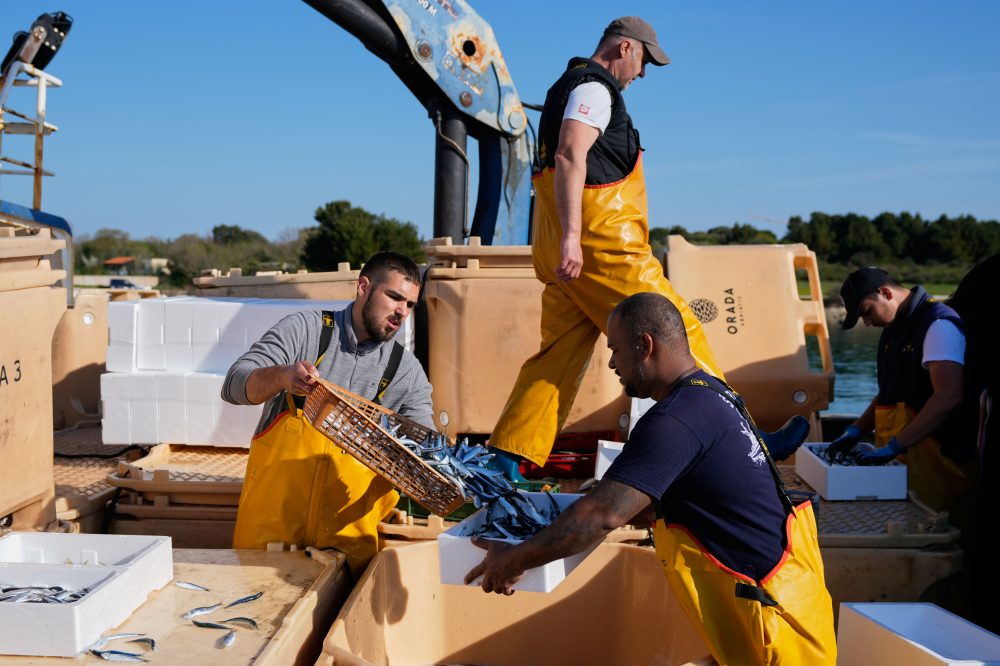

PULA, Croatia (AP) — Evening approaches along the Adriatic coastline as Marijan Jakopovic readies his vessel and fishing gear for another night at sea, continuing a routine he’s followed for three decades. However, the 55-year-old Croatian fisherman says the industry has never faced such challenging circumstances.
Escalating fuel costs triggered by the Iranian conflict are devastating Croatia’s commercial fishing sector, compounding existing challenges including depleted fish populations, regulatory restrictions, and competition from imported frozen seafood.
These fishermen supply fresh catch during Croatia’s busy summer tourist months, and they’re cautioning that another spike in fuel prices could spell disaster if the Iranian ceasefire fails.
“This is turning into an almost hopeless situation,” said Jakopovic, who operates from Lanisce, a small community on Croatia’s northern Istrian peninsula.
The cost of blue diesel—specialized fuel exclusively for agricultural and fishing operations—has skyrocketed approximately 70% within 30 days in Croatia. Official statistics show prices jumped from 0.80 euros ($0.94) per liter on March 8 to 1.36 euros ($1.59) per liter by April 7.
While Croatia’s administration implemented temporary price controls, these measures couldn’t completely shield the industry from financial impact. Neighboring nations have experienced similar effects despite implementing government subsidies and pricing restrictions.
Vedran Spehar, a high-ranking official from Croatia’s Ministry of Economy, told state-run Croatian Radio this week that blue diesel would have cost at least 2 euros ($2.34) per liter without government intervention, which also prevented supply shortages.
Croatia joined the European Union in 2013 and switched to euro currency in 2023, a change that coincided with widespread price increases. The economic consequences of Ukraine’s war had already elevated energy and food costs before the Iranian conflict began.
Currently, Croatia experiences the EU’s highest inflation rate at 4.8% annually.
According to Jakopovic, mounting expenses now force some fishing crews to allocate up to 70% of their income toward fuel costs, varying by vessel type. This doesn’t include additional expenses for crew wages, boat maintenance, and fishing equipment.
These difficulties aren’t recent developments.
Croatia’s commercial fishing has struggled for years despite booming tourism along the nation’s spectacular coast and islands—over 20 million visitors came to the country last year alone.
Fish prices at Croatian markets and restaurants may increase this year.
Almira Raimovic sells seafood at Pula’s northern market. She anticipates that if fishermen increase their prices to offset fuel expenses, both retail and wholesale costs will rise accordingly.
Raimovic previously worked as a fisher but switched to a more lucrative business—using her former fishing vessel for tourist excursions. While Mediterranean populations will continue purchasing fish, consumer behavior may need to adapt, she noted.
“The focus will likely shift to cheaper fish, sardines and anchovies, which are still more affordable than other (fish),” she said. “Rising fuel prices will affect everyone, inflating the cost of living and of food across all sectors, not just fishing.”
Fishing crews have previously voiced concerns about declining fish populations, seasonal prohibitions on certain species, catch quotas, and protected marine areas established to safeguard threatened wildlife.
As an EU member nation, Croatia follows the organization’s stringent sustainable fishing regulations.
These factors require fishermen to travel greater distances and remain at sea longer, increasing fuel usage. This destructive cycle threatens to eliminate many operations since each fishing expedition now involves excessive financial risk, Jakopovic explained.
“We don’t know how much longer we will be able to keep working,” he said.