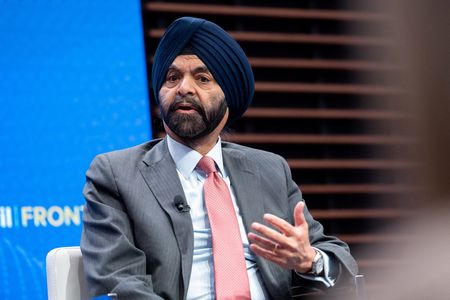

The ongoing conflict in the Middle East will create widespread economic consequences across the globe, regardless of whether the ceasefire announced by President Donald Trump holds, World Bank President Ajay Banga warned during a Friday interview with Reuters.
According to Banga, the economic damage will become significantly worse should the ceasefire collapse and fighting intensify.
During a Tuesday briefing, Banga outlined projections showing worldwide economic growth could decline by 0.3 to 0.4 percentage points under the best-case scenario with an early conclusion to hostilities. However, if warfare persists, growth could drop by a full percentage point. Meanwhile, inflation rates may climb by 200 to 300 basis points, potentially reaching 0.9 percentage points higher if combat continues.
The World Bank has revised its forecasts for emerging markets and developing nations, now expecting 3.65% growth in 2026 compared to the previous October projection of 4%. Under worst-case conditions with prolonged warfare, growth could plummet to just 2.6%. Inflation estimates for these countries have increased to 4.9% in 2026, up from the earlier 3% prediction, with extreme scenarios potentially pushing inflation to 6.7%.
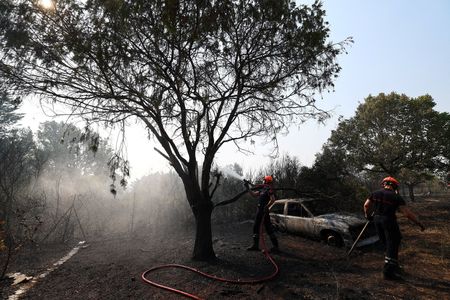
The conflict has claimed thousands of lives throughout the Middle East region and triggered a 50% spike in oil prices. Supply chains for oil, natural gas, fertilizer, helium, and other essential commodities have faced major disruptions, while tourism and aviation industries have also suffered significant impacts.
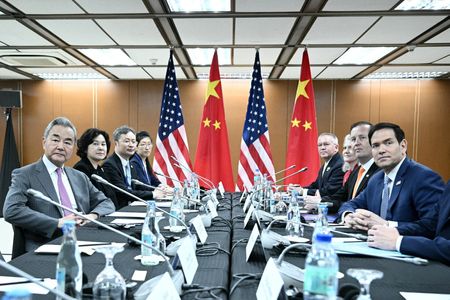
The two-week ceasefire Trump announced remains fragile, as Israel and Iran continue military strikes against each other. On Friday, Iranian officials stated that frozen Iranian assets must be unfrozen and a Lebanese ceasefire established before U.S.-Iran negotiations, set for Saturday in Pakistan, can move forward. Trump responded by saying American naval vessels were being resupplied with weapons in preparation for potential talks failure.
“The question really is, does this current peace and the negotiations that are going to be happening this weekend – will this lead to a lasting peace and then a reopening of the Strait (of Hormuz)?” Banga stated. “If it doesn’t lead to that, and if conflict were to break out again, would that have an even larger impact, or longer-term impact on energy infrastructure?”
Banga revealed that the world’s premier development institution has begun conversations with several developing nations, particularly small island countries lacking domestic energy resources, regarding access to emergency funding through existing “crisis response windows.”
The World Bank’s emergency response mechanisms enable nations to access previously authorized but unused funds without requiring additional board approval, providing greater operational flexibility during crises.
However, Banga emphasized the bank is advising countries against implementing energy subsidies they cannot sustain financially, which could create larger problems down the road.
“I worry about making sure that they can come through this crisis, targeting what they need to do, but not doing anything that further deteriorates that fiscal space,” he explained.
Numerous developing countries face substantial debt burdens while dealing with elevated interest rates, limiting their capacity to secure loans for addressing increased energy costs and other war-related price increases.
This crisis has renewed focus on the importance of diversifying energy sources and enhancing domestic energy independence, Banga noted. Last June, the World Bank lifted its longtime prohibition on financing nuclear energy projects as part of efforts to address growing electricity demands.
Nigeria, despite facing longstanding challenges, is positioned to benefit from a $20 billion investment by the Dangote Group in refinery infrastructure, which has actually increased production during the conflict and now provides aviation fuel to surrounding nations.
“Nigeria should be breathing a sigh of relief. They’ve built up the ability to have energy security for themselves through that huge investment,” he said. “It’s actually a really good example of the right thing being done in terms of energy self-sufficiency for them, but also for their neighbors.”
The World Bank is also collaborating closely with Mozambique to enhance that African nation’s energy production capacity in both natural gas and hydroelectric power sectors.
Multiple energy initiatives are currently in development, Banga reported, including discussions with countries interested in extending their nuclear reactor operations and others exploring entry into nuclear power generation.
“If you don’t get nuclear and hydro and geothermal going at scale, along with wind and solar, they will end up doing more with traditional fuels, and nobody really wants that,” he concluded.