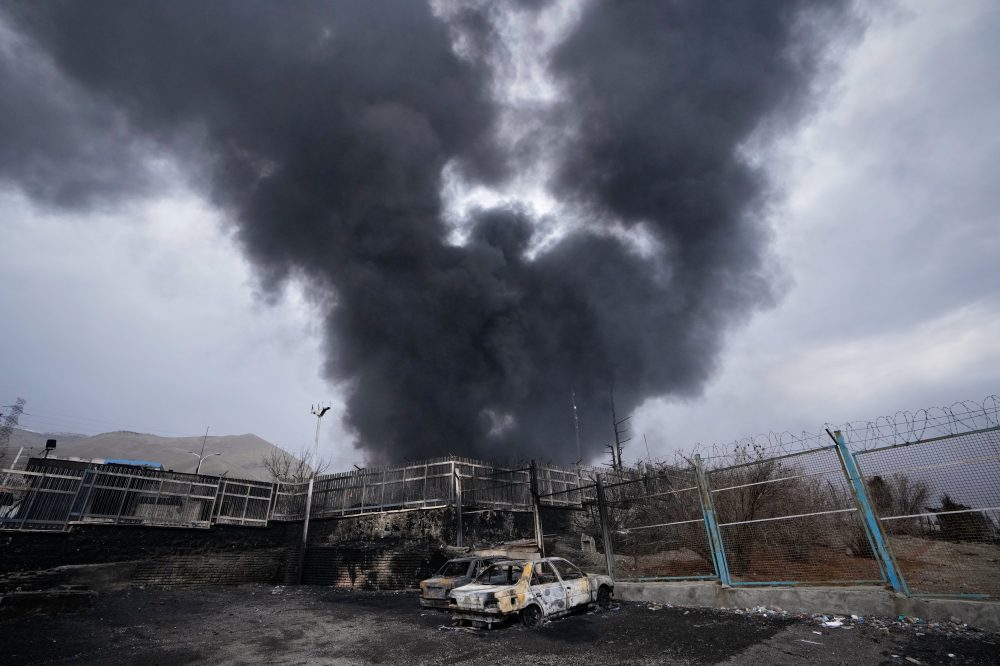

The aftermath of the recent war between the United States and Iran continues to create ripple effects worldwide, leaving the Middle East in turmoil and reshaping global political and economic dynamics as both nations head into weekend peace talks in Pakistan.
The conflict has disrupted regional stability, put stress on international partnerships, and triggered significant changes in global economic and military power structures that are still developing.
Iran’s religious leadership remains damaged but functional, now wielding new economic influence. Both American and Israeli leaders face upcoming elections where voters may judge them harshly for not achieving their stated military objectives. The NATO partnership faces additional strain, while Gulf Arab nations must contend with a more aggressive Iran nearby.
As diplomatic discussions prepare to begin, journalists covering the region and Washington offer their analysis of how the war continues to impact communities worldwide during this fragile ceasefire period.
Israeli Prime Minister Benjamin Netanyahu would receive an incomplete grade if his war performance were evaluated academically.
When fighting began on February 28th, Netanyahu outlined bold objectives including eliminating threats from Iran’s missile and nuclear capabilities, ending support for hostile proxy organizations, and fostering conditions for Iranian citizens to rise against their government. These ambitious targets remained unmet.
During a broadcast following the ceasefire announcement, Netanyahu admitted “we still have goals to complete.” However, he still declared “immense achievements.”
“Iran is weaker than ever, and Israel is stronger than ever. This is the bottom line of this campaign,” he stated.
With elections approaching later this year, Netanyahu must determine whether Israeli citizens share his positive evaluation.
Israeli citizens strongly backed the military action against their longtime enemy Iran, particularly during the campaign’s initial phase. However, as fighting continued, war fatigue set in as constant air-raid warnings interrupted normal routines and forced residents into protective shelters continuously.
Netanyahu now hopes upcoming ceasefire negotiations will help the United States transform military gains into lasting agreements protecting Israeli security interests. He must also maintain his working relationship with President Donald Trump following an inconclusive conflict that proved highly unpopular among Americans.
Without success in these areas, Netanyahu may face job security concerns when his war-weary country votes.
Iran, despite suffering from nationwide demonstrations in January and extensive bombing during the war, now holds a surprisingly powerful position.
Simply by threatening to deploy sea mines and potential Revolutionary Guard attacks, Iran has deterred shipping from the Strait of Hormuz, effectively closing this vital international energy transportation route.
Even conservative political factions have transformed the death of 86-year-old Supreme Leader Ayatollah Ali Khamenei into an opportunity to install his son Mojtaba as a younger, more hardline replacement.
Iranian leadership has presented their own extreme demands before the Islamabad discussions, including maintaining uranium enrichment activities in their nuclear program – one of Trump’s primary justifications for military action.
However, Iran’s military installations now lie destroyed, their missile stockpiles significantly reduced, and future citizen protests remain a constant threat. Such unrest could intensify due to massive destruction of Iran’s energy sector and attacks on steel production and other economic facilities.
Despite requesting and demanding that Iran exclude them from the conflict, Gulf Arab nations still became targets as Iran launched drone and missile attacks on airports, energy infrastructure, military installations, and civilian areas throughout the region.
Multiple countries had to shut down refineries or announce inability to meet promised oil production levels due to wartime disruption. Even with ceasefire terms in place, Iran’s new control over the Strait of Hormuz through intimidation alone prevents Gulf states from shipping energy products to international markets.
These nations don’t share identical viewpoints, ranging from Oman’s diplomatic initiatives to the United Arab Emirates condemning Iranian hostility and declaring the current situation unacceptable.
Lebanon has experienced devastating consequences from the regional conflict, and ceasefire prospects now create more uncertainty than clarity.
The United States and Israel disagree with Iran about whether their ceasefire agreement covers the ongoing war between Israel and Hezbollah in Lebanon. Iran claims it does; America and Israel maintain it doesn’t.
Meanwhile, Lebanese and Israeli representatives have agreed to begin direct discussions, which Lebanon hopes will produce a ceasefire and Israel hopes will result in Hezbollah’s disarmament. Netanyahu announced these negotiations would also address potential peace agreements between the two nations, which currently lack diplomatic relations.
While these talks represent meaningful progress, reaching agreements won’t be simple. Lebanon demands Israel halt airstrikes before negotiations begin, a condition Israel seems unlikely to accept.
Most experts believe Lebanon lacks capacity to forcibly disarm Hezbollah or enforce ceasefire agreements without Hezbollah’s cooperation.
Currently, the Israel-Hezbollah conflict that has displaced over one million people and killed nearly 1,900 individuals continues.
Trump has repeatedly challenged the 32-nation alliance.
He eliminated direct American military aid to Ukraine, threatened to seize Greenland’s Arctic territory from NATO partner Denmark, and pressured members to increase defense spending.
His disagreements with NATO partners regarding Iran now raise fresh concerns about whether this alliance, established to address post-World War II instability, can endure.
Since beginning military operations, Trump has criticized allies as “cowards,” attacked NATO as “a paper tiger,” and compared U.K. Prime Minister Keir Starmer to Neville Chamberlain, the former leader remembered for appeasing Nazi Germany.
Trump feels frustrated that member nations ignored his requests for assistance as Iran effectively blocked the Strait of Hormuz, and that Spain and France restricted American forces from using their airspace or joint military facilities for Iranian operations.
Trump describes this moment as “a mark on NATO that will never disappear.”
Trump returned to the White House promising to reduce inflation, lower prices Americans considered excessive, and create employment growth. The Iranian war has produced opposite results, increasing gasoline costs, destabilizing financial markets, and shocking the broader economy as job markets weaken and inflation rises again.
With November’s midterm elections approaching, these developments harm Republicans attempting to maintain Congressional control. Trump initially tried addressing economic concerns by visiting competitive states. However, he first dismissed affordability issues as fraudulent, then abandoned those visits entirely as war consumed his administration’s attention.
Successfully maintaining ceasefire agreements might eventually stabilize energy prices and financial markets, but reversing global economic damage may require much longer, potentially influencing voters closer to Election Day.
Opinion polls indicate most Americans believe military action in Iran exceeded appropriate limits. The war has even created divisions within Trump’s previously solid MAGA supporter base.
The conflict has essentially stopped ship traffic through the Strait of Hormuz, which handles approximately one-fifth of global oil transportation, and has damaged energy production facilities across the Middle East.
Consequently, oil prices have increased worldwide. Brent crude oil, the international benchmark, rose from approximately $70 per barrel before late February fighting to over $119 during peak periods. Brent increased 0.7% to $96.58 Friday.
Gasoline pump prices have also jumped, reaching about $4.15 per gallon in America, up from just under $3 before conflict began. Higher fuel costs can reduce Americans’ spending on other products and services, slowing economic growth and potentially worsening unemployment.
American consumer prices increased 3.3% in March compared to one year earlier, rising sharply from 2.4% in February and representing the largest yearly increase since May 2024. Gasoline price surges will strain lower- and middle-income household budgets.