
LONDON (AP) — Queen Elizabeth II firmly believed that for a monarch to be effective, the public needed to see them clearly. This philosophy led her to introduce innovative fashion choices, including a transparent plastic rain jacket that allowed crowds to spot her even during England’s unpredictable storms, rather than hiding behind a traditional dark umbrella.
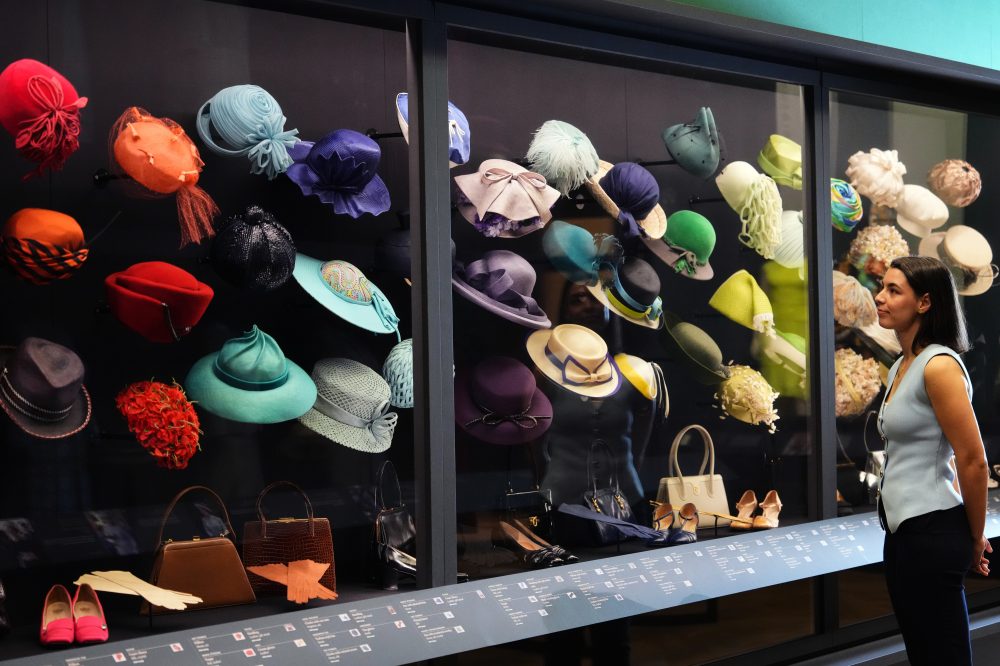
This distinctive raincoat is among nearly 300 clothing pieces and fashion items now featured in a new exhibition opening Friday at Buckingham Palace’s King’s Gallery. The display honors the late queen’s legacy as Britain approaches what would have been her 100th birthday celebration. This comprehensive showcase represents the most extensive collection of her fashion choices ever assembled, documenting Elizabeth’s journey and her influence on British style.
“I think she had a definite sense of what suited her,” exhibition curator Caroline de Guitaut said. “She absolutely knew how she wanted to appear.”
Many pieces will seem familiar since Elizabeth ranked among history’s most photographed individuals. However, seeing her elegant evening gowns, classic tweed ensembles, and signature scarves displayed on museum figures rather than the queen herself creates an unusual viewing experience.
The collection also features truly unique pieces.
Among them is the outfit, including matching undergarments, worn by Elizabeth’s body double during the 2012 London Olympics opening ceremony. The spectacular sequence showed the 86-year-old monarch apparently jumping from an aircraft into the stadium with actor Daniel Craig portraying James Bond. To maintain the surprise, the real queen later appeared in the audience wearing an identical ensemble.
Both outfits, created by Elizabeth’s trusted designer Angela Kelly, are presented together, though the stunt performer’s version features a large back zipper to accommodate parachuting equipment.
The display, selected from approximately 4,000 pieces from the queen’s personal collection, demonstrates how clothing became one of her most effective communication methods as she transformed from a young royal into Britain’s longest-serving sovereign.
This strategic approach often appeared in her color selections and decorative elements, exemplified by the green and white Norman Hartnell evening gown she selected for a state dinner during her 1961 Pakistan visit, showing respect by wearing the host country’s national colors.
“The queen had an intimate understanding of how fashion could lend itself to diplomacy, a trait which, while its origins certainly lay in earlier reigns, the queen developed into nothing short of an art form,” de Guitaut said. “Color or embellishment communicated messages of respect to her host nation before she had even uttered a word in her speech.”
Especially in her later years, Elizabeth chose vibrant or unusual colors for major public appearances to ensure easy visibility, guaranteeing attendees could claim they had actually seen their monarch.
The exhibition also features the queen’s casual wardrobe. Tweed suits from Balmoral Castle, the royal family’s Scottish highland retreat, are shown alongside clothing for horseback riding, walking, and other outdoor activities. A heavy wool coat designed by Kelly during Elizabeth’s final years appears next to pieces from Burberry and British designer Hardy Amies.
Garments from significant moments throughout the queen’s extensive life are featured, ranging from her baptismal gown, originally ordered by Queen Victoria for future King Edward VII’s christening, to outfits from her marriage ceremony and coronation.
The display includes design sketches and personal notes revealing the queen’s hands-on involvement in creating her wardrobe.
Naomi Pike, commissioning editor for Elle UK, believes the collection properly acknowledges Elizabeth’s fashion icon status, despite other royals like her younger sister Princess Margaret and daughter-in-law Princess Diana receiving more style attention during her lifetime.
“I think we’re very quick in this day and age to afford people icon status. … It’s thrown around so easily,” Pike said. “But I think in the case of the queen, she was an icon and so much of that comes down to having a very strong sense of personal style.”
While the formal gowns may attract the most attention, the exhibition offers unexpected discoveries. Among items showing “what the monarch wore,” curators included a well-worn fairy costume created from a ballet tutu with attached wings.
This piece particularly delights Cecilia Oliver, a textile conservator at the King’s Gallery, who called it the “cutest thing in the world.”
“I think what I love most about it is that it was bought for Elizabeth as a child, and to think of her as this tiny little girl that then grew up into this magnificent woman with all this weight of responsibility on her shoulders, it just feels very, sort of sentimental,” Oliver said.
Oliver became emotional describing the months spent preparing the exhibition and the honor of working with so many items connected to someone recognized worldwide but truly understood by few.
“As a conservator, I have a really intimate knowledge of these pieces. I’ve been able to touch them. I’ve been able to smell them. I’ve been able to understand them,” she said. “And through that, I felt really close to her.”
Queen Elizabeth II: Her Life in Style continues through Oct. 18 at the King’s Gallery, Buckingham Palace.