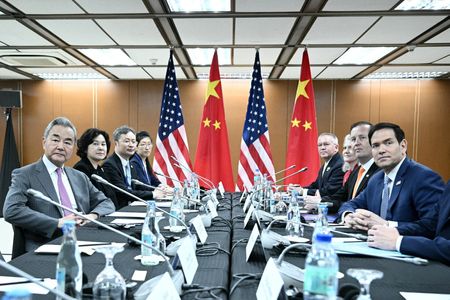

Iranian citizens are experiencing mixed emotions following a two-week halt in hostilities with the United States, as the temporary reprieve from feared military strikes comes alongside growing concerns about increased government oppression at home.
The truce announcement provided immediate comfort to Iranians who had been anticipating what many believed could be devastating U.S. military action. Citizens with limited internet connectivity had reportedly been sharing what they thought might be their final communications before President Donald Trump revealed an agreement to pursue diplomatic talks with Iran.
While the temporary peace has offered emotional comfort, it has done little to calm deeper worries about how the Iranian government treats its own people. Opposition leaders and activists express particular concern that authorities will exploit this period to intensify their crackdown on dissidents and accelerate executions of political detainees.
Abbas Khorsandi, who serves as secretary of the Free Democratic Party of Iran, expressed urgent alarm about the safety of political prisoners. “In the current extremely critical situation, we reiterate our grave concern for the lives of political prisoners in Iran,” he stated. Khorsandi emphasized that government oppression “has continued unabated,” with “consecutive executions persisting and claiming the lives of our young people.” He warned that during the ceasefire, officials are “deeply concerned about the prospect of this societal anger manifesting in concrete form in the streets.” “As a result,” he explained, “they are intensifying executions and continuing to endanger the lives of political prisoners.”
Anxiety extends to ordinary citizens still living within Iran’s borders. A Tehran-based artist known only as Goli shared her concerns with The Media Line, expressing fear that Iran’s leadership will exploit both conflict and peace to maintain heavy security presence in public areas. “What fills me with dread,” she explained, “is that the Islamic Republic may use the war and the ceasefire as a pretext to keep military forces on the streets and effectively maintain a state of martial law, so that any protests are met with live fire from the very outset.”
Some observers believe the real conflict lies not between Tehran and Washington, but between Iranian citizens and their own government. Amelia Assadi emphasized to The Media Line that “the central issue here is the conflict between the people of Iran and the Islamic Republic, not the war, ceasefire, or any peace arrangement between the regime and the United States.” She stressed that “the struggle between the people and the Islamic Republic will never come to an end.” Describing the government as fundamentally illegitimate, she argued that “a regime that, for more than 47 years, has not ceased killing, torture and executions can never establish legitimacy among the Iranian people and is ultimately destined to fall.”
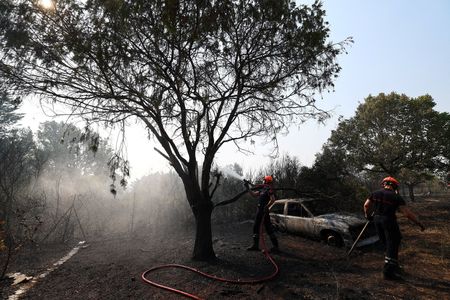
The temporary peace follows 40 days of warfare that severely damaged Iran. Senior military and security officials were killed, while crucial economic and infrastructure sectors sustained major damage. Attacks targeted petrochemical plants, steel manufacturing facilities, and energy installations. The conflict claimed over 2,000 lives and destroyed tens of thousands of homes, creating widespread displacement. As citizens prepared for what President Trump had characterized as “hell” and “a return to the Stone Age,” major retailers had already begun increasing prices on essential items.
Despite the current ceasefire, Iran remains unstable. Public focus has shifted to political prisoners awaiting execution, mass arrests conducted during wartime, and the potential for renewed widespread civil unrest. Many view this calm period as temporary, with underlying tensions that could soon reignite into broader social upheaval against the Islamic Republic.