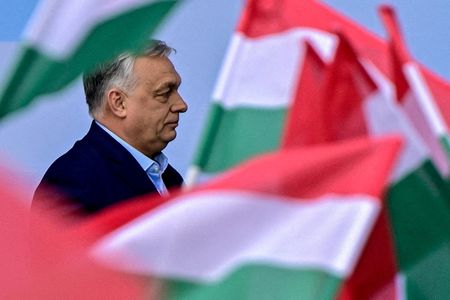
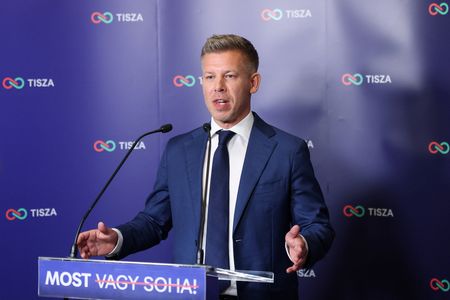
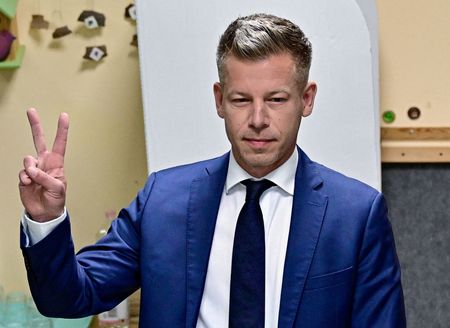
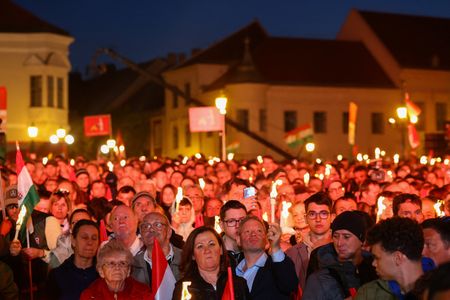
Citizens of Hungary brought an end to Viktor Orbán’s lengthy political reign on Sunday, removing the Prime Minister from office after he held power for 16 years. Peter Magyar, representing the Tisza party and formerly aligned with Orbán, secured victory in the election.
The electoral outcome marks a significant political shift for the Eastern European nation, as voters chose to change leadership after more than a decade and a half under Orbán’s administration.
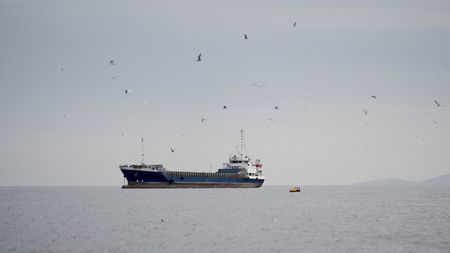
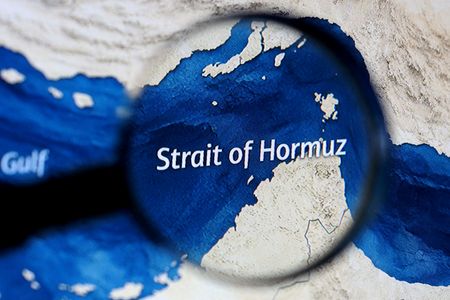
WASHINGTON – The Pentagon announced Friday that American naval forces will launch a comprehensive maritime blockade targeting Iranian ports starting Monday morning at 10 a.m. Eastern Time, following directives from President Donald Trump to restrict access through the Strait of Hormuz.
U.S. Central Command officials stated the naval operation will target all vessel traffic moving in and out of Iranian territorial waters without regard to the ships’ country of origin. “The blockade will be enforced impartially against vessels of all nations entering or departing Iranian ports and coastal areas, including all Iranian ports on the Arabian Gulf and Gulf of Oman. CENTCOM forces will not impede freedom of navigation for vessels transiting the Strait of Hormuz to and from non-Iranian ports,” military commanders announced through an official statement released on social media platforms.
Pentagon officials indicated they plan to distribute detailed operational guidelines to international shipping companies and commercial vessel operators through official maritime channels prior to the blockade’s implementation on Monday.
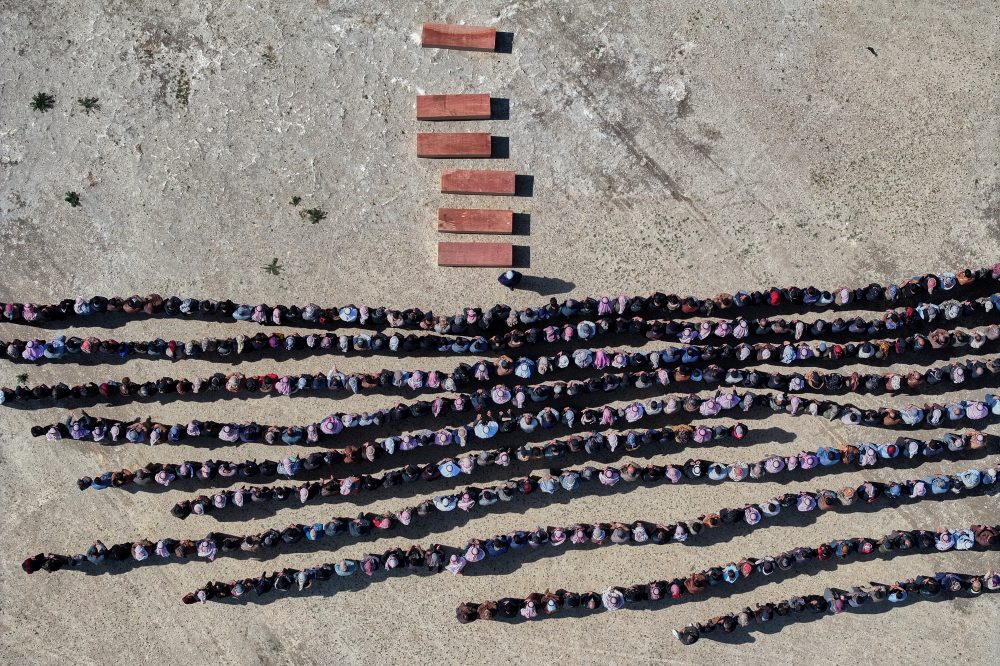
PORT-AU-PRINCE, Haiti — Officials have confirmed that a deadly crowd crush at Haiti’s renowned Citadelle Laferrière fortress has claimed the lives of at least 25 people, with dozens more suffering injuries during weekend festivities at the historic mountaintop site.
Cap-Haïtien city officials released a statement detailing how Saturday’s tragic incident in Milot “resulted in numerous cases of asphyxiation, trampling and loss of consciousness.” Emergency responders transported dozens of festival attendees to area medical facilities, while authorities continue searching for multiple missing persons.
“According to preliminary information … a situation of severe overcrowding, linked in particular to deficiencies in crowd management measures, triggered a stampede,” municipal leaders explained in their official statement.
The Haitian National Police have launched a formal investigation into what caused the devastating incident. Their inquiry prompted officials to revise the fatality count to 25 deaths, with medical examiners conducting autopsies as of Sunday.
Law enforcement reported that 30 individuals remain under hospital care. Police officials have urged citizens to assist with the ongoing investigation while cautioning against spreading unverified information.
The Haitian government has expressed sympathy for families affected by the tragedy at the Citadelle Laferrière, a popular tourist destination.
Recovery efforts continued Sunday, with some victims’ remains still located at the fortress site.
Donaldson Jean mourned the loss of his sister, who had earned her place on the school excursion through academic excellence. He wept while retrieving her body, which had been covered with white sheeting.
“Morning and night, she was studying for the genius program,” Jean recalled. “She would come and ask me to help with homework before dinner. Look how (I) lost her.”
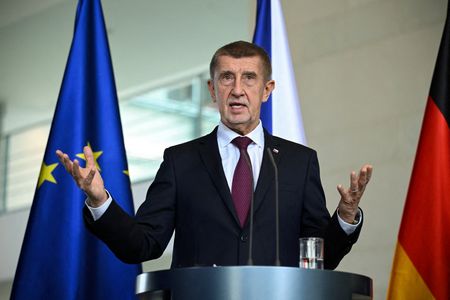
BUDAPEST, April 12 – Viktor Orban, Hungary’s Prime Minister and a major critic of European Union assistance to Ukraine against Russia’s invasion, was removed from office Sunday following 16 years of rule as Hungarian citizens cast ballots in unprecedented numbers for a pro-European direction led by center-right challenger Peter Magyar.
The 62-year-old Orban had received support from U.S. President Donald Trump and several prominent European conservative figures, but initial vote tallies indicated his nationalist Fidesz party was defeated by Magyar’s pro-EU Tisza party amid Hungary’s economic decline.
Once a passionate anti-Communist activist during the Cold War era, Orban served as the European Union’s most tenured leader and represented a patriotic symbol for his followers, though domestic and international critics have charged him with steering Hungary toward authoritarian rule.
Born in 1963 in a rural community west of Budapest, Orban pursued legal studies, spent time studying political philosophy at Oxford, and even competed as a semi-professional soccer player before assuming the role of prime minister initially in 1998 at age 35.
During Orban’s leadership, Hungary became a NATO member, though he was voted out in 2002. Following eight years as opposition leader, he secured a decisive electoral triumph in 2010, which allowed him to restructure Hungary’s constitution and enact significant legislation designed to establish an “illiberal democracy.”
His concentration of executive authority, new restrictions on non-governmental organizations and press freedoms, plus the undermining of judicial independence created conflicts with the European Union regarding democratic principles, resulting in the suspension of billions of euros in Hungarian funding.
However, Orban’s political fortunes collapsed Sunday evening as initial vote counts showed Magyar heading toward a parliamentary supermajority, positioning his center-right movement to reverse all of Orban’s disputed policy changes.
“What tonight’s election result means for the fate of our country and nation and what the deeper or higher meaning of all this is, remains unclear. We do not know it yet. Time will tell,” Orban told supporters, conceding defeat.
“But however it has turned out, we will keep serving our country and the Hungarian nation from opposition.”
Throughout Europe’s 2015 migration crisis, Orban positioned himself as the protector of Hungary’s national character and Christian values, rejecting EU requirements for accepting asylum seekers, primarily Muslims from the Middle East and other regions. His administration has progressively implemented measures to limit LGBTQ+ rights.
His strict immigration stance and initiatives to boost Hungary’s falling birth rates garnered approval from other conservative figures, including Trump.
Orban, who also achieved decisive electoral victories in 2014, 2018 and 2022, had obtained endorsements this election cycle from Italy’s Prime Minister Giorgia Meloni, Marine Le Pen of France’s National Rally, and Alice Weidel of the Alternative for Germany.
Trump also backed Orban, stating that U.S.-Hungary diplomatic relations have achieved “new heights” through their leadership following years of tension under Democratic administrations in Washington.
Orban has preserved strong relationships with Russia, an important energy provider, and China, whose companies are constructing significant electric vehicle and battery manufacturing facilities in the landlocked central European nation.
He attempted to present the election as a decision between “war or peace,” implying Tisza wanted to involve Hungary in the conflict occurring in neighboring Ukraine, which the party firmly rejects.
“For peace, Fidesz is the safe choice,” Orban declared during campaign events in February. He has repeatedly disagreed with Ukraine’s President Volodymyr Zelenskiy and angered Hungary’s EU allies by obstructing a 90 billion euro assistance package for Kyiv.
However, polling data revealed Hungarian voters were more focused on internal matters like healthcare and the economy, which has remained stagnant for three years.
Hungary faced the EU’s most severe inflation crisis following Russia’s February 2022 invasion of Ukraine, which pushed food costs near EU average levels, while Hungarian salaries remain the third-lowest among the 27-member union.
Despite generous family-support programs, including affordable loans and tax advantages, Orban appears to have lost backing from younger voters as he moved further right politically.
Pre-election surveys indicated young voters were especially motivated for change, with Orban alternating between attempting to attract this crucial group and dismissing their opposition to his leadership as a “phony rebellion.”
“I know young people like to turn against their parents and this can cause political problems,” said Orban, a father of five and a grandfather.
Despite participating in numerous campaign events and maintaining constant interviews and social media activity, he offered a rare insight late last year into the exhaustion the campaign may have caused after so many years in leadership.
“When I was a soldier (doing military service), they told us a soldier cannot be cold, he can only perceive the cold,” he said. “I am the same. I am not tired. It is just that my strength is running out.”
A childhood admirer who once hung a poster of Viktor Orban on his bedroom wall has now toppled the Hungarian strongman from power after 16 years of rule.
Peter Magyar’s pro-European Union Tisza party secured a stunning victory in Sunday’s parliamentary elections, capturing 137 seats for a commanding two-thirds majority in Hungary’s 199-member legislature. The upset defeat of Orban’s nationalist Fidesz party drew record voter participation and is expected to send ripples through right-wing political movements worldwide, including supporters of U.S. President Donald Trump.
As a nine-year-old when communism fell in 1989, Magyar had adorned his Budapest bedroom with images of prominent political leaders, including Orban, who had gained fame as an anti-Communist activist demanding Soviet withdrawal from Hungary.
“There was a surge of energy around the regime change that swept me up as a child,” Magyar shared during an interview with the Fokuszcsoport podcast last year.
Magyar, whose surname translates to “Hungarian,” emerged from relative anonymity two years ago following a scandal involving his former wife, Judit Varga, who had served as Orban’s justice minister. Varga stepped down from all political positions after public outrage over a controversial sex-abuse case pardon.
Following that incident, Magyar severed ties with the ruling party and launched sharp criticism of Fidesz, alleging corruption and propaganda while expressing his growing disenchantment with the organization.
In a remarkable political ascent, Magyar’s newly formed party captured 30% of the vote in June 2024’s European elections just four months after his debut interview on YouTube channel Partizan, finishing second to Fidesz while decimating other opposition groups.
The electoral outcome carries major consequences extending far beyond Hungary’s borders, potentially reshaping European politics and dealing a blow to populist movements across the continent.
Since returning to power in 2010, Orban has constructed what he terms an “illiberal democracy,” restricting press freedom, limiting non-governmental organization operations, and undermining judicial independence.
While cultivating close ties with Russian President Vladimir Putin and U.S. President Donald Trump, Orban has repeatedly clashed with European Union leadership, resulting in the suspension of billions in EU funding over democracy concerns.
Magyar has outlined a dramatically different path, promising to restore Hungary’s Western partnerships and eliminate Russian energy dependence by 2035 while maintaining “pragmatic relations” with Moscow. He also pledged to unlock frozen EU funds to jumpstart Hungary’s struggling economy.
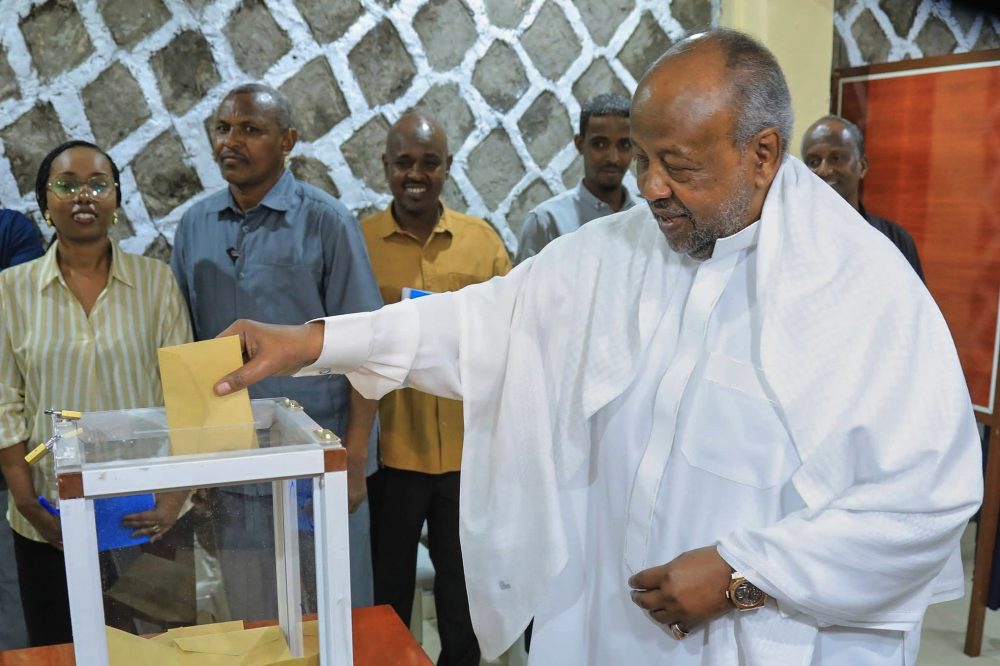
“On the first day we need to pass anti-corruption measures and we need to submit our application to join the European Prosecutor’s Office,” Magyar declared Sunday morning after voting.
Throughout the campaign, Magyar carefully balanced his positions to avoid alienating conservative voters. While not opposing Ukraine’s eventual EU membership in principle, his party’s platform stops short of supporting accelerated entry for Kyiv. Like Fidesz, Tisza maintains opposition to EU migrant quotas and would preserve border barriers constructed under Orban.
Political observers suggest Magyar’s victory could ease Budapest’s tensions with Brussels, particularly after Orban blocked a 90 billion euro aid package for Ukraine.
“Orban has lost faith in the current form and direction of European integration, and is pursuing a policy of vetoes and obstruction,” explained Botond Feledy, a geopolitical analyst at Red Snow Consulting. “Tisza has no objection in principle to integration and would pitch its battles at a practical level.”
Magyar adopted several tactics from Orban’s political handbook, conducting a grassroots campaign that penetrated Fidesz strongholds in rural areas. His rallies prominently displayed Hungarian flags in an appeal to voters’ patriotic sentiments, mirroring Orban’s approach.
Gabor Toka, senior research fellow at the Vera and Donald Blinken Open Society Archives, credited Magyar’s rapid ascent to consistent messaging and effective social media strategy.
“Many people are also reassured by the story of someone who has irrevocably come into conflict with the system, and has no way back,” Toka noted, referring to Magyar’s definitive break with Orban’s circle.
Born in 1981 to a legal family, Magyar pursued law studies and married Varga in 2006. When her career led to Brussels, Magyar joined Hungary’s diplomatic service working on EU legislation. Upon returning home, he worked at a state bank before leading a student loan agency.
Magyar and Varga, who divorced in 2023, share three sons. He describes himself as religious and enjoys cooking and playing soccer with friends and his children.
When asked in December about changes since entering politics, Magyar referenced media reports describing his temper, saying: “Now I count to 10.”
BUDAPEST, April 12 – Early election returns from Hungary indicate that the opposition centre-right Tisza party is positioned to claim victory in Sunday’s national vote, bringing to a close Prime Minister Viktor Orban’s 16-year tenure in power.
The nationalist leader, who has maintained close ties with both U.S. President Donald Trump and Russia, acknowledged the electoral outcome in his remarks following the preliminary results.
PRIME MINISTER VIKTOR ORBAN
“The election results are not final yet but the situation is understandable and clear. The election result is painful for us, but clear. The responsibility and possibility of governing was not given to us. I have congratulated the winner.”
European Commission President Ursula von der Leyen welcomed the apparent change in Hungarian leadership with her own statement.
URSULA VON DER LEYEN, president of the European Commission
“Europe’s heart is beating stronger in Hungary tonight.”
LONDON — Sunday’s ceremony for the prestigious Olivier Awards celebrated outstanding achievements across London’s theater, opera and dance scene for 2026.
“Paddington The Musical” emerged as the night’s biggest winner, claiming the top prize for Best New Musical. The beloved bear’s stage adaptation also earned recognition for James Hameed and Arti Shah in the Actor-Musical category, Victoria Hamilton-Barritt for Supporting Actress-Musical, and Tom Edden for Supporting Actor-Musical. Director Luke Sheppard received honors for his work on the production, which also took home awards for Set Design and Costume Design.
In the play categories, “Punch” claimed the Best New Play award, with Julie Hesmondhalgh earning Supporting Actress honors for her performance. Jack Holden received the Actor-Play recognition for “Kenrex,” while Rosamund Pike took home the Actress-Play award for “Inter Alia.”
Rachel Zegler was honored as Actress-Musical for her role in “Evita,” which also received the Theater Choreography award. “All My Sons” won the Revival category, with Paapa Essiedu earning Supporting Actor-Play recognition for his performance in the production.
Other notable winners included “Oh, Mary!” for New Entertainment or Comedy, “The Boy at the Back of the Class” for Family Show, and “Into The Woods” for Musical Revival. The Stephen Sondheim classic also earned the Lighting Design award.
Technical achievements were recognized across multiple productions, with “Kenrex” taking Sound Design honors. “Dead Man Walking” received the New Opera Production award, while “Into the Hairy” claimed New Dance Production recognition.
Chris Fenwick and Sean Hayes were honored for Outstanding Musical Contribution for “Goodnight Oscar.” The Yard Theatre’s production of “The Glass Menagerie” earned Outstanding Achievement in an Affiliate Theater, and veteran performer Elaine Paige received a Special Award for her contributions to theater.
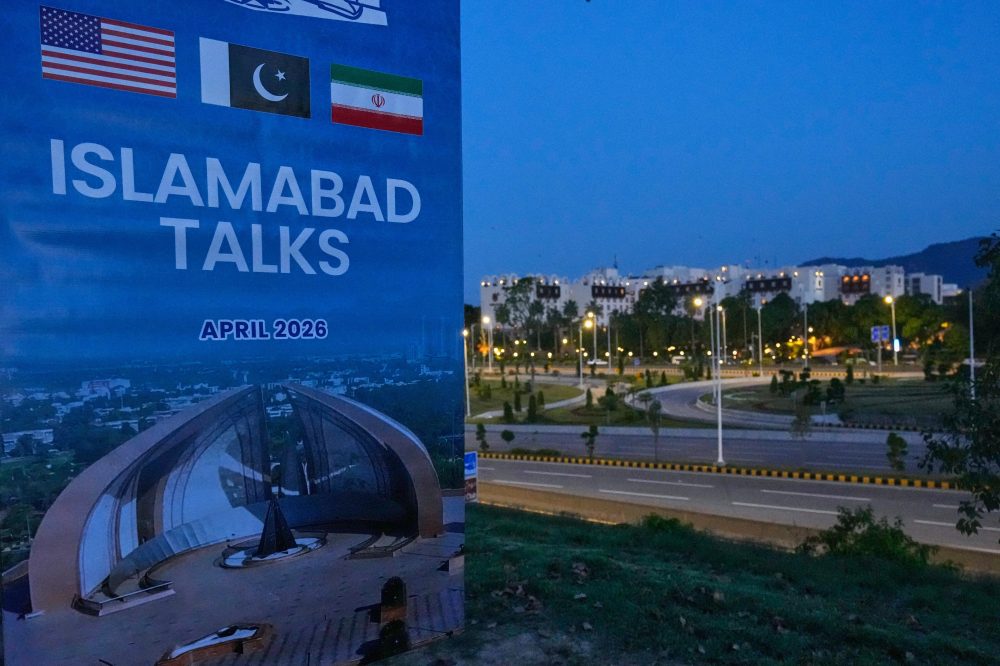
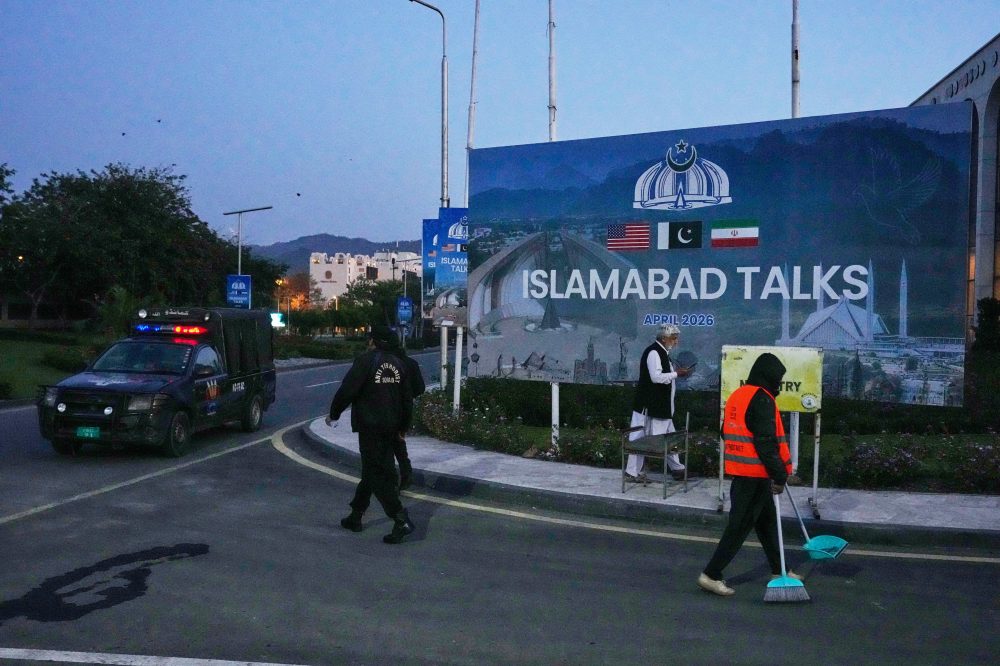
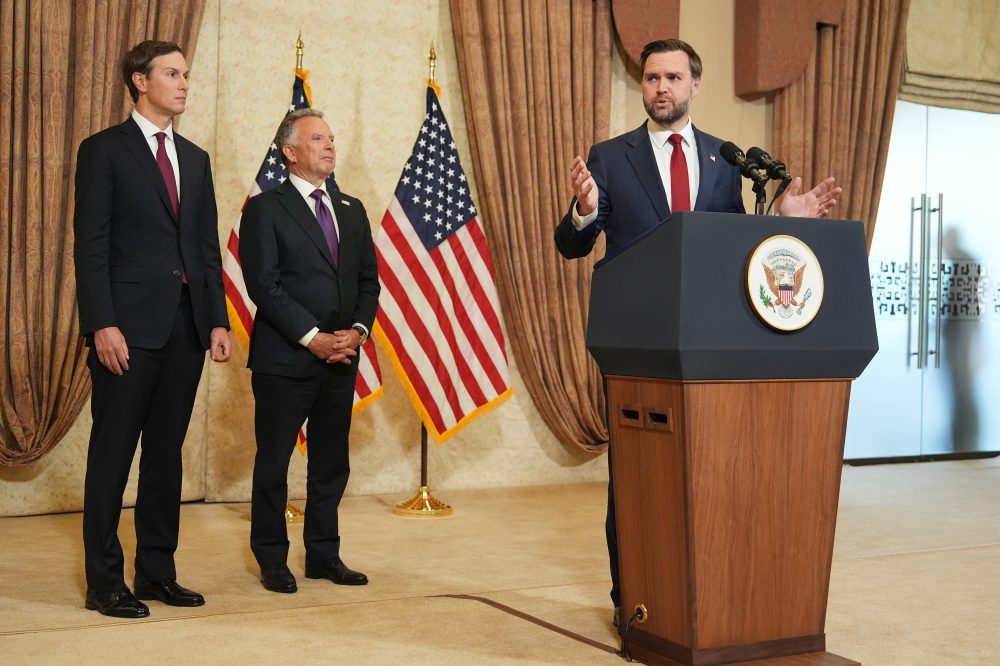
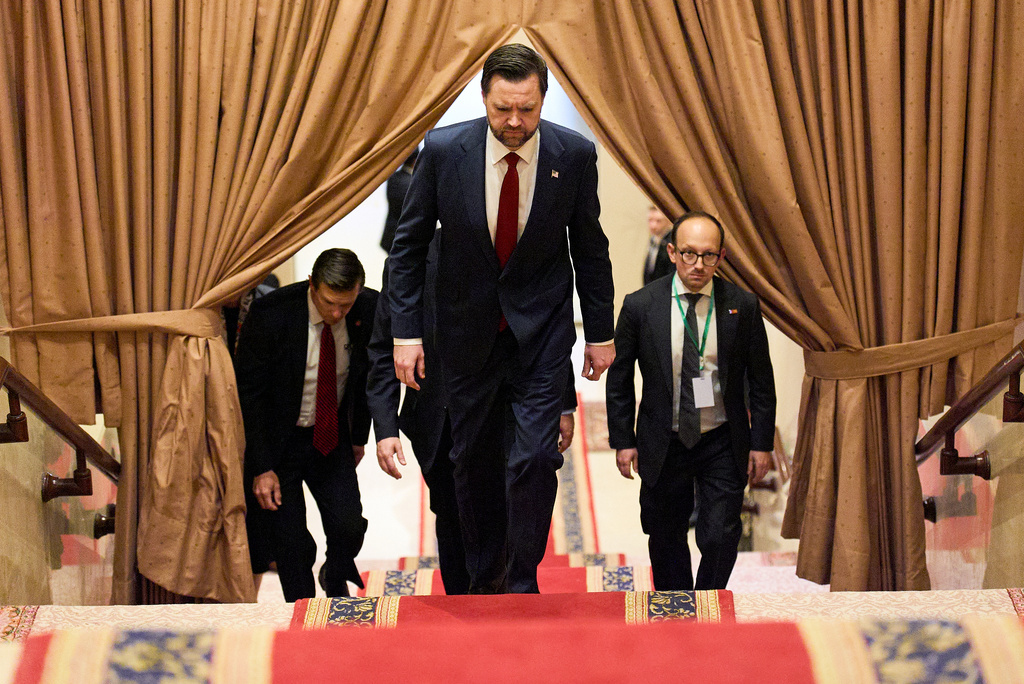
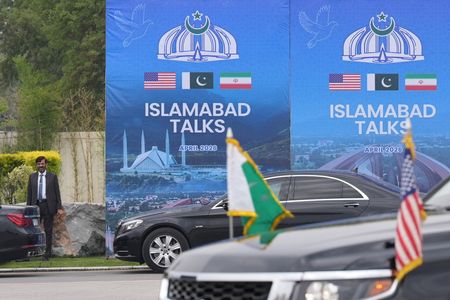
Diplomatic negotiations between the United States and Iran concluded Sunday without a breakthrough, as Vice President JD Vance returned to Washington following weekend talks in Pakistan’s capital.
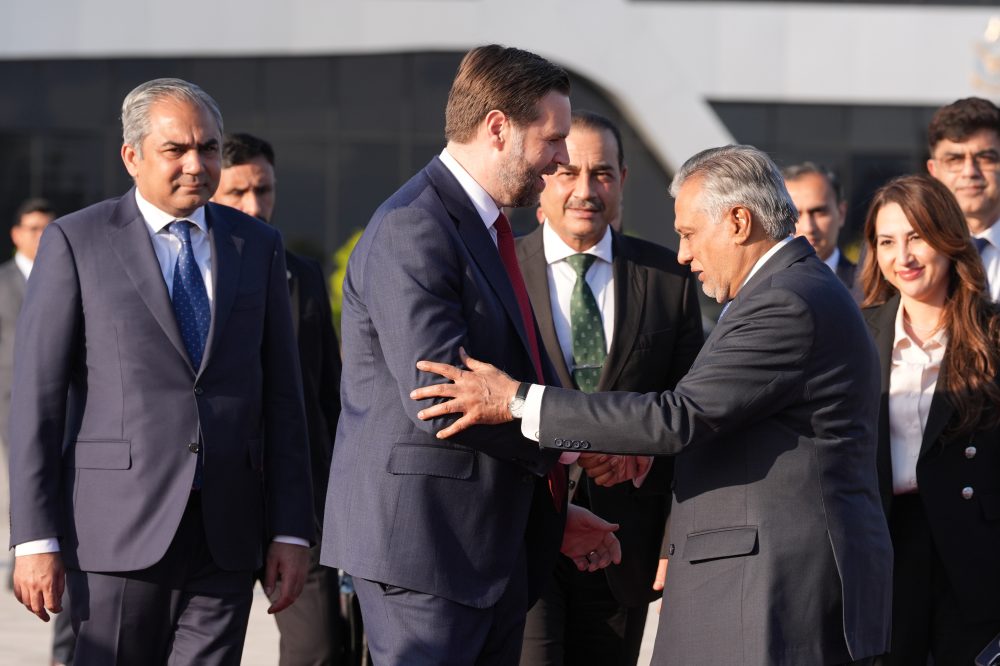
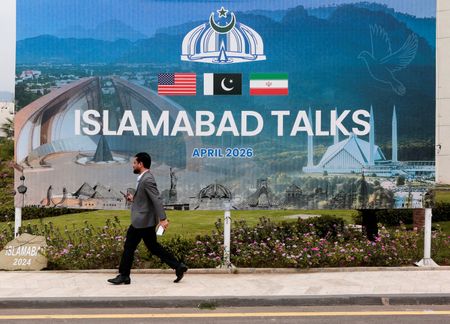
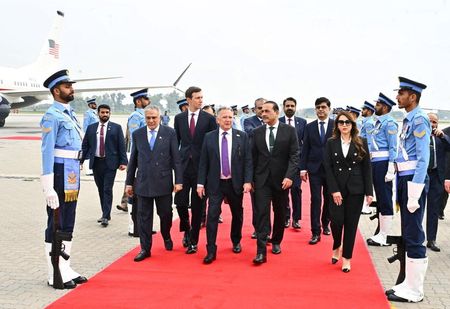
The ceasefire discussions, which took place Saturday in Islamabad, ended without producing a final deal. Vance and his team departed Sunday morning from Nur Khan Air Base, where Pakistani Deputy Prime Minister and Foreign Minister Ishaq Dar and Chief of Defense Forces Field Marshal Asim Munir bid them farewell.
During a brief news conference at the Serena Hotel before his departure, Vance addressed the outcome of the negotiations. “We’ve had a number of substantive discussions with the Iranians. That’s the good news. The bad news is that we have not reached an agreement, and I think that’s bad news for Iran much more than it is bad news for the United States of America,” he stated.
Following Vance’s departure, Dar conducted his own press briefing, describing the negotiations as involving several rounds of thorough and productive discussions between both delegations. He confirmed Pakistan’s commitment to continuing its role as a mediator in future US-Iran dialogue.
Dar voiced optimism that both nations would approach future negotiations with constructive attitudes aimed at achieving lasting peace and prosperity regionally and globally. He emphasized the importance of both parties maintaining their commitment to the current ceasefire agreement.
Iranian Foreign Ministry Spokesman Esmail Baghaei, quoted by Iranian media outlets, acknowledged the talks’ lack of concrete results while maintaining that “diplomacy never ends.”
Baghaei emphasized the importance of Iran’s diplomatic efforts, stating: “In any situation, the diplomatic apparatus must pursue the rights and interests of the Iranian people.”
In a social media post, Baghaei detailed the scope of the discussions, writing: “discussions were held on various dimensions of the main negotiation topics, including the Strait of Hormuz, the nuclear issue, war reparations, lifting of sanctions, and the complete end to the war against Iran and in the region.”
The Iranian spokesman revealed some progress had been made, noting that “Iran and the US have reached an understanding on several issues, and that there were differences of opinion on two to three important matters.”
While many news outlets have characterized the talks as unsuccessful, diplomatic experts and observers suggest the situation remains more open than it appears. The tone and statements from participating delegations and Pakistani facilitators indicate the diplomatic process has not completely stalled.
Foreign policy analysts caution against expecting decades of tensions to be resolved in approximately 20 to 21 hours of meetings, pointing to significant trust issues between the two countries as the primary obstacle. Nevertheless, they suggest these discussions may have created opportunities for renewed diplomatic engagement in the coming period.
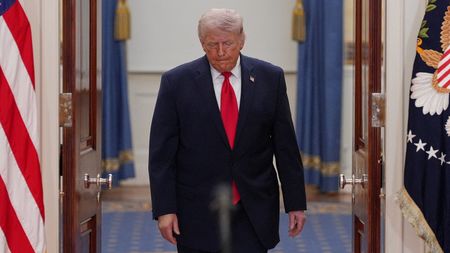
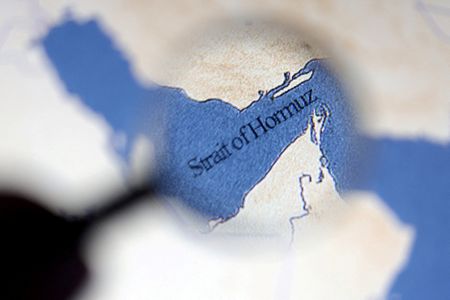
President Donald Trump declared on his Truth Social platform that the United States Navy will commence an immediate blockade of shipping traffic through the Strait of Hormuz, while discussing Iran’s nuclear ambitions and military strategy during a Fox News Sunday interview with Maria Bartiromo.
In his Sunday Truth Social post, Trump announced that naval forces would start intercepting maritime traffic in the strategic waterway without delay. Trump wrote: “I have instructed our Navy to search for and prohibit any vessel in international waters that has paid a fee to Iran. No one who pays an illegal fee will have safe passage on the high seas.”
The president further declared: “We will also begin destroying the mines that the Iranians have placed in the strait. Any Iranian who fires at us, or at peaceful vessels, will be blown out of the water.”
This critical shipping lane has become a central battleground in the conflict with Iran, as approximately 20% of global oil and gas shipments travel through the waterway. Disruptions in this area have contributed significantly to rising fuel costs.
During his discussion with Bartiromo about war concerns and energy prices before upcoming midterm elections, Trump emphasized that Iran’s nuclear program remains the primary concern.
Trump declared during the interview: “We didn’t get there on the important issue. They want to have nuclear weapons. They’re not going to have nuclear weapons. I’ve been saying that for 30 years. I would never allow that to happen before I was in politics. And that country will not have nuclear weapons. Most countries shouldn’t be allowed to have, but that country will not have nuclear weapons.”
The president also emphasized American military capabilities, stating: “So we have the greatest military equipment. We have the greatest people. We have the strongest military in the world by far, and everybody sees it, whether it’s Venezuela or what we’ve done with Iran.”
Trump continued: “And when I read, you know, the fake news talking about how well Iran’s doing, they’re not doing well at all. They’re getting killed. I could take out Iran in one day.”
When questioned about a controversial social media message posted before ceasefire discussions that stated “A whole civilization will die tonight, never to be brought back again,” Trump defended his approach. “When I talk about a civilization, it really has changed, it really has. But think of it, they’re allowed to say, death to America, death to this, death to… And I make one statement, they say, oh, such a big deal.”
Trump claimed his strong rhetoric achieved diplomatic results: “Let me tell you, that statement got them to the bargaining table, and they haven’t left. They haven’t left the bargaining table. I predict they come back and they give us everything we want.”
The president concluded: “And I told my people, I want everything. I don’t want 90 percent. I don’t want 95 percent. I told them, I want everything.”
These developments follow unsuccessful diplomatic negotiations between the United States and Iran held in Islamabad, with Pakistani mediation, which concluded after 21 hours without reaching any agreement.
MAIDUGURI, Nigeria — Nigerian military officials have acknowledged an accidental strike that resulted in the deaths of more than 100 civilians during an operation aimed at militant groups in the country’s northeast region.
The tragic incident occurred Saturday when an air force operation targeting extremist fighters instead hit a marketplace in Yobe state, close to the Borno state boundary where insurgent activity has plagued communities for more than ten years.
Amnesty International reported that survivors confirmed the death toll reached at least 100 people in the bombing, with children among the victims.
“We have their pictures and they include children,” said Isa Sanusi, who directs Amnesty International’s Nigeria operations, when speaking with The Associated Press about the casualties.
“We are in touch with people that are there, we spoke with the hospital,” Sanusi explained. “We spoke with the person in charge of casualties, and we spoke with the victims.”
Medical staff at Geidam General hospital in Yobe confirmed that no fewer than 23 wounded individuals from the bombing were being treated at their facility. The hospital employee requested anonymity since they lacked permission to discuss the matter publicly.
These types of accidental strikes occur frequently throughout Nigeria, where armed forces regularly launch aerial operations against militant organizations that have established control over extensive wilderness areas. Since 2017, mistaken bombings have claimed the lives of at least 500 non-combatants, based on Associated Press records of documented fatalities. Military experts attribute these errors to gaps in intelligence collection and inadequate communication between ground forces, aircraft, and other parties involved.
The expansive marketplace situated along the Borno-Yobe boundary is reportedly frequented by Boko Haram extremists purchasing food and other necessities.
Abdulmumin Bulama, who serves with a civilian defense unit that collaborates with Nigerian forces in the northeast, explained that military intelligence had indicated Boko Haram fighters were assembling near the market area while preparing to assault surrounding villages.
“The intel was shared and the Air Force jet acted based on the credible information,” Bulama stated.
Yobe State officials released a statement acknowledging that Nigerian military forces had conducted an operation against a Boko Haram militant stronghold in the region, noting that “some people … who went to the Jilli weekly market were affected.”
The state’s Emergency Management Agency also verified that casualties had occurred “affecting some marketers” and announced the deployment of emergency response personnel to the location.
In their official statement, Nigeria’s military described conducting a successful operation against a “terrorist enclave and logistics hub” used by extremists in the area, claiming to have eliminated numerous militants traveling on motorcycles. The statement made no reference to any accidental civilian casualties but emphasized that motorcycle use remains banned in conflict zones and “any such movements in restricted areas are therefore treated with the utmost seriousness.”
Amnesty International has demanded an independent inquiry into the bombing, criticizing the military for being “fond of” characterizing civilian deaths as bandit casualties.
Nigeria, home to Africa’s largest population, faces widespread security challenges particularly in northern regions, where a decade-long insurgency continues alongside various criminal organizations that conduct kidnapping operations for financial gain.
The most significant Islamic extremist organizations include Boko Haram and a splinter group connected to the Islamic State known as Islamic State West Africa Province. Additionally, the IS-affiliated Lakurawa group operates in northwestern communities along the border with Niger Republic.
BUDAPEST – The center-right Tisza party appears positioned to claim control of Hungary’s parliament with 135 seats out of 199 total, according to the final polling data released before Sunday’s national election.
The Median polling organization’s survey, which was broadcast on RTL Klub television, shows the opposition party outpacing Prime Minister Viktor Orban’s ruling Fidesz party. The poll was conducted from April 7 through April 11, just days before voters head to the ballot box.
The survey results also indicate that the far-right Our Homeland party, known as Mi Hazank in Hungarian, would fail to reach the required 5% vote share needed to secure seats in the national legislature.
Iran’s Revolutionary Guards issued a stern warning Sunday, declaring that military ships attempting to enter the Strait of Hormuz will be treated as breaches of a two-week U.S. ceasefire and will face harsh and decisive action.
According to a statement carried by Iranian state media, the Guards emphasized that Iran’s Navy maintains control and ‘smart management’ over the crucial waterway. The statement noted the strait remains “open for the safe passage of non-military vessels in accordance with specific regulations.”
The announcement comes amid ongoing tensions in the region, with Iran asserting its authority over one of the world’s most strategically important shipping lanes.
On Sunday, April 12th, Saudi Arabia called in Iraq’s diplomatic representative to address ongoing drone attacks originating from within Iraq’s borders that are endangering Saudi Arabia and fellow Gulf region countries.
According to a statement released by Saudi Arabia’s foreign ministry, officials “emphasised the importance of Iraq dealing responsibly with these threats and attacks” during the diplomatic meeting.
The formal summoning of the Iraqi ambassador represents an escalation in diplomatic pressure as Saudi Arabia seeks to address the unmanned aerial vehicle strikes that have been launched from Iraqi territory.
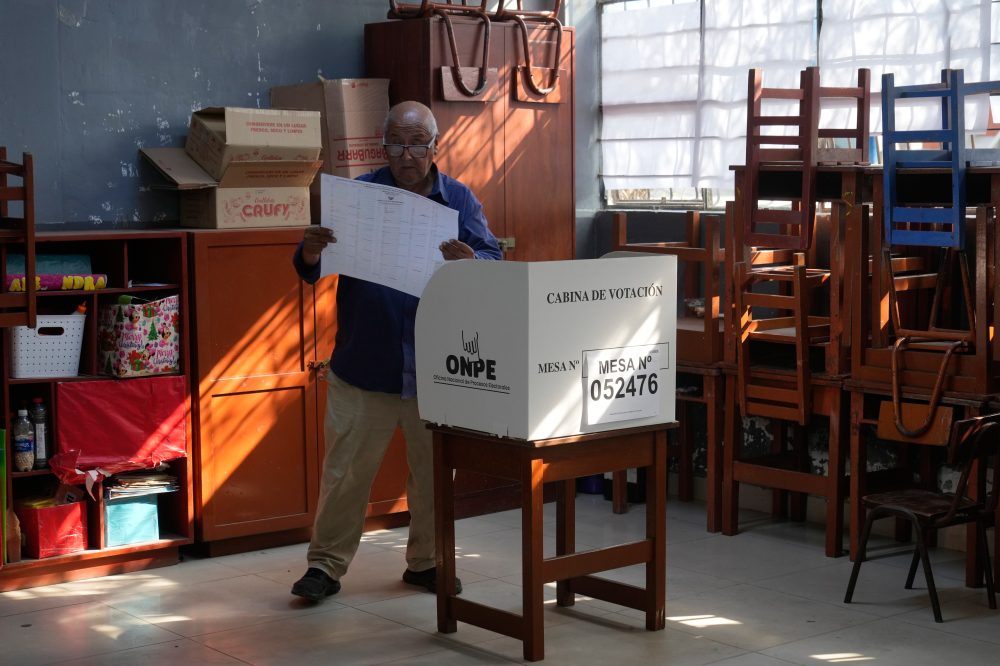
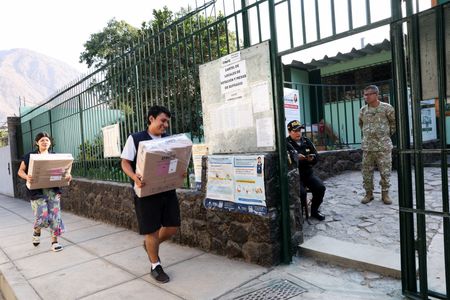
LIMA, Peru — Peruvian citizens headed to the polls Sunday to select from a record-breaking field of 35 presidential hopefuls, including a former government official, an entertainer, and the daughter of a deceased former leader, as the South American nation searches for its ninth chief executive in a single decade.
The election unfolds against a backdrop of escalating violent crime and corruption scandals that have left citizens deeply frustrated with their political system. Voters express widespread skepticism about the honesty and qualifications of those seeking the country’s highest office. Crime concerns have prompted candidates to propose dramatic measures ranging from constructing massive detention facilities to limiting prisoner meals and bringing back capital punishment for severe offenses.
Construction worker Juan Gómez, 53, voiced the despair felt by many citizens as he transported bags of potatoes and rice to feed his five children. “You can’t trust anyone anymore, nothing’s going to change,” he said. “(Criminals) come on motorcycles, put a gun to your head… you look around and there’s no police officer.”
“What are you going to do? You just let them rob you,” Gómez continued.
The electoral process requires participation from all Peruvians between 18 and 70 years old. Registration records show more than 27 million eligible voters, with approximately 1.2 million expected to vote from overseas locations, particularly in the United States and Argentina.
Victory requires securing more than half of all votes cast. Given the fractured political landscape and unprecedented number of candidates, a second-round runoff in June appears almost certain.
Rising criminal activity dominates public concerns and has sparked regular demonstrations. Government statistics reveal that murders have doubled while extortion incidents have multiplied by five during this decade.
Retiree Raúl Zevallos, 63, described the daily fear experienced by ordinary citizens. “You get on the bus, and you have to sit far from the driver; you don’t know if you’ll make it home alive,” he explained. “Criminals drive by on motorcycles, shoot, kill the driver, and you could die, too.”
Official data shows that more than 200 public transit operators lost their lives in Peru during 2025. A government survey conducted by the National Institute of Statistics and Informatics revealed that 84% of urban residents fear becoming crime victims within the next year.
The ballot features Keiko Fujimori, a conservative former legislator whose father was the late President Alberto Fujimori. This represents her fourth presidential campaign.
Fujimori has pledged aggressive anti-crime measures while simultaneously supporting legislation that experts argue hampers criminal prosecutions. Her political party has endorsed laws in recent years that eliminated pretrial detention in specific situations and increased requirements for confiscating criminal proceeds.
Her proposed reforms include anonymous judges for criminal proceedings and requiring inmates to work for their meals.
Another contender is Rafael López Aliaga, a conservative politician who previously served as mayor of Lima, the nation’s capital. His platform includes establishing correctional facilities in Peru’s Amazon territory, permitting judicial anonymity, and deporting individuals residing illegally in the country.
Comedian-turned-politician Carlos Álvarez has attempted to build support by proposing to bring together leaders from El Salvador, Denmark, and Singapore to share their security expertise.
Voters are simultaneously selecting members of a bicameral Congress, marking the first time in over three decades that Peru will have both a House and Senate. Recent legislative reforms have concentrated significant authority in the new upper chamber, which the president cannot dissolve, though senators retain the power to remove presidents from office.
The restructured system makes presidential removal procedures more streamlined, requiring only 40 of 60 senators for approval. The previous single-chamber system needed 87 of 130 lawmakers to vote for removal, a power they used frequently and contributed to the constant turnover of presidents over the past ten years.
This bicameral arrangement returns despite 80% of voters rejecting it in a 2018 public referendum. Legislators modified the Constitution in 2024 to enable the change.
Alejandro Boyco, who researches at the Institute of Peruvian Studies, explained that senators will select and oversee senior government officials, including the national ombudsman, constitutional court justices, and certain central bank leadership positions. The upper chamber will also examine and modify legislation from the lower house.
“They’ve concentrated too much power in a 60-people chamber,” Boyco observed. “They are not going to be immune to being corrupt.”
QUETTA, Pakistan – In an unprecedented maritime assault, separatist militants fatally shot three Pakistan Coast Guard members aboard a patrol vessel in the Arabian Sea on Sunday, according to security officials.
The deadly encounter occurred while the coast guard crew was conducting standard patrol operations near the Pakistan-Iran coastal border when insurgents launched their attack, intelligence and police sources confirmed.
This maritime assault represents a significant escalation in the ongoing security crisis plaguing Balochistan province, where insurgent groups routinely target government forces and critical infrastructure.
The prohibited separatist organization Balochistan Liberation Army (BLA) took credit for the deadly operation. In an official statement, the BLA declared: “Following the operations on land, the action in maritime boundaries marks a new development in the BLA’s military strategy.”
Security and intelligence officials report that an investigation has been initiated and protective measures have been increased throughout the region following the attack.
The incident comes months after Pakistan conducted aerial bombardments in February that triggered a week-long military confrontation with Afghanistan. Pakistani officials accuse the Afghan government of sheltering militant organizations like the BLA, allowing them to organize and execute attacks from Afghan territory. Taliban leadership has rejected these allegations.
The strategically important Gwadar district, home to a crucial deep-water port central to China’s major “Belt and Road” development project, has experienced numerous assaults by Baloch separatist fighters targeting security personnel and government facilities.
Government representatives did not provide statements regarding the maritime attack when contacted for comment.
JERUSALEM (AP) — Diplomatic negotiations between the United States and Iran concluded without agreement early Sunday morning in Islamabad, Pakistan, sparking concerns about the future when the current two-week ceasefire ends on April 22.
Following the conclusion of discussions in Pakistan’s capital city, representatives from both nations pointed fingers at each other for the breakdown in negotiations.
Officials provided no indication whether diplomatic efforts would continue, while President Donald Trump issued fresh warnings directed at Iran.
While this diplomatic failure doesn’t guarantee a return to warfare, it demonstrates how firmly positioned both nations remain following an indecisive 40-day conflict that caused significant destruction in Iran, created regional instability, and disrupted worldwide economic markets.
Diplomatic representatives will now head back to their home countries to reassess their strategies moving forward.
Here’s an examination of the current situation:
Following the February 28 launch of military action by the U.S. and Israel, officials committed to dismantling Iran’s nuclear and missile capabilities along with its backing of armed proxy organizations throughout the region.
American negotiators have put forward a 15-point proposal that reportedly contains these identical requirements. Though the U.S. plan remains classified, Pakistani government sources informed The Associated Press that it includes provisions for reopening the Strait of Hormuz, the crucial shipping channel that handles twenty percent of global oil transport. Iran’s blockade of this waterway caused petroleum prices to surge and international markets to drop significantly.
Iranian officials have responded with their own 10-point proposal. Their plan demands Iranian authority over the strait, cessation of military operations, protection of their proxy forces including Lebanon’s influential Hezbollah organization, and financial compensation for war-related damages.
Both parties seemed to maintain their original ceasefire positions throughout 21 hours of direct negotiations.
Vice President JD Vance, who headed the U.S. negotiating team, stated that Iran refused to provide guarantees against pursuing nuclear weapons development.
While Iran has consistently rejected accusations of weapons development, the nation continues demanding a civilian nuclear program featuring uranium enrichment — a critical component in weapons production. Security analysts note that Iran’s current enriched uranium reserves require only minor technical advancement to reach weapons-grade levels.
“We need to see an affirmative commitment that they will not seek a nuclear weapon and they will not seek the tools that would enable them to quickly achieve a nuclear weapon,” Vance said.
Iran’s lead negotiator, Parliament Speaker Mohammad Bagher Qalibaf, stated the U.S. must determine “whether it can gain our trust or not.”
While Qalibaf avoided addressing central disagreements in his online statements, other Iranian representatives indicated that Strait of Hormuz control remains a major obstacle.
Mohammad Reza Aref, Iran’s first vice president, declared in an online post that strait control represents part of the “rights of the people.”
Pakistani Foreign Minister Ishaq Dar announced his nation’s intention to help arrange additional dialogue between Iran and the U.S. in upcoming days. Neither country responded immediately to this offer.
A significant barrier appears to be both sides’ belief that they achieved victory and possess advantageous timing.
Vance characterized the negotiation failure as “bad news for Iran much more than it’s bad for the United States of America.”
Trump announced Sunday through social media that U.S. Naval forces would establish a blockade controlling all Strait of Hormuz traffic.
Qalibaf declared Iran would continue “striving to securing the achievements” from the conflict.
Danny Citrinowicz, a senior analyst with the Institute for National Security Studies, an Israeli research organization, expressed pessimism about these opposing viewpoints. Writing on X, he described Iran’s victory perception as “not the mindset of a regime preparing to compromise.”
“This gap between American expectations and Iranian self-perception now lies at the heart of a growing strategic deadlock,” he said.
Ali Vaez, Iran project director at the International Crisis Group research institute, said the Islamabad discussions highlight significant differences but doesn’t anticipate immediate breakdown.
“The likelier scenario is not immediate war, but a volatile period of pressure, signaling, and last-minute attempts to prevent a wider conflagration,” he said. “The path forward, if there is one, lies in a limited, reciprocal deal that buys time and lowers the temperature.”
MAIDUGURI, Nigeria – A devastating military airstrike targeting Islamic extremists instead hit civilians at a village marketplace in northeastern Nigeria, with local officials reporting approximately 200 people may have died in the Saturday evening attack.
The tragic incident unfolded in a Yobe state community located along the border with Borno state, according to area council members and local residents who spoke out Sunday. Nigerian air force aircraft were conducting operations against militant groups when the strike occurred at the busy market.
The affected region sits at the center of a prolonged conflict with insurgent forces that has claimed thousands of lives and forced millions of people from their homes over many years. The border area between Yobe and Borno states has been particularly hard hit by the ongoing violence and military operations.
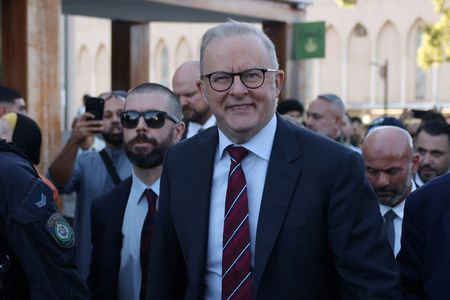
Australian Prime Minister Anthony Albanese is set to embark on a crucial diplomatic mission to Southeast Asia this week, focusing on strengthening fuel supply partnerships with regional allies as his nation grapples with energy disruptions stemming from Middle Eastern conflicts.
The Prime Minister’s office announced Sunday that Albanese will conduct official visits to the capitals of Brunei and Malaysia between April 14 and 17, traveling to Bandar Seri Begawan and Kuala Lumpur respectively.
During his Southeast Asian tour, Albanese is expected to hold discussions with Sultan Hassanal Bolkiah of Brunei and Malaysian Prime Minister Anwar Ibrahim. Additionally, Australian Foreign Minister Penny Wong will participate in separate meetings with her diplomatic counterparts from both nations.
“Engaging with critical regional partners such as Brunei Darussalam and Malaysia will help ensure Australia’s energy supply remains secure during times of uncertainty,” Albanese stated. “We are taking every step to reinforce relationships and engage with key partners to keep our fuel supply flowing.”
This diplomatic initiative follows significant disruptions to global energy markets caused by Iran’s blockade of the Strait of Hormuz, a critical waterway that previously handled approximately 20% of worldwide oil and gas shipments before the current regional conflict began.
The energy crisis has hit Australia particularly hard, given that the country relies on imports for roughly 80% of its fuel needs. Australians have experienced fuel shortages in various regions and witnessed dramatic price increases since the strait’s closure.
The trade relationships underscore the importance of these diplomatic talks. Malaysia currently ranks as Australia’s third-most important refined fuel supplier and provides 10% of the country’s fertilizer-grade urea imports, while Australia reciprocates by supplying 95% of Malaysia’s imported natural gas needs.
Brunei also plays a significant role in Australia’s energy security, contributing 9% of diesel imports and 11% of fertilizer-grade urea imports to the Australian market.
The current diplomatic push represents part of a broader strategy, as Australian officials have conducted fuel supply negotiations with multiple Asian partners, including China, Indonesia, Japan, South Korea, and others.
This week’s visits build upon recent diplomatic efforts, including Albanese’s trip to Singapore last week, where he met with Prime Minister Lawrence Wong on Friday. The two leaders reached agreements on enhanced cooperation to ensure regional energy security.
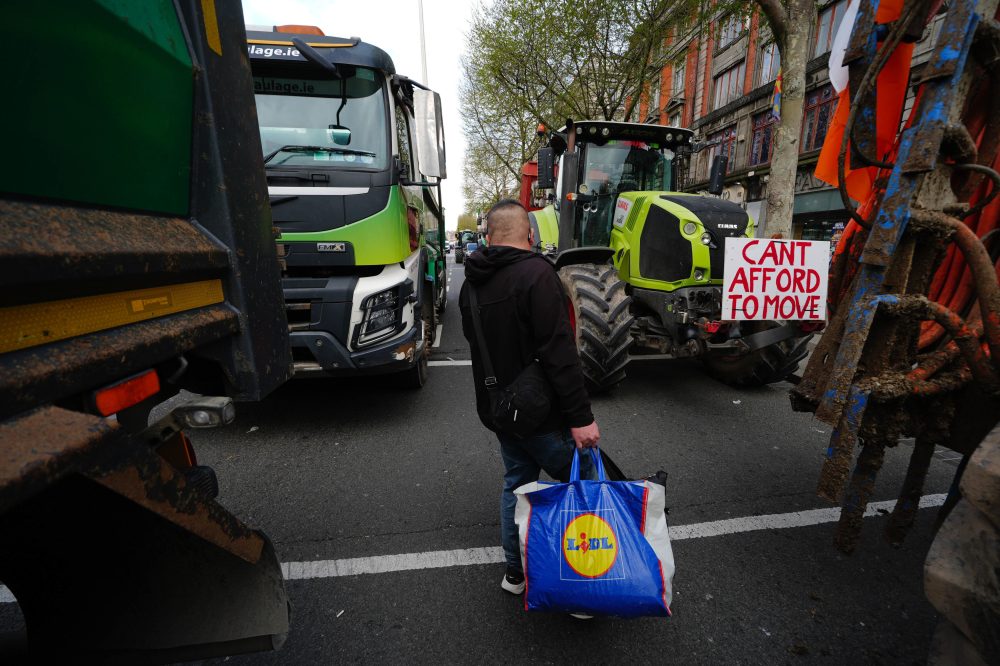
Irish authorities dismantled a demonstration in Dublin’s city center on Sunday, ending a six-day standoff with fuel protesters who had paralyzed much of the nation while government leaders prepared to pass relief measures aimed at stopping the widespread disruptions caused by rising pump prices.
While tractors and trucks departed O’Connell Street in the capital, demonstrations persisted in other areas, including confrontations at Galway docks where law enforcement deployed a military vehicle to dismantle a temporary barricade erected by protesters.
The widespread demonstrations created nationwide havoc as blockades at Ireland’s sole oil refinery and multiple critical fuel depots stopped delivery trucks from reaching gas stations, leaving more than one-third of pumps without fuel. Large, slow-moving vehicle convoys also created massive traffic backups on principal roadways.
Authorities initiated enforcement actions Saturday, deploying pepper spray to disperse demonstrators at the Whitegate refinery in County Cork while promising to clear additional protesters who were threatening essential infrastructure and public safety due to fuel shortages that could hamper emergency response capabilities.
“They are not a legitimate form of protest,” Irish police Commissioner Justin Kelly said on Saturday. “We gave the blockaders fair warning that we were moving to enforcement and they choose to ignore it and continue to hold the country to ransom.”
However, a farmer serving as a spokesperson for the Dublin group expressed frustration that their peaceful demonstration had been “ambushed” by numerous officers during overnight hours.
Christopher Duffy said police threatened to tow their heavy vehicles, so they had to leave.
“These vehicles are very expensive with automatic transmissions and everything, and if they drag them with the engine not on they could wreck them,” Duffy said. “So we have no choice, financially we have to move the vehicles.”
The demonstrations started Tuesday and expanded as information circulated through social media platforms, drawing participation from truckers, farmers, taxi drivers and bus operators demanding assistance such as price limits or tax reductions to lower fuel expenses they claim will force businesses to close.
Government leaders, who had already implemented relief measures for price increases two weeks earlier, expressed confusion about the reasoning behind the protests since the worldwide price surge stems from Middle Eastern conflicts that have limited oil shipments.
Prime Minister Micheál Martin called the move “illogical” and said the country was on the brink of turning tankers away at ports and losing its oil supply.
Officials were anticipated to approve legislation aimed at reducing gasoline and diesel costs, though it remained uncertain whether the measures would be sufficient to stop the protest movement.
TEHRAN, Iran (AP) — Citizens across Iran expressed mixed feelings of frustration and determination on Sunday following the breakdown of diplomatic negotiations between their country and the United States after an extended bargaining session.
American representatives stated the discussions fell apart due to what they characterized as Iran’s unwillingness to pledge abandonment of its nuclear activities. Tehran’s officials pointed fingers at Washington for the diplomatic breakdown, though they did not detail specific obstacles.
The collapse of these crucial discussions in Pakistan after 21 hours raises questions about a temporary ceasefire agreement scheduled to end on April 22.
Speaking near a newspaper vendor in Tehran, Farhad Simia shared with The Associated Press his hopes for productive discussions and conflict resolution, while expressing continued support for Iran despite the negotiation breakdown.
“I oppose armed conflict. I believe diplomatic solutions offer a superior approach,” stated Simia, 43. He attributed the negotiation failure to “unreasonable demands” from the United States.
Mehdi Hosseini, also 43, shared similar views: “Given Iran’s apparent military advantages, there was genuine worry we might surrender those battlefield successes during negotiations.
“The outcome of these discussions matters less than the fact that Iran’s diplomatic representatives managed to maintain our wartime achievements while refusing to retreat or capitulate, which provides grounds for optimism.”
Throughout Tehran’s streets, large national banners and massive displays celebrating the nation’s leadership and military successes were visible. One prominent artwork showed Iranian servicemen pulling a fishing net from ocean waters filled with miniature American military planes and naval vessels. “The Strait Remains Closed,” declared the display.
Hamid Haghi, 55, attributed the negotiation failure to “America’s excessive demands.” The United States seeks “access to the Strait of Hormuz, which represents our ancestral inheritance,” he explained. “We can manage it independently.”
Similar to many fellow citizens, 60-year-old Mohammad Bagher believes Iran should maintain its resistance against the United States in what he views as an American-initiated conflict.
“We represent a people committed to discussion and diplomacy provided our national interests receive respect. We have never pursued warfare,” he stated. “We will maintain our position until the end, we are prepared to give our lives, and will not surrender any portion of our territory.”
Following the February 28 launch of military operations by the United States and Israel, casualties have reached at least 3,000 in Iran, 2,020 in Lebanon, 23 in Israel, and over a dozen across Gulf Arab nations, while causing significant infrastructure damage throughout multiple Middle Eastern countries.
Iran’s control over the Strait of Hormuz has effectively blocked Persian Gulf oil and gas shipments from reaching global markets, causing energy costs to spike dramatically.
The Democratic Alliance, South Africa’s primary opposition party, has selected Cape Town Mayor Geordin Hill-Lewis as its new leader during a weekend party conference held near Johannesburg.
Hill-Lewis, age 39, was the anticipated choice to replace outgoing leader John Steenhuisen, who served as Agriculture Minister and guided the pro-business organization since 2019 before announcing his departure.
The leadership transition comes as South Africa prepares for mandatory local elections scheduled before November, with the ruling African National Congress expected to lose additional voter support.
Speaking before the leadership election on Saturday, Hill-Lewis outlined his ambitious goals. “Our mission is to build the DA into the biggest party in South Africa,” he declared.
The Democratic Alliance currently controls 22% of parliamentary seats in the lower chamber, trailing behind the ANC’s 41% majority. The party entered into a governing coalition with the ANC in 2024, though it continues opposing key policies including national health insurance and affirmative action measures.
Hill-Lewis has revealed limited specifics about his future strategy but is anticipated to maintain similar policies to his predecessor’s approach.
Local elections typically present greater challenges for the ANC compared to national contests, as citizens frustrated with inadequate basic services such as water delivery and infrastructure maintenance often vote against the party that has governed since apartheid’s conclusion in 1994.
However, the Democratic Alliance faces its own obstacles in expanding its influence across Africa’s most industrialized nation. The party continues to be perceived by many as representing white interests, and hasn’t had a non-white leader since 2019 in a country where over 90% of the population is non-white.
Political analyst and author Susan Booysen highlighted this challenge, noting: “It would’ve been so much easier for them to appeal to a broader constituency if there was a dynamic person … of another colour.”
A devastating Israeli attack on a Lebanese family’s home claimed the life of a toddler and wounded several relatives as they gathered to mourn her father during what many believed was a ceasefire period.
Seven-year-old Aline Saeed clung to life, her small body wrapped in blood-soaked bandages after the strike devastated her family’s residence in the southern Lebanese village of Srifa. The attack occurred Wednesday as the family prepared to lay her father to rest, just as regional ceasefire hopes were spreading following U.S.-Iran diplomatic talks.
The bombing took place on the opening day of what many Lebanese citizens thought would extend a U.S.-Iran truce to their nation. However, Israeli military operations continued, resulting in over 350 deaths throughout Lebanon and adding four more Saeed family members to the casualty count.
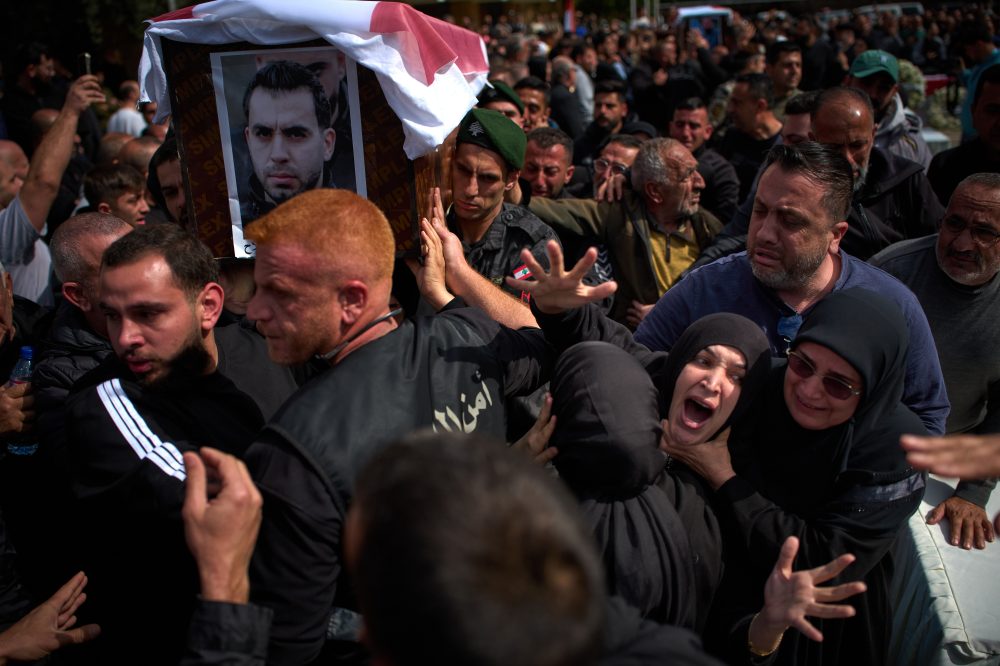
“They said it was a ceasefire. Like all these people, we went up to the village. We went to the casket to read the prayers and walk home… suddenly we felt like a storm was landing right on us,” explained Nasser Saeed, the 64-year-old grandfather who managed to survive the blast.
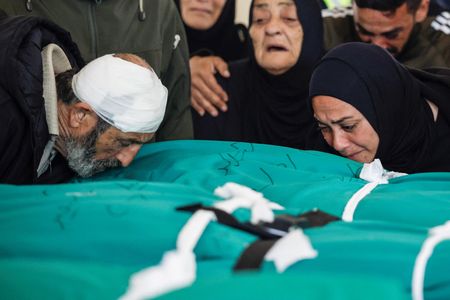
On Sunday, family members gathered in the coastal city of Tyre to collect bodies shrouded in green fabric. Among them was the smallest bundle – containing his granddaughter Taleen, Aline’s younger sister who had not yet reached her second birthday.
Bearing head and hand bandages along with facial wounds, the elder Saeed grieved quietly while female relatives around him lifted their faces skyward, crying out in anguish.
The current Lebanese conflict erupted March 2nd when Hezbollah, the Iranian-backed militant organization, launched attacks on Israeli military positions in solidarity with Tehran.
Israel has since intensified both aerial bombardments and ground operations throughout Lebanon, with military actions resulting in more than 2,000 fatalities, including 165 children and nearly 250 women.
Pope Leo expressed solidarity with the “beloved Lebanese people” during Sunday’s address and urged for an immediate ceasefire. Speaking to worshippers gathered in St. Peter’s Square, the pontiff emphasized “a moral obligation to protect the civilian population from the horrific effects of war.”
Wednesday marked one of Lebanon’s most deadly single days in recent memory.
“This isn’t humanity. This is a war crime,” Saeed declared to Reuters while visiting the medical facility where Aline’s mother, Ghinwa, remained under treatment.
“Where are the human rights? If a child – a child! – is wounded in Israel, the whole world jumps up. Are we not people? Are we not humans? We’re like them!” he demanded.
When questioned about the Srifa incident, Israeli military officials stated they were investigating reports of the strike.
Baby Taleen entered the world in 2024 during the previous round of intense fighting between Hezbollah and Israeli forces.
“She was born in the war and died in the war,” observed Mohammed Nazzal, Ghinwa’s father.
Iran seeks to include Lebanese ceasefire terms in ongoing negotiations with the United States, which ended Sunday without significant progress. Meanwhile, Israel prefers conducting separate discussions with Lebanese government representatives.
Intense bombing campaigns against Lebanon have persisted, with approximately 100 casualties reported Saturday alone.
Dr. Abbas Attiyeh, who oversees emergency services at Tyre’s Jabal Amel hospital, described last week’s bombardment as among the most severe in years, noting that many incoming patients were children.
“The challenges we’re facing now are the numbers of wounded that come at the same time, within the same 30 minutes or hour,” Attiyeh explained to Reuters.
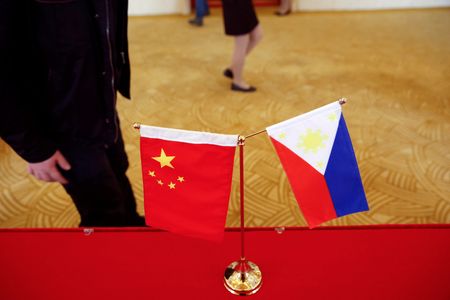
The Philippine government declared Sunday that future energy partnerships with China must strictly adhere to the nation’s constitutional framework and honor Philippine sovereignty.
The Foreign Affairs Department acknowledged public commentary from various organizations regarding potential renewed energy discussions between Manila and Beijing in the South China Sea, an area where both nations have ongoing territorial disagreements.
Officials from the Chinese embassy in Manila had not provided a response to requests for comment at the time of this report.
“Any decision to pursue, structure, or conclude an agreement on oil and gas cooperation, with China or any other foreign government, will be made solely in accordance with the Philippine Constitution and the country’s laws, jurisprudence and regulations, and in full assertion of its sovereign prerogatives,” the department stated.
In late March, Manila and Beijing renewed diplomatic conversations regarding the contested South China Sea waters, examining initial measures for potential energy collaboration and tackling supply challenges for oil and fertilizers stemming from Middle Eastern conflicts.
Philippine leader Ferdinand Marcos Jr. has emphasized the importance of bolstering the nation’s energy independence and maintaining reliable, cost-effective power sources.
MUMBAI, India — Asha Bhosle, a legendary Bollywood vocalist whose voice helped define India’s cinematic soundscape for nearly 80 years, passed away Sunday at age 92.
The renowned singer succumbed to multiple organ failure at Mumbai’s Breach Candy Hospital, according to hospital physician Pratit Samdani. Her son Anand Bhosle announced that funeral services will take place Monday.
Bhosle had been hospitalized late Saturday evening after developing a chest infection and experiencing exhaustion, her granddaughter Zanai Bhosle revealed on social media.
Throughout her extraordinary career, Bhosle’s distinctive voice became synonymous with Indian cinema, contributing to approximately 12,000 recorded songs. She carved out a unique niche by incorporating cabaret styles and Western musical influences, creating a signature sound that distinguished her from her equally famous sister, Lata Mangeshkar, known as the “Melody Queen.”
News of her death prompted widespread mourning and tributes from across India.
“I am deeply saddened” by her passing, Indian Prime Minister Narendra Modi wrote on social media.
“Her unique musical journey spanning decades has enriched our cultural heritage and touched the hearts of countless people around the world,” Modi continued. “From soulful melodies to spirited compositions, her voice carried a timeless brilliance.”
Bhosle entered the world on September 8, 1933, and received her musical training from her father, Dinanath Mangeshkar, who was also a skilled vocalist. Music ran in the family, with all four of her siblings becoming talented singers and musicians.
Her personal life included two marriages — the first in 1949 ended in separation by 1960, while her second union was with renowned music composer R.D. Burman in 1980. She leaves behind a son and several grandchildren.
JERUSALEM – A controversial visit by Israel’s National Security Minister to one of the world’s most contested religious sites has sparked diplomatic tensions and raised fears of renewed conflict in the Middle East.
Itamar Ben-Gvir, known for his far-right political positions, toured the Al-Aqsa Mosque compound in Jerusalem’s historic Old City on Sunday, advocating for expanded prayer rights for Jewish visitors at the sacred location.
The site holds extraordinary significance for both faiths – revered by Jews as the Temple Mount and their holiest location, while serving as Islam’s third most sacred place. For decades, a fragile agreement has allowed the compound to remain under Jordanian religious administration, permitting Jewish visits while prohibiting Jewish prayer.
During his visit, Ben-Gvir recorded a video message stating his intentions. “Today, I feel like the owner here,” he declared. “There is still more to do, more to improve. I keep pushing the Prime Minister (Benjamin Netanyahu) to do more and more — we must keep rising higher and higher.”
Jordan’s foreign ministry responded swiftly with harsh criticism, denouncing the visit as a breach of longstanding agreements. Officials called it “a desecration of its sanctity, a condemnable escalation and an unacceptable provocation” that violated the established status quo.
A spokesperson for Ben-Gvir confirmed the minister had conducted prayers during his visit and was actively pushing for increased access and prayer permits for Jewish worshippers at the compound.
Prime Minister Netanyahu’s office remained silent on the visit. Previously, similar actions by Ben-Gvir have prompted Netanyahu to publicly reaffirm Israel’s commitment to maintaining current arrangements at the site.
Any proposals to modify existing protocols at the compound have historically triggered widespread Muslim outrage and led to violent confrontations. The location had been mostly closed to public access during recent regional conflicts involving Iran, though Sunday’s visit occurred without immediate signs of unrest.
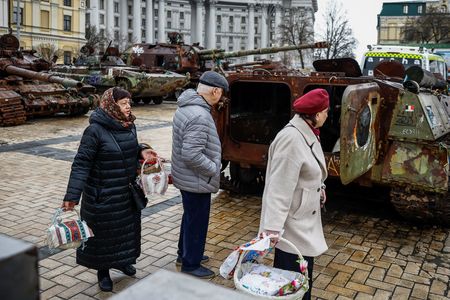
Both Russia and Ukraine are blaming each other for violating a brief Orthodox Easter ceasefire in their ongoing conflict, with each side reporting extensive military activity just hours after the truce took effect Saturday.
Moscow’s defense ministry documented 1,971 violations of the ceasefire through Sunday morning, while Ukrainian military officials counted 479 artillery attacks and over 1,700 drone operations conducted by Russian forces.
The temporary halt in fighting was timed to coincide with Orthodox Easter Sunday, which follows the religious calendar observed by the majority populations in both nations.
Russian officials reported that a child was hurt during a Ukrainian drone strike in the Kursk region, and Belgorod region governor Vyacheslav Gladkov announced that two people died from Ukrainian artillery fire.
Meanwhile, Ukraine’s State Emergencies Service confirmed that two civilians sustained injuries Sunday from a Russian drone attack in the Kharkiv region.
Independent confirmation of these military activities could not be obtained by news organizations.
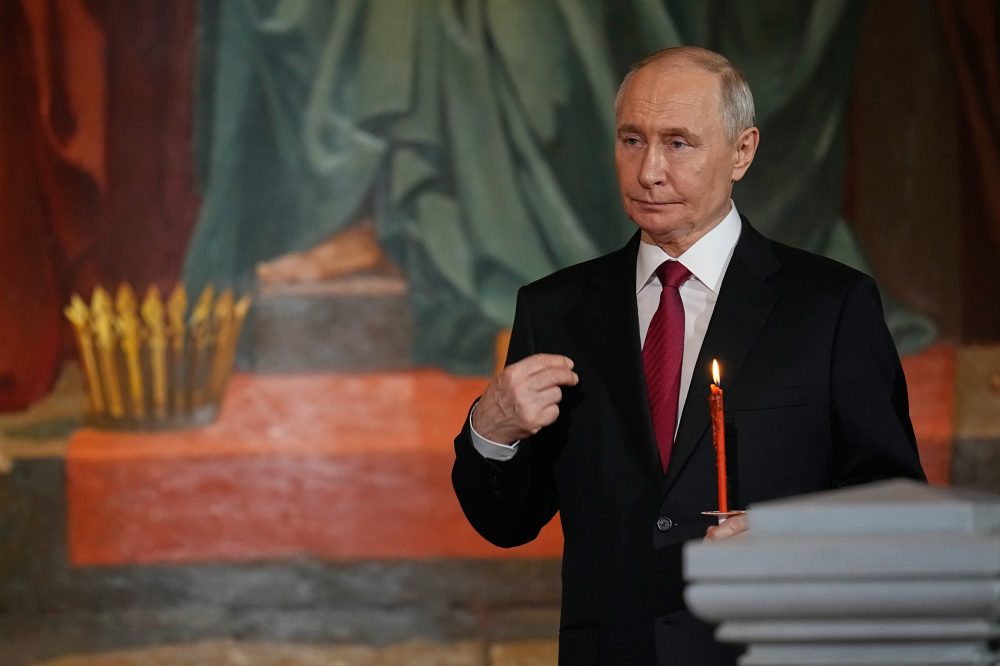
Russian President Vladimir Putin had declared the temporary Orthodox Easter ceasefire on April 9, with the agreement scheduled to conclude at midnight Sunday (2100 GMT).
Ukrainian President Volodymyr Zelenskiy accepted the truce proposal, despite Moscow having previously rejected similar ceasefire initiatives from Ukraine.
Global financial leaders are assembling in Washington this week as the Middle East conflict creates another major disruption to worldwide economic stability, marking the third substantial crisis following the COVID-19 pandemic and Russia’s 2022 invasion of Ukraine.
Leadership from the International Monetary Fund and World Bank announced last week they plan to reduce global growth projections while increasing inflation estimates due to the ongoing war. Officials warn that developing nations and emerging markets will bear the greatest burden from elevated energy costs and supply chain interruptions.
Prior to the Iran conflict beginning on February 28, both organizations anticipated raising their growth predictions based on the global economy’s strength despite significant tariffs implemented by U.S. President Donald Trump starting last year. However, the war has created multiple disruptions that will hinder progress toward economic recovery and inflation control.
Current World Bank projections show emerging markets and developing economies growing at 3.65% in 2026, reduced from the October estimate of 4%, with potential drops to 2.6% if the conflict extends. Inflation projections for these nations have increased to 4.9% in 2026 from the earlier 3% forecast, potentially reaching 6.7% under worst-case scenarios.
The IMF cautioned last week that approximately 45 million additional people may experience severe food shortages if the war continues and keeps disrupting fertilizer deliveries.
Both institutions are working rapidly to address this latest emergency and assist vulnerable nations while public debt reaches unprecedented levels and government budgets remain constrained.
The IMF anticipates requests for $20 billion to $50 billion in immediate emergency assistance for low-income and energy-dependent countries. The World Bank stated it could deploy approximately $25 billion through crisis response mechanisms immediately, expanding to $70 billion within six months as required.
Economic experts recommend governments implement only focused and temporary measures to alleviate higher prices for citizens, warning that broader interventions might increase inflation.
“Leadership matters, and we’ve come through crises in the past,” World Bank President Ajay Banga stated to Reuters, praising fiscal and monetary management that helped economies survive earlier challenges. “But this is a shock to the system.”
Nations must now carefully balance inflation management while monitoring growth and addressing the long-term goal of creating sufficient employment for the 1.2 billion people expected to reach working age in developing countries by 2035.
The IMF and World Bank also confront a dramatically different international environment with heightened tensions between the United States and China, the world’s two largest economies, while the Group of 20 major economies struggles to coordinate responses.
The United States currently leads the rotating G20 presidency, which includes Russia and China, but has excluded member South Africa from participation, hampering the group’s crisis coordination abilities.
“You’re trying to operate on consensus when there’s no consensus in the world right now on anything,” explained Josh Lipsky, chair of international economics at the Atlantic Council.
Lipsky noted that public commitments from the IMF, World Bank and other international lenders regarding their readiness to assist war-affected countries clearly target market reassurance.
“It’s a signal to private creditors. This is not a time to flee countries that are in problematic waters. They will have support from the multilateral development banks and the international financial institutions. This is not going to be COVID. This is something that we can handle.”
Mary Svenstrup, formerly with the U.S. Treasury and now at the Center for Global Development, emphasized that many emerging market and developing economies face this crisis in worse condition than previously, with reduced financial cushions, increased debt risks and lower reserves.
“We need to have this crisis be a catalyst for IMF stakeholders to really rethink how the Fund supports vulnerable countries with the recognition that we’re going to be seeing more global shocks,” she stated. “We can’t ask them to sacrifice growth and development for the sake of rebuilding buffers.”
Svenstrup suggested countries should pursue more comprehensive reforms when receiving new funding. “There probably does need to be more financial support from the (international financial institutions) but it needs to be affordable, and it needs to be in the context of reform programs and potentially broader debt relief,” she added.
Martin Muehleisen, former IMF strategy director now with the Atlantic Council, agreed, stating the IMF should collaborate with donor nations to expedite debt restructuring for borrowers and “get them off the debt cycle.” He recommended linking new lending to credible debt-reduction plans.
Eric Pelofsky, vice president at the Rockefeller Foundation, noted that low-income and lower middle-income countries paid double the amount for debt service in 2025 compared to pre-COVID levels, reducing funds available for education, healthcare and other essential social programs. Half now face debt distress or near-distress, up from one quarter just years ago.
“This new conflict threatens any recovery that occurred since the pandemic or the Ukraine war, and it takes countries that have basically been treading water, trying to stay away from default, and keeps them in a long term debt-growth-investment trap,” he concluded.
Citizens across Peru headed to voting stations Sunday to select their next president and congressional representatives from a field of more than 30 presidential hopefuls, following years of political instability that has shaken public trust in government institutions.
Election observers predict a runoff vote on June 7, as polling data shows no candidate approaching the 50% support required for an immediate victory. The extended electoral process could extend political uncertainty in the nation that ranks as the globe’s third-biggest copper producer, amid rising criminal activity and growing rivalry between U.S. and Chinese interests in the region.
Polling locations opened at 7 a.m. local time, with approximately 27 million eligible voters expected to participate.
Lima resident Gloria Padilla, who works selling fruit, expressed her uncertainty about the choices. “Peru is a mess, and there’s no candidate worth voting for,” she stated.
The country has experienced leadership from eight different presidents since 2018, creating doubt about whether any incoming administration can complete a full five-year term. This rapid succession has resulted from impeachment proceedings, corruption investigations, and ineffective governing alliances that have stalled government operations.
“People really despise the current Congress,” Atlantic Council analyst Martin Cassinelli observed. “They recognize them as responsible for the political chaos we’ve had over the last ten years,” he continued.
The widespread distrust of political institutions has created space for a diverse array of candidates representing various ideological positions, from experienced politicians to a far-right business owner and a television entertainer.
Conservative candidate Keiko Fujimori stands among the most recognizable names, launching her fourth presidential campaign after advancing to runoff elections in her three previous attempts. The U.S.-educated leader of the influential Popular Force congressional party has positioned herself as someone who can deliver stability and economic security, targeting voters concerned about escalating violent crime. Her campaign remains divisive due to her family’s political history and previous legal challenges.
Ricardo Belmont, a former Lima mayor representing the center-left Civic Works Party, has climbed to second place following a recent surge in voter support. Television comedian Carlos Alvarez follows in third place, running on a platform emphasizing crime reduction. Political experts view both candidates as outsiders who have gained momentum by connecting with voters’ anti-establishment sentiment.
Right-wing candidate Rafael Lopez Aliaga, a wealthy former Lima mayor holding socially conservative positions, has promoted an ultra-conservative agenda but has experienced varying levels of support throughout the campaign.
Crime and public safety have become the central focus of campaign messaging. Murder rates and extortion incidents have increased in recent years, partly due to drug trafficking operations and unauthorized mining activities. Most prominent candidates have suggested expanding military involvement in domestic security operations.
The election carries significant international implications. Peru’s growing economic ties with China — now its primary trading partner and major investor in mining and infrastructure projects — have generated concern in Washington, which has increased diplomatic and security cooperation leading up to the vote.
The eventual winner will need to work with a divided Congress and a newly restored Senate, potentially making legislative passage difficult and increasing the possibility of future impeachment conflicts.
Voting concludes at 5 p.m. local time, with initial results from the national election authority anticipated shortly afterward.
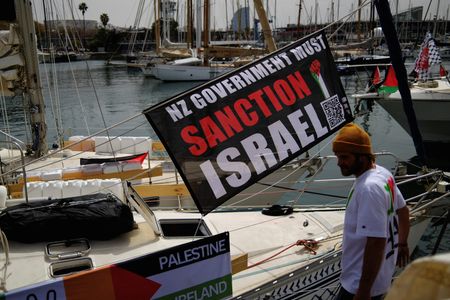
BARCELONA, Spain – Approximately 30 vessels departed from Barcelona’s Mediterranean port on Sunday, loaded with medical supplies and humanitarian assistance destined for Palestinians living in Gaza, as part of an international mission to challenge Israel’s naval blockade.
The Global Sumud Flotilla represents the second major attempt by the same organization to deliver aid directly to the territory, with additional ships expected to join the convoy as it travels toward Palestine.
Last October, Israeli naval forces intercepted a similar mission involving roughly 40 vessels from the same group, leading to the detention of climate activist Greta Thunberg and more than 450 other participants as they attempted to reach the blockaded territory.
Israeli authorities maintain complete control over all entry points to Gaza and reject claims that they are preventing necessary supplies from reaching the territory’s more than 2 million inhabitants. However, Palestinian representatives and international humanitarian organizations argue that aid deliveries remain inadequate, even following an October ceasefire agreement that included provisions for increased assistance.
Game of Thrones actor Liam Cunningham, who supports the flotilla mission but is not participating directly, shared his perspective with Reuters: “Every kilogram of aid that is on these ships is a failure because all these people on these ships giving up their time to help their fellow human beings are doing what their governments are legally obliged to do.”
The World Health Organization has emphasized that international humanitarian law requires states to guarantee safe access to medical care for civilians, even during active conflicts.
Palestinian activist Saif Abukeshak, who serves on the flotilla’s organizing committee, explained the mission’s goals to Reuters: “This is a mission that aims to open a humanitarian corridor so the aid delivery organisations can arrive.”
Activists from Switzerland and Spain who participated in the previous flotilla have alleged they faced inhumane treatment while detained by Israeli forces, claims that Israeli foreign ministry officials have disputed.
KYIV, Ukraine — Both sides in the ongoing conflict between Russia and Ukraine are trading accusations over violations of a brief Orthodox Easter truce that lasted less than a full day.
On Thursday, Russian leader Vladimir Putin announced a temporary 32-hour halt to fighting during the Orthodox Easter holiday, with Russian troops ordered to stop all combat operations starting Saturday at 4 p.m. through the end of Sunday.
Ukraine’s President Volodymyr Zelenskyy agreed to honor the temporary truce but cautioned that his forces would respond quickly to any breaches of the agreement.
By Sunday morning, Ukraine’s military command reported documenting 2,299 instances where the ceasefire was broken by 7 a.m. local time. These incidents included attacks, artillery fire, and launches of small unmanned aircraft, according to their official statement. However, they noted no reports of long-range drone strikes, missile attacks, or precision-guided munitions being used.
A Ukrainian military official speaking to The Associated Press on Saturday confirmed that Russian troops had maintained their offensive operations against Ukrainian positions.
Moscow’s Defense Ministry countered with its own allegations Sunday, claiming Ukrainian forces violated the ceasefire 1,971 times. Russian officials specifically cited drone attacks targeting the Kursk and Belgorod regions that reportedly wounded civilians.
This pattern of failed truces has become familiar, with both nations consistently blaming the other side when temporary ceasefires collapse.
Last year during Orthodox Easter, Putin similarly announced a unilateral 30-hour pause in fighting, but that truce also fell apart with mutual accusations of violations from both sides.
The Danish royal palace announced Sunday that John Donaldson, father of Queen Mary of Denmark, has passed away in Tasmania at the age of 84.
Palace officials confirmed Donaldson’s death occurred in Hobart but provided no additional circumstances surrounding his passing. The announcement noted that his health had been deteriorating in recent years, with Queen Mary making her final visit to see him in late March.
Born John Dalgleish Donaldson in Scotland on September 5, 1941, he worked as a professor specializing in applied mathematics.
Queen Mary ascended to the Danish throne in January 2024 following two decades serving as crown princess. Her husband became King Frederik X of Denmark after his mother, Queen Margrethe II, stepped down from the throne.
The royal couple’s relationship began when they encountered each other at the 2000 Sydney Olympics, leading to their wedding ceremony in 2004.
In Sunday’s palace statement, Queen Mary expressed her grief, saying “my heart is heavy.”
“But I know that when the grief settles, the memories will brighten my day, and what will remain strongest is love and gratitude for everything he gave me and taught me,” she continued.
Donaldson’s first wife, Henrietta Clark Donaldson, passed away in 1997. He later wed Susan Moody in 2001.
According to the palace announcement, the family plans to conduct a private memorial ceremony for Donaldson “at a later date.”
Legendary Indian vocalist Asha Bhosle, celebrated worldwide for her dynamic voice and extensive catalog of Bollywood film music, passed away April 12 at age 92 in Mumbai.
Indian Prime Minister Narendra Modi paid tribute to the late singer on social media, stating: “Her extraordinary musical journey, spanning decades, enriched our cultural heritage and touched countless hearts across the world. Be it her soulful melodies or vibrant compositions, her voice carried timeless brilliance.”
According to her granddaughter Zanai Bhosle, the acclaimed performer had been hospitalized at a private Mumbai medical facility Saturday evening due to complications from a chest infection and severe fatigue.
The celebrated artist built an impressive nearly 70-year career in the entertainment industry and was the sibling of fellow renowned vocalist Lata Mangeshkar. Throughout her distinguished musical journey, Bhosle received recognition including two Grammy Award nominations and earned India’s prestigious Dadasaheb Phalke award, the nation’s highest arts honor, along with the country’s second-most distinguished civilian recognition.
DUBLIN, April 12 – Law enforcement officials in Ireland on Sunday removed agricultural vehicles and commercial trucks that had brought central Dublin traffic to a standstill for five consecutive days as demonstrators protested escalating fuel costs amid government efforts to address the economic impact of widespread blockades.
The demonstrators, frustrated by diesel price increases of more than 20% following the start of the U.S.-Israeli conflict with Iran, deployed farm tractors and commercial vehicles throughout the week to obstruct an oil processing facility, two shipping ports, a fuel distribution center, and multiple roadways across Ireland.
The demonstrations resulted in significant transportation delays throughout Dublin and caused approximately one-third of Ireland’s gas stations to run dry, prompting Finance Minister Simon Harris to call the situation a “very dangerous moment” for the nation.
Authorities on Saturday removed demonstrators from the nation’s sole oil processing plant and announced Sunday they had begun operations to clear protesters from Galway Port.
Government officials have declined to enter discussions with the demonstrators, which included agricultural workers, commercial drivers, and independent contractors. However, officials are conducting separate discussions with farming and transportation industry representatives regarding potential relief measures for rising fuel expenses.
A survey published in the Sunday Independent revealed that 56% of respondents backed the protesters, though most supporters of the two ruling political parties expressed opposition to the demonstrations.
Iranian authorities anticipate bringing most of their damaged oil refining and distribution infrastructure back to 70-80% of previous operational levels over the next one to two months, according to a high-ranking energy official speaking about recovery efforts following recent attacks on the nation’s energy sector.
Mohammad Sadeq Azimifar, who serves as Deputy Minister of Oil, informed the Student News Network that restoration efforts have already commenced. He indicated that portions of the Lavan refinery should return to service in approximately 10 days, while additional facilities will be brought back online in phases over the coming weeks.
BUDAPEST, April 12 – Opposition leader Peter Magyar expressed confidence that his Tisza party would emerge victorious in Sunday’s parliamentary election, calling the vote a historic moment for Hungary after he cast his ballot at a Budapest polling location.
Speaking to reporters, Magyar characterized the election as a pivotal decision for Hungarian citizens choosing “between East and West” and predicted that voters would make history with their selections.
The opposition leader emphasized the significance of each ballot cast in the parliamentary contest, which observers expect could see unprecedented voter participation. Magyar also called on citizens to document and report any voting irregularities they witness, stating that “election fraud is a very serious crime.”
Saudi Arabia announced Sunday that it has successfully brought its critical East-West oil pipeline back to maximum operating capacity of approximately 7 million barrels daily, following recent strikes on the kingdom’s energy infrastructure during ongoing tensions with Iran.
According to the Saudi energy ministry, all affected energy installations and pipeline systems have now been repaired and returned to normal operations after the recent attacks.
While Saudi officials did not identify the source of the attacks, the kingdom has been defending against numerous Iranian missile and drone strikes in recent weeks.
The attacks had caused significant disruptions across multiple energy sectors, affecting oil, natural gas, refining, petrochemical and power generation facilities in Riyadh, the Eastern Province and Yanbu Industrial City.
Saudi authorities revealed Thursday that the strikes had reduced the country’s oil production capabilities by approximately 600,000 barrels daily, while pipeline capacity dropped by roughly 700,000 barrels per day.
The East-West Pipeline has become Saudi Arabia’s primary crude oil export pathway following the shutdown of the Strait of Hormuz. Reports indicate Iran targeted the pipeline shortly after a ceasefire agreement was reached.
The ministry confirmed it has restored production levels from the Manifa oilfield, which had seen output decrease by about 300,000 barrels per day due to the attacks.
Officials said repair work continues at the Khurais facility, where strikes had reduced Saudi production capacity by an additional 300,000 barrels daily.
Saudi authorities emphasized that the rapid restoration efforts will strengthen the “reliability and continuity of supplies to local and global markets.”
Citizens across the West African nation of Benin participated in presidential elections Sunday, selecting a new leader to replace Patrice Talon, who is concluding his ten-year tenure. Talon leaves behind a complicated record featuring economic expansion, increased extremist activity in northern regions, and restrictions on political opposition.
Finance Minister Romuald Wadagni, age 49 and representing the ruling coalition, appears positioned as Talon’s chosen heir. His only competition comes from opposition candidate Paul Hounkpè in what has become a two-person race.
Approximately 8 million citizens were eligible to participate at over 17,000 voting locations throughout the country. With a 2024 population exceeding 15 million people, Benin mirrors other sub-Saharan African nations with predominantly youthful demographics. Voting concluded at 4 p.m., with official outcomes anticipated within two days.
Political experts anticipate a Wadagni victory following January’s parliamentary elections, where opposition groups failed to reach the required 20% support needed for legislative representation. This left Talon’s two partner parties controlling all 109 National Assembly positions.
Opposition Democrats leader Renaud Agbodjo could not participate after being unable to gather enough parliamentary endorsements—a requirement opponents claim was deliberately designed to exclude challengers.
Throughout his ten years overseeing the nation’s finances, Wadagni has highlighted the country’s economic progress as his primary qualification. Last year, Benin achieved 7% economic expansion, establishing it among West Africa’s most consistent economic performers.
“Ten years at the Finance Ministry have given him something rare in African politics: a quantified record — verifiable and difficult to dismantle in a serious debate,” said Fiacre Vidjingninou, political analyst at the Lagos-based Béhanzin Institute.
Despite Benin’s historical reputation as one of Africa’s most dependable democracies, opposition figures and human rights advocates have criticized Talon for weaponizing the legal system against political rivals.
Both Amnesty International and Human Rights Watch have condemned ongoing suppression of dissent during Talon’s presidency, pointing to questionable arrests, increased limitations on public gatherings, and growing pressure against independent journalism.
Demonstrations regarding increased living expenses emerged in recent years, though government authorities and security personnel suppressed any opposition activities.
Last December, a group of military officials unsuccessfully attempted to overthrow Talon’s administration, representing another example of recent coup attempts throughout Africa. These takeover efforts typically follow patterns involving contested elections, constitutional disruption, security challenges, and youth frustration.
Security deterioration in northern Benin ranked among the coup organizers’ primary concerns.
Benin has experienced years of violence spillover in its northern territories from neighboring Burkina Faso and Niger as they combat the al-Qaida-linked extremist organization Jama’at Nusrat al-Islam wal-Muslimin, known as JNIM.
The three-nation border region has remained a center for extremist violence, a situation worsened by insufficient security coordination with Niger and Burkina Faso, both currently governed by military leadership.
PORT-AU-PRINCE, Haiti — A 35-year-old factory worker now walks four hours daily to and from his job because he cannot afford bus fare, a direct result of conflict in Iran that has sent fuel costs soaring in Haiti.
Alexandre Joseph voiced his concerns loudly on a recent morning in Haiti’s capital, drawing attention from those walking by.
“The government raised the prices of gasoline, diesel and kerosene, hitting my family. I now am unable to feed my two children on the salary I have,” Joseph stated.
The Iranian conflict has triggered a spike in oil costs throughout Haiti, breaking down essential supply networks, increasing transport expenses by 100%, and compelling millions of malnourished residents to further reduce their already limited food intake.
As the Western Hemisphere’s poorest nation, Haiti faces the most severe impact from climbing oil prices, which experts say will worsen an already deteriorating humanitarian emergency.
Haiti’s administration declared on April 2 that diesel costs would jump 37% while gasoline prices would climb 29%.
“The consequences are huge,” stated Erwan Rumen, deputy country director for the United Nations World Food Program in Haiti. “It’s one of the most fragile countries in the world.”
Nearly half of Haiti’s roughly 12 million residents currently experience severe acute food insecurity. Rumen observed that in recent months, approximately 200,000 individuals moved from emergency status to acute conditions, marking a critical threshold.
“What is a bit frightening is to see that so many efforts could be basically wiped out by things that are completely out of our control,” Rumen explained. “This part of the population is extremely fragile. They’re on the verge of collapsing completely.”
Criminal gang activity has worsened food shortages, with armed groups controlling major roadways and blocking goods transportation. Rising food costs will only intensify hunger in a nation where gangs easily recruit children from families desperate for food and income.
Emmline Toussaint, main coordinator of Mary’s Meals’ BND school-feeding program in Haiti, reported that gas stations in certain areas charge 25% to 30% above government-set prices due to gang violence and truck access difficulties.
The U.S.-based nonprofit must now use boats and take longer, alternate routes to reach the 196,000 children they serve throughout Haiti while avoiding armed groups, Toussaint said.
“The humanitarian crisis that we’re facing right now is at its worst,” she explained. “So far, we are doing our best not to step back. Now, more than ever, the kids need us. … Most of them, it’s the only meal they receive.”
Fedline Jean-Pierre, a quiet mother of a 7-year-old boy, sat beneath a worn beach umbrella while considering whether to raise prices on the carrots, tomatoes and other vegetables she sells at a Port-au-Prince outdoor market.
“People are not buying now because they don’t have money,” Jean-Pierre said, explaining she may have no option but to increase prices to survive. “I have a child to feed.”
The 35-year-old mother and her son have spent two years living in a crowded, unsanitary shelter, part of a record 1.4 million Haitians forced from their homes by gang violence in recent years.
“The government doesn’t do anything for me,” she said. “Gas is up now, meaning everything will go up.”
Street vendor Maxime Poulard purchases charcoal from suppliers to resell at higher prices. While he sometimes sells two bags daily, he expects to soon afford only half a bag for resale.
“Traveling is expensive; eating is expensive; everything is expensive,” Poulard said. “I’m not sure if I will be able to hold on much more.”
Nearly 40% of Haitians live on less than $2.15 daily, according to World Bank data. Haiti’s economy has shrunk for seven straight years, with inflation hitting 32% by the end of fiscal 2025.
Joseph, the factory worker, plans to sell soft drinks from his home during evening hours to generate additional income, but acknowledges it won’t suffice: “We’re also going to reduce the way we normally eat.”
On April 6, Haitians pulled burning tires and debris into streets to block traffic and demonstrate against fuel price increases in Port-au-Prince, where gangs control an estimated 90% of the territory.
Local news outlets reported gunshots as some Haitians forced drivers of small colorful buses called tap-taps to remove their passengers.
Marc Jean-Louis, a 29-year-old tap-tap operator, said passengers increasingly try to negotiate fares, but he cannot afford to offer reduced prices.
“All the money is going toward gas,” Jean-Louis said while urging the government to lower prices “so that everyone can breathe.”
Haitians worry about increased violence as the nation’s poverty and hunger intensify.
Rumen, with the U.N.’s World Food Program, said they cannot reach 60,000 people in Haiti’s central region who need assistance. A powerful gang recently attacked the area, killing more than 70 people, according to U.N. reports.
“We’re going to have more needs and less resources,” he cautioned.
Allen Joseph, program manager for Mercy Corps in Haiti, said climbing oil prices are devastating the country’s weak economy: “The families already spending most of their income on food will face impossible tradeoffs.”
He warned the increases will impact access to essential services, including clean water.
“This is not an abstract inflation,” he cautioned. “It will directly impact survival.”
Hollywood heavyweights Cate Blanchett and Bryan Cranston will compete for top theater honors Sunday evening at the 50th annual Olivier Awards ceremony in London, Britain’s premier celebration of stage excellence.
Nick Mohammed, known for his role in “Ted Lasso,” will serve as master of ceremonies for this milestone anniversary event at the Royal Albert Hall. Distinguished presenters include theatrical legends Ian McKellen, Helen Mirren, Vanessa Williams, and composer Andrew Lloyd Webber.
Two productions dominate this year’s competition with 11 nominations each: the heartwarming “Paddington: The Musical” featuring the beloved marmalade-eating bear, and a critically acclaimed new production of Stephen Sondheim’s dark fairy tale musical “Into the Woods.”
The acting categories feature an impressive lineup including Marianne-Jean Baptiste, Paapa Essiedu, Rosamund Pike, and Tom Hiddleston. Blanchett earned her nomination for portraying a narcissistic performer in Anton Chekhov’s “The Seagull,” while Cranston received recognition for his role as a conflicted family man in Arthur Miller’s “All My Sons.”
In an unusual twist, the best actor in a musical category features a shared nomination for James Hameed and Arti Shah, who collaborate to bring Paddington to life on stage. Hameed handles vocal work and remote puppet control, while Shah performs inside the bear costume.
Sunday’s ceremony will showcase musical numbers from nominated shows and commemorate two major milestones: four decades of Lloyd Webber’s “Phantom of the Opera” and two decades of “Wicked” playing in London’s theater district.
Musical theater icon Elaine Paige will receive this year’s Special Award, honoring her starring performances in legendary productions including “Cats,” “Evita,” “Sunset Boulevard,” and “Piaf.”
Established in 1976 and named for legendary performer-director Laurence Olivier, these awards recognize excellence through votes cast by theater industry professionals and audience members.
London’s theater scene has experienced remarkable recovery following pandemic shutdowns, driven by fresh productions like “Paddington” and “The Unlikely Pilgrimage of Harold Fry,” plus innovative revivals such as director Jamie Lloyd’s reimagined “Evita.”
According to the Society of London Theatre, an industry trade organization, ticket sales have exceeded pre-COVID levels. West End theaters welcomed 17.6 million patrons in 2025, surpassing Broadway attendance by 3 million visitors.
However, the industry faces mounting challenges from escalating ticket costs and production expenses, driven by increased labor, material, and energy prices.
“Theaters are busier than ever, but many are operating with far less financial headroom,” the organization noted in a recent industry analysis.
Beijing announced Sunday its intention to restore several connections with Taiwan that had been cut off in recent years, including direct airline service and imports of Taiwan’s seafood products, following the conclusion of a visit by Taiwan’s opposition party leader.
The Taiwan Work Office, operating under China’s Communist Party, released a statement outlining plans to establish ongoing dialogue between the Communist Party and Taiwan’s Kuomingtang Party, while also working to restore imports of Taiwan’s aquaculture industry products that Beijing had prohibited in previous years.
Kuomingtang leader Cheng Li-wun met with Chinese President Xi Jinping in a widely-publicized Friday meeting where both leaders advocated for peaceful relations, though neither provided concrete details. While Taiwan operates as an independent entity, Beijing maintains its claim over the island as Chinese territory.
Tensions between Beijing and Taiwan have escalated significantly since 2016, when Taiwan voters chose Tsai Ing-wen of the Democratic Progressive Party as their president. Following her election, Beijing severed most official communications with Taiwan’s government in Taipei and began regular deployments of military aircraft and naval vessels near the island.
The measures outlined in Sunday’s statement address various connections that Beijing had terminated as bilateral tensions intensified over recent years.
Beijing indicated plans to restore airline service between Taiwan and mainland Chinese cities including Xi’an and Urumqi, though the statement provided no details about implementation timelines.
In 2019, Beijing prohibited individual Chinese citizens from traveling to Taiwan. Current Taiwan regulations require Chinese visitors to possess valid residency documentation from nations such as the United States or European Union countries before applying for visitor permits.
Beijing also expressed interest in moving forward with bridge construction connecting Taiwan’s Matsu and Kinmen islands, which sit geographically closer to mainland China. This infrastructure proposal represents a long-discussed project that Beijing has promoted previously.
Starting with pineapples in 2021, Beijing imposed import restrictions on various Taiwanese agricultural products, eventually expanding the prohibitions to include grouper fish, squid, tuna and additional fruits.
Following the initial grouper restrictions, Taiwan’s Ministry of Agriculture indicated it had contacted Beijing about modifications to meet import standards. Beijing responded with a narrow list of approved companies authorized to sell to China, without providing explanations for the selections.
Taiwan stated it would “continuously assist farmers and businesses in expanding into overseas markets” to reduce dependency risks, according to a Saturday statement from the government.
ISLAMABAD (AP) — Historic diplomatic negotiations between the United States and Iran concluded without success in Pakistan’s capital after Iranian officials declined to pledge they would abandon nuclear weapons development, casting doubt on the continuation of a delicate two-week ceasefire.
Vice President JD Vance, who headed the American negotiating team, revealed that discussions stretched for 21 hours in Islamabad but ultimately failed to produce “an affirmative commitment” from Iran “that they will not seek a nuclear weapon.”
The vice president’s statements left unclear what actions might follow the 14-day ceasefire originally brokered between the United States, Iran and Israel, though Pakistani officials urged both nations to maintain the truce.
“It is imperative that the parties continue to uphold their commitment to ceasefire,” Pakistan Foreign Minister Ishaq Dar said, adding that his country will try to facilitate a new dialogue between Iran and the U.S. in the coming days.
Iranian foreign ministry spokesman Esmaeil Baghaei offered one of Tehran’s initial responses, stating the negotiations broke down due to a “gap between our opinions over two or three important issues.” Speaking to Iran’s state television, he confirmed the Strait of Hormuz was among discussion topics but made no reference to nuclear weapons.
The Islamabad meetings commenced Saturday, several days following the announcement of the tenuous ceasefire as the conflict that has claimed thousands of lives and disrupted international markets reached its seventh week.
Vance maintained he stayed in regular contact with President Donald Trump and other administration officials throughout the diplomatic process.
“But the simple fact is that we need to see an affirmative commitment that they will not seek a nuclear weapon, and they will not seek the tools that would enable them to quickly achieve a nuclear weapon,” Vance told reporters. “That is the core goal of the president of the United States. And that’s what we’ve tried to achieve through these negotiations.”
The vice president disclosed he communicated with Trump “a half dozen times, a dozen times, over the past 21 hours” and also conferred with Secretary of State Marco Rubio, Treasury Secretary Scott Bessent and Adm. Brad Cooper, head of the United States Central Command.
“We were negotiating in good faith,” Vance said, speaking at a podium in front of a pair of American flags with special envoys Steve Witkoff and Jared Kushner to his side. “And we leave here, and we leave here with a very simple proposal, a method of understanding that is our final and best offer. We’ll see if the Iranians accept it.”
During the Islamabad discussions, American military officials announced two destroyers moved through the Iran-controlled Strait of Hormuz to begin mine-clearing operations, marking the first such action since hostilities began. Iranian state media disputed this claim.
“We’re sweeping the strait. Whether we make a deal or not makes no difference to me,” Trump told journalists as talks continued and the time approached 2 a.m. in Islamabad. He called negotiations “very deep.” Iranian state TV noted what it called “serious” differences.
Vance’s American delegation and the Iranian team headed by Parliament Speaker Mohammad Bagher Qalibaf worked with Pakistani officials to extend the ceasefire already endangered by fundamental disagreements and Israel’s ongoing military operations against Iranian-supported Hezbollah in Lebanon, where health officials report fatalities have exceeded 2,000.
The most direct American-Iranian contact since Iran’s 1979 Islamic Revolution occurred in 2013 when President Barack Obama telephoned newly elected President Hassan Rouhani regarding Iran’s nuclear activities. Obama’s secretary of state, John Kerry, and counterpart Mohammad Javad Zarif subsequently held meetings during negotiations that led to the 2015 Iran nuclear agreement — a process spanning more than a year.
These expanded discussions featured Vance, a war skeptic with limited diplomatic background who cautioned Iran against attempting to “try and play us,” and Qalibaf, a former Revolutionary Guard commander known for delivering Iran’s most aggressive rhetoric since fighting commenced.
Iran’s official news service reported the three-nation talks proceeded after Iranian preconditions were satisfied, including reduced Israeli attacks on southern Lebanon.
Iran’s negotiating team informed state television they had outlined “red lines” during meetings with Pakistani Prime Minister Shehbaz Sharif, including demands for compensation for damages from U.S.-Israeli strikes that initiated the February 28 war and the release of Iran’s frozen financial assets.
The conflict has resulted in at least 3,000 deaths in Iran, 2,020 in Lebanon, 23 in Israel and more than a dozen in Gulf Arab nations, while causing extensive infrastructure damage across multiple Middle Eastern countries. Iran’s control over the Strait of Hormuz has effectively blocked Persian Gulf oil and gas exports from reaching global markets, driving energy costs higher.
Iran’s blockade of the Strait of Hormuz represents its most significant strategic weapon in the conflict. Approximately one-fifth of internationally traded oil typically transited through the waterway on more than 100 vessels daily. Only 12 ships have been documented passing through since the ceasefire began.
Trump announced Saturday on social media that American forces had started “clearing out” the strait.
“Today, we began the process of establishing a new passage and we will share this safe pathway with the maritime industry soon,” U.S. Central Command commander Adm. Brad Cooper later said. The U.S. statement about the destroyers added: “Additional U.S. forces, including underwater drones, will join the clearance effort in the coming days.”
Iranian Foreign Minister Abbas Araghchi stated Tehran approached negotiations with “deep distrust” following previous attacks on Iran during earlier diplomatic efforts. Araghchi, serving on Iran’s delegation in Pakistan, announced Saturday his nation stood ready to respond if attacked again.
Iran’s 10-point negotiating position demanded guaranteed war termination and sought authority over the Strait of Hormuz. The proposal included ending military action against Iran’s “regional allies,” specifically requesting cessation of Israeli operations against Hezbollah.
America’s 15-point framework includes limitations on Iran’s nuclear activities and reopening the strait.
Israel continued Lebanese strikes after declaring no ceasefire exists there. Iran and Pakistan have expressed disagreement.
Israeli-Lebanese negotiations are scheduled to commence Tuesday in Washington, according to Lebanese President Joseph Aoun’s office, following Israel’s unexpected announcement authorizing discussions despite the nations’ lack of formal diplomatic relations.
However, as thousands demonstrated against the proposed negotiations Saturday in Lebanon, Prime Minister Nawaf Salam announced postponing his planned Washington visit “in light of the current internal circumstances.” His absence should not impact talks since initial sessions are expected at the ambassadorial level.
Israel seeks Lebanon’s government to accept responsibility for dismantling Hezbollah, similar to arrangements envisioned in a November 2024 ceasefire. The militant organization has withstood decades of efforts to reduce its influence.
Hezbollah entered the conflict supporting Iran during the initial phase. Israel responded with aerial bombardments and ground operations.
On the day Iran ceasefire arrangements were announced, Israel launched intensive Beirut airstrikes, killing more than 300 people in Lebanon’s deadliest single day since hostilities began, according to the country’s Health Ministry.
A devastating crowd surge at one of Haiti’s most famous historical landmarks has claimed the lives of at least 30 people, with officials warning the death count may climb higher.
The tragic incident unfolded Saturday at the Laferriere Citadel, a fortress constructed in the early 1800s following Haiti’s liberation from French colonial rule. Jean Henri Petit, who leads Civil Protection efforts for Haiti’s Nord Department, confirmed the deadly stampede took place at this renowned historical site.
The fortress had drawn large crowds of students and tourists who came to take part in the yearly festivities honoring the UNESCO World Heritage landmark, according to Petit’s account.
Prime Minister Alix Didier Fils-Aimé issued a public statement expressing his grief, saying he “extends his sincere condolences to the bereaved families and assures them of his profound solidarity during this time of mourning and great suffering.”
The prime minister noted that “many young people” had gathered for the Citadel’s commemorative events, though officials have not yet identified the victims or provided their own casualty figures.
According to Petit, the fatal crowd crush happened near the site’s entry point, with rainfall contributing to the dangerous conditions that led to the tragedy.
This catastrophic event occurs as Haiti continues to face severe challenges from gang violence that has targeted innocent civilians, along with an increasingly violent response from law enforcement agencies.
The Caribbean nation has endured a series of devastating incidents in recent years, including a 2024 fuel storage explosion that claimed 24 lives, a similar blast in 2021 that killed 90 individuals, and a major earthquake that resulted in approximately 2,000 deaths during that same period.
South Korea’s Industry Minister Kim Jung-kwan announced Sunday that his country is on the verge of finalizing crude oil supply agreements with Kazakhstan, as the nation seeks to reduce its reliance on Middle Eastern energy sources during ongoing regional conflicts.
Speaking with local broadcaster KBS, Kim revealed that negotiations have advanced significantly. “There has been quite (some) progress, so we should be able to announce specific amounts and details early next week,” the minister stated during the television interview.
The announcement follows a diplomatic mission earlier this month where Kim, accompanied by presidential chief of staff Kang Hoon-sik, visited Kazakhstan, Oman, and Saudi Arabia. Their goal was to establish new sources for crude oil and naphtha as shipping routes through the Strait of Hormuz face potential disruptions.
Kim addressed concerns about the distance involved in sourcing oil from the Central Asian nation, explaining that delivery times would be comparable to existing arrangements. “Kazakhstan might sound very far, but it actually takes about the same time with shipments from the U.S. About 50 to 60 days,” he noted, emphasizing that the initiative represents a long-term strategy for supply diversification.
The energy security efforts reflect South Korea’s vulnerable position as a nation that imports nearly all of its energy needs, with approximately 70% of its oil purchases currently originating from Middle Eastern countries. The country has already made progress in securing alternative supplies, having obtained a commitment from the United Arab Emirates last month for 24 million barrels of crude oil.
Vice President JD Vance departed Pakistan early Sunday morning following the breakdown of intensive diplomatic discussions with Iranian officials that failed to produce a peace agreement. The negotiations collapsed when Tehran would not agree to Washington’s demands regarding nuclear weapons development.
The marathon diplomatic session lasted 21 hours before concluding without success, according to Vance, who maintained regular contact with President Donald Trump and other administration officials throughout the process.
“But the simple fact is that we need to see an affirmative commitment that they will not seek a nuclear weapon, and they will not seek the tools that would enable them to quickly achieve a nuclear weapon,” Vance explained to members of the press. “That is the core goal of the president of the United States. And that’s what we’ve tried to achieve through these negotiations.”
The ongoing conflict, now in its seventh week, has resulted in thousands of casualties and caused significant disruption to international markets.
Vance headed the American diplomatic team while Iran’s delegation was led by Parliament Speaker Mohammad Bagher Qalibaf. The discussions focused on implementing a ceasefire that has faced challenges due to fundamental disagreements and Israel’s ongoing military operations against Hezbollah forces in Lebanon, which receive support from Iran.
Pakistan’s Foreign Minister Ishaq Dar urged both nations to honor their ceasefire obligations following the unsuccessful conclusion of the historic direct negotiations.
“It is imperative that the parties continue to uphold their commitment to ceasefire,” Dar stated.
Dar emphasized that Pakistan would maintain its role as mediator and work to facilitate continued dialogue between the United States and Iran in the coming period.
A traveling correspondent reported that Vance boarded his official aircraft at 7:08 a.m. local time in Islamabad, preparing to leave Pakistan after Iran’s refusal to abandon its nuclear weapons ambitions.
The conflict began in late February, and both countries had agreed to a two-week pause in hostilities on April 7 to allow for these diplomatic efforts.
BUDAPEST, Hungary (AP) — Hungarian citizens headed to voting stations Sunday in what many consider Europe’s most significant electoral contest of the year, with the potential to remove populist Prime Minister Viktor Orbán from office after a decade and a half in power.
This represents a pivotal moment for Orbán, who holds the distinction of being the European Union’s most tenured current leader and one of its most vocal critics. His political journey has taken him from his early role as a liberal activist opposing Soviet influence to his current position as a Russia-aligned nationalist who has gained admiration from far-right movements globally.
Voting stations opened their doors at 6 a.m. local time and remained operational until 7 p.m. Both Orbán and his primary opponent, Péter Magyar, planned to submit their ballots during the morning hours.
International observers from across Europe and beyond monitored the electoral process closely, reflecting Orbán’s significant influence within global far-right populist movements.
Supporters within Trump’s “Make America Great Again” coalition view Orbán’s administration and his Fidesz party as exemplary models of conservative, anti-globalist governance in practice. Conversely, proponents of liberal democratic values and legal accountability view him with deep disapproval.
Throughout his 16-year tenure as prime minister, Orbán has implemented severe restrictions on minority protections and press freedoms, undermined numerous Hungarian institutions, and faced accusations of directing substantial funds toward his business allies’ accounts—claims he has rejected.
His leadership has also significantly damaged Hungary’s ties with the EU, as he appears to enjoy wielding his veto authority to obstruct crucial decisions within the 27-nation alliance. His recent blocking of a 90-billion euro ($104 billion) EU loan package for Ukraine led his European counterparts to accuse him of sabotaging essential assistance.
However, following four straight electoral victories that secured parliamentary supermajorities for his party, indicators suggest Orbán’s complete dominance over Hungarian politics may be approaching its conclusion.
Magyar has quickly emerged as Orbán’s most formidable political opponent. The 45-year-old head of the center-right Tisza party, which currently leads in independent polling, focused his campaign on concerns affecting everyday citizens, including Hungary’s struggling healthcare and transportation systems, along with what he characterizes as widespread governmental corruption.
As a former Fidesz insider, Magyar severed ties with the party in 2024 and promptly established Tisza. Following this split, he conducted an intensive nationwide tour, organizing rallies in communities of all sizes through a campaign effort that recently involved visiting as many as six municipalities per day.
During a conversation with The Associated Press this month, Magyar described the election as a “referendum” on whether Hungary will continue its alignment toward Russia under Orbán’s leadership or reclaim its position among Europe’s democratic nations.
Magyar and Tisza confront significant obstacles in their campaign. Orbán’s dominance over Hungary’s state media, which he has converted into a promotional platform for his party, combined with his control over large portions of private media outlets, provides him with substantial advantages in message distribution.
Fidesz’s unilateral modifications to Hungary’s voting system and redistricting of its 106 electoral areas will require Tisza to secure approximately 5% more votes than Orbán’s party to achieve a basic majority.
Furthermore, hundreds of thousands of ethnic Hungarians residing in adjacent nations possess voting rights in Hungarian elections and have historically supported Orbán’s party by overwhelming margins.
Pre-election discussions have also raised concerns about foreign interference and domestic electoral misconduct potentially compromising the results. Both Fidesz and Tisza have established systems for documenting voting irregularities while accusing their rivals of planning electoral violations.
Multiple media outlets, including The Washington Post, have reported that Russian intelligence agencies have developed plans to interfere in the election to benefit Orbán. The prime minister has countered by accusing neighboring Ukraine and Hungary’s EU partners of attempting to meddle in the vote to establish a “pro-Ukraine” administration.
These allegations contribute to why many EU officials who view Orbán as a threat to the bloc’s future are hoping for his defeat and expect a new Hungarian government under Magyar would prove more cooperative.
Meanwhile, across the Atlantic, Trump and his MAGA supporters strongly back another Orbán term. Trump has repeatedly expressed support for the Hungarian leader, and U.S. Vice President JD Vance conducted a two-day Hungarian visit last week designed to boost Orbán’s electoral prospects.
Japan’s trade minister indicated Sunday that central bank actions to strengthen the country’s currency could serve as a tool to combat rising inflation linked to Middle East conflicts affecting oil prices.
Ryosei Akazawa, who leads Japan’s Ministry of Economy, Trade and Industry and serves as the nation’s chief trade negotiator, made the comments during a television discussion about economic policy options.
The remarks came after economist Hideo Kumano from Dai-ichi Life Research Institute suggested on the NHK public television program that strengthening the yen by 10% to 15% through Bank of Japan policies could help reduce price increases throughout the economy, particularly for food items that represent a significant portion of household budgets.
“While watching the impact on the economy, I think that considering things in the direction of what Mr. Kumano just mentioned could be possible as one option,” Akazawa responded. He noted that the central bank’s 2% inflation goal was “quite close” to being met while real interest rates stayed “quite low.”
Market analysts currently estimate about a 60% probability that Japan’s central bank will increase interest rates during its April 28 meeting.
Bank of Japan Deputy Governor Ryozo Himino stated Friday that monetary policy decisions would take into account both the magnitude and duration of economic disruption from the Middle East conflict, emphasizing concerns about potential stagflation risks.
BEIJING, April 12 – Following a diplomatic visit by Taiwan’s main opposition party leader, China announced Sunday a package of 10 new incentive measures aimed at strengthening ties with the island nation.
The announcement came after Cheng Li-wun, who leads Taiwan’s Kuomintang (KMT) party, completed her trip to mainland China where she held discussions with Chinese President Xi Jinping focused on promoting peace and reconciliation between the two regions.
According to China’s state-run Xinhua news agency, the new measures would “explore” creating regular dialogue channels between the KMT and China’s Communist Party, work toward fully restoring air travel between the regions, and grant travel permissions for residents of Shanghai and Fujian province to visit Taiwan.
The package also includes plans to streamline inspection procedures for food and seafood imports, though Xinhua emphasized this would require a political commitment to “opposing Taiwan independence.”
Chinese officials indicated they would permit Taiwanese television programming, documentaries, and animated content to be broadcast, provided the material demonstrates “correct orientation, healthy content, and high production quality.”
Taiwan’s government has not yet responded to China’s announcement.
Beijing maintains its refusal to engage with Taiwan President Lai Ching-te, whom Chinese officials label a “separatist.” Lai has consistently rejected China’s claims of sovereignty over Taiwan, which operates as a democratic government.
Both governments have pointed fingers at each other regarding the failure to restart major Chinese tourism to Taiwan since COVID-19 restrictions ended.
Taiwan has previously criticized China for blocking certain agricultural and seafood imports, arguing that Beijing has used questionable justifications related to pest and disease prevention to restrict trade.
Damascus security forces have thwarted a bombing conspiracy that officials say was designed to kill Jewish Rabbi Michael Khoury, according to Syrian Interior Ministry reports.
Five individuals were taken into custody during the counter-terrorism operation, and authorities recovered a remotely-controlled explosive device that was prepared for detonation, ministry officials announced.
An unnamed Syrian security insider told The Media Line that the arrests followed surveillance of questionable activities in Damascus. Law enforcement tracked the group as they allegedly prepared their attack in the Bab Touma neighborhood, an area recognized for its religious importance and tourist attractions.
Officials report that one individual was captured while trying to position an explosive device near a religious leader’s residence close to the Mariamite Cathedral. Bomb disposal experts successfully neutralized the device moments before its scheduled detonation. The other suspects were subsequently apprehended and turned over for questioning.
Initial investigation results suggest the group may have external connections, with several members reportedly trained in foreign countries on explosive manufacturing and deployment techniques, including remote activation through communication equipment. The planned target was initially kept confidential before being revealed as Rabbi Michael Khoury’s home.
Syrian security officials indicate the cell might have ties to Hezbollah through funding or indirect relationships, though no independent verification or comprehensive official declaration has been released. The investigation continues.
This incident occurs during a period of heightened security alerts across Syria, where officials regularly report assassination attempts against prominent individuals and attacks on civilian locations. Government representatives state that security forces are maintaining active monitoring programs to stop attacks, especially those carried out by small, secretive groups capable of executing bombings in crowded or strategically important areas.
Neither the accused parties nor those allegedly connected externally have released detailed responses regarding the charges or supposed foreign links. The case remains active with additional updates anticipated as investigators proceed.
Syrian leadership continues to emphasize their ongoing commitment to countering any efforts to undermine national security, stating that security agencies will persist with preventive operations to stop attacks targeting either security forces or civilians throughout the capital and surrounding regions.
ISLAMABAD (AP) — Vice President JD Vance announced early Sunday that marathon diplomatic negotiations with Iran collapsed after Iranian officials rejected U.S. demands to abandon nuclear weapon development programs.
The intensive diplomatic session lasted 21 hours before concluding without agreement, with Vance maintaining regular contact with President Donald Trump and other administration officials throughout the process.
“But the simple fact is that we need to see an affirmative commitment that they will not seek a nuclear weapon, and they will not seek the tools that would enable them to quickly achieve a nuclear weapon,” Vance told reporters. “That is the core goal of the president of the United States. And that’s what we’ve tried to achieve through these negotiations.”
During the extended talks, Vance maintained frequent communication with Trump, speaking with the president “a half dozen times, a dozen times, over the past 21 hours” while also coordinating with Secretary of State Marco Rubio, Treasury Secretary Scott Bessent and Adm. Brad Cooper, who leads United States Central Command.
“We were constantly in communication with the team because we were negotiating in good faith,” Vance explained, addressing media while flanked by special envoy Steve Witkoff and Jared Kushner at a podium with American flags. “And we leave here, and we leave here with a very simple proposal, a method of understanding that is our final and best offer. We’ll see if the Iranians accept it.”
Trump had previously announced a two-week suspension of attacks against Iran. Vance’s statements provided no clarity on future military actions once that timeframe concludes or whether the current ceasefire would continue.
Conflict Reaches Seventh Week
The unprecedented diplomatic effort concluded just days after officials announced a fragile two-week ceasefire, as the ongoing conflict that has claimed thousands of lives and disrupted global markets reached its seventh week. Pakistani officials indicated that discussions between delegation leaders would resume following a recess.
Technical staff from both negotiating teams continue their meetings, according to officials who requested anonymity since they lacked authorization to speak publicly.
In a related development, U.S. military officials reported that two destroyers passed through the Iran-controlled Strait of Hormuz to begin mine-clearing operations, marking the first such transit since hostilities began. Iranian state media disputed this account, claiming their joint military command denied the passage.
“We’re sweeping the strait. Whether we make a deal or not makes no difference to me,” Trump stated to journalists as negotiations continued past 2 a.m. local time in Islamabad. He characterized the talks as “very deep,” while Iranian state television highlighted what it termed “serious” disagreements between the parties.
The American delegation headed by Vance and the Iranian team led by Parliament Speaker Mohammad Bagher Qalibaf worked with Pakistani officials to strengthen the ceasefire, which faces threats from ongoing disputes and Israel’s continued military operations against Iranian-supported Hezbollah forces in Lebanon, where health officials report casualties exceeding 2,000.
These talks represent the most significant direct U.S.-Iran contact since the 1979 Islamic Revolution, surpassing even President Barack Obama’s 2013 phone conversation with newly elected President Hassan Rouhani about Iran’s nuclear activities. Obama’s Secretary of State John Kerry later conducted face-to-face meetings with counterpart Mohammad Javad Zarif during the lengthy negotiations that produced the 2015 Iran nuclear agreement.
The current broader discussions involve Vance and Qalibaf, a former Revolutionary Guard commander known for delivering some of Iran’s most aggressive rhetoric since the current fighting erupted.
Iran Establishes ‘Red Lines’ Including Strike Compensation
Iran’s official news agency reported that the three-way negotiations commenced after Iranian preconditions were satisfied, including reduced Israeli military operations in southern Lebanon.
The Iranian delegation informed state television that they had outlined “red lines” during meetings with Pakistani Prime Minister Shehbaz Sharif, demanding compensation for damages from U.S.-Israeli strikes that initiated the conflict on February 28 and the release of Iran’s frozen financial assets.
U.S. Deploys Forces for Strait Mine-Clearing Operations
Iran’s blockade of the Strait of Hormuz has emerged as its most significant strategic weapon in the conflict. Approximately one-fifth of global oil trade typically flows through this waterway on more than 100 vessels daily. Since the ceasefire began, only 12 ships have been documented making the transit.
Trump announced via social media Saturday that the U.S. had initiated “clearing out” operations in the strait.
“Today, we began the process of establishing a new passage and we will share this safe pathway with the maritime industry soon,” U.S. Central Command leader Adm. Brad Cooper stated later. The military announcement regarding the destroyers added: “Additional U.S. forces, including underwater drones, will join the clearance effort in the coming days.”
Israel-Lebanon Direct Talks Scheduled
Israeli forces continued strikes in Lebanon, maintaining there is no ceasefire agreement there, a position disputed by Iran and Pakistan.
Direct negotiations between Israel and Lebanon are scheduled to commence Tuesday in Washington, according to Lebanese President Joseph Aoun’s office, following Israel’s unexpected decision to authorize talks despite the absence of formal diplomatic relations between the nations.
TAIPEI, April 12 – America’s highest-ranking official in Taiwan called on Beijing to cease its intimidation tactics and military coercion against the island nation, urging instead for direct communication with Taiwan’s democratically chosen leadership to prevent misunderstandings and promote stability.
Raymond Greene, who serves as the United States’ de facto ambassador through his role directing the American Institute in Taiwan – the organization managing U.S.-Taiwan relations without formal diplomatic recognition – emphasized America’s longstanding commitment to supporting cross-strait dialogue during a Saturday appearance on a Taiwanese political program.
Speaking in Mandarin, Greene stated: “However, we also expect China – Beijing – to maintain open communication channels with all of Taiwan’s political parties, especially the leaders elected by the Taiwanese people, in order to avoid misunderstandings and to stabilise cross-strait relations.”
“We further expect China to abandon threats against Taiwan or military pressure. I believe this would help ease cross-strait tensions,” Greene added.
China’s Taiwan Affairs Office has not yet provided a response to requests for comment regarding Greene’s remarks.
Beijing considers the democratically governed island as part of its territory and has consistently refused to rule out military action to achieve unification. Taiwan’s administration firmly disputes China’s territorial assertions.
Chinese leadership declines to engage with Taiwan’s President Lai Ching-te, labeling him a “separatist.” However, Chinese President Xi Jinping held talks Friday with Cheng Li-wun, who leads Taiwan’s primary opposition party, the Kuomintang, during her self-described peace mission to China.
Chinese military forces conduct regular operations in Taiwan’s vicinity, activities that have persisted throughout Cheng’s current visit to China.
Taiwan’s opposition-controlled parliament has blocked government defense spending initiatives, including a special $40 billion defense package designed to purchase American military equipment – a plan supported by Washington.
Although formal diplomatic relations don’t exist, the United States remains Taiwan’s primary weapons provider and most significant international ally.
Greene emphasized that while America encourages diplomatic engagement, such efforts cannot substitute for military deterrence.
“I don’t think there is a conflict here, because if there is sufficient deterrence capability, it will lead to a more equal dialogue,” he explained.
“There are three ways to resolve cross-strait differences: the first is dialogue, the second is coercion and the third is war. So if Taiwan can have sufficient deterrence capability, it can take the option of war off the table.”
A devastating crowd surge at one of Haiti’s most visited historic landmarks claimed at least 30 lives on Saturday, with officials warning the death count may climb higher.
The tragedy unfolded at the Laferriere Citadel, a fortress constructed in the early 1800s following Haiti’s liberation from French colonial rule, according to Jean Henri Petit, who leads Civil Protection efforts for Haiti’s Nord Department.
The UNESCO World Heritage fortress was crowded with students and tourists who had gathered for the site’s yearly commemoration festivities, Petit explained.
Prime Minister Alix Didier Fils-Aimé issued a public statement saying he “extends his sincere condolences to the bereaved families and assures them of his profound solidarity during this time of mourning and great suffering.”
The prime minister noted that “many young people” had attended the Citadel’s celebration, though authorities have not identified the victims or provided an official casualty count in his remarks.
According to Petit, the fatal crowd surge happened near the site’s entryway, with rainfall worsening the catastrophic situation.
This devastating incident occurs while Haiti faces ongoing turmoil from gang violence that has targeted innocent civilians, along with an intensifying security crackdown that has proven increasingly lethal.
The Caribbean nation has endured multiple tragedies in recent years, including a 2024 fuel storage explosion that claimed 24 lives, a similar blast in 2021 that killed 90 individuals, and an earthquake that claimed approximately 2,000 lives during that same period.
PORT-AU-PRINCE, April 11 (Reuters) — A devastating crowd surge claimed the lives of at least 30 individuals on Saturday at a historic fortress in northern Haiti, with officials cautioning the fatality count may climb higher.
The tragic incident unfolded at the Laferriere Citadel, according to Jean Henri Petit, who leads Civil Protection for Haiti’s Nord Department. The fortress, constructed in the early 1800s following Haiti’s liberation from French colonial rule, became the scene of the deadly crowd crush.
The UNESCO World Heritage landmark draws thousands of visitors annually and ranks among Haiti’s premier tourist destinations. Saturday’s tragedy struck during the site’s yearly heritage festival, which had drawn large crowds of students and sightseers to the historic mountaintop fortress.
COTONOU – Finance Minister Romuald Wadagni appears headed for victory in Benin’s presidential election scheduled for Sunday, supported by the nation’s economic performance and lacking significant opposition despite mounting concerns about militant threats in northern territories.
Current President Patrice Talon, who has led the West African country since 2016 but cannot run again due to constitutional term limits, chose Wadagni as his successor. This endorsement provides him with support from the controlling political alliance in the contest, occurring four months following a failed coup attempt against Talon’s administration.
The 49-year-old candidate, previously employed by Deloitte, has pledged to tackle fundamental concerns including expanding clean water access and ensuring emergency medical care without regard to patients’ financial capacity.
Security challenges will demand his attention, as Benin has suffered the most severe impact among West Africa’s coastal nations from extremist organizations that have expanded their influence across the central Sahel region.
Voting begins at 7 a.m. local time and concludes at 4 p.m., with over 7.9 million registered voters, including 62,000 living abroad. Initial results are anticipated Tuesday.
The primary opposition group, The Democrats, could not secure sufficient legislative support for their own nominee and declined to endorse the sole alternative candidate: Paul Hounkpe from the Cowry Forces for an Emerging Benin, a former governing party now with reduced influence.
Hounkpe contends that economic expansion under Talon and Wadagni has failed to benefit most of Benin’s approximately 15 million citizens.
“If we make progress but none of us can afford three meals a day, we haven’t made any progress. Yes or no?” he stated during a recent campaign event.
He has also criticized what he calls an atmosphere of intimidation as opposition political opportunities diminish, with the ruling alliance controlling all National Assembly positions.
During campaign activities, numerous potential voters have characterized the presidential race as predetermined and encouraged Wadagni to fulfill his commitments.
“Once President Romuald Wadagni is at the head of this country, I would like him to promote and help young people to find work because we have many young graduates on the streets driving ‘zem’,” said Marcel Sovi, a 34-year-old educator, referring to motorcycle taxi drivers.
Christelle Tessi, a 40-year-old merchant, emphasized that Wadagni should prioritize northern security improvements, where al Qaeda-affiliated Jama’at Nusrat al-Islam wal-Muslimin killed 54 Benin military personnel in a single assault one year ago and another 15 soldiers in last month’s attack.
“What is happening in northern Benin is that our brothers are being killed, and if a soldier goes there on a mission, it is his body that comes back,” she explained.
“We beg him to fight against these bandits so that peace may reign in our country.”
Costa Rica has begun implementing a controversial new arrangement with the United States by accepting its first group of migrants who were deported from America but are not Costa Rican nationals.
The Central American nation welcomed 25 individuals on Saturday representing eight different countries, according to Costa Rica’s General Directorate of Migration and Foreigners. The deportees came from Albania, Cameroon, China, Guatemala, Honduras, India, Kenya and Morocco.
“Upon entering the country, the migrants will receive primary care from the Professional Migration Police, with the cooperation of the International Organization for Migration (IOM),” Costa Rican officials announced in a statement.
The arrangement, finalized in March, allows Costa Rica to receive as many as 25 individuals weekly. In exchange, the United States provides monetary assistance while the International Organization for Migration supplies meals and housing for the migrants’ first week in the country.
This initiative represents part of President Donald Trump’s expanded mass deportation strategy, which includes sending immigrants to nations other than their birth countries. Trump’s administration argues these third-country removals are essential for dealing with individuals whose home nations won’t take them back.
However, the policy has drawn sharp criticism from Democratic lawmakers and human rights organizations who argue it abandons migrants in unfamiliar territories where they may not understand the local language or have family connections.
A February analysis by Senate Foreign Relations Committee Democrats revealed these international deportation partnerships are extremely expensive for American taxpayers, sometimes exceeding $1 million per individual removed, while delivering minimal results.
Diplomatic negotiations between American and Iranian officials have temporarily wrapped up in Pakistan’s capital, according to statements from Tehran early Sunday morning, following extensive discussions aimed at resolving the ongoing six-week conflict between the two nations.
The Islamabad meetings marked the most significant direct diplomatic contact between Washington and Tehran since the 1979 Islamic Revolution, representing the highest-level discussions in more than ten years. The results of these talks could shape the future of the current two-week ceasefire and determine whether the Strait of Hormuz will reopen to international shipping.
Iran has maintained a blockade of the strategic waterway since hostilities began, disrupting approximately 20% of the world’s energy transportation and causing oil prices to spike globally. The conflict has resulted in thousands of casualties.
Iranian officials announced on social media platform X that following 14 hours of intensive discussions, the negotiations had paused and technical teams from both countries would now review documentation.
“Negotiations will continue despite some remaining differences,” the Iranian government’s post stated, though no timeline was provided for resuming talks.
An Iranian state television correspondent indicated the discussions would resume on Sunday.
The American delegation included Vice President JD Vance, special envoy Steve Witkoff, and Jared Kushner, who is President Trump’s son-in-law. They met with Iranian Parliamentary Speaker Mohammad Baqer Qalibaf and Foreign Minister Abbas Araqchi for two hours before taking a break, according to Pakistani mediator sources.
The Trump administration has not yet issued any public statements regarding the conclusion of negotiations or the nature of outstanding disagreements.
Iranian representatives arrived Friday wearing black clothing to honor the late Supreme Leader Ayatollah Ali Khamenei and other war casualties. They brought shoes and personal belongings of students who died during a US bombing of a school adjacent to a military facility, Iranian officials reported. While the Pentagon states the incident remains under investigation, Reuters has reported that military investigators believe American forces were likely responsible for the strike.
“There were mood swings from the two sides and the temperature went up and down during the meeting,” a Pakistani source described regarding the initial round of discussions.
Security was extremely tight in Islamabad, a city housing over 2 million residents, with thousands of paramilitary forces and military personnel deployed throughout the streets during the talks.
Pakistan’s role as mediator represents a significant diplomatic shift for a country that faced international isolation just one year ago.
As negotiations commenced, US military officials announced they were “setting the conditions” to begin clearing the Strait of Hormuz of obstacles.
The waterway remains central to ceasefire discussions. American military sources reported that two warships had successfully navigated the strait and preparations were underway to remove mines, while Iranian state media disputed claims that any US vessels had passed through the area.
Prior to the talks, a senior Iranian source told Reuters that Washington had agreed to unfreeze assets held in Qatar and other international banks. However, a US official denied any such agreement had been reached.
Beyond asset releases, Tehran is seeking control over the Strait of Hormuz, war reparations, and a comprehensive regional ceasefire including Lebanon, according to Iranian state television and government officials.
Iran also wants to impose transit fees for ships using the Strait of Hormuz.
President Trump’s objectives have evolved, but he minimally seeks unrestricted global shipping access through the strait and the dismantling of Iran’s nuclear enrichment capabilities to prevent atomic weapon development.
Israel, which participated in the February 28 attacks that initiated the conflict, continues bombing Iranian-supported Hezbollah forces in Lebanon and maintains that the Lebanese situation falls outside the scope of US-Iran ceasefire negotiations.
Deep mistrust continues to characterize relations between both sides.
Hungarian citizens cast ballots Sunday in a pivotal election that could terminate Prime Minister Viktor Orban’s decade-and-a-half reign, potentially disrupting Moscow’s influence and creating ripple effects among right-wing movements worldwide, including supporters of former U.S. President Donald Trump.
The 62-year-old Orban, known for his eurosceptic nationalism, has established what he calls an “illiberal democracy” that has served as inspiration for Trump’s MAGA movement and similar groups throughout Europe.
However, a growing number of Hungarian citizens have become frustrated with Orban following three years of economic decline and rising costs of living, along with allegations that government-connected oligarchs have accumulated vast fortunes.
Recent polling data from the past two weeks indicates Orban’s Fidesz party is behind Peter Magyar’s emerging center-right opposition Tisza party by 7-9 percentage points, with Tisza polling around 38-41%.
Polls for the 199-seat parliamentary election opened at 6 a.m. local time and will remain open until 7 p.m.
European Union officials in Brussels are monitoring the election closely, as many have criticized Orban – who maintains friendships with Russian President Vladimir Putin and former President Trump – for what they describe as weakening Hungary’s democratic institutions, press freedoms, and minority protections.
Ukraine, Hungary’s eastern neighbor, could benefit significantly from an Orban loss, as it might unlock a 90-billion-euro ($105 billion) European Union loan crucial for Kyiv’s defense efforts. Such an outcome would also eliminate Russia’s strongest EU ally.
Orban has framed the election as a decision between “war and peace.” Throughout the campaign, his government has covered the nation with advertisements claiming that Tisza leader Magyar would involve Hungary in Russia’s conflict with Ukraine, allegations Magyar firmly rejects.
“I am looking forward to Sunday’s election with the best hope,” Orban stated to supporters in his hometown of Szekesfehervar.
“If we know ourselves well, if we know our country well and if we know our own people well, then I must say Hungarians will vote for safety on Sunday,” he continued.
The Trump administration has publicly supported Orban, highlighted by Vice President JD Vance’s recent Budapest visit, alongside backing from the Kremlin and European far-right politicians.
However, his campaign has faced challenges from news reports suggesting his administration collaborated with Moscow. Orban, who refutes any misconduct, states his objective is safeguarding Hungary’s national character and traditional Christian principles within the EU while ensuring security in an unstable world.
Magyar, 45, a former Orban supporter, has capitalized on frustration regarding alleged government corruption and declining living conditions, with younger voters showing particular enthusiasm for transformation.
“I am very excited but also very scared,” commented Kriszta Tokes, a 24-year-old Budapest vendor selling postcards and souvenirs. “I know that my future depends on this,” she explained, noting her intention to emigrate if Orban prevails.
Although Orban’s party has achieved positive results “on paper,” Tokes noted, referencing substantial financial benefits he has distributed to maintain support, she believes young people face greater hardships than the government acknowledges.
To combat his mere 8% approval rating among voters under 30, Orban has eliminated income taxes for the youngest workers and created a subsidized home loan program to assist first-time buyers amid the EU’s sharpest housing price increases during his tenure.
Nevertheless, Magyar’s promise of change appears to have greater appeal.
During a final campaign event in the eastern city of Miskolc on Friday, Magyar declared: “This will be a referendum… about our country’s place and our country’s future.”
Political experts warn that the election results remain unpredictable, pointing to numerous undecided voters, electoral boundary changes favoring Fidesz, and substantial support from ethnic Hungarians in surrounding nations who typically back the governing party.
They indicate possibilities ranging from a Tisza supermajority capable of constitutional amendments to a Fidesz majority.
Should Tisza emerge victorious, reversing the legal and institutional modifications Orban has implemented may present significant challenges for a new administration with only a simple parliamentary majority.
Historic direct negotiations between the United States and Iran came to a close Saturday evening in Pakistan’s capital, representing the most significant diplomatic engagement between the two nations in more than four decades.
Sources in Islamabad confirmed to The Media Line that both American and Iranian expert teams traded written proposals following their face-to-face discussions, which lasted approximately two hours during the initial session.
The trilateral negotiations, with Pakistan serving as an intermediary, mark the most substantial direct contact between Washington and Tehran since Iran’s 1979 Islamic Revolution.
Mohammad Gulzari, who speaks for Iran’s Information Council, stated that Iranian and American specialists exchanged written proposals on key issues while Pakistani mediators facilitated the process.
According to Iran’s official IRNA news agency, Gulzari explained that various Iranian committees conducted multiple sessions since Saturday morning, examining different positions and ensuring complete coordination before negotiations commenced.
Gulzari noted the discussions began following recent developments, including efforts to verify the end of attacks on Beirut, ongoing coordination with Iran’s Lebanese ambassador, warnings about ceasefire violations, and matters concerning Iran’s frozen assets.
Both negotiating teams initially met separately with Pakistani Prime Minister Shehbaz Sharif before engaging in direct discussions.
While no final deal has been announced, officials characterized the negotiations as serious and substantive.
However, Iran’s Tasnim news agency reported Sunday evening that “following direct expert discussions, the American delegation has obstructed progress through its repeated unreasonable demands.”
The Tasnim report did not specify what these alleged “unreasonable demands” entailed, and Pakistani mediators have not issued comparable statements.
Discussions continue, though Iran maintains it will protect its military gains and insists Iranian national interests must be guaranteed. The Strait of Hormuz issue represents a major point of contention between both parties.
Pakistan is facilitating these negotiations, which seek to transform a precarious two-week ceasefire into a more permanent arrangement. The truce, established earlier this week following over a month of hostilities, has stopped active combat but remains fragile due to wider regional tensions, including Lebanese developments and Strait of Hormuz concerns.
These talks follow previous indirect communications conducted elsewhere. American officials have cautioned about possible escalation without an agreement while expressing measured hope. Iranian representatives have held firm positions, including requirements related to sanctions relief and security assurances.
Military clashes between Israeli forces and Hezbollah militants persist as diplomatic representatives from Israel and Lebanon prepare for direct peace discussions scheduled to commence Tuesday in Washington.
Israeli Ambassador to the United States Yechiel Leiter verified that “formal peace negotiations” will move forward with Lebanese counterparts, while emphasizing that Israel will not engage in ceasefire discussions with Hezbollah. According to BBC reporting, Israeli Prime Minister Benjamin Netanyahu gave approval for the diplomatic discussions after what he characterized as “repeated requests from the Lebanese government.”
Netanyahu made the announcement Thursday regarding the upcoming direct discussions with Lebanon, while Israel’s military leadership subsequently made clear that combat operations would continue leading up to the diplomatic meetings.
Multiple sources indicate that President Donald Trump has pressed Netanyahu to reduce military activities in Lebanon while separate peace discussions concerning Iran’s involvement are taking place in Islamabad. Iranian leadership has issued warnings that ongoing attacks in Lebanese territory could derail the peace initiatives.
Lebanese Prime Minister Nawaf Salam revealed through social media that he has delayed his scheduled trip to the United Nations and the United States, explaining that he needs to remain in Beirut to closely watch domestic developments.
Salam stated his choice demonstrates his dedication to protecting the safety and cohesion of Lebanese citizens, stressing he will maintain oversight of government operations during the current internal situation.
The diplomatic efforts in Washington and the negotiations occurring in Islamabad are happening simultaneously, with Iranian representatives connecting events in Lebanon to the wider diplomatic initiatives.
American military forces launched mine-clearing operations Saturday in the strategically vital Strait of Hormuz, coinciding with the start of diplomatic negotiations between Washington and Tehran in Pakistan’s capital.
According to US officials, Iranian representatives have acknowledged they cannot pinpoint the locations of explosive devices they previously placed in the waterway, creating additional challenges for reopening the crucial shipping route.
President Donald Trump announced the military action on his Truth Social platform, stating: “We’re now starting the process of clearing out the Strait of Hormuz as a favor to Countries all over the World, including China, Japan, South Korea, France, Germany, and many others.” Trump also declared in his post that Iran was “losing big.”
Pentagon officials confirmed that US Central Command forces “began setting conditions for clearing mines” in the strait Saturday. Two American naval vessels, the USS Frank E. Petersen Jr. and the USS Michael Murphy, passed through the Strait of Hormuz during the operation.
Maritime monitoring systems tracked the USS Michael Murphy’s movement through the waterway Saturday. However, conflicting accounts emerged about the mission, with a high-ranking Iranian military leader claiming the warship retreated after Tehran issued threats of attack. American officials disputed this version of events, according to Axios reporting.
The waterway dispute is anticipated to dominate discussions during the ongoing diplomatic meetings in Islamabad. American negotiators are pushing for complete restoration of maritime commerce, while Iranian officials insist on maintaining control over the passage and have suggested implementing transit fees for vessels.
The New York Times reported, citing American government sources, that Iran lacks both the ability to find the underwater explosives it installed and the technical capability to safely extract them, severely hampering any potential reopening of shipping lanes.
These developments unfold as representatives from both nations have commenced formal discussions in Pakistan aimed at establishing broader diplomatic engagement. The future of the Strait of Hormuz has become a central point of contention in the initial phases of these negotiations.
When Sandra Martinez found herself unable to travel to South Korea for BTS’s live performance in Goyang, she discovered an alternative way to experience the show. This past Saturday, Martinez joined fellow fans at an AMC cinema in Los Angeles to watch the Korean pop sensation’s ‘ARIRANG’ tour broadcast on theater screens.
“We couldn’t go to the concert, so it’s fun to gather with friends and fellow BTS ARMY,” Martinez, who works for herself, explained while at the AMC location in The Grove shopping center.
The term ARMY refers to the devoted worldwide following of the musical act.
The seven-member ensemble includes RM, Jin, Suga, J-Hope, Jimin, V, and Jungkook, all represented by Big Hit Music, which operates as an independent entity within Hybe Corporation.
Movie theaters around the world are showing two complete performances from the group’s international tour schedule—one recorded live in Goyang on Saturday and a second planned for Tokyo on April 18—giving supporters everywhere access to the shows.
According to Martinez, BTS distinguishes itself from other Korean pop acts through its universal attraction. “It’s not just for younger people. It’s for any age, without limits on race or gender,” she explained. “Music comes from the heart.”
Through Instagram, Martinez connected with another enthusiast, Millie B, who works as a pharmacy technician and creates BTS-related content. Their friendship developed through their mutual admiration for the band. “I didn’t meet my friends until I became ARMY,” Martinez noted.
Clutching her BTS light stick, Millie B expressed excitement about the group’s comeback following more than five years away from performing together. “They went to the military and now they’re finally back with a big tour,” she shared. “It’s a big deal.”
The musical group took a break in 2022 while all seven performers fulfilled South Korea’s required military duties, completing their service by mid-2025 before reuniting to create their fifth studio release ‘ARIRANG.’
The world tour kicked off Thursday in Goyang. Their March album release claimed the top spot on the Billboard 200 for two consecutive weeks, marking a historic achievement for Korean pop music, while their main track ‘Swim’ entered the Hot 100 at number one.
Industry experts anticipate the tour will produce record-breaking earnings, featuring 34 performances worldwide—including a Los Angeles date in September—representing the most extensive touring schedule ever undertaken by a Korean pop artist.
Fan Nicole Lee, who secured tickets for the Los Angeles performance, expressed her eagerness to see an early preview. “I wanted to see their performance a little bit early,” she said.
“I’m just happy that they’re finally back together again,” Lee continued.
She believes the group’s worldwide popularity stems from how the members connect with and show genuine concern for their supporters.
“I think people really resonate with that,” she concluded.
A 23-year-old Palestinian man died Saturday following a shooting incident in the West Bank, according to health officials, as deadly confrontations continue to mount during the ongoing Iran conflict.
The Palestinian Ministry of Health identified the victim as Ali Majed Hamadneh, who was transported to a medical facility for treatment but succumbed to his injuries. Israeli military officials stated they were responding to what they described as violent unrest in Deir Jarir village, located northeast of Ramallah, when a reserve soldier fired the fatal shot.
Military authorities announced they have launched an inquiry into the shooting, though Palestinian officials and human rights organizations frequently argue that Israel rarely prosecutes settlers or military personnel for acts of violence. The military refused to clarify whether the reservist was performing official duties or participating as a civilian during the disturbance.
Fathi Hamdan, who leads the Deir Jarir Village Council, disputed the military’s account, claiming Hamadneh was shot by a settler wearing civilian clothing and that armed forces only arrived after the shooting occurred.
This latest death brings the total number of Palestinians killed this year to 33, with two-thirds of those fatalities occurring during the March Iran conflict. Israeli settlers have been responsible for at least eight of these deaths.
According to 2025 data from the United Nations Office for the Coordination of Humanitarian Affairs, 240 Palestinians lost their lives in the territory last year, with Israeli military forces responsible for the vast majority and settlers accounting for nine deaths, representing less than four percent of the total.
The escalating violence coincides with Israel’s government authorizing 34 additional settlements in the West Bank, according to Peace Now, a settlement monitoring organization. The group revealed that the Security Cabinet granted these approvals on April 1 but concealed the decision during the Iran conflict to prevent diplomatic tensions with the United States.
Peace Now explained that some approved settlements involve existing settlement neighborhoods receiving independent status, while others represent small, previously unauthorized outposts and farms gaining official recognition. The monitoring organization criticized what it called a “frenzy” of approvals, describing them as an electoral strategy to court Prime Minister Benjamin Netanyahu’s conservative base before upcoming Israeli elections.
“The establishment of settlements harms security, places an abnormal burden on the IDF, and undermines the possibility of resolving the conflict and achieving any future security and peace,” Peace Now stated, using the acronym for Israel’s military.
During a Friday ceremony celebrating new settlement establishment, several conservative politicians praised the recent approvals. Finance Minister Bezalel Smotrich declared, “Israel’s political decisions in Judea and Samaria are completely killing off the idea of separate states and the founding of a terror state in the heart (of Israel).”
Since 2023, the government has authorized a total of 102 new settlements, according to Peace Now’s records.
SIDON, Lebanon — Mourning families gathered Saturday to lay to rest 13 Lebanese state security officers who died in an Israeli airstrike on their headquarters in Nabatiyeh the previous day. The emotional funeral services featured grieving widows dressed in black and children crying for their deceased fathers and uncles, while uniformed colleagues openly wept for their fallen comrades.
These heartbreaking scenes have become commonplace throughout Lebanon over the past week as Israeli forces have escalated their military campaign targeting what they describe as Iran-supported Hezbollah facilities and fighters.
The ongoing conflict between Israel and Hezbollah, occurring alongside broader U.S.-Israeli operations against Iran, has resulted in over 2,000 Lebanese deaths and thousands of additional injuries.
Friday’s simultaneous loss of numerous state security personnel has particularly devastated the community, occurring just 48 hours after Israeli bombardments in Beirut and surrounding areas claimed more than 350 lives in what ranks among Lebanon’s most catastrophic single-day bombing events.
“We just want protection,” said Adam Tarhini, a 20-year-old computer science student, whose father, Hassan Tarhini, was among the 13 killed in Friday’s attack. “Israel wants to take our land and everything we have.”
The mounting anguish and fury come as Lebanon and Israel, nations without formal diplomatic ties, gear up for direct negotiations in the United States next week — their first such discussions in decades.
These upcoming Washington discussions have sparked street demonstrations and increased pressure on Lebanese Prime Minister Nawaf Salam, who has insisted on a ceasefire as a prerequisite for any negotiations.
Israeli officials maintain the discussions will center on dismantling the Lebanese militant organization Hezbollah and will not result in a cessation of hostilities.
On Saturday, Salam announced he was delaying his scheduled Washington visit, referencing “the current internal situation.” His decision to remain in Lebanon should not impact the upcoming U.S. negotiations — initial sessions next week are anticipated to occur at the ambassadorial level.
However, his statement that he would stay in Beirut to “preserve the security and unity of the Lebanese people” highlighted the challenging position Lebanon’s government faces as it attempts to end Israeli attacks without directly challenging the superior military capabilities of either Israel or Hezbollah.
“This leaves the Lebanese government in a very difficult position,” said David Wood, a senior analyst for the International Crisis Group.
“It will want to strike some kind of new arrangement with Israel to bring an end to this round of conflict, but at the same time not make such sweeping political concessions as to potentially provoke internal trouble in Lebanon,” Wood said.
The fatal airstrike hit the state security building moments after 14 officers had completed what became their final assignment — relocating prisoners from the southern location to a more secure facility in the coastal city of Sidon. Only one officer survived the attack and is receiving treatment for serious burns.
The youngest victim was 25-year-old Khalil al-Miqdad, who had married just three days before his death. His new wife, Amani, moved through the crowd of mourners in shock, holding a joyful photograph from their recent wedding celebration.
“They killed Khalil. They killed my love,” she said, her anguish erupting into a shriek.
When asked to comment on the incident, Israeli military officials stated they had targeted Hezbollah militant infrastructure in Nabitiyeh on Friday and were “aware of reports regarding harm to Lebanese security personnel.” They indicated an investigation into the matter was underway.
On Saturday, relatives of the deceased officers threw themselves onto the temporary concrete block burial sites positioned on a hillside overlooking the Shiite village of Haret Saida, near Sidon. Medical personnel carried away several mourners who collapsed from overwhelming grief.
Like many residents in their community, families were too afraid to return home for burial ceremonies as Israeli forces advanced further into Lebanese territory. Israeli military actions and widespread evacuation directives have displaced more than one million Lebanese citizens.
Local residents reported that even Nabatiyeh’s primary cemetery was attacked several weeks ago, forcing them to use these temporary burial grounds in cities like Sidon, where many displaced persons have sought shelter.
Both the mourners in Sidon and demonstrators in Beirut on Saturday hold their government nearly as responsible as Israel for the recent civilian and government worker casualties.
They point to the state’s inability to safeguard its citizens as justification for why Lebanon requires Hezbollah to counter Israel’s invasion and what they believe are Israeli plans for extended occupation of Lebanese land.
The financially struggling Lebanese military, maintaining neutrality in the Israeli-Hezbollah conflict, has retreated from multiple southern positions as Israel intensifies its invasion. Despite this neutral stance, Israeli strikes have killed four Lebanese soldiers this week.
While Ali Akbar Velayati, a senior Iranian official, cautioned against the risks of “ignoring the unparalleled role” of Hezbollah’s military branch, demonstrators set fire to the prime minister’s image in central Beirut.
“No one wants negotiations with people who killed our friends, our colleagues, our family,” said Abbas Saleh, a 26-year-old rescue worker from Nabitiyeh who attended the officers’ funerals, rejecting the concept of the Lebanese government establishing normal relations with Israel or negotiating Hezbollah’s disarmament.
The Israeli army is being “held back by people who are defending the land,” he said — meaning Hezbollah.
MADRID – Israeli officials have formally criticized Spain’s highest-ranking diplomat in Tel Aviv following an incident where a massive effigy of Prime Minister Benjamin Netanyahu was detonated in a Spanish community earlier this week.
The towering 23-foot figure was filled with 31 pounds of gunpowder and destroyed during a traditional ceremony on April 5 in El Burgo, a small community located near Malaga in southern Spain, according to Mayor Maria Dolores Narvaez, who spoke to local media outlets.
Israel’s Foreign Ministry issued a harsh statement on social media platform X, declaring: “The appalling antisemitic hatred on display here is a direct result of Spanish Prime Minister Pedro Sanchez’s government’s systemic incitement.” The ministry also shared video footage of the incident, though Reuters could not immediately confirm the authenticity of the clip.
Spanish officials pushed back against the accusations, with a Foreign Ministry representative stating: “The Spanish government is committed to fighting against antisemitism and any form of hate or discrimination. As such we totally reject any insidious allegation which suggests the contrary.”
Mayor Narvaez noted that the community has previously featured effigies of other world leaders during their yearly celebration, including former U.S. President Donald Trump and Russian President Vladimir Putin.
The diplomatic dispute reflects broader tensions between Madrid and Tel Aviv that began with the Gaza conflict. Spain has positioned itself as a vocal opponent of Israeli and U.S. military operations in Iran and Lebanon, despite warnings from Washington about consequences for uncooperative NATO members.
The countries remain locked in an extended diplomatic standoff that originated with the Gaza war. Israeli Foreign Minister Gideon Sa’ar has characterized Spain’s prohibition on weapons shipments to Israel through Spanish ports and airspace as antisemitic, citing Israel’s military operations as justification.
Spanish Foreign Minister Jose Manuel Albares has accused Israel of breaking international law and violating a recent two-week ceasefire following extensive airstrikes across Lebanon this week. Netanyahu responded Wednesday that Lebanon was excluded from the ceasefire agreement and that Israeli forces would continue targeting Hezbollah aggressively.
Prime Minister Sanchez, who has positioned himself as a prominent critic of the Iran conflict, has blocked Spanish airspace to any aircraft participating in what he has characterized as a reckless and unlawful confrontation.
DEBRECEN, Hungary (AP) — Hungary’s top political leaders conducted their closing campaign events Saturday as a contentious election season culminates with Sunday’s voting.
Prime Minister Viktor Orbán confronts the most significant challenge of his political tenure as opponent Péter Magyar’s center-right Tisza party has experienced rapid growth and holds commanding leads in multiple independent surveys.
A Tisza victory would conclude Orbán’s 16-year dominance of Hungarian politics.
However, political analysts anticipate the outcome may be tighter than polling suggests, believing Orbán’s Fidesz party could effectively rally its substantial rural voter base.
Magyar, a 45-year-old attorney and former Fidesz insider, has campaigned extensively across Hungary over two years, making stops in hundreds of communities while attempting to attract Orbán’s countryside supporters.
The challenger addressed thousands of supporters Saturday at University Square in Debrecen, Hungary’s second-largest city and a traditional Fidesz stronghold.
Speaking with confidence, Magyar declared the election would “enter Hungarian history books as the day of resurrection, the renewal of the Hungarian nation, and of the real change of regime.”
Magyar also reached out to Orbán supporters, promising his movement would pursue “reunification” of Hungary following the election in what he termed “national reconciliation.”
“As the winner of the election, we will have to extend a hand to our fellow countrymen,” he said.
Orbán, concluding his campaign at Budapest’s prestigious Castle Hill, has focused his message on warning about various external threats he claims endanger Hungarians — especially the conflict in nearby Ukraine.
The incumbent reinforced this theme, declaring to thousands of attendees that “we are in an age of danger.”
“Hungary is facing serious challenges,” he said. “We need to say no to major power groups in the world in order to defend ourselves, and this requires knowledge, experience and routine.”
He continued: “Now is not the time to take risks, to change, to renew and to adventure. Now we need to protect and secure what we have.”
Orbán’s campaign has struggled with Hungary’s weak economic conditions, exposures of the administration’s deepening Russian connections, and accusations of misconduct.
The prime minister has attempted to strengthen voter support by highlighting his friendship with U.S. President Donald Trump, who has consistently backed the Hungarian leader. Vice President JD Vance traveled to Budapest this week promoting Orbán’s reelection, even participating in a government-funded campaign event with the prime minister.
In contrast, Magyar has centered his campaign on concerns affecting everyday Hungarians including rising prices, living expenses, and declining public healthcare and transit systems.
He has also spoken passionately about what he characterizes as widespread government corruption benefiting a small circle of political insiders — allegations Orbán rejects — and pledged to reverse the prime minister’s movement away from the European Union toward stronger Moscow relationships.
As supporters displayed national flags and shouted “Európa! Európa!” at University Square, Magyar stated that “many millions” of voters would demonstrate Sunday that “Hungary’s place was, is, and will be in Europe.”
Magyar previously visited multiple smaller eastern Hungarian communities including Balmazújváros, a municipality with approximately 17,000 residents.
Local Tisza organizer and farmer Annamária Matkovics explained she joined Magyar’s movement when it formed in 2024. Though her area has traditionally supported Fidesz, Matkovics, 50, believes Tisza has empowered people to voice opposition despite potential repercussions.
“When we’re campaigning on the street, people tell us that they’re worried that they’ll lose their jobs if they don’t vote for Fidesz, and they’re still planning to vote for Tisza,” she said. “They’ve had enough of the division.”
LONDON — Metropolitan Police took 212 demonstrators into custody on Saturday during a rally in support of Palestine Action, an organization that British authorities have classified as a terrorist group.
The detainees ranged in age from 27 to 82 years old, according to police officials who had issued advance warnings that arrests would be made at the demonstration.
In February, Britain’s High Court determined that the government’s classification of Palestine Action as a terrorist organization lacked legal basis, though the prohibition remains active while officials pursue an appeal.
The demonstration in Trafalgar Square was coordinated by Defend Our Juries, drawing hundreds of participants who displayed banners with messages such as “I oppose genocide. I support Palestine Action.”
Among those present was Robert Del Naja from the electronic music group Massive Attack, who knowingly risked arrest despite concerns it could affect his international travel privileges.
“I thought this is ridiculous and then the police making that U-turn to arrest people again, I thought that is even more ridiculous,” Del Naja stated. “So I’m going to hold a sign today.”
Demonstrators shouted accusations of “shame on you” toward officers as they escorted arrested individuals away, with particular criticism directed at the detention of elderly participants.
One protester called out sarcastically as police guided an elderly woman with a walking stick toward a police vehicle: “Yeah, she looks like a terrorist, doesn’t she mate?”
French authorities have rescued a 9-year-old boy who spent more than a year imprisoned inside his father’s van in deplorable conditions, according to prosecutor Nicolas Heitz.
The discovery occurred Monday in Hagenbach, a village in eastern France near the Swiss and German borders, after a concerned neighbor contacted police about “sounds of a child” emanating from a parked utility vehicle.
When officers broke into the van, they discovered the child “lying in a fetal position, naked, covered by a blanket on top of a mound of trash and near excrement,” Heitz stated. The severely undernourished boy had lost the ability to walk due to prolonged confinement in a seated position.
According to investigators, the father claimed he confined his son in November 2024 “to protect him” because his romantic partner wanted the then-7-year-old committed to a psychiatric facility. However, Heitz noted that medical records show no evidence of psychiatric issues, and the child had been performing well academically before his disappearance.
During questioning, the boy revealed he experienced “big difficulties” with his father’s partner and believed his father “had no choice” but to imprison him, the prosecutor reported. The child also stated he hadn’t bathed since 2024.
The father now faces preliminary kidnapping charges and remains in detention. His partner, who claims she was unaware the boy was in the van, received preliminary charges including failure to assist a minor in danger but was released under court supervision.
Social services have taken custody of the boy’s 12-year-old sister and the partner’s 10-year-old daughter.
Investigators are examining whether additional individuals knew about the boy’s confinement. Family members and friends believed the child was receiving treatment at a psychiatric facility, while school officials were told he had transferred to another institution, according to the prosecutor’s office.
Authorities have not disclosed the identities of those involved in the case.
Local residents expressed disbelief about the situation when contacted Saturday, stating they were unaware of the boy’s situation but declined to elaborate on the matter.
The prosecutor’s office has declined additional comment while the investigation continues.
LONDON, April 11 – Authorities in London detained 212 demonstrators on Saturday during a rally at Trafalgar Square that challenged Britain’s classification of Palestine Action as a terrorist organization.
Saturday’s demonstration represented the first major gathering since London’s High Court determined in February that the government’s prohibition labeling the pro-Palestinian organization as terrorists violated the law. UK Interior Minister Shabana Mahmood has received permission to challenge this court decision.
British officials prohibited Palestine Action last July using anti-terrorism laws following incidents where group members infiltrated a Royal Air Force facility. The organization claims Britain’s government is complicit in what they characterize as Israeli war crimes occurring in Gaza.
Israeli officials have consistently rejected allegations of misconduct during their military operations in Gaza.
Participants in Saturday’s rally displayed signs while wearing traditional black and white Palestinian keffiyehs and carrying Palestinian banners, with many seated on the pavement or in folding chairs.
The Metropolitan Police of London announced on X that officers were “continuing to make arrests where people are showing support for a proscribed organisation.”
A former government official from Moscow currently serving time in a Russian prison has initiated what he calls a “dry hunger strike,” rejecting both meals and water while behind bars.
Alexander Shestun, age 61, faces what he maintains are fabricated political accusations and has been recognized as a political prisoner by Memorial, Russia’s Nobel Peace Prize-winning human rights organization. On Thursday, Russia’s Supreme Court declared Memorial itself an “extremist movement.”
Last year, Shestun joined 10 other imprisoned dissidents in making an appeal to international leaders, requesting the mass freedom of Russian political prisoners and Ukrainian citizens detained by Russia as components of any potential peace agreement between Moscow and Kyiv.
According to a letter obtained by Reuters, Shestun, who suffers from diabetes, ceased eating on March 30 and began refusing water on April 7.
His demands include restoring scheduled visits from his children to the correctional facility in the Tver region, located northwest of Moscow, which he states prison officials cancelled.
Additionally, he seeks proper medical attention following what he describes as an assault where prison personnel allegedly forced his head against the floor using their feet for approximately 15 minutes, resulting in the loss of three teeth.
Independent confirmation of this reported incident has not been possible. Reuters has sought a response from Russia’s prison service regarding these allegations.
“The federal prison system essentially leaves him no other option for defending his rights,” stated Elena Filina, an opposition politician in exile and human rights advocate, in comments to Reuters.
Authorities arrested Shestun in 2018 on corruption allegations that he dismissed as having political motivations.
Previously a member of the governing United Russia party and administrator of the Serpukhov district south of Moscow, Shestun became embroiled in a dispute with the influential leader of the Moscow region.
The widely publicized case saw Shestun take his story to YouTube, where he released a secretly recorded conversation with someone he named as an FSB security service general.
In the recording, the individual could be heard threatening that Shestun would be “steamrollered” and imprisoned if he declined to step down from his position.
Despite the warning, Shestun refused to resign and was subsequently taken into custody.
A court handed down a 15-year prison term in 2020, which later increased to 17 years following additional charges.
WASHINGTON – Pentagon officials announced Saturday that a pair of American naval vessels navigated through the strategically crucial Strait of Hormuz as part of preparations for an upcoming mine removal operation in the waterway.
The naval passage was conducted to prepare for “setting conditions for clearing mines in the Strait of Hormuz,” according to a statement posted by U.S. Central Command on their official X social media account.
The Strait of Hormuz serves as a critical passage for international petroleum shipping and represents one of the world’s most important energy transportation corridors.
SAO PAULO – A recent Datafolha survey reveals that Brazilian President Luiz Inacio Lula da Silva and Senator Flavio Bolsonaro remain locked in a virtual tie for October’s anticipated election runoff, with the senator showing slight gains that fall within the poll’s margin of error.
The survey indicates that Flavio Bolsonaro, whose father is former President Jair Bolsonaro, would capture 46% of votes in a head-to-head matchup, while Lula would secure 45%. This represents a shift from early March polling that showed Lula at 46% versus the younger Bolsonaro’s 43%.
Saturday’s results mark the initial instance where Flavio Bolsonaro has numerically outpaced Lula in Datafolha polling, though both candidates remain statistically even due to the survey’s two-point margin of error.
The 80-year-old Lula, who is pursuing a fourth non-consecutive presidential term, has watched his polling advantage diminish throughout this year. Flavio Bolsonaro’s standing has improved following his father’s public endorsement in December, despite the elder Bolsonaro being under house arrest for alleged coup plotting.
While Lula continues to hold the advantage in first-round polling when voters spontaneously name candidates, he has lost his lead when respondents are presented with a list of potential candidates, creating another statistical tie with Bolsonaro.
The Datafolha survey collected responses from 2,004 voters across 137 municipalities between Tuesday and Thursday of this week.
Three people, including a child, were wounded when a Ukrainian drone struck a fuel station in Russia’s Kursk region during what was supposed to be a holiday ceasefire, according to regional officials.
Regional Governor Alexander Khinshtein reported through the state-supported messaging platform MAX that the drone targeted a gas station in Lgov after 4 p.m. Saturday (1300 GMT), violating an Orthodox Easter truce both countries had agreed to observe.
Ukraine and Russia are both marking Orthodox Easter this weekend and had established a 32-hour pause in hostilities to honor the religious holiday. Russian officials announced the temporary ceasefire would run from 4 p.m. Saturday through midnight Sunday.
BAGHDAD (AP) — Iraqi lawmakers selected Nizar Amidi, a Kurdish party official, as the nation’s new president on Saturday, ending a prolonged political stalemate that began five months ago when parliamentary elections failed to create a clear governing majority.
The presidential selection takes place while Iraq grapples with severe consequences from the ongoing U.S.-Israeli conflict with Iran. The country has found itself trapped between opposing forces, as Iranian-supported militia groups have targeted American military installations, diplomatic compounds, and vital energy facilities. In response, American and Israeli forces have conducted retaliatory strikes against these militias, resulting in casualties among Iraqi security personnel.
The regional warfare and Iran’s blockade of the Strait of Hormuz have severely disrupted Iraq’s oil shipments, which form the backbone of the nation’s economic system.
Amidi represents the Patriotic Union of Kurdistan party’s political leadership and prevailed over multiple contenders, including current Foreign Minister Fuad Hussein, who had backing from the competing Kurdistan Democratic Party.
Iraq follows an established power-sharing arrangement where Kurdish politicians hold the presidency, Shiite leaders serve as prime minister with greater authority, and Sunni officials occupy the parliamentary speaker role.
The presidential selection occurred more than two months beyond the constitutional requirement, which mandates choosing a president within 30 days following the inaugural session of a newly elected parliament.
An engineer from Dohuk province in northern Iraq, Amidi previously worked as an assistant to former presidents Jalal Talabani and Fouad Massoum.
During Saturday’s initial voting round, no candidate achieved the necessary two-thirds support, though Amidi led significantly among the 16 contenders with 208 votes. Muthanna Amin Nader, representing the Kurdistan Islamic Union bloc, finished second with 17 votes. Parliament then conducted a second round requiring only a simple majority for victory.
The final tally showed Amidi winning with 227 votes compared to Nader’s 15 votes.
Under Iraq’s constitution, the president has 15 days to assign the largest parliamentary group’s nominee to form a government and assume the prime minister position. The leading faction, known as the Shiite Coordination Framework and consisting of pro-Iranian parties, announced in January their intention to nominate former Prime Minister Nouri al-Maliki, despite American opposition.
The coalition must now determine whether to move forward with al-Maliki’s nomination or choose an alternative candidate. Current interim Prime Minister Mohammed Shia al-Sudani had been al-Maliki’s primary competitor for the position before withdrawing to support his candidacy.
On Saturday, lawmakers in Iraq chose Kurdish political leader Nizar Amedi to fill the role of the country’s president, marking the conclusion of a process that began with parliamentary elections held last November.
The selection of Amedi represents the latest development in Iraq’s ongoing political transition following the electoral process that took place several months ago.
BOGOTA, Colombia (AP) — Voters in Peru cast ballots this Sunday for their next president and legislative representatives, yet the campaign season has largely overlooked unlawful mining operations that drive widespread forest destruction and mercury contamination throughout Amazon regions and native lands.
Researchers caution this oversight demonstrates Peru’s inability to address what has evolved into the nation’s most profitable underground economy, creating devastating consequences for natural ecosystems, community health, and indigenous populations.
Environmental attorney César Ipenza stated: “Political parties don’t understand that illegal mining has become the country’s main criminal activity and the one that moves the most money. There is either ignorance about what this represents for the country — or, in some cases, parties are already part of this economy.”
Data from Peru’s Institute of Economics shows unlawful mining operations produced over $11.5 billion during 2025 along with more than 100 tons of exported gold — matching legitimate industry output while exceeding narcotics trade revenues.
Several presidential hopefuls, including former government officials Jorge Nieto and Alfonso López Chau, have proposed limited solutions like gold tracking systems, financial oversight, and environmental activist protections, though these suggestions lack comprehensive coordination.
Meanwhile, other contenders from major conservative and populist movements — including Keiko Fujimori, Rafael López Aliaga, and César Acuña — emphasize security concerns, economic expansion, or resource extraction without confronting illegal mining’s connections to government corruption and Amazon territorial control. Some candidates like Ricardo Belmont and Carlos Álvarez, both former media personalities, completely ignore the problem in their platforms.
Magaly Ávila, who leads environmental governance efforts at Proetica, a Peruvian anti-corruption organization, explained: “Illegal mining and illicit economies are not being prioritized in government plans.” She noted approximately 64% of party platforms inadequately address these issues, while only 5% tackle them “clearly and explicitly.”
Research conducted in March by Peru’s Observatory of Illegal Mining supports these findings, revealing just 12 among 36 registered political organizations present detailed proposals, while others provide vague statements lacking concrete action plans or completely avoid the topic.
Government officials have previously announced enforcement campaigns and anti-mining strategies, though specialists indicate implementation remains weak. The Associated Press reached out to multiple government departments seeking commentary on illegal mining and indigenous protection matters but received no responses before publication.
Peru’s legislature has continuously renewed temporary permits allowing unofficial miners to operate while pursuing legal status, creating what critics describe as a widely exploited system that enables illegal mining growth.
Simultaneously, recent legal modifications have reduced prosecutors’ and judges’ abilities to pursue organized criminal networks, including illegal mining groups, according to advocacy organizations.
Policy experts believe these changes reflect political influence from small-scale mining operators who organize demonstrations demanding relaxed regulations, hampering stricter enforcement efforts.
These protests display sophisticated coordination, indicating involvement from influential behind-the-scenes players, according to Julia Urrunaga, Peru program director at the Environmental Investigation Agency (EIA).
Unlawful mining has expanded dramatically in recent years, driven by skyrocketing gold values reaching approximately $4,500 to $5,000 per ounce — making even minimal gold quantities extremely profitable. Previously concentrated in areas like Madre de Dios, these activities have spread across additional Amazon territories and beyond.
Ipenza observed: “The price of gold has reached historic highs, and that has obviously driven illegal mining to expand. The state does not have the capacity to respond or pursue this activity.”
Illegal mining sites frequently use mercury for gold extraction, poisoning waterways and contaminating food supplies through fish consumption.
Mariano Castro, Peru’s former environmental vice minister, explained: “In Amazonian river communities, between 50% and 70% of the diet is fish. So exposure increases exponentially, and mercury is highly toxic, with serious neurological impacts.”
Environmental and medical specialists warn contamination levels in certain regions already surpass safety guidelines, creating long-term health dangers.
Anticipated growth throughout Amazon areas “will bring contamination, transnational criminal groups and direct impacts on Indigenous and local populations,” Ipenza predicted.
Unlawful mining currently “puts at risk our health, biodiversity and ways of life,” stated Tabea Casique, a governing board member of AIDESEP, Peru’s primary Indigenous advocacy group.
“Most political parties are not taking this problem into account or presenting concrete proposals,” she added.
Former vice minister Castro described government responses as “insufficient” and noted lawmakers have also reduced legal mechanisms for prosecuting illegal mining, including lowering penalties and restricting authorities’ ability to classify such operations as organized crime. Oversight gaps enable illegally extracted gold to enter legitimate markets, frequently through processing facilities where it gets laundered.
Ipenza advocated for improved government oversight of small-scale processing operations and enhanced coordination between agencies — including customs, financial intelligence departments, and prosecutors — to monitor gold movement and detect illegal activities.
Policy analysts identify inadequate tracking systems as a fundamental weakness.
EIA’s Urrunaga stated: “There is no real way to trace mining production in Peru. Authorities hold fragmented pieces of information, but there is no system — and apparently no political will — to connect them.”
“We are talking about more than $12 billion in illegal gold exports,” she continued. “How can this be happening in almost total impunity?”
Specialists warn that continued inaction will make the crisis increasingly difficult to manage. Peru’s incoming administration will confront mounting pressure to address what they describe as an already escalating emergency.
Castro concluded: “Authorities cannot fulfill their responsibility to protect citizens if they continue to normalize an activity that causes significant harm.”
WASHINGTON – President Donald Trump announced Saturday through social media that American military forces have begun operations to clear the Strait of Hormuz, claiming all Iranian mine-laying vessels have been destroyed.
“We’re now starting the process of clearing out the Strait of Hormuz,” Trump stated in his social media post, claiming that “all 28” of Iran’s “mine dropper boats are also lying at the bottom of the sea.”
The president has consistently claimed that U.S. forces have eliminated Iran’s naval and air capabilities while severely damaging the country’s ballistic missile and nuclear infrastructure.
However, concerns about potential Iranian strikes on commercial vessels have essentially shut down the Strait of Hormuz in recent weeks, a vital passage for international oil transportation. The blockade of this waterway has caused significant disruptions to worldwide energy markets.
American fuel costs have risen sharply, despite the fact that the majority of petroleum passing through this strategic waterway is not destined for U.S. markets.
Meanwhile, diplomatic representatives from both nations started discussions in Islamabad, Pakistan on Saturday, with Pakistani officials serving as mediators during what appears to be a tentative halt in hostilities.
DUBLIN, April 11 – Law enforcement officials in Ireland took steps Saturday to disperse demonstrators who had been blocking access to the nation’s sole oil refinery, following government warnings that the fuel price protests posed serious economic risks to the country.
The demonstrators, frustrated by diesel price increases exceeding 20% since the start of the U.S.-Israeli conflict with Iran, had deployed tractors and trucks to obstruct operations at the Whitegate refinery, along with two ports, a fuel terminal, and several roadways in Dublin.
Government officials reported that hundreds of gas stations across the country were left without fuel supplies, putting some emergency services at risk.
At the Whitegate facility on Saturday, law enforcement officers arrested at least one demonstrator, moved others away from the site, and brought in specialized equipment capable of relocating large vehicles, according to video from state broadcaster RTE.
Authorities shared footage on social media platforms showing multiple oil tankers successfully entering the refinery grounds.
The enforcement action followed statements from Finance Minister Simon Harris, who characterized the demonstrations as creating an extremely dangerous economic situation. On Friday, Prime Minister Micheal Martin warned that the nation faced the possibility of having to reject incoming oil shipments.
DEIR EL-ZOUR, Syria (AP) — In a heartbreaking return to his homeland, a Syrian father laid his wife and four children to rest Saturday after they were killed in this week’s devastating Israeli bombardment of Beirut.
The family’s wooden coffins arrived by bus from Lebanon to Deir el-Zour province in northeastern Syria, with their names written on the sides. Mourners wept as they gathered for the funeral procession in al-Sour town — a tragic homecoming for a family that had sought refuge in Lebanon six years earlier.
Hamad al-Jalib lost nearly his entire family when Israeli forces launched approximately 100 strikes across Beirut and other Lebanese areas on Wednesday. The coordinated assault targeted what Israeli military officials described as Hezbollah-connected locations, resulting in more than 350 deaths that day — one-third of them women and children. It marked the deadliest single day in nearly six weeks of warfare.
Al-Jalib survived the attack only because he had stepped out to retrieve a gas canister while working as his building’s superintendent. Upon hearing that strikes had hit the Ain Mreisseh district where his family lived, he raced back to discover smoke billowing from a structure near a mosque, close to Beirut’s popular waterfront walkway.
“The Israeli attack killed my girls, they are innocent, just sitting at home,” al-Jalib said. “They were having lunch.”
Recovery teams spent three days pulling his family members from the debris. The bodies included his pregnant daughter-in-law, who was six months along. One daughter remains unaccounted for — 10-year-old Fatima Hamad al-Jalib — with searchers believing she’s still trapped beneath the rubble as rescue operations ended Saturday. His other children were ages 12, 13, 14, and 17.
The Wednesday bombardment struck commercial districts and crowded residential areas in central Beirut, well outside traditional conflict zones. These neighborhoods have been subject to repeated Israeli evacuation notices since early March, when Iran-supported Hezbollah militants launched rockets into Israel following U.S.-Israeli operations against Iran.
Al-Jalib’s brother Jomaa, who also resided in Lebanon, was working about 500 feet away when the initial explosion occurred. “We ran and we ran, then the second strike happened,” he recalled. As he reached the building, it began crumbling. “It was too late to get anyone out. We yelled for them, but no one answered.”
The family had relocated to Lebanon in 2020 due to escalating local conflicts involving tribal factions and Kurdish-led Syrian Democratic Forces in their home region.
Three additional Syrian relatives perished in the same Ain Mreisseh attack and were also interred Saturday in al-Shuhail town within Deir el-Zour province.
Lebanon’s Health Ministry reports that the ongoing month-long conflict between Israel and Hezbollah has claimed over 1,950 lives and injured more than 6,300 people. Among the casualties are at least 315 Syrians. Ministry officials noted that 39 Syrians were confirmed among Wednesday’s fatalities, though the complete breakdown by nationality remains unavailable.
According to U.N. refugee agency spokesperson Dalal Harb, the family killed in Ain Mreisseh was not officially registered with UNHCR. Lebanon hosts approximately 530,000 registered Syrian refugees through the agency, with hundreds of thousands more living there without formal registration.
Despite hundreds of thousands of Syrians returning home from Lebanon following former President Bashar Assad’s removal in December 2024, many continue to hesitate due to limited employment opportunities and persistent violence.
Following Saturday’s burial ceremony, mourners stood together in prayer over the newly covered graves.
An elegant five-star hotel in Pakistan’s capital city has been chosen as the surprising location for crucial diplomatic negotiations between the United States and Iran, transforming the luxury establishment into one of Islamabad’s most heavily protected facilities.
Pakistani authorities have implemented extraordinary security protocols throughout the city in preparation for the diplomatic meetings, shuttering businesses and offices for two days before the scheduled arrival of U.S. Vice President JD Vance, who will head the American negotiating team, along with high-ranking Iranian representatives.
Military personnel and paramilitary forces numbering in the thousands have established security checkpoints and roadblocks throughout Islamabad, creating a protective perimeter around the Red Zone that houses government buildings and foreign diplomatic missions.
While the Serena Hotel might seem like an unusual selection for such critical diplomatic discussions, especially considering that Islamabad’s most devastating terrorist incident occurred at the neighboring Marriott hotel in 2008, security experts point to the facility’s beautiful landscaping and Moorish design as concealing a sophisticated protection system.
Security professionals and former law enforcement leaders highlight the hotel’s advantageous position near the diplomatic quarter and its proven track record of safeguarding prominent visitors.
“Its security staff is well trained as most of them are retired security officials,” said former Islamabad police chief Tahir Alam Khan.
“The entry and exit points are at an adequate distance from the main compound which enhances its security. And the most important factor is its smooth access from the important places such as the Prime Minister’s House, Parliament House.”
According to a government security official, the hotel’s expansive 15-acre property features over 400 guest rooms, numerous banquet facilities, meeting spaces, and an office building complex, providing sufficient accommodation for the combined U.S. and Iranian delegations totaling more than 150 individuals.
“It has multi-layered, strict security checks… lastly it has strong coordination with the state’s security agencies,” said Kaleem Imam, another former police chief.
British law enforcement officials announced Saturday they have filed charges against a Sudanese national following a tragic migrant boat incident that claimed four lives in the English Channel earlier this week.
The National Crime Agency, which handles organized crime investigations, has charged 27-year-old Alnour Mohamed Ali with endangering lives during a sea voyage to Britain. Authorities arrested Ali on Friday in connection with Thursday’s deadly crossing attempt.
The fatal incident took place Thursday near the French coastal town of Saint-Etienne-au-Mont, close to Calais in northern France. According to the NCA, four people – two men and two women whose names have not been disclosed – lost their lives while attempting to board what officials describe as a water taxi, a vessel type that smuggling operations are using more frequently to evade law enforcement detection.
Following the tragedy, French authorities returned 38 individuals to shore, while 74 migrants successfully completed the journey to British waters, the crime agency reported.
Ali, who investigators allege was operating the vessel, is scheduled for a court appearance Saturday at Folkestone Magistrates Court.
The ongoing surge in Channel crossings by asylum seekers has become a significant political challenge for Prime Minister Keir Starmer’s administration, as well as previous British governments, with illegal immigration remaining a contentious policy issue.
Iranian foreign ministry officials have established contact with Lebanon to verify that ceasefire agreements are being maintained across all regions, according to a spokesperson who spoke to state television on Saturday. The statement was made from Islamabad, where high-level discussions between American and Iranian representatives are currently underway to resolve their ongoing six-week conflict.
Sources within Lebanon who have connections to Hezbollah informed Reuters on Friday that the organization backs the diplomatic efforts taking place in Pakistan. These officials indicated they view the Islamabad discussions as the proper course of action, rather than participating in alternative negotiations scheduled to occur in Washington during the upcoming week.
KYIV – Both Ukraine and Russia released 175 military prisoners on Saturday in their most recent exchange, as the warring nations prepared to observe a temporary halt in fighting for Orthodox Easter weekend.
Ukrainian President Volodymyr Zelenskyy announced that his country successfully secured the return of 175 soldiers along with seven civilians who had been held in Russian detention. According to Zelenskyy, the returning Ukrainian military personnel had served on various battlefronts spanning from eastern to southern regions, with the majority having been imprisoned in Russia since 2022.
The Russian Defense Ministry confirmed that the United Arab Emirates facilitated the prisoner swap. Moscow received 175 of its servicemen plus seven civilians who originated from the Kursk region, ministry officials stated.
These prisoner exchanges have become routine occurrences throughout the more than four-year conflict between Kyiv and Moscow. Such swaps represent some of the few tangible outcomes from multiple rounds of U.S.-mediated peace negotiations between the two nations, which have reached an impasse over territorial disputes.
With both countries observing Orthodox Easter this weekend, Ukrainian and Russian leadership have agreed to implement a brief 32-hour cessation of hostilities to honor the religious holiday.
Russian officials announced the temporary truce would commence at 4 p.m. local time on Saturday and conclude at midnight Sunday.
Zelenskyy revealed he had coordinated with his military leadership regarding protocols for Ukrainian forces during the ceasefire period.
“The absence of Russian strikes in the air, on land, and at sea will mean no response from our side,” he stated.
“A ceasefire at Easter could also become the beginning of real movement toward peace – our side has made the corresponding proposal,” Zelenskyy added.
Demonstrations against rising fuel costs have created widespread shortages across Ireland, with protesters entering their fifth consecutive day of blocking the nation’s primary oil refinery and distribution centers.
The ongoing blockades have resulted in major highway closures, including Dublin’s main ring road and six additional primary routes, as demonstrators use trucks and tractors to obstruct traffic flow.
According to Kevin McPartlan, chief executive of Fuels for Ireland, over 500 of the country’s 1,500 gas stations have completely run out of fuel, with that figure expected to rise significantly if the blockades continue.
Law enforcement authorities have placed all officers on alert for potential weekend deployment, while military personnel remain ready to assist in clearing blocked roadways. Government leaders are scheduled to resume negotiations on Saturday in an effort to end the standoff.
The demonstrations, which started on Tuesday, have gained momentum through social media as anger over fuel price increases continues to spread.
Officials expressed confusion about the protesters’ demands, noting that fuel price spikes are occurring worldwide due to Middle East conflicts that have limited oil exports, despite government measures already implemented to address cost concerns.
Speaking to national broadcaster RTE on Friday, Prime Minister Micheál Martin warned that Ireland risked losing oil supply entirely during a global shortage. “It is unconscionable, it’s illogical, it is difficult to comprehend,” Martin stated.
The demonstrators include truck drivers, agricultural workers, taxi operators, and bus drivers who are demanding government-imposed fuel price limits or reductions in excise and carbon taxes.
Two weeks prior, officials had already enacted several cost-relief measures, including temporary excise tax reductions on motor fuels, expanded diesel fuel rebates for commercial operators, and extended assistance programs for low-income heating costs.
However, these price reductions were quickly negated as global fuel costs continued climbing.
The protests initially began with slow-moving vehicle convoys that restricted access to Dublin’s busiest areas and blocked fuel distribution centers serving half the nation. Some demonstrators have remained overnight in their vehicles, demanding direct government dialogue.
Justice Minister Jim O’Callaghan suggested on Thursday that external forces may be influencing the protesters to pursue separate agendas or “really want to damage our country.”
PARIS, April 11 – French President Emmanuel Macron announced Saturday that he engaged in diplomatic talks with Turkish President Tayyip Erdogan regarding ceasefire negotiations involving Iran and the ongoing conflict in Ukraine.
Taking to social media platform X, Macron outlined the key topics covered during their conversation, focusing primarily on Middle Eastern tensions and the war in Eastern Europe.
“We initially discussed the situation in the Middle East, and called for all parties to respect the ceasefire and to make sure this applies to Lebanon, and for all parties to respect the freedom of navigation in the Straits of Hormuz, and we highlighted the importance of getting a strong and lasting diplomatic solution,” Macron posted on X.
The diplomatic exchange between the French and Turkish leaders comes amid heightened international efforts to address regional conflicts and maintain stability in critical shipping lanes.
Pakistani military aircraft and personnel have been deployed to Saudi Arabia as part of a bilateral defense agreement between the two nations, according to an announcement from Saudi officials on Saturday.
The military deployment occurs as Pakistan simultaneously hosts diplomatic discussions focused on resolving ongoing conflicts involving Iran in the region.
Recent weeks have seen a series of Iranian strikes targeting the Gulf nation, which damaged critical energy installations and resulted in the death of one Saudi citizen.
The two countries established their mutual defense agreement in September 2025, with both nations pledging to consider any hostile action against one country as an assault on both. This pact marked a substantial expansion of their longstanding security relationship.
According to Saudi defense officials, Pakistani combat aircraft and supporting planes have been stationed at King Abdulaziz Air Base located in the kingdom’s eastern region.
Officials stated that the Pakistani military presence is designed to enhance collaborative defense efforts and promote stability both regionally and globally.
The military partnership between Pakistan and Saudi Arabia spans decades, with Pakistan historically providing training services and advisory personnel to the kingdom, while Saudi Arabia has offered crucial financial assistance to Pakistan during economic difficulties.
Demonstrating continued economic cooperation, Saudi Finance Minister Mohammed Al-Jadaan visited Pakistan on Friday to show support for the country’s financial situation, according to informed sources.
In 2018, the Saudi government announced a substantial $6 billion aid package for Pakistan, which included a $3 billion deposit with Pakistan’s central bank and an additional $3 billion in petroleum products to be paid for at a later date.
The Russian Defense Ministry announced Saturday that Russia and Ukraine have completed a prisoner exchange, with the United Arab Emirates serving as mediator between the two nations.
According to the ministry’s statement, both countries released 175 prisoners of war in the Saturday exchange. Additionally, Russia freed seven civilians who were originally from the Kursk region.
The prisoner swap represents the latest exchange between the warring nations since the conflict began.
Nigerian authorities have successfully prosecuted 386 Islamic extremists during mass court proceedings that concluded this week in Abuja, according to the country’s top legal official.
Attorney General Lateef Fagbemi announced Friday that the Federal High Court handled more than 500 cases during the recent legal proceedings, which began Tuesday. The defendants were suspected members of Boko Haram and Islamic State West Africa Province (ISWAP).
“We brought 508 cases to the court and out of this number, we were able to secure 386 convictions, eight discharges, two acquittals and 112 cases adjourned to the next session or phase,” Fagbemi stated.
The convicted militants received prison terms spanning from five years to life behind bars. Court officials mandated that all those sentenced must participate in rehabilitation and deradicalisation programs designed to help them rejoin society.
These trials represent the latest chapter in legal proceedings that began in 2017, targeting over 2,000 suspected terrorists connected to the violent insurgency that has plagued Nigeria’s northeastern region.
The Boko Haram uprising began in 2009 and has resulted in tens of thousands of deaths while forcing more than 2 million people from their homes, according to humanitarian organizations. The terrorist organization gained worldwide attention in 2014 when they kidnapped hundreds of schoolgirls from Chibok town in Borno state.
Both Boko Haram and its breakaway faction ISWAP aim to create an Islamic state within Nigeria’s borders. Security officials report that both groups have intensified their military attacks throughout this year.
Multiple international organizations oversaw the court proceedings to guarantee fair legal processes, including representatives from the United Nations Office on Drugs and Crime, Amnesty International, and the Nigerian Bar Association, court officials confirmed.
Fagbemi indicated that additional trials in this series are scheduled to commence by the end of May.
LONDON — The United Kingdom has indefinitely suspended its plan to transfer the Chagos Islands to Mauritius following President Donald Trump’s decision to withdraw American backing for the arrangement.
British officials confirmed Saturday that parliamentary time has expired for legislation needed to approve the transfer of the Indian Ocean territory, which houses a vital joint U.S.-UK military installation.
The development marks another sign of deteriorating relations between Prime Minister Keir Starmer’s administration and the Trump White House.
While Trump originally supported the transfer agreement, he reversed course in January, denouncing the sovereignty handover plan as “an act of GREAT STUPIDITY” on social media. The islands contain the joint military facility at Diego Garcia.
Following Trump’s opposition, the UK halted legislative progress on the measure. Government officials now admit insufficient time remains for passage before Parliament’s current session concludes in coming weeks. The proposal is not anticipated to appear in King Charles III’s upcoming legislative agenda when the new parliamentary session starts May 13.
Though frustrated by America’s policy reversal, British authorities remain hopeful the arrangement can be salvaged.
“Diego Garcia is a key strategic military asset for both the U.K. and the U.S.,” the British government said in a statement. “Ensuring its long-term operational security is and will continue to be our priority — it is the entire reason for the deal.
“We continue to believe the agreement is the best way to protect the long-term future of the base, but we have always said we would only proceed with the deal if it has U.S. support. We are continuing to engage with the U.S. and Mauritius.”
Simon McDonald, Britain’s former Foreign Office chief until 2020, said officials “had no other choice” but to suspend the agreement.
“When the president of the United States is openly hostile, the government has to rethink. So this agreement, this treaty will go into the deep freeze for the time being,” he told the BBC.
The isolated archipelago of more than 60 islands, located off India’s southern tip below the Maldives, has remained under British administration since 1814.
The Diego Garcia military installation has facilitated American military campaigns spanning from Vietnam through Iraq and Afghanistan, and currently serves as a staging area for U.S. bombers in operations against Iran.
Starmer initially prevented American aircraft from utilizing British airfields for Iranian strikes. He subsequently permitted U.S. forces to operate from English bases and Diego Garcia for attacks on Iran’s missile facilities, while restricting other targets.
Trump has criticized NATO partners for hesitancy in joining the conflict. He recently dismissed Starmer as “not Winston Churchill” and ridiculed Britain’s Royal Navy.
The negotiated arrangement between Britain and Mauritius, developed over years of discussions, would allow the UK to lease the Diego Garcia facility for a minimum of 99 years.
Starmer’s administration argues the deal shields the base from international legal challenges. Recent years have seen the United Nations and its highest court pressure Britain to return the territory to Mauritius.
Britain’s Conservative opposition and Reform UK have fought the agreement, contending that relinquishing the islands creates vulnerability to Chinese and Russian influence. These parties have lobbied the Trump administration to abandon its support.
Former residents forced from Diego Garcia during the 1960s and 1970s for base construction say they received no consultation and fear the deal will complicate their return prospects.
Approximately 10,000 displaced Chagossians and their families currently reside mainly in Britain, Mauritius and the Seychelles. Many have pursued unsuccessful legal battles in UK courts for decades seeking repatriation rights.
NICOSIA, Cyprus – A private intelligence company established by former Israeli operatives has acknowledged its role in an undercover investigation that targeted government officials and business figures in Cyprus, claiming the operation aimed to reveal corrupt practices.
The investigation led to the resignation of a top advisor to Cyprus President Nikos Christodoulides in January, following the online release of footage showing the aide discussing investment opportunities within the country.
The eight-minute recording also captured a business figure claiming to have direct connections to President Christodoulides, along with a former government minister explaining methods for making government donations. All individuals featured in the footage have maintained their innocence regarding any misconduct.
Black Cube, the Israeli intelligence firm, acknowledged its participation in creating the video evidence. Through a public statement distributed to Cypriot news outlets and Reuters, the company expressed being “proud” of revealing “corruption” and contributing to establishing improved business practices across the island nation.
“Black Cube has engaged with Cypriot authorities and is confident they will reach the truth and bring those responsible to justice,” the firm declared. When asked by Reuters about client identification, the company declined to provide details.
Cyprus government officials have not yet provided public responses to the revelations.
According to Black Cube, the firm seeks legal consultation in all operational territories to verify the lawfulness of its activities. The company’s participation was initially revealed by Cyprus’s Politis newspaper last Friday.
Established in 2011 by former Israeli intelligence personnel, Black Cube gained international attention in 2017 following public apologies for conducting covert operations supporting Hollywood producer Harvey Weinstein, who faced sexual harassment allegations from over 50 women.
Weinstein continues to deny allegations of assault or non-consensual sexual conduct.
Last month, Slovenia’s Prime Minister Robert Golob criticized ‘foreign services’ for election interference after reports emerged that Black Cube executives had traveled to Slovenia in December, according to a non-governmental organization’s findings.
A top British defense official believes Ukraine’s cutting-edge drone technology could prove valuable in international operations to secure the Strait of Hormuz, a critical oil shipping route currently under Iranian blockade.
During a Friday visit to Kyiv, Britain’s armed services minister Al Carns highlighted Ukraine’s advanced military technology, developed through four years of conflict with Russia, as potentially game-changing for Middle East operations.
“Ukraine has some of the best technology in the world that it’s developed here in the war. I think that could provide utility in the Middle East, as we’re seeing already against Shahed drones, all the way through to the Strait of Hormuz,” Carns stated.
Britain has coordinated discussions this month involving more than 30 countries focused on reopening the strategic waterway. The Iranian blockade has severely disrupted global oil supplies following recent U.S. and Israeli military actions against Iran.
Ukrainian President Volodymyr Zelenskiy announced this week that his country had joined consultations about protecting maritime navigation, leveraging knowledge gained from years of warfare. Ukraine has already sent over 200 specialists to the Middle East region, where they have successfully intercepted Iran’s long-range Shahed drones.
Carns, a former British military colonel who entered parliament two years ago, emphasized that his Kyiv visit aimed to confirm Ukraine remains Britain’s primary defense and security focus.
The minister downplayed NATO tensions arising from U.S. President Donald Trump’s criticism of European nations for not participating in the Iran conflict, maintaining that NATO continues as the “backbone of our security.”
While Britain continues providing financial support, training, and military equipment to Ukraine, Carns acknowledged significant learning opportunities for the UK, particularly regarding drone innovation, data utilization, and artificial intelligence applications.
“It’s a revolution in military affairs, and we need to move faster,” Carns observed.
The integration of these warfare advances into Britain’s decade-long defense investment strategy, originally scheduled for completion last year, will be finalized this spring, according to Carns.
The minister encouraged Ukraine to expedite exports of its advanced military technology to establish market dominance before other nations develop comparable capabilities, while fostering collaboration with NATO partners.
Ukraine began issuing its first export permits in February, hoping to generate revenue for defense industry expansion while using weapons sales as diplomatic tools with allied nations.
Some industry leaders have criticized Kyiv for slow license approval processes, warning the country risks losing opportunities created by the Iran conflict.
“Ukraine needs to speed up its capacity to export,” Carns emphasized. “I still believe the best systems sit in Ukraine, but the rest of the world is catching up.”
Britain currently hosts a facility producing Ukrainian interceptor drones that began operations in February. Additionally, UForce, a UK-based Ukrainian military technology company, manufactures the Magura maritime drone.
British law enforcement officials have filed charges against a Sudanese national accused of operating a vessel involved in a fatal migrant crossing that claimed four lives in the English Channel.
The National Crime Agency announced Saturday that Alnour Mohamed Ali, 27, faces charges of endangering another during a sea voyage to the United Kingdom. The charges were filed Friday evening under Britain’s recently enacted immigration legislation.
This new legislation expands Britain’s legal authority to prosecute individuals involved in dangerous migrant crossings across the channel.
Four people – two men and two women – lost their lives Thursday when powerful currents overwhelmed them as they attempted to reach the vessel Ali is accused of operating near the French port city of Calais.
French rescue teams pulled 38 people from the dangerous waters. Meanwhile, Ali and 73 additional migrants successfully made it to English shores, where authorities took Ali into custody.
The tragedy unfolded at Equihen Beach in Calais as the group of migrants waded into the water to reach what officials describe as a “taxi-boat” – typically a small motorized inflatable vessel that collects passengers along France’s northern coastline.
This transportation method has gained popularity among smuggling operations as French police intensify beach patrols, often deflating larger rafts that migrant groups traditionally carry to the water themselves.
Maritime regulations prevent French law enforcement from intercepting boats once they’re in the water due to safety concerns for those aboard.
The English Channel has witnessed an increase in crossing attempts and fatalities in recent days. Emergency responders rescued 102 individuals during two separate operations Wednesday. Last week, two additional people died in comparable incidents along the coast north of Calais.
Ali, who also goes by Elnoor Mohamed Ali, is set to make his court appearance Saturday at Folkestone Magistrates Court.
Following a month and a half of military conflict with Iran that has disrupted energy markets and sparked economic concerns worldwide, Americans are grappling with how the war affects their daily lives as a tentative ceasefire remains in effect.
A 65-year-old former Marine from Colorado believes the U.S. and Israeli military actions addressed a longstanding threat that Washington had overlooked for years, while a retired California business owner condemned the conflict as unnecessary and driven by ego.
Economic pressures were a common theme in conversations nationwide, with an Indiana caterer finding it difficult to earn enough to offset increased fuel expenses. In Atlanta, where people enjoyed sunny weather in a public park, a university student blamed the war for damaging the economy, while a 32-year-old cook noted that beyond what appears on television, the conflict feels distant and unreal.
Reuters conducted interviews with 16 individuals across Indiana, New York, California, Georgia and Colorado on Wednesday — one day following the U.S.-Iran ceasefire agreement that preceded planned negotiations in Pakistan this Saturday — to gauge public reaction to the war amid rapid news cycles, continuous social media distractions and deep political divisions.
The military action, initiated without congressional authorization, faces widespread opposition, though opinions vary by political affiliation. A Reuters/Ipsos survey released March 31 revealed that 60% of Americans opposed U.S. strikes against Iran, with 74% of Republicans endorsing the action compared to just 7% of Democrats.
Beyond war-related topics, Reuters questioned participants about economic conditions, national political polarization, and their news consumption habits.
Here are their responses:
DIVIDED OPINIONS ON WAR’S NECESSITY AND JUSTIFICATION
Don Smith, 65, a Marine veteran who operates a contracting company and barbecue establishment in Mead, a northern Colorado community of approximately 6,000 residents that strongly supported President Donald Trump in 2024, considers the military action justified.
“Iran has killed a lot of Americans. They’ve killed a lot of our troops. They’ve supported terrorism against Israel and other places for a long time,” Smith stated, referencing his active duty service in 1983 when an Iranian-backed Hezbollah bombing in Beirut claimed 241 U.S. service members’ lives — an incident that influenced his perspective on Iran. “I think Trump’s just doing what needs to be done right now.”
Terry Lemoine, 82, a retired business owner, voiced his frustration with Trump and the conflict while enjoying sunshine in the outdoor seating section of a Carlsbad shopping center, located in an affluent coastal city 35 miles north of San Diego.
“It never should have happened. He (Trump) just does what he wants to do. He doesn’t care about anybody, just himself. That’s it. The war was just stupid, there was no reason for it,” he explained, suggesting that Israeli Prime Minister Benjamin Netanyahu influenced Trump’s decision to pursue military action.
“You only see it (the war) on TV, so you don’t feel like it’s real. It’s not here,” observed Antwuan Bannister, a 32-year-old cook, while relaxing in downtown Atlanta’s Centennial Olympic Park, where children played soccer and flew kites as adults enjoyed the warm weather on grass and benches.
“Trump is a macho man, that’s why we’re at war. He wants to run the world. This will backfire on our country.”
Chad Gard, 50, who was offering breads, soups and cinnamon rolls at a farmers market in a Chesterton, Indiana senior living facility parking lot, expressed no surprise that Trump initiated military action despite campaign pledges to promote global peace.
“I didn’t believe him when he was making the promises,” said Gard, who supported Kamala Harris in the recent presidential election. “Now it’s like, where are we going to go to war next?”
“We’re ruining our position in the world, we’re being the bad guys.”
SIGNIFICANT WORRIES ABOUT FUEL COSTS AND ECONOMIC CONDITIONS
“Our economy sucks,” declared Christian Anderson, a 22-year-old junior at Clark Atlanta University while walking through Centennial Olympic Park. “I’m no economist, but I’m not particularly happy. This pointless war is destroying our economy.”
“Prices have been going up ever since the Biden administration – under Joe Biden, the prices were through the ceiling,” noted Smith in Colorado. “They went down in the first year of Trump’s return, and are rising now because of Iran. Still, prices now are nothing more than they were three or four years ago, so there isn’t much difference.”
Melanie Curtis, owner of Chicago-based Gene Catering and Desserts, explained that increasing fuel costs were significantly affecting her business since she regularly travels to approximately seven Midwestern farmers’ markets weekly, including the Chesterton location.
“With this war going on, and with everything that we have going on in politics, $100,000 is not enough,” Curtis said, describing how her yearly income goal of $100,000 was insufficient to cover expenses. “We’re still underwater, we’re still struggling, we’re still trying to make ends meet.”
Walt Moran, 69, a retired New York City firefighter, expressed concern about lasting consequences from Iran’s decision to prevent shipping traffic through the Strait of Hormuz.
“I don’t drive myself, but, I’ve noticed these things. Even two weeks ago, (the gas price) was $3.50 a gallon, and a couple of days ago, it was $4.19,” Moran said while traveling from Manhattan to Staten Island by ferry. “According to people who know about these things, even if they open up the Strait tomorrow, you know, there’s gonna be such a backlog. You know, it’s not like they open the Strait, and prices go down right away.”
CONCERNS ABOUT EXTENDED CONFLICT AND MILITARY DEPLOYMENT
Dana Cuffy, a registered behavior technician in Atlanta, revealed that her sister serves in the Army Reserves and recently learned she would deploy to Kuwait in August or potentially sooner.
“It’s horrible worry all the time,” said Cuffy, 32, adding that her sister advises “not to worry but how can we not. We try not to show it.”
Aaron Klug, who was selling flowers and green onions at the Chesterton market, worried about potential retaliation against Americans by Iran or its allies.
“I would worry if I was on the coasts,” said Klug, 34, who works with family members at Michigan-based Klug Family Produce. “I would feel very concerned about that, knowing that you are the easy target on the edge unfortunately.”
Kenneth Flowers, 63, a retired healthcare worker, believes Americans will “wake up” if the conflict continues much longer. He thinks Trump seeks an exit strategy rather than ground warfare, an option he doubts other Republicans would endorse.
“I think the Republicans will turn against him, Americans won’t stand for it,” Flowers said while sitting on a bench in Centennial Olympic Park.
“I don’t think it’s gonna stop. I think this will go on for a long time,” predicted Patrick Armstrong, 20, an AI engineer shopping at the Carlsbad mall. “I’m surprised they haven’t dropped a nuclear bomb on them yet.”
NEWS CONSUMPTION RANGES FROM CONSTANT ATTENTION TO DELIBERATE AVOIDANCE
Carrie Sherk, who owns Sweetflower florist in Mead, said her husband completed 22 years of Air Force service including Iraq War deployment, making their household particularly focused on the Iran conflict.
“He’s glued to the TV,” she said about her husband. “It definitely hits close to home.”
“Because we don’t have missiles flying our way here at home, we don’t see the actual consequences of what’s really going on,” observed Anderson, the Clark Atlanta University student. “It doesn’t feel like we’re at war here.”
Christyna Kay, a 38-year-old freelance entrepreneur, said her news intake depends largely on TikTok and Instagram algorithms, with the Iran war not ranking among her top international stories.
“I would like to watch news and be on social media, but I give myself a moment to cut that time off because I also need to live and enjoy my life,” she explained. “The fact that I’m aware of it is important to me… Do I deep dive? I have my limits.”
“I feel like that’s just the biggest topic of conversation,” Klug said at the farmers market. “That’s what a lot of people were talking about: Is it going to keep going? Is it going to stop? What’s going on? What are we doing? Are we going to make everybody mad at us?”
Moran, the retired firefighter, said he has closely monitored the Iran war. He recognizes that his decades-long habit isn’t shared by many younger people.
“My parents taught me from the time I was a kid: follow the news. That was like, you know, part of your obligation,” he said. “I know other people don’t like that, but… I’ve always been the kind of person who reads the paper every day.”
A high-ranking Iranian official announced Saturday that the United States has committed to releasing frozen Iranian assets stored in Qatari banks and other international financial institutions, describing this development as evidence of Washington’s commitment to productive negotiations currently taking place in Islamabad.
The official, who requested anonymity given the delicate nature of ongoing discussions, explained to Reuters that releasing these frozen funds was “directly linked to ensuring safe passage through the Strait of Hormuz,” which represents a central topic in current diplomatic talks.
While the senior official did not specify the total amount Washington agreed to release, a separate Iranian source indicated the United States had committed to unfreezing $6 billion in Iranian funds currently held by Qatar.
Neither the United States nor Qatar’s Foreign Ministry provided immediate responses regarding any asset release agreements.
Background on Frozen Assets
The $6 billion in question was initially blocked in 2018 and was scheduled for release in 2023 through a prisoner exchange arrangement between the US and Iran. However, President Joe Biden’s administration re-froze these funds after Hamas, an Iranian-backed organization, launched attacks against Israel on October 7, 2023.
At that time, American officials stated Iran would be unable to access these resources indefinitely, emphasizing that Washington maintained full authority to permanently freeze the account.
These assets originated from Iranian petroleum sales to South Korea and became inaccessible when stored in South Korean financial institutions after President Donald Trump restored sanctions against Iran in 2018 during his initial presidency, simultaneously abandoning the international nuclear agreement with Tehran.
Through a September 2023 prisoner exchange facilitated by Doha, these funds were moved to Qatari bank accounts. This arrangement resulted in the freedom of five American citizens held in Iran, while the US released five Iranian nationals and agreed to unfreeze the assets.
American officials emphasized at that time that the money could only be used for humanitarian purposes, requiring distribution through approved suppliers for food, medical supplies, medical equipment, and agricultural products sent to Iran under US Treasury Department supervision.
PRAGUE, April 11 – Czech Prime Minister Andrej Babis threw his support behind Hungarian leader Viktor Orban on Saturday, endorsing him just one day before Hungary’s crucial parliamentary election and calling him the ideal candidate for Hungarian interests during these uncertain times.
Current polling suggests Orban, a nationalist leader known for his conflicts with European Union officials and cordial relationship with Russia, faces potential defeat after serving 16 years in office. His main challenger is Peter Magyar, a former political ally who now leads the opposition.
“Supporting Viktor Orban this Sunday. He has always fought for a stronger Europe, one built on peace, sovereign nations, sovereign member states, competitiveness,” Babis wrote on the social media platform X on Saturday.
“In turbulent times, choosing stability and proven leadership matters more than ever,” he added.
The Czech leader, who made his fortune as a businessman and billionaire, has undergone a political transformation from supporting liberal, pro-European Union policies to becoming a strong ally of Orban. Both politicians now work together in the Patriots for Europe group within the European Parliament.
After regaining power last year following a period in opposition, Babis has significantly reduced Czech Republic’s financial assistance to Ukraine and declined to join the European Union’s massive 90 billion euro ($105.47 billion) lending package for Kyiv.
Despite these policy shifts, the Czech Republic maintains a more conventional stance toward Russia compared to Hungary and Slovakia.
Babis leads a coalition government that includes a far-right party opposed to NATO membership. His administration is working to overturn the EU’s environmental decarbonization initiatives and developing new laws to restructure public broadcasting while increasing government oversight of non-governmental organizations.
Critics argue these proposed changes mirror similar reforms implemented in Hungary and Slovakia that have weakened democratic institutions and standards.
The British government announced Saturday it has temporarily suspended an agreement to transfer control of the Chagos Islands to Mauritius following opposition from the Trump administration.
The island chain houses the Diego Garcia military installation, a crucial air base operated jointly by American and British forces in the Indian Ocean.
According to The Times, upcoming parliamentary legislation that would formalize the sovereignty transfer has been removed from the government’s legislative calendar. The agreement requires Washington’s approval to move forward.
President Trump previously called the arrangement a “big mistake” in February, despite earlier indicating it represented the best outcome Prime Minister Keir Starmer could achieve.
The proposed agreement would allow Britain to maintain operational control of the Diego Garcia base through a 99-year lease arrangement, ensuring continued American military operations at the facility.
A spokesperson for the British government emphasized that safeguarding Diego Garcia’s long-term security remains a top priority.
“We continue to believe the agreement is the best way to protect the long-term future of the base, but we have always said we would only proceed with the deal if it has U.S. support. We are continuing to engage with the U.S. and Mauritius,” the spokesperson stated.
Relations between Washington and London have faced challenges recently, particularly regarding Starmer’s cautious approach to involvement in the ongoing U.S.-Israeli conflict with Iran and initial restrictions on American use of British military installations for offensive operations.
British authorities have since authorized U.S. forces to conduct what the prime minister describes as defensive military actions.
Trump has repeatedly criticized the British leader, stating he was “not Winston Churchill” and suggesting Starmer has damaged the historically close diplomatic ties between the two nations.
The long-serving leader of Djibouti has secured another presidential term after claiming nearly 98% of votes cast in Friday’s election, according to state-controlled television reports.
Ismael Omar Guelleh, age 78, captured 97.8% of ballots to win his sixth consecutive term leading the strategically important East African nation, state-owned Radio Television Djibouti announced Saturday. His victory extends a political dynasty that began 27 years ago.
Following the results, Guelleh shared a post on X featuring his photo alongside the French term “RÉÉLU,” meaning “re-elected.”
The outcome was widely anticipated for the veteran politician, who assumed power in 1999 after being chosen by his predecessor and uncle, Hassan Gouled Aptidon. Guelleh’s political party maintains control over the nation’s governing institutions.
Recent legislative changes cleared potential obstacles to his continued leadership. Last October, lawmakers eliminated the 75-year age restriction for presidential hopefuls and removed the requirement for a public referendum on constitutional modifications.
Opposition to Guelleh’s candidacy proved minimal during Friday’s voting. His sole challenger was Mohamed Farah Samatar, representing a minor political organization without parliamentary seats.
The country’s primary opposition groups have refused to participate in elections since 2016, claiming electoral officials demonstrate bias and lack independence.
Official statistics indicated 80.4% of eligible voters participated in the election. During the previous 2021 contest, Guelleh similarly dominated with more than 97% support.
The nation of fewer than one million residents occupies a crucial position along the Gulf of Aden near the Red Sea entrance. Multiple countries including the United States, China, France, Italy and Japan maintain military installations there. Since 2023, various commercial vessels damaged by Houthi militant attacks from Yemen have sought refuge in Djiboutian ports.
Compared to neighboring Horn of Africa countries, Djibouti has maintained relative political stability in recent years. Guelleh’s administration has prioritized major port development projects, positioning the country as the primary trade route for landlocked Ethiopia.
However, international human rights organizations have criticized Djiboutian officials for suppressing political opposition figures, activists and media personnel. Government representatives have rejected accusations of systematic abuse and dismissed critiques of their electoral procedures.
In 2020, security personnel suppressed uncommon street demonstrations that erupted following the detention of a former military pilot who had publicly criticized alleged government corruption and ethnic favoritism.
JAKARTA – Indonesia’s President Prabowo Subianto is scheduled to travel to Moscow within the next few days for talks with Russian leader Vladimir Putin, according to the country’s foreign minister on Saturday.
Foreign Minister Sugiono indicated that discussions during the trip will focus on Indonesia’s potential acquisition of Russian oil supplies as the nation seeks alternative energy sources during ongoing global shortages linked to conflicts involving Iran.
When previously questioned about the possibility of such a diplomatic meeting, Russian officials confirmed that preparations for contact between the two presidents were underway.
High-ranking American and Iranian representatives met in Pakistan’s capital city of Islamabad on Saturday for diplomatic discussions designed to bring an end to their ongoing Middle East conflict that has resulted in thousands of casualties, disrupted global energy markets, and damaged the worldwide economy.
The negotiations face significant challenges, with Iranian leadership stating that official diplomatic talks can only commence after the United States provides guarantees regarding a ceasefire in Lebanon and the removal of economic sanctions against Iran.
Among the primary issues expected to be addressed during these discussions:
Iran is seeking an immediate ceasefire in Lebanon, where Israeli military operations against Iran-supported Hezbollah forces have resulted in approximately 2,000 deaths since hostilities began in March. While Israel and the United States maintain that the Lebanese conflict remains separate from U.S.-Iran ceasefire efforts, Tehran considers it an integral component.
Iranian officials are demanding that Washington release frozen Iranian financial assets and terminate economic sanctions that have severely damaged Iran’s economy over multiple years. The U.S. has suggested it may consider substantial sanctions relief, but only in return for Iranian compromises regarding its nuclear and missile programs.
Iran seeks recognition of its control over the Strait of Hormuz, where it aims to impose transit fees and regulate access – a move that would represent a major shift in regional influence. The United States insists the waterway must remain open for oil tankers and commercial vessels without restrictions or fees.
Iranian representatives are anticipated to request compensation for all damages sustained during the six-week conflict. Washington has not provided any public response to this demand.
Iran wants permission to continue uranium enrichment activities, which the U.S. has rejected and President Donald Trump has declared non-negotiable.
Both Israeli and American officials are calling for significant reductions in Iran’s missile capabilities. Tehran has stated that its extensive missile program remains non-negotiable.
Iran is requesting the removal of U.S. military forces from the region, an end to hostilities on all fronts, and guarantees of non-aggression. Trump has pledged to maintain American military presence in the Middle East until a peace agreement is finalized and has threatened major military escalation if Iran fails to comply.
KYIV, Ukraine — At least two people died in drone attacks on the Ukrainian port city of Odesa early Saturday morning, local officials confirmed, occurring just hours before a planned Orthodox Easter ceasefire was scheduled to start.
The overnight assault also left two others injured when drones struck residential neighborhoods in the Black Sea port, causing damage to apartment complexes, homes, and a kindergarten facility.
Ukraine’s Air Force reported that Russia launched 160 drones against Ukrainian targets during the night, with 133 either destroyed or intercepted by defense systems, all happening as the proposed Easter truce was about to take effect.
Russian military officials stated they intercepted 99 Ukrainian drones across Russian territory and occupied Crimean areas during the same timeframe.
On Thursday, Russian President Vladimir Putin announced a 32-hour pause in fighting for the Orthodox Easter weekend, directing Russian military forces to cease operations from 4 p.m. Saturday through the end of Sunday.
Ukrainian President Volodymyr Zelenskyy stated Friday that Ukraine would match any ceasefire actions, after previously suggesting both nations suspend attacks on energy facilities during the Orthodox Easter period.
Past attempts at temporary ceasefires have shown limited success, with each nation claiming the other violated the agreements.
On Friday, Kremlin spokesperson Dmitry Peskov characterized Putin’s decision as a “humanitarian” action, while noting Moscow continues pursuing a complete resolution based on its established conditions — a major obstacle that has blocked the two countries from reaching any settlement.
Officials have also mentioned the possibility of exchanging prisoners during the Easter holiday period.
Tatyana Moskalkova, Russia’s human rights representative, indicated last week that both nations were coordinating prisoner swap arrangements.
Regular prisoner exchanges have represented one of the limited positive developments from otherwise unsuccessful months-long negotiations facilitated by the United States between Moscow and Kyiv. These discussions have produced no advancement on major issues that would end Russia’s military campaign against its neighbor, which has now entered its fifth year.
President Ismaïl Omar Guelleh has secured his sixth consecutive term leading Djibouti, capturing an overwhelming 97.81% of votes cast in Friday’s presidential election, according to official tallies.
The 78-year-old leader has governed the Horn of Africa nation of approximately one million residents for more than twenty years. In a significant political development last year, the nation’s legislature eliminated age restrictions for presidential candidates.
Officials reported the voting process proceeded without incident. Celebratory gatherings took place at the presidential palace on Saturday, where supporters expressed their congratulations and enthusiasm.
The incumbent president competed against just one opponent, Mohamed Farah Samatar, a former member of the governing party, in what political observers described as a contest lacking meaningful competition. Opposition movements regularly refuse to participate in electoral processes, pointing to limitations on political liberties.
Guelleh assumed power in 1999 following his uncle, former President Hassan Gouled Aptidon, continuing a family dynasty that has dominated the nation’s political landscape for generations.
The small nation serves as home to numerous international military installations, including facilities operated by the United States, China, France and Japan, highlighting its strategic significance along crucial maritime trade corridors connecting the Red Sea and Gulf of Aden. Income generated from these military arrangements, combined with port operations serving landlocked Ethiopia, forms the foundation of the national economy.
FREETOWN, Sierra Leone — When evening approaches at Freetown’s central transportation hub, Hawa Mansaray parks her three-wheeled motorized taxi and takes time for prayer and rest.
The 27-year-old represents a growing trend of women breaking into Sierra Leone’s traditionally male-controlled commercial driving industry. These motorized rickshaws, called kekeh by locals, serve as vital transportation links throughout the capital city.
“I have done different jobs since I came to Freetown but kekeh has done more for me,” explained the single mother.
These three-wheeled vehicles have gained popularity across Sierra Leone, helping address transportation shortages as the West African nation continues rebuilding from its devastating 1991-2002 civil conflict.
Freetown now houses over 1.5 million residents according to municipal data — triple the population when current infrastructure was originally designed. Transit systems haven’t expanded to match this growth, creating opportunities for motorcycle taxis and auto-rickshaws.
While these vehicles may appear unstable, operate at slow speeds, and offer limited protection due to their open design, passengers choose them for their availability, airflow, and relative comfort.
The increasing number of people earning income through rickshaw driving has transformed these vehicles into symbols of female capability.
However, women continue facing perception challenges in the city, where they’re “seen as people not adequate to do certain types of jobs,” explained Marfoh Mariama Samai, who advocates for women’s rights with Plan International Sierra Leone.
“So when a young woman ventures into a certain type of job, they are stigmatized,” Samai noted regarding female drivers.
Sierra Leone ranks among Africa’s lowest countries for financial service accessibility, creating additional obstacles for women and rural communities recovering from economic difficulties.
This situation forces many women into small-scale trading that provides little security and increases dependence on male partners, Samai observed.
“When the man gives you the money, he makes all the decisions,” she described regarding patriarchal structures still present throughout parts of Sierra Leone. “More young women should be encouraged to get into the transport sector.”
Mansaray understands financial dependency challenges personally. Born during the height of Sierra Leone’s civil war in Kailahun District where fighting began, she left school at elementary level.
After separating from her spouse, she operated small enterprises to support herself and her child.
Driving rickshaws wasn’t her original career plan, but she became interested and paid for training after observing other women succeeding in the field.
Mansaray currently works with a company requiring daily payments of 350 leones ($14), while earning approximately 175 leones ($7) daily — sufficient for family needs and considered substantial income locally.
“I will advise my fellow women who aren’t employed to come into the game,” she recommended.
Alimatu Kamara, another female rickshaw operator, shares similar experiences with Mansaray. She remained jobless for years before entering this business.
The work has proven rewarding, Kamara reported, though she faces ongoing challenges including hostile behavior from male passengers — a frequent concern among female drivers along with nighttime safety issues.
“Some women can panic,” she acknowledged. “It takes mind and determination to continue.”
Despite obstacles, she intends to expand operations by acquiring additional rickshaws.
“We can’t just sit, waiting for office jobs. With jobs like kekeh, you can even make more money,” Kamara stated.
The Sierra Leone Kekeh Riders Union counts over 1,000 registered members in western Freetown, with approximately 20 being women — a figure district chairman Mustapha Thoronka says has grown.
Thoronka supports initiatives to train and help female drivers, including loan advocacy efforts.
“Whatever men can do, women can do better,” Thoronka declared, hoping the business enables women to “support themselves and their families without relying on men.”
Thoronka encourages greater government assistance, noting the capital-intensive nature makes female participation more challenging.
Mariama Barrie, a regular passenger, prefers female drivers.
“They are more careful than the men,” she observed. For her, increasing female participation in the kekeh industry sends messages especially “to women who sit and wait to be spoon fed.”
“If you know how to ride, take kekeh … rather than sitting and waiting for handouts,” she advised.