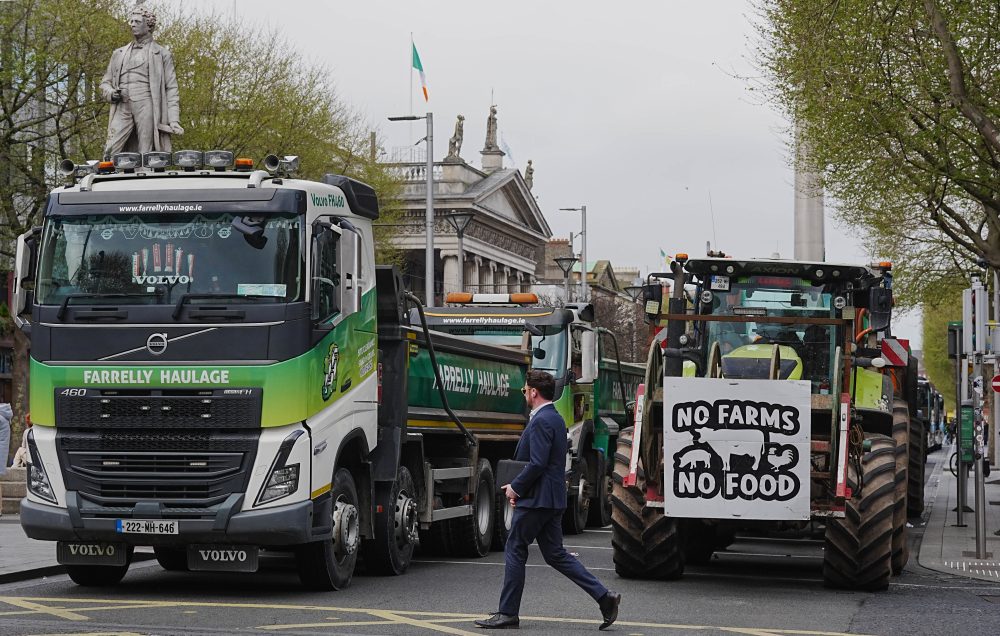

Demonstrations against escalating fuel costs in Ireland have stretched into their fourth consecutive day Friday, raising alarm about potential shortages and impacts on emergency response teams as protesters continue blocking roadways and fuel distribution centers nationwide.
Irish officials plan to convene with farmers, truckers and agricultural contractors Friday to address the mounting crisis, which stems from increased gasoline and diesel prices linked to Middle Eastern conflicts that have limited regional oil exports. Although protest leaders have indicated they would end their coordinated demonstrations if officials agree to negotiations, their participation in Friday’s discussions remains uncertain.
The demonstrations launched Tuesday with slow-moving vehicle convoys that restricted traffic flow on Dublin’s busiest thoroughfares while protesters established blockades at fuel terminals serving half the nation. Many demonstrators remained in their vehicles through the night, insisting on direct dialogue with government representatives.
More than 100 gas stations across the country have exhausted their fuel supplies, with industry group Fuels for Ireland warning through national broadcaster RTE that the number could reach five times that amount by Friday night if distribution disruptions persist.
On Thursday, government officials requested military assistance to clear vehicles from obstructed roadways, expressing worry that the blockades could hinder police, fire department and ambulance emergency response capabilities.
The widespread disruption evolved from individual demonstrations in Ireland’s major metropolitan areas, all centered on demands for additional reductions to skyrocketing fuel expenses.
Officials had previously enacted several cost-cutting measures, including temporary reductions in motor fuel excise taxes, expanded diesel rebates for trucking companies and bus operators, and extended assistance programs helping low-income residents with heating expenses.