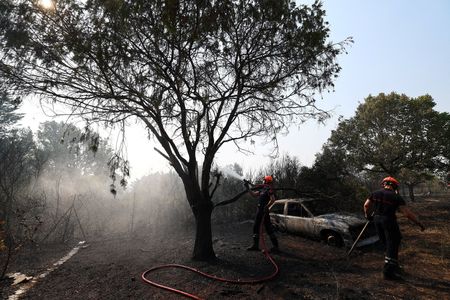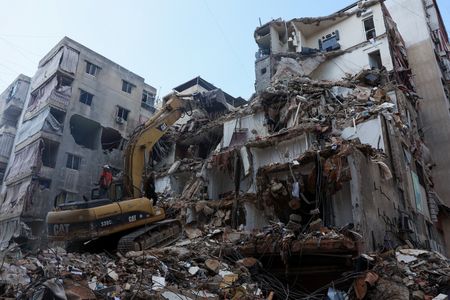

Lebanese President Joseph Aoun is moving forward with direct negotiations with Israel following a devastating month of conflict that has displaced more than one million Lebanese citizens, destroyed sections of Beirut, and sparked sectarian tensions throughout the country.
While Israeli Prime Minister Benjamin Netanyahu has agreed to participate in peace discussions, analysts believe Lebanon enters these unprecedented talks from an extremely compromised position with limited ability to secure meaningful results.
Hezbollah, currently engaged in combat with Israeli forces in southern Lebanon, remains opposed to direct negotiations, raising serious questions about whether the militant group would honor any ceasefire agreement reached by Lebanese government officials.
“The talks that will take place between Lebanon and Israel are frankly pointless, because those conducting them in the name of Lebanon have no leverage to negotiate,” a Lebanese official close to the group told Reuters on condition of anonymity.
DEVASTATING STRIKES CLAIM HUNDREDS OF LIVES
Israeli air campaigns against Lebanon escalated after Hezbollah launched missiles into Israel on March 2, occurring three days after the U.S.-Israeli conflict with Iran began. Israeli forces have since expanded their ground operations.
Members of Lebanon’s Shi’ite Muslim population, which forms Hezbollah’s primary support base and has suffered the heaviest casualties from Israeli attacks, expressed to Reuters their lack of confidence in a government they view as unable to protect them.
Netanyahu’s directive to his cabinet regarding direct negotiations came following Israeli airstrikes throughout Lebanon that claimed over 300 lives, marking one of the deadliest single days for the country since its civil war concluded in 1990. Emergency responders continued recovering bodies from destroyed buildings on Friday while families conducted funerals nationwide.
Israeli bombing campaigns have devastated public infrastructure throughout southern Lebanon and resulted in the deaths of multiple Lebanese security personnel on Friday.
“Israel’s brutality does not distinguish between one civilian and another, nor between Muslim and Christian, in this country. We must all stand together to confront this barbarity and this aggression,” said Hassan Saleh, a Lebanese man attending a funeral in the southern city of Tyre.
GOVERNMENT AUTHORITY CONTINUES TO ERODE
Numerous Lebanese citizens, including two government officials speaking anonymously to Reuters, characterized Netanyahu’s delayed agreement to negotiations as a political maneuver designed to improve relations with Washington as the United States prepares for discussions with Iran this weekend, while maintaining military operations in Lebanon.
“Just because Israel agreed to negotiate with us doesn’t mean it’s going to be easy. The problem is that we don’t have any other option,” said Nabil Boumonsef, deputy editor-in-chief of Lebanon’s Annahar newspaper.
Lebanon’s central government has traditionally struggled with limited authority, weakened by widespread corruption, a sectarian power-sharing structure that frequently results in political gridlock, and recurring internal conflicts and wars involving Hezbollah and Israel.
While Lebanese citizens have voiced concerns about governmental weakness for decades, recent crises have further undermined public confidence in official institutions.
The country’s banking system collapsed in 2019, and a chemical explosion at Beirut’s port in 2020 killed more than 200 people. Authorities have not held anyone accountable for either catastrophe.
A September 2024 Arab Barometer survey revealed that 76% of Lebanese citizens expressed no confidence whatsoever in their government.
The following month, Israel deployed ground forces into Lebanon and intensified bombing operations after a year of cross-border exchanges with Hezbollah. Lebanese casualties exceeded 3,700 people during this period.
INTERNAL DIVISIONS PERSIST
Despite a U.S.-mediated ceasefire agreement in November 2024, Israeli forces remained in Lebanon while continuing strikes against what they identified as Hezbollah infrastructure. Residents who returned to demolished towns in southern Lebanon used personal funds to rebuild their homes without government assistance.
Thousands of displaced citizens unable to return home blamed their own government for failing to secure Israeli withdrawal through diplomatic channels.
The United States and Israel criticized the Lebanese government and military for not fulfilling ceasefire commitments to completely disarm Hezbollah.
Lebanese officials argued that forcibly disarming Hezbollah would trigger civil conflict, and diplomatic efforts to persuade the group to surrender its weapons were unsuccessful while Israeli forces continued occupying Lebanese territory.
Following Hezbollah’s entry into the regional conflict on March 2, Lebanon declared the group’s military operations illegal. However, the army did not prevent Hezbollah’s missile attacks, with officials again citing concerns about internal warfare.
Netanyahu has indicated that negotiations would address Hezbollah’s disarmament and establishing a formal peace treaty between Israel and Lebanon, who have remained technically at war since Israel’s establishment in 1948.
However, both objectives appear unlikely following such a destructive period of violence.
Michael Young of the Carnegie Endowment’s Middle East Center described Lebanon as approaching negotiations while internally fractured.
Disarming Hezbollah “means entering into a confrontation with the entire Shi’ite community, which will not accept Hezbollah’s disarmament because they feel they are surrounded by enemies”, he said.
“We’re weak because we’re unclear on the terms of reference of negotiations, divided over the question of negotiations, because our demands will be rejected and because we cannot do what we need to do to secure an Israeli withdrawal.”