
Diplomatic efforts to resolve the ongoing conflict between the United States and Iran face uncertainty as both nations prepare for crucial negotiations in Pakistan’s capital of Islamabad.
The talks, aimed at ending a six-week military confrontation, hit a potential roadblock when Iranian officials indicated they would not proceed without prior commitments regarding Lebanon and economic sanctions relief.
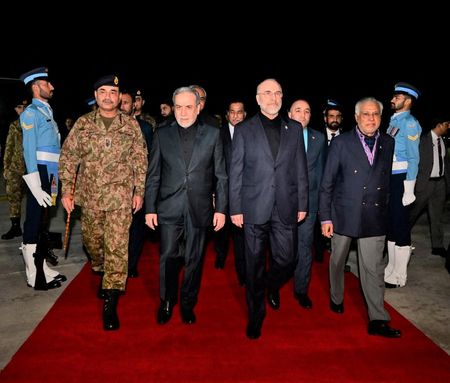
A high-ranking American delegation featuring Vice President JD Vance, special envoy Steve Witkoff, and Jared Kushner made their way to Pakistan after a fuel stop in Paris. Meanwhile, Iran’s representatives, including parliamentary Speaker Mohammad Baqer Qalibaf and Foreign Minister Abbas Araqchi, touched down in Islamabad on Friday.
TRUMP CLAIMS IRAN ‘HAS NO CARDS’
Through social media posts, Qalibaf stated that Washington had previously promised to release frozen Iranian financial assets and establish a ceasefire in Lebanon, where Israeli military operations against Iran-supported Hezbollah forces have resulted in nearly 2,000 deaths since fighting erupted in March. He emphasized that negotiations would remain stalled until these commitments were honored.
While Israel and the United States maintain that the Lebanese conflict falls outside the scope of Iran-U.S. ceasefire discussions, Tehran considers it an integral component.
According to Iranian state media reports, Qalibaf indicated separately that his country stood prepared to reach an agreement provided Washington presented what he characterized as an authentic deal that recognized Iran’s legitimate rights.
The White House has not yet responded to Iran’s conditions, though President Trump took to social media to assert that Iran’s only purpose for existing was to engage in negotiations.
“The Iranians don’t seem to realize they have no cards, other than a short term extortion of the World by using International Waterways. The only reason they are alive today is to negotiate!” he declared.
During his journey to Pakistan, Vice President Vance expressed optimism for successful outcomes while warning: “If they’re going to try to play us, then they’re going to find the negotiating team is not that receptive.”
Pakistani authorities implemented extraordinary security measures throughout Islamabad, deploying thousands of paramilitary forces and military personnel in anticipation of what Prime Minister Shehbaz Sharif described as “make-or-break” negotiations.
Earlier this week, President Trump declared a two-week pause in hostilities, effectively stopping American and Israeli air operations against Iran.
Despite this temporary halt, Iran continues its blockade of the strategically vital Strait of Hormuz, creating unprecedented disruptions to worldwide energy markets, while the separate conflict between Israel and Iran-backed Hezbollah in Lebanon persists.
LEBANESE FIGHTING PERSISTS
Israeli Ambassador to the United States Yechiel Leiter and Lebanese Ambassador Nada Hamadeh Moawad are scheduled to meet in Washington next Tuesday, though officials from both countries offer conflicting descriptions of the meeting’s purpose.
Lebanese officials described Friday phone conversations between the ambassadors as focusing on ceasefire announcements and establishing timelines for bilateral discussions under American mediation. However, Israel’s Washington embassy characterized the upcoming talks as the beginning of “formal peace negotiations” while rejecting any ceasefire discussions with Hezbollah.
Israeli military strikes continued throughout southern Lebanon on Friday, including an attack on a government facility in Nabatieh that claimed the lives of 13 Lebanese state security personnel, according to President Joseph Aoun’s official statement.
Hezbollah responded through its Telegram communications channel, announcing rocket attacks targeting northern Israeli communities.
Following the ceasefire announcement, Israel conducted what officials described as the conflict’s largest military operation, with Lebanese authorities reporting more than 350 casualties from surprise attacks on densely populated areas.
Iran’s negotiating position includes demands for substantial concessions, such as complete sanctions relief to restore their damaged economy and recognition of their authority over the Strait of Hormuz, where they seek to impose transit fees and control passage rights in what would represent a significant shift in regional influence.
Iranian vessels continued moving freely through the strait on Friday, while ships from other nations remained trapped.
Energy supply disruptions have contributed to rising inflation and global economic slowdown, with effects anticipated to continue for months regardless of negotiation outcomes.
Iran’s firm stance before the talks follows defiant statements from new Supreme Leader Ayatollah Mojtaba Khamenei on Thursday.
Khamenei, who has not appeared publicly since assuming leadership following his father’s death on the conflict’s opening day, announced Iran would seek compensation for all war-related damages.
“We will certainly not leave unpunished the criminal aggressors who attacked our country,” he stated.
While President Trump has proclaimed victory and significantly damaged Iran’s military infrastructure, the conflict has not accomplished many of his initial objectives: eliminating Iran’s ability to threaten neighboring countries, dismantling their nuclear program, and facilitating domestic regime change.
Iran retains missile and drone capabilities for regional strikes and maintains stockpiles exceeding 400 kilograms of uranium enriched close to weapons-grade levels. The country’s religious leadership, which faced popular protests just months earlier, survived the military campaign without visible organized resistance.