
BEIRUT (AP) — The current hostilities between Israel and Lebanese militant organization Hezbollah represent merely the most recent chapter in a bitter rivalry spanning more than four decades. This antagonistic relationship has been marked by episodes of intense combat and full-scale warfare, interrupted by periods of fragile peace.
Below are key moments that have defined this long-standing confrontation:
1982: Israeli forces launch a major incursion into Lebanon, targeting the Palestinian Liberation Organization and its allies. During this period, Hezbollah emerges with support from Iran, modeled after Iran’s Islamic Revolution, specifically to resist Israel’s subsequent occupation of southern Lebanon. The group begins conducting guerrilla operations against Israeli forces.
1992: Israeli helicopter gunships kill Hezbollah commander Abbas Mousawi. Hassan Nasrallah takes over leadership of the organization, a position he would hold for the following thirty years.
1996: Israeli forces conduct a major operation designed to force Hezbollah forces north beyond the Litani River, approximately 30 kilometers (20 miles) from the border. Israeli artillery fire strikes a United Nations facility sheltering hundreds of displaced civilians in Qana, resulting in at least 100 civilian deaths and injuring many more.
2000: Following an extended campaign of attrition, Israeli troops complete their withdrawal from southern Lebanon. This development is celebrated throughout the Arab world as a significant triumph for Hezbollah.
2006: Hezbollah militants conduct a cross-border operation, ambushing an Israeli military patrol and killing three soldiers while capturing two others, triggering a month-long conflict between the two sides that concludes without a clear victor. Israeli bombing campaigns devastate villages and residential areas in southern Lebanon and Beirut’s southern neighborhoods, employing a comprehensive destruction strategy later termed the “Dahiyeh Doctrine.”
2008: Imad Mughniyeh, serving as Hezbollah’s top military commander, dies when an explosive device detonates in his vehicle in Damascus. Israeli intelligence is suspected of orchestrating the killing.
2012: Hezbollah joins the Syrian conflict, backing President Bashar Assad’s government. Subsequently, Israel begins conducting periodic air operations in Syria, targeting Iranian and Hezbollah installations, personnel, and weapons transfers allegedly destined for Hezbollah. During this timeframe, Israel refrains from conducting operations against Hezbollah within Lebanese borders.
OCT. 8, 2023: Following Hamas-led attacks in southern Israel that trigger the Gaza conflict, Hezbollah launches rocket attacks across the Israeli border. Israel retaliates with aerial bombardments and artillery fire, initiating a limited conflict that initially remains concentrated along the border region.
SEPT. 17, 2024: Israel executes an operation in Lebanon involving remotely-detonated explosive devices concealed in pagers distributed to Hezbollah operatives and civilian staff. The following day, a comparable attack involves walkie-talkie devices. These operations result in dozens of fatalities and thousands of injuries, primarily affecting Hezbollah personnel but also harming women and children.
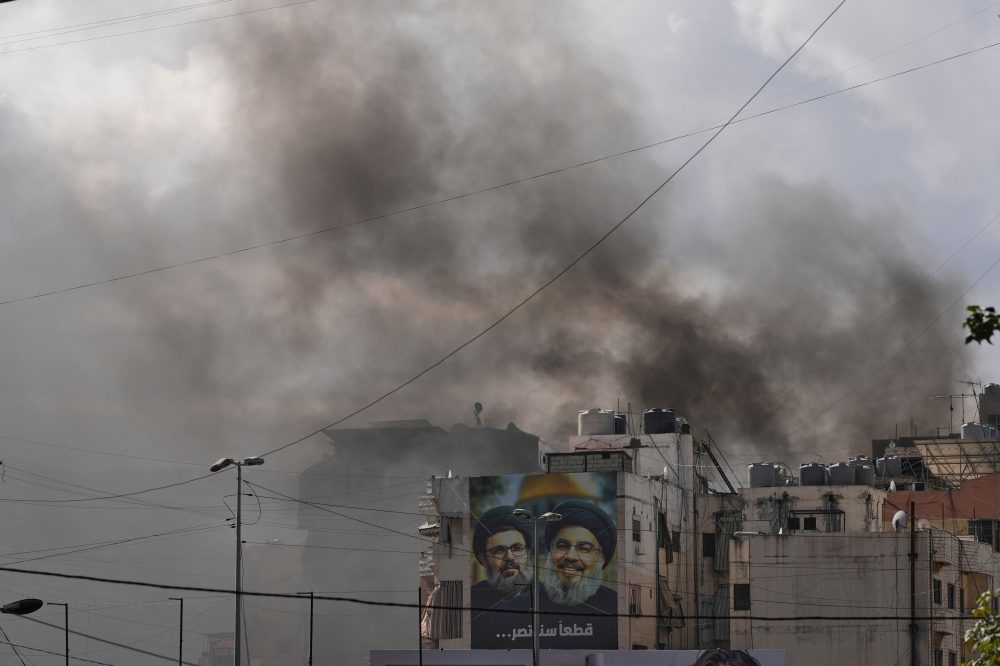
SEPT. 27, 2024: Hassan Nasrallah perishes in extensive Israeli airstrikes targeting Beirut’s southern districts.
NOV. 27, 2024: A ceasefire arrangement mediated by the United States formally concludes the Israel-Hezbollah conflict. Israel maintains regular military operations in Lebanon, claiming these actions prevent Hezbollah from reconstituting its capabilities.
MARCH 2, 2025: Following joint Israeli and American attacks on Iran two days earlier that sparked broader Middle Eastern warfare, Hezbollah fires missiles at Israeli targets. The group states this bombardment responds to the death of Iranian Supreme Leader Ayatollah Ali Khamenei and “ongoing Israeli violations” in Lebanon.