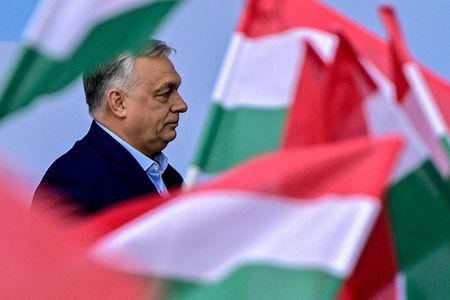

BUDAPEST, April 10 (Reuters) – For the first time since taking office, Hungarian Prime Minister Viktor Orban and his Fidesz political party are encountering serious electoral competition in the April 12 vote, breaking a pattern of overwhelming victories that began in 2010.
Throughout his decade-and-a-half tenure, Orban has drawn condemnation from the international community regarding democratic institutions, press liberty, and LGBTQ rights.
Here’s an examination of his signature policy initiatives.
INSTITUTIONAL CONTROLS AND CIVIL LIBERTIES
Leveraging a commanding two-thirds parliamentary majority, Orban implemented a new constitution in 2011 and restructured hundreds of existing laws.
In Fidesz’s initial term, the party forced hundreds of judicial officials into retirement through legislation that European Union officials determined violated EU standards. Hungary’s Constitutional Court subsequently invalidated portions of that legal framework.
Opposition voices argue that revised voting regulations have solidified Fidesz’s dominance by benefiting major parties, restructuring voting districts, and extending voting privileges to ethnic Hungarians throughout central Europe, who predominantly back Orban.
Individuals loyal to Orban occupy leadership roles in critical government institutions.
Beginning in 2022, he has regularly ruled through executive orders, utilizing emergency powers established following Russia’s invasion of neighboring Ukraine.
His administration has targeted certain non-governmental organizations and imposed stricter oversight on educational institutions. Consequently, the Open Society Foundations, established by Hungarian-born billionaire George Soros, closed its Budapest headquarters in 2018 and relocated to Berlin, while Central European University, a prominent liberal institution also created by Soros, transferred operations to Vienna in 2019.
Orban dismisses claims of weakening democratic governance, asserting that voters provided clear authorization to restructure existing laws.
CONSERVATIVE RIGHTWING AGENDA
Orban has positioned himself as a guardian of Hungarian cultural heritage against Muslim immigration and as a champion of Christian principles against what he terms “gender and LGBT ideology” and Western liberal thought.
His administration has constitutionally redefined marriage as exclusively between one man and one woman, while restricting gay adoption and transgender rights.
In March 2025, parliament enacted legislation providing legal grounds for police to prohibit Pride demonstrations, contending they could endanger children and that child protection should override assembly rights.
Hungary constructed border barriers along its southern frontier following the 2015 migration crisis and established some of Europe’s most restrictive asylum policies. Rather than accepting immigration as a solution to Hungary’s population decline, Orban has attempted to increase birth rates through substantial family tax benefits.
MEDIA OVERSIGHT
Orban has restructured Hungary’s media environment, prompting accusations from the European Union and democracy advocates that press freedoms are being restricted, allegations his government refutes.
His administration has strengthened control over state media, including broadcasting outlets, converting them into government propaganda tools, according to critics.
Government advertising funds directed to pro-administration media have encouraged favorable coverage in private outlets, while numerous other publications have been closed or acquired by government-aligned owners.
EASTERN AND WESTERN RELATIONS
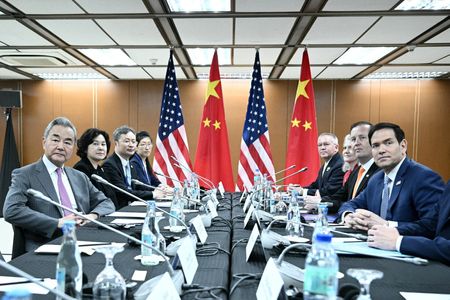
During Orban’s leadership, the EU and NATO member has pursued an “Eastern opening” toward Russia and China, encouraging business investment from those nations – alongside German automotive manufacturers – while advocating for Moscow’s positions within the EU.
Orban denounced Russia’s 2022 war against Ukraine and criticized but supported EU sanctions targeting Moscow. However, he firmly opposes prohibiting Russian energy imports, claiming such action would devastate Hungary’s economy.
Relations between Hungary and Ukraine have deteriorated over multiple issues including energy deliveries, and Hungary has prevented a 90 billion euro European Union loan to Ukraine.
ECONOMIC POLICIES
Hungary completed repayment of all outstanding International Monetary Fund debt in 2013 following a bailout during the global financial crisis, and its debt achieved investment grade rating three years afterward.
Orban’s government controlled fiscal deficits and public debt until the coronavirus pandemic reversed this progress. Recently, the government increased its budget deficit projections to 5% for 2025 and 2026 to accommodate pre-election expenditures.
Europe’s steepest banking tax, nationalization of certain private pension funds, and taxes on telecommunications, energy, and retail companies – primarily foreign-owned – strengthened government revenues but created conflicts with Brussels.
As businesspeople and oligarchs connected to Fidesz have acquired substantial portions of these strategic industries, Hungarian ownership has expanded, with Orban stating earlier this year that banking, media, and energy sectors had achieved majority Hungarian ownership.
The economy has remained stagnant for three years.