
BUDAPEST, Hungary (AP) — A former government insider has emerged as the strongest challenge to Hungarian Prime Minister Viktor Orbán’s lengthy rule, leading in polls just days before critical elections this Sunday.
Péter Magyar, a 45-year-old attorney who leads the opposition Tisza party, has experienced a remarkable political transformation since entering the public spotlight in early 2024. Over the past two years, he has energized Hungarian voters nationwide who view him as the most viable candidate to end Orbán’s 16-year dominance.
Magyar’s background tells the story of someone who once thrived within Orbán’s political structure. He joined the prime minister’s nationalist-populist Fidesz party in 2002 and spent years navigating its inner workings, securing influential positions at government-controlled organizations and building relationships with key power brokers.
Current polling data shows Tisza holding a substantial double-digit advantage over Fidesz — marking the first time any opposition group has achieved such numbers since Orbán regained control in 2010. While some Magyar supporters express concern about his previous government connections, others argue that his insider knowledge makes him uniquely qualified to dismantle the current system.
Magyar, born in 1981, has spoken about his early fascination with politics. During his childhood in the waning days of communist Hungary, he looked up to Orbán and his young liberal democratic allies who were confronting Soviet influence as the Cold War concluded.
As a student, Magyar reportedly watched parliamentary proceedings on television and joined his parents at political rallies. Deeply involved in conservative political circles, he became a Fidesz member at 21 in 2002, developing close relationships with future party leaders including Gergely Gulyás, who eventually became Orbán’s chief of staff.
Following his 2003 law degree from a Catholic institution, Magyar entered legal practice. During Fidesz’s opposition period in 2006, he offered free legal services to anti-government protesters who faced arrest during violent demonstrations against the Socialist administration.
That year also marked his marriage to attorney Judit Varga, who would later become a prominent Orbán cabinet member. In 2009, the couple relocated to Brussels, where Varga served as an advisor to a Hungarian European Parliament representative.
While living abroad, Magyar balanced diplomatic work for Hungary’s Foreign Ministry and its EU mission with time as a stay-at-home father to their three children.
Upon their 2018 return to Hungary, Magyar assumed leadership positions at multiple state-connected institutions. Simultaneously, Varga’s political profile grew within Fidesz, culminating in her 2019 appointment as justice minister. Along with Katalin Novák, an Orbán supporter who became Hungary’s youngest and first female president in 2022, Varga was considered a potential Orbán successor.
However, a 2024 political crisis would dramatically alter Magyar’s personal and professional path, reshaping Hungarian political dynamics.
After returning from Brussels, Magyar and Varga’s marriage crumbled, ending in divorce in 2023.
The following year brought a scandal that shook Hungary when revelations surfaced that President Novák had pardoned someone convicted of assisting in child sexual abuse. The shocking decision prompted Novák’s resignation, while Varga, who had supported the pardon, also resigned from her position.
The day after Varga’s resignation, Magyar participated in an extensive interview with Partizán, a prominent Hungarian YouTube channel, publicly severing ties with Fidesz and alleging widespread government corruption serving only a narrow group of political and business elites.
The interview became an instant sensation, accumulating over 2 million views in a nation of less than 10 million people, catapulting Magyar from relative obscurity to national prominence overnight.
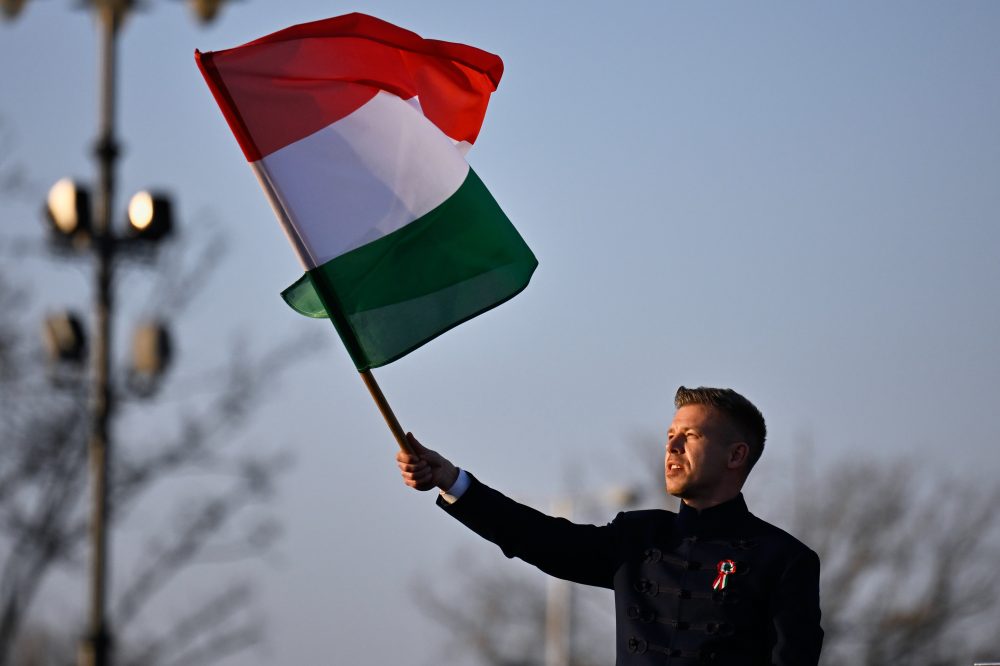
In subsequent weeks, he escalated his government criticism and began organizing public gatherings. On March 15, Hungary’s national holiday, he spoke to thousands of supporters in Budapest, announcing his intention to create a new political organization that would become the Tisza party.
By June, Tisza captured 30% of votes in European Parliament elections, securing Magyar a seat as an EU legislator.
Shortly after his government break, Varga publicly accused Magyar of abusive conduct during their marriage. Magyar has rejected these claims, characterizing them as a political smear campaign following his opposition to the ruling party.
In recent political interviews, Magyar has described himself as someone who frequently expressed dissent even while working within the Fidesz framework, claiming he consistently voiced criticism and advocated for internal discussion.
His political emergence has reinvigorated significant portions of Hungarian society who, frustrated with previous generations of divided and ineffective opposition movements, have long searched for a credible Orbán alternative.
Additionally, while Orbán’s campaign emphasizes various external dangers facing Hungary, including the conflict in nearby Ukraine, Magyar has concentrated on everyday concerns affecting regular Hungarians: rising prices, inadequate wages, declining public healthcare and transit systems, and widespread corruption.
Though Magyar has successfully united Orbán opponents across the political landscape, his support doesn’t always stem from ideological agreement. Some liberal voters remain skeptical of his confrontational approach and conservative positions.
Seeking to avoid errors made by previous opposition figures who provided Fidesz with attack opportunities, Magyar has deliberately refrained from taking definitive stances on controversial topics such as Orbán’s anti-LGBTQ+ legislation and whether Hungary should increase Ukrainian support.
Beyond his substantive critiques of Orbán’s governance, Magyar has achieved a level of political stardom rarely witnessed in Hungarian politics outside of Orbán himself. Following his rallies, crowds frequently rush toward the stage for selfies, patiently waiting as he poses individually with supporters.
His swift rise has inspired a documentary film released in Hungarian theaters this year. “Spring Wind — The Awakening,” which has dominated box office charts, chronicles Magyar’s transformation from an obscure insider to the political figure now challenging Orbán’s administration.