Category: World News

  • Weakened Syrian Prison Security Sparks Fears of ISIS Fighter Escapes

    Weakened Syrian Prison Security Sparks Fears of ISIS Fighter Escapes

    Deteriorating prison security in northeastern Syria has sparked international alarm as intelligence reports indicate ISIS detainees have broken free from detention facilities over recent months, raising the specter of terrorist group resurgence seven years after the collapse of their so-called caliphate.

    A high-ranking Syrian security official with access to classified intelligence briefings revealed to The Media Line: “There are indications that some ISIS detainees managed to escape from certain prisons during the past months.” Speaking on condition of anonymity, the source noted that while these breakouts weren’t widespread, they highlight critical vulnerabilities in facility security.

    Intelligence estimates place the total number of ISIS prisoners held across northeastern Syria between 9,000 and 12,000 individuals, housed in detention centers throughout Al-Hasakah, Raqqa, and al-Shaddadah. American officials have characterized many of these captives as “the worst of the worst” due to their roles in large-scale terrorist attacks dating back to 2014.

    The Ghwayran facility in Al-Hasakah alone confines approximately 3,000 to 5,000 prisoners, while al-Shaddadah holds roughly 1,500 detainees and al-Aqtan prison houses about 2,000. Additionally, the al-Hol displacement camp shelters around 43,000 individuals, predominantly women and children connected to ISIS members. European intelligence data shows that between 700 and 800 prisoners possess European citizenship, including 450 French nationals, 90 Dutch citizens, 77 Germans, 55 Belgians, and 27 British subjects, creating complex diplomatic and legal complications.

    Jihadist group specialist Mahana Jamal warned The Media Line that “the opportunities available for the escape of the organization’s members reflect weak local security coordination, and any limited escape could constitute a nucleus for the reformation of sleeper cells, whether in Syria or across the border into Iraq.”

    Confronting the threat of mass prisoner breakouts involving roughly 6,000 dangerous detainees, the United States initiated an extraordinary series of airlift missions described as having no historical precedent. The operation involved approximately 50 flights conducted over several weeks, relocating around 6,000 prisoners, including 500 to 600 foreign nationals.

    These emergency transfers utilized military cargo planes and helicopters to guarantee swift and secure transport, with daily coordination among US Central Command, the Pentagon, and intelligence services under National Intelligence Director oversight. American officials characterized these missions as preventing “a catastrophe that would have changed the region and perhaps the world overnight,” emphasizing that prison system collapse would have enabled immediate terrorist organization reconstitution.

    Simultaneously, management of multiple detention facilities and the al-Hol camp in Raqqa and Al-Hasakah provinces has been progressively handed over to Syrian government institutions. The Syrian military now oversees al-Aqtan prison, while the Interior Ministry manages al-Shaddadah prison through army personnel, and Damascus has assumed supervision of al-Hol camp with plans to relocate some residents elsewhere. This transition marks the conclusion of Syrian Democratic Forces’ exclusive control over prisoner management and questions Syrian authorities’ capacity to maintain order in an unstable post-conflict environment.

    Iraq, having endured ISIS territorial control across vast regions in 2014, considers these developments a direct national security threat. All relocated prisoners, regardless of citizenship, will face Iraqi court proceedings under established legal frameworks with comprehensive crime documentation. Baghdad is also working with European nations on citizen repatriation while focusing on preventing mass escapes and terrorist group reformation within Iraqi borders.

    European anxieties are mounting given hundreds of their citizens remain among the detainee population, as potential “illegal return” through smuggling networks and sleeper cell reconstruction poses immediate European national security risks. The challenge encompasses both domestic security risk management and addressing legal and political questions surrounding foreign fighter prosecution and rehabilitation.

    The al-Hol camp represents the most significant long-term challenge, housing approximately 43,000 people including thousands of children and women, many holding foreign citizenship. The facility presents serious security and social concerns due to extremist influence networks capable of perpetuating ISIS ideology, particularly among children raised amid violence and radicalization.

    With rehabilitation and reintegration programs remaining limited and roughly 18,000 Iraqi citizens awaiting gradual transfers to their home regions, the camp lacks a comprehensive legal and humanitarian framework.

    Current developments reflect intersecting regional and international priorities. The United States aims to prevent ISIS resurgence while avoiding long-term military commitment. Iraq works to secure borders and prevent repeating the 2014 collapse, while Syria views camp and prison control as reinforcing sovereignty and domestic security.

    European nations meanwhile confront complex legal and political challenges regarding citizen repatriation and prosecution. Russia, Turkey, and Iran also monitor the situation closely as part of broader regional power competition in eastern Syria.

    Recent actions have achieved short-term success in preventing worst-case scenarios. High-risk leaders were relocated and immediate security breakdown was averted. However, containment alone doesn’t constitute a lasting solution.

    Substantial vulnerabilities persist, particularly among remaining detainees and the broader camp population, including women and children exposed to extremist influence. Without more comprehensive approaches, these weaknesses could enable organizational reemergence.

    A sustainable response would demand an integrated strategy combining security, legal, humanitarian, and educational elements. Without such coordination, current arrangements risk collapse under renewed pressure.

    The international community now faces challenges more complex than the earlier military campaign. Attention has shifted to detention, legal proceedings, and social rehabilitation, where the capacity to definitively close this chapter and prevent ISIS-related security threat reemergence is being tested regionally and internationally, particularly in Europe and neighboring countries.

  • Emergency crews work to contain oil refinery fire in southern Russia

    Emergency crews work to contain oil refinery fire in southern Russia

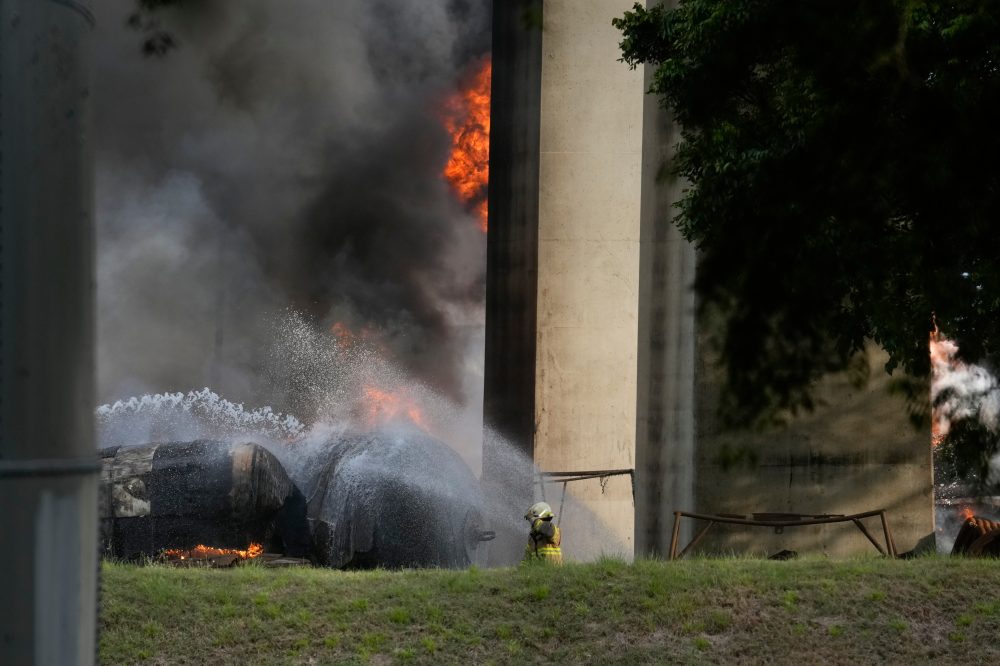
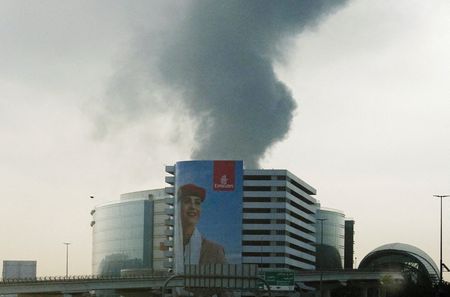
    Emergency crews are working to extinguish a fire that erupted at an oil refinery facility in southern Russia early Saturday morning, according to regional authorities.

    Officials from the Krasnodar region’s operational headquarters reported via Telegram that the fire ignited at the refinery located in Novominskaya, a town situated north of the regional capital city of Krasnodar.

    According to the official statement, emergency responders have sent 39 firefighters to the scene where flames have engulfed a storage tank and the area around it. Crews are currently working to bring the situation under control.

  • Iranian University Students Continue Anti-Government Protests Despite Crackdown

    Iranian University Students Continue Anti-Government Protests Despite Crackdown

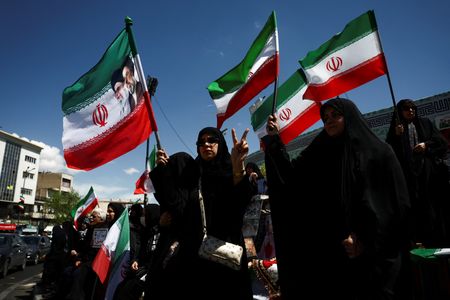
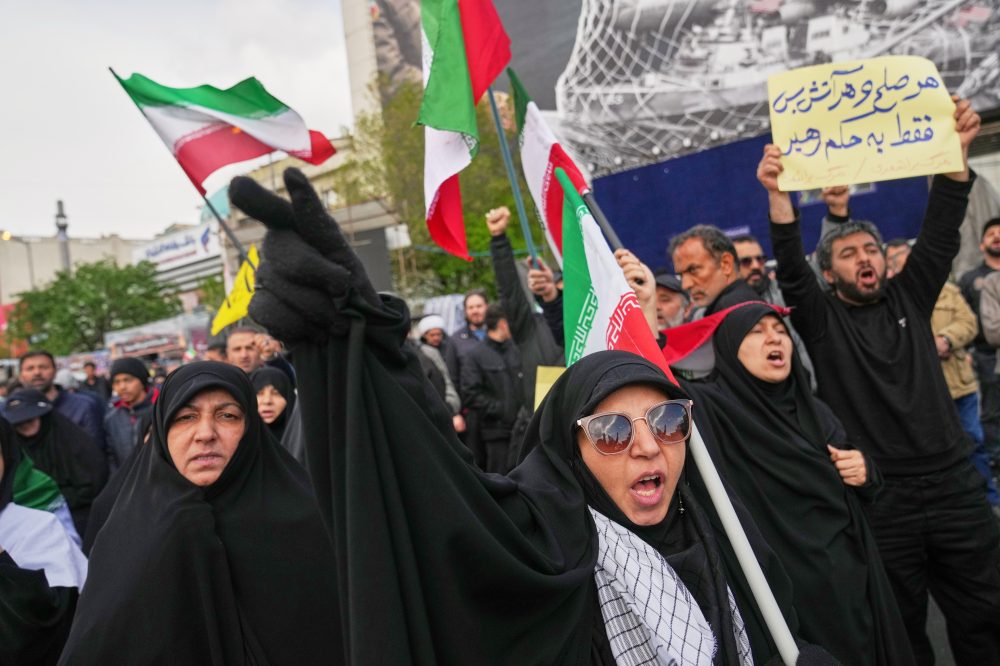
    CAIRO (AP) — Seven weeks have passed since Iran’s government violently crushed massive nationwide demonstrations. However, opposition to the Islamic Republic continues to smolder across Iranian university campuses.

    According to an Iranian activist in exile who monitors student movements, four student eyewitnesses, and social media footage confirmed by The Associated Press, anti-government rallies occurred at no fewer than 10 universities during the previous week.

    The students, who requested anonymity due to fear of government reprisals, described growing fury toward Iranian leadership on their campuses and uncertainty about their nation’s future direction.

    These campus tensions are escalating while Iran’s government, under Supreme Leader Ayatollah Ali Khamenei, confronts potential U.S. military action regarding the country’s nuclear activities.

    Iran’s religious government is intensifying intimidation tactics against students and university officials. A government representative cautioned students this week against crossing a “red line,” while a conservative cleric leading Iran’s judicial system warned that “crimes” would face punishment if administrators failed to control campus demonstrations.

    Numerous universities have closed their physical locations and transitioned to online instruction.

    This move to virtual classes echoed measures taken by authorities in the previous year. When December demonstrations at Tehran’s main bazaar over deteriorating economic conditions rapidly expanded to communities nationwide, officials mandated remote learning in early January, cut internet access, and launched a violent suppression campaign.

    A comprehensive count of victims from the crackdown has been delayed due to internet limitations imposed by the government.

    The Human Rights Activists News Agency reports confirming over 7,000 deaths while investigating thousands of additional cases. Government figures acknowledge more than 3,000 fatalities, though officials have historically undercounted or failed to report deaths from previous unrest.

    Ali Taghipour, an exiled Iranian activist monitoring student movements, reported that at least 128 university students perished during the nationwide upheaval. “It was the biggest massacre of university students” under the Islamic Republic, he stated.

    “By the time the state made universities in-person again, it coincided with the (40 day) memorials of the killings of the January protests,” Taghipour explained. He noted that some campus memorial services triggered fresh anti-government demonstrations.

    Disturbances broke out last Saturday at Sharif University of Technology and Amir Kabir University. Online videos authenticated by AP documented confrontations on both campuses between apparent government supporters and demonstrators shouting, “Shameless! Shameless!” This chant frequently targets security personnel and undercover agents like the Basij, the volunteer branch of Iran’s Revolutionary Guard that maintains campus presence through student organizations.

    At the women-only Al Zahra University in northern Tehran, students voiced anti-government slogans on Monday, based on AP-verified videos. The same day, students at the University of Tehran’s College of Foreign Languages conducted a boisterous demonstration, stomping and chanting, “For each person killed, a thousand stand behind them!” This gathering originated as a memorial for a student killed during January protests.

    These demonstrations have sparked concerns about renewed government suppression. Tuesday saw government spokeswoman Fatemeh Mohajerani warning students to avoid crossing a “red line,” according to the semi-official Mehr news agency, while an Iranian state television anchor read a statement attributed to Sharif university’s president apologizing for “inappropriate” campus events.

    Wednesday brought comments from Gholamhossein Mohseni Ejehi, the judicial chief, stating that legal authorities would pursue “crimes” on campuses if educational leaders couldn’t maintain control, according to state media reports. Ejehi has emerged as the face of Iran’s recent suppression efforts, advocating for expedited punishments for demonstrators.

    Iranian universities have banned certain students from campus and conducted disciplinary proceedings, Taghipour reported. Historical precedent shows such hearings have resulted in expulsions and prohibitions from future university enrollment.

    Iran’s university students have historically driven anti-government movements.

    In 1999, Tehran university students initiated some of the earliest demonstrations against the Islamic Republic. Campus unrest also significantly contributed to protests supporting Iran’s reform-minded leaders in 2008-2009, and sustained openly anti-government demonstrations in 2022 that evolved into calls for overthrowing Iran’s religious government.

    The inflexibility of Iran’s hardliners regarding policy modifications, combined with the destruction of the country’s middle class through decades of Western sanctions and economic mismanagement, has convinced many college-aged students that the Islamic Republic cannot undergo reform, according to a University of Tehran doctoral candidate.

    This vacuum has created opportunities for Reza Pahlavi — son of the shah removed in 1979 — to become “a serious political cause for some people in Iran,” the student observed. Public memories of the shah’s authoritarian governance remain conflicted, though nostalgia for that era’s economic success has increased.

    Years of oppression have undermined organized opposition capabilities within the country. The suppression has also reduced campus space for political discussion and organizing, noted a Tehran university social sciences student. “After 2022, around 70% of student associations were closed,” he said, including a progressive student group he had directed.

    The student expressed uncertainty about potential outcomes from current student protests given foreign military threats and the government’s readiness to suppress dissent through lethal force.

    “On the one hand, we are facing a government that isn’t afraid of killing anyone, and on the other hand, we are facing outside powers that support people being killed.”

    A student from a university in the northern city of Babol described rising campus anxiety about potential warfare consequences for the country.

    The student expressed personal hopes for a “democratic secular republic” in Iran, while worrying that armed conflict might cause additional suffering and “increase the risks of the country’s disintegration.” Iran already faces challenges maintaining adequate basic services like electricity and water in certain regions.

    The Babol university has maintained remote courses since early January, the student reported, preventing campus gatherings. He said many students have boycotted online classes as protest.

    At the University of Tehran, the social sciences student expressed disagreement with students supporting Pahlavi, partially because the exiled opposition leader has advocated for U.S. strikes against Iran.

    “I’ll never understand a person who sits in London yelling for America to bomb Iran. How will they accept responsibility for what happens tomorrow?”

  • Pakistan Declares ‘Open War’ Against Taliban Following Cross-Border Strikes

    Pakistan Declares ‘Open War’ Against Taliban Following Cross-Border Strikes

    Pakistan’s military launched overnight strikes against Taliban government positions in Afghanistan, leading to retaliatory attacks and an official declaration of warfare from Islamabad as fighting escalated along the countries’ shared frontier, government officials from both nations confirmed Friday.

    AFP journalists in Kabul reported hearing at least three explosions just after midnight, with a military aircraft spotted flying overhead moments before the blasts occurred. Gunfire could also be heard throughout the area. These explosions came after the Taliban had earlier announced it conducted attacks on Pakistani border positions.

    Military officials from Pakistan confirmed their forces targeted Taliban locations across multiple Afghan cities. Pakistani security sources informed Reuters that the operation involved air-to-ground missile strikes aimed at Taliban military headquarters and outposts in Kabul, Kandahar, and Paktia provinces, accompanied by ground combat in various border sectors. Pakistani authorities characterized these actions as responses to Taliban aggression.

    Taliban representatives stated they conducted what they called retaliatory attacks against Pakistani military facilities. Both nations reported significant casualties, though they provided vastly different casualty counts that Reuters noted could not be independently confirmed.

    Following the military strikes, Pakistani Defense Minister Khawaja Asif declared his nation was now engaged in open warfare with Afghanistan’s Taliban leadership. “Our patience has reached its limit,” he posted on X, stating: “This is now an open war between us.” He reinforced this message later, writing: “Our cup of patience has overflowed. Now it is open war between us and you (Afghanistan).”

    Russia responded to the growing violence by calling for an immediate end to hostilities. The Russian Foreign Ministry urged both nations to “immediately cease the attacks,” and stated, “If the parties request, we will consider mediating between them,” according to Russian news agency RIA.

    Relations between Kabul and Islamabad have deteriorated due to Pakistan’s persistent allegations that Afghanistan provides sanctuary to militants conducting cross-border attacks. Taliban officials have dismissed these accusations, maintaining that Pakistan’s security challenges are internal issues.
  • Hong Kong Democracy Activist Remains Defiant After Father Jailed 8 Months

    Hong Kong Democracy Activist Remains Defiant After Father Jailed 8 Months

    A Hong Kong democracy advocate living in exile in the United States says she remains committed to her cause despite authorities in Hong Kong sentencing her elderly father to eight months behind bars.

    Anna Kwok, who leads the Washington-based Hong Kong Democracy Council, told The Associated Press that the imprisonment of her 69-year-old father has strengthened her resolve rather than weakened it.

    “I think obviously the (Hong Kong) government wants to use guilt, wants to use a lot of emotions to weight me down, but I’ve found my way to really find my calling in activism for Hong Kong,” Kwok stated during a Friday interview.

    “So I’m not going to back down. I’m just going to be more strategic with more long-term thinking and be more dedicated to the Hong Kong cause,” she added.

    The court decision came Thursday when Hong Kong officials imprisoned Kwok Yin-sang for attempting to access approximately $11,000 from an insurance policy he had purchased for his daughter when she was very young. Kwok gained authority over the policy at age 18, but when her father tried to cancel it and collect the funds in 2025, he was detained and charged with handling money belonging to someone classified as an “absconder.”

    This represents the first instance where family members of wanted pro-democracy figures have been prosecuted under Hong Kong’s 2024 national security legislation.

    The executive director described the punishment as “ridiculous” while acknowledging the personal toll her political work has taken on her loved ones.

    “I did go through this journey of finding out what activism means to me, now with this added layer of … very real personal cost that is not faced by me but faced by my family,” she explained.

    U.S. officials condemned her father’s treatment, with Riley Barnes, the assistant secretary of state for democracy, human rights and labor, demanding Kwok Yin-sang’s immediate freedom. “The targeting of individuals who advocate for basic freedoms in Hong Kong and their families is unacceptable,” Barnes posted on social media Thursday.

    Kwok is one of 34 individuals targeted by Hong Kong police bounties, part of widespread efforts to silence opposition following the massive anti-government demonstrations in 2019. Authorities have placed a 1 million Hong Kong dollar reward (approximately $127,900) for information leading to her capture, while also prohibiting anyone from managing her financial assets.

    Officials accuse her of seeking foreign sanctions and conducting other hostile actions against China and Hong Kong through her meetings with international political leaders and government representatives.

    The activist revealed she can no longer maintain contact with family and friends in Hong Kong. She chose to conduct a televised interview after her father’s conviction to “show my family and people who care about me that I cannot really communicate with that I’m doing okay, please don’t worry too much about me.”

    Kwok emphasized she refuses to allow Hong Kong’s government to succeed in making her feel responsible for endangering her family.

    “I have to constantly remind myself that it’s not my fault, but the regime’s fault and the regime’s purpose, to do something like this,” Kwok concluded.

  • Brazil Reverses Some Import Tax Increases After Industry Pressure

    Brazil Reverses Some Import Tax Increases After Industry Pressure

    Brazil’s federal government has walked back portions of a disputed import tax increase that took effect earlier this year, according to an announcement Friday from the Ministry of Development, Industry, Trade and Services.

    The decision eliminates tariffs on products that had previously lost their tax exemptions under policies designed to encourage data center development in Brazil.

    Earlier in February, the administration of President Luiz Inacio Lula da Silva implemented higher import duties on over 1,200 technology and capital goods items.

    Brazil’s Independent Fiscal Institution, a budgetary oversight body connected to the Senate, had projected the tariff increases would bring in an additional 14 billion to 20 billion reais (equivalent to $2.7-3.9 billion) in government revenue during this fiscal year.

    Under the latest changes, 105 products will once again be exempt from import taxes, including cooling compressors and other essential components for internal hardware temperature control, plus electrical substations that link data centers to main power grids.

    Beyond data center-related equipment, the government has also restored tax exemptions for products in other sectors following appeals from various industries, such as textile manufacturing equipment, healthcare devices, and truck-mounted lifting equipment.

    Brazil’s Finance Ministry had originally designed the tariff increases, arguing the policy adjustment was necessary because these imported goods contribute to an ongoing trade deficit in specific sectors and represent high levels of foreign product penetration — a pattern the ministry’s economic policy division characterized as “not merely cyclical, but structural.”

    A government official, speaking without identification, explained that the tax increase was primarily motivated by budget considerations, since additional revenue from import duties — which can be implemented without legislative approval and becomes effective immediately — will be crucial for achieving the government’s fiscal objectives both this year and next.

    The official noted that these revenue discussions are occurring as Brazil prepares its 2027 budget framework legislation, which must be presented to Congress by April.

  • Albania Lifts Year-Long TikTok Ban After Platform Improves Safety Measures

    Albania Lifts Year-Long TikTok Ban After Platform Improves Safety Measures

    The social media platform TikTok has returned to Albania following the expiration of a year-long prohibition this month, highlighting the difficulties governments face when attempting to block online platforms and raising concerns about digital freedom and child safety.

    Albanian authorities implemented the restriction last year after a tragic incident involving a 14-year-old student who was fatally stabbed by a classmate, with local news outlets reporting the violence stemmed from an online dispute. TikTok disputed that the conflict began on their platform at the time.

    Officials now say the Chinese-owned video-sharing service has implemented adequate safety protocols to warrant lifting the ban. Prime Minister Edi Rama’s administration told Reuters that TikTok addressed their concerns and that the prohibition effectively pressured the company to make changes.

    “With its correct behavior toward our concerns, TikTok confirmed to us the expression that ‘the devil is not as black as it seems’,” government officials stated, noting the platform has established “important filters for security and language.”

    TikTok representatives chose not to provide comment on the matter. Albanian authorities emphasized there was “no connection” between the platform’s suspension and electoral interference, insisting child protection was the “only goal.”

    The timing of the original ban raised eyebrows, occurring just weeks before crucial parliamentary elections in the politically turbulent nation. Albania has experienced significant unrest over corruption allegations, with Rama’s party holding power for an unprecedented fourth consecutive term.

    Opposition voices have criticized the move as an attempt to suppress political discourse. “The shutdown of TikTok was certainly a move by the Rama government to manipulate public opinion,” stated Edona Haklaj from the Shqiperia Behet party, which has maintained daily demonstrations outside the Prime Minister’s office since December, though she provided no evidence supporting her claim.

    Recent months have seen violent clashes between law enforcement and the main opposition Democratic Party, who are demanding governmental resignation after Deputy Prime Minister Belinda Balluku faced indictment for manipulating public contracts. Rama dismissed Balluku on Thursday, but opposition groups plan to continue protests this Saturday.

    Media freedom advocates worry the TikTok restriction could establish a troubling pattern for future censorship during periods of political tension.

    “This will create a dangerous precedent,” warned Isa Myzyraj, who leads the Association of Albanian Journalists. “Any government could exploit this precedent to block other social networks or even impose a total internet shutdown.”

    Technology expert Brenton Benja, who founded Geek Room Albania and monitored the ban’s effectiveness, noted the restriction had minimal real-world impact since users circumvented controls through virtual private networks (VPNs). This demonstrates the broader challenge of enforcing social media prohibitions against increasingly tech-savvy populations.

    Government officials acknowledged in their statement that completely blocking the platform proved “impossible” due to technical obstacles.

    “The 1.7 million Albanians we knew were using TikTok at the time it was closed continued to use it throughout the year by turning to alternative methods such as VPNs,” Benja explained.

  • Ex-Venezuelan Presidential Candidate Calls for Unity After Prison Release

    Ex-Venezuelan Presidential Candidate Calls for Unity After Prison Release

    CARACAS, Venezuela — A Venezuelan political figure who was imprisoned for more than a year after disputing his country’s 2024 presidential election outcomes is now pushing for cooperation between opposing political forces following the removal of former President Nicolás Maduro from power.

    Enrique Márquez made his appeal on Friday, encouraging both opposition groups and the ruling party to set aside their differences and collaborate on rebuilding Venezuela. His message to “lock up egos in a drawer” came after his unexpected presence at U.S. President Donald Trump’s State of the Union speech this week. Márquez gained his freedom shortly after American military forces apprehended Maduro in Venezuela’s capital city and transported him to New York to face drug trafficking accusations.

    “We have been killing each other in a relentless political war,” Márquez stated during a press conference that resembled a political campaign launch. “If we don’t break the rearview mirror and look ahead, we won’t find our way.”

    Márquez competed in the 2024 presidential race, where Venezuela’s National Electoral Council, which supports the ruling party, announced Maduro as the victor despite substantial reliable evidence showing he had been defeated by opposition contender Edmundo González. Márquez disputed the council’s announcement and petitioned the nation’s supreme court to invalidate the presented results.

    The former National Electoral Council member was arrested in January 2025. During Friday’s press briefing, he revealed that his initial week in custody involved being handcuffed continuously while facing non-stop questioning. He remained cut off from outside contact for 10 months, with three of those months spent without access to sunlight.

    Officials charged him with terrorism, inciting hatred, and treason. He explained that he never went to trial for these fabricated charges, ultimately receiving amnesty when acting President Delcy Rodríguez signed legislation this month permitting such pardons.

    Rodríguez assumed the interim presidency after Maduro’s arrest on January 3rd. Márquez praised her decision to advocate for amnesty legislation and restructure Venezuela’s petroleum sector since taking office. He also confirmed he has not communicated with opposition leader María Corina Machado since his release from a detention facility where human rights organizations have extensively documented torture and other mistreatment of prisoners.

    When asked about potential future presidential ambitions, he avoided giving direct answers but indicated he doesn’t anticipate elections occurring in the near future.

    “My intention is to become a unifying force,” he explained regarding his potential role as a mediator between opposition and ruling party factions. “The role I want to play, and hope to be able to play, is that of a builder, helping to build the future.”

  • West African Nations Release Detained Forces After Border Talks

    West African Nations Release Detained Forces After Border Talks

    Officials from Guinea released 16 detained security personnel from Sierra Leone on Friday following diplomatic talks aimed at reducing tensions in an ongoing territorial disagreement between the West African neighbors.

    The detained individuals were freed after Sierra Leone’s Foreign Minister Timothy Musa Kabba held discussions with Guinea’s Prime Minister Amadou Oury Bah in Conakry, according to two officials who requested anonymity since neither government has made official public announcements yet.

    Representatives from Sierra Leone’s information ministry and Guinea’s government have not responded to requests for statements regarding the situation.

    Earlier this week, Sierra Leone officials alleged that Guinea had detained multiple members of their security forces. According to Sierra Leone’s information ministry, army and police personnel were building a border checkpoint and additional infrastructure in the Sierra Leonean border town of Kaliyereh when Guinean military forces intervened.

    Guinea presented a different account, stating that several dozen armed Sierra Leonean soldiers had crossed into Guinean territory without proper authorization, leading their military to detain 16 individuals and confiscate their equipment.

    This border disagreement stems from unresolved territorial issues that began during Sierra Leone’s devastating civil conflict from 1991 to 2002, a period when Guinea sent military forces to assist in fighting rebel groups.

  • Trade War Intensifies Between Ecuador and Colombia Over Border Security

    Trade War Intensifies Between Ecuador and Colombia Over Border Security

    QUITO, Ecuador — A heated trade dispute between two South American nations reached new heights Friday when Ecuador’s President Daniel Noboa defended his decision to impose a 50% tariff increase on Colombian goods, denouncing Colombia as his nation’s most problematic trading partner.

    Speaking during a radio interview, Noboa justified the tariff hikes amid growing tensions over trade relations and border security between the neighboring countries.

    “Our worst trading partner in the world, in percentage terms, is Colombia,” Noboa stated, highlighting that Ecuador faces a $1.1 billion trade deficit with Colombia.

    The dispute began in January when Noboa, a conservative leader seeking stronger relationships with the Trump administration, first implemented a 30% tariff on Colombian products. He cited frustrations with Bogota’s alleged failure to adequately address cocaine smuggling along their mutual border.

    Colombia responded by establishing its own 30% tariffs on numerous Ecuadorian products, including rice and automotive components, while also threatening to halt electricity sales to Ecuador.

    This week, Noboa escalated the conflict further, announcing Thursday that tariffs would jump from 30% to 50%, effective March 1. He maintained his position that Colombia has not taken sufficient steps to secure their shared border.

    Colombian authorities have consistently rejected these claims, pointing to unprecedented cocaine seizure numbers under President Gustavo Petro’s government. Despite these efforts, drug production continues reaching record levels due to improved laboratory operations and expanded cultivation areas.

    Business communities in both nations have condemned the escalating dispute, cautioning that these measures will damage economic conditions across the region.

    The Ecuadorian Federation of Exporters issued a warning Thursday evening, stating: “At least 40,000 Ecuadorian jobs are at risk because of this situation.” The organization emphasized that Colombia represents Ecuador’s fifth-largest market for non-petroleum exports, generating approximately $65 million monthly, and called for “an urgent dialogue at the highest level” between both governments.

    However, Noboa has shown no signs of pursuing diplomatic talks to resolve the crisis.

    “We have spoken with Colombia for the last two years, and they have never fulfilled their commitments,” he declared Friday.

    Colombian Trade Minister Diana Marcela Morales announced Friday on Blu Radio that her government is considering raising tariffs to 50% on 73 Ecuadorian products currently facing 30% rates.

  • Deadly Brazil Floods Kill 64 as Rescue Operations Continue

    Deadly Brazil Floods Kill 64 as Rescue Operations Continue

    Authorities in Brazil report that catastrophic flooding and mudslides have resulted in 64 fatalities in Minas Gerais state, with rescue teams continuing their search for survivors.

    The disaster began with torrential rainfall late Monday, devastating portions of Juiz de Fora and Uba, communities located approximately 192 miles north of Rio de Janeiro. Emergency responders have spent the week pulling victims from the wreckage and retrieving bodies from the affected areas.

    According to the state fire department, five individuals remain unaccounted for, and the disaster has displaced more than 5,500 residents from their homes.

    Brazilian President Luiz Inácio Lula da Silva plans to tour the affected areas Saturday for meetings with regional officials, the presidential office announced.

    Federal authorities have approved the distribution of approximately 3.4 million reais, equivalent to $660,000, to support rebuilding initiatives and emergency aid.

    Weather officials at Inmet, Brazil’s national meteorological service, have issued warnings about “great danger” from additional severe weather threatening parts of Minas Gerais and neighboring states including Rio and São Paulo. Meteorologists caution these regions face continued risks of mudslides, river flooding, and extensive water damage.

    Data from Cemaden, a Brazilian disaster monitoring agency, shows that roughly one-fourth of Juiz de Fora’s 540,000 residents live in zones identified as vulnerable to land and water-related natural disasters, according to their 2023 assessment.

    Researchers attribute the increasing frequency of such extreme weather events to climate change caused by human activities.

    Brazil experienced similar devastation in May 2024 when massive flooding struck Rio Grande do Sul state in the country’s south, killing at least 185 people and causing widespread destruction to businesses, manufacturing facilities, and agricultural operations. Economic damage from that disaster exceeded 10 billion reais, or $1.9 billion.

  • Venezuelan Opposition Leader Freddy Superlano Freed from House Arrest

    Venezuelan Opposition Leader Freddy Superlano Freed from House Arrest

    A prominent Venezuelan opposition figure has gained his freedom from house arrest this Friday, marking another development in the ongoing political tensions within the South American nation.

    Freddy Superlano, who serves as a key leader within the opposition party Voluntad Popular, had his confinement order rescinded as part of a restricted amnesty measure that lawmakers approved earlier this month. Documentation of his release was shared through a video on his Instagram profile.

    The footage captures a national police representative announcing the release directive aloud, followed by a technician who proceeds to detach the electronic monitoring device from Superlano’s ankle.

    The opposition leader had been confined to his residence since February 8th, when authorities transferred him from prison to house arrest. His initial detention occurred in the aftermath of Venezuela’s 2024 presidential contest, with video evidence showing security personnel forcing him into an unmarked vehicle while surrounded by armed officers.

  • Italian Government Tells Citizens to Evacuate Iran Amid Regional Tensions

    Italian Government Tells Citizens to Evacuate Iran Amid Regional Tensions

    ROME – The Italian government issued an urgent advisory Friday directing its nationals to evacuate Iran immediately due to deteriorating security conditions throughout the Middle East region.

    Italy’s foreign ministry released a statement warning that any Italians currently in the country for vacation purposes or non-essential business should depart without delay. The ministry also strongly discouraged any planned travel to Iraq and Lebanon.

    “Italians in (Iran) for tourism or whose presence is not strictly necessary are urged to depart,” officials stated in their announcement.

    Additionally, Italian citizens currently in Israel received guidance to maintain heightened awareness and exercise extreme caution while in the country.

    Italy joins a growing list of nations issuing evacuation orders this week. On Friday, British officials announced they had pulled embassy personnel from Iran and temporarily shuttered their diplomatic mission as regional tensions continue to escalate.

    The warnings come as the United States has significantly increased its military footprint throughout the Middle East region, preparing for potential military action against Iran. Meanwhile, diplomatic negotiations between Washington and Tehran regarding Iran’s nuclear program remain stalled with no apparent progress toward resolution.

  • Belarus Court Sentences Two Independent Journalists to Over a Decade in Prison

    Belarus Court Sentences Two Independent Journalists to Over a Decade in Prison

    A Belarusian court has handed down lengthy prison terms to two independent media professionals on high treason charges, marking another escalation in the government’s ongoing suppression of press freedom, according to media rights organizations.

    The Regional Court in Brest, located near the Polish border, sentenced 65-year-old Uladzimir Yanukevich to 14 years behind bars and his 44-year-old associate Andrei Pakalenka to 12 years imprisonment. Yanukevich established and ran the widely-read Intex-Press and BAR24 news organizations, which ranked among Belarus’s most popular media platforms.

    Court proceedings were conducted without public access, and specific details about the accusations against both men remain undisclosed. Government television reported allegations connecting the journalists to Germany’s diplomatic mission.

    “These horrific sentences show that the authorities have no intention of halting the most sweeping repressions against journalists in Europe, now in its sixth year,” Belarusian Association of Journalists head Andrei Bastunets told The Associated Press. “Any dissent is harshly punished by the authorities.”

    The journalists’ association reports that Yanukevich, who suffers from significant medical conditions, has been refused adequate healthcare during his detention.

    Alexander Lukashenko has controlled Belarus for more than 30 years, using systematic oppression to maintain authority. After the disputed 2020 electoral process sparked massive demonstrations, over 65,000 protesters were detained, thousands suffered physical abuse, and hundreds of independent news organizations and civil society groups were shuttered.

    Twenty-eight independent media workers are currently incarcerated in Belarus, Bastunets’ organization reports.

    Both journalists were part of a group of seven Intex-Press staff members taken into custody in December 2024 following raids on their workplace and residences. Four others from their newsroom received convictions in August 2025 for supporting “extremist activities” and were assigned to supervised labor programs at state-designated facilities.

    Belarusian officials routinely invoke extremism allegations to silence independent reporting.

    Friday also saw the opening of proceedings against Pavel Dabravolski, another independent journalist facing high treason accusations at Minsk City Court. Dabravolski, who has reported for both domestic and international news organizations, has remained in detention since January 2025.

    “Journalism is not a crime, and the convicted journalists are victims of the authorities who are building a totalitarian state,” exiled Belarusian opposition leader Sviatlana Tsikhanouskaya told AP. “Lukashenko’s regime fears the truth more than anything.”

    Western nations have imposed sanctions and diplomatic isolation on Belarus for its repressive policies and for permitting Russia to launch attacks on Ukraine from Belarusian territory in 2022. Despite recent prisoner releases aimed at improving international relations, Lukashenko has continued suppressing opposition voices.

    Human rights organization Viasna documents 1,143 individuals currently imprisoned for political reasons in Belarus.

  • Fatal Tram Crash in Milan Kills One, Injures Dozens During Fashion Week

    Fatal Tram Crash in Milan Kills One, Injures Dozens During Fashion Week

    MILAN, Italy — A passenger tram jumped its tracks and crashed into a building in downtown Milan on Friday, leaving one person dead and injuring over 20 others, according to Italian authorities and news reports.

    The accident happened on Vittorio Veneto avenue in the city center during Milan’s fashion week, as the Italian fashion capital prepares for upcoming Winter Olympic and Paralympic events.

    Video footage aired by Sky TG24 shows the Number 9 tram was traveling at high speed along its regular route through Milan’s financial district when it unexpectedly veered off course at a junction used by another tram line. The tram nearly tipped over as it took the sharp turn before crashing to a halt.

    Lombardy welfare official Guido Bertolaso confirmed the fatality and said one injured passenger remains in critical condition, according to LaPresse news agency. Emergency responders deployed numerous ambulances, fire engines and police vehicles to the crash site, helping passengers wrapped in emergency blankets away from the wreckage.

    Milan’s public transportation authority ATM confirmed the death in an official statement and said they are working with prosecutors “to precisely establish the cause and dynamic of the incident.”

  • Officials Discover Mass Graves in Congo City After Rebel Forces Retreat

    Officials Discover Mass Graves in Congo City After Rebel Forces Retreat

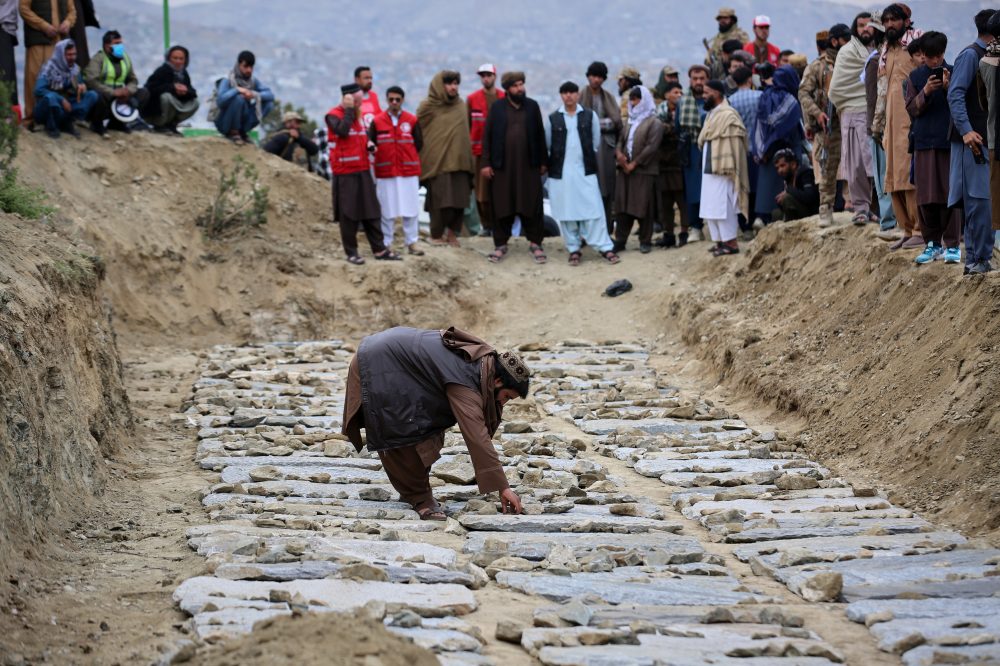
    Government officials in the Democratic Republic of Congo have discovered two mass burial sites holding the remains of at least 172 people in the eastern city of Uvira, according to a provincial governor’s announcement this week.

    The grim discovery was made after AFC/M23 rebel forces retreated from Uvira, a key transportation center situated on Lake Tanganyika close to the border with Burundi. The rebel group had taken control of the city in December but started pulling out just one week later due to pressure from the United States. Congo’s military forces regained control of Uvira last month.

    Jean-Jacques Purusi, who serves as the government-appointed governor of South Kivu province where Uvira is situated, informed local media that the burial sites were located in the Kilomoni and Kavimvira districts. According to his Tuesday statement that was recorded and aired nationally on Thursday, one site held 31 bodies while the other contained 141 remains.

    AFC/M23 representatives have not provided any response to requests for comment made on Friday. Local officials have not disclosed the cause of death for those found in the graves, and Reuters could not independently confirm the details surrounding these deaths.

    A human rights advocate from the area, Mashauri Mwindule, informed Reuters that additional burial sites have been discovered in Kabimba, a community located approximately 8 kilometers from Uvira.

    In December, the advocacy organization Human Rights Watch documented that M23 combatants had conducted executions without trial in Uvira, with bodies discovered across multiple districts, including Kavimvira. The organization based its report on accounts from local residents and a United Nations source.

    While AFC/M23 did not address these specific accusations at that time, the group had previously characterized Human Rights Watch as conducting a “disinformation campaign” against their organization.

    Human Rights Watch also noted that Congo’s military forces and their allied militia groups committed violations both before the rebels seized the city and during their own retreat.

    The AFC/M23 rebel movement currently maintains control over large portions of both North and South Kivu provinces after launching a swift military campaign last year that resulted in their capture of the important cities of Goma and Bukavu.

    Rwanda continues to deny accusations from Congo, the United Nations, and Western nations that it provides military equipment and personnel to support M23. Despite ongoing diplomatic efforts by various parties, including Qatar and the United States, armed conflict has persisted in recent weeks across multiple areas of eastern Congo.

  • Iran Opposition Fractures as Shah’s Son Clashes with Kurdish Groups

    Iran Opposition Fractures as Shah’s Son Clashes with Kurdish Groups

    KOYA, Iraq (AP) — A bitter public dispute has erupted between Iran’s crown prince in exile and Kurdish opposition organizations, exposing deep fractures within the Iranian resistance movement.

    These divisions have become apparent following widespread anti-government demonstrations and violent government suppression, occurring as Iran potentially faces military conflict if nuclear negotiations with the United States collapse.

    Five Kurdish organizations declared the establishment of the Coalition of Political Forces of Iranian Kurdistan on Sunday. Their statement outlined goals to “struggle for the overthrow of the Islamic Republic of Iran, to achieve the Kurdish people’s right to self-determination, and to establish a national and democratic entity based on the political will of the Kurdish nation in Iranian Kurdistan.”

    Crown Prince Reza Pahlavi, who has lived in exile for almost five decades while positioning himself for potential leadership should Iran’s religious government collapse, sharply criticized the Kurdish declaration.

    Although both sides seek to remove Iran’s current leadership, deep animosity exists between Pahlavi and Kurdish factions. Under his father Shah Mohammad Reza Pahlavi’s reign, Kurdish populations faced marginalization and oppression. Meanwhile, Pahlavi’s camp has consistently accused Kurdish organizations of seeking to fragment Iran.

    Following the Kurdish alliance announcement, Pahlavi posted on X: “In recent days, several separatist groups — some of whose records include collaboration with both Khomeini and Saddam — have made baseless and contemptible claims against the territorial integrity and national unity of Iran.” His reference targeted Islamic Republic founder Ayatollah Ruhollah Khomenei and deceased Iraqi leader Saddam Hussein.

    Pahlavi emphasized that “Iran’s territorial integrity is the ultimate red line.”

    The Kurdish alliance responded by labeling Pahlavi’s remarks “hysterical and hateful,” describing his family’s rule as characterized by the “massacre of civilians and suppression of democratic freedoms of the Iranian people, especially the oppressed nations of this country.”

    “Why do they think that people oppressed by the dictatorship of the Islamic Republic are willing to bow to him and other like-minded people as part of the alternative for the future Iran?” the coalition questioned.

    Following Iran’s 1979 Islamic Revolution, the new theocratic government fought Kurdish rebels. Iranian military forces devastated Kurdish communities during months of conflict that claimed thousands of lives.

    “We have been through ethnic cleansing and persecution and dictatorship (both) under the Pahlavi regime and under the Islamic Republic,” stated Karim Parwizi, a senior Kurdistan Democratic Party of Iran official and member of the new coalition.

    Speaking with The Associated Press at their northern Iraq camp on Thursday, Parwizi warned about Pahlavi’s potential return to power.

    “There’s a threat of fascism returning to Iran, and we’re thinking about how to prevent that from happening,” he said.

    Multiple Iranian Kurdish opposition and separatist organizations, including some with military components, have established bases in northern Iraq’s autonomous Kurdish territory.

    The Kurdistan Freedom Party (PAK) has openly acknowledged conducting attacks against Iran’s Revolutionary Guard forces in response to Tehran’s harsh protest suppression last month.

    Parwizi clarified that the new coalition hasn’t decided on launching military operations within Iran, stating their armed components serve defensive purposes only.

    He also rejected claims that the alliance seeks Kurdish independence.

    “Every ethnic group should have their land, but we haven’t requested this and we haven’t requested to divide Iran,” Parwizi explained. “We need to work with other ethnic groups to make sure that there will be a place for all of us in the new Iran.”

    While measuring Pahlavi’s domestic Iranian support proves challenging, significant protests occurred in early January after he urged public demonstrations, and recent student protest videos captured chants supporting him.

    Iran specialist Mehrzad Boroujerdi from Missouri University of Science and Technology described the public conflict between Pahlavi and Kurdish groups as damaging to opposition unity efforts.

    “With his open denunciation of these Kurdish groups, I think (Pahlavi) is shooting himself in the foot in that sense, because the Kurds are going to be really an integral part of any serious opposition,” Boroujerdi explained.

    He noted that perceptions of Pahlavi’s inability to unite opposition factions have already undermined his Washington support efforts.

    “President (Donald) Trump, for example, was not willing to personally meet with him and sort of validate his campaign because of serious concerns that, this guy, if he is not able to unify the opposition now before there is a regime collapse, how is he going to do that after the fact?” Boroujerdi said.

    The Kurdish organizations maintain independent Washington connections and advocacy efforts. Parwizi confirmed communications with the State Department and congressional members for political backing while denying any U.S. financial assistance.

  • Panama Canal Port Dispute Puts Small Nation at Center of U.S.-China Tensions

    Panama Canal Port Dispute Puts Small Nation at Center of U.S.-China Tensions

    PANAMA CITY — A small Central American nation finds itself caught in the middle of escalating tensions between Washington and Beijing after taking control of two crucial shipping facilities that bookend the Panama Canal.

    The controversy began when Panama’s highest court determined that agreements allowing a Hong Kong company’s local branch to manage the ports violated the nation’s constitution. Before President Trump even returned to the White House, he had accused China of controlling the vital waterway — claims Panama’s government firmly rejected.

    Following the Supreme Court’s ruling in late January, Panamanian officials this week took over operations at both shipping terminals and brought in temporary operators while preparing for new bidding. On Thursday, authorities carried away boxes of records from Panama Ports Co. headquarters.

    The response from Beijing was swift and stern, with China warning of serious repercussions for Panama. President José Raúl Mulino fired back on Thursday, cautioning China to “be careful” and declaring: “They need us more than we need them.”

    The facilities at the heart of this international standoff serve as crucial links in global trade chains. While Panama’s 4 million residents don’t generate massive import or export volumes, the canal has transformed their country into a vital logistics center for worldwide shipping.

    Enormous freight vessels arrive constantly from Asian ports, European harbors, and American coastlines. Most cargo isn’t destined for Panamanian consumers, but containers are transferred at Balboa, Cristobal, and other terminals before continuing to final destinations on smaller vessels.

    The Balboa facility on the Pacific side and Cristobal terminal facing the Atlantic together process nearly two-fifths of Panama’s container operations. Approximately 7,000 workers depend on these ports for their livelihoods.

    Panama Ports Company, the local arm of Hong Kong’s CK Hutchison conglomerate, has managed both terminals since 1997.

    A government audit uncovered problems with how the operating agreement was extended, including allegations that Panama lost substantial revenue. Following the constitutional court’s decision, officials promised a smooth transition to prevent disruptions to port activities.

    While situated at canal entrances, these terminals operate independently from the autonomous Panama Canal Authority that manages the waterway itself.

    The Chinese company’s control of these strategic locations has long concerned American officials. Secretary of State Marco Rubio chose Panama for his inaugural foreign visit in his new role, delivering an unmistakable message about U.S. opposition. He warned that China could potentially block canal traffic if it chose to do so.

    Because the waterway handles both commercial cargo and U.S. military vessels, Washington views the situation through a national security lens. Americans constructed the canal before transferring it to Panamanian control in 1999.

    Panama Ports Company has initiated arbitration proceedings following the court ruling. The firm claims Panama’s government conducted a year-long “campaign” against its concession that severely damaged the business.

    Company officials argue their investor protections have been violated and are seeking unspecified damages. Economy Minister Felipe Chapman stated the company wants $1.5 billion. The firm’s 25-year operating license was just extended in 2021.

    Beijing’s Hong Kong oversight office condemned the court decision, claiming Panamanian leaders were surrendering to “hegemonic powers.”

    “Panama’s authorities should recognize the situation and correct their course,” the statement read. “If they persist in their own way and refuse to see reason, they will pay a heavy price both politically and economically!”

    This week’s government takeover triggered another wave of Chinese objections. Mulino defended the action as essential for maintaining operations and assessing the ports’ actual worth.

    “The more than 7,000 jobs continue without changes,” he emphasized.

    Mulino has maintained that the Supreme Court’s ruling is definitive and must be honored.

    Despite the legal battle, port operations continue normally.

    Chapman noted that arbitration proceedings could stretch on for years. During this period, the government plans to launch the process for selecting new port operators.

  • UN Expert: Taliban Healthcare Rules Endangering Afghan Women and Children

    UN Expert: Taliban Healthcare Rules Endangering Afghan Women and Children

    A United Nations human rights specialist is raising alarm about Taliban policies that are putting Afghan women and children in life-threatening situations by blocking their access to emergency medical care.

    Richard Bennett, who serves as the UN Special Rapporteur on Afghanistan, revealed Friday that the Taliban’s healthcare rules force women seeking medical attention to follow strict dress requirements, bring a male escort, and receive treatment only from male healthcare providers.

    According to Bennett, women are routinely refused ambulance transportation when they don’t have a male guardian with them.

    Bennett’s report to the UN Human Rights Council this week detailed disturbing cases, including a woman who had to deliver her baby alone outside a hospital entrance because she arrived without a male companion. In another tragic incident, a mother watched her four-year-old son die because she couldn’t make the trip to the hospital by herself.

    “The Taliban’s restrictions must be reversed, otherwise they will be killing people,” Bennett stated during a Geneva press conference.

    “These policies are not isolated measures. They form an institutionalised system of gender discrimination that denies women and girls autonomy over their own bodies, health, and futures,” he added.

    Bennett revealed that Taliban officials ignored his attempts to get their response to his findings. The Taliban maintains that their policies honor women’s rights according to their understanding of Islamic teachings.

    Since regaining control in 2021, the Taliban has implemented sweeping restrictions on women’s freedom of movement and banned girls from attending school beyond elementary levels through various moral conduct laws that also restrict personal expression and job opportunities.

    Data from last year shows women made up roughly 25% of Afghanistan’s healthcare workforce. However, Bennett warned that the prohibition on medical education for women is eliminating the future supply of female healthcare workers needed to treat women patients under the gender separation requirements.

    “It’s a completely unjustifiable policy. It puts the entire health system in jeopardy, and unless reversed, it will lead to unnecessary suffering, illness and death,” Bennett emphasized.

    Suraya Dalil, Afghanistan’s former health minister, spoke at the same briefing about her growing concerns regarding increasing maternal deaths during childbirth.

    “Unfortunately, we expect higher mortality – maternal mortality (and) infant mortality – in the coming years because of the fact that the health workforce are systematically restricted,” Dalil warned.

  • US-Iran Nuclear Talks Show Progress, More Meetings Planned for Next Week

    US-Iran Nuclear Talks Show Progress, More Meetings Planned for Next Week

    Nuclear negotiations between the United States and Iran have yielded meaningful headway according to diplomatic sources, though key disputes remain unresolved as military tensions escalate across the Middle East.

    Omani Foreign Minister Badr Albusaidi served as an intermediary during the Geneva discussions and confirmed that meaningful advances were achieved. Technical-level negotiations are now set to resume next week in Vienna.

    The American negotiating team was headed by special envoy Steve Witkoff and included Jared Kushner, son-in-law to former President Trump. Rafael Grossi, who leads the International Atomic Energy Agency, participated in the discussions, highlighting the monitoring organization’s importance in any potential future agreement.

    Iran’s Foreign Minister Abbas Araghchi described the Geneva meetings as achieving “good progress,” noting that negotiators found common ground on certain matters while acknowledging that divisions persist.

    These diplomatic efforts unfold against a backdrop of heightened military activity, as President Donald Trump has authorized the most extensive American military deployment to the Middle East since the 2003 Iraq invasion. Iranian leadership has warned that any military action against their nation would trigger a forceful response.

    Sources close to the negotiations indicate that Iran’s uranium enrichment activities remain the central sticking point. Tehran maintains its right to continue enriching uranium for what it characterizes as civilian energy needs. Washington has proposed that Iran transfer its current stockpile of approximately 400 kilograms (880 pounds) of enriched uranium to another country.

    American negotiators reportedly presented various compromises during the talks, though specific details have not been revealed publicly. According to BBC reporting, one potential framework could permit Iran to restart limited uranium enrichment following a three-to-five-year pause, with international oversight throughout the process.

    Speaking on Iranian state television, Araghchi emphasized that his country’s negotiators are seeking the removal of economic sanctions that have severely impacted Iran’s economy as part of any deal. Opposition voices have cautioned that easing sanctions could strengthen Iran’s religious leadership both economically and politically.

    Though representatives from both nations expressed commitment to continued diplomatic engagement, no deadline has been established for finalizing an agreement, leaving the potential for preventing military confrontation unclear.

  • Conflicting Reports Emerge About Pakistan’s Role in Trump Gaza Peace Initiative

    Conflicting Reports Emerge About Pakistan’s Role in Trump Gaza Peace Initiative

    Conflicting stories are emerging about Pakistan’s involvement in President Trump’s Gaza peace efforts, with unconfirmed reports claiming the administration has sidelined the South Asian nation from key discussions.

    The allegations suggest Trump excluded Pakistan from the inaugural Gaza Board of Peace meeting and pressured Saudi Arabia to abandon plans for purchasing Pakistani-manufactured fighter aircraft. However, none of these claims have received official confirmation from Washington, Riyadh, or Islamabad.

    Sources familiar with the Trump administration’s approach have long characterized Pakistan as a valuable contributor to the Gaza peace initiative, crediting Islamabad with convincing several Muslim nations to participate in the diplomatic effort.

    The speculation about Pakistan being marginalized appears connected to the country’s refusal to deploy military forces as part of an international Gaza peacekeeping mission. Pakistani leadership made clear their troops would not participate in disarming Hamas, arguing such responsibility should fall to Palestinian authorities.

    Pakistani representatives also informed their American counterparts that domestic political considerations and internal security challenges would make troop deployment to Gaza politically damaging at home.

    These diplomatic positions contrast sharply with Trump’s public statements about Pakistani leadership. During the Gaza Board of Peace ceremony, Trump offered praise for the country’s officials.

    “Prime Minister Sharif, I like this man, of Pakistan. There was some fighting going on when I got to know him and your field marshal general, great general, great field marshal, a great guy,” Trump stated during his remarks.

    The positive tone of these comments appears to contradict suggestions that Washington is diminishing Pakistan’s role in the peace process.

    Diplomatic sources in Islamabad, speaking anonymously, suggested the negative reports might stem from Indian lobbying efforts aimed at reshaping perceptions following tensions between India and Pakistan in May 2025.

    “Each time President Trump references the May episode and mentions Indian losses in the conflict, it creates discomfort in New Delhi,” one official explained. “There is significant activity, particularly in the United States, aimed at reshaping that narrative.”

    During the Gaza peace meeting, Trump positioned himself as instrumental in mediating the India-Pakistan conflict and brokering a ceasefire, though Indian officials have disputed this characterization.

    The reports about Saudi Arabia’s fighter jet purchase also remain unverified. In January 2026, discussions reportedly began about converting approximately $2 billion in Saudi loans into a deal for JF-17 combat aircraft, following a mutual defense agreement signed between the two countries in 2025.

    However, no finalized purchase agreement has been officially announced, making claims about Trump’s displeasure largely speculative.

    Mohammed Alhamed, a Saudi geopolitical analyst and head of Saudi Elite consultancy, rejected suggestions that the US president is pressuring Riyadh to cancel any potential aircraft deal.

    “Such baseless geopolitical claims do not accurately reflect the reality of US–Saudi strategic engagement,” Alhamed explained to The Media Line.

    Alhamed emphasized that Saudi defense procurement decisions are driven by technical requirements, technology transfer opportunities, and industrial objectives tied to Vision 2030, rather than political pressure.

    Dr. Maria Sultan, who chairs the South Asian Strategic Stability Institute University and advises Pakistan’s Defense Ministry, described the evolving security landscape as creating new pressures on traditional partnerships.

    “In changing times amid global transformations where war and use of kinetic force has become the norm the threat to traditional alliance partners have become all the more vivid,” Sultan told The Media Line.

    Sultan characterized Pakistan-Saudi defense cooperation as based on shared interests and regional familiarity, arguing it strengthens Saudi capabilities without undermining Washington’s interests.

    Umar Karim, an associate fellow at the King Faisal Center for Research and Islamic Studies in Riyadh, dismissed suggestions of deteriorating US-Pakistan relations.

    Karim told The Media Line that Pakistan and the United States “still maintain a cordial working relationship across almost all relevant matters and files.”

    He noted that reports of the Saudi fighter jet purchase remain “largely rumors” and questioned whether Saudi Arabia would actually purchase Pakistani aircraft given their current advanced fleet capabilities.

    Muhammad Shoaib, who teaches at Quaid-i-Azam University’s School of Politics and International Relations, argued that Pakistan maintains regional diplomatic relevance despite questions about its Gaza role.

    “Pakistan remains an important player in the emerging Middle Eastern equation, but its position on the Palestine conflict and potential role in the stabilization force has been clear,” Shoaib explained to The Media Line.

    Shoaib suggested that any marginalization of Pakistan might reflect broader political considerations, including potential Israeli objections, rather than solely Pakistan’s stated limitations.

    He identified China’s growing influence as a more significant concern for Washington, particularly regarding Chinese systems integration with US-origin platforms in Saudi Arabia’s defense infrastructure.

    As an example of how such dynamics can affect international arms deals, Shoaib referenced Turkey’s S-400 purchase and subsequent removal from the F-35 program, though he suggested this wouldn’t necessarily prevent a Pakistan-Saudi agreement.

  • Tragic Story Behind Young Cricket Star’s Viral Video Revealed

    Tragic Story Behind Young Cricket Star’s Viral Video Revealed

    A young Pakistani girl’s remarkable cricket abilities captured global attention through a viral video, but the story behind that footage reveals a tragic tale of violence and intimidation in Pakistan’s dangerous North Waziristan region.

    Eight-year-old Aina Wazir became an internet sensation when footage of her impressive bowling technique spread across social media platforms, earning praise from professional cricket players worldwide. However, new information reveals the deadly consequences faced by those connected to her story.

    Aina’s father, Omar Wazir, worked as both an educator and travel business owner in his community, where neighbors knew him as a gentle, well-respected man. His troubles began approximately eight years ago when he bought a car that hadn’t gone through proper customs procedures. After using the vehicle briefly, he sold it to another local person, and ownership changed hands multiple times over the years.

    Several months ago, government officials discovered that a separate car displaying identical registration numbers had been involved in a terrorist incident. Security forces brought Omar Wazir in for interrogation regarding the attack. During questioning, he explained that he had disposed of his original vehicle years before and that criminals had created counterfeit license plates for the car used in the attack. Authorities accepted his explanation and released him.

    However, his freedom was short-lived. Unknown gunmen seized Omar Wazir from his home shortly after his release from questioning. Days later, his remains were discovered showing evidence of brutal treatment. Intelligence sources suggest the same terrorist organization responsible for the original attack may have orchestrated his murder.

    The person who recorded Aina’s cricket video, Zafran Wazir, also became a target of extremist violence. Members of the prohibited Tehreek-e-Taliban Pakistan organization were enraged by the footage and took action against the cameraman.

    Armed militants invaded Zafran Wazir’s residence and kidnapped him. During his captivity, they forced him to record an apology video in which he expressed regret for filming Aina and posting the content online. In the coerced statement, he promised to stop recording females and to avoid social media entirely.

    The kidnappers justified their actions by claiming that creating and distributing video content featuring young girls contradicted both Islamic principles and traditional Pashtun cultural values.

    Following his release, Zafran Wazir described the horrific abuse he endured while imprisoned. In a social media post, he revealed that his captors inflicted pain on every part of his body and subjected him to profound humiliation throughout his detention.

    Despite the violence surrounding her viral fame, Aina Wazir remains in a secure location, according to family members. A relative recently shared footage of the young girl making a direct appeal to Pakistan’s government, requesting better educational access for girls in her situation.

  • Two Bus Crashes in Israel’s Negev Desert Injure 28 People Within One Hour

    Two Bus Crashes in Israel’s Negev Desert Injure 28 People Within One Hour

    Emergency crews responded to two separate bus accidents in Israel’s Negev desert region Thursday morning, with both incidents occurring within just one hour and resulting in injuries to 28 people, according to Israeli authorities.
    The second incident happened along Route 40 between the towns of Mitzpe Ramon and Shdema, close to the Ramat Eliezer memorial site, where a passenger bus carrying 50 people flipped over. Medical teams treated 17 individuals at the scene, with most experiencing minor injuries. However, both the driver and one passenger sustained moderate injuries. The accident forced officials to shut down Route 40 in both directions while police and rescue workers managed the emergency response.
    About 40 minutes earlier, another accident occurred near Nevatim when a bus collided with a private vehicle. This crash sent 11 people to the hospital, including 10 with minor injuries and a 29-year-old woman who was moderately hurt, emergency responders reported. Law enforcement officers were sent to manage both accident sites on Route 40 and Route 25.

    Israel’s national emergency service, Magen David Adom, reported receiving notification of the Nevatim crash at 8:09 a.m. Medical personnel arrived to treat victims before transporting them to hospitals. At 8:47 a.m., emergency dispatchers received another call about the overturned bus south of Mitzpe Ramon, which prompted the deployment of more medical response teams.

    All patients requiring hospitalization from both crashes were taken to Soroka Medical Center in Beersheba for continued medical care and evaluation, Magen David Adom confirmed. Emergency medical officials stated that the vast majority of hospitalized patients were in stable condition.

    Law enforcement officials said their immediate priorities included making the crash sites safe, controlling traffic flow disruptions, and supporting emergency medical workers. Investigators have begun looking into what caused both accidents, though officials have not yet released any preliminary findings about the causes.

    Officials advised drivers traveling through the Negev desert area to drive carefully, especially on the main highways impacted by these crashes, and to obey police directions while road blockages and traffic rerouting continue.

  • Congo City Residents Fear Disease Outbreak After Mass Graves Discovery

    Congo City Residents Fear Disease Outbreak After Mass Graves Discovery

    GOMA, Congo — Citizens in the eastern Congo city of Uvira are expressing alarm over possible disease outbreaks after local officials announced the discovery of 171 bodies in mass burial sites left behind by departing M23 rebels.

    South-Kivu province Governor Jean-Jacques Purusi announced Thursday that the deceased were located in two separate mass burial sites on the city’s periphery, holding the rebel group responsible for the fatalities.

    The Associated Press was unable to confirm these allegations independently. Representatives from M23 have not yet responded to requests for comment.

    According to Purusi, the victims will remain unburied until medical investigators finish mandatory examinations, and he emphasized that the locations must remain undisturbed during this period.

    Local resident Flavien Kalenga Mutumishi reported Friday that he and other community members found approximately twelve decomposing corpses after the rebels departed and immediately contacted authorities.

    Mutumishi expressed worry about public health dangers, noting that one burial site sits within a residential area.

    “We found bodies that had been poorly and partially buried in shallow pits,” Mutumishi told the AP by phone. “This poses a great danger to nearby communities.”

    A second resident confirmed they had also notified officials about decaying remains in the same location.

    “That is why we felt compelled to call in health workers to carry out the work. Unfortunately, they were afraid because there was no covering over the grave,” said the resident, who spoke on condition of anonymity out of fear of reprisals.

    Community advocacy organizations and other locals reported that officials have limited access to the burial sites and prohibited photography.

    Purusi confirmed that legal authorities have begun an investigation and called upon the United Nations Organization Stabilization Mission in the Democratic Republic of the Congo (MONUSCO) and regional organizations to conduct their own inquiries.

    MONUSCO representative Ndeye Khady Lo stated the mission cannot verify the mass grave reports independently, citing insufficient detailed and confirmed information regarding locations, victim counts, and circumstances.

    The governor and local civil society leaders in Uvira claim M23 executed these individuals under suspicion of ties to Congolese military forces or pro-government militia groups.

    Human rights organizations have previously accused both Congolese armed forces and M23 of unlawful executions and other violations.

    M23 seized Uvira in December during a swift military campaign. Regional officials report more than 1,500 deaths and approximately 300,000 displaced persons resulted from the takeover.

    The rebel organization subsequently retreated from the city, characterizing their departure as a “unilateral trust-building measure” requested by the United States to support peace negotiations.

    Congo, the United States, and United Nations experts maintain that Rwanda supports M23, which has expanded from several hundred members in 2021 to roughly 6,500 fighters, according to UN estimates.

    Over 100 armed organizations compete for territory in mineral-wealthy eastern Congo, located near the Rwandan border, with M23 being the most significant. This conflict has generated one of the globe’s most severe humanitarian emergencies, displacing more than 7 million people according to the UN refugee agency.

    Although Congolese and Rwandan governments signed a US-brokered agreement and ongoing talks between rebels and Congo continue, combat persists across multiple areas in eastern Congo, resulting in substantial civilian and military casualties.

  • Ghana Reports 55 Citizens Killed Fighting for Russia in Ukraine Conflict

    Ghana Reports 55 Citizens Killed Fighting for Russia in Ukraine Conflict

    Ghana’s foreign minister disclosed Friday that no fewer than 55 citizens from the West African nation have perished while fighting alongside Russian forces in Ukraine, marking one of the most significant casualty counts among African countries involved in the conflict.

    Samuel Okudzeto Ablakwa, Ghana’s Foreign Affairs Minister, revealed that 272 of his countrymen have been deceived into participating in the conflict since 2022, with two additional individuals currently held as prisoners of war, based on intelligence provided by Ukrainian sources.

    Speaking during his visit to Ukraine, Ablakwa stated: “Ukrainian authorities revealed that from their credible intelligence gathering (that) they have documented 1,780 Africans from 36 countries who have been lured by criminal trafficking networks to join the war against Ukraine.”

    The West African nation joins an expanding roster of African countries raising alarms about their nationals participating in the conflict, with many recruited through deceptive tactics including promises of well-paying employment or professional development opportunities.

    Recent intelligence findings indicated that approximately 1,000 Kenyan citizens were enlisted to fight for Russia after being misled with bogus job offers. The Kenyan administration reports that numerous individuals have been either hospitalized or remain unaccounted for.

    Ukraine’s intelligence services reported earlier this month that two Nigerian nationals lost their lives fighting for Russia at the close of last year.

    On Wednesday, eleven South African citizens who were reportedly tricked into fighting for Russia returned home, arriving at Durban airport.

    In South Africa, authorities are investigating Duduzile Zuma-Sambudla, daughter of former President Jacob Zuma, for her suspected role in recruiting over a dozen South African men to Russia.

    Ablakwa emphasized: “As a responsible government, we cannot turn a blind eye to these heartbreaking statistics. This is not our war and we cannot allow our youth to become human shields for others.”

    The foreign minister announced that Ghana’s administration plans to strengthen public awareness campaigns and work to “track and dismantle all dark web illegal recruitment schemes” active within the nation. He noted that the two imprisoned Ghanaians have urged young people to resist the temptation of financial rewards to participate in the war.

  • Argentine Workers Rally as Senate Prepares Final Vote on Labor Reform

    Argentine Workers Rally as Senate Prepares Final Vote on Labor Reform

    Workers, opposition politicians, and left-wing groups took to the streets of Buenos Aires Friday as Argentina’s Senate prepared for a crucial vote on President Javier Milei’s controversial labor reform package.

    The proposed legislation would give employers increased flexibility when it comes to hiring and firing decisions, severance packages, and collective bargaining negotiations. Labor unions and their Peronist political allies have strongly opposed the measure, claiming it would eliminate important worker protections against exploitation and Argentina’s frequent economic instability.

    If passed by supporters of the ruling La Libertad Avanza party, the reform would represent a significant political win for Milei. The president could then highlight these major economic changes during his Congressional address scheduled for Sunday when ordinary legislative sessions begin.

    The bill previously received preliminary Senate approval last week, but senators must now cast a final vote before it can become law. The government had to modify a provision that would have cut wages in half for workers taking leave due to non-work-related injuries or illnesses after opposition lawmakers strongly objected.

    Friday’s Senate session will likely approve the amendment, which would finalize the legislation’s passage. Alternatively, senators could reject the changes and restore the original language, though most observers expect the former outcome.

    The legislative battle has created significant tension between Milei’s administration and opposition forces. Last week’s debate in the lower chamber of Congress sparked major confrontations, with Argentina’s largest union confederation organizing a nationwide 24-hour work stoppage while protesters from various leftist organizations clashed with law enforcement outside the legislative building.

    President Milei views these modifications to Argentina’s 50-year-old labor laws as essential for attracting international investment, improving worker productivity, and creating more jobs in a nation where approximately 40% of workers operate in the informal economy.

    Union leaders contend the legislation would undermine worker safeguards that have been fundamental to Argentine society since Peronism emerged as the country’s leading populist movement during the 1940s.

    Union statistics indicate that roughly 40% of Argentina’s 13 million registered workers hold union membership, with many maintaining close ties to the Peronist political movement.

  • Syrian Government Accuses Kurdish Forces of Abandoning Notorious al-Hol Detention Camp

    Syrian Government Accuses Kurdish Forces of Abandoning Notorious al-Hol Detention Camp

    Damascus officials announced Wednesday that Kurdish military forces abandoned a major detention facility in northeastern Syria without warning, triggering widespread departures of ISIS-related detainees and sparking new security worries across the region.

    The al-Hol facility, positioned close to Iraq’s border, had served as a holding center for family members connected to Islamic State militants as well as civilians who fled during years of warfare.

    Interior Ministry representative Noureddin al-Baba explained to media that Syrian military forces were getting ready to take control of the location when Kurdish-led Syrian Democratic Forces suddenly retreated hours beforehand without informing Damascus leadership. According to al-Baba, government soldiers discovered complete disorder upon their arrival.

    “When the forces arrived, they found the camp had been opened in a chaotic manner, leading to widespread unregulated departures,” al-Baba stated.

    Government inspectors recorded over 138 breaches in the facility’s 17-kilometer security barrier, creating pathways that officials believe facilitated smuggling operations and threatened regional security. Syrian leadership noted that previous population counts of approximately 23,500 inhabitants didn’t match what troops found during their assessment.

    Nearly 70% of those who remained were women, children, and elderly individuals, predominantly Syrian and Iraqi citizens, plus international families with ties to former Islamic State combatants.

    Al-Baba dismissed broad accusations targeting all residents, emphasizing that Syrian legal standards demand individual court cases instead of group penalties.

    “Syrian law prohibits collective punishment and requires individual criminal responsibility through the judicial process,” he explained.

    International aid groups had repeatedly cautioned that al-Hol’s crowded environment and insufficient supervision created conditions that could promote radicalization and humanitarian disasters. The detention center became a contentious issue among Damascus, Kurdish leadership, and Western nations regarding accountability for thousands of prisoners after ISIS lost its territory in 2019.

    Authorities verified that al-Hol was completely evacuated and permanently closed on Sunday following the organized relocation of remaining families via convoy transportation, representing a significant change in who controls detention facilities throughout northeastern Syria.

  • Ghana Reports 55 Citizens Killed in Ukraine War After Being Deceived Into Fighting

    Ghana Reports 55 Citizens Killed in Ukraine War After Being Deceived Into Fighting

    Ghana’s foreign minister has disclosed that 55 of the country’s citizens have perished in Ukraine’s ongoing conflict after being deceived into combat roles, following his recent diplomatic visit to Kyiv where the recruitment of African nationals was discussed.

    In recent months, there have been increasing reports of African men being enticed to Russia with false employment opportunities, only to find themselves deployed to Ukraine’s battlefields, straining diplomatic relationships between Moscow and several African nations.

    Russian officials have rejected claims of illegally conscripting African citizens for military service in Ukraine.

    Samuel Okudzeto Ablakwa wrote on X Thursday evening: “We were informed that 272 Ghanaians are believed to have been lured into battle since 2022 for which an estimated 55 have been killed and 2 captured as prisoners of war.”

    During a Tuesday press conference, Ukraine’s Foreign Minister Andrii Sybiha, appearing with Ablakwa, stated that over 1,780 Africans from 36 nations are currently “fighting in the Russian army.”

    Ghana, which maintains economic and diplomatic relationships with Russia, plans to increase public awareness about recruitment tactics and eliminate “dark web illegal recruitment schemes operating within our jurisdiction,” Ablakwa stated in his social media post.

    “This is not our war and we cannot allow our youth to become human shields for others,” he declared.

    South Africa announced this week that two of its nationals had perished in the conflict zone.

    These casualties are distinct from a separate group of 17 South Africans who were deceived into fighting for Russia in Ukraine and have largely been brought home, according to South Africa’s foreign ministry statement.

    A Kenyan intelligence assessment indicates that over 1,000 Kenyans have been enlisted to fight for Russia.

    Kenya’s foreign ministry reported that 27 Kenyan nationals have been rescued after becoming stranded in Russia.

    Kenyan Foreign Minister Musalia Mudavadi announced plans to travel to Russia in March for discussions regarding this matter.

  • America Plans to Name New Leader for UN World Food Programme

    America Plans to Name New Leader for UN World Food Programme

    The Biden administration plans to put forward an American candidate to head the United Nations World Food Programme within the next few weeks, according to a State Department official who spoke Thursday following Cindy McCain’s announcement that she will leave her position.

    “The United States can confirm that it will be nominating a highly-qualified American to lead the … WFP, continuing America’s tradition of excellence and responsible stewardship of the organization. The candidate will be announced in the coming weeks,” the spokesperson said.

    As the World Food Programme’s largest financial contributor, America has historically provided leadership for the organization. The executive director position requires joint appointment by both the UN Secretary-General and the head of the Food and Agriculture Organization, with terms lasting five years.

    Officials from UN Secretary-General Antonio Guterres’ office have not yet responded to requests for comment regarding the transition.

    McCain, age 71 and widow of former Republican Senator John McCain, announced Thursday she will resign within three months. She began leading the organization in 2023 following her previous role as U.S. representative to UN food and agriculture agencies.

    In her departure statement, McCain explained that despite wanting to complete her full term, her health has not fully bounced back. She experienced a mild stroke this past October that has affected her recovery.

  • Germany Plans Expanded Cyber Powers to Combat Foreign Digital Attacks

    Germany Plans Expanded Cyber Powers to Combat Foreign Digital Attacks

    BERLIN – A proposed German law would grant security agencies unprecedented authority to combat international cyber threats, according to draft legislation obtained by Reuters this week.

    The new measures would enable German law enforcement to take direct action against digital attacks by disabling computer networks and removing data, even when those systems are located on foreign servers.

    Germany’s push for stronger cyber defenses comes in response to Russia’s 2022 invasion of Ukraine, which has prompted the nation to strengthen both its military capabilities and intelligence operations to address hybrid warfare tactics. This represents a significant policy shift for a country that has historically been cautious about expanding security powers due to its Nazi-era history.

    Interior Minister Alexander Dobrindt had previously stated that Germany needs enhanced capabilities to defend against international cyber threats, which German intelligence believes frequently originate from Russia. Russian officials have rejected claims that they conduct hybrid attacks against European nations.

    The draft legislation states: “Like law enforcement, prevention of threats does not stop at national borders when it comes to combating cyberattacks.”

    Under the proposed framework, authorities would not be permitted to conduct major offensive cyber operations, but they could reroute internet traffic, disable computer systems, and in severe situations, modify or eliminate data on servers abroad.

    Most actions targeting private computer networks would need judicial approval, though emergency situations would allow authorities to seek court permission up to three days after taking action. The initiative would also require hiring hundreds of additional personnel.

    The Federal Office for Information Security, known as BSI, would gain authorization to engage in “threat hunting” activities, enabling the agency to identify and neutralize cyber attack preparations before damage occurs, rather than responding after incidents happen.

    Internet and digital service companies would be required to assist authorities under the new law, with non-compliance resulting in penalties reaching 20 million euros (approximately $23 million).

  • Poland Questions France’s Nuclear Plan, Prefers U.S. Partnership

    Poland Questions France’s Nuclear Plan, Prefers U.S. Partnership

    WARSAW – A senior Polish security official has cast doubt on France’s potential leadership role in a European nuclear defense initiative, stating that Warsaw considers only the United States as a trustworthy nuclear ally at this time.

    The remarks from Slawomir Cenckiewicz, who heads Poland’s National Security Bureau, come as European nations explore alternatives to U.S. nuclear protection amid uncertainty about American commitments under President Donald Trump.

    This month, German Chancellor Friedrich Merz announced that Berlin had initiated conversations with France about creating a European-wide nuclear deterrent. France remains the European Union’s sole nuclear-armed nation following Britain’s departure from the bloc.

    While Polish Prime Minister Donald Tusk confirmed that Poland has also started discussions with France, he emphasized the need for concrete details before considering participation in any European nuclear program.

    Cenckiewicz recommended that Poland should observe the German-French negotiations while focusing on NATO’s current nuclear-sharing arrangement, which permits non-nuclear member states to host and deploy American nuclear weapons as protection against Russian threats.

    The Polish official raised concerns about France’s nuclear doctrine, noting that it would grant complete authority over nuclear weapons to the French president – a point that Emmanuel Macron is expected to address publicly on Monday.

    According to Cenckiewicz, decisions about nuclear weapon deployment under NATO’s Article 5 collective defense provision should involve all alliance members, not rest with a single nation’s leader.

    He maintained that America remains Poland’s only viable nuclear partner, citing its superior capabilities compared to European nuclear powers like France and Britain.

    “The United States has not stopped in this military and intelligence area for a moment, but is simply constantly developing this potential and investing in it,” Cenckiewicz told Reuters.

    European nations have historically depended on American nuclear deterrence against potential adversaries. However, Trump’s approach toward Russia regarding the Ukraine conflict and his stance on traditional allies – including recent threats concerning Greenland, which belongs to NATO member Denmark – have created anxiety among European leadership.

    French representatives maintain that Paris does not intend to substitute for American nuclear protection or challenge NATO’s role.

    Cenckiewicz’s statements also reflect Poland’s internal political tensions: Tusk’s pro-European Union administration favors increased European cooperation, while President Karol Nawrocki, who aligns with Trump, emphasizes Atlantic partnerships and NATO relationships.

    The two leaders often disagree on defense matters, and the president’s constitutional role as military commander-in-chief allows him to veto government defense proposals.

    Cenckiewicz stressed that Warsaw must develop military capabilities matching the threats it confronts.

    “Russia must be treated as an existential threat to Poland,” Cenckiewicz stated. “In this logic, whether participation, entry into nuclear sharing, or in the perspective of building one’s own sovereign nuclear capabilities is a consequence.”

  • Trade War Heats Up: Colombia Plans Retaliatory Tariffs Against Ecuador

    Trade War Heats Up: Colombia Plans Retaliatory Tariffs Against Ecuador

    A brewing trade dispute between two South American nations intensified Friday when Colombia’s commerce minister announced plans to significantly raise import duties on products from Ecuador.

    Diana Marcela Morales, Colombia’s commerce minister, revealed during a Friday interview that she intends to recommend boosting tariffs on specific Ecuadorean imports from the existing 30% rate to 50%. This announcement comes as retaliation for Ecuador’s decision to implement identical tariff increases on Colombian products starting March 1.

    Ecuador justified its tariff hike by claiming Colombia has not adequately collaborated in fighting drug trafficking activities along their mutual border – an accusation that Colombian officials reject.

    “We are going to present the proposal not only to raise tariffs on the 73 tariff subheadings, but also to consider other products that could generate some degree of sensitivity due to the measures Ecuador has taken today,” Morales explained during her radio interview with Blu Radio. She noted the proposal requires approval from a government committee and confirmed “It would be 50% for the 73 subheadings that currently have a 30% rate.”

    Ecuadorean President Daniel Noboa reinforced his country’s position Friday, maintaining that Colombia has neglected its border security responsibilities in areas known for cocaine smuggling and other illegal trade.

    “This surcharge is the result of an absolute lack of oversight at the border on Colombia’s part; even the army has been withdrawn several hundred kilometers away, which doubles our cost of protecting our border, to nearly an additional $400 million a year,” Noboa stated during an interview with Radio Centro de Quito. He also reported that Ecuador has already collected $13 million from the tariff implementation, which was initially announced in January, and claimed violence in border regions has decreased.

    The Ecuadorean leader noted his country faces a $1.1 billion trade deficit with Colombia.

    The trade tensions escalated further after Ecuador dramatically increased fees on Colombian oil shipments through its SOTE pipeline system by 900%, bringing the cost to $30 per barrel. This action prompted Colombia to completely suspend its oil shipments through the pipeline.

  • Israeli Supreme Court Halts Aid Group Ban in Gaza Temporarily

    Israeli Supreme Court Halts Aid Group Ban in Gaza Temporarily

    JERUSALEM – Israel’s Supreme Court issued a temporary order Friday preventing the government from closing down the Gaza operations of numerous humanitarian organizations that had challenged the shutdown in court.

    Back in December, Israeli authorities gave 37 international relief organizations a 60-day deadline to either comply with new registration requirements or cease their work in Gaza and the occupied West Bank. The affected groups include well-known organizations like Doctors Without Borders and the Norwegian Refugee Council.

    The new Israeli regulations demand that these organizations provide the names of their Palestinian employees. However, 17 relief groups along with the Association of International Development Agencies filed an emergency petition with Israel’s High Court of Justice on Sunday, arguing the shutdown would create devastating humanitarian impacts.

    The Supreme Court’s temporary order permits these aid organizations to maintain most of their current operations while the court reviews their legal challenge.

    The humanitarian groups argue that revealing staff information could endanger their workers’ lives, particularly given that hundreds of aid personnel have been killed or wounded during the ongoing conflict in Gaza. Israeli officials have stated the registration requirements are designed to prevent Palestinian militant groups from redirecting humanitarian supplies, though aid agencies contest claims that significant amounts of aid have been diverted.

    Athena Rayburn, who serves as executive director of AIDA, expressed cautious optimism about the court ruling. “We’re still waiting to see how the injunction will be interpreted by the state and whether or not this will mean an increase in our ability to operate,” Rayburn stated, while noting that conditions inside Gaza remain “catastrophic.”

    Israeli government representatives have not yet provided responses to media inquiries about the court decision.

  • UN Warns South Sudan Violence Threatens Fragile Peace After Civilian Massacre

    UN Warns South Sudan Violence Threatens Fragile Peace After Civilian Massacre

    The United Nations’ top human rights official issued a stark warning Friday that South Sudan has reached a critical juncture, with escalating violence putting the nation’s fragile peace agreement at serious risk.

    The warning from UN human rights chief Volker Turk came one day after Western nations condemned what they called a massacre carried out by groups connected to South Sudan’s military forces.

    According to state information minister Nyamar Ngundeng, no fewer than 16 civilians lost their lives when “unruly elements from the South Sudan People’s Defence Forces soldiers” attacked in Jonglei state’s eastern region on February 21.

    While South Sudan’s government disputed claims that soldiers intentionally attacked civilians, officials acknowledged that innocent people may have been killed during combat operations in the conflict-plagued area that shares a border with Ethiopia.

    The violence threatens to unravel a 2018 peace agreement that brought an end to five years of devastating civil war between forces supporting President Salva Kiir and those backing First Vice President Riek Machar. That conflict claimed close to 400,000 lives in what is considered the world’s youngest nation.

    Since the peace deal was signed, the country has experienced ongoing territorial disputes and other conflicts. Political instability deepened after Machar was removed from his position last year and faces charges alongside 20 others for allegedly participating in militia attacks in the northeastern region. All defendants have rejected the accusations.

    Turk reported that 189 civilian deaths were recorded in January alone, representing a 45% spike in human rights violations and abuses compared to the previous month.

    “We are at a dangerous point, when rising violence is combined with deepening uncertainty over South Sudan’s political trajectory, as the peace agreement comes under severe strain,” Turk addressed members of the UN Human Rights Council.

    Regarding the weekend violence in Jonglei, Turk provided a higher casualty figure, stating that eyewitnesses described soldiers commanding civilians to assemble before firing upon them, resulting in 21 deaths of unarmed individuals, including children.

    “Military discipline appears to have collapsed in both Government and opposition forces in Jonglei and Eastern Equatoria, where troops have demonstrated a near-total disregard for civilian protection,” he stated.

    Turk also noted that government forces, opposition groups, and their allied militias have launched attacks on residential communities across multiple states including Upper Nile, Unity, Central Equatoria, Western Bahr el Ghazal, Western Equatoria, and Warrap.

    In a collective statement released on social media platform X Thursday evening, the United States, European Union, Britain, and other Western countries expressed being “appalled by credible reports of a deliberate massacre of civilians” in Pankor village within Jonglei state.

    South Sudan government spokesperson Ateny Wek responded to the international criticism by denying that military personnel deliberately killed civilians.

    “Unless those civilians were caught in a crossfire, there’s not any SSPDF that has the intention to kill any civilian,” Wek explained.

  • Israeli Supreme Court Blocks Aid Group Ban as Gaza Strikes Continue

    Israeli Supreme Court Blocks Aid Group Ban as Gaza Strikes Continue

    TEL AVIV, Israel — Israel’s Supreme Court issued a temporary order Friday blocking the government from shutting down international humanitarian organizations operating in Gaza and other Palestinian areas, while overnight military strikes left four people dead in the conflict zone.

    The court’s temporary injunction came after 17 humanitarian organizations filed a legal challenge against the Israeli government’s plan to prohibit 37 aid groups from operating by March 1st. The government had threatened the ban because the organizations refused to follow new registration requirements implemented last year.

    Under the contested regulations, aid organizations must register employee names and contact details while disclosing funding sources and operational information. The humanitarian groups consider these requirements overly intrusive and arbitrary, warning that forcing them out would severely limit essential services to Gaza’s devastated population.

    The court’s temporary order maintains current operations until a final ruling is made, though no timeline has been established for that decision.

    “This is, however, a step in the right direction — with a long, long way still to go. We will keep fighting to be able to do our jobs, and deliver life saving assistance to Palestinians in need,” said Athena Rayburn, the executive director of AIDA, an umbrella organization representing over 100 groups operating in the Palestinian territories.

    Legal representatives for the humanitarian groups described the court decision as providing Palestinians in Gaza and the West Bank some “breathing room.”

    The legal petition challenged the Israeli regulations as violations of international law, arguing that Israel, functioning as an occupying authority, must guarantee food and medical supplies reach civilians. The groups also contended Israel lacks jurisdiction to close organizations in territories under Palestinian Authority administration.

    Nearly all of Gaza’s 2 million inhabitants depend on humanitarian organizations for basic necessities including food, water, medical care, and shelter following Israel’s two-year military campaign that devastated the territory. Hundreds of thousands remain in temporary tent housing, with reconstruction efforts yet to commence despite a fragile ceasefire reached in October.

    Hospital officials reported that overnight Israeli airstrikes resulted in at least four deaths Friday. These attacks have repeatedly violated the U.S.-brokered truce that began October 10th. Rising Palestinian casualties have led many Gaza residents to believe the conflict continues without interruption.

    The military strikes targeted two police checkpoints — one near Khan Younis in southern Gaza and another at Bureij refugee camp. Israel’s military confirmed Friday it eliminated several armed fighters in eastern Rafah near the Egyptian border, stating the strikes responded to ceasefire violations.

    In a separate development in the occupied West Bank, the U.S. Embassy began providing consular services Friday at an Israeli settlement for the first time.

    This action reflects continuing policy changes under President Donald Trump’s administration, which has shown greater support for Israeli West Bank settlements compared to previous U.S. administrations.

    Residents formed lines outside what appeared to be a gymnasium in Efrat, home to approximately 4,000 American citizens. Tables filled the space beneath a wall sign reading: “US Embassy welcome to Efrat.”

    Efrat Mayor Dovi Sheffler celebrated the new service availability. “The United States says Efrat is part of Israel, Efrat is going to be forever here,” he said.

    The U.S. Embassy has historically offered consular services in Ramallah and other Palestinian West Bank communities with Palestinian American populations.

    Over 3.4 million Palestinians and 700,000 Israelis inhabit the occupied West Bank and east Jerusalem, territories Israel captured in 1967 that Palestinians seek for future statehood. International consensus widely regards Israeli settlement construction in these areas as illegal and detrimental to peace efforts.

  • Nuclear Watchdog Can’t Confirm Iran Uranium Activities After June War

    Nuclear Watchdog Can’t Confirm Iran Uranium Activities After June War

    VIENNA (AP) — The International Atomic Energy Agency cannot confirm Iran’s uranium enrichment activities following Tehran’s refusal to grant inspectors access to nuclear sites damaged during June’s 12-day conflict, according to a classified report obtained Friday by The Associated Press.

    The confidential IAEA document, distributed among member nations, states the agency “cannot verify whether Iran has suspended all enrichment-related activities” or determine “the size of Iran’s uranium stockpile at the affected nuclear facilities” due to the access restrictions.

    Satellite imagery analysis has revealed “regular vehicular activity around the entrance to the tunnel complex at Isfahan,” the watchdog agency noted in its assessment.

    The Isfahan complex, located approximately 350 kilometers (215 miles) southeast of Tehran, served as a primary production site for uranium gas used in centrifuge operations for purification processes.

    Israeli forces targeted structures at the Isfahan nuclear installation, including a uranium conversion plant, while U.S. forces also launched missile strikes against Isfahan during last June’s military operations.

    The IAEA’s satellite surveillance has detected “activities being conducted at some of the affected nuclear facilities, including the enrichment facilities at Natanz and Fordow,” though the agency emphasized that “without access to these facilities it is not possible for the Agency to confirm the nature and the purpose of the activities.”

  • Border Tensions Escalate as Pakistan Declares ‘Open War’ with Afghanistan

    Border Tensions Escalate as Pakistan Declares ‘Open War’ with Afghanistan

    Military tensions between Afghanistan and Pakistan have reached a critical point, with Pakistan’s defense minister declaring that an ‘open war’ situation now exists between the two nations.

    Afghan military personnel have taken defensive positions along the shared border as both countries engage in reciprocal military strikes against each other. The escalating conflict reflects decades of complex relations between the neighboring nations that trace back to when Pakistan gained independence in 1947.

    The Associated Press has compiled photographic documentation showing the current military standoff, with images capturing Afghan forces maintaining their border positions during this period of heightened hostilities.

  • Man Arrested for Vandalizing Churchill Statue in London with Palestinian Messages

    Man Arrested for Vandalizing Churchill Statue in London with Palestinian Messages

    LONDON — Metropolitan Police officers apprehended a vandal in the act Friday as he spray-painted pro-Palestinian messages across the Winston Churchill monument in downtown London.

    Authorities arrested the 38-year-old man on charges of racially motivated criminal damage after he allegedly scrawled “Zionist war criminal” in red paint on the base of the 12-foot bronze figure of the former British Prime Minister, which stands opposite Big Ben and Parliament, according to police officials.

    Additional messages reading “Stop the Genocide” and “Free Palestine” were also found painted in red across the sculpture.

    A Dutch organization known as “Free the Filton 24” took credit for the vandalism. The group’s name references Palestine Action protesters who face charges for infiltrating facilities belonging to Elbit, an Israeli defense contractor operating in Britain.

    Following standard protocol for uncharged individuals, police have not released the suspect’s identity, though they confirmed he remains in detention.

    Olax Outis, identifying himself as a Dutch member of the activist organization, stepped forward as the person responsible through a series of pre-recorded Instagram messages.

    “If you see this message that peaceful protest has begun and it’s a reasonable assumption that I’m currently in a jail, somewhere in London,” he wrote.

    Outis criticized both Churchill and Britain’s current leadership, stating he aimed to bring “attention to the horrible human rights violations happening in a country that’s run by colonizers who refuse to listen to their people.”

    The monument, crafted by sculptor Ivor Roberts-Jones and dedicated in 1973, has been targeted by vandals multiple times. In 2020, Black Lives Matter demonstrators spray-painted “racist” on the statue, and climate activists from Extinction Rebellion did the same this past October.

  • Afghanistan and Pakistan Clash in Most Serious Fighting Since October Ceasefire

    Afghanistan and Pakistan Clash in Most Serious Fighting Since October Ceasefire

    ISLAMABAD (AP) — Pakistan’s Defense Minister Khawaja Mohammad Asif declared Friday that his nation is engaged in an “open war” with Afghanistan, as military clashes have intensified into the most severe armed conflict between these neighboring countries since a Qatar-brokered ceasefire collapsed in October.

    The two nations share a complex relationship dating back to Pakistan’s establishment in 1947. Despite traditional social, ethnic and economic connections, their relationship has remained unstable and frequently erupted into military confrontations.

    Recent months have seen sporadic clashes along their winding, permeable border as tensions have mounted. The current conflict represents the most dangerous escalation yet.

    Thursday evening saw Afghanistan launch a major cross-border offensive targeting six Pakistani provinces, which Afghan officials described as retaliation for Pakistani air attacks on Afghanistan the previous Sunday. While Pakistan claimed those Sunday strikes eliminated dozens of militants in Afghanistan, Kabul maintained that only innocent civilians, including women and children, were killed.

    Pakistan responded with early Friday morning airstrikes targeting Afghanistan’s capital along with Kandahar and Paktia regions. Border combat, which had temporarily stopped, resumed and continued throughout Friday.

    Pakistani officials point to a dramatic increase in domestic militant violence over recent years, including suicide attacks and coordinated strikes against security personnel. Pakistan blames the Pakistani Taliban, called Tehrik-e-Taliban Pakistan or TTP, for many incidents and claims Afghanistan provides sanctuary for the organization within its borders.

    Afghan leadership denies these accusations, stating it prohibits anyone from using Afghan territory for attacks against any nation, including Pakistan.

    Formed in 2007, the TTP united various banned organizations that agreed to collaborate against Pakistan while supporting the Afghan Taliban, who were then battling U.S. and NATO troops. Both the United Nations and United States classify it as a terrorist organization.

    The organization demands stricter implementation of Islamic law, freedom for imprisoned members in Pakistan, and reduced Pakistani military presence in Khyber Pakhtunkhwa province, the border region it has historically used as its operational base.

    While distinct from the Afghan Taliban now governing Afghanistan, the TTP maintains close ties with them. Many TTP leaders and fighters are believed to have found refuge in Afghanistan following the Taliban’s 2021 return to power, further deteriorating relations.

    Afghanistan facilitated a brief ceasefire between the TTP and Pakistan in 2022. The agreement collapsed when the TTP claimed Pakistan’s military violated the terms.

    Pakistan was among just three nations — alongside Saudi Arabia and the United Arab Emirates — that recognized the Taliban’s initial government after they first took control in 1996. Following the September 11, 2001, attacks on the United States, Islamabad shifted to support Washington in the U.S.-led Afghan war, a change that infuriated domestic Islamist militant organizations.

    Most tension centers on the countries’ 2,611-kilometer (1,622-mile) border called the Durand Line. Named for British diplomat Mortimer Durand and established in 1893, this boundary divides the traditional homeland of the Pashtun people, Afghanistan’s largest ethnic group and the source of Afghan Taliban leadership.

    While internationally recognized as Pakistan’s western border, Afghanistan refuses to acknowledge it as legitimate.

    Each country regularly accuses the other of ignoring Islamic militants operating along this frontier.

    Afghanistan-Pakistan tensions have remained elevated for months. They peaked last year when dozens of civilians, security forces and militants died in the deadliest confrontations between the countries in years.

    On October 8, militants attacked an army convoy in Pakistan’s Orakzai district, killing 11 soldiers. This assault was part of ongoing violence that has claimed hundreds of civilian and security personnel lives in recent years.

    Prime Minister Shehbaz Sharif declared Pakistan could no longer accept continued casualties and authorized the military to respond with full authority. The next day, Pakistan’s military conducted strikes inside Afghanistan, triggering cross-border battles.

    A Qatar-mediated ceasefire in mid-October stopped the fighting, though repeated strikes and skirmishes in the border region have since occurred, resulting in dozens of deaths. The two sides report vastly different casualty numbers.

    Istanbul peace negotiations in November failed to produce a lasting solution.

    Tensions have also increased over Pakistan’s mass deportation of Afghan refugees.

    In 2023, Pakistan initiated a nationwide campaign against foreigners living without legal status. While officials claimed the effort wasn’t targeting any specific nationality, it has predominantly affected Afghans.

    Over four decades, millions of Afghans have sought refuge in Pakistan, escaping war, political turmoil and economic difficulties in their homeland. The crackdown impacts more than two million Afghans in Pakistan, including some born there.

    Iran, Afghanistan’s western neighbor, has also conducted deportations, further straining resources in impoverished Afghanistan. The U.N. refugee agency reports 5.4 million people have returned to the country since October 2023, mostly from Pakistan and Iran.

    The conflict has concerned the international community, particularly since the region hosts other militant groups, including al-Qaeda and the Islamic State group, which maintain a presence and seek to re-emerge.

    In October, Turkey, Qatar and Saudi Arabia had facilitated discussions between the parties. At that time, U.S. President Donald Trump had also commented, saying he planned to resolve the conflict “very quickly.” Whether he will intervene again remains uncertain.

    Turkish Foreign Minister Hakan Fidan contacted his Pakistani, Afghan, Qatari and Saudi counterparts, a Turkish official said Friday, speaking anonymously according to government policy.

    Russia has urged an immediate end to hostilities and a diplomatic solution to the conflict, while Iran expressed readiness to help facilitate dialogue.

  • American Diplomat Holds Talks with Former Iraqi Leader Amid Political Tensions

    American Diplomat Holds Talks with Former Iraqi Leader Amid Political Tensions

    American diplomat Tom Barrack held discussions with Iraq’s former Prime Minister Nouri al-Maliki on Friday, according to two sources with knowledge of the meeting.

    Al-Maliki, who previously served as Iraq’s leader, has received backing from an influential Shiite political group to reclaim the prime minister position. However, Washington has indicated it may withdraw its support for Iraq should al-Maliki be selected to lead the government once again.

    The meeting highlights ongoing diplomatic efforts as Iraq navigates its political leadership decisions amid international concerns about al-Maliki’s potential return to power.

  • Pakistan Bombs Kabul Weapons Depot, Residents Fear More Violence

    Pakistan Bombs Kabul Weapons Depot, Residents Fear More Violence

    KABUL – Overnight airstrikes by Pakistani forces targeted an ammunition storage facility on the western edge of Kabul, sparking hours of chain-reaction explosions that shook buildings throughout Afghanistan’s capital and left civilians worried about escalating violence.

    The bombing represents a dangerous deterioration in relations between Pakistan and Afghanistan’s Taliban leadership, with the former allies now engaging in cross-border military actions and Pakistan characterizing the situation as active warfare.

    Footage confirmed by Reuters captured massive clouds of dark smoke billowing over Darulaman, a residential district in western Kabul that also contains various government and military installations, as flames consumed portions of the weapons facility and repeated bursts illuminated the darkness when stored ordnance detonated.

    Local residents reported the attack commenced just after midnight.

    “We were asleep when we heard the sound of a plane,” said Tamim, a taxi driver who lives near the depot. “It came and dropped two bombs, then flew away again. After that, we heard explosions.”

    According to Tamim, the opening blasts triggered ongoing detonations as stockpiled weapons ignited.

    “The ammunition inside the depot kept exploding on its own,” he said. “Everyone, in panic, ran down from the second floor of the house.”

    Tamim reported the inferno continued burning until approximately 6 a.m. before being contained. While his family avoided injuries, the blast force damaged doors and windows and shattered glass throughout his home.

    “The blaze was very intense. We were extremely scared and even planned to leave the area,” he said.

    Danish, a 35-year-old pharmacist residing roughly 10 minutes from the storage site, explained he had remained awake monitoring reports of increasing tensions.

    “I couldn’t sleep again until morning.”

    Reuters reporters in other parts of Kabul documented hearing powerful explosions and aircraft sounds, followed by emergency vehicle sirens piercing the nighttime quiet.

    Mohammad Ali, 31, who operates a mobile electronics business, was staying at a guesthouse when an explosion around 2 a.m. startled them awake.

    “At first we thought it was an earthquake,” he said, but quickly recognized it was gunfire.

    “We are just ordinary people,” he added, explaining they worry more about earning income and poverty than military conflicts.

    Both nations claim to have eliminated dozens of opposing fighters in battles following months of intensifying militant attacks that each country blames the other for supporting, along with border skirmishes.

    Afghanistan continues struggling with widespread poverty, joblessness and growing food insecurity since international aid collapsed after the Taliban regained control in 2021, ending a 20-year insurgency against the American-supported government.

    For many Kabul residents, the strike brought back painful memories of previous wars.

    Yalda, 35, traveled to Darulaman Thursday to check on her sister after learning about the explosion. “If they attack here today, tomorrow they might target our area as well,” she said.

    “Misery has started again.”

  • Kurdish Leader Pushes for Peace Laws After Historic Weapons Call

    Kurdish Leader Pushes for Peace Laws After Historic Weapons Call

    ANKARA, Turkey (AP) — The jailed leader of Turkey’s Kurdistan Workers’ Party issued a fresh appeal Friday for legislative action to support peace negotiations with Ankara following their prolonged armed conflict.

    Abdullah Ocalan’s message comes one year after his groundbreaking appeal for the PKK to abandon armed resistance and disband the organization.

    His most recent statement was delivered in Turkey’s parliament by legislator Pervin Buldan, a senior figure in the nation’s pro-Kurdish political party. The message arrived weeks following a parliamentary committee’s recommendation of various reforms to bolster peace negotiations, including provisions to help former PKK fighters who reject violence reintegrate into society.

    “The transition to democratic integration necessitates laws of peace,” read Ocalan’s message.

    “We aim to close the era of politics based on violence and to open a process based on a democratic society and the rule of law,” Buldan stated while reading the communication.

    “We invite all segments of society to create opportunities and take responsibility in this direction,” the message continued.

    Since 1984, the PKK has conducted an armed rebellion against Turkey that has resulted in tens of thousands of deaths and extended into neighboring Iraq and Syria. Turkey, the United States, and the European Union all classify the organization as a terrorist group.

    Following Ocalan’s February 27, 2025 declaration, the PKK announced in May its intention to surrender weapons and dissolve, bringing more than four decades of fighting to an end.

    The organization subsequently conducted a ceremonial disarmament event in northern Iraq, where its militants had maintained strongholds throughout the insurgency. They destroyed numerous weapons in a symbolic burning ceremony before beginning to relocate remaining fighters from Turkey into Iraq.

    This month, a bipartisan parliamentary committee proposed multiple reforms, including reintegration programs for PKK members who abandon violence. The committee emphasized that legal measures should depend on security agencies confirming the group has surrendered its arsenal.

    The committee’s additional recommendations included expanding free speech protections, releasing elderly or ill detainees, and preventing the prosecution of non-violent activities under terrorism statutes.

    Friday also saw the pro-Kurdish Peoples’ Equality and Democracy Party, known as DEM, advocate for implementing these legal changes.

    “The state and the executive branch are obligated to move this process forward with the seriousness and determination that matches Mr. Ocalan’s pace for a solution,” stated DEM party co-chairman Tuncer Bakirhan. “The responsibility now rests with the state and the executive branch.”

    The 76-year-old Ocalan has remained incarcerated on Imrali island near Istanbul since 1999 following his treason conviction. Despite his imprisonment, he maintains considerable sway over PKK operations. The organization originally pursued Kurdish independence but later modified its goals to seek autonomy and enhanced rights within Turkey.

  • Green Party Stunning Victory Deals Major Blow to UK Prime Minister Starmer

    Green Party Stunning Victory Deals Major Blow to UK Prime Minister Starmer

    LONDON — A stunning electoral triumph by Britain’s Green Party has delivered a crushing defeat to Prime Minister Keir Starmer, sparking serious doubts about his political survival as Labour leader.

    In a dramatic reversal of fortunes, Starmer’s center-left Labour Party suffered a humiliating loss in what was once considered a safe seat in northern England, placing third behind both the environmentalist Greens and the far-right Reform UK movement — barely 20 months after Labour’s overwhelming general election victory.

    The special election held Thursday in Greater Manchester’s Gorton and Denton district represents just one parliamentary seat among 650 total, yet it offers a telling preview of Britain’s increasingly fractured political landscape with potentially sweeping implications.

    The outcome delivers another devastating setback to Starmer, whose tenure has lurched from one crisis to another and nearly collapsed entirely just weeks ago.

    Following Labour’s July 2024 electoral triumph, Starmer has failed to fulfill campaign promises of economic expansion, public service improvements, and cost-of-living relief. His administration has been plagued by policy reversals and controversial decisions regarding welfare reductions and other unpopular measures.

    With the next nationwide vote not required until 2029, Starmer’s primary threat emerges from his own party ranks. British parliamentary rules allow the ruling party to replace its prime minister without calling new elections.

    Just three weeks prior, such a change appeared imminent when fallout from newly released Jeffrey Epstein documents in America triggered widespread party rebellion.

    Multiple Labour members of parliament and the party’s Scottish leadership demanded Starmer’s resignation, his top staff members departed, and his government appeared on the verge of collapse.

    Though Starmer pledged to remain and received public support from potential successors, his already fragile position has deteriorated further, with upcoming May 7 local elections expected to bring additional Labour losses.

    Labour MP Jon Trickett declared Friday that Starmer should “look in the mirror and make a decision about his own personal future.”

    Green Party leader Zack Polanski proclaimed the results demonstrate that “Labour’s electoral stranglehold is over.”

    For the past century, British national politics has been controlled by two major forces: the Conservative Party on the right and Labour on the left. Unlike numerous European nations, Britain lacks proportional representation, historically preventing smaller parties from gaining significant influence.

    However, this dynamic is shifting dramatically. Scotland, Wales, and Northern Ireland maintain distinct regional parties, while emerging movements on both political extremes are capturing growing voter support.

    Reform UK, the newest organization led by anti-immigration activist Nigel Farage, holds merely eight parliamentary seats yet has consistently led public opinion surveys for months, surpassing both Labour and Conservative support.

    The Green Party, under new leadership from “eco-populist” Polanski, has expanded its platform beyond environmental issues to address cost-of-living concerns, drug legalization, and Palestinian solidarity, presenting itself as a left-liberal alternative to Labour.

    The newly elected representative, Hannah Spencer, is a 34-year-old plumber who used her victory address to apologize to customers for canceling work appointments to begin her parliamentary duties.

    Spencer addressed concerns that traditionally belong to Labour’s core message: living costs, deteriorating public services, and diminished prospects in former manufacturing regions that historically supported Labour candidates.

    “For people here in Gorton and Denton who feel left behind and isolated: I see you and I will fight for you,” Spencer stated.

    The election results underscore Labour’s difficult position facing opposition from multiple directions.

    Thursday’s contest occurred in a demographically diverse constituency containing traditional working-class communities — formerly Labour strongholds now leaning toward Reform — alongside substantial student and Muslim populations. Many feel alienated by Labour’s centrist pivot under Starmer and the government’s perceived reluctance to condemn Israel’s military actions against Hamas in Gaza — creating opportunities for Green Party growth.

    University of Manchester political science professor Rob Ford characterized the outcome as “the nightmare scenario for the incumbent government.”

    “They have fallen into the electoral Valley of Death,” Ford posted on social media. “Rejected in the center. Rejected on the right. And now rejected on the left.”

    Following the defeat, numerous Labour voices demanded strategic changes, arguing that attempts to attract “Reform-curious” voters through immigration restrictions had alienated liberal supporters.

    “If the Labour Party thinks it can win an election by moving on to the territory which has been occupied by Mr. Farage and his party, they’ve made a big mistake,” Trickett told Times Radio. He said the party wrongly assumed “that the progressive voters had nowhere else to go.”

    Starmer has been damaged by scandals involving Jeffrey Epstein, despite never meeting the disgraced financier and having no connection to his crimes.

    The recent leadership crisis stemmed from revelations about convicted sex offender Jeffrey Epstein’s relationship with Peter Mandelson, the experienced Labour politician Starmer appointed in 2024 as UK ambassador to the United States.

    Law enforcement is examining emails suggesting Mandelson shared classified government information with Epstein fifteen years ago. Mandelson was arrested and questioned this week before being released on bail, though he faces no sexual misconduct allegations.

    Starmer dismissed Mandelson in September 2025 after evidence showed the ambassador maintained contact with Epstein following the financier’s 2008 conviction for sex crimes involving a minor. Recent revelations have intensified Labour lawmakers’ criticism of Starmer’s judgment in selecting Mandelson for the Washington position.

    On Friday, Starmer acknowledged the disappointing results but promised to “keep on fighting.”

    “Incumbent governments quite often get results like that mid-term, but I do understand that voters are frustrated,” he said. “They’re impatient for change.”

  • Ancient Cambodian Treasures Return Home After Decades-Long Smuggling Scheme

    Ancient Cambodian Treasures Return Home After Decades-Long Smuggling Scheme

    PHNOM PENH, Cambodia (AP) — Ancient treasures spanning centuries of Cambodian history have made their way home after being stolen during the country’s darkest periods of conflict and chaos.

    Deputy Prime Minister Hun Many presided over a special ceremony Friday at Phnom Penh’s National Museum, where 74 priceless artifacts were officially returned from the United Kingdom. These cultural treasures had been taken from Cambodia as part of an illegal smuggling operation and were recovered through a 2020 settlement with the estate of Douglas Latchford, a deceased art dealer accused of running the smuggling network.

    According to the Ministry of Culture and Fine Arts, “This substantial restitution represents one of the most important returns of Khmer cultural heritage in recent years, following major repatriations in 2021 and 2023 from the same collection. It marks a significant step forward in Cambodia’s continued efforts to recover, preserve, and restore its ancestral legacy for future generations.”

    The recovered pieces span from the pre-Angkorian era through the peak of the mighty Angkor Empire and include massive sandstone carvings, intricate bronze artwork, and sacred ceremonial items. The Angkor civilization flourished from the 9th through 15th centuries and left behind the famous Angkor Wat temple complex, now the country’s premier tourist destination.

    Latchford operated as a well-known antiquities trader who allegedly masterminded an extensive network for selling stolen Cambodian sculptures to international buyers.

    During Cambodia’s devastating civil conflicts and the horrific Khmer Rouge period from the 1970s through 1980s, systematic looting operations delivered stolen artifacts to Latchford, who then marketed them to collectors, dealers, and museums throughout the West. Many pieces suffered damage when thieves forcibly removed them from temple structures and ancient sites.

    Federal prosecutors in New York brought charges against Latchford in 2019, including wire fraud and conspiracy allegations, but he passed away in 2020 at 88 years old before authorities could bring him to trial.

    The return of these artifacts reflects a growing international movement to restore cultural treasures to their countries of origin. This trend has benefited Cambodia and Thailand, along with nations affected by conflicts in Syria, Iraq, and territories occupied by Nazi Germany. Major institutions like New York’s Metropolitan Museum of Art have participated in returning illegally obtained works, including pieces from Cambodia.

    “The ancient artifacts created and preserved by our ancestors are now being returned to Cambodia, bringing warmth and joy, following the country’s return to peace,” Hun Many stated. He serves as the younger brother of current Prime Minister Hun Manet.

  • American Embassy Workers in Israel Told to Leave Immediately Amid War Fears

    American Embassy Workers in Israel Told to Leave Immediately Amid War Fears

    American diplomatic personnel stationed in Israel received urgent instructions Friday to evacuate immediately if they wish to leave the country, as military tensions continue to escalate throughout the Middle East region.

    In an internal communication sent to embassy workers, U.S. Ambassador Mike Huckabee informed staff that Washington officials had approved voluntary departures for personnel wanting to exit Israel.

    According to a source familiar with the embassy operations who spoke anonymously to The Associated Press, Huckabee’s message was distributed before 10:30 a.m. Friday morning. The communication stressed the urgency for staff members to secure any available flights departing Israel and subsequently travel back to Washington.

    “Those wishing to take AD should do so TODAY,” Huckabee stated in his message, referring to the military term “authorized departure.”

    “While there may be outbound flights over the coming days, there may not be,” he continued.

    The ambassador emphasized that while panic wasn’t necessary, personnel desiring to leave should make arrangements without delay.

    This directive followed Thursday’s breakdown in nuclear discussions between Iran and the United States, which concluded without reaching an agreement. Major airlines including Netherlands-based KLM have already declared intentions to halt service from Tel Aviv’s Ben Gurion International Airport, while additional foreign missions have implemented similar evacuation protocols for Israel and surrounding nations.

    Australia took action Wednesday, ordering “the departure of all dependents of Australian officials posted to Israel in response to the deteriorating security situation in the Middle East.” Meanwhile, India and multiple European nations with diplomatic presence in Iran have warned their citizens against traveling to that country.

    During a staff meeting held Friday following his initial message, Huckabee mentioned his efforts to persuade airlines to maintain flight operations.

    These evacuation authorizations represent an escalation in emergency preparedness as substantial U.S. military assets, including aircraft and naval vessels, gather throughout the Middle East.

    Badr al-Busaidi, Oman’s foreign minister serving as a mediator in ongoing negotiations, indicated that meaningful advancement occurred Thursday, despite the absence of public announcements from Iranian and American representatives regarding any breakthroughs.

    Iranian Foreign Minister Abbas Araghchi declined to provide specifics Thursday but stated “what needs to happen has been clearly spelled out from our side.”

  • Search Underway for Missing Migrant Vessel Near Spanish Islands

    Search Underway for Missing Migrant Vessel Near Spanish Islands

    Spanish authorities and the European Union’s border protection agency are actively conducting search operations for a vessel carrying migrants that vanished while attempting to reach Spain’s Balearic Islands, according to government officials on Friday.

    The advocacy organization Walking Borders had issued an alert Thursday regarding three vessels that had disappeared while traveling from Algeria to the Balearics across the Mediterranean, carrying a total of 81 individuals including 10 women and two infants.

    This maritime corridor experienced significant growth as a migration pathway into the European Union during the previous year, even as total arrivals to the region decreased overall.

    Data from the International Organization for Migration indicates that no fewer than 483 migrants perished or went missing in the Western Mediterranean during attempts to reach Europe last year.

    European border officials reported that smuggling operations had shifted from Morocco to Algeria due to what traffickers viewed as weaker enforcement measures, with criminals now utilizing higher-speed vessels.

    Spain’s regional representative for the Balearics confirmed Friday that Algeria’s naval forces had successfully intercepted two of the three missing boats, while aerial units from both Spanish Civil Guard and European border patrol continue their search for the remaining vessel.

    Officials have not disclosed the number of individuals aboard the missing boat or provided updates on the health status of those rescued from the two intercepted vessels.

    Algeria’s diplomatic mission in Spain has not yet responded to media inquiries regarding the incident.

    According to Spain’s Interior Ministry statistics, unauthorized maritime arrivals to the Balearic Islands decreased by 25% during the period from January through February 15 when compared to the corresponding timeframe last year.

    In response to increased migration activity during the previous year, Spanish officials have pursued enhanced collaboration with Algeria to combat human trafficking operations.

    Spain’s Interior Minister Fernando Grande-Marlaska indicated to reporters last month that Madrid might seek expanded aerial monitoring from European border agencies along the Algeria-to-Balearics corridor.

    However, he dismissed the possibility of deploying Spanish law enforcement personnel or providing equipment to Algeria, citing recent diplomatic tensions, and emphasized that cooperation would focus primarily on enhanced intelligence sharing regarding security matters.

  • Delhi Opposition Leader Cleared of Corruption Charges by Indian Court

    Delhi Opposition Leader Cleared of Corruption Charges by Indian Court

    NEW DELHI – A court in India has dismissed corruption charges against former Delhi Chief Minister Arvind Kejriwal on Friday, refusing to move forward with a trial that his political party claimed was designed to damage his reputation.

    The former anti-corruption advocate turned politician was taken into custody in March 2024 on charges brought by the Central Bureau of Investigation regarding suspected improprieties in the distribution of alcohol licenses through a policy his administration implemented in 2022. After spending six months behind bars, he was granted bail and subsequently stepped down from his position as chief minister.

    The Aam Aadmi Party, led by Kejriwal, had rejected the accusations, calling them “a desperate attempt to malign his image” in advance of both national and Delhi electoral contests.

    In February 2025, the AAP suffered defeat in Delhi’s election, giving Prime Minister Narendra Modi’s party authority over the capital territory for the first time in nearly three decades. The 58-year-old Kejriwal had previously secured victory in three consecutive Delhi elections.

    Speaking to media representatives outside the Rouse Avenue district court with visible emotion, Kejriwal stated, “We have always said the truth prevails. They slapped a false case on us but the court said that we are fiercely honest.”

    The Central Bureau of Investigation announced its intention to challenge the court’s decision, claiming that “several aspects of investigation have either been ignored or not considered adequately.” The Enforcement Directorate, conducting its own separate investigation into the matter, had also been pursuing legal action against Kejriwal.

    According to the CBI’s allegations, the alcohol policy established under Kejriwal’s administration provided improper benefits to private retail operators. Both Kejriwal and his associates have consistently rejected these accusations.

    Defense attorney Sumer Singh Boparai, representing one of the defendants, confirmed that the court’s ruling also cleared 22 additional people, including Kejriwal’s former deputy Manish Sisodia. The complete written judgment from the trial court has not yet been made public.

  • Former Ambassador Discusses Allied Concerns Over Potential Iran Military Action

    Former Ambassador Discusses Allied Concerns Over Potential Iran Military Action

    A recent NPR interview explored how international partners are preparing for the possibility of American military operations against Iran under the Trump administration.

    Host Michel Martin conducted the discussion with Dennis Ross, who previously served as both an Ambassador and Special Envoy to the Middle East, bringing extensive diplomatic experience to the conversation.

    The interview centered on examining the strategic preparations and concerns of allied nations as they monitor escalating tensions between Washington and Tehran.

    Ross provided insights into the diplomatic landscape and how longtime U.S. partners are positioning themselves amid uncertainty about potential military engagement in the region.

  • EU Moves Forward with Major South American Trade Deal Despite Parliament Opposition

    EU Moves Forward with Major South American Trade Deal Despite Parliament Opposition

    BRUSSELS — In an unprecedented move, European Commission President Ursula von der Leyen announced Friday her intention to begin provisional enforcement of a sweeping trade agreement with South American countries, despite lacking authorization from the European Parliament.

    “When they are ready, we are ready,” von der Leyen declared. With support from European leaders, she stated the Commission would “provisionally apply the agreement” following Thursday’s ratification of the EU-Mercosur trade pact by Uruguay and Argentina.

    This historic agreement represents 25 years of negotiations between regions now housing over 700 million residents and representing 25% of worldwide gross domestic product, establishing one of the globe’s most extensive free trade areas.

    The move comes amid worldwide trade disruptions caused by U.S. tariff policies and China’s restriction of essential mineral exports, prompting the 27-member EU to pursue numerous free trade agreements with nations worldwide.

    Nevertheless, the agreement has encountered fierce resistance from Europe’s farming industry and was anticipated to face intense scrutiny from European Parliament members.

    Von der Leyen’s decision to bypass these legislators represents an uncommon action for the European executive branch and will likely draw sharp criticism.

    “Mercosur embodies the spirit in which Europe is acting on the global scene,” von der Leyen stated during a press conference where no questions were permitted.

    “Our businesses, our workers, and our citizens will reap the benefits, and they should reap them as soon as possible,” she continued. “This is about resilience, this is about growth, and Europe shaping its own future.”

    She did recognize that the “agreement can only be fully concluded once the European Parliament has given its consent.”

    “So the commission will continue closely with all EU institutions, member states, and stakeholders to ensure a smooth and transparent process,” she explained.

  • Canada’s PM Carney Visits India to Mend Diplomatic Ties After Years of Tension

    Canada’s PM Carney Visits India to Mend Diplomatic Ties After Years of Tension

    Canadian Prime Minister Mark Carney touched down in Mumbai Friday, beginning his inaugural official visit to India as he works to rebuild diplomatic ties that suffered significant damage in recent years under the previous administration.

    The four-day diplomatic mission will include discussions with business executives and a scheduled meeting with Indian Prime Minister Narendra Modi in New Delhi on Monday.

    India’s foreign ministry released a statement Thursday indicating the leadership meeting would provide a chance to reinforce “the positive momentum and shared vision” for a partnership focused on the future. Officials expect Modi and Carney’s discussions to address collaboration in trade and investment, energy sectors, critical minerals, and technology development.

    Following his India visit, Carney plans stops in Australia and Japan next week as part of his broader strategy to reduce Canada’s trade dependence on the United States. The Prime Minister has established an ambitious target of doubling Canada’s non-American exports over the coming decade, citing concerns that U.S. tariffs are dampening investment confidence.

    The two nations took steps last year to move forward on a trade agreement following a two-year period of diplomatic friction.

    Relations between the countries soured when Canadian officials claimed India played a role in the death of a Canadian Sikh activist near Vancouver in June 2023. India strongly rejected these claims and criticized former Canadian Prime Minister Justin Trudeau’s administration for allegedly providing sanctuary to Sikh extremists connected to the Khalistan movement. Indian authorities have prohibited this movement, which seeks to establish an independent Sikh state.

    Diplomatic conditions began improving last June when Carney extended an invitation to Modi for the G7 summit held in Alberta.

    Canada isn’t alone in making accusations against Indian officials regarding assassination plots on international territory.

    In 2023, American federal prosecutors charged an Indian government official with directing a failed plot to kill another Sikh separatist activist in New York. Earlier this month, an Indian national pleaded guilty to conspiring to hire an assassin to murder the Sikh separatist leader.

  • European Union Moves Forward with Controversial South American Trade Agreement

    European Union Moves Forward with Controversial South American Trade Agreement

    BRUSSELS – European Commission President Ursula von der Leyen announced Friday that the European Union will move forward with implementing a disputed trade agreement with four South American nations, despite ongoing controversy surrounding the deal.

    The trade pact represents the EU’s most significant agreement in terms of duty reductions, involving Argentina, Brazil, Paraguay and Uruguay through the Mercosur trading bloc. Negotiations for this landmark deal spanned a quarter-century before reaching completion.

    According to EU officials, the agreement will eliminate approximately 4 billion euros worth of tariffs on European exports, equivalent to about $4.7 billion.

    Nations including Germany and Spain are championing the agreement, arguing it’s crucial for compensating for commercial losses caused by American tariffs while decreasing dependence on China for essential raw materials.

    However, significant resistance comes from France, which leads the EU in agricultural production. French officials and farming groups argue the agreement will flood European markets with inexpensive beef, sugar, and poultry from South America, creating unfair competition for local farmers who have organized multiple demonstrations against the proposal.

    Von der Leyen emphasized that provisional implementation would give the European bloc an important competitive edge in the region.

  • Ukraine Plans Joint Defense Partnerships to Address Missile Shortage

    Ukraine Plans Joint Defense Partnerships to Address Missile Shortage

    KYIV – Ukraine’s defense leadership is exploring collaborative partnerships with allied countries to develop advanced air defense capabilities that can intercept ballistic missiles, as the nation grapples with a severe shortage of ammunition for its American-supplied Patriot systems, according to the country’s defense minister.

    The Patriot defense systems have played a crucial role in Ukraine’s ability to protect its airspace from Russian ballistic missile attacks, which travel at supersonic speeds and cannot be stopped by Ukraine’s other existing air defense technologies.

    Defense Minister Mykhailo Fedorov revealed that supplies of PAC-3 missiles used by the Patriot systems have reached “critically” low levels.

    “Ukraine has significant potential to independently produce counter-ballistic systems and missiles,” Fedorov explained to members of the press earlier this week, noting that air defense capabilities have been his primary priority since assuming his role in mid-January.

    Ukrainian President Volodymyr Zelenskiy has frequently expressed frustration over delays from partner nations in delivering Patriot missiles and additional air defense equipment following Russia’s 2022 invasion, revealing that multiple systems were completely out of ammunition at one point during January.

    According to Fedorov, he has already spoken with Zelenskiy about establishing joint air defense partnerships. Reuters was unable to confirm whether formal talks have begun with potential partner countries or identify which nations Ukraine is considering for these collaborations.

    “This requires a dedicated project – the mathematics is complex and requires time. But Ukraine must develop its own capabilities,” Fedorov stated.

  • Russia Calls for Diplomatic Solution to Afghanistan-Pakistan Border Conflict

    Russia Calls for Diplomatic Solution to Afghanistan-Pakistan Border Conflict

    MOSCOW – The Russian government called on Afghanistan and Pakistan Friday to immediately end cross-border military strikes and pursue diplomatic solutions to their disputes.

    Moscow maintains unique diplomatic relationships with both nations, standing as the sole country that has formally recognized Afghanistan’s Taliban-led government while also keeping strong ties with Pakistan.

    “Of course, the direct military clashes that have taken place do not bode well. Therefore we hope that they will cease as soon as possible… Like everyone else, we are closely monitoring this situation,” Kremlin spokesperson Dmitry Peskov said during a press briefing.

    Peskov also acknowledged that preparations are underway for Pakistani Prime Minister Shehbaz Sharif to visit Russia, though he did not specify when. According to state media outlet RIA, the visit is expected to occur within the coming week.

    The Russian Foreign Ministry also weighed in on the situation, with spokesperson Maria Zakharova expressing Moscow’s alarm over the rapid military escalation between the two neighboring nations.

    “We call on our friends Afghanistan and Pakistan to abandon this dangerous confrontation and return to the negotiating table to resolve all differences through political and diplomatic means,” Zakharova posted on her Telegram channel.

  • China Ousts 19 Legislative Members Including 9 Military Officers

    China Ousts 19 Legislative Members Including 9 Military Officers

    BEIJING — Chinese officials have expelled 19 members from the country’s national legislature just seven days before the body’s yearly session is scheduled to begin.

    Thursday evening’s announcement provided no explanation for why the representatives were dismissed, though such actions typically stem from corruption probes.

    President Xi Jinping’s anti-corruption initiative continues more than ten years after its launch, with military leadership facing increased scrutiny in recent years. This includes last month’s dismissal of the military’s highest-ranking general, as Xi works to overhaul and update the nation’s armed forces.

    Political experts suggest the crackdown also serves as a method for Xi, now in his fourteenth year leading the country, to eliminate possible challengers and secure loyalty from those under his command.

    The expulsions are unlikely to significantly affect the National People’s Congress session, which begins next Thursday and typically lasts one week. The mostly symbolic legislative body routinely approves decisions already made by the governing Communist Party.

    Among the dismissed military personnel are two serving under the Central Military Commission, the armed forces’ top governing body, plus representatives from the army, navy, air force, and rocket force divisions. Three hold general rank. The rocket force, responsible for China’s nuclear weapons program, has been a primary focus of military purges.

    The remaining expelled members were regional delegates representing various provinces. These dismissals bring the National People’s Congress membership down to 2,878.

    The legislature’s Standing Committee, a smaller but more influential group that convenes regularly throughout the year and has legislative approval authority, announced the removals.

    During its pre-congress meeting, the Standing Committee also dismissed two additional officials: the military court president and Emergency Management Minister Wang Xiangxi. Officials revealed last month that Wang faces corruption charges.

  • Taliban Claims Drone Strikes on Pakistani Military Targets

    Taliban Claims Drone Strikes on Pakistani Military Targets

    KABUL/ISLAMABAD – Taliban officials in Afghanistan announced Friday that their forces carried out drone attacks targeting Pakistani military installations, marking an escalation in tensions between the neighboring nations.

    According to Afghanistan’s defense ministry and a government spokesperson, the Taliban forces “successfully conducted” the aerial strikes using unmanned aircraft against military positions inside Pakistan as conflicts between the two countries persist.

    However, Pakistani Information Minister Attaullah Tarar offered a different account of the events, stating that militants affiliated with the Pakistani Taliban attempted drone operations against targets within Pakistan’s borders. Tarar claimed the country’s anti-drone defense systems successfully intercepted the aircraft, resulting in “no damage to life.”

    The conflicting reports highlight ongoing hostilities between Afghanistan and Pakistan as both sides continue to engage in cross-border military activities.

  • Ex-Tunisian Prime Minister Gets 24 Years for Helping Jihadists Reach Syria

    Ex-Tunisian Prime Minister Gets 24 Years for Helping Jihadists Reach Syria

    A Tunisian court has handed down a 24-year prison sentence to Ali Larayedh, the country’s former prime minister, after finding him guilty of assisting jihadist fighters in their journey to Syria during the past ten years, according to state media reports released Friday.

    Larayedh’s political party, the Islamic opposition group Ennahda, maintains that the prosecution is driven by political motives and represents part of a broader campaign against opposition voices since President Kais Saied consolidated power in 2021 by dismantling parliament and assuming rule through executive orders.

    The convicted former leader held the prime minister’s office from 2013 through 2014, a chaotic time period that followed Tunisia’s 2011 uprising.

    During Thursday’s court proceedings, Larayedh, who has remained in custody since 2022, declared to the judge: “I am innocent. I am being subjected to injustice, abuse and ingratitude.” Legal options remain available to him as he can challenge both the guilty verdict and the prison term.

    In the years after the 2011 revolution, several hundred Tunisian citizens made their way to Syria, Iraq, and Libya to join forces with or fight for Islamic State organizations. Ennahda encountered harsh condemnation from secular political opponents who claimed the party enabled these departures while holding government positions, charges the organization has consistently rejected.

    The legal proceedings against Larayedh encompassed seven additional defendants, including former Interior Ministry personnel.

    According to TAP state news agency, which cited a court official, the prison sentences for all defendants varied from three years up to the maximum 24-year term.

  • Israel’s Complex Defense Network Shields Against Iranian Missile Threats

    Israel’s Complex Defense Network Shields Against Iranian Missile Threats

    JERUSALEM, February 27 – As tensions between the United States and Iran continue to escalate, Israel maintains a comprehensive defensive network against potential Iranian missile strikes that could target Israeli soil during any military confrontation.

    The nation’s protective shield consists of several interconnected systems operating at different ranges and altitudes:

    ARROW INTERCEPTORS

    Israel’s long-distance protection comes from the Arrow-2 and Arrow-3 systems, specifically created with Iranian missile capabilities in mind. These interceptors engage threats both within Earth’s atmosphere and in space, operating at heights that ensure safe neutralization of any unconventional warheads.

    Israel Aerospace Industries, a government-owned company, leads the project with Boeing participating in interceptor production.

    DAVID’S SLING

    Targeting medium-distance threats, David’s Sling neutralizes ballistic missiles launched from distances between 100 and 200 kilometers (62-124 miles).

    This system results from collaboration between Israel’s government-owned Rafael Advanced Defense Systems and RTX Corp, the American company formerly called Raytheon. Beyond ballistic missiles, David’s Sling can also destroy aircraft, drones and cruise missiles.

    IRON DOME

    Israel’s close-range protection system was created to counter rocket attacks like those launched by Hamas militants from Gaza.

    Built with American support, Iron Dome began operations in 2011. Mobile units mounted on trucks launch radar-controlled missiles that destroy incoming rockets, mortars and drones while airborne.

    Naval vessels received their own Iron Dome protection starting in 2017.

    The technology evaluates whether incoming rockets threaten populated areas. Rockets aimed at empty areas are left to fall without interception.

    Initially designed to protect cities from rockets traveling 4 to 70 kilometers (2.5-43 miles), defense experts indicate the system’s range has grown significantly.

    IRON BEAM

    After more than ten years of development, Israel’s ground-based laser defense system became fully operational in late 2025. Iron Beam targets smaller aerial threats including unmanned aircraft and mortars. The laser technology superheats and disables incoming threats at much lower costs than missile-based interception systems.

    U.S. THAAD DEPLOYMENT

    American military forces deployed their advanced Terminal High Altitude Area Defense system to Israel in October 2024.

    THAAD represents a crucial component of U.S. air defense capabilities, designed to intercept and eliminate short, medium and intermediate-range ballistic missiles during their final flight phase.

    Following Israel’s attack on Iranian nuclear facilities, U.S. ground-based systems helped intercept Iranian missiles in June 2025, according to American officials. Israeli media also reported that a U.S. Navy destroyer in the Eastern Mediterranean assisted in stopping incoming ballistic missiles.

    AERIAL INTERCEPTION

    Israeli military helicopters and fighter aircraft have used air-to-air missiles to eliminate drones approaching Israeli territory, according to military leadership.

  • UN Official Demands Iran Halt Executions Tied to January Demonstrations

    UN Official Demands Iran Halt Executions Tied to January Demonstrations

    GENEVA – The United Nations’ leading human rights official issued an urgent plea Friday for Iran to immediately halt all death penalty executions, expressing alarm that numerous additional protesters could face capital punishment following this week’s first execution sentence connected to January’s widespread demonstrations.

    Speaking before the U.N. Human Rights Council in Geneva, Volker Turk expressed his shock at recent developments in Iran. “I am horrified by reports that at least eight people, including two children, have been sentenced to death in connection with the protests,” Turk stated, noting that approximately 30 additional individuals appear to face similar potential sentences.

    The warning comes as Iran continues its crackdown on demonstrators who participated in mass protests throughout the country in January.

  • Imprisoned Kurdish Leader Calls for Peace Legislation in Turkey

    Imprisoned Kurdish Leader Calls for Peace Legislation in Turkey

    ANKARA – The imprisoned leader of a Kurdish militant organization released a statement Friday urging Turkey to enact legislation focused on peace as part of moving toward democratic integration within the country.

    Abdullah Ocalan, who heads the Kurdistan Workers Party (PKK), delivered his message exactly one year after making a historic appeal for his group to abandon its long-running armed rebellion and dissolve entirely. Representatives from the pro-Kurdish DEM Party delivered Ocalan’s latest statement during a news conference.

    Ocalan’s previous appeal to end the insurgency sparked optimism that Turkey’s prolonged conflict might finally conclude. The decades-long fighting has resulted in over 40,000 deaths, created significant social rifts, and hampered economic progress throughout Turkey’s predominantly Kurdish southeastern regions. However, meaningful advancement toward resolution has remained limited since that initial call for peace.

  • Danish PM’s Coalition Poised for Parliamentary Victory in March Election

    Danish PM’s Coalition Poised for Parliamentary Victory in March Election

    COPENHAGEN, Feb 27 – New polling data released ahead of Denmark’s upcoming March 24 parliamentary election suggests Prime Minister Mette Frederiksen’s Social Democrats and their left-leaning allies are approaching a legislative majority, potentially bringing an end to almost four years of cross-party governance.

    The upcoming vote will test whether Danish citizens support Frederiksen’s handling of sovereignty issues regarding Greenland and her international diplomatic efforts, or whether they believe her administration has overlooked pressing domestic issues, as her political opponents contend.

    Recent surveys conducted by Epinion and Megafon for television networks DR and TV2 project the left-leaning coalition under Frederiksen’s leadership could capture between 87-88 seats in Denmark’s 179-member legislative body, falling just short of the 90 seats required for an outright majority.

    Meanwhile, the conservative coalition headed by Defense Minister Troels Lund Poulsen from the Liberal Party is expected to secure between 73-77 seats based on the same polling data.

    The parliamentary structure includes four representatives from Greenland and the Faroe Islands, who typically remain neutral on Denmark’s internal political matters but may play a crucial role if the election results are tight.

    While Danish political parties have historically organized into left and right coalitions, the 2022 election resulted in an unusual cross-party alliance combining the Social Democrats, Liberal Party, and the Moderates under Foreign Minister Lars Lokke Rasmussen, who previously served as prime minister.

    This existing coalition appears headed for a loss of its majority position, with polling showing a decline of 13-15 percentage points across both surveys.

    During Thursday’s initial leaders’ debate, sharp disagreements emerged over Frederiksen’s proposed wealth tax plan designed to generate funding for education and social welfare programs.

    Liberal Alliance leader Alex Vanopslagh characterized the proposal as “pettiness,” while Moderates leader Rasmussen labeled it “stupid.”

    Those opposing the wealth tax pointed to Norway’s experience with similar legislation, arguing it caused wealthy individuals to relocate overseas and potentially damages long-term economic development. Supporters counter that such a measure would help address income inequality while providing resources for social programs.

    Polling shows Frederiksen’s Social Democrats have recovered from a December low point of 17% support, now registering 20.8% and 21.8% in the recent surveys. This remains below their 28% showing in the 2022 election.

  • Security Forces Block Medical Care During Iranian Hospital Raids

    Security Forces Block Medical Care During Iranian Hospital Raids

    BEIRUT (AP) — During last month’s violent suppression of anti-government demonstrations in Iran, armed security personnel interfered with medical treatment at hospitals overwhelmed with injured protesters, according to healthcare workers who witnessed the events.

    A physician working in the northern city of Rasht described attempting to save a man in his 40s who had sustained a gunshot wound to the head at point-blank range. Armed plainclothes officers physically prevented medical staff from reaching the patient, using their weapons to push healthcare workers away.

    “They surrounded him and didn’t allow us to move further,” the doctor in the northern city of Rasht said.

    The patient died within minutes as security agents prevented resuscitation efforts. Officers then placed the body in a black bag and loaded it with other deceased victims into a vehicle before departing.

    Such incidents occurred repeatedly across multiple Iranian cities during early January, as security forces fired on crowds to suppress widespread demonstrations against the nation’s 47-year-old government. Plainclothes agents flooded medical facilities treating thousands of wounded protesters, monitoring and sometimes preventing patient care, intimidating medical personnel, arresting protesters, and removing bodies. Authorities detained dozens of physicians.

    The Associated Press compiled this report through interviews with three Iranian doctors and six medical professionals living overseas who maintain contact with colleagues in Iran, along with human rights organization reports and verification of more than twelve social media videos. All physicians in Iran requested anonymity due to fears of government retaliation.

    Working with Berlin-based organization Mnemonic, the AP identified online videos, posts and additional material documenting hospital violence.

    Medical professionals both inside Iran and abroad described the level of violence and militarization of healthcare facilities as unprecedented, even for a nation with decades of experience suppressing dissent and monitoring public institutions. In at least one case, snipers positioned on a hospital rooftop in the northern town of Gorgan fired at patients attempting to approach the facility, according to witness testimony provided by IIPHA, a U.S.-based association of Iranian healthcare professionals.

    The Oslo-based Iran Human Rights Center has documented numerous hospital incidents involving security agents preventing medical treatment, disconnecting patients from ventilators, harassing physicians and detaining protesters.

    “It is systematic,” said Amiry-Moghaddam, an Iranian-Norwegian neuroscientist who founded the group. “And we have not experienced this pattern before.”

    Government officials have attributed the protests and resulting violence to armed foreign-supported “terrorists.”

    Health Ministry spokesman Hossein Kermanpour rejected reports of prevented treatment or patient removal from hospitals, calling them “untrue, but also fundamentally impossible.” State media quoted him saying all injured received treatment “without any discrimination or interference over political opinions.” Iran’s United Nations mission did not respond immediately to requests for comment regarding the physicians’ testimonies.

    The suppression campaign, which peaked on January 8 and 9, marked the most lethal crackdown since the Islamic Republic’s establishment in 1979. Complete casualty figures and other details have emerged slowly due to government-imposed internet restrictions.

    The Human Rights Activists News Agency reports confirming over 7,000 deaths while investigating thousands more. Government officials have acknowledged more than 3,000 fatalities, though authorities have historically undercounted or failed to report casualties from previous unrest.

    Once the crackdown commenced, the Rasht physician said he endured 66 hours of continuous work, moving daily between different facilities to assist with wounded patients — initially a trauma center, then a hospital, and finally a private clinic.

    On January 8, “every 15 to 30 minutes, the entire emergency ward would be emptied and then refilled with new patients,” the doctor said.

    Conditions deteriorated on January 9, as live ammunition wounds became more frequent and security agents grew increasingly threatening.

    Officers brought wounded protesters to facilities and monitored them during treatment, the physician said. They forced their way into wards carrying automatic weapons, threatening staff, filming patients and examining identification documents.

    During patient discharge, he said, “they would take anyone who was confirmed to be a protester.”

    At one point, security agents delivered the corpse of a deceased man with shackled hands. The body showed pellet wounds to the abdomen and chest plus a clear bullet wound to the head, according to the doctor.

    He immediately recognized the victim. Moments earlier, the man’s family had been circulating his photograph throughout the hospital, inquiring whether he had been admitted.

    Amnesty International has received credible reports of targeted, close-range shootings of protesters occurring “at a far greater scale” than in previous protest crackdowns, according to the organization’s Iran researcher Raha Bahereini. Two AP-verified videos show protester bodies with close-range gunshot wounds and connected medical equipment.

    The physician said he and colleagues attempted to protect wounded protesters by falsifying hospital records. Gunshot wounds to the abdomen were documented as abdominal pain; fractures were recorded as falling accidents. One patient shot in the genitals was listed as a urology case.

    “We knew that no matter what we did for the patients, they wouldn’t be safe once they stepped out of the hospital,” he said.

    The AP could not independently verify the physician’s account of Rasht hospital events, though it aligned with other AP reporting.

    The AP confirmed videos from four hospitals showing Iranian security forces’ activities. Mnemonic collected dozens of videos, posts and testimonies indicating forces were present at nine hospitals, sometimes firing weapons and tear gas. Since 2022, Mnemonic has preserved digital evidence of Iranian human rights violations, creating archives containing over 2 million documents with partners.

    One AP-verified video shows security agents smashing glass entrance doors at Imam Khomeini Hospital in the western city of Ilam, then charging through corridors with weapons while shouting at people.

    The Health Ministry told state media it was investigating the incident, stating its commitment to protecting medical centers, staff and patients.

    Additional AP-verified videos show heavy security presence surrounding three Tehran hospitals, firing tear gas and pursuing protesters.

    Other physicians operated secret treatment centers to care for wounded patients away from authorities.

    On the evening of January 8, a 37-year-old general surgeon was dining in Tehran when he received a call from a professional colleague he hadn’t spoken with in years. The friend, an ophthalmologist, spoke vaguely, but the fear in her voice clearly indicated she urgently needed assistance. She provided an address.

    Just before midnight, he drove to the location, a cosmetic procedure clinic. Inside, he discovered the lobby converted into a trauma ward, with over 30 wounded men, women, children and elderly people on couches and the blood-covered floor, shouting and crying.

    The surgeon spent nearly four days there, treating an estimated 90 people as volunteers brought additional wounded. Initially, only he, the ophthalmologist, a dentist and two nurses were present.

    He fashioned splints from cardboard boxes and soft metal pieces for broken bones. Without anesthesia or strong pain medications, he used weaker suppository analgesics. The clinic lacked blood supplies or transfusion equipment, so he administered IV fluids to rehydrate patients and raise blood pressure, a process requiring hours.

    Phone lines were severed that night, and for 12 hours, he couldn’t request additional help. They couldn’t transfer patients to hospitals for fear of arrest.

    One woman in her 30s had been struck by bird shot at close range, destroying her mouth’s roof and the areas around her nose and below her eyes, the surgeon recalled.

    A young man in his 20s had been shot with live ammunition in his elbow, shattering it. The surgeon sutured the wounds but knew amputation would be necessary.

    A four-member family – mother, father and their 8- and 10-year-old children – were all riddled with pellets, the surgeon said. The older boy had dozens of pellets in his face, but miraculously none struck his eyes.

    On the morning of January 9, phone service resumed, and the surgeon contacted trusted physicians to refer patients. First, he had to remove all bullets and pellets from their bodies to prevent detention at hospitals. He wrote referral letters claiming the patients had been in automobile accidents.

    The surgeon called three additional doctors to assist at the hidden clinic. When new wounded arrived, stabilized patients applauded and showed victory signs to them, he said.

    “They started to make the atmosphere happy through their pain. … I just couldn’t believe that moment,” the surgeon said, his voice breaking. “It was so human.”

    No wounded patients died at the clinic, though two bodies with head gunshot wounds were brought there, he said. The AP could not independently verify the surgeon’s account of clinic events.

    Since January 9, at least 79 healthcare professionals have been detained, including twelve medical students, according to Homa Fathi, an Iranian dentist pursuing a Ph.D. in Canada and IIPHA member who has monitored Iranian government actions against health professionals since 2022. Many detainees were accused of resisting security agents’ orders or other charges related to providing medical care to protesters, Fathi said.

    Approximately 30 have been released, mostly on bail, but many still face charges, including one accused of “waging war against God,” a charge carrying a death penalty, Fathi said. Authorities are also maintaining surveillance of some doctors at home to ensure they don’t receive or visit wounded protesters — an unprecedented level of control, she said.

    The surgeon who treated protesters at the secret clinic said he was surprised security forces never raided that location to make arrests.

    However, arrests have occurred since. Two healthcare workers who volunteered at the clinic were seized from their homes, the surgeon said.

    “I am waiting, too.”

  • Swedish Forces Stop Russian Drone Near French Warship

    Swedish Forces Stop Russian Drone Near French Warship

    Swedish naval forces have disrupted a suspected Russian drone operating in waters off the country’s southern coast while a French aircraft carrier was making a port visit, military officials announced Thursday.

    According to Sweden’s armed forces, a naval vessel spotted the suspicious drone during routine patrol operations in the Öresund strait, which separates Sweden and Denmark. Military officials confirmed they deployed unidentified countermeasures against the aircraft before losing contact with it.

    The incident took place while France’s nuclear-powered carrier Charles de Gaulle was visiting Malmö as part of standard NATO training exercises. The Swedish port city sits along the Öresund waterway, directly across from Copenhagen, Denmark.

    French military spokesman Guillaume Vernet confirmed to The Associated Press that Swedish forces detected the drone on Wednesday and handled the situation through an integrated security network protecting the carrier. Vernet noted Friday that the aircraft remained more than 6 miles away from the Charles de Gaulle.

    “This system showed it is robust, and this event had no impact on the activity of the aircraft carrier battle group,” Vernet said.

    Swedish Defense Minister Pål Jonson told the public broadcaster SVT Thursday night that the apparent airspace breach occurred while a Russian naval vessel was operating in Swedish waters. When asked which nation he believed operated the drone, Jonson responded: “Probably Russia.”

    Jonson explained that the Russian ship moved on into Baltic Sea waters, and Swedish officials maintained close coordination with Danish authorities throughout the incident. Military forces reported no additional drone sightings.

    According to Western intelligence officials, Russia has been orchestrating a widespread campaign of sabotage and interference throughout Europe. An Associated Press investigation has recorded more than 100 such incidents.

    Many incidents remain classified, and authorities sometimes require months to confirm Moscow’s involvement. Officials say this campaign, which began with President Vladimir Putin’s Ukraine invasion in 2022, seeks to undermine support for Kyiv while also testing European vulnerabilities and straining law enforcement capabilities.

  • EU Launches Investigation Into Peter Mandelson’s Jeffrey Epstein Connections

    EU Launches Investigation Into Peter Mandelson’s Jeffrey Epstein Connections

    BRUSSELS — European Union officials have directed their anti-fraud watchdog to examine Peter Mandelson’s connections to Jeffrey Epstein during his tenure as the bloc’s trade commissioner, according to commission representatives.

    A commission spokesperson, speaking without authorization for public identification, revealed late Thursday that the European Commission requested OLAF to examine the situation on February 18th, stating “Given the circumstances, and the significant amount of documents made available publicly, the European Commission also asked OLAF on 18 February to look into the matter.”

    OLAF, which stands for the European Anti-Fraud Office using its French abbreviation, serves as the EU’s oversight body that has previously pursued migration officials and legislators for financial misconduct and rights abuses, along with other infractions. The agency has not verified the investigation’s existence.

    The prominent British politician faces scrutiny for suspected improper conduct in his official capacity connected to his association with Epstein, the late convicted sex criminal.

    These connections to Epstein have created political difficulties for Prime Minister Keir Starmer, who selected the experienced political figure for the ambassadorial role despite concerns about his association with the notorious financier.

    Prior to the United Kingdom’s departure from the European Union through Brexit, Mandelson held the position of Trade Commissioner for the European bloc between November 2004 and October 2008. Documents reviewed by the Associated Press show he maintained communication with both Epstein and Ghislaine Maxwell throughout periods before, during, and following his commission service.

    European commissioners must adhere to strict ethical standards and follow an established conduct code. When potential violations of these requirements are suspected, formal investigations may be initiated.

  • Indonesian Court Sentences Nine in Massive $17 Billion Energy Corruption Case

    Indonesian Court Sentences Nine in Massive $17 Billion Energy Corruption Case

    JAKARTA – A court in Indonesia’s capital has handed down prison sentences to nine individuals connected to a massive corruption scandal involving the country’s state-owned energy giant Pertamina, with prosecutors alleging the scheme resulted in $17 billion in government losses.

    The corruption case focuses on unauthorized leasing arrangements for a fuel terminal and unlawful crude oil import operations, marking one of the most significant anti-corruption prosecutions launched during President Prabowo Subianto’s tenure, who has made eliminating graft a key priority.

    Verdicts were delivered by the Central Jakarta Court beginning Thursday afternoon and extending into Friday’s early morning hours. The court imposed sentences between nine and 15 years behind bars for the defendants, which fell short of prosecutors’ requests for 14 to 18-year terms.

    Two former subsidiary leaders received nine-year sentences: Yoki Firnandi, who previously headed Pertamina International Shipping, and Riva Siahaan, former leader of Pertamina Patra Niaga.

    The harshest penalty of 15 years was given to Muhamad Kerry Adrianto Riza, who held beneficial ownership of a fuel terminal that Pertamina had leased. This sentence was three years less than what prosecutors had requested.

    Riza is the child of business figure Mohammad Riza Chalid, who authorities have identified as a suspect in the case and who police report remains a fugitive.

    All three men had maintained their innocence throughout the proceedings and entered not guilty pleas, according to local news coverage of the trial.

    Attorney Patra Zen, representing Riza, announced Friday that his client disputes the court’s decision and intends to file an appeal.

    Speaking outside the courthouse Friday, Firnandi expressed his dissatisfaction with what he characterized as a sham verdict and indicated he would consult with his legal team regarding an appeal.

    Legal counsel for Siahaan, attorney Luhut Pangaribuan, described feeling both sorrow and disappointment over the court’s ruling.

    Pertamina issued a statement through company spokesperson Muhammad Baron expressing respect for the judicial decision while reaffirming the company maintains a policy of complete intolerance toward corrupt practices.

    “We continue to make improvements and transform in carrying out business processes and operations,” Baron stated, noting that the company stands ready to provide legal support to the defendants pending a final court determination.

  • Middle Eastern Tourists Flock to Russia as Moscow Strengthens Gulf Ties

    Middle Eastern Tourists Flock to Russia as Moscow Strengthens Gulf Ties

    MOSCOW – Against the backdrop of freezing temperatures just outside Russia’s capital, visitors from Oman and the United Arab Emirates experience their first taste of winter weather while being pulled through snow-laden landscapes by teams of sled dogs.

    At a nearby location, travelers from Qatar interact with deer while other Middle Eastern guests navigate hovercrafts at high speeds across frozen lake surfaces.

    “It was like drifting in the desert but here on ice,” explained Badreya Almarooqi, a UAE visitor at the Nazarievo Husky Park located 30 miles west of downtown Moscow, where signage appears in both Arabic and Russian languages.

    Further north of Moscow, additional Gulf region tourists gather in hot air balloons to float above the expansive winter terrain.

    “(It was) one of the best activities in my life!” exclaimed Ayoub Aziz, a Saudi Arabian traveler who participated in activities in the Dmitrov area, situated 40 miles from Moscow’s center and representing one of numerous recreational destinations surrounding the capital.

    As Russia enters its fourth year of conflict in Ukraine, Moscow’s strategic shift away from Western nations and efforts to strengthen relationships with other global regions has created a significant increase in Arabic-speaking visitors.

    Enhanced diplomatic connections have resulted in additional direct flight routes connecting Moscow with major Gulf capitals, implementation of visa-free travel policies, and strengthened political relationships through Qatar, UAE, and Saudi Arabia’s involvement in facilitating prisoner exchanges and child transfers to Ukraine.

    Chinese tourists, representing Russia’s longstanding ally, dominated visitor statistics with over 800,000 arrivals last year. However, Saudi Arabia claimed the second position for the first time with approximately 75,000 tourists, representing a nearly 36% year-over-year growth, while the UAE contributed more than 59,000 visitors, ranking sixth overall.

    “Virtually all Arab countries have at least doubled their numbers,” stated Alexander Musikhin, who serves as general director of the Intourist tour operator.

    “But there are also destinations like Saudi Arabia, which has increased its arrivals in Russia — and in Moscow in particular — by almost 15 times compared with the pre‑pandemic period,” he added.

    Gulf visitors typically choose luxury accommodations in Moscow’s central district and frequently visit premium Russian-themed dining establishments and popular shopping areas throughout the city.

    Tour operators report these guests typically spend between 200,000-300,000 rubles ($6,523) on additional services, though spending could be higher if regulations didn’t restrict cash imports to $10,000 without declaration. Western sanctions have disabled Visa and Mastercard services in Russia, “so it has to be in cash,” noted UAE visitor Rashan Godani.

    Despite ongoing military operations in Ukraine, Russia attracted 1.64 million total tourists in 2025 according to the nation’s tour operator association, marking a 4.5% increase from 2024, though significantly below 2018’s 4.2 million foreign visitors during the World Cup year.

    In comparison, 2.45 million Russians traveled to the UAE alone last year, increasing nearly 25% year-over-year, while some Russian business owners have established Dubai offices.

    Musikhin acknowledged that war-related impacts are constraining tourism growth, including periodic Russian airport closures due to Ukrainian drone strikes and extended border crossing times from enhanced security procedures.

    “Tourists are generally understanding about this,” he observed.

  • Military Comparison: Pakistan vs Afghanistan as Border Conflict Escalates

    Military Comparison: Pakistan vs Afghanistan as Border Conflict Escalates

    Border clashes between Pakistan and Afghanistan escalated through the night on February 27th, with casualties reported on both sides and Pakistan’s defense minister declaring his nation in an “open war” with Afghanistan.

    Military analysis from the International Institute for Strategic Studies in London shows Pakistan holds overwhelming advantages in military strength compared to Afghanistan’s Taliban-controlled forces.

    MILITARY STRENGTH COMPARISON

    Pakistan maintains well-staffed military forces with strong recruitment programs, supported by equipment partnerships with China. The country continues advancing its nuclear weapons programs while upgrading naval and air capabilities.

    In contrast, Afghanistan’s Taliban military forces have seen their operational capacity diminish since taking control in 2021. Their ability to operate foreign military equipment captured during their rise to power has deteriorated significantly.

    The Taliban government’s lack of international recognition has also hampered efforts to modernize their military capabilities.

    TROOP NUMBERS

    Pakistan fields 660,000 active military personnel across all branches: 560,000 army troops, 70,000 air force members, and 30,000 naval personnel.

    Afghanistan’s Taliban forces maintain only 172,000 active military members, though they have announced intentions to grow their forces to 200,000 personnel.

    GROUND EQUIPMENT

    Pakistan operates more than 6,000 armored combat vehicles and maintains over 4,600 artillery pieces.

    While Afghan forces control various armored vehicles including Soviet-era tanks, personnel carriers, and underwater vehicles inherited from previous governments, exact quantities remain unclear.

    Afghanistan’s artillery capabilities span at least three different systems, but precise numbers are not publicly available.

    AVIATION CAPABILITIES

    Pakistan’s air power includes 465 combat aircraft and more than 260 helicopters serving multiple roles including attack, transport, and multi-mission operations.

    Afghanistan lacks any operational fighter jets or substantial air force. Their aviation assets consist of approximately six aircraft, some dating to Soviet times, plus 23 helicopters of questionable operational status.

    NUCLEAR WEAPONS

    Pakistan possesses nuclear weapons capability with 170 warheads in its arsenal, while Afghanistan has no nuclear weapons program.

  • Deadly Explosion and Fire at Kazakhstan Cafe Leaves 7 Dead, 19 Injured

    Deadly Explosion and Fire at Kazakhstan Cafe Leaves 7 Dead, 19 Injured

    Officials in Kazakhstan report that a deadly explosion and subsequent fire at a restaurant has resulted in at least seven fatalities and injured 19 others in the northern community of Shchuchinsk on Friday.

    Local authorities confirmed through social media that a 16-year-old girl was among those killed in the tragedy, while up to 13 victims remain hospitalized for their injuries.

    Officials have not yet released additional information about what may have caused the explosion or the current condition of those being treated at area hospitals.

  • Amazon Tribe on Brink of Extinction Welcomes Miracle Baby

    Amazon Tribe on Brink of Extinction Welcomes Miracle Baby

    Three women from Brazil’s Akuntsu Indigenous community had spent years believing their ancestral line would end with them. Pugapia and her two daughters, Aiga and Babawru, represented the final survivors of their people after government-sponsored Amazon development projects decimated their tribe decades ago.

    Everything changed this past December when Babawru, the youngest woman in her 40s, delivered a baby boy named Akyp. The unexpected arrival has sparked renewed optimism for the tribe’s future and broader Amazon conservation initiatives.

    “This child is not only a symbol of the resistance of the Akuntsu people, but also a source of hope for Indigenous peoples,” declared Joenia Wapichana, who leads Brazil’s Indigenous protection agency, Funai. “He represents how recognition, protection and the management of this land are extremely necessary.”

    The birth carries significance beyond tribal survival. Environmental experts consider Indigenous land protection among the most successful strategies for preventing Amazon deforestation. The massive rainforest plays a crucial role in regulating Earth’s climate, and scientists caution that ongoing forest destruction could worsen global warming.

    Data from MapBiomas, a coalition of environmental organizations monitoring land usage, revealed that Indigenous territories in Brazil experienced only 1% native vegetation loss over thirty years, while private lands nationwide lost 20% during the same period.

    The Akuntsu territory in Rondonia state exemplifies this conservation success. Satellite imagery shows their protected land as a green forest island completely encircled by cattle ranches, soy plantations, and corn fields. Approximately 40% of Rondonia’s original forest has disappeared, with remaining wilderness primarily existing within conservation zones and Indigenous reserves.

    The destruction began during Brazil’s 1970s military government, which actively encouraged rainforest settlement. A World Bank-supported infrastructure initiative promoted internal migration to the Amazon region and included highway construction through Rondonia state.

    Census records show Rondonia’s population more than doubled during the 1980s. Government policies promised land ownership to settlers who cleared forest for farming while threatening to revoke claims if Indigenous peoples occupied the area. This system incentivized violent attacks by hired gunmen against Indigenous communities including the Akuntsu.

    Funai officials first encountered the Akuntsu in 1995, discovering seven survivors. Researchers estimate approximately 20 tribe members existed ten years earlier before ranchers attacked them to seize their territory. Government agents uncovered assault evidence, and surviving Akuntsu members described the violence when contacted. Several still carried gunshot injuries.

    The tribe’s final male member passed away in 2017, leaving Babawru with her mother Pugapia and sister Aiga. The women, whose exact ages remain uncertain, have maintained their isolation from the outside world and shown minimal interest in non-Indigenous society.

    Funai established territorial protection for the Akuntsu in 2006, creating the Rio Omere Indigenous Land, which they now share with the Kanoe people. These formerly hostile groups began interacting through official mediation, though their relationship remains complicated by cultural distinctions and communication barriers.

    Anthropologist Amanda Villa from the Observatory of Isolated Peoples explained that Akuntsu women rely on Kanoe men for traditionally masculine duties like hunting and field preparation. The groups have also shared spiritual practices, with the current Kanoe spiritual leader having learned from the deceased Akuntsu patriarch.

    The most significant development occurred when Babawru became pregnant by a Kanoe man last year.

    Linguist Carolina Aragon serves as the sole outsider capable of communicating with the three women after years documenting their language. She collaborates closely with Funai, providing daily translation services through video conferences. Aragon remotely assisted Babawru during childbirth and accompanied her to ultrasound appointments confirming the pregnancy.

    According to Aragon, Babawru expressed shock at the pregnancy news. “She said, ‘How can I be pregnant?’” Aragon remembered. Babawru had consistently used contraception to prevent pregnancy.

    The remaining Akuntsu women had previously chosen not to become mothers. Their decision stemmed not only from lacking men in their community but also from believing their world had become too chaotic and unsuitable for child-rearing.

    “You can trace this decision directly to the violent context they lived through,” Villa explained. “They have this somewhat catastrophic understanding.”

    The Akuntsu felt they couldn’t bring children into a world lacking Akuntsu men who could perform and teach traditionally male responsibilities like hunting and shamanic practices.

    “A breakdown of social relations that followed the genocide shaped their lives and deepened over the years. That does lead people to think — and rethink — the future,” Aragon noted. “But the future can surprise everyone. A baby boy was born.”

    Aragon described the women as beginning a “new chapter,” choosing to embrace the child and modify their traditions with assistance from the Kanoe and Funai. Villa emphasized that having a male newborn creates possibilities for restoring traditional male roles like hunting.

    Researchers and officials who have worked extensively with the three women recognized that territorial protection depended on the Akuntsu’s survival as a people. They wanted to prevent a situation similar to Tanaru, an Indigenous man discovered after living alone for decades without outside contact.

    Following Tanaru’s discovery, authorities faced challenges protecting his territory. After his 2022 death, non-Indigenous groups began claiming the land. The federal government finally secured the area late last year, converting it into a protected conservation zone.

    Funai’s Wapichana said Babawru’s child “is a hope that this next generation will indeed include an Indigenous person, an Akuntsu, ensuring the continuity of this people.”

    Through careful long-term efforts, Funai secured territorial protection for the Akuntsu and facilitated relationships with the Kanoe. The agency also provided spiritual support from an allied shaman, helping the women feel secure about bringing new life into their world after decades of trauma and loss.

    The Akuntsu maintain deep emotional connections with the forest and its wildlife. Now they’re building those same bonds with new human life in their community.

    “What kind of relationship will this boy have with his own territory?” Aragon wondered. “I hope it will be the best possible, because he has everything he needs there.”

  • Three Candidates Compete for Nepal’s Top Job After Deadly Government Uprising

    Three Candidates Compete for Nepal’s Top Job After Deadly Government Uprising

    KATHMANDU, Nepal (AP) — Three vastly different candidates are competing to lead Nepal in the country’s first national election since violent demonstrations forced out the previous government last September, leaving dozens dead.

    The contenders include a former hip-hop artist turned mayor, a youthful politician leading Nepal’s most established party, and a seasoned communist official seeking to reclaim power after being driven from office during the deadly youth uprising.

    The victor will become Nepal’s 16th prime minister in fewer than 20 years, highlighting the ongoing political turmoil that has plagued the Himalayan country since ending its monarchy in 2008.

    Last year’s demonstrations exposed deep frustration among Nepal’s youth over widespread corruption and limited opportunities in a nation where approximately 20% of young people lack employment, while politicians’ children appear to live lavishly with numerous privileges.

    Following public anger that forced the government’s collapse, millions of Nepali citizens are preparing to choose representatives for the House of Representatives, parliament’s influential lower house. The future prime minister will need to secure a majority within this chamber.

    Balendra Shah, commonly called Balen, leads the race after becoming a campaign sensation. The 35-year-old served as Kathmandu’s mayor in 2022 before stepping down to pursue the National Independent Party’s prime ministerial nomination.

    Shah studied structural engineering before achieving recognition as a rapper, incorporating social and political themes into his music.

    Wearing his characteristic black clothing and sunglasses, Shah has traveled nationwide to enthusiastic crowds of supporters who gather to demonstrate their backing for him and his movement.

    Shah captured Kathmandu’s mayoral position as an independent candidate, benefiting from widespread dissatisfaction with established political organizations. He earned recognition for removing unauthorized street vendors, addressing the capital’s persistent waste management crisis, and expanding roadways, though he also faced backlash for demolishing buildings and homes without sufficient planning or warning.

    “Our agenda is that the poor people who have no money in their pockets should get a full education. The poor people with empty pockets should get access to the health facilities. That is our agenda,” he stated to supporters in western Nepal recently.

    Gagan Thapa represents another option as the recently appointed head of the Nepali Congress, the nation’s oldest major political organization and a liberal democratic party maintaining strong connections with India.

    Thapa, 49, had long been viewed as a promising figure within the Nepali Congress but was constrained by veteran party leadership until this year, when he successfully challenged the establishment and won election as party leader.

    While the Nepali Congress maintains popularity, it participated in the previous coalition government that youth protesters forced from power in September. The youth-driven demonstrations began over social media restrictions before expanding into widespread government opposition. Dozens died and hundreds sustained injuries when demonstrators stormed government facilities and police responded with gunfire.

    Thapa pledges his primary goal would involve eliminating corruption from Nepal within five years while ensuring complete government transparency to citizens.

    The third candidate is Khadga Prasad Oli, the divisive yet influential communist politician who headed the coalition government removed from power last year. Many blame him for the fatalities during the violent demonstrations that ended his tenure.

    Despite facing criticism over his response to last year’s protests, Oli retains backing within the Communist Party and among numerous supporters.

    Oli consistently maintains that consistent policies and governance are vital for Nepal, emphasizing that economic development requires political stability.

    Oli’s reputation reached its peak when he resisted an economic embargo imposed by neighboring India in 2015, which created shortages of fuel, medical supplies, and other essential goods.

    Nepal sits between regional powers India and China, with both nations actively seeking influence over their smaller neighbor. Thapa’s organization traditionally aligns with India, while Oli’s communist factions are considered more favorable toward China.

  • Pakistan and Afghanistan Exchange Airstrikes in Escalating Border Conflict

    Pakistan and Afghanistan Exchange Airstrikes in Escalating Border Conflict

    Officials from both Pakistan and Afghanistan confirmed Friday that Pakistani forces conducted overnight airstrikes targeting major Afghan cities, marking a dangerous escalation in months of border tensions between the neighboring Islamic nations.

    The aerial and ground operations targeted Taliban military installations, command centers, and weapons storage facilities across multiple border areas, according to officials in both Islamabad and Kabul. The strikes followed an Afghan assault on Pakistani border personnel, officials reported.

    Casualties were reported on both sides of the conflict, with Pakistan’s defense minister characterizing the situation as an “open war.”

    The violence represents an intensification of tensions that began building after Pakistan conducted airstrikes against militant positions in Afghanistan the previous weekend.

    Previous border fighting in October resulted in dozens of military deaths before diplomatic intervention by Turkey, Qatar, and Saudi Arabia helped establish a temporary truce between the countries.

    ROOT OF THE CONFLICT

    Initially, Pakistan celebrated the Taliban’s return to control in Afghanistan during 2021, with former Prime Minister Imran Khan declaring that Afghans had “broken the shackles of slavery.”

    However, Pakistan’s government quickly discovered the Taliban leadership would not provide the level of cooperation Islamabad had anticipated.

    Pakistani officials maintain that leaders and fighters from the militant organization Tehreek-e-Taliban Pakistan (TTP) operate from Afghan territory. They also claim that armed separatists fighting for Balochistan province’s independence use Afghanistan as a base for operations.

    Data from Armed Conflict Location & Event Data, an international monitoring group, shows militant activity has grown annually since 2022, with increasing attacks from both TTP and Baloch separatist forces.

    Afghan officials have consistently rejected claims that they permit militants to launch Pakistani attacks from their soil.

    The Taliban government accuses Pakistan of providing sanctuary to Islamic State fighters, allegations Pakistani officials deny.

    According to Islamabad, the previous ceasefire collapsed due to ongoing militant strikes originating from Afghanistan, leading to repeated confrontations and border shutdowns that have disrupted commerce and travel along the mountainous frontier.

    RECENT TRIGGER EVENTS

    Pakistani security officials claimed they possessed “irrefutable evidence” linking Afghan-based militants to a recent series of attacks and suicide bombings targeting Pakistani military and law enforcement personnel.

    These sources identified seven planned or executed militant operations since late 2024 with connections to Afghanistan.

    A recent attack in Bajaur district that claimed the lives of 11 security personnel and two civilians was carried out by an Afghan citizen, Pakistani security sources reported. The TTP claimed responsibility for this operation.

    BACKGROUND ON PAKISTANI TALIBAN

    Multiple militant groups operating in northwestern Pakistan formed the TTP in 2007, earning the designation “Pakistani Taliban.”

    The organization has conducted attacks on civilian markets, religious sites, airports, military installations, and police facilities while seizing territory along the Afghan border and in interior regions including the Swat Valley. The group orchestrated the 2012 assault on student Malala Yousafzai, who later received the Nobel Peace Prize.

    TTP forces fought alongside Afghan Taliban against American-led coalition forces in Afghanistan while providing refuge for Afghan fighters within Pakistan. Pakistani military campaigns against TTP on domestic soil achieved limited results, though a major offensive concluding in 2016 significantly reduced attacks until recent years.

    FUTURE OUTLOOK

    Military analysts predict Pakistan will expand its campaign while Afghanistan may respond with border post raids and increased cross-border guerrilla operations against security forces.

    The military balance heavily favors Pakistan. Taliban forces number approximately 172,000 personnel, less than one-third of Pakistan’s military strength.

    While the Taliban possess at least six aircraft and 23 helicopters, their operational status remains unclear, and they lack fighter aircraft or functional air power.

    Pakistan maintains over 600,000 active military personnel, operates more than 6,000 armored combat vehicles, and fields over 400 military aircraft, according to 2025 International Institute for Strategic Studies data. Pakistan also possesses nuclear weapons capability.

  • Creative Housing Solutions Emerge as Europe Faces Severe Affordability Crisis

    Creative Housing Solutions Emerge as Europe Faces Severe Affordability Crisis

    Young people across Europe are embracing creative and unconventional housing solutions as the continent grapples with an unprecedented affordability crisis that has left traditional homeownership out of reach for many.

    The severity of the situation becomes clear when examining the numbers: European Commission data reveals that housing costs have climbed 10% faster than wages over the last ten years, with younger generations bearing the brunt of this economic squeeze.

    In response to these challenging conditions, innovative businesses are developing alternative pathways into property ownership. Spain’s Habitacion.com has carved out a unique niche by marketing individual bedrooms in shared apartments for up to 80,000 euros ($95,200) – roughly one-third the cost of purchasing a complete one-bedroom unit in comparable neighborhoods.

    The company’s success speaks to the desperate need for affordable options: they completed 200 bedroom sales in the previous year and maintain a waiting list of 32,000 potential buyers across seven Spanish cities.

    Company founder and CEO Oriol Valls attributes the demand to both financial pressures and evolving lifestyle patterns. Spanish wage data shows salaries increased just 26% over the past decade while property values jumped 81%.

    “People no longer get married, or if they do, they get married but don’t have children … or they do it much later,” Valls explained. “They require much smaller living spaces that are also much more affordable.”

    The bedroom-buying process involves detailed compatibility assessments covering everything from relationship status to dishwashing habits, ensuring suitable matches between co-owners or renters. Buyers must secure personal loans rather than traditional mortgages and work through the company for any future resales.

    One potential customer, Alvarez, who preferred not to share his full name, described how Habitacion.com arranged a 10-year personal loan at 6% interest through a regional bank – double the typical mortgage rate. However, he ultimately couldn’t locate available rooms in Madrid and noted the arrangement “loses all appeal if I can’t live with my partner.”

    Across the English Channel, London-based developer Fairview has launched their “Buddy Up” program, facilitating joint property purchases between friends by connecting them with brokers and solicitors while contributing up to 2,000 pounds ($2,726) toward legal expenses for buyers in London and surrounding areas.

    Financial institutions throughout Britain, France, Germany, and Italy are also reintroducing zero or minimal down payment mortgages that disappeared following the 2008 financial crisis. While these products carry higher costs and require proof of substantial, steady income, they provide opportunities for those unable to accumulate traditional down payments.

    Natalie and Martin Walker from West Yorkshire exemplify this trend. After receiving an eviction notice when their infant was just one month old, they secured a zero-deposit mortgage last year to purchase their home following four years as renters.

    “The sense of stability that it brings you, that’s the biggest delight for me,” Natalie shared.

    In Spain, 36-year-old industrial engineer Carlos Sempere faces a different challenge. Unable to afford Madrid properties selling for approximately 1 million euros, he purchased rental property in southern Spain through investment firm PropHero.

    “Either it helps me pay the rent, or I sell it in the future,” Sempere said.

    PropHero also accommodates smaller budgets by offering fractional ownership in rental apartment buildings across Spain and Ireland for investments as low as 20,000 euros.

    Real estate consultant Patricio Palomar, who heads alternative investments at AIRE Partners, believes the harsh market reality drives first-time buyers to overlook the legal complications and additional costs associated with these innovative approaches.

    “All these housing solutions serve to show how people are getting poorer,” Palomar concluded.

  • World Food Program Chief Cindy McCain Steps Down Due to Health Issues

    World Food Program Chief Cindy McCain Steps Down Due to Health Issues

    The head of the World Food Program announced Thursday she will be leaving her leadership role due to medical reasons.

    Cindy McCain, who serves as the executive director of the global humanitarian organization, revealed her decision to resign from the position, pointing to health issues as the driving factor behind her departure.

    McCain’s announcement marks the end of her tenure leading the United Nations agency responsible for addressing hunger and food insecurity worldwide.

  • French President Plans Nuclear Policy Update Amid Doubts About US Protection

    French President Plans Nuclear Policy Update Amid Doubts About US Protection

    Deep beneath the ocean’s surface, France’s nuclear-powered submarines patrol as a final line of defense, ready to deliver devastating retaliation if their nation’s leader ever gives the order.

    On Monday, French President Emmanuel Macron will deliver a significant address outlining potential changes to how France might deploy its nuclear weapons carried by submarines and aircraft. The speech comes amid growing European anxiety that Russia’s aggression could expand beyond Ukraine’s borders, combined with questions about President Donald Trump’s commitment to defending allies.

    For generations, Europe has depended on America’s nuclear shield, with US atomic weapons deployed across the continent since the 1950s to discourage Soviet and later Russian aggression. Recently, though, European leaders and security experts are expressing doubts about America’s willingness to deploy such weapons when necessary.

    These concerns carry special weight for France, which stands as the European Union’s sole nuclear-armed nation among its 27 members.

    Any adjustments to France’s nuclear strategy, which will be closely examined by both friends and foes, could rank among Macron’s most significant decisions during his final 14 months in office before the 2027 presidential race.

    Macron’s decision to deliver this major nuclear policy address – his second such speech since taking office in 2017 – reflects his repeatedly expressed worries about shifting global security dynamics that endanger France and its partners.

    Among those questioning America’s dependability is Rasmus Jarlov, who leads Denmark’s parliamentary Defense Committee.

    “If things got really serious, I very much doubt that Trump would risk American cities to protect European cities,” he said in an interview with The Associated Press. “We don’t know but it seems very risky to rely on the American protection.”

    Jarlov and other officials are now looking toward France for security assurances. Long-term, he believes additional European countries should develop their own nuclear capabilities – a previously unthinkable idea when US protection seemed guaranteed.

    “The Nordic countries have the capacity. We have uranium, we have nuclear scientists. We can develop nuclear weapons,” he said. “Realistically, it will take a lot of time. So in the short term, we are looking to France.”

    Global circumstances have shifted dramatically since Macron’s initial nuclear policy speech in 2020, replacing longtime assumptions with new uncertainties.

    Russia’s comprehensive assault on Ukraine, now in its fifth year, brought warfare to Europe’s doorstep while Russian President Vladimir Putin repeatedly threatened nuclear escalation.

    Both China and North Korea continue expanding their atomic arsenals. In October, Trump discussed potentially resuming US nuclear testing for the first time since 1992, though Energy Secretary Chris Wright later clarified this wouldn’t involve actual nuclear detonations.

    Russia updated its nuclear doctrine in 2024, reducing the threshold for potential atomic retaliation. Britain announced plans to acquire nuclear-capable US F-35A fighter aircraft, restoring air-delivered nuclear strike capabilities it abandoned in the 1990s while maintaining only submarine-launched nuclear missiles.

    Macron’s choice to speak at the Île Longue submarine base on Monday will emphasize that French leaders also possess nuclear capabilities in an increasingly volatile world. Each of France’s four nuclear submarines can deploy 16 M51 intercontinental ballistic missiles equipped with multiple warheads.

    “There are high expectations from the allies and partners, and maybe also the adversaries, about how the French nuclear doctrine could evolve,” said Héloïse Fayet, a nuclear deterrence specialist at the French Institute of International Relations, a Paris think tank.

    Speaking in an AP interview, Fayet said she’s hoping for “real changes.”

    “Maybe something about a greater and a clearer French commitment to the protection of allies, thanks to the French nuclear weapons,” she said.

    In 2020, Macron revealed France maintains fewer than 300 warheads – a figure that has stayed constant since former President Nicolas Sarkozy announced a modest reduction to that level in 2008.

    Macron described this arsenal as adequate to cause “absolutely unacceptable damage” to the “political, economic, military nerve centers” of any nation threatening France’s “vital interests,” “whatever they may be.”

    Nuclear experts will monitor whether Macron suggests the French arsenal might be insufficient and require expansion.

    Nuclear deterrence language typically involves intentional vagueness, keeping potential adversaries uncertain about actions that might provoke atomic response. Macron administration officials, speaking anonymously about possible nuclear policy modifications, remained extremely cautious in their comments, particularly since nuclear decisions rest solely with the president.

    “There will no doubt be some shifts, fairly substantial developments,” one of the officials said.

    Using measured language in 2020, Macron indicated France’s “vital interests” that could warrant nuclear defense extend beyond national boundaries and possess “a European dimension.”

    Several European countries have accepted Macron’s previous invitation to discuss French nuclear deterrence and potentially participate in French nuclear training exercises.

    German Chancellor Friedrich Merz reports having “initial talks” with Macron regarding nuclear deterrence and has publicly speculated about German Air Force aircraft possibly carrying French nuclear weapons.

    European nations engaging with France seek “a second life insurance” against any possibility of losing US nuclear protection, explains Etienne Marcuz, a French nuclear defense expert at the Paris-based Foundation for Strategic Research think tank.

    “The United States are unpredictable — have become unpredictable — because of the Trump 2 administration,” he said. “That has legitimately raised the question of whether the United States would truly be prepared to protect Europe, and above all, whether they would be willing to deploy their nuclear forces in defense of Europe.”

  • Canadian PM Carney Heads to India Seeking Trade Deals, Stronger Ties

    Canadian PM Carney Heads to India Seeking Trade Deals, Stronger Ties

    Canadian Prime Minister Mark Carney touched down in Mumbai Friday for his inaugural official journey to India, seeking to repair diplomatic tensions with the world’s largest nation by population while pursuing fresh international partnerships.

    During his Mumbai visit, Carney plans to engage with corporate executives and begin negotiations for a broad trade pact, which Canada’s foreign minister indicated to Reuters should wrap up by November. The prime minister will then head to New Delhi for discussions with Indian Prime Minister Narendra Modi.

    This India trip represents part of Carney’s broader diplomatic push to strengthen relationships with China and Middle Eastern nations, as he works to decrease Canada’s economic reliance on the United States and establish what he describes as a new international trading framework centered on middle-power nations.

    Diplomatic relations between the two countries deteriorated significantly following former Prime Minister Justin Trudeau’s bombshell accusations that India’s government played a role in killing a Canadian citizen who advocated for Sikh independence. Indian officials have consistently rejected these claims.

    Breaking with tradition set by previous Canadian leaders including Trudeau, Carney will skip visiting India’s Punjab region, which serves as a major source of Indian immigration to Canada. Sikh independence advocates have campaigned for Punjab’s separation, making such a visit potentially offensive to Indian officials.

    Political observers suggest this approach reflects a more business-focused foreign policy designed to reduce Canada’s dependence on the United States, particularly given President Donald Trump’s trade disputes and territorial ambitions.

    “The Prime Minister has a laser-beam focus on attracting capital to Canada, not playing to the Indian diaspora back home,” said Goldy Hyder, president of the Business Council of Canada.

    “This is a business trip aimed at growing the economy to give Canadians more economic sovereignty,” Hyder explained, describing the strategy as a major departure from Trudeau’s approach.

    Recent developments have created optimism for Canadian-Indian trade relations, as the European Union and India finalized a significant trade agreement last month to reduce tariffs on most products. India’s top diplomatic representative in Canada revealed to Reuters in January that Carney will likely finalize a decade-long uranium supply contract worth C$2.8 billion ($2.05 billion), plus smaller deals covering petroleum, environmental issues, artificial intelligence, quantum technology, education and cultural exchange.

    Trudeau faced ridicule during his 2018 Indian visit for donning overly ornate traditional clothing and received public criticism from Prime Minister Modi for permitting “anti-India activities,” referring to outspoken Sikh separatist groups based in Canada.

    “Carney has a sense of gravitas and is very strategic,” observed Partha Mohanram, a management professor at the University of Toronto. “He’s not going to do a bhangra dance over there.”

    However, Carney’s India strategy has faced pushback from certain Sikh organizations in Canada.

    “The Carney government has failed to hold India accountable or to create any meaningful safeguards to ensure that Sikh Canadians are protected from foreign interference and transnational repression,” the World Sikh Organization of Canada declared Wednesday.

    Canadian Foreign Minister Anita Anand confirmed to Reuters that high-level discussions between both nations have addressed concerns about criminal activities potentially connected to India. Anand mentioned new protocols to monitor illicit financial flows, cyber threats and surveillance targeting diaspora populations.

    Anand emphasized that Carney’s international strategy responds to shifting global trade dynamics and that “no country will ever have a pass in terms of the domestic safety and security of this country.”

    Following his India visit, Carney will travel to Australia for a parliamentary address and discussions on military cooperation, commerce and defense partnerships. On his return journey to Ottawa, he’ll meet with Japanese Prime Minister Sanae Takaichi to explore expanded trade in automotive, energy and strategic mineral sectors.

    Jonathan Kalles, a former Trudeau administration advisor, explained that Carney’s agenda reflects the new international framework he presented at Davos, where he advocated for middle-power countries to pursue a “principled and pragmatic” approach to counter American dominance.

    “When the world is nice and calm, you can try to change the world and talk about virtues,” Kalles noted. “But when you’re living in uncertain times, the Prime Minister’s job is to advance the country’s interests and Mark Carney knows very well his job is to diversify our trade and strengthen the economy.”

  • Russia Partners with Myanmar to Launch Nation’s First Space Program

    Russia Partners with Myanmar to Launch Nation’s First Space Program

    MOSCOW – Russia’s space agency announced Thursday it will assist Myanmar in choosing and preparing the Southeast Asian nation’s inaugural astronaut, marking another step in strengthening diplomatic relationships between the two countries.

    The commitment came during a Myanmar visit this week by Dmitry Bakanov, who leads Russia’s space organization Roscosmos. Bakanov formalized an agreement with Myanmar officials focused on advancing collaboration in human spaceflight programs.

    According to Roscosmos, Bakanov also conducted meetings with Min Aung Hlaing, who leads Myanmar’s ruling military government.

    As part of the space cooperation deal, Myanmar will establish a ground station to support Russia’s GLONASS satellite positioning network and will host facilities designed to monitor dangerous debris and objects orbiting near Earth, the Russian space agency announced.

    The space partnership builds on recent diplomatic exchanges, including Min Aung Hlaing’s Moscow visit last year for discussions with President Vladimir Putin. Following those talks, both nations finalized an investment agreement that Russia anticipates will create new opportunities for its energy sector companies in Myanmar.

    Russia has additionally committed to constructing a compact nuclear power facility in Myanmar, where military leaders overthrew the democratically elected administration of Nobel Peace Prize recipient Aung San Suu Kyi in 2021.

  • European Commission Allows Social Funds for Abortion Access Across Borders

    European Commission Allows Social Funds for Abortion Access Across Borders

    BRUSSELS – European Union officials announced Thursday that member countries can utilize current EU social funding to provide cost-free pregnancy termination services for women who must travel from nations with restrictive reproductive healthcare laws.

    The announcement from the European Commission came as a response to the “My Voice, My Choice” advocacy campaign, which had called for establishing a dedicated EU budget fund. The proposed fund would cover abortion procedure expenses for women from countries with nearly complete prohibitions like Malta and Poland, or nations where reproductive services remain difficult to obtain, including Italy and Croatia.

    Though the Commission stopped short of establishing the new funding mechanism requested by advocates, officials indicated that member nations could voluntarily redirect resources from current EU social programs to ensure access to safe reproductive healthcare services.

    The decision represents the EU executive body’s effort to address reproductive healthcare disparities across member states while working within existing financial frameworks.

  • US Delays Russian Oil Asset Sale Deadline as Ukraine Peace Talks Continue

    US Delays Russian Oil Asset Sale Deadline as Ukraine Peace Talks Continue

    The Biden administration has given potential buyers of Russian oil giant Lukoil’s worldwide holdings an additional month to complete their purchases, moving the deadline from February 28 to April 1, according to government documents obtained by Reuters.

    Four sources with knowledge of the situation say Washington is deliberately slowing down the sale process to leverage these valuable assets during ongoing Ukraine peace negotiations.

    The US Treasury’s Office of Foreign Assets Control will announce the extension on Thursday, marking the fourth time officials have pushed back the original deadline since sanctions were imposed on Russia’s two largest oil companies last October.

    Recent diplomatic meetings in Geneva, Abu Dhabi, and Miami between American, Russian, and Ukrainian representatives have failed to produce any major agreements on ending the conflict in Ukraine. Three sources briefed on these discussions revealed that sanctions against state-owned Rosneft and Lukoil were part of the negotiation topics.

    Another round of trilateral talks is scheduled for March.

    The sanctions mandate forced Lukoil to sell its international business empire, worth approximately $22 billion and spanning oil fields, refineries, and gas stations across multiple countries from Iraq to Finland. More than a dozen companies have expressed interest in purchasing these assets, including major American oil company ExxonMobil and even the former owner of Pornhub.

    While OFAC initially managed the asset sale process, senior officials from the White House, Treasury Department, and State Department have now become directly involved, with Treasury Secretary Scott Bessent taking a more hands-on role, according to three sources.

    Government agencies declined to provide comments when asked about connecting the deadline extension to peace negotiations. Lukoil representatives also did not respond to requests for comment.

    Ukrainian President Volodymyr Zelenskiy revealed earlier this month that his intelligence agencies informed him of a $12 trillion economic proposal from Russian envoy Kirill Dmitriev to the Trump administration. One source familiar with the matter indicated this deal includes Lukoil assets, potentially creating additional complications for any sale.

    Several major firms have already reached preliminary agreements with Lukoil, including American private equity company Carlyle Group, Saudi Arabia’s Midad Energy, and American billionaire Todd Boehly partnering with investment bank Xtellus Partners and UAE-based Alliance Investment Partners.

    A joint venture between Chevron and Texas-based Quantum Capital Group remains in active negotiations for the asset portfolio but has not yet reached final terms with Lukoil.

  • Volunteer Kitchen Workers Targeted in Sudan’s Deadly Civil War

    Volunteer Kitchen Workers Targeted in Sudan’s Deadly Civil War

    CAIRO (AP) — When Enas Arbab escaped Sudan’s Darfur region, she carried only her infant son and the painful memory of losing her father — a volunteer killed for his work at a community kitchen feeding war-displaced families.

    Arbab’s father, Mohamed, was among the victims of the Rapid Support Forces (RSF), a paramilitary organization that has battled Sudan’s military since April 2023. The RSF besieged el-Fasher in western Darfur, cutting off food supplies before capturing the city.

    United Nations officials report that several thousand civilians died when the RSF seized el-Fasher last October. Of the city’s 260,000 inhabitants, only 40% successfully escaped the assault, with thousands suffering injuries. The whereabouts of remaining residents remains unclear.

    According to Arbab, RSF soldiers removed her father from their residence after assaulting him before his family, then demanded payment for his release. When relatives couldn’t provide the ransom, the fighters claimed they had executed him. The family still doesn’t know his burial location.

    After her husband vanished a month afterward, Enas Arbab chose to journey north toward Egypt. “We couldn’t stay in el-Fasher,” she explained. “It was no longer safe and there was no food or water.”

    Her father represents one of over 100 community kitchen volunteers who have lost their lives since hostilities commenced, based on information from aid workers who contacted The Associated Press and the Aid Workers Security database, an organization monitoring global incidents affecting humanitarian personnel.

    In regions experiencing heavy combat — particularly throughout Darfur — hunger is expanding while food and essential items become increasingly rare. These community-operated public kitchens serve as crucial survival resources, yet many volunteers face kidnapping, theft, detention, physical violence or death.

    Salah Semsaya, a volunteer with the Emergency Response Rooms — an organization that started as a grassroots effort and now functions across 13 provinces in Sudan with 26,000 volunteers — recognizes the hazards confronting charity kitchen staff.

    The actual count of murdered workers probably exceeds the estimated 100, he notes, as ongoing warfare has hindered dependable information gathering and documentation.

    Semsaya provided documentation indicating that 57% of confirmed charity kitchen worker deaths happened in Khartoum, primarily during RSF occupation of Sudan’s capital before military forces reclaimed it last March. Darfur accounted for at least 21% of the fatalities.

    Over 50 Khartoum victims worked alongside his organization, Semsaya reported.

    Sudan’s conflict began when disputes between military and RSF forces intensified into combat that originated in Khartoum before expanding countrywide, causing thousands of deaths and creating widespread displacement, disease outbreaks and critical food shortages. Humanitarian workers frequently became targets.

    Dan Teng’o, communications director for the U.N. humanitarian affairs office, explains it remains uncertain whether charity kitchen volunteers are attacked due to their humanitarian activities or suspected connections to either warring faction.

    These kitchen volunteers maintain high community visibility through their service, making them easy targets, according to activists. Ransom requests usually span $2,000 to $5,000, often increasing after families make partial payments.

    “A clear deterioration in the security context … has significantly affected local communities, including volunteers supporting community kitchens,” Teng’o stated.

    Farouk Abkar, a 60-year-old el-Fasher resident, distributed grain bags at a charity kitchen in Zamzam camp, located 15 kilometers south of the city, for one year. He endured drone attacks and recalls when RSF fighters assaulted his kitchen. One soldier struck his face, dislodging several teeth.

    Abkar said he escaped el-Fasher during nighttime with his daughter, traveling on foot for 10 days. During their journey, RSF fighters shot birdshot that struck his head, causing persistent headaches.

    Currently residing in Egypt, he shares living space with at least 10 other Sudanese refugees and cannot afford medical treatment. Disturbing memories from his hometown continue to trouble him.

    “Many things happened in el-Fasher,” he recalled. “There was death. There was starvation.”

    Mustafa Khater, a 28-year-old charity kitchen volunteer, departed with his expecting wife to Egypt just days before el-Fasher fell to RSF control.

    Throughout the 18-month blockade, some el-Fasher residents cooperated with the RSF by identifying kitchen workers to paramilitary forces, Khater explained. Many subsequently disappeared.

    “They would take you to an area where there is a dry riverbed and kill you there,” Khater described.

    A volunteer working with Semsaya’s humanitarian organization in Darfur reported that some colleagues faced beatings, arrests and interrogation, with attackers claiming they received “illicit funds” for kitchen operations. This volunteer requested anonymity due to retaliation concerns.

    Despite these obstacles, numerous charity kitchens remain the sole dependable food source in conflict areas and provide locations where people can gather for mutual support, Semsaya noted.

    The community of Khazan Jedid in East Darfur province operates three charity kitchens that feed approximately 5,000 individuals daily, according to Haroun Abdelrahman, spokesperson for the local Emergency Response Rooms branch.

    Abdelrahman reports experiencing interrogation by RSF fighters while several colleagues have suffered knife-point robberies. Despite fear and intimidation, many kitchen workers continue volunteering and serving, he said.

    In Kassala, located in eastern Sudan, military officials questioned a local branch volunteer and his associates in January 2024 after their kitchen began providing meals and shelter to people who fled nearby Wad Madani when RSF captured that community. He also requested anonymity for safety reasons.

    Khater, the 28-year-old who left el-Fasher, learned from hometown contacts that following RSF occupation, all charity kitchens in the city shut down and his former colleagues were either “killed or fled.”

    Teng’o explains these closures in combat zones have left “vulnerable households with no viable alternatives” and forced residents to purchase from local “markets where food prices are unaffordable.”

    Arbab, the 19-year-old expecting mother who fled with her infant son, hoped to restart her life in Egypt, according to friends and a humanitarian worker who spoke anonymously about the young woman.

    However, while traveling to the northern city of Alexandria last month, Egyptian authorities stopped her and her child and deported them back to Sudan.

  • Week in Photos: Violence Erupts in Mexico, Carnival Celebrations in Bolivia

    Week in Photos: Violence Erupts in Mexico, Carnival Celebrations in Bolivia

    During the week of February 20-26, 2026, dramatic scenes unfolded across Latin America and the Caribbean.

    Military personnel maintained security positions near destroyed vehicles that had been torched across several Mexican states including Michoacán and Jalisco. The violence erupted after Nemesio “El Mencho” Oseguera, who led the Jalisco New Generation Cartel, died.

    Meanwhile, Bolivia’s vibrant Carnival celebrations came to a close during the same period.

    In Buenos Aires, Argentina, an unusual gathering took place as individuals who call themselves “therians” – those who believe they identify as non-human animals – met in a city park where they spent time jumping and barking.

    The photo collection showcasing these events was assembled by photographer Juan Karita, who works from La Paz, Bolivia.

  • Missing Persons Flyers Cover Guadalajara Streets Ahead of World Cup

    Missing Persons Flyers Cover Guadalajara Streets Ahead of World Cup

    GUADALAJARA, Mexico — Thousands of missing person flyers cover every available surface throughout Mexico’s second-largest city, creating a haunting reminder of the country’s disappearance crisis.

    Messages reading “We miss you,” “have you seen her?” and “we’re looking for you” blanket buildings, monuments, streetlights, parking meters, planters and transit stops across Guadalajara. Daily commuters walk past them in crowds, basketball players compete on courts encircled by them, and vehicles drive by them continuously.

    These posters have become part of everyday existence in Jalisco state, the epicenter of Mexico’s forced disappearance emergency. The region, which experienced a surge of violence this week after the death of Mexico’s most influential cartel boss known as “El Mencho,” records among the nation’s highest numbers of missing individuals with 12,500 confirmed cases.

    Families who post these flyers while searching for missing relatives now claim they face government pressure to remove the images before the FIFA World Cup arrives, with Guadalajara serving as a host location in June. As battles between criminal organizations and Mexican security forces have suspended search operations for the missing throughout Jalisco, several local legislators are advancing legislation that would simplify removing the signs.

    “They don’t want people coming to the World Cup, people coming from abroad, to see” the fliers, said Carmen López, a woman looking for her brother and nephew, who went missing in two separate incidents. “It’s not in their interest, because they would get their hands dirty. It makes the government look bad in front of the entire world.”

    Mexico records nearly 131,000 missing individuals, sufficient to populate a small municipality. Criminal organizations have historically used forced disappearances as a strategy to establish dominance through fear while hiding murder statistics.

    Many view the forced disappearance emergency as representative of inadequate justice systems and extensive corruption that persist throughout Mexico, particularly evident in states such as Jalisco.

    Families such as López’s frequently handle investigations independently, coordinating searches for remains and displaying flyers to maintain their efforts and pressure local officials.

    “Little-by-little it kills a part of your soul. They don’t only disappear your loved one, but also you as a father, or as a mother along with them,” said Héctor Flores, a leader of one of Jalisco’s many search groups, Luz de Esperanza, or Light of Hope.

    Flores began posting flyers throughout Guadalajara following his 19-year-old son’s forced disappearance by officers from the Jalisco state prosecutor’s office. A Mexican court later acknowledged the 2021 forced disappearance, motivating Flores to establish the organization representing 500 families investigating missing relatives.

    His organization ventures into Jalisco’s capital streets and posts between 2,000 and 5,000 flyers each weekend. The notices display smiling photographs of individuals ranging from teenage girls to middle-aged men, including identifying characteristics such as tattoos plus the date and location where they vanished.

    Search organizations continuously post signs because the materials are routinely removed.

    “This is an act of searching in real time, with the hope that people who see these ID cards, they can provide us with information that will help us locate our families,” Flores said. “It’s also an act of visibility.”

    Families now express concern about facing additional obstacles following this week’s cartel violence that has heightened security worries before the summer’s World Cup.

    In December, legislators proposed changes to legislation originally designed to protect the flyers from removal. Local politicians attempted to alter the law in ways families believe would create forbidden public areas for posting the materials.

    Carmen López, Flores and other relatives claim the local administration is attempting to sanitize the missing persons issue before the international sporting competition. They argue this continues years of official efforts to minimize Mexico’s disappearance crisis.

    “We’re aware that the city doesn’t look beautiful because of the search IDs, but they’re not trash,” said López, who wore a shirt with the faces of her two missing family members. “But what are we supposed to do? We’re doing everything in our power to find them.”

    State legislator Norma López, a member of President Claudia Sheinbaum’s Morena party, along with other lawmakers promoted the modification.

    The state representative denied the accusation during a Thursday interview with The Associated Press, calling it a “bad interpretation” of the proposal by search groups. She stated her intention to support families searching for missing relatives and mentioned that one of her own family members also disappeared.

    She explained that if approved, the law would permit poster removal from locations including public universities, the state legislature, the Supreme Court, museums, churches and similar venues without penalties. She noted they would remain permitted in other areas.

    “My proposal is not a basis for banning them,” she said. “We are all concerned about what is happening in Jalisco. The disappearances also pain me.”

    Mexican officials have faced questions regarding Guadalajara’s capacity to host World Cup games.

    Sheinbaum declared this week there was “no risk” for visitors, but Thursday brought the cancellation of the Diving World Cup scheduled for a Guadalajara suburb in March due to security concerns. Earlier this week, the Portuguese soccer federation announced it was “closely monitoring the delicate situation” before a friendly match against Mexico’s national team in Mexico City.

    Meanwhile, some Jalisco search groups report suspending investigations of potential secret burial sites because Mexico’s federal government informed them that security forces providing team protection cannot assist temporarily due to the violence.

    Mexico’s National Search Commission for the disappeared did not respond to requests for comment.

    Flores’ group and others have reported canceling search operations at grave sites around Guadalajara, leaving many feeling justice is more distant than previously.

    The count of missing persons continues increasing hourly. City residents passing signs during daily travels barely notice them.

    “Now, it’s just normal,” said Jacinto González, 47, walking past hundreds of signs covering a wall Wednesday.

    After several minutes of conversation, he mentioned casually that his sister-in-law disappeared six years ago.

  • Argentine Teens Embrace ‘Therian’ Movement, Identifying as Animals

    Argentine Teens Embrace ‘Therian’ Movement, Identifying as Animals

    BUENOS AIRES — A public square in Argentina’s capital recently became an impromptu animal habitat as teenagers engaged in an emerging cultural phenomenon that has captivated social media.

    During the weekend gathering, Sofia donned a realistic beagle costume and crawled through the grass on her hands and knees. Meanwhile, 15-year-old Aguara jumped over barriers while mimicking the behavior of a Belgian Malinois dog. Additional participants climbed trees while dressed as felines and foxes, maintaining distance from spectators who watched with curiosity.

    This meetup represents the growing ‘therian’ community — young people who believe they connect with animals on mental, spiritual, or psychological levels. The movement has exploded across Argentina’s social platforms in recent months, particularly on TikTok where #therian content has exceeded 2 million posts, with Argentina showing the highest participation rates among Latin American nations. The phenomenon has captured attention from content creators and news organizations, generating responses ranging from amusement and confusion to hostility.

    Mental health professionals are now examining this trend and its broader cultural implications.

    Aguara, who believes she embodies a Belgian Malinois and calculates her age as two years and two months in canine terms, describes her daily routine as typical for someone her age.

    ‘I wake up like a normal person and live my life like a normal person,’ she explained. ‘I simply have moments when I like being a dog.’

    Leading what she describes as her ‘pack,’ Aguara has accumulated over 125,000 TikTok subscribers and organizes frequent gatherings throughout Buenos Aires.

    Sixteen-year-old Aru attended the park event wearing a seal costume and identifies with the ‘otherpaw’ subset of therians — participants who don animal accessories or move like animals purely for enjoyment. ‘It’s not necessarily about identifying as an animal,’ she clarified.

    Aru believes Argentina’s ‘fairly free’ cultural atmosphere has allowed the therian movement to flourish. Many young Argentines have found the community offers genuine acceptance and belonging.

    Mental health expert Débora Pedace, who directs Buenos Aires’ Integral Therapeutic Center, recognizes that this trend creates complicated reactions including bewilderment, humor, and frustration.

    ‘From a psychological standpoint, this is a symbolic identification with an animal,’ Pedace explained. ‘It becomes pathological or alarming only when it turns into a deeply rooted belief and the person fully assumes the role of an animal, potentially leading to self-harm or hurting others.’

  • Panama Raids Offices of Hong Kong Company That Lost Canal Port Control

    Panama Raids Offices of Hong Kong Company That Lost Canal Port Control

    Anti-corruption prosecutors in Panama conducted document seizures Thursday at multiple locations tied to a Hong Kong-based corporation that recently lost its rights to operate crucial Panama Canal ports following a Supreme Court ruling last month.

    Azael Samaniego, a public prosecutor specializing in anti-corruption cases, confirmed to local news organizations that authorities visited three Panama City locations belonging to Panama Ports Company. The Maritime Authority of Panama and officers from the National Directorate of Judicial Investigation joined the operation. Panama Ports Company serves as the regional arm of Hong Kong’s CK Hutchison.

    According to Samaniego, his department has received information suggesting potential criminal activity occurred, though he declined to elaborate on the specific nature of any suspected crimes. He emphasized that the probe remains in preliminary phases.

    Neither Panama Ports Company nor Panamanian law enforcement responded to media inquiries seeking additional details.

    These investigative actions follow closely behind the Maritime Authority’s recent takeover of the Balboa and Cristobal port facilities from Panama Ports Company. The corporation has disputed the court decision, while Chinese officials have claimed Panama succumbed to pressure from Washington.

    Since 1997, the company has maintained control over these strategic ports, which became entangled in legal challenges amid escalating U.S.-China rivalry for regional dominance.

    During the Trump presidency, American officials criticized Chinese oversight of the ports and alleged China was effectively controlling canal operations – claims that both Panama and China have consistently rejected.

  • UK’s Green Party Scores Historic Win, Knocks Labour from Century-Old Stronghold

    UK’s Green Party Scores Historic Win, Knocks Labour from Century-Old Stronghold

    Britain’s Prime Minister Keir Starmer encountered a crushing political setback Friday when his Labour Party lost a parliamentary seat in Greater Manchester that had been under party control for nearly a century, highlighting the crumbling foundation of the UK’s traditional two-party system.

    The electoral upset in one of Labour’s most secure districts represents the most significant voting challenge in nearly twelve months, intensifying demands on Starmer to justify his leadership amid weeks of political chaos and mounting resignation calls.

    Hannah Spencer of the left-leaning Green Party secured victory in the Gorton and Denton parliamentary race, while Nigel Farage’s anti-immigration Reform UK claimed second position, relegating Labour to a humiliating third-place finish.

    Labour party chair Anna Turley acknowledged the outcome was “clearly disappointing.”

    Starmer had invested significant political capital in securing this seat, going so far as to prevent popular Manchester mayor Andy Burnham from running and personally campaigning in the district this week—a move British leaders typically avoid when facing potential losses.

    This electoral blow follows Starmer’s most precarious period as prime minister earlier this month, when several party legislators suggested he step down over his controversial choice to name Labour veteran Peter Mandelson as Washington ambassador, given Mandelson’s connections to deceased sex offender Jeffrey Epstein.

    During the 2024 general election, Labour captured more than half the votes in Gorton and Denton. However, Starmer’s declining popularity, stagnant economic performance, and multiple scandals and policy reversals led to a dramatic collapse in party support.

    Friday’s special election, called after a sitting parliamentarian stepped down due to health issues, saw the Green Party capture 40.7% of votes. Farage’s Reform Party secured 28.7%, while Labour managed only 25.4%.

    Labour legislators indicated before the vote that Starmer wouldn’t face immediate leadership challenges if defeated. However, they suggested he could encounter opposition following May elections, when Labour anticipates poor performance in local and regional contests, including parliamentary races in Wales and Scotland.

    This marks the Green Party’s first victory in a special parliamentary election and their first win in northern England. The party, which advocates for NATO withdrawal and recreational drug legalization, now holds five of the 650 House of Commons seats.

  • China Blames Philippines for Regional Tensions After Naval Exercises

    China Blames Philippines for Regional Tensions After Naval Exercises

    BEIJING – Chinese military officials are pointing fingers at the Philippines following recent naval activities in the contested South China Sea waters, claiming Manila is destabilizing the region through international partnerships.

    Beijing announced Friday that its forces carried out standard patrol operations in the disputed maritime area between February 23 and 26. Military spokesman Zhai Shichen from the Southern Theatre Command stated the nation will “resolutely safeguard China’s territorial sovereignty and maritime rights and interests, and firmly uphold regional peace and stability.”

    The Chinese criticism comes as Philippine naval forces joined American and Japanese military units for collaborative training exercises in the same waters this week. According to Philippine armed forces officials, the joint operations were designed to strengthen military cooperation between the allied nations.

    The timing of China’s patrol announcement and accusations suggests heightened tensions over the strategically important waterway, where multiple nations maintain competing territorial claims.

  • African Nations Report Citizens Deceived Into Fighting in Ukraine War

    African Nations Report Citizens Deceived Into Fighting in Ukraine War

    Officials in South Africa and Kenya are grappling with evidence that their citizens are being lured into combat roles in the Ukraine conflict, with deadly consequences emerging on Thursday.

    Pretoria confirmed that two South African nationals lost their lives while fighting on Ukrainian battlefields. These fatalities are distinct from a separate group of 17 South Africans who were deceived into military service for Russia and have since been brought home, according to the nation’s foreign affairs department.

    Details about when and how these two individuals perished were not disclosed by officials.

    Moscow has rejected allegations that it unlawfully recruits African nationals for combat in Ukraine.

    “The government continues to investigate the networks involved in these recruitment efforts to ensure that those who exploit vulnerable citizens face the full might of the law,” South Africa’s foreign ministry said.

    Meanwhile, in Kenya’s capital, legal proceedings began against Festus Arasa Omwamba, who heads a recruitment firm accused of human trafficking. Nairobi prosecutors allege he transported 25 Kenyan victims to “Russia for the purpose of exploitation by means of deception,” according to the Director of Public Prosecutions.

    Authorities rescued 22 of these individuals from a residential facility in Athi River, located in Machakos County near Nairobi, last September before their planned departure to Russia, prosecutors stated.

    The remaining three had already traveled to Russia and reportedly ended up in active combat zones during the Russia-Ukraine conflict, later returning with battle wounds, the prosecutor’s office revealed. Omwamba has entered a not guilty plea to all charges.

    Ukraine’s Foreign Minister Andrii Sybiha stated Wednesday that more than 1,700 African fighters are currently serving with Russian forces in Ukraine, claiming Moscow uses fraudulent tactics to recruit them.

    A recent intelligence report from Kenya’s National Intelligence Service revealed that recruitment organizations worked with corrupt Kenyan airport personnel, immigration officers, other government officials, and staff from both the Russian Embassy in Nairobi and Kenya’s Embassy in Moscow to arrange travel for fighters. The report estimates over 1,000 Kenyans have been recruited.

    Russia’s diplomatic mission in Nairobi has disputed claims of illegal recruitment of Kenyan fighters for Ukraine, while acknowledging that foreign nationals may voluntarily enlist in Russian military forces.

    The court has ordered Omwamba to remain in police detention while awaiting a bail determination, prosecutors announced.

    Kenya’s foreign ministry reports that 27 Kenyan nationals have been rescued after becoming stranded in Russia. Foreign Minister Musalia Mudavadi has announced plans to travel to Russia in March for discussions on this matter.

  • French Presidential Hopeful Faces Surprising Challenge in Local Mayor Race

    French Presidential Hopeful Faces Surprising Challenge in Local Mayor Race

    A recent survey suggests that Edouard Philippe, France’s former Prime Minister, faces an unexpected challenge that could derail his presidential aspirations for 2027 – losing his current role as mayor of Le Havre in upcoming municipal elections.

    Philippe, who held the position of Prime Minister under President Emmanuel Macron through 2020, has emerged in polling as the centrist politician with the strongest chance of defeating far-right National Rally candidates in France’s next presidential contest.

    The OpinionWay survey, conducted for the Hexagone Institute and published Wednesday evening, indicates Philippe would secure 37% of votes in the initial round of mayoral voting, placing him first. However, the poll predicts Communist Party candidate Jean-Paul Lecoq would ultimately prevail in a runoff election.

    The potential mayoral loss carries significant implications for Philippe’s national political future, something he has openly acknowledged. Speaking to LCI television in December, Philippe stated his concerns about the connection between local and national electoral success.

    “If I fail to convince the people of Le Havre, despite the fact I have been their mayor since 2010 and they know me well…, I wouldn’t be in a good position to convince the French,” Philippe explained during the television interview.

    Polling data has consistently shown Philippe as the mainstream candidate best positioned to defeat far-right contenders, including Marine Le Pen and her political ally Jordan Bardella, though recent surveys show increasingly competitive races.

    An Ifop survey from last April demonstrated the tight nature of these potential matchups, showing Philippe and Bardella tied at 50% each. Even more concerning for Philippe’s supporters, an Odoxa poll from November showed Bardella ahead with 53% support.

  • Pakistan Defense Chief Declares ‘Open War’ with Afghanistan After Border Strikes

    Pakistan Defense Chief Declares ‘Open War’ with Afghanistan After Border Strikes

    ISLAMABAD — Following a series of cross-border attacks and retaliatory strikes, Pakistan’s Defense Minister has declared that his nation is now engaged in “open war” with Afghanistan, marking a dramatic escalation in tensions between the two countries.

    Defense Minister Khawaja Mohammad Asif took to social media platform X to announce that Pakistan’s tolerance has reached its breaking point. He explained that Pakistan had anticipated peace would come to Afghanistan following the departure of NATO forces, and believed the Taliban would prioritize Afghan citizens’ well-being and regional peace.

    However, Asif accused the Taliban of transforming Afghanistan “into a colony of India,” recruiting extremists from across the globe, and engaging in “exporting terrorism.”

    “Our patience has now run out. Now it is open war between us,” he stated.

    This surge in hostilities between the two nations casts doubt on the stability of a ceasefire agreement that Qatar helped broker. Notably, the Pakistani defense minister made no reference to the existing ceasefire arrangement in his statements.

  • Pakistani Defense Chief Declares ‘Open War’ with Afghanistan

    Pakistani Defense Chief Declares ‘Open War’ with Afghanistan

    ISLAMABAD – Pakistan’s Defense Minister Khawaja Muhammad Asif announced Friday that his nation has entered into an “open war” with Afghanistan, marking a dramatic escalation in tensions between the neighboring countries as both sides reported substantial casualties from overnight fighting.

    Speaking from Islamabad on February 27th, Asif declared that Pakistan’s tolerance for the situation had reached its breaking point.

    “Our cup of patience has overflowed. Now it is open war between us and you (Afghanistan),” he stated.

    The minister’s stark announcement comes amid deteriorating relations between the two countries, with tensions reaching a boiling point following recent cross-border incidents that resulted in heavy losses on both sides.

  • German Parliament Authorizes Military to Target Drones Amid Security Concerns

    German Parliament Authorizes Military to Target Drones Amid Security Concerns

    BERLIN – German lawmakers on Thursday authorized their nation’s military to take enhanced action against unauthorized drones, marking a significant policy shift amid growing aerial security concerns linked to the ongoing conflict in Ukraine.

    The legislative body known as the Bundestag passed changes to existing aviation security regulations with backing from ruling party members and opposition groups, including the Alternative for Germany party, designed to streamline defensive responses against unmanned aircraft.

    Drone encounters above German territory have multiplied since Moscow launched its military campaign against Ukraine, with many operators remaining unidentified. Security analysts believe Russian operatives may be responsible for numerous flights.

    The updated regulations permit Germany’s armed forces, the Bundeswehr, to actively engage threatening drones when civilian agencies request military assistance, including deployment of electronic disruption technology or direct weapon systems.

    Military involvement had been severely limited under previous rules.

    Defense officials may now initiate counter-drone missions without waiting for other authorities, enabling quicker responses during urgent situations, legislative documents indicate.

    While state police agencies handle drone enforcement duties, they frequently lack appropriate technological resources.

    Federal law enforcement capabilities have been recently enhanced, and officials established a specialized drone response facility in the capital to coordinate these operations.

    The new law also establishes tougher criminal penalties for operating drones within airport zones, specifically addressing environmental protesters who have caused repeated flight disruptions.

    These violations will now result in criminal charges punishable by imprisonment up to two years, replacing previous monetary fines.

  • Three-Nation Naval Exercise Conducted in Disputed South China Sea Waters

    Three-Nation Naval Exercise Conducted in Disputed South China Sea Waters

    Naval forces from three allied nations conducted collaborative training exercises in the contested South China Sea waters this week, according to an announcement from Philippine military officials on Friday.

    The maritime training operation brought together warships and aircraft from the Philippines, United States, and Japan as part of ongoing efforts to strengthen military partnerships in the region.

    The Philippine military has been actively partnering with various nations since 2023 to defend its territorial claims and maritime boundaries in the South China Sea. Beijing maintains sovereignty over the majority of this resource-abundant waterway, dismissing a 2016 international tribunal ruling that invalidated its historical territorial assertions.

    According to Philippine military officials, the collaborative exercise “underscores the sustained commitment of partner forces to enhance interoperability, reinforce maritime security, and improve Maritime Domain Awareness in the region.”

    The Philippines contributed its Antonio Luna frigate along with helicopter and fighter aircraft support for the training mission. Japan participated by deploying a P-3 Orion surveillance aircraft, while American forces brought the guided-missile destroyer USS Dewey and a Poseidon reconnaissance plane to the operation.

    Training activities encompassed various maritime operations including at-sea refueling procedures, coordinated aerial patrols, aircraft flyover demonstrations, and communication system testing between the participating forces.

    This exercise follows similar joint training operations that the Philippines conducted with Australian and American forces on February 15 and 16.

  • Pakistan Launches Retaliatory Strikes on Kabul After Border Clash

    Pakistan Launches Retaliatory Strikes on Kabul After Border Clash

    KABUL, Afghanistan (AP) — Early Friday morning, Pakistani military forces launched airstrikes targeting Afghanistan’s capital city of Kabul along with two additional provinces, according to Afghanistan’s government spokesperson. The strikes came just hours following Afghanistan’s overnight cross-border military operation against Pakistan, marking a dangerous escalation in tensions between the two neighboring nations that puts a Qatar-brokered ceasefire in serious jeopardy.

    Residents in Kabul reported hearing at least three explosions, though immediate details about the precise strike locations within the capital or potential casualties remained unavailable. Government spokesperson Zabihullah Mujahid confirmed that Pakistani forces also conducted aerial attacks in the southern province of Kandahar and the southeastern region of Paktia.

    Two high-ranking Pakistani security officials, speaking anonymously to The Associated Press because they lacked authorization for public statements, confirmed their military targeted what they characterized as Afghan military installations across Kabul, Kandahar and Paktia provinces. These officials claimed the strikes successfully destroyed two brigade headquarters but provided no casualty information.

    Afghan military forces launched their cross-border offensive into Pakistan late Thursday evening, which they described as retaliation for deadly Pakistani airstrikes that hit Afghan border regions on Sunday. Afghanistan claims its forces successfully seized more than a dozen Pakistani army positions during the assault.

    Pakistani leadership characterized last Sunday’s airstrikes as operations against militants operating in the border area, while dismissing Thursday’s Afghan military action as an unprovoked assault. Pakistani officials also rejected Afghan claims about captured army positions.

    United Nations Secretary-General António Guterres called on both nations to safeguard civilian populations as mandated by international law and “to continue to seek to resolve any differences through diplomacy,” according to U.N. spokesperson Stephane Dujarric.

    “In response to the repeated rebellions and insurrections of the Pakistani military, large-scale offensive operations were launched against Pakistani military bases and military installations along the Durand Line,” Mujahid stated in a Thursday night social media post. Afghanistan’s Defense Ministry reported conducting retaliatory operations along border areas spanning six provinces.

    The disputed 2,611-kilometer (1,622-mile) boundary between the nations is called the Durand Line, which Afghanistan refuses to officially acknowledge.

    Both countries provided dramatically different casualty reports from the fighting.

    Afghanistan’s Defense Ministry claimed 55 Pakistani soldiers died in the clash, including some whose remains were brought into Afghan territory, while “several others were captured alive.” The ministry reported eight of its own fighters killed with 11 additional wounded. Afghan officials said they demolished 19 Pakistani army positions and two bases, with combat ending at midnight approximately four hours after operations began.

    However, Pakistan’s Information Minister Attaullah Tarar stated only two Pakistani soldiers were killed with three others injured. He reported 36 Afghan fighters had died. In a social media statement, he said Pakistan was delivering a “strong and effective response” to what he termed unprovoked Afghan aggression.

    Mosharraf Ali Zaidi, spokesperson for Pakistan’s Prime Minister Shehbaz Sharif, rejected claims that Pakistani soldiers had been taken prisoner. He later posted that at least 133 Afghan fighters were killed with over 200 wounded, claiming 27 Afghan positions were destroyed and nine fighters captured. He did not specify casualty locations, adding there would be “many more casualties estimated in strikes in Kabul, Paktia and Kandahar military targets.”

    Both nations also documented gunfire exchanges in the Torkham border region.

    Afghan officials began evacuating a refugee settlement near the Torkham crossing after multiple refugees sustained injuries, according to Qureshi Badlon, director of Torkham’s Information and Public Awareness Board. The Defense Ministry reported 13 civilians wounded in a missile attack on the camp, including women and children.

    On Pakistan’s side of the frontier, police reported residents fleeing to safer locations, while Afghan refugees awaiting return to Afghanistan were relocated to secure areas. Pakistan initiated an extensive migrant crackdown in October 2023, expelling hundreds of thousands of people.

    Pakistani police confirmed mortars launched from Afghanistan struck nearby villages, though no civilian casualties were reported.

    “Pakistan will take all necessary measures to ensure its territorial integrity and the safety and security of its citizens,” Pakistan’s Information Ministry declared in a social media statement.

    Afghanistan’s military distributed nighttime video footage showing military vehicles in motion and sounds of intense gunfire, though the footage could not be independently confirmed.

    Relations between the neighboring countries have remained strained for months, with deadly border confrontations in October resulting in dozens of military, civilian and suspected militant deaths. That violence followed Kabul explosions that Afghan authorities attributed to Pakistan. Islamabad subsequently conducted deep strikes inside Afghanistan targeting militant strongholds.

    A Qatar-facilitated ceasefire between the nations has generally held, though both sides have periodically exchanged fire across the border. Multiple peace negotiations in November failed to achieve a formal agreement.

    On Sunday, Pakistan’s military executed strikes along the Afghan border, claiming they eliminated at least 70 militants.

    Afghanistan disputed this assertion, stating dozens of civilians died, including women and children. The Defense Ministry said “various civilian areas” in eastern Afghanistan were targeted, including a religious school and multiple residences. The ministry characterized the strikes as violations of Afghanistan’s airspace and sovereignty.

    Militant activity has increased dramatically in Pakistan recently, with much of the violence attributed by Pakistan to the Pakistani Taliban, known as TTP, and banned Baloch separatist organizations. The TTP operates independently from but maintains close ties with Afghanistan’s Taliban. Islamabad accuses the TTP of conducting operations from Afghan territory, which both the group and Kabul reject.

  • Authorities Raid Hong Kong Company’s Panama Port Operations Office

    Authorities Raid Hong Kong Company’s Panama Port Operations Office

    Investigators in Panama conducted a search Thursday at offices belonging to a subsidiary of Hong Kong-based conglomerate CK Hutchison, according to someone with knowledge of the operation.

    The search at CK Hutchison’s Panama Ports Company (PPC) was not connected to the government’s recent decision to cancel contracts that allowed the company to manage two key port terminals along Panama’s canal system, the source indicated.

    The individual requested anonymity since details of the investigation have not been released publicly.

    CK Hutchison has not yet provided a response to requests for comment on the matter.

    “This is an independent investigation carried out exclusively by the Public Ministry of Panama in the exercise of its legal powers,” Panama’s government stated, though officials did not specifically identify CK Hutchison as the focus of the search.

    Trading of CK Hutchison stock dropped 0.9% during early Friday sessions in Hong Kong markets.

    Panamanian news outlets first reported the investigation. Local television network TVN broadcast footage showing approximately twelve individuals, several wearing jackets marked with Panama’s investigative police unit (DIJ) insignia, working in an underground garage in Panama City’s upscale Albrook district.

    The footage captured personnel placing cardboard containers into a police vehicle.

    Building identification was not clear in the broadcast images, and Reuters was unable to confirm the location independently.

    A court official speaking on local television verified that a search operation had occurred but would not identify the targeted business or specify what evidence was collected.

    Panama’s highest court ruled recently that CK Hutchison’s agreements to manage port facilities at Panama Canal entrances violated the constitution, prompting government officials to void those contracts.

    The ruling has created tensions involving both China and the United States, following pressure from former U.S. President Donald Trump for Panama to limit Chinese control over the Panama Canal, which handles approximately 5% of worldwide shipping traffic.

    CK Hutchison has characterized the court decision as illegal and indicated it may pursue legal remedies.

  • Cross-Border Fighting Escalates Between Pakistan and Afghanistan

    Cross-Border Fighting Escalates Between Pakistan and Afghanistan

    Cross-border violence between Pakistan and Afghanistan reached dangerous new levels overnight Friday, with Pakistani forces conducting airstrikes against Taliban positions in several major Afghan cities, according to officials from both nations.

    Pakistani security sources confirmed their military launched coordinated air and ground operations targeting Taliban command centers, weapons storage facilities, and military outposts across multiple border sectors.

    The escalation represents the most significant military confrontation between the neighboring countries in recent months, jeopardizing a delicate ceasefire along their extensive 1,615-mile shared boundary and intensifying ongoing disputes over Pakistan’s claims that Afghanistan shelters Tehreek-e-Taliban Pakistan (TTP) fighters—allegations Taliban leadership consistently rejects.

    Taliban spokesman Zabihullah Mujahid confirmed Pakistani aircraft struck locations within Kabul, Kandahar and Paktia provinces.

    “Pakistani counterstrikes against targets in Afghanistan continue,” Pakistani government spokesman Mosharraf Zaidi posted on social media platform X, characterizing the military action as retaliation for “unprovoked Afghan attacks.”

    Residents in Kabul reported hearing numerous ambulance sirens racing through the capital after powerful explosions echoed across the city.

    Pakistani military officials released footage showing nighttime combat operations along the frontier, including artillery fire lighting up the darkness and flames engulfing what they identified as a Taliban command facility in Paktia province.

    Casualty reports from both sides varied dramatically and remain unverified. Zaidi claimed Pakistani forces eliminated 133 Afghan Taliban fighters, wounded over 200 others, demolished 27 military positions and seized control of nine additional posts.

    Meanwhile, Mujahid reported 55 Pakistani troops killed and 19 positions captured by Taliban forces, while acknowledging eight Taliban casualties, 11 wounded fighters and 13 civilian injuries in Nangarhar province.

    The current violence follows earlier Pakistani airstrikes this week that Islamabad claimed targeted TTP and Islamic State militant training camps in eastern Afghanistan. Afghan authorities reject accusations they permit militant operations within their borders and had threatened retaliation.

    Border clashes erupted Thursday evening when Taliban forces launched what they termed retaliatory assaults on Pakistani military installations, with both armies claiming successful destruction of enemy border positions during that initial fighting.

  • Mexican Supreme Court Makes History with First Session Outside Capital City

    Mexican Supreme Court Makes History with First Session Outside Capital City

    TENEJAPA, Mexico (AP) — In a groundbreaking move, Mexico’s highest judicial body conducted its inaugural session away from its traditional neoclassical headquarters in the capital city on Thursday, choosing instead a mountainous community in southern Chiapas state as part of an initiative to make the nation’s top court more accessible to remote regions.

    Approximately 2,000 residents gathered beneath a large tent erected in Tenejapa’s main plaza to witness the court’s proceedings firsthand.

    Following constitutional changes, the court’s justices were chosen through popular vote for the first time last year. Leading the court is Chief Justice Hugo Aguilar, an Indigenous attorney from the adjacent state of Oaxaca.

    “Frequently in our communities, we only experience the consequences of decisions” made from distant locations, Aguilar explained on Thursday. The new approach aims to ensure “that you observe our deliberation process, understand our statements, and see how we evaluate and reach our conclusions.”

    Several attendees, including Indigenous community leaders and officials, displayed banners reading “right to self-determination,” while others simply came to witness and participate in this unprecedented event.

    “I’m pleased that this new minister (Aguilar) visits towns and cities to administer justice because we truly need to hear from the people,” stated María de la Cruz Velasco, who leads an organization supporting femicide victims.

    Representatives from La Candelaria community in San Cristobal de las Casas municipality were among the attendees. This group has sought self-governance for years, and their case reached the Supreme Court as one of Thursday’s discussion topics.

    While court proceedings are typically lengthy and challenging for non-legal professionals to understand, Indigenous populations and violence victims have historically found support from the court. The institution has generally championed human rights from a progressive standpoint, though enforcement of some rulings has been inconsistent.

    Velasco shared that when her daughter was murdered, local judicial systems refused to categorize the crime as femicide, but the Supreme Court ultimately determined it wasn’t ordinary homicide due to its gender-based nature. “Currently, my daughter’s murderer is imprisoned for 55 years,” she stated.

    This represents the first popularly elected court, with supporters arguing this approach increases responsiveness and accountability. Critics condemned the move as politicizing the nation’s highest judicial body. Voter participation was remarkably low, and candidates affiliated with the ruling party secured most positions.

    However, during Thursday’s session in mountainous Tenejapa, such political debates were absent. Instead, residents expressed appreciation that the court had traveled to their community.

  • Religious Items Found in Mexican Cartel Leader’s Final Hideout

    Religious Items Found in Mexican Cartel Leader’s Final Hideout

    MEXICO CITY — The final hideout of notorious Mexican cartel leader Nemesio Oseguera Cervantes, known as ‘El Mencho,’ contained surprising religious artifacts that revealed an unexpected spiritual side to the violent drug kingpin, according to Mexican authorities.

    Inside the upscale home in southern Jalisco state, investigators discovered a crucifix and an improvised shrine featuring religious statues of Our Lady of Guadalupe, Saint Jude Thaddeus, and Saint Charbel Makhlouf, surrounded by prayer candles bearing saint imagery. The property’s backyard featured carvings of the Virgin Mary and Saint Jude etched into large stones.

    Mexican special forces surrounded and captured Oseguera Cervantes following a gun battle near Tapalpa on Sunday. The head of the Jalisco New Generation Cartel succumbed to his injuries while being transported to a medical facility, officials reported.

    Media photographs from inside the residence revealed a hand-copied version of Psalm 91, a biblical passage frequently recited by Catholics seeking divine protection from harm, fear, and hardship.

    Investigators also found personal correspondence apparently sent to Oseguera Cervantes that referenced St. Jude, a saint particularly revered by criminals, drug addicts, and society’s outcasts throughout Mexico.

    Throughout nearly twenty years leading the Jalisco cartel, Oseguera Cervantes kept a secretive lifestyle. While his organization gained notoriety for brutal violence and explosive expansion, details about his private existence remained largely unknown.

    Mexican law enforcement officials revealed they located the safe house by following one of his romantic partners.

    Fabián Acosta Rico, a scholar at the University of Guadalajara and the Center of Religious Studies in Mexico who specializes in drug culture, expressed little shock at the apparent spiritual devotion.

    ‘We cannot disentangle religion from violence,’ Acosta Rico explained, pointing to historical parallels from the Buddhist-influenced Bushido traditions of Japanese samurai to Italy’s notorious Cosa Nostra, which frequently incorporated Virgin Mary imagery and patron saints into membership ceremonies.

    According to Acosta Rico, Oseguera Cervantes’ situation represents less conventional Christian faith and more ‘popular religiousness, a religiousness of the immediate, of everyday life.’

    ‘Man goes to God not expecting forgiveness of sins, or salvation of his soul, but rather because he’s hungry, because he’s cold, because he feels attacked or threatened by danger,’ he stated.

    The connection between drug trafficking organizations and religious symbolism has deep roots in Mexico, where Catholicism dominates the religious landscape.

    Mexico’s Catholic Bishops Conference has previously criticized criminal organizations’ adoption of religious imagery and formally denounced the Santa Muerte, or ‘Holy Death,’ cult figure—a skeletal representation combining pre-Hispanic and Catholic elements that lacks Vatican recognition.

    Historical examples include drug trafficker Édgar Valdez Villarreal, nicknamed ‘La Barbie,’ who according to journalist Anabel Hernández’s publication ‘Emma and Other Narco Women,’ showed intense devotion to Mexico’s patron saint, Our Lady of Guadalupe.

    Ovidio Guzmán López, son of imprisoned Sinaloa Cartel chief Joaquín ‘El Chapo’ Guzmán, was photographed during his 2019 arrest wearing a scapular featuring the Holy Infant of Atocha, a beloved representation of the Christ Child.

    Acosta Rico noted the Roman Catholic Church has limited ability to control how drug traffickers use religious symbols in today’s climate of religious liberty. Any individual ‘can, without a problem, use religious symbols as they please and according to their idea,’ he observed.

    ‘The church already lost its power to be able to implement standards and regulations on the use of religious symbols,’ he concluded.

  • Tokyo Inflation Drops Below Japan’s Central Bank Target for First Time Since October

    Tokyo Inflation Drops Below Japan’s Central Bank Target for First Time Since October

    TOKYO – Consumer price increases in Japan’s capital city decelerated during February as rising food costs began to level off, according to government data released Friday. The development provides some breathing room for residents but creates new challenges for the nation’s central bank as it considers future interest rate adjustments.

    The figures align with Bank of Japan forecasts predicting that consumer price growth would temporarily ease due to government fuel subsidies and comparison effects from last year’s price surge, before picking up again as wages continue rising steadily.

    Tokyo’s core consumer price index, which removes volatile fresh food costs, increased 1.8% compared to February of the previous year, down from January’s 2.0% rise, the data revealed. This marks the first time since October 2024 that the measure has fallen beneath the central bank’s 2% inflation goal. The result was slightly higher than economists’ median prediction of 1.7%.

    A separate measure that excludes both fresh food and energy costs, considered by analysts to be a more reliable indicator of underlying inflation trends, climbed 2.5% year-over-year in February, up from 2.4% the previous month.

    Japan’s central bank elevated interest rates to 0.75% in December, reaching a three-decade peak as officials took another significant step away from years of extensive monetary stimulus. The move reflected the bank’s confidence that the country is making progress toward consistently achieving its 2% inflation objective.

    Bank officials have indicated their willingness to implement additional rate increases if their economic and inflation projections prove accurate.

  • Venezuela Halts 19 Oil Contracts as US Reviews Energy Deals

    Venezuela Halts 19 Oil Contracts as US Reviews Energy Deals

    Venezuela’s oil ministry has placed 19 oil production agreements with private companies on hold, according to four sources familiar with the decision. These contracts were all signed during Nicolas Maduro’s time as president.

    The temporary halt hasn’t affected Venezuela’s current oil and gas production levels, sources confirmed. The state-owned oil company PDVSA continues to market and sell crude oil from these suspended agreements while the review process continues.

    Both Venezuelan and American officials plan to examine these contracts closely and may choose to cancel some of them entirely, sources revealed. The two governments are conducting background checks on the companies that entered into these agreements, with particular scrutiny given to lesser-known firms that signed deals while Venezuela was facing U.S. economic sanctions.

    The United States gained control over Venezuela’s oil exports and sales in January after capturing Maduro. Following this development, the U.S. Treasury Department has granted special permits allowing certain companies to conduct oil trade with Venezuela and operate within the country’s energy sector.

    In late January, Venezuela’s National Assembly approved changes to the nation’s hydrocarbon legislation aimed at encouraging foreign investment in the country’s deteriorating oil infrastructure. The revised law gives the government a six-month window to examine all existing contracts.

    Neither Venezuela’s oil ministry nor the White House responded to requests for comment on this matter.

  • US, Congo Strike $1.2 Billion Health Deal Amid Data Sharing Concerns

    US, Congo Strike $1.2 Billion Health Deal Amid Data Sharing Concerns

    A major health collaboration worth $1.2 billion has been finalized between the United States and the Democratic Republic of Congo, both governments announced Thursday in a joint declaration.

    According to the State Department, America will contribute up to $900 million across five years to help the Central African nation combat HIV/AIDS, tuberculosis, malaria, deaths among mothers and children, and additional infectious diseases. Meanwhile, Congo has pledged to boost its own healthcare spending by $300 million during the same timeframe, the statement revealed.
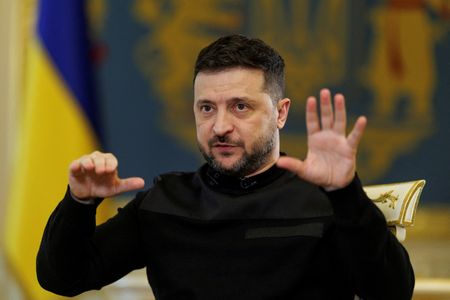
    This marks another in a series of partnerships the United States has established with over a dozen African nations, many of which have experienced reductions in American aid funding, including Congo.

    Cuts to U.S. assistance have severely damaged healthcare infrastructure throughout developing nations, particularly across Africa, where numerous countries depended on this financial support for essential programs, including disease outbreak response efforts.

    As of Thursday, the State Department has completed 19 bilateral health partnerships with African nations.
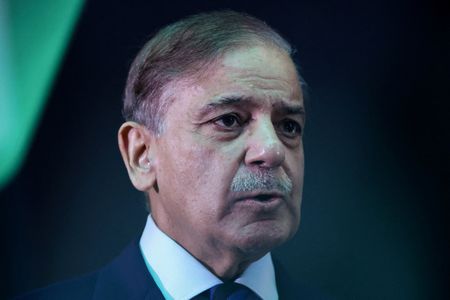
    The Trump administration describes these new “America First” health funding arrangements as designed to boost self-reliance and remove what it characterizes as ideological priorities and inefficiency from international aid programs. These agreements are replacing various previous health accords under the now-dissolved United States Agency for International Development.

    Experts suggest this fresh approach to global health reflects President Donald Trump’s tendency toward transactional diplomacy, utilizing direct negotiations with foreign leaders to advance his international objectives.

    The U.S.-Congo partnership announcement coincides with the Africa Centers for Disease Control and Prevention expressing alarm about clauses in certain agreements mandating countries provide Washington with virus data that could signal potential outbreaks as a condition for receiving funds.

    “There are huge concerns regarding data, regarding pathogen sharing,” Africa CDC director-general Dr. Jean Kaseya stated to reporters.

    On Wednesday, health funding discussions between the United States and Zimbabwe broke down when the African country refused to accept a mandate for sharing confidential health information.

    Whether similar data-sharing obligations exist in the U.S.-Congo health partnership remains unknown.

  • Cuban Officials in Contact with US After Deadly Shooting Involving Florida Boat

    Cuban Officials in Contact with US After Deadly Shooting Involving Florida Boat

    Cuban Deputy Foreign Minister Carlos Fernández de Cossío announced Thursday that his nation’s officials are actively coordinating with their American counterparts following a deadly maritime confrontation that left several people dead in Cuban territorial waters.

    The Cuban official stated his government stands ready to share information with U.S. authorities, while also planning to request details about those involved and how they organized their journey.

    “The U.S. government has shown willingness to cooperate in clarifying the facts,” Cossío stated.

    According to Cuba’s Interior Ministry, the incident unfolded Wednesday morning when a speedboat registered in Florida and carrying 10 armed Cuban nationals from the United States fired upon soldiers along the island’s northern coastline. Cuban forces returned fire, resulting in four deaths and six injuries among the boat’s occupants. Cuban officials reported one of their personnel was also wounded.

    A U.S. official confirmed Thursday that at least one American citizen died in the encounter, with another sustaining injuries.

    The official, speaking anonymously due to the sensitive nature of the ongoing investigation into Wednesday’s gun battle, revealed that another crew member held a U.S. visa, while several others may have possessed green cards.

    Additionally, the boat’s owner has claimed the vessel was taken without permission by one of his workers.

    Cuban authorities have published a roster containing the names of those they consider suspects, alleging the group intended to launch an invasion and carry out terrorist activities.

    Cossío revealed that investigators discovered assault weapons, sniper rifles, handguns, night vision gear, bayonets, military-style clothing, field rations, communications devices “and a large number of insignia from counterrevolutionary terrorist organizations.”

    “This information is still preliminary. More details will be provided in the coming days,” he added.

    On Wednesday night, U.S. Secretary of State Marco Rubio announced that the Department of Homeland Security and Coast Guard are conducting their own investigation.

    “The majority of the facts being publicly reported are those by the information provided by the Cubans. We will verify that independently as we gather more information, and we’ll be prepared to respond accordingly,” Rubio stated.

    Cossío pointed out that Cuban officials have consistently shared intelligence with the U.S. regarding individuals he claims “have been involved in promoting, financing, and organizing violent and terrorist acts against Cuba.”

    He revealed that two of the detained boat passengers appeared on that intelligence list “and enjoyed impunity within U.S. territory.”

    “The Cuban government is still awaiting responses to requests for information about them and the other individuals and organizations included in the list issued,” Cossío said.

    The deputy foreign minister declined to answer reporter questions during his press conference.

    Throughout Havana and surrounding areas, residents discussed the incident with varying reactions.

    “What the hell,” commented 88-year-old street performer Efraín Scotland regarding the alleged invasion attempt by 10 individuals. “No, my friend, no, that’s not going to bring down a nation.”

    Others, including 48-year-old construction worker Roberto Henry Figueredo, expressed support for Cuba’s military response.

    “That hail of bullets that we unleashed was good,” he remarked, adding that Cubans would resist future attacks. “If they fire at us, we’re going to eat those bullets.”

    Citizens in Cuba and elsewhere continue seeking answers about the motivations behind the alleged maritime operation targeting the Caribbean nation.

    Cuban political analyst Rafael M. Hernández addressed reporters during an online briefing Thursday, noting numerous unanswered questions: “What were they doing? What were they looking for? Were they starting a liberation movement in Cuba? Were they trying to sabotage the Cuban economy?”

    He characterized the alleged mission as “silly and counterproductive.”

    Some observers expressed concern that the shooting incident might further damage the already strained diplomatic relationship between Cuba and the United States, which has increased economic sanctions.

    Last month, U.S. President Donald Trump also threatened to impose tariffs on nations that sell or supply oil to Cuba, which had relied heavily on Venezuelan petroleum. However, those deliveries ceased after U.S. actions against the South American country and the arrest of its former leader.

    Cuba has subsequently implemented strict fuel conservation measures.

    “I expect things to get more tense,” said 54-year-old Havana resident Rosa Larrondo, who characterized Wednesday’s shooting as “a violation of the sovereignty of the Cuban people.”

  • Power Knocked Out in Russian Border Town After Ukrainian Strike

    Power Knocked Out in Russian Border Town After Ukrainian Strike

    Ukrainian forces launched missile strikes against a Russian border city early Friday morning, causing widespread power outages and infrastructure damage, according to local Russian officials.

    The strikes targeted Belgorod, a Russian city located approximately 25 miles from Ukraine’s border, along with surrounding areas. Regional governor Vyacheslav Gladkov reported that the attack caused extensive damage to the area’s power grid.

    “Serious damage has occurred with energy infrastructure,” Gladkov wrote on Telegram. “As a result, there have been disruptions to supplies of power, water and heating.”

    This marks the second major attack on Belgorod within a five-day period that has resulted in significant infrastructure damage. The region has faced regular Ukrainian military strikes throughout the four-year conflict that began when Russia invaded Ukraine.

    Gladkov indicated that officials would conduct a full damage assessment once daylight arrived. Unofficial social media posts showed residential neighborhoods plunged into darkness, with bright flashes from explosions visible across the night sky.

    Ukrainian government representatives have not issued any statements regarding the strikes.