
WASHINGTON — As a temporary ceasefire between the United States and Iran remains in place, Chinese leadership is weighing how deeply to engage in securing a permanent resolution to Middle Eastern hostilities.
Following American pressure on China to help reopen the blocked Strait of Hormuz, President Trump indicated to Agence France-Presse this week that he believes Beijing influenced Iran’s decision to accept the current temporary halt in fighting.
Three diplomatic sources familiar with China’s behind-the-scenes involvement confirmed that Beijing leveraged its position as Iran’s largest oil customer to push Tehran toward renewed negotiations.
This marked a significant shift for Beijing, which had previously criticized the U.S. and Israeli military actions against Iran as misguided before actively joining efforts to halt the conflict, including discouraging Iranian strikes. Negotiations between the parties are scheduled to commence in Pakistan this weekend.
As the unstable truce continues, China must carefully weigh whether to deepen its diplomatic involvement while considering how prolonged warfare could damage the global economy. Regional instability conflicts with Beijing’s interests, though successful mediation efforts could enhance its international reputation and improve its negotiating position during Trump’s planned visit to China next month.
“Beijing is not in the business of expending its leverage as a favor to others or for the greater good,” said Danny Russel, a former senior diplomat in President Barack Obama’s administration.
Mao Ning, a Chinese foreign ministry spokesperson, told reporters this week that China “has worked actively to help bring about an end to the conflict.”
China’s economy is already experiencing strain from Iran’s effective closure of the Strait of Hormuz, through which approximately 20% of global crude oil typically passes. This blockade significantly impacts Asia, apparently motivating Chinese officials to work with Pakistan in mediating the two-week ceasefire.
Beijing appears reluctant to offer long-term security guarantees for Iran as part of any peace agreement, despite Tehran’s desire for such assurances to prevent future U.S. and Israeli attacks.
Iran’s ambassador to China suggested this week that its closest allies — China and Russia — along with the United Nations should provide such guarantees, something Tehran has unsuccessfully sought before. When asked about this possibility, Mao only stated that “we hope that all parties will resolve their disputes through dialogue and negotiation.”
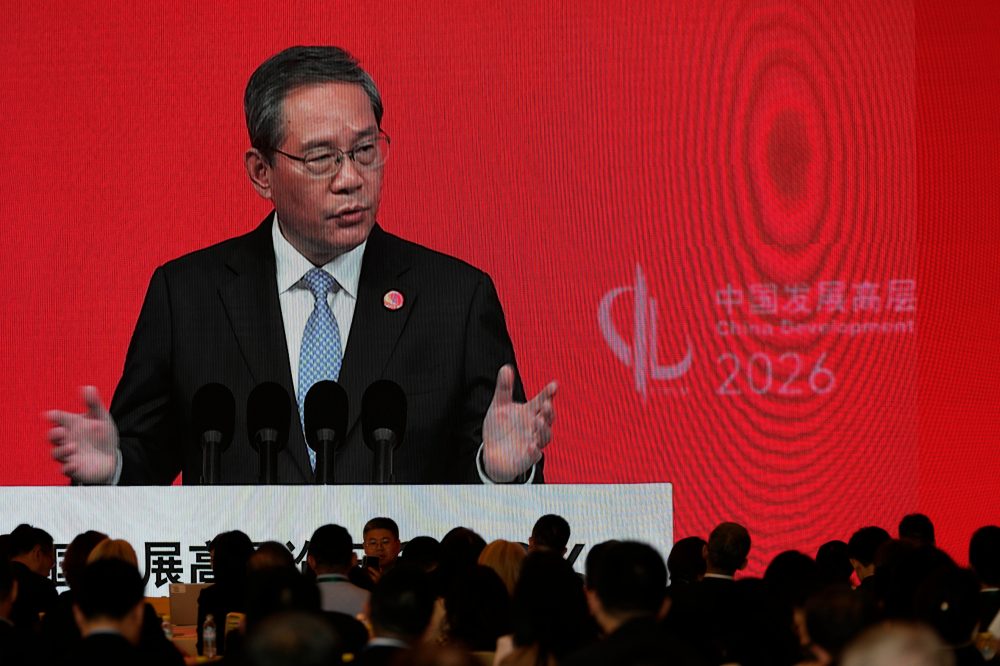
Nevertheless, Chinese leaders recognize that sustained warfare could seriously damage Beijing’s economic interests. Premier Li Qiang announced last month that the government projects relatively modest 4.5% to 5% economic growth this year amid a property downturn and increasing global uncertainty. This represents the lowest growth target since 1991.
According to one diplomat familiar with Chinese deliberations on the conflict, China’s primary objective remains “growth and development.”
The diplomat, who requested anonymity as they were not authorized to speak publicly, noted that continued closure of the strait undermines that goal. The blockade not only restricts significant crude oil supplies to China but also blocks an important shipping route for Chinese exports to the Middle East.
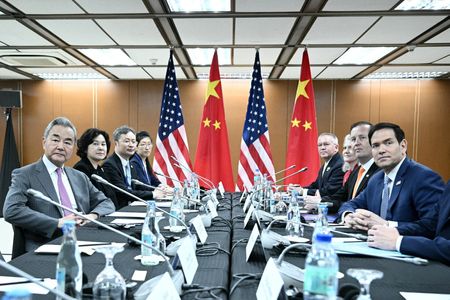
Trump will likely emphasize this argument to Chinese President Xi Jinping during their highly anticipated Beijing summit next month. The meeting, originally scheduled for this month, was delayed so Trump could oversee U.S. military operations against Iran.
“That the United States and Iran have at least temporarily edged away from the precipice of a catastrophic escalation owes in part to China’s support for the ceasefire that Pakistan brokered,” said Ali Wyne, a senior research and advocacy adviser for U.S.-China relations at the International Crisis Group. “Even if short-lived, that breakthrough affords Beijing another opportunity to present itself as a stabilizing force and Washington as a reckless one.”
Certainly, China’s perspective includes considerable skepticism.
Some Beijing officials view Trump’s decision to launch the Iran war, along with the January military operation to capture then-Venezuelan President Nicolás Maduro, as partially motivated by his strategy to contain China, according to diplomatic sources. Beijing was a major customer and investor in Venezuela’s oil sector.
Privately, Chinese officials have indicated that both the U.S. and Iran must demonstrate compromise for any agreement to succeed. Beijing also seeks to pressure Trump into removing sanctions on Chinese companies conducting business with Iran as part of a potential settlement, diplomats report.
This situation gives Xi some advantage heading into next month’s summit.
“Trump was in a crisis, and China helped,” said Sun Yun, director of the China program at the Washington-based think tank Stimson Center. “The optics of that alone helps to lighten the mood and sweeten the pot.”
Russel, the former State Department official, notes signs that Beijing perceives Trump as weakened after the president failed to follow through on threats to destroy Iranian power plants and other critical infrastructure if Iran didn’t end the Hormuz blockade.
The hashtag #HeChickenedOut was trending on Chinese social media regarding Trump, and China’s state media promoted the narrative that he backed down when faced with Iranian resistance, Russel said.
Xi appears to be approaching the situation cautiously.
“Beijing’s calculation is wait-and-see, safeguard Chinese energy and commercial interests, avoid direct confrontation with the United States, stay on good terms with its important Gulf partners like Saudi Arabia and UAE, and work with whoever ends up running Iran when the dust settles,” Russel said.
Steve Bannon, who served as a senior adviser to Trump during his first term, said Trump will need to secure Xi’s commitment if he hopes to achieve a lasting peace agreement with Iran.
“Who can actually make a deal and enforce a deal? I know one group of people who can do it, and they live in Beijing,” Bannon said on his “War Room” podcast this week. He added, “Let’s just go to Beijing and sit down with a guy who can actually make a deal — Xi — and enforce a deal.”