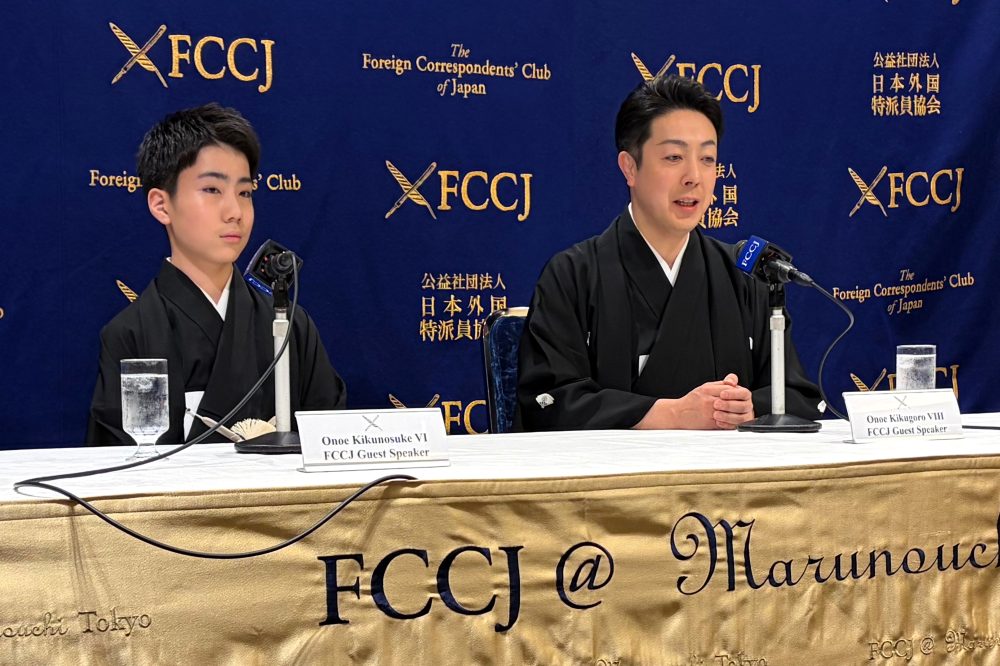

TOKYO (AP) — The ancient art of Japanese Kabuki theater centers around a time-honored tradition where stage names pass from father to son across generations, with elaborate ceremonies marking these transitions every few years.
Currently, this sacred ritual unfolds as Kazuyasu Terajima, 48, receives the prestigious title of eighth Kikugoro from his 83-year-old father, the seventh Kikugoro, who inherited the same name from his own father decades earlier.
“Taking on the name is about taking on the spirit and responsibility that’s created and getting passed down over generations by those who came before us,” the younger Kikugoro, Kazuyasu Terajima, told reporters recently.
“The job of the Kabuki actor is to carry on and develop in the present what we have inherited from our predecessors and make sure it gets passed on to those who come after us.”
The Danjuro family represents another renowned Kabuki dynasty, with the 13th Danjuro receiving his inherited name during ceremonies in 2022.
This theatrical art form, which originated in the 1600s, remains vibrant in contemporary Japan. The Oscar-nominated film “Kokuho,” recognized for makeup and hairstyling, demonstrates Kabuki’s enduring appeal, achieving record-breaking box office success as Japan’s highest-grossing domestic live-action film.
Traditional Kabuki performances feature intense tales of honorable samurai seeking vengeance through secret identities, or beautiful women transforming into serpents, blending live musical accompaniment, choreographed movement, and vocal performances with highly stylized acting techniques — with male performers portraying every character, adorned in vibrant costumes and elaborate face paint.
Male actors specializing in female characters earn the designation “onnagata,” while versatile performers like Kikugoro master both masculine and feminine roles.
Western audiences often find Kabuki’s complete rejection of naturalistic representation striking, as performers abandon any pretense of realistic behavior. Actors freeze in dramatic poses called “mie” mid-dialogue to emphasize themes of bravery or escape, with these pivotal moments highlighted by rhythmic wooden clappers resembling claves.
Performers deliver dialogue in melodic, poetic cadences. Live musical accompaniment creates atmospheric effects, with massive drums mimicking thunder when struck forcefully or gentle snowfall when played softly. Delicate bells might represent fluttering butterflies.
Rotating stage sets provide spectacular backdrops, including cherry trees releasing cascades of pink paper blossoms. Some productions incorporate acrobatic elements, such as wire-suspended actors portraying joyful foxes dancing overhead.
Kabuki’s theatrical magic includes on-stage costume and character transformations performed before audiences, converting human characters into demons with assistance from stage assistants wearing anonymous black garments called “kurogo.”
Striking similarities exist between Kabuki and Shakespearean drama. The beloved play “The Love Suicides at Sonezaki” depicts young lovers choosing death together, echoing Romeo and Juliet themes.
These resemblances occurred coincidentally. Chikamatsu Monzaemon, who created this work for Japan’s Bunraku puppet theater, lived during the isolationist Tokugawa era of the 18th century and likely never encountered Shakespeare’s writings, though Shakespeare had penned his similar romance decades before Chikamatsu’s birth.
For the new Kikugoro, 48-year-old Terajima embraces a destiny determined at birth, following his predecessors’ path. Despite lifelong training from childhood, he expresses no reluctance about his predetermined role as Kikugoro.
“I totally adored and admired my predecessors,” he said at the Foreign Correspondents’ Club in Tokyo last month.
“First of all, I am filled with gratitude to our predecessors who created great works that continue to be loved by generations that came after. So I am grateful to be born into the family of such ancestors.”
Terajima appeared alongside his 12-year-old son Kazufumi, who will inherit his father’s previous title, Kikunosuke — the traditional name for younger family members, passed down through generations like the Kikugoro designation.
Young Kikunosuke expresses passion for Kabuki performance, though like typical children, he enjoys video games and the Japanese rock group Mrs. Green Apple.
The demanding training requires significant dedication, including daily morning runs, strict dietary discipline, and early bedtimes.
“It’s not only hard physically. It’s also pretty hard mentally, and I sometime took it out on my parents,” he said with a smile, carrying himself with a controlled professional pose way beyond his age.
The name-succession ceremony, known as “shumei,” began last year with father and son performances across Japan and continues throughout this year.
American scholar James R. Brandon, who dedicated his research to Kabuki, characterizes it as following a specific code, “a theater in which the art of acting is central, and in which playwright and actor cooperate to achieve the unique style of performance found only in Kabuki.”
Japanese tradition emphasizes proper methodology, called “kata,” which becomes the template for future generations pursuing this art form, according to Brandon.
Despite concerns about Kabuki’s future survival, the new Kikugoro maintains faith in Kabuki’s “kata,” believing no changes are necessary since the art form’s essential spirit remains eternally relevant.
“By using kata, what we want to truly communicate the most in the tradition of Kabuki is human compassion, that spirit of caring for others,” he said.