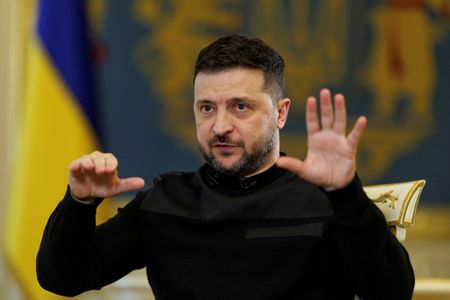

Ukrainian President Volodymyr Zelenskyy warned that his nation will endure significant challenges both on the battlefield and in diplomatic circles during the upcoming spring and summer months as the war continues.
Speaking to reporters in comments released Friday by his office, Zelenskyy revealed that international allies have requested Ukraine to decrease its attacks on Russian oil infrastructure as worldwide energy prices have climbed due to Middle East conflicts and Iran-related tensions. The Ukrainian leader did not identify which specific partners made these requests.
“This spring–summer period will be quite difficult politically and diplomatically. There may be pressure on Ukraine,” Zelenskyy stated. “There will also be pressure on the battlefield.”
“I believe it will be very difficult for us until September,” he added.
The Ukrainian president outlined conditions for potential de-escalation, stating that Russia must stop attacking Ukrainian energy infrastructure and agree to participate in three-way peace negotiations facilitated by the United States. However, he acknowledged that Washington appears hesitant to invest additional time in Ukraine’s peace process at this time.
Over recent weeks, Ukrainian forces have intensified strikes against Russian energy facilities, targeting oil revenue streams as Moscow has benefited from rising petroleum prices and relaxed U.S. sanctions. Ukrainian military officials have taken credit for more than twelve attacks on Russian oil installations, with major strikes targeting Baltic ports Ust-Luga and Primorsk, which serve as Russia’s primary petroleum export terminals.
“Russians now have major problems with some of their facilities. After any strike on our energy sector, we respond – and that is entirely fair. If Russians want this to stop, they must stop their strikes, and then we will act in kind,” Zelenskyy explained.
The Ukrainian leader disclosed that during Iran’s blockade of the Strait of Hormuz, partner nations requested Ukraine to reduce its Russian oil facility attacks, but he countered that Russian petroleum has minimal global market influence.
Zelenskyy emphasized his desire for renewed international sanctions pressure on Russia. With a two-week ceasefire between the U.S. and Iran announced Tuesday, he expressed optimism that American sanctions on Russian oil, which were temporarily relaxed during the Middle East conflict, would be fully restored.
In March, the United States granted a 30-day exemption allowing nations to purchase sanctioned Russian oil and petroleum products to help stabilize global energy markets disrupted by the Iran conflict.
For diplomatic progress, Zelenskyy suggested that three-way discussions on ending the war should occur within the next three months if Russia seeks de-escalation. This year’s three rounds of trilateral negotiations have produced minimal advancement, with Ukraine rejecting Russian demands to surrender remaining eastern Donbas territories that Moscow has failed to capture.
Combat continues along more than 1,200 kilometers of front lines, with both nations escalating drone strikes on targets distant from active fighting zones.