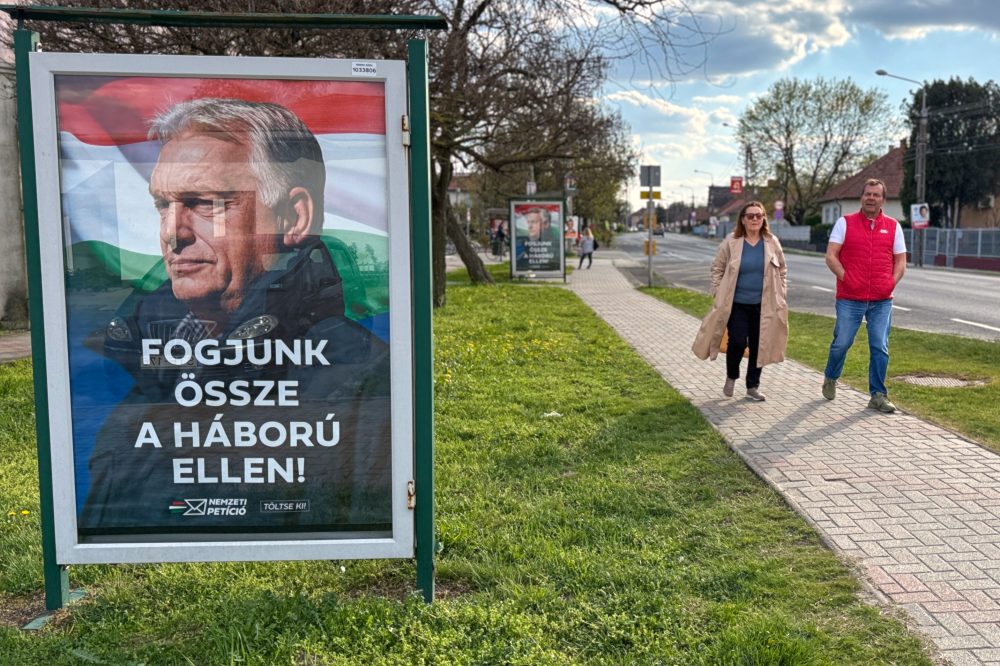

CEGLÉD, Hungary — A small business owner from this Hungarian city dismisses polling data suggesting Prime Minister Viktor Orbán might face defeat in this weekend’s crucial election.
István Vároczi, 63, who operates a handbag and goods stand in central Cegléd, remains confident in the leader he has supported for nearly four decades.
Orbán, who has held power for 16 years with four consecutive electoral wins, now confronts his most serious challenge yet from center-right candidate Péter Magyar of the Tisza party. Magyar has spent months crisscrossing Hungary’s rural areas, attempting to erode Orbán’s traditional stronghold support.
Though polling indicates many Hungarians have turned away from Orbán’s Fidesz party and desire political change, the veteran prime minister continues to command strong loyalty from significant segments of society, especially senior citizens and residents of smaller communities.
“I’ve been watching him for nearly 40 years, I have always voted for him and I will again, I’ve never been disappointed in him,” Vároczi explained. “His biggest strength is that he didn’t forget where he came from. He always remained a normal person. I’m sure he has flaws, but who doesn’t?”
Vároczi described Fidesz as “the only party I trust” and called Orbán’s leadership record “unparalleled.”
Magyar’s Tisza party has gained momentum among Hungarian voters following four years of economic decline, partially attributed to the European Union’s decision to freeze billions in funding over concerns about democratic institutions and corruption during Orbán’s tenure.
However, recent polling from Medián released Wednesday reveals 47% of Hungarians aged 65 and older favor Fidesz, compared to just 29% supporting Tisza. The data also shows Orbán’s support increases in smaller towns and villages.
In the central Hungarian town of Albertirsa, home to roughly 14,000 residents, retired pipe fitter János Falajtár grew visibly moved while discussing what he views as Orbán’s service to the nation. Fighting back tears, he stated that Orbán had “acted for the people.”
“The decisions don’t matter. Common sense and heart matter,” Falajtár said.
The prime minister has rolled out voter-friendly initiatives ahead of the election, including a popular program reducing utility costs supported by Hungary’s continued energy purchases from Russia. Pensioners receive an additional “13th month” payment annually, with a 14th installment now being implemented.
Orbán has also launched efforts to restore rural pubs and churches while eliminating income taxes for mothers with multiple children.
Beyond specific policies, Orbán’s personal appeal, focus on preserving Hungarian culture, and efforts to strengthen national identity appear to resonate most powerfully with his supporters.
The retired pipe fitter believes Orbán has brought unity to the nation, including ethnic Hungarian populations in neighboring countries after roughly 72% of Hungary’s historical territory was lost following World War I.
“We are now beginning to unite the Greater Hungary in Vojvodina, Slovakia, Transcarpathia, Transylvania, and even in Austria,” Falajtár said. “They only took a small piece from us, but it’s still ours.”
Throughout his campaign, Orbán has emphasized various threats he claims will endanger Hungarians without his continued leadership, particularly the ongoing conflict in neighboring Ukraine, which he argues could bankrupt the country or draw it into direct military involvement.
Despite economic challenges, many Orbán supporters attribute problems to outside forces rather than governmental failures.
The administration “is doing what it can for us, for the people,” Vároczi concluded.