
International financial markets are closely monitoring a series of crucial elections taking place around the globe this year, with voting in Hungary and Peru among the most watched contests.
HUNGARY
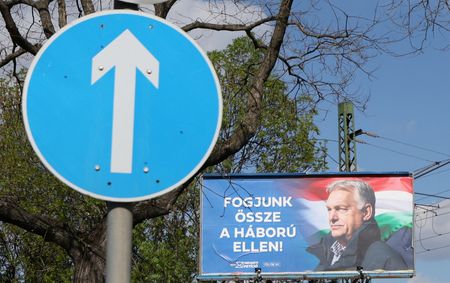
This Sunday’s elections in Hungary present the most significant challenge to nationalist Prime Minister Viktor Orban’s 16-year leadership. The center-right opposition party Tisza currently holds the lead in most polling data.
To win over voters in an economy that has underperformed compared to neighboring countries, Orban has reduced taxes and increased salaries. His decision to block financial assistance to Ukraine has also created tension with much of Europe.
According to investors, a victory for Tisza’s Peter Magyar could unlock access to approximately 18 billion euros ($21 billion) in EU funding that remains frozen due to democracy-related concerns.
Goldman Sachs economists predict this outcome would “likely lead to a notable appreciation of Hungarian assets.”
PERU
Two conservative candidates are leading in Peru’s first-round presidential election scheduled for Sunday, though Bank of America noted that most candidates “do not seem to represent a major threat” to Peru’s traditional economic approach. Congressional seats are also being decided.
Since 2018, Peru has seen eight different presidents due to ongoing impeachment proceedings and corruption issues, yet economic expansion across nearly every sector has strengthened the nation’s finances.
Bank of America cautioned that electoral chaos similar to the troubled 2021 contest, which featured disruption and fraud claims, could prompt investors to pull their money out.
A runoff election is set for June 7 if no candidate achieves a majority.
UNITED KINGDOM
While local elections typically don’t draw international investor interest, the UK’s May 7 contests might be different. Prime Minister Keir Starmer’s Labour Party is falling behind both the populist Reform UK and left-wing Green Party in polling, while struggling to fulfill economic growth commitments.
Bond markets are particularly watching for indications that the fiscally conservative Starmer could be removed from office, which might also weaken the pound.
The ongoing Iran conflict has reduced expectations of Starmer’s immediate removal. However, online betting platform Polymarket places the odds of such a change at 56% before year’s end. The next nationwide election must occur by August 2029.
COLOMBIA
Colombia’s presidential contest remains competitive following mixed results in March’s congressional voting, with the first round set for May 31.
Leftist President Gustavo Petro has disagreed with the central bank and attempted to implement emergency economic measures. Some market participants have welcomed the improved prospects of center-right candidate Paloma Valencia.
“We are inclined to hold a constructive view, as political conditions still support a swing toward pro-market policies,” Barclays economist Alejandro Arreaza wrote in a research note.
ETHIOPIA AND ZAMBIA
Both Ethiopia and Zambia, nations that have failed to meet debt obligations, will conduct summer elections with economic issues as primary concerns.
Market observers have praised Zambia’s economic restructuring and expanding copper output, while Ethiopia’s increasing gold and coffee exports along with currency reforms have improved its economic outlook.
Ethiopian Prime Minister Abiy Ahmed’s Prosperity Party appears virtually guaranteed to win in June due to opposition boycotts and security issues that may limit voter participation.
Zambia’s current President Hakainde Hichilema is favored to win in August, though energy and fertilizer cost increases linked to the Iran conflict could create challenges. Credit rating agency S&P warns the election could threaten policy stability just as government budget tightening begins showing positive results.
ISRAEL
October’s expected parliamentary elections in Israel are being viewed as a judgment on Prime Minister Benjamin Netanyahu’s leadership.
Pre-war polling indicated Netanyahu’s conservative coalition would face difficulty securing enough seats for government formation, and surveys suggest the Iran conflict has not significantly improved his position.
Israel’s economy had recovered in 2025 and was projected to continue improving in 2026 before the war started. The political uncertainty could increase fluctuations in the shekel and government debt securities.
BRAZIL
Brazil’s leftist President Luiz Inacio Lula da Silva is running neck-and-neck in October’s race against right-wing senator Flavio Bolsonaro, son of former President Jair Bolsonaro.
Lower house positions, two-thirds of Senate seats, and all 27 state governorships are also being contested.
While inflation has decreased and unemployment reached record lows in December, last year’s 2.3% economic expansion was the poorest since the COVID pandemic, and household debt payments are at their highest level since tracking began in 2011.
Oxford Economics’ Felipe Camargo suggested a center-right Bolsonaro administration could create a “goldilocks scenario for markets” with emphasis on reducing inflation and addressing rising debt levels.
UNITED STATES
November’s midterm elections will decide Congressional control and represent a significant challenge for President Donald Trump.
Trump’s approval numbers have reached historic lows, putting his Republican Party’s slim Congressional majorities at risk. Polling indicates substantial American opposition to Middle Eastern military involvement and frustration with rising fuel costs.
Market experts suggest pre-election uncertainty could pressure the dollar and stock markets, though the Iran situation will likely overshadow electoral concerns for now.
“If Trump wants a chance to get affordability back down, well in advance of the midterms… the timing is very tight,” said Grant Johnsey, head of market solutions at Northern Trust.