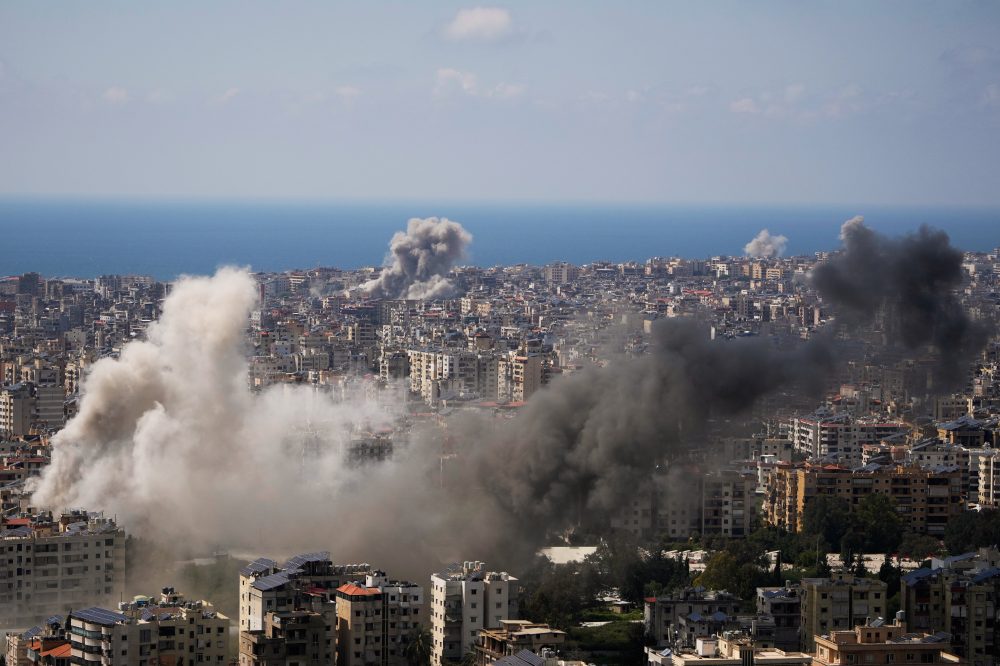

BEIRUT (AP) — Following the announcement of a preliminary ceasefire between the United States and Iran, Israeli forces significantly intensified their military campaign against Hezbollah, the Iran-supported militant organization operating in Lebanon.
Lebanese health authorities report that the surge in bombardments across central Beirut and other regions resulted in over 200 fatalities and wounded more than 1,000 individuals.
Israeli defense forces stated they had struck locations connected to Hezbollah operations and confirmed the elimination of an assistant to group leader Naim Kassem. However, Lebanese authorities noted that the bombardments, which targeted heavily populated residential and business areas during peak traffic hours, resulted in significant civilian casualties, though specific numbers were not disclosed.
In response to the intensive bombardment campaign — which generated widespread international condemnation — Hezbollah fired missiles into Israeli territory, though reports indicate no major casualties occurred.
The current conflict between Israeli forces and Hezbollah began following joint US-Israeli military action against Iran in late February. Following this week’s ceasefire declaration between the US and Iran, disagreement has emerged regarding whether the agreement encompasses the Israel-Hezbollah hostilities; Tehran claims it does, while Washington and Tel Aviv maintain it does not.
The two forces have engaged in numerous conflicts since Hezbollah’s establishment in the 1980s as a resistance movement opposing Israel’s occupation of southern Lebanese territory.
On March 2, just two days following the US-Israeli assault on Iran, Hezbollah fired missiles toward Israeli targets. The organization stated the attack served as retaliation for the death of Iranian Supreme Leader Ayatollah Ali Khamenei and for “repeated Israeli aggressions” within Lebanon.
This renewed fighting occurred 15 months following a US-mediated truce that ended their prior conflict. That previous war began one day following the devastating October 7, 2023, Hamas-orchestrated assault on southern Israeli communities.
Hezbollah, which maintains an alliance with Hamas, initiated attacks on Israel after it launched its intensive counterattack against Hamas forces in Gaza. What initially developed as limited border skirmishes between Israel and Lebanon escalated into comprehensive warfare by September 2024.
Following a November 2024 ceasefire agreement, Israeli forces maintained almost daily aerial bombardments in Lebanon, claiming the operations aimed to prevent Hezbollah from reorganizing. Israeli military units also maintained control of five strategic hilltops within Lebanese territory along the border.
Meanwhile, Hezbollah faced both internal and external pressure to relinquish its remaining weapons stockpile. The organization remained relatively inactive and avoided involvement during last summer’s 12-day conflict between Israel and Iran. Many observers believed the group had become too weakened to engage in combat after sustaining significant losses during the 2024 fighting, making their entry into the current war following US-Israeli attacks on Iran unexpected.
As of Wednesday, Lebanese health ministry statistics show that Israeli strikes have killed more than 1,730 individuals and wounded over 5,870 since March 2. The civilian casualty count remains unclear, though the totals include hundreds of women, children, and medical personnel.
More than one million Lebanese residents have been forced from their homes. Israeli authorities have issued comprehensive evacuation orders for residents to abandon large sections of the country, typically followed by bombardment of those evacuated areas. Many displaced individuals are sleeping in vehicles, on streets, or in overcrowded schools converted to emergency shelters.
Israeli officials report that Hezbollah has fired thousands of missiles and drones across the border, though most have been intercepted or landed in unpopulated areas. The Israeli military reports 12 soldiers killed in southern Lebanon and over 400 wounded.
A small number of civilian deaths have also occurred in northern Israel, including one individual killed by rocket fire and another accidentally killed by Israeli artillery during border fighting. The continuous barrage of missiles and drones has created anxiety among northern Israeli residents. Many express frustration that the government has not offered evacuation assistance as provided during previous conflicts.
Israeli ground forces have also launched an invasion of southern Lebanese territory. Intense combat has developed with Hezbollah fighters in border regions, and UN peacekeeping personnel have occasionally been caught in crossfire; three UN force members have been killed.
Some Israeli officials have advocated for their military to occupy southern Lebanon extending to the Litani River, approximately 30 kilometers (20 miles) north of the border. Israeli forces have destroyed homes in border villages. Many displaced Lebanese residents fear Israel intends to establish a depopulated buffer zone, preventing their return home.
Lebanese officials have attempted direct negotiations with Israel to end the fighting. On Thursday, Israeli Prime Minister Benjamin Netanyahu announced Israel had agreed to participate in discussions focused on Hezbollah disarmament and potential peace arrangements.
When the US and Iran announced their preliminary ceasefire Wednesday, Pakistan’s prime minister, whose nation served as mediator, stated on social media that it applied to “everywhere including Lebanon.” Iranian officials also maintain the agreement includes Lebanon. However, the US and Israel firmly deny this interpretation.
Hezbollah has declared it will not honor the ceasefire unless Israel complies as well.
Middle East analyst Joe Macaron described the upcoming negotiations as “a test of how much the Iranian regime is committed to help Hezbollah.” He suggested Israel is unlikely to agree to — or be compelled by the US to accept — complete ceasefire and withdrawal from Lebanon.
While the US might pressure Israel to cease strikes in central Beirut, Macaron predicted a “long war of attrition” will likely develop between Israel and Hezbollah in southern regions. The Israeli military lacks the capability to control the entire area south of the Litani River, Hezbollah cannot force Israeli troops from southern Lebanon, and neither Israel nor the Lebanese government can forcibly disarm the organization, he explained.
According to Macaron, the only solution will require a negotiated agreement.