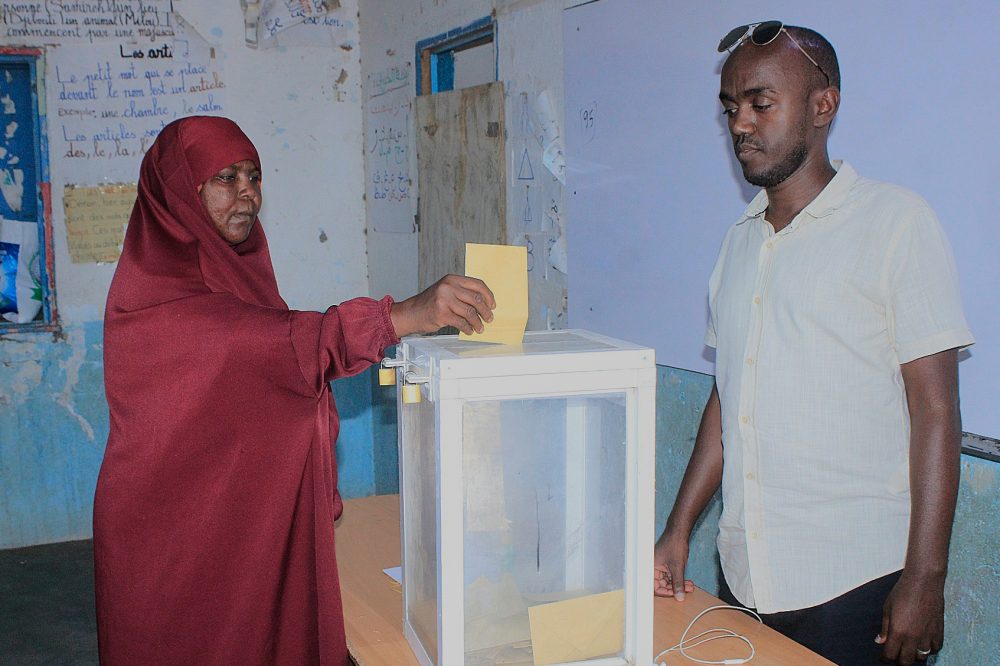

Citizens in Djibouti headed to polling stations Friday to choose their next president, with 78-year-old Ismaïl Omar Guelleh positioned to claim his sixth consecutive term after more than two decades in power.
The election comes after parliamentary leaders removed age restrictions for presidential candidates last year, clearing the way for Guelleh to continue his rule over the Horn of Africa nation of approximately one million people. In the previous 2021 contest, Guelleh captured nearly 99% of all votes cast.
Only one opponent challenges the incumbent this time: Mohamed Farah Samatar, a former member of the ruling political party. Political experts say the contest lacks meaningful competition, as opposition movements regularly refuse to participate in elections due to what they call limits on political liberties. Government supporters counter that their leadership provides stability in an unstable region, while critics argue the political system remains under strict control.
Guelleh took power in 1999 when he replaced his uncle, Hassan Gouled Aptidon, continuing a family dynasty that has controlled the nation’s government for many years.
The small country plays an outsized role in international affairs due to its location along crucial shipping lanes connecting the Red Sea and Gulf of Aden. Military installations from the United States, China, France and Japan operate within its borders, generating significant revenue alongside port fees from landlocked Ethiopia’s trade operations.
However, this economic strategy creates vulnerability to outside disruptions. The nation relies heavily on Ethiopian commerce through its ports, while global shipping problems and Red Sea security issues threaten income streams. Growing international rivalry and debt obligations, especially to China, create additional long-term challenges.
Election monitors from the African Union and Intergovernmental Authority on Development observed the voting process.
“The scrapping of term limits in Djibouti is less about electoral competition and more about preserving regime continuity in a highly strategic state,” Mohamed Husein Gaas of the Raad Peace Research Institute told The Associated Press.
“While it raises concerns about democratic backsliding, external actors are likely to prioritize stability given Djibouti’s critical role in Red Sea security and global trade routes, especially amid ongoing tensions in the Middle East,” he said.