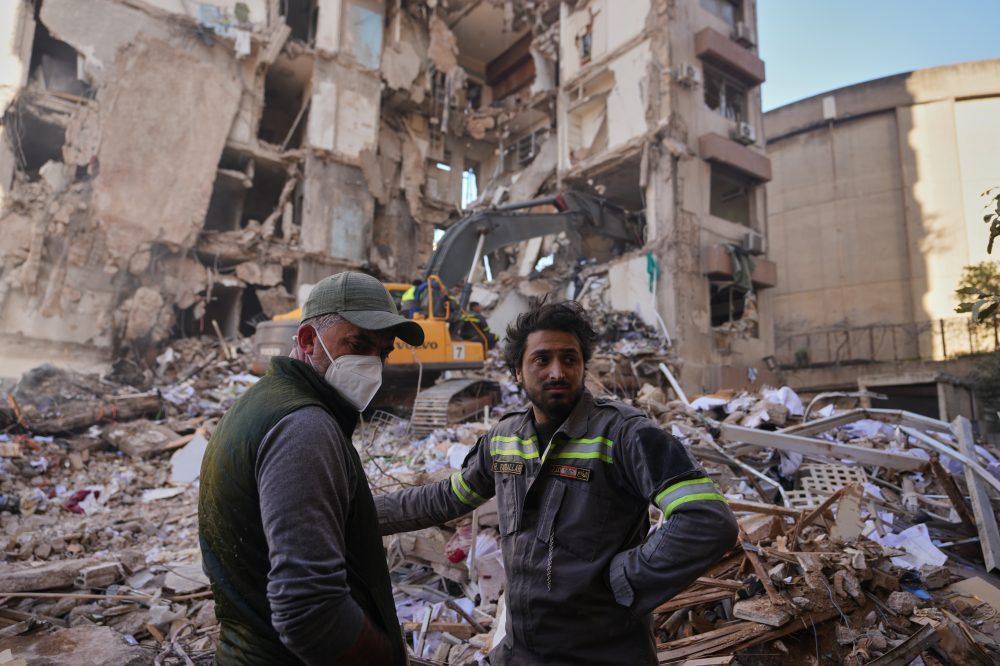

BEIRUT (AP) — At exactly 2:14 p.m., the initial explosion struck, creating a thunderous crash that sounded like a massive truck collision right outside our newsroom. An Israeli airstrike had targeted a location in the immediate vicinity.
Almost immediately, columns of smoke began ascending throughout Beirut’s horizon — from the waterfront promenade to the city’s most congested crossroads, emerging from both affluent districts and impoverished areas. The explosions continued relentlessly. We gave up tracking them. A colleague rushed upstairs from the lower floor, her complexion pale and mouth quivering.
Throughout my decade of residence in Beirut, Lebanon’s capital has endured multiple waves of Israeli bombardments, the explosive device attacks on Hezbollah operatives, and the catastrophic harbor blast of 2020. However, Wednesday marked the first occasion when the entire city seemed paralyzed with shock.
Within a 10-minute timeframe, Israeli forces claim they struck 100 locations throughout Lebanon. The majority were concentrated in Beirut. The death toll exceeded 300 individuals, with more than 100 being women, children, and senior citizens. Evening news programs compared it to the darkest periods of Israel’s 1982 Beirut invasion — specifically that August when approximately 300 people perished during roughly 10 hours of continuous shelling.
Prior to Wednesday’s assault, numerous Lebanese citizens had anticipated that a ceasefire declaration made earlier regarding the Iran conflict would halt the ongoing month-long hostilities between Israel and the Iranian-supported militant organization Hezbollah.
The specific targets remain unclear. Israeli officials stated they attacked Hezbollah command facilities, though they only confirmed eliminating one assistant to the organization’s leader.
As explosions continued, frightened residents became trapped in gridlock while rushing home to relocate their families, uncertain of Israel’s next target. Others frantically attempted calls through overloaded phone systems, searching for family members or shouting at relatives to evacuate immediately. Bewildered motorists gazed at the thick black and white smoke clouds engulfing the city, attempting to identify safe routes.
Within the affected zones, chaos reached extreme levels. Residents’ faces were blackened with debris. At Corniche al-Mazraa, one of Beirut’s major intersections, an Associated Press photographer witnessed burned vehicles stacked upon each other. One contained a crushed victim.
On Mar Elias, a primary commercial avenue, an explosion created dust clouds and wreckage that obscured an entire city block. Across the road, Sahar Charara remained hidden in her residence.
Following the 2020 port disaster that caused minor injuries to her two children, Charara has attempted to shield herself from witnessing violence victims — reflecting how years of accumulated trauma have affected Lebanese citizens. However, when the debris settled, she glanced outside and witnessed the anguish of an entire city reflected in an elderly woman who stood motionless, screaming continuously.
“There were so much horror and fear in her screaming,” said Charara.
When Charara emerged from her residence an hour afterward, she briefly spoke with her neighbor whose business was demolished. The woman’s expression showed a “blank look of horror,” Charara said.
She discovered later from her building’s security guard that another resident had fallen from their balcony and died upon impact.
Several hundred meters west of Charara’s location, drivers maneuvered erratically while attempting to flee Tallet al-Khayyat, one of Beirut’s elevated areas featuring some of the city’s most prestigious residential buildings. One structure disintegrated instantly after an Israeli bomb struck; a resident reported hearing the building’s foundation grinding before collapse.
An attack occurred near Nahida Khalil’s residence, close to the waterfront. She then noticed smoke rising from her brother’s building further down the road.
The following 15 minutes seemed endless as she attempted to contact her brother without success. Eventually, his wife answered, screaming that their building was struck. They had searched through black smoke filling their home to locate their three children. Upon reaching the street, they discovered half their building was destroyed, with the remaining portion slowly collapsing as emergency workers searched for survivors.
“I lived through all the wars since 1975. I never felt this fear,” said Khalil, who has lived in the same building for decades. “These strikes are meant to terrorize … and to spoil the ceasefire and cause division” between Lebanese.
By evening, residents continued evaluating damage and casualties while determining safe locations. Some families slept in separate rooms, reasoning that if overnight attacks occurred, some family members might survive.
Emergency operations continued throughout the night.
At Khalil’s family building in the Ain Mreisseh area, rescue teams received encouragement after discovering a 92-year-old man alive. However, by Thursday morning, they continued searching for four or five additional victims, they informed the AP. A man whose 23-year-old daughter remained missing stood atop the debris pile assisting in the search.
At medical facilities, personnel continued attempting to identify numerous bodies.
The final attack occurred just past midnight, targeting Beirut’s southern outskirts, which have faced regular bombardment during the conflict. Mohammed Mehdi’s barbershop, operating for three decades, was destroyed.
During the current conflict, he and his family abandoned their home in the Chiyah neighborhood, now sleeping in a dental office near Khalil’s family building. Despite this, he maintained his barbershop operations, visiting daily to meet friends, drink coffee, and occasionally cut hair. He closed Wednesday as explosions began across the city.
“They carried out 100 strikes. Ours was the 101st,” he said Thursday. He is mourning Lebanon’s dead from the day. “I am still in shock, and I don’t know where things are going. I lost my job and this loss may last for a while.”