
Financial markets are showing signs of tension as the recently brokered ceasefire between the United States and Iran faces mounting challenges, according to market analyst Gregor Stuart Hunter’s Friday assessment of global trading conditions.
The fragile peace agreement appears increasingly unstable following Israeli military operations in Lebanon that sparked retaliatory strikes from Hezbollah, while shipping traffic through the strategically important Strait of Hormuz remains severely restricted, drawing sharp criticism from President Trump.
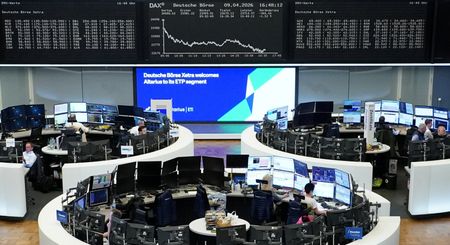
Market investors displayed caution as Iranian officials claimed Israel’s military actions in Lebanon breach the terms of the U.S.-Iran deal, dampening the positive market sentiment that had emerged after the ceasefire announcement. Friday trading showed S&P 500 electronic futures holding steady, while the MSCI Asia-Pacific stock index excluding Japan climbed 0.8%.
Israeli leader Benjamin Netanyahu announced Thursday his intention to pursue diplomatic discussions with Beirut, following what military analysts described as the most devastating Israeli bombing campaign of the conflict, which resulted in over 300 Lebanese casualties. Hezbollah’s response came Friday with a missile launch targeting Israel, activating emergency sirens across multiple cities including Tel Aviv.
President Trump took to Truth Social to express frustration with Iran’s handling of maritime traffic, criticizing the country for doing a “very poor job” of facilitating ship passage through the waterway. “That is not the agreement we have!” Trump posted on the social media platform.
The Strait of Hormuz previously handled approximately 20% of worldwide oil and natural gas shipments before the conflict began. Current vessel traffic has dropped to less than 10% of typical volumes as ships must navigate both explosive devices and complex approval processes, with Iranian authorities requiring permission for each individual vessel.
The virtual shutdown of this critical shipping lane during the six-week military engagement between U.S.-Israeli forces and Iran has created widespread disruption in international markets, driving oil prices higher and creating energy supply shortages globally.
Economic ripple effects from the conflict are spreading beyond the immediate region, with Chinese manufacturing prices recording their first increase in three and a half years during March, according to government statistics released this week.
Oil markets reflected ongoing supply concerns as Brent crude prices increased 0.7% to reach $96.57 per barrel. In response to energy security worries, Japanese Prime Minister Sanae Takaichi announced Friday that Japan will begin releasing strategic petroleum reserves equivalent to 20 days of consumption starting in May.
Japanese financial markets showed strength with the Nikkei 225 advancing 1.6%, boosted by record-setting performance from Fast Retailing shares after the Uniqlo parent company reported quarterly profits that exceeded analyst projections.
European market indicators pointed to positive opening sessions, with continental futures up 0.6%, German DAX contracts gaining 0.6%, and FTSE futures rising 0.2% in pre-market trading.