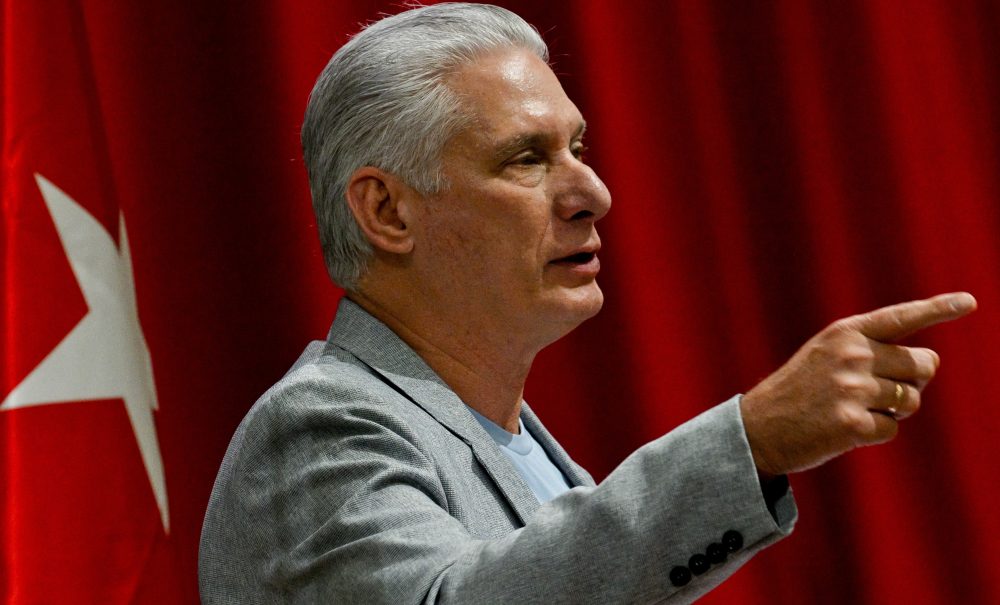

SAN JUAN, Puerto Rico (AP) — In his inaugural interview with an American television network, Cuban President Miguel Díaz-Canel firmly declared he will not resign from office, according to NBC News’ Meet the Press. A segment of the interview aired Thursday.
During the nearly five-minute preview of a longer interview set to broadcast Sunday, NBC journalist Kristen Welker questioned whether Díaz-Canel would consider resignation “if it meant saving Cuba.”
The Cuban leader responded by challenging the question itself, asking if she had ever posed such a query to other world leaders: “Is that a question from you, or is that coming from the State Department of the U.S. government?”
Díaz-Canel emphasized Cuba’s sovereignty, stating: “In Cuba, the people who are in leadership position are not elected by the U.S. government, and they don’t have a mandate from the U.S. government. We have a free sovereign state.”
The president explained his role stems from public service rather than personal gain, saying he assumed the presidency not from “personal ambition or corporate ambition or even a party ambition,” but through a mandate from citizens.
“If the Cuban people understand that I am not fit for office, that I have no reason to be here, then I should not be holding this position of president, I will respond to them,” he stated.
The interview occurs amid continued strain in U.S.-Cuba relations, though both nations have confirmed ongoing discussions without revealing specifics.
Díaz-Canel criticized what he termed America’s “hostile policy” toward his country, claiming the U.S. government has “no moral to demand anything from Cuba.”
He urged American recognition of how current policies have harmed Cuban citizens “and how much they have deprived the American people from a normal relationship with the Cuban people.”
The Cuban president expressed willingness for unconditional dialogue on any subject, “not demanding changes from our political system as we are not demanding change from the American system, about which we have a number of doubts.”
Cuba attributes its mounting economic challenges to what it calls a U.S. energy embargo, with fuel shortages impacting healthcare, public transit, and production of essential goods and services.
A Russian vessel delivered 730,000 barrels of crude oil to Cuba in late March, representing the island’s first petroleum shipment in three months. Russia has committed to sending an additional tanker.
Although President Donald Trump’s administration threatened tariffs on nations supplying oil to Cuba in early January, officials permitted the Russian delivery to proceed.
“Cuba’s finished,” Trump commented at the time. “They have a bad regime. They have very bad and corrupt leadership and whether or not they get a boat of oil, it’s not going to matter.”
The island nation generates only 40% of its fuel requirements internally and lost crucial oil supplies from Venezuela following U.S. actions against that South American nation in early January, including the arrest of its former leader.