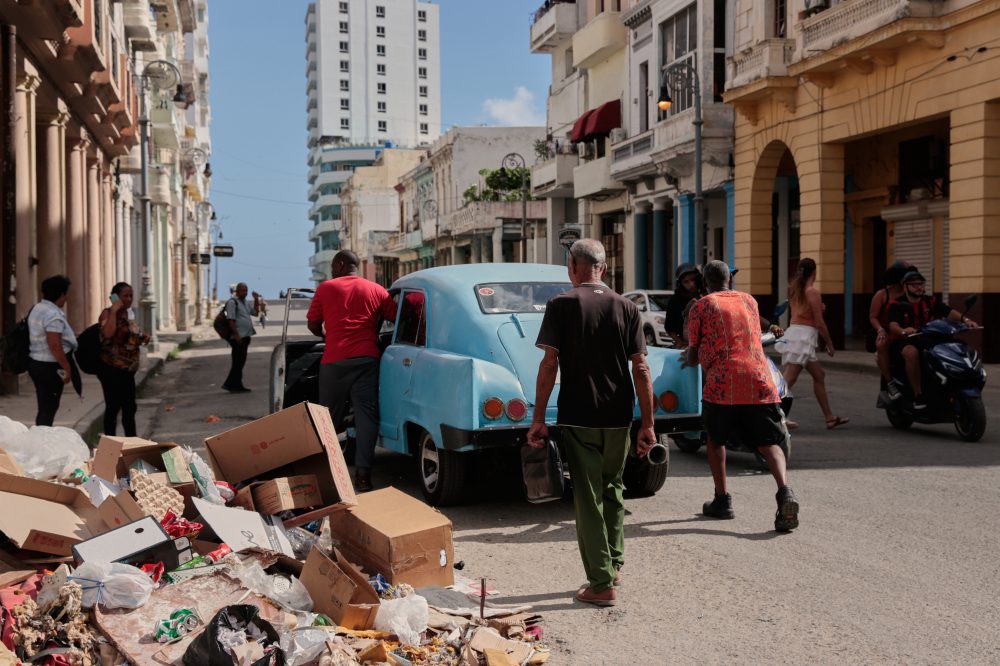
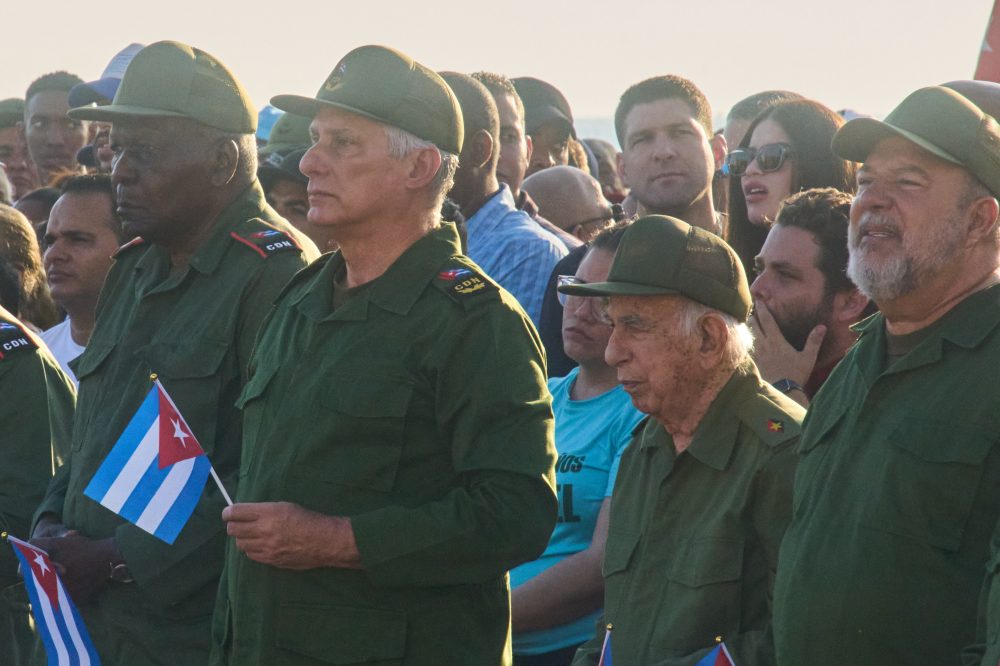
HAVANA — Cuba’s government has given the green light to its most sweeping market-oriented economic reforms in decades, but residents of the capital city are greeting the news with a complicated blend of hope, doubt, and sheer exhaustion.
Lawmakers approved a package of 176 measures following the Communist Party’s endorsement of the plan earlier in the week. The reforms include expanding opportunities for private enterprise, drawing in more foreign investment, allowing private involvement in banking, and opening certain state-owned companies to private shareholders. Government officials have emphasized that the changes are designed to preserve socialism — not dismantle it.
For many Cubans, the announcement signals something larger: that one of the world’s few remaining Soviet-style economies may be gradually shifting toward a model more like China or Vietnam, as a worsening crisis continues to take a toll on everyday life.
But on the streets of Havana, the mood was far from celebratory.
Olian Valdes, a 50-year-old resident, said he didn’t even hear about the announcement until hours after it was made — because power outages had left his home without electricity. “First, let’s see whether these measures are actually implemented,” he said. He added, “I don’t think it will make much difference for ordinary Cubans because they have nothing to invest. The gap between salaries and prices will remain the same.”
Cuba has been grappling with chronic shortages of food, fuel, and medicine for years. Conditions have deteriorated sharply in 2026 as fuel supplies have tightened and widespread blackouts have become increasingly common.
Not everyone was dismissive of the changes. Omara Oliva, 53, acknowledged that the current system has reached a breaking point. “We’re at a point where the current system simply isn’t working,” she said. “If new measures — even capitalist ones — help people eat better and improve their lives, then they are welcome.”
Despite the scale of the announcement, authorities have offered little clarity on how quickly the measures will go into effect, how they will be regulated, or who stands to benefit first. That lack of detail is particularly unsettling in a country where inflation has gutted wages and many households depend on money sent from abroad or income earned through the informal economy.
Leonardo Benitez, 61, summed up the cautious sentiment shared by many. “For now, we have to wait and see,” he said, noting that the reforms would only matter if they were applied fairly.
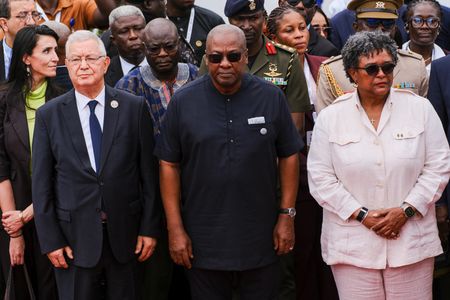
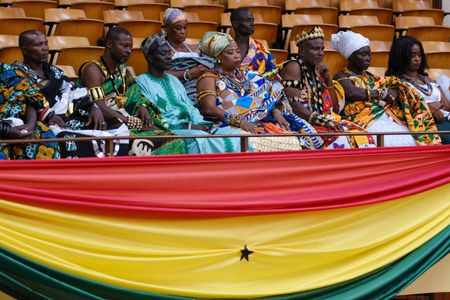
African and Caribbean nations gathered in Ghana this week to endorse a comprehensive reparations plan, demanding formal apologies, debt cancellation, and financial compensation from countries that benefited from the transatlantic slave trade.
The 19-point plan was adopted at the close of a three-day conference and represents a joint effort by the African Union and the Caribbean Community (CARICOM) Commission on Reparatory Justice. The document does not specify which individual countries should issue apologies.
Among its key provisions, the plan calls for the creation of a Global Reparations Fund, broad debt relief and cancellation for affected nations, and reforms to international financial institutions aimed at giving countries in the Global South a greater voice. It also demands the return of looted cultural artifacts and ancestral remains, climate justice funding, and targeted measures to address the specific suffering endured by African women and girls during slavery.
Additionally, the plan urges African nations to offer diaspora Africans pathways to citizenship and the right of return, while committing to preserving historic coastal forts and castles as memorials to the slave trade.
The conference builds on momentum from a United Nations resolution passed in March, which recognized transatlantic slavery as the “gravest crime against humanity.” That resolution passed with 123 votes in favor, though the United States, Israel, and 52 other nations — including European Union members and Britain — either voted against it or abstained. Both the EU and the U.S. expressed concern that the resolution could create a ranking system among crimes against humanity.
Historians estimate that at least 12.5 million Africans were kidnapped and forcibly transported aboard European ships between the 15th and 19th centuries. Advocates argue that the lasting effects of that era — including systemic racism and economic inequality — demand a formal, coordinated response.
Previously, CARICOM and the African Union had each been developing their own separate reparations frameworks. The Ghana conference allowed both organizations to combine their work into a single unified document, which will now be presented at the next U.N. General Assembly.
Several heads of state addressed the conference, many striking a tone that distinguished between personal guilt and collective responsibility. Ghana’s President John Dramani Mahama told delegates: “None of us gathered in this hall today can be held personally responsible for the atrocities of the transatlantic slave trade. History does not ask us to inherit guilt, but it asks us to inherit responsibility.”
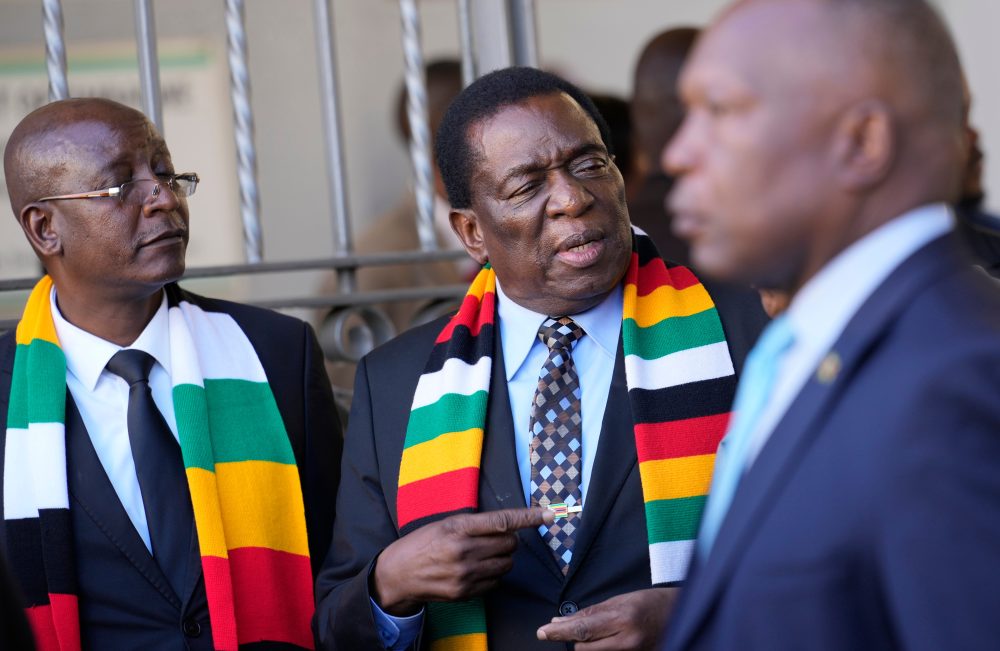
Leaders from Namibia, Liberia, Senegal, Barbados, and Sao Tome and Principe attended in person, along with the vice president of Equatorial Guinea.
French President Emmanuel Macron participated virtually from the Elysee Palace, saying that enslaved people “were torn from their homelands, deported, dehumanised, and treated as goods.” He cautioned that reparations should not be viewed “as an end point, or a cheque written to bring the story to a close.”
Last month, French lawmakers voted to formally repeal slavery-era laws that had classified enslaved people as “movable property” and permitted abuse and corporal punishment — though the legislation stopped short of including any reparations demands.
British Transport Police announced Friday they were responding to a two-train collision approximately 60 miles north of London, with multiple people reported injured in what authorities described as a major incident.
Video footage circulating on social media appeared to show the front end of one train tangled with the rear of another, with both trains remaining on the tracks following the crash.
The East of England Ambulance Service confirmed it dispatched several emergency resources to the scene, including an air ambulance, and asked members of the public to stay away from the area. The collision occurred on the railway line just south of Bedford.
Transport minister Heidi Alexander took to X to express her reaction, writing that she was “deeply concerned” by what was being reported about the collision.
Bedfordshire Fire and Rescue Service also confirmed its crews were on scene at the railway south of Bedford, echoing the call for the public to avoid the area.
Train operator East Midlands Railway announced it would be unable to operate any trains into or out of London for the rest of the day as a result of the crash. Thameslink also reported that all rail lines running between Luton and Bedford were blocked while the situation was being investigated.
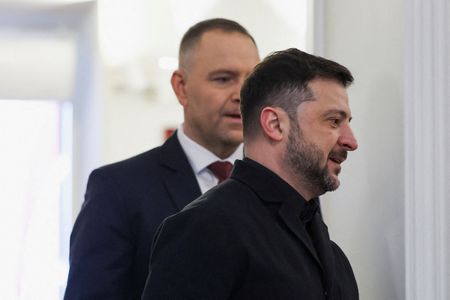
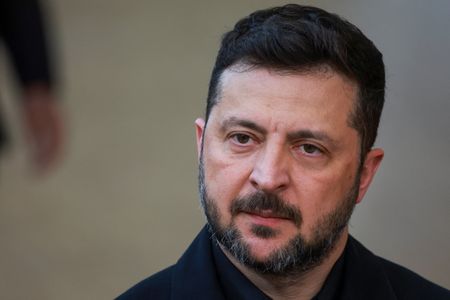
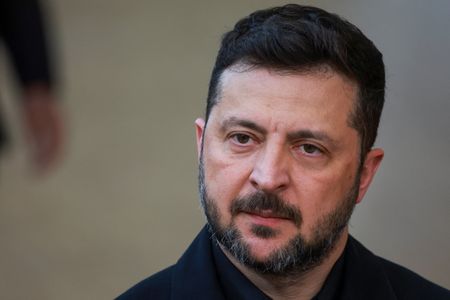
WARSAW — Polish President Karol Nawrocki announced Friday that he has made the decision to revoke Ukrainian President Volodymyr Zelenskiy’s Order of the White Eagle, the highest honor Poland can bestow upon an individual.
The move comes after Zelenskiy drew sharp condemnation from Poland when he renamed a Ukrainian army unit after nationalist insurgents who carried out massacres of Polish civilians during World War Two. The decision triggered widespread outrage across Poland.
From a concealed location somewhere in Bolivia’s Chapare forest region, former president Evo Morales is biding his time — and keeping a close eye on the chaos unfolding across the country.
For 50 days, highway blockades organized by labor unions and indigenous groups have brought Bolivia to a standstill. The disruptions have left at least 14 people dead and pushed the center-right government of Rodrigo Paz dangerously close to collapse.
In an exclusive video interview with Reuters, Morales said he has maintained regular communication with protesters. He acknowledged that the wave of public anger in the streets has “made him think” about re-entering politics — though he insisted he is not actively running for anything.
The blockades have severed critical roadways, leaving trucks stranded and cutting off supplies of fuel, food, and medicine to communities across the country.
The crisis began after Paz made a sudden decision to eliminate long-standing fuel subsidies in an effort to reduce Bolivia’s budget deficit. The country, a major lithium producer, has been struggling with a deepening dollar shortage and is in ongoing negotiations with the International Monetary Fund over a potential rescue package.
Paz later adjusted fuel prices and reversed some unpopular land reform policies, but the blockades continued to grow as frustration expanded beyond fuel costs. Unions are now demanding wage increases, an end to fuel and dollar shortages, and Paz’s resignation.
Paz took office in November 2025 with the support of President Donald Trump, as part of a broader U.S. effort to expand its influence in the region. He has pointed the finger at Morales — who ruled Bolivia for nearly 14 years and remains a towering figure on the political left — for fanning the flames of the unrest.
Andres Arauz of the Center for Economic and Policy Research told Reuters that the government has leaned heavily on casting Morales as the villain in order to shift attention away from the underlying social problems. He said Paz is “trying to spin this and frame it as political confrontation, and thus basically wait it out.”
Morales is currently the subject of an arrest warrant on charges of trafficking a minor, tied to allegations that he fathered a child with a teenager in 2016 while serving as president. Morales denies any wrongdoing, calling the charges “fabricated” and driven by political motives.
In his Reuters interview, Morales rejected any suggestion that he is behind the protests, saying the “indigenous rebellion” is rooted in economic suffering.
“In my experience as a former president, if there is a conflict, it is the fault of the state if it is a social demand,” Morales said, adding that Paz had made “unfulfilled commitments.”
As Paz attempts to negotiate an end to the blockades, Morales’ presence looms large over the talks. On Wednesday, Paz opened dialogue with union leaders in La Paz, striking a conciliatory tone.
“We must build the nation, but we have to build it by accepting diverse ways of thinking,” Paz said, urging both sides to move past mutual distrust.
A Capital Under Siege
In La Paz, the high-altitude capital, daily life has taken on a grim character. Restaurants sit nearly empty, hospitals are running short on medications, and grocery store shelves in the meat section have gone dark after selling out.
“We feel deeply suffocated,” said Pamela Espada, a regional supermarket manager, explaining that she has resorted to flying meat in from Santa Cruz and waking at 2 a.m. to track down eggs.
The cost of basic foods has skyrocketed since the blockades began — tomato prices have doubled, and chicken has become 70% more expensive.
The economic ripple effects have been severe. Ernesto Olivares, who leads the Gastronomic Association of La Paz, said 42% of the city’s restaurants have been forced to shut down. “The exhaustion has reached its limits,” he said. “La Paz is being held hostage by politics.”
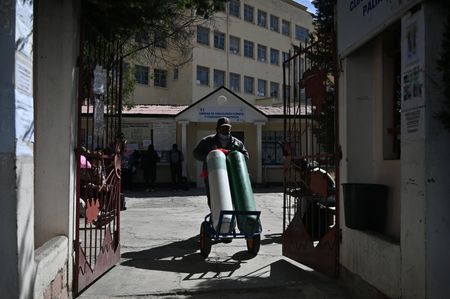
Hospitals have also been pushed to a breaking point. The blockades have made transferring patients between facilities nearly impossible.
Outside La Paz’s main public hospital, cancer patients and their families gathered to chant, “We want to live!”
Erika Alvarez, whose brother is fighting cancer in the mining city of Oruro — roughly 140 miles, or 225 kilometers, south of La Paz — was brought to tears. “They tell me he needs chemo, but in Oruro there is nothing, there are no medicines. With these political problems, with these blockades, I cannot bring my brother here,” she said.
Rosario Calle, president of the Association of Cancer Patients and Families, said she is aware of patients — particularly those in rural areas — who have already died after being unable to receive care in time.
Inside the capital, critical pain medications including morphine and tramadol are in short supply.
“They cry out and they don’t know how to soothe the pain,” Calle said. “What we want are solutions. Enough already.”
Morales has called on Paz to step down and allow new elections to be held. He warned that the standoff could reach a breaking point if his movement is shut out of any future vote — though he said he does not support such an escalation.
“If they don’t want it with votes, it’s with bullets,” he said.
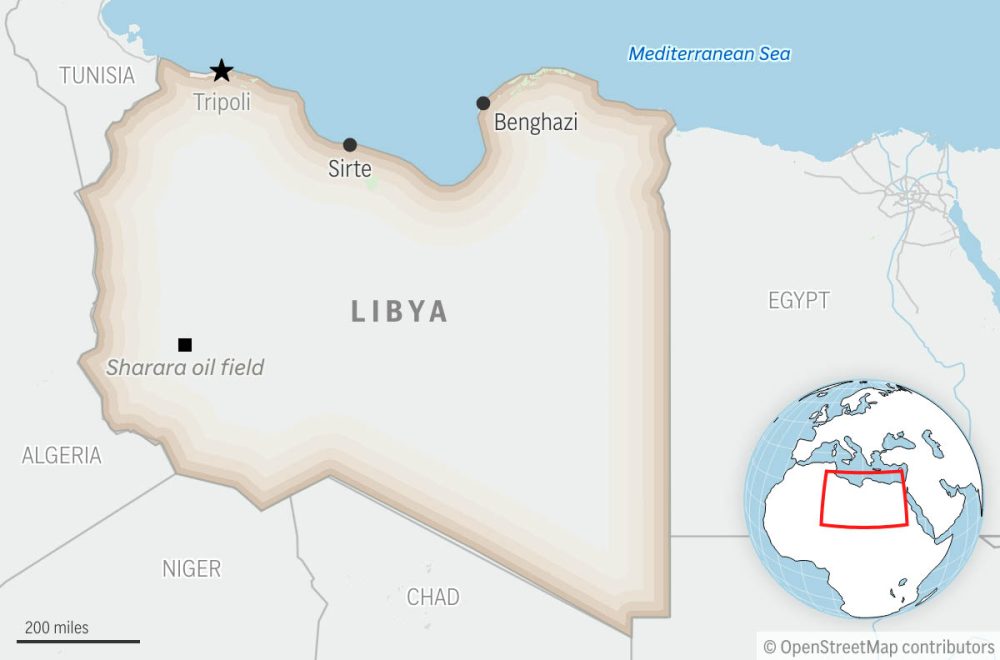
CAIRO — A vessel packed with migrants attempting to reach European shores capsized in the Mediterranean Sea off the coast of Libya last week, killing or leaving missing 51 people, according to a monitoring organization that announced the findings on Friday.
The shipwreck took place on June 12 in waters off the eastern portion of the North African country. Ten migrants managed to survive, according to the Abreen group, which monitors migrant activity in eastern Libya. Eleven bodies have been pulled from the water, while 40 additional people remain unaccounted for.
The Libyan coast guard and the Red Crescent, operating out of the eastern city of Tobruk, reported recovering bodies that began washing ashore over the previous 24 hours. Video shared by the coast guard showed rescue personnel carrying remains in white body bags to shore.
This disaster is the most recent in a string of deadly incidents along this stretch of the Mediterranean. The Libyan coastline serves as one of the primary launching points for migrants from North Africa who are attempting to reach Europe in search of a better life. Smugglers routinely pack these individuals onto small, dangerous watercraft, and thousands have lost their lives making the treacherous crossing.
Between January 1 and May 16 of this year, more than 800 migrants were reported dead or missing along the central Mediterranean route, according to the International Organization for Migration. The previous year saw that number exceed 1,300 along the same path.
Libya has become the primary transit hub for people fleeing conflict and poverty across Africa and the Middle East in recent years. The country descended into widespread instability following a NATO-backed revolt that overthrew and killed its longtime ruler, Moammar Gadhafi, in 2011.
Human traffickers have exploited that instability, moving migrants across Libya’s extensive borders — borders it shares with six different nations. These migrants are typically forced onto dangerously overcrowded boats, including inflatable rubber vessels, to make the sea crossing.
Those who are caught at sea and returned to Libya face detention in government-run facilities where abuse is rampant. According to investigators commissioned by the United Nations, conditions in these centers include forced labor, beatings, sexual violence, and torture — treatment that rises to the level of crimes against humanity.
Chile’s foreign ministry announced Friday that it is working alongside prosecutors investigating how Haitian children and teenagers entered the country through a family reunification program — after officials discovered that a number of those minors could not be found at the addresses listed for them.
The situation has attracted significant attention in Chile due to a dramatic increase in arrivals from Haiti in the early months of 2025, many of which took place on charter flights. The case has raised broader concerns about how immigration controls were applied within a program designed to bring families back together.
Earlier this week, Chile’s prosecutor’s office confirmed it had launched a formal investigation into the large-scale entry of Haitian minors that occurred last year.
The foreign ministry stated it has been turning over all documents requested by investigators. Foreign Minister Francisco Perez also dispatched a team to Haiti to examine how Chile’s consulate there was handling the reunification process.
According to local media reports, approximately 2,800 Haitians entered Chile under family reunification between January 1 and April 30 of last year. That figure represents the majority of the more than 3,200 Haitian arrivals who came in on temporary residence permits during that same window. Reports indicate that roughly half of those who entered under the family reunification category arrived on charter flights, most of which were linked to small Caribbean airlines.
Haitian migrants have been settling in Chile in growing numbers over the past decade, making Haitians one of the largest immigrant communities in the South American nation. In recent years, Chile has tightened its entry requirements, and President Jose Antonio Kast — who assumed office in March — has pledged to take a firm stance against unauthorized migration.
Ukrainian President Volodymyr Zelenskiy issued a stark warning Friday, giving Belarusian leader Alexander Lukashenko one week to remove equipment stationed in Belarus that Russia has been using to carry out attacks on Ukraine — and threatening Ukrainian action if the deadline is not met.
Zelenskiy stated that signal relay stations are positioned in two Belarusian regions along the Ukrainian border, and that Russian forces have been using them to help guide strikes against Ukrainian civilians. Reuters was unable to independently confirm those claims.
Speaking at a press conference in Kyiv, Zelenskiy challenged Lukashenko’s insistence that Belarus does not want to be part of the conflict. “What’s the point of saying he doesn’t want to be in the war? Let him remove this equipment, let him switch it off. I think a week will be enough for him to do that,” Zelenskiy said.
He then added a pointed warning: “If he doesn’t do it, we’ll do it” — offering no further details on what that would mean.
Over recent months, Zelenskiy has repeatedly cautioned that Russia intends to pull Belarus deeper into the ongoing war. Russian troops used Belarusian soil as a launching point when they first invaded Ukraine back in February 2022.
Last month, Lukashenko brushed aside suggestions that his country would become more deeply entangled in the conflict, though he did say Belarus and Russia would jointly defend themselves if faced with aggression. Earlier this week, in an interview with Al Arabiya television, Lukashenko said Ukraine had nothing to fear from Belarus and called on both sides to make compromises to bring the war to an end.
Meanwhile, Russia accused Ukraine this week of carrying out a fatal drone strike on a bus transporting Belarusian children through Russian territory. Ukraine denied any involvement. One woman accompanying the children was killed, and eight people were injured in the incident — among them six children. Belarus’ Foreign Ministry responded by demanding “complete explanations” from Ukraine.
Belarus has been Russia’s most steadfast ally throughout the war. Russian drones have been documented crossing Belarusian airspace while targeting Ukraine, and Belarus has announced the deployment of Russia’s Oreshnik intermediate-range hypersonic ballistic missile system. The two countries also conducted joint nuclear drills in May.
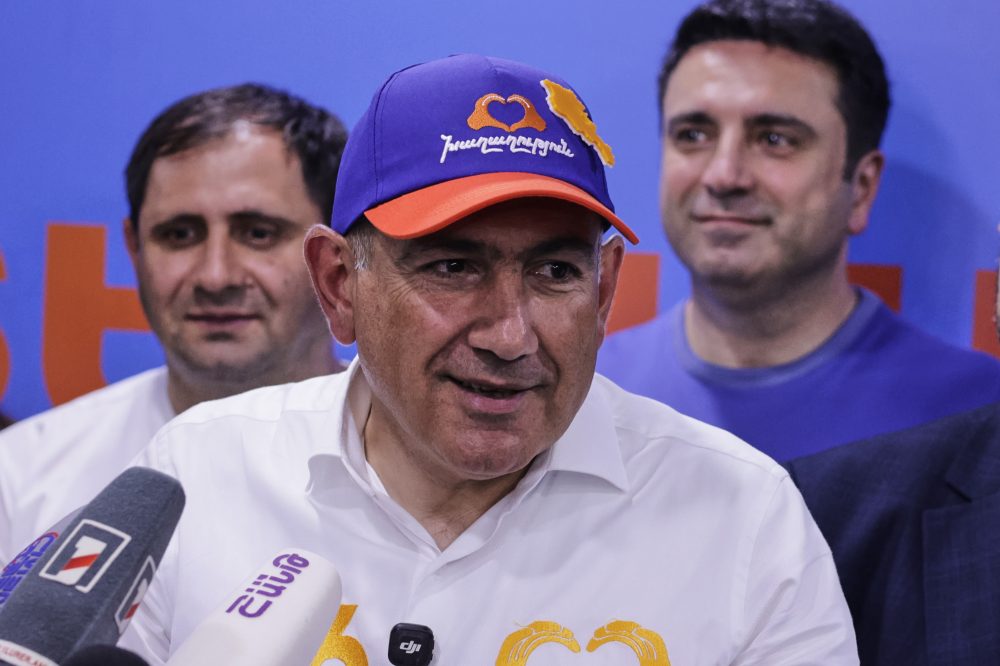
YEREVAN, Armenia — Multiple members of Armenia’s opposition were taken into custody on Friday, as a prominent pro-Russia political party asked the country’s Constitutional Court to nullify Prime Minister Nikol Pashinyan’s recent election victory, claiming the vote was marred by violations and efforts to suppress opposition voices.
The opposition Strong Armenia party filed an appeal with the Constitutional Court seeking either to void the election results entirely or to require a second round of voting. The party also condemned the arrests of opposition figures, calling them an attack on democratic principles. Several additional opposition parties joined the effort, each accusing the ruling party of pressuring government workers to cast ballots in its favor and paying other voters for their support.
Armenian authorities have flatly denied any wrongdoing related to the election and have instead pointed the finger at the opposition, accusing them of being the ones who bribed voters.
The Constitutional Court is expected to decide within two days whether it will take up the case.
According to final tallies released by the Central Election Commission, the June 7 election saw Pashinyan’s Civil Contract party capture 49.7% of the vote — enough to form a new government as it continues efforts to pull Armenia away from Moscow’s orbit and build stronger relationships with Western nations.
International observers offered a mixed assessment of the vote. The Organization for Security and Cooperation in Europe (OSCE) acknowledged that Armenian voters had a “genuine choice” at the ballot box, but also pointed out that the campaign was “highly confrontational” and plagued by allegations of violations that spawned numerous criminal cases against opposition candidates — creating a perception of “selective justice.”
Strong Armenia is headed by Armenian-Russian billionaire Samvel Karapetyan, a businessman who built his wealth in Russia and is currently under house arrest on charges of calling for the government to be overthrown — allegations he has dismissed as politically motivated. Armenian investigators had already issued six arrest warrants targeting Strong Armenia members the day before the election, accusing them of purchasing votes.
On Friday, additional opposition members were arrested on comparable voter bribery charges. Ruslan Barsegyan and Ashot Egiazaryan, both of whom ran for parliament under the Strong Armenia banner, were remanded into custody for two months while an official investigation proceeds. Asatur Kocharyan, affiliated with the opposition Armenia bloc, was placed under house arrest.
Former lawmaker and government critic Ruben Akopyan was also arrested Friday, and another opposition politician, David Kazinyan, had been jailed the day before on Thursday.
Strong Armenia characterized the wave of arrests as an “attempt to completely destroy democracy in the country.” In a formal statement, the party declared: “Investigative bodies, the prosecutor’s office, and the courts have been turned by this government into instruments for punishing and suppressing the opposition. We will not tolerate this and will fight to the end with the full force of the law and with determination.”
Analyst and former lawmaker Mikayel Zolyan offered a different interpretation, suggesting the arrests reflect the government’s determination to prevent the opposition from stirring up instability. “Pashinyan is showing pro-Russian forces that if they think they can manage to incite unrest and thereby achieve certain goals … then they shouldn’t even try,” Zolyan said.
Russia, which maintains a military base on Armenian soil, has cautioned that Yerevan’s pivot toward the West could bring serious political and economic fallout. President Vladimir Putin has drawn comparisons between Armenia’s direction and Ukraine’s path, in what many viewed as thinly veiled threats, suggesting that Russia’s conflict with Ukraine stemmed from Ukraine’s pursuit of an association agreement with the European Union.
In the weeks leading up to the election, Moscow imposed a series of trade restrictions on Armenia — including import bans on flowers, brandy, wine, and various fruits. OSCE election monitors described these measures as “direct pressure” on the Armenian vote, while Russia maintained the bans were tied to agricultural import rule violations.
Allies of a Belarusian opposition figure who went missing last year are calling on the U.S., Poland, the EU, and the U.N. to open investigations into his case, following a newly published report pointing to Russian involvement in his disappearance.
Anatol Kotau, 46, was last seen in August after traveling from his home in Poland to Turkey. Shortly after arriving, he went silent — no longer responding to messages from his wife.
A joint investigative report released this week by Deutsche Welle, the Belarusian Investigative Center, and the Organized Crime and Corruption Reporting Project found that Kotau boarded a yacht departing from the Turkish city of Trabzon. Also on board were two Russian men, a woman from Azerbaijan, and four crew members.
According to the report, the yacht was stopped in the Black Sea by the Russian coast guard, and Kotau was taken off the vessel. What led him to travel to Turkey — and why he would have gotten on a boat heading toward Russia, given his status as a Belarusian dissident — remains unknown.
Kotau has already been convicted in absentia in Belarus, a close Russian ally, and sentenced to 12 years in prison on charges of extremist activity and conspiracy to seize power — charges he denied.
Reuters has reached out to the Russian embassy in London for a response to the allegations of Moscow’s involvement.
Dmitry Bolkunets, an exiled activist who heads a group known as the Belarus Democratic Forum, sent a letter to U.S. National Security Adviser Andy Baker requesting help in locating Kotau. Reuters obtained a copy of the letter.
“The facts presented indicate that this was not a random event, but the result of a meticulously planned special operation,” Bolkunets wrote, characterizing it as a kidnapping carried out by Russia’s FSB security service.
Bolkunets also reached out to John Coale, an envoy for President Donald Trump who has been involved in negotiations with Belarusian President Alexander Lukashenko over the release of political prisoners. Coale replied that he would bring up the matter with authorities in Minsk.
Additional appeals were directed to Poland’s prime minister and president, EU foreign policy chief Kaja Kallas, and the U.N. Working Group on Enforced or Involuntary Disappearances.
Kotau’s wife, Anastasia, told Reuters she is hopeful the appeals will lead to a serious investigation by both the U.S. and Poland, where her husband had been living under refugee status.
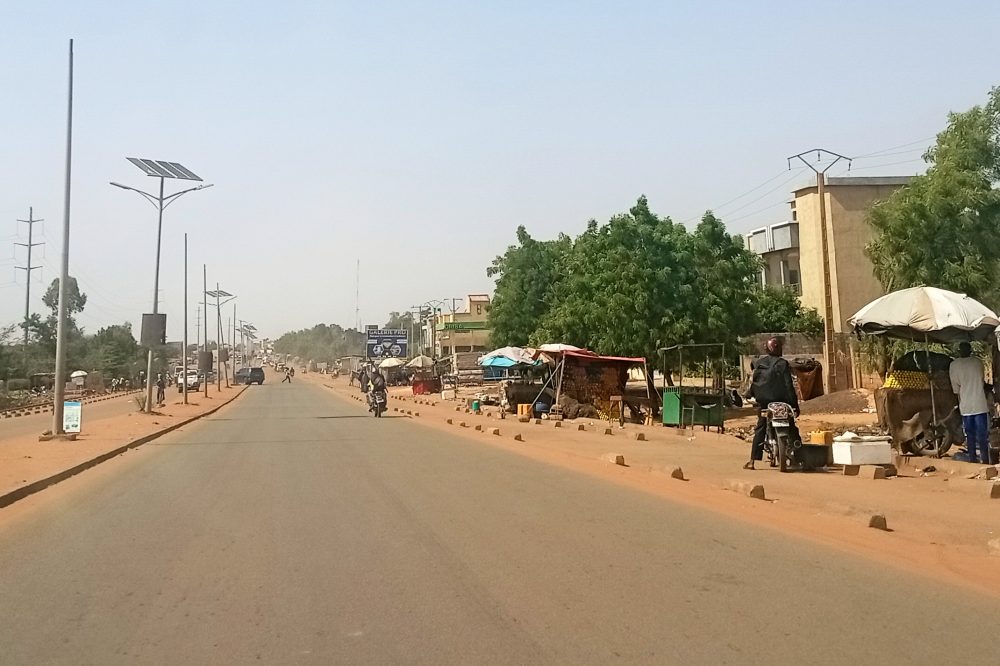
DAKAR, Senegal — Gunfire and explosions tore through Niger’s primary international airport recently, serving as the latest indicator that armed extremist groups are shifting their focus toward cities and urban areas across Africa’s Sahel region as they battle for territory and influence, according to analysts.
The jihadi organization JNIM, which has ties to al-Qaeda and is considered the most powerful militant group operating in the Sahel — the vast stretch of land just south of the Sahara desert — has claimed responsibility for Thursday’s assault on Diori Hamani International Airport in Niamey. The attack resulted in the deaths of 11 soldiers and two civilians.
This was actually the second time this year that the airport has come under attack. The facility is considered a critical strategic location, functioning as the command center for Niger’s ruling military government and housing the majority of the country’s air force, drones, and aircraft. It also serves as headquarters for a regional military alliance uniting forces from Niger, Mali, and Burkina Faso.
Back in January, the Islamic State group’s Sahel Province, known as ISSP, claimed credit for a similar strike in which gunmen on motorcycles stormed the airport, targeting high-value drone equipment. These attacks on Niger, unprecedented at this scale in recent memory, come alongside a major raid and an ongoing fuel blockade carried out by al-Qaeda in and around Mali’s capital city of Bamako.
Both al-Qaeda-affiliated fighters and those backed by the Islamic State group — rival factions with competing visions for the region — began ramping up their operations last year as they each seek to expand their foothold in what has become one of the world’s most active terrorism hotspots.
Ibrahim Yahaya Ibrahim, who serves as deputy project director for the International Crisis Group think tank, noted that the recent wave of attacks signals a broader strategic shift. Militant groups are no longer limiting themselves to isolated, under-policed rural communities — they are now increasingly setting their sights on urban areas.
The three neighboring countries of Niger, Burkina Faso, and Mali sit at the center of this militant activity. All three are currently governed by military juntas that took power through coups, driven in large part by frustration with Western partners and elected governments.
All three nations have since pivoted away from Western allies and toward Russia as their primary security partner. French and American military forces have pulled out of the region, while Russian military personnel have taken their place.
Ibrahim noted that while Thursday’s attack was less significant in scale than the January strike, it still carries weight for JNIM’s broader strategy. “JNIM in Niger is trying to mark its territory. This is a message to the government but also to IS,” he said, referring to the Islamic State group.
Niger’s geographic position makes it especially valuable to these competing factions. The country shares borders with Mali and Burkina Faso to the west — where JNIM holds its strongest presence — and with Nigeria and Chad to the south and east, where groups like Boko Haram and the Islamic State West Africa Province, or ISWAP, are active. To the north, Niger extends deep into the Sahara toward Libya and Algeria.
Analysts are raising alarms that ISSP and ISWAP are working to use the border between Niger and Nigeria as a bridge to link the two organizations, potentially creating a connected extremist corridor across a massive stretch of African territory — something JNIM is actively working to prevent.
Wassim Nasr, a senior research fellow at the Soufan Center, described the situation bluntly. “Niger is a territory of competition between them,” he said. “If JNIM loses the upper hand in Niger against the Islamic State, it will jeopardize its upper hand in Mali and Burkina Faso. … You have an open space like the Wild West, where each is looking to mark its territory.”
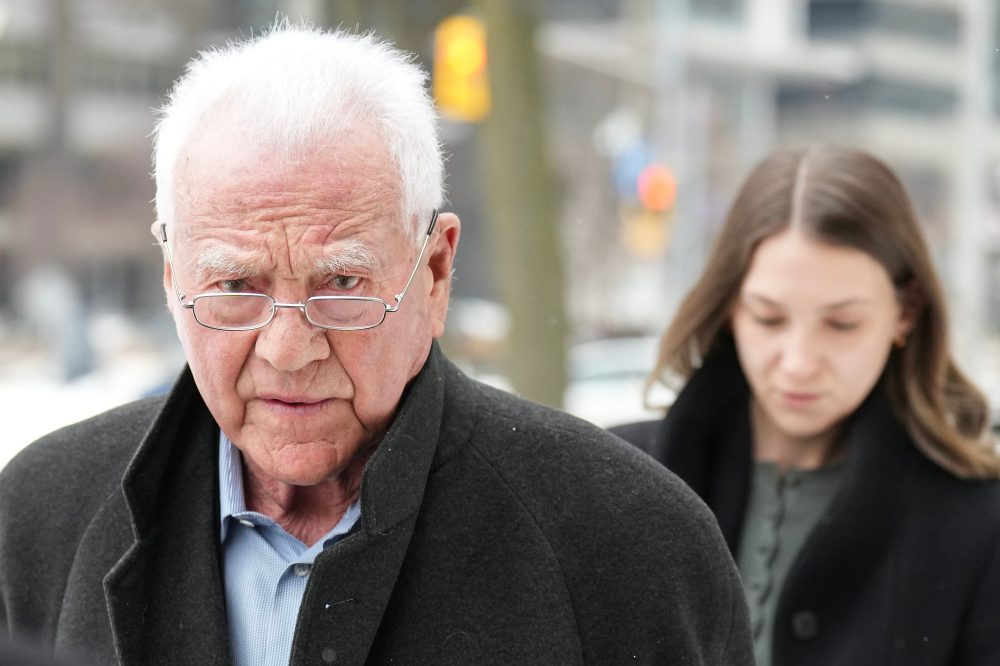
A Toronto court delivered a guilty verdict Friday against Frank Stronach, the 93-year-old Austrian-Canadian billionaire who founded one of the world’s largest auto parts companies, convicting him of sexual assault and indecent assault against two women in incidents that took place decades ago.
Stronach had originally faced 12 charges stemming from allegations made by seven different complainants, and he entered a not guilty plea to all of them.
Ontario Superior Court Justice Anne Molloy handed down the guilty findings on two of those charges, each related to a separate complainant.
Stronach built his fortune by launching auto parts giant Magna out of his garage in 1957, eventually becoming one of Canada’s wealthiest individuals. He later founded The Stronach Group, a business focused on horse racing.
He stepped down as Magna’s chairman in 2011, and the following year launched a political party in his home country of Austria.
The trial got underway in February. By the time closing arguments concluded in April, prosecutors had dropped one charge entirely and agreed Stronach should be acquitted on four others. Friday’s verdict found him guilty on two of the charges that remained.
DUBAI, United Arab Emirates — Iranian state media are celebrating what they call a “magnificent defeat” of the United States, and Tehran is wasting no time capitalizing on the moment — rushing to get oil flowing again under this week’s interim peace agreement and working to bring an end to Israeli military action in Lebanon.
But the Islamic Republic has taken serious hits of its own and faces a difficult road ahead. The country’s economy has been devastated by the conflict, mass protests shook the nation in January, and its supreme leader has not been seen publicly. Iran is now heading into nuclear negotiations with the U.S. after having been struck during two previous rounds of talks.
The agreement offers badly needed relief from international sanctions, though much of that relief depends on Iran scaling back its nuclear program — at the very least by diluting its stockpile of highly enriched uranium. That requirement has drawn sharp criticism from hard-line factions within Iran. Meanwhile, the U.S. is insisting Iran stop uranium enrichment altogether, a demand Tehran has rejected for decades.
Iran’s leadership is putting on a confident front, having held onto power through weeks of intense American and Israeli airstrikes. Officials also believe U.S. President Donald Trump is unlikely to restart the war, given Iran’s demonstrated capability to shut down the Strait of Hormuz and send shockwaves through the global economy.
“It’s too much to say that Iran has emerged a victor, but it could have been much worse,” said Farzan Sabet, an Iran expert at the Geneva Graduate Institute think tank. “I think that the real victory for Iran was … survival.”
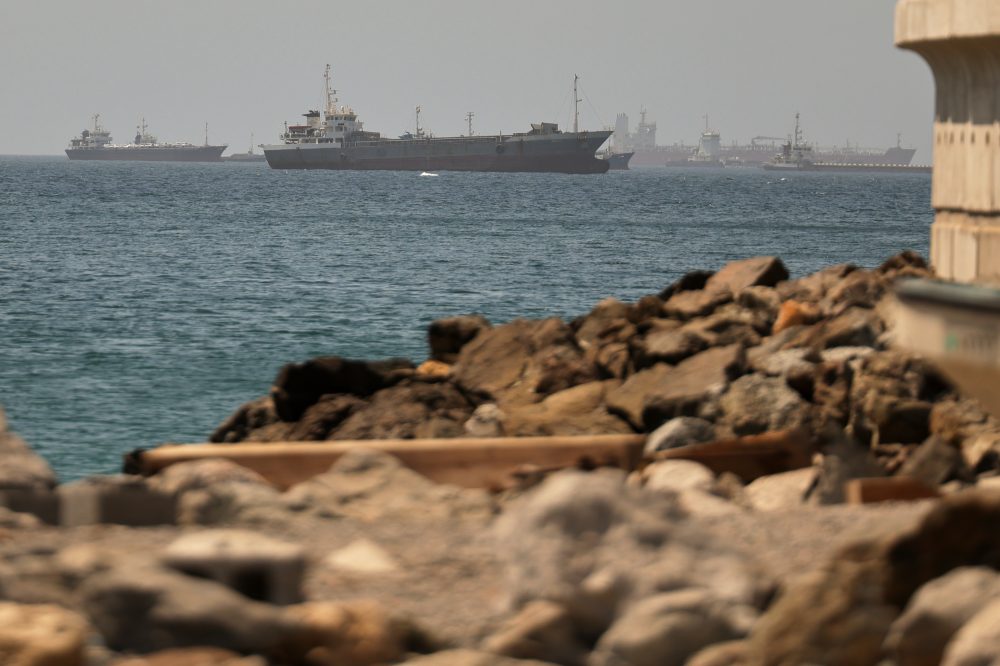
As part of the interim agreement, the U.S. has agreed to issue waivers permitting Iranian crude oil exports. According to Lloyd’s List Intelligence, at least three state-owned Iranian oil tankers have already departed as the U.S. naval blockade was lifted.
Tracking firm TankerTrackers.com reported Friday that Iran has shipped nearly 18 million barrels of oil over the past five days, worth an estimated $1.44 billion.
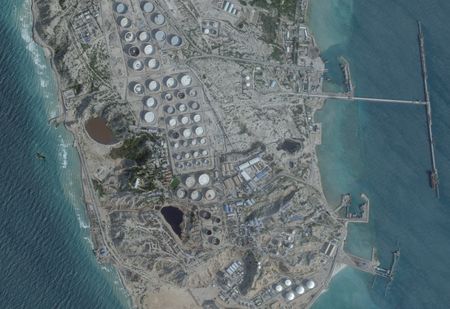
Dozens of additional tankers carrying oil could soon leave from Kharg Island, Iran’s primary export hub on the Persian Gulf, which would put further downward pressure on global oil prices.
Benchmark Brent crude, which was trading above $110 per barrel last month, has dropped to around $80 since the agreement was reached. The average price of a gallon of gasoline in the United States has also fallen below $4 — a closely watched figure as midterm congressional elections approach.
Before the deal, international sanctions had forced Iran to move its oil through a so-called “shadow fleet,” selling primarily to China at discounted prices. The new arrangement allows Iran to pursue more buyers and command better rates.
That revenue will be critically important as Iran confronts the economic wreckage left by the war.
Since authorities lifted a months-long internet blackout, many Iranians have been sharing photos online of their bare refrigerators.
Basic food items like meat have become unaffordable for many families. The Iranian rial, which exchanged at 32,000 to the dollar at the time of the 2015 nuclear agreement with world powers, has now collapsed to more than 1.5 million to the dollar.
“The conflict is estimated to have cost at least one million Iranian jobs, with 20% of workforce losses tied to the state-imposed internet shutdown,” said Holly Dagres, a senior fellow at the Washington Institute for Near East Policy.
“Ordinary Iranians, already struggling under systemic mismanagement and corruption as well as U.S. sanctions, have felt those burdens compounded by hyperinflation that has rendered the Iranian rial effectively worthless,” Dagres added.
The collapse of the rial triggered the nationwide demonstrations that spread across Iran in January, threatening the rule of then-Supreme Leader Ayatollah Ali Khamenei. Iran’s security forces responded with the deadliest crackdown in the country’s history, killing thousands.
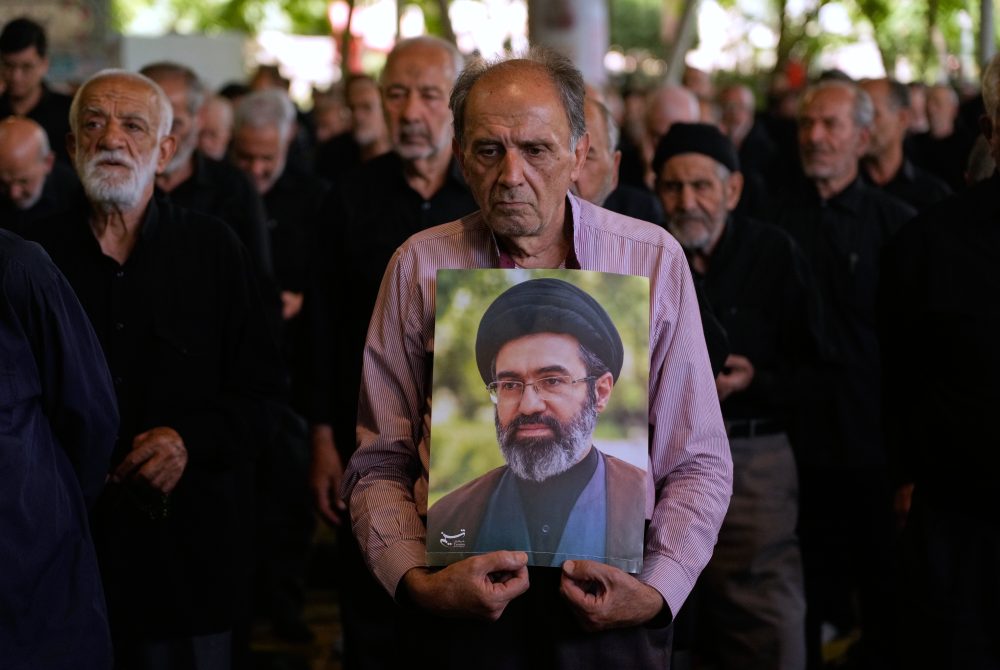
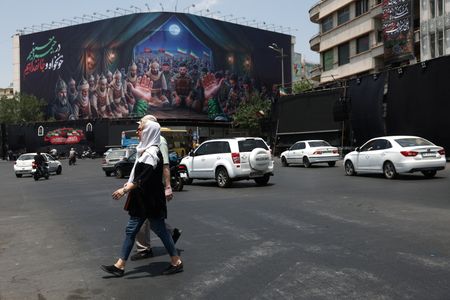
The 86-year-old Khamenei and other senior leaders were killed in Israel’s opening strikes on February 28. State funeral ceremonies are scheduled for July 4 through 9, timed to coincide with the six-month mark of the protest crackdown. The government has organized continuous rallies since the war began as a show of strength.
More moderate voices inside Iran are urging the country to pursue the economic opportunities that negotiations could bring. In addition to a full lifting of sanctions, the agreement promises a $300 billion investment fund for Iran if a final deal with the U.S. is reached — though the source of that funding has not been made clear.
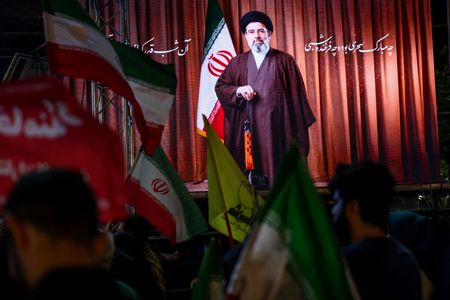
The key question is how far Iran’s new Supreme Leader Ayatollah Mojtaba Khamenei — the son of the late leader — and establishment hard-liners are willing to compromise. In a statement carried by state media, he expressed support for the interim deal, saying the talks “will not mean accepting the enemy’s opinion,” while also acknowledging he held a “different viewpoint” without providing specifics.
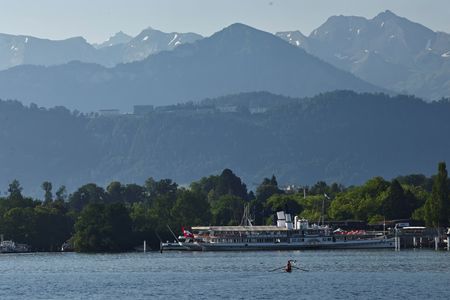
The ongoing conflict in Lebanon has already put the broader agreement in jeopardy. Negotiations that were set to take place Friday in Switzerland were called off as fighting between Israel and Iran-backed Hezbollah militants escalated — though the two sides did agree to halt hostilities by Friday.
Israel has stated it will maintain its military presence across large portions of southern Lebanon and continue operations against Hezbollah until the group no longer presents a threat. Hezbollah has refused to stop its attacks unless Israel withdraws its forces.
The interim U.S.-Iran deal — which neither Israel nor Hezbollah is party to — calls for an end to military operations on all sides and for Lebanon’s sovereignty and territorial integrity to be respected.
“The end of the war in Lebanon is an inseparable part of (the) complete end of the war,” Iranian Foreign Minister Abbas Araghchi said Tuesday. “And the end of the war also includes the end of the occupation.”
That stance leaves American negotiators with little room to maneuver, and Vice President JD Vance’s planned trip to Switzerland was subsequently postponed.
Looking at the broader negotiations, Iran appears to have succeeded in keeping two long-standing U.S. and Israeli demands off the table: discussions about its missile program and its backing of Hezbollah and other militant organizations.
On the nuclear front, Iran agreed to “downblend” its highly enriched uranium stockpile, addressing one of Washington’s primary concerns.
However, Raja News, a media outlet aligned with ultra-conservative hard-line factions, slammed that concession, claiming Iran had “given up its most important levers” — reflecting the intense internal pressure not to yield on other nuclear issues, particularly the broader enrichment program.
“I’m not very optimistic about the kind of second round of discussions that are going to focus on the nuclear issue,” Sabet said. “It’s not actually clear to me yet that those will go anywhere, at least this year.”
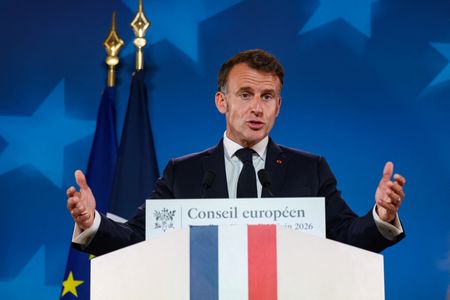
Speaking at the conclusion of a two-day European Union summit in Brussels, French President Emmanuel Macron declared Friday that France will not support the establishment of so-called “return hubs” — offshore detention facilities for migrants — in third countries.
Macron expressed doubt about whether such facilities have ever proven effective. “We are in favour of a more effective return policy, but … I have never seen a return centre in a third country that actually works,” he told reporters.
The French leader also raised concerns about whether these hubs are consistent with the values Europe was founded on. “I’m not sure that’s what our Europe is about. I’m not sure that these are the fundamental principles on which our Europe was built, and I don’t believe it’s effective either,” Macron said.
His comments came just days after the European Parliament approved a sweeping migration reform package aimed at speeding up deportations and permitting offshore detention centers. Critics of the measure argue it takes a harsh approach and undermines protections for those seeking asylum.
Spanish Prime Minister Pedro Sanchez also voiced opposition to the return hubs during a press briefing Friday following the summit. However, he acknowledged that Spain’s position puts it in the minority among European nations. Sanchez argued the hubs would amount to a financial drain, saying they are “simply going to waste economic resources, and Europe doesn’t have many of those.”
What was once seen as one of the closest relationships between a European leader and U.S. President Donald Trump has taken a dramatic turn, with Italian Prime Minister Giorgia Meloni publicly calling out the American president over remarks she says were simply made up.
When Trump was inaugurated for his second term in 2025, Meloni stood out as the only European leader invited to attend the ceremony — a sign, many believed, of a special bond between Washington and Rome. A year and a half later, that relationship appears to have collapsed, leaving Meloni in a difficult position on the world stage, according to political analysts.
The friction between the two right-leaning leaders began building with the outbreak of the U.S.-Israeli war on Iran, a conflict that hurt Europe’s economy and stirred strong anti-war feelings among the Italian public.
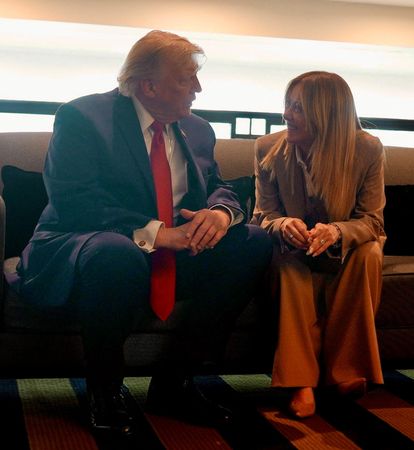
Footage from this week’s G7 summit in France seemed to suggest the pair had patched things up. But any hope of reconciliation was dashed on Friday when Trump told an Italian television channel that Meloni had “begged” him to take a photograph with her.
Meloni responded sharply, saying Trump had invented the story. She went even further, accusing him of showing more respect toward the West’s adversaries than toward its longtime allies.
“There is one thing he should remember: neither I nor Italy ever beg,” she said.
Her forceful response on social media drew praise from across Italy’s political spectrum, with most parties viewing Trump’s comments as a direct insult to the country. However, analysts cautioned that Meloni would now face pressure to take a firmer and more consistent stance toward Washington, rather than continuing to seek goodwill from an unpredictable president who has repeatedly broken with traditional diplomatic norms.
“Meloni cannot keep changing her approach depending on Trump’s unpleasant remarks. She must decide whether to adopt a less accommodating stance or, like other countries such as Canada, a firmer approach,” said Piero Ignazi, a political analyst at the University of Bologna.
Opposition figures wasted no time pointing out that the extraordinary public dispute exposed the failure of Meloni’s original plan to win Trump over through flattery and friendship.
“Have you finally understood that allying with those people means going against Italy? Enough with MAGA caps and enough with building bridges with Trump,” said former Prime Minister Matteo Renzi, who leads a centrist opposition group.
Trump’s 2024 election victory had initially seemed to open the door for Meloni to cultivate a unique relationship with a political ally who shared her ideological outlook, positioning herself as a go-between for Washington and a largely skeptical Europe. Trump had heaped praise on her at various points in 2024 and 2025, describing her at different times as “a fantastic leader and person,” “a beautiful young woman,” “a very successful politician,” and “an inspiration to all.”
When Trump rolled out sweeping tariffs against the European Union, Meloni stood apart from other European leaders by keeping her tone measured, arguing that preserving Western unity against shared threats was more important. She also refrained from publicly criticizing Trump even as fellow European leaders voiced frustration over his handling of the Ukraine-Russia war and his reluctance to press Israel on the Gaza conflict.
But the Iran war backed Meloni into a corner. Things deteriorated sharply in April when Trump lashed out at Pope Leo for criticizing the conflict. Meloni came to the pope’s defense, which prompted Trump to accuse her of lacking courage. She also refused U.S. military planes carrying weapons for the Iran war access to an airbase in Sicily, saying the Americans had not followed the required procedures.
“This was the original sin, in Trump’s eyes,” said Francesco Galietti of political risk consultancy Policy Sonar.
In the near term, Galietti noted that standing up to Trump — who polls very poorly in Italy — could give Meloni a boost at home. But he warned that the falling out threatens a key part of her political identity heading into elections scheduled for next year.
“This is like a horrible slap in the face,” Galietti said. “It completely jeopardizes her strategy that when we hold elections, the Italians will eventually choose her because she is the safest pair of hands.”
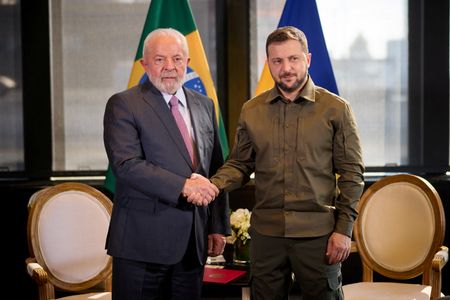
Ukrainian President Volodymyr Zelenskiy has agreed to work with Brazilian President Luiz Inacio Lula da Silva on a new push for peace in the ongoing war with Russia, according to a Ukrainian presidential adviser who spoke to reporters on Friday.
The two leaders crossed paths on the sidelines of the Group of Seven summit held at the French resort of Evian-les-Bains on Wednesday. At the gathering, Zelenskiy called on allied nations to ramp up pressure on Russia to bring the more than four-year-old conflict to an end.
During their meeting, the two presidents explored what steps might breathe new life into diplomatic efforts. Lula put forward several ideas, including reaching out to the permanent members of the United Nations Security Council. Presidential communications adviser Dmytro Lytvyn shared details of the conversation with the press.
“They agreed that, in particular, based on such ideas and contacts, they would try to achieve something and later they would discuss it based on the results,” Lytvyn said.
Beyond the United States, France, and Britain — nations with which Ukraine already maintains close diplomatic ties — the permanent Security Council members also include Russia and China.
An earlier U.S.-backed mediation effort fell apart earlier this year after Russia demanded additional territorial concessions from Ukraine, a condition Kyiv has firmly rejected.
Zelenskiy has also called on U.S. President Donald Trump to re-engage in peace mediation and arrange a direct meeting between him and Russian leader Vladimir Putin — something Putin has said he is not willing to do at this time.
Speaking after the G7 meeting in Brazil, Lula noted that Zelenskiy had previously shown little interest in his diplomatic overtures, but that his stance had now changed. Lula told reporters at a news conference that he had already been in contact with all five permanent Security Council leaders and planned to reach out to them again.
Ukraine has been stepping up its diplomatic activity in recent weeks as the U.S.-led peace process stalled, partly due to the conflict involving Iran.
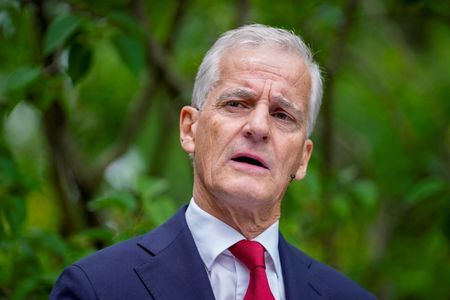
OSLO — Norway is cracking down on artificial intelligence in the classroom, announcing a near-total prohibition on the use of generative AI tools for young students while also placing tight limits on how older children can use the technology.
Prime Minister Jonas Gahr Stoere made the announcement at a press conference Friday, saying that relying on AI puts younger children at risk of bypassing critical stages of their education.
“The most important thing in school is that our children learn to read, write and do mathematics,” Stoere said. He confirmed the new standards will go into effect when the school year begins in late August.
Under the new guidelines, students in first through seventh grade — ranging from ages 6 to 13 — should generally not be using AI at all. Teenagers in lower secondary school, between the ages of 14 and 16, may use AI tools carefully and only under the direct supervision of a teacher.
For students in upper secondary education, ages 17 to 19, the government says learning to use AI appropriately is encouraged so they are ready for higher education and the workforce.
The announcement comes as Norway has been grappling with a widespread drop in student test scores. In 2024, the government already banned smartphones from schools and restored greater authority to teachers to maintain classroom discipline.
Norway first began bringing computers into classrooms during the 1990s and later embraced tablets following the launch of the iPad in 2010, gradually moving away from traditional books and handwriting instruction.
On Friday, the government also said it plans to introduce legislation that would fund a return to printed books in classrooms, signaling a deliberate reversal of the shift toward digital tablets.
In April, Norway also announced plans to prohibit children from using social media until they reach age 16, joining a growing movement led by Australia and other countries aimed at limiting young people’s use of electronic devices.
KOHIMA, India — Thousands of people from the Naga community walked through driving rain on Friday, rallying together to demand justice for survivors of sexual violence following a wave of reported cases across the state.
Demonstrators gathered in Kohima, the capital of Nagaland, where speakers urged their community to stop staying quiet about sexual violence out of fear of social backlash and judgment.
Rosemary Dzuvichu, an adviser for the Naga Mother’s Association and a leading voice for women’s rights in the region, described the barriers survivors face: “Victims and victim families have faced doubts cast on victims, character assassination and often pressures and compromises on the victim to marry the rapist or perpetrator. Many cases have therefore remained unreported.”
Nagaland is a small, mountainous state that has long been regarded as one of the safest places for women anywhere in India. However, a string of sexual assaults over recent months has deeply unsettled that reputation.
Independent researcher Sophy Lasuh, who attended the rally alongside her sister, shared her thoughts on what the moment revealed about her community: “We need to reflect and ask ourselves what it means to be a close knit society when we mourn and grieve together without question, yet abandon survivors of sexual assault to fight alone, carrying a shame that actually belongs to the perpetrator.”
Sexual assault against women remains a widespread problem across India. According to the country’s National Crime Records Bureau, police logged 29,536 rape cases in 2024 — a number experts believe vastly understates the true scale of the problem, given the stigma attached to sexual violence and many victims’ distrust of law enforcement.
Standing in the rain with an umbrella, surrounded by fellow members of her tribe, Sanglishe Yimkhiumg, 45, made her feelings clear: “We do not want Nagaland to be this way.”
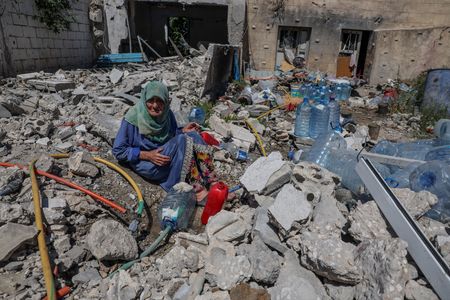
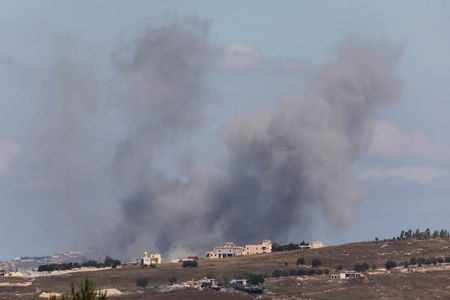
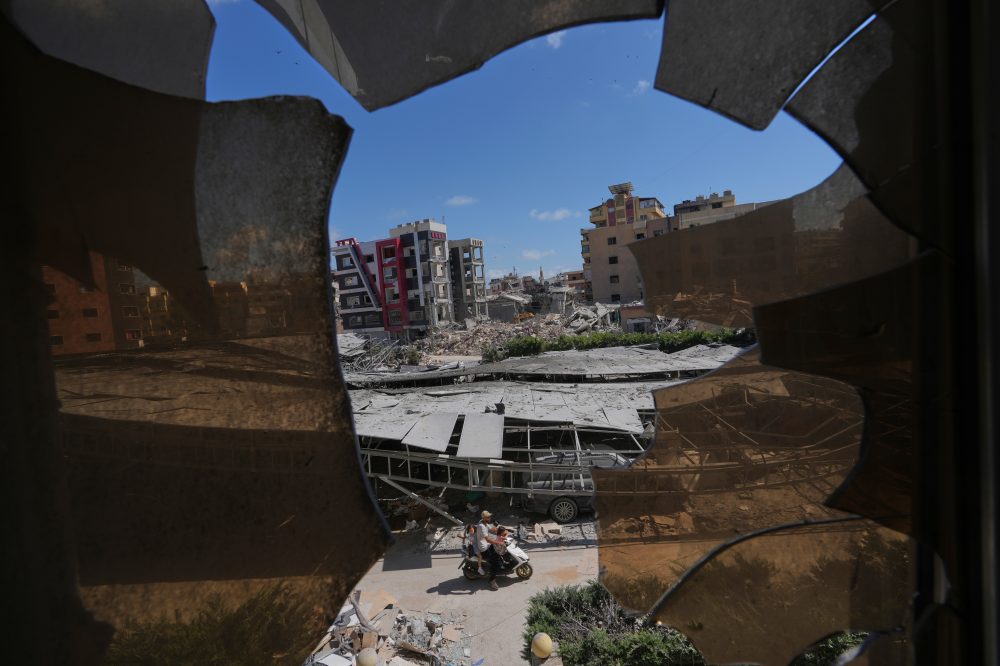
When Abed Hachem’s home was damaged during a 2024 conflict between Israel and Hezbollah, he rebuilt it from scratch. Now, returning to his village of Qlaileh in southern Lebanon, he faces something far worse — almost nothing is left to rebuild.
Where his house once stood, there is only rubble. His garden is gone, replaced by dust and debris. Scattered among the ruins of what used to be his living room are children’s toys and broken furniture.
“Oh dear… Oh God. There was a building here… here… there was a building here,” said the 46-year-old father of three, gesturing toward the skeletal remains of his neighbors’ homes.
Among the few structures still standing in the village is the spire of the local mosque.
The current round of violence between Israel and Hezbollah began on March 2, when Hezbollah launched attacks on Israel in solidarity with its ally Iran, pulling Lebanon into the broader regional conflict. Israel answered with airstrikes and a ground invasion that took control of portions of southern Lebanon.
The toll has been devastating: more than 3,900 people have been killed, and roughly 1.2 million have been forced from their homes as Israeli evacuation orders emptied village after village across southern Lebanon. Israel has maintained that its military campaign targeted Hezbollah’s fighters and military infrastructure.
Now, as residents like Hachem make their way back, they are confronting the painful reality of communities that no longer exist.
“The whole village is destroyed. My house is destroyed. The village is destroyed. Where are we supposed to go now?” he said. “There is nothing left. A lifetime’s work is all gone.”
Among those killed was a neighbor Hachem considered a brother — a man he shared tea with every morning. That neighbor’s son also died in the violence.
“They have nothing to do with political parties, nothing to do with weapons, nothing to do with wars,” Hachem said, his voice filled with frustration. “The man was just trying to support his family, and he and his son died for nothing.”
An interim agreement announced between the United States and Iran brought a brief pause to the fighting earlier this week, giving displaced residents a window to return home. Hostilities flared once more before a new ceasefire took hold Friday afternoon.
For Hachem, the agreement came too late to save what mattered most.
“This agreement they reached, they should have made it from the very beginning,” he said. “Not after people were destroyed.”
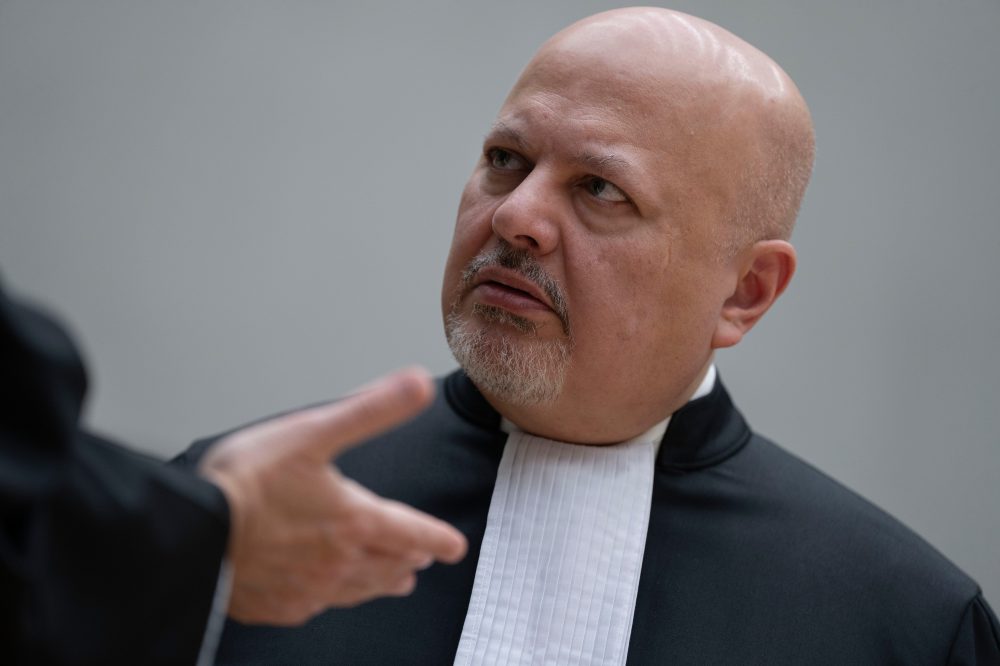
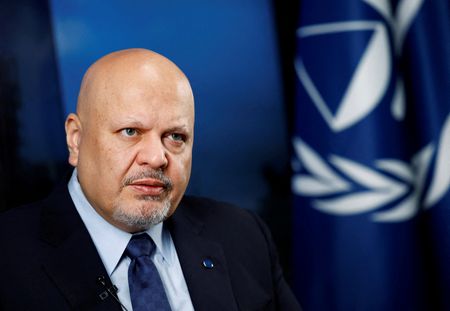
THE HAGUE, Netherlands — The British bar association has placed the International Criminal Court’s chief prosecutor on temporary suspension, as disciplinary proceedings against him move forward.
Karim Khan, a 56-year-old British barrister, was stripped of his ICC duties last week after the court’s oversight body determined he had engaged in “serious misconduct” related to allegations of an inappropriate relationship with a female staff member. Khan has firmly denied all allegations.
The Bar Standards Board, which oversees attorneys who practice law in England and Wales, announced Friday that Khan has been suspended from legal practice. The board said a disciplinary hearing would take place within four weeks but declined to specify what information formed the basis of its decision.
Attorneys representing Khan said the British regulator’s suspension was rooted in the Bureau of the Assembly of States Parties’ finding of serious misconduct. In a statement, his legal team said Khan “unequivocally denies all allegations of impropriety” and pledged to take “all necessary steps to challenge the decision of the Bureau.”
The Bureau of the Assembly of States Parties — the executive committee of the ICC’s oversight body — concluded last week that Khan had committed a “serious misconduct” and a “serious breach of duty,” recommending he be removed from his position. A formal vote on whether to permanently oust him is set for next month.
The misconduct allegations against Khan have been swirling around the court in The Hague for more than two years. He is accused of sexual misconduct involving a female aide.
An investigation by The Associated Press in 2024 revealed, through whistleblower documents, that Khan allegedly noticed the woman working in a different ICC department and had her transferred to his office. In 2025, Khan had temporarily stepped away from his duties while a United Nations investigation was conducted.
A report released in April by the United Nations Office of Internal Oversight Services concluded there was evidence of “nonconsensual sexual contact” between Khan and his aide — occurring “in his office, at his private residence” and during an official mission, according to a copy reviewed by the AP. However, a three-judge panel tasked with legally evaluating those findings determined the investigation was not conclusive enough.
The ultimate decision about Khan’s future now rests with the 125-member Assembly of States Parties, the body that oversees the ICC. A diplomatic official, speaking without authorization to discuss the matter publicly, told the AP that several countries believe the misconduct allegations are politically motivated — an effort to derail the court’s investigation into Israel. “This is what happens when you go after friends of the U.S.,” the official said.
The ICC issued arrest warrants in 2024 for Israeli Prime Minister Benjamin Netanyahu and his former defense minister. In that ruling, judges stated there was reason to believe the two men used “starvation as a method of warfare” by limiting humanitarian aid and deliberately targeted civilians during Israel’s military campaign against Hamas in Gaza — allegations Israeli officials have rejected.
The Trump administration has imposed sanctions on Khan and roughly a dozen other court staff members connected to the Israel warrants and to investigations involving American personnel in Afghanistan. Those sanctions have disrupted a wide range of ongoing investigations at the court.
On Thursday, the ICC announced that a special session will be convened on July 24 in New York to hold the removal vote. Three senior officials familiar with the process, who were not authorized to speak on the record, said New York was chosen for logistical reasons — every member nation already has representation at the United Nations there.
For Khan to be removed, 63 countries would need to vote in favor. It remains uncertain who might take over the role. Two deputy prosecutors have been handling his responsibilities for the past year.
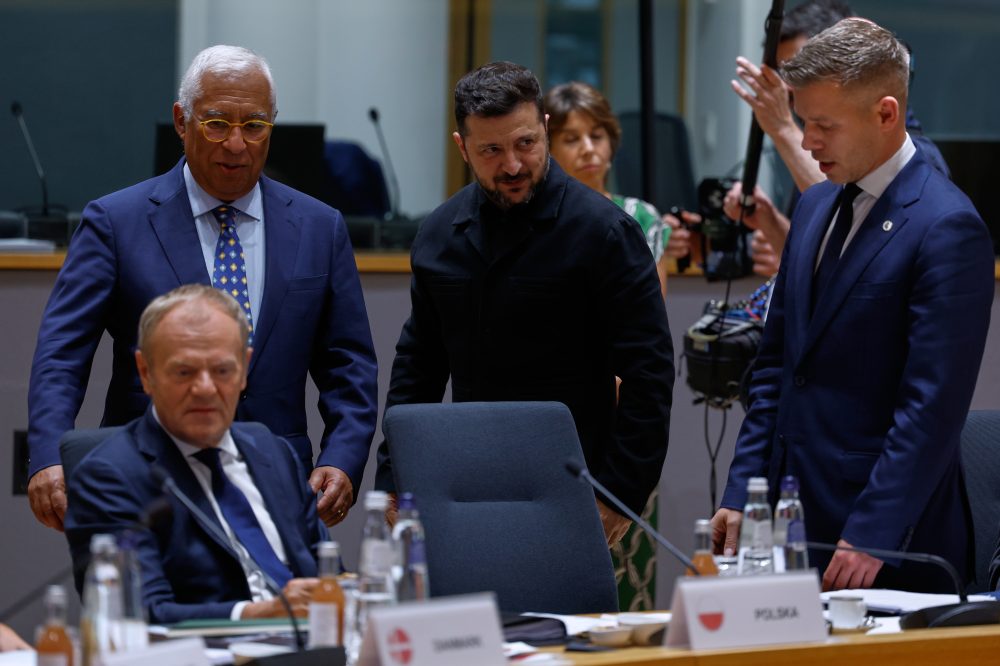
BRUSSELS (AP) — After a two-day summit, European Union leaders have left Brussels without reaching an agreement on whether to establish an informal communication line with the Kremlin, several of them acknowledged on Friday.
European Council President António Costa, who led the summit, had already taken steps through his office to make contact with Russia. He proposed sending a senior official to initiate that connection. Costa was clear that his intention was not to act as a mediator or to create a separate negotiating process running alongside the one currently being led by the United States — a process that itself has shown little sign of progress.
For months, European capitals have been debating whether to appoint someone to facilitate talks with Russia in hopes of jumpstarting a peace process. That idea has largely been dismissed, however, with many EU members skeptical that Russian President Vladimir Putin would come to the table regardless.
Rather than pursuing direct talks, the bloc’s 27 member nations have shifted their focus toward defining what concessions Russia must offer in exchange for any lasting peace agreement.
Czech Prime Minister Andrej Babiš told reporters after the overnight session that the leaders had not resolved their disagreements. “Europe is unable to agree even on whether there will be negotiations or who will lead them,” he said.
Irish Prime Minister Micheál Martin took a more supportive stance toward Costa’s outreach effort. “Opening up a channel is not a mistake in our view, and I trust António Costa,” he said. Martin also stressed that any formal negotiations would need to center on Ukraine and Russia directly, adding, “there are no indications that Russia is coming to the table at all.”
Putin has been working to sideline both Europe and Ukraine from discussions about the conflict’s future, preferring to engage directly with the United States. However, the Kremlin said Friday it would welcome dialogue with European leaders — provided Europe drops what it described as a confrontational posture.
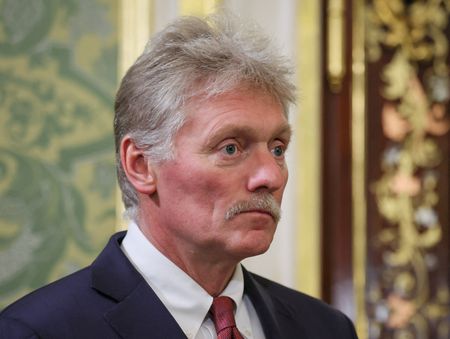
Kremlin spokesperson Dmitry Peskov said, “We are ready for contact, we were not the ones who initiated cutting such contacts, terminating them completely. If forces emerge that realize the need to resume dialogue with Russia, not to lecturing it or, worse, to issue ultimatums … then President Putin and the Russian side would certainly be open to it.”
As leaders departed the summit, Belgian Prime Minister Bart De Wever made light of the situation, joking that Costa himself should be sent to Moscow. “I was just talking about you, António,” De Wever said with a laugh while shaking Costa’s hand. “I was full of praise, saying you are the only one who can represent us and that we will send you to Moscow.”
Not everyone was amused by the idea of Europe playing a neutral role. Margus Tsahkna, the foreign minister of Estonia — a country on the EU’s eastern border that has experienced drone incursions and was once under Soviet occupation — argued that “Europe must not assume the role of a neutral mediator.” Instead, he said, the EU should be strengthening Ukraine’s hand in order to “force the Kremlin into serious negotiations.”
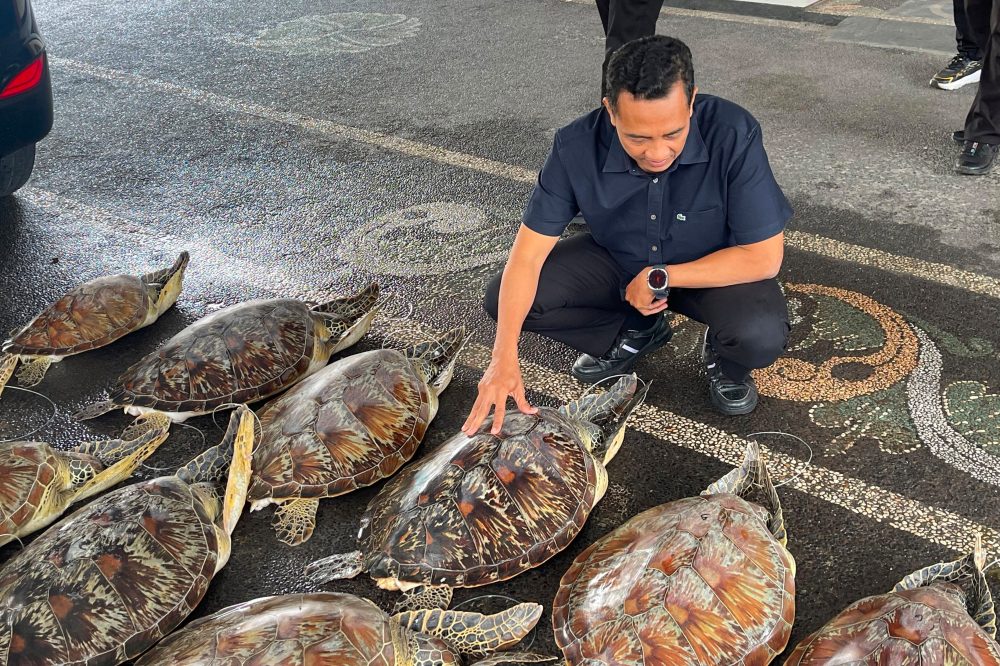
Police on the Indonesian tourist island of Bali have broken up an illegal wildlife operation involving 21 live green sea turtles, authorities announced Friday.
Officers conducted a raid on June 10 along the island’s Pegametan coast after local residents tipped off police about suspected illegal turtle trading in the area. The raid resulted in the seizure of all 21 living animals. Nanang Pri Hasmojo, who heads law enforcement for the Bali police force, confirmed the details of the operation.
A 67-year-old man, identified only by his initials KS, was taken into custody. Investigators believe he was responsible for holding the turtles before they could be distributed and sold.
During early questioning, the suspect reportedly told police that the turtles had been sent to him by an associate from waters near Madura, an island located in East Java province. He allegedly received the animals directly on the beach, where another individual was supposed to pick them up for resale.
“We are continuing to investigate the case and pursuing other suspects involved in the network,” Hasmojo stated. The suspect has been charged under Indonesia’s wildlife protection laws and could face up to 15 years behind bars along with substantial fines if convicted.
Indonesia has legally protected turtle species since 1990 through conservation and fisheries legislation. A regulation issued by the Environment Ministry in 2018 further strengthened protections for the six species of sea turtles found in Indonesian waters, and additional government rules ban their trade entirely.
Sea turtle poaching — carried out by both local communities and organized criminal operations — is considered a major factor in a global conservation crisis. The International Union for Conservation of Nature reports that six of the world’s seven sea turtle species are now classified as threatened.
A 2022 study conducted by researchers at Arizona State University and published in the journal Global Change Biology found that more than 1.1 million sea turtles were killed between 1990 and 2020. The killings were largely driven by demand for meat, alleged aphrodisiacs, and use in traditional and spiritual practices.
According to that same study, the green turtle — scientifically called Chelonia Mydas — made up 56% of all sea turtle killings over that 30-year span.
Bali was historically one of the biggest hubs for green turtle trafficking. That trade was fueled in part by the traditional use of turtle meat in religious offerings tied to Balinese Hinduism, the dominant faith on the island, which is home to roughly 4.5 million people.
JUBA, South Sudan — A Vietnamese national who was deported to South Sudan as part of the Trump administration’s controversial third-country deportation program has been sent back to Vietnam, following more than a year spent in detention.
South Sudan’s Ministry of Foreign Affairs announced the return of 44-year-old Tuan Phan during a press briefing on Friday.
Ministry spokesperson Agok Anyar offered a positive assessment of Phan’s time in their custody, saying: “We are grateful that while in our custody Mr. Phan was very disciplined, joyful, and importantly, he remained healthy.”
Phan was among eight men sent to Africa in May 2025. Their deportation was briefly halted midflight when a federal judge blocked their removal to South Sudan, citing procedural problems. The men were first diverted to a U.S. military base in Djibouti before ultimately arriving in Juba, South Sudan’s capital, aboard a military aircraft in July 2025 — after the Supreme Court cleared the way for their removal.
All eight men had criminal convictions in the United States, though each had already completed their prison sentences before being taken into immigration custody.
Phan is the second of the eight men to be repatriated. Jesus Munõz-Gutierrez was previously flown back to Mexico in September. Dian Peter Domach, the only South Sudanese citizen among the group, was released upon arrival. The remaining men in the group are nationals of Cuba, Myanmar, and Laos.
Court records show Phan came to the United States as a child in 1991. In 2000, shortly after turning 18, he was sentenced to 25 years in prison after fatally shooting someone during a gang-related confrontation. A deportation order was issued against him in 2009, and Immigration and Customs Enforcement took him into custody immediately after he finished his sentence in March 2025.
While detained in Juba, the men were held in a gated residence under armed guard, according to a U.S. Senate report. A congressional aide who visited Juba last year became the first non-South Sudanese official to check on the men, the report noted.
Michael Bochenek, a senior counsel for Human Rights Watch, raised concerns about the lack of outside access to the detainees, saying it meant “there’s been no independent check on people’s treatment and conditions of confinement and raises serious questions about South Sudan’s compliance with human rights norms and essential safeguards against abuses in detention.”
The choice of South Sudan as a receiving country drew particular criticism given the nation’s poor human rights record, widespread corruption, and ongoing political instability. Armed conflict displaced more than half a million people there in 2025, according to the United Nations.
At least seven African nations have agreed to accept deportees who are not their own citizens as part of deals with the U.S. government, which has in turn agreed to pay those governments millions of dollars. The monitoring group Third Country Deportation Watch reports that more than 180 people have been sent to these countries under such arrangements.
While the terms of many of these agreements have been disclosed publicly, the specifics of the South Sudan deal remain unclear. State Department documents that have been made public show South Sudan made requests to the U.S. after agreeing to accept the men — including sanctions relief for a former top official and assistance with the prosecution of a prominent opposition figure. What South Sudan ultimately received in return has not been confirmed.
The Israel Defense Forces confirmed Friday that four of its soldiers were killed during a combat incident in southern Lebanon, including Lt. Col. Dor Ben Shimhon, the commander of Battalion 52. Investigators are working to determine whether the tank carrying the soldiers was struck by a planted explosive device or an explosive drone deployed by Hezbollah terrorists.
IDF Spokesman Brig. Gen. Effie Defrin stated that the battalion commander’s tank was hit at around 12:30 a.m. The cause of the strike has not yet been officially determined, and the investigation remains ongoing. The identities of the three other soldiers who died in the incident have not been cleared for public release.
Ben Shimhon had taken command of Battalion 52 on April 20, 2026, roughly a week after the unit’s previous commander was seriously injured in combat. He had led the battalion through two months of active fighting before his death.
Ben Shimhon was married and the father of two daughters. He came from a family deeply rooted in military service — he and four of his brothers served in the 401st Brigade, while another brother served in the Golani Brigade. His wife is also an active-duty combat officer serving in the Combat Intelligence Collection and Border Defense Corps.
Defrin also disclosed that at approximately 4 a.m., an explosive drone struck a Commando Brigade task force, wounding five soldiers, including an officer.
The IDF spokesman noted that Hezbollah continues to violate the existing agreement, and that Israeli forces are maintaining freedom of action in the Yellow Line area. He added that the military stands ready at any moment to resume intensive operations in both Lebanon and Iran.
According to Defrin, Israeli forces struck 30 targets prior to the battalion commander’s death, and an additional 70 targets were hit by air and ground forces in the aftermath.
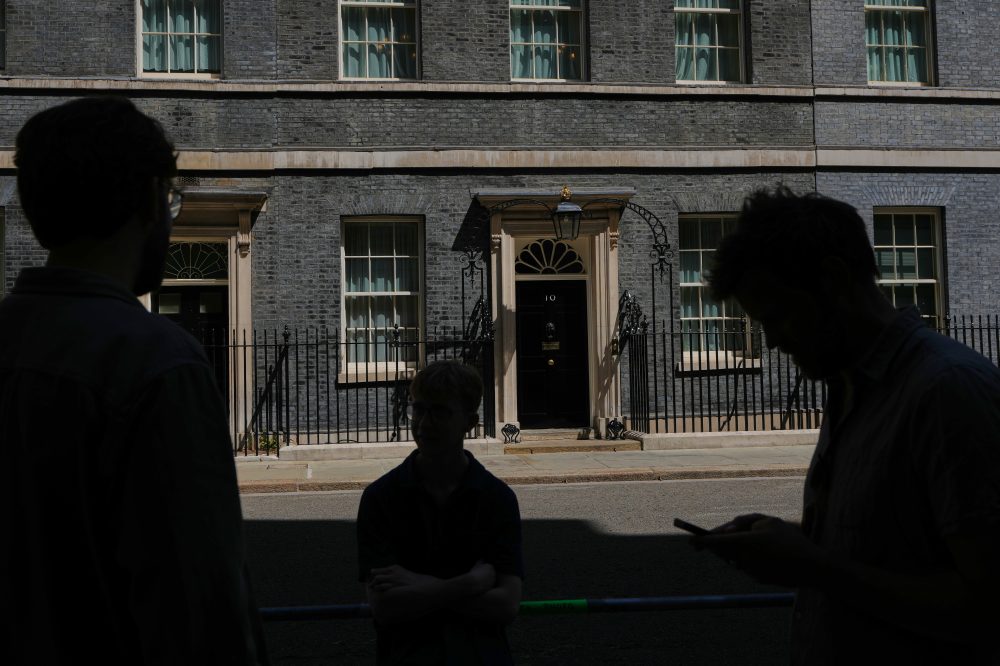
A court in the United Kingdom sentenced two men to prison on Friday after they were found guilty of carrying out a coordinated arson campaign targeting property belonging to British Prime Minister Keir Starmer.
Roman Lavrynovych, a 22-year-old Ukrainian national, received a seven-year prison sentence, while Stanislav Carpiuc, a 27-year-old Romanian citizen, was sentenced to two years behind bars. Both were convicted of conspiracy to damage property through fire.
According to prosecutors, the two men targeted a vehicle and two separate properties connected to Starmer across three consecutive nights in May 2025. They allegedly carried out the attacks under the direction of a Russian-speaking individual who used the alias “El Money.” That person communicated with Lavrynovych through the messaging platform Telegram. The true identity of “El Money” was never uncovered, and no charges were filed against them.
The Italian government pushed back hard on Friday against U.S. President Donald Trump after he claimed that Premier Giorgia Meloni had “begged” him for a photo opportunity during the recently concluded G7 summit — a rebuke that signaled Italy’s patience with Trump’s bragging had run out.
Italian Foreign Minister Antonio Tajani scrapped a scheduled visit to the United States this weekend in response, describing Trump’s remarks as “serious and offensive” to both Meloni personally and to Italy as a nation.
Meloni herself took to video to fire back, calling Trump’s account “completely fabricated” and closing with a pointed declaration: “Italy and I do not beg.”
Trump made the comments during an interview that aired Friday morning on the Italian La7 television network. A La7 correspondent had originally asked Trump about the situation in Ukraine, but Trump brought up Meloni and the discussion shifted to their encounter — captured on video — at the G7 gathering in Evian-les-Bains, France. The two leaders were seen speaking together at various moments during the summit, including a one-on-one conversation on a small sofa.
According to La7, Trump said Meloni had pleaded with him for a photo, adding that he felt sorry for her and went along with it even though he wasn’t required to. The network has posted a dubbed version of the exchange online, as the original English audio was not made available.
In her video response, Meloni said she felt compelled to speak up because “certain things deserve an immediate response.”
“Donald Trump’s statements are completely fabricated. I am frankly stunned,” she said. “I don’t know why the president of the United States behaves this way toward his own allies. After all, this isn’t the first time this has happened.”
That last line appeared to be a reference to an April interview Trump gave to Italian newspaper Corriere della Sera, in which he criticized Meloni for refusing to support the U.S.-Israel war against Iran. Meloni had stayed silent at the time, but on Friday she made clear she was done holding back.
“I can only say that it’s a shame he doesn’t show the same resolve toward the enemies of the West, toward the enemies of the United States — toward leaders with whom he, on the other hand, is much more accommodating,” Meloni said. “But there’s one thing he must remember: Italy and I do not beg.”
Meloni had initially worked to strengthen the long-standing relationship between Italy and the United States when Trump began his second term, positioning herself as a go-between for Washington and the European Union. She was the only EU head of state to attend his inauguration.
However, the relationship has become strained over several issues, including the U.S. military action against Iran — which Meloni has called illegal — as well as Trump’s stance on Ukraine, which Italy strongly backs. Trump’s tariffs and the strong U.S. support for Israel in the Gaza conflict have added further tension.
Italy’s Defense Minister Guido Crosetto also weighed in, rejecting Trump’s version of events and saying he could not imagine Meloni ever begging anyone for a photo, “not even under threat.”
“I can, however, imagine how much it cost her to set aside what Trump had said weeks ago, to serve the interests of Italy, of Europe, and of the West,” Crosetto wrote on X. “Jokes of this kind do no good to anyone: neither to the USA, nor to Italy, nor to the alliance.”
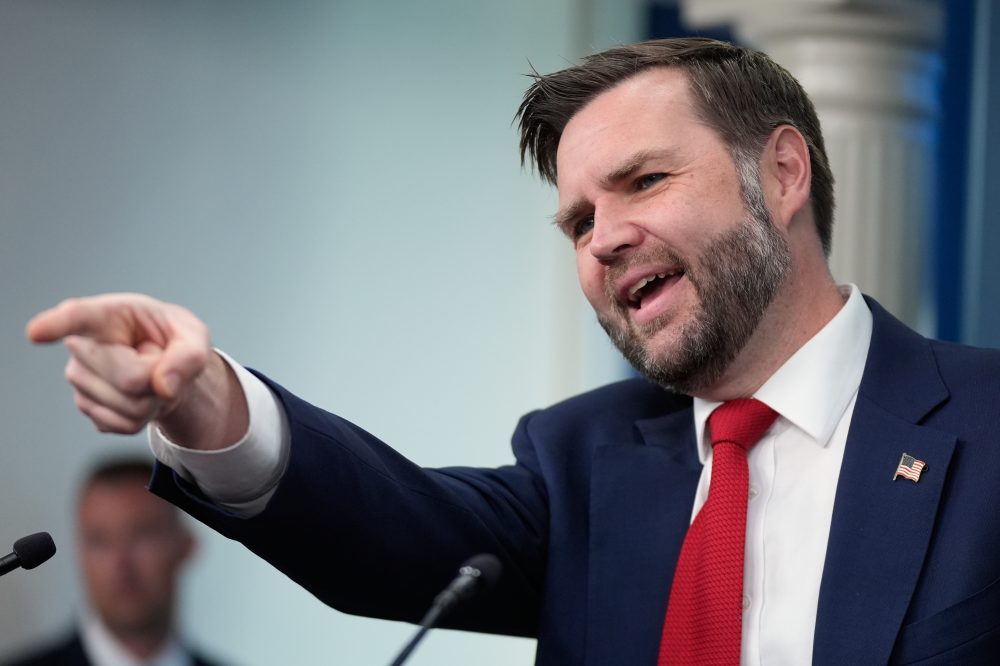
The White House confirmed late Thursday that Vice President JD Vance has scrapped his scheduled trip to Switzerland, where he was expected to attend a formal signing ceremony for a memorandum of understanding (MoU) designed to bring an end to the conflict with Iran.
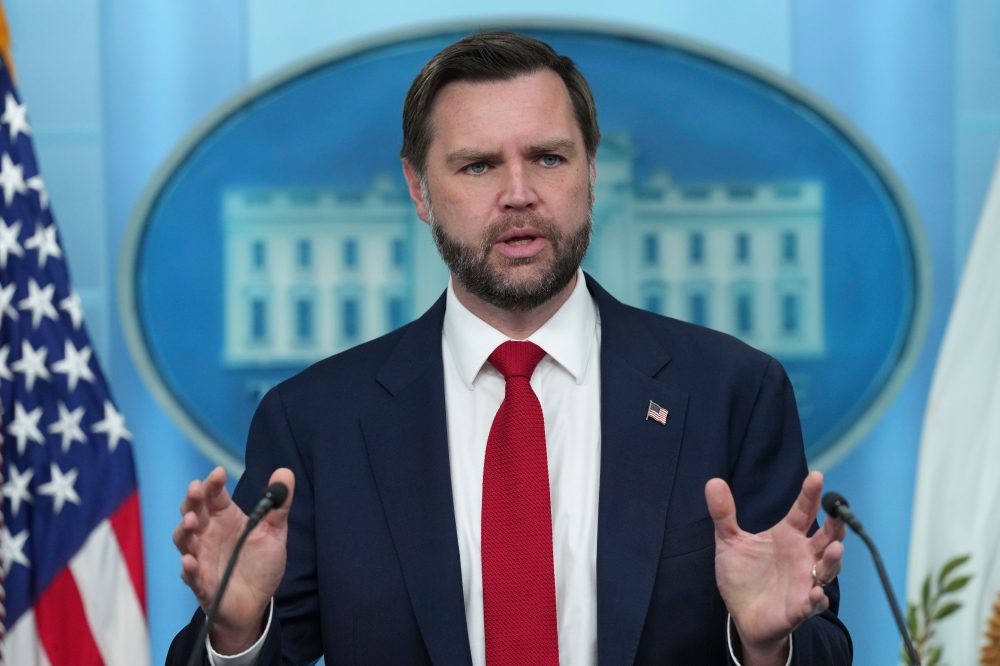
The decision came just hours after Vance appeared at a White House press conference and left the door open on his travel plans. Despite earlier reports that a ceremony had been set for Friday in Geneva, Vance told reporters Thursday, “My plan is to go to Switzerland,” while acknowledging he did not know “exactly when.”
He also indicated that technical-level negotiations were expected to begin over the weekend, saying, “We think these technical negotiations are going to start sometime this weekend — that’s still the plan — but that could change.”
Earlier in the week, Pakistani Prime Minister Shehbaz Sharif had announced that Pakistan would host the Switzerland ceremony to mark the agreement and formally launch those negotiations. Friday’s planned event was meant to serve as a ceremonial signing and the official kickoff of the talks.
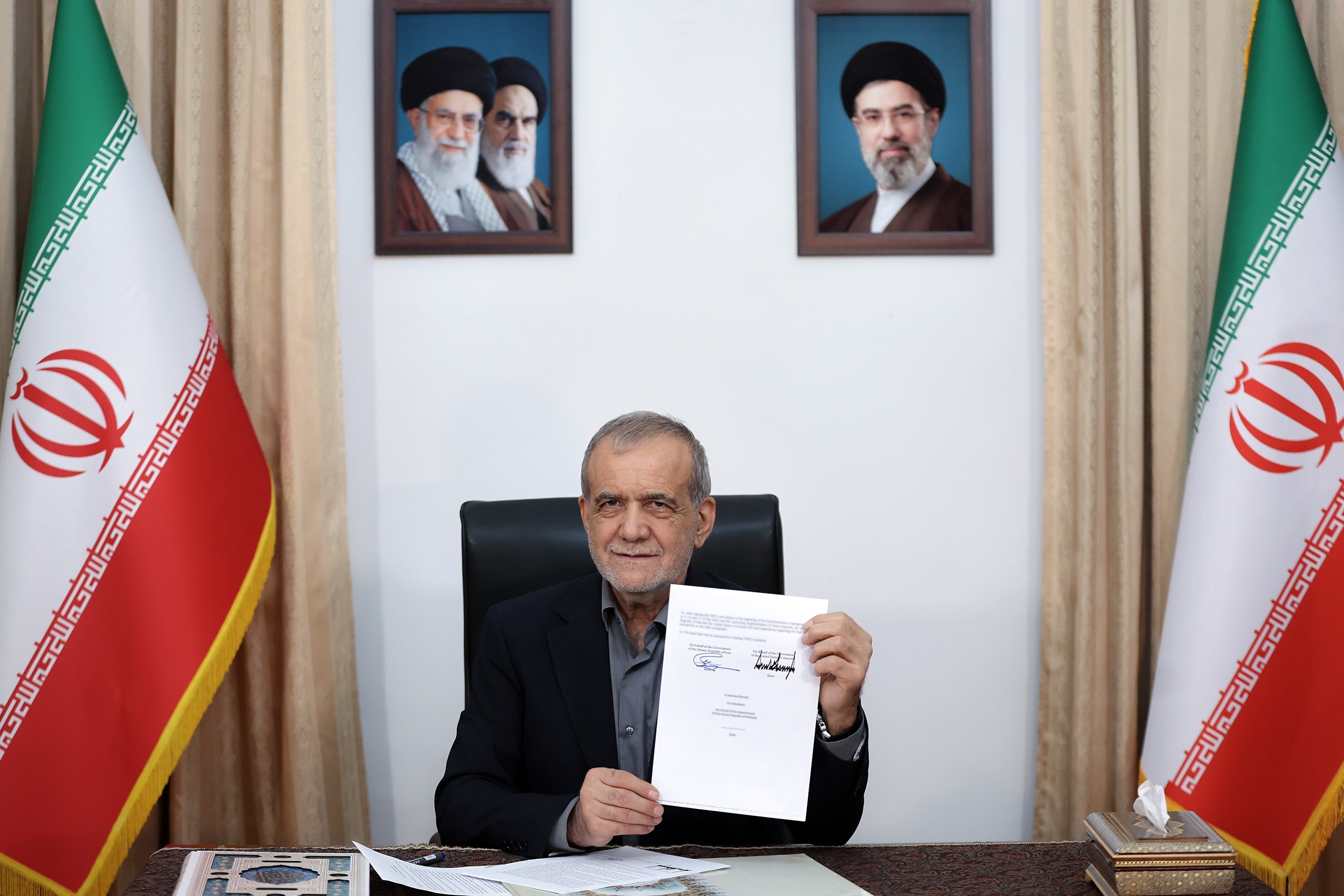
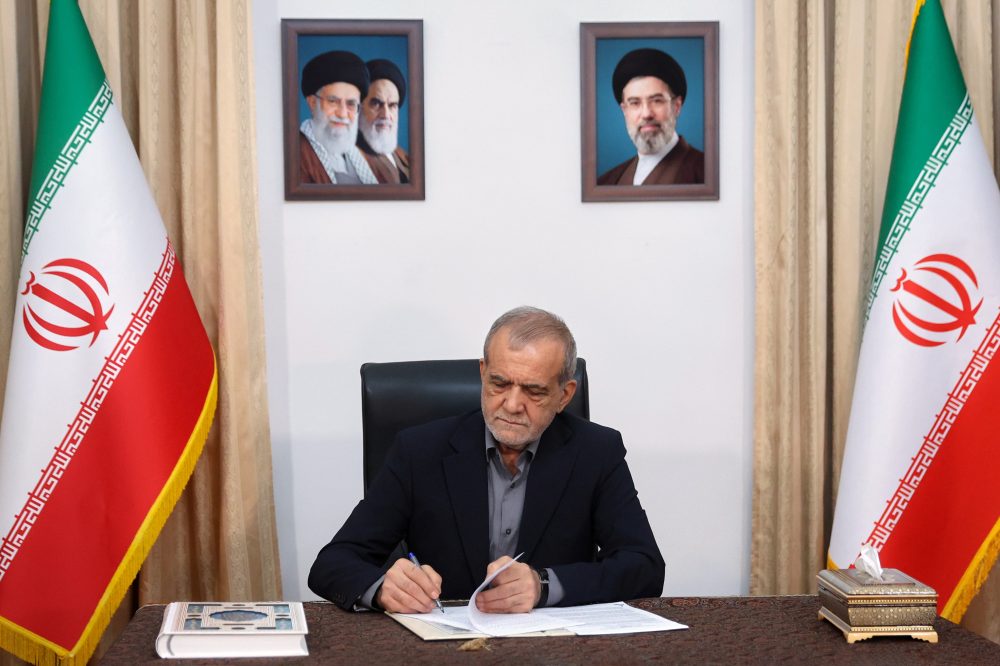
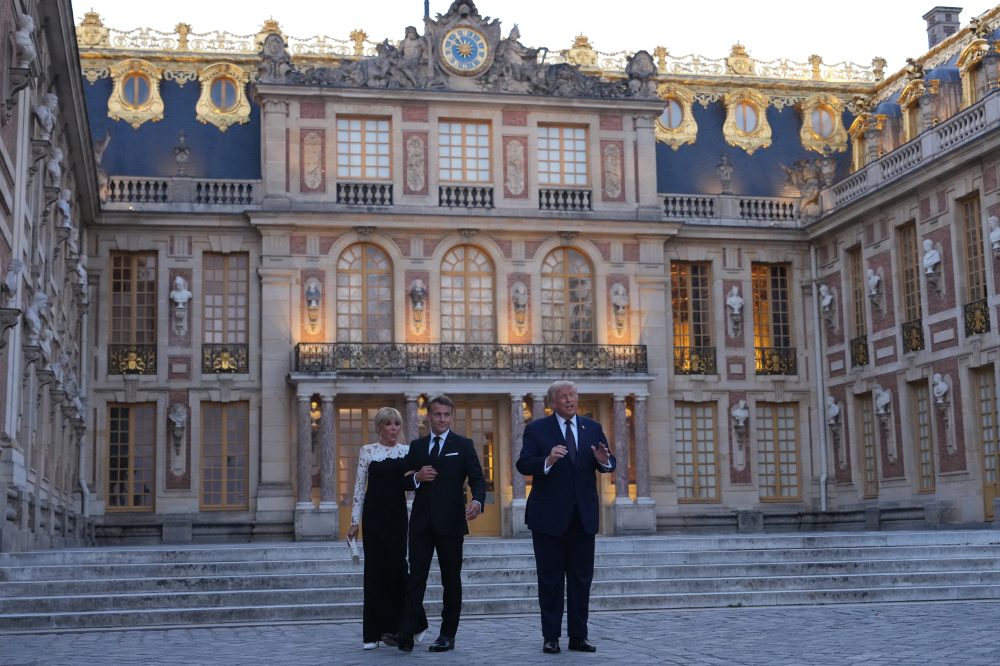
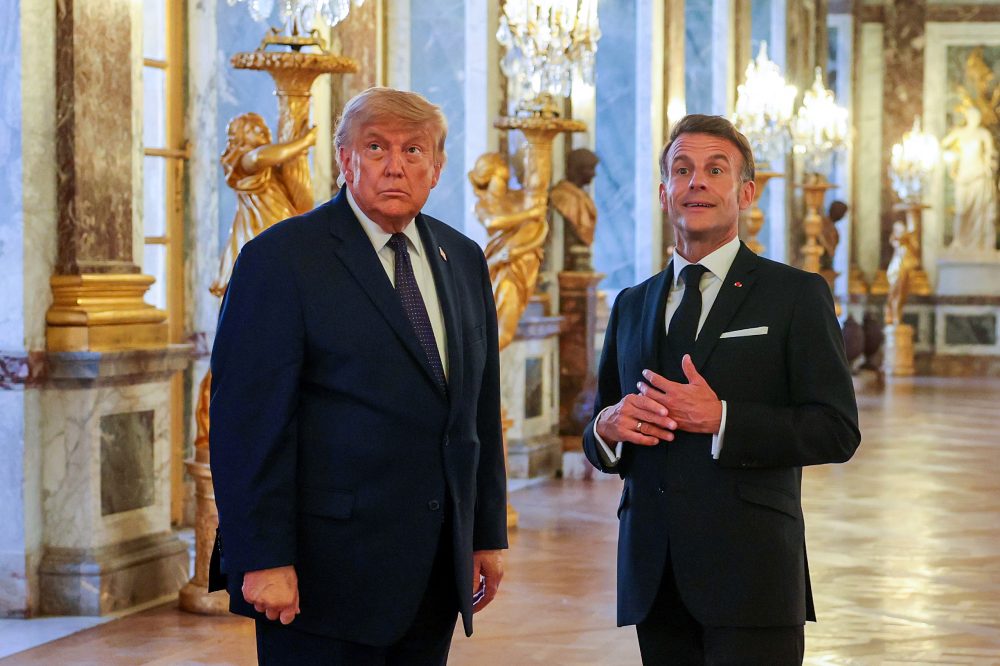
President Donald Trump had already digitally signed the MoU on Wednesday in Versailles. Iranian President Masoud Pezeshkian also signed the document. Whether Vance’s trip will be rescheduled remains unclear.
The White House announcement came as violence continued in Lebanon. The Israel Defense Forces reported that four of its soldiers, including a battalion commander, were killed by a Hezbollah drone in southern Lebanon. The military said it then carried out retaliatory strikes against Hezbollah targets.
At Thursday’s press conference, Vance took aim at Israel’s military strategy and its resistance to the MoU, which includes provisions that would restrict Israel’s ability to strike Hezbollah and respond to attacks.
“It’s clear that large segments of the Israeli political system and population are very sensitive about this deal,” Vance said. “But I also think they’re picking up on some misinformation about the deal and running with it and sort of panicking about it.”
Directing his remarks at Israeli critics of the agreement, Vance added: “I guess my response to them would be: What is your exact proposal? You’re a country of nine million people. You can’t just kill your way out of solving every single national security problem that you have.” Notably, Vance misstated Israel’s population — the actual figure is approximately 10 million.
President Trump also weighed in on Israel’s military actions in Lebanon during the G7 conference, telling reporters: “We have a little dispute over Lebanon. I say, ‘You can do a little softer touch, Bibi. You don’t have to knock down a building every time somebody walks into it that’s from Hezbollah.’”
MOSCOW — Russia signaled Friday that it is prepared to engage in conversations with European nations, but made clear it will not be pressured into negotiations on anyone else’s terms.
Kremlin spokesman Dmitry Peskov said practical reasoning alone demands such dialogue, given what he described as an “enormous number” of complicated matters that need to be addressed. However, he stressed that Europe must rethink how it approaches Russia before any meaningful exchange can happen.
“The Europeans have a very serious misconception: They assume that negotiations with Russia must be conducted from a position of strength and based on Russia’s weakness. This is the biggest mistake… Such talk will lead nowhere,” Peskov told reporters.
He went further, adding: “Does this stem from European incompetence, misinformation, or stupidity? We don’t know for sure, but it’s a fact.”
Russian President Vladimir Putin has previously indicated a willingness to speak with European governments, but has insisted they must initiate contact, since it was they who severed ties. The EU has now imposed 20 separate rounds of sanctions on Russia in response to its invasion of Ukraine.
EUROPE SHIFTS ITS POSITION
For more than a year, European nations largely stepped back from direct engagement with Russia, leaving U.S. President Donald Trump to take the lead in attempting to negotiate a resolution to the conflict. That posture appears to be changing.
The office of European Council President Antonio Costa made “brief contacts at diplomatic level” with the Kremlin over recent weeks in order to “open communication channels,” according to an EU official who spoke Wednesday.
Austrian Chancellor Christian Stocker told the Financial Times in an interview released Thursday that the EU should capitalize on the current “momentum” surrounding Ukraine peace discussions to push forward with efforts to restart direct talks with Putin.
Peskov echoed Russia’s conditional willingness, saying Moscow would engage if the other side came ready for genuine conversation — “not to engage in moralising or, especially, to issue ultimatums.”
Costa’s outreach, however, exposed fault lines within the EU. At a summit of EU leaders held in Brussels, some member states said the initiative had not been coordinated with them and argued the bloc should instead focus on increasing pressure on Russia.
UKRAINE DRONE STRIKES HIT MOSCOW AREA
Ukraine has claimed it is gaining the upper hand in the war through an intensified wave of drone strikes targeting locations deep within Russia, including ports, oil refineries, and other critical infrastructure. Russia disputes this characterization and says it will continue fighting until its goals are met — with or without a diplomatic resolution.
The governor of the Moscow region announced Friday that an eight-year-old girl had been killed in a large-scale Ukrainian drone attack that struck the capital and surrounding areas the previous day. The assault, involving hundreds of drones, ignited a major oil refinery in southeast Moscow for the second time in just three days.
“Indeed, drone attacks continue. Appropriate measures are being taken to mitigate the consequences,” Peskov acknowledged.
When asked whether Putin had watched footage of the burning refinery, Peskov deflected, telling reporters they should instead look at images from Ukrainian cities struck by Russian forces.
LONDON — A commanding special election win by Andy Burnham on Friday has triggered a political chain reaction that could soon bring down Prime Minister Keir Starmer, the man who led the Labour Party back to power less than two years ago after a 14-year absence from government.
Burnham is widely considered the top contender to succeed Starmer, particularly after his overwhelming performance in the Makerfield seat in northwest England. Even as Labour has struggled with poor poll numbers and significant losses in recent local elections, Burnham managed to defy the political odds in a major way.
The 56-year-old not only fended off the challenge from the anti-immigration Reform UK party, but he dramatically boosted Labour’s vote share to nearly 55%. That’s especially striking given that at local elections just last month, Reform UK captured virtually every seat within the Makerfield constituency.
With his return to Parliament after nearly a decade away — during which he served as the widely popular mayor of Greater Manchester — Burnham is now positioned to mount a direct challenge to the struggling Starmer for both the Labour leadership and the country’s top office. While he has stopped short of formally declaring his intentions, his words leave little doubt about where his ambitions lie.
Burnham framed his win as “the change moment” and said he and his supporters hoped to “lay out a new path” for Britain.
“I think we need in this country right now for people to feel a sense of hope that there is something better to work towards on the horizon,” he said.
The next scheduled national election in the UK isn’t required until 2029, but British political rules allow a party to swap out its leader — and therefore its prime minister — without triggering a nationwide vote.
Here’s how a leadership change could unfold:
Despite Starmer’s repeated insistence that he would fight any challenge to his position, he may soon conclude that he would lose a leadership vote — a deeply humbling outcome for a man who delivered a landslide Labour victory in July 2024. Starmer now ranks among the most unpopular prime ministers in modern British history, battered by a series of policy stumbles and controversies. Chief among them was his widely criticized decision to appoint Peter Mandelson as the UK’s ambassador to Washington, despite Mandelson’s connections to convicted pedophile Jeffrey Epstein.
Reports suggest that members of his own Cabinet may inform him this weekend that his position is no longer tenable and that resigning would be better both for him and for the Labour Party.
If Starmer chose to leave office right away, the Cabinet and Labour’s governing body would likely select a temporary leader to serve as prime minister — someone not expected to compete in the full leadership race. Deputy Prime Minister David Lammy has been mentioned as someone who could fill that role.
Another option would be for Starmer to announce he plans to step down at a future point, such as the party’s annual conference scheduled for September.
Burnham is expected to enter any leadership contest that follows. The bigger question is who else might join the race. Wes Streeting, who stepped down as health secretary last month, has signaled he intends to run. Other names being floated include Starmer’s former deputy Angela Rayner, who resigned last year over an unpaid property tax matter, and Al Carns, who left his post as armed forces minister last week over disagreements with Starmer’s defense spending plans.
A significant faction within Labour is pushing for no one to challenge Burnham at all, hoping he could walk into 10 Downing Street this summer, ahead of the party conference.
On Friday, Starmer found himself in the awkward position of publicly congratulating Burnham — knowing full well the victory only intensifies scrutiny of his own leadership.
The prime minister confirmed he had not yet spoken with Burnham but made clear he has no intention of stepping aside.
“Yes, I will run, I will stand,” Starmer said when asked whether he would contest a leadership challenge. “I’ve said repeatedly I’m not going to walk away from that.”
Under Labour’s rules, if a formal challenge is mounted, Starmer would automatically appear on the ballot. Any challenger would need to secure the support of at least one-fifth of Labour’s House of Commons lawmakers — that’s 81 members. Candidates who clear that bar would then need backing from either 5% of local party branches or at least three affiliated organizations, such as trade unions or cooperative societies.
Eligible party members and affiliates would then vote using a ranked-choice system, with the winner being the first candidate to surpass 50% of the vote. King Charles III would then formally invite that person to become prime minister and build a new government.
If a full contest takes place, the process could take three to four months, with the party holding town hall events before ballots are opened to its membership.
BRUSSELS — Just hours after U.S. Defense Secretary Pete Hegseth publicly criticized NATO allies and announced a Pentagon review of their performance, leaders of numerous European nations were already going through their own checklist of security progress — covering many of the same issues Hegseth raised.
In many ways, Hegseth was telling the Europeans what they already know.
The European agenda included increased defense spending, investment in military production industries, lessons drawn from the ongoing war in Ukraine, and the development or purchase of drones, air defense systems, and long-range weapons.
At a summit that wrapped up Friday, European leaders discussed how to best deploy joint European Union funding, eliminate bureaucratic obstacles to speed up procurement, improve “military mobility” for faster troop and equipment deployment, and upgrade ports and airports.
“Europe’s defense readiness must be decisively ramped up by 2030,” they reaffirmed — a goal they have been working toward since Russia launched its full-scale invasion of Ukraine in 2022.
Intelligence agencies have cautioned that Russian President Vladimir Putin could order military action elsewhere in Europe before the decade is out, particularly if he manages to defeat Ukraine. European nations have also accused Russia of carrying out acts of sabotage and spreading disinformation across the continent.
Roughly two-thirds of European Union member countries are also NATO members, and the unpredictability of the Trump administration has pushed them to accelerate their own independent efforts. Hegseth’s announced review was simply the most recent unexpected development.
Hegseth does not regularly attend NATO meetings, and he departed Thursday’s gathering of defense ministers before it concluded. Still, his first major address to the alliance in February 2025 and his follow-up appearance this week left a strong impression.
On Thursday, he branded NATO a “paper-tiger,” called allies “shameful,” and declared that “too many failed” a test set by President Donald Trump — who had sought use of European bases to launch strikes against Iran.
He also criticized allies for emphasizing “gender equity and climate change” and attacked their immigration policies.
Hegseth then gave NATO members six months to demonstrate improvement before a Pentagon performance review that would tie the continued presence of American forces in Europe — and U.S. financial contributions to NATO — to whether he judges them to be doing enough.
“It’s protection racket framing that undermines NATO solidarity, trust in the U.S. commitment to NATO, and, ultimately, U.S. security interests,” said Rachel Ellehuus, Director-General of the Royal United Services Institute think-tank.
The specifics of what the review will actually examine remain unclear.
“It will be designed to ensure that NATO is moving fast and irreversibly toward Europe leading, stepping up to take primary responsibility for the defense of Europe,” Hegseth said. “Some countries will fail and others will pass with flying colors.”
He said the process might last “up to six months, could be less,” and would involve U.S. military commanders, members of Congress, and the allies themselves.
Hegseth also said that American contributions to the shared NATO budget — which funds its headquarters and other facilities — would be tied to ally performance. “Where other allies do not spend with urgency, our dues contributions will go down,” he said.
Speaking to reporters at Brussels airport before departing, he added that the review would also look at “where is the right place for basing. Where can we make sure we have access and overflight when we need it, so that America is properly postured on the continent.”
NATO itself played no direct role in the Iran conflict, though it did work to protect alliance territory from potential attack.
NATO Secretary-General Mark Rutte said he could not yet explain what Hegseth’s review would involve.
“There’s still no clarity on exactly what the outcome will be, because that will depend on the review. So, we’ll see what happens,” Rutte said, adding that “wherever we can be helpful, we will be helpful.” Rutte is expected to travel to Washington next week, where he may learn more.
From Rutte’s perspective, European allies and Canada are making solid progress, even if more can always be done.
“What we are seeing is staggering amounts of money coming in,” he told reporters. “Europe and Canada are spending in 2025 more than $90 billion extra compared to 2024, which is almost a 20% increase in defense spending.”
That additional funding must now be converted into actual military equipment, weapons, and ammunition.
At last year’s summit, allies agreed to raise their defense budgets to match the United States as a share of gross domestic product. President Trump left that meeting satisfied, describing his NATO counterparts as a “nice group of people.” But the new review casts a shadow over the alliance’s next summit, scheduled for July 7-8 in Turkey.
Despite the tension, senior European military officers have taken on more command roles within NATO, and U.S. allies have stepped up to lead the effort to channel arms and money into Ukraine as the Trump administration has pulled back.
Some European nations and Canada are also spending billions to purchase critical air defense systems from the United States, which they then donate to Ukraine — a conflict they view as an existential threat to Europe as a whole.
By most measures, it is difficult to identify what more the allies could be doing or doing faster — unless the expectation is that they provide unrestricted access to their airspace and military bases for American military operations beyond Europe.
Ellehuus, a former senior U.S. advisor at NATO, argued that decisions about troop positioning “should be driven by detailed threat assessments, operational requirements, and military planning – not used as a form of reward, punishment or revenge.”
“Such framing undermines allies while they’re actively trying to solve the problem and telegraphs to adversaries that U.S. security commitments have a price tag,” she said.
TUBARA/JUAN DE ACOSTA, COLOMBIA — At first look, these two side-by-side towns along Colombia’s hot and humid Caribbean coast seem nearly identical. Single-story houses with rocking chairs on their porches surround town plazas, and locals plan their errands to dodge the brutal midday sun. Mango trees shade the streets where children meander home from school.
Yet Tubara and Juan de Acosta — both located near the port city of Barranquilla — are sharply split when it comes to Sunday’s presidential election, which places two very different visions for Colombia’s future head to head.
In Juan de Acosta, where murders and extortion have surged alongside rising drug trafficking activity along its coastline, right-wing candidate Abelardo De La Espriella earned 55% of the vote in the first round. He has promised a firm hand against armed groups and criminal organizations.
Just next door, Tubara threw its support behind leftist senator Ivan Cepeda, giving him just under 60% of their votes. His message centered on expanding social programs, including reforms to healthcare, pensions, and education.
De La Espriella, a 47-year-old lawyer and businessman with no prior experience in politics, has leaned heavily into military-style imagery and language throughout his campaign. He calls himself “the Tiger,” labels his political movement “Defenders of the Homeland,” and salutes at campaign rallies and in promotional materials — despite never having served in the armed forces.
His tough-on-crime stance gave him a lead of several percentage points over Cepeda in the first round, and more recent polling shows him eight points ahead heading into the runoff.
For residents of Juan de Acosta, the rise in violence feels foreign to their community. Nicanor Alba, who was trimming and bagging pork ribs for customers at his butcher stand near the town plaza, described the toll extortion has taken.
“You set up your business and tomorrow they come and say ‘if you don’t give us 50,000, 30,000 or 40,000 (pesos), it’s over,’” said Alba, whose own brother was killed five years ago.
He said multiple friends and neighbors have been targeted by extortion on more than one occasion, and that recent homicide numbers left him stunned.
“That had never been seen before in Juan de Acosta, it’s a bunch of people,” said the butcher, who intends to cast his vote for De La Espriella.
The town’s location — with road access to Colombia’s interior and a stretch of coastline — has turned it into what authorities describe as a “strategic point” for drug smugglers, according to Colonel Eddy Sanchez, the police commander for Atlantico province.
Two criminal organizations — Los Pepes and Los Costenos — have long been active in the area, including in drug sales, Sanchez said. More recently, the country’s largest criminal gang, the Clan del Golfo, has also moved in.
“The Clan del Golfo uses this municipality as a platform to reach maritime areas and, using speedboats, ship drugs abroad,” Sanchez said.
“Of course, that leads to issues of violence,” he added, though he noted that murders have dropped from 15 in 2025 to just 2 so far in 2026, returning to the town’s historical average. Police have classified 14 of last year’s killings as contract murders.
Tubara, meanwhile, recorded no murders in 2025 and only one so far in 2026, Sanchez said.
“It’s a territorial dispute, where some gangs are trying to enter the municipality while others are trying to push them out to fully control local drug trafficking,” said Oscar Andres Arteta, Juan de Acosta’s interior secretary, adding that local government and police are working together to combat extortion.
Juan Gabriel Coronel, 42, who sells meat, ice cream, and dry goods at a small shop in Juan de Acosta, also plans to vote for De La Espriella in hopes of curbing crime — but he has personal health concerns weighing on him as well.
“I had a liver transplant 17 years ago and have never been denied my medication in that time,” said Coronel, who is a client of a healthcare provider the government took over in 2024 due to alleged care failures. For the past six months, he said, he has been paying for his medication out of his own pocket.
On the other side of the ballot, Cepeda, 63 and the son of a murdered communist leader, swept all but one Caribbean province in the first round among a field of 13 candidates.
To win the runoff, he will need to grow his numbers in those coastal provinces and in the capital, Bogota, according to Luis Fernando Trejos, a political science professor at the Universidad del Norte. Trejos estimates Cepeda needs between 2.5 million and 3 million additional votes to pull off a victory.
De La Espriella, who outpaced Cepeda by roughly 700,000 votes in the first round, will also need to expand his support. More than 41 million Colombians are eligible to cast ballots, but fewer than 24 million participated in the first round.
Both candidates have lined up backing from influential political figures along the coast, Trejos noted. De La Espriella has made a point of highlighting that he grew up in the inland Caribbean city of Monteria. His campaign billboards show his tiger persona wearing a Barranquilla soccer jersey with the message: “Abelardo is coastal like you. … Coastal votes coastal.”
He has also accused Cepeda’s campaign of planning a large-scale vote-buying effort on the coast — a claim Cepeda’s team has firmly rejected.
In Tubara, Cepeda supporters have been actively working to drive up voter turnout. Clara Algarin, a clinical psychologist and former city councilor, told Reuters she has been coordinating transportation for voters who were unable to reach polling stations during the first round.
Algarin expressed admiration for the current leftist president’s expansion of free public university education and a 230,000 peso (about $66) monthly state pension he created for people who were unable to save for retirement — including her own mother.
“My mother worked as a domestic servant from the age of 16. She never had the possibility of being paid a pension before,” Algarin said.
Her husband, Javier Gomez, operates a bakery — its porch decorated with a bright Cepeda campaign banner. He said he was glad to pay his employee the 23% minimum wage increase for this year that the current president put in place.
“The work that (the employee) does deserves the payment of a living wage,” Gomez said while taking a break from packaging fresh bread.
A preliminary agreement between the United States and Iran has been signed, marking a potential step toward ending hostilities and beginning talks on a more comprehensive deal.
Iranian President Masoud Pezeshkian was photographed holding the memorandum of understanding shortly after it was signed, with the image released by the Islamic Republic News Agency. The signing took place in Tehran in the early hours of Thursday.
The agreement was signed by President Trump and represents an early-stage framework intended to lay the groundwork for broader negotiations between the two countries.
While the signing signals a diplomatic opening, officials and analysts note that considerable obstacles remain before any permanent or wide-ranging peace arrangement can be finalized between Washington and Tehran.
BEIJING (AP) — Vibrant dragon boat races, lion dances, and festive gatherings filled communities across mainland China, Hong Kong, and Taiwan on Friday as people celebrated the Dragon Boat Festival.
The holiday stretches back more than 2,000 years and, while best known for its athletic competitions, has deep roots in Chinese history and ancient beliefs surrounding health, protection, and living in harmony with nature.
“The Dragon Boat Festival is probably the richest and most diverse of all traditional Chinese festivals,” said Liu Xiaofeng, a history professor at Tsinghua University. “Across different regions, people developed a wide variety of traditions based on ideas connected to the summer solstice and the balance of yin and yang.”
Central to the festival’s story is the ancient poet Qu Yuan, who according to legend took his own life by drowning more than two millennia ago. The tradition of dragon boat racing grew from tales of people rushing out onto the water to search for him and tossing rice into the river to keep fish from consuming his body.
In Beijing, a three-day competition features men’s, women’s, and mixed-team races at distances of 100, 200, and 500 meters. Competitors from Beijing, Tianjin, Hebei, Shanxi, and Guangdong are taking part in the weekend-long event.
Crews moved their paddles in perfect unison, guided by the thundering beat of onboard drummers, as each boat drove hard toward the finish line while crowds of spectators cheered from the banks.
Many others followed the action from home, enjoying the holiday with family over “zongzi” — a traditional sticky rice dish prepared for the occasion.
The 2026 Beijing festivities are scheduled to run through June 21 at the city’s Grand Canal.
“The competition helped strengthen our team spirit,” said Li Maoshan, one of Friday’s race participants. “It also gave us an opportunity to demonstrate the spirit of perseverance and hard work.”
In Hong Kong, participants added a playful touch to the races by wearing costumes, including a cartoon depiction of Ne Zha, a figure from Chinese Taoist tradition.
The British Bar Standards Board announced Friday that it has placed an interim suspension on Karim Khan, the International Criminal Court’s chief prosecutor who was already suspended by the court itself on June 8 following sexual misconduct allegations.
The British legal regulatory body stated that under its Enforcement Regulations, the interim suspension must be reviewed by an Interim Suspension Panel at a formal hearing within the next four weeks. The board confirmed the suspension took effect immediately upon the announcement.
Khan, who is 56 years old, has denied the allegations that have been brought against him.
TOKYO — Japan’s Ministry of Foreign Affairs announced Friday that a vessel owned by a Japanese company, with three Japanese crew members aboard, has safely made its way through the Strait of Hormuz and out of the Gulf region.
The ship had been stranded in the Gulf as a result of the Iran war. According to the ministry, Japanese officials worked directly with Iran to arrange the vessel’s safe passage. The tanker is now headed back to Japan.
The vessel is identified as a Liberian-flagged crude oil tanker belonging to Japan’s Kyoei Tanker company.
With this ship’s departure, Japan’s Foreign Ministry confirmed that all Japan-linked vessels with Japanese crew members on board have now successfully left the Gulf.
Japanese Prime Minister Sanae Takaichi addressed the situation on social media platform X, stating: “Following the recent signing of a memorandum of understanding between the United States and Iran, the government will continue making every diplomatic effort to ensure that free and safe navigation of vessels in the Strait of Hormuz resumes promptly.”
Despite this development, Prime Minister Takaichi noted that 37 vessels with ties to Japan are still waiting for clearance to pass through the Strait of Hormuz.
LONDON (AP) — Andy Burnham has spent his career navigating the corridors of British political power, and now he has his sights set on the very top — the prime minister’s office at 10 Downing Street.
The 56-year-old presents himself as a down-to-earth northerner who favors T-shirts over suits, enjoys a game of soccer in his free time, and has been known to take the decks at DJ competitions spinning tracks from the 1990s. But beneath that casual image lies a seasoned political operator with decades of experience at the highest levels of British government.
Burnham is widely expected to mount a challenge against Prime Minister Keir Starmer following his victory in a special parliamentary election — a result he described as a “turning point” for politics in the United Kingdom.
He grew up in a part of northwest England situated between Liverpool and Manchester, the son of a British Telecom engineer and a receptionist. He joined the Labour Party during his teenage years, went on to study at Cambridge University, and first entered Parliament in 2001.
Over the next fifteen years as a lawmaker, he climbed the political ladder under Prime Minister Tony Blair and later served in Prime Minister Gordon Brown’s Cabinet from 2007 to 2010.
He made two unsuccessful bids for the Labour Party leadership — in 2010 and again in 2015 — before stepping away from Westminster entirely to pursue the mayoralty of Manchester.
It was in that role that he earned the nickname “King of the North,” a reference inspired by the television series “Game of Thrones” that reflects both his fierce advocacy for his home region and his openly ambitious political outlook.
The title gained traction during the COVID-19 pandemic, when Burnham publicly clashed with Conservative Prime Minister Boris Johnson over what he characterized as a “London-centric” response to the health crisis.
Since taking charge of Greater Manchester in 2017, Burnham has overseen a dramatic transformation of the region — a city historically tied to the Industrial Revolution. The city center has experienced a building boom, with skyscrapers rising on former industrial land. He also unified a fragmented public transit system under public ownership, rebranding it as the Bee Network and expanding its services.
Within the Labour Party, he is seen as sitting to the left of Starmer, which plays well with party members. He is also regarded as one of the party’s most effective communicators — a stark contrast to the more rigid public speaking style he displayed during his earlier leadership campaigns. Today he comes across as relaxed and approachable.
Three successive mayoral election wins, combined with his strong showing in the Makerfield by-election — where he soundly defeated the candidate from the anti-immigration party Reform UK — have reinforced his reputation as someone who can win. Many within Labour are hoping he can help reverse the sharp drop in the party’s popularity that has occurred in the two years since Starmer led them to a landslide general election victory.
Burnham is now promising to take what he calls “Manchesterism” to a national level — a governing philosophy centered on investing in communities that have long been overlooked by decision-makers in London, and prioritizing people and place over party politics.
“What we’ve built in Greater Manchester needs to go national,” he said during the campaign. “I know what it is to turn places around.”
Not everyone is convinced. Critics argue that his policy platform lacks specifics and sidesteps difficult questions — particularly around how his proposals would be funded. They also point out that governing an entire nation of 70 million people is a fundamentally different challenge from leading a city region of 3 million.
Even so, Burnham enters this next chapter with considerable momentum behind him as he positions himself for a potential run at Britain’s highest office.
One week into the World Cup, international visitors are flooding social media with wide-eyed reactions to the quirks of everyday American life — and the posts are going viral.
From free soda refills to oversized dogs and the ongoing debate over what truly counts as great barbecue, tourists from around the globe are sharing their genuine surprise and delight at experiences that most Americans take for granted.
One visitor from Japan described bread at a Texas Roadhouse restaurant in Dallas as “insanely good,” capturing the kind of unexpected enthusiasm that has characterized many of these social media moments.
The cultural discovery happening at gas stations, chain restaurants, and roadside stops across the country has provided a lighthearted backdrop to what is otherwise a tense moment in U.S. foreign relations, with Washington currently navigating strained ties with a number of its longtime allies.
Massive travel destinations like Buc-ee’s — the sprawling Texas-based travel center chain — have become unlikely tourist attractions for World Cup visitors experiencing American road culture for the first time.
Social media posts from fans visiting for the tournament reflect a genuine curiosity about American daily life, with many expressing that the country surprised them in ways they did not anticipate before arriving.
Australian authorities announced Friday that the country has found its first suspected case of H5N1 bird flu on the mainland, discovered in a remote corner of the nation’s southwest.
A brown skua — a type of migratory seabird — was discovered in Western Australia’s Cape Le Grand National Park and tested positive for avian influenza. Additional testing is underway to identify the exact strain, according to state Agriculture Minister Jackie Jarvis.
“We are taking the suspected case of H5 bird flu seriously,” Jarvis said. “If this is confirmed H5 bird incursion, there will be a rapid and coordinated national response.”
The highly aggressive H5 strain of bird flu has been spreading through wild bird and mammal populations since 2021, resulting in the deaths of millions of animals. It has also made its way into poultry and dairy farm operations and has infected some agricultural workers.
Until now, Australia stood alone as the only continent without a confirmed mainland case of the deadly strain. H5 was previously confirmed on Heard Island, an Australian sub-Antarctic territory, in late 2025.
In anticipation of the virus potentially reaching its shores, Australia has spent recent years strengthening biosecurity measures at farms, monitoring shorebirds for signs of disease, vaccinating at-risk species, and running response simulations.
“While, if confirmed, this would obviously be a very concerning development, Australia has spent the past few years preparing for this likelihood,” Environment Minister Murray Watt said in a statement.
Jarvis said results confirming whether the deceased brown skua was infected with H5 bird flu are expected by Saturday. She also noted that a second sick bird — a giant petrel — was found in the same location and is also being tested for influenza.
Wayne Boardman, a wildlife veterinarian and associate professor at Adelaide University, expressed deep concern about the potential impact on Australia’s native animals.
“This strain of bird flu has caused huge die-offs of birds and sea mammals,” he said.
“My concerns are that if the H5N1 avian flu virus is confirmed, it will pose a huge risk to some of our more endangered shorebirds, some of our coastal raptors, and our precious, unique, endemic and endangered Australian sea lions, whose population is precarious,” Boardman added.
South Korean President Lee Jae Myung announced Friday that U.S. President Donald Trump has agreed to give serious thought to a gradual, phased strategy for addressing North Korea’s nuclear and missile programs — one that focuses on immediate containment while keeping complete denuclearization as the ultimate long-term goal.
Lee made the announcement at a press briefing after returning home from France, where he spoke with Trump on the sidelines of the G7 summit. According to Lee, Trump indicated it was “time to pay attention” to North Korea and seemed eager to restart direct dialogue with North Korean leader Kim Jong Un, though he expressed frustration about how to move forward.
“Without giving up on denuclearisation, I explained that we should go step by step — short term, medium term and long term — rather than immediately,” Lee told reporters.
Lee described the short-term priorities as preventing North Korea from producing additional nuclear material, transferring weapons or materials to other countries, and advancing its intercontinental ballistic missile capabilities further.
In response, Trump said the approach “could be one way” and indicated he would think carefully about it, according to Lee.
Lee also conveyed to Trump that relying solely on sanctions and pressure would not be enough to resolve the standoff, noting that North Korea already appears to possess a significant number of nuclear weapons and is continuing to produce enough nuclear material to build roughly 10 to 20 more each year.
Lee added that North Korea’s ICBM technology is approaching its final stage of development, including the ability to re-enter the atmosphere, and that military cooperation between North Korea and Russia in the Ukraine war has significantly weakened the impact of international sanctions.
Trump held historic face-to-face meetings with Kim Jong Un during his first term in office, but their second summit — held in Hanoi in 2019 — fell apart over disagreements on denuclearization steps and the easing of sanctions. Since then, North Korea has taken a more hardened stance, declaring its nuclear status permanent and non-negotiable.
Shipbuilding also came up during the conversation. Lee said Trump asked whether South Korea could quickly construct 10 U.S. warships. “I said of course it was possible and that we would do our best,” Lee said. South Korea has already committed to $150 billion in shipbuilding investments in the United States, led by South Korean companies, as part of a trade agreement with Washington.
Lee noted that he sat beside Trump for roughly 90 minutes during a G7 dinner, which he said allowed for more in-depth conversation than a formal summit setting typically permits.
Over the course of his 10-day European trip, Lee attended the G7 summit and held both formal and informal meetings with multiple world leaders, including Trump, German Chancellor Friedrich Merz, Italian Prime Minister Giorgia Meloni, and Canadian Prime Minister Mark Carney.
In a separate development, Lee said that during a visit to the Vatican, he asked Pope Leo to consider traveling to the Demilitarized Zone — the buffer strip separating North and South Korea — and, if circumstances allowed, to North Korea itself. Lee said the pontiff responded that he would actively consider and pursue the idea.
JERUSALEM — A young Israeli man who endured sexual abuse during two years of captivity in Gaza is now speaking out, hoping his story will give strength to other survivors of similar trauma — including those in active conflict zones — ahead of the International Day for the Elimination of Sexual Violence in Conflict.
Guy Gilboa-Dalal, 25, was among the approximately 250 people taken hostage when Palestinian militants carried out the Hamas-led attacks on Israel on Oct. 7, 2023. He remained in captivity for two years before being released.
During a conversation Sunday in Jerusalem with Israel’s first lady Michal Herzog, Gilboa-Dalal explained his motivation for going public. “I feel like I have a mission to spread to the world, to use my voice and empower other victims of sexual assaults,” he said. “I want people who have been through those experiences to know that they’re not alone.”
The Associated Press notes that it does not typically name individuals who report sexual assault unless they have chosen to come forward on their own.
The United Nations reports that sexual violence tied to armed conflict is increasing globally, with documented cases more than doubling in 2025. Both state and non-state actors are increasingly using it as a weapon of war, a means of torture, and a tool of political repression.
The issue has become deeply politicized in Israel and the Palestinian territories since the Oct. 7 attacks. Human rights organizations and the U.N. have investigated allegations of widespread rape during the initial Hamas assault. More recently, the U.N. said it has verified multiple incidents of conflict-related sexual violence — “including as a form of torture” — carried out by Israeli military and security forces against Palestinian men and women in Gaza and the West Bank, allegations Israel denies.
For the first time this year, the U.N. added Israel’s armed and security forces to a list of parties “credibly suspected of committing or being responsible for patterns of rape or other forms of sexual violence in situations of armed conflict.” Hamas had already appeared on that list.
In 2024, the U.N.’s special representative on sexual violence in conflict, Pramila Patten, stated she “found clear and convincing information” that some hostages were subjected to rape and “sexualized torture.” However, a more recent U.N. report said it was “not able to verify” public claims made by former hostages about abuse by their Palestinian captors, citing what it described as Israel’s refusal to allow U.N. investigators access to conduct their own inquiries.
Gilboa-Dalal addressed that finding directly during Sunday’s conversation, expressing frustration with the U.N. “They have no right to say what happened or what didn’t happen, I was there, not them,” he said.
He is among at least six released hostages who have publicly described experiencing sexual assault while held captive. Gilboa-Dalal first went public with his account in an interview with Israeli media last November, roughly a month after his release.
He described two separate incidents of abuse that occurred more than a year into his captivity. At the time, he said he was physically depleted — having spent most of his imprisonment in a cramped underground cell shared with three other hostages, where they were either starved or given spoiled food and denied the ability to move freely or bathe. He said he was naked and blindfolded during both assaults, and that his captor threatened to kill him if he ever disclosed what had happened, beating him and pressing a knife to his throat and a gun to his head.
“He could do whatever he wanted. I was so weak, and he was so strong,” Gilboa-Dalal said. He added that because the hostages were under constant watch, he did not tell his fellow captives what had happened until just before one of them was released during a temporary ceasefire in February 2025.
Today, Gilboa-Dalal says he is focused on healing and reconnecting with his family. He is also working on a book and an anime script based on his experiences.
He expressed concern that other survivors of sexual violence may be struggling in silence, burdened by self-blame. “They may think, ‘maybe it’s my fault maybe I could have done something different,’” he said. “But it wasn’t my fault and it wasn’t any of the victims’ fault.”
TOKYO — The Bank of Japan announced Friday that its governor, Kazuo Ueda, has been released from the hospital after a two-week medical stay.
According to a statement from the central bank, Ueda plans to return to the office on Tuesday and will continue receiving treatment for roughly two additional weeks.
The 74-year-old had been hospitalized for treatment of an infected liver cyst. His absence caused him to miss the Bank of Japan’s policy meeting on Tuesday, during which the central bank voted to raise interest rates to their highest level in 31 years.
PARIS — France’s foreign minister made clear Friday that his country intends to have a say in any nuclear agreement reached with Iran, warning that Paris will not sign off on lifting United Nations sanctions unless it is satisfied with the final terms.
Foreign Minister Jean-Noel Barrot, speaking to broadcaster franceinfo, noted that France holds veto power as a permanent member of the UN Security Council. He stressed that regional stability cannot be achieved unless ongoing U.S. talks with Iran also address the country’s ballistic missile program and its backing of proxy forces in the region.
“The return for major concessions that will be asked of Iran is the lifting of sanctions, sanctions that were taken at the United Nations,” Barrot said. “France is a permanent member of the United Nations (Security Council) so as was the case 10 years ago, France will have to give its approval for the sanctions to be lifted.”
Earlier this week, the United States and Iran agreed to enter a 60-day negotiating period focused on Iran’s nuclear program, with the understanding that any final deal would need to be approved by the Security Council.
European nations have expressed concern that the current U.S. negotiating team may lack the experience needed to lock down a strong nuclear agreement or tackle Iran’s missile activities during the next phase of talks — potentially leading to a prolonged diplomatic standoff.
France, Britain, and Germany are seeking a seat at the table as negotiations move forward, having been largely excluded from recent diplomatic efforts. The three countries first became involved in Iran’s nuclear issue back in 2003 and later partnered with then-U.S. President Barack Obama to craft a 2015 agreement that curbed Iran’s nuclear activities in exchange for sanctions relief.
U.S. President Donald Trump has been openly critical of that earlier accord, which he withdrew the United States from during his first term in office.
Barrot reinforced France’s position, saying: “Our objective is to get major concessions from the Iranian regime, a radical change in posture. And we will have our word to say, because as a member of the UNSC it will be necessarily linked to the resolution of this crisis.”
At least 18 people lost their lives in Israeli airstrikes targeting southern Lebanon on Friday, Lebanon’s health ministry reported, while Israel’s military announced that four of its soldiers were also killed — marking one of the most deadly single incidents since the current wave of fighting escalated.
Lebanon’s health ministry said that heavy airstrikes beginning around midnight severely hampered rescue and evacuation operations in the region. Officials reported a preliminary count of 18 dead and 33 wounded, with that number expected to climb as the situation developed.
Residents and Lebanese media outlets reported that airstrikes and shelling struck multiple towns in the Nabatieh district throughout the night and into the early morning hours of Friday. Lebanon’s state news agency NNA described the bombardment as among the heaviest seen in the area in recent weeks.
The Israeli military said its strikes were aimed at what it characterized as Hezbollah operatives and infrastructure spread across several parts of southern Lebanon. Israel said the attacks were carried out in response to what it called repeated ceasefire violations by the Iran-backed group.
Hezbollah claimed its fighters ambushed an Israeli force near Ali al-Taher hill in southern Lebanon, saying they destroyed three Merkava tanks using guided missiles and struck troops with rocket and artillery fire. The group indicated that fighting was still ongoing at the time of the report.
The surge in violence came one day after Israel released a map showing an expanded military control zone in southern Lebanon. Israel also indicated it would not rule out conducting operations beyond that zone, raising fresh concerns about a U.S.-brokered agreement reached on Wednesday intended to bring an end to the conflict between the U.S., Israel, and Iran.
That agreement calls for a halt to hostilities on all fronts, including Lebanon, and requires all parties to respect Lebanon’s territorial integrity and sovereignty.
A senior Israeli official said Israel is engaged in what he described as “stubborn negotiations” with U.S. President Donald Trump’s administration over keeping Israeli troops positioned up to 10 kilometers — roughly 6.2 miles — inside southern Lebanon as the country continues its pursuit of Hezbollah.
Israel has refused calls to pull its forces out of southern Lebanon, while Hezbollah has continued launching attacks on Israeli positions, including strikes using explosive drones that have resulted in both deaths and injuries among Israeli troops this week.
Hopes for a lasting peace agreement between the United States and Iran took a hit Friday after Switzerland announced that scheduled talks between the two nations would not go forward as planned, and Vice President JD Vance canceled his trip to the Swiss resort of Burgenstock where the negotiations were to be held.
“The logistics of these negotiations have never been simple or predictable,” a White House spokesperson said in a statement Thursday.
Vance and the American delegation had been prepared to leave for Switzerland as soon as final arrangements were confirmed. The Swiss foreign ministry confirmed the postponement in a statement, adding that Switzerland remains willing to host the discussions and that preparatory work at Burgenstock is ongoing.
Iran, which had signaled its readiness to begin technical discussions following Wednesday’s 14-point accord that extended a shaky ceasefire by at least 60 days, did not immediately respond to the news. Before the U.S. announcement, Iran’s semi-official Tasnim news agency reported that Iranian negotiators first needed to see evidence that the U.S. was following through on the interim deal before any delegation would head to Switzerland.
U.S. officials had spoken of holding a formal signing ceremony for the agreement in Switzerland, but Iran’s foreign ministry pushed back on that idea, calling it unnecessary since both nations’ presidents had already signed the pact.
The conflict, which erupted on February 28 when the U.S. and Israel launched air strikes against Iran, has now claimed at least 7,000 lives, driven energy prices sharply higher, and rattled financial markets worldwide.
Israel, which was not included in the peace negotiations, has kept its distance from the U.S.-Iran agreement and continued its military operations against the Iranian-backed Hezbollah militant group in Lebanon — adding further uncertainty about whether the deal will hold.
Back in Washington, some Republican allies of President Donald Trump in Congress have raised concerns that he gave away too much to bring the conflict to a close, particularly with mid-term elections approaching in November and the war broadly unpopular among Americans.
Trump had vowed as recently as March to end the war only through Iran’s “UNCONDITIONAL SURRENDER.” However, the memorandum ultimately signed with Iran offers sanctions relief, unfreezes tens of billions of dollars in Iranian assets, and grants immediate U.S. waivers allowing Iran to export oil.
Iran’s Supreme Leader Ayatollah Mojtaba Khamenei said Trump had agreed to the deal “out of desperation” and warned that upcoming talks over Iran’s nuclear program — one of Trump’s stated justifications for the war — would not be straightforward. “If the American side wants to be too demanding, we will not accept it,” Khamenei said.
Iran’s Supreme National Security Council also pledged to respond in kind to any violation by what it called the “untrustworthy” American side, saying it would show “no leniency” until Iran’s full rights were secured.
The agreement gives negotiators 60 days to reach a decision on Iran’s nuclear program, with the possibility of an extension, and establishes a $300 billion reconstruction fund for Iran along with other financial incentives. Vance indicated the U.S. would also push to place limits on Iran’s long-range missile capabilities.
The mounting financial toll of the war also drew attention this week, with the U.S. defense department reportedly telling lawmakers it needed $80 billion to cover war costs and other expenses, according to the Wall Street Journal.
When the U.S. and Israel launched the war nearly four months ago, Trump stated his goals included dismantling Iran’s nuclear capabilities to prevent it from ever building such weapons. He also aimed to eliminate Tehran’s ability to threaten neighboring countries, cut off its support for anti-Israel militant groups in the region, and create conditions for Iranians to overthrow their theocratic government.
None of those objectives had been achieved when Trump put his signature on the agreement. In the deal, Iran restated its long-standing position — held for decades — that it does not seek to build or acquire nuclear weapons, a claim that multiple U.S. administrations have doubted. Iran also agreed to on-site “down blending” of its highly enriched uranium and inspections by the International Atomic Energy Agency as a member of the Non-Proliferation Treaty, but rejected Trump’s demand that the material be removed from the country.
U.S. officials maintain that ongoing negotiations could still produce a strong agreement on Iran’s nuclear program, potentially surpassing a 2015 deal between Iran, the U.S., and other nations that Trump abandoned during his first term in office. Critics, however, argue that Iran now holds a stronger hand — having survived an attack by a superpower, demonstrated its control over the Strait of Hormuz, and secured valuable financial concessions.
Iran has stated it will continue to exercise control over the Strait of Hormuz in partnership with neighboring Oman, and plans to charge ships service fees that did not exist before the war — though not during the 60-day negotiating period. Oil prices edged lower Friday as tankers began moving again through the reopening strait, which before the war had carried nearly one-fifth of the world’s crude oil and liquefied natural gas supplies.
In Lebanon, where more than a million people have been displaced by the ongoing conflict, fresh Israeli airstrikes on Friday killed at least 18 people, according to the state news agency NNA. Israel said the strikes were aimed at Hezbollah targets. The continued fighting raised questions about how far Trump is willing to go to pressure his wartime ally to stand down from an offensive he has now pledged to end.
While the agreement calls for the “permanent termination” of the war in Lebanon, Israel has said it has no plans to withdraw, and has instead released a new map depicting an expanded occupation zone. Trump has grown increasingly critical of Israel’s operations in Lebanon, creating one of the most significant rifts between the two countries in decades.
Legislators representing more than a dozen African nations have pledged to introduce new bills targeting LGBT rights, following a conference held in Accra, Ghana that drew together self-described “pro-family” advocates from both Africa and Europe.
The African Inter-Parliamentary Conference on Family Values and Sovereignty convened in Accra from June 3 through June 6 — just one week after Ghana’s parliament approved one of Africa’s strictest anti-LGBT measures, a bill that criminalizes the promotion of LGBT identity.
The conference reflects a growing movement toward more restrictive laws affecting LGBT people across parts of Africa. Participants noted that conservative figures in the United States and Europe have been encouraging this trend, and that it has gained new energy since Donald Trump returned to the White House.
Several attendees said they viewed Trump’s presidency as an opening to advance their goals, noting that his administration — unlike those of Barack Obama and Joe Biden — does not include LGBT rights as a component of its foreign policy agenda.
Ghana’s Parliament Speaker Alban Bagbin addressed the gathering in his opening remarks, urging attendees to take action when they returned home. “When you return to your respective capitals, let the resolutions we adopt here not gather dust in the archives of our secretariats. Let them be translated into active bills, robust budgetary allocations, and rigorous oversight,” he said.
He continued: “Go home and tell your people that their representatives have resolved to protect the sanctuaries of their homes, the heritage of their ancestors, and the sovereignty of their nations.”
Currently, more than half of Africa’s 54 countries have laws criminalizing same-sex sexual acts. Nations including Uganda and Senegal have gone further in recent years by passing laws that also criminalize the “promotion” of LGBT identity — the same step Ghana’s lawmakers took in late May.
Conference organizers said representatives from 20 countries attended the event, which was held at Ghana’s parliament building. It remains unclear how many of those attendees plan to introduce new legislation based on what was discussed.
Reuters spoke with five participants and reviewed more than 100 pages of conference presentations. The news agency was unable to determine the extent to which foreign activists shaped the conference agenda, nor did it find evidence of foreign funding.
Sharon Slater, president of the U.S.-based conservative organization Family Watch International, has participated in previous versions of the conference held in Uganda. She told Reuters she was invited to this year’s event but chose not to attend.
Among the speakers was Henk Jan van Schothorst, the Dutch executive director of the advocacy group Christian Council International, who urged African governments to resist pressure to prohibit so-called conversion therapy — a practice aimed at changing gay people’s sexual orientation. “These policies are not only reserved for the Netherlands and for Europe. They are coming to Africa,” he said of such bans, characterizing them as “ideological colonisation” by Western nations.
In a separate presentation, Kenyan doctor Wahome Ngare offered definitions that described homosexuality and transgender identity in terms of childhood sexual abuse.
The conference wrapped up with lawmakers approving an “African Charter on Family, Sovereignty and Values,” a document that had been drafted during earlier meetings held in Uganda. The 32-page charter calls on governments to withdraw from international treaties or agreements — including those at the United Nations and with foreign donors — that are viewed as promoting “the LGBT agenda,” abortion, or sex education that does not focus on abstinence.
The charter also calls on signatory nations to pass domestic laws that “safeguard African culture and cultural values.” Lawmakers from 18 of the 20 represented countries voted to approve it.
Public health officials have raised concerns about the consequences of anti-LGBT legislation, warning that such laws can drive LGBT individuals underground. This is particularly concerning for men who have sex with men, a group that already faces higher HIV rates than the general population. Reuters reported in April that HIV patients in Senegal were visiting treatment centers less frequently amid a surge in arrests tied to that country’s new law.
In Ghana, the ongoing legislative debate has already created a climate of fear among LGBT residents. “I constantly self-censor, hide, watch my back. That’s not safety, that’s survival,” said an African photographer who has long lived in Accra. “So yes, leaving has crossed my mind. That breaks my heart because Ghana is my home.”
Reuters reported in March that the U.S. “pro-family” group MassResistance had been in communication with activists in Ghana who supported the bill, as well as those backing Senegal’s new law.
Ghana’s bill is currently awaiting approval from President John Dramani Mahama, who had previously indicated he would sign such legislation but has more recently cited procedural concerns. A coalition of more than 100 African civil society organizations has called on Mahama to reject the bill, warning that the government risked allowing “external actors with resources and reach to shape its domestic legislation.”
The U.S. State Department has stated that Trump’s approach to foreign aid ensures taxpayer money is not “wasted on divisive social and gender issues.”
At the Accra conference, Ugandan former lawmaker Sarah Opendi welcomed the change in direction from Washington. “Let us first thank the American people for voting for President Trump. The conversation in America today is different,” she said.
Afghan forces conducted air strikes against Islamist militant hideouts situated in two provinces of Pakistan, according to Afghanistan’s Taliban-led defense ministry, which announced the action in a post on X on Friday.
The ministry stated that the targeted locations had been used to plan and organize attacks directed at Afghan territory.
Greater Manchester Mayor Andy Burnham took a significant step toward his goal of replacing fellow Labour member Keir Starmer as Britain’s prime minister after winning a parliamentary seat on Friday.
His commanding victory — capturing 54.8% of the vote — has reinforced the belief among some members of the ruling Labour Party that Burnham is the only figure capable of defeating Nigel Farage’s populist Reform UK party in a future national election.
That sentiment has led some within the party to discuss the possibility of a smooth, uncontested transition, in which Starmer would step aside voluntarily rather than face a drawn-out leadership battle.
Roughly a quarter of Starmer’s fellow lawmakers have called on the prime minister to step down following Labour’s worst local election performance by a governing party in more than 30 years — a defeat largely attributed to a wave of support for Farage’s anti-immigration movement.
Burnham has publicly stated he intends to enter any leadership race and is currently considered the leading candidate to succeed Starmer. However, his supporters are still working through the details of when and how to mount a formal challenge.
Former health minister Wes Streeting has also indicated he has sufficient lawmaker support to enter a leadership contest.
Here is a look at the possible routes Burnham could take to replace Starmer:
Starmer Agrees to a Peaceful Transfer of Power
One scenario involves Burnham simply inheriting the leadership without a fight. A number of Labour politicians have encouraged Starmer to publicly outline a timeline for his exit rather than waiting for — and then competing in — a formal leadership election. A contested race, they warn, could harm the party if candidates resort to personal attacks.
If Starmer chose not to run, and Burnham secured enough parliamentary backing while other potential candidates fell short, Burnham would ascend to the prime ministership. Some lawmakers have also floated the idea that Streeting could be offered a high-ranking position — such as finance minister — in a future Burnham government, in exchange for staying out of the race.
Burnham Moves Quickly to Formally Challenge Starmer
Burnham is set to be sworn into parliament next week, which would allow him to officially challenge Starmer. Under Labour Party rules, only members of parliament are eligible to lead the government.
The party’s rules for removing a sitting leader are strict. Rather than simply expressing a lack of confidence in the current leader, challengers must rally behind specific candidates. Any contender must gather support from at least 20% of the party’s lawmakers in the House of Commons — currently equivalent to 81 members, including the challenger.
If Burnham opts to act quickly, he would likely need to declare his challenge before parliament enters its summer recess on July 16, when lawmakers return to their home constituencies for work and holidays.
Starmer holds the automatic right to compete in any leadership contest and has said he plans to do so. Once candidates collect backing from local party branches and trade unions, party members would cast the deciding votes. The entire process could span two to three months.
Burnham Holds Off Until After Summer
Alternatively, Burnham could wait until after the summer recess before making his move. That delay would allow him to focus on supporting the Labour candidate in the upcoming Greater Manchester mayoral election, expected around the end of July.
The extra time would also give Burnham an opportunity to strengthen ties with Labour lawmakers — particularly those who entered parliament after he departed in 2017. A Starmer ally, housing minister Steve Reed, suggested in the wake of the by-election that Labour’s immediate priority should be winning the Greater Manchester mayoralty.
A Different Politician Kicks Off the Contest
There is also the possibility that someone other than Burnham triggers a leadership challenge, with Burnham then choosing to enter the race.
Streeting, who resigned from his role as health minister in May, has suggested Starmer should reflect on his future over the coming weekend. If the prime minister fails to lay out a plan for his exit, Streeting has signaled he is ready to mount a challenge in the near term.
Should Starmer and Streeting both run against Burnham in a vote among Labour members, current polling indicates Burnham would come out on top.
China is ramping up oversight of indium shipments, and buyers around the world are growing worried that the obscure but important metal could soon be added to Beijing’s growing list of export restrictions.
Indium is a byproduct of zinc refining that is widely used in displays and solder. More critically, it serves as the raw material for indium phosphide, which is used to manufacture high-speed optical chips that power next-generation AI data centers. China accounts for nearly 70% of global indium production, giving it enormous influence over the supply of the material.
Beijing already placed indium phosphide on its export control list in February 2025. Those restrictions have created enough of an obstacle for data center development that the CEO of an Nvidia-backed chipmaker called Coherent traveled to Beijing alongside President Donald Trump in May specifically to address the issue.
While indium metal itself has not yet been added to the export control list, two buyers told Reuters they have experienced heightened scrutiny from Chinese customs officials. A European buyer said that, for the first time this year, they were asked to provide information about end users — including where those customers were located.
A major buyer based in North America described the situation as “tense,” saying that approvals that once came through the same day now take several days. That buyer attributed the delays to increased examination of paperwork, though they had not been asked to provide additional end-user information.
China’s Ministry of Commerce did not respond to a request for comment, as the inquiry came during a public holiday. All buyers who spoke with Reuters asked not to be identified, citing the sensitivity of the matter.
The increased scrutiny is not being experienced uniformly. Two additional buyers told Reuters they had heard about the tighter checks but had not encountered them personally. As of now, no shipments have been confirmed as blocked.
Still, there is growing unease within the small indium industry that these developments may signal tighter controls ahead. End-user disclosure requirements, used by China and other countries with export control systems, help governments map global supply chains and identify potential pressure points.
Indium has already been flagged as a potential vulnerability for the United States. The U.S. Defense Logistics Agency issued a request for proposals earlier this year to stockpile as much as 403 tons of the material over a three-year period.
One North American buyer said they believed the new reporting requirements were “a precursor to restrictions or outright bans on exports.”
Iran’s Islamic Revolutionary Guard Corps has quietly built a network of secret cells inside Iraq, designed to launch attacks against Gulf nations that host American military forces — and to do so without being traced back to established Iranian-backed militia groups, according to eight Iraqi sources who spoke with Reuters.
Between April 20 and May 17, three or four of these cells — each made up of roughly 10 highly trained Iraqi Shi’ite fighters — carried out at least seven drone strikes launched from remote desert areas near the southern Iraqi cities of Basra and Samawa. The targets included sites in Kuwait, Saudi Arabia, and the United Arab Emirates, according to three of those sources.
Some members of these new cells were recruited from the Islamic Resistance in Iraq, a broad coalition of hardline Shi’ite factions with thousands of fighters. However, the newly formed groups operate completely outside that coalition’s chain of command, answering directly to the IRGC instead. That information came from a group of sources that included two Iraqi military officials, one security official, and five local militia commanders.
The creation of these cells — which had not been publicly reported before — signals a change in how the IRGC operates. The five militia commanders said the shift reflects Iran’s effort to maintain its regional influence at a time when its network of armed proxy groups has been significantly weakened and its own military and financial resources are stretched thin.
Iraq, a country with a Shi’ite Muslim majority, is home to numerous militias, many of which have strong ties to Tehran. These groups have long been central to Iran’s regional “Axis of Resistance,” a network that extends from Gaza and Lebanon to Yemen and Iraq.
Factions operating under the Islamic Resistance in Iraq banner have claimed credit for dozens of drone and rocket attacks on American assets in the country since the U.S. and Israel struck Iran on February 28, drawing deadly retaliatory airstrikes in response. But there has been no large-scale mobilization of Iran’s proxy forces within Iraq’s borders.
Several influential Shi’ite factions have been signaling since last year that they are prepared to lay down their weapons and shift their focus to domestic politics, in part to avoid a deepening confrontation with U.S. President Donald Trump’s administration. According to retired Iraqi army general Jasim al-Bahadli and two lawmakers from the Shi’ite governing alliance, that trend may have pushed the IRGC to form groups it could control directly.
Two of those factions — Asaib Ahl al-Haq and the Imam Ali Brigades — announced this month that they would begin turning over their weapons to Iraqi state authorities, following repeated warnings from the U.S. to Baghdad to dismantle armed groups operating on its soil.
“The newer groups established by the IRGC appear smaller, more ideologically hardened and more tightly controlled, reflecting Iran’s need to conserve resources amid economic strain,” said Bahadli, who is recognized as an expert on Shi’ite armed groups.
The revelations come as the U.S. and Iranian presidents signed an interim agreement Wednesday to halt the ongoing war, with further negotiations planned on thorny issues including the future of Tehran’s nuclear program. However, Iranian officials have made clear that their support for what they call “resistance groups” is not on the table, and the agreement does not address that issue.
Iran’s foreign ministry and its missions to the United Nations in New York and Geneva did not respond to detailed questions submitted for this story.
The U.S. State Department repeated its call for Iraq’s government to take immediate steps to “dismantle all the tools of Iran’s destabilizing activities in Iraq,” specifically naming the IRGC and Iran-aligned militias.
At a meeting held Monday, Iraq’s new prime minister, Ali al-Zaidi, and U.S. envoy Tom Barrack discussed Iraqi plans to pursue “the complete disarmament and disbandment of all armed groups” outside Iraqi state control and to guarantee that “Iraqi territory cannot be used by any side to threaten regional peace,” according to a joint statement released following the meeting.
Zaidi’s military spokesman, Sabah al-Numan, declined to comment on the story. Kuwait’s information ministry, the Saudi government communications office, and the UAE foreign ministry also did not respond to requests for comment.
The broader conflict has taken a heavy toll on the world’s most vital energy-producing region, disrupting oil supplies and fueling inflation. Tehran responded to U.S.-Israeli bombing campaigns by effectively shutting down the Strait of Hormuz — a critical waterway through which approximately one-fifth of global oil and liquefied natural gas trade flows — and unleashing a widespread campaign of drone and missile attacks against neighboring Gulf states.
The newly emerged Iraqi groups, often operating under unfamiliar names with little public presence, were responsible for at least three drone attacks targeting Kuwait, two aimed at Saudi Arabia, and two directed at the UAE, according to three Iraqi security sources. Their information came from human intelligence, intercepted communications, and physical evidence recovered from launch sites.
Among the targets were Kuwait’s Ali Al Salem Air Base, where U.S. forces are stationed, and a military terminal at Kuwait’s international airport, the sources said, though they offered no further details. The strikes aimed at Saudi Arabia and the UAE were intercepted before reaching their targets, the sources said, though they could not confirm what the intended targets were.
Reuters was unable to independently confirm these accounts.
Iraqi officials said the IRGC deliberately turned to these new cells to maintain plausible deniability, shield the country’s main Iran-backed groups from scrutiny, and reduce American pressure on Baghdad to disarm them.
Iraqi security forces have limited knowledge of these groups but are actively working to map out their command structures in an effort to prevent future attacks. The groups are said to include elite fighters with specialized skills in drone operations and communications.
Iran invested decades and billions of dollars building its regional alliance network, which has been badly damaged since the Hamas attacks on Israel on October 7, 2023. Israel has conducted sustained military operations against Hamas in Gaza and Hezbollah in Lebanon, while the Houthi movement in Yemen has faced U.S. and British airstrikes. The fall of Syrian President Bashar al-Assad in December 2024 cut off a key supply route for Iraqi militias and further isolated Tehran.
Rather than maintaining a large, well-funded network of militia groups in Iraq, Iran now appears to be betting on a smaller number of “more radicalized cadres willing to operate with leaner financial support, prioritising loyalty, deniability and operational impact over mass recruitment,” Bahadli said.
The situation represents an early and significant test for Prime Minister Zaidi, who took office last month after U.S. pressure on the dominant Shi’ite political alliance to block the return of former Prime Minister Nouri al-Maliki, who has close ties to Iran. Baghdad has long tried to balance its relationships with both Washington and Tehran — a difficult act that became even harder during the war.
Attacks launched from Iraqi soil also threaten to unravel Baghdad’s careful efforts to repair ties with wealthy Gulf neighbors, relationships that were badly damaged when Saddam Hussein invaded Kuwait in 1990 but had begun to improve in recent years. Kuwait, Saudi Arabia, and the UAE all summoned Iraq’s ambassadors in April to formally protest the strikes.
Iraqi authorities are also investigating whether a new group was behind a May 17 drone attack that sparked a fire at the Barakah Nuclear Power Plant. Saudi Arabia reported intercepting three drones that entered its airspace from Iraq that same day — an attack Iraqi officials attributed to one of the newly formed cells.
Zaidi publicly condemned both attacks, calling them criminal acts, and pledged to conduct a joint investigation with both Gulf countries to determine whether Iraqi territory was used to carry them out. His spokesman, Numan, did not respond to questions about where that investigation currently stands.
MELBOURNE, Australia — A third person has been charged in connection with the arson attack on a Melbourne synagogue that Australian officials allege was orchestrated by Iran.
According to a police statement, the newly charged suspect is a 20-year-old man who was among three masked individuals who broke into the Adass Israel Synagogue in the early morning hours of December 6, 2024. The group reportedly soaked the inside of the building with flammable liquid before setting it on fire. The blaze caused extensive damage to the synagogue, and one worshipper suffered minor injuries.
The Victorian Joint Counter Terrorism Team — a combined force of federal and state police working alongside an intelligence agency — filed the charges against the man, whose identity has not been released. He was charged while already being held in a Melbourne jail on separate, unrelated offenses, which police declined to specify.
His two co-defendants were arrested last year. Giovanni Laulu, 21, was taken into custody in July, followed by Younes Ali Younes, 20, who was arrested the following month.
Australia’s Prime Minister last year publicly accused Iran’s Revolutionary Guard of being behind both the synagogue fire and a separate arson attack on a Sydney kosher restaurant called Lewis’ Continental Kitchen, which occurred roughly two months earlier.
The director-general of the Australian Security Intelligence Organisation, the country’s primary domestic intelligence agency, stated that the Revolutionary Guard relied on a “complex web of proxies to hide its involvement” in both antisemitic attacks.
In response, Iran’s ambassador to Australia and three other Iranian diplomats were expelled from the country. Iran has denied the allegations made by Australian officials.
Australian Federal Police Assistant Commissioner Peter Crozier told reporters Friday that investigators are continuing to work with international partners as the probe moves forward. Authorities are also looking into whether the three alleged arsonists had any knowledge of who ordered the attack.
“They may not actually be aware of the people who are directing or the principals of these investigations. That remains a key line of inquiry for us,” Crozier said.
Victoria Police Acting Assistant Commissioner Paul O’Halloran said the local Jewish community was notified of the third arrest before it was announced publicly.
“Our heart goes out to them. Again, this brings back this terrible incident,” O’Halloran said. “People deserve the right to feel safe and be safe in their community and particularly at their place of worship. Today’s charges are a strong testament to this,” he added.
The latest suspect is expected to make his first court appearance on the new charges next week.
Separately, the Australian government has launched a public inquiry into a growing wave of antisemitism across the country, which includes the fatal shooting of 15 people when two gunmen opened fire on a Sydney Hanukkah gathering in December.
Hopes for a durable end to the Middle East conflict dimmed Thursday when Switzerland confirmed that planned peace negotiations between U.S. and Iranian officials would not go forward, after Vice President JD Vance canceled his trip to Geneva.
“The logistics of these negotiations have never been simple or predictable,” a White House spokesperson said in a statement Thursday night, noting that Vance and the U.S. delegation had been prepared to leave as soon as final arrangements were confirmed.
Switzerland’s foreign ministry confirmed the talks — which had been scheduled to take place at the mountaintop resort of Burgenstock — would not happen, though officials offered no explanation for the cancellation.
Iran had not immediately responded to the development. Earlier, Tehran had signaled it was prepared to begin technical discussions following Wednesday’s 14-point accord, which extended a fragile ceasefire by a minimum of 60 days.
Before Vance made his Thursday announcement, Iran’s semi-official Tasnim news agency reported that Iranian negotiators wanted to first see evidence that the U.S. was following through on the interim agreement before committing to send a delegation to Geneva.
U.S. officials had planned to hold a formal signing ceremony in Switzerland for the agreement, but Iran’s foreign ministry dismissed the idea as unnecessary, pointing out that both nations’ presidents had already signed the pact.
The war, which began February 28 with U.S. and Israeli air strikes against Iran, has now claimed at least 7,000 lives, driven energy prices sharply higher, and rattled financial markets around the world.
Israel Keeps Fighting
Israel, which was excluded from the peace negotiations, has kept its distance from the U.S.-Iran agreement and continued its military campaign against Hezbollah, the Iranian-backed militant group operating in Lebanon — raising further questions about whether the deal will hold.
Back in Washington, some Republican allies of President Donald Trump in Congress questioned whether he gave away too much to bring the conflict to a close, particularly with midterm elections approaching in November and the war widely unpopular among Americans.
Trump had previously vowed he would only end the war with Iran’s “UNCONDITIONAL SURRENDER.”
However, the memorandum he signed with Iran instead offers the country relief from economic sanctions, unfreezes tens of billions of dollars in assets, and grants immediate U.S. waivers allowing Iran to export oil.
Iran’s Supreme Leader Ayatollah Mojtaba Khamenei claimed Trump had signed the agreement “out of desperation” and suggested that upcoming discussions over Iran’s nuclear program — one of Trump’s stated justifications for going to war — would be far from straightforward.
“If the American side wants to be too demanding, we will not accept it,” Khamenei said in a statement.
The agreement gives negotiators 60 days to reach a resolution on Iran’s nuclear program, with the possibility of an extension, and establishes a $300 billion reconstruction fund for Iran along with additional financial incentives. Vance indicated Washington would also push to place limits on Iran’s long-range missile capabilities.
The financial toll of the war also drew renewed attention, as the U.S. defense department informed lawmakers it required $80 billion to cover war-related costs and certain other expenses, according to the Wall Street Journal.
When the U.S. and Israel launched the conflict nearly four months ago, Trump stated his goal was to destroy Iran’s nuclear capabilities so the country could never develop such weapons. He also sought to eliminate Tehran’s ability to strike neighboring nations, cut off its support for anti-Israel militant groups in the region, and create conditions for Iranians to overthrow their government.
None of those goals had been achieved when Trump signed the agreement. In it, Iran reiterated its longstanding claim — one doubted by multiple U.S. administrations — that it does not seek to acquire or build nuclear weapons.
Iran also agreed to on-site “down blending” of its highly enriched uranium stockpile and to International Atomic Energy Agency inspections as a Non-Proliferation Treaty member, though it rejected Trump’s demand that the material be removed from Iranian soil.
U.S. officials maintain the ongoing negotiations could still produce a strong agreement on Iran’s nuclear program, potentially surpassing a 2015 deal between Iran, the United States, and other nations that Trump abandoned during his first term. Critics, however, argue Iran now holds a stronger hand — having survived an attack by a superpower, demonstrated its grip on the Strait of Hormuz, and secured valuable financial sanctions waivers.
Iran has stated it will continue to exercise control over the Strait of Hormuz in partnership with neighboring Oman, and intends to charge ships service fees that did not exist before the war — though not during the 60-day negotiating window.
Oil prices edged lower Friday as the prospect of increased supply improved after tankers began moving again through the reopening Strait, which had carried nearly one-fifth of the world’s crude oil and liquefied natural gas before the war began.
In Lebanon, where more than one million people have been displaced by the fighting, fresh Israeli strikes on Friday killed at least 15 people, according to the state news agency NNA. Israel said the strikes targeted Hezbollah positions.
The continued fighting raised questions about how far Trump would go to pressure his wartime ally to stand down from an offensive he has pledged to end. The agreement calls for the “permanent termination” of the war in Lebanon, but Israel has said it has no plans to withdraw, and has released a new map depicting an expanded occupation zone.
Trump has grown openly critical of Israel’s military operations in Lebanon, creating one of the most significant rifts between the two countries in decades.
The transport workshop at the Zaporizhzhia nuclear power plant in eastern Ukraine was struck by a wave of drone attacks late on June 18 and continuing into the overnight hours, according to the Russian-installed management overseeing the facility.
Officials said at least 14 separate drone strikes were recorded during the assault. The attack ignited a fire in one portion of the facility, and several buildings sustained damage as a result.
Despite the scale of the attack, no casualties were reported. However, management cautioned that a complete picture of the destruction has not yet been possible to determine, citing the ongoing risk of additional strikes in the area.
MANCHESTER, England — Greater Manchester Mayor Andy Burnham made a name for himself in 2020 when he publicly clashed with the Conservative government over what he called inadequate compensation tied to strict COVID-19 restrictions in his region. That standoff not only earned him widespread admiration across northern England but also restored his standing on the national political stage.
Now, at age 56, Burnham has secured a seat in parliament representing the Makerfield area and is hoping to leverage his unusual level of public popularity into becoming Britain’s seventh prime minister in just ten years.
However, political insiders warn that the bold, confrontational style he used so effectively against the central government in London would collide with a harsh reality if he actually took the top job. Britain’s finances are stretched thin, and the money needed to support his still-developing policy agenda may be just as hard to come by now as it was six years ago.
Four senior members of the governing Labour Party say Burnham would inherit the same difficult landscape facing current Prime Minister Keir Starmer — sluggish economic growth, the rise of populist political movements, a continuing cost-of-living squeeze, and budget constraints that leave little flexibility.
Tom Watson, a former deputy leader of Labour, made the point plainly in a recent Substack post, urging the party to pause before launching a leadership race. He wrote that the party should “acknowledge the structural problems” any incoming leader would face.
“Changing leader will not magic away low growth, the cost of Brexit, higher defence spending, rising welfare costs, broken public services, the politics of migration, the cost of net zero or the tax choices now closing in on the government,” Watson wrote.
One senior Labour lawmaker cautioned this week that without a sharp and well-defined agenda focused on boosting growth, along with the courage to follow through, Burnham risks stumbling just as Starmer has — a leader whose approval numbers rank among the lowest of any British prime minister.
Burnham, who has spent his career in politics, has so far offered only glimpses of what his leadership platform might look like. He could potentially become prime minister either through a formal Labour leadership contest or through direct endorsement by Labour lawmakers — a path many in the party seem to prefer.
After winning his parliamentary seat and fending off a challenge from the populist Reform UK party, led by veteran Brexit campaigner Nigel Farage, Burnham declared it was time to steer the country back onto the “right path” and transform the way politics is done.
“Everyone can feel that the country isn’t where it should be,” he said in a victory speech that was briefly interrupted by other candidates from Makerfield. “Tonight could just could be the turning point.”
During his Makerfield campaign, Burnham walked a careful line — staying connected to local concerns in the former coal-mining community while avoiding the appearance of being more interested in national ambitions than in the people he was asking to represent.
Having spent time living near the area, Burnham spoke with detailed knowledge of a region he says has been neglected since the decline of its industrial base some 40 years ago. Official figures, however, place the area in the middle of national rankings when it comes to income deprivation, though it does lag behind on employment and health measures.
His tenure as Greater Manchester mayor — a role he took on in 2017 after growing frustrated with what he described as London-dominated politics, and following two unsuccessful bids for the Labour leadership in 2010 and 2015 — gives the clearest picture of what kind of leader he might be.
The moment that truly elevated his national profile came during his 2020 dispute with then-Prime Minister Boris Johnson over pandemic restrictions. When television cameras captured Burnham publicly rejecting Johnson’s offer of £22 million in compensation — just a third of what Burnham called the “bare minimum” needed — it cemented his image as a “King of the North” willing to stand up to an overreaching central government.
Burnham describes his political philosophy today as “more ‘place first’ rather than ‘party first’” and is a vocal advocate for shifting power away from London to local communities. He argues that giving regions direct control over things like utilities and transportation would allow people to shape their own futures.
But some of his statements on financial policy have unsettled observers. Labour has committed to balancing day-to-day spending with tax revenues by the 2029-30 fiscal year. Yet last September, Burnham said Britain needed to move “beyond this thing of being in hock to the bond markets” — a remark that briefly pushed up government borrowing costs as markets interpreted it as a signal he would increase spending and debt. He has since said his words were taken out of context.
Investors were also rattled when Burnham floated the idea of compensating women who received lower pension payments after the retirement age was raised — a move that could cost billions — and suggested reducing student loan repayments.
He has since backed away from those positions, but has pledged to maintain the triple lock, a policy guaranteeing annual state pension increases tied to the highest of inflation, wage growth, or 2.5% — a commitment that costs the government treasury billions each year. He has also promised to raise defence spending without hiking taxes, and says he will reform the welfare system to get more people into employment rather than cutting benefits directly.
Some in the financial world are skeptical that the numbers work.
“I think he’ll just spend more, and I think he’ll do some tax increases,” said David Zahn, head of European fixed income at Franklin Templeton. “I am concerned (the fiscal rules) won’t be adhered to. It’s very clear the UK needs to spend a lot more on defence, but it’s not clear where that money will come from.”
For now, investors are taking a wait-and-see approach. Gordon Shannon, a partner at bond investment firm TwentyFour, said Burnham is currently “demonstrating that he gets … that his behaviour is going to be constrained by the bond markets.”
Whether that restraint holds — and who Burnham surrounds himself with — will only become clear if and when he walks through the door of 10 Downing Street.
During the week of June 12-18, 2026, Mexico etched its name in World Cup history by becoming the first team to punch a ticket to the tournament’s knockout round, defeating South Korea by a score of 1-0. Adding a bit of charm to the celebration, a duck named Merlín has been embraced as the squad’s beloved team mascot.
On the political front in South America, Peru’s presidential runoff election results are slowly trickling in. Conservative candidate Keiko Fujimori currently holds the lead over progressive challenger Roberto Sánchez as vote counting continues.
Neighboring Colombia is also bracing for a high-stakes presidential runoff of its own. The deeply divided nation is preparing to head to the polls in a tight contest pitting a progressive against a conservative outsider for the country’s top office.
The photo gallery highlighting these events was put together by photo editor Anita Baca, who is based in Mexico City.
Israel’s military announced Friday that its forces launched strikes on targets across southern Lebanon overnight, while Hezbollah described the fighting in the region as intense.
Lebanon’s government-run National News Agency reported that at least 16 people lost their lives in the Israeli airstrikes.
The military action unfolded as scheduled negotiations in Switzerland between the United States and Iran — aimed at reaching a lasting end to the Iran war — were put on hold.
A central point of contention in those talks has been Israel’s continued occupation of southern Lebanon and its ongoing military pressure against Hezbollah, the Iranian-backed Shiite militia.
Israel has maintained that it must keep its hold on the territory and retain the ability to freely engage Hezbollah, citing the group’s repeated attacks launched into northern Israel.
The postponement followed a report from Al-Mayadeen, a pan-Arab satellite network with political ties to Hezbollah, that Iran had chosen to delay dispatching its delegation to Switzerland in response to Israel’s continued military operations in Lebanon.
TURRE, Spain — This month marks ten years since Britain held its historic referendum on leaving the European Union, and for one Liverpool man, that anniversary came with a life-changing decision. Daniel Northover, 53, packed up his life and moved to Turre, a small Andalusian town of about 4,500 people in southern Spain, to live full-time with his 80-year-old mother Carole.
After Carole’s husband passed away last summer, Northover and his sister had been taking turns flying back and forth to Spain to look after her. Carole suffered multiple strokes and is no longer able to cook, clean, or dress herself without assistance.
The back-and-forth arrangement eventually became impossible to maintain. Under current rules, non-EU citizens are only permitted to stay within the EU for 90 days out of every 180 without a visa. Northover, who works as a project manager for local councils and charities, did not qualify for a work visa. And visas designed to allow someone to care for a dependent family member are only available when it is the British citizen themselves who requires the care — not the other way around.
A senior official with the European Commission told Reuters that cases where the absence of a family caregiver would force an elderly Withdrawal Agreement beneficiary out of their host country are reviewed individually. In all other situations, standard immigration rules apply.
Northover’s sister applied for a family reunification visa and was turned down. With no other options available, Northover and his partner sold their home to fund a so-called “non-lucrative” visa — a permit that allows them to live in Spain but prohibits them from holding a job. They are now Carole’s full-time caregivers.
“The way the withdrawal agreement was written means we’ve had to give up our lives and careers,” Northover said.
Carole, sitting in her wheelchair in the Spanish sunshine beside her son, expressed her frustration directly. “The agreement was terrible. They didn’t think it through,” she said, shaking her fist. “I’m so ashamed I’ve caused [my children] this stress.”
The Northover family’s experience is far from unique. Tens of thousands of British retirees living in Spain have aging or ill parents, and their families are scrambling to figure out how to provide care across international borders.
Britain voted 52% to 48% on June 23, 2016, to exit the EU after more than 40 years of membership. That decision ended the automatic right of British citizens to live and work freely across EU member states.
Spain is home to the largest British population in the EU — approximately 266,000 people according to official figures — and that community is growing older rapidly. Spanish data shows the number of British residents over the age of 75 climbed from 36,000 in July 2016 to more than 51,000 at the beginning of last year.
Sally Myburgh, a British resident of Malaga who runs a Facebook group helping people navigate life in Spain after Brexit, said she regularly sees families dealing with exactly this kind of situation. “This is a recurring problem that isn’t going to go away,” she said.
She noted that the common response — that these retirees should simply return to England — ignores a painful reality. “The attitude is they should just go back to England… but these people are at the end of their lives,” Myburgh said. “This is their home.”
The number of British residents in Spain has stayed relatively steady since the Brexit vote, with roughly a third of them being pensioners. Many are settled in towns along the Costa Blanca and Costa del Sol coastlines. Spain’s social care system does offer in-home assistance to qualifying residents, but even for those with the most severe needs — classified as having a “total loss of autonomy” — support is capped at 94 hours per month, or roughly three hours per day.
Neal Anderson, a welfare officer with the charity Help at Home Costa Blanca, which supports elderly British residents in the region, said returning to the UK is an unrealistic option for people who have spent decades building a life in Spain and have no community or property waiting for them back home.
Northover echoed that concern for his mother’s wellbeing. “My mum is 80. A major upheaval is distressing. Uprooting her to a place she doesn’t know with people she doesn’t know… it could kill her,” he said, adding that even if she made it through the move, getting her registered in Britain’s already-strained social care system could take months.
Carole, who voted to remain in the EU, put it simply: “I can’t imagine living [in the UK] now… I love Spain… This is home. Everyone knows me here.”
European Union leaders are bracing for a heated showdown on Friday over the bloc’s next long-term spending plan, after an initial compromise proposal drew fire from both the countries that fund the budget and those that rely on it most.
The EU budget serves as the financial backbone for a wide range of programs across the 27-member bloc — from agricultural support and efforts to raise living standards in poorer regions, to research initiatives and student exchange programs. The European Commission has put forward a proposal calling for a €2 trillion ($2.3 trillion) budget covering the years 2028 through 2034.
The structure of the EU budget means wealthier member nations contribute more than they receive, while lower-income countries get back more than they put in. Every seven years, these two camps engage in intense negotiations to reach the unanimous agreement required to pass a budget.
A first compromise attempt, drafted last week by the Cypriot EU presidency, trimmed the Commission’s original proposal by 2% — a cut that proved too deep for some nations and not nearly deep enough for others.
The compromise also shifted funding within the budget toward agriculture and programs aimed at equalizing living standards across the bloc, while pulling back support for research and innovation. That shift frustrated countries working to keep pace with the industrial sectors of China and the United States.
The Netherlands, which pays more into the EU budget than it receives, pushed back on the proposal, saying it leaned too heavily on traditional spending areas like farming and regional development rather than addressing newer priorities such as defense and modernization.
Dutch Prime Minister Rob Jetten made the country’s position clear on Thursday, stating: “The proposal currently on the table is really not good enough for the Netherlands.”
Spain, which receives slightly more from the budget than it contributes, took the opposite stance — arguing the budget was too small and that spending on farmers and regional development needed to be increased to account for inflation.
Spanish Prime Minister Pedro Sanchez was equally blunt, saying: “The proposal … is even more inadequate than the one initially proposed by the European Commission, and we therefore certainly do not agree with it at all.”
Time is becoming a factor. While EU governments are legally required to finalize the 2028-2034 budget by the end of 2027, upcoming elections in France, Italy, Poland, Spain, Greece, Estonia, Finland, and Slovakia next year have created pressure to reach a deal by the close of 2026 — before those campaigns can complicate the negotiations.
One key piece of the puzzle involves finding new sources of revenue for the EU that wouldn’t come directly from member countries’ national budgets. This could help ease the financial burden on net contributors while still meeting the spending expectations of net beneficiaries.
Several options are being floated, though each faces support from some countries and opposition from others. These include directing a portion of the revenue that EU governments earn from selling carbon emissions permits to companies, as well as a share of taxes on imported goods made in countries with weaker climate policies than the EU.
Additional ideas on the table include a tax on uncollected electronic waste, a portion of tobacco excise duties, and a yearly flat-rate contribution from large corporations that operate and sell within the EU.
Further proposals under consideration include levies on extreme wealth, digital services, online gambling, and capital gains from cryptocurrency assets.
Leaders are not expected to make final decisions on these revenue options at Friday’s meeting, but their expressed preferences will guide the incoming Irish EU presidency as it prepares a new compromise proposal ahead of October.
Gulf airlines are quietly making a comeback, with flight numbers across the region climbing back toward where they were before the Iran conflict began earlier this year.
Data from Flightradar24.com shows that major Gulf carriers have collectively recovered to roughly 82% of the flight volume they operated on February 27 — the day before the war started. Gulf Air and Kuwait Airways have actually surpassed that pre-war benchmark in recent days, topping 100% of their earlier levels.
The three largest carriers — Emirates, Qatar Airways, and Etihad — are now operating at or near 90% of their pre-conflict flight totals. That marks a dramatic turnaround for Etihad and Qatar Airways, which had both dropped to just 40-50% of normal operations only a month ago. Emirates has maintained comparatively stronger numbers throughout the conflict.
The outlook for the industry brightened further after the United States and Iran signed an interim agreement on Wednesday to end the nearly four-month conflict. The two sides are expected to meet again Friday to work out the details of implementing the ceasefire deal.
James Halstead, managing partner at Aviation Strategy, said a full end to hostilities would allow the region’s airspace to reopen entirely, letting carriers resume normal operations. “If it gets back to normal, I just see them acting as normal, coming back in full force,” Halstead said.
Throughout the conflict, drone attacks repeatedly forced Gulf-bound flights to reroute, creating serious safety concerns for passengers and crew and funneling air traffic through only a small number of approved corridors. European and Asian carriers have largely suspended service to the region, with many travel warnings still in effect.
Australia did ease its travel advisory for several Middle Eastern countries this week, a positive sign for the region’s major transit hubs. The European Union Aviation Safety Agency (EASA), however, has kept its warning in place. EASA told Reuters it will factor in the latest developments when it reviews its conflict-zone advisory, which runs through June 24, but noted it was still “too early to determine whether the observed de-escalation will result in a sustained reduction of risks to civil aviation.”
The Gulf region has invested heavily in recent years to build itself into a global hub for travel and tourism, pouring money into hotels, airports, and major events. A full reopening of its skies would give a significant boost to those economies.
Emirates CEO Tim Clark told Reuters last week that the airline’s priority is reassuring travelers about safety and reliability. Flightradar24.com data places the Dubai-based carrier at 86% of its pre-conflict flight volume. Etihad is also trying to attract visitors by offering complimentary medical travel insurance for trips to Abu Dhabi from July through December.
Breaking down individual airline recovery figures: Gulf Air and Etihad are both at 93% of their February levels, Kuwait Airways is at 86%, and Qatar Airways has reached 87%. Air Arabia and Flydubai are lagging behind, at 75% and 57% of pre-war levels, respectively.
The ripple effects of the conflict have spread far beyond the Gulf. Jet fuel prices spiked significantly — though they are now declining — squeezing airlines that did not have fuel cost protections in place. Flight schedules across Europe and Asia were thrown into disarray, and airlines were forced to store aircraft or operate lengthy repositioning flights just to move planes where they were needed.
The International Air Transport Association, which represents more than 370 airlines responsible for about 85% of all global air traffic, slashed its profit forecast for the industry this month. The group now projects a combined net profit of $23 billion for 2026 — far below its earlier estimate of roughly $41 billion and a sharp drop from the $45 billion earned in 2025.
BOGOTA, Colombia — Approximately 100 Colombian guerrilla dissidents laid down their weapons Thursday in a formal ceremony, marking a significant step in their gradual transition back to civilian life under an ongoing peace process with President Gustavo Petro’s government.
Wearing military-style camouflage uniforms, members of the National Coordinating Committee of the Bolivarian Army placed their arms on a table during the ceremony held in the department of Putumayo, a region that shares a border with Ecuador. The group is a breakaway faction of the now-defunct Revolutionary Armed Forces of Colombia, commonly known as FARC.
With their weapons surrendered, the former fighters will move into a temporary resettlement zone where authorities plan to help them gradually reintegrate into civilian society. According to a government statement, the dissidents “will have their freedom restricted and will be under the control and supervision” of officials during this period.
The group’s leader, Geovany Andrés Rojas, addressed the ceremony remotely from jail, where he has been held since being captured last year while the group was already engaged in peace negotiations. “We laid down the iron rifle because we understand that words are a more powerful weapon,” he said.
Rojas was arrested in connection with an Interpol Red Notice related to drug trafficking charges in the United States. He acknowledged Thursday that his capture shook the confidence of rank-and-file members but said it did not derail the broader peace dialogue.
President Petro, himself a former rebel and Colombia’s first progressive president, has been pursuing negotiations with various dissident factions as part of his flagship “total peace” initiative, which runs simultaneous peace talks with multiple armed groups. That broader effort has largely fallen short of its goals.
The dissident groups are made up of factions that rejected the landmark peace agreement signed a decade ago between the Colombian government and FARC, which was once considered Latin America’s oldest guerrilla organization. A 2025 report by the Ideas for Peace Foundation, a think tank focused on Colombia’s internal conflict, estimates the country still has approximately 27,000 illegally armed group members.
Just last week, President Petro put a monitoring system in place for the temporary relocation zone and ordered a halt to offensive military and special police operations so the dissidents could safely enter the designated area.
A fire broke out Friday morning at an elementary school in central Tokyo, but all approximately 300 students and teachers inside were either evacuated or rescued, according to officials.
The Tokyo Fire Department reported that the blaze started near a music room on the top floor of the four-story Takinogawa No. 3 Elementary School, igniting late in the morning hours.
Rescue crews pulled one teacher and a number of students from the building. Those individuals sustained injuries that were not considered life-threatening, fire department officials confirmed.
News cameras captured thick black smoke pouring from windows on the building’s fourth floor as firefighters worked to bring the fire under control. Dozens of fire trucks were sent to the scene to assist with the response.
Everyone else who had been inside the school at the time of the fire made it out on their own, gathering at a nearby park. Officials confirmed that no one remained trapped inside the building.
Investigators have not yet determined what sparked the fire, and the cause remains under investigation.
PHNOM PENH, Cambodia — Cambodia’s highest court ruled Friday to confirm the incitement conviction of a well-known opposition figure, while suspending the remaining portion of his prison sentence — a decision that keeps him out of jail but effectively sidelines him from politics for years to come.
The ruling targeted Rong Chhun, a senior adviser to the Nation Power Party, and drew an angry response from supporters who had gathered outside the Supreme Court building in the capital, Phnom Penh.
Rong Chhun, who is 56 years old, was convicted last year of stirring up social unrest following meetings he held with villagers who had been displaced by government construction projects. Many observers viewed the case as part of a broader pattern of legal actions used by the government of Prime Minister Hun Manet to silence dissent and criticism.
According to his attorney, Em Chantha, who spoke with reporters after the ruling, Rong Chhun will be prohibited from participating in politics in any capacity for the next five years — including being barred from voting or running for office. He will also be forbidden from leaving the country for three years, which represents the remaining time on his original four-year sentence. He had remained free throughout the appeals process.
Because rulings from Cambodia’s Supreme Court are considered final, Rong Chhun indicated he and his legal team would carefully review the verdict to determine whether there might be grounds to seek a pardon from Cambodia’s King Norodom Sihamoni.
Efforts to quickly launch high-level talks between the United States and Iran ran into trouble just two days after a landmark agreement was signed — a deal that opens a 60-day window to negotiate a lasting understanding on Iran’s nuclear program and restore oil traffic through the Strait of Hormuz to prewar levels.
Vice President JD Vance had been set to board an overnight flight Friday to travel to a mountainside resort in the small Swiss village of Obbürgen, where he was expected to begin technical negotiations with Iranian counterparts.
His staff and a group of journalists had already assembled at Joint Base Andrews near Washington in preparation for the departure. Dozens of White House officials, advance team members, and additional media personnel were also on the ground in Switzerland awaiting Vance’s arrival.
Then, without warning, the trip was scrapped Thursday evening — at least for now.
The White House released a statement saying Vance — who was chosen by President Donald Trump to lead the negotiations — and his team were ready to talk, but that final arrangements could not be completed, and the vice president would be staying in Washington.
“The logistics of these negotiations have never been simple or predictable,” the statement read.
The cancellation came after Al-Mayadeen, a Pan-Arab satellite network politically aligned with the Iranian-backed Lebanese militant group Hezbollah, reported that Iran was postponing the arrival of its delegation to Switzerland in response to Israel’s continuing military campaign in Lebanon.
Earlier Thursday, Vance had hinted at the uncertain situation when he told reporters at a White House briefing that he wasn’t sure whether the talks would happen that weekend.
“Our plan is to go to Switzerland, I don’t know exactly when,” Vance told reporters. “We think these technical negotiations start sometime this weekend. That’s still the plan. But that could change.”
Shortly after Vance addressed reporters, Iran’s Supreme Leader Ayatollah Mojtaba Khamenei publicly backed direct negotiations with the U.S. in a brief statement delivered through state media. The move appeared to signal to Iran’s leadership that it was acceptable to proceed with an initial round of talks.
“It is obvious that the face-to-face negotiations that will be held in the future will not mean accepting the enemy’s opinion,” Khamenei said in the statement.
The message seemed designed to give Khamenei — who was seriously injured in the February 28 U.S. strike that killed his father — some political flexibility. Hard-line factions within the Iranian government, including Khamenei’s father, have long resisted direct dialogue with Washington, particularly after Trump withdrew from the 2015 nuclear agreement during his first term — a deal that had been negotiated under Democratic President Barack Obama’s administration.
For the White House, the statement appeared to open a path for the negotiations to begin.
Vance had originally been expected to travel to Switzerland to sign the agreement at an official ceremony. Instead, Trump signed the document Wednesday at a high-profile dinner at the Palace of Versailles with French President Emmanuel Macron, while Iranian President Masoud Pezeshkian signed it separately.
The agreement specifies that Iran’s stockpile of highly enriched uranium — believed to be buried beneath the rubble created by U.S. military strikes last year that targeted key Iranian nuclear facilities — must at minimum be diluted under international oversight. The deal also states that Iran shall not acquire or develop nuclear weapons, a commitment Iran has made before. However, a number of other obligations still need to be negotiated.
Rosemary Kelanic, director of the Middle East Program at Defense Priorities in Washington, said Iran would be entering the talks with a degree of confidence, having effectively shut down the Strait of Hormuz and triggered significant global economic consequences. She said the U.S. is now “essentially trying to negotiate our way back to the prewar status quo.”
Neil Quilliam, an associate fellow with the Middle East and North Africa Program at the Chatham House think tank, said Iran’s leadership feels “buoyant” and believes it holds the upper hand. He said the supreme leader’s endorsement of the talks “sends a very strong signal domestically: ‘We’re now on an equal footing with the U.S.’”
“‘Trump has gone from calling for regime change on Feb. 28 to this: Now they’re going to sit down with us directly and talk about these big issues,’” Quilliam said, describing how Iranian leaders view the situation. “So it’s intended more for the domestic audience, and telling them: ‘We are firmly in control of this. There can be no protests, no revolution: We are a new regime and we’re staying put.’”
President Trump’s own tone has also shifted noticeably in recent weeks.
For much of the conflict, Trump insisted that the financial burden on Americans mattered less to him than eliminating Iran’s nuclear threat. He drew criticism from some fellow Republicans when he suggested that the war’s potential effect on November’s midterm elections was not a concern of his.
But this week, at the G7 summit in Evian-Les-Bains, France, Trump acknowledged for the first time that continuing the war could have produced “economic catastrophe” and revealed that oil reserves were projected to run out in roughly four weeks.
“And the one president I did not want to be was the late, great Herbert Hoover,” Trump said, invoking the 31st president whose tenure became synonymous with the Great Depression.
For Vance, widely considered a likely contender for the 2028 presidential race, the outcome of these negotiations could carry major consequences for his political future.
Skepticism toward foreign military entanglements has been a defining feature of Vance’s political identity. Yet he now finds himself as the primary advocate for brokering an end to Trump’s conflict — one that Democrats have broadly dismissed as a misguided venture. Some hawkish Republicans are also alarmed that Trump is supporting a settlement that could funnel billions of dollars into Iran’s hands.
Sen. Roger Wicker, the Republican chairman of the Senate Armed Services Committee, said Thursday he is worried the deal “negotiates away the victories” achieved through the U.S. air campaign against Iran, and that parts of it are “completely out of step” with Trump’s stated objectives.
Trump previously attacked Obama harshly over the 2015 nuclear agreement, arguing it failed to prevent Iran from moving closer to building a weapon and directed billions of dollars to the Islamic Republic. In 2018, Trump exited that deal, known as the Joint Comprehensive Plan of Action, which had also been signed by Britain, China, France, Germany, Russia, and the European Union.
Trump has pushed back on comparisons to that earlier agreement, saying he “negotiated from strength” following a major military campaign, and arguing that Obama had essentially paid Iran without receiving meaningful concessions.
Wicker expressed particular concern over a $300 billion reconstruction and economic development fund for Iran referenced in the 14-point agreement, saying it “would make Iran’s payoff under Obama’s 2015 deal look like a pittance by comparison.” Trump and Vance have both stated that no American taxpayer funds would be directed to such a fund, and that any money would be contingent on concessions and reforms from Tehran.
Ukrainian drone manufacturers are setting their sights on Asia, pursuing new defense partnerships with Japan, Taiwan, and the Philippines as tensions over China’s posture toward Taiwan continue to drive up military spending across the region.
The CEO of UFORCE, a Ukrainian company that produces attack drones, traveled to Tokyo in April to present a proposal to Japanese officials and defense industry representatives. His pitch: manufacture thousands of Ukrainian-designed drones to protect Japan and its allies.
Just days before that visit, American forces had used UFORCE waterborne drones to destroy a vessel during a classified military exercise conducted where the South China Sea meets the Pacific Ocean. The company’s Magura surface drone has also spent years effectively blocking portions of the Black Sea from Russian naval activity.
Although East Asia’s maritime landscape differs significantly from the Black Sea, UFORCE CEO Oleg Rogynskyy told Reuters that “the impact is extremely similar.”
The details of those Tokyo meetings had not been previously made public. They represent part of a broader campaign by Ukrainian defense firms to capitalize on a wave of military investment by U.S. allies in Asia who are looking to counter an increasingly bold China and prevent a military conflict over Taiwan. Reuters gathered information from 20 individuals, including defense industry figures and officials from both Ukraine and Japan.
Ukraine’s reputation as a leader in drone warfare — a capability that has helped the country hold its own against Russia for more than four years despite being outmatched in conventional military power — has become a major selling point. Kyiv has already translated that battlefield experience into diplomatic and defense agreements in Europe and the Middle East. President Volodymyr Zelenskiy stated in February that Ukraine was “ready to open up our technologies” — including sea drones — to Japan.
Former Japanese defense minister Itsunori Onodera, who continues to hold significant influence as a lawmaker, said he welcomed Ukraine’s outreach. Japan needs equipment “that is actually demonstrating effective power,” he told Reuters.
Ukrainian firms including UFORCE, Skyeton, and General Cherry are looking for manufacturing partners in Japan, which recently lifted longstanding restrictions on arms exports. Japan’s military has hosted at least one previously undisclosed demonstration of drone technology from Ukrainian firm Swarmer. However, three people involved in broader discussions between Japanese officials and Ukrainian companies described those conversations as still in early, exploratory stages.
Japan’s defense ministry declined to discuss its interactions with Ukrainian drone producers but said Tokyo was “examining all possible options to ensure acquisition of equipment needed for Japan’s ‘new way of warfare.’”
Japanese Prime Minister Sanae Takaichi has cautioned that Tokyo could find itself drawn into a conflict involving Taiwan. China has refused to rule out using military force to bring Taiwan under its control and routinely conducts military exercises near the self-governing island.
Executives from three Ukrainian companies and a drone industry association said they are also exploring potential business with Taiwan, though they acknowledged being careful given that Ukraine does not maintain formal diplomatic relations with the island, which China claims as part of its territory.
The United States is legally obligated to help Taiwan defend itself. Admiral Samuel Paparo, the top American military commander in the region, said in 2024 that drones would be central to any military response in a conflict scenario, describing how they could generate an “unmanned hellscape” that would give the U.S. and its partners time to respond.
Naval analyst Bryan Clark of the Hudson Institute, a Washington-based think tank, said drones will also be essential to fill defensive gaps along the chain of islands stretching from Japan through Taiwan to the Philippines. The U.S. drone exercise in April was conducted near Itbayat, a Philippine island located roughly 100 miles south of Taiwan, according to UFORCE and U.S. military sources.
A spokesperson for U.S. Pacific Command did not directly address questions about Ukraine’s efforts to build drone partnerships in Asia but confirmed it had met with Ukrainian drone manufacturers “to discuss how Black Sea operations could apply to the Indo-Pacific.”
Japan launched a major defense expansion in 2022, motivated in part by fears that the war in Ukraine could serve as a blueprint for conflict in East Asia. That buildup gained momentum when the hawkish Takaichi took office late last year, pushing Japanese companies to increase weapons production, including unmanned systems. Many of Japan’s defense manufacturers have historically been reluctant to enter the arms trade due to concerns about their reputations, particularly given their commercial ties to China.
Tokyo has set aside nearly $2 billion for drone systems in this year’s defense budget and aims to produce 80,000 drones annually by the end of the decade — a massive jump from the roughly 1,000 manufactured in 2024, according to the Japan UAV Association. Still, that figure falls well short of the 7 million drones Ukraine is targeting for production this year.
General Cherry, a Ukrainian company specializing in kamikaze drones, is among those seeking Japanese manufacturing partners. Co-founder Stanislav Gryshyn told Reuters during a recent Tokyo trip — where he attended a drone exhibition, held meetings with potential partners, and networked with Japanese government officials at a Ukrainian embassy event — that “Japan is the best way to the Asian market.”
Skyeton, whose long-range surveillance drones it says could help monitor Japan’s more than 14,000 islands, also conducted meetings in Japan last year.
Ukraine’s ambassador to the Philippines, Yuliia Fediv, told Reuters that Kyiv has been in discussions with Manila about drone technology cooperation. Ukrainian drone executives said any drones sold to the Philippines would likely be produced in Japan due to its stronger manufacturing capabilities. The Philippines, which has been involved in a series of escalating maritime standoffs with China, is already a significant customer of Japanese defense equipment. Fediv declined to provide further details, and the Philippines defense ministry did not respond to a request for comment.
Swarmer president Alex Fink told Reuters that his company — a U.S.-listed Ukrainian drone software firm — has conducted demonstrations for a unit of Japan’s military. A late April test involved using Swarmer’s artificial intelligence software to coordinate a group of drones on a seek-and-destroy mission in Japan. Fink said the demonstration was arranged through Japanese e-commerce company Rakuten, whose billionaire founder Hiroshi ‘Mickey’ Mikitani has been one of Japan’s most outspoken advocates for Ukraine. Rakuten declined to comment on the demonstration but confirmed it is supporting Swarmer’s expansion in Japan.
Ukrainian companies are also working to reduce their reliance on Chinese-made drone components by sourcing parts from friendlier markets in East Asia. China manufactures many drone components and has placed some limits on their export, but similar parts are also produced in Japan and Taiwan, both of which host numerous suppliers of cameras, microelectronics, and related technology.
In May, the Ukrainian drone industry association IRON brought a delegation of roughly a dozen members to Taichung, a major industrial center in Taiwan, to connect with local suppliers. IRON chief executive Volodymyr Cherniuk said the primary goal was to help Ukrainian firms identify component suppliers. Reuters is the first to report the details of that gathering.
In at least one case, the relationship goes further: Elson Zhang of Jiin Ming Industry, one of the participating Taiwanese companies, told Reuters his firm is involved in an early-stage project with a Ukrainian partner to develop a drone that could potentially be sold back to Taiwan. He declined to identify the Ukrainian company.
Cherniuk said he plans to lead a delegation of IRON members to Tokyo later this year to seek Japanese production partners. “We would be happy for our drones to protect any country from invasion,” he said. “We know the best how it feels.”
A fire broke out at an elementary school in northern Tokyo on Friday, prompting a full evacuation of the building, according to Japanese media reports.
The fire ignited in the music room on the fourth floor of Takinogawa Daisan Elementary School. At the time, approximately 300 students and staff members were inside the building, according to Japan’s public broadcaster NHK.
NHK reported that several students suffered injuries due to smoke inhalation as a result of the blaze.
LONDON (AP) — Andy Burnham, the widely popular Greater Manchester mayor representing the Labour Party, has secured victory in a special parliamentary election — a win that places him in direct position to challenge Prime Minister Keir Starmer for control of the party.
Burnham defeated Rob Kenyon, a candidate from the anti-immigration party Reform UK, in the Makerfield constituency in northwest England.
The win solidifies Burnham’s standing as the frontrunner to succeed Starmer at the helm of both the Labour Party and the country. Burnham has earned strong support not only from within Labour’s ranks but also from the broader voting public.
WASHINGTON — The White House announced Thursday night that Vice President JD Vance has postponed a scheduled trip to Switzerland, where he was expected to lead another round of negotiations with Iran over its nuclear program. The delay has raised fresh questions about the future of the tentative peace agreement.
Officials said Vance’s team had been prepared to depart but held back, citing difficult logistics surrounding the talks. The announcement came after Al-Mayadeen, a pan-Arab satellite channel with political ties to the Iranian-backed Lebanese militant group Hezbollah, reported that Iran was pulling back its own delegation from Switzerland due to Israel’s continued military campaign in Lebanon.
The postponement followed news that the U.S. had lifted its blockade of the Strait of Hormuz, allowing oil tankers to once again move freely through the critical waterway after months of being shut out. However, the initial agreement has faced sharp backlash from some corners of the U.S., including a handful of congressional Republicans who believe Washington gave up too much — pointing to sanctions relief and a potential $300 billion rebuilding fund as major concessions to Iran.
Earlier Thursday, Vance made the relatively uncommon move of appearing at the White House to publicly defend the deal. He argued that while the agreement does include concessions, Iran must first meet U.S. demands before receiving any economic benefits.
“As they dial up their good behavior, we can dial up the economic relief,” Vance said. “If they dial down their good behavior, we can turn it off.”
Vance had already acknowledged during those remarks that the timing of his Switzerland trip was uncertain — and the postponement has made that timeline even murkier.
A top Trump administration envoy separately briefed U.S. lawmakers in a closed session, telling them that Iran plans to invite the United Nations’ nuclear watchdog agency to inspect its nuclear facilities. Iranian Supreme Leader Ayatollah Mojtaba Khamenei also appeared to give his blessing to direct negotiations going forward.
“It is obvious that the face-to-face negotiations that will be held in the future will not mean accepting the enemy’s opinion,” Khamenei said in a statement distributed through state media.
The statement marked Khamenei’s first public response to the agreement and was seen as a notable shift in Iran’s position. Hard-liners, particularly Khamenei’s father — the previous supreme leader — have long resisted direct talks, especially since the U.S. withdrew from the 2015 nuclear deal between Iran and world powers. The current supreme leader has not appeared publicly since sustaining injuries in a strike at the outset of the war.
Lawmakers Briefed on UN Inspections
Under the terms of the agreement, Iran’s stockpile of highly enriched uranium must be diluted under international oversight at minimum. The deal also states that Iran shall not acquire or develop nuclear weapons — a pledge it has made in the past.
Trump envoy Steve Witkoff briefed congressional leaders and members of national security committees, telling them Iran will invite the International Atomic Energy Agency to inspect its nuclear sites and begin identifying the locations of its enriched uranium, which is believed to be buried under rubble.
Details from Witkoff’s private briefing were shared with The Associated Press by two people with knowledge of the conversation, who requested anonymity in order to discuss the closed-door meeting.
White House spokeswoman Olivia Wales said the agreement requires Iran to “commit to renounce their nuclear ambitions in writing.” The IAEA did not respond when asked for comment.
Witkoff told lawmakers the deal with Iran did not include any hidden side agreements, though he acknowledged a side letter was drafted between Tehran and the IAEA formally extending the inspection invitation. He said the letter to IAEA Director-General Rafael Mariano Grossi would allow him to bring U.S. nuclear inspectors into Tehran.
Vance Defends Deal, Issues Warning to Israel
Earlier in the day, Pakistani Prime Minister Shehbaz Sharif also postponed a planned visit to Switzerland, where Pakistani officials had originally intended to host a ceremonial signing event. Two senior officials, speaking anonymously due to the sensitivity of the situation, said that visit was called off because both Iran and the U.S. had already signed the agreement.
President Donald Trump signed the initial agreement with Iran on Wednesday during a dinner with French President Emmanuel Macron at the Palace of Versailles. The deal is designed to take effect immediately and extends a ceasefire while giving both sides 60 days to work out broader terms on more complex issues.
Vance, who was initially personally skeptical about the U.S. going to war with Iran, has become an increasingly prominent face of the administration’s handling of the conflict and has been vocal in defending the deal.
At Thursday’s White House appearance, he brushed off criticism about the confusing rollout of the initial agreement. “I don’t think our public messaging has been chaotic,” he said.
He also issued a pointed warning to Israel, which has been pushing the U.S. to take a tougher line against Iran and carried out attacks on the Iranian-backed Hezbollah militia in Lebanon throughout the war — including just before the ceasefire extension deal was finalized. Those strikes complicated peace efforts.
Trump “is the only head of state in the entire world who is sympathetic to the nation of Israel at this moment in time,” Vance said. “And he happens to be the head of state of the world’s superpower.”
Shipping Begins to Resume
Trump said he signed the agreement to prevent what he called “economic catastrophe” for the United States, after the war sent oil prices soaring, rattled financial markets, and stoked inflation. The deal helped push gas prices down and lifted stock markets — though those gains could be at risk depending on how the next phase of U.S.-Iran negotiations unfolds.
Vance said more than 12.5 million barrels of oil moved through the Strait of Hormuz on Wednesday night, adding that the U.S. easing its blockade of Iran represents “honoring our end of the early part of the agreement on the military side.”
U.S. Central Command said American warships “will remain in the general area to make sure that all aspects of the agreement are adhered to, obeyed and in full force and effect.”
Iranian state media reported that shipping had “normalized” at Iran’s southern ports, though it noted the strait remains under Iranian military supervision and ships still need to coordinate before passing through.
According to maritime data firm Lloyd’s List Intelligence, major shipping companies began moving vessels through the strait after the agreement was signed. Lloyd’s List editor-in-chief Richard Meade said it was the first time in 110 days that ships owned by large companies were transiting the strait, after effectively being stuck since February.
Israeli Defense Forces reservist Master Sgt. Alexander Filin, 29, from Haifa, lost his life Wednesday during combat operations in southern Lebanon, according to a military announcement. In the same area, two senior officers — the deputy commander of the IDF’s 36th Division and a reserve battalion commander — were moderately wounded when an explosive device struck their unit.
Filin was assigned as a fighter within the headquarters of the 36th Division and fell during fighting close to the border. The two wounded officers included a colonel serving as the division’s deputy commander and a lieutenant colonel commanding a reserve battalion in Transportation Unit 556. Families of those involved were notified.
The attack took place around 5 p.m. as a foot patrol accompanying the deputy division commander was operating in the Litani region. A preliminary investigation indicated the group was most likely hit by an enemy-planted explosive device, though the full investigation is ongoing. Following the attack, the Israeli military responded by targeting terrorist infrastructure in the vicinity with artillery strikes.
Filin had previously come to public attention in 2016 when he stopped a stabbing attack shortly after finishing basic training. In an interview with Walla at the time, he recounted how a terrorist targeted him and a fellow soldier at a checkpoint near the entrance to Nablus in the West Bank.
An interim agreement between the United States and Iran transformed the Group of Seven summit in Évian from a showcase of Western unity into a largely American diplomatic moment. Washington presented the deal as a framework to end hostilities and reopen the Strait of Hormuz — and in doing so, it appeared to take the wind out of any European-led maritime operation. But the fundamental question remains unanswered: Can the strait be reopened in a way that is safe, lasting, and acceptable to commercial shipping operators, insurers, Gulf nations, and European governments?
In the lead-up to and during the summit, European leaders had floated the idea of taking a maritime role in the strait, potentially including mine-clearing operations, vessel escorts, and efforts to restore freedom of navigation. The motivation was both strategic and economic. The Strait of Hormuz is not just a regional bottleneck — it is a global one. Any extended disruption there would ripple outward, driving up oil prices, shipping costs, insurance rates, and inflation well beyond the Middle East.
The US-Iran memorandum, however, shifted the focus. Rather than a European-backed operation moving toward action, attention turned to whether Washington and Tehran had found a formula to reopen the waterway without requiring a foreign naval force as the central enforcement mechanism.
A US State Department adviser for Middle East affairs named Willian, who attended the G7 and asked to be identified only by his first name, said the European maritime option had already been passed by.
U.S. Vice President JD Vance took aim at Israel’s military strategy Thursday, telling the country it cannot simply eliminate its way through every national security challenge it faces — and he stood firmly behind President Donald Trump’s stance that Iran should be allowed to hold onto some of its ballistic missiles.
The comments came as Vance pushed back against Israeli opposition to a memorandum of understanding, or MoU, that President Trump signed digitally on Wednesday night while in Versailles. The agreement was reached between Washington and Tehran.
In an interview with The New York Times, Vance described Israel’s reaction to the deal as a “freakout” driven by distrust of the United States.
“I find this whole freakout in Israel a little bit odd because I think that it comes from a place of mistrust, and I think that America has earned the trust of that region of the world,” Vance said.
He went on to say: “We’ve done a very good job by that particular country, and that particular government, and I think that the idea that we’ve made a terrible deal is not supported by the facts, but just doesn’t make any sense if you consider the broad length of the relationship.”
Vance made clear the U.S. plans to move forward with the agreement regardless of Israeli objections, even as Israel has fought alongside the United States in the ongoing conflict. He labeled Israeli anxiety over concessions to Iran — including potential sanctions relief — as a “weird panic,” insisting any benefits extended to Tehran would be tied to Iran’s “behavior.”
“There is this weird panic almost in the Israeli system that I’ve picked up on where they assume that everything that is contemplated that is good for Iran will happen — but that will happen without the Iranians changing any behavior. And I just don’t know why anybody would think that’s true,” Vance said.
Vance noted that while Prime Minister Benjamin Netanyahu has refrained from directly attacking the MoU, other Israeli officials — including National Security Minister Itamar Ben-Gvir — have sharply condemned the deal.
“It’s clear that large segments of the Israeli political system and population are very sensitive about this deal,” Vance said. “But I also think they’re picking up on some misinformation about the deal and running with it and sort of panicking about it.”
Directly addressing Israeli critics, Vance challenged them to offer an alternative plan. “I guess my response to them would be: What is your exact proposal? You’re a country of nine million people. You can’t just kill your way out of solving every single national security problem that you have.” — though it should be noted that Vance misstated Israel’s population; the actual figure is approximately 10 million.
At a separate press conference, Vance also backed up President Trump’s Wednesday comment that Iran has the right to keep a portion of its ballistic missile arsenal. He appeared to draw a parallel between Iran’s self-defense rights and those of Israel.
“All the president said yesterday is that, of course, regional countries don’t give up the right of self-defense,” Vance explained. “Israel doesn’t give up the right of self-defense if Hezbollah fires rockets or drones at Israel. You can’t tell the country, whether Israel or Iran, they’re not allowed to have any self-defense.”
Vance acknowledged that Israel had already significantly degraded Iran’s ballistic missile capabilities, and argued the MoU would block Iran from developing “the kind of missiles that can broadly threaten the entire world.”
“As part of the final deal, what we want to see is Iran not funding regional instability, funding regional terrorism, and of course, [not] trying to rebuild their nuclear weapons program,” he added.
JAKARTA — Indonesia’s sovereign wealth fund Danantara is quickly becoming the centerpiece of President Prabowo Subianto’s nationalist economic agenda, but questions are mounting about whether the organization can actually deliver on its expanding list of responsibilities.
Last month, Prabowo stunned global markets with an announcement that Indonesia would begin centralizing exports of key commodities — starting with coal, palm oil, and ferroalloys. In a passionate address to parliament, he framed the move as essential government intervention to end what he described as decades of exploitation of the nation’s vast natural resources.
Rather than assigning this task to existing government agencies, Prabowo created a new unit within Danantara called Danantara Sumberdaya Indonesia, or DSI. The fund reports directly to the president, and the move signaled its growing importance in the country’s economic decision-making.
Yose Rizal Damuri, executive director and economist at the Center for Strategic and International Studies, offered a pointed critique of the arrangement. “It’s increasingly clear that all its functions are decided based on politics, whether for political purposes or to meet political promises,” he said. “Instead of improving state institutions, he created a new body and is giving it new roles.”
Within days of that announcement, another presidential decree established a development investment arm inside Danantara with access to state budget funding. Three people with knowledge of the internal discussions — who declined to be identified because they were not authorized to speak publicly — said this arm is expected to focus on projects considered nationally important, even if they generate limited commercial returns. One of those sources indicated it could play a role in a revived national car initiative, another of Prabowo’s policy pledges.
Danantara and the presidential palace did not respond to requests for comment.
The fund was launched in early 2025 with a mandate to oversee roughly $900 billion in state assets spread across 1,000 companies, using dividends to generate investment returns. It was originally billed as Indonesia’s answer to Singapore’s state investment company Temasek — commercially driven and free from political influence.
That original vision now appears to be evolving significantly. Economists writing in the Bulletin of Indonesian Economic Studies described Danantara as “at once a sovereign wealth fund, a development bank and a public service provider.” The fund has already been pulled into tariff negotiations with Washington and efforts to stabilize a domestic stock market downturn.
Its project portfolio is strikingly diverse, spanning investments in chicken farms, support for the president’s struggling free school meals program, and hotel development in Mecca for Indonesian pilgrims.
Sandra Sahelangi, a senior adviser at corporate consultancy Flint Global, said a fund with such a broad mandate could still maintain credibility — but only if it produces results and remains shielded from day-to-day political pressures. “The breadth by itself is not unprecedented, but it does sit on the outer edge of what international investors are accustomed to underwriting in a single entity,” she said, adding that investors would expect a clear boundary between commercial investments and policy-driven tasks.
Transparency remains a significant concern. Danantara has not yet released a financial report ahead of an end-of-June deadline, with fund officials citing the time needed to consolidate data across all its units. Tabita Diela, a researcher at the Center of Economic and Law Studies, said the absence of publicly available information makes it nearly impossible to evaluate the fund’s operational capabilities. Her organization and other think tanks have joined forces to create a monitoring platform for Danantara’s projects and funding in light of limited disclosure.
The gap between the fund’s growing responsibilities and its actual capacity was on clear display with the DSI commodity export announcement. Regulations issued after the president’s speech require DSI to handle commodity exports beginning next year — a task analysts say would demand major investments and new infrastructure. Yet at the time of the announcement, the unit had just one employee: its chief executive. A Danantara official confirmed on May 31 that DSI had begun recruiting staff with commodities expertise.
In meetings with industry associations, DSI has since walked back its initially ambitious role, citing significant capital requirements and business risks, according to meeting minutes reviewed by Reuters. Whether those assurances will lead to revised regulations remains unclear.
On the financing front, a Danantara unit raised $1.5 billion in its first U.S. dollar bond offering last week. The fund described the oversubscribed sale as evidence of strong investor confidence. However, a banking source familiar with the transaction offered a more tempered explanation — investors were drawn by the bonds’ higher returns compared to Indonesian government debt while carrying similar state-backed exposure, not necessarily as an endorsement of Danantara’s operational track record.
Prabowo, speaking at the World Economic Forum in January, insisted Danantara was built with strong oversight and meets the best international governance standards. At the fund’s first anniversary event on March 11, he warned officials he would not tolerate falsified data, overly optimistic updates, or manipulated reports.
UNITED NATIONS — A newly released United Nations report has documented a record-breaking number of violations against children caught in conflict zones around the world last year, with government forces surpassing armed groups as the leading perpetrators for the first time in three decades of U.N. tracking.
The annual report from Secretary-General Antonio Guterres identified 38,558 total violations — a fourth consecutive yearly increase — affecting 24,174 children. About one-third of those children were girls, and thousands experienced more than one type of violation. The abuses ranged from killings and sexual violence to abductions, attacks on schools and hospitals, and blocking humanitarian aid from reaching children in need.
A blacklist included in the report names government forces from eight countries and 67 armed groups operating across 16 countries and territories.
“The scale and persistence of these violations demand more than acknowledgment — they demand resolve,” said Vanessa Frazier, the U.N. special representative for children in armed conflict, in an analysis accompanying the report.
Frazier called on all 193 U.N. member nations to face the report’s findings head-on and “recognize that protecting children is not an aspiration but an obligation, and that the decisions taken today will shape the futures they may or may not live to claim.”
Heading the 2025 blacklist is the Israeli military and its security forces, which were linked to 12,445 violations. Congo followed with 4,114, and Myanmar, Somalia, and armed groups in Nigeria each recorded more than 2,000 violations. Government forces from Sudan, South Sudan, Syria, and Russia’s military operating in Ukraine were also included on the blacklist.
Hamas and Palestinian Islamic Jihad — the groups responsible for the October 7, 2023, attacks in southern Israel that killed roughly 1,200 people, the majority of them civilians, and triggered the war in Gaza — also appear on the blacklist. The U.N. attributed 326 grave violations to Israeli settlers last year, and Guterres cautioned that settlers could be added to the blacklist if such attacks continue.
According to the report, government forces were identified as “the main perpetrators” behind 6,266 child deaths — a 34% jump compared to the previous year — along with 7,958 injuries.
The U.N. confirmed the deaths of 2,668 Palestinian children at the hands of Israeli forces in Gaza, along with 55 Palestinian children killed in the West Bank and east Jerusalem. An additional 4,588 reported child deaths in Gaza and injuries to 346 Israeli children are still being verified, the report noted.
Guterres said he was “appalled by the magnitude of grave violations against children” in Palestinian territories and Israel, “gravely alarmed by the staggering increase in grave violations” carried out by Israeli forces, and “deeply alarmed at the staggering rise in attacks carried out by Israeli settlers” against children, with no one being held accountable.
The U.N. chief called on Israel to work with the United Nations to establish a time-bound plan to stop the killing and injuring of children and to end attacks on schools and hospitals.
Israel’s U.N. Ambassador Danny Danon pushed back sharply, accusing Guterres of blurring “the fundamental distinction between a democratic state fighting for its survival and murderous terrorist organizations” such as Hamas and Islamic Jihad, rather than standing in solidarity with victims of the October 7, 2023, attacks. Danon said this would define Guterres’ legacy as “one of the greatest moral failures in the history of the United Nations.”
Frazier told reporters Thursday that several factors contributed to government forces accounting for more violations this year. She pointed to “the impunity that we are seeing towards international law” and a shift in modern warfare away from open battlefields toward densely populated civilian areas, where weapons like drones and wide-area explosives cause widespread harm.
“Children were impacted while escaping fighting, seeking food, water or medical care, and navigating areas heavily contaminated by explosive remnants of war, often contributing to life-long disabilities,” Frazier said.
The U.N. also verified that 6,607 children were recruited or used in armed conflict, with the highest numbers recorded in Congo, Nigeria, Haiti, Somalia, and Colombia. Another 5,129 children were abducted, primarily in Nigeria, Congo, Somalia, Myanmar, and Mozambique. Additionally, 1,783 children were confirmed victims of rape or sexual violence, with Congo, Nigeria, Somalia, Sudan, and Haiti reporting the most cases.
Ukrainian President Volodymyr Zelenskiy stood before an EU summit on Thursday and made a direct appeal: the fastest way to protect Europe’s future is to put Ukraine on an accelerated path into the European Union.
In remarks posted to X as a video, Zelenskiy told summit leaders that the defense of Ukraine is actively shaping the continent’s direction. He argued that every democratic nation in Europe belongs in the EU, and declared that “Ukraine merits this because it has paid more than any other country for its right to be free, independent and…European.”
“The future of Europe – free, united and of course in peace – is being decided in our defence. That shows how unique our situation is,” Zelenskiy said.
While acknowledging that not every EU member nation would embrace a speeded-up process, he pressed forward with the idea. “The most important such step – I know that not everyone loves this – could be a fast-track path for Ukraine to join the EU,” he said.
The push comes after EU ambassadors agreed last week to move membership talks forward for both Ukraine and the former Soviet republic of Moldova. Those discussions are now underway on the first of six policy “clusters” designed to align each country’s laws and standards with those of the EU bloc.
Following the summit, the European Council released a statement welcoming the start of those accession talks and saying it “looks forward to the opening of the other clusters, in line with the merit-based approach.”
Zelenskiy also tied European security directly to continued financial support for Ukraine’s military. He said the EU and a “coalition of willing” nations backing Ukraine have the ability to build the financial tools needed to keep that support going.
In an audio message released after the summit and a separate gathering of the “Ramstein” group focused on military aid for Ukraine, Zelenskiy reiterated that his country remains open to peace negotiations with Russian President Vladimir Putin. However, he urged European nations not to ease pressure on Moscow.
“Europe has to be engaged for us to have a strong position, to commit fully on sanctions without loopholes, on confiscation without exceptions and on funding Ukraine,” he said.
ATHENS, Greece — For the first time in approximately 220 years, visitors arriving at the Acropolis in Athens are getting a view of the Parthenon’s western side that appears whole and complete.
The restoration milestone was officially revealed Thursday, as workers had carefully fitted two newly crafted marble blocks into spaces that had sat empty for generations along the upper portion of the temple’s western end — the very face that greets visitors as they enter the ancient site.
The 2,500-year-old structure towers over the Greek capital and drew roughly 4.6 million visitors last year alone. Ongoing restoration work has focused on repairing the toll taken by centuries of war, weather, and looting — including the long-fractured appearance of the western facade.
Greece’s Culture Minister Lina Mendoni offered a glowing assessment of the completed work, calling the result “truly stunning.”
She explained that the two newly placed stones carry significance beyond simply closing a gap in the structure.
“They allow the unique proportions and the geometric perfection of the Parthenon’s western face to be seen once again,” she said.
Funding for this phase of the project came through a European Union program. The work is one piece of a much larger restoration initiative that first launched in 1975.
HAVANA (AP) — Cuba’s Communist Party has given the green light to an emergency economic package that includes free-market measures unlike anything previously seen on the island, as the country faces growing pressure from the United States.
Although the full policy document has yet to be made public, Cuban President Miguel Díaz-Canel and other officials have outlined several key components of the plan.
The reforms are designed to further loosen the grip of Cuba’s centrally controlled economy, where the government has traditionally dictated what gets produced, who produces it, how goods are priced, and how national resources are distributed.
At present, only government agencies and banks are authorized to exchange currencies, though a large portion of the population turns to informal markets to do so.
New legislation has been introduced that would trim the number of government ministries from 27 down to 21 in a bid to improve efficiency.
Local municipalities would gain new powers under the proposed measures, including the ability to approve businesses operating in their areas and to manage relationships with various economic players — from state-run enterprises to cooperatives and private companies. Municipalities would also be permitted to conduct their own imports and exports and handle their own foreign-currency earnings. Cuba is home to 168 municipalities spread across 15 provinces.
Individual companies would gain greater flexibility as well, including the ability to build their own pay structures, use and distribute profits with fewer government restrictions, conduct foreign trade, and form partnerships with private businesses and cooperatives.
The scope of activities that state-owned companies are allowed to pursue would also be expanded. Cuba currently has around 2,000 state-owned enterprises.
Small and medium-sized businesses would be allowed to handle their own imports and exports directly, bypassing the state-run entities that currently manage that process and collect fees.
The package also includes incentives aimed at encouraging the import of raw materials and other inputs needed for production.
Cuba’s long-standing post-revolution rationing system, which has provided access to basic goods at government-controlled low prices, is set to be gradually phased out. Food and other products would eventually shift to market-based pricing.
Recent U.S. sanctions targeting Cuba’s business conglomerate Gaesa have led major hotel chains such as Meliá and Iberostar to suspend agreements with their Cuban partners. The new measures seek to find alternative ways to make use of the island’s largely idle infrastructure.
Díaz-Canel has indicated that both the emergency plan and the policy document drafted by the Communist Party’s Central Committee drew on lessons from China and Vietnam — two communist-governed nations that have introduced market-style economic reforms while keeping one-party political systems in place.
The rollout of these economic measures follows months of escalating U.S. pressure and diplomatic discussions between the two nations, which have involved former President Raúl Castro’s grandson, Raúl Guillermo Rodríguez Castro.
For decades, the United States has imposed trade and travel restrictions on Cuba, pushing for the release of all political prisoners, an end to political and religious repression, and the opening of Cuba’s economy to private American investment.
The Trump administration has intensified that pressure in recent months, enacting a fuel embargo against the island and filing charges against Raúl Castro in connection with the 1996 shooting down of two civilian aircraft flown by Miami-based Cuban exiles.
RIO DE JANEIRO — Brazilian federal police carried out search and seizure operations Thursday targeting a prominent senator and personal friend of President Luiz Inácio Lula da Silva, as investigators dig deeper into a wide-ranging corruption and fraud case that has already swept up multiple politicians ahead of October’s national elections.
Authorities are scrutinizing suspicious financial transactions involving Sen. Jaques Wagner, who serves as the leader of Lula’s Workers’ Party in the Senate. The inquiry is connected to the now-defunct Banco Master and its disgraced former chief executive, Daniel Vorcaro.
Wagner marks the first high-profile ally of President Lula to be drawn into the expanding scandal, which has already caught up with presidential hopeful Sen. Flávio Bolsonaro, among others. The controversy is anticipated to be a defining issue in the approaching elections.
Without identifying specific suspects, police announced they were carrying out 18 search and seizure warrants across the states of Bahia and São Paulo, as well as the Federal District, in connection with alleged crimes that could include passive corruption, active corruption, and money laundering.
Court documents signed by Supreme Court Justice André Mendonça on Wednesday — and obtained by The Associated Press on Thursday — named the suspects and authorized the searches to proceed.
According to those court documents, investigators uncovered indications that the senator may have received improper financial benefits, among them the purchase of a high-end apartment in Salvador valued at roughly 2.45 million reais, or about $470,000.
The documents also reveal that investigators are looking into whether Wagner leveraged his congressional position to advance matters favorable to Banco Master, particularly relating to payroll lending and deposit insurance regulations.
During Thursday’s operation, police seized around $50,000 in cash in Brasilia. Brazilian media reported that the money was found at a location or locations connected to Wagner.
When asked about the seized funds during an interview with Brazilian broadcaster Band on Thursday, Wagner maintained he had nothing to conceal and flatly denied ever receiving money from anyone connected to Banco Master.
The senator also pushed back against any meaningful connection to Vorcaro, the former Banco Master head who is currently behind bars. “My relationship with Daniel Vorcaro is practically nonexistent… I met Daniel only twice,” Wagner stated.
Later Thursday, Wagner’s press team issued a statement denying that the senator had ever acted on Banco Master’s behalf, asserting that the confiscated cash was obtained through legitimate means and that the Salvador apartment was never part of the senator’s personal assets.
Brazil’s Central Bank moved to shut down Banco Master — which had assets exceeding $16 billion — back in November.
Vorcaro, who sits at the heart of the investigation, was taken into custody in March and has since been attempting to negotiate a plea agreement with prosecutors.
Brazil’s federal police have estimated the total scope of the bank’s fraudulent activity at approximately 12 billion reais, equivalent to around $2.3 billion. Both the federal police and the Supreme Court continue to investigate the case.
A memorandum of understanding aimed at ending hostilities between the United States and Iran was signed on Wednesday by President Trump and Iranian President Masoud Pezeshkian. Pakistan’s prime minister also put his signature on the document.
The signing took place as President Trump was attending a gala dinner at the Palace of Versailles in France, according to the White House.
The full text of the preliminary agreement has been released, offering a detailed look at the terms both nations have agreed to as a starting point for resolving their long-standing conflict.
SAO PAULO — Brazilian Senator Flavio Bolsonaro is counting on a tough-on-crime platform to attract undecided voters and strengthen his political base as he works to close the gap with incumbent President Luiz Inacio Lula da Silva before October’s presidential election.
On Thursday, the senator unveiled a public safety agenda in Sao Paulo built around 12 key proposals. Among the most notable is a push to classify Brazil’s criminal organizations as terrorist groups — an idea that gained traction in Washington just last month.
“They will be hunted down with force and intelligence,” Bolsonaro declared at the Thursday event. “Any armed criminal carrying a rifle will be taken down by our security forces,” he continued.
Flavio Bolsonaro is the son of former President Jair Bolsonaro, who entered office in 2019 with a similarly hardline stance on crime. Brazil’s homicide rate dropped considerably during the elder Bolsonaro’s time in office, though that downward trend had already been underway before he was elected.
Crime continues to be a major concern for Brazilian voters, many of whom are fed up with widespread street violence across the country’s cities.
The senator’s plan specifically takes aim at Brazil’s two most dominant criminal organizations — Comando Vermelho and Primeiro Comando da Capital — which together hold sway over criminal activity across large portions of the country.
The proposal builds on recent diplomatic efforts in Washington, where Bolsonaro successfully lobbied President Donald Trump last month to designate both organizations as foreign terrorist groups, lending the initiative considerable international credibility.
President Lula pushed back against that Washington designation, describing it as unwanted interference in Brazil’s domestic affairs. Legal analysts have also cautioned that the designation could create complications for companies doing business in Brazil.
Beyond the terrorism classification, Bolsonaro has pledged to lower the minimum age for criminal prosecution from 18 to 16, send elite military units to patrol the nation’s borders, and construct five new maximum-security prisons modeled after a program implemented in El Salvador.
Brazil already has one of the largest prison populations on the planet, with facilities long suffering from severe overcrowding and deteriorating conditions.
“This is about taking fear away from citizens and placing it in the hands of criminals, and these prisons will be called Treva — which in Portuguese means darkness,” the senator said.
Bolsonaro’s standing in public opinion polls has slipped in recent weeks following a controversy in which he acknowledged receiving funds from a now-imprisoned banker to help finance a film about his father, former President Jair Bolsonaro.
He currently lags behind Lula in a potential October runoff matchup, with the incumbent holding a 49.3% to 36.8% lead, according to a CNT/MDA poll published earlier this week.
TEL AVIV, Israel — U.S. Vice President JD Vance took aim at members of Israel’s government Thursday, asserting that the country is deeply isolated on the world stage and that its leaders have not shown adequate appreciation for American diplomatic and military backing.
The sharp remarks widened a growing crack in the relationship between the two allied nations, coming in the wake of an interim agreement reached between the United States and Iran to bring their conflict to a close.
Speaking at a White House news briefing, Vance said, “Donald J. Trump is the only head of state in the entire world who is sympathetic to the nation of Israel at this moment in time. The problem for Israel is not Donald J. Trump, and anybody in Israel who thinks their biggest problem is the president of the United States needs to wake up and smell the reality of the situation that country is in.”
The United States and Israel launched a joint military campaign against Iran on February 28, working in close coordination throughout the operation, which lasted more than a month.
Tensions began surfacing after a preliminary ceasefire was announced on April 8. Israeli Prime Minister Benjamin Netanyahu pushed to keep the military campaign going, while Trump moved to end a war that had grown unpopular domestically and was unsettling global markets.
Although Netanyahu has avoided openly criticizing the ceasefire deal reached this week, some members of his Cabinet have not held back. National Security Minister Itamar Ben-Gvir, who leads a small ultranationalist political party, declared that Israel is not “bound” by Trump’s agreement and said the country would not yield to international pressure.
Vance acknowledged that Netanyahu himself has not publicly spoken against Trump, but he accused unnamed Cabinet members of showing ingratitude. He pointed out that Israel has very few allies internationally and has relied heavily on large amounts of U.S.-funded weapons for its defense.
Netanyahu’s office did not respond with a comment on Vance’s statements.
In recent days, Trump has voiced frustration with Netanyahu, claimed credit for Israel’s continued existence, and referred to the Israeli leader as “crazy.” Trump kept Israel out of the Iran negotiations entirely and also took issue with Israeli airstrikes carried out in Beirut.
In his first public remarks on the newly signed memorandum of understanding, Netanyahu said Thursday that Israeli forces would remain in a zone of territory they currently occupy in southern Lebanon “as long as Israel’s security needs require it.” Those comments raised concerns that the deal could be undermined, as it calls for all fighting to stop and for Lebanon’s territorial integrity to be respected.
Still, Netanyahu acknowledged the importance of maintaining ties with Washington, saying it was important “to maintain the important relationship with our American friends who fought shoulder to shoulder with us, and we greatly appreciate that.”
SAN JUAN, Puerto Rico — The mother of a teenage girl who passed away after medical professionals in the Dominican Republic postponed her cancer treatment because she was pregnant has taken legal action against the nation’s sweeping abortion prohibition.
The challenge was filed Wednesday in the country’s Constitutional Court and is backed by several civil society groups, including a Christian organization. Together, they argue the ban infringes on the rights to life, health, dignity, and equality — protections they say must also apply to pregnant girls and women.
The Dominican Republic enforces one of the harshest abortion bans in the entire region, making the procedure illegal under all circumstances with no exceptions. Women who undergo an abortion can face up to two years behind bars, while medical professionals or midwives involved could be sentenced to anywhere from five to 20 years in prison.
Rosa Herminia Hernández, the mother at the center of the case, spoke out in a statement: “My daughter died because she was denied the medical care she needed. No other mother should have to go through this.”
Her daughter, Rosaura Almonte, was just 16 years old when she died in 2012 from leukemia. At the time of her death, she was three weeks pregnant, according to the court filing.
The legal challenge is asking the court to permit abortions in cases involving rape or incest, situations where the life or health of a woman or girl is at risk, and pregnancies where the fetus has a condition incompatible with survival.
Attorney Patricia Santana Nina described the goal of the action in a statement: “This action seeks something very simple: that no woman or girl should have to choose between her life, her health and the law.”
Government data shows that at least 67,455 abortions were recorded in the public health sector between 2019 and late 2024, though those figures did not distinguish between spontaneous and induced procedures.
Separately, prosecutors filed 62 criminal cases related to abortion and 16 cases for attempted abortion between June 2017 and October 2022. The Prosecutor General’s Office stopped releasing that data after November 2022.
The court filing directly questioned the current policy, asking: “Is it legitimate to maintain a permanent criminal threat against women in medical emergencies solely to legally express a moral stance?”
The challenge also highlighted a 2023 case involving a woman with three children — one of whom was the result of a rape — who suffered an incomplete spontaneous abortion. Authorities detained her for 10 days in what the filing described as inhumane conditions, and she reportedly did not receive adequate medical attention. “The woman went to a health center seeking care and ended up being deprived of her freedom,” the filing stated.
Human rights advocates say it is frequently health care workers themselves who report women to law enforcement.
There are no dependable statistics available on how many women in the Dominican Republic have died as a result of clandestine abortions.
According to government figures, at least 585 girls between the ages of 11 and 14 gave birth in 2024. Additionally, at least 681 rapes were reported between January and July 2025, with activists pointing out that the true number is likely far higher due to underreporting.
The filing also argued that the ban deepens existing social inequalities. Women with financial means can access private medical care — either within the country or abroad — while those living in poverty face greater health dangers and a higher risk of criminal prosecution. “The women who are persecuted often share conditions of socioeconomic vulnerability, job insecurity, low educational level, or migratory status,” the challenge stated.
A new agreement between the United States and Iran is designed to bring an end to their conflict, reopen a critical global shipping lane, ease economic sanctions on the Islamic Republic, and restart nuclear negotiations — with a 60-day deadline to work out the details.
The document was signed by U.S. President Donald Trump and Iranian President Masoud Pezeshkian, but experts say it leaves a number of major issues unresolved following the three-month regional conflict that rattled the global economy. U.S. officials say those outstanding matters will be addressed during the 60-day window.
Here is a look at the key questions surrounding the deal and the best answers available right now.
Trump has stated that one of the primary goals of the war was to stop Iran from obtaining a nuclear weapon — something Iran has consistently denied pursuing. The surprise military strike launched jointly by the U.S. and Israel on February 28 came while Iran was already engaged in nuclear discussions. Those talks are now set to resume under the new agreement.
Reaching a comprehensive nuclear agreement before the 60-day deadline — which could potentially be extended — will be an enormous challenge. The 2015 nuclear deal, which Trump walked away from during his first term in office, required more than 18 months of negotiations and involved highly technical discussions among nuclear specialists.
Iran has long maintained its right to enrich uranium. The current agreement does not specify what level of enrichment would be permitted — whether the lower levels used for power generation or the significantly higher levels Iran had reached before the war, which left its uranium just one technical step away from weapons-grade material.
Iran’s stockpile of highly enriched uranium is believed to have been largely destroyed in U.S. airstrikes last year. The agreement states that whatever remains will at minimum be diluted in place under United Nations supervision, though it provides no further detail. Trump has repeatedly called for the stockpile to be removed from Iranian soil entirely.
Iran’s blockade of the Strait of Hormuz — a narrow waterway through which one-fifth of the world’s oil and gas flowed before the conflict — triggered a massive global fuel crisis, sending prices soaring for everything from gasoline and groceries to fertilizer and airline tickets.
Maritime data firm Lloyd’s List Intelligence reported Thursday that major shipping companies have begun moving vessels through the strait once again.
The agreement calls for the waterway to be fully reopened, with Iran required to clear mines within 30 days. Commercial ships will not face any charges during the 60-day period outlined in the deal.
Prior to the war, passage through the strait was free of charge. Iran began imposing tolls during the fighting and has indicated it intends to keep collecting fees. Legal experts say such charges would violate international maritime law, and the U.S. has firmly rejected the idea. The fees could also conflict with existing sanctions on Iran, creating complications for shipping companies.
Even with the strait reopened, analysts warn it could take weeks or months before oil and gas flows return to normal levels. Ship captains and insurance companies will need to assess whether it is truly safe to transit the waterway. Hundreds of vessels that have been stranded in the Persian Gulf for months will need to pass through the narrow, curved passage. Even a brief exchange of fire — which occurred multiple times following a ceasefire declared in April — could bring traffic to a halt again.
Major energy producers in the Gulf region, including Kuwait, Qatar, and the United Arab Emirates, will also need time to repair infrastructure that was damaged by Iranian missile and drone attacks.
The U.S. says it has lifted its naval blockade as part of the agreement. The deal also includes sanctions waivers that will allow Iran to export oil again, which should help stabilize Iran’s damaged economy and likely push global fuel prices lower. The U.S. has also committed to releasing frozen Iranian funds held in accounts abroad.
A broader set of international sanctions tied to Iran’s nuclear activities, its support for militant organizations, and human rights concerns are also slated to be lifted — but only as part of a final nuclear agreement. U.S. Vice President JD Vance indicated that any sanctions relief would be “performance-based.”
The agreement calls for the United States and its regional allies to establish a $300 billion reconstruction fund for Iran, but it does not identify who would actually provide the money. Trump has said the U.S. will not contribute, and Vance has suggested wealthy Gulf nations should foot the bill. However, those countries are unlikely to be enthusiastic about funding Iran when their own economies are struggling from the war’s impact and their own infrastructure has been damaged in Iranian attacks.
The deal calls for an immediate end to military operations “on all fronts, including in Lebanon,” where Israel has been engaged in fighting against the Iran-backed Hezbollah militant group. It also calls for protecting Lebanon’s “territorial integrity and sovereignty.”
What the agreement does not address is whether Israel would pull back from the large portions of southern Lebanon it has occupied since Hezbollah entered the conflict early on by firing rockets and drones at northern Israel. Israeli Prime Minister Benjamin Netanyahu, who is facing elections later this year, has refused to withdraw, insisting Israeli forces will stay until the threat from Hezbollah is eliminated. Hezbollah has said it will not stop its own attacks while Israeli forces remain on Lebanese soil, and Iran has demanded that Lebanon be included in any ceasefire arrangement. Ongoing fighting in Lebanon could potentially collapse the entire deal if either Iran or the U.S. concludes the other side has broken it.
The agreement is silent on both Iran’s missile arsenal and its network of militant allies. Trump suggested this week that Iran should be permitted to maintain some ballistic missiles in proportion to what its neighboring countries possess. Iran still holds missiles capable of striking Israel and has long provided support to groups including Hezbollah, Hamas in Gaza, Houthi rebels in Yemen, and militias operating in Iraq. Dismantling Iran’s missile capabilities and weakening its network of allied militant groups had been stated objectives of the U.S. war effort. Any sanctions relief Iran receives could potentially free up money to continue funding those groups, though Iran will need to weigh that against its urgent economic and reconstruction needs.
It took weeks of late-night phone calls, competing document drafts, and a critical last-minute push from Qatar to produce this week’s preliminary agreement between the United States and Iran — and sources familiar with the talks say the toughest negotiations are still ahead.
Pakistani mediators were central to brokering the interim deal, but four Pakistani sources familiar with the process said the path was filled with obstacles that sometimes shifted within days. Sticking points ranged from proposed fees in the Strait of Hormuz — through which roughly one-fifth of the world’s oil and liquefied natural gas travels — to the ongoing conflict in Lebanon.
In the early morning hours of Monday, Pakistani Prime Minister Shehbaz Sharif announced a 14-point memorandum designed to end the war and competing blockades of the strait. Speaking to parliament later that day, Sharif acknowledged just how close things came to breaking down. “There were many moments during the negotiations when it looked as if the process would grind to a halt,” he said.
Five Pakistani sources, who spoke anonymously due to the sensitivity of the discussions, said the announcement came only after talks nearly collapsed on multiple occasions — including during the final night of negotiations. Two of those sources, along with a diplomat briefed on the process, said Qatar’s intervention was essential to securing the framework agreement.
At one point, disagreements came down to a single word choice. A diplomat described a 45-minute debate in late May over whether the text should use the word “including” or the abbreviation “etc.” — though the diplomat did not specify which part of the document was being discussed.
Analysts warn that achieving a final settlement will be even more difficult, given the need to address sanctions relief, management of the strait, and limits on Iran’s nuclear activities — all against a backdrop of deep mutual suspicion between Washington and Tehran.
“Washington and Tehran appear to have different interpretations of the same text,” said Alex Vatanka of the Middle East Institute in Washington. “Iran will try to turn ambiguity into leverage, while the U.S. will try to preserve pressure until nuclear concessions are secured. Mediation will therefore remain central, but difficult.”
Pakistan and Qatar’s foreign ministries, Iran’s permanent mission to the United Nations, and the White House did not respond to requests for comment.
Qatar’s role grew significantly after talks stalled for roughly 10 days in mid-May and the risk of military escalation appeared to be rising. According to the diplomat, Doha had initially been reluctant to formally join the process but agreed to become more directly involved on the condition that a ceasefire held and Qatar itself was not targeted. A Qatari team then made five quiet trips to Tehran — often traveling through Turkey — to work through gaps in the Pakistani draft documents.
On May 19, after leaving Tehran with what they believed was a promising opening, the Qatari team traveled to Washington, met with senior U.S. officials, and made edits to the text while simultaneously calling Iranian counterparts from inside the White House, according to one source.
One Pakistani source who was directly involved in the negotiations described how precarious the final night truly was. By around 11 p.m. Sunday in Pakistan, with officials gathered at the prime minister’s residence and in a situation room, the talks were again unraveling after Israel launched strikes on Lebanon. “Things were very fluid,” the source said, adding that army chief Field Marshal Asim Munir relayed messages between the two sides throughout the night. Hours later, the agreement was finalized.
Four Pakistani sources said that U.S. President Donald Trump’s changing public statements repeatedly complicated the effort, as did Iran’s slow responses to time-sensitive proposals. Those delays were partly attributed to Iran’s decision-making becoming unusually fragmented after U.S. strikes weakened its leadership structure.
An international source familiar with the negotiations noted that Iranian officials were extremely cautious about information security. “Messages get passed through many hands, and then come back days later,” the source said.
The Pakistani source involved in the talks said communication improved after a representative of Supreme Leader Ayatollah Mojtaba Khamenei traveled to Islamabad, enabling army chief Munir and his team to “get more direct communications running.”
The international source described the frustration of dealing with both parties. “With the Americans, you never really knew what their position was, and it could change. And with the Iranians, you often didn’t get a clear answer for days and days,” the source said.
Both countries have now signed the interim agreement, but the diplomat cautioned that the situation remains fragile — particularly because Israeli strikes in Lebanon and retaliatory action by Hezbollah could still unravel the deal. “I don’t think I’ve ever been close to a process which involves less trust than this one,” the international source said.
Guyana’s contender for the top post at the United Nations told a candidacy hearing Thursday that the world shares a duty to ensure the global body remains a positive force, while also pushing for reforms to make it more nimble and efficient.
Carolyn Rodrigues-Birkett, who once worked as a schoolteacher and now serves as Guyana’s ambassador to the UN — a role she took on after previously serving as the country’s foreign minister — is one of six people vying to take over from Antonio Guterres when his term concludes at the end of this year.
Whoever succeeds Guterres will inherit a massive challenge: reviving an institution that has lost standing on the world stage and faces mounting calls to overhaul its large and expensive bureaucracy while eliminating redundancy across its numerous agencies.
“I believe in the United Nations. It is indispensable, it is incomparable, and it is a force for global good,” Rodrigues-Birkett said during her hearing.
“While it is important to highlight the U.N.’s shortcomings, we must also recognize the profound difference it has made in the lives of all of our peoples. Our collective responsibility is to make sure it continues to do so,” she added.
Echoing other candidates in the race, she called for ongoing reform efforts aimed at building “a more agile and effective organization.”
The remaining five candidates include Maria Fernanda Espinosa, who previously served as both foreign affairs minister and defense minister of Ecuador; Rebeca Grynspan, a former vice president of Costa Rica; Michelle Bachelet, the former president of Chile; Macky Sall, a former president of Senegal; and Rafael Grossi of Argentina, who currently heads the International Atomic Energy Agency.
A vote is expected later this year. Notably, no woman has ever held the position of UN secretary-general.
By tradition, the secretary-general is not drawn from any of the five permanent members of the Security Council — Britain, China, France, Russia, and the United States — though the support of those major powers remains essential in what is a complex and lengthy selection process.
Slovakia’s three-party coalition government cleared a confidence vote in parliament on Thursday, a vote that was required after the nation’s debt surpassed its legally established limits — though the outcome did little to quiet growing concerns about the country’s fiscal direction.
Prime Minister Robert Fico’s governing coalition secured 78 votes in favor in the 150-seat legislature.
Under Slovak law, a constitutional measure on budget responsibility requires increasingly strict actions as national debt climbs. Those steps range from freezing ministerial salaries and cutting spending to, at the most severe level, holding a confidence vote in parliament.
The debt threshold that triggers a confidence vote has been gradually lowered over time, dropping from 60% of gross domestic product down to 52% for 2025, the most recent year for which data is available.
However, exemptions built into the law for newly formed or caretaker governments have repeatedly allowed administrations to sidestep the harshest consequences even as debt continued to grow.
The final exemption lapsed in late 2025, but the government put off holding the vote until Slovakia’s Constitutional Court issued a ruling on Wednesday demanding immediate action.
Following the court’s order, Prime Minister Fico called the vote right away, characterizing it as little more than a routine procedural step.
Official figures show Slovakia’s debt was at 57.9% of GDP in 2024 before climbing to 61.4% in 2025. Opposition lawmakers argued that the higher debt level should have prompted a confidence vote as early as last year.
The country’s current budget is targeting a deficit of 4.3% of GDP this year, with only a modest improvement to 4.2% projected by 2027. Meanwhile, national debt is expected to climb further, potentially reaching 65.1% of GDP next year.
Slovakia’s independent fiscal watchdog pushed back against the government’s low-key handling of the vote, issuing a statement ahead of the vote that read: “Before the confidence vote, fundamental questions should be heard: Do we know when and how the growth in debt should stop? Are proposed measures sufficient to lower debt?”
The country’s Finance Ministry did not respond when asked for comment.
Iran’s Supreme Leader Mojtaba Khamenei announced Thursday that he authorized a memorandum of understanding jointly signed by the Iranian and U.S. presidents — a decision he made despite holding personal reservations about the agreement.
In a written statement addressed to the Iranian people, Khamenei explained that he moved forward after President Masoud Pezeshkian and other high-ranking Iranian officials gave him assurances that the deal would protect Iran’s rights and the interests of what he referred to as the “Resistance Front.”
Khamenei noted that Pezeshkian, serving in his role as head of the Supreme National Security Council, personally accepted responsibility for making sure the agreement safeguards Iran’s interests. The president also pledged to stand firm if the United States put forward what Khamenei characterized as excessive demands.
The Supreme Leader further emphasized that any future in-person negotiations with the United States should not be interpreted as Iran giving in to what he called “the enemy’s position.”
JOHANNESBURG — South Africa broke ground Thursday on a second temporary facility designed to process the return of Malawian nationals to their home country. The move comes after thousands of people took to the streets earlier this year in Johannesburg and other South African cities to protest illegal immigration — unrest that has stoked tensions between South African residents and foreign nationals living in the country.
At the same time, thousands more Malawian citizens continued arriving at the first deportation processing site, located in the Sherwood area of the city of Durban. Roughly 10,000 people have been camped at that location for more than a week, waiting for transportation back to Malawi.
On Wednesday, the situation at the Sherwood site turned violent. Police deployed rubber bullets and stun grenades against migrants who were throwing rocks, sticks, and logs at officers. Local media in South Africa attributed the clashes to growing frustration over how long the deportation process was taking.
The second facility is intended to ease conditions at the overcrowded Sherwood site, where women and young children have been packed in alongside thousands of men. South African officials reported that at least 12 women had given birth at the site since Malawians began gathering there.
Authorities from both South Africa and Malawi have spent recent weeks working together to organize the large-scale return of Malawian citizens who say they left due to fears of anti-migrant hostility and potential violence.
South African officials explained that the deportation process requires Malawians to appear before a court, since they were in the country without legal status. The pace of returns has also been slowed by a shortage of buses provided by the Malawian government, which has also appealed for donations to help cover the cost of transporting people home.
PARIS (AP) — It could stand as one of Emmanuel Macron’s final major foreign policy achievements as France’s leader: drawing U.S. President Donald Trump to a historic evening at the Palace of Versailles, where Trump signed an initial agreement to bring the Iran war to an end.
But that dramatic moment was just one highlight from a G7 summit where Macron’s nearly decade-long experience on the world stage and the relationships he has cultivated paid off in significant ways.
Among the most notable accomplishments was persuading Trump to take a stronger stance in support of Ukraine’s fight against Russia — a significant victory for European leaders and Ukrainian President Volodymyr Zelenskyy, coming after a diplomatic stumble at the White House back in March 2025.
“Bravo,” Macron said following Trump’s signing of the Iran agreement. The signing caught most of the officials and guests at the Versailles Palace dinner off guard, and the room responded with applause.
Macron had framed the dinner as a celebration of the friendship between France and the United States. The unplanned signing ceremony turned it into a symbolic capstone to Macron’s week-long effort to bring Trump into greater alignment with European positions — potentially among his last significant achievements before his term concludes next spring.
Macron had described Versailles as an “instrument of influence” and suggested the exclusive invitation could help keep Trump engaged through the close of the G7 summit held in Evian. Trump had departed last year’s summit in Canada before it wrapped up.
The Palace of Versailles — which Trump praised as “not gold leaf” — has served as a venue for French leaders to welcome distinguished guests for more than three centuries.
Following the signing, Macron praised the Iran agreement as one that “allows for putting an end to the conflict, that allows peace, that allows the reopening of the Strait of Hormuz” and said it would likely lead to lower oil prices.
Macron was not part of the Iran war negotiations and cannot take credit for Trump’s decision to sign the deal. However, he secured the historic setting, helping to place Europe back into the spotlight of a conflict that the U.S. and Israel launched together without consulting their Western allies.
French Economy Minister Roland Lescure, who was present at the dinner, said the signing was largely unplanned and improvised.
Lescure said Trump announced during his remarks that he intended to sign the agreement. When asked whether Macron had prior knowledge, Lescure said he believed Trump had told the French president shortly before the moment arrived.
“But for us, ministers in the French government, it was a surprise,” Lescure told French radio RTL.
Trump arrived in France under domestic pressure over Iran, including criticism from some of his own allies about how he had handled the conflict and the deal taking shape. Sen. Lindsey Graham, one of Trump’s closest supporters and a longtime hardliner on Iran, had voiced skepticism about the agreement.
As negotiations with Iran moved forward, Trump sought support from G7 leaders, according to a European diplomat familiar with the discussions who spoke anonymously because they were not authorized to comment publicly. The G7 includes the United States, France, the United Kingdom, Italy, Germany, Canada, and Japan.
“We certainly gave him some reassurance on the Middle East,” the European diplomat said. “And President Trump, for his part, delivered for us on Ukraine.”
The G7’s statement on geopolitical matters described a “breakthrough” in the Middle East and mentioned Trump by name three times, praising what it called his “strong leadership.”
Trump has had tensions with Macron, British Prime Minister Keir Starmer, German Chancellor Friedrich Merz, and Italian Prime Minister Giorgia Meloni over his failure to consult them before deciding to go to war. He has also pushed back on those four NATO members for not supporting the U.S. in the conflict.
Macron, whose relationship with Trump has been bumpy since an unusually prolonged handshake nearly a decade ago, spent months preparing for the G7 summit through regular phone calls centered on both Iran and Ukraine.
On the sidelines of the summit, Trump met with Zelenskyy, who showed him photographs documenting the destruction caused by Russian bombing of the Dormition Cathedral in Kyiv.
Macron has at times expressed wariness about Trump’s shifting stances, particularly when it comes to Russia and President Vladimir Putin. But European officials argued that the written commitments made this week carry more lasting weight because Trump himself approved the language.
“America is with us on Ukraine. That is very important,” Macron said after Trump joined a three-way phone call with Zelenskyy from Versailles.
G7 leaders agreed in a joint statement to step up deliveries of air-defense systems and long-range weapons to Ukraine. They also committed to ramping up pressure on Russia through tougher sanctions, including measures aimed at the country’s oil and gas industries.
Macron also used the summit as an opportunity to raise the issue of Lebanon’s future with Trump. France has deep historical ties to Lebanon and has worked to keep international attention focused on Lebanese sovereignty. During discussions in Evian, Trump repeatedly expressed sympathy toward Lebanon while criticizing Israel and describing friction with Prime Minister Benjamin Netanyahu.
HAVANA (AP) — Cuba’s Communist Party, known as the PCC, gave its approval Thursday to an emergency economic package that includes unprecedented free-market measures designed to breathe new life into the country’s struggling economy at a time of intensifying pressure from the United States.
The plan, which has not yet been released to the public, is set to be submitted Thursday to Cuba’s National Assembly. Among its key elements are expanded opportunities for private businesses, greater independence for local municipalities and state-run companies, and steps to draw in more foreign investment — including money from Cubans living overseas.
The announcement follows a wave of unrest on the island, where residents in multiple Havana neighborhoods took to the streets in recent days, banging pots and pans in protest as electricity blackouts continued to spread across Cuba.
In the closing address of the Communist Party session late Wednesday — a speech that was released publicly on Thursday — President Miguel Díaz-Canel defended the island’s resilience while condemning outside pressure. “Cuba resists heroically and creatively, but has endured for too long a barbaric, undeserved and unbearable punishment, to which is now added the threat of military aggression,” he said.
Díaz-Canel noted that the emergency plan and the accompanying policy document, drafted by the Communist Party’s Central Committee, were modeled in part on the economic experiences of China and Vietnam — two communist-led nations that have introduced market-style reforms while keeping one-party political control intact.
The policy document will head to the National Assembly for debate during a special session. Like the recent party meeting itself, that session was called without any advance public announcement.
The move comes after months of escalating tensions with the U.S. and high-level conversations between the two countries that have included Raúl Castro’s grandson, Raúl Guillermo Rodríguez Castro. Washington has imposed numerous sanctions on Cuba and has indicted Raúl Castro in connection with the 1996 shooting down of two civilian aircraft operated by Cuban exiles based in Miami.
U.S. Vice President JD Vance addressed the situation at a White House press briefing, saying the administration is closely monitoring Cuba’s next moves. “We’re going to see what they do. And obviously, if they do one thing, we’re going to do something,” Vance said. “If they make smart decisions, we’re going to have a much better relationship with that island.”
Major shipping companies have started moving their vessels through the Strait of Hormuz following a U.S.-Iran interim agreement to end hostilities, according to maritime data firm Lloyd’s List Intelligence, which announced the development Thursday.
During a media briefing, Lloyd’s List editor in chief Richard Meade noted that for the first time in 110 days, ships belonging to major companies were crossing the strait. The vessels had essentially been stranded there since February.
The strait serves as one of the world’s most vital shipping corridors for oil and natural gas. Prior to the war, the waterway — located off Iran’s coast — carried roughly one-fifth of the globe’s crude oil supply. Its closure during the conflict triggered a historic energy crisis.
Lloyd’s List did not disclose exactly how many ships had made the crossing as of Thursday, but confirmed that tankers operated by major shipowners Grimaldi Group, Cosco, Knutsen, and NYK had successfully passed through. Additionally, two sanctioned crude oil tankers flying the Iranian flag and owned by the National Iranian Tanker Company also entered the strait, according to the firm.
U.S. Vice President JD Vance announced Thursday that the U.S. Navy had lifted its blockade of the strait, allowing certain vessels access to Iranian ports.
Italian Foreign Minister Antonio Tajani posted on X that an Italian merchant vessel belonging to the Grimaldi Group was among the first ships to make the transit following the signing of the agreement.
Separate maritime tracking company Kpler reported observing six confirmed ship crossings on Wednesday, followed by 11 more on Thursday.
Phillip Belcher, marine director of Intertanko — a trade organization representing independent tanker owners worldwide — explained that the strait’s main central route remains closed and contains an estimated 80 mines awaiting clearance. Ships have instead been using a smaller northern route through Iranian waters and a southern route through Omani waters.
“Those two routes now seem to be fully open,” Belcher said.
Still, a complete reopening of the strait could take weeks or even months, and the two alternate routes lack the capacity of the main central passage.
“This is like a highway where the road in the middle is closed and you’re using that hard shoulder,” Belcher said. “That’s now being used as the main route. We need to get back to having the highway open.”
Lloyd’s List estimates that approximately 550 merchant ships will need to prepare to exit the Persian Gulf, a group that includes around 160 tankers, 200 bulk carriers, 60 container ships, and 10 vehicle carriers.
A historic agreement between the United States and Iran — the first deal signed by leaders of both nations since Iran’s Islamic Revolution in 1979 — is drawing sharply divided reactions across the Middle East.
U.S. President Donald Trump and Iranian President Masoud Pezeshkian signed the interim accord on Wednesday, bringing a formal end to a three-month war. Trump chose the Palace of Versailles, on the sidelines of the G7 summit, as the location to formalize the agreement — a venue widely interpreted as symbolizing a reshaping of the international order following the conflict.
The 14-point deal extends an existing ceasefire by 60 days, including in Lebanon, to allow time for negotiations toward a permanent settlement and to address unresolved issues including Iran’s nuclear program.
Supporters are calling it a transformational moment. Lebanese commentator Sarkis Naoum described it as nothing short of a grand bargain. “For Washington and Tehran, this is a grand bargain — the deal of the century, with no turning back,” he said. “The probability of success outweighs the risk of failure. Iran cannot endure further economic pain under sanctions, and Trump has no incentive to start a new war.”
But for Iran’s adversaries — including Israel, Gulf states, and factions in Lebanon — the agreement looks far more troubling. Israeli analyst Danny Citrinowicz called it a strategic “catastrophe,” arguing that what had been framed as a joint U.S.-Israeli effort to weaken or even bring down the Islamic Republic has instead resulted in American recognition of Iran’s government.
“We went to topple the regime with U.S. backing and ended with Washington effectively giving legitimacy and strengthening the same regime we wanted to bring down,” said Citrinowicz, a senior Iran researcher at Israel’s Institute for National Security Studies.
He contends the deal delivers none of Israel’s core demands: there are no restrictions placed on Iran’s missile program or its regional proxy forces, and no clear roadmap for dismantling its nuclear facilities. Even Israel’s military operations in Lebanon have been constrained by the ceasefire framework, which was included at Iran’s insistence.
Citrinowicz warned that Iran has gained significant room to maneuver, and that the deal risks cementing its regional position while leaving Israel increasingly isolated. “Everything is bad,” he said bluntly. “And it’s only going to get worse.”
If the agreement holds, Iran appears to come out ahead: the war ends, sanctions relief is phased in, oil exports resume, and massive reconstruction funding becomes possible — all alongside an implicit acceptance of Iran’s political system by the West.
The United States and Israel launched the war on February 28, beginning with the assassination of 86-year-old Supreme Leader Ayatollah Ali Khamenei and other senior Iranian figures in the opening days of the conflict. The war escalated rapidly, killing more than 7,000 people — mostly in Iran and Lebanon — while driving up global energy prices and raising fears of a food crisis in developing nations.
In Lebanon, the deal is seen as tilting the balance toward Iran, reinforcing the role of Tehran-backed Hezbollah and drawing the country into a broader U.S.-Iran diplomatic framework while sidelining direct talks between Beirut and Israel.
Lebanese President Joseph Aoun cautioned last week that Iran does not have the authority to negotiate on Lebanon’s behalf on matters such as the ceasefire terms and the withdrawal of Israeli forces from southern Lebanese territory.
However, sources close to Hezbollah argue the opposite — that the U.S.-Iran track actually strengthens Lebanon’s standing by elevating its situation into a higher-level negotiation, with both Washington and Tehran able to pressure their respective allies toward a settlement.
Concern is running highest in the Gulf, where Iranian attacks during the conflict rattled confidence in long-standing security arrangements. Gulf states have emerged as the war’s biggest losers — left on the sidelines as decisions reshaped their security environment, and now facing the consequences.
Gulf sources say the deal is already changing strategic calculations in the region: eroding trust in U.S. security guarantees, entrenching Iran as a permanent regional force, and pushing countries toward accommodation rather than confrontation with Tehran.
Iran expert Alex Vatanka offered a different perspective, arguing the deal represents the least damaging outcome available after years of failed attempts to pressure Iran through force. “They tried to take Iran down militarily. They couldn’t. The alternative would have been catastrophic — a wider war could have devastated the Gulf for decades,” said Vatanka, a senior fellow at the Middle East Institute in Washington.
He cautioned that the real challenges are still ahead — in carrying out the terms of the deal, resolving the nuclear question, and managing the regional fallout. “It’s big, but it’s not the end of it. It’s just the beginning,” he said.
Some analysts point to Israel as the most unpredictable factor going forward. While few believe Israel would directly derail a process backed by Trump, risks remain — particularly in Lebanon. “Israel has been isolated, after this war, both in the region and in the world,” said one Iranian official, who asked not to be identified.
A second Iranian official added: “Iran got what it wanted… We did not abandon our friends, such as Hezbollah, rather, we were even prepared to go to the extent of walking away from the table and returning to war because of them.”
An interim deal to end the conflict with Iran includes a waiver allowing some sanctioned oil sales to proceed, but the country continues to operate under an extensive and complicated set of international restrictions on its trade and activities.
For decades, Iran has faced sanctions, trade embargoes, and asset freezes imposed by the United Nations, the United States, the European Union, and other nations. These measures were put in place over concerns about Iran’s nuclear program, its human rights record, and its backing of various groups throughout the region.
Iran is now looking to secure additional relief from those restrictions through ongoing negotiations over its nuclear program, as the next stage of the interim agreement takes shape.
Here is a breakdown of the key sanctions currently in place against Iran, which range from sweeping trade prohibitions to targeted measures against specific individuals and organizations.
UNITED NATIONS SANCTIONS
The U.N.’s sanctions against Iran are directly connected to its nuclear program and alleged failures to meet its obligations under the nuclear Non-Proliferation Treaty.
The U.N. Security Council passed resolutions imposing sanctions in 2006, 2007, 2008, and 2010. Those measures included an arms embargo, restrictions on the supply of certain nuclear-related materials and technology, and asset freezes targeting specific companies and individuals.
The resolutions also prohibited Iran from conducting any activities related to developing ballistic missiles capable of carrying nuclear warheads.
While the funds and assets of the Islamic Revolutionary Guard Corps and Iran’s state-owned shipping company were frozen, the resolutions did not block Iranian oil exports.
Following the 2015 Joint Comprehensive Plan of Action — commonly known as the JCPOA — the Security Council established a timeline for lifting its sanctions against Iran. However, U.S. President Donald Trump withdrew from the agreement in 2018, and Iran subsequently stopped honoring some of its commitments under the deal. The U.N. sanctions were then reinstated through what is known as a “snapback” mechanism last year.
UNITED STATES SANCTIONS
The United States first imposed sanctions on Iran in 1979, after revolutionary students stormed the U.S. embassy in Tehran and took diplomats hostage. Many additional layers of sanctions have been added over the years, targeting Iran’s support for groups the U.S. considers terrorist organizations, as well as its nuclear activities.
A major complicating factor is that the Islamic Revolutionary Guard Corps — the most powerful single entity in Iran and deeply intertwined with its economy — has been designated by Washington as a terrorist organization.
The U.S. Treasury Department administers the sanctions, but because they were enacted through different legal authorities and mechanisms, there is no simple or swift way to remove all of them at once.
The legal authority to impose sanctions stems from two laws passed in the 1970s that give presidents emergency powers requiring annual renewal, as well as from legislation passed in 1996 and 2017 that specifically targets Iran and certain other countries.
Sanctions that the president put in place through executive orders can be reversed by Trump with a single signature. Those include freezes on billions of dollars in Iranian assets, an arms embargo, a prohibition on all trade with or investment in Iran, and a ban on purchasing Iranian oil.
More difficult to undo are the sanctions enacted by Congress, which did not include exceptions or waivers tied to Iran’s behavior regarding human rights or its support for groups Washington considers terrorist organizations.
Numerous companies, individuals, and government entities have been specifically designated under these sanctions, and removing each designation could be a lengthy process.
EUROPEAN UNION SANCTIONS
In 2012, the EU imposed embargoes on Iranian oil exports, froze assets held by Iran’s Central Bank, and halted trade in precious metals and petrochemicals with Iran.
The bloc also placed restrictions on foreign trade, financial services, and the energy and technology sectors.
That same year, some Iranian banks were cut off from the SWIFT international payments system under EU directives, effectively severing large portions of Iran’s financial network from the rest of the world.
While certain sanctions were lifted under the JCPOA, they were later reinstated. Additional sanctions have since been aimed at specific individuals and particular components used in missiles and drones.
The EU has also sanctioned the Islamic Revolutionary Guard Corps and imposed new measures this year in response to Iran’s blocking of the Strait of Hormuz.
WHERE ARE IRAN’S FROZEN ASSETS?
Iran has tens of billions of dollars sitting in foreign banks — money earned primarily from oil and gas exports — that it is unable to access due to the various sanctions targeting its banking and energy sectors.
Countries where Iran has had billions of dollars from oil sales locked in inaccessible bank accounts include South Korea, China, Japan, Luxembourg, and Iraq.
HARARE, Zimbabwe — Zimbabwe’s lawmakers cast votes Thursday in favor of constitutional changes that would delay upcoming elections and stretch the current president’s time in office from five years to seven.
The move shines a light on a striking reality across Africa: some of the planet’s oldest leaders govern a continent whose population is among the youngest in the world.
The country’s National Assembly passed the constitutional amendments by a wide margin. The changes would push elections originally scheduled for 2028 back to 2030, adding two years to President Emmerson Mnangagwa’s term. The bill must still clear the Senate, where passage is also widely anticipated.
Should the legislation become law, Mnangagwa would join the ranks of some of Africa’s oldest and longest-serving heads of state. He first took power in 2017 following a military-led removal of the late Robert Mugabe, who was 93 at the time and held the distinction of being the world’s oldest sitting head of state. The bill also proposes changing how the president is chosen — moving from a direct public vote to selection by members of parliament.
A recent analysis from the Pew Research Center found that 16 of the world’s 186 national leaders are older than U.S. President Donald Trump, who celebrated his 80th birthday last week. Seven of the ten oldest leaders on the global stage are from Africa — a continent where the median age is roughly 20 and more than 60% of residents are under 30, according to United Nations data.
Blessing Vava, a researcher focused on democracy and governance, put it plainly: “The population in Africa is getting younger, but the average age of presidents is rising, and tenures are getting longer.”
Vava, who also serves as director of the Johannesburg-based Southern Africa Coalition for Democracy and Accountability, added that Zimbabwe’s situation is far from unique. “Zimbabwe is not an exception. It’s the continental norm. Zimbabwe is just one data point in a much broader story of constitutional erosion for political survival.”
Cameroon’s Paul Biya, 93, holds the title of the world’s oldest sitting head of state. He has governed since 1982 — a year after Ronald Reagan took office in the United States — in a country where roughly 70% of the population is under 35. The U.S. has cycled through seven presidents in the time Biya has held power.
In neighboring Equatorial Guinea, Teodoro Obiang Nguema Mbasogo has ruled for 47 years. At 84, he is Africa’s longest-serving leader and has gone so far as to name his own son as vice president.
Ivory Coast’s Alassane Ouattara, also 84, was sworn in for a fourth presidential term in December 2025 following an election that saw low voter participation and civil unrest.
Malawi returned Peter Mutharika, now 85, to the presidency last year. He previously served as the country’s leader from 2014 to 2020.
In Uganda, 81-year-old Yoweri Museveni — an American ally on regional security matters who has drawn criticism from opponents for authoritarian governance — took the oath of office for a seventh straight term in May, pushing his total time in power to four decades.
Mnangagwa, Museveni, Ouattara, Biya, and Obiang have each altered or done away with constitutional limits that were designed to restrict how long a leader could remain in office.
The Africa Center for Strategic Studies notes that leadership patterns across the continent’s 54 nations vary widely. Around 20 African countries actively maintain term limits, while others have eliminated or worked around them. Some nations are under military rule, with constitutional protections suspended entirely, allowing entrenched leaders to stay in power indefinitely.
That said, a younger generation of leaders has emerged in parts of the continent in recent years. Bassirou Diomaye Faye became one of Africa’s youngest elected leaders when he won Senegal’s 2024 presidential election at 44. Ethiopia’s Prime Minister Abiy Ahmed, 49, has held office since 2018. Some younger figures have come to power through military action — Mahamat Idriss Deby, 42, took control of Chad after his father was killed fighting rebels in 2021, then won a democratic election in 2024. In Burkina Faso, army captain Ibrahim Traoré seized power in a 2022 coup and, at 38, is currently Africa’s youngest ruler. Military takeovers have also brought younger leaders to power in Mali and Guinea.
Despite these examples, analysts warn that much of the continent’s political landscape is still dominated by older elites, leaving younger generations with few pathways to democratic leadership.
Vava summed up the imbalance: “So you get 25-year-olds making up the majority of a country’s population, but 75-year-olds decide the candidate or rule. Youth are mobilized for votes and not for power.”
PARIS — What started as a lavish dinner hosted by French President Emmanuel Macron at the Palace of Versailles turned into an unexpected diplomatic moment, as President Donald Trump chose the historic setting to sign an initial agreement with Iran.
Trump made the announcement in a casual, offhand manner Wednesday as he was wrapping up three days of high-level diplomatic talks at a G7 summit in France. As he climbed into his vehicle to depart the country, he told reporters simply: “We signed in Versailles.”
Video footage shared on X by both Macron and a White House aide captured the moment — Trump seated at the dinner table, signing a printed copy of the agreement. He then passed the document and pen to Secretary of State Marco Rubio. Macron, seated beside Trump, offered his congratulations: “Good job. Bravo.” Those in attendance responded with applause.
French Finance Minister Roland Lescure, who was among the dinner guests, said Thursday that the signing caught him completely off guard. The original plan had called for a formal signing ceremony to take place Friday in Switzerland.
Lescure recalled watching Rubio slip away from the table — apparently to retrieve or print the memorandum of agreement — and then return to complete the signing. “We cleared the plates,” Lescure said, describing how the dinner setting was quickly adapted for the occasion.
When asked whether Macron had prior knowledge of the signing, Lescure suggested the French president may have been told shortly before it happened, noting that Trump and Macron arrived at the dinner together. “In any case, for us, ministers of the French government, it was a surprise,” he said.
A French official, speaking anonymously because they were not authorized to discuss the matter publicly, said Rubio and French Foreign Affairs Minister Jean-Noël Barrot reviewed the memorandum of understanding together before presenting it to Trump for his signature.
WASHINGTON — Vice President JD Vance announced Thursday that the U.S. Navy has cleared a path for more than a dozen ships to reach Iranian ports, effectively ending a naval blockade as part of a newly reached agreement to bring the war to a close.
Speaking at a White House press briefing, Vance said oil is once again flowing through the Strait of Hormuz. He noted that more than 12.5 million barrels passed through that critical shipping channel on Wednesday night alone.
“So we’re also honoring our end of the early part of the agreement on the military side,” Vance said, calling it an early and tangible benefit of the deal. He pushed back against critics who argue the agreement favors Iran.
Vance also revealed plans to travel to Switzerland for follow-up discussions on the Iran deal, though he was uncertain about the exact timing. He had previously been expected to lead negotiations focused on reducing Iran’s stockpile of highly enriched uranium and restoring oil traffic through the Strait of Hormuz.
Earlier in the week, on Tuesday, two oil tankers departed Iran and crossed through the U.S. military blockade without being intercepted. A merchant shipping tracking service reported the vessels were carrying a combined 3.8 million barrels of Iranian crude oil.
Iranian state media described shipping at the country’s southern ports as having returned to normal, though officials noted the Strait of Hormuz remains under the supervision and control of the Iranian military, with transit through the waterway still requiring coordination.
Maritime data firm Lloyd’s List Intelligence reported that major shipowners have begun routing vessels through the strait since the agreement was signed. Richard Meade, editor in chief of Lloyd’s List, said during a media briefing that for the first time in 110 days, ships belonging to major companies are moving through the strait after being effectively stranded there since February.
Among the companies with vessels now transiting the strait are Grimaldi Group, Cosco, Knutsen, and NYK. Lloyd’s List also reported that two crude oil tankers flagged under Iran and owned by the National Iranian Tanker Company — both under sanctions — have entered the strait.
However, Phillip Belcher, marine director of Intertanko, a trade organization representing independent tanker owners worldwide, cautioned that the main central route through the Strait of Hormuz remains closed, with an estimated 80 mines still needing to be cleared. Ships have instead been using a smaller Northern route through Iranian waters and a Southern route through Omani waters.
The agreement calls for a permanent halt to hostilities and opens a 60-day negotiating period to finalize a deal on Iran’s nuclear future, though the door has been left open to resume military action. Critics say the deal appears to hand Iran several early concessions while requiring little in return at this stage.
Under the terms, Iran’s highly enriched uranium stockpile — believed to be buried under rubble — must at minimum be diluted under international oversight. Iran also commits to not acquiring or developing nuclear weapons, a pledge it has made before. Beyond those points, the specifics of the nuclear program’s future remain to be negotiated.
Much of the agreement is aimed at restoring conditions that existed before the war, including a ceasefire, renewed diplomatic talks over Iran’s nuclear activities, and the reopening of the Strait of Hormuz — a vital passage for global oil and natural gas supplies whose closure triggered a significant worldwide energy crisis.
LIMA — Right-wing presidential candidate Keiko Fujimori appears poised to claim victory in Peru’s presidential race by a narrow but expanding margin, with just 0.6% of ballots still awaiting review as of Thursday. Her leftist opponent, Roberto Sanchez, responded by alleging irregularities at the electoral authority and calling on supporters to take to the streets in protest.
Fujimori, running for the presidency for the fourth time, currently holds a lead of 39,115 votes — a gap that has kept the South American nation in suspense since the June 7 runoff election.
As of Thursday morning, roughly 140,000 votes tied to challenged ballots remained under review. Approximately 60% of those contested votes originated from Lima and from Peruvians casting ballots from abroad — regions where Fujimori has historically performed stronger than Sanchez.
Gonzalo Marquez, who leads data consultancy Caleidos, said the remaining votes are unlikely to shift the outcome. “These are areas where Keiko Fujimori should have an advantage,” he said. “So there is no possibility, let’s say, that the result will change.”
The most recent figures from Peru’s elections office show Fujimori, the daughter of the late former President Alberto Fujimori, holding 50.11% of valid votes, compared to 49.89% for Sanchez, with 99.38% of ballots tallied.
If she prevails, Fujimori would make history as the first woman elected directly to Peru’s presidency. She has lost three previous runoffs, including a 2021 defeat at the hands of leftist Pedro Castillo by a margin of just 44,200 votes.
While the painstaking review of disputed ballots continued, Sanchez’s party submitted legal appeals aimed at invalidating votes counted in Fujimori’s favor and announced plans for demonstrations in Lima on Friday.
Election monitoring missions from both the Organization of American States and the European Union independently concluded that the voting process had unfolded normally. Both organizations called on the candidates and the Peruvian public to wait for the final official results before drawing conclusions.
Scientists at MIT say they have pieced together the mechanics behind one of Russia’s most mysterious weapons — a nuclear-powered cruise missile that has raised serious concerns among defense analysts worldwide.
The missile, called Burevestnik in Russian and referred to by NATO as “Skyfall,” was captured on video being launched from a Russian island in the Arctic Circle on October 21, 2025. The footage, released by the Russian Ministry of Defense, showed the weapon in action for the first time in a widely seen format.
According to the MIT researchers, the missile is powered by a compact nuclear reactor — a propulsion concept that is as dangerous as it sounds. One analyst summed up the findings bluntly, saying the weapon is “almost certainly a terrible idea” — but then added a sobering caveat: “But it’s not an impossible idea.”
The concern surrounding Skyfall goes beyond its destructive potential as a weapon. A nuclear-powered missile would leave a trail of radioactive exhaust during flight, making it hazardous not just at the point of impact but along its entire flight path. That combination of long range and radioactive risk is what makes the weapon particularly alarming to weapons experts.
LONDON (AP) — A former U.K. border official and a retired Hong Kong police officer were handed prison sentences Thursday for carrying out espionage operations targeting dissidents and critics of Beijing who were living in Britain.
Prosecutors said Peter Wai, a Border Force officer, and Bill Yuen, a former superintendent with the Hong Kong Police, disguised themselves as law enforcement or intelligence personnel to surveil and collect information on Hong Kong dissidents and supporters of the pro-democracy movement.
Among those targeted was former Hong Kong lawmaker Nathan Law, as well as activists the pair referred to as “cockroaches” and British politicians who had spoken out against China, according to prosecutors.
Last month, a jury found both men — who hold Chinese-British citizenship — guilty of violating the National Security Act by aiding a foreign intelligence service. Wai faced an additional conviction of misconduct in a public office after investigators found he had used a government computer to look up individuals who were of interest to Hong Kong authorities.
At London’s Central Criminal Court, Judge Bobbie Cheema-Grubb sentenced Wai, 41, to 10 years behind bars and handed Yuen, 66, an eight-year prison term.
The judge described the pair’s actions as “deliberate, concerted, and serious,” noting that their conduct left the people they targeted living in fear and distress.
Before joining the U.K. Border Force, Wai had served as an officer with London’s Metropolitan Police. Yuen held the position of office manager at the Hong Kong Economic and Trade Office in London, which serves as the official overseas representative of Hong Kong’s government.
Helen Flanagan, commander for Counter Terrorism Policing London, described the conduct as deeply alarming. “The activity of Wai and Yuen was truly chilling,” she said.
“They were spying and targeting individuals in the U.K. who were pro-democracy campaigners and were simply protesting against the Hong Kong and Chinese government and authorities and seeking sanctuary in the U.K.,” Flanagan added.
Following last month’s convictions, Chinese Ambassador Zheng Zeguang was called in to the British Foreign Office. China’s Embassy in the U.K. responded by calling the case a political farce designed to support anti-China individuals who had fled to Britain.
The Hong Kong government, meanwhile, maintained that the allegations “are absolutely unrelated” to the government or the Economic and Trade Office, and accused British authorities of building the case on baseless accusations and manipulating legal proceedings to secure a guilty verdict.
A major oil refinery in Moscow owned by Gazpromneft has been hit by a second drone attack in less than a week, with industry sources reporting that multiple processing units were damaged and several fires broke out across the facility.
Moscow Mayor Sergei Sobyanin announced Thursday via Telegram that the region had been targeted in what he described as a large-scale drone raid, with several of the unmanned aircraft striking the refinery. The same plant had already come under attack on June 16, which forced it to shut down operations.
According to industry sources, Thursday’s strike caused damage to the Euro+ combined oil refining unit, a facility that was brought online in 2020 as part of the refinery’s modernization effort. That unit includes a crude distillation section capable of processing roughly 140,000 barrels of oil per day — accounting for about 47% of the refinery’s total capacity — along with a catalytic reformer and a diesel hydrotreating unit.
Beyond the Euro+ unit, sources indicated that secondary processing units, pipelines connecting different parts of the plant, and other auxiliary equipment were also damaged. Storage tanks holding refined oil products were struck and caught fire.
Gazpromneft, the company that owns and operates the refinery, had not responded to a request for comment at the time of reporting.
The June 16 attack had already dealt a significant blow to the facility. During that earlier strike, one of the refinery’s two main crude distillation units — known as CDU-6, with a normal processing capacity of around 160,000 barrels per day, or 53% of the plant’s total output — was damaged and caught fire.
Sources said the refinery had been planning to bring the Euro+ unit back online midweek and operate at roughly half capacity while repairs were carried out on CDU-6. Thursday’s attack disrupted those plans.
The refinery sits in the southeastern section of Moscow and plays an important role in supplying fuel to the Russian capital. According to sources, the facility processed 11.6 million metric tons of crude oil in 2024 — equivalent to approximately 230,000 barrels per day — and produced 2.9 million tons of gasoline, 3.2 million tons of diesel, and 1.3 million tons of bitumen during that period.
HARARE — Zimbabwe’s lower house of parliament gave its approval Thursday to a bill that would lengthen presidential terms from five years to seven, a move that could keep President Emmerson Mnangagwa in power until 2030.
The legislation cleared the chamber with 216 votes in favor, surpassing the 187-vote threshold required for a two-thirds majority.
The bill now advances to the upper house of parliament, where it is widely expected to pass as well. Mnangagwa’s ruling ZANU-PF party maintains control of that chamber through traditional leaders and allied proxies who typically vote in line with the party.
Indications that Mnangagwa, who is 83 years old, was looking to remain in office beyond the conclusion of his second term in 2028 surfaced roughly two years ago. Supporters began chanting at ZANU-PF rallies that he needed additional time to finish his agenda. The party formally resolved last year to amend the constitution to extend presidential terms, and the proposal received cabinet approval in February.
Opponents of the bill argue it is simply a mechanism for Mnangagwa to cling to power longer than the current constitution allows. Supporters, however, contend the change will improve accountability and promote political stability.
Mnangagwa carries the nickname “the crocodile,” a creature depicted in Zimbabwean tradition as both cunning and merciless. He rose to the presidency following a military coup in 2017 that removed longtime ruler Robert Mugabe, who had governed the country since it gained independence in 1980. Prior to their falling out in the months before the coup, Mnangagwa had been among Mugabe’s closest allies, holding senior government roles including the position of vice president.
Legal challenges to the term extension were filed by some activists and veterans of Zimbabwe’s liberation war, but those cases were dismissed from the court roll earlier this week due to technical procedural issues.
Zimbabwe is not alone in this trend. Other African nations, including Cameroon and Uganda, have seen their leaders alter laws to extend their time in office — a pattern that has taken hold across a continent where some of the world’s oldest heads of state govern populations that skew among the youngest on Earth.
BOGOTA — A lawyer and businessman who had never held political office before last year has quickly become the leading candidate to become Colombia’s next president, riding a wave of support for his tough stance on crime, smaller government, and a return to oil exploration.
Abelardo De La Espriella, known among his supporters as “The Tiger,” has positioned himself as an outsider who can fix Colombia’s struggling economy and bring order to a nation troubled by illegal armed groups and drug trafficking.
“I will dare to do what needs to be done within the framework of the Constitution and the law to save and rebuild Colombia,” De La Espriella told Reuters in a February interview. “It requires character, passion, courage, and determination, and I am the tiger for that.”
De La Espriella built momentum throughout the early part of the year with his hardline rhetoric, winning the first round of voting in late May with 43.7% of the vote. He has led every major poll ahead of Sunday’s runoff election against leftist Senator Ivan Cepeda.
The two candidates represent sharply different visions for the country’s future. Cepeda has pledged to continue and expand the economic and social reforms of current leftist President Gustavo Petro, while also pursuing peace negotiations with armed groups that have waged conflict against the Colombian state for decades.
De La Espriella holds Petro responsible for Colombia’s economic troubles and security problems. He has promised to shrink the size of the government by 40%, expand the tax base, and lower corporate taxes in order to stimulate private-sector job creation.
He also wants to resume oil exploration and permit fracking, with the goal of nearly doubling oil output to 1.3 million barrels per day.
“Colombia is going through its darkest hours,” De La Espriella said to Reuters. “At the end of the day, it’s not a battle between (Petro’s) heir apparent Ivan Cepeda and me, it’s a battle between totalitarianism and democracy, between the past and the future, between statism and economic freedom.”
De La Espriella’s business interests span a wide range of industries, including wine, rum, clothing, and real estate. However, an investigation by the Colombian journalism outlet La Silla Vacia found that many of those businesses have been dissolved, carry debt, and lost money in 2024, with his law practice being his most financially successful venture.
The candidate says he is funding his campaign and his “Defenders of the Homeland” movement entirely on his own, without backing from political parties or business interests. Reuters was unable to independently confirm that claim.
De La Espriella, who is 47 years old, frequently uses a military-style salute at campaign events and in advertisements, despite having no military service record. He is often seen wearing luxury watches and designer sunglasses and sporting a carefully maintained beard — an image that has drawn comparisons to El Salvador’s President Nayib Bukele, who has famously called himself the “world’s coolest dictator.”
Bukele’s government implemented strict security crackdowns and built large-scale detention facilities, driving El Salvador’s crime rates to some of the lowest in Central America. More than 90,000 people have been detained under his policies, drawing sharp criticism from human rights organizations.
De La Espriella has denied he is copying Bukele’s approach, but he has proposed building 10 large-scale prisons in Colombia.
“In my government there will be no peace processes. Any bandit who does not surrender will be killed, as is the law,” he stated. “And if they do surrender, they will have to be imprisoned in a real jail.”
The candidate has also faced scrutiny over his legal career, including his past representation of Alex Saab, who faces charges in the United States alleging he laundered money on behalf of ousted Venezuelan President Nicolas Maduro. De La Espriella has also represented clients connected to corruption cases, financial crimes, and right-wing paramilitary groups. He maintains that his work as an attorney does not make him complicit in any wrongdoing.
A married father of four, De La Espriella grew up in the Caribbean city of Monteria and is known as an enthusiastic performer of vallenato, the traditional folk music of that region.
BRUSSELS — For the first time in 16 years, European Union leaders gathered in Brussels for a summit without Hungarian politician Viktor Orbán in the room.
Over the years, prime ministers, chancellors, and presidents have come and gone, but Orbán remained a constant presence in Brussels’ corridors of power. He became known for steering Europe toward the political right and championing a form of nationalist populism that has gained traction across the continent and earned admiration from the Make America Great Again movement in the United States.
But after losing a critical election in April, Orbán — now Hungary’s top opposition figure — finds himself watching from the outside for the first time in a generation. His successor, Péter Magyar, is now seated alongside leaders such as Spain’s Pedro Sanchez, France’s Emmanuel Macron, and Germany’s Friedrich Merz, advancing policies that are likely to conflict with Orbán’s worldview.
While the EU summit opened with discussions on increasing support for Ukraine and other matters, Orbán was across town participating in a Thursday gathering of his Patriots for Europe party group — a coalition of far-right parties from across the bloc that makes up the third-largest caucus in the European Parliament.
Despite the stinging election defeat — which many EU leaders welcomed with relief and many observers interpreted as a rejection of his confrontational stance toward the EU and his close relationship with Russia — Orbán has not wavered in his conviction that far-right movements across Europe are approaching a major turning point.
At a news conference in Brussels on Wednesday, Orbán said his loss at the polls had not slowed “the rise of patriotic political organizations, communities, and parties across Europe.”
“No one election loss can stop this historical process,” he said. “Anti-migration and sovereigntist political forces in Europe will continue to grow stronger in the coming months and years.”
Orbán envisions Patriots for Europe as a vehicle to reshape the EU according to his priorities — reducing the bloc’s authority over rule of law and democracy, taking a hardline stance on immigration, and fostering closer ties with Russia and China.
He had long been the primary obstacle to Ukraine’s path toward EU membership. However, Hungary’s new government, led by Magyar and his center-right Tisza party, has committed to working more cooperatively with the EU. Last week, Hungary dropped its veto on launching Ukraine’s accession process, following weeks of negotiations with Kyiv over restoring minority rights for ethnic Hungarians living in western Ukraine.
“Hungary obviously had issues that they were able to resolve to allow this to happen this week,” said Thomas Byrne, Minister for European Affairs for Ireland, which is set to take over the rotating EU presidency in July for a six-month term. During that period, accession talks for Ukraine and Moldova, among others, are expected to move forward more rapidly.
Europe’s far-right parties have indeed notched some recent wins. France’s National Rally, led by Marine Le Pen, made gains in municipal elections earlier this year, while Alternative for Germany, known as AfD, has been climbing in opinion polls. Orbán ally Andrej Babis, the populist leader of the Czech Republic, returned to the prime minister’s office last year and is currently the only Patriots for Europe member heading an EU-member nation.
The far right also helped push through a significant overhaul of the EU’s migration policy, made possible through an alliance with the center-right European People’s Party. Human rights organizations sharply criticized the changes, which expand the bloc’s surveillance capabilities, increase deportations of migrants, and establish detention facilities outside the EU known as “return hubs.” When the right-wing coalition passed the migration reform on Wednesday, far-right and center-right lawmakers erupted in cheers inside the European Parliament chamber in Strasbourg, France.
“Send them back,” they chanted.
Still, cracks have begun to show within Europe’s far-right coalition, driven by disagreements over the United States and Israel’s war in Iran and U.S. President Donald Trump’s threats to annex Greenland, a territory belonging to EU member Denmark.
And with Orbán no longer able to veto EU decisions — a strategy that had increasingly come to define his role at bloc summits — Ukraine’s biggest hurdle to beginning its EU membership process has been cleared.