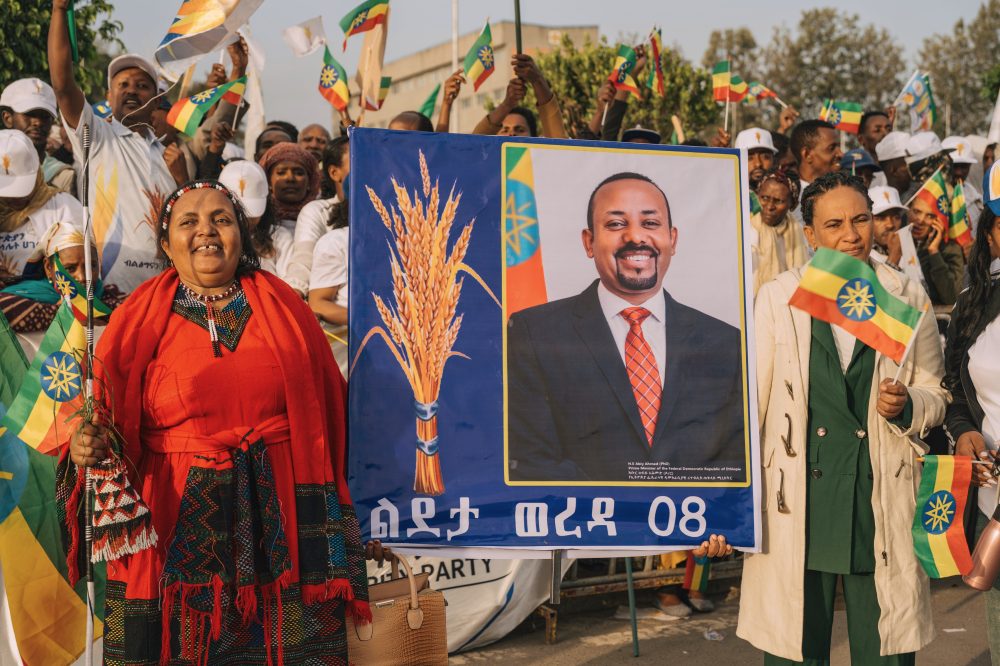
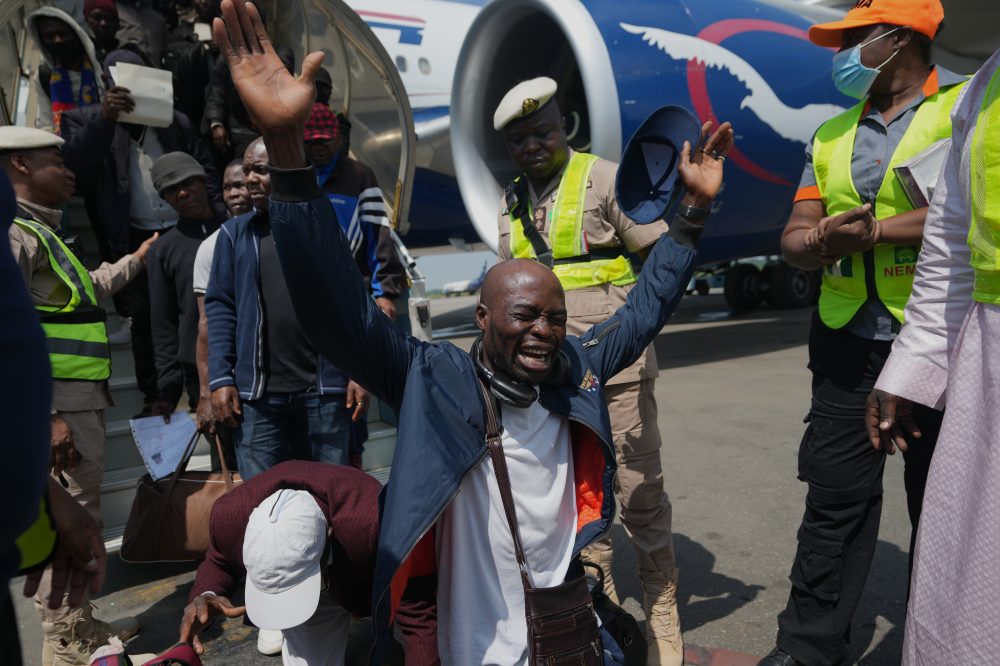
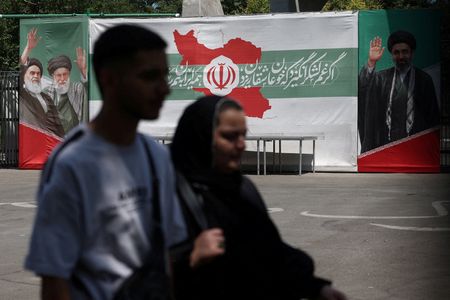
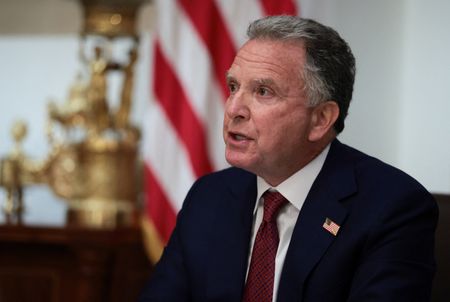
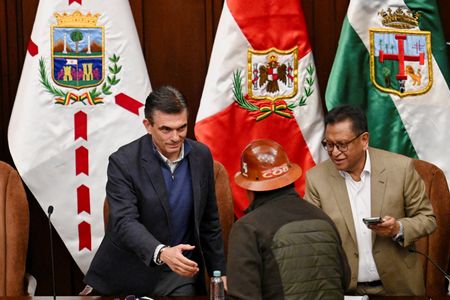
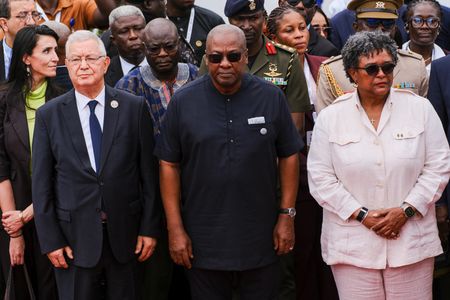
ADDIS ABABA, Ethiopia — Ethiopia’s ruling party has locked in a dominant hold on parliament after final results from the June 1 election were announced Sunday, according to the country’s National Election Board.
Prime Minister Abiy Ahmed’s Prosperity Party claimed 438 out of 501 seats in the House of Representatives. The newly elected parliament is set to gather in October, at which point Abiy is expected to be reelected to serve an additional five-year term.
The election unfolded against a backdrop of violence and political repression. Ongoing conflict in the Oromia and Amhara regions forced 143 polling stations to remain closed on election day, the election board reported. Armed clashes between the Fano militia and federal forces in Amhara, along with fighting involving the Oromo Liberation Army rebels in Oromia, have been central drivers of the instability as the government works to disarm both groups.
Officials reported a voter turnout of 94%. More than 50 million people had registered to vote out of Ethiopia’s estimated population of 130 million, according to the election board.
The Tigray region was once again left out of the election entirely. The area, where hundreds of thousands of people died during a war between federal and regional forces, has now gone without federal parliamentary representation for six years.
Electoral board chairperson Melatwork Hailu defended the process Sunday, saying the board upheld “institutional neutrality and performed its duties solely in accordance with the law and electoral guidelines, without interference.”
International observer missions from regional bodies including the African Union and the Intergovernmental Authority on Development were present but drew criticism for largely staying within the capital, Addis Ababa, rather than deploying widely across the country. Their limited presence still provided the election with a degree of international legitimacy.
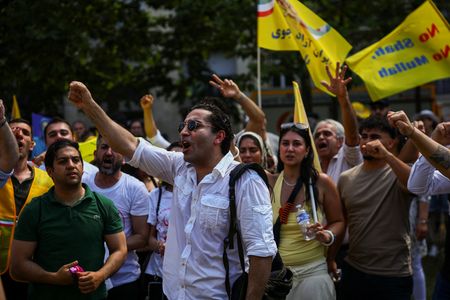
The vote drew sharp criticism from opposition figures, many of whom were barred from running. The ruling party’s most vocal critics were either imprisoned, living in exile, or had vanished. Those who did participate in the race said the environment was marked by fear and intimidation, and that the playing field was far from level.
Yitayal Assefa, who ran under the All Ethiopia Unity Party opposition banner and lost his race, spoke with The Associated Press on Sunday. He said the government held an enormous advantage while opposition candidates faced harassment and had little realistic chance of success.
“My participation was not about winning but about fighting for my voice and political ideals within the political spectrum against a government that is assured of a win, win or lose,” Assefa said.
Merara Gudina, a professor at Addis Ababa University and an opposition leader who chose not to participate in the election, told the AP the vote was a “sham” and that the outcome was never in doubt.
He warned the result will “negatively affect the already deteriorating stability of the country.”
Abiy’s government has faced repeated accusations of human rights abuses targeting critics and members of the press, despite pledges of democratic reform and peace that he made in 2020. Abiy was awarded the Nobel Peace Prize in 2019 for resolving a long-running dispute between Ethiopia and neighboring Eritrea. However, the two nations are now at odds, with Addis Ababa accusing Asmara of backing rebel groups to undermine Ethiopia’s stability, while Eritrea claims Ethiopia is threatening to seize its seaport.
MILAN — Fashion’s most iconic Italian house went back to basics Sunday when designers Miuccia Prada and Raf Simons took the runway at Milan Fashion Week with a collection rooted in the humble spirit of denim — though executed in anything but ordinary materials.
The duo’s vision for next spring and summer centers on a pared-down wardrobe: slim, cropped jackets paired with five-pocket trousers, anchored by classic blazers or leather blousons. Think everyday dressing, elevated.
“Sometimes you just realize you need a good pasta pomodoro,” Simons said ahead of the show, invoking the beloved Italian comfort dish as a metaphor for returning to something simple and satisfying.
Interestingly, despite the denim-driven inspiration, Prada revealed she has never actually worn a pair of jeans in her life. Simons, for his part, admitted he only recently rediscovered the wardrobe staple after spending roughly twenty years wearing wool trousers exclusively.
The result is a collection where five-pocket trousers and flat-pocket jackets — both slim and cropped — take center stage as the new Prada uniform.
The majority of looks were rendered in rich, soft leather in a palette of antique white, gray, burgundy, and turquoise, sent down the runway to the sound of rock guitar. A secondary grouping appeared in nearly sheer white technical fabric, well-suited to the heat gripping Europe this season. Only a handful of closing looks were made from actual denim.
Cropped shirts and knit vests with geometric patterns made appearances throughout, accessorized with clashing silk scarves tied at the waist. The only bags in the collection were colorful pouches worn at the hip, sometimes attached to wide belts. A pointed shoe with multiple Velcro straps completed each look.
Prada described the goal as creating pieces with universal appeal, deliberately steering away from what she called “useless design” — something she suggested was plentiful on other runways.
Simons echoed that sentiment, saying the designers wanted to bring fashion back in touch with how real people dress. He noted that some of the most powerful fashion ideas throughout history have come “from the street” rather than being handed down by luxury labels and runway shows.
“It’s a clear silhouette, vertical, simple, sharp, proud. A lot of white, peaceful, hopeful, and cleansing,” Simons said. “We think this collection is breaking the perception of what is perceived as typical luxury in high fashion.”
True to the theme of simplicity, the show took place in a stripped-down space with transparent bench seating — giving every attendee an equal view of the runway.
The front-row crowd included NBA star Anthony Edwards, South African-Australian singer and actor Troye Sivan, K-pop group ENHYPEN, and British actor Louis Partridge. Throngs of enthusiastic fans braved the summer heat outside to catch a glimpse of their favorite celebrities.
PRAGUE — A large crowd descended on the Czech capital on Sunday to push back against a government proposal that many fear would strip public broadcasters of their independence.
Demonstrators assembled outside the headquarters of Czech public television in Prague to show solidarity with the media. The rally came just one day before broadcast employees were scheduled to stage a warning strike, and followed a series of earlier protest marches held in Prague and other regional cities across the country.
The government, led by populist Prime Minister Andrej Babiš, approved the plan earlier in the week. Under the proposal, public radio and television would begin receiving their funding directly from the state budget starting next year, replacing the current system in which fees collected from individuals, households, and businesses support the broadcasters.
Opponents of the plan argue that shifting to state funding would hand the three-party coalition government a lever of control over the media — drawing comparisons to moves made by populist governments in Slovakia under Prime Minister Robert Fico and Hungary under former Prime Minister Viktor Orbán.
Mikuláš Minář, a lead organizer with the Million Moments for Democracy group, addressed the crowd with a pointed message: “The media don’t belong to politicians. They belong to us all and we won’t allow them to be stolen from us.”
The proposal has drawn criticism from international media organizations as well. Beyond the funding source change, the plan would also cut the broadcasters’ budgets by roughly 15% compared to current levels and includes no guarantees of future financial support.
Leaders of both the public radio and television networks warned that such cuts would force them to eliminate hundreds of positions. Babiš, for his part, argued that the media organizations need to tighten their belts financially.
The record of Babiš, his cabinet members, and allied lawmakers includes a pattern of criticism and attacks directed at public and mainstream media outlets. His coalition’s broader agenda also includes pulling back from support for Ukraine and opposing certain key European Union policies.
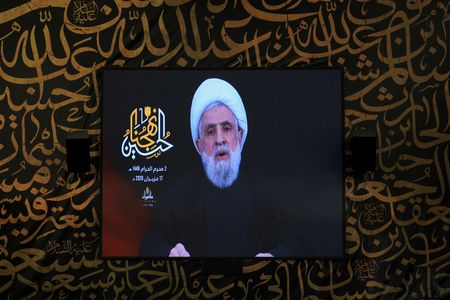
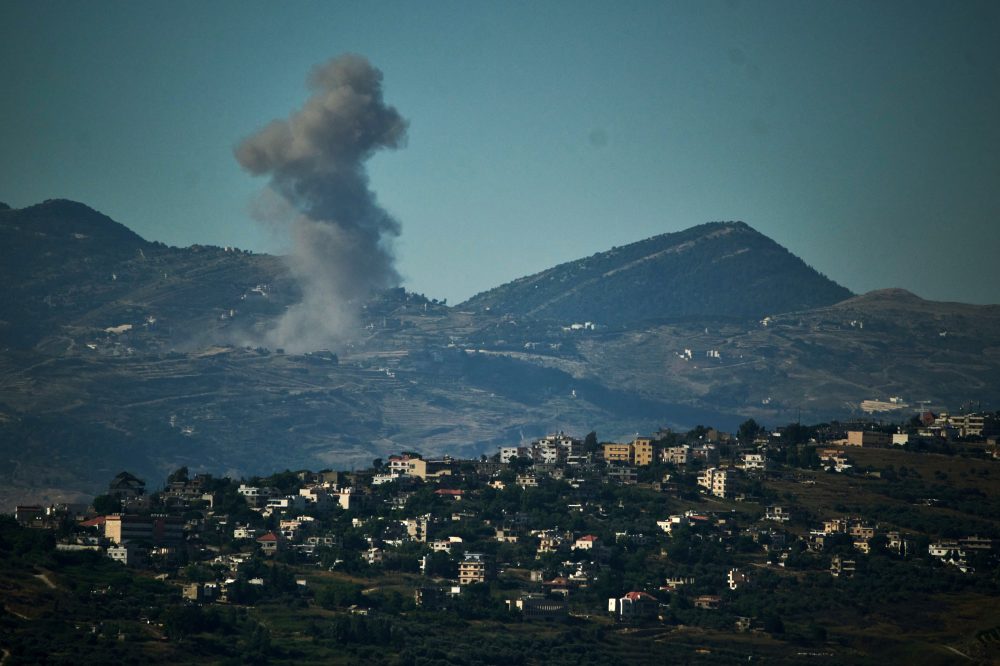
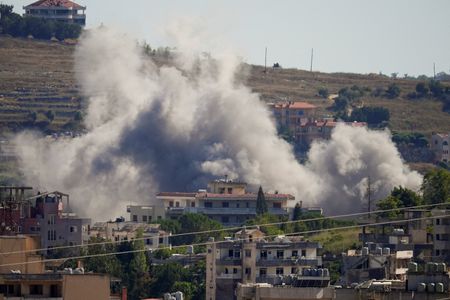
Hezbollah leader Naim Qassem issued a firm warning on Sunday, declaring that Israel will not maintain a presence in Lebanon and that his organization stands ready to respond to any actions taken by Israeli forces that cross the line.
Qassem’s remarks came just days after a ceasefire between the two sides went into effect on Friday. Despite the agreement, Israeli officials have made clear that their military personnel are authorized to act freely and without limitation when it comes to neutralizing what they describe as threats within Lebanese territory.
PRAGUE — Thousands of people marched through the streets of Prague on Sunday to voice their opposition to the Czech government’s plan to completely overhaul how public media is funded — a system that has been in place for decades.
Protesters and critics argue the proposed changes would not only reduce funding but also open the door to political meddling in public broadcasting.
The demonstration came just one day before employees at public broadcasters Czech Television and Czech Radio were set to go on strike over the same issue. The work stoppage was expected to affect programming, though both stations planned to remain on the air.
The government — led by Prime Minister Andrej Babis’ populist ANO party and supported by right-wing and far-right coalition partners — announced last week its intention to eliminate licence fees, which currently serve as the primary source of revenue for public television and radio. Officials argue that most citizens do not want to pay the fees levied on households and businesses, and say they plan to fund public broadcasters directly through the state budget instead. Opponents contend this shift would be a direct threat to the broadcasters’ independence.
Mikulas Minar, a representative of the Million Moments (Milion Chvilek) group that organized the march, addressed the crowd at the outset of the demonstration with a firm message: “Media does not belong to politics.”
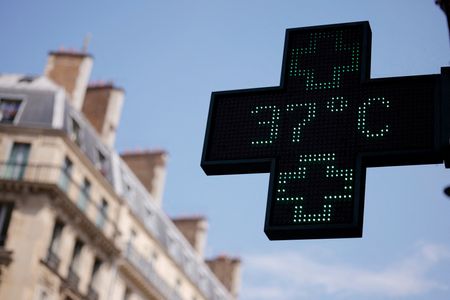
The planned march route was trimmed shorter than originally intended due to the intense heat wave gripping Prague and much of Europe. The CTK news agency estimated that thousands participated, walking through city neighborhoods toward the Czech Television building while holding banners reading “Hands off public media.”
Under the government’s proposal, funding would revert to levels last seen between 2008 and 2024 — before a rare fee increase implemented by the previous government took effect in 2025. That rollback would amount to a 15% reduction in overall financing for the broadcasters.
Czech Television’s chief stated this week that such a cut could force the station to lay off somewhere between 300 and 500 employees out of its total workforce of 2,900.
While the government has repeatedly criticized both public and privately owned independent media outlets — accusing them of bias — officials maintain that the funding changes do not threaten the editorial independence of Czech Television or Czech Radio.
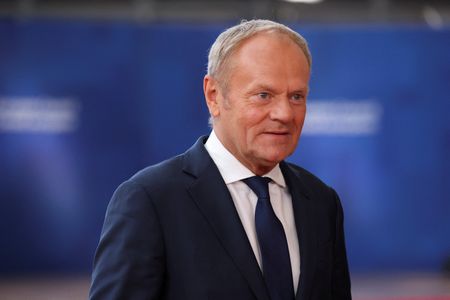
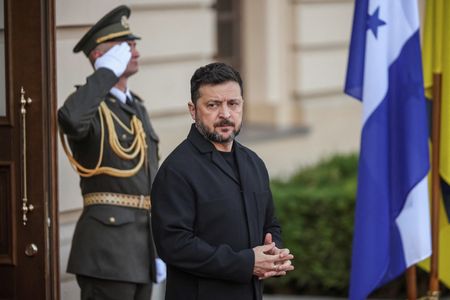
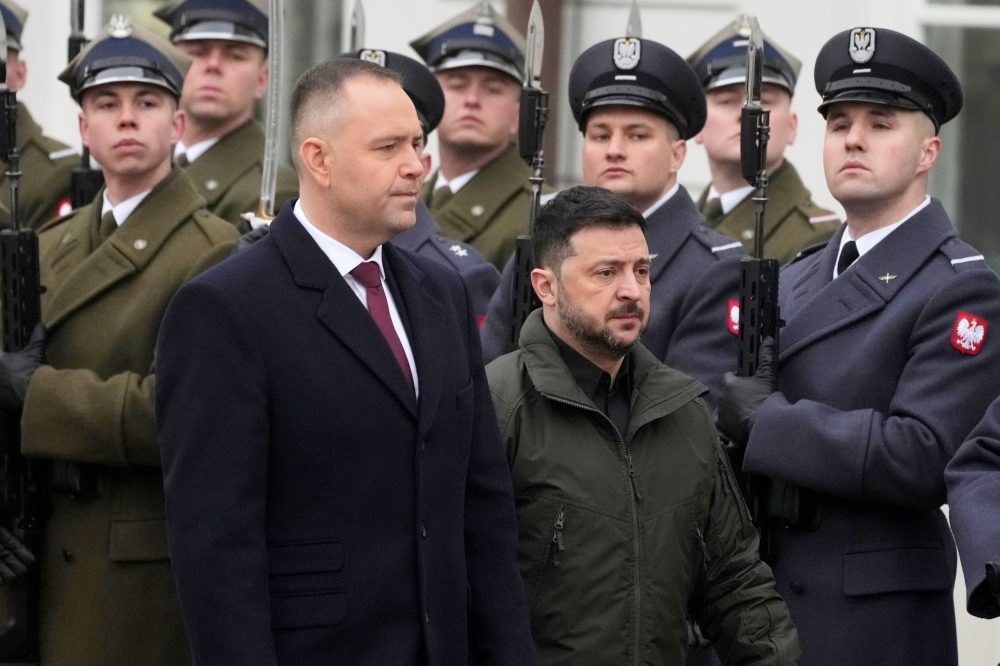
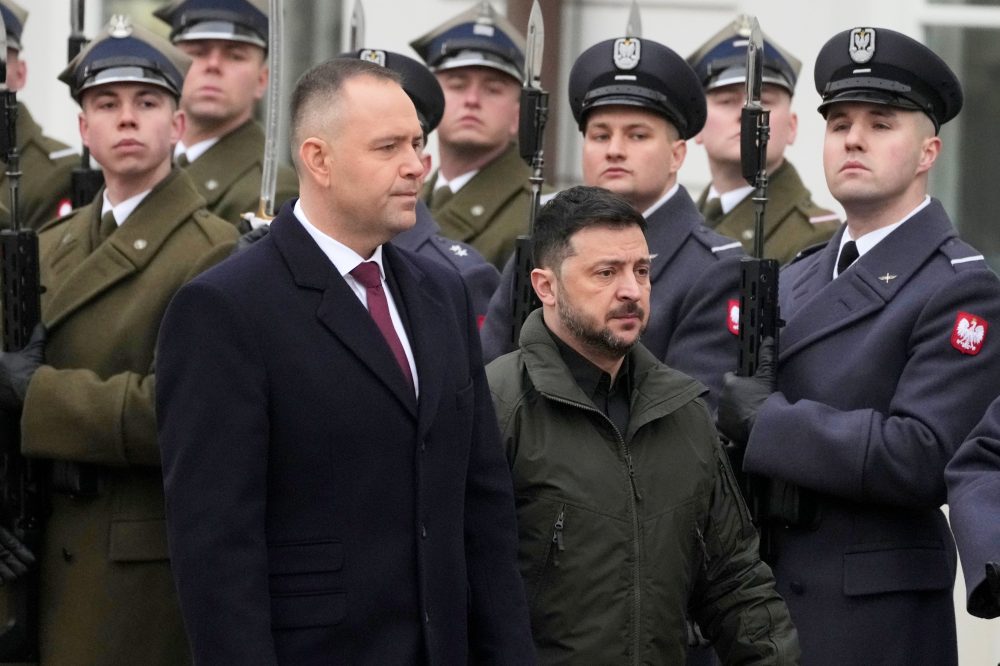
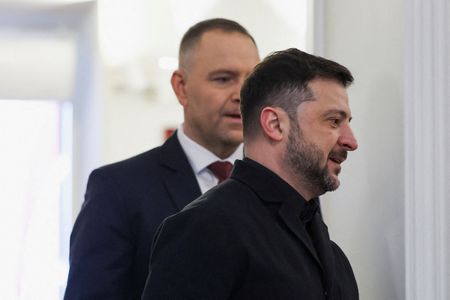
WARSAW — Polish Prime Minister Donald Tusk took to social media Sunday to warn that the escalating political clash between Poland and Ukraine is damaging to both nations, urging leaders to pull back from the brink of a deeper rift.
The dispute flared on Friday when Polish President Karol Nawrocki revoked Ukrainian President Volodymyr Zelenskiy’s Order of the White Eagle — Poland’s highest state honor. The move prompted three former Ukrainian presidents and other top officials to send their own Polish state awards back in protest.
Nawrocki’s decision came after Zelenskiy angered many Poles by renaming a Ukrainian military unit after the Ukrainian Insurgent Army — a nationalist group responsible for the massacre of Polish civilians during World War Two.
Tusk, a pro-European leader who was returned to the prime minister’s office in 2023 after his coalition defeated the nationalist Law and Justice party — the political home of President Nawrocki — posted a pointed message on X calling for de-escalation.
“Wading into a conflict between politicians in Poland and Ukraine is a strategic mistake that will harm both sides: business-wise, geopolitically, and reputationally. And in politics, as we know, a mistake is worse than a crime,” Tusk wrote.
He also noted the difficulty of the situation, adding: “In discussions with my European partners, I strive to minimise losses and reduce tensions. This is no easy task.”
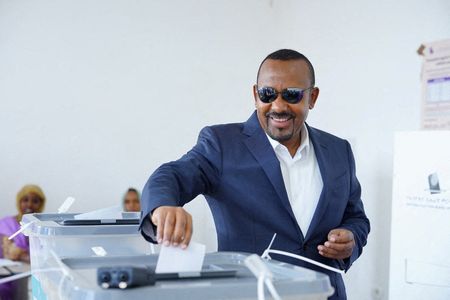
Ethiopia’s ruling Prosperity Party has secured a comfortable parliamentary majority in this month’s elections, according to results announced by the country’s national election board on Sunday.
The outcome came as little surprise, as Prime Minister Abiy Ahmed’s party was broadly expected to dominate the vote against a fragmented and divided opposition field.
Abiy first came to power in 2018 following widespread mass protests that brought down the long-ruling EPRDF coalition. He established the Prosperity Party the year after taking office.
The party’s latest victory follows a similarly dominant performance in the 2021 parliamentary elections, when it captured more than 90% of the available seats.
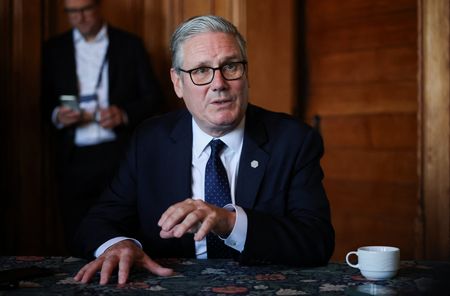
LONDON — Scottish police announced Sunday that a 36-year-old man has been charged in connection with a series of violent attacks that took place in Edinburgh on Friday, which British Prime Minister Keir Starmer described as appearing to have an anti-Muslim motive.
Five men were hurt during the attacks, and three of them required hospital care for injuries that were serious but not life-threatening, according to authorities.
Footage circulated on social media showed a shirtless, tattooed white man who appeared to be armed with a large weapon chasing an Asian man and then trying to force his way into a restaurant. The man was later seen being taken into custody by officers on the ground.
According to the BBC, the attacks appeared to have started near a mosque in the western part of the Scottish capital before spreading to other areas of the city.
In a brief statement released Sunday morning, Police Scotland confirmed that the 36-year-old had been charged and that a report had been forwarded to prosecutors. The man is expected to appear in court at a future date.
Taking to social media on Saturday, Prime Minister Starmer wrote that the attacker “appears to be motivated by anti-Muslim hatred.”
The Muslim Council of Britain echoed that assessment, describing the incident as “a direct consequence of political rhetoric that demonises entire communities.”
The Scottish Association of Mosques also placed blame on “language that portrays migrants, refugees and Muslims as threats to be feared rather than people to be understood.”
The attacks come shortly after Northern Ireland experienced two days of anti-immigrant rioting earlier this month, which the British government labeled “racist thuggery.” Those disturbances followed a knife attack for which a Sudanese man was charged with attempted murder.
Nigel Farage, who leads the populist Reform UK party — currently topping British opinion polls — has repeatedly criticized the government over its handling of small boat crossings, which brought 41,000 immigrants across the English Channel last year.
Rupert Lowe, who split from Reform UK to establish the smaller Restore Britain party, has made organized child sexual abuse a central issue, claiming it is largely carried out by Muslim men of Pakistani heritage.
Last year, the government directed police to track the ethnicity of gangs involved in such abuse cases, following a report that highlighted government failures to confront the problem and a reluctance to acknowledge an “over-representation” of Asian men among those involved.
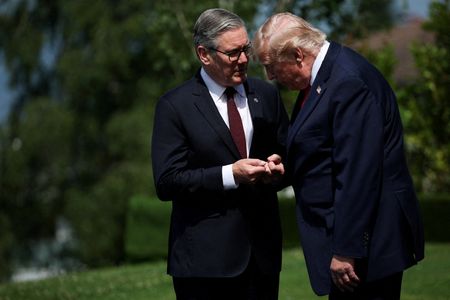
U.S. President Donald Trump made a bold prediction on Sunday, posting on his Truth Social platform that British Prime Minister Keir Starmer is set to leave office.
“Keir Starmer will resign as Prime Minister of The United Kingdom,” Trump wrote. “He failed badly on two very important subjects- IMMIGRATION AND ENERGY (OPEN NORTH SEA OIL!). I wish him well!”
The post came without any additional context or explanation from Trump about the basis for his claim. The remarks put a spotlight on the embattled UK leader, who has faced mounting pressure on both immigration and energy issues during his time in office.
President Donald Trump took to Truth Social on Sunday with a blunt warning directed at Iran: bring your Hezbollah allies in Lebanon under control, or face another round of U.S. military strikes — and this time, even more severe ones.
“Iran must immediately stop their highly paid PROXIES in Lebanon from causing trouble,” Trump wrote. “If they don’t, we’ll hit Iran very hard again, just like we did last week, only harder!!!”
The post signals a sharp escalation in tensions between the United States and Iran, with Trump making clear that military action remains on the table if Iranian-backed forces continue their activities in Lebanon.
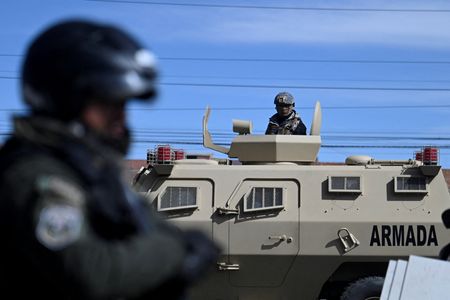
LA PAZ — Bolivia appeared to be turning a corner on Sunday, one day after President Rodrigo Paz declared a state of emergency in response to a 50-day social crisis that had shut down the country’s primary highway routes.
In the early hours of Sunday, the Legislative Assembly voted overwhelmingly to approve Paz’s emergency decree, which was designed to restore road access and ensure the delivery of essential goods after protest groups spent weeks cutting off major roads. The blockades had left trucks stranded and severely limited the flow of food, fuel, and medicine to communities across the country.
Sunday’s congressional vote came alongside several significant developments on the ground. In Santa Cruz, local officials and protest leaders reached an agreement to end a major blockade in the town of San Julian. Separately, a well-known campesino federation based in La Paz announced it was temporarily suspending its demonstrations, though the group made clear its underlying demands had not changed.
Although police and military personnel remain stationed across the country, the national highway authority confirmed that no active protest-related blockades were still in place. That said, many roads sustained considerable damage during the weeks of unrest and will need extensive cleanup and repairs.
The roots of the crisis stretch back to a decision by Paz — who took office in November — to abruptly eliminate long-established fuel subsidies in an effort to reduce the budget deficit during a worsening shortage of dollars and ongoing discussions with the International Monetary Fund. Even after taking steps to stabilize fuel prices and walk back unpopular land reform measures, the protests grew stronger. Labor unions pushed for wage increases, relief from fuel and dollar shortages, and Paz’s removal from office.
Political analysts and legal experts have cautioned that the emergency powers could actually make the situation worse if the government fails to tackle the deeper issues driving the protests.
The calming of tensions on Sunday happened to fall on the same day as the celebration of the Andean-Amazonian New Year, a culturally significant occasion in Bolivia. Across the country, government representatives and indigenous leaders used the occasion to call for unity and healing. At a ceremony in La Paz, Tourism Minister Cinthya Yanez expressed her hope that “prosperity” and “bounty” would return to Bolivia and that its people would once again “join hands.”
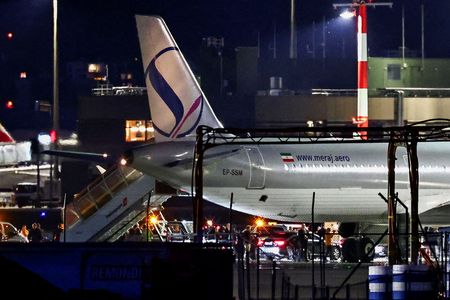
Aviation authorities in Switzerland say a technical malfunction in air traffic control systems caused significant disruptions at Zurich airport on Sunday — and the cause was tied directly to security preparations for ongoing peace negotiations between the United States and Iran.
Swiss air traffic control authority Skyguide said the problem arose when a newly created no-fly zone above Buergenstock — the Swiss mountain resort hosting the diplomatic talks — was being integrated into radar display systems. That integration process triggered the technical fault.
The restricted airspace zone was established at the last minute, according to a statement from Skyguide, because the decision to hold this latest round of negotiations wasn’t finalized until Saturday.
Despite the disruption, Skyguide emphasized that safety was never compromised. “The systems are running smoothly, and security was ensured at all times,” the agency said, confirming that normal operations had resumed.
The impact on travelers was significant. An airport spokesperson told Reuters that by midday, 12 arriving flights and 14 departing flights had been cancelled outright. At least 60 other departures faced delays.
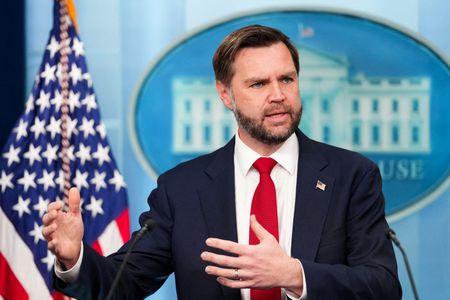
Meanwhile, U.S. Vice President JD Vance arrived at Buergenstock on Sunday for the scheduled peace discussions with Iran, as outlined in a tentative agreement. However, the diplomatic effort was quickly overshadowed by Iran’s announcement that it had reinstated its blockade of the Strait of Hormuz.
The resort where talks are being held sits roughly 50 kilometres — about 31 miles — south of Zurich airport. Switzerland had pledged to provide what it called a “discreet and reliable setting” for the high-stakes negotiations.
Israeli Defence Minister Israel Katz announced Sunday that Israeli soldiers operating in Lebanon have unrestricted authority to act against any threats they encounter, with troops continuing to hold their positions in what Israel refers to as a security zone.
A ceasefire agreement with Iran-backed Hezbollah officially went into effect on Friday, following months of intensifying conflict. However, Israeli strikes the very next day — Saturday — resulted in the deaths of at least 20 people in Lebanon, according to Lebanon’s state news agency NNA.
Israel defended those strikes, saying they were carried out in direct response to projectiles launched by the Iran-backed group targeting Israeli troops in southern Lebanon. An Israeli official described the targets of the retaliatory strikes as “Hezbollah targets.”
Meanwhile, Iranian officials indicated that Lebanon is a central topic in Sunday’s peace discussions between Iran and the United States, taking place in Switzerland. Those talks follow a framework agreement signed by Washington and Tehran aimed at ending the war between the two countries, which began at the end of February and had been fueling broader regional tensions.
The Israeli military has moved into portions of southern Lebanon, while Hezbollah maintains it has the right to engage Israeli forces on Lebanese soil, though the group says it will refrain from launching attacks into northern Israel.
Katz confirmed that Israeli forces will stay in all positions within the security zone, which stretches roughly 10 kilometers — about 6 miles — into southern Lebanese territory. Israel says this presence is necessary to safeguard communities in northern Israel.
“All of the IDF’s achievements in the campaign in Lebanon are being preserved, with our forces deployed in the security zone along the Yellow Line in Lebanon and operating from there inward against terrorists and terrorist infrastructures,” Katz stated in his Sunday announcement.
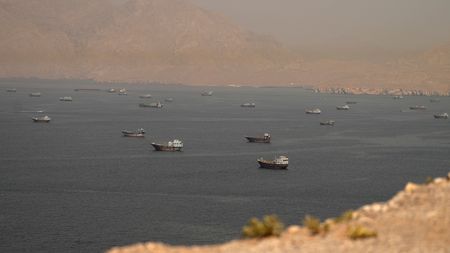
Iran’s Tasnim news agency reported Sunday that the Strait of Hormuz will not be reopened until a ceasefire in Lebanon is being honored, according to a source with close ties to the country’s negotiating team.
Beyond the Lebanon ceasefire condition, the source indicated that the vital shipping waterway would also remain blocked until waivers permitting the sale of Iranian oil are put in place.
LONDON (AP) — A decade has passed since the United Kingdom made the historic decision to leave the European Union, a vote that continues to shape political identities and dismantled a 50-year effort to build closer ties with the European continent.
Known as Brexit — a shorthand for British exit — the departure was set in motion on June 23, 2016, when 52% of voters, totaling more than 17 million people, chose to leave the EU. Despite the slim margin, the vote triggered the most sweeping transformation of British society and its economy since the Second World War.
Like any complicated split, the process of actually completing the break took far longer than expected — nearly five years in total.
The roots of Brexit stretched back to a growing frustration with the EU and with the aftermath of the 2008 global financial crisis. Those who championed leaving argued that Britain, freed from EU constraints, could focus on its own priorities and recapture its former economic strength. Opponents countered that the move would cause economic turmoil and damage the country’s global reputation.
Ten years later, the results are being assessed.
Brexit supporters had envisioned a Britain that would flourish outside the EU by tapping into the bold, entrepreneurial spirit that once made it the world’s dominant economic power. That vision has largely not come to pass.
While the COVID-19 pandemic and the conflicts in Ukraine and more recently the U.S.-Israeli war on Iran have contributed to Britain’s difficulties, the broader economic revival that was promised has not materialized. Businesses have repeatedly complained about the new obstacles they face when trading with EU member nations — the 27-country bloc remains by far the U.K.’s largest trading partner.
Even without formal tariffs on British goods entering the EU, a wide range of non-tariff barriers have emerged, including complicated customs paperwork, border certification requirements, and visa restrictions. Many trade agreements that Brexit supporters promoted — most notably a deal with the United States — have never been finalized.
Economic analysts estimate that the British economy is somewhere between 4% and 8% smaller than it would have been if the country had chosen to remain in the EU. That gap translates into significantly lower living standards and billions of pounds less available for public services — including the beloved National Health Service, which Brexit campaigners famously promised would receive an extra 350 million pounds (approximately $468 million) per week. That pledge was prominently displayed on their campaign bus.
Jonathan Portes, a professor at King’s College London, put it plainly: “Brexit has made the U.K. economy smaller than it otherwise would have been.”
Writing for The UK in a Changing Europe think tank, Portes added: “The effect has not been a sudden collapse, but a gradual and cumulative drag on trade, investment and productivity.”
Brexit supporters, however, maintain that the full impact of leaving the EU cannot be judged this soon. They argue that some short-term economic pain was always expected in exchange for greater control over domestic policy — particularly on immigration.
Brexit ended the free movement of people between the U.K. and EU nations, but controlling the borders has produced mixed results. Reining in immigration was a central promise of the Brexit campaign, and the message of “taking back control” struck a chord with many voters.
Net migration from EU countries has dropped sharply. However, arrivals from non-EU nations have surged — partly due to changes in visa rules introduced by the previous Conservative government to address labor shortages in sectors such as elder care.
Overall, there are signs the government is gaining more control over legal immigration. Net migration fell dramatically, from over 900,000 in 2023 down to 171,000 last year.
Even so, public anger over illegal immigration remains intense. Many Britons are particularly upset by the sight of people — often fleeing conflict zones like Afghanistan and Sudan — arriving on inflatable boats after crossing the English Channel. Small boat crossings peaked at 46,000 in 2022 and reached 41,000 last year, making it one of the country’s top political flashpoints despite representing only a small portion of overall migration. Tensions have boiled over, with angry crowds protesting outside — and in some cases attempting to set fire to — hotels being used to house asylum seekers at public expense.
Britain’s political landscape has splintered in the years since Brexit. Support for the two historically dominant parties — the Conservatives and Labour — has eroded. The Conservatives were voted out in 2024 following 14 years in power, a period heavily defined by the ongoing battles over the U.K.’s relationship with Europe.
The Labour government has also struggled to win public confidence, and Prime Minister Keir Starmer appears to be on the verge of announcing his resignation.
Meanwhile, millions of voters are gravitating toward Reform U.K., led by Nigel Farage — arguably the politician most associated with the push for Brexit. His party has topped nearly every opinion poll for more than a year.
At the same time, sentiment toward Brexit itself has shifted. According to two polls from Ipsos, 52% of people in the U.K. would now like to rejoin the EU, compared to 33% who are opposed. The same polling found that 48% believe Brexit has gone worse than expected, while just 9% say it has gone better. Additionally, 48% said they would support holding another referendum on EU membership, versus 27% who would not.
Against this backdrop, the Labour Party has been walking a careful line since winning power in 2024. Having ruled out reversing Brexit — or even rejoining the EU’s tariff-free single market — the party has limited room to maneuver on the issue.
Starmer has been pursuing a “reset” of the U.K.’s relationship with the EU, focusing mainly on reducing trade friction. He had hoped to unveil additional steps at an upcoming EU summit next month — assuming he remains in office.
His most likely successor, Andy Burnham, carefully softened his language on the question of EU membership during a recent campaign, ahead of winning a special election on Thursday. That victory came in a seat that had voted heavily in favor of Brexit, and Burnham fended off a challenge from Reform U.K.
“I am not proposing that the U.K. considers rejoining the EU,” Burnham said. “I respect the decision that was made at the referendum and it is going to undermine everything I have said about strengthening democracy if we don’t respect that vote.”
KYIV — Even as Ukraine has managed to largely stall Russian advances on the battlefield, the humanitarian suffering endured by millions of displaced Ukrainians remains severe and is being compounded by dramatic reductions in international aid, according to the leader of the International Rescue Committee.
In recent months, Ukraine has brought Russian progress on the front lines to nearly a standstill, a shift significant enough that G7 leaders acknowledged at a summit last week that the war’s momentum has changed. But that military development has done little to ease the crisis facing civilians.
David Miliband, the IRC’s president and CEO, was visiting Ukraine when he spoke out about the consequences of aid cuts — reductions largely driven by the United States — that have slashed his organization’s budget in the country by half. The IRC’s funding in Ukraine now stands at an estimated $20 million for 2027, down from $40 million the previous year.
Miliband made his remarks on Saturday, which marked World Refugee Day. “It feels particularly important at a time when there is this new sense of a different geopolitical narrative to recognise the brutality and strain that’s being faced by millions of Ukrainians,” he said.
The United Nations estimates that approximately 118 million people around the world are currently displaced, frequently due to conflict, violence, or persecution. Ukraine alone accounts for roughly 10 million of those individuals, with close to four million displaced within the country’s own borders.
Miliband pointed to what he called a broader global crisis, describing the situation as part of “the new world disorder.” He cited the toll of more than 60 ongoing wars, along with disease and natural disasters. “There are more shocks and fewer shock absorbers,” he said. “And money is one of the absorbers.”
The Trump administration has significantly scaled back foreign aid and dismantled the U.S. Agency for International Development, a move that has prompted other countries to follow suit with their own aid reductions.
On the ground in Ukraine, the IRC is working to deliver mobile medical services to communities living near sections of the 1,200-kilometer, or roughly 745-mile, front line. The organization also provides trauma support to vulnerable women and children who have experienced abuse.
Miliband highlighted an often-overlooked dimension of the conflict: the toll more than four years of war has taken on the mental health of Ukraine’s population. He argued that redirecting even a fraction of the billions in military support provided by Ukraine’s allies toward humanitarian and psychological assistance could go a long way in preserving the resilience of Ukrainian society.
Authorities in Russian-occupied Crimea cut off civilian access to gasoline on Sunday as Ukraine continued to hammer fuel infrastructure across the Black Sea peninsula.
Gov. Sergey Aksyonov, who was installed by the Kremlin to lead Crimea, reported that overnight Ukrainian strikes left four people dead and 28 others wounded. He did not identify the specific target of those attacks.
Aksyonov followed up with a social media post announcing that gas stations across the region would immediately stop selling fuel to private individuals and non-government businesses for an unspecified length of time.
“Fuel will be sold only to government agencies that ensure the functioning and security of the Republic of Crimea,” Aksyonov stated. “I ask everyone to remain calm and to only trust official sources of information.”
Ukrainian forces have struck Crimean fuel supplies repeatedly in recent weeks, creating the most severe energy shortage the peninsula has seen since Russia’s illegal annexation of the territory in 2014.
Ukrainian President Volodymyr Zelenskyy confirmed in a Sunday statement that among the targets hit were a Crimean oil depot and an oil transport facility located in Russia’s southern Krasnodar region. He characterized the strikes as part of Ukraine’s strategy of “long-range sanctions” aimed at Russia’s energy infrastructure.
“Russia understands only strength, and our long-range strength is certainly working for peace,” Zelenskyy wrote.
Russian authorities in Krasnodar reported earlier Sunday that a drone attack set off a fire at a Black Sea oil terminal in the village of Chushka. Officials there also said Ukrainian strikes hit a ferry, resulting in one fatality.
While Crimea has faced fuel shortages from Ukrainian attacks in the past, the current situation is described as the worst since the 2014 annexation. Late last month, officials had already moved to limit fuel purchases to 20 liters — roughly 5 and one-third gallons — per vehicle owner each week, distributed through prepaid coupons. Those coupons were gone almost instantly after being made available through an official messaging app, leaving drivers waiting in line for hours just to refuel.
Residents have flooded social media with tips on where to find gasoline, and officials set up a hotline specifically for tourists in the area who found themselves stranded without fuel.
Some drivers have been bringing gas in from Krasnodar and other areas via the Kerch bridge, though they are limited to 100 liters — about 26 and a half gallons — per vehicle. Taking advantage of the shortage, some individuals are reselling fuel at twice the going market rate.
In an unusual move, the Kremlin publicly acknowledged the severity of the fuel crisis and pledged to resolve it quickly.
The Ukrainian strikes have underscored Kyiv’s capacity to inflict meaningful damage on Russian-held territory, even as Russia’s recent battlefield advances have largely stalled. On June 11, Russia’s full-scale invasion of Ukraine hit its 1,569th day — a milestone that surpasses the entire duration of World War I.
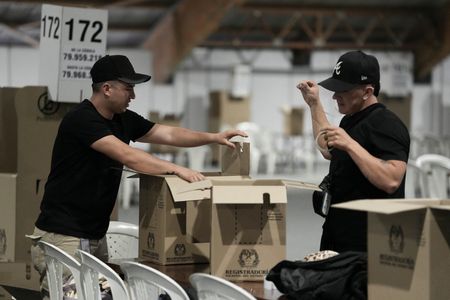
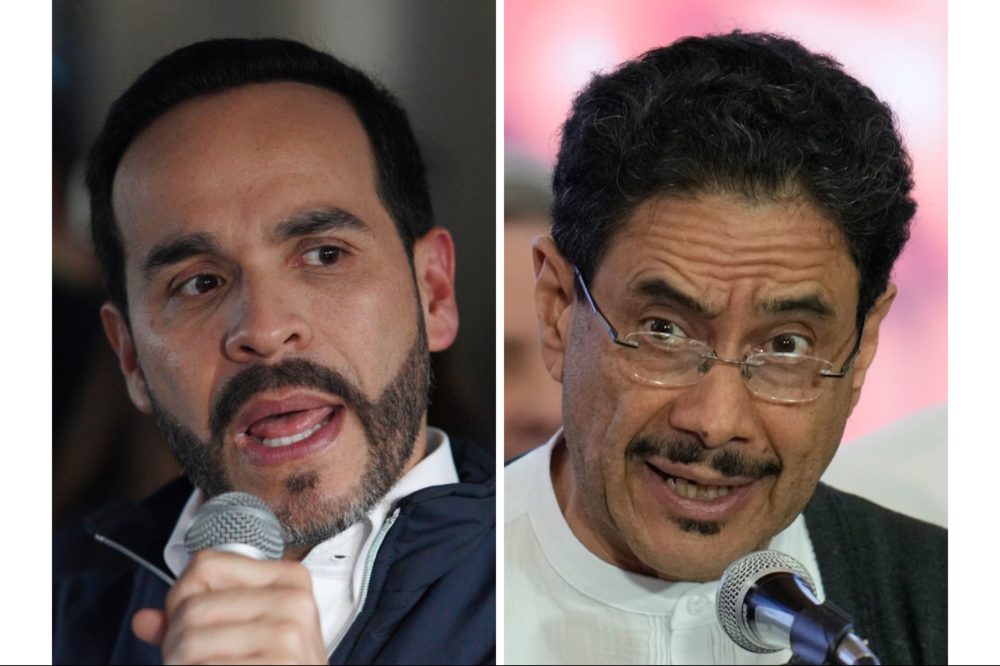
BOGOTA — Colombian citizens are heading to the polls this Sunday to decide the country’s next president in a runoff election that pits a leftist senator against a right-wing lawyer and businessman making his first run for office.
The May first round failed to produce a clear winner, setting up a showdown between Senator Ivan Cepeda, who represents the left, and Abelardo De La Espriella, a political outsider from the right who has never previously held public office.
Cepeda, 63, is running on a platform that would extend the current administration’s agenda — including state pension payments for low-income Colombians, labor reforms backed by unions, continued peace negotiations with armed groups that have battled the government for decades, and a freeze on new oil exploration projects.
De La Espriella, 47, is offering a sharply different vision. He wants to end peace talks with armed groups and launch a sweeping military campaign against them, while also expanding Colombia’s oil and gas industry. He has blamed the current government for the country’s economic troubles and security problems, and has pledged to cut taxes and shrink the size of government by as much as 40%. However, he has said he would keep a 23% minimum wage increase and other well-received social programs put in place by the current administration.
No matter who wins, the new president will face serious challenges, including heavy public debt and a divided Congress that could block major reform efforts.
Polling and financial markets appear to lean toward De La Espriella, who led the first round with 43% of the vote, though analysts say the final outcome could be very close. Both candidates have worked hard to bring out voters — nearly half of all eligible Colombians sat out the May election.
LATIN AMERICA’S RIGHTWARD TURN
Colombia’s election is unfolding against a backdrop of political shifts across the region. Voters in Chile, Argentina, Costa Rica, and Ecuador have all chosen right-wing presidents in their most recent elections. Bolivia also broke with two decades of leftist leadership last year by electing center-right candidate Rodrigo Paz.
In Peru, vote counting is still underway from a June 7 election, with conservative Keiko Fujimori — daughter of former President Alberto Fujimori, who spent 16 years in prison for human rights violations — appearing set to claim the presidency after three previous unsuccessful bids.
Concerns about rising crime and sluggish economies have been the driving force behind most of these rightward shifts, including in Colombia.
Peace negotiations launched by the current Colombian government have largely fallen apart as armed factions have grown stronger and drug trafficking organizations have expanded, fueling increases in murders and extortion, particularly along the Caribbean coast.
De La Espriella has attempted to link Cepeda — whose father, a communist leader, was assassinated — to criminal elements, though the current government points out it has confiscated more cocaine than any previous administration. Cepeda has pushed back firmly, stating there is no factual basis for those claims.
Meanwhile, Cepeda has raised questions about De La Espriella’s legal career, noting that he has represented clients connected to right-wing paramilitary groups and corruption cases — including Alex Saab, who faces U.S. charges for allegedly laundering money on behalf of ousted Venezuelan President Nicolas Maduro. De La Espriella has maintained that his professional work does not make him complicit in any wrongdoing.
U.S. President Donald Trump has been actively working to expand American influence throughout the region, including the arrest of Maduro, military strikes targeting alleged drug traffickers in the Caribbean, and the formation of a military coalition called the Shield of the Americas, made up of right-wing leaders committed to combating drug trafficking.
Trump, who has had a public falling-out with Colombia’s current president, came out this month with an explicit endorsement of De La Espriella.
“It is my Honor to give Abelardo my Complete and Total Endorsement,” Trump wrote on Truth Social, calling Sunday’s election “very important to the future of Colombia and its relationship to the United States.”
More than 41 million Colombians are eligible to participate in the vote. Polling locations will be open for eight hours beginning at 8 a.m. local time, or 1 p.m. GMT. Early results are anticipated within a few hours of polls closing.
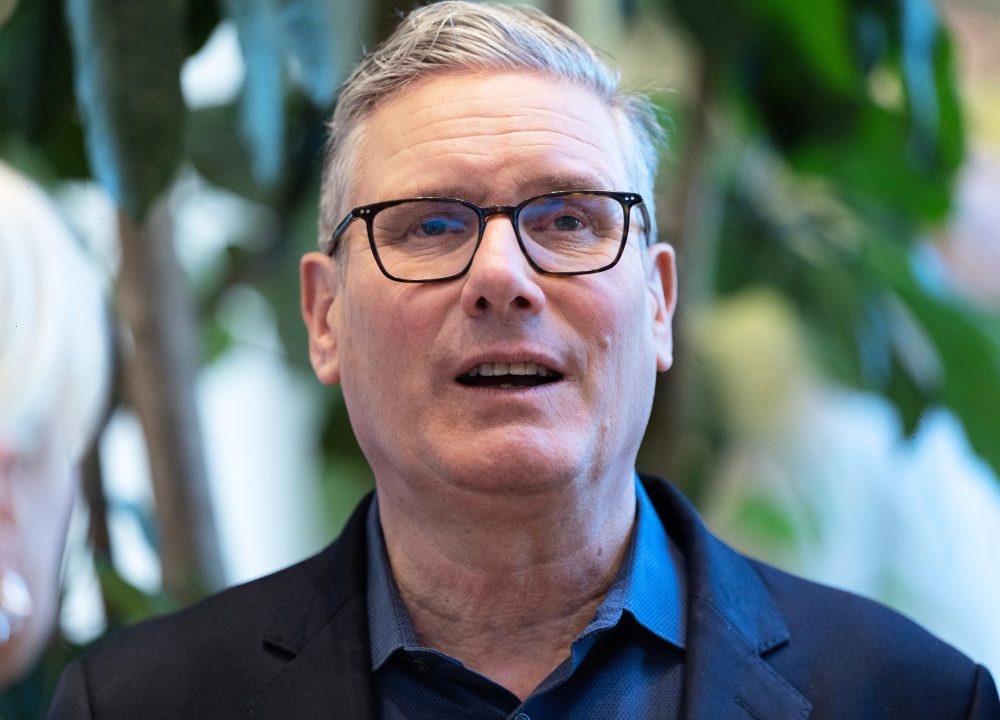
LONDON (AP) — British Prime Minister Keir Starmer is at a crossroads, facing the most consequential decision of his political career: walk away from office or dig in and battle a challenge from Labour Party rival Andy Burnham.
While Starmer has publicly declared his intention to remain in his role, pressure within the Labour Party is intensifying as growing numbers of colleagues believe his leadership has run its course. There is increasing expectation that he could announce a timeline for stepping down as early as Monday — the same day Burnham is set to be sworn in as a member of the House of Commons following his victory in a special election last week.
Business Secretary Peter Kyle appeared on the BBC Sunday and said Starmer is “making time to reflect on the political realities, challenges and opportunities that he finds himself in.” Kyle described reports of an imminent resignation as “speculation,” while adding, “I know he is a prime minister who always puts his country first.”
Starmer spent the weekend at Chequers, the official country residence available to British prime ministers, accompanied by his family. He made no public statements about his political future, though he did post a Father’s Day message on X. “Being a dad is my greatest joy. Today, I’m thinking about my dad, and the father I am to my children because of him,” he wrote.
Should Starmer step down, he would become the sixth British prime minister to leave office within the past decade — an unusually high rate of leadership turnover for the United Kingdom.
Dissatisfaction with Starmer has been mounting for months. Labour lawmakers have been eager to reverse the party’s falling popularity since Starmer guided the center-left party to a sweeping election win in July 2024. He has struggled to deliver on promises of economic growth, fix deteriorating public services, and address the rising cost of living. His leadership has also been dogged by a series of missteps, including his decision to name Peter Mandelson — a figure with ties to Jeffrey Epstein and a history of controversy — as the UK’s ambassador to the United States.
The Labour Party is losing ground on two fronts: liberal voters are gravitating toward the expanding Green Party, while the anti-immigration Reform UK party, led by Nigel Farage, continues to top national opinion polls.
Burnham, who until this week served as the popular mayor of Greater Manchester, won the Makerfield seat in northwestern England decisively in Thursday’s special election. He captured nearly 55% of the 45,510 votes cast — more than 9,000 votes ahead of the Reform UK candidate who finished second.
With a seat in Parliament now secured, Burnham is positioned to mount a formal challenge for the Labour leadership. His victory speech left little ambiguity about his ambitions. “Everyone knows that politics isn’t working,” he said. “Everyone can feel that the country isn’t where it should be. Tonight could, just could, be the turning point.”
Whether Burnham would face a clear path to the leadership or a competitive race remains uncertain. Wes Streeting, who stepped down as health secretary last month in protest of Starmer’s leadership, has indicated he would enter a contest if one takes place.
Starmer congratulated Burnham on Friday but made clear he had no intention of stepping aside quietly. “I will run, I will stand,” if a Labour leadership contest is held, Starmer said. “I’ve said repeatedly I’m not going to walk away from that.”
However, Charlie Falconer, a senior Labour member of the House of Lords, said Saturday that Starmer has “absolutely no authority” remaining. “There should be an agreed transition process in which Andy and Keir cooperate as to when the handover should take place,” Falconer told the BBC.
Crowds of yoga enthusiasts came together in a massive gathering spanning India and other regions of Asia on Sunday to celebrate International Yoga Day.
The widespread event drew participants from across the continent, marking the occasion with group yoga performances and demonstrations.
Images from the day were captured and assembled into a photo gallery by editors at the Associated Press.
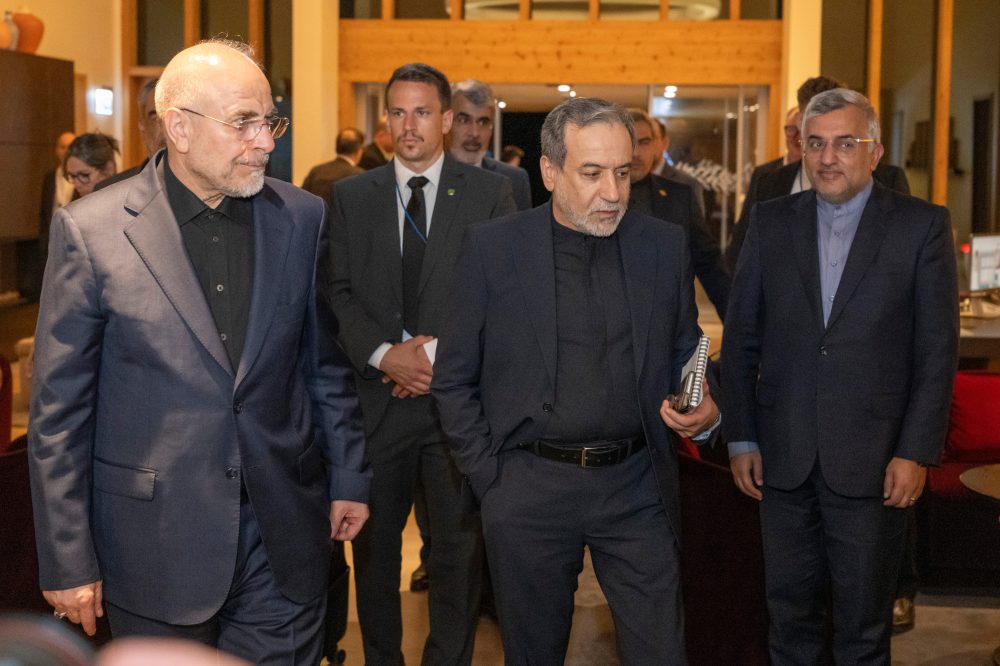
American and Iranian officials are sitting down together in Switzerland this Sunday, working to iron out the finer points of a temporary agreement intended to bring an end to the ongoing Iran war.
The U.S. delegation is being led by Vice President JD Vance and includes Jared Kushner and Steve Witkoff. They are set to meet with an Iranian team headed by parliamentary Speaker Mohammad Bagher Qalibaf and Foreign Minister Abbas Araghchi.
Representatives from Pakistan and Qatar are also participating in the technical-level discussions, which aim to resolve a conflict that first broke out in late February.
Vance expressed confidence heading into the negotiations, saying he was optimistic about making headway on both Iran’s nuclear ambitions and securing a ceasefire in southern Lebanon.
Just before the talks got underway, Tehran announced that it had once again closed the Strait of Hormuz, citing Israel’s continued military operations in Lebanon. The interim agreement between Washington and Tehran is designed to halt fighting across all fronts — including Lebanon — and calls for billions of dollars in frozen Iranian assets to be released.
President Donald Trump has warned that the U.S. will impose tolls on the strait if a permanent deal isn’t finalized within 60 days. The current interim agreement provides for toll-free passage through the waterway for that same 60-day window — a critical stretch of water for the global oil supply.
Pakistani Prime Minister Shehbaz Sharif and army chief Field Marshal Asim Munir are also present in Switzerland for the high-level discussions, according to the prime minister’s office, though no additional details were provided.
The meetings are taking place at the Bürgenstock Resort near the Swiss city of Lucerne. They were originally planned for Friday but were pushed back due to concerns raised by Iran. Sharif had dispatched his special envoy, Interior Minister Mohsin Naqvi, to Tehran to encourage Iranian officials to send a delegation to Switzerland. Naqvi eventually reported back to Islamabad that Iran had agreed to attend, and Pakistan then relayed that news to Washington.
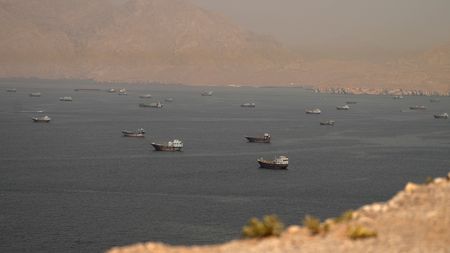
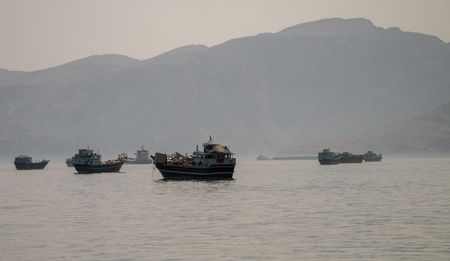
The Strait of Hormuz has become a central issue in the negotiations. Iran’s joint military command stated Saturday that the waterway was closed again because the U.S. had, in their words, clearly breached its commitments by not bringing the war to an end. The interim deal is intended to stop all fighting, including in Lebanon where Israeli forces are engaged in combat with the militant group Hezbollah.
The U.S. pushed back on Iran’s claim. U.S. Central Command reported that shipping traffic is still moving through the strait, noting that 55 merchant vessels passed through on Saturday carrying more than 17 million barrels of oil.
Vessel traffic through the strait resumed after the interim U.S.-Iran deal was signed last week. As part of that agreement, the U.S. lifted its blockade on Iranian ports and now permits Tehran to sell its oil on the open market — a concession that has prompted some members of Congress to question whether the war was justified.
The interim deal, signed by Trump and Iranian President Masoud Pezeshkian, gives both sides 60 days to negotiate a formal nuclear agreement, with the possibility of extending that deadline if needed.
Taiwan’s armed forces began a five-day combat readiness drill this week, with the island’s defense ministry announcing the exercise on Sunday as part of a broader push to modernize military training by shifting away from scripted events toward more realistic, war-simulating scenarios.
The island sits at the center of an ongoing territorial dispute — China considers Taiwan part of its own territory, a claim the government in Taipei firmly rejects. Taiwan says Chinese military forces regularly operate in the airspace and waters surrounding the island in an effort to pressure it into accepting Chinese rule.
As part of its updated training approach, Taiwan’s military has begun designing drills around a scenario in which China suddenly converts one of its routine exercises near the island into a real military assault.
The defense ministry identified the exercise as the “Immediate Combat Readiness Exercise,” scheduled to run from Monday through Friday. Officials described it as part of the military’s annual joint operations training program.
According to the ministry, “The main objective is to train units at all levels to become familiar with combat practices and the battlefield environment during the readiness deployment phase, and to strengthen rapid peacetime-to-wartime transition and priority deployment actions.”
The ministry further stated the exercise would be carried out with “actual troops, on actual terrain, in real time, using actual equipment, and through actual implementation.”
Officials said the drills would sharpen command structures at every level and build combat-ready capabilities among troops, with a particular focus on joint operations command and control, supply chain sustainment, and battlefield preparation.
The announcement coincided with a separate ministry statement reporting that China had conducted another “combat readiness patrol” in the vicinity of Taiwan. According to the ministry, China deployed 21 aircraft during that patrol, including J-16 fighter jets, KJ-500 airborne early warning and control planes, and Y-20 aerial refueling aircraft. Nineteen of those aircraft moved into airspace southwest of Taiwan and out into the Western Pacific to carry out what China described as “long-distance training over open seas.”
Attempts to reach China’s defense ministry for a response went unanswered on Sunday, as the calls came outside of normal office hours.
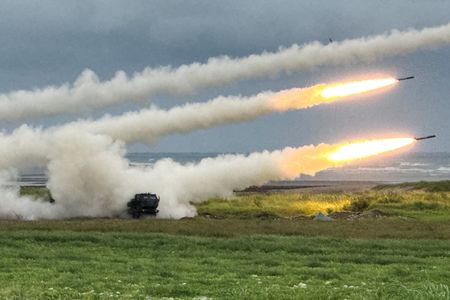
Taiwan has been conducting military exercises with increasing frequency. Earlier this month, the island fired its newly acquired U.S.-made HIMARS rocket system — the same weapon widely used by Ukraine — into the Taiwan Strait. Taiwan’s primary annual military exercise, the Han Kuang war games, is expected to be held in August.
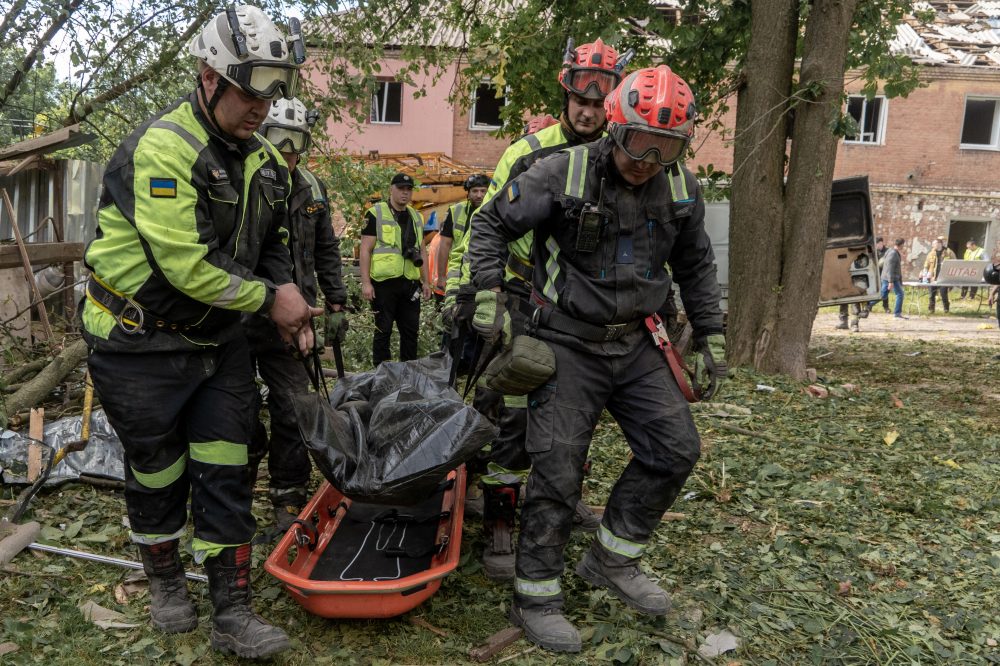
Five people are dead following a wave of Ukrainian drone attacks targeting Russian-controlled territory, with the strikes triggering a significant fuel crisis across the Crimean peninsula.
The Russian-installed governor of Crimea reported that four people were killed and 28 others were wounded during a Ukrainian drone assault on the peninsula. In a separate attack, one person aboard a passenger ferry was killed after a Ukrainian drone struck an oil transport facility in Russia’s Krasnodar region. Ukrainian President Volodymyr Zelenskiy confirmed that attack.
Russia’s Defense Ministry stated that 239 Ukrainian drones were shot down overnight during the assault.
In the aftermath, Crimean Governor Sergei Aksyonov announced that fuel stations throughout the peninsula had stopped selling gas to the general public and to private businesses. Fuel supplies are now being directed exclusively to government agencies responsible for essential services and security operations.
Ukraine has been ramping up drone strikes against Crimea in recent weeks, home to Russia’s Black Sea Fleet. The attacks have focused on the peninsula’s supply routes, creating a growing fuel shortage just as the summer holiday season gets underway.
A local power grid operator reported electricity outages across several areas due to damage to the power infrastructure. Ferry service across the Kerch Strait, which separates Crimea from the Krasnodar region, was also temporarily shut down.
Traffic on the bridge connecting Crimea to Russia’s Krasnodar region was suspended for more than nine hours, leaving 11 trains running behind schedule.
LONDON — British Business Minister Peter Kyle pushed back Sunday against mounting speculation that Prime Minister Keir Starmer is preparing to step down from office on Monday.
Appearing on Sky News, Kyle revealed he had a lengthy, “frank” conversation with Starmer just two days earlier, on Friday, though he declined to share the specifics of what was discussed.
The Observer newspaper had reported that Starmer was expected to announce his resignation Monday and lay out a timeline for leaving office. However, a government source countered that the prime minister remained committed to the work of governing the country.
When asked directly about the resignation reports, Kyle said: “I have nothing to believe that they are true. I am seeing a lot of speculation out there.”
Kyle went on to defend the prime minister’s dedication, saying: “Today, as in every other day I’ve ever known Keir, he is out there working hard. At the same time, he is also trying to create the space where he can think and reflect on the political realities and challenges — and the opportunities — that are before us.”
While Kyle would not detail what the two men discussed Friday, he did say that during the entire conversation, Starmer “not once … did he ever ask about self-interest. It was always about the country.”
The pressure on Starmer has been building for months, but intensified sharply Friday when prominent party rival Andy Burnham secured a seat in parliament — a move that now allows him to formally launch a leadership challenge.
According to The Observer, Starmer was weighing his next steps with his wife at the Chequers country residence before reaching a final decision. Senior figures within the Labour Party reportedly anticipated a definitive statement about his political future as early as Monday.
BOGOTA, Colombia — Colombian voters are heading to the polls Sunday for a presidential runoff election that has sharply divided the country, with two very different candidates each promising to end decades of brutal violence that has long plagued the South American nation.
The choice comes down to businessman and attorney Abelardo de la Espriella, a political outsider with a conservative approach, and Iván Cepeda, a sitting lawmaker who carries the torch of outgoing President Gustavo Petro — the country’s first leftist head of state. The two men outlasted nine other candidates in a May 31 first-round vote.
Both men have made security a centerpiece of their campaigns, vowing to protect Colombians from the kind of relentless violence — including car bombings, kidnappings, forced disappearances, and mass displacements — that defined life in the country for generations.
De la Espriella favors a tough-on-crime stance that has drawn an endorsement from U.S. President Donald Trump.
Cepeda, on the other hand, has pledged to build on Petro’s efforts to open dialogue with the country’s various illegal armed factions — a strategy that has largely fallen short of its goals.
The two candidates also disagree on how to fix Colombia’s troubled health care system, its growing national debt, and widespread corruption.
In Bogota, residents expressed anxiety about the nation’s direction. “Right now, what worries me is the polarization that exists between us: there are two very extreme sides, and the violence is concerning,” said John Manrique, a lawyer in the capital who was out walking his dog.
Manrique added: “What I hope is that people accept who won. Let’s accept it, regardless of the side, and try to reach a social consensus. … Let’s not go out and fight.”
According to official results from the first round, de la Espriella received 44% of the vote compared to Cepeda’s 41%. Outgoing President Petro, without presenting evidence, raised doubts about those results after Cepeda — who had led in polls heading into the May vote — not only failed to win outright but actually finished behind de la Espriella.
This election falls a decade after Colombia reached a landmark peace agreement with the Revolutionary Armed Forces of Colombia, known as FARC, which had raised hopes of breaking the country’s long cycle of armed conflict.
However, violence has surged again in the years since, largely because most rebel groups shifted away from ideological motivations and toward the financial rewards of drug trafficking.
Last year, authorities recorded 14,780 homicides — the highest number since at least 2015 — fueled by clashes between illegal armed organizations. One of those killed was conservative presidential candidate Miguel Uribe. Extortion cases have also skyrocketed, with 13,417 incidents reported in 2025, more than twice the number recorded in 2015.
More than 41 million Colombians are eligible to cast ballots Sunday.
De la Espriella, a political newcomer who goes by the nickname “The Tiger,” has vowed to crack down hard on criminal elements and construct 10 large-scale prisons. His model draws inspiration from the approach used by El Salvador’s President Nayib Bukele, which has brought homicide rates down but also sparked allegations of human rights violations.
Cepeda is seeking to continue Petro’s controversial “total peace” initiative, which aims to negotiate disarmament agreements with guerrilla groups and criminal organizations. That strategy, launched in 2022, reached a milestone just Thursday when the first armed group — one with roughly 100 members — surrendered its weapons and began a reintegration process into civilian life. Colombia’s illegal armed groups collectively have more than 27,000 members.
Yamile Guevara, a retired educator in Bogota, argued that Petro’s peace plan simply needs more time, noting that a six-decade-old conflict cannot realistically be resolved in a single presidential term. She also took issue with what she called a persistent distrust of left-leaning politics in Colombia due to its historical ties to rebel movements.
“The left has always been viewed negatively; it has been harsh, and many people have died,” said Guevara, who supports Cepeda. “So, one wonders what’s wrong with people who have forgotten history … how can they not think carefully about which candidate they are going to elect?”
The weeks leading up to Sunday’s runoff have been marked by heated exchanges between the two camps, along with allegations of election fraud, vote-buying, and voter intimidation.
Cepeda has filed formal complaints with Colombia’s Attorney General’s Office and the International Criminal Court, accusing de la Espriella of having connections to paramilitary organizations. De la Espriella has flatly denied those claims.
The Israeli military announced Sunday that it had “eliminated” two operatives with ties to the armed wings of both Hamas and Islamic Jihad.
The two men, identified as Hussein Qadra and Mohammed Farra, were connected to a large-scale financial operation that channeled funds to Hamas. According to a post on the Israeli military’s X account, Qadra led the network alongside Farra, operating under Hamas leadership and facilitating the transfer of more than half a billion shekels to the organization.
CAPE TOWN, South Africa — When the COVID-19 pandemic brought the world to a standstill in 2020, Natasha Jacka found herself stuck at her parents’ home in Cape Town, South Africa, growing increasingly restless — until she spotted an opportunity hiding right outside the window.
With her studies at an agricultural college on hold and nowhere to go, Jacka decided to plant a vineyard in her family’s backyard. It was a bold move to bring her dream of becoming a winemaker into her own hands — quite literally.
The wine world, however, doesn’t rush for anyone. It took four full years before she could harvest her first grapes and produce her first vintage.
The results were worth the wait. Jacka’s first wines — grown from vines she planted and tended at her parents’ oceanview home in the Cape Town suburb of Noordhoek, with grapes she even stomped herself — drew enthusiastic reviews from critics.
The response came as a tremendous relief. “It could have been so much work and if it doesn’t deliver, you know, then you just feel … I can’t imagine how I’d feel,” Jacka said. “I wasn’t looking at it like, oh this is going to make a fortune or anything like that. This is a labor of love.”
Christian Eedes, editor of the well-regarded South African wine review site winemag.co.za, described Jacka’s venture as “a triumph of hope over good sense,” acknowledging just how difficult it is to produce quality wine and turn any kind of profit from such a tiny operation.
Jacka managed to fit 1,400 vines into two sections of her parents’ garden — a property that was once part of a small farm. One section was dedicated to producing a white blend, the other to a syrah red. For context, a typical commercial wine farm runs more than 50,000 vines.
“There’s plenty of space in the world for craft and handmade,” Eedes said. “It’s the opposite of mass produced. It’s made with thought and care and typically hard to come by.”
The pandemic hit at a pivotal moment in Jacka’s life. She was 27 years old and had recently left the restaurant industry — fed up with difficult bosses — to pursue a degree in viticulture at an agricultural college in Stellenbosch, a well-known winemaking town just outside Cape Town. She was chasing her passion when lockdown suddenly confined her to her parents’ Noordhoek property.
One day, gazing out the window, something clicked. “I was actually looking out the window and I thought, imagine if there were vines here,” she recalled. “It was a small spark.”
From there, she convinced her family to get on board, and the real work began. She cleared the land, sourced more than 1,000 vines, and planted each one with a wooden stake for support. Her parents pitched in — though her mother Sonia was eventually sidelined from the planting after accidentally putting a vine in upside down.
There were also skeptical neighbors to reassure and an unexpected obstacle in the form of a miniature horse named Spirit, who lived on the property and developed a taste for the grapevines. “We lost one or two vines,” Jacka said. “It was hard to make it horse proof as well.”
Now 32, Jacka has parlayed the Noordhoek project into a broader winemaking career. Her Alinea wine label currently features five additional wines made from grapes sourced from other parts of the Cape Town region, which has a long and celebrated winemaking tradition.
Still, she remains deeply attached to her backyard vineyard, where she continues to serve as picker, stomper, labeler, sales rep, accountant, and delivery driver all in one — a fact she noted with a laugh.
Eedes, who gave Jacka some of her first glowing reviews, said the story of the micro-vineyard born out of pandemic boredom still captures his imagination. “She managed to not be bored, like we all were,” he said. “It’s really just an extraordinary undertaking.”
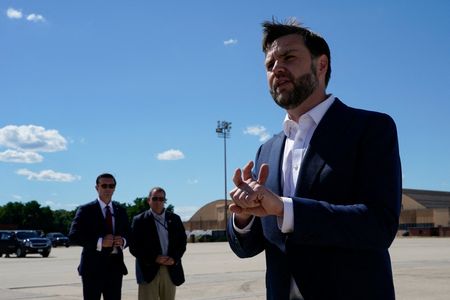
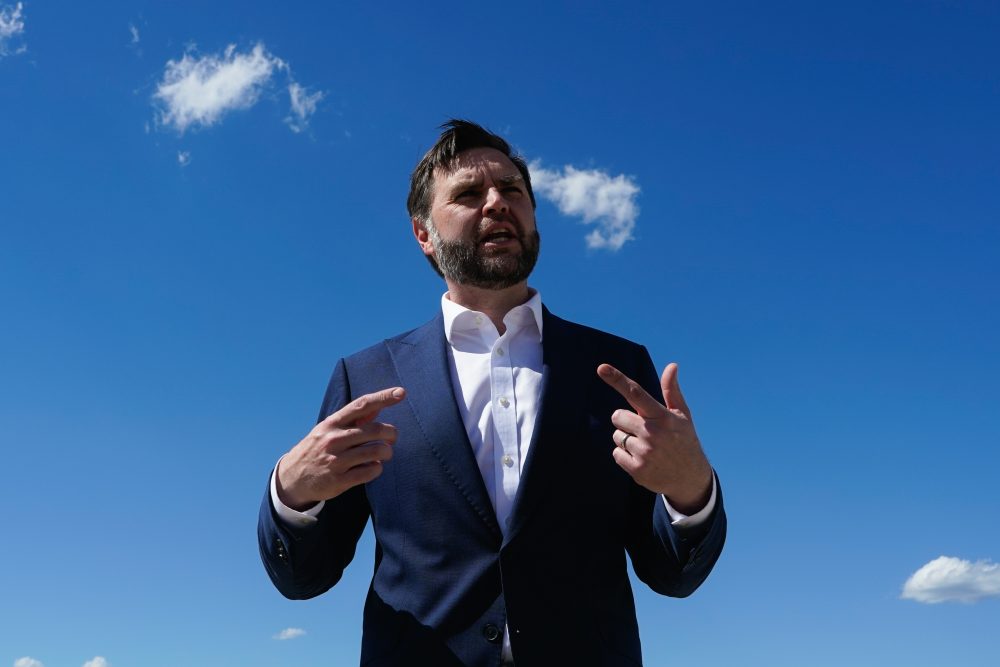
U.S. Vice President JD Vance touched down in Switzerland on Sunday, kicking off what he has described as several days of diplomatic discussions with Iranian officials.
Vance and his wife landed at Emmen Air Base at 5:59 a.m. local time (0359 GMT), according to a spokesperson for the vice president.
Vice President JD Vance touched down in Switzerland on Sunday to help formally open diplomatic talks with Iranian leaders focused on reining in Tehran’s nuclear ambitions and strengthening a shaky interim agreement to bring the conflict in Iran to a close.
A framework agreement was signed last week, and senior negotiators from both the United States and Iran are now working against a 60-day deadline to finalize the complex technical details — details that carry enormous weight for the global economy and international security.
The opening stretch of that two-month window has already been turbulent. Heavy fighting erupted in Lebanon between Israel and the Iranian-backed militant group Hezbollah, and Iran’s military announced it had shut down the Strait of Hormuz — the critical waterway through which roughly one-fifth of the world’s oil and natural gas supply passes.
Vance had originally been scheduled to arrive at the scenic Bürgenstock resort near Lucerne on Friday, but his departure from the United States was pushed back after the violence in Lebanon intensified and Iranian officials pulled out of their planned attendance at the talks.
U.S. Central Command pushed back on Iran’s assertion that the strait had been closed again, stating that American forces were actively monitoring the waterway to keep traffic moving. Vance noted that millions of barrels of oil have continued to flow through the strait in recent days.
The vice president left the U.S. shortly after Iranian state television reported that Tehran’s negotiating team had landed in Switzerland. Iran’s delegation includes parliamentary speaker Mohammad Bagher Qalibaf and Foreign Minister Abbas Araghchi, along with officials from the country’s central bank and oil sector.
Vance joins special envoy Steve Witkoff and Jared Kushner, President Donald Trump’s son-in-law, who were already on the ground working through the technical specifics of the nuclear agreement.
The broader negotiations will also involve Pakistani Prime Minister Shehbaz Sharif, army chief Field Marshal Asim Munir, and mediators from Qatar.
Although Vance indicated he planned to stay in Switzerland for only “a day or two” — leaving the bulk of the detailed work to Witkoff and Kushner — his participation has drawn increased attention, particularly as he is reportedly weighing a run for president in 2028.
Both Trump and Vance have faced sharp criticism from within their own Republican Party over the agreement, with hardline members drawing unflattering comparisons to a nuclear deal reached under the Obama administration — one that Trump and fellow Republicans have long argued failed to actually dismantle Iran’s nuclear capabilities.
The deal signed by Trump and Iranian President Masoud Pezeshkian immediately allows Iran to sell its oil on the open market and opens the door for Tehran to access billions of dollars in currently frozen assets. It also requires Iran to dilute its stockpile of highly enriched uranium, which is believed to be stored beneath nuclear facilities that were struck by U.S. airstrikes last summer.
Under the agreement, commercial ships may pass through the Strait of Hormuz for 60 days without being charged a fee — though the deal does not rule out Iran imposing tolls in the future. Trump himself threatened on Saturday to impose U.S. tolls on the strait if no deal is reached within 60 days, writing on social media that the funds would compensate for “services rendered as the Guardian Angel to the countries of the Middle East.”
Adding another layer of complexity, neither Israel nor Hezbollah are parties to the U.S.-Iran agreement. Israeli Prime Minister Benjamin Netanyahu has pledged to keep Israeli forces in southern Lebanon until all threats to Israel are eliminated, while Hezbollah has refused to stand down unless Israel commits to a full withdrawal from Lebanese territory.
In the days immediately following the U.S.-Iran agreement, clashes between Israeli forces and Hezbollah resulted in the deaths of 47 people in Lebanon and four Israeli soldiers.
LONDON (AP) — As darkness gave way to dawn, thousands of people made their way to the legendary Stonehenge monument to mark the arrival of the summer solstice — the longest day of the year.
Crowds gathered in the early morning hours, greeting the sunrise with celebration that included music, dancing, and peaceful reflection amid the towering ancient stones.
The event was captured in a photo gallery assembled by AP photo editors.
Diplomatic teams from the United States and Iran convened in Switzerland on Sunday for peace negotiations, even as a dispute erupted over whether Iran had shut down one of the world’s most critical shipping lanes.
An Iranian delegation arrived in Switzerland for the talks, according to Iranian state media, while U.S. Vice President JD Vance departed Washington for the meetings, which Pakistan said would get underway Sunday. The two countries had previously agreed to a 60-day ceasefire while negotiations proceed.
Despite that agreement, Iran’s Islamic Revolutionary Guard Corps declared the Strait of Hormuz closed on Saturday. However, U.S. military officials pushed back on that claim, saying commercial vessels had continued moving through the waterway without disruption. U.S. Central Command reported that 55 merchant ships passed through the strait on Saturday, carrying more than 17 million barrels of oil destined for global markets. American forces will work to keep commercial traffic flowing, Central Command added.
The Strait of Hormuz is a critical passage for the world’s oil and gas supplies, and any disruption there could have far-reaching economic consequences.
President Donald Trump addressed the situation in a social media post Saturday, stating that no toll would be charged for passage through the Strait during or after the 60-day ceasefire period — though he left open the possibility of imposing one if peace talks ultimately fall apart. He described such a potential toll as payment “for services rendered as the Guardian Angel to the countries of the Middle East.”
Mohammad Mokhber, an adviser to Iranian Supreme Leader Ayatollah Mojtaba Khamenei, took to social media to accuse the U.S. of failing to follow through on the first clause of a 14-point interim agreement between the two nations. That clause calls for a ceasefire “on all fronts,” including Lebanon. Mokhber stated that as long as the deal existed only on paper, the flow of energy from the Middle East would remain halted.
The interim deal was brokered by Pakistan and signed Wednesday by Trump and Iranian President Masoud Pezeshkian, with the goal of ending a conflict between the two nations that has lasted nearly four months.
Complicating matters further, the Lebanon ceasefire appeared shaky. Lebanese Civil Defence reported that 20 people were killed by Israeli strikes in Lebanon on Saturday, just hours after a truce there took effect. Israel said it was responding to attacks from Hezbollah, the Iran-backed militant group, while Hezbollah said it would not allow Israel “freedom of movement” in Lebanon. Lebanon’s state news agency reported that Israeli warplanes and drones struck locations across southern Lebanon and the Bekaa Valley on Saturday. An Israeli military official said Hezbollah fired more than 50 projectiles at Israeli forces overnight.
The IRGC pointed to what it called Israeli “crimes” in Lebanon — which it said violated U.S. ceasefire commitments — as justification for warning ships that they would be at risk near the Strait.
Israel, which is not part of the U.S.-Iran negotiations, has stated it is not bound by the deal and will keep its forces in Lebanese territory it currently occupies. Israeli broadcaster Channel 12 reported that the country’s prime minister and defense minister instructed the military to hold fire in Lebanon, though Israel would not pull back from areas it has captured.
A poll conducted by Israel’s Hebrew University and shared exclusively with Reuters found that about 92% of Israelis believe Iran benefited more from the joint Israeli-U.S. military campaign than Israel did. Only around 8% of Israelis felt their country came out victorious. Nearly 90% said the war’s goals were not achieved, and more than 70% said they do not believe claims of major achievements made by the Israeli prime minister.
Lebanon’s health ministry reports that 4,057 people have been killed in Israeli attacks since March 2, including medics, women, and children, though it does not specify how many were combatants. Israeli authorities say at least 32 soldiers and four civilians have been killed in fighting with Hezbollah.
On the U.S. side, the negotiating team includes Vice President Vance along with envoys Steve Witkoff and Jared Kushner, who is also Trump’s son-in-law. The Iranian delegation is led by chief negotiator Mohammad Baqer Qalibaf and also includes Foreign Minister Abbas Araqchi, along with senior officials from security, the central bank, and the oil sector.
Iranian Foreign Ministry spokesperson Esmaeil Baghaei said Iran would use the Switzerland talks to push for the fulfillment of commitments, pointing to what he described as past failures by the other side to honor agreements.
Vance, speaking in a Fox News interview, expressed confidence that the ceasefire would hold and said he had seen no evidence that the Strait of Hormuz was actually closed. He departed for Switzerland shortly after 4 p.m. Eastern Time on Saturday, telling reporters before boarding a plane at Joint Base Andrews in Maryland that negotiations would likely last “a couple days.”
“I think we’re going to hopefully make progress on the nuclear issue, make progress on the Lebanon ceasefire issue,” Vance said.
Ukrainian President Volodymyr Zelenskiy issued a grave warning Saturday, telling his citizens that Russian forces were preparing to launch a massive assault on Ukraine and urging everyone to take extra precautions as strikes across the country left at least six people dead.
Speaking in his nightly video address, Zelenskiy delivered an urgent message to the Ukrainian people. “Tonight and in the coming hours, it is especially important to pay close attention to air raid warnings,” he said. “The Russians have prepared for a massive attack. Please take care of yourselves.”
Russian forces have carried out a series of devastating strikes on Kyiv and other major Ukrainian cities in recent weeks. Attacks last Monday left 10 people dead across the country and caused severe damage to the Pechersk Lavra monastery — a 1,000-year-old site considered a cornerstone of Ukrainian spiritual and cultural identity.
Zelenskiy has vowed that Ukraine’s military will continue its campaign of medium and long-range strikes, with a particular focus on Russia’s oil sector. He confirmed Saturday that Ukrainian drones hit an oil refinery in the Tyumen region of western Siberia, and that drones had also struck a Moscow oil refinery twice during the week.
In the southeastern city of Zaporizhzhia, Russian forces unleashed glide bombs Saturday, killing five people and wounding 10 others. Regional Governor Ivan Fedorov reported the details on Telegram, noting that the city absorbed nine separate strikes, with damage to multiple residential buildings and other infrastructure.
Near the Russian border, a bomb attack on the outskirts of the city of Sumy claimed one life, according to local officials.
In the southern Kherson region, Regional Governor Oleksandr Prokudin reported that one person was killed in a drone strike on a village located north of the region’s main city, also known as Kherson.
In the central city of Poltava, Russian shelling injured three children, local officials confirmed.
For the second consecutive day, Ukrainian President Volodymyr Zelenskiy called on neighboring Belarus to take down relay stations that he claims are playing a direct role in facilitating Russian drone strikes against Ukrainian regions.
Belarus, led by longtime President Alexander Lukashenko, has stood as one of Russia’s closest partners throughout the more than four-year conflict with Ukraine. The country allowed Russia to use its soil as a launching point for the February 2022 invasion.
Lukashenko, who has held power since 1994, has repeatedly insisted he does not wish to become more deeply entangled in the war. However, Zelenskiy has pushed Belarus to demonstrate through action that it will not actively back Russia’s military campaign.
Without mentioning Lukashenko by name, Zelenskiy addressed the matter in his nightly video message, making an indirect reference to Lukashenko’s disputed return to power. He stated that Ukraine has identified four relay stations on Belarusian soil that are supporting Russian military operations.
“Belarus still has time to dismantle this equipment. We also know about every factory in Belarus that works for Russia and supports the war,” Zelenskiy said.
He added, “Ukraine does not want this and we have warned the de facto leadership of Belarus which has influence over these developments.”
The previous Friday, Zelenskiy had given what he described as a week’s worth of time for the relay equipment to be removed, and he attached a clear warning to that deadline.
“If he doesn’t do it, we’ll do it,” Zelenskiy said on Friday, without providing further detail on what that action might look like.
In his most recent comments, Zelenskiy also turned attention to Belarus’s oil refining industry, arguing it is contributing to Russia’s ability to wage war. He said that between January and May, gasoline exports from Belarus to Russia grew by 13 times compared to the same stretch of time the previous year, while diesel exports tripled.
“Unfortunately, this helps Russia adapt to pressure and does not bring peace any closer,” Zelenskiy said. “It should be the opposite: peace should be brought closer.”
Ukraine’s armed forces have been conducting a sustained campaign of medium and long-range drone strikes, with Russia’s oil infrastructure as a primary target, as part of a broader strategy to weaken Moscow’s ability to sustain its war effort.
Three people have lost their lives following a fire at a single-story pavilion in the White City neighborhood of London, the London Fire Brigade announced on Saturday.
Authorities have launched a joint investigation into the cause of the deadly blaze, with the Brigade’s specialist fire investigation officers working in coordination with the Metropolitan Police Service to determine what sparked the fire.
LONDON — Britain’s Observer newspaper is reporting that Prime Minister Keir Starmer is expected to step down as early as Monday, with senior figures in his Labour Party anticipating a formal announcement about his future.
According to the report, Starmer was at his Chequers country residence consulting with his wife before reaching a final decision. Senior Labour members are said to be anticipating a clear statement on his political future as soon as Monday.
Despite the report, a government source pushed back, saying Starmer remains fully focused on his responsibilities as prime minister and pointing to previous statements he has made affirming his commitment to the role.
The pressure on Starmer escalated significantly on Friday when rival Andy Burnham secured a seat in parliament — a move that now allows Burnham to formally mount a leadership challenge against the sitting prime minister.
Starmer addressed the situation Friday, saying he intends to fight any challenge to his leadership and calling on Labour members to avoid destructive internal conflict. “Don’t tear itself apart with infighting,” he urged the party.
The calls for his exit have grown considerably, with more than 100 elected Labour lawmakers — representing roughly one-quarter of the party’s total membership in the House of Commons — publicly calling for Starmer to either resign or at least lay out a timeline for his departure.
TYRE, Lebanon — Vice President JD Vance departed for Switzerland on Saturday as the White House worked to get stalled negotiations with Iran back on course.
Vance is scheduled to meet Sunday with Iran’s parliamentary Speaker Mohammad Bagher Qalibaf, Foreign Minister Abbas Araghchi, and central bank and oil officials. Mediators from Pakistan and Qatar have also traveled to Switzerland to participate in the discussions.
The goal of the technical-level talks is to work out the finer details of a preliminary agreement signed earlier this week by President Donald Trump and Iranian President Masoud Pezeshkian, which is designed to halt nearly four months of war between the two countries.
The talks nearly fell apart before they began. Vance had originally been set to meet with senior Iranian officials on Friday at a mountainside resort in the small Swiss village of Obbürgen, but Iranian officials initially pulled out due to escalating conflict between Israel and Iranian-backed Hezbollah in Lebanon.
However, U.S. and Qatari negotiators — with assistance from Iran — brokered an arrangement to reduce the active fighting between Israel and Hezbollah, according to U.S. and regional officials who spoke anonymously because they were not authorized to comment publicly. Following that development, Iran’s state media announced Saturday that its top officials would make the trip to Switzerland after all.
Earlier in the day, Iran announced it had closed the Strait of Hormuz, citing what it called a U.S. failure to uphold its commitments under the interim deal by not ending the war. Iran also warned that while its team was heading to Switzerland, progress in the talks would be unlikely unless the fighting stopped.
President Trump responded by threatening to impose American tolls on the strategically vital waterway if a final deal with Iran is not reached within 60 days. In a social media post, Trump said the money would go toward “services rendered as the Guardian Angel to the countries of the Middle East,” while also noting the agreement currently guarantees toll-free transit for 60 days.
The U.S. pushed back on Iran’s claim about the strait. “Iran does not control the Strait of Hormuz. Traffic continues to flow, and U.S. forces are monitoring the situation to ensure this remains the case,” said Capt. Tim Hawkins, a spokesperson for U.S. Central Command. The military reported that 55 merchant ships moved through the strait on Saturday, carrying more than 17 million barrels of oil.
Iranian Foreign Ministry spokesperson Esmail Baghaei said negotiations toward a final agreement would only begin once key commitments are honored. If they are not, he warned, “the memorandum of understanding as a whole will be jeopardized.”
Vance confirmed that top negotiators Jared Kushner and Steve Witkoff were already in Switzerland working through technical details ahead of the broader nuclear talks. The interim deal gives both sides 60 days to reach a nuclear agreement, though that window can be extended given the complexity of the issue.
Pakistani Interior Minister Mohsin Naqvi met with Iranian Foreign Minister Araghchi in Tehran earlier Saturday as part of efforts to help revive the direct talks, according to officials in Islamabad who spoke on condition of anonymity due to the sensitivity of the matter.
The interim agreement, signed earlier in the week, marked a significant milestone but left many questions open. Under the deal, the U.S. lifted its blockade of Iran’s ports and allowed Tehran to sell oil freely — terms that have drawn scrutiny from some members of Congress who have questioned whether the war was worth fighting. The deal also calls for billions of dollars of Iran’s frozen assets to be released.
Complicating the broader peace effort is the ongoing conflict between Israel and Hezbollah. Neither party signed the U.S.-Iran agreement. Hezbollah and Israel entered open war two days after the U.S. and Israel launched strikes on Iran on February 28, with Hezbollah firing rockets and drones at northern Israel while Israeli forces seized large portions of southern Lebanon.
Israeli Prime Minister Benjamin Netanyahu has pledged to keep Israeli troops in southern Lebanon until all threats to Israel are eliminated. Hezbollah, for its part, has refused to stop its attacks unless Israel commits to a full withdrawal from Lebanon.
A new round of U.S.-backed talks between Lebanon’s government and Israel is expected to take place in Washington next week.
The United States and Iran offered starkly different versions of events Saturday regarding the Strait of Hormuz, even as high-level representatives from both countries prepared to sit down for talks in Switzerland the following day.
Iran announced earlier that it was shutting down the vital waterway and issued warnings to commercial ships to keep their distance. The announcement came amid continued fighting between Israel and Lebanon, despite a ceasefire having been declared.
According to Islamic Republic of Iran Broadcasting, the naval arm of the Islamic Revolutionary Guard Corps sent warnings to ships operating near the strait, cautioning that vessels attempting to pass through could face mines or come under fire. Iranian state media also reported that maritime activity in the Persian Gulf had dropped following the announcement.
The US military flatly rejected Iran’s assertion that the strait had been closed.
“Iran does not control the Strait of Hormuz,” said Capt. Tim Hawkins, a spokesperson for Central Command, known as CENTCOM. “Traffic continues to flow, and US forces are monitoring the situation to ensure this remains the case.”
CENTCOM reported that 55 merchant vessels and 17 million barrels of oil moved through the strait on Saturday. The command further stated: “US forces remain present and vigilant to ensure all aspects of the agreement with Iran are adhered to, obeyed, and in full force and effect.”
The standoff over the waterway unfolded as diplomatic preparations continued ahead of the Switzerland talks. Pakistani Prime Minister Shehbaz Sharif announced plans to travel there to serve as a mediator, and Qatar is also expected to be involved in the discussions.
The American delegation heading to the talks is expected to include Vice President JD Vance, Jared Kushner, and US special envoy to the Middle East Steve Witkoff, who are scheduled to meet with an Iranian delegation.
CNN reported that resolving the conflict in Lebanon is “the most important item on the Iranian delegation’s agenda” as their representatives prepare for the negotiations.
The talks are set to get underway Sunday, even as both sides continue to publicly disagree over what is happening in the Strait of Hormuz — one of the world’s most critical shipping routes for global energy supplies.
The Israel Defense Forces announced Saturday that Hezbollah launched more than 50 rockets at Israeli troops stationed in southern Lebanon during overnight hours, calling the attack a clear violation of the existing ceasefire agreement. The military also confirmed that two soldiers lost their lives in separate combat incidents and that 13 additional troops were wounded in the attacks.
The two soldiers killed were identified as Staff Sgt. Yoav Klein, 21, from Herzliya, and Staff Sgt. Nir Ben Ari, 21, from Kerem Maharal.
Klein served in Battalion 52 of the 401st “Iron Tracks” Brigade and died in the same incident that also claimed the life of Battalion 52 commander Lt. Col. Dor Gedalia Ben Shimhon and two other soldiers whose identities have not yet been cleared for release.
Ben Ari was a member of the Maglan Unit within the Commando Brigade. He was killed in a separate incident that left 13 fellow soldiers injured. According to reports, he was just nine days away from his 22nd birthday and had been expected to begin discharge leave later this month.
Channel 12 reported that Prime Minister Benjamin Netanyahu and Defense Minister Israel Katz directed the IDF to stand down from launching further strikes in Lebanon, a decision reached after consultations and coordination with the United States. The order does not include a withdrawal of Israeli forces from southern Lebanon, where troops are expected to remain deployed.
A senior IDF officer stated that Israeli forces continue to operate along what is known as the “yellow line” and remain active in the Nabatieh sector. The officer noted that dozens of Hezbollah fighters are surrounded in that area, which the military described as a significant hub of Hezbollah operations.
Overnight military operations targeted Hezbollah rocket launch sites, weapons depots, and command infrastructure, the IDF said.
Prime Minister Netanyahu reaffirmed Israel’s commitment to maintaining its military presence in southern Lebanon. A senior official speaking on behalf of the Prime Minister’s Office said Netanyahu made clear that Israel will stay in southern Lebanon “for as long as necessary to defend its northern border.”
Ukrainian President Volodymyr Zelenskiy confirmed on Saturday that Ukrainian drones had targeted an oil refinery deep inside Russia, striking a facility in the Tyumen Region of western Siberia — more than 2,000 kilometers, or roughly 1,200 miles, from Ukraine’s border.
In his nightly video address to the nation, Zelenskiy praised the Ukrainian military’s special operations forces, saying they “have reached Tyumen Region in Russia, including an oil refining facility. More than 2,000 km from our state border. This is effective work.”
The Tyumen Region’s governor, Alexander Moor, had earlier stated that Russian air defense systems pushed back the drone assault on the refinery. According to his preliminary assessment, the facility suffered no damage, and workers were safely evacuated.
The Tyumen refinery is considered one of Russia’s most advanced and capable facilities, with a nominal processing capacity of approximately 8 million metric tons of oil each year. Industry estimates indicate it processes around 6 million tons of crude annually, yielding roughly 0.5 million tons of gasoline and 2.5 million tons of diesel fuel.
Ukraine has been carrying out a sustained campaign of medium and long-range drone strikes against Russian targets for several months, with a particular focus on the country’s oil sector. The strategy is aimed at cutting off a key source of revenue that Moscow uses to finance its ongoing war effort.
Zelenskiy also announced that newly upgraded long-range drones had been successfully used in operations. “They can now reach targets at a distance of 3,000 km,” he said, adding, “These are entirely justified responses to Russian strikes against our state. Ukraine’s plan of long-range operations is being implemented.”
Scottish counter-terrorism officials have launched an investigation into a series of violent incidents that unfolded across Edinburgh on Friday evening, according to a statement released by police on Saturday.
Five men were injured during the attacks, and a 36-year-old white Scottish man was arrested in connection with a sequence of threats, robbery, and vandalism. Three of the victims needed to be taken to the hospital, though authorities confirmed their injuries were not life-threatening.
Officers on the ground confronted and apprehended the suspect at approximately 9:30 p.m. local time, which was 8:30 p.m. GMT.
Assistant Chief Constable Catriona Paton spoke out strongly against the violence, stating, “I want to send a clear message of support to all our communities that there is no place for racism or faith-based hate in a Scotland which is at its best when we stand together.”
The suspect remains behind bars as the investigation continues, police confirmed.
Thousands of demonstrators took to the streets of Novi Sad, Serbia’s second-largest city, on Saturday to honor the memory of 16 people who died in 2024 when a railway station awning gave way — and to push for snap general elections.
The tragedy sparked student-led protests that at times turned violent and spread throughout the country, putting serious pressure on the 13-year hold that populist leader Aleksandar Vucic and his Serbian Progressive Party have maintained on power.
Those taking part in the demonstrations, along with opposition figures and human rights organizations, argue that the station collapse was a symptom of widespread government corruption and poor oversight of construction projects.
Despite temperatures hovering around 30 degrees Celsius — roughly 86 degrees Fahrenheit — crowds filled the streets of Novi Sad, chanting “Victory” and directing their frustration at Vucic and his party. Many protesters wore t-shirts and carried banners with the message “Students are winning.”
Organizers from the student movement say their goal is to take on Vucic and the Serbian Progressive Party in upcoming parliamentary and presidential elections, both currently scheduled for 2027. Vucic himself has suggested he could call those elections sooner.
Sanja Belic, a university professor from Novi Sad who addressed the crowd, put it plainly: “Without free and fair elections, everything else is empty words.”
The protesters and rights groups have also leveled accusations at Vucic and government officials of manipulating elections, using violence against political opponents, suppressing press freedom, corruption, and connections to organized crime. Vucic and those aligned with him have denied all of these claims.
“We must stand up, express our will, and win; we have no other choice,” said Goran Sajin, a protester in his 50s who joined the Novi Sad rally.
While the demonstration was underway, Vucic appeared in a live television broadcast and announced that his own supporters would hold a counter-rally on June 27. “I invite them not to show anger towards anyone … but to gather under the Serbian flag,” he said.
Serbia is currently a candidate for European Union membership, but is required to make significant improvements in areas including judicial independence, conditions for free and fair elections, and fighting corruption and organized crime. The country also must bring its foreign policy in line with EU positions, which includes imposing sanctions on Russia over its invasion of Ukraine.
PARIS — French authorities announced Saturday that drinking alcohol in public will be prohibited during the country’s annual Fete de la Musique music festival celebrations on June 21 in any administrative districts placed under a red heatwave alert starting at noon Sunday.
The announcement came after Prime Minister Sebastien Lecornu convened an emergency crisis meeting to address the dangerous heat conditions spreading across the country.
“Prefects will issue decrees banning alcohol consumption in public spaces in the departments under red alert,” a statement from the Prime Minister’s office said.
The statement also noted that government-organized events would be required to go alcohol-free: “For all events organised by the state and its agencies, instructions have been given not to offer alcohol.”
France’s national weather agency, Meteo France, painted a concerning picture of conditions ahead, stating in its Saturday update that “very high temperatures are settling in for the long term across the country.” The agency formally issued a red heatwave warning covering 35 departments for Sunday, a list that includes the capital city of Paris.
BARCELONA, Spain — A Spanish judge has ruled that Begoña Gómez, the wife of Prime Minister Pedro Sánchez, must stand trial on charges of influence peddling and corruption, and must hand over her passport to authorities.
Investigative judge Juan Carlos Peinado issued the order on Saturday, citing concerns that Gómez posed a flight risk. Beyond surrendering her passport, she is also required to check in with a court every two weeks. No trial date has been scheduled yet.
The ruling immediately sparked a fierce political firestorm in Spain, with opposition leaders demanding that Sánchez’s Socialist government resign.
Prosecutors allege that Gómez used her status as the prime minister’s wife to steer government contracts toward a group of technology companies. Judge Peinado also accused her of misusing public funds in connection with hiring a consultant, and of improperly using software during her time as a professor at a public university.
Gómez has maintained her innocence throughout the proceedings. Sánchez has characterized the case as a politically motivated smear campaign orchestrated by conservative rivals intent on bringing down his left-wing government, which has held power since 2018.
Judge Peinado ruled that a businessman who allegedly benefited from the government contracts, as well as the consultant who worked with Gómez, will also face trial.
Sánchez, who has been a vocal critic of U.S. President Donald Trump, is navigating legal challenges on several fronts as Spain heads toward a general election expected by next year.
Earlier this week, former Socialist Prime Minister José Luis Rodríguez Zapatero appeared before a separate judge regarding his alleged involvement in a government airline bailout and to address the discovery of expensive jewelry found during a police search of his office. He has denied any wrongdoing.
Government officials were quick to denounce Saturday’s ruling as politically driven. The Socialist Party released a sharp statement calling the decision “an absolute scandal for democracy.”
“Begoña Gómez is innocent,” the party declared. “For two years now, she has been the target of a political and judicial witch hunt. Today’s development is just the latest escalation.”
Spain’s conservative opposition took the opposite stance, pushing for the government to call an early election. Miguel Tellado, secretary-general of the main opposition People’s Party, offered a pointed rebuke.
“Lawmakers and the architects of our constitution could never have imagined that the threats to our democracy could originate from the Spanish government itself,” Tellado said. “Now we see how the government attacks judges, prosecutors and the media while attempting to silence opposition parties. This is unthinkable in any modern democracy.”
The investigation into Gómez, which has been ongoing for two years, was set in motion after accusations were brought by the pressure group Manos Limpias — meaning Clean Hands — an organization that has pursued numerous legal cases, many of them tied to conservative causes.
WASHINGTON — The U.S. military pushed back Saturday against claims by Iran that the Strait of Hormuz had been closed, asserting that the strategically important waterway is still open and that American forces are keeping a close watch on it.
“Iran does not control the Strait of Hormuz,” said Navy Captain Tim Hawkins, a spokesperson for U.S. Central Command, in a statement to Reuters. “Traffic continues to flow, and U.S. forces are monitoring the situation to ensure this remains the case.”
Earlier Saturday, Iran’s Islamic Revolutionary Guard Corps announced that the Strait of Hormuz was closed and issued warnings for ships to stay away from the waterway. The declaration raised fresh concerns about the stability of a ceasefire deal between the United States and Iran — an agreement that had been intended to open the door to broader peace negotiations.
KYIV — Ukrainian President Volodymyr Zelenskiy announced Saturday that he has sent back a high-level state honor to Poland’s president, just one day after the award was officially revoked amid a dispute rooted in World War Two history.
Polish President Karol Nawrocki made the decision Friday to take back the medal he had presented to Zelenskiy in 2023. The move came after Zelenskiy renamed a Ukrainian military unit in honor of WWII-era Ukrainian insurgents who have been accused of carrying out massacres of Polish civilians.
Writing on the social media platform X, Zelenskiy explained his reasoning for returning the decoration. “We believed that the Order of the White Eagle, awarded in 2023, was meant for the Ukrainian People and our army. That is what was said at the time,” he wrote. “Today, I sent the Order back to the President of Poland.”
Zelenskiy also shared a photograph showing the medal being placed in a box and dispatched to the Polish president’s office.
Despite the tension, Zelenskiy expressed appreciation for Poland’s ongoing backing of Ukraine and said his country would “remain open to all meaningful formats of engagement with Poland in order to try to avoid conflicting interpretations of the difficult and painful chapters of our shared past.”
The fallout extended beyond Zelenskiy himself. His chief of staff, Kyrylo Budanov, announced he was giving back his own Polish honor — the Golden Officer’s Cross of the Order of Merit of the Republic of Poland, which he had received last year. Budanov described Nawrocki’s original decision to revoke Zelenskiy’s award as “a gift” for Russia.
Ukrainian Foreign Minister Andrii Sybiha had already weighed in before Zelenskiy’s announcement, calling Nawrocki’s move “a strategic error” and asserting that no foreign head of state “is going to dictate our history to us.”
Polish Prime Minister Donald Tusk, who is a political opponent of Nawrocki, called on both leaders to keep their composure and avoid escalating the situation further.
When Nawrocki announced the revocation, he was careful to note the action was “not directed against the Ukrainian people” and that it did “not signify a change in the strategic direction of Polish security policy.”
Poland has been one of Ukraine’s strongest backers throughout the more than four-year conflict with Russia. However, public opinion in Poland toward Ukraine has grown increasingly complicated in recent years, shaped by frustration over the large influx of Ukrainian refugees, disagreements about grain imports, and lingering wounds from the wartime massacres.
The controversy involves the Ukrainian Insurgent Army, known by its Ukrainian acronym UPA. While many Ukrainians view the UPA as patriotic fighters who resisted both Soviet and Nazi forces — and as a symbol of Ukraine’s drive for independence from Moscow — the group is also linked to the Volhynia massacres. Those killings, which took place between 1943 and 1945, resulted in the deaths of approximately 100,000 Polish civilians at the hands of Ukrainian nationalists, according to Poland. Thousands of Ukrainians also lost their lives in retaliatory violence during that same period.
The dispute over how to interpret the UPA’s legacy now threatens to deepen a diplomatic rift between two nations that have otherwise been close strategic partners during Russia’s ongoing war against Ukraine.
A sharp war of words between Italian Prime Minister Giorgia Meloni and U.S. President Donald Trump continued Saturday, with Meloni firing back after Trump suggested she was trying to repair ties with Washington simply to boost her standing at home.
The feud began Friday when Meloni publicly called Trump a liar after he claimed she had “begged” him for a photo during this week’s Group of Seven summit held in France.
Trump kept the argument going Saturday, posting on his Truth Social platform — and misspelling her name as “Gigiorgia” — that “she wants to be friends again in order to get her ‘numbers up’.”
Meloni responded directly on Instagram, writing in English: “President Trump, these constant, unprovoked attacks are senseless.”
She went further, adding: “My popularity is none of your concern. I suggest you focus on yours.”
Meloni also pointed out that “being his friend has certainly not helped” her popularity. Her government, which took office in 2022, has actually seen public approval climb in recent polls to around 35% after a steady decline throughout 2025. Her Brothers of Italy party leads polling at roughly 28%, while the opposition Democratic Party sits at about 22%.
Trump, who was sworn in during January 2025, recently saw his own approval rating nudge up by one percentage point to 36%, still hovering near the lowest levels of his political career. A Reuters/Ipsos poll found that growing public frustration over the cost of living had eased slightly.
Trump also renewed criticism of Italy for refusing to allow the use of American military bases on Italian soil during the war with Iran, which the U.S. and Israel launched at the end of February.
Meloni stood firm on the issue, stating: “Their use is governed by agreements that we have always respected and that cannot be violated. As long as I am prime minister, Italy remains a sovereign nation.”
Authorities in France announced Saturday that Claude Guillemot, one of the founders of the global video game company Ubisoft, was killed when a small plane went down in western France.
The aircraft, a twin-motor Cessna 421, was carrying Guillemot and a flight instructor when it crashed Friday evening near La Baule airport along the Atlantic coast. Both men were described as licensed and experienced pilots. The mayor of the area, Franck Louvrier, confirmed in a public statement that neither survived. An investigation into the cause of the crash has been launched.
The plane came down in a field just moments before it was set to land at La Baule-Escoublac Airport, according to an airport official who spoke with the Associated Press. That official requested anonymity, as they were not authorized to speak publicly on the matter.
Ubisoft issued a brief statement acknowledging Guillemot’s death but declined to offer any additional comment.
Guillemot was one of five brothers who together established Ubisoft back in 1986. The company has since grown into one of the most recognized names in gaming, producing hit titles including the Assassin’s Creed series, Just Dance, and the Rayman and Tom Clancy game franchises.
Russian authorities have freed 24 Filipino citizens who spent months behind bars without facing any charges in a Siberian city, Philippine officials announced Saturday. The breakthrough came after Philippine President Ferdinand Marcos Jr. personally brought up their situation during a face-to-face meeting with Russian President Vladimir Putin.
The 24 individuals were expected to land in Manila aboard two separate flights early Sunday morning. Philippine Foreign Secretary Theresa Lazaro, who had traveled with Marcos to his talks with Putin on Wednesday in the Russian city of Kazan, was set to welcome the first group of returnees, according to the Department of Foreign Affairs in Manila.
Marcos was in Kazan representing the Association of Southeast Asian Nations, as he currently holds the bloc’s rotating presidency. He and other leaders of the 11-nation group gathered to mark the 35th anniversary of ASEAN’s diplomatic ties with Russia. On the sidelines of that summit, Marcos held a one-on-one meeting with Putin.
The speed of the release drew attention, coming just days after Marcos raised the issue on Wednesday. The Philippines is a close treaty ally of the United States in Asia and was among the majority of ASEAN nations that backed a United Nations General Assembly resolution condemning Russia’s full-scale invasion of Ukraine in 2022. Singapore was the sole ASEAN member to impose sanctions on Russia, and Singapore Prime Minister Lawrence Wong also attended the Kazan summit.
Speaking to reporters following his meeting with Putin, Marcos said he had expressed concern about the Filipinos, who had been held for roughly nine months in the city of Irkutsk in southeastern Siberia with no charges filed against them. He noted that the Philippines had little information about their well-being.
Philippine officials said there were reports suggesting the detained individuals may have been lured by illegal job recruiters and then detained in Russia over possible immigration violations.
Putin told Marcos he had not been aware of the situation but pledged to look into it. Later that evening over dinner, the Russian leader informed Marcos that the Filipinos had not been found guilty of any wrongdoing. Marcos recalled Putin saying, “Don’t worry, we will find a way to fix this problem.” Shortly after, Russian officials notified the Philippine delegation that the Filipinos would be deported and sent back to Manila right away.
According to Philippine Ambassador to Moscow Igor Bailen, approximately 15,000 Filipinos currently live and work throughout Russia.
LA PAZ, Bolivia — Bolivia’s President Rodrigo Paz declared a state of emergency on Saturday, granting the country’s military sweeping authority to dismantle road blockades that have strangled fuel and food deliveries to the capital city of La Paz and other major urban centers.
The crisis has been building for five weeks, with protesters demanding Paz resign over government-imposed austerity measures — chief among them the elimination of long-standing fuel subsidies. The unrest has sparked violent clashes between demonstrators armed with dynamite and riot police, resulting in at least 365 arrests and 37 injuries, according to official figures.
At least 17 people have lost their lives, with most deaths attributed to a breakdown in medical care caused by transportation disruptions, according to Bolivia’s ombudsman’s office and human rights organizations. The government says at least seven of those deaths were directly caused by patients being unable to reach hospitals due to the blockades.
Supermarket shelves were emptied, hospitals ran out of oxygen, and businesses shuttered as the protests dragged on — prompting growing calls from parts of Bolivian society for the president to use force to restore order.
Paz addressed the nation on television to defend the emergency declaration. “This is not a state of emergency to restrict people’s lives. It is a state of emergency to give people back their freedom,” he said.
On Friday evening, Paz reached an agreement with one labor union whose leaders called for the blockades to be removed. However, other protest groups have refused to come to the table and are continuing to demand his resignation.
The emergency decree bans “blocking streets, avenues, roads and highways in ways that affect transportation and supplies” and directs the armed forces to temporarily assist police “in restoring order, reopening roads and protecting the population.” According to the government, the decree does not suspend due process rights or constitutional protections, and residents are still permitted to go about their normal daily lives.
The state of emergency is set to remain in effect for 90 days, though the government indicated it could be lifted sooner if “violence and threats against the population come to an end.”
Paz took office in November, ending nearly two decades of continuous rule by Bolivia’s Movement Toward Socialism party, known as MAS, which had presided over the country’s most severe economic crisis in a generation. A centrist who defeated more conservative opponents, Paz had pledged to fix chronic fuel shortages and rebuild the central bank’s depleted reserves while preserving the social welfare programs that had been a cornerstone of MAS’s support.
However, his austerity policies — particularly the removal of fuel subsidies — have worsened inflation. While his administration did address fuel shortages, the replacement fuel was of poor quality and reportedly damaged thousands of vehicles. Economic reform legislation aimed at attracting foreign investment has stalled in Congress.
Indigenous highland communities and rural workers’ groups, who had previously backed MAS but helped bring Paz to power last year, have been at the forefront of the protests. They accuse his administration of ignoring their concerns since taking office.
Paz is now caught between pressure from Bolivia’s hard-right, which holds power in Congress, and the entrenched political left. Former President Evo Morales has thrown his support behind the protests and is calling for a new election from a hideout in the coca-growing tropical region, where he is hiding from an arrest warrant on charges related to statutory rape.
The Trump administration has expressed support for Paz, who restored diplomatic ties with the United States after years of anti-Western sentiment under Morales. U.S. Secretary of State Marco Rubio contacted Paz last week to say Washington was “ramping up emergency assistance and logistics operations support” to help address the shortages created by the blockades.
U.S. Secretary of Defense Pete Hegseth condemned the protests as “attempts to overthrow the legitimate government” and issued a warning to those he described as “profiting on death and destruction in our hemisphere.” “The United States is watching,” Hegseth wrote on X.
MILAN — Fashion house Dolce & Gabbana brought the spirit of a Mediterranean getaway to Milan Fashion Week on Saturday, unveiling a menswear collection crafted for scorching summer temperatures and leisurely seaside escapes.
Designers Domenico Dolce and Stefano Gabbana set the scene with a video projection of a rocky coastline bathed in sunset light. Models moved through a runway space framed by columns evoking a sun-drenched Mediterranean terrace, dressed in everything from swimwear to flowing silk pajamas.
As the collection’s narrative shifted from dawn to day, the clothing followed suit — laser-cut suits, tunics, and relaxed trousers took center stage, all engineered to keep wearers cool while moving seamlessly from a city workweek to a weekend by the water. A standout piece among the accessories was a generously sized travel bag crafted from leather, suede, and raffia.
The looks celebrated the male form with short shorts highlighting muscular legs and open-knit tops that showed off the torso. Suit jackets arrived with distinctive upright lapels and creative details on the back, including panels that could be unbuttoned to let in a breeze.
The brand’s signature attention to craft was on full display in woven leather jackets, a texture that carried through to the footwear as well.
True to the label’s aesthetic, the collection leaned into bold embellishments — rhinestones adorned denim pieces, while more refined coral beading appeared on suits, shirts, and trousers. Religious imagery also wove through the lineup, with cross necklaces styled to resemble rosaries and icon-inspired prints featured on T-shirts.
The show concluded with a procession of models dressed entirely in white, delivering a clean, unmistakably summery finale.
Watching from the front row were Polish soccer star Robert Lewandowski, two-time NBA champion Kawhi Leonard, Italian actor Michele Morrone — known for Netflix’s “365 Days” — and K-pop artist Soobin.
Israel’s parliament, the Knesset, voted Wednesday to grant procedural immunity to Likud lawmaker Tally Gotliv, temporarily halting a criminal indictment that accused her of publicly revealing the identity of a Shin Bet intelligence officer. The vote came two days after the Knesset House Committee recommended approving her immunity request, and it has sparked a broader national debate over how far parliamentary protections can legally extend into matters of national security.
Following days of intense committee hearings, lawmakers approved immunity on two separate legal grounds: that Gotliv’s alleged actions occurred in the course of carrying out her parliamentary duties, and that the indictment was filed in bad faith or applied in a discriminatory manner against her.
The case traces back to social media posts attributed to Gotliv in January 2024. Prosecutors allege she identified the partner of protest leader Shikma Bressler as a Shin Bet employee and connected him to claims surrounding the October 7 attacks. Both the Shin Bet and other security officials have disputed those claims. Attorney General Gali Baharav-Miara has maintained that the disclosure posed a serious threat to national security and is not protected under the immunity provisions available to members of Knesset.
Gotliv has consistently framed the case not as a narrow legal matter but as part of a larger political struggle over October 7, the behavior of the security establishment, and what she describes as the weaponization of legal power against right-wing lawmakers.
Israeli law provides two distinct types of parliamentary immunity. Substantive immunity permanently shields acts and statements made in the course of parliamentary work. Procedural immunity, by contrast, is temporary — it can block an indictment from being filed during a lawmaker’s term if the Knesset approves it, but it does not erase the underlying allegations or amount to an acquittal.
Speaking with The Media Line ahead of the full Knesset vote, Gotliv argued that immunity exists to protect lawmakers from pressure by state officials, not to serve as a personal privilege. “It allows a member of Knesset to do his work faithfully,” she said. “A member of Knesset is not above the law,” she added, saying the law grants immunity specifically to allow lawmakers to carry out their responsibilities.
She also accused Attorney General Baharav-Miara of selectively targeting right-wing lawmakers while failing to pursue journalists and public figures she said had violated confidentiality or privacy obligations. “Whether it is a violation of an order, for example, or the exposure of things that must be exposed, the purpose is to bring the public things the public must know,” Gotliv said. “That is exactly why immunity was created.”
The full Knesset vote broke almost entirely along coalition and opposition lines. Only Likud lawmaker Yuli Edelstein crossed party lines, publicly cautioning that the precedent set by the vote could be exploited in future cases involving the exposure of intelligence personnel.
Yesh Atid lawmaker Merav Ben Ari, who voted against immunity in committee, told The Media Line the outcome was never in doubt. “Formally, it is over for now from the Knesset’s side,” she said. “Once immunity is left in place for a member of Knesset, it means that person is protected from prosecution as long as he or she is a member of Knesset.”
Ben Ari acknowledged that parliamentary immunity serves a legitimate purpose in principle — particularly in cases involving speech, protest activity, or legitimate parliamentary confrontations — but said Gotliv’s situation falls well outside those boundaries. “In the end, she crossed a security line,” Ben Ari said. “She exposed the name of a Shin Bet person, and by doing so, she endangered him and his family.”
Ben Ari drew a comparison to a past immunity case involving former lawmaker Basel Ghattas, who was accused of smuggling phones to security prisoners, saying that case was clearer because the conduct was obviously outside protected parliamentary activity. She concluded that lawmakers should not be the ones deciding whether their colleagues receive immunity. “This whole issue of immunity should not be in the hands of members of Knesset,” she said, adding that she plans to pursue legislation that would shift such decisions to a more balanced and professional body.
“In this case, she used her political power, her connections in the coalition, and her friends to get immunity,” Ben Ari said. She was sharper still when asked what the public should take from the coalition’s vote. “It means there is a coalition here that legitimizes and gives protection to offenders,” she said. “Tally Gotliv was supposed to go to a police investigation. She did not go. She used her immunity.”
The Movement for Quality Government in Israel, which opposed Gotliv’s immunity request and has moved toward legal action, argues the problem is more fundamental. Attorney Yael Bloch, director of the organization’s litigation department, told The Media Line that none of the legal grounds for immunity apply in this case. “There is no legal basis to grant immunity,” Bloch said. “None of the grounds set out in the law exists here.”
Bloch explained that under Israeli case law, immunity can cover situations where a lawmaker carrying out legitimate parliamentary work inadvertently crosses into unlawful conduct — such as a defamatory remark during a heated debate. She said Gotliv’s case is categorically different. “This was not a slip,” Bloch said. “It was not spontaneous. It was not by mistake.” She said the posts were planned, repeated, and continued even after warnings that the disclosure could endanger security personnel. “A member of Knesset is not allowed to plan in advance to break the law and then say immunity protects him,” Bloch said.
Bloch also dismissed Gotliv’s selective enforcement argument, saying no evidence was presented that the indictment was filed in bad faith or due to discrimination. “The decision is unreasonable, illegal, and illogical,” Bloch said. “It is not based on the grounds that appear in the law.” She said the High Court of Justice has the authority to overturn it: “The court can cancel the decision and say it was illegal because it was not based on the legal grounds set out in the law.”
The legal fight is already underway. Following the Knesset’s vote, the Shin Bet officer whose identity was allegedly exposed filed a petition with the High Court of Justice challenging the decision. His lawyer, Idan Seger, had previously warned the House Committee that granting immunity would send a dangerous signal to those serving in Israel’s intelligence and security services. In a letter to the committee, Seger argued that Gotliv’s posts were not a spontaneous political statement but a deliberate and repeated disclosure of confidential information that stretched immunity doctrine beyond what the law and Supreme Court precedent allow.
Opposition leader Yair Lapid, who oversaw the Shin Bet during his time as prime minister, responded to the vote with a pointed statement. “This was not a vote for Tally Gotliv,” Lapid wrote. “It was a vote against the Shin Bet.” He said undercover intelligence personnel would now have to wonder what protection they can expect if their identities are exposed in a political dispute. “Tally Gotliv received immunity,” Lapid added. “The Shin Bet had its secrecy removed.”
The case has also drawn attention to broader questions about Israel’s system of checks and balances. Bloch noted that international observers sometimes misunderstand Israel’s governmental structure by comparing it to systems with a firm separation of powers. “Formally, Israel has three branches,” she said, “but the government controls the Knesset through the coalition majority.” In that context, she argued, the judiciary and legal gatekeepers take on an especially critical role. “There are not really three fully separate branches,” Bloch said. “There are, in many ways, two, and the judicial system is the one they are constantly trying to weaken.”
Gotliv’s supporters reject that framing, arguing instead that legal gatekeepers have accumulated too much power and that elected officials need tools to resist interference from unelected officials. For coalition members, Gotliv’s publications were part of a legitimate political and public campaign over unresolved questions from October 7 — not a private act disconnected from her role as a lawmaker.
The immunity Gotliv has won inside the Knesset is not permanent and is not beyond legal challenge. If the High Court overturns the decision, the attorney general could move forward with the indictment during the current parliamentary term. If the court leaves the decision intact, the criminal case will remain on hold until this Knesset concludes, unless circumstances change. Should a new Knesset be elected and Gotliv return as a lawmaker, the attorney general could seek to revive the case.
Israel’s immunity law was designed to shield lawmakers from intimidation and preserve parliament’s independence. The Gotliv case has now forced the country to confront a harder question: what happens when the Knesset itself decides that the protections meant to defend parliamentary work also apply to an alleged breach of security secrecy?
Israel and Hezbollah reached an agreement Friday to restore a ceasefire in Lebanon, even as US officials scrambled to keep escalating violence from undermining ongoing nuclear negotiations with Iran.
A senior White House official told Sky News Arabia that Prime Minister Benjamin Netanyahu had agreed “100%” to renewing the ceasefire. A separate senior Israeli official told Walla that the terms were simple: “If Hezbollah does not attack, Israel will not attack.”
The ceasefire came after a tense day of diplomacy. Iran had demanded guarantees about the situation in Lebanon before it would return to the negotiating table with the United States.
CNN, citing a source with knowledge of the discussions, reported that Washington sent word to Tehran that Israel had no plans to expand its military operations. That source told CNN: “Hezbollah violated the ceasefire. Israel agreed to absorb it, and that message was conveyed to the Iranians. Now it is up to Hezbollah to stop.”
The diplomatic push followed a deadly confrontation in southern Lebanon. The Israel Defense Forces announced that Battalion 52 commander Lt. Col. Dor Ben Shimhon was killed in combat. Three other soldiers also died in the same incident, though their names had not yet been cleared for release.
IDF Spokesman Brig. Gen. Effie Defrin said a Battalion 52 tank was struck overnight Friday. Early findings suggest the vehicle may have been hit by something from the air. Investigators have not ruled out an anti-tank missile, a drone, or a Hezbollah explosive device as the cause.
In response, Israel launched a sweeping military campaign against Hezbollah positions, conducting more than 150 strikes across Lebanon — hitting infrastructure in the south as well as targets further into the country.
Israeli Defense Minister Israel Katz stated: “We will not allow harm to our soldiers or citizens, and every violation of the ceasefire by Hezbollah will be met with great force.”
The fighting also disrupted planned diplomatic activity in Switzerland. A scheduled meeting between US Vice President JD Vance and an Iranian delegation led by Parliament Speaker Mohammad Bagher Ghalibaf was called off.
That meeting had been set to coincide with an in-person signing ceremony following the digital signing of a memorandum of understanding by President Donald Trump and President Masoud Pezeshkian.
PARIS — Hundreds of demonstrators took to the streets of Paris on Saturday to protest political executions in Iran, defying an official order prohibiting the gathering. Authorities arrested 20 people during the event, according to rally organizers.
The crowd assembled at Place Vauban, near the Les Invalides monument in the heart of Paris, before police moved in to break up the demonstration. Shahin Gobadi, a spokesperson for the Paris-based National Council of Resistance of Iran, or NCRI, confirmed the dispersal and the arrests.
Attempts to reach Paris police for comment were not immediately successful.
French authorities had prohibited the NCRI, an Iranian opposition organization, from holding the rally, citing concerns about possible clashes between groups with opposing viewpoints. The NCRI pushed back on that reasoning, calling it “bogus.”
The group challenged the prohibition in court, but a Paris court upheld the ban on Saturday before the rally got underway.
The original ban was issued on Thursday evening, just hours after France’s Foreign Minister Jean-Noel Barrot spoke by phone with his Iranian counterpart Abbas Araqchi. The two officials discussed the latest efforts to bring an end to the Iran war during that call.
France’s foreign ministry denied the NCRI’s claim that the rally ban was connected to that diplomatic conversation.
The NCRI, which serves as the political wing of the People’s Mujahideen Organisation of Iran, has a long history of organizing large-scale demonstrations in Paris. Those events have drawn thousands of attendees over the years, including prominent former officials from the United States, Europe, and Arab nations who have been critical of Iran’s Islamic Republic.
MADRID — Spain’s highest court has ordered the government to pay 2.5 million euros — roughly $2.87 million — to a man who spent 15 years behind bars for crimes he did not commit, according to a ruling by the country’s Supreme Court.
Ahmed Tommouhi, a 75-year-old bricklayer from Morocco, relocated to Spain in 1991 hoping to build a better life. That same year, he was convicted of two rapes and one count of robbery in the Catalonia region of northeastern Spain and sentenced to 24 years in prison.
After a lengthy fight to clear his name — during which one of the victims came forward and stated that Tommouhi was not her attacker — he was finally exonerated of the last remaining charge against him this past December.
Speaking to reporters on Friday, Tommouhi expressed the lasting toll the ordeal has taken on him. “The justice system has ruined my life,” he said. He made clear that no amount of money could restore what he lost, adding, “they’ve stolen 36 years of my life.”
The Supreme Court stepped in after the National Court had previously refused to award Tommouhi any compensation, arguing that no errors had been made during his original trial. The Supreme Court disagreed, overturning that decision and declaring that Tommouhi had been the victim of an “unequivocal and qualified” judicial error during the original proceedings in Barcelona.
According to the Supreme Court, the original trial failed to take into account a biological expert analysis that demonstrated the person responsible for the rapes was not Tommouhi — a critical piece of evidence that was overlooked at the time.
Iran’s highest joint military authority, known as the Khatam al-Anbiya Central Headquarters, announced Saturday that it is shutting down the Strait of Hormuz to all ship traffic. The decision was reported by Iran’s state-run Mehr news agency.
According to the announcement, the closure is being described as the “first step” taken in response to what Iran claims are violations of a ceasefire agreement by the United States and Israel. Officials warned that if what they characterized as “aggression” does not end, further measures will follow.
Bangladesh’s Prime Minister Tarique Rahman is departing Sunday on his first foreign trip since assuming office, with visits to Malaysia and China on the itinerary. The six-day journey is centered on attracting overseas investment, expanding employment opportunities for Bangladeshi workers, and establishing the new government’s foreign policy direction.
Rahman is set to fly to Kuala Lumpur on Sunday afternoon for a meeting with Malaysian Prime Minister Anwar Ibrahim. He will then travel to China on Monday for a three-day official visit, extended at the invitation of Chinese Premier Li Qiang.
During the China portion of the trip, Bangladesh’s Foreign Secretary Asad Alam Siam told reporters Saturday that officials anticipate signing between 15 and 17 bilateral agreements. Siam also confirmed that the long-stalled Teesta River project would be part of the discussions.
Rahman’s schedule in China includes a meeting with Premier Li on June 25, followed by a session with President Xi Jinping on June 26. He is also expected to attend the World Economic Forum’s Annual Meeting of the New Champions — commonly referred to as the Summer Davos Forum — held in the northeastern Chinese city of Dalian. The event brings together global business and political figures to discuss economic growth, innovation, and emerging technologies.
The China visit follows the Bangladeshi government’s recent approval of a 41.89 billion taka ($340 million) infrastructure project for the Chinese Economic and Industrial Zone in Chittagong. The initiative is backed by 24.67 billion taka in concessional Chinese loans and is projected to generate approximately 100,000 jobs while drawing more than $500 million in foreign direct investment in its first phase.
In Malaysia, talks are expected to center on labor migration, the hiring of Bangladeshi workers, and broader economic cooperation. Malaysia is one of the top destinations for Bangladeshi migrant workers, and the money those workers send home represents a vital source of foreign currency for Bangladesh.
The trip also carries significant diplomatic weight. Former Prime Minister Sheikh Hasina, who was removed from power during a mass uprising in 2024 and has since been residing in India, was widely regarded as having closer ties to New Delhi, though she also maintained a relationship with China and secured major Chinese-backed infrastructure deals during her tenure.
Relations between Bangladesh and India have shown some improvement since Rahman’s government took office in February, but friction remains — particularly over border tensions and alleged push-ins of migrants across the shared frontier.
Asif Shahan, a professor of development studies at the University of Dhaka, offered context on the diplomatic significance of the visits. “Although ties with India have improved somewhat, tensions persist, notably over border issues. Strengthening relations with China reflects Dhaka’s broader effort to balance its external partnerships,” he said.
Shahan added: “The visits are as much economic as diplomatic. China is crucial for investment, while Malaysia remains key for overseas employment — both align with the government’s economic priorities.”
KYIV, Ukraine — Russian guided bombs tore into an apartment building in Kharkiv, Ukraine’s second-largest city, early Saturday morning, leaving at least one person dead and nine others injured, including a 6-year-old child, according to local officials.
Rescue workers pulled a body from the wreckage several hours after the strike, Mayor Ihor Terekhov reported via Telegram. He said the bombs hit the low-rise residential building in Kharkiv’s Kholodnohirskiy district in the early morning hours.
The head of the regional administration, Oleh Syniehubov, confirmed that nine people were hurt in the attack, with five of them requiring hospitalization.
Syniehubov also reported a separate incident in Kharkiv from Friday evening, when a Russian drone hit a civilian vehicle, fatally striking a man and wounding the woman who was driving.
Russian officials did not immediately respond to or acknowledge either attack.
Ukraine’s air force reported that it successfully intercepted 92 out of 99 Russian drones launched during the overnight period, with the remaining seven reaching targets across three locations.
On the Russian side, Gov. Alexander Moor said Saturday that Russian air defenses turned back a Ukrainian drone attack aimed at an oil refinery in Tyumen, located in Western Siberia. He said the facility suffered no damage and that workers were safely evacuated.
Ukraine has made a consistent effort to strike Russian oil infrastructure as a strategy to reduce Moscow’s war funding and bring the impact of the conflict home to the Russian population. Fuel shortages have been reported in some areas as a result.
In one of the largest drone offensives since Russia launched its full-scale invasion more than four years ago, Ukraine struck a major oil refinery near Moscow for the second time in a single week on Thursday, generating massive clouds of black smoke visible over the capital and causing disruptions to hundreds of flights.
Russia’s Defense Ministry stated Saturday that its forces shot down 177 Ukrainian drones overnight, though it did not specify how many managed to reach their intended targets. Moscow Mayor Sergei Sobyanin said two drones were brought down as they approached the capital.
A Spanish judge has determined that Begoña Gomez, the wife of Prime Minister Pedro Sanchez, must stand trial on corruption charges, according to a ruling issued Saturday.
Gomez faces allegations that she leveraged her position as the prime minister’s wife to steer work contracts in her favor. She has denied any wrongdoing. The legal action was originally brought forward by far-right groups.
Investigating judge Juan Carlos Peinado issued orders requiring Gomez to hand over her passport, prohibited her from leaving Spain, and mandated that she appear before the court two times each month.
This case is among several corruption investigations that are either approaching or already at the trial stage, all of which are creating political pressure for Sanchez, who is considered one of the last remaining left-leaning leaders in Europe. Sanchez himself has not been named in any of the cases and has publicly stated that the investigations are part of a coordinated effort to push him out of office.
A number of Sanchez’s close political allies are also under scrutiny. These include the Socialist party’s third-ranking official and Sanchez’s former transport minister, both of whom face allegations tied to kickbacks connected to public works, oil and gas deals, and the purchase of masks during the COVID-19 pandemic. All deny any wrongdoing.
In a separate development, Spain’s High Court announced it is investigating former Prime Minister Jose Luis Rodriguez Zapatero on allegations that he led a network that profited by lobbying government authorities on behalf of outside clients, including the airline Plus Ultra. Zapatero has denied the allegations.
LONDON — Nine people are still fighting for their lives following a deadly train collision that occurred Friday near Bedford, a town approximately 60 miles north of London, where the driver of one of the trains was killed.
The crash happened at roughly 5:15 p.m. local time on Friday, when two passenger trains — both heading toward London — struck each other. The driver of one of the trains did not survive, dying at the scene of the collision.
On Saturday, British Transport Police Chief Constable Lucy D’Orsi provided an update on the victims. She confirmed that more than 80 people had been taken to hospitals Friday night.
“As of this morning, 28 remain in hospital, and nine are in a critical condition,” D’Orsi said, adding that investigators are actively working to determine the cause of the accident.
Video footage shared on social media by a passenger aboard one of the trains showed what appeared to be the crumpled front end of one train locked into the rear of the other, though the rail cars themselves remained upright.
Prime Minister Keir Starmer took to social media platform X to call the event a “devastating incident.”
Buckingham Palace also released a statement on behalf of King Charles, saying: “His Majesty is greatly saddened by the rail crash in Bedford yesterday evening and is being kept regularly updated on developments. His thoughts and sympathies are with the family of the deceased and with all those injured or affected by such a tragic incident.”
LONDON (AP) — A collision between two passenger trains in central England turned deadly Friday afternoon, killing the driver of one locomotive and leaving nine people in critical condition, according to police.
British Transport Police Chief Constable Lucy D’Orsi reported that more than 80 people required hospital treatment following the crash. By Saturday, 28 of those victims were still receiving hospital care.
The crash drew a response from the royal family, with Buckingham Palace releasing a statement saying King Charles III “is greatly saddened” by the incident. The palace added that “his thoughts and sympathies are with the family of the deceased and with all those injured or affected by such a tragic incident.”
Investigators are now working to determine why a commuter train heading toward London’s St. Pancras Station rear-ended another train traveling to the same destination on Friday afternoon.
Images and footage shared on social media captured dozens of passengers — some bandaged and others appearing unharmed — gathered near emergency vehicles lined up alongside the train tracks.
Passenger Peter Knapp described being violently thrown forward by the force of the impact, then witnessing fellow riders suffering broken bones and serious bleeding.
“People were crying, screaming. People were so scared and confused,” Knapp said. “I got up and I saw a lot of people who were unable to speak, had broken legs.”
A second passenger, Brett Byatt, spoke with the BBC about the severity of the scene inside his train car. “Only three to four of us were uninjured in a full carriage,” he said. “Everyone else had either a serious wound that was bleeding profusely, or a situation where they couldn’t stand, or couldn’t move their neck, or I saw a woman’s snapped leg.”
Britain’s rail network has long been considered among the safest in the world. The country’s last fatal multi-train crash prior to this one occurred in Wales in October 2024 — itself the first such deadly collision in more than 25 years.
Authorities in Germany are investigating a deadly overnight collision between two freight trains on a railway bridge in the city of Munich, officials announced Saturday.
The impact sent two rail wagons tumbling off the bridge and crashing onto the road below, a fall of roughly 5 meters — about 16 feet — according to the German news agency dpa. One person died as a result of the crash, though the victim has not been publicly identified.
The cause of the collision remains under investigation, and no explanation has been provided yet by officials.
Munich police closed off the street running beneath the bridge and asked drivers to steer clear of the area as crews worked to recover and clear the wreckage. Authorities say the derailed wagons were empty at the time of the crash, meaning there was no danger to the surrounding public.
No other injuries were reported in connection with the incident.
NEW DELHI — Hundreds of students and young activists affiliated with India’s rapidly growing Cockroach Janta Party gathered near Parliament in New Delhi on Saturday, clanging steel plates with spoons in a demonstration calling for the ouster of Education Minister Dharmendra Pradhan.
The protest added to mounting pressure on Prime Minister Narendra Modi’s government, with demonstrators citing a pattern of examination irregularities and repeated leaks of test papers. Authorities responded by deploying heavy security personnel, while police used cameras and drones to keep watch over the crowd.
Protesters held up signs and made their voices heard through the noise of banging cookware, all united behind a single demand: Pradhan’s resignation.
“This is just the beginning. If Dharmendra Pradhan doesn’t resign or if no action is taken regarding this issue, this protest will not end here,” said CJP supporter Deepak Kumar.
At the heart of the demonstrations is outrage over a leaked exam paper for a major nationwide medical program. The test paper was distributed last month through the social media messaging platform Telegram. In response, authorities postponed the exam and temporarily blocked access to Telegram across India. The exam is now set to take place on Sunday, and the government has stated the leak is currently under investigation.
For many students, the issue is deeply personal. “We study in poverty, live in poverty for 24 hours everyday, for years at length, and after that our (exam) papers get leaked. Will I not get angry at this?” said student Vicky Kumar.
The Cockroach Janta Party itself was born out of controversy in May, when a Supreme Court judge named Surya Kant sparked widespread anger by comparing unemployed young people to “cockroaches.” Rather than taking offense, supporters reclaimed the insult as a badge of toughness and resilience. That decision helped the group build an audience of more than 22 million followers on Instagram.
Since then, the movement’s focus has broadened beyond the original remarks, now encompassing concerns about joblessness, the rising cost of living, and holding the government accountable. The CJP blends sharp political criticism with self-deprecating humor, with members jokingly describing themselves as unemployed and perpetually online. Videos and memes poking fun at corruption, unemployment, and political dysfunction have racked up millions of views, and numerous parody accounts have also adopted the cockroach as a satirical symbol of political commentary.
At least 15 migrants, among them a young girl, have been found dead along Libya’s eastern Mediterranean coastline over the course of the past week, following what is believed to have been a boat capsizing. Security, navy, and medical sources shared the information with Reuters on Saturday.
According to a navy source, 10 survivors reported that the vessel had approximately 61 people aboard when it went down.
The bodies were discovered at multiple locations along the shoreline near Tobruk, a city situated close to the Egyptian border. Two security officials noted that the remains were in an advanced state of decomposition and cautioned that additional victims may still be found along the coast.
The Tobruk Red Crescent posted images on Facebook showing volunteers dressed in white hazmat suits carefully retrieving bodies from rocky stretches of shoreline and placing them into white plastic bags.
Libya has served as a major transit point for migrants attempting to reach Europe ever since the fall of Muammar Gaddafi during a NATO-backed uprising in 2011. Desperate individuals fleeing poverty and conflict have since risked their lives crossing vast desert terrain and the treacherous waters of the Mediterranean.
Libya’s oil-dependent economy also draws migrants from impoverished regions who are searching for employment opportunities.
In a separate incident, the Emergency Medicine and Support Centre in Khumas city — which operates under the health ministry based in the capital, Tripoli — reported that its medical staff treated 13 migrants following another boat capsizing off the coast.
Switzerland’s foreign ministry announced Saturday that negotiations between the United States and Iran are continuing at the Bürgenstock resort, with Swiss officials describing the venue as a “discreet and reliable setting” for the sensitive diplomatic talks.
The ministry confirmed it is playing a facilitating role in efforts to implement a memorandum of understanding between the two nations, but stopped short of providing any additional details about who is at the table or what specific issues are being addressed.
In a formal statement, Swiss officials cited confidentiality as the reason for withholding information about the participants and the substance of the ongoing discussions.
SAO PAULO — The Brazilian government believes a hacking attack was responsible for an unauthorized emergency alert that was pushed to cell phones across several parts of the country in the early hours of Saturday morning.
According to a statement from the National Protection and Civil Defense Secretariat, the nation’s citizen notification system was taken offline at approximately 1:30 a.m. local time — 4:30 a.m. GMT — after a message containing the word “misanthropy,” which means hatred of humanity, was delivered to users across multiple states.
Officials said the alert was triggered remotely without authorization. The case has been turned over to Brazil’s Federal Police for a full investigation, and authorities say the notification system will be brought back online as soon as it is safe to do so.
Russian air defense systems successfully intercepted a drone targeting an oil refinery in the Western Siberian region of Tyumen on Saturday, the area’s top official announced.
Governor Alexander Moor shared the update via Telegram, stating: “A drone attack on the Tyumen oil refinery has been repelled. Emergency services are working at the site where the debris fell. According to preliminary information, the refinery has not been damaged and staff have been evacuated.”
The Tyumen region lies more than 2,500 kilometers — roughly 1,550 miles — from the Ukrainian border, making it one of the most distant Russian energy hubs to face such an incident. The area ranks among Russia’s most vital oil and natural gas producing zones.
The targeted facility is considered one of the most advanced and complex refineries in the country, with a processing capacity of approximately 8 million metric tons per year. In practice, it handles around 6 million tons of crude oil annually, yielding roughly 0.5 million tons of gasoline and 2.5 million tons of diesel fuel, based on industry estimates.
DEIR AL-BALAH, Gaza — Two children lost their lives in an Israeli strike on a Gaza City apartment early Saturday morning, Palestinian health officials reported.
Even with a ceasefire in place between Israel and the militant group Hamas, the Gaza Strip has experienced near-daily Israeli attacks that have collectively killed more than 1,007 Palestinians, according to the Gaza Health Ministry.
The strike hit a residential apartment in Gaza City at approximately 2 a.m. local time, the ministry said. Rescue crews were still working to recover additional bodies, and the death toll was expected to increase. No immediate figures were available for the number of injured.
An Associated Press reporter who visited the scene observed broken rubble and large pieces of concrete covered in blood.
The two victims were identified as sisters — 4-year-old Zina and 14-year-old Lana. Their bodies were taken to the morgue at Shifa Hospital, where they were wrapped in white hospital bags as family members gathered around them.
Their cousin, Mohammad Safadi, who suffered a wound to his forehead, described the moment of the attack. “I was sitting at home. The rocket fell on us without a warning,” he said, adding that both he and his wife were also injured.
Safadi questioned the validity of the ongoing ceasefire. “This ceasefire the occupation and the negotiation team speak of … is this really a ceasefire? We are civilians. I never held a weapon,” he said.
The Israeli military did not immediately release a statement but indicated it was looking into the matter. Israel has maintained that its operations target Hamas and other armed groups that pose a security threat.
Five Israeli soldiers have died since the truce went into effect.
The conflict began when Hamas-led militants launched an attack into southern Israel on October 7, 2023, killing 1,200 people and taking 251 others hostage. Israel’s military response in Gaza has since resulted in the deaths of 73,018 Palestinians, including those killed after the ceasefire began, the Gaza Health Ministry reported Saturday.
The Health Ministry operates under the Hamas-led government but is staffed by medical professionals who maintain detailed casualty records. United Nations agencies and independent analysts generally regard its data as reliable. The ministry does not separate civilian deaths from militant deaths, though it notes that women and children account for roughly half of all fatalities.
CAIRO — At least five people lost their lives in the Gaza Strip on Saturday as a result of Israeli strikes and gunfire, according to health officials.
An Israeli airstrike targeted an apartment building in the Sabra neighborhood of Gaza City, killing four Palestinians — among them two women and a child. Medics reported that the unit was completely destroyed and that several additional people suffered injuries in the attack.
In a separate incident further to the north, Israeli forces fatally shot a woman in the town of Beit Lahiya, according to medics.
The Israeli military had not issued any response to either incident at the time of reporting.
Although a ceasefire reached in October was intended to bring major hostilities between Hamas and Israel to a halt, deadly attacks have continued in the region. Gaza’s health ministry reported that more than 1,010 Palestinians have died from Israeli fire since that ceasefire took effect. During the same timeframe, four Israeli soldiers were killed by militants operating in Gaza.
Israeli officials maintain that their military operations are designed to prevent imminent threats posed by Hamas and other armed groups. Hamas, for its part, seldom releases information regarding casualties among its own fighters.
Negotiations between Israel and Hamas remain at a standstill over the next phase of a Gaza plan put forward by Trump, which calls for Hamas to disarm and for Israel to carry out military withdrawals.
WARSAW, Poland — Ukrainian officials are pushing back hard after Polish President Karol Nawrocki declared he would take back the highest honor Poland can bestow upon a foreign leader — stripping Ukrainian President Volodymyr Zelenskyy of the Order of the White Eagle.
Nawrocki made the announcement Friday, citing Zelenskyy’s decision to name a Ukrainian military unit after a paramilitary organization that has been accused of massacring Polish civilians during World War II.
The honor had originally been awarded to Zelenskyy in 2023 by former Polish President Andrzej Duda, recognizing his contributions to security, resilience, and the defense of human rights.
The controversy stems from a decree Zelenskyy signed on May 26, which officially named a unit within Ukraine’s Special Operations Forces after the Ukrainian Insurgent Army — known by its Ukrainian acronym UPA. The UPA was active during the 1940s and 1950s and has long been a source of tension between Poland and Ukraine due to accusations of large-scale killings of Polish civilians.
In a 13-minute video address posted to social media, Nawrocki explained his reasoning. “For the majority of Polish society, the Ukrainian Insurgent Army remains above all a formation responsible for cruel crimes against the citizens of the Polish Republic during World War II,” he said. He also stressed that revoking the award would not reduce Poland’s support for Ukraine in its ongoing war against Russia.
Ukrainian officials responded sharply. Kyrylo Budanov, chief of the Ukrainian Presidential Office, wrote on Telegram that Nawrocki’s move was “an unfriendly act toward our people” and called it “a gift to the Moscow aggressor, which will certainly use it against both of our countries.”
Ukraine’s Foreign Minister Andrii Sybiha described the decision as “a strategic mistake by the President of Poland, one that benefits only Moscow.”
Ukraine’s ambassador to Poland, Vasyl Bodnar, said the timing made the decision “especially painful,” given that Ukrainians are actively defending against Russian missile and drone attacks.
All three Ukrainian officials announced they would return any honors they had received from the Polish government.
Polish Prime Minister Donald Tusk, who is a political rival of Nawrocki, called on both leaders to ease tensions rather than inflame them. “The front line runs elsewhere,” Tusk wrote on social media Friday night, warning that the dispute between Poland and Ukraine “delights Putin and shocks our allies.”
Zelenskyy’s May decree framed the naming decision as a way to honor military tradition and recognize the unit’s role in defending Ukraine’s independence and territorial integrity.
Historically, the UPA fought against both Nazi German and Soviet forces in pursuit of Ukrainian independence. However, the group has also been accused of killing tens of thousands of Polish civilians, primarily in the Nazi-occupied regions of Volhynia and Eastern Galicia. Poland’s parliament formally recognized those killings as genocide in 2016.
Ukraine’s position is that armed groups on multiple sides — including the UPA and Polish underground forces — were responsible for violence that resulted in significant civilian casualties among both Poles and Ukrainians.
The dispute comes despite recent signs of progress between the two countries. A December meeting between the two presidents in Warsaw had been seen as a step forward on historical reconciliation, including movement on the issue of exhuming Polish victims.
Poland is set to host a major international event focused on Ukraine’s postwar reconstruction next week, and Zelenskyy is expected to attend.
One person is dead following a collision between two freight trains on a bridge in Munich, Germany, early Saturday morning, according to local police.
The crash caused two of the rail cars to derail and fall onto the street below the bridge. A police spokesperson in the southern German city confirmed to Reuters that investigators are still working to determine what caused the incident.
Emergency crews were called to the scene in Munich’s northern Milbertshofen district at 1:40 a.m. local time — 11:40 p.m. Friday GMT — with approximately 60 first responders sent to assist, according to a fire department spokesperson.
TYRE, Lebanon — Israeli airstrikes struck southern Lebanon on Saturday, killing at least seven people — among them two children — just hours after reports surfaced of a ceasefire agreement. The continued violence is now threatening an interim accord between the United States and Iran aimed at ending the broader Middle East conflict.
Lebanon’s National News Agency reported that the strikes hit the southern town of Nabatiyeh and surrounding villages, with at least seven more people still trapped beneath rubble in the aftermath.
Mediators have been working frantically to stop the fighting between Israel and the Lebanese militant group Hezbollah. The situation escalated sharply on Friday, when clashes left at least 47 people dead in Lebanon and four Israeli soldiers killed.
An Israeli military official, speaking anonymously in accordance with regulations, said Hezbollah fired more than 50 projectiles at Israeli forces in southern Lebanon overnight, prompting Israel to begin targeting the group there.
Israel’s ambassador to Washington, Yechiel Leiter, wrote on X Friday that Israel “remains firmly committed to an immediate ceasefire” — but only if Hezbollah honors the agreement and stops its attacks.
Hezbollah has publicly stated it will observe a ceasefire if Israel does the same, but has stopped short of confirming that any ceasefire is actually in effect. A Hezbollah official, speaking anonymously because he was not authorized to comment publicly, said Friday that Qatar, the U.S., and Iran were all working to broker a ceasefire between Israel and Hezbollah — but declined to say a deal had been finalized.
The conflict between Hezbollah and Israel erupted just days after the U.S. and Israel launched strikes on Iran on February 28. Hezbollah responded by firing rockets and drones at civilian areas in northern Israel, while Israel moved to seize large portions of southern Lebanon.
An interim agreement between the U.S. and Iran, signed digitally earlier this week, has already produced one tangible result: the reopening of the Strait of Hormuz, which Iran had closed during the conflict — a move that had cut off major global supplies of oil and natural gas. The deal also calls for renewed talks on Iran’s nuclear program, which is at the heart of the wider conflict.
Neither Israel nor Hezbollah signed the deal. It calls for a halt to military operations in Lebanon and for Lebanon’s sovereignty to be respected. With fighting still ongoing, the agreement is now in jeopardy. U.S.-Iran talks scheduled to begin Friday in Switzerland have been postponed with no new date set.
Israeli Prime Minister Benjamin Netanyahu has pledged to keep Israeli forces in southern Lebanon until all threats to Israel are eliminated. Hezbollah has refused to stand down unless Israel commits to withdrawing from Lebanon — a condition Iran says is also part of the deal.
Smoke could be seen rising over southern Lebanon on Saturday, and Israeli jets flew low over the coastal city of Tyre. A strike on the village of Barish killed four family members — two parents and their two children. In the village of Arab Salim, a body was recovered from a destroyed home. Drone strikes in the villages of Doueir and Kfar Rumman killed a person on a motorcycle and a Lebanese soldier.
Netanyahu’s office offered no immediate response to questions about the ceasefire efforts. On Friday, Netanyahu posted on X that, on his orders, the Israeli military had “struck powerfully” at 150 Hezbollah targets, killing dozens of militants. Military spokesman Brig. Gen. Effie Defrin said Israeli forces were operating in a “forward defense zone” and would continue to do so.
Iranian officials canceled their planned travel to Switzerland, saying the fighting in Lebanon must stop before negotiations can proceed. U.S. Vice President JD Vance also postponed his trip to Switzerland.
On Saturday, Iran’s Foreign Ministry spokesman Esmail Baghaei told the semi-official ISNA news agency that Pakistan’s interior minister would travel to Iran as part of continuing diplomatic efforts. Baghaei said earlier that consultations through intermediaries were ongoing regarding the next phase of negotiations toward a final U.S.-Iran agreement. He noted that because the initial deal was signed digitally, the Switzerland meeting was not considered urgent, and plans were being made to hold talks in the coming days.
The Switzerland talks were expected to center on Iran’s nuclear program. Tehran insists the program is for peaceful purposes only, though it holds a large stockpile of uranium enriched to levels just below weapons-grade — enough to build multiple atomic bombs if it chose to, according to the International Atomic Energy Agency, the United Nations nuclear watchdog.
The negotiations are expected to be challenging. The 2015 nuclear deal — which U.S. President Donald Trump abandoned during his first term — took more than 18 months to complete. The current interim agreement gives negotiators 60 days to reach a nuclear deal, with the possibility of an extension. It also offers significant incentives for Iran, including the eventual removal of all international sanctions and a $300 billion fund for postwar rebuilding.
Iran has already gained some concessions. Following the signing of the interim deal, the U.S. lifted its blockade of Iranian ports and is now allowing Iran to sell its oil on the open market. The agreement also calls for Iran’s frozen assets to be released, though the timeline for that remains unclear.
Two Syrian soldiers were killed Saturday when unidentified attackers struck near the city of Manbij in the northeastern Aleppo region, according to Syria’s Defence Ministry.
The ministry confirmed the deaths in a statement but did not release any additional information regarding the circumstances of the attack or the identity of those responsible.
At least seven people lost their lives and three others were hurt after two roadside bombs exploded in northwest Pakistan on Saturday, according to the Associated Press, which cited local police.
The first bomb struck a vehicle in the Bannu district of Khyber Pakhtunkhwa province. A second device then detonated shortly after, targeting the rescuers who had rushed to help victims of the initial blast, according to senior police officer Yasir Afridi.
Afridi reported that five people were killed in the first explosion and two more died in the second, with three individuals sustaining injuries.
No group or individual has stepped forward to claim responsibility for the attacks. Authorities have launched a search operation to track down those responsible. The district administration and the office of the Bannu divisional commissioner had not responded to requests for comment at the time of reporting.
Pakistan’s President Asif Ali Zardari publicly condemned the bombings on the social media platform X, issuing a stern warning to what he called “internal and external handlers of terrorism” against offering safe havens, logistical support, or financial backing to terrorist networks.
KYIV — A growing diplomatic dispute between Ukraine and Poland escalated Saturday when President Volodymyr Zelenskiy’s chief of staff announced he was giving back a Polish state honor in protest of actions taken by Polish President Karol Nawrocki.
Kyrylo Budanov said he was returning the Golden Officer’s Cross of the Order of Merit of the Republic of Poland — an award he received last year — calling Nawrocki’s recent decision a “gift” for Russia. The move threatens to strain relations between two nations that have been close strategic partners as Ukraine seeks international support in its ongoing war with Russia.
The dispute began Friday when Nawrocki announced he was revoking the Order of the White Eagle — Poland’s highest honor — from Zelenskiy. The Polish president cited Zelenskiy’s decision to rename a military unit after World War Two-era Ukrainian insurgents who have been blamed for the massacre of Polish civilians.
Budanov took to social media to express his objection, writing: “Our nations have long-standing relations and different pages of history — both heroic and tragic. However, this should be an occasion for deep reflection, not crude political speculation.”
Ukraine’s Foreign Minister Andrii Sybiha had already weighed in before Budanov’s announcement, calling Nawrocki’s decision a “strategic error.” Meanwhile, Polish Prime Minister Donald Tusk — a political opponent of Nawrocki — appealed to both leaders to keep a level head amid the escalating tensions.
GUADALAJARA, Mexico — The images look familiar at first glance: young men dressed in Mexico’s green national team jersey, a FIFA-style logo in the corner, the layout mimicking the collectible Panini stickers that soccer fans around the world trade during every World Cup tournament.
But posted across downtown Guadalajara — taped to concrete benches, utility poles, and walls — each face carries a single word above it:
“DESAPARECIDO.”
Missing.
One poster features Christian Emmanuel Rivera, who disappeared in August 2023. Another shows Jaime Adrián Ramírez, gone since September 2020.
While Guadalajara serves as a host city for the 2026 World Cup, families desperately searching for missing relatives have turned one of soccer’s most recognizable images into a powerful awareness campaign. Their goal: to make Mexico’s 135,000 missing people visible to the enormous number of international visitors now filling the city’s streets.
The effort was organized by Luz de Esperanza, a search collective operating in the western state of Jalisco — the state with the highest number of disappearances in all of Mexico, with more than 16,000 people listed as missing in its official registry. Members of the collective say other groups have already reached out, interested in using the same approach.
“This is our way of drawing attention to the fact that we miss our children, that they are absent from our lives,” said María de Jesús Solís, 57, whose son Jaime Adrián vanished nearly six years ago.
Solís wears a pendant with her son’s photograph around her neck every day.
“This is my boy,” she said. “The difference is that now he’s wearing the World Cup shirt.”
Throughout Mexico, relatives of the missing have banded together into search collectives that comb through fields, ravines, abandoned buildings, and hidden graves — conducting investigations that families say the government has repeatedly failed to carry out on its own.
Members of Luz de Esperanza have fanned out across Guadalajara nearly every Sunday since 2021, distributing stacks of missing-person flyers in the hope that someone will recognize a face or offer a useful tip. The group refers to this ongoing effort as a “search for the living.”
This month, the collective swapped many of those standard flyers for hundreds of the new World Cup-inspired posters.
For Solís, the campaign reflects deep frustration over what she sees as misplaced priorities.
“We’re not against the World Cup,” she said. “But we’re against the excessive spending.”
She noted that authorities poured millions of dollars into preparing the city for the tournament, while search collectives frequently pay out of their own pockets for water, food, and transportation during their searches.
“The government is showing a beautiful face to the world,” Solís said. “But if you look around, the city is full of posters of our children.”
On a recent morning, Solís and Guadalupe Rivera joined fellow members of Luz de Esperanza at an abandoned property on the edge of the city. The women moved through darkened rooms and into a cluttered backyard filled with garbage, some carrying metal probes used to test the ground for signs of hidden graves.
Rivera pushed a steel rod into the soil as others combed through the property. Her son, Christian Emmanuel, disappeared nearly three years ago. She joined the collective almost right away.
“I thought that if I joined a group, the search would move faster,” she said. “Time keeps passing, and I’m still searching.”
Rivera takes part in searches for human remains to support other grieving families — but she holds onto the hope that she will never find her own son that way.
“I want to find him alive,” she said. “I want him to show up at my front door.”
The idea for the World Cup campaign, Rivera explained, came from a straightforward observation: if soccer is dominating every conversation in the city, perhaps it could also create an opening for people to notice those who are no longer there.
The members of the collective are sports fans themselves, Rivera said.
“When it’s the World Cup, even if you’re not really a fan, you sit down at home and watch it with your family,” she said. “But our family isn’t whole anymore.”
Some residents have welcomed the posters, Rivera said, while others have pushed back, arguing that the World Cup should be a time for celebration rather than a reminder of violence and grief.
But the families say they have no choice but to keep finding new ways to make their missing loved ones visible to the world.
“The government never pays attention to us,” Rivera said. “So we want to see whether, this way, the world will.”
LA PAZ — Bolivian President Rodrigo Paz took dramatic action early Saturday, announcing a state of emergency as the nation struggles under the weight of a blockade crisis that has brought its economy to a standstill for the past 50 days.
Speaking directly to the nation in a formal address, Paz outlined the measure, which now allows for the deployment of military forces throughout Bolivia in an effort to reestablish order.
At least five people were killed in Israeli airstrikes and drone attacks across southern Lebanon on Saturday, according to Lebanese state media — just hours after a ceasefire between Israel and the Iran-backed Hezbollah militant group officially took hold.
Lebanon’s state news agency NNA reported that Israeli warplanes and drones launched multiple strikes throughout the Nabatieh region, hitting residential buildings and homes during the overnight hours and into Saturday morning. Israeli artillery also bombarded Nabatieh and surrounding areas before dawn.
The ceasefire between Israel and Hezbollah was reached on Friday following a sharp escalation in violence in Lebanon, a U.S. official confirmed. A senior Israeli official and two Hezbollah sources separately verified the agreement to Reuters. According to the U.S. official, the truce was set to take effect at 4 p.m. local time — 1300 GMT — on Friday.
LAGOS, Nigeria — When a plane carrying hundreds of Nigerian nationals escaping South Africa touched down in Lagos last week, passenger Iniebong James felt an immediate wave of relief. That feeling quickly gave way to anxiety.
Nearly two weeks after arriving back in his home country, James, 52, is working to rebuild a life he walked away from a decade ago. In 2016, he packed his belongings and traveled to South Africa on a six-month visitor’s visa — and never left. Without legal permission to remain, he established himself as a car mechanic in the country’s Eastern Cape Province.
Things were manageable until May, when anti-immigrant demonstrators attacked him, leaving him with a head injury, he told The Associated Press.
That attack unfolded against a backdrop of rapidly intensifying hostility toward migrants in South Africa. In recent months, the country has seen marches demanding that undocumented immigrants leave, along with reports of violence directed at foreign nationals.
Governments across Africa have responded by flying their citizens home. Hundreds of migrants from Nigeria and other African nations have been repatriated, with officials pointing to threats of violence and an increasingly dangerous atmosphere.
South Africa has long drawn people from across the continent, including large numbers of Nigerians, because of its comparatively strong economy and greater opportunities. However, that attraction has periodically been met with outbursts of xenophobic hostility. Some South Africans blame foreign nationals for high unemployment, strained public services, and crime.
Before heading to South Africa, James had worked as a truck driver for a haulage company in Lagos. That company shut down in 2016 when Nigeria’s economy slipped into its first recession in roughly twenty years. Unemployment was a concern, but it was the days-long blackouts that ultimately pushed him to go.
To get by on an expired visa, James said he paid community police officers 200 rands — about $12.14 — each week to allow him to keep his shop running. On two separate occasions, he said he paid immigration officers after being arrested. The AP was unable to independently confirm those claims.
James said he is glad to be home and to have his freedom back, but he acknowledges that the economy that once drove him away is now significantly worse, and he fears finding work will be even harder than before.
DUBAI — A potential agreement between Washington and Tehran to wind down their conflict carries a sharp contradiction at its core: the economic incentives designed to bring Iran to the table may end up empowering a force that the United States and its Western allies have designated as a terrorist organization.
Iran’s Revolutionary Guards have spent years building a vast commercial empire under the cover of international sanctions, with business interests spanning oil production, construction, shipping, telecommunications, and port operations.
Now, as both governments prepare for negotiations that could unlock billions of dollars for Iran and throw open its economy to global investment, the elite military force stands to be among the biggest winners of any deal reached.
Four senior Iranian sources told Reuters that the Islamic Revolutionary Guard Corps is uniquely positioned to capture a significant share of whatever financial benefits flow from sanctions relief, expanded oil exports, and incoming foreign investment.
But that same deep entrenchment in Iran’s commercial landscape could become one of the most serious barriers to a final agreement. Because the Guards are so thoroughly woven into Iranian business, their terrorism designation may make it extremely difficult to fully free the country’s economy from sanctions restrictions.
The Guards were established by Iran’s late revolutionary leader Ayatollah Ruhollah Khomeini and grew considerably more powerful under his successor, Ayatollah Ali Khamenei, gaining political influence while leading efforts to extend Iran’s reach across the Middle East and crush internal opposition.
Since the war broke out on February 28 — triggered by strikes that killed Khamenei — the Guards have only tightened their grip on power within the country, playing a key role in installing Khamenei’s son, Mojtaba Khamenei, as the new supreme leader. The Guards have indicated they support the effort to reach a deal ending the conflict.
One senior source described the Guards as the true victors of the war, noting that having protected the survival of Iran’s Islamic system, they are better positioned than anyone to benefit from sanctions being lifted — particularly given their decades of experience running Iran’s sanctions-evasion operations.
A spokesperson for the Guards declined to offer any comment.
An interim agreement announced this week would allow waivers permitting sanctioned Iranian oil sales, while a more sweeping deal in the coming months could eliminate all remaining sanctions and give Iran access to a $300 billion reconstruction fund.
The Guards do not release financial information publicly, but a second senior source said that any economic recovery effort would naturally expand the organization’s already considerable financial reach — pointing to existing multibillion-dollar trade networks, oil activities, shipping operations, and construction enterprises.
The Guards’ engineering division, Khatam al-Anbia, oversees hundreds of affiliated companies involved in major infrastructure and energy projects, with additional involvement in telecommunications, automobile manufacturing, tourism, and logistics, according to official statements and public records.
The White House did not respond to a request for comment.
Iranian investment law requires foreign companies to partner with local firms, and the sheer volume of companies linked to the Guards means the organization effectively controls access to Iran’s most profitable sectors for any outside investor.
That reality puts Western companies returning to the Iranian market in a difficult position — they could find themselves doing business alongside or through entities connected to the Guards even without any direct dealings, while still risking exposure to sanctions that specifically target the organization.
Jeremy Paner, a former Treasury Department sanctions investigator now serving as a partner at the law firm Hughes Hubbard and Reed, put it plainly: “The IRGC is the entity pulling all the strings behind the oil sector, so you can’t ignore all of the legal effects of doing business with them.”
Even with the interim deal authorizing Iranian oil exports, Paner warned that “there’s still legal exposure for U.S. companies because of the IRGC lurking in the background.” He noted that the Justice Against Sponsors of Terrorism Act, passed in 2016, allows victims of terrorist attacks to pursue legal action against U.S. companies that assist groups accused of terrorism, including the Guards.
If broader negotiations fail and sanctions remain largely in place, the Guards would still benefit from the interim oil export waivers and retain their firm hold on the economy through their long-established expertise in evading sanctions, the senior Iranian sources said.
The Guards’ economic expansion was actually accelerated by the sanctions imposed over Iran’s nuclear program starting in the early 2000s, as the organization built networks to move oil, manage shipping, and conduct trade through middlemen and shell companies.
That model became increasingly difficult to sustain after U.S. President Donald Trump withdrew from a 2015 nuclear agreement between major world powers in 2018 and launched a “maximum pressure” campaign — measures he has since expanded further during his current term in office.
A third senior Iranian source said those steps narrowed the space available for sanctions evasion and drove up the cost of maintaining illicit financial networks.
U.S. envoy Steve Witkoff and Iranian Foreign Minister Abbas Araqchi are both making their way to Switzerland for diplomatic talks, according to a report from Axios on Friday. The development comes as a newly established ceasefire in Lebanon appears to have reinvigorated efforts to transform a short-term Iran war agreement into a more permanent regional settlement.
Israel and Hezbollah reached a ceasefire agreement in Lebanon on Friday, following a surge in fighting that had thrown doubt over ongoing U.S.-Iran negotiations — talks considered essential to reopening the Strait of Hormuz and stabilizing global oil supplies.
Earlier this week, the two sides put their signatures on a 14-point memorandum of understanding, pausing hostilities and creating a 60-day period to work through disagreements over Iran’s nuclear program and other complex issues standing in the way of a more durable agreement.
U.S. Vice President JD Vance had scrapped plans on Thursday to travel to Switzerland for the negotiations, citing the escalating tensions in Lebanon between Israel and Hezbollah, the Iran-backed militant organization.
With the ceasefire now in effect, Witkoff is en route to Switzerland to meet up with Jared Kushner, President Donald Trump’s son-in-law, who is already on the ground there, Axios reported. Araqchi is expected to arrive Saturday.
The move may be an indication that both parties are prepared to begin detailed technical negotiations toward a permanent ceasefire arrangement. The White House did not respond when asked about Witkoff’s travel plans.
A senior U.S. official confirmed that the Lebanon ceasefire took hold around 4 p.m. local time (1300 GMT), following an exchange of fire, and noted that American and Qatari negotiators had brokered the agreement with assistance from Iran.
Two Hezbollah sources and a senior Israeli official separately confirmed the ceasefire to Reuters. “If Hezbollah does not attack us, then for us it is not a time of war,” the Israeli official said, while noting that Israeli forces would remain in southern Lebanon, where they have occupied territory along the country’s northern border.
Two Lebanese security sources reported that Israel carried out roughly a dozen airstrikes during the first hour after the ceasefire took effect, though no further strikes were recorded after 5 p.m. Lebanon’s health ministry said Israeli strikes after midnight into Friday had left 47 people dead and 97 wounded. The Israeli military separately reported that four of its soldiers were killed in an incident in Lebanon, without providing additional details.
The ongoing conflict in Lebanon has complicated the broader negotiations, since halting the fighting there is listed as a condition of the wider U.S.-Iran accord.
UNRESOLVED ISSUES REMAIN
Following Wednesday’s signing of the memorandum of understanding, preparations for technical talks at the Swiss mountaintop resort of Buergenstock were moving forward when the White House announced Thursday that Vance would not be attending. Switzerland’s foreign ministry said the talks had been delayed but that the country remained ready to host them and that preparatory work was ongoing.
The broader interim agreement calls for the United States, Iran, and their respective allies to declare an immediate and permanent end to military operations across all fronts, including Lebanon. Israel, which was excluded from the negotiations, has stated it is not bound by the deal.
Araqchi, speaking by phone with his Pakistani counterpart on Friday, said the United States would bear responsibility for any failure to uphold its commitments under the deal — including bringing an end to the fighting in Lebanon — according to his ministry.
ISRAEL-LEBANON TALKS ON THE HORIZON
Lebanon was drawn into the regional conflict when Hezbollah began firing at Israel on March 2, prompting Israel to launch a military offensive against the group and push into southern Lebanon.
Lebanese President Joseph Aoun condemned the most recent Israeli strikes but said the escalation would not derail efforts to reach a comprehensive ceasefire. The U.S. State Department said Secretary of State Marco Rubio spoke with Aoun, reiterating the importance of disarming Hezbollah while reaffirming American support for a “fully sovereign” Lebanese state.
Rubio and Aoun also discussed the possibility of holding a new round of Israel-Lebanon negotiations in Washington from June 23 to June 25. The Lebanese presidency stated that a comprehensive ceasefire would be a foundational requirement for those discussions.
TRUMP STANDS BEHIND THE DEAL
The Iran war, which began on February 28 with air attacks by the U.S. and Israel on Iran, has claimed at least 7,000 lives, predominantly in Iran and Lebanon. The conflict has also driven up energy prices, fueling inflation across the globe.
Brent crude oil prices edged upward on Friday but were still on track for a weekly decline of roughly 8% following the Lebanon ceasefire. Oil shipments through the Strait of Hormuz had also picked up following the signing of this week’s memorandum. Before Iran blockaded the strait during the war, it had carried nearly one-fifth of the world’s crude oil and liquefied natural gas supplies. The body Iran set up to oversee the strait announced Friday it would waive planned fees during the interim deal’s negotiation window.
The memorandum of understanding includes provisions for easing economic sanctions on Iran, unfreezing tens of billions of dollars in Iranian assets, and immediate U.S. waivers on Iranian oil exports. It also calls for a $300-billion reconstruction fund for Iran along with other financial incentives.
President Trump again defended the agreement in the face of criticism from Washington, including from some Republican allies in Congress who have questioned whether he gave up too much to end a war that is unpopular with most Americans ahead of November’s midterm elections.
“The War has diminished Iran!” Trump wrote on social media Friday, adding, “We didn’t meet out of desperation, Iran did. They are FINISHED! We’ll play out the 60 days. They get no money, not 10 cents!”
Panama’s Maritime Authority (AMP) announced late Friday that a drone strike targeting a Panama-flagged cargo ship in the Black Sea left one crew member dead and two others wounded, with one of the injured sailors reported to be in serious condition.
According to the AMP, the attack took place on Thursday. Despite the violence, the vessel was able to remain operational and continue along its planned route.
In a statement, the authority said it has “activated the relevant protocols to gather official information on the incident and maintains communication with the parties involved.”
The AMP did not identify the origin of the drone strike. However, the agency issued a warning advising all ships to avoid navigating through waters belonging to Ukraine and Russia in both the Black Sea and the Sea of Azov, located to the north.
Panama oversees the largest ship registry in the world, with approximately 16% of all merchant vessels worldwide sailing under its flag.
Costa Rican authorities made an arrest Friday in connection with a suspected death threat directed at President Laura Fernandez, according to the country’s security ministry.
While no actual attack on the president was carried out, Fernandez had already been removed from the area earlier that day following an unexplained detonation heard near her location. She had been visiting the northern part of the country to observe the impact of illegal gold mining operations in the region.
The Central American nation’s security ministry confirmed the arrest without providing additional details about the suspect.
A massive fire at a resort hotel in the Dominican Republic left one person dead and forced close to 1,700 tourists to evacuate, according to local authorities.
The blaze broke out at the Viva Wyndham Dominicus Beach Hotel in Bayahibe, a community situated on the southeastern coast of the Dominican Republic. Officials announced the details of the incident on Friday, June 19.
Authorities confirmed the large-scale evacuation was carried out as the fire swept through the property, displacing hundreds of guests staying at the resort.
LA PAZ — Bolivian President Rodrigo Paz reached an agreement Friday with the Bolivian Workers’ Confederation, known as the COB, in what could be a turning point in a standoff that has brought the country to a near standstill over the past 50 days.
The ongoing unrest has had a severe impact on everyday life in Bolivia, with citizens facing lengthy lines at fuel stations and struggling to obtain basic necessities like food and medical supplies due to widespread roadblocks set up by protesters.
The head of the COB’s executive leadership, Mario Argollo, expressed cautious optimism about the agreement. “There is a country waiting for white smoke to appear today,” Argollo said. “We believe we must begin to iron out our differences; we must start building a country based on consensus, with workers participating in the decisions.”
HAVANA (AP) — Analysts are describing Cuba’s newly announced economic reforms as the most dramatic transformation of the island’s communist economy since the Cuban revolution, as the grandson of former President Raúl Castro declared in a published interview that Cuba must chart a new path forward economically.
The sweeping package of 176 measures is designed to loosen the grip of Cuba’s centrally controlled economy, which has been severely strained by a tightened U.S. embargo under President Donald Trump. Under the current system, the Cuban government controls what gets produced, who produces it, the prices goods are sold at, and how national resources are distributed.
Among the proposed changes are greater opportunities for private businesses to operate, the ability to import and export goods without going through government intermediaries, the freedom to hire workers directly, the authorization of private banks, and the ability for Cubans living abroad to invest back home. The reforms would even allow fast-food chains to open on the island.
“Elements that for decades were listed as pillars of the revolutionary economy, such as the state monopoly on foreign trade and the centralization of productive forces, have been dismantled,” said Luis Carlos Battista, a Cuban-American political scientist and lawyer who is a doctoral candidate at the University of Salamanca.
Former President Raúl Castro — who continues to hold considerable influence in Cuba — has previously attempted more modest economic reforms, but those efforts were repeatedly slowed by bureaucratic obstacles. Cuban authorities acknowledged when announcing the current reforms that implementation may proceed slowly, and they stressed the measures will not be fully effective unless the U.S. lifts its energy and financial embargo against the island.
Since January, Cuba has faced a severe U.S. energy and financial embargo that has effectively cut the island off from fuel — its primary energy source — worsening a crisis that had already been building for five years. Power outages have stretched as long as 20 hours per day, limiting access to healthcare, transportation, and education.
President Donald Trump and Secretary of State Marco Rubio have both acknowledged they are pursuing a maximum pressure campaign aimed at changing Cuba’s political and economic system, which has persisted for six decades in the face of U.S. pressure. Neither has ruled out the use of military force.
In a video interview published Friday by the United Arab Emirates-based outlet The National, Raul Guillermo Rodriguez Castro — the grandson of the revolutionary leader — stated that Cuba “doesn’t even slightly represent a threat” to the United States.
Rodriguez Castro added that Cuba’s government is pursuing what he described as a “very Cuban” approach to its economy.
“Our country must seek a path to economic development where we must inevitably diversify our economy, diversify the way we do business and diversify the way we do investments,” he said.
Cuban President Miguel Díaz-Canel indicated the proposed measures were modeled in part on the economic approaches of Vietnam and China — communist nations that have incorporated market-based elements into their economies.
Lee Schlenker, a research associate at the Quincy Institute in Washington, said ongoing U.S. sanctions are likely to present a major stumbling block to the reforms.
“With these new measures, along with others that are likely on the table, they will only have a true effect if complemented with the gradual lifting of U.S. prohibitions and sanctions more broadly,” Schlenker said.
Schlenker and other analysts noted that without sanctions relief, many of the announced measures will be difficult or impossible to implement — particularly because potential investors face penalties within the U.S. financial system if they conduct business with Cuba.
Additional challenges include a lack of trust from potential investors and what Battista described as a “slow and inefficient” bureaucracy that could hinder meaningful progress.
Despite those hurdles, Paolo Spadoni, an associate professor in the Department of Social Sciences at Augusta University in Georgia, said Cuba’s government has only a narrow window to produce real results.
“If Cuban leaders hope to survive this unprecedented crisis and the pressure from the United States, they must move quickly with the implementation of reform and the achievement of tangible results,” Spadoni said.
Diplomatic decorum collapsed at the United Nations on Friday when Israel’s ambassador and a senior UN official became embroiled in a loud, public argument during an official hearing in New York.
The confrontation took place at a meeting commemorating the International Day for the Elimination of Sexual Violence in Conflict. Israeli Ambassador Danny Danon directed his anger at Pramila Patten, the U.N. secretary-general’s special representative for children and armed conflict, calling on her to step down and accusing her of bias after her report placed Israel on a blacklist for alleged abuses for the first time.
“You caved to the secretary-general’s obsession with targeting Israel,” Danon said, referring to U.N. chief Antonio Guterres.
Another UN official, Vanessa Frazier — Guterres’ representative for children and armed conflict — interrupted the exchange by shouting a point of order. She urged Danon to stop making “personal attacks” and stated that she had “verified evidence.”
Danon responded by telling Frazier to be silent.
“We are a member state, and you work for the U.N., and you will be quiet now. You will be quiet … you and your shameful report,” he said.
Frazier, who previously served as Malta’s ambassador to the United Nations, released her own report this week on behalf of Guterres. That report warned that Israeli settler groups could be added to a global blacklist for violations against children, with Guterres describing a “staggering” rise in such violations against Palestinian children.
Israel already appears in the annexes of that report — often referred to as the “list of shame” — for alleged violations.
When Patten’s report was released last month, Danon called it “a new low,” and Israel’s foreign ministry announced it would cut all ties with Guterres, who is set to leave his position after 10 years when his term ends at year’s end.
Both reports also include Israel’s adversary Hamas on their blacklists.
FREETOWN, Sierra Leone — Asylum seekers who were deported by the United States to Sierra Leone now face the possibility of being transferred to their home countries — the same places where they fear persecution — even though U.S. courts had previously ordered that they could not be sent there, according to an attorney involved in the case and documents reviewed by The Associated Press.
Roughly a dozen people arrived in Sierra Leone on Thursday following a deportation flight from the U.S. — the second such flight to the country. A previous flight brought nine West African migrants there last month. Attorney Erica Reilly, who represents one of the migrants, shared these details on Friday.
Sierra Leone is among at least nine African nations that have entered into third-country deportation arrangements with the United States. Officials have indicated that only citizens of West African countries are being accepted. A number of Latin American and Caribbean nations have entered into similar agreements.
A pamphlet distributed to migrants when they arrived in the capital city of Freetown stated that the government and its contractors were working to “return you home as quickly and safely as possible.” The document described Sierra Leone as a “temporary transit location” and made clear that “no long-term settlement is provided for or permitted.”
The pamphlet was distributed by Kenvah Solutions, a private contractor hired by the Sierra Leone government to manage housing, meals, medical care, and transportation for the deportees. A copy was reviewed by the AP. Neither Kenvah Solutions nor Sierra Leonean authorities responded to requests for comment.
Advocates say the Trump administration has used a series of often-secret agreements to deport thousands of people to nearly two dozen countries that are not their own — a key part of the administration’s aggressive immigration enforcement strategy. Immigration attorneys argue that these third-country deportations serve as a legal workaround to push asylum seekers back toward their home countries indirectly.
Sierra Leone’s foreign minister, Timothy Kabba, stated last month that the country’s agreement with the Trump administration comes with a $1.5 million grant from the U.S. government. The program allows up to 25 deportees per month and 300 per year, though the length of the arrangement has not been disclosed.
Reilly, who is representing a Nigerian man among those deported Thursday, said her client and others like him had legal protections from U.S. courts — judges had determined they faced credible fears of persecution if returned to their home countries. Now, she says, those individuals have almost no way to stop that from happening.
“They’re put in a position where they just don’t have a say at all,” Reilly said.
Earlier this month, human rights attorneys filed a case against Equatorial Guinea before Africa’s top human rights body, alleging that the central African nation has been forcing U.S. deportees back to their countries of origin in violation of their rights.
“The U.S. government knows exactly what’s going to happen in the vast majority of these situations,” Reilly said. “Our government is just saying, ‘What happens to them after they leave the United States is not our problem.’”
U.S. Secretary of State Marco Rubio is reportedly planning a visit to the Middle East next week, according to a Friday report from Axios citing two sources familiar with the matter.
The planned itinerary is said to include stops in Kuwait, the United Arab Emirates, and Bahrain. A subsequent Axios report, drawing on a third unnamed source, indicated that Rubio is expected to host a summit with foreign ministers from the Gulf Cooperation Council during his time in Bahrain.
As of Friday, the State Department had not responded to requests seeking confirmation of the trip.
ACCRA, Ghana — Leaders from Africa and the Caribbean gathered in Ghana on Friday, calling on nations that once participated in the slave trade to issue formal apologies and provide reparations for the trafficking of millions of enslaved Africans.
The gathering, dubbed the “Next Steps” conference and held in the Ghanaian capital of Accra, produced a declaration demanding that countries involved in the Atlantic slave trade “offer full, formal and unconditional apologies as a foundational step towards reconciliation, trust-building and reparatory justice.”
The push comes on the heels of a United Nations resolution passed in March that described the transatlantic slave trade as “the gravest crime against humanity.” While the resolution is not legally binding, it carries significant moral weight on the world stage. Conference organizers said their goal was to shift the reparations conversation from symbolic acknowledgment to real, enforceable action — potentially requiring compensation under international law.
Historians estimate that roughly 12 million Africans were forcibly taken by European traders between the 16th and 19th centuries and enslaved on plantations, generating enormous wealth at an immeasurable human cost.
Ghana’s President John Dramani Mahama told delegates that the U.N. resolution had opened a new door for serious dialogue on the issue. He stressed that the lasting damage caused by slavery continues to affect people across Africa, the Caribbean, and the broader African diaspora.
“We’re here because recognition creates responsibility, and because the enduring consequences of this history continue to demand thoughtful, coordinated, and sustained international engagement,” Mahama said, addressing representatives from more than 80 nations.
This is not the first time Ghana has hosted such discussions. At a reparations summit there in 2023, participants floated the idea of creating a Global Reparation Fund, though the details of how it would function were never fully spelled out.
Support for reparations is far from universal in the countries that would be expected to contribute. In the United States, for instance, public opinion leans heavily against the idea. A 2021 Pew Research Center survey found that only about three in ten American adults believed that descendants of enslaved people in the U.S. should receive some form of repayment, whether in the form of land, money, or other means.
Activists supporting reparations argue the effort should go beyond direct cash payments to individuals, and also include development assistance for affected nations and the return of resources taken during the colonial era.
WARSAW, Poland — Polish President Karol Nawrocki announced Friday that he intends to revoke Ukrainian President Volodymyr Zelenskyy’s Order of the White Eagle — Poland’s most prestigious state honor — following a controversial decision by the Ukrainian leader to name a military unit after a group accused of killing Poles during World War II.
Zelenskyy had received the Order of the White Eagle back in 2023, awarded by Poland’s then-President Andrzej Duda in recognition of Zelenskyy’s contributions to security, resilience, and the defense of human rights.
The honor will now be taken away after Zelenskyy signed a decree on May 26 designating a unit within Ukraine’s Special Operations Forces after the UPA — known as the Ukrainian Insurgent Army — a paramilitary organization that was active during the 1940s and 1950s and is accused by Poland of carrying out mass killings of Polish civilians.
In a 13-minute video address posted to social media, Nawrocki explained his reasoning: “For the majority of Polish society, the Ukrainian Insurgent Army remains above all a formation responsible for cruel crimes against the citizens of the Polish Republic during World War II.”
Despite revoking the honor, Nawrocki made clear that Poland’s backing of Ukraine in its defense against Russian aggression would not waver as a result of this decision.
The timing is notable — Poland is set to host a major international conference next week focused on Ukraine’s postwar reconstruction, and Zelenskyy is expected to be in attendance.
According to Zelenskyy’s decree, naming the military unit after the UPA was intended to honor the unit’s battlefield performance in defending Ukraine’s territorial integrity and independence, while also restoring historical military traditions.
The UPA was a military organization that fought for Ukrainian independence, battling both Nazi German and Soviet forces during the war. However, Poland holds the group responsible for the wartime slaughter of tens of thousands of Polish civilians, primarily in the Nazi-occupied regions of Volhynia and Eastern Galicia. In 2016, the Polish parliament formally recognized those killings as genocide.
Ukraine’s position is that armed groups on multiple sides — including both the Ukrainian Insurgent Army and Polish underground forces — carried out attacks and reprisals that resulted in large numbers of civilian deaths among both Poles and Ukrainians.
Poland’s liberal Prime Minister Donald Tusk also voiced criticism of Zelenskyy’s decree, though he cautioned that Russian President Vladimir Putin could stand to gain from any deepening rift between Poland and Ukraine over historical grievances.
Ukraine’s Foreign Minister Andrii Sybiha issued a statement on June 3 calling on both nations to dial back the tension, saying the escalation was not in the interest of either Ukrainians or Poles. He urged both sides to let professional historians handle the more sensitive chapters of their shared past.
The dispute comes despite recent signs of progress between the two countries. A presidential meeting held in December in Warsaw had suggested momentum toward historical reconciliation, including advances on the question of exhuming Polish victims.
Emergency crews responded quickly Friday evening after two trains slammed into each other on rail lines north of London, with disturbing images circulating on social media showing passengers with bandaged head wounds.
The crash took place south of the town of Bedfordshire, along routes that link St. Pancras station in central London to towns throughout central England. Crews from Bedfordshire Fire and Rescue were dispatched after the incident was reported at 6:45 p.m. As of early reports, emergency officials had not yet released any figures on the number of people hurt.
One passenger who was riding in the front carriage of one of the trains described the terrifying moment of impact. “I felt like I’d been in a bomb explosion,” witness Peter Knapp told the BBC.
Knapp went on to paint a grim picture of the aftermath, describing “bloodied faces,” passengers who appeared to have suffered broken legs, and “smoke everywhere.” He also noted the presence of ambulances, fire engines, and police officers who had arrived at the scene.
Photographs taken after the collision appeared to show both trains still sitting on the tracks, with visible damage to the cars. According to The Times of London, staff at Bedford hospital were put on standby and warned to prepare for the possible arrival of as many as 50 injured individuals.
HAVANA — Cuba’s government has given the green light to its most sweeping market-oriented economic reforms in decades, but residents of the capital city are greeting the news with a complicated blend of hope, doubt, and sheer exhaustion.
Lawmakers approved a package of 176 measures following the Communist Party’s endorsement of the plan earlier in the week. The reforms include expanding opportunities for private enterprise, drawing in more foreign investment, allowing private involvement in banking, and opening certain state-owned companies to private shareholders. Government officials have emphasized that the changes are designed to preserve socialism — not dismantle it.
For many Cubans, the announcement signals something larger: that one of the world’s few remaining Soviet-style economies may be gradually shifting toward a model more like China or Vietnam, as a worsening crisis continues to take a toll on everyday life.
But on the streets of Havana, the mood was far from celebratory.
Olian Valdes, a 50-year-old resident, said he didn’t even hear about the announcement until hours after it was made — because power outages had left his home without electricity. “First, let’s see whether these measures are actually implemented,” he said. He added, “I don’t think it will make much difference for ordinary Cubans because they have nothing to invest. The gap between salaries and prices will remain the same.”
Cuba has been grappling with chronic shortages of food, fuel, and medicine for years. Conditions have deteriorated sharply in 2026 as fuel supplies have tightened and widespread blackouts have become increasingly common.
Not everyone was dismissive of the changes. Omara Oliva, 53, acknowledged that the current system has reached a breaking point. “We’re at a point where the current system simply isn’t working,” she said. “If new measures — even capitalist ones — help people eat better and improve their lives, then they are welcome.”
Despite the scale of the announcement, authorities have offered little clarity on how quickly the measures will go into effect, how they will be regulated, or who stands to benefit first. That lack of detail is particularly unsettling in a country where inflation has gutted wages and many households depend on money sent from abroad or income earned through the informal economy.
Leonardo Benitez, 61, summed up the cautious sentiment shared by many. “For now, we have to wait and see,” he said, noting that the reforms would only matter if they were applied fairly.
African and Caribbean nations gathered in Ghana this week to endorse a comprehensive reparations plan, demanding formal apologies, debt cancellation, and financial compensation from countries that benefited from the transatlantic slave trade.
The 19-point plan was adopted at the close of a three-day conference and represents a joint effort by the African Union and the Caribbean Community (CARICOM) Commission on Reparatory Justice. The document does not specify which individual countries should issue apologies.
Among its key provisions, the plan calls for the creation of a Global Reparations Fund, broad debt relief and cancellation for affected nations, and reforms to international financial institutions aimed at giving countries in the Global South a greater voice. It also demands the return of looted cultural artifacts and ancestral remains, climate justice funding, and targeted measures to address the specific suffering endured by African women and girls during slavery.
Additionally, the plan urges African nations to offer diaspora Africans pathways to citizenship and the right of return, while committing to preserving historic coastal forts and castles as memorials to the slave trade.
The conference builds on momentum from a United Nations resolution passed in March, which recognized transatlantic slavery as the “gravest crime against humanity.” That resolution passed with 123 votes in favor, though the United States, Israel, and 52 other nations — including European Union members and Britain — either voted against it or abstained. Both the EU and the U.S. expressed concern that the resolution could create a ranking system among crimes against humanity.
Historians estimate that at least 12.5 million Africans were kidnapped and forcibly transported aboard European ships between the 15th and 19th centuries. Advocates argue that the lasting effects of that era — including systemic racism and economic inequality — demand a formal, coordinated response.
Previously, CARICOM and the African Union had each been developing their own separate reparations frameworks. The Ghana conference allowed both organizations to combine their work into a single unified document, which will now be presented at the next U.N. General Assembly.
Several heads of state addressed the conference, many striking a tone that distinguished between personal guilt and collective responsibility. Ghana’s President John Dramani Mahama told delegates: “None of us gathered in this hall today can be held personally responsible for the atrocities of the transatlantic slave trade. History does not ask us to inherit guilt, but it asks us to inherit responsibility.”
Leaders from Namibia, Liberia, Senegal, Barbados, and Sao Tome and Principe attended in person, along with the vice president of Equatorial Guinea.
French President Emmanuel Macron participated virtually from the Elysee Palace, saying that enslaved people “were torn from their homelands, deported, dehumanised, and treated as goods.” He cautioned that reparations should not be viewed “as an end point, or a cheque written to bring the story to a close.”
Last month, French lawmakers voted to formally repeal slavery-era laws that had classified enslaved people as “movable property” and permitted abuse and corporal punishment — though the legislation stopped short of including any reparations demands.
British Transport Police announced Friday they were responding to a two-train collision approximately 60 miles north of London, with multiple people reported injured in what authorities described as a major incident.
Video footage circulating on social media appeared to show the front end of one train tangled with the rear of another, with both trains remaining on the tracks following the crash.
The East of England Ambulance Service confirmed it dispatched several emergency resources to the scene, including an air ambulance, and asked members of the public to stay away from the area. The collision occurred on the railway line just south of Bedford.
Transport minister Heidi Alexander took to X to express her reaction, writing that she was “deeply concerned” by what was being reported about the collision.
Bedfordshire Fire and Rescue Service also confirmed its crews were on scene at the railway south of Bedford, echoing the call for the public to avoid the area.
Train operator East Midlands Railway announced it would be unable to operate any trains into or out of London for the rest of the day as a result of the crash. Thameslink also reported that all rail lines running between Luton and Bedford were blocked while the situation was being investigated.
WARSAW — Polish President Karol Nawrocki announced Friday that he has made the decision to revoke Ukrainian President Volodymyr Zelenskiy’s Order of the White Eagle, the highest honor Poland can bestow upon an individual.
The move comes after Zelenskiy drew sharp condemnation from Poland when he renamed a Ukrainian army unit after nationalist insurgents who carried out massacres of Polish civilians during World War Two. The decision triggered widespread outrage across Poland.
From a concealed location somewhere in Bolivia’s Chapare forest region, former president Evo Morales is biding his time — and keeping a close eye on the chaos unfolding across the country.
For 50 days, highway blockades organized by labor unions and indigenous groups have brought Bolivia to a standstill. The disruptions have left at least 14 people dead and pushed the center-right government of Rodrigo Paz dangerously close to collapse.
In an exclusive video interview with Reuters, Morales said he has maintained regular communication with protesters. He acknowledged that the wave of public anger in the streets has “made him think” about re-entering politics — though he insisted he is not actively running for anything.
The blockades have severed critical roadways, leaving trucks stranded and cutting off supplies of fuel, food, and medicine to communities across the country.
The crisis began after Paz made a sudden decision to eliminate long-standing fuel subsidies in an effort to reduce Bolivia’s budget deficit. The country, a major lithium producer, has been struggling with a deepening dollar shortage and is in ongoing negotiations with the International Monetary Fund over a potential rescue package.
Paz later adjusted fuel prices and reversed some unpopular land reform policies, but the blockades continued to grow as frustration expanded beyond fuel costs. Unions are now demanding wage increases, an end to fuel and dollar shortages, and Paz’s resignation.
Paz took office in November 2025 with the support of President Donald Trump, as part of a broader U.S. effort to expand its influence in the region. He has pointed the finger at Morales — who ruled Bolivia for nearly 14 years and remains a towering figure on the political left — for fanning the flames of the unrest.
Andres Arauz of the Center for Economic and Policy Research told Reuters that the government has leaned heavily on casting Morales as the villain in order to shift attention away from the underlying social problems. He said Paz is “trying to spin this and frame it as political confrontation, and thus basically wait it out.”
Morales is currently the subject of an arrest warrant on charges of trafficking a minor, tied to allegations that he fathered a child with a teenager in 2016 while serving as president. Morales denies any wrongdoing, calling the charges “fabricated” and driven by political motives.
In his Reuters interview, Morales rejected any suggestion that he is behind the protests, saying the “indigenous rebellion” is rooted in economic suffering.
“In my experience as a former president, if there is a conflict, it is the fault of the state if it is a social demand,” Morales said, adding that Paz had made “unfulfilled commitments.”
As Paz attempts to negotiate an end to the blockades, Morales’ presence looms large over the talks. On Wednesday, Paz opened dialogue with union leaders in La Paz, striking a conciliatory tone.
“We must build the nation, but we have to build it by accepting diverse ways of thinking,” Paz said, urging both sides to move past mutual distrust.
A Capital Under Siege
In La Paz, the high-altitude capital, daily life has taken on a grim character. Restaurants sit nearly empty, hospitals are running short on medications, and grocery store shelves in the meat section have gone dark after selling out.
“We feel deeply suffocated,” said Pamela Espada, a regional supermarket manager, explaining that she has resorted to flying meat in from Santa Cruz and waking at 2 a.m. to track down eggs.
The cost of basic foods has skyrocketed since the blockades began — tomato prices have doubled, and chicken has become 70% more expensive.
The economic ripple effects have been severe. Ernesto Olivares, who leads the Gastronomic Association of La Paz, said 42% of the city’s restaurants have been forced to shut down. “The exhaustion has reached its limits,” he said. “La Paz is being held hostage by politics.”
Hospitals have also been pushed to a breaking point. The blockades have made transferring patients between facilities nearly impossible.
Outside La Paz’s main public hospital, cancer patients and their families gathered to chant, “We want to live!”
Erika Alvarez, whose brother is fighting cancer in the mining city of Oruro — roughly 140 miles, or 225 kilometers, south of La Paz — was brought to tears. “They tell me he needs chemo, but in Oruro there is nothing, there are no medicines. With these political problems, with these blockades, I cannot bring my brother here,” she said.
Rosario Calle, president of the Association of Cancer Patients and Families, said she is aware of patients — particularly those in rural areas — who have already died after being unable to receive care in time.
Inside the capital, critical pain medications including morphine and tramadol are in short supply.
“They cry out and they don’t know how to soothe the pain,” Calle said. “What we want are solutions. Enough already.”
Morales has called on Paz to step down and allow new elections to be held. He warned that the standoff could reach a breaking point if his movement is shut out of any future vote — though he said he does not support such an escalation.
“If they don’t want it with votes, it’s with bullets,” he said.
CAIRO — A vessel packed with migrants attempting to reach European shores capsized in the Mediterranean Sea off the coast of Libya last week, killing or leaving missing 51 people, according to a monitoring organization that announced the findings on Friday.
The shipwreck took place on June 12 in waters off the eastern portion of the North African country. Ten migrants managed to survive, according to the Abreen group, which monitors migrant activity in eastern Libya. Eleven bodies have been pulled from the water, while 40 additional people remain unaccounted for.
The Libyan coast guard and the Red Crescent, operating out of the eastern city of Tobruk, reported recovering bodies that began washing ashore over the previous 24 hours. Video shared by the coast guard showed rescue personnel carrying remains in white body bags to shore.
This disaster is the most recent in a string of deadly incidents along this stretch of the Mediterranean. The Libyan coastline serves as one of the primary launching points for migrants from North Africa who are attempting to reach Europe in search of a better life. Smugglers routinely pack these individuals onto small, dangerous watercraft, and thousands have lost their lives making the treacherous crossing.
Between January 1 and May 16 of this year, more than 800 migrants were reported dead or missing along the central Mediterranean route, according to the International Organization for Migration. The previous year saw that number exceed 1,300 along the same path.
Libya has become the primary transit hub for people fleeing conflict and poverty across Africa and the Middle East in recent years. The country descended into widespread instability following a NATO-backed revolt that overthrew and killed its longtime ruler, Moammar Gadhafi, in 2011.
Human traffickers have exploited that instability, moving migrants across Libya’s extensive borders — borders it shares with six different nations. These migrants are typically forced onto dangerously overcrowded boats, including inflatable rubber vessels, to make the sea crossing.
Those who are caught at sea and returned to Libya face detention in government-run facilities where abuse is rampant. According to investigators commissioned by the United Nations, conditions in these centers include forced labor, beatings, sexual violence, and torture — treatment that rises to the level of crimes against humanity.
Chile’s foreign ministry announced Friday that it is working alongside prosecutors investigating how Haitian children and teenagers entered the country through a family reunification program — after officials discovered that a number of those minors could not be found at the addresses listed for them.
The situation has attracted significant attention in Chile due to a dramatic increase in arrivals from Haiti in the early months of 2025, many of which took place on charter flights. The case has raised broader concerns about how immigration controls were applied within a program designed to bring families back together.
Earlier this week, Chile’s prosecutor’s office confirmed it had launched a formal investigation into the large-scale entry of Haitian minors that occurred last year.
The foreign ministry stated it has been turning over all documents requested by investigators. Foreign Minister Francisco Perez also dispatched a team to Haiti to examine how Chile’s consulate there was handling the reunification process.
According to local media reports, approximately 2,800 Haitians entered Chile under family reunification between January 1 and April 30 of last year. That figure represents the majority of the more than 3,200 Haitian arrivals who came in on temporary residence permits during that same window. Reports indicate that roughly half of those who entered under the family reunification category arrived on charter flights, most of which were linked to small Caribbean airlines.
Haitian migrants have been settling in Chile in growing numbers over the past decade, making Haitians one of the largest immigrant communities in the South American nation. In recent years, Chile has tightened its entry requirements, and President Jose Antonio Kast — who assumed office in March — has pledged to take a firm stance against unauthorized migration.
Ukrainian President Volodymyr Zelenskiy issued a stark warning Friday, giving Belarusian leader Alexander Lukashenko one week to remove equipment stationed in Belarus that Russia has been using to carry out attacks on Ukraine — and threatening Ukrainian action if the deadline is not met.
Zelenskiy stated that signal relay stations are positioned in two Belarusian regions along the Ukrainian border, and that Russian forces have been using them to help guide strikes against Ukrainian civilians. Reuters was unable to independently confirm those claims.
Speaking at a press conference in Kyiv, Zelenskiy challenged Lukashenko’s insistence that Belarus does not want to be part of the conflict. “What’s the point of saying he doesn’t want to be in the war? Let him remove this equipment, let him switch it off. I think a week will be enough for him to do that,” Zelenskiy said.
He then added a pointed warning: “If he doesn’t do it, we’ll do it” — offering no further details on what that would mean.
Over recent months, Zelenskiy has repeatedly cautioned that Russia intends to pull Belarus deeper into the ongoing war. Russian troops used Belarusian soil as a launching point when they first invaded Ukraine back in February 2022.
Last month, Lukashenko brushed aside suggestions that his country would become more deeply entangled in the conflict, though he did say Belarus and Russia would jointly defend themselves if faced with aggression. Earlier this week, in an interview with Al Arabiya television, Lukashenko said Ukraine had nothing to fear from Belarus and called on both sides to make compromises to bring the war to an end.
Meanwhile, Russia accused Ukraine this week of carrying out a fatal drone strike on a bus transporting Belarusian children through Russian territory. Ukraine denied any involvement. One woman accompanying the children was killed, and eight people were injured in the incident — among them six children. Belarus’ Foreign Ministry responded by demanding “complete explanations” from Ukraine.
Belarus has been Russia’s most steadfast ally throughout the war. Russian drones have been documented crossing Belarusian airspace while targeting Ukraine, and Belarus has announced the deployment of Russia’s Oreshnik intermediate-range hypersonic ballistic missile system. The two countries also conducted joint nuclear drills in May.
YEREVAN, Armenia — Multiple members of Armenia’s opposition were taken into custody on Friday, as a prominent pro-Russia political party asked the country’s Constitutional Court to nullify Prime Minister Nikol Pashinyan’s recent election victory, claiming the vote was marred by violations and efforts to suppress opposition voices.
The opposition Strong Armenia party filed an appeal with the Constitutional Court seeking either to void the election results entirely or to require a second round of voting. The party also condemned the arrests of opposition figures, calling them an attack on democratic principles. Several additional opposition parties joined the effort, each accusing the ruling party of pressuring government workers to cast ballots in its favor and paying other voters for their support.
Armenian authorities have flatly denied any wrongdoing related to the election and have instead pointed the finger at the opposition, accusing them of being the ones who bribed voters.
The Constitutional Court is expected to decide within two days whether it will take up the case.
According to final tallies released by the Central Election Commission, the June 7 election saw Pashinyan’s Civil Contract party capture 49.7% of the vote — enough to form a new government as it continues efforts to pull Armenia away from Moscow’s orbit and build stronger relationships with Western nations.
International observers offered a mixed assessment of the vote. The Organization for Security and Cooperation in Europe (OSCE) acknowledged that Armenian voters had a “genuine choice” at the ballot box, but also pointed out that the campaign was “highly confrontational” and plagued by allegations of violations that spawned numerous criminal cases against opposition candidates — creating a perception of “selective justice.”
Strong Armenia is headed by Armenian-Russian billionaire Samvel Karapetyan, a businessman who built his wealth in Russia and is currently under house arrest on charges of calling for the government to be overthrown — allegations he has dismissed as politically motivated. Armenian investigators had already issued six arrest warrants targeting Strong Armenia members the day before the election, accusing them of purchasing votes.
On Friday, additional opposition members were arrested on comparable voter bribery charges. Ruslan Barsegyan and Ashot Egiazaryan, both of whom ran for parliament under the Strong Armenia banner, were remanded into custody for two months while an official investigation proceeds. Asatur Kocharyan, affiliated with the opposition Armenia bloc, was placed under house arrest.
Former lawmaker and government critic Ruben Akopyan was also arrested Friday, and another opposition politician, David Kazinyan, had been jailed the day before on Thursday.
Strong Armenia characterized the wave of arrests as an “attempt to completely destroy democracy in the country.” In a formal statement, the party declared: “Investigative bodies, the prosecutor’s office, and the courts have been turned by this government into instruments for punishing and suppressing the opposition. We will not tolerate this and will fight to the end with the full force of the law and with determination.”
Analyst and former lawmaker Mikayel Zolyan offered a different interpretation, suggesting the arrests reflect the government’s determination to prevent the opposition from stirring up instability. “Pashinyan is showing pro-Russian forces that if they think they can manage to incite unrest and thereby achieve certain goals … then they shouldn’t even try,” Zolyan said.
Russia, which maintains a military base on Armenian soil, has cautioned that Yerevan’s pivot toward the West could bring serious political and economic fallout. President Vladimir Putin has drawn comparisons between Armenia’s direction and Ukraine’s path, in what many viewed as thinly veiled threats, suggesting that Russia’s conflict with Ukraine stemmed from Ukraine’s pursuit of an association agreement with the European Union.
In the weeks leading up to the election, Moscow imposed a series of trade restrictions on Armenia — including import bans on flowers, brandy, wine, and various fruits. OSCE election monitors described these measures as “direct pressure” on the Armenian vote, while Russia maintained the bans were tied to agricultural import rule violations.