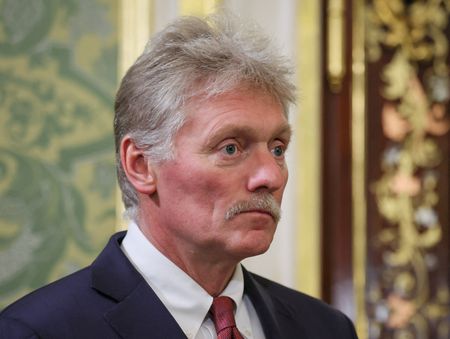

MOSCOW — Russia signaled Friday that it is prepared to engage in conversations with European nations, but made clear it will not be pressured into negotiations on anyone else’s terms.
Kremlin spokesman Dmitry Peskov said practical reasoning alone demands such dialogue, given what he described as an “enormous number” of complicated matters that need to be addressed. However, he stressed that Europe must rethink how it approaches Russia before any meaningful exchange can happen.
“The Europeans have a very serious misconception: They assume that negotiations with Russia must be conducted from a position of strength and based on Russia’s weakness. This is the biggest mistake… Such talk will lead nowhere,” Peskov told reporters.
He went further, adding: “Does this stem from European incompetence, misinformation, or stupidity? We don’t know for sure, but it’s a fact.”
Russian President Vladimir Putin has previously indicated a willingness to speak with European governments, but has insisted they must initiate contact, since it was they who severed ties. The EU has now imposed 20 separate rounds of sanctions on Russia in response to its invasion of Ukraine.
EUROPE SHIFTS ITS POSITION
For more than a year, European nations largely stepped back from direct engagement with Russia, leaving U.S. President Donald Trump to take the lead in attempting to negotiate a resolution to the conflict. That posture appears to be changing.
The office of European Council President Antonio Costa made “brief contacts at diplomatic level” with the Kremlin over recent weeks in order to “open communication channels,” according to an EU official who spoke Wednesday.
Austrian Chancellor Christian Stocker told the Financial Times in an interview released Thursday that the EU should capitalize on the current “momentum” surrounding Ukraine peace discussions to push forward with efforts to restart direct talks with Putin.
Peskov echoed Russia’s conditional willingness, saying Moscow would engage if the other side came ready for genuine conversation — “not to engage in moralising or, especially, to issue ultimatums.”
Costa’s outreach, however, exposed fault lines within the EU. At a summit of EU leaders held in Brussels, some member states said the initiative had not been coordinated with them and argued the bloc should instead focus on increasing pressure on Russia.
UKRAINE DRONE STRIKES HIT MOSCOW AREA
Ukraine has claimed it is gaining the upper hand in the war through an intensified wave of drone strikes targeting locations deep within Russia, including ports, oil refineries, and other critical infrastructure. Russia disputes this characterization and says it will continue fighting until its goals are met — with or without a diplomatic resolution.
The governor of the Moscow region announced Friday that an eight-year-old girl had been killed in a large-scale Ukrainian drone attack that struck the capital and surrounding areas the previous day. The assault, involving hundreds of drones, ignited a major oil refinery in southeast Moscow for the second time in just three days.
“Indeed, drone attacks continue. Appropriate measures are being taken to mitigate the consequences,” Peskov acknowledged.
When asked whether Putin had watched footage of the burning refinery, Peskov deflected, telling reporters they should instead look at images from Ukrainian cities struck by Russian forces.
“These strikes will continue,” he added.