
Efforts to quickly launch high-level talks between the United States and Iran ran into trouble just two days after a landmark agreement was signed — a deal that opens a 60-day window to negotiate a lasting understanding on Iran’s nuclear program and restore oil traffic through the Strait of Hormuz to prewar levels.
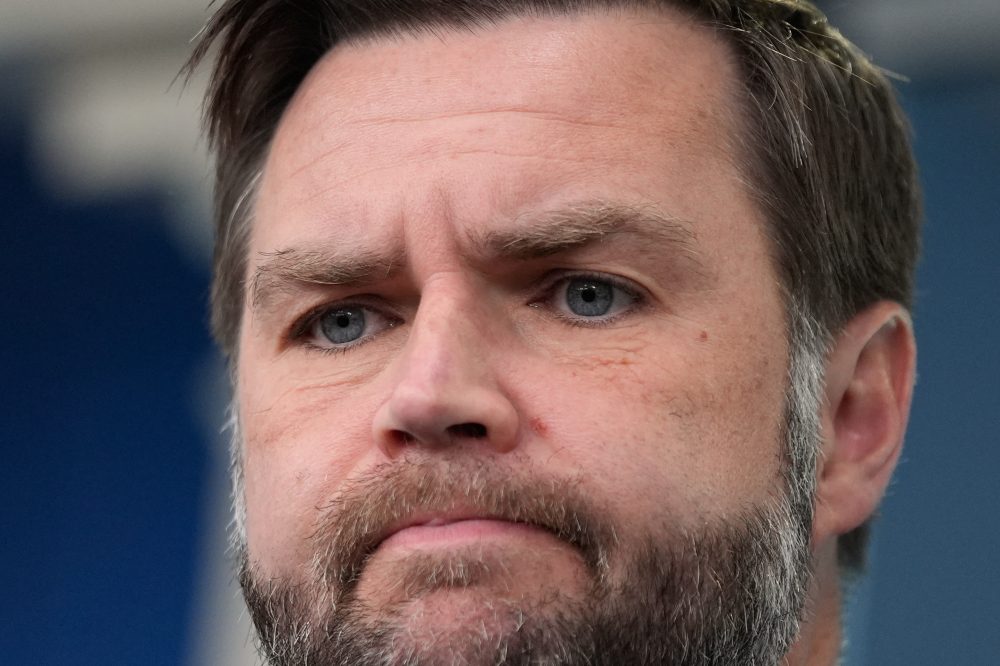
Vice President JD Vance had been set to board an overnight flight Friday to travel to a mountainside resort in the small Swiss village of Obbürgen, where he was expected to begin technical negotiations with Iranian counterparts.
His staff and a group of journalists had already assembled at Joint Base Andrews near Washington in preparation for the departure. Dozens of White House officials, advance team members, and additional media personnel were also on the ground in Switzerland awaiting Vance’s arrival.
Then, without warning, the trip was scrapped Thursday evening — at least for now.
The White House released a statement saying Vance — who was chosen by President Donald Trump to lead the negotiations — and his team were ready to talk, but that final arrangements could not be completed, and the vice president would be staying in Washington.
“The logistics of these negotiations have never been simple or predictable,” the statement read.
The cancellation came after Al-Mayadeen, a Pan-Arab satellite network politically aligned with the Iranian-backed Lebanese militant group Hezbollah, reported that Iran was postponing the arrival of its delegation to Switzerland in response to Israel’s continuing military campaign in Lebanon.
Earlier Thursday, Vance had hinted at the uncertain situation when he told reporters at a White House briefing that he wasn’t sure whether the talks would happen that weekend.
“Our plan is to go to Switzerland, I don’t know exactly when,” Vance told reporters. “We think these technical negotiations start sometime this weekend. That’s still the plan. But that could change.”
Shortly after Vance addressed reporters, Iran’s Supreme Leader Ayatollah Mojtaba Khamenei publicly backed direct negotiations with the U.S. in a brief statement delivered through state media. The move appeared to signal to Iran’s leadership that it was acceptable to proceed with an initial round of talks.
“It is obvious that the face-to-face negotiations that will be held in the future will not mean accepting the enemy’s opinion,” Khamenei said in the statement.
The message seemed designed to give Khamenei — who was seriously injured in the February 28 U.S. strike that killed his father — some political flexibility. Hard-line factions within the Iranian government, including Khamenei’s father, have long resisted direct dialogue with Washington, particularly after Trump withdrew from the 2015 nuclear agreement during his first term — a deal that had been negotiated under Democratic President Barack Obama’s administration.
For the White House, the statement appeared to open a path for the negotiations to begin.
Vance had originally been expected to travel to Switzerland to sign the agreement at an official ceremony. Instead, Trump signed the document Wednesday at a high-profile dinner at the Palace of Versailles with French President Emmanuel Macron, while Iranian President Masoud Pezeshkian signed it separately.
The agreement specifies that Iran’s stockpile of highly enriched uranium — believed to be buried beneath the rubble created by U.S. military strikes last year that targeted key Iranian nuclear facilities — must at minimum be diluted under international oversight. The deal also states that Iran shall not acquire or develop nuclear weapons, a commitment Iran has made before. However, a number of other obligations still need to be negotiated.
Rosemary Kelanic, director of the Middle East Program at Defense Priorities in Washington, said Iran would be entering the talks with a degree of confidence, having effectively shut down the Strait of Hormuz and triggered significant global economic consequences. She said the U.S. is now “essentially trying to negotiate our way back to the prewar status quo.”
Neil Quilliam, an associate fellow with the Middle East and North Africa Program at the Chatham House think tank, said Iran’s leadership feels “buoyant” and believes it holds the upper hand. He said the supreme leader’s endorsement of the talks “sends a very strong signal domestically: ‘We’re now on an equal footing with the U.S.’”
“‘Trump has gone from calling for regime change on Feb. 28 to this: Now they’re going to sit down with us directly and talk about these big issues,’” Quilliam said, describing how Iranian leaders view the situation. “So it’s intended more for the domestic audience, and telling them: ‘We are firmly in control of this. There can be no protests, no revolution: We are a new regime and we’re staying put.’”
President Trump’s own tone has also shifted noticeably in recent weeks.
For much of the conflict, Trump insisted that the financial burden on Americans mattered less to him than eliminating Iran’s nuclear threat. He drew criticism from some fellow Republicans when he suggested that the war’s potential effect on November’s midterm elections was not a concern of his.
But this week, at the G7 summit in Evian-Les-Bains, France, Trump acknowledged for the first time that continuing the war could have produced “economic catastrophe” and revealed that oil reserves were projected to run out in roughly four weeks.
“And the one president I did not want to be was the late, great Herbert Hoover,” Trump said, invoking the 31st president whose tenure became synonymous with the Great Depression.
For Vance, widely considered a likely contender for the 2028 presidential race, the outcome of these negotiations could carry major consequences for his political future.
Skepticism toward foreign military entanglements has been a defining feature of Vance’s political identity. Yet he now finds himself as the primary advocate for brokering an end to Trump’s conflict — one that Democrats have broadly dismissed as a misguided venture. Some hawkish Republicans are also alarmed that Trump is supporting a settlement that could funnel billions of dollars into Iran’s hands.
Sen. Roger Wicker, the Republican chairman of the Senate Armed Services Committee, said Thursday he is worried the deal “negotiates away the victories” achieved through the U.S. air campaign against Iran, and that parts of it are “completely out of step” with Trump’s stated objectives.
Trump previously attacked Obama harshly over the 2015 nuclear agreement, arguing it failed to prevent Iran from moving closer to building a weapon and directed billions of dollars to the Islamic Republic. In 2018, Trump exited that deal, known as the Joint Comprehensive Plan of Action, which had also been signed by Britain, China, France, Germany, Russia, and the European Union.
Trump has pushed back on comparisons to that earlier agreement, saying he “negotiated from strength” following a major military campaign, and arguing that Obama had essentially paid Iran without receiving meaningful concessions.
Wicker expressed particular concern over a $300 billion reconstruction and economic development fund for Iran referenced in the 14-point agreement, saying it “would make Iran’s payoff under Obama’s 2015 deal look like a pittance by comparison.” Trump and Vance have both stated that no American taxpayer funds would be directed to such a fund, and that any money would be contingent on concessions and reforms from Tehran.