
WASHINGTON — The White House announced Thursday night that Vice President JD Vance has postponed a scheduled trip to Switzerland, where he was expected to lead another round of negotiations with Iran over its nuclear program. The delay has raised fresh questions about the future of the tentative peace agreement.
Officials said Vance’s team had been prepared to depart but held back, citing difficult logistics surrounding the talks. The announcement came after Al-Mayadeen, a pan-Arab satellite channel with political ties to the Iranian-backed Lebanese militant group Hezbollah, reported that Iran was pulling back its own delegation from Switzerland due to Israel’s continued military campaign in Lebanon.
The postponement followed news that the U.S. had lifted its blockade of the Strait of Hormuz, allowing oil tankers to once again move freely through the critical waterway after months of being shut out. However, the initial agreement has faced sharp backlash from some corners of the U.S., including a handful of congressional Republicans who believe Washington gave up too much — pointing to sanctions relief and a potential $300 billion rebuilding fund as major concessions to Iran.
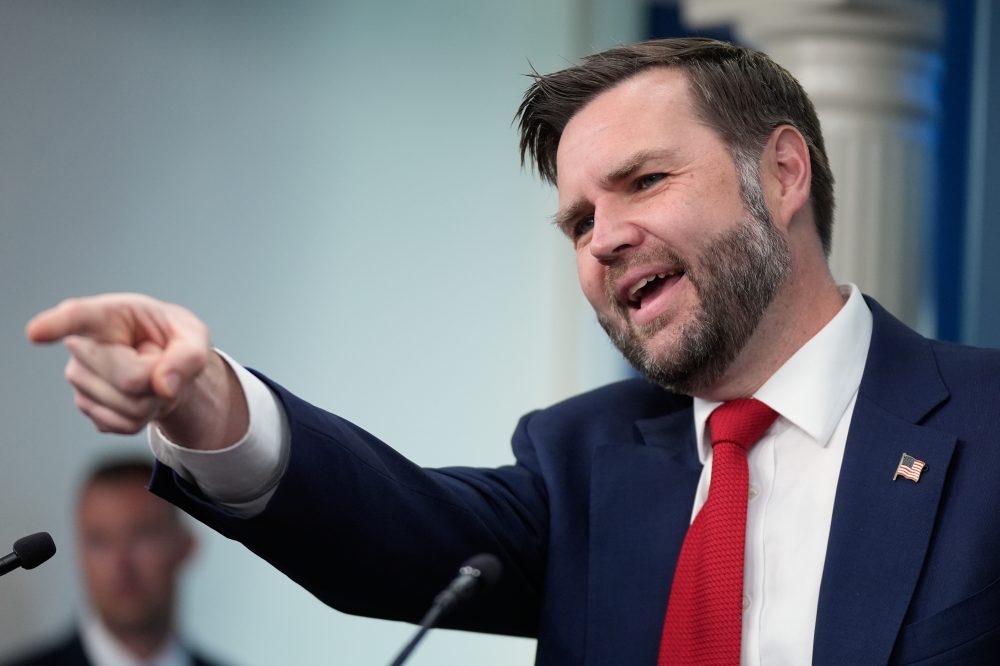
Earlier Thursday, Vance made the relatively uncommon move of appearing at the White House to publicly defend the deal. He argued that while the agreement does include concessions, Iran must first meet U.S. demands before receiving any economic benefits.
“As they dial up their good behavior, we can dial up the economic relief,” Vance said. “If they dial down their good behavior, we can turn it off.”
Vance had already acknowledged during those remarks that the timing of his Switzerland trip was uncertain — and the postponement has made that timeline even murkier.
A top Trump administration envoy separately briefed U.S. lawmakers in a closed session, telling them that Iran plans to invite the United Nations’ nuclear watchdog agency to inspect its nuclear facilities. Iranian Supreme Leader Ayatollah Mojtaba Khamenei also appeared to give his blessing to direct negotiations going forward.
“It is obvious that the face-to-face negotiations that will be held in the future will not mean accepting the enemy’s opinion,” Khamenei said in a statement distributed through state media.
The statement marked Khamenei’s first public response to the agreement and was seen as a notable shift in Iran’s position. Hard-liners, particularly Khamenei’s father — the previous supreme leader — have long resisted direct talks, especially since the U.S. withdrew from the 2015 nuclear deal between Iran and world powers. The current supreme leader has not appeared publicly since sustaining injuries in a strike at the outset of the war.
Lawmakers Briefed on UN Inspections
Under the terms of the agreement, Iran’s stockpile of highly enriched uranium must be diluted under international oversight at minimum. The deal also states that Iran shall not acquire or develop nuclear weapons — a pledge it has made in the past.
Trump envoy Steve Witkoff briefed congressional leaders and members of national security committees, telling them Iran will invite the International Atomic Energy Agency to inspect its nuclear sites and begin identifying the locations of its enriched uranium, which is believed to be buried under rubble.
Details from Witkoff’s private briefing were shared with The Associated Press by two people with knowledge of the conversation, who requested anonymity in order to discuss the closed-door meeting.
White House spokeswoman Olivia Wales said the agreement requires Iran to “commit to renounce their nuclear ambitions in writing.” The IAEA did not respond when asked for comment.
Witkoff told lawmakers the deal with Iran did not include any hidden side agreements, though he acknowledged a side letter was drafted between Tehran and the IAEA formally extending the inspection invitation. He said the letter to IAEA Director-General Rafael Mariano Grossi would allow him to bring U.S. nuclear inspectors into Tehran.
Vance Defends Deal, Issues Warning to Israel
Earlier in the day, Pakistani Prime Minister Shehbaz Sharif also postponed a planned visit to Switzerland, where Pakistani officials had originally intended to host a ceremonial signing event. Two senior officials, speaking anonymously due to the sensitivity of the situation, said that visit was called off because both Iran and the U.S. had already signed the agreement.
President Donald Trump signed the initial agreement with Iran on Wednesday during a dinner with French President Emmanuel Macron at the Palace of Versailles. The deal is designed to take effect immediately and extends a ceasefire while giving both sides 60 days to work out broader terms on more complex issues.
Vance, who was initially personally skeptical about the U.S. going to war with Iran, has become an increasingly prominent face of the administration’s handling of the conflict and has been vocal in defending the deal.
At Thursday’s White House appearance, he brushed off criticism about the confusing rollout of the initial agreement. “I don’t think our public messaging has been chaotic,” he said.
He also issued a pointed warning to Israel, which has been pushing the U.S. to take a tougher line against Iran and carried out attacks on the Iranian-backed Hezbollah militia in Lebanon throughout the war — including just before the ceasefire extension deal was finalized. Those strikes complicated peace efforts.
Trump “is the only head of state in the entire world who is sympathetic to the nation of Israel at this moment in time,” Vance said. “And he happens to be the head of state of the world’s superpower.”
Shipping Begins to Resume
Trump said he signed the agreement to prevent what he called “economic catastrophe” for the United States, after the war sent oil prices soaring, rattled financial markets, and stoked inflation. The deal helped push gas prices down and lifted stock markets — though those gains could be at risk depending on how the next phase of U.S.-Iran negotiations unfolds.
Vance said more than 12.5 million barrels of oil moved through the Strait of Hormuz on Wednesday night, adding that the U.S. easing its blockade of Iran represents “honoring our end of the early part of the agreement on the military side.”
U.S. Central Command said American warships “will remain in the general area to make sure that all aspects of the agreement are adhered to, obeyed and in full force and effect.”
Iranian state media reported that shipping had “normalized” at Iran’s southern ports, though it noted the strait remains under Iranian military supervision and ships still need to coordinate before passing through.
According to maritime data firm Lloyd’s List Intelligence, major shipping companies began moving vessels through the strait after the agreement was signed. Lloyd’s List editor-in-chief Richard Meade said it was the first time in 110 days that ships owned by large companies were transiting the strait, after effectively being stuck since February.