
Gulf airlines are quietly making a comeback, with flight numbers across the region climbing back toward where they were before the Iran conflict began earlier this year.
Data from Flightradar24.com shows that major Gulf carriers have collectively recovered to roughly 82% of the flight volume they operated on February 27 — the day before the war started. Gulf Air and Kuwait Airways have actually surpassed that pre-war benchmark in recent days, topping 100% of their earlier levels.
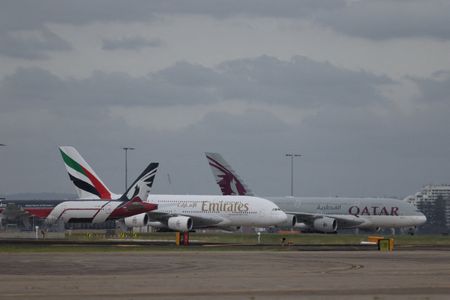
The three largest carriers — Emirates, Qatar Airways, and Etihad — are now operating at or near 90% of their pre-conflict flight totals. That marks a dramatic turnaround for Etihad and Qatar Airways, which had both dropped to just 40-50% of normal operations only a month ago. Emirates has maintained comparatively stronger numbers throughout the conflict.
The outlook for the industry brightened further after the United States and Iran signed an interim agreement on Wednesday to end the nearly four-month conflict. The two sides are expected to meet again Friday to work out the details of implementing the ceasefire deal.
James Halstead, managing partner at Aviation Strategy, said a full end to hostilities would allow the region’s airspace to reopen entirely, letting carriers resume normal operations. “If it gets back to normal, I just see them acting as normal, coming back in full force,” Halstead said.
Throughout the conflict, drone attacks repeatedly forced Gulf-bound flights to reroute, creating serious safety concerns for passengers and crew and funneling air traffic through only a small number of approved corridors. European and Asian carriers have largely suspended service to the region, with many travel warnings still in effect.
Australia did ease its travel advisory for several Middle Eastern countries this week, a positive sign for the region’s major transit hubs. The European Union Aviation Safety Agency (EASA), however, has kept its warning in place. EASA told Reuters it will factor in the latest developments when it reviews its conflict-zone advisory, which runs through June 24, but noted it was still “too early to determine whether the observed de-escalation will result in a sustained reduction of risks to civil aviation.”
The Gulf region has invested heavily in recent years to build itself into a global hub for travel and tourism, pouring money into hotels, airports, and major events. A full reopening of its skies would give a significant boost to those economies.
Emirates CEO Tim Clark told Reuters last week that the airline’s priority is reassuring travelers about safety and reliability. Flightradar24.com data places the Dubai-based carrier at 86% of its pre-conflict flight volume. Etihad is also trying to attract visitors by offering complimentary medical travel insurance for trips to Abu Dhabi from July through December.
Breaking down individual airline recovery figures: Gulf Air and Etihad are both at 93% of their February levels, Kuwait Airways is at 86%, and Qatar Airways has reached 87%. Air Arabia and Flydubai are lagging behind, at 75% and 57% of pre-war levels, respectively.
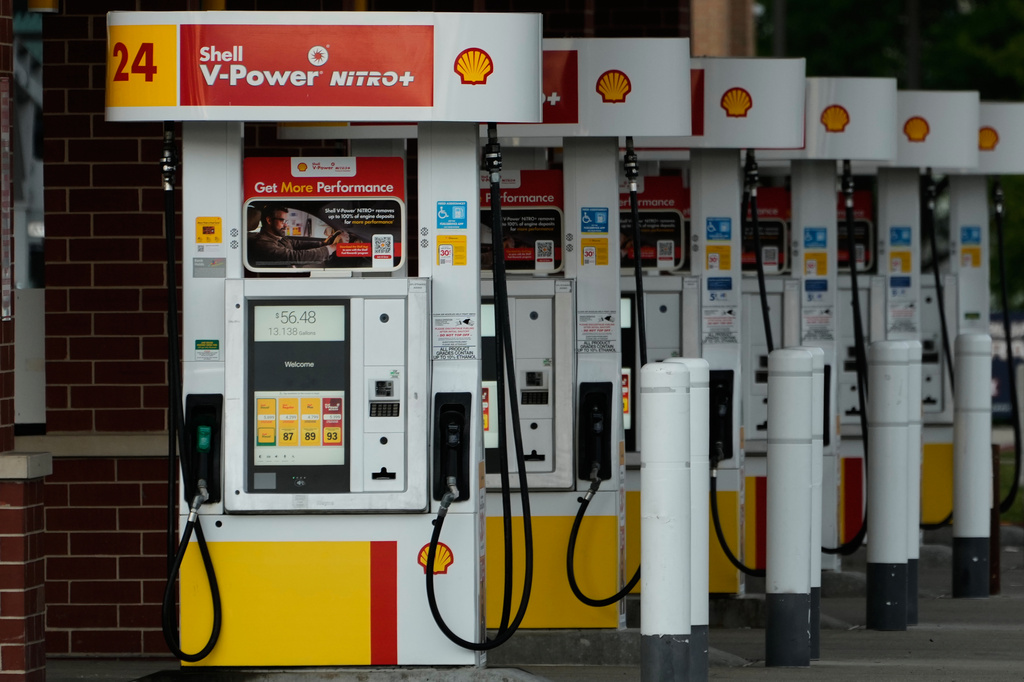
The ripple effects of the conflict have spread far beyond the Gulf. Jet fuel prices spiked significantly — though they are now declining — squeezing airlines that did not have fuel cost protections in place. Flight schedules across Europe and Asia were thrown into disarray, and airlines were forced to store aircraft or operate lengthy repositioning flights just to move planes where they were needed.
The International Air Transport Association, which represents more than 370 airlines responsible for about 85% of all global air traffic, slashed its profit forecast for the industry this month. The group now projects a combined net profit of $23 billion for 2026 — far below its earlier estimate of roughly $41 billion and a sharp drop from the $45 billion earned in 2025.