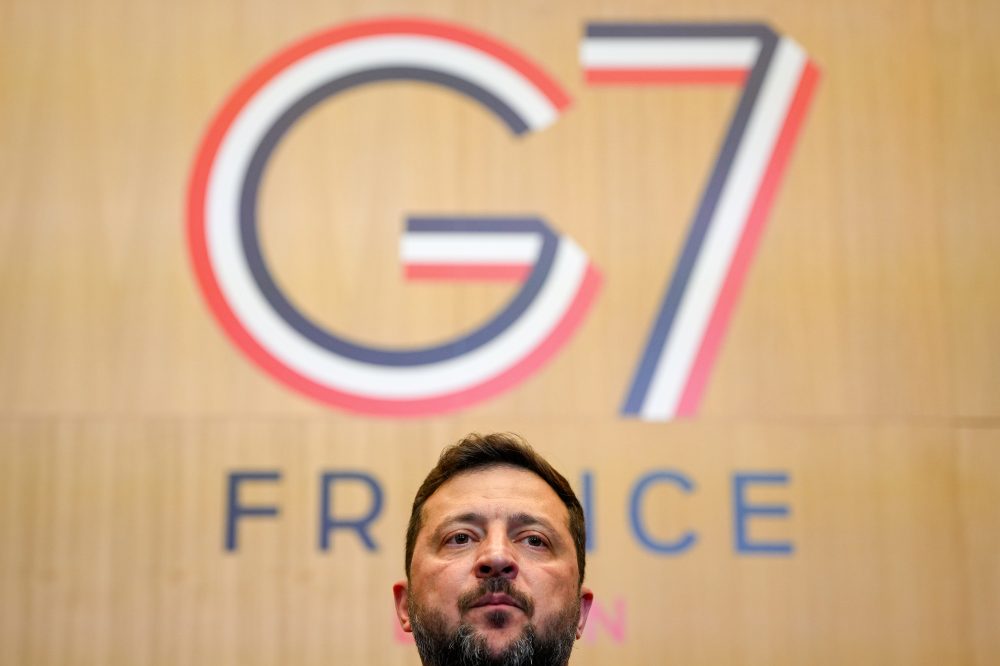
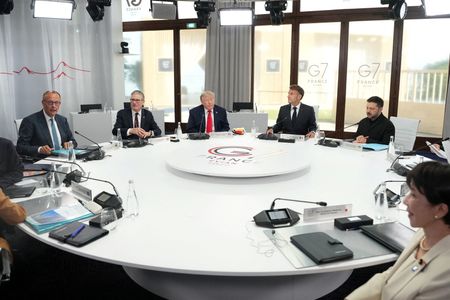
KYIV, Ukraine — Ukrainian President Volodymyr Zelenskyy announced Wednesday that leaders from the world’s top industrial nations, gathered at the Group of Seven summit in France, have made important new commitments to support Ukraine in its war against Russia.
The assembled leaders agreed to boost Ukraine’s air defense systems, safeguard the country’s energy infrastructure, and ramp up economic pressure on Moscow through additional sanctions — all as Ukraine’s battle against Russia’s full-scale invasion pushes into a fifth year with no clear end on the horizon.
Zelenskyy, who attended the summit in person, posted on X that the gathering produced meaningful outcomes. “The G7 Summit in France delivered important results for Ukraine. Most importantly, we agreed on additional strengthening of Ukraine’s air defense,” he wrote.
He added that allied nations would continue backing Ukraine’s military and energy stability, saying, “Our partners will ensure support for our defense and energy resilience,” and confirming that new sanctions against Russia would follow.
Since Russia launched its full-scale invasion in February 2022, Zelenskyy has worked tirelessly to build international backing for Ukraine while working to diplomatically isolate Russian President Vladimir Putin on the world stage.
Following the G7 gathering, Zelenskyy was set to travel to Brussels on Thursday for a European Union summit. Ukraine formally began EU membership talks on Monday, kicking off what is expected to be a lengthy process even as the country remains at war.
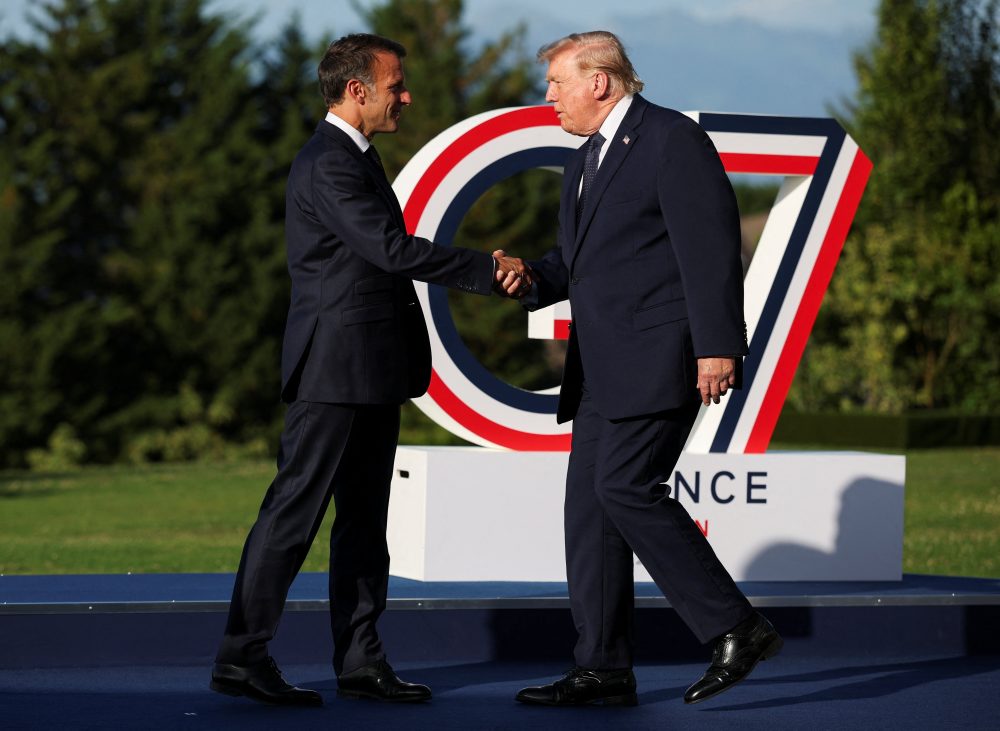
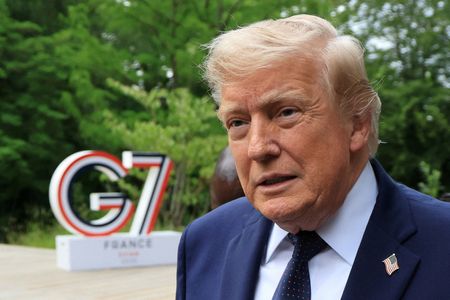
The ongoing conflict in Iran has pulled Washington’s attention away from its largely unsuccessful year-long push to bring the Ukraine war to an end. Zelenskyy used the G7 gathering — where key European leaders were also present — to engage directly with U.S. President Donald Trump.
Putin, meanwhile, has attempted to sideline both Europe and Kyiv, seeking to negotiate Ukraine’s fate in direct talks with Washington alone.
In a joint statement released overnight, the leaders of Japan, the United Kingdom, France, Germany, Italy, Canada, and the United States expressed their backing for Ukraine. “We commend Ukraine for its resilience and progress on the battlefield in recent months and emphasize there is now a new momentum” in Kyiv’s resistance, the statement read.
Western officials and analysts have noted a marked improvement in Ukraine’s battlefield performance in recent months, despite facing a much larger Russian military force.
Advanced Ukrainian drones have been effective at pinning down Russian troops along the front lines, disrupting supply routes in Russian-occupied Ukrainian territory, and striking oil production facilities deep within Russia — a key source of revenue for Moscow. These developments have brought the war into sharper focus for ordinary Russians and increased pressure on Putin.
However, Ukraine is facing a critical shortage of American-made Patriot air defense missiles, partly due to U.S. stockpiles being drawn down by the conflict in the Middle East. That shortage leaves Ukraine exposed to the ballistic missiles Russia deploys in its strategic bombing campaign against Ukrainian cities and infrastructure.
The G7 joint statement pledged additional air defense capabilities for Ukraine, though it did not specify which types of weapons systems would be provided.
Leaders also indicated they would look into allowing Ukraine to obtain licenses to produce Western weapons domestically. Kyiv has specifically requested permission to manufacture Patriot missiles on its own soil.
Among the attacks reported Wednesday, a Russian drone hit a children’s equestrian sports school in Ukraine’s northeastern Sumy region overnight, striking a stable and killing horses. Oleh Hryhorov of the Sumy regional military administration said school staff were unharmed, based on preliminary information.
Russia’s Defense Ministry, meanwhile, reported that its air defenses intercepted 157 Ukrainian drones between late Tuesday and early Wednesday.
MOSCOW (AP) — Russian President Vladimir Putin has opened a two-day summit in Kazan with leaders from the Association of Southeast Asian Nations, aiming to deepen business and diplomatic ties between Russia and the regional bloc.
The Russia-ASEAN summit is focused on expanding what Russia calls a “strategic partnership” with ASEAN’s member nations, which include Brunei, Cambodia, Indonesia, Laos, Malaysia, Myanmar, the Philippines, Singapore, Thailand, East Timor, and Vietnam.
ASEAN has long maintained relations with Moscow as a “dialogue partner,” with top-level meetings held annually. This year’s gathering in Kazan carries added significance as it commemorates the 35th anniversary of the Russia-ASEAN relationship.
In remarks to participants at a business forum running alongside the summit, Putin expressed confidence that the event would “create new opportunities for expanding mutually beneficial trade, investment, and industrial cooperation, while also strengthening direct dialogue between our business communities.”
Kremlin foreign affairs adviser Yuri Ushakov outlined the summit’s agenda, saying it would include discussions on global and regional issues as well as a review of progress in Russia-ASEAN relations. He noted that participants are expected to reaffirm their commitment to “forming a just and democratic multipolar world order based on the principles of international law and the United Nations Charter.”
Ushakov also confirmed that Putin planned to hold one-on-one meetings with individual ASEAN leaders throughout the summit.
The member nations of ASEAN vary widely in their global alignments. The Philippines, which currently holds the bloc’s rotating annual presidency, is considered closely aligned with the United States. Other members maintain significant trade and security ties with both China and Russia.
Several ASEAN countries — including the Philippines, Indonesia, Thailand, and Vietnam — have either already purchased Russian crude oil or expressed interest in doing so, following a sharp rise in global fuel prices in the aftermath of the war in Ukraine.
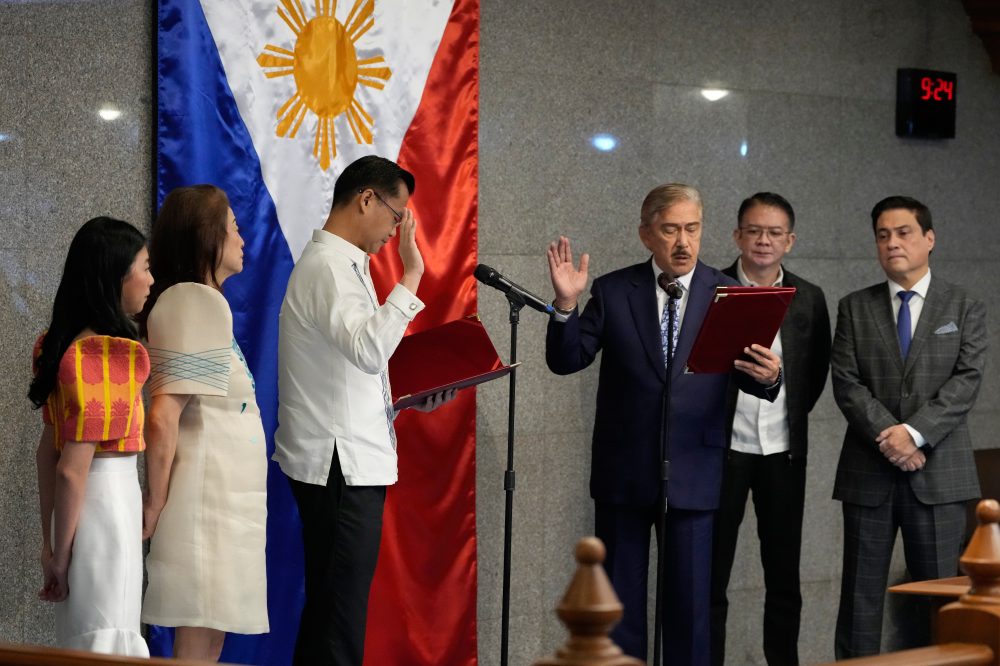
A weeks-long leadership battle inside the Philippine Senate came to an end Wednesday when a Duterte-aligned senator was ousted from the chamber’s top position — just as the body prepares to put the former president’s daughter on trial.
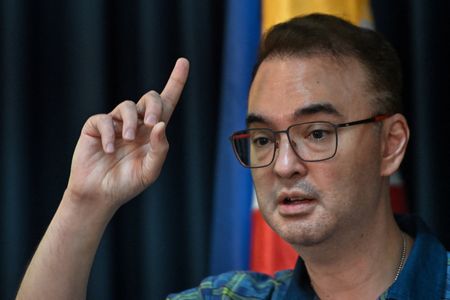
Sherwin Gatchalian, an ally of President Ferdinand Marcos Jr., secured the Senate presidency after winning the backing of 13 out of 24 senators. His opponent, Alan Peter Cayetano — a key supporter of former President Rodrigo Duterte — acknowledged the loss after one of his own allied senators switched sides, handing the rival faction a clear majority.
“It’s a relief,” said Jean Franco, a political professor at the state-run University of the Philippines. However, she cautioned that the country’s democracy, “with its weak and fragile institutions,” still faces significant challenges ahead.
The Senate power struggle has widely been viewed as an extension of the bitter political feud between Marcos and Vice President Sara Duterte. The two were once political partners before a very public and acrimonious falling out — a conflict that highlights the deep divisions and turbulent nature of Philippine politics.
Vice President Duterte has held Marcos responsible for her father’s arrest and his transfer to the International Criminal Court in The Hague last year. The elder Duterte is set to face trial before the global court beginning in November on charges of crimes against humanity.
Those charges are rooted in the violent anti-drug campaign he carried out while in office, during which thousands of mostly low-income drug suspects were killed. Rodrigo Duterte has denied ever ordering extrajudicial killings.
Cayetano had originally seized the Senate presidency on May 11 after his faction gained a narrow majority when Sen. Ronald dela Rosa resurfaced following months out of public view to cast a supporting vote. Dela Rosa, who once served as Rodrigo Duterte’s national police chief, has been identified by the ICC as a co-perpetrator in the widespread killings of drug suspects. An ICC arrest warrant for dela Rosa was unsealed on May 11, after which he went back into hiding and has not been found.
A separate blow to Cayetano’s faction came on June 1, when another allied senator, Jinggoy Estrada, was arrested and jailed following an indictment on a plunder charge. Estrada is accused of accepting large kickbacks connected to a flood control project — an allegation he denies.
Control of the Senate carries enormous significance. The chamber is expected to begin the impeachment trial of Vice President Sara Duterte in July, after the House of Representatives voted last month to impeach her. The charges against her include unexplained wealth and publicly threatening to have President Marcos assassinated.
The House of Representatives is largely controlled by Marcos allies. The vice president has denied all of the allegations. Her supporters argue the charges were fabricated to block her from running for president when Marcos’ six-year term concludes in 2028.
DUBAI, United Arab Emirates — Leaked copies of a tentative agreement between the United States and Iran indicate that Tehran will immediately move to reopen the Strait of Hormuz once the deal is officially signed, and will be permitted to sell its oil without any restrictions, according to officials who say the leaked text closely reflects the actual document.
The agreement is scheduled to be formally signed at a ceremony in Switzerland on Friday. Under its terms, the U.S. would work to secure at least $300 billion to help rebuild Iran following the war, and would pursue the removal of all American and United Nations sanctions against Tehran — provided a final agreement on Iran’s nuclear program is eventually reached.
The U.S. concessions — including immediately allowing Iran to sell oil freely and the eventual lifting of all sanctions — go further than the terms Iran received under its 2015 nuclear deal with world powers. U.S. President Donald Trump pulled the United States out of that earlier agreement during his first term, calling it the “worst deal ever.” The new accord is expected to face sharp criticism in Washington and appears to be a significant blow to Israeli Prime Minister Benjamin Netanyahu, who launched the war alongside Trump on Feb. 28.
The agreement also calls for an immediate halt to all fighting in Lebanon between Israel and the Iranian-backed militia Hezbollah. That provision is among the most sensitive in the deal, as Israel has insisted it retains the right to defend itself and continues to occupy large portions of Lebanon. Iran has stated that Israel must withdraw under the terms of the deal, though the leaked versions contain no specific language about a withdrawal.
Both sides are expected to begin 60 days of negotiations aimed at reaching a final agreement — one that the Trump administration says will permanently prevent Iran from developing a nuclear weapon. The generous U.S. offers appear designed to draw Iran into striking a longer-term deal.
In the near term, however, Iran appears to be receiving significant benefits upfront while giving up relatively little. Much of the interim agreement would restore conditions to what they were before the war began, including the cessation of hostilities and the reopening of the strait — a critical passage for global oil and natural gas supplies whose closure triggered a historic energy crisis.
Other major concessions to Iran — including reconstruction funding, full sanctions relief, and the release of frozen assets — appear tied to the outcome of future negotiations over Iran’s nuclear program.
A person briefed on the memorandum of understanding after it was signed, and another who reviewed a copy beforehand, both said the leaked text largely matched what was published by Saudi-owned broadcaster Al Arabiya, which reported details of the deal on Tuesday. Both individuals spoke on condition of anonymity due to the sensitivity of the matter. Two additional officials in the Middle East, also speaking anonymously for the same reason, confirmed that versions published by Al Arabiya and Bloomberg broadly matched the final agreement.
The White House and other American officials have not released the terms of the deal and did not immediately respond to requests for comment. Iran has also not published an official version. Iran’s semiofficial Tasnim news agency, which has close ties to the paramilitary Revolutionary Guard, claimed Wednesday that Bloomberg’s version was missing sections, without providing a complete accounting of what was absent.
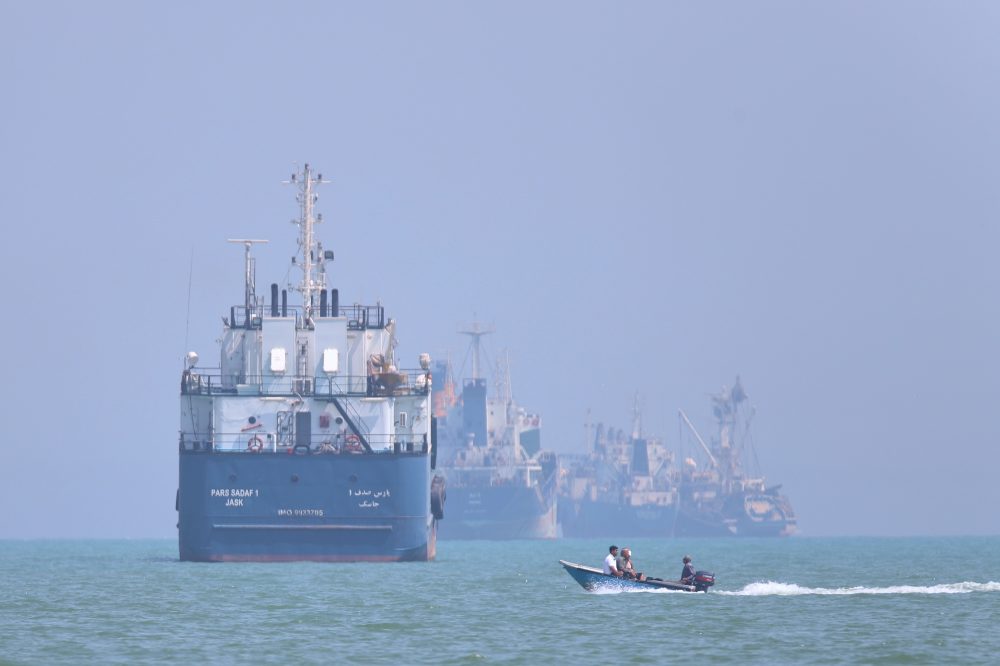
The reopening of the Strait of Hormuz represents a major victory for the global economy. The narrow waterway at the mouth of the Persian Gulf once carried a fifth of all oil and natural gas traded worldwide before the war began. Iranian attacks on shipping and threats to vessels effectively shut down the strait, driving up energy prices globally and making everyday goods — including food — more expensive. Iran allowed some vessels to pass after paying tolls, an unprecedented practice in the strait, which sits in the territorial waters of Iran and Oman and has long been regarded as an international waterway. The U.S. later provided military assistance to help other tankers through, but traffic never returned to prewar levels.
Under the deal, the U.S. would lift a blockade on Iranian ports, and the strait would be expected to return to its prewar traffic levels within 30 days. The agreement also acknowledges that Iranian mines may still be present in the waterway and will need to be cleared.
While full sanctions relief for Iran will depend on future negotiations, the U.S. will immediately issue waivers allowing Iranian oil sales to proceed. Granting those waivers at the outset of the 60-day talks removes a significant point of leverage for the U.S. In the years leading up to the 2015 nuclear deal, Iranian oil faced international sanctions that sharply limited sales, and those sanctions were only lifted upon the completion of that overall agreement.
The interim deal also opens the possibility of ending all sanctions Iran faces from both the U.S. and the United Nations — though the timeline for that would be determined in later talks. That goes well beyond the 2015 deal, which only lifted certain sanctions in exchange for Iran significantly scaling back its uranium enrichment and stockpile.
The accord would also provide Iran with at least $300 billion for reconstruction following an intensive U.S. and Israeli bombing campaign. U.S. Vice President JD Vance has said Gulf Arab nations would supply that amount in the form of investments in Iran.
The interim deal establishes a 60-day window — which can be extended — to negotiate limits on Iran’s nuclear program, a topic that has been discussed across multiple rounds of talks during Trump’s second administration without a breakthrough. Iran maintains its nuclear program is peaceful, though the International Atomic Energy Agency has said Iran possesses enough highly enriched uranium to construct multiple atomic bombs if it chose to do so.
In the interim deal, Iran reaffirms that it will never produce nuclear weapons — a pledge it also made in the 2015 accord. Iranian diplomats have long pointed to statements from the late Ayatollah Ali Khamenei that Iran would not build an atomic bomb. Whether Iran’s new Supreme Leader, Ayatollah Mojtaba Khamenei, will uphold that position remains uncertain.
Trump has cited varying goals for the war at different points, including vowing to eliminate Iran’s nuclear and missile programs, end its support for Hezbollah and other proxy groups, and at times suggesting the conflict could lead to the fall of the Iranian government. The interim deal falls short of all of those objectives.
The negotiations have also exposed a growing rift between Netanyahu and Trump — Netanyahu’s closest and most powerful international ally — at a time when Netanyahu is facing a reelection campaign and heavy domestic criticism over the emerging deal. Despite that pressure, Netanyahu will find it difficult to oppose Trump given Israel’s deep dependence on U.S. diplomatic and military support.
The United Nations World Food Programme announced Wednesday that it is welcoming an $800 million contribution from the United States — a major infusion of cash that comes after the Trump administration had previously slashed the agency’s American funding.
The WFP said the money would be used to scale up food assistance and respond quickly to emerging crises at a time when global hunger has reached record levels and the number of people facing severe food shortages is expected to climb further this year.
The United States is the WFP’s largest donor, but its contributions dropped by more than half between 2024 and 2025, falling to roughly $2 billion. The new $800 million grant would allow the agency to stockpile food supplies in advance, expand cash assistance programs, and keep supply chains running in crisis zones including Lebanon, Haiti, and the Democratic Republic of Congo.
The broader picture of U.S. humanitarian aid has also shifted dramatically. Overall U.S. humanitarian funding to the United Nations fell from $14.1 billion to approximately $3.38 billion in 2025 following significant spending cuts.
Just one day earlier, on Tuesday, the U.S. State Department announced a separate $218 million assistance package for UNICEF, the UN’s children’s agency.
The WFP is currently operating under temporary leadership as the United States works to install another American at the top of the organization. That search follows the resignation of Cindy McCain, who stepped down for health reasons.
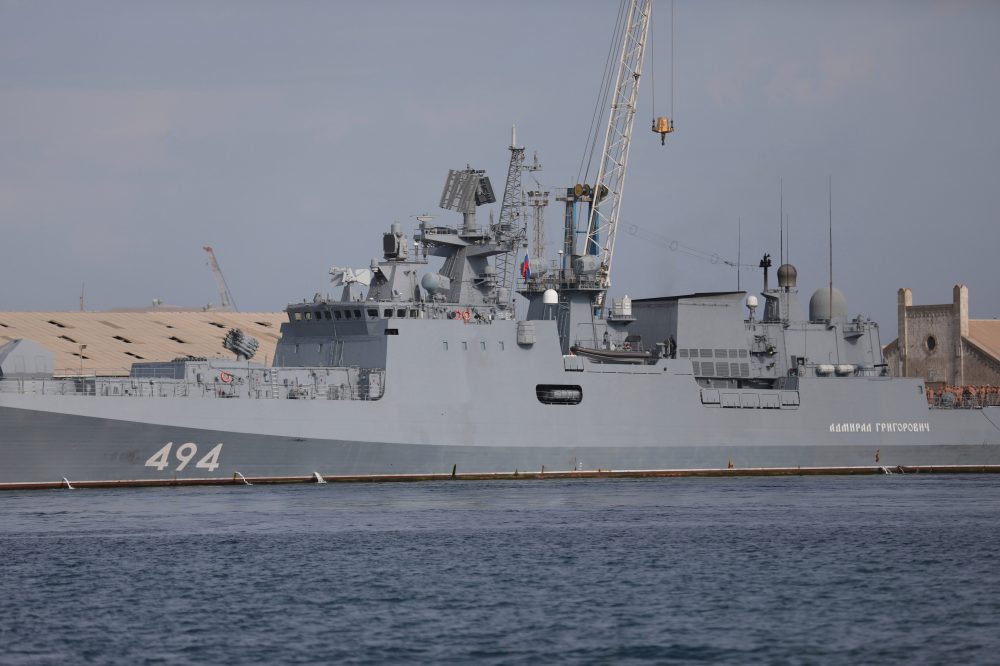
LONDON (AP) — UK Prime Minister Keir Starmer stepped forward Wednesday to condemn the crew of a Russian warship for what he called reckless behavior, after the vessel fired warning shots near a British sailboat in the English Channel — though he suggested the situation was less alarming than it might appear.
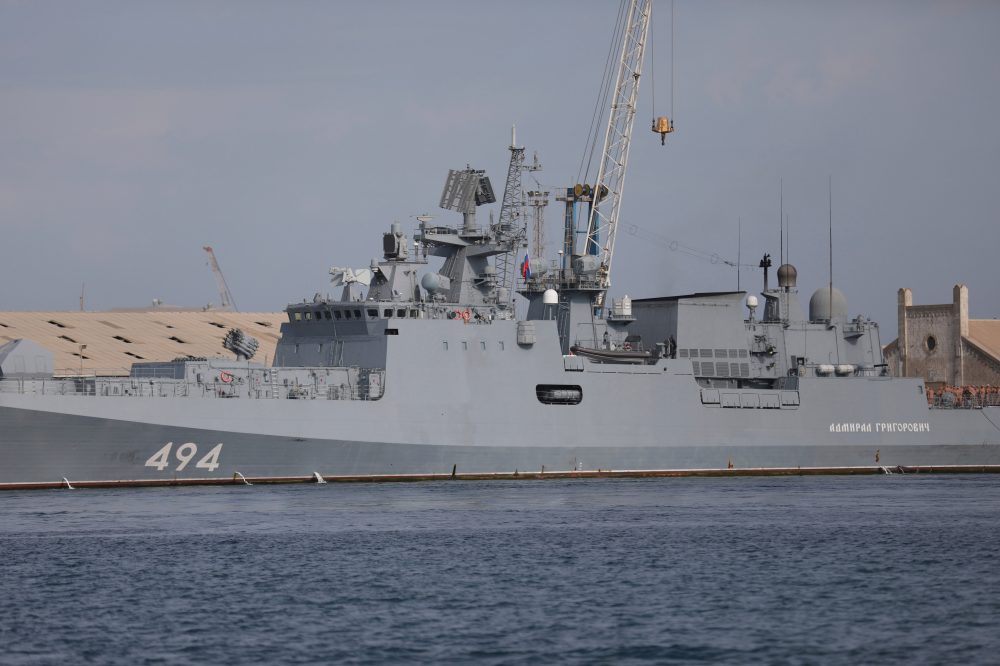
The 40-foot sailboat involved, named Bright Future, was making its way across the English Channel toward Cherbourg, France, early Tuesday morning when its owners say they encountered a Russian warship that fired shots in their direction. Russia’s account confirms that the crew of the frigate Admiral Grigorovich discharged rounds into the air after the sailboat reportedly ignored repeated warnings to alter its path.
Nobody aboard was hurt, but the confrontation has drawn fresh attention to the growing friction between the United Kingdom and Russia.
Starmer, speaking from the G7 summit being held in France, described the incident as “deeply concerning,” while also noting that British defense officials had determined the shots were not “anything more sinister” than an attempt to prevent a collision between the two vessels.
“That doesn’t take away from the fact that clearly Russia is aggressive across Europe,” Starmer said.
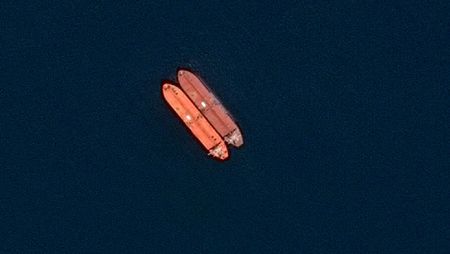
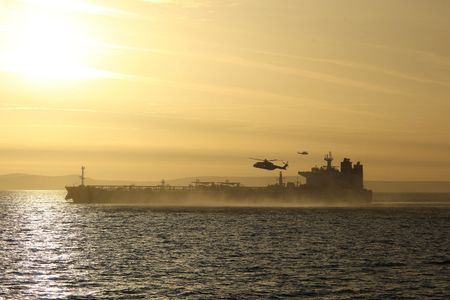
The episode unfolded just two days after Britain seized a tanker linked to Russia’s so-called shadow fleet — a network of vessels that Western nations allege is used to dodge sanctions placed on Russian oil following the invasion of Ukraine. The UK has also leveled accusations at Russia of running a campaign of sabotage and disinformation aimed at destabilizing European countries that back Ukraine.
The British couple on board the Bright Future, Jane Kelvey, 68, and her husband Alan, 70, said the shots were fired roughly 20 nautical miles — about 23 miles or 37 kilometers — south of the Isle of Wight, in waters outside UK territorial boundaries.
Jane Kelvey described the moment to the i Paper: “It was a bit scary. I crouched down. I didn’t think our safety was in danger. But it was certainly unusual. As we sailed away, we said to each other, what the hell just happened?”
Russia’s Defense Ministry offered its own version of events, stating that the frigate’s crew had spotted the yacht traveling on what it called a “dangerous course in close proximity with the warship.” According to the ministry, the ship launched flares and sounded audio signals when the yacht failed to respond.
“After the distance had closed to 150 meters (500 feet), the frigate’s commander decided to fire warning shots across the vessel’s bow using small arms,” the ministry stated, adding that the yacht then changed direction and departed the area.
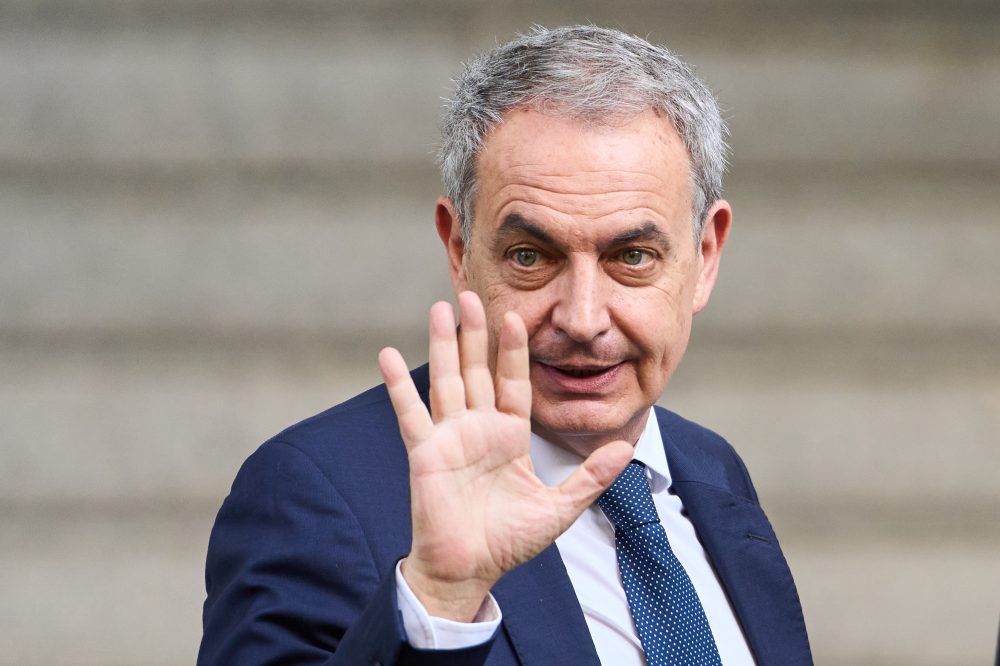
MADRID — Former Spanish Prime Minister José Luis Rodríguez Zapatero stood before a judge in Madrid on Wednesday, answering questions tied to his alleged role in a government airline rescue and jewelry uncovered during a police search of his office.
Wednesday’s court appearance marks the first time Zapatero has faced the National Court judge since being placed under investigation last month. He is accused of possible influence peddling, money laundering, and other financial misconduct connected to the Spanish government’s bailout of Plus Ultra airline.
Zapatero, 65, served as Spain’s prime minister from 2004 to 2011. He had been out of public office for roughly a decade when Plus Ultra received 53 million euros — approximately $61.5 million — in public funds in 2021 drawn from a COVID-19 economic recovery program.
Judge José Luis Calama is also looking into potential tax fraud and contraband charges related to jewelry valued at 1.3 million euros that officers found inside a safe when they searched Zapatero’s office in May.
Zapatero has flatly denied any involvement in wrongdoing related to the airline bailout. As for the jewelry, he has stated that the items were either inherited or given to him as gifts.
Despite the legal troubles, Zapatero continues to hold influence within the Socialist party, which is currently led by Prime Minister Pedro Sánchez. That party has faced a series of corruption scandals over the past two years.
Plus Ultra was an airline focused on routes connecting Spain with South America and had investors based in Venezuela.
Following his departure from office, Zapatero devoted much of his time to maintaining communication with Venezuela’s government, a country that had become largely cut off from Western nations after it moved to suppress its democratic opposition.
Under Spain’s legal system, an investigative judge examines evidence to determine whether suspected crimes warrant a trial. If the evidence is deemed sufficient, the case is forwarded to a separate judge who presides over the trial itself. The entire process can stretch from several months to well over a year.
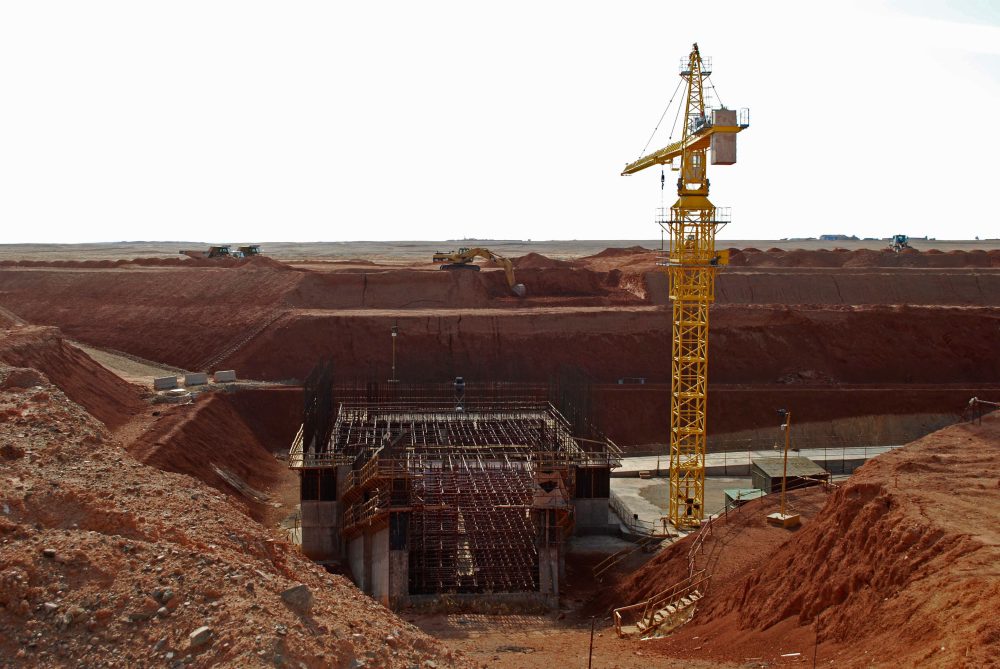
ULAANBAATAR, Mongolia — A group of demonstrators in Mongolia brought copper exports to a standstill at a major Rio Tinto mining operation on Wednesday, cutting into the flow of a critical material that fuels China’s renewable energy industry.
The demonstrators belong to an organization known as the Radical Reform Movement, which has long pushed for Mongolians to receive a bigger cut of the wealth generated by the country’s mineral resources. Despite sitting atop enormous reserves of valuable minerals, Mongolia continues to struggle with widespread poverty. Copper plays a central role in manufacturing electric vehicles and building solar and wind energy systems — sectors where China holds a dominant global position.
Whether the demonstration would last only a single day as a way of raising awareness, or stretch into a prolonged blockade with serious economic consequences for both nations, remained unclear.
The Radical Reform Movement shared footage on Facebook showing a small number of protesters gathered around a barrier placed across a two-lane road cutting through a remote, open landscape under bright sunshine. A white banner bearing the words “Stop Rio Tinto” in red lettering was stretched across a large tree branch blocking the road, positioned in front of a wall of tires.
The Oyu Tolgoi mine is an enormous operation tapping into one of the world’s largest copper deposits, buried deep beneath the Gobi Desert roughly 80 kilometers — about 50 miles — north of the Chinese border. The site also holds substantial gold reserves and is expected to rank as the fourth largest copper mine on the planet once it reaches full production, according to Rio Tinto. The British-Australian mining company holds a 66% ownership stake in the mine, while the Mongolian government owns the remaining 34%.
The jointly operated mining company confirmed that shipments of copper concentrate were stopped after the road was blocked Wednesday morning. The company noted that the Oyu Tolgoi mine accounts for roughly 9% of Mongolia’s total tax revenue, and cautioned that a week-long disruption could cost the Mongolian government 35 billion Mongolian Tugrik, equivalent to approximately $13.3 million.
During a Cabinet meeting, Mongolian Prime Minister Uchral Nyam-Osor directed the minister of justice and internal affairs to uphold the law and pursue accountability for anyone unlawfully obstructing or interfering with business operations that are being carried out in compliance with existing laws and regulations, according to a post on the government’s official Facebook page.
While the Radical Reform Movement has gone so far as to call for foreign investors to be removed from the country entirely, not everyone shares that position. However, there are voices within the Mongolian government who are calling for the country’s agreement with Rio Tinto to be renegotiated so that Mongolia receives a greater share of the financial benefits.
BERLIN — A growing share of German businesses say they would choose a cloud computing solution based entirely within Germany, even if it meant giving up some features, rather than continue relying heavily on foreign providers — especially those based in the United States, according to a survey released Wednesday.
The poll, conducted by German digital industry association Bitkom among 603 companies, found that 85% of respondents believe Germany is too dependent on U.S. cloud providers. That figure is up from 78% just one year ago.
The willingness to accept trade-offs for a Germany-only cloud solution has also grown sharply. Nearly 40% of companies said they would now use a cloud service that keeps all data processing within German borders, even if that came with drawbacks — a significant jump from 27% the previous year.
The survey also found that almost two-thirds of businesses currently using cloud computing feel pressured by U.S. government policies to reconsider how they manage their cloud operations. A year ago, that figure stood at 50%.
Bitkom President Ralf Wintergerst stressed the urgency of the situation. “Germany needs to break free from one-sided dependencies in the cloud sector, particularly in light of the growing importance of AI and data,” he said.
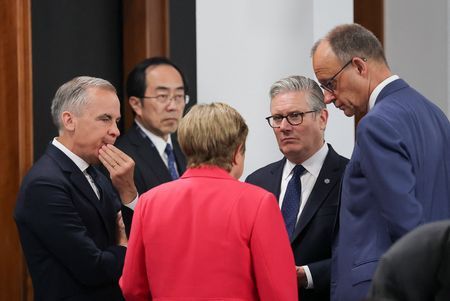
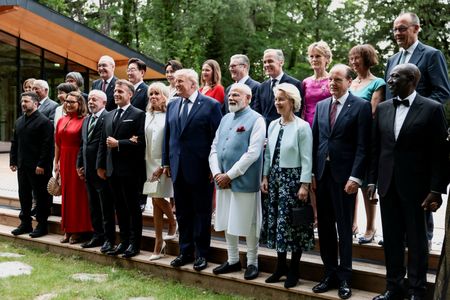
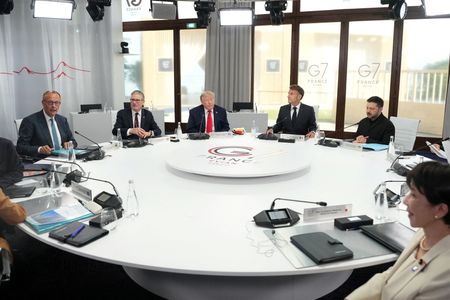
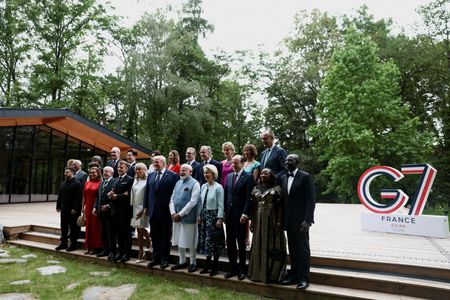
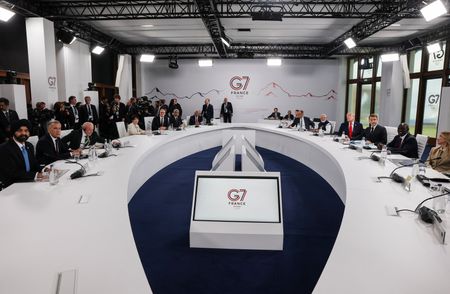
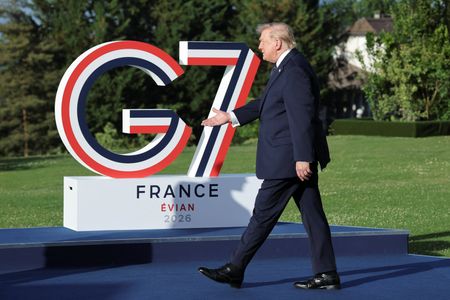
Leaders of the G7 nations gathered at a summit in the French town of Evian-les-Bains on Lake Geneva Wednesday, issuing a joint call for a ceasefire in Lebanon while expressing support for a preliminary agreement between Washington and Tehran aimed at ending the war between the two countries.
The interim deal, a memorandum of understanding signed by the United States and Iran this week, extends a ceasefire that was first announced in April by an additional 60 days. That window is intended to give negotiators time to work toward a lasting peace agreement. The conflict has resulted in more than 7,000 deaths, with most casualties occurring in Iran and Lebanon.
The full details of the agreement had not yet been made public as of Wednesday, but a formal announcement was expected Friday across the nearby Swiss border. In their joint statement, the G7 leaders said: “We underline the need for the negotiation … to address the threats posed by Iran in the region and beyond and ensure that they never obtain a nuclear weapon.”
The summit gave U.S. President Donald Trump an opportunity to present the agreement to key allies — Britain, Canada, France, Germany, Italy and Japan. While those nations broadly share American concerns about Iran’s nuclear activities, they never endorsed the decision to go to war. They have also expressed worry that Tehran gained a degree of leverage by withstanding the military campaign and asserting control over the Strait of Hormuz.
The G7 leaders said they are prepared to help put the agreement into practice. A coalition led by Britain and France is expected to assist in securing shipping lanes once the Strait of Hormuz reopens, which is anticipated to happen Friday.
Critics have noted that the U.S. president appears to have fallen short of several goals he outlined at the start of the conflict. Iran’s government remains in power, its stockpile of highly enriched uranium has not been handed over, its ballistic missile program has not been dismantled, and it has not cut ties with anti-Israel militant groups such as Hezbollah in Lebanon. Trump has stated that the agreement affirms Iran will not develop a nuclear weapon — a position Iran has officially held since the 1970s — and U.S. officials say further talks will lead to the removal or destruction of its enriched uranium supply.
Ending the war under these conditions could still draw criticism, including from within Trump’s own Republican Party, as the country heads toward midterm elections in November.
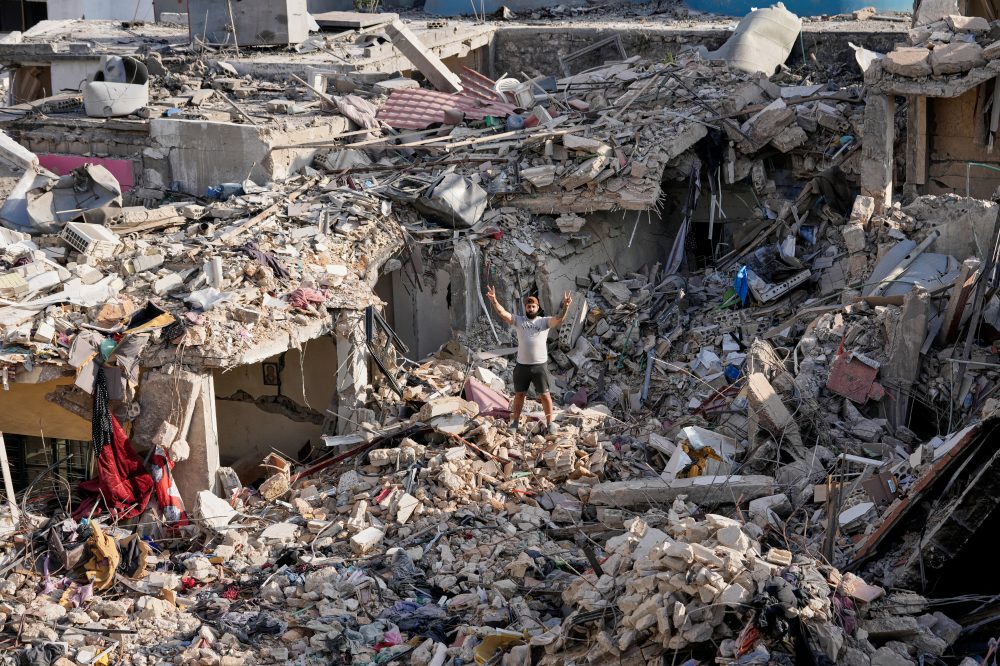
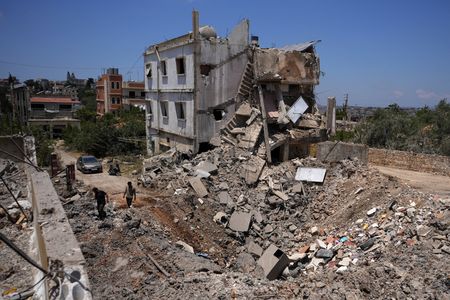
One of the most unresolved issues surrounding the truce involves Lebanon. Israel invaded the country in March in an effort to root out Hezbollah, after the militant group fired across the border in solidarity with Tehran following U.S. and Israeli strikes on Iran. Israeli forces continue to occupy a portion of southern Lebanon, where more than one million people have been displaced. Hezbollah has not been defeated.
Iran has insisted that any ceasefire must also bring an end to hostilities in Lebanon and that a permanent agreement must include an Israeli withdrawal. Israel, which was not included in the U.S.-Iran peace talks, has said it will not withdraw and maintains the right to use military force.
That stance has created a visible rift between Israel and the United States. Trump publicly criticized Israeli Prime Minister Benjamin Netanyahu, saying at the summit Tuesday that he was “not happy” with how Israel has conducted itself. He added: “Without us, without the United States, there would be no Israel. Without me, there would be no Israel, because no other president was willing to do what I did.”
In their joint statement, the G7 leaders called for an “immediate robust ceasefire” in Lebanon along with the disarmament of Hezbollah. A Hezbollah spokesperson told Reuters the group believes Iran would not agree to a permanent truce unless the Israeli occupation comes to an end.
The memorandum also includes a $300 billion reconstruction fund, to be financed by neighboring Gulf states, contingent on Iran meeting other terms of the agreement. A senior U.S. official confirmed that the deal includes a waiver on sanctions against Iranian oil, which could bring millions of additional barrels to the global market — though industry officials caution that full recovery of Middle East oil and gas production could take several months.
Oil prices dropped again Wednesday in anticipation of the Strait of Hormuz reopening, with Brent crude futures falling below $80 per barrel — their lowest point since the early stages of the U.S.-Iran conflict.
The G7 leaders also pledged to “accelerate the diversification of energy supply routes in order to reduce global vulnerability to the Strait of Hormuz and to increase our energy stocks.” Negotiations on more difficult issues, including the future of Iran’s nuclear program, are expected to resume during the 60-day ceasefire period. Iran’s support for regional militant groups and its missile capabilities do not appear to be part of those upcoming discussions.
BUDAPEST — Hungary has opened an internal investigation targeting its tax authority, counter-terrorism units, and other government agencies following the controversial detention of a Ukrainian bank’s routine cash transport earlier this year.
The incident occurred in March, when seven Ukrainian nationals transporting $82 million in cash and gold aboard two armored vehicles were briefly taken into custody on suspicion of money laundering. The detention took place while the government of Viktor Orban — a Russian ally who has since been removed from power — was in a bitter dispute with Ukraine.
Ukraine’s Oschadbank stated that the employees involved were conducting a standard operation, the same type of transfer the bank had been performing on a weekly basis since Russia’s invasion of Ukraine began.
Prime Minister Peter Magyar, who won April’s election by a wide margin, took to Facebook on Wednesday to demand action. He wrote that the prosecutor general “must address the matter without delay.”
During his time in office, Orban had made skepticism toward supporting Ukraine in its war with Russia a cornerstone of his political platform. He blocked new European Union sanctions against Moscow and opposed a financial loan intended for Kyiv.
Before Magyar was officially sworn into office, Hungary returned the seized cash and gold to Ukraine.
Some of the biggest names in artificial intelligence are converging in France on Wednesday, as international pressure mounts over the United States’ commanding grip on the global AI industry.
While the ongoing conflicts involving Iran and Ukraine have been at the forefront of this week’s Group of Seven summit — a gathering of the world’s major industrialized nations — artificial intelligence is set to take the spotlight on the meeting’s closing day.
In an unusual assembly of AI heavyweights, the leaders of three of the most influential companies in the field are expected to sit down together for a working lunch centered on the theme of “Ensuring a safe, rapid and effective deployment of artificial intelligence.” Those attending include OpenAI CEO Sam Altman, Google DeepMind CEO Demis Hassabis, and Anthropic CEO Dario Amodei.
Joining them are the heads of several smaller AI firms, representing companies from Canada, France, Germany, Italy, Japan, and the United Kingdom, including Cohere AI, Mistral, Black Forest Labs, Domyn, Sakana AI, and Synthesia.
Across Europe, unease about American corporations controlling AI and broader technology infrastructure has been building. The European Commission recently introduced a tech sovereignty package aimed at nurturing homegrown AI development. Meanwhile, the Vatican drew attention last month when the pope called for strong regulation of artificial intelligence.
A recent episode involving Anthropic drew sharp international concern. The company was compelled to pull its two most advanced AI models — Fable 5 and Mythos 5 — offline after a Trump administration directive cited an unspecified national security issue. The order prohibited non-Americans, regardless of their location, from accessing the models, forcing Anthropic to cut off all users worldwide.
That incident underscored how nations outside the U.S. “can be put in an extremely vulnerable position” when their access to cutting-edge AI is suddenly severed, according to Zach Meyers, director of research at CERRE, a Brussels-based think tank.
“There is a general anxiety about the state of Europe, the fact that we’re relying on other countries for quite important strategic infrastructure and a desire to do something about it, whatever that is,” Meyers said.
Canadian Prime Minister Mark Carney referenced the Anthropic situation while traveling to the G7 summit, telling reporters during a stop in Ireland that it underscores the importance of efforts to “build out and diversify.” In a speech delivered in Dublin, he stated that true sovereignty demands “unhindered access to AI.”
Earlier this month, Canada unveiled a plan to help mid-sized and like-minded nations develop AI alternatives to the dominant American players. Just days before that announcement, a U.S. executive order was signed laying out a framework for overseeing advanced AI systems.
The G7 gathering offers an opportunity for both corporate and government leaders to discuss the potential rewards and dangers of AI, as nations work to leverage the technology for economic growth and geopolitical advantage.
Tech independence has long been a priority for French President Emmanuel Macron, who is hosting this year’s summit. His administration has even directed government workers to abandon platforms like Zoom and Microsoft Teams in favor of a domestically developed video conferencing tool.
Aidan Gomez, CEO of Cohere — which acquired German AI startup Aleph Alpha earlier this year — said the company’s goal at the G7 is “to expand our sovereign AI ecosystem partnerships beyond Canada and Germany to include all G7 nations — and companies — establishing a global standard that guarantees ownership of models, data, and local compute.”
The G7 includes France, the United States, Canada, Germany, Italy, Japan, and the United Kingdom. Several guest nations, including Brazil, India, Kenya, and South Korea, were also invited to take part in select discussions.
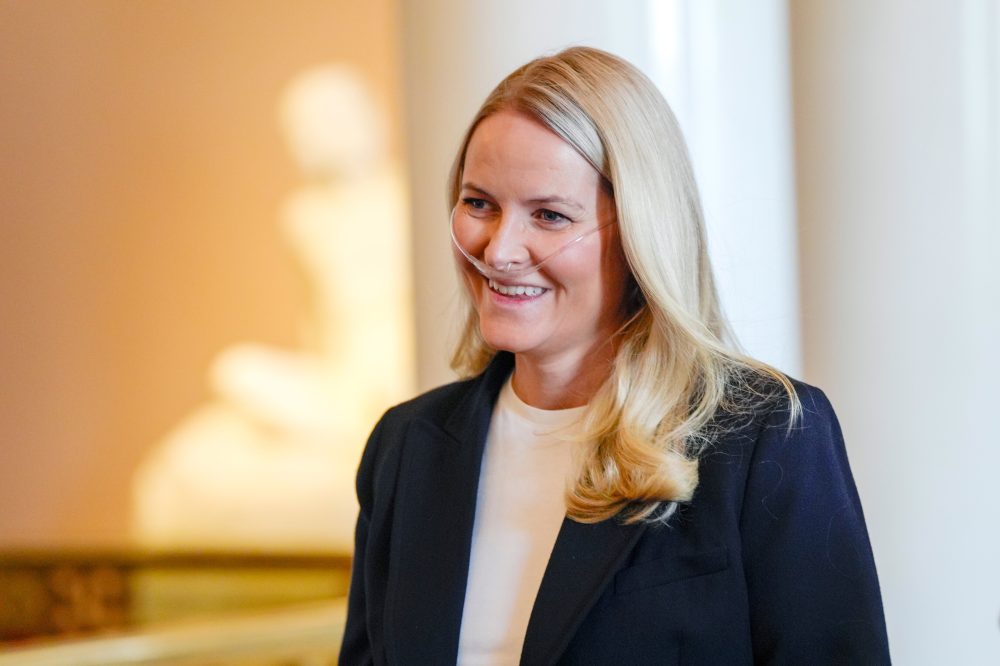
OSLO, Norway — Norway’s Crown Princess Mette-Marit has successfully undergone a lung transplant at an Oslo hospital, according to an announcement made Wednesday by the Norwegian royal house.
The 52-year-old princess was diagnosed in 2018 with pulmonary fibrosis, a progressive illness that causes damage and scarring to lung tissue, leading to serious breathing difficulties. There is currently no known cure for the condition.
Earlier this month, the royal house revealed that Mette-Marit had been placed on a waiting list for a lung transplant. Wednesday’s statement confirmed she received the transplant at the Rikshospitalet in Oslo.
Are Holm, who heads the hospital’s pulmonary department, said in the statement that “we are very pleased that everything has gone well so far.”
Holm noted that, like other patients who receive organ transplants, the crown princess will need to stay in the hospital for “several weeks.” He explained that “this is standard procedure to adjust medications, manage any complications and conduct rehabilitation.”
The royal house said Crown Prince Haakon, who is next in line to the Norwegian throne, will “adjust his schedule” so he can be by his wife’s side throughout her recovery. The royal house also indicated it plans to provide the next health update when she is released from the hospital.
Mette-Marit’s health has been declining in recent months, a period that has also brought significant personal difficulties.
Her eldest son, Marius Borg Høiby, was sentenced on Monday to four years in prison after being found guilty of two counts of rape — charges he denied — along with other offenses. His attorneys have indicated they will appeal both the rape and domestic abuse convictions.
Høiby, who was born from a previous relationship and holds no royal titles or official duties, became the center of a high-profile six-week trial that drew significant attention to the royal family.
At the same time, Mette-Marit faced renewed public scrutiny regarding her past connections to the late sex offender Jeffrey Epstein, raising questions about her judgment, though she has not been accused of any wrongdoing.
She issued an apology in February for the position she had put the royal family in, as part of a broader expression of regret to all those she felt she had “disappointed.” During a television interview in March, she stated that she had been manipulated and deceived by Epstein and that she felt unsafe during a 2013 meeting with him at his Palm Beach, Florida, mansion.
JOHANNESBURG — The leader of South Africa’s Democratic Alliance, Geordin Hill-Lewis, has formally called on President Cyril Ramaphosa to restructure which members of his party hold cabinet positions, the party announced on Wednesday.
The Democratic Alliance, which serves as the second-largest party within the country’s ruling coalition, released a statement outlining the requested changes. One of the most notable requests involves Hill-Lewis asking Ramaphosa to reassign John Steenhuisen — Hill-Lewis’s predecessor as party leader — from his current post as agriculture minister to a new role as deputy trade minister.
British Prime Minister Keir Starmer is speaking out after a Russian warship fired warning shots near a civilian yacht flying a UK flag close to British territorial waters, calling the episode reckless and deeply concerning.
The confrontation took place on Tuesday, according to statements released by the defense ministries of both Britain and Russia. Both countries said the shots were intended to prevent a potential collision after the Russian frigate Admiral Grigorovich was unable to make radio contact with the yacht.
Speaking to BBC News while attending the G7 summit in Evian-les-Bains, France, Starmer said, “What happened in the Channel was deeply concerning. It was reckless.” He added that his Ministry of Defence concluded the Russian vessel was “drifting, and they were warning shots.”
“That shouldn’t have happened. It is reckless, and the couple on the yacht must’ve been terrified,” Starmer said.
Russia’s defense ministry stated that the frigate’s crew observed the yacht on a path that posed a collision risk. After repeated radio contact attempts went unanswered, the ship fired warning shots — including small arms fire — in front of the yacht’s path. The yacht subsequently changed course and moved away, according to the Russian ministry.
Britain’s defense ministry characterized the event as “an isolated incident” and stated it had no connection to a separate operation over the weekend in which British commandos intercepted a Russian shadow fleet vessel.
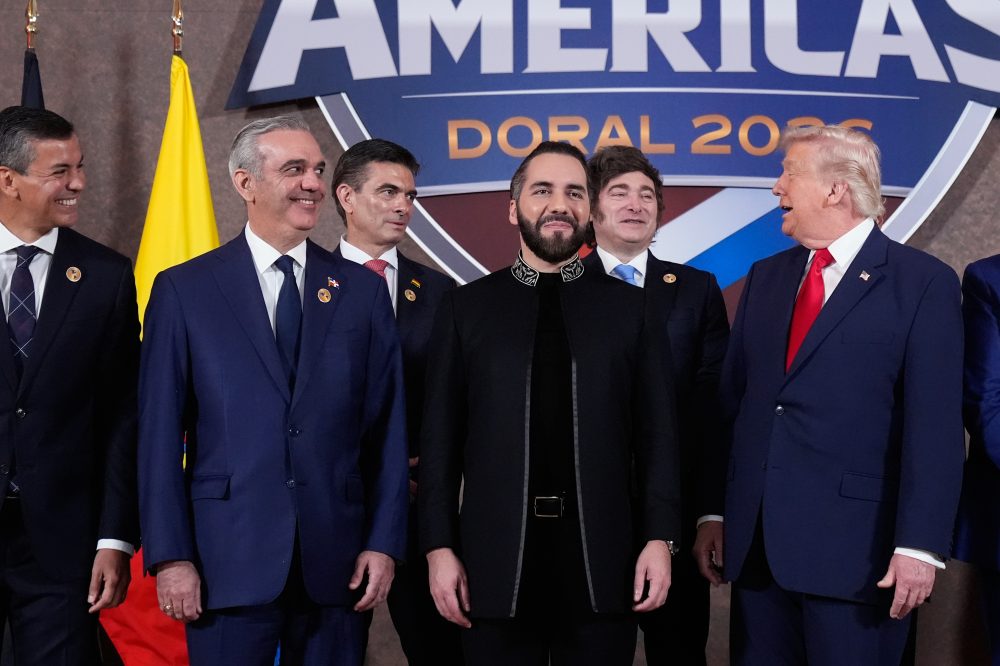
BOGOTA, Colombia — Across some of Latin America’s most powerful economies, right-wing populist politicians are gaining momentum, offering iron-fisted solutions to crime and illegal immigration as a direct counter to the left-leaning movements that dominated the region just a few years ago.
While murder rates across Latin America have generally fallen compared to ten years ago, surges in specific countries — combined with a broader regional uptick in other types of crime — have created fertile ground for conservative politicians. Many are pointing fingers at migrants and borrowing the tough tactics made famous by El Salvador’s president, Nayib Bukele.
Voters who feel let down by their governments are rallying behind these approaches, even though critics caution that such strategies could open the door to human rights violations and democratic backsliding.
Latin America and the Caribbean saw their combined average homicide rate fall by more than 5% last year compared to 2024, with the median rate landing at roughly 17.6 killings per 100,000 people, according to InSight Crime, a think tank that tracks organized crime across the Americas.
However, there are notable exceptions to that downward trend. Drug-related killings have climbed in Peru and Colombia — the world’s two leading cocaine-producing nations — as well as in neighboring Ecuador, whose major ports have become attractive transit points for traffickers moving drugs to European markets.
Last year, authorities recorded 2,400 homicides in Peru and 14,780 in Colombia, the highest figures in each country since at least 2020. Ecuador saw an even more alarming jump, with killings rising 31% in a single year to reach 9,216.
Adam Isacson, director for defense oversight at the Washington Office on Latin America, noted that while populist movements across the political spectrum have found success, only the right has put forward short-term security plans capable of making citizens feel safer within months — even if those plans come at the cost of “democracy and human rights.”
Left-leaning proposals, such as community-based violence prevention, improved police training, and reforms to the justice and prison systems, tend to take longer to produce visible results, Isacson explained.
“It’s absolutely what you’re supposed to be doing, but people’s patience runs out,” Isacson said of those longer-term strategies. “So, there come the Bukeles of the world saying, ‘You want to feel better? We got this.’”
In Colombia, where large portions of the countryside have been pulled back into armed conflict, pro-Trump businessman Abelardo de la Espriella has led polls ahead of Sunday’s runoff election while closely following Bukele’s playbook.
In Peru, where extortion has skyrocketed fivefold over the past five years, Keiko Fujimori surged into a June 7 presidential runoff on a law-and-order message. She has pledged to send the military into prisons and deploy forces along the country’s borders, drawing on the authoritarian reputation of her late father, disgraced former President Alberto Fujimori.
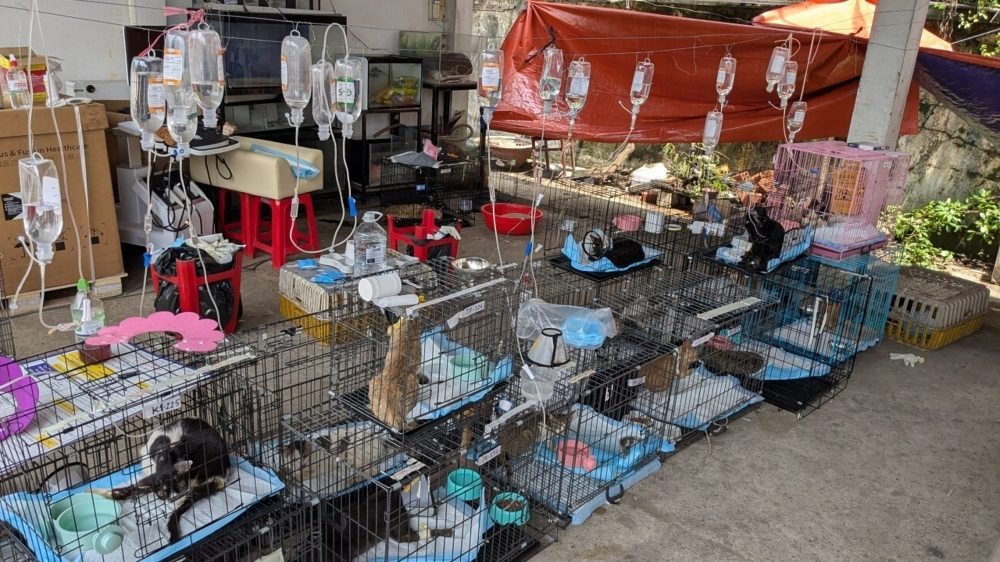
Police in Ho Chi Minh City, Vietnam have broken up a major criminal operation involving the theft and slaughter of cats for human consumption, rescuing more than 500 animals in the process, according to animal welfare organizations and local media reports.
The multiday operation last week resulted in the detention of nine individuals and the discovery of 45 cages holding approximately 400 live cats. Officers also found four foam containers packed with ice containing around 80 dead cats, along with 21 additional live cats recovered at a second location, according to the Ho Chi Minh City Criminal Police Division.
Although more than 40 of the cats were successfully reunited with their families, about 100 of the rescued animals have since died as a result of the brutal conditions they were kept in, welfare groups reported.
The bust was triggered by a police investigation into a string of pet thefts in Ho Chi Minh City. Suspects confessed to trapping and collecting cats throughout southern Vietnam over the past three years, operating across Ho Chi Minh City and the cities of Tay Ninh and An Giang.
Karanvir Kukreja, who leads a campaign against dog and cat meat consumption for the international nonprofit Humane World for Animals, described the operation as “a sobering reminder of the enormous scale of Viet Nam’s cat meat trade.” He added that millions of animals fall victim to thieves in Vietnam each year who steal pets off the streets and slaughter them for food.
Chris Gindelhumer, with the nonprofit Vietnam Cat Welfare, is among those helping care for the surviving animals. He said he “saw quite a lot of tears in the last few days.”
“It’s really beautiful to see how many Vietnamese families are coming, looking for their cats,” Gindelhumer said. “But it’s also heartbreaking because many families were looking for their cats and didn’t find them.”
He noted that many veterinarians and volunteers have been working around the clock to care for the rescued cats.
While the consumption of dog and cat meat is legal in Vietnam — provided vendors hold permits verifying the animals’ origins — some cities, such as Hoi An in central Vietnam, are partnering with global animal welfare groups to end the practice locally. Vietnamese officials have also stated that the government plans to strengthen legal protections for pets and their owners, a move that came shortly after South Korea enacted a ban on dog meat in 2024.
An Pham, a master’s degree student and devoted cat lover in Ho Chi Minh City, said the bust has had a noticeable impact on public awareness. “This event surprised a lot of people and has raised awareness among many to stop consuming cat meat,” Pham said.
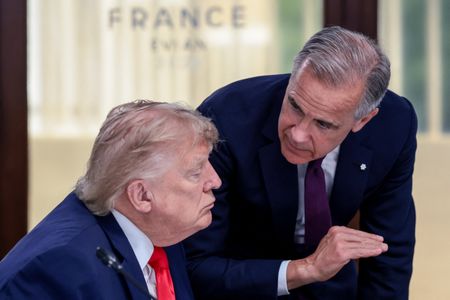
Canadian Prime Minister Mark Carney said Wednesday that the United States and President Donald Trump have shifted their perspective on the war in Ukraine, adopting what fellow G7 leaders considered a more grounded and realistic outlook on the ongoing conflict.
Carney spoke at the G7 summit taking place in Evian-les-Bains, France, where he revealed that he had engaged in seven or eight separate conversations with President Trump over the previous 36 hours. Those discussions covered a broad range of topics, including Canada’s policy capping Chinese electric vehicles — a structure that Trump reportedly found appealing.
On other matters, Carney noted that Canada is on pace to produce 150 megatons of liquefied natural gas before the year is out. He also expressed his intention to finalize a trade agreement between Canada and India ahead of the G20 summit scheduled for November.
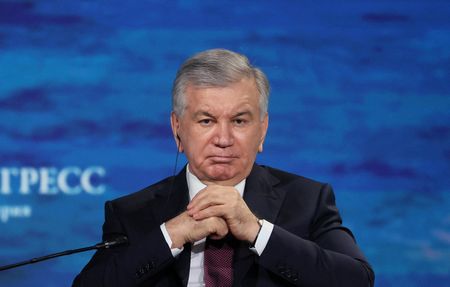
Uzbekistan’s President Shavkat Mirziyoyev took the stage at the annual Tashkent International Investment Forum on Wednesday, pledging to press ahead with economic reforms and announcing the creation of a new international financial hub in the country’s capital.
“We are always open to investors interested in cooperating with Uzbekistan and ready for an equal and mutually beneficial partnership,” Mirziyoyev told the audience in his opening remarks.
The centerpiece of his announcement was the Tashkent International Financial Center — a zone that would operate free of taxes and customs duties and function under English common law.
“Profit tax, value-added tax, property tax, and customs duties will be set at zero percent. Free capital movement and the ability to make payments in any currency will be guaranteed unconditionally. A modern system for financial technologies, digital assets, and green finance will be created,” Mirziyoyev said.
He also revealed that an independent financial regulator, empowered to issue its own regulatory rules, would be established within the new center.
Uzbekistan is Central Asia’s most populous nation, home to nearly 40 million people, and posted impressive economic growth of 7.7% in 2025. The country’s economy has been strengthened by its young and expanding population as well as elevated gold prices — Uzbekistan ranks among the world’s significant gold-producing nations.
Earlier this year in May, a package of minority stakes in state-owned companies was listed on the London Stock Exchange, marking the country’s largest initial public offering since 2021.
Mirziyoyev, who came to power in 2016, has worked to dismantle the capital controls that restricted economic growth under his predecessor, Islam Karimov, though he has maintained firm control over the country’s political landscape.
NEW DELHI — The messaging app Telegram has gone to court to fight back against an Indian government order that temporarily cut off access to the platform, according to legal news website Bar and Bench, which reported the development on Wednesday.
Indian authorities put the block in place starting Tuesday, with the restriction set to remain until June 22. The move was designed to stop people applying to medical schools from cheating on their entrance exams.
Telegram did not respond to a request for comment from Reuters.
The court challenge comes on the heels of a significant controversy in India’s medical education system. Last month, the Indian government scrapped a major undergraduate entrance exam used by medical colleges after officials said they were looking into claims that exam questions had been leaked ahead of time.
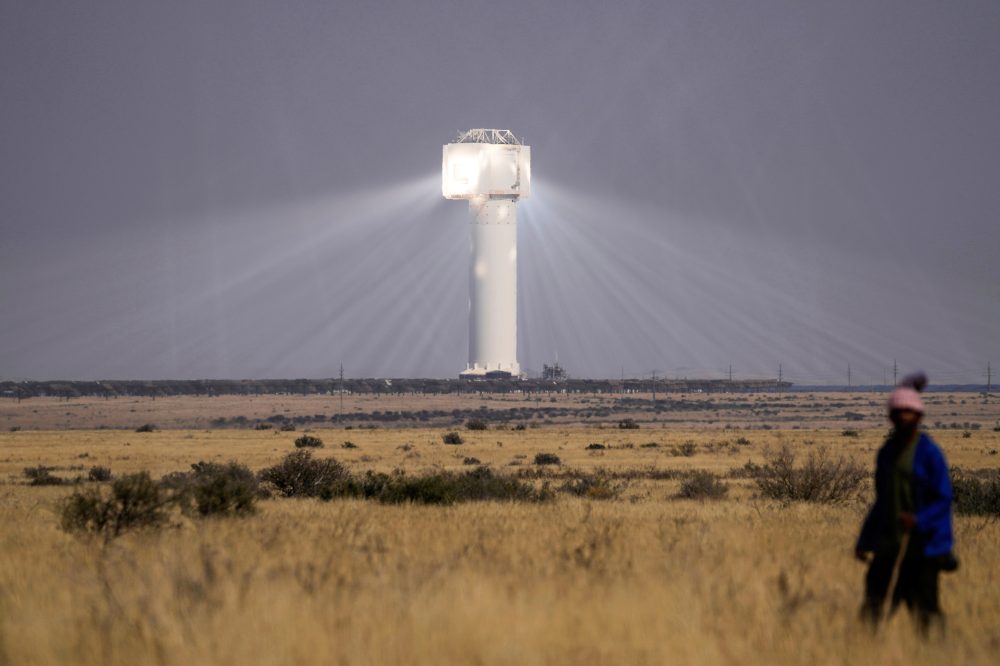
NAIROBI, Kenya (AP) — Despite billions of dollars in pledges to support Africa’s shift to clean energy, countless renewable energy projects across the continent are failing to launch — and experts say a little-known financial rule is largely to blame.
The rule, called the “sovereign ceiling,” links the credit rating of any project or company to the credit rating of the country in which it operates. Analysts and development finance specialists say this makes perfectly sound renewable energy projects look far more dangerous to international investors than they actually are.
Of Africa’s 54 nations, only Botswana and Mauritius currently hold investment-grade sovereign ratings, meaning the vast majority of African countries — and the projects within them — are automatically viewed as high-risk borrowers under this framework.
The consequences are significant. The rule is hampering government efforts to bring electricity to more people and honor climate commitments made under the Paris Agreement. According to the International Energy Agency, close to 600 million people across Africa still have no access to electricity.
“The financing environment is the problem,” said Dr. John Asafu-Adjaye, a senior fellow at the African Center for Economic Transformation. “A project with strong fundamentals, a long-term power purchase agreement and predictable cash flow ends up being priced as if it were inherently dangerous. Not because it is, but because of where it sits on a map.”
In practical terms, analysts explain, renewable energy projects in countries with weak sovereign ratings absorb the perception of that sovereign risk — even when the projects themselves are financially solid and backed by international guarantees.
Several high-profile projects have already felt the impact. Kenya’s Menengai Geothermal project, Zambia’s IFC-led Solar Scaling programme, and Nigeria’s Solar IPP pipeline all struggled to secure adequate funding as investors raised concerns about sovereign guarantees, creditworthiness, and financing terms.
The United Nations Development Program estimates that subjective credit rating assessments cost African nations as much as $74.5 billion each year through higher borrowing costs and missed investment opportunities. Analysts add that renewable energy projects in Africa frequently face financing costs two to four times higher than comparable projects in Europe or North America.
“The sovereign ceiling functions as a binding constraint that raises costs across all projects and limits scaling of clean energy deployment regardless of fundamentals,” said Dr. Sibusisi Nkomo, program director of the University of Cambridge Institute for Sustainability Leadership’s Africa Program.
“Our recent work on private finance and investment in Africa shows that international credit rating systems often overstate risk relative to actual project fundamentals, leading to inflated risk premiums and higher costs of capital,” Nkomo added.
The outsized influence of major credit rating agencies — including Moody’s, S&P, and Fitch — along with other Western financial institutions, also shapes how investors view African markets, potentially cutting off access to bond markets as another source of financing, analysts say.
Many African nations see solar, wind, and transmission infrastructure as essential to their economies and industrial growth.
“Electricity is the backbone of all modern economies and is therefore essential for development,” said Malango Mughogho, managing director of ZeniZeni. However, she noted that much of the available project financing comes in the form of loans that countries simply cannot afford to repay.
Maria Nkhonjera, a climate and development finance specialist at the Stockholm Environment Institute, said international credit ratings and what she calls “risk mispricing” unfairly inflate borrowing costs — even though African clean energy projects have relatively low default rates.
“The sovereign ceiling rule is an outdated credit rule that penalizes commercially viable clean energy projects for sovereign risks,” Nkhonjera said.
Beyond the sovereign ceiling, clean energy projects also face hurdles from complicated approval processes, fragmented funding sources, and limited local institutional capacity.
“Africa does not lack investable opportunities,” Asafu-Adjaye said. “What it faces is a system in which risk is systematically overestimated.”
Nkhonjera suggested that expanding low-cost financing, increasing lending in local currencies, and reforming international debt systems could meaningfully reduce borrowing costs. Multilateral institutions such as Afreximbank and the Trade and Development Bank could also play a bigger role by offering guarantees and credit enhancements that help separate individual projects from sovereign risk.
“In many African countries, the cost of capital is now one of the most important determinants of the pace of economic transformation,” Asafu-Adjaye said. “Fixing that system is not peripheral to the development agenda. It is central to it.”
BOGOTA, Colombia — Just a few years ago, Latin America appeared to be shifting decisively to the left. Progressive leaders, capitalizing on widespread anger over deep-rooted inequality made worse by the COVID-19 pandemic, rose to power in several of the region’s largest nations, including Brazil, Chile, Colombia, and Peru.
But the political winds are shifting again. While overall homicide rates across Latin America have generally fallen compared to a decade ago, sharp increases in violence in certain countries — combined with a broader regional rise in crimes like extortion — have given conservative populists fertile ground to campaign on promises of iron-fisted crackdowns on crime and immigration.
Campaign rhetoric portraying migrants as criminals and embracing the aggressive security tactics championed by El Salvador’s president, Nayib Bukele, has earned conservative candidates the endorsement of U.S. President Donald Trump and energized frustrated voters — even as critics raise alarms about the potential for human rights abuses and democratic backsliding.
“You have an emergent right wing that is very much in collaboration across the region and with the U.S. through the MAGA movement, which has also used crime as a rallying cry for political mobilization,” said Enrique Roig, vice president of the nonprofit Human Rights First and a former State Department official. “It’s easier to sell locking people up than it is to deal with the reasons why mainly young men join gangs in countries like El Salvador.”
Populist politicians across the political spectrum have found success, but only those on the right have offered quick security fixes that make voters “feel safer in six months” — even if that means having to “sacrifice democracy and human rights,” according to Adam Isacson, director for defense oversight at the Washington Office on Latin America organization.
He noted that left-wing proposals — such as community violence prevention programs, improved police training, and reforms to the justice system and prisons — require much more time before results are visible.
“It’s absolutely what you’re supposed to be doing, but people’s patience runs out,” Isacson said of those longer-term strategies. “So, there come the Bukeles of the world saying, ‘You want to feel better? We got this.’”
In Colombia, where large portions of the countryside have descended into renewed conflict, pro-Trump businessman Abelardo de la Espriella has led polls ahead of a presidential runoff election while closely mirroring Bukele’s approach.
In Peru, where extortion has jumped fivefold over the past five years, Keiko Fujimori surged into a June 7 presidential runoff on a law-and-order platform. She has pledged to station military forces in prisons and along the country’s borders, leaning on the authoritarian legacy of her late, disgraced father, former President Alberto Fujimori.
Costa Rica, shaken by record levels of drug-related killings, chose conservative populist Laura Fernández in February based on her hard-line stance on crime. In Honduras, businessman Nasry Asfura swept December’s election after Trump endorsed him as a partner in the battle against what Trump called “narco-communists.”
According to InSight Crime, a think tank focused on organized crime in the Americas, the combined average homicide rate across Latin America and the Caribbean dropped by more than 5% last year compared to 2024, with the median rate reaching approximately 17.6 deaths per 100,000 people.
However, notable exceptions exist. Drug-fueled killings have climbed in Peru and Colombia — the world’s two largest cocaine producers — as well as in neighboring Ecuador, whose major seaports are prized by traffickers as a gateway to European markets.
Last year, authorities recorded 2,400 homicides in Peru and 14,780 in Colombia — the highest totals in each country since at least 2020. In Ecuador, killings surged a striking 31% year over year, reaching 9,216.
Much of Ecuador’s violence is attributed to gangs that began expanding rapidly during the COVID-19 pandemic, as criminal organizations from Mexico, Colombia, and the Balkans moved in and recruited local members, igniting deadly battles over drug-trafficking corridors. Those conflicts have extended into prisons, where hundreds of inmates have been killed since 2021. Ecuadorian authorities also logged more than 16,100 extortion cases last year, down from 23,000 in 2024 — though experts caution that extortion is widely underreported.
In Chile, voters four years ago rejected ultra-conservative lawmaker José Antonio Kast in favor of then-candidate Gabriel Boric, a young former student protest leader who promised to tackle Chile’s deep social inequities. Last year, however, growing fears about rising crime — frequently linked in media coverage to the country’s expanding Venezuelan immigrant population — helped Kast mount a political comeback.
As Venezuelan criminal networks, including the Tren de Aragua gang, exploited their country’s mass migration to infiltrate human trafficking operations following the pandemic, Chile — long among the safest nations in Latin America — experienced an unprecedented wave of carjackings, kidnappings, and shootings.
Chile’s homicide rate climbed 30%, peaking at 6.7 per 100,000 people between 2021 and 2022, according to the country’s Interior Ministry. Though it has since declined, it remains above pre-2021 levels. Other violent crimes continue to rise — kidnappings, for example, have increased nearly 180% over the past four years.
Taking cues from Bukele — whose mega-prisons in El Salvador Kast visited during his campaign — Kast decisively defeated his Communist opponent in December by pledging to construct a massive border wall, harden prison conditions for gang members, and deport hundreds of thousands of undocumented migrants. Voters largely overlooked his opposition to abortion rights and same-sex marriage, as well as his defense of the late dictator Augusto Pinochet’s brutal regime.
In Peru, despite the divisive legacy of the convicted Alberto Fujimori, his daughter has capitalized on a surge in violent crime that occurred in the four years since she narrowly lost the presidency to schoolteacher Pedro Castillo. Running under the slogan “Peru with Order,” Keiko Fujimori captured the largest share of votes in April’s first round. Results from the June 7 runoff still show her in a statistical tie with nationalist Roberto Sánchez, the political successor of the imprisoned Castillo.
Analysts say that public appetite for tough measures — historically tied to the region’s brutal right-wing dictatorships of the 20th century — has grown in step with declining trust in government institutions and increasing ambivalence about democracy itself.
“The thinking is often, ‘democracy hasn’t been able to keep me and my family safe, so maybe democracy is part of the problem,’” said Eduardo Moncada, director of the Institute of Latin American Studies at Columbia University.
That sentiment presents a serious challenge for Latin America’s left, which in many countries has overseen sluggish economic growth, become entangled in corruption scandals, and fallen short on promises of social reform.
Even progressive politicians — such as Jeannette Jara in Chile and Sánchez in Peru — have adjusted to the shifting political climate. Uruguay’s president, Yamandú Orsi, described Bukele’s model as worth studying further. The center-left government of Guatemala declared a state of emergency to combat gang violence this year and welcomed assistance from the Trump administration in targeting drug traffickers.
Yet newly elected hard-liners have found that the realities of governing complex, cash-strapped democracies like Ecuador and Chile are far removed from the simplicity of campaign promises. These nations bear little resemblance to tiny El Salvador, where Bukele’s party commands a legislative supermajority.
Ecuador’s President Daniel Noboa campaigned in 2023 on promises to imprison gang leaders on floating barges and construct mega-prisons. He dropped the barge proposal after taking office, and his government didn’t open its first mega-prison until November.
“Building mega-prisons hasn’t been that easy or that straightforward because the country is in a very bad state financially and because President Daniel Noboa still sees himself as a democrat,” said Beatriz García Nice, a policy analyst at the Washington-based Stimson Center think tank.
Nearly three months into his time in office, Chilean President Kast is facing a skeptical public that says it cannot distinguish his security policies from those of his left-wing predecessor. His government has carried out only two deportation flights despite pledging to swiftly round up and remove Chile’s more than 300,000 undocumented immigrants. His public tone has noticeably softened, and last month he drew criticism after referring to his mass deportation promise as “a metaphor.”
Even as he unveiled new security proposals in a June 1 address — including stripping those convicted of attacking police officers of social benefits — he moved to temper his supporters’ expectations.
“Governing, as many of you know, means taking responsibility for reality, especially when it’s difficult,” he said. “I’m proceeding step by step because this isn’t something that happens overnight.”
EVIAN-LES-BAINS, France — The heads of government representing the G7 nations announced Wednesday that they stand firmly together in their support for Ukraine, reaffirming their commitment to the country’s territorial integrity while agreeing to turn up the heat on Russia’s war-driven economy.
In a joint statement released by the group, the leaders declared, “In this context, we will strengthen our sanctions (against Russia), including those on the oil and gas sectors.”
The announcement came as the G7 leaders convened for a summit in the French town of Evian-les-Bains. Beyond the conflict in Ukraine, the group also addressed broader global developments, expressing their support for the recently reached agreement between the United States and Iran and signaling their willingness to help carry out its terms.
The leaders also outlined steps to improve global energy security, stating their intention to work toward diversifying energy supply routes, reducing reliance on the Strait of Hormuz, and building up energy reserves.
WASHINGTON — When the leaders of the world’s seven largest economies sit down in France on Wednesday to talk about the global economy, one major topic will be conspicuously absent from direct criticism: the role that President Donald Trump’s war with Iran has played in rattling global markets.
Oil prices have surged 30% and inflation is climbing worldwide — both largely tied to the conflict that the U.S. and Israel launched against Iran in late February. Yet G7 leaders, already strained by disputes over U.S. tariffs, NATO, and Greenland, are expected to hold back from publicly blaming Trump for the economic turbulence, according to analysts.
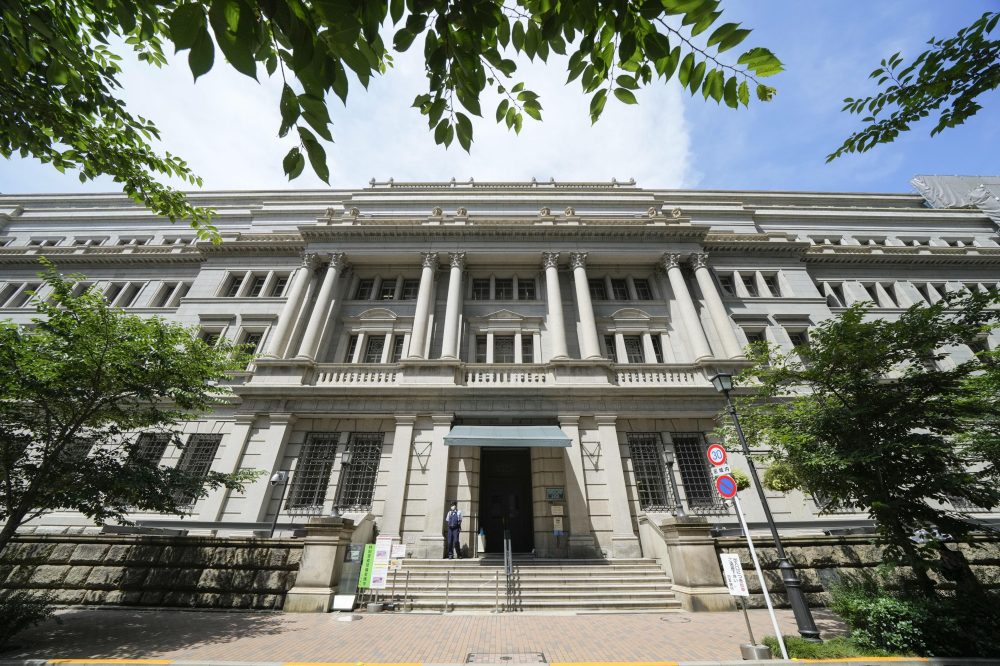
Over the weekend, the U.S. and Iran announced a deal to halt the fighting and reopen the Strait of Hormuz, which gave global markets a much-needed boost. But economists caution that the damage is already done — energy costs have spiked, food supply concerns are mounting in developing nations, and central banks have been forced to act. Both the European Central Bank and the Bank of Japan raised interest rates within the past week in an effort to contain worsening inflation.
British Prime Minister Keir Starmer has publicly said he is “fed up” with how the conflict has driven up energy costs for his country. Italian Prime Minister Giorgia Meloni has warned of the war’s broader economic and social consequences. Rising prices have also taken a toll politically, denting approval ratings for Starmer, German Chancellor Friedrich Merz, and French President Emmanuel Macron.
Despite all of this, world leaders appear set to avoid a direct confrontation with Trump at the summit, largely because they still need his cooperation on critical issues including Ukraine, NATO, and trade negotiations.
Analysts say this reluctance is undermining the very purpose of the G7, which was founded after the 1973 oil shock specifically to help the world’s major economies navigate exactly these kinds of crises.
“U.S. policymaking has been hurting world economic activity,” said Marcelo Estevao, chief economist at the Institute of International Finance. “You have a country with the largest economy undermining what could have been a G7 agenda of collaboration,” he added, noting that the G7 must work harder to stay relevant as emerging market economies — which are not part of the group — now make up a growing share of the global economy.
France, serving as this year’s G7 host, has already moved to reduce the chances of open conflict by scrapping plans for a broad final statement, or communique. Instead, the focus will be on narrower topics such as global economic imbalances, critical mineral supply chains, and restructuring development aid programs.
The ceasefire deal reached just before Trump departed for France has further reduced the likelihood of a dramatic showdown. Still, economists warn that even with the deal in place, restoring normal trade flows could take months, and experts in the fuel and maritime sectors say bunker fuel supplies could take up to a year to normalize.
International Monetary Fund chief Kristalina Georgieva, attending the G7 summit in France, took a somewhat more optimistic tone in a blog post Monday, walking back some of the dire warnings she issued two months ago. She said the global economy was holding up so far, with no clear signs of a worldwide slowdown, even as some regions have been hit hard.
The IMF, whose largest shareholder is the United States, is set to release an updated global economic forecast on July 8. Georgieva’s post came shortly after a more pessimistic outlook from the World Bank. One of the IMF’s scenarios, based on a short-lived conflict, projects global growth of 3.1% in 2026, down from 3.4% in 2025. Its worst-case scenario shows growth dropping to just 2%, with inflation reaching 5.8%.
U.S. officials have pointed out that oil prices have come down from their peak and that the United States, as a fuel exporter, was somewhat insulated from the worst price increases. They argue the war’s economic impact will ease quickly once the Strait of Hormuz fully reopens, and believe even fuel-importing nations in Europe are likely to avoid severe shortages.
The G7 — made up of the major European economies along with the U.S., Canada, and Japan — has been grappling with questions about its relevance for years as economies like India, Brazil, and China have grown in global influence. The group now represents just 44.1% of global GDP, a sharp drop from 60.5% when it was first established, according to the Center for Strategic and International Studies.
Supporters of the group argue it still serves a vital function during moments of crisis, pointing to its response during the 2008-2009 global financial meltdown.
“The G7 has always been able, if needed, to come up with some real decisions that still govern half the world economy,” said Martin Muehleisen, a former IMF strategy chief who has participated in past summits, including some that included Trump. He noted that while European leaders would likely stay cautious in formal settings, unexpected moments of tension could still emerge during private meetings and dinners.
Eric LeCompte, executive director of Jubilee USA Network, a development organization, said economic concerns remain front and center regardless of the ceasefire. “The economy is in deep turmoil and you don’t have to be in a developing country to see it. You can just go to a grocery store and feel it,” he said.
WASHINGTON — When the United States and Israel launched airstrikes against Iran on February 28, President Donald Trump outlined an ambitious set of goals: destroying Iran’s ballistic missile arsenal, dismantling its military power, and making certain Tehran could never develop a nuclear weapon.
Now, with more than three months of conflict behind them and a preliminary peace agreement on the table, the question is: how much of that agenda has actually been fulfilled?
MISSILES AND DRONES
Going into the conflict, Iran possessed the largest ballistic missile stockpile in the Middle East — somewhere between 2,500 and 6,000 missiles of varying types. Several had the range to strike Israel, reaching up to 2,000 kilometers (roughly 1,240 miles), and some were armed with cluster munition warheads that are especially difficult to intercept. Iran was also a major producer of long-range drones, including the Shahed drone used by Russia against Ukraine and by Iran itself.
About a month into the fighting, U.S. sources told Reuters that approximately one-third of that arsenal had been destroyed, with another third likely damaged, destroyed, or buried.
U.S. Admiral Brad Cooper testified before Congress on May 14 that Iran’s capacity to manufacture and stockpile missiles and long-range drones had been set back by years. He reported that more than 1,500 missiles and 6,000 drones had been intercepted by the U.S. and allied forces throughout the conflict.
Even so, Iran retains some strike capability. On June 6, it launched missile salvos at Kuwait and Bahrain, and on June 7, it fired missiles at Israel. All three countries reported no significant damage from those attacks.
CONVENTIONAL MILITARY
The U.S. military says it has significantly weakened Iran’s conventional ability to project force in the region or threaten American operations.
Admiral Cooper told Congress that U.S. forces had destroyed 161 Iranian naval vessels and eliminated 82% of Iran’s air defense systems. He added that Iran’s air force, which had been flying up to 100 missions per day before the war, is now conducting no flight operations at all.
Despite those losses, Iran managed to effectively close the Strait of Hormuz for the duration of the conflict — using speedboats, mines, drones, and missile boats to trap merchant ships in the waterway. That strait carries roughly one-fifth of the world’s oil and natural gas supply.
NUCLEAR PROGRAM
Trump has repeatedly identified preventing Iran from acquiring a nuclear weapon as his primary objective. Iran has consistently denied any intention to build one, insisting its nuclear program exists solely for peaceful purposes.
However, the war appears to have done little to change Iran’s nuclear timeline. U.S. intelligence estimated last month that Iran could produce a nuclear weapon in less than a year — the same assessment that followed the June 2025 strikes on Iranian nuclear facilities.
Iran’s nuclear program is expected to be a central sticking point as negotiators work toward formalizing the framework deal, set to be signed on Friday. Trump has demanded that Iran’s enriched uranium be removed from the country, while Iran’s Supreme Leader Ayatollah Mojtaba Khamenei has insisted it must remain inside Iran, according to sources.
IRANIAN PROXY FORCES
On March 2, Trump said from the White House that Iran must not be allowed to continue arming and financing the proxy armed groups operating in Iraq, Lebanon, Gaza, and Yemen — a network Tehran has used for decades to extend its influence and pressure its enemies.
Iran has shown no sign of cutting off support for those groups since the war began, but both U.S. military and independent assessments conclude that the proxy network is far less effective than it once was.
Much of that weakening had already occurred before the latest conflict. Israel had killed many of Hamas’s top commanders and thousands of its fighters in Gaza following the October 7, 2023 attack, and had also eliminated much of Hezbollah’s leadership in Lebanon. The fall of former President Bashar al-Assad’s government in Syria in 2024 cut off a key supply route Iran had used to arm Hezbollah. Economic troubles and international sanctions further limited Iran’s ability to fund these groups.
During the war, those groups played a limited role. Hamas did not launch attacks on Israel from Gaza, and the Houthis did not significantly disrupt Red Sea shipping from Yemen.
Hezbollah entered the conflict on March 2, firing missiles and drones into Israel. Israel responded with airstrikes and a ground invasion that has killed nearly 3,700 people and displaced 1.2 million in Lebanon. On the Israeli side, approximately 28 soldiers and four civilians have been killed.
Admiral Cooper told Congress in May that Iran can no longer reliably supply those proxy groups with advanced weapons, though he did not elaborate on what that assessment specifically means in practice.
REGIME CHANGE
Before the war, Trump had encouraged Iranian citizens to rise up against their government. After Supreme Leader Ayatollah Ali Khamenei died on February 28, Trump called it their “single greatest chance” to take control. On March 6, he declared the war would only conclude with “UNCONDITIONAL SURRENDER” from Iran and the installation of a new, “acceptable” leader.
The war did not topple Iran’s theocratic government, but Trump has argued he achieved his objective anyway — because Khamenei was succeeded by his son, Ayatollah Mojtaba Khamenei. Trump described the new leadership as “a new, and more reasonable, regime” in a March 29 statement.
In recent weeks, Trump has stopped calling for the removal of Iran’s leadership.
BUCHAREST, Romania — A striking new exhibition now open in Romania’s capital city is pulling back the curtain on the terrifying methods used by the country’s communist-era secret police — and it’s doing so using the secret police’s own recordings.
On display at the National History Museum of Romania in Bucharest, the exhibition is titled “A.REST 1989: The Securitate Video Archive.” It draws on actual video footage to show how arrests and interrogations were conducted under the Securitate — the vast surveillance and enforcement network that kept Nicolae Ceausescu in power until he was toppled and executed in December 1989.
Visitors can watch original, grainy videotaped interrogations of four detainees, shown on wall-mounted monitors in the museum’s main hall. All of the recordings were made in 1989 by the Securitate’s Criminal Investigations Directorate.
At the center of the exhibition floor sits a reconstructed detention cell, outfitted with a small bed, a bare metal bowl, and a cup — a stark reminder of the isolation prisoners endured. The display also illustrates the sweeping reach of the Securitate and the methods its agents employed against those they investigated.
Many of the recordings capture coercive questioning and intimidation that sometimes veers into the absurd, as detainees are worn down or left confused. In one exchange, a woman whose husband had allegedly fled the country tells her interrogator: “I no longer have the strength to fight. I need logical arguments, not this nonsense.”
The exhibition’s organizers describe the Securitate’s version of justice as a system in which detainees “were merely prisoners, captives in the operational labyrinth of manufactured guilt.” They say the exhibition can serve as a long-overdue “memorial plaque” for victims, noting that “the victims, thus, gain a voice and a place.”
The show runs through mid-September and was organized as a joint effort between the National History Museum, Romania’s National Council for Studying the Securitate Archives — known as CNSAS — and the Ministry of Culture.
According to organizers, the 26 videotapes held by CNSAS are “a remnant, the accidental result of the disorderly and violent end” of socialist Romania, captured by the criminal investigations technical department in 1989.
Oana Demetriade, a historian at CNSAS and one of the exhibition’s curators, told the Associated Press that she originally envisioned using the tapes for a documentary aimed at students, but ultimately chose to create a museum exhibition instead.
“The project grew organically through the discussions I had with architects and designers,” she explained. “From the very beginning, the first discussions I had with my husband who works at CNSAS and everything I found in these tapes made me go ‘wow!’ … They were being watched in cells non-stop.”
She added: “That’s what this whole archive brings new. How it gets here and how people, those who are arrested, in the end, are repeatedly threatened, yelled at, threatened with beatings, threatened with the family suffering, and so on.”
Among the physical artifacts on display is a printing press that once belonged to journalist Petre Mihai Bacanu, seized by the secret police in early 1989. Bacanu and a group of associates had used the press to produce an underground newspaper critical of Ceausescu and his government.
In footage from a February 1989 interrogation, Bacanu is heard asking: “How could we, after 45 years of socialism, still be afraid of people’s opinions, even of their thoughts?”
Another item on display is a pair of specially designed glasses used to prevent detainees from “seeing where they were going or identifying” other individuals.
Mihai Demetriade, also a CNSAS historian and co-curator of the exhibition alongside his wife, explained that the detention facility featured two distinct types of holding areas. “Preventative detention” was used in political cases involving alleged crimes against the state, while “operational detention” units functioned more like kidnapping — locking up potential dissidents during sensitive occasions such as a government congress or a foreign dignitary’s visit.
“We are not talking about the testimonies of victims after the fall of communism, nor about documents, nor about books, nor about manuscripts,” he said. “We have something not open to manipulation … a live recording of events that occur in interrogation rooms or cells. It’s hard to fight against something like that as a denialist.”
He went on to say: “This space is important because it proves how rapacious, tough, aggressive the communist dictatorship remained even in the last moments of the communist system.”
The exhibition arrives at a notable moment. In recent years, a wave of nostalgia for life under communism during the Ceausescu era has grown in Romania, particularly among younger generations who have little or no personal memory of the country before 1989 — even as nationalism has simultaneously been on the rise.
Cornel Constantin Ilie, the manager of the National History Museum of Romania, says the exhibition has the potential to reveal the truth about that chapter of history and “reach the minds and, why not, the souls” of those who walk through it.
“It is an exhibition that puts you in front of facts that cannot be ignored,” he said. “It’s very important because we must not forget and we must not repeat. … What we see in this exhibition is an ugly face of history, it is a story in which human freedom, human dignity were suppressed.”
PARIS/STOCKHOLM — Europe’s push for independence in artificial intelligence is taking center stage this week as world leaders and technology executives descend on France for both the G7 summit and the VivaTech conference in Paris.
The timing is significant. Just days before these gatherings, the United States moved to tighten access to Anthropic’s most advanced AI systems for people outside the country — a move that has highlighted just how exposed Europe is to decisions made across the Atlantic.
“Tech sovereignty will be top of mind this week at VivaTech,” said Ana Paula Assis, a senior vice president at IBM. “For European organisations to get this right, it is vital to understand sovereignty is about having control where it matters — not where the technology is from.”
The underlying tension is one Europe has struggled with for years: how to preserve strategic independence while still leaning heavily on American companies that lead the world in cloud computing, chip design, and cutting-edge AI development.
G7 nations have convened in Evian, France, where government officials are sitting down with top executives from major AI firms including Anthropic, OpenAI, Alphabet’s Google, and French startup Mistral. Topics on the table include AI competitiveness, regulatory frameworks, and dependence on China for critical minerals.
Meanwhile, more than 180,000 attendees — including Amazon’s Jeff Bezos — are expected at VivaTech in Paris, where conversations are expected to center as much on geopolitics as on new technology.
Mistral, the French AI startup widely regarded as Europe’s strongest homegrown contender in the AI race, is deepening its ties with European businesses, especially in sectors where the region claims a competitive edge.
Still, despite billions of euros in investment, European AI companies continue to depend heavily on U.S.-controlled cloud systems, semiconductors, and foundational AI models.
France has emerged as one of the loudest voices calling for European technological self-reliance, with its government actively working to reduce its use of American providers in public services.
“We cannot rely on tools developed by foreign powers. France must have its own tools,” French Prime Minister Sebastien Lecornu said Tuesday.
The European Commission is currently reviewing the real-world impact of U.S. export control rules, insisting that any such measures should not unfairly target allied nations.
European officials have increasingly framed AI development as both an economic and a national security priority. The Commission has recently announced plans for AI “gigafactories” and large-scale computing facilities intended to give Europe sovereign control over its own computing power. Proposed legislation also aims to grow domestic cloud, AI, and semiconductor industries while reducing dependence on major U.S. technology companies — though critics argue Europe remains years behind its American rivals.
Telecoms company Orange captured the sentiment in a statement: “It’s patently clear, if it wasn’t before, how important it is for Europe to have access to an AI service that it can control, that will never be switched off on a whim.”
But building that independence comes with a price tag. Capgemini’s chief operating officer Karine Brunet noted that companies must weigh sovereignty goals against real costs, pointing out that European cloud alternatives can carry premiums of up to 40% compared to American options.
“The alternative is not simply replacing one provider with another,” said Francois Bitouzet, managing director of VivaTech. “It is about building more resilient technology strategies, where companies can draw on European innovation for the most critical parts of their stack while still working with global partners where it makes sense.”
WARSAW, Poland — Germany and Poland were scheduled to put pen to paper on a new defense agreement Wednesday, setting aside a long and complicated shared history to deepen military cooperation across Europe at a time of heightened tensions with Russia and growing questions about how committed the United States will remain to European security.
The relationship between the two neighboring nations has grown increasingly practical in recent years, shaped by Russia’s full-scale invasion of Ukraine in 2022 and the rise of a liberal government in Poland in 2023.
As the United States considers a partial pullback of its military forces from Europe, Poland is pushing for major European allies to take on a bigger role in defending the continent’s eastern edge. Meanwhile, Germany is looking for partners as it works to rebuild its military — known as the Bundeswehr — after decades of underinvestment. Berlin’s goal is to develop the most capable conventional army on NATO’s European side, positioning itself as a cornerstone of European defense going forward.
Poland’s value as a logistics hub supporting Ukraine, combined with its expanding economy and significant defense spending, has made it an attractive partner for Germany and other major European nations.
“We Germans need a strong Poland as an equal partner,” German Chancellor Friedrich Merz said in Berlin following a December meeting with liberal Polish Prime Minister Donald Tusk. “This is in our fundamental interest.”
The new defense agreement is expected to outline plans for securing the Baltic Sea region and spell out cooperation on military movement and infrastructure, cyber defense, and emerging technologies.
Justyna Gotkowska, deputy director of the Warsaw-based think tank Center for Eastern Studies, noted that the two countries are already firmly linked through NATO’s defense planning, which assigns Germany a central role in protecting the Baltic region alongside Poland and other central and eastern European nations.
“Germany is largely responsible for the defense of the Baltic states and without cooperation with Poland, that will not happen,” Gotkowska said.
The Baltic countries are frequently cited as the most probable target for a Russian attack on NATO territory if such a conflict were ever to occur.
The agreement is expected to reaffirm the mutual defense commitments already established under NATO and European Union treaties, to which both Germany and Poland belong. However, unlike bilateral treaties each country has separately signed with France and the United Kingdom in recent years, this German-Polish deal is an inter-ministerial arrangement. It focuses on the practical side of military cooperation and does not include the political mutual defense declarations found in those other bilateral agreements.
When asked in June by Polish Radio Trojka why Poland was not pursuing a similar full treaty with Germany, Polish Foreign Minister Radosław Sikorski said that President Karol Nawrocki — who came to power with the backing of the national-conservative Law and Justice party — would never agree to it.
“Hell would break loose here” if such a German-Polish treaty were signed, Sikorski said.
During the period when Law and Justice held power, that government demanded $1.3 trillion in reparations from Germany for its World War II occupation of Poland — a claim Berlin has rejected. The issue is expected to resurface ahead of next year’s general election, and Tusk will be careful not to appear as though he is taking a soft stance or acting in Berlin’s interests. Tusk himself has called on Germany to move more quickly to compensate survivors of the wartime occupation.
Despite Poland’s growing role in Europe’s security framework, Germany has tended to make major decisions on issues like Ukraine or Iran alongside key Western European partners France and the United Kingdom, often leaving Warsaw out of the conversation.
On June 7, those three Western European nations hosted Ukrainian President Volodymyr Zelenskyy in London to discuss the potential role they could play in future peace negotiations with Russia.
At a news conference in Warsaw following that London gathering, Tusk said he had raised concerns directly with Merz that Poland deserved a seat at the table in discussions about Ukraine’s future and the broader region. “Any arrangements made without our participation will not be respected or binding for us,” Tusk said.
Rolf Nikel, a former German ambassador to Poland and vice president of the German Council on Foreign Relations, acknowledged that Poland’s standing within Europe and NATO has grown considerably.
“So Poland must be taken more seriously today and, above all, must be respected more than we have seen in the past,” Nikel said.
Gotkowska echoed that sentiment, pointing out that Germany needs to come to terms with the fact that its economy has stalled while Poland’s economy and military strength have grown.
“The balance of power has changed in Europe in recent years,” Gotkowska said.
EVIAN-LES-BAINS, France — World leaders meeting at the G7 summit in France are working toward a joint statement on critical minerals that could include steps to lessen the West’s dependence on China and protect investors from retaliatory trade measures and price undercutting, according to diplomats familiar with the discussions.
The final day of the June 15-17 summit in Evian-les-Bains features discussions on securing mineral supply chains — a top priority of France’s G7 presidency — along with efforts to correct what leaders see as dangerous imbalances in the global economy.
Alarm over Western dependence on China intensified last year when Beijing placed export restrictions on rare earth permanent magnets, nearly halting operations in some industries. The episode exposed just how deeply the energy, defense, and technology sectors rely on materials largely controlled by China.
“We are negotiating texts that are significant on critical minerals and, as a consequence, on economic sovereignty,” a French presidency official said ahead of the summit.
Options that have been on the table in recent months include price supports, market standards, government subsidies, guaranteed purchase agreements, and ways to attract more private investment into mineral supply chains outside of China. Analysts expect any announcements from the summit to represent early-stage commitments rather than sweeping solutions.
China has been steadily tightening its grip on exports of niche materials and battery metals. In addition to rare earth restrictions, Beijing has also limited American companies’ access to tungsten and antimony, among other materials.
Western nations are scrambling to secure supply agreements with mines and build their own processing and recycling capacity. However, experts warn it could take years to meaningfully challenge China’s dominant position — one that was built up over several decades.
The United States proposed a critical minerals trading bloc in early 2026, but disagreements remain among participating countries over how such a group would function, particularly given the White House’s “America First” policy priorities.
Beyond minerals, G7 leaders are also taking aim at what France describes as “predatory competition” from China. France has characterized the core imbalance this way: China overproduces, the United States overconsumes, and Europe underinvests.
European officials are increasingly worried about China’s record trade surplus and its expansion into higher-value industries — a trend analysts are calling a “second China shock,” recalling China’s earlier takeover of low-value manufacturing in the 2000s.
French President Emmanuel Macron made a last-minute push to engage China before the summit in hopes of finding common ground. Beijing has pushed back against European Union claims of unfair subsidies and has repeatedly promised “strong” countermeasures against the EU’s proposed “Buy European” policy and updated technology sovereignty rules.
EU leaders are scheduled to hold separate discussions Thursday in Brussels on using trade defense tools more aggressively against a surge of Chinese imports. Last year, the EU posted its largest-ever trade deficit with China, topping €360 billion.
“This is, of course, not sustainable. As you know, in Europe, our strategy is very clear: de-risk not decouple,” European Commission President Ursula von der Leyen told reporters at the opening of the summit.
G7 leaders are also set to discuss artificial intelligence over a Wednesday lunch, covering topics such as the legal liability of AI bots and agents, and how AI systems present information as true or false. OpenAI founder Sam Altman and Anthropic CEO Dario Amodei are expected to take part in the lunch.
MANILA — The Philippine Senate made a dramatic leadership change on Wednesday, voting out an ally of former president Rodrigo Duterte as Senate president and replacing him with a new leader — all just weeks before the anticipated start of Vice President Sara Duterte’s impeachment trial.
Senator Sherwin Gatchalian was chosen as the new Senate president during a special session, officially completing the removal of Alan Peter Cayetano. The process had begun during a June 3 session when a bloc led by Gatchalian declared all leadership positions vacant, but fell short of the votes needed to elect a successor at that time.
Cayetano, who had only taken the Senate presidency the previous month, was absent from Wednesday’s session along with his political allies. The special session was convened by President Ferdinand Marcos Jr. to advance urgent legislation, including a bill targeting political dynasties.
Every one of the 13 senators who attended the session cast their vote for Gatchalian, who belongs to a different political party than Marcos. The full Senate has 24 members total.
The conflict over Senate leadership traces back to last month, when Senator Ronald “Bato” dela Rosa — who faces an arrest warrant from the International Criminal Court — resurfaced after a lengthy absence from public view. His reappearance provided the deciding vote to put Cayetano, a former running mate of Rodrigo Duterte, in charge of the chamber, just as it was preparing to receive an impeachment complaint against the vice president.
Dela Rosa then quietly departed on May 14, just hours after chaos and gunfire broke out inside the Senate building. His current location remains unknown.
Rodrigo Duterte, the father of Vice President Sara Duterte, is currently held in ICC custody in The Hague, where he will stand trial on charges of crimes against humanity. Dela Rosa faces similar ICC charges stemming from his role as the chief enforcer of Duterte’s violent “war on drugs.” Both men deny the charges against them.
The Senate is set to formally convene as an impeachment court on July 6 to hear the case against Sara Duterte. A conviction could result in her being barred from holding public office, potentially ending her reported ambitions to run for president in 2028.
The impeachment complaint against her includes allegations of misappropriating public funds, accumulating unexplained wealth, and making threats against the lives of Marcos, the first lady, and a former House Speaker. Duterte has denied any wrongdoing and has characterized the impeachment proceedings as politically driven.
BEIJING — Chinese Foreign Minister Wang Yi used a rare press briefing on Wednesday to highlight what he described as a serious lack of representation for emerging markets within the United Nations, an institution whose authority he said is being increasingly tested by growing political and economic tensions around the world.
The briefing was held in connection with the release of a white paper laying out proposals for making global governance more just and equitable.
“Countries, whether large or small, strong or weak, developed or developing, are equal members of the international community,” Wang said. He called for developing nations — collectively known as the Global South — to have a stronger voice in international affairs.
Wang painted a stark picture of the current global situation, warning that rapidly emerging challenges are creating a web of overlapping crises. “The ship of civilisation has entered dangerous waters with hidden reefs and violent storms,” he said.
He also cautioned that deep-rooted conflicts are being exposed by current disputes, and that so-called “black swan and grey rhino events” — terms referring to sudden unexpected developments and slow-moving but visible threats that go unaddressed — continue to arise.
While Wang referenced the ongoing conflicts in the Middle East and Ukraine, he did not go into specific details about either situation.
The white paper, Wang explained, is intended to help build international consensus so the global community can respond more effectively to shared challenges. He emphasized that protecting the authority and standing of the United Nations is central to making that effort succeed.
SEOUL — South Korea announced Wednesday that it will reposition a line running parallel to its military border with North Korea, effectively shrinking the zone where civilians need special authorization to enter.
The boundary in question, known as the Civilian Control Line, currently sits as far as 10 kilometers — roughly 6.2 miles — south of the Military Demarcation Line, which was established at the conclusion of the 1950-53 Korean War. Anyone wishing to enter the restricted area between the two lines must first receive military approval.
Defence Minister Ahn Gyu-back said the adjustment will move the civilian access line to an average of 6 kilometers from the Military Demarcation Line. He described the change as a response to longstanding requests from people living in the area, made possible by what he called improved defense readiness.
According to media reports, as many as 20,000 people live within the restricted zone, while others regularly pass through the authorization process to farm or work in the area.
Along with the boundary shift, the defence ministry announced additional measures to loosen restrictions near the border. Among them is a relaxed reporting requirement for residents who use drones for agricultural purposes.
President Lee Jae Myung’s liberal government, which took office last year, has pursued a number of steps intended to reduce friction with North Korea. However, Pyongyang has continued to maintain a hostile posture toward its southern neighbor.
BEIJING — China announced Wednesday that it intends to respond with countermeasures after Taiwan’s government launched a new website designed to collect intelligence tips from Chinese nationals, with Beijing calling the move a sign of Taipei’s “confrontational mindset.”
The two governments have long engaged in mutual espionage. Taiwan and China — which considers the democratically governed island to be part of its own territory — have maintained a long history of spying on one another. Taiwan has recently reported a growing number of espionage cases linked to China.
Taiwan’s National Security Bureau introduced the website on Sunday, stating it was creating a secure channel for what it described as a rising number of people inside China who are dissatisfied with the country’s political system and want to see change.
At a regularly scheduled news conference in Beijing, Chen Binhua, a spokesperson for China’s Taiwan Affairs Office, accused Taiwan of carrying out “intelligence theft, infiltration, and sabotage activities, escalating cross-strait confrontation and undermining cross-strait relations.”
“This fully exposes their pro–Taiwan independence stance, their stubbornness, confrontational mindset, and refusal to change course,” Chen said.
He added: “We strongly condemn this and will resolutely take countermeasures,” though he did not elaborate on what specific actions China plans to take.
Chen also stated that Chinese citizens, organizations, companies, and other entities all share a duty to protect national security. He warned that anyone who provides intelligence to Taiwan’s agencies in a manner that breaks Chinese law will face legal consequences.
“For those who provide intelligence to Taiwan’s intelligence agencies in a way that constitutes a crime, the relevant departments will pursue legal responsibility in accordance with the law,” he said.
Taiwan, for its part, said its new program follows the example set by intelligence agencies in countries including the United States, Britain, and Israel.
China has employed similar strategies in the past. In 2024, Beijing set up an email address where individuals could submit tips about alleged crimes committed by Taiwan “separatists.”
Taiwan’s government continues to reject China’s claims of sovereignty over the island, maintaining that only the people of Taiwan have the right to determine their own future.
Australia’s Federal Court issued a major ruling on Wednesday, prohibiting former Star Entertainment chief executive and managing director Matthias Bekier from serving in any corporate management role for a period of six years.
In addition to the management ban, Bekier was fined A$700,000 — equivalent to approximately $494,620 in U.S. dollars — as a result of violations connected to how the company handled risks related to money laundering and criminal activity.
The court’s decision reflects the serious legal consequences that can follow when corporate leaders fail to adequately address financial crime risks within their organizations.
(Exchange rate: $1 USD = 1.4152 Australian dollars)
A 6.7-magnitude earthquake rattled Indonesia’s Sulawesi island on Tuesday, killing one person and injuring dozens more, according to the country’s disaster mitigation agency.
Indonesia’s geophysics agency, known as BMKG, reported that the quake hit Tuesday morning, with its epicenter located approximately 42 kilometers — about 26 miles — southeast of the town of Palu, at a depth of 10 kilometers.
The disaster agency confirmed late Tuesday that one fatality occurred in the Sigi region, though no additional details about the death were provided. A total of 38 people sustained injuries.
The earthquake left a trail of destruction across Central Sulawesi province, damaging a road that links three separate regions. Officials also reported damage to 67 homes, bridges, offices, and places of worship.
Authorities confirmed the earthquake did not generate a tsunami — a relief given the area’s history. In 2018, a much stronger 7.5-magnitude quake struck Palu and surrounding communities, unleashing a tsunami that reached heights of up to 6 meters, or roughly 20 feet, and claimed thousands of lives in one of the country’s most devastating recent disasters.
Indonesia sits within the so-called “Pacific Ring of Fire,” a seismically active zone of volcanoes and fault lines that stretches from South America all the way to the Russian Far East. The country’s location within this geologically complex region makes it especially vulnerable to earthquakes.
GAZA (AP) — Tens of thousands of Palestinian children have been left without one or both parents as a result of Israel’s military campaign in Gaza, adding to what UNICEF describes as the “unconscionable” impact the conflict has had on the region’s youth.
The loss of a parent is among the most enduring consequences of the war, stripping children — many of whom are already dealing with trauma, injuries, or desperate living conditions — of the guidance and love that mothers and fathers provide as they grow up.
UNICEF reported that as of earlier this year, close to 59,000 children had lost at least one parent, while approximately 2,700 had lost both their mother and father.
More than 73,000 people have died in Gaza since the war began on Oct. 7, 2023, when Hamas-led militants launched an attack on southern Israel, killing roughly 1,200 people and taking 251 others hostage. Those casualty figures come from Gaza’s health ministry, which operates under the Hamas-run government but is staffed by medical professionals who keep detailed records that the international community generally considers reliable.
“The tragedy is not limited to physical harm alone,” said Dr. Ola Awad, president of the Palestinian Central Bureau of Statistics. “But extends to the very fabric of the family and social structure.”
Gazan society is deeply rooted in extended family networks, with relatives often sharing homes or living nearby. In the wake of widespread destruction, family members and other caregivers have worked to give orphaned children some sense of normalcy.
Mahmoud Nofal, 64, is now the guardian of his two young grandchildren, ages 3 and 5. “It’s difficult to replace the love and affection of a father and mother. It’s difficult to compensate them for so many things,” he said. Speaking from the tent where the three of them now live in the southern area of Khan Younis, he added, “I am their provider. I bathe them and I supply them with everything they need.”
Separated from their families, homes, and daily routines, many children hold tightly to whatever remnants of their former lives they can find. Some have returned to school, help out with household tasks, or ride bikes along dirt paths with friends.
For 10-year-old Razan Shanan, letting go has proven nearly impossible. An airstrike took the lives of five members of her immediate family, leaving her as the sole survivor. The attack has left her deeply anxious, and she holds on to family photographs she was able to recover from the wreckage of the six-story building that had been her home.
Salah Al-Kafarana, who is now raising five nieces and nephews in Gaza City, put it plainly: “No matter how much affection, clothing, trips, food, and drink I provide them, it can never replace even one percent of their family.”
This report is based on a documentary photo essay curated by AP photo editors.
Australian airline Qantas is preparing to reveal which city — London or New York — will be the first destination served by what would become the world’s longest nonstop commercial flights, marking a major milestone in aviation history after years of planning and delays.
Known internally as “Project Sunrise,” the initiative has been in development since 2017 and aims to offer direct service from eastern Australia using specially modified Airbus long-haul aircraft. The flights are expected to begin by the end of next year.
The goal is to shrink what was once a five-day journey along the historic “Kangaroo Route” to London down to a maximum of 22 hours, depending on the specific path and wind conditions. Currently, that same trip takes between 24 and 25 hours with a stop in Singapore.
New York, which Qantas currently reaches from Sydney by way of Auckland, is also among the early planned destinations. However, the airline has not yet publicly stated which city will launch first — until Wednesday’s announcement.
The undertaking represents a significant financial risk for the carrier, which has invested billions of dollars into new aircraft, redesigned cabin interiors, and research into how extremely long flights affect passengers’ health.
For the project to pay off, Qantas must convince travelers to spend more money in exchange for skipping connecting flights, while also making those long hours in the air as comfortable as possible.
Aviation analyst John Strickland put it plainly: “What they are selling is time, and they absolutely need to get a premium on all the cabins, particularly business and premium economy.”
The project takes its name from a series of endurance flights Qantas operated during World War Two, when planes stayed in the air long enough to witness two sunrises — earning the nickname “double sunrise” flights.
Qantas has projected that Project Sunrise could contribute more than A$400 million (approximately $282.68 million U.S.) annually to the company’s earnings. In February, Qantas CEO Vanessa Hudson said the financial model assumes nonstop tickets could command prices roughly 20% higher than comparable one-stop fares in premium cabin classes.
However, analysts have cautioned that elevated fuel costs tied to the conflict in the Gulf region have made it harder for the airline to break even on the flights.
A note from Jefferies analysts published in April — written after an initial U.S.-Iran ceasefire but before this week’s interim peace agreement — suggested that travelers would continue to favor flying directly to Europe through Perth or switching from Middle Eastern hubs to Asian ones through 2027. “Consequently, we expect a positive market for Project Sunrise flights to London,” the analysts wrote.
Gulf-based carriers such as Emirates, which have built their business models around connecting passengers through their hub airports, have signaled they intend to compete aggressively. Adding to that competitive landscape, the Australian government on Wednesday lifted a months-long “do not travel” warning for Gulf hub airports — a warning that had effectively invalidated most travel insurance policies, even for passengers simply passing through.
Qantas plans to present the financial details of the new nonstop service to investors and showcase its custom-designed cabin configurations at an event held Wednesday in Toulouse, France.
Airbus secured the Project Sunrise contract in 2019 following a fierce competition against Boeing’s 777X aircraft. Earlier this month, Airbus completed the first test flight of one of the 12 specially modified A350-1000ULR jets ordered by Qantas.
Each of the 238-seat planes includes an additional rear-center fuel tank that extends the aircraft’s range by 1,000 nautical miles — bringing the total to 10,000 nautical miles (about 11,508 miles). The flights are so lengthy that a substantial portion of the fuel load is consumed simply carrying the weight of the remaining fuel onboard.
The first of these planes is scheduled to be delivered in April 2027 — roughly five years behind the original timeline, due to disruptions caused by the COVID-19 pandemic and ongoing aerospace supply chain problems.
Reuters has also reported that Qantas is currently in discussions to purchase 20 additional wide-body aircraft from either Airbus or Boeing, with the smaller A350-900 model or more Boeing 787s being considered as options.
U.S. President Donald Trump delivered a rare public rebuke of Israel’s military campaign in Lebanon on Tuesday, saying the approach of bombing entire apartment buildings to hunt down Hezbollah fighters is unnecessary and is resulting in civilian deaths.
Speaking at the G7 summit in France, Trump said Israel has been fighting Hezbollah — the Iran-aligned Lebanese militia — for “too long.” He voiced frustration over Israeli airstrikes in Beirut, which he said had put his recent peace agreement with Iran at risk.
“Too many people have been killed. You don’t have to knock down an apartment house every time you’re looking for somebody, because there are a lot of people in those apartment houses, and they’re not all Hezbollah,” Trump said during the summit.
The remarks signal growing friction between Trump and Israeli Prime Minister Benjamin Netanyahu, who has long been considered a key political ally. Israeli officials have reportedly been quietly voicing frustration over Trump’s Iran deal, while Trump has grown increasingly impatient with Netanyahu over the Beirut strikes, which he says triggered Iranian attacks at a critical moment in negotiations.
Despite the criticism, Trump described his relationship with Netanyahu as “great,” while also insisting the Israeli leader should be “more responsible” when it comes to Lebanon. He also made a pointed statement about America’s role in Israel’s existence: “Without us, without the United States, there would be no Israel. Without me, there would be no Israel, because no other president was willing to do what I did.”
The two leaders have repeatedly clashed over Israel’s continued military pursuit of Hezbollah in Lebanon. A halt to those operations is reportedly a key demand from Iran. It is uncommon for U.S. presidents to publicly criticize Israel’s military methods.
Shortly after Trump’s remarks, an official White House social media account shared a video clip of those specific comments — though the White House did not explain why those particular remarks were highlighted.
The White House did, however, emphasize that Trump maintains a strong relationship with Netanyahu and described the Israel Defense Forces as “incredible partners.”
“There has been no greater friend to Israel and a fighter for peace than President Trump…Americans and our allies around the world are already safer for the United States and Israel’s bold actions to deny the Iranian regime the ability to develop a nuclear weapon,” a White House official stated.
Analysts note there is no clear sign that Trump’s comments will lead to any concrete policy changes that would compel Israel to alter its military tactics or better protect civilians.
Israel has faced widespread international criticism, particularly over its military campaign in Gaza, which has resulted in 73,000 deaths — the majority of them civilians — according to the Gaza health ministry. Israel maintains that it does not intentionally target non-combatants and accuses militant groups like Hamas and Hezbollah of using civilians as human shields.
A spokesperson for the Israeli embassy in Washington declined to comment on the story.
Russian military strikes targeting cities in eastern and southeastern Ukraine on Tuesday resulted in four deaths and left multiple people injured, according to officials and prosecutors.
In the Donetsk region — the central focus of Ukraine’s front lines — prosecutors reported that two bomb strikes hit the city of Sloviansk, killing three people and wounding five others.
Sloviansk is considered part of Ukraine’s so-called “fortress belt,” a heavily fortified zone that military planners see as critical to slowing Russia’s gradual advance through the Donetsk region.
Further south in the city of Zaporizhzhia, national police reported that a large wave of drones struck the area, killing one man inside his vehicle and injuring seven additional people.
Photos circulating online showed fire burning inside a building and on a rooftop, with at least one exterior wall reduced to rubble.
Regional Governor Ivan Fedorov confirmed five separate strikes hit Zaporizhzhia. He said fires erupted in a residential building and a shopping center, and an educational facility also sustained damage in the assault.
Reuters was unable to independently confirm the details of the attacks. Both Russia and Ukraine maintain that they do not intentionally target civilians in the conflict, which began when Russia launched its full-scale invasion of Ukraine in 2022.
SYDNEY — Australia took a step back from its strictest travel warnings Wednesday, easing advisories for five Middle Eastern countries following an interim agreement between the United States and Iran aimed at ending the conflict in the region.
The countries affected by the updated guidance are Bahrain, Israel, Kuwait, Qatar, and the United Arab Emirates. The advisory level was lowered from “do not travel” to “reconsider your need to travel,” though officials emphasized that non-essential trips to the Gulf states should still be postponed.
Foreign Minister Penny Wong explained the reasoning behind the change, while also cautioning that the situation remains unpredictable.
“While the security situation across the Middle East could deteriorate rapidly with little warning, the (government) has assessed current conditions in Bahrain, Israel, Kuwait, Qatar and the UAE as appropriate to move to (the lower level),” Wong said.
The adjustment signals a measured shift in Australia’s stance as diplomatic developments continue to unfold in the Middle East, though officials are stopping short of giving the all-clear for leisure or unnecessary travel to the affected region.
President Donald Trump on Tuesday praised Qatar for pouring what he called “tremendous amounts of money” into the American economy, as he sat down with Qatari Emir Sheikh Tamim bin Hamad Al Thani on the margins of the Group of Seven summit held in France.
The conversation touched on multiple topics, including the recently reached US-Iran agreement and Qatar’s growing influence in Middle East diplomacy. During the meeting, Trump pushed back firmly against reports suggesting the Iran deal would include large financial incentives backed by the United States for Tehran.
“We are not investing any money in Iran,” Trump stated. “That rumor got out there yesterday; it was ridiculous.”
The president then shifted focus to Qatar’s role as a financial partner, expressing appreciation for Doha’s commitment to the US economy. “Qatar is investing tremendous amounts of money in our country, and we appreciate that,” he said, also noting that the United States is expanding both its manufacturing capacity and artificial intelligence sector.
Emir Sheikh Tamim confirmed that the economic relationship between Qatar and the United States is on track to reach $1.2 trillion, a figure he tied to strengthened ties that followed President Trump’s visit to Doha last year. The Emir said Qatar takes pride not only in its own investments in America, but also in the presence of US companies doing business in Qatar.
That $1.2 trillion figure aligns with a White House announcement from May 2025, in which the administration said President Trump had signed an agreement with Qatar projected to generate at least that amount in economic activity between the two countries. The package included more than $243 billion in specific deals spanning aircraft, energy, defense, technology, and infrastructure.
Beyond economics, Qatar has emerged as a key player in US diplomatic efforts across the Middle East, particularly in matters related to Iran and efforts to reduce regional tensions.
President Donald Trump arrived at the Group of Seven summit in France this week with a freshly struck agreement with Iran to promote, a restless Israeli ally to rein in, and a well-worn message for the rest of the world: he had accomplished what no one else would.
What followed was a diplomatic week that resembled less a traditional summit and more a rolling Trump showcase — part peace announcement, part airing of grievances, part test of who stands with him.
The harshest words were directed at Israeli Prime Minister Benjamin Netanyahu, whose recent military strikes in Lebanon infuriated Washington at precisely the moment President Trump was working to finalize a deal with Tehran. Speaking in Évian-les-Bains, Trump said Netanyahu “has to be more responsible with respect to Lebanon,” describing the Beirut strike as “vicious” and “too much.”
Then came the statement that dominated headlines.
“Without us, without the United States, there would be no Israel,” Trump said, according to CBS News. “Without me, there would be no Israel, because no other president was willing to do what I did.”
That was far from the only bold claim of the week. In an interview reported by The New York Times and picked up by Israeli media, Trump called Netanyahu “a very difficult guy” and argued the Israeli leader should be thankful for the Iran agreement. “Because if Iran had a nuclear weapon, Israel wouldn’t be around for two hours,” Trump said.
The remarks captured a shifting dynamic in the relationship. Trump continues to portray himself as Israel’s essential defender, but he has grown increasingly willing to speak about Netanyahu as a challenge to be handled rather than an ally to be celebrated.
The frustration had been building for some time. Axios reported earlier this month that Trump exploded at Netanyahu during a profanity-filled phone call over Israeli military escalation in Lebanon, accusing the prime minister of putting US-led Iran negotiations at risk. CBS News reported that Trump later told Fox News he had asked Netanyahu, “What the **** are you doing?” following the Beirut strikes.
Within Israel, political leaders were divided — not on whether Iran poses a threat, but on whether Trump’s deal actually constrains Tehran or simply rewards it. Netanyahu stopped short of a full public break with Washington, saying the decision rests with President Trump while maintaining that Israel must look after its own security. Far-right members of his government were far blunter. National Security Minister Itamar Ben Gvir declared, “Trump’s agreement does not bind us,” while Finance Minister Bezalel Smotrich called the deal harmful to Israel and “the entire free world.”
The unease extended beyond Israel. At the G7, French President Emmanuel Macron was caught on a hot microphone telling Ukrainian President Volodymyr Zelenskyy that he had experienced a “difficult discussion” with Trump. The candid moment offered a telling look at how other world leaders now navigate their relationship with the American president — carefully, quietly, and preferably without a live microphone nearby.
Trump, for his part, framed the Iran agreement as a demonstration of American leverage rather than a concession. He said the memorandum of understanding explicitly bars Iran from obtaining a nuclear weapon and indicated he was open to sending the deal to Congress for review. He also issued a stark warning, saying “all hell will rain down” if Tehran attempts to develop a bomb.
For Israel, the week laid bare an uncomfortable new reality. Trump remains popular, powerful, and verbally committed to Israel’s continued existence. But that support now arrives alongside public criticism, transactional expectations, and a clear message that Netanyahu must not stand in the way of the deal Trump intends to claim as his own achievement.
SAO PAULO (AP) — Brazil’s Supreme Court found former lawmaker Eduardo Bolsonaro guilty on Tuesday of coercion in connection with the trial that last year put his father, former President Jair Bolsonaro, behind bars for 27 years following a coup attempt conviction.
The court handed down a sentence of four years and two months in prison. All five justices who heard the case agreed that Eduardo Bolsonaro had illegally meddled by pressuring the U.S. government to threaten Brazilian officials in an effort to derail that trial.
Justice Alexandre de Moraes, who also presided over the elder Bolsonaro’s coup case, stated that Eduardo Bolsonaro’s role as a federal lawmaker “is not to lobby overseas against his own country.” De Moraes and his wife were both sanctioned by the U.S. government in July of last year.
Defense attorneys for Eduardo Bolsonaro pushed back against the verdict, arguing that the evidence presented was insufficient to support a conviction. The former lawmaker has been residing in the state of Texas since February 2025.
U.S. President Donald Trump imposed a 50% tariff on Brazil last year as a show of protest over the prosecution of Jair Bolsonaro, who had attempted to reverse his 2022 electoral loss to President Luiz Inácio Lula da Silva.
Relations between Trump and Lula appeared to warm in early May when the Brazilian president traveled to the White House for a visit. However, by June, the U.S. government was again proposing 25% tariffs on Brazilian imports, accusing the country — the world’s tenth-largest economy — of engaging in unfair trade practices.
Lula stated that during his Washington visit in early May, he presented Trump with documents demonstrating that the United States actually holds a trade surplus with Brazil.
Eduardo Bolsonaro offered no public comment following the Supreme Court’s ruling. He is currently on the campaign trail supporting his brother, Sen. Flávio Bolsonaro, who is expected to mount a challenge against Lula in October’s elections — though that candidacy has recently been clouded by a scandal involving a payment to a disgraced banker.
Eduardo and Flávio Bolsonaro recently made a trip to Washington, where they met with U.S. officials, including Trump.
MOMBASA, Kenya — Nations across Africa and the Commonwealth are demanding faster action on a groundbreaking international agreement designed to safeguard the world’s oceans, cautioning that despite record-setting conservation pledges, real protection of marine environments remains largely unfinished business.
The urgent appeal came Tuesday at the 11th Our Ocean Conference held in Mombasa — marking the first time an African country has hosted the high-profile annual gathering. The event brings together leaders to tackle pressing ocean challenges, from climate change and biodiversity loss to pollution.
The conference drew hundreds of delegates representing Africa, the United States, the European Union, and island nations in the Caribbean and Pacific that are especially vulnerable to climate impacts. Host nation leaders have used the occasion to position Africa as a central player in shaping how the world governs its oceans.
At the Commonwealth Ocean Ministers’ Roundtable, former U.S. Secretary of State John Kerry described the High Seas Treaty as a historic milestone. The agreement took effect in January after 60 countries ratified it, establishing for the first time a legal framework for creating protected zones in international waters.
Kerry was quick to note, however, that the pace of progress falls far short of what’s needed.
“We have 10% of the ocean under protection this year,” Kerry said. “That is worth marking. But only 3% is highly or fully protected, and the rest of the protections are, unfortunately, just lines on a map.”
He also raised concerns about industrial fishing operations, describing fleets that travel thousands of miles from their home ports and deploy enormous nets that sweep up marine life indiscriminately.
Kerry urged nations that have not yet signed on to act without delay. “Ratify it if you haven’t, and move immediately to implementation,” he said, pointing out that major decisions about the treaty’s future will be made next year.
The agreement, officially called the Agreement on Biodiversity Beyond National Jurisdiction, is designed to help the world meet a target of placing 30% of both land and ocean under protection by the year 2030.
Kenya’s Cabinet secretary of maritime affairs, Hassan Joho, stressed that the time for talking has passed and that governments must now deliver concrete results.
“The purpose of this roundtable is not to restate ambition, but to convert such pledges into measurable results for our communities, our economies and our oceans,” Joho said.
Joho highlighted that since 2014, the One Ocean Conference has produced more than 2,900 pledges totaling over $169 billion. The real test, he said, is whether those commitments translate into genuine management of ocean ecosystems.
The 56 member states of the Commonwealth together control 36% of the world’s ocean jurisdiction and are home to nearly half of its coral reefs, giving the group an outsized role in marine conservation.
Africa is increasingly emerging as a leader in protecting ocean resources. Kerry highlighted the efforts of eight nations in the Gulf of Guinea that have committed to sustainably managing all of their waters by 2030.
“A region long described as a victim of ocean exploitation is now choosing to lead instead,” he said.
Kenya itself has expanded its marine protected areas, developed integrated coastal management plans, and intensified efforts to crack down on illegal and unregulated fishing. The country’s 640-kilometer (400-mile) coastline and large exclusive economic zone support fisheries, tourism, and other industries that provide livelihoods for millions of people.
As talks continue in Mombasa, delegates say the months ahead will be decisive in determining whether the treaty becomes a genuine force for ocean conservation — or simply another round of international commitments that never fully materialize.
PORT-AU-PRINCE, Haiti (AP) — UN Secretary-General António Guterres traveled to Haiti on Tuesday, arriving in a country where out-of-control gang violence has left more than one in ten people without a home.
Newly released UN data paints a grim picture: 2,300 Haitians have lost their lives so far this year, another 100 have been kidnapped, and 1.5 million people have been forced from their homes. Among those abducted is James Boyard, cabinet director of the Defense Ministry, who was seized last week in one of the capital’s few relatively stable neighborhoods.
The Secretary-General’s single-day stop in Port-au-Prince followed a violent weekend in Cité Soleil, a coastal slum, where more than 30 people were killed, wounded, or reported missing, according to the Cooperative for Peace and Development, a local human rights organization.
During his motorcade through the city, Guterres passed through areas once entirely under gang control — neighborhoods marked by gutted car dealerships, deserted homes, and concrete buildings riddled with bullet holes. A colorful local bus called a tap-tap rolled by, its windshield shattered by gunfire.
On a crumbling concrete wall, graffiti declared: “Down with Viv Ansanm, long live the police.” Viv Ansanm is a powerful gang alliance that the U.S. government has designated a foreign terrorist organization. The group is believed to control roughly 70% of Port-au-Prince.
Along the route, Guterres passed scores of Haitians who had escaped the fighting and are now sheltering in makeshift dwellings — canvas sheets strung up with worn rope.
More than 300,000 people have been displaced by gang violence throughout Port-au-Prince, a record high. That number includes over 18,000 people who fled Cité Soleil in May alone, according to the UN International Organization for Migration.
“Haiti’s displacement crisis is entering an even more alarming phase,” said Gregoire Goodstein, IOM chief of mission in Haiti, in a recent statement.
Guterres’ first stop was the headquarters of a newly established gang-suppression force approved by the UN Security Council in September. The force replaces a UN-backed mission led by Kenyan police that had struggled with inadequate funding and staffing. So far, Jamaica, Chad, El Salvador, and Guatemala have each contributed troops, bringing the total force to fewer than 1,000 personnel. The unit is expected to begin full operations within the coming weeks.
The new force is set to work alongside Haiti’s National Police and its expanding Armed Forces. Hundreds of Haitian men — and a few women — were seen lined up along a dusty road hoping to be interviewed for positions in the military.
Guterres then held a private meeting with Prime Minister Alix Didier-Fils-Aimé, who faces mounting pressure to organize elections in a country of nearly 12 million that has been without a president since Jovenel Moïse was assassinated at his private residence in July 2021.
“We had a frank conversation about what’s happening in Haiti, the vision the government has for the future,” Fils-Aimé told the Associated Press following the meeting.
The prime minister said security remains the top priority so the transitional government can move forward with elections and “get back to republican rule.” He added that Guterres could support that goal by making sure the nations backing the gang-suppression force “live up to their engagement.”
Guterres also visited a makeshift shelter set up inside a former school, where dozens of displaced residents crowded around him. Some had been living there for as long as four years after gangs attacked and burned their communities.
“Solino is not ready,” said 31-year-old Clifford Lala, referring to his neighborhood — one of the last areas in Port-au-Prince before gangs overran it.
Inside a sweltering classroom, Guterres met privately with six women who described the lack of basic privacy at the shelter — even for bathing or using the restroom — and expressed deep concern for their young children.
“It’s skin-to-skin and mouth-to-mouth,” one woman said.
The shelter is home to more than 1,200 people sleeping side by side, with only one meal a day guaranteed.
“We’re going to do our best,” Guterres told the women.
Outside, a man began striking the building’s metal walls and shouted, “We want to go back home!” His voice grew louder and more desperate as security personnel entered the room and escorted Guterres out.
Wendy Cejour, 26, told the AP that he and his family have been staying at the school for a year and a half.
“As long as we’re alive we have hope, but … things are difficult,” he said. “We ask … to return to our neighborhood to live better, because we don’t have a life here.”
The day before Guterres arrived, Human Rights Watch published an open letter urging him to prioritize protecting civilians and addressing the root causes of violence and human rights abuses. The group also called for a “full-fledged U.N. mission” to be deployed in Haiti.
“Even when fully staffed and resourced, security measures alone will not suffice to address this situation,” the organization wrote.
“Any meaningful strategy should include effective protection for victims of violence, credible pathways for disengagement from criminal groups, accountability for abuses, and a coordinated humanitarian response to help restore access to basic goods and services.”
BRASILIA — A panel of justices on Brazil’s Supreme Court moved Tuesday to convict Eduardo Bolsonaro, the son of former Brazilian President Jair Bolsonaro, on charges that he sought interference from the United States in the ongoing trial surrounding his father’s alleged coup plot.
The vote was largely one-sided, with three out of four justices on the panel casting votes in favor of conviction. The fourth and final justice on the panel had not yet cast a vote as of the report.
The case centers on Eduardo Bolsonaro’s efforts to draw U.S. involvement into the legal proceedings against his father last year.
DAKAR, Senegal — Congo’s opposition forces are pushing back hard against a newly passed bill that critics say is designed to keep President Félix Tshisekedi in power beyond his current term limits.
The Senate approved the measure on Monday, following an earlier vote in the National Assembly. The bill now sits on President Tshisekedi’s desk awaiting his signature. If signed into law, it would create a path for a national referendum on a new constitution — one under which Tshisekedi’s past terms in office would not be counted, essentially starting his term clock over from scratch.
Tshisekedi, who is 62 years old, has held the presidency since 2019. He has publicly stated his intention to pursue a third term, but only if voters give their approval through a referendum. As of now, no date for such a vote has been announced.
Congo’s current constitution explicitly prohibits any changes to presidential term limits. The new bill gets around that restriction by allowing the president to amend the constitution if a “major dysfunction” is determined to be paralyzing the country’s governmental institutions.
The central African nation is currently grappling with a number of serious crises, including an active Ebola outbreak and an intensifying conflict with the Rwanda-backed M23 rebel group — just one of more than 100 armed factions fighting for dominance in the country’s eastern provinces.
Congo’s next presidential election is scheduled for 2028. Tshisekedi stated last month that the country will not be in a position to organize or hold elections until the ongoing conflict is resolved and stability is restored.
Notably, both the Senate and National Assembly votes were conducted without opposition lawmakers present. Those legislators had walked out weeks earlier as a form of protest against the legislation.
Senate President Jean-Michel Sama Lukondé praised the outcome of the vote, saying it gives the Congolese people a structure through which to “exercise their sovereignty” via a referendum.
Congo’s major opposition parties, which have been at odds with one another in recent years, united in May under a coalition known as C64, or Coalition Article 64, specifically to fight the bill. The coalition has characterized the legislation as Tshisekedi’s attempt to hold onto power indefinitely.
Prominent opposition figure Martin Fayulu made his position clear during a coalition news conference on Tuesday. “Tshisekedi has betrayed his oath to respect the constitution and is therefore worthless,” Fayulu declared.
Fayulu also announced that the coalition plans to march to the presidential palace on July 8, calling for Tshisekedi’s resignation.
The legislative votes came just days after violent confrontations broke out at a protest against the bill in Congo’s capital city of Kinshasa. Several people were injured in those clashes, among them opposition leaders Martin Fayulu, Jean-Marc Kabund, and Delly Sesanga.
Toronto police announced Tuesday that they have connected several shootings in the city — including a March attack on the U.S. Consulate — to what they describe as “multilayered” gun-for-hire networks. Those same networks are also believed to be behind shootings targeting synagogues in the city.
At a news conference, Toronto Police Chief Myron Demkiw explained that young adults are being recruited through encrypted messaging platforms and paid to carry out the attacks. To receive payment, the shooters are required to record the incidents on video. Investigators have recovered several of the weapons used in the attacks.
“What we know is bad actors are using criminal elements in our city to carry out these dangerous incidents,” Demkiw said. “It is clear that some of the people hiring these criminals want to create a sense of fear in our communities, including the Jewish community.”
A veteran Toronto police officer lost his life last week during a search operation connected to the investigation. Constable Marc Pinizzotto, 43, was shot Thursday when officers executed a search warrant at an apartment building in the northwestern part of the city. He was transported to a hospital, where he later died.
A 19-year-old suspect, Nicholas Bennett, was shot by police during the incident and remains hospitalized. He is expected to face a charge of first-degree murder.
Authorities are also actively searching for a second suspect, 19-year-old Zara Jabbi, who is wanted in connection with the U.S. Consulate shooting. Police consider Jabbi to be armed and dangerous.
Demkiw said Toronto police are working alongside the Royal Canadian Mounted Police and the FBI to identify who is funding the attacks. Two firearms recovered during the investigation — believed to be connected to more than 25 shootings across the Toronto area — were traced back to the United States. Ballistics testing on those weapons is still ongoing.
World leaders gathered at the G7 summit in Evian-les-Bains, France are weighing a plan that would allow a select group of so-called “trusted partners” to gain access to top-tier American artificial intelligence models, three diplomatic sources revealed Tuesday.
The discussions follow a decision made last week by Washington to cut off foreign nationals from Anthropic’s most advanced AI models, a move the U.S. government justified on national security grounds.
According to one of the sources, a number of delegates raised the idea during informal conversations with U.S. representatives — primarily U.S. Commerce Secretary Howard Lutnick — on the sidelines of the G7’s opening dinner at the French lakeside resort.
A second source, who asked not to be identified because the discussions are still ongoing, said the “trusted partners” in question could include both countries and private companies.
A third source confirmed that no official statement regarding the proposed framework was anticipated Wednesday, even as technology-related issues were scheduled to be part of the day’s G7 agenda.
Cybersecurity experts have raised concerns about one specific Anthropic model called Mythos, which is designed to identify weaknesses in computer code. They warn it could significantly amplify attacks on banks’ technology systems. The model has not yet been made available to any European banks, and the European Union has been seeking access to Mythos to better understand its potential implications.
The Financial Times was first to report on the “trusted partners” proposal.
DUBAI — A massive $300 billion private investment fund is embedded in the framework agreement between the United States and Iran, and more than half of that money has already been committed, according to a source with firsthand knowledge of the deal who spoke to Reuters.
The fund is intended to give both nations a financial reason to push through to a final agreement, the source said, speaking anonymously because the plan had not yet been publicly announced as both sides prepared to sign on Friday.
U.S. and Iranian officials announced Sunday that they had reached a framework to end their war — which began when American and Israeli forces struck Iran on February 28 — halt the U.S. naval blockade of Iran, and reopen the Strait of Hormuz, a critical corridor for the world’s oil and gas supply.
The fund is structured as a private investment vehicle, not a government aid or reparations program. No public money or grants will be involved, the source said. Companies from the United States, Gulf Arab nations, Asia, South America, and Africa have already pledged financing, with commitments spanning the energy, logistics, manufacturing, and transportation sectors.
A senior Iranian source told Reuters that Tehran had originally pushed for $400 billion in compensation for war damages, but Washington refused. The idea for what is now being called the Reconstruction and Development Fund grew out of those stalled negotiations.
Under the proposed structure, regional countries would participate in various ways — through loans, credit lines, or direct funding to rebuild sites damaged during the conflict. Among the facilities cited are the Mobarakeh Steel complex, refineries, airports, and broader infrastructure destroyed in the war.
Iran is one of the Middle East’s largest economies but has attracted virtually no significant foreign investment over the past four decades, having been shut out of global capital markets by repeated rounds of U.S. and international sanctions. The country holds the world’s second-largest proven natural gas reserves and fourth-largest proven oil reserves. It also has a young and educated population of more than 92 million, a diverse industrial base, and significant untapped potential in sectors including petrochemicals, mining, tourism, and agriculture.
The source stressed that the investment fund is completely separate from ongoing negotiations over lifting U.S. sanctions and unfreezing Iranian assets held abroad, describing the two as distinct financial mechanisms with different purposes and timelines.
The fund will not be established or begin operating until a final, satisfactory agreement is signed. The memorandum of understanding, once executed, is designed to structure the next 60 days of negotiations.
NABATIYEH, Lebanon — In the early morning hours of Tuesday, a woman named Aida Jleilati and her daughter began sifting through the wreckage of what used to be their home in the southern Lebanese city of Nabatiyeh, salvaging whatever survived an Israeli airstrike that hit in late May.
The two women were part of a small wave of residents who made their way back to the city after news broke of an agreement between the United States and Iran to bring their conflict to a close. Iranian officials have stated that the deal will also require an end to the ongoing war between Israel and Hezbollah in Lebanon.
While the violence in southern Lebanon has not fully ceased, strikes have become less frequent since the U.S.-Iran agreement was announced, giving many displaced residents a window to go back and assess the damage to their homes.
Jleilati and her 22-year-old daughter, Sukaina al-Muhtadi, had been living on the ground floor of a three-story, six-unit apartment building that was completely destroyed in the strike. Jleilati was able to recover most of her husband’s scuba diving gear along with some clothing. Her daughter’s main priority was locating a photo album filled with pictures from her childhood.
“What can I say? All that we have gathered in our life has been wasted,” Jleilati said. She noted that the family first learned their home was gone on May 26, when al-Muhtadi spotted images of the destroyed building on a social media platform.
Since the beginning of the latest round of fighting between Israel and Hezbollah, Nabatiyeh — a city with ancient roots — has endured relentless airstrikes and shelling that have left scores of people dead or wounded.
The city’s once-thriving marketplace has been heavily damaged. On Tuesday, several bulldozers were clearing away rubble and debris as some residents returned in the wake of the late Sunday agreement between the U.S. and Iran.
Jleilati and other returning residents expressed doubt about whether the truce will hold, pointing to previous ceasefires that first took effect on April 17 but quickly broke down as both Israel and Hezbollah continued their attacks.
In recent weeks, Israeli ground forces have advanced deep into southern Lebanon, pushing to within about 4 kilometers — roughly 2.5 miles — southeast of Nabatiyeh, a city that has served as a regional trade center for centuries. The city is well known for its Monday market, where people from surrounding villages traditionally gathered to sell their goods.
Nabatiyeh has long held historical and cultural significance. Since Lebanon was established in 1920 following the collapse of the Ottoman Empire, the city and its surrounding area have been a hub for Shiite religious and cultural life, with strong ties to the holy cities of Najaf and Karbala in present-day Iraq. Historically, the city served as the capital of the predominantly Shiite Jabal Amel region, and some of its religious scholars traveled to Iran in the 16th century, playing a role in helping the country’s Safavid rulers convert much of the population to Shiite Islam.
Nabatiyeh is also one of Lebanon’s most prominent centers for the observance of Ashoura, a solemn Shiite commemoration marking the 7th-century martyrdom of Imam Hussein, the Prophet Muhammad’s grandson. The ten-day mourning period, which concludes on the 10th day of the Muslim month of Muharram, was set to begin on Wednesday.
At the heart of the city, 75-year-old Kamel al-Kamel stood in stunned silence before the charred remains of his business — a supermarket and coffee roastery — housed in a century-old building that had crumbled to the ground. Walking with a cane, al-Kamal estimated his losses at $2.5 million. He said that compared to every previous conflict he has lived through — including Lebanon’s 15-year civil war that began in 1975, Israel’s 1982 invasion, and multiple rounds of Israel-Hezbollah fighting — this latest war has been the most devastating.
“Thank God we are still alive,” he said, recounting how he wept as he walked back into Nabatiyeh on Thursday.
Another returning resident, Samar Zuraik, was relieved to find her home still standing, though it sustained damage that will require repairs. But she said no amount of material recovery could make up for the loss of her 27-year-old son Ali, who was killed in an Israeli airstrike on the outskirts of the city.
Zuraik said that despite the Iran-U.S. agreement, Nabatiyeh remains uninhabitable right now — still under fire and without electricity, phone service, or internet access.
“I wish I lost my house and my son stayed alive,” she said.
The Nabatiyeh area is home to three major hospitals. The oldest, Najdeh El Chaabiyeh Hospital on the edge of the city, treated hundreds of people wounded during the latest conflict. The hospital’s medical director, Dr. Shafi Fouani, said the current war was comparable in intensity to the previous conflict in 2024.
“It was a very harsh war,” he said of the latest round of fighting, which he said broke out on March 2 after Hezbollah fired rockets into northern Israel — two days after the U.S. and Israel launched attacks against Iran. He said the hospital recorded roughly 500 deaths and treated close to 1,200 patients during the conflict, with some of the most critically injured being transferred to medical facilities in Beirut or the southern city of Sidon.
Lebanon’s Health Ministry reports that more than 3,800 people have been killed in Lebanon during the latest fighting. According to Israeli Prime Minister Benjamin Netanyahu’s office, 30 Israeli soldiers and one defense contractor have been killed in or near southern Lebanon, and two civilians have died in northern Israel.
On Tuesday, Israeli forces fired artillery toward the outskirts of Nabatiyeh while Hezbollah launched rockets at Israeli positions near the city. The sounds of explosions were clearly audible throughout Nabatiyeh as Israeli troops continued efforts to seize the Ali Taher hill, a strategic high point overlooking much of the city. Lebanese military forces closed certain roads leading to areas where Israeli troops are operating inside Lebanon.
As Jleilati and her daughter picked through the ruins of their former home, al-Muhtadi came across a watch her mother had given her as a young girl. The two women planned to return later Tuesday to a suburb of Beirut where they have been sheltering, saying they are waiting to see whether the truce holds before coming back to Nabatiyeh to rent an apartment while their building is eventually rebuilt.
“We cannot live outside Nabatiyeh,” al-Muhtadi said.
Hezbollah announced Tuesday that it believes Iran will walk away from any final nuclear agreement with Washington if Israel does not first pull its troops out of Lebanon. The statement came on the same day Iran’s foreign minister warned that Israel’s continued military presence in the country would be treated as a breach of the U.S.-Iran memorandum of understanding.
Israeli forces continue to hold a portion of southern Lebanon captured during a three-month military campaign — combining air and ground operations — against Hezbollah. That offensive launched after the Iran-backed group opened fire on Israel on March 2 in a show of support for Tehran.
While the level of fighting in Lebanon dropped considerably following the U.S.-Iran memorandum of understanding, it has not come to a complete halt. Israel has stated its soldiers will remain in southern Lebanon for the time being.
Hezbollah has strongly opposed Israel’s ongoing occupation of that territory. The group’s media office said Tuesday that it understands Iran intends to push for an Israeli withdrawal during the next phase of U.S.-Iran negotiations — talks that are scheduled to begin after the two countries formally sign their memorandum of understanding this coming Friday.
Those upcoming discussions are expected to tackle some of the most contentious issues, including the future direction of Iran’s nuclear program.
“We believe there will be no nuclear deal between Iran and the United States if Israel does not withdraw,” Hezbollah’s media office told Reuters. The statement marked the first time the group has directly tied an Israeli military pullout to the outcome of a potential nuclear agreement.
Hezbollah clarified that an Israeli withdrawal would be an outcome of those negotiations — not a condition that must be met before talks begin. The group also said it has received assurances from Iran that any Israeli violation of the Lebanon ceasefire would have consequences for the upcoming diplomatic process.
Iran’s Foreign Minister Abbas Araqchi stated Tuesday that a true end to the broader regional conflict must include a resolution in Lebanon — specifically what he called “the end of the occupation” of Lebanese land.
“Without the withdrawal of Israeli forces from the territories they have occupied in this war, a full end to the war has not been achieved,” Araqchi said.
He went further, stating that any Israeli military strike on Lebanon or continued occupation of Lebanese territory “will, in our view, be considered a violation of the memorandum of understanding.”
LONDON — Britain’s Defense Ministry has launched an investigation after a U.K.-registered yacht reported being fired upon by a Russian naval vessel in the English Channel on Tuesday.
According to the ministry, the yacht reported that a Russian warship fired warning shots from approximately 500 yards — or about 460 meters — away. The encounter took place roughly 20 miles, or about 30 kilometers, south of the Isle of Wight, in waters beyond the United Kingdom’s territorial boundary.
No one aboard the yacht was injured, and the vessel sustained no damage. The Russian government had not responded to requests for comment as of the time of the report.
British media identified the Russian vessel as the frigate Admiral Grigorovich. Russian warships traveling through the English Channel are typically shadowed by the Royal Navy, and the patrol vessel HMS Mersey was already keeping watch on the Russian ship when the reported incident unfolded.
The episode came just two days after British commandos boarded and seized a sanctioned tanker in the Channel suspected of belonging to Russia’s so-called “shadow fleet.” Officials have stated they are not connecting the two incidents.
The captain of that tanker — an Indian national accused of transporting Russian oil in defiance of international sanctions tied to Moscow’s ongoing war in Ukraine — was ordered held in custody following a court appearance on Tuesday.
This latest incident is part of a broader pattern of tense encounters between British and Russian forces in the region. In November, the British military put Moscow on notice that it was prepared to respond to any intrusion into its territory, after the Russian spy ship Yantar was spotted near the edge of U.K. waters north of Scotland.
Then in April, Britain and Norway announced they had spent several weeks tracking a Russian attack submarine and two spy submarines operating north of the United Kingdom. A Royal Navy frigate, supporting aircraft, and hundreds of personnel were involved in the operation. Then-Defense Secretary John Healey said the effort successfully stopped the Russian vessels from carrying out “nefarious” activities targeting underwater infrastructure.
Healey also accused Moscow of exploiting the distraction created by the Iran war to escalate its hostile activities against Europe.
The current incident echoes a similar event from five years ago, when Russia claimed one of its warships fired warning shots and a military aircraft dropped bombs in the Black Sea to drive away the British destroyer HMS Defender from waters near Crimea that Moscow considers its own territory. The United Kingdom rejected that account, denying its ship had been fired upon. It marked the first time since the Cold War that Russia acknowledged deploying live ammunition to warn off a NATO warship — an episode that unfolded roughly six months before Russia launched its full-scale invasion of Ukraine.
Israel’s Knesset House Committee voted Monday to recommend shielding Likud lawmaker Tally Gotliv from criminal prosecution, handing the governing coalition an early win in its push to keep charges against her out of court. The 11-to-3 vote is not the final word — the full Knesset must still weigh in and decide whether Gotliv deserves protection from prosecution over accusations that she exposed classified information tied to a current Shin Bet employee. The case has grown into a broader clash over the boundaries of parliamentary immunity, national security confidentiality, and the power of the attorney general.
The charges stem from an indictment approved by Attorney General Gali Baharav-Miara in May, accusing Gotliv of disclosing and publishing restricted information in violation of the Shin Bet law. Prosecutors allege the material she published identified the partner of anti-government protest figure Shikma Bressler as a Shin Bet employee and connected him to claims surrounding the October 7 attacks. Israeli security officials have disputed those claims, and prosecutors maintain that what Gotliv did was not a spontaneous comment during parliamentary debate, but rather a deliberate act carried out repeatedly.
Gotliv tells a very different story. She contends she was acting in her capacity as an elected official, pursuing what she describes as unresolved questions about the October 7 attacks and the behavior of state institutions. Her immunity request rests on the argument that her actions were part of her duties as a member of Knesset and that allowing a criminal case to proceed would undermine her ability to serve her constituents. Her stance has transformed the hearing into a broader test of the coalition’s position that lawmakers must be free to challenge legal and security institutions without the threat of criminal charges hanging over them.
The legal protections available to Gotliv are more limited than the political argument surrounding them. Under Israeli law, a lawmaker who receives a draft indictment from the attorney general may ask the Knesset to block the case from being filed for as long as the current parliament is seated. This is a procedural shield — it does not mean the allegations have been found to be without merit.
A separate, broader form of immunity covers actions or statements made in the course of parliamentary duties and can remain in place even after a lawmaker leaves office. The central question now before the Knesset is whether Gotliv’s alleged actions fall within those protections, or whether the indictment should be allowed to move forward in court.
A legal memo prepared for committee members noted that immunity hearings are meant to function as quasi-judicial proceedings, with members expected to weigh the arguments from both the lawmaker and the attorney general and reach a decision based on the law rather than party loyalty. In reality, Monday’s vote broke along predictable political lines — coalition members supported Gotliv, while opposition members voted against granting immunity.
Those opposed to the committee’s decision argue the case involves more than political speech. Both the Shin Bet employee’s attorney and the Movement for Quality Government urged the committee to turn down Gotliv’s request, saying the alleged disclosures were planned, repeated, and well outside the normal scope of parliamentary activity.
Critics of the move warn that if the Knesset ultimately grants immunity, it could set a troubling precedent allowing political majorities to halt security-related prosecutions before they ever reach a judge. The next step is a vote by the full Knesset, where the coalition must decide whether to complete the immunity process or allow the indictment to proceed.
If the full Knesset approves immunity, the charges will be put on hold for the duration of the current parliament’s term, barring a change in circumstances. If the plenum votes against it, the attorney general will be free to formally file the indictment and Gotliv will face the case as a criminal defendant rather than solely as a lawmaker waging a political fight.
Pakistani Prime Minister Shehbaz Sharif announced Monday that Pakistan helped bring about a landmark peace agreement between the United States and Iran, with a formal signing ceremony scheduled for Friday, June 19, in Switzerland.
Speaking before the National Assembly, Sharif declared that “after the darkness of war, the sun of peace has risen,” noting that both Iran and the United States had agreed to stop all military operations immediately.
Sharif extended his congratulations to US President Donald Trump, Iran’s Supreme Leader Mojtaba Khamenei, and Iranian President Masoud Pezeshkian for reaching the accord. He also expressed gratitude to Qatar’s Emir Tamim bin Hamad Al Thani, Saudi Crown Prince Mohammed bin Salman, and Turkish President Recep Tayyip Erdogan for their contributions to making the agreement possible.
The Pakistani prime minister also pointed to Chinese President Xi Jinping’s important role in pushing the agreement forward. China’s Foreign Ministry spokesperson Lin Jian confirmed Beijing’s support, telling reporters that China welcomes the deal and holds Pakistan’s mediation efforts in high regard.
Sharif described the recognition Pakistan has received for its peacemaking role as unprecedented, calling the agreement far more than a bilateral deal. In his words, it represents “a victory for peace and dialogue.”
He praised both the American and Iranian leaderships for showing patience and wisdom throughout the difficult negotiation process, stating: “Today, as a result of these efforts, the entire world is witnessing this historic day.”
Sharif had first broken the news late Sunday night in a post on the social media platform X, writing: “After prolonged and productive negotiations, a peace agreement has been reached between the United States and Iran. The formal signing ceremony of the agreement will be held on Friday, June 19, in Switzerland.”
He noted that the deal covers an immediate and permanent end to military operations on all fronts, Lebanon included, and thanked both nations for choosing a diplomatic path to resolve the conflict.
The announcement drew widespread praise from world leaders, many of whom called it a major breakthrough for both regional stability and global diplomacy. Pakistan’s role as a mediator drew particular attention, with observers crediting Islamabad for bringing both sides to the negotiating table.
United Nations Secretary-General António Guterres offered his congratulations to both countries, describing the agreement as “a highly important step toward the peaceful resolution of the conflict” and calling it a rare encouraging moment for diplomacy amid heightened global tensions.
Guterres also acknowledged the countries that helped make the deal happen, saying: “I am deeply grateful to Pakistan, Qatar, Egypt, Saudi Arabia, Turkey, and other regional countries for their constructive role in the success of these negotiations.”
The Islamic State announced Tuesday that it was behind a deadly assault on a Syrian interior ministry camp located in the city of Raqqa, which took place the day before.
According to Syria’s Interior Ministry, one of its security personnel lost their life during the Monday incident, in which two Islamic State militants attempted to storm a command headquarters belonging to the country’s internal security forces in Raqqa. Syrian forces were ultimately able to repel the attack.
An Israeli airstrike claimed the lives of at least two Palestinians in the central Gaza Strip on Monday, health officials reported, while Israeli ground forces extended their reach deeper into a northern Gaza neighborhood, sending families scrambling to escape.
According to medics, the strike hit near a residential building in the Nuseirat refugee camp, killing two brothers identified as Ahmed and Mahmoud Abu Heen. The Israeli military offered no immediate response to requests for comment.
A ceasefire brokered by U.S. President Donald Trump in October 2025 has not succeeded in stopping Israeli military operations in Gaza, nor has it brought about the disarmament of Hamas militants.
With these latest fatalities, the death toll among Palestinians from Israeli strikes since October has climbed to nearly 1,000, according to the Gaza health ministry. Israel reports that four of its own soldiers have been killed by militants during that same stretch of time.
Amid the ongoing violence, Nickolay Mladenov, Trump’s Board of Peace envoy for Gaza, traveled to Cairo to advance negotiations. Sources familiar with the discussions say mediators from Egypt, Qatar, and Turkey have been meeting with Hamas leadership regarding the second phase of Trump’s Gaza plan. That plan calls for Hamas to surrender its weapons and for Israeli forces to withdraw — terms that both sides have so far been unable to agree upon.
Israeli troops currently hold more than 60% of Gaza’s land, areas from which civilians have been ordered to leave and where structures have been demolished. On May 28, Prime Minister Benjamin Netanyahu publicly confirmed he had instructed the military to push that figure to 70%.
Witnesses in southern Gaza report that over recent days, Israeli forces have pushed the boundaries of the so-called “Yellow Zone” — the areas under their control — outward into eastern Khan Younis and northern Rafah, where new boundary markers and concrete barriers have appeared.
On Sunday, Israeli tanks rolled further into the Al-Tuffah neighborhood of Gaza City in the north, compelling multiple families to abandon their homes. Video footage captured on Monday showed yellow boundary blocks that had been repositioned closer to residential buildings.
“I swear we don’t know where to go,” said Umm Muhammad Junaynah, a resident of Al-Tuffah, visibly struggling to hold back tears as she gathered her belongings. “We are getting our furniture out, we don’t know where to go. We don’t know where to go, we have nowhere to go.”
Almost all of Gaza’s roughly 2 million residents — the majority of whom have already been uprooted multiple times — are now crowded into a narrow coastal strip, living in makeshift tents or partially destroyed buildings under Hamas control.
Nour Shabat, a 27-year-old woman from Al-Tuffah, described the terror of Sunday night. “It was a night of terror, we were scared,” she said.
Gaza has been reduced to rubble over the course of a two-year Israeli military campaign that began following Hamas’s 2023 attack on southern Israel.
Shabat expressed her exhaustion with the repeated upheaval. “I’m tired of displacement, honestly I’m tired of displacement. What is our fault that this is happening to us?” she said. “Should I take my belongings, myself and go sleep in the street? I have slept in the streets many times and I have been displaced many times. I’m tired and can’t handle anymore. Enough, I am tired.”
FLORENCE, Italy — Two of the most recognizable paintings from the Italian Renaissance have been given a fresh new layout at Florence’s celebrated Uffizi Gallery, as the museum continues its efforts to improve the visitor experience.
Beginning Tuesday, guests at Italy’s most visited museum will find Sandro Botticelli’s “The Birth of Venus” displayed in one room, with “Primavera” visible by simply turning around — hanging on the opposite wall in an adjacent space.
The reorganization comes under the direction of Uffizi director Simone Verde, who stepped into the role in January 2024 and has been guiding the museum through a broader renovation process.
Verde described the updated Botticelli rooms as a bridge between the museum’s storied past and its future vision. “The Botticelli rooms seek to present visitors with the Uffizi of the future, while keeping its feet firmly on the ground and its roots deeply planted in the history of this extraordinary museum,” he said.
The two paintings had most recently been displayed side by side on neighboring walls, giving visitors a simultaneous view of both works. In earlier decades, the paintings faced each other across a single room — an arrangement that contributed to overcrowding and made it difficult for guests to fully appreciate either piece.
PARIS (AP) — For weeks, a dark mountain-like structure towered over the Seine River where Paris’ oldest bridge normally stands. On Monday evening, the doors to that structure swung open to the public.
Stepping inside, visitors immediately notice that Paris smells different. The air carries the scent of wet earth, aged stone, damp cellar walls, and a faint hint of smoke.
From the bright riverfront, guests enter a dim corridor lined with illuminated photographs of caves, while a low electronic rhythm seems to pulse through the surrounding walls.
Underfoot, the original cobblestones of the Pont Neuf still rise and fall with every step.
The installation, called the Pont Neuf Cavern, is the work of French street artist JR — sometimes referred to as the French Banksy. It is free to enter at any hour of the day and will remain open through June 28.
Constructed primarily from printed fabric and air, the structure converts the 17th-century bridge into a simulated cavern that reaches 18 meters — roughly 59 feet — above the Seine.
“It feels like the city has disappeared,” said Léa Martin, a 22-year-old art student from Lyon who visited on Tuesday. “You know the river is right outside, but for a moment you’re somewhere ancient.”
The scent experience is a deliberate and central part of the illusion. Olfactory expert Sarah Bouasse designed two evolving fragrances drawing on geosmin and isoborneol — chemical compounds linked to the smell produced when rain falls on dry ground.
The scent shifts as visitors cross the bridge: beginning with wet soil and mineral dampness, it gradually transitions into something warmer, smokier, and faintly animal in nature.
“Usually I cross here without looking up once,” said Michel Dupré, a 67-year-old retiree, as he blinked stepping back into daylight. “Today I felt the stones under my feet. And smelled them too. It makes you walk like a child again.”
Adding to the atmosphere is a sound installation by Thomas Bangalter, formerly one half of the French electronic music duo Daft Punk. His composition fills the cavern with deep rumbles, echoes, and rhythmic pulses.
The Pont Neuf was completed in 1607 and, despite its name translating to “New Bridge,” remains the oldest bridge still standing in Paris.
JR’s creation invites people to experience this familiar crossing in a completely new way — through their sense of smell, hearing, and touch.
The installation also serves as a tribute to artists Christo and Jeanne-Claude, who in 1985 wrapped the Pont Neuf in pale golden fabric, drawing an estimated 3 million visitors. That project bathed the bridge in light. JR’s version takes visitors into darkness.
“You enter into the darkness,” JR has said, “and emerge into the light on the other side.”
Those who wish can hold up their phones to unlock an augmented-reality layer developed with tech company Snap. Through the screen, digital bats streak light across the cave, passing visitors leave ghostly impressions, and a dancer appears to materialize out of thin air.
JR has connected the work to Plato’s allegory of the cave — the ancient philosophical idea that prisoners mistake shadows for reality. In his view, today’s cave walls are the screens and algorithms that filter what people perceive. Even so, the most powerful moments in the installation require no phone at all.
“It’s completely strange,” said Nadia Benali, 34, smiling near the artificial cliff walls. “Paris needs things that make people stop.”
Once the installation closes, its fabric materials will be reused or recycled. The mountain-like structure will disappear, traffic will resume, and the Pont Neuf — a bridge older than the French Revolution itself — will once again stand open to the sky.
WARSAW, Poland — A 44-year-old Russian artist who openly criticized Russian President Vladimir Putin was shot and killed at close range outside his home in the eastern Polish city of Biala Podlaska, according to prosecutors who announced the news Tuesday.
Polish media identified the victim as Robert Kuzovkov, though prosecutors referred to him only as Robert K., as required under Polish privacy laws. He worked under the pseudonym Semyon Skrepetsky.
Two Belarusian nationals, ages 37 and 33, were taken into custody near the Belarusian Consulate following the Monday morning attack.
Prosecutors described the victim as an artist who, through his work, “expressed criticism of the current policies of the Russian authorities.” His paintings included unflattering portrayals of Putin, Chechen leader Ramzan Kadyrov, and other senior Russian officials. One piece depicted Putin being held in the arms of Soviet dictator Josef Stalin.
Just the day before his death, the artist had posted a video to his YouTube channel showing him in Berlin placing a Russian flag into a trash can on June 12 — the holiday commemorating Russian sovereignty.
Prosecutors said an unidentified man approached the artist near his home at approximately 9:45 a.m., fired two shots, then shot him three additional times at close range before fleeing the scene. The victim died at the scene from gunshot wounds to the head, chest, and back.
Polish prosecutors have not linked the killing to the Russian government, and Poland’s Internal Security Agency did not respond to a request for comment.
Since Russia’s invasion of Ukraine in 2022, the country has faced repeated accusations of attempting to eliminate political opponents on foreign soil, including alleged plots targeting exiled activists in France and Lithuania. German officials have also disrupted alleged plots against the head of a German arms supplier to Ukraine and a Ukrainian military official.
In 2024, Polish authorities arrested a man in connection with an alleged plot to assassinate Ukrainian President Volodymyr Zelenskyy. That same year, a Russian helicopter pilot who had defected was killed in Spain, with Russian operatives considered the prime suspects.
Nigeria is intensifying its legal offensive against Islamist militancy, with hundreds of additional suspects now facing prosecution in what officials describe as a continued push to stamp out terrorism, the country’s Attorney-General Lateef Fagbemi announced Tuesday.
The West African nation has been battling a 17-year insurgency driven by Boko Haram and Islamic State West Africa Province, known as ISWAP, primarily in the country’s northeastern region. Aid organizations report the violence has left thousands dead and forced at least 2 million people from their homes.
Fagbemi said 84 additional suspects were scheduled to appear in court Tuesday, joining roughly 490 others who have already been brought before a federal court in Abuja since Monday. An additional 102 cases were carried over from a prior round of proceedings.
“The message is to let everybody know that terrorism in whatever shape or form is not to be condoned or tolerated,” Fagbemi said.
This week’s proceedings mark the fourth phase of terrorism trials held under President Bola Tinubu. Over the past decade, large-scale mass trials have become a central tool in the Nigerian government’s strategy to combat militant activity.
In April, authorities announced that 386 suspected Islamist militants had been convicted, receiving sentences that ranged from five years in prison to life behind bars.
PARIS — World leaders representing the G7 nations issued a joint demand Tuesday for a powerful and well-coordinated effort to combat the Ebola outbreak currently affecting Congo, pressing other countries to contribute resources toward stopping the virus from spreading further.
In a formal statement, the leaders said, “We continue to closely monitor the situation as it evolves, along with our partners, to ensure that this dangerous virus does not spread, including across borders.”
BEIJING — China’s embassy in the United Kingdom has filed a formal protest with British authorities following London’s announcement of new sanctions that include four Chinese entities accused of providing key military supplies to Russia.
In a statement posted on the embassy’s website, officials called on Britain to acknowledge and correct what they described as a “mistake” and to pull back the sanctions. The embassy also warned that China would take whatever steps are needed to defend the rights and interests of its businesses.
“On the Ukraine crisis, China has consistently promoted peace talks and strictly controlled exports of dual-use goods,” an embassy spokesperson said in the statement. “Normal exchanges and cooperation between China and Russia should not be disrupted or affected.”
The latest British sanctions package, unveiled on Tuesday, takes aim at Russia’s network of so-called “shadow” ships and financial channels used to evade existing restrictions. It also targets suppliers of critical military equipment to Russia operating in China, Thailand, and Turkey.
China emerged as the fastest-growing market for goods from Latin America and the Caribbean during the first three months of 2026, according to a report released Tuesday by the Inter-American Development Bank (IDB). Despite that rapid growth, the United States continued to hold its position as the region’s dominant trading partner.
The IDB report found that Latin American exports to China jumped 25% in the first quarter of 2026 compared to the same period in 2025. Exports to the rest of Asia climbed 24%, those heading to the European Union increased 19%, and shipments to the U.S. rose 14%.
“The United States contributed most to the total increase in Latin American and Caribbean exports, whilst China and the rest of Asia showed the greatest dynamism,” the IDB stated in its report.
U.S. dominance in the region is largely tied to its trade relationships with Mexico and Central America, while China tends to lead as a trading partner across much of South America.
On the import side, goods flowing from China into Latin America surged 29%, compared to a more modest 4% increase in U.S. exports to the region. Even so, the U.S. share of Latin American imports climbed to a record level approaching 22%, while China’s share dipped slightly to 9.6%.
Overall, Latin American exports grew nearly 16% in the first quarter of 2026 compared to the same stretch of 2025 — double the 8% annual growth rate seen throughout all of 2025. Rising prices and higher volumes of key regional commodities fueled that growth.
Gold prices soared 64% between January and April, as investors turned to the precious metal as a safe-haven asset during times of financial uncertainty. Copper, oil, soybean, and iron ore prices also increased, though more modestly. Meanwhile, coffee and sugar prices dropped by more than 20%.
The conflict involving the U.S., Israel, and Iran pushed fuel prices higher, dealing a significant blow to countries that rely heavily on energy imports. Even nations that export oil and benefited from higher revenues felt the pinch through increased fertilizer and freight costs.
In Venezuela, total exports declined 8.7% during the first quarter of 2026, even as shipments to the U.S. ticked up slightly. That modest uptick followed the U.S. capture of President Nicolas Maduro at the beginning of the year and the imposition of significant oversight over the OPEC nation’s oil sector.
The IDB cautioned that “instability in global trade policies and the proliferation of geopolitical conflicts are creating a high degree of uncertainty,” while noting this environment presents “both risks and opportunities for the region.”
Singer Bonnie Tyler has regained consciousness after being placed in an induced coma, but the Grammy-nominated pop star is still in intensive care and described as “very unwell,” according to a statement posted Monday on her official website.
The 75-year-old vocalist was admitted to a hospital in Faro, Portugal — where she currently resides — last month for emergency intestinal surgery. Following the procedure, doctors placed her in an induced coma as part of her treatment.
The update offered cautious optimism, noting that while her condition is heading in the right direction, the road ahead will not be quick. “Although her condition is improving it is a slow process. Her doctors remain confident that she will make a good recovery but it is going to take time,” the statement read.
All of Tyler’s scheduled performances through August have been either canceled or postponed. However, her team expressed hope that fall concert dates would still go forward, saying, “we are still hopeful that our shows in the autumn will go ahead.”
Tyler earned a permanent place in pop culture history with her thunderous 1983 power ballad “Total Eclipse of the Heart,” a karaoke staple written by Jim Steinman — the producer and songwriter behind Meat Loaf’s music. The song continues to find new audiences every time a solar or lunar eclipse captures public attention.
Born and raised in Wales, the daughter of a coal miner first broke through in 1978 with the hit “It’s a Heartache” before achieving worldwide fame with “Total Eclipse of the Heart.”
British supermodel Naomi Campbell appeared before a London court on Tuesday, taking the stand in her effort to reverse an official ruling that prohibits her from serving as a charity trustee in England and Wales.
The UK’s charity regulator handed down a five-year disqualification against Campbell, 56, in 2024, citing serious financial mismanagement at Fashion for Relief, a charity she founded.
The Charity Commission revealed at the time that thousands of pounds from the charity’s funds were spent on a luxury hotel stay in Cannes, France, benefiting Campbell personally — including spa treatments, room service, and even cigarettes.
The regulator also found that only 8.5% of the charity’s total spending went toward charitable grants over a six-year span beginning in 2016.
Campbell filed an appeal against the ban last year, asserting that she had been a “victim of fraud and forgery.” In a written statement submitted ahead of her courtroom testimony Tuesday, she declared that she has “never undertaken philanthropic work for personal gain, nor will I ever do so.”
“My investigation has revealed identity fraud and deception and helps uncover why most of the funds weren’t used as intended,” she stated. “What my legal team has unearthed is shocking, involving fake email addresses and forged communications with the authorities.”
The Charity Commission’s findings also implicated fellow trustee Bianka Hellmich, who allegedly received approximately 290,000 pounds — roughly $385,000 — in unauthorized payments for consultancy services. Hellmich has been disqualified from serving as a trustee for nine years. A third trustee, Veronica Chou, received a four-year ban.
Fashion for Relief was established in 2015 with the goal of bringing together the fashion world to combat poverty and assist people impacted by natural disasters and other crises globally. The organization was dissolved and removed from the official charities register in 2024.
LONDON (AP) — Kensington Palace confirmed Tuesday that Britain’s Prince George will be heading to Eton College when the new school year begins this fall, walking the same path as his father, Prince William, before him.
For months, royal watchers had been buzzing with guesses about where the second in line to the throne would pursue his secondary education. Many had expected he might choose Marlborough College, the school where his mother, Princess Catherine, received her education.
The palace made it official with a straightforward statement: “Kensington Palace can confirm that Prince George will attend Eton College from this September.”
Eton is a boarding school with deep roots in British history, having been established in 1440 by King Henry VI. The school takes pride in its tradition of shaping the country’s future leaders, counting former Prime Ministers Robert Walpole, David Cameron, and Boris Johnson among its notable alumni. Beyond his father, Prince George’s uncle Prince Harry and his great-uncle, Earl Charles Spencer, are also Eton graduates. Students at the school continue to wear a distinctive traditional uniform consisting of tailcoats, stiff white collars, and pinstriped trousers.
Currently, the 12-year-old prince is enrolled at Lambrook, a private preparatory school located in Berkshire. His younger siblings — Princess Charlotte, age 11, and Prince Louis, age 8 — also attend Lambrook, which sits close to the family’s home in Windsor, to the west of London.
MADRID — The Spanish government announced Tuesday it has set aside €719 million, equivalent to approximately $834 million, to finance the construction of a major artificial intelligence gigafactory. Officials say the project is intended to cut down on the country’s dependence on overseas technology while keeping AI development in line with European Union standards.
The funding arrangement will give the government an ownership stake in a company formed specifically to enter Spain’s bid in the European Commission’s InvestAI initiative — a program that could unlock additional financial support for the project.
Spain plans to submit a proposal covering multiple locations, including sites in both Catalonia and Madrid.
According to government officials, the gigafactory is expected to give Spain and the broader European community access to advanced computing power, while also helping domestic businesses develop new technologies and sharpen their competitive edge.
Digital Transformation Minister Oscar Lopez emphasized that investing in high-performance computing infrastructure would open doors for Spanish scientists who currently struggle to access such resources due to high costs and limited availability.
MANILA, Philippines — During a state visit to the Philippines on Tuesday, German President Frank-Walter Steinmeier voiced Europe’s growing alarm over escalating tensions in the South China Sea, cautioning that a serious flare-up in the region could threaten international shipping lanes — much like what occurred recently in the Strait of Hormuz.
Steinmeier appeared alongside Philippine President Ferdinand Marcos Jr. in Manila, where he pointed to the Hormuz blockade — a consequence of the Iran war — as a stark warning of what could happen if territorial confrontations in the South China Sea are left unchecked. Those disputes have been especially heated between the Philippines and China.
Speaking through an interpreter, Steinmeier said, “The situation in the South China Sea … continues to be tense and that gives us cause to be concerned because the Indo-Pacific, in particular the region of Southeast Asia, is one of the most economically dynamic regions of the world.”
He went on to say, “If incidents occur in that part of the world that is also cause for great concern in Europe. Violations of the international law of the sea endanger the freedom of navigation as the blockade of the Strait of Hormuz has brought home to us recently in a very drastic manner.”
The Hormuz closure, which triggered worldwide spikes in fuel and fertilizer prices, was among the topics the two leaders addressed in a private meeting.
While Steinmeier stopped short of assigning blame to any specific country for the South China Sea tensions, Germany has previously stated that China’s conduct in those disputed waters violates the rights of coastal nations like the Philippines and puts freedom of navigation at risk.
The United States, though it makes no territorial claims in the South China Sea, has repeatedly stated its obligation to defend the Philippines — its longest-standing treaty ally in Asia — should Filipino forces, ships, or aircraft face an armed attack. China has consistently warned the U.S. against involvement in the disputes, which also include competing claims from Vietnam, Malaysia, Brunei, and Taiwan.
During a 2024 visit to Manila, then-German Foreign Minister Annalena Baerbock had also raised concerns about China’s actions, which have included minor collisions with Philippine vessels. She said such behavior “violate rights and opportunities for economic development of your own country and other littoral states” and declared that China’s claims “are not covered by international law.” Baerbock visited the Philippine coast guard headquarters and briefly operated a surveillance drone donated by Germany during that trip.
On Tuesday, Steinmeier pledged Germany’s ongoing backing for the Philippine coast guard, which has served as a frontline defender of Manila’s territorial interests and has been involved in multiple confrontations with Chinese forces at sea.
Marcos expressed gratitude to Steinmeier and Germany “for consistently and publicly expressing its support for Philippine efforts to uphold the rule of law in the South China Sea, including by calling on all parties to abide by the final and binding 2016 Arbitral Award.”
That 2016 ruling, grounded in the 1982 U.N. Convention on the Law of the Sea, struck down China’s sweeping territorial claims in the South China Sea. Beijing refused to take part in the arbitration process initiated by the Philippines, rejected the ruling’s outcome, and continues to ignore it.
BAGHDAD — Iraqi Prime Minister Ali al-Zaidi is set to travel to Washington in mid-July as part of an effort to deepen the strategic relationship between Iraq and the United States, with a particular focus on economic partnerships, trade, and attracting investment, according to a government spokesperson.
Spokesperson Haider al-Aboudi characterized the upcoming trip as an initiative “to enhance the Iraqi-U.S. partnership based on mutual interests.”
“The government aims to broaden the horizons of our strategic partnership with global companies and stimulate an investment-friendly environment that contributes tangible benefits to the Iraqi economy while strengthening internal stability,” al-Aboudi told the state news agency.
Since assuming office in May, al-Zaidi has made it clear that revitalizing Iraq’s economy, drawing in foreign investors, and fighting corruption are top priorities for his administration.
Iraq is working to lessen its dependence on oil revenues while confronting long-standing issues such as high unemployment — particularly among younger Iraqis — and deteriorating infrastructure.
Al-Zaidi’s path forward is not without obstacles. He must contend with the influence of Iran-backed militias, deeply rooted corruption, and the delicate task of managing relationships with both Washington and Tehran simultaneously.
The announcement of the Washington visit comes shortly after the U.S. and Iran reached an interim agreement to bring an end to the conflict in the Middle East, a development that is expected to put al-Zaidi’s diplomatic balancing skills to the test.
Following his nomination for the prime ministerial role in April, al-Zaidi received a congratulatory message from U.S. President Donald Trump, who expressed hope for stronger cooperation between Baghdad and Washington.
The two countries are bound by a strategic framework agreement that addresses security, economic, and cultural cooperation. Even so, the relationship has faced periodic strain over issues including the presence of U.S. forces in Iraq, Baghdad’s ties with neighboring Iran, and American pressure on Iraq to rein in Iran-aligned armed factions.
Iceland’s finance minister is calling on the nation to pursue European Union membership, arguing it would bolster the country’s economy and security at a time of growing Arctic competition and international trade tensions.
On August 29, Icelanders will head to the polls to decide whether to restart EU membership talks with Brussels. The vote is not a direct referendum on joining the bloc — any finalized deal would require a separate public vote. Iceland had previously pursued membership negotiations but walked away from them in 2013 after a Eurosceptic government came to power.
Finance Minister Dadi Mar Kristofersson, whose party supports a “yes” vote, told Reuters that EU membership aligns with Iceland’s core interests. “I think that both our economic interests and our security interests are well served by membership,” he said.
He added: “The core values of a small open economy are always going to be free trade and a rules-based order, because we do not have the capacity to defend our interests by force.”
Kristofersson acknowledged that Iceland’s longstanding defense agreement with the United States, dating back to 1951, along with NATO membership, remain the bedrock of the country’s security. However, he noted that Trump’s threats to acquire Greenland had shifted the calculus somewhat. Those threats sparked one of the most serious transatlantic confrontations in recent memory, with the EU threatening broad economic countermeasures against Washington.
“We are the unsinkable aircraft carrier and we will remain the unsinkable aircraft carrier,” Kristofersson said, referring to Iceland’s strategic position between Greenland and Europe along one of the Atlantic’s most closely watched stretches of ocean. He also noted that the U.S. views its sphere of influence as extending beyond Iceland and Greenland — and that “is not going to change.”
Gylfi Zoega, an economics professor at the University of Iceland, said the pace of geopolitical change has been extraordinary. “Changes that might have unfolded over a decade had been compressed into 18 months under the Trump administration,” he said. “Europe is on its own. And then we have to decide whether to be a U.S. military base important for the defence of the U.S. homeland or be part of Europe. And that’s the big question.”
With a population of only 400,000, Iceland would be by far the smallest member of a bloc that represents 450 million people. Even so, the EU views Iceland as an appealing candidate given its geographic position and abundant fishing waters, though Brussels has been careful to avoid appearing to campaign ahead of the vote.
On the economic front, Iceland holds the distinction of being the most expensive country in the world, according to analysis by Viska, Iceland’s largest academic union. Its central bank interest rate currently stands at 7.75%. The island’s economy is driven primarily by fishing, aluminum production, and tourism — and its volcanic scenery has even served as a backdrop for the HBO series Game of Thrones.
The country’s Central Bank Governor recently pointed to lower transaction costs, increased competition, and reduced interest rates as potential benefits of adopting the euro, while cautioning that the transition could drive inflation and that significant labor market reforms would be needed regardless of the outcome.
Kristofersson echoed the optimism on interest rates. “Iceland will never become cheap, but … it might become cheaper,” he said. He also noted that the Icelandic crown is a small currency prone to volatility, and that EU membership would give Iceland three paths forward: letting the currency float freely, pegging it to the euro, or adopting the euro outright.
Not everyone is convinced. Opponents of membership contend that Iceland already benefits from access to the EU’s single market through its participation in the European Economic Area, without taking on the full responsibilities of membership. A major sticking point is fishing — a cornerstone of Iceland’s economy and cultural identity. Critics fear that joining the EU’s Common Fisheries Policy could force Iceland to open its waters to foreign fishing fleets, something the industry strongly opposes.
EVIAN-LES-BAINS, France — At the Group of Seven summit of major industrialized nations, U.S. allies spent Tuesday pressing President Donald Trump to refocus attention on the war in Ukraine, which has now stretched past four years since Russia launched its full-scale invasion.
Recent weeks have seen the conflict in Ukraine overshadowed by the war between the U.S. and Iran. French President Emmanuel Macron, who is hosting the summit, said he intends to convince Trump to keep backing Ukraine and ramp up pressure on Russia in pursuit of a peace deal.
With the United States having scaled back its assistance to Ukraine under the Trump administration, France and its European partners have stepped up as the primary sources of both military equipment and financial support for Kyiv.
Ukrainian President Volodymyr Zelenskyy participated in a morning working session with G7 leaders, though the talks concluded quickly — lasting just 75 minutes, according to the French G7 presidency.
The Ukraine discussions followed Trump’s announcement of a deal to bring an end to the 3 1/2-month U.S. conflict with Iran. Trump confirmed Tuesday that he plans to sit down privately with Zelenskyy. He said he wants to shift his focus to Ukraine now, suggesting that Iran will soon be “back in the rearview mirror.” While he played down the war’s direct impact on the United States, he expressed sadness over the lives lost.
“The whole thing is ridiculous,” Trump told reporters. “So, yeah, I’m going to do whatever I can.”
On a related front, the United Kingdom unveiled a fresh round of sanctions aimed at the so-called “shadow fleet” Russia relies on to export oil and gas, along with the financial networks Moscow uses to dodge Western penalties. Among the vessels targeted are several ships recently acquired by Russia to move liquefied natural gas from its sanctioned Arctic LNG 2 project. Last weekend, British forces seized a Russian shadow fleet ship in the English Channel — the first time such an action has taken place there.
Just hours before the G7 summit got underway, Russia unleashed hundreds of drones and dozens of missiles against Ukraine’s largest cities in an assault that left 11 people dead and set a religious landmark ablaze.
The strikes came after both Zelenskyy and Russian President Vladimir Putin spoke separately by phone with Trump on Sunday — the U.S. president’s 80th birthday. Those calls indicate Washington has not abandoned its diplomatic push to bring the fighting to an end, which began with Russia’s all-out invasion of Ukraine in 2022.
During his 2024 campaign to return to the White House, Trump boasted he could resolve the Russia-Ukraine war within 24 hours of taking office. He has since admitted the situation has turned out to be far more complicated than he originally believed.
In another development, Ukraine on Monday formally launched European Union membership negotiations, beginning a lengthy process that will demand significant political reforms from its government — all while the country continues to battle the Russian invasion. Ukraine views EU membership as a key security guarantee for its future stability once the war concludes. Membership in the NATO military alliance would offer even stronger guarantees, but the Trump administration has ruled that out, and many others are reluctant to admit Ukraine while the war is still ongoing.
The U.S.-Iran ceasefire agreement has also drawn considerable attention at the summit. Trump held a private meeting with the Emir of Qatar and is scheduled to meet with the President of the United Arab Emirates later in the day. Neither Gulf nation is a G7 member, but Macron invited their leaders to attend the summit given the turbulent situation in the region.
Trump also voiced frustration over Israel’s continued military operations against the Iranian-backed militia Hezbollah in Lebanon, telling reporters he is “not happy with the way Israel has handled themselves with Lebanon and with Hezbollah.”
“They should have been able to deal with them faster,” Trump added. “It just goes on forever. And when that happens, it throws a negative light on the big deal. And that’s the deal with Iran.”
G7 leaders also gathered for a working lunch to address the broader Middle East situation, with the conversation expected to center on what comes next following the U.S.-Iran ceasefire.
In recent months, Trump has clashed with leaders from France, the United Kingdom, Germany, and Italy over his decision to go to war with Iran without consulting them. He has threatened consequences, including potentially pulling U.S. troops from all four countries — all NATO members — citing their lack of support.
Despite those tensions, U.S. allies are pushing for swift progress that could help ease the economic strain caused by rising oil prices tied to the blockade of the Strait of Hormuz. Macron said France and other Western partners are “ready to take action very quickly” to help reopen the strait through peaceful means. France and the U.K. have been leading efforts to restore maritime security in the strait when conditions allow.
The G7 is made up of France, the United States, Canada, Germany, Italy, Japan, and the United Kingdom. Several guest nations — including Brazil, India, Kenya, and South Korea — were also invited to take part in certain sessions of this summit.
ROVINJ, Croatia — A one-month-old pony named Mile has become the most unexpected resident in an apartment building in the northern Croatian coastal town of Rovinj.
Mile is staying temporarily in his owners’ fourth-floor unit because his mother rejected him shortly after he was born. On top of that, he required surgery to treat a life-threatening infection in neighboring Slovenia, where community members pitched in donations to help cover the medical bills. He now needs constant attention around the clock.
“Every two hours, we warm up his milk and feed him,” said owner Andjelka Josipovic. “If we forget to feed him, he wakes up, comes to us and rouses us up.”
Josipovic shares the one-bedroom apartment with her partner Kristijan Jelenic, her two sons, a dog — and now Mile.
The little pony has turned heads throughout the neighborhood, though not a single complaint has been filed.
Josipovic is optimistic about Mile’s chances for a full recovery. He has been eating well and has put on a kilogram — about 2.2 pounds. She described him as cheerful, with a “strong desire to suckle, eat, and fight.”
“The first night, the vet thought there was no hope and wanted to put him down,” Josipovic recalled. “I said, let’s try until the morning.”
The family operates a small ranch and a children’s playroom in Bale, roughly 15 kilometers — about 9 miles — from Rovinj, where llamas, pigs, horses, and sheep all call home.
During the day, Mile joins the other animals out at the ranch. But each evening, he makes the trip back to Rovinj — one of Croatia’s most visited tourist destinations — riding in the back seat of the family’s car. Once home, he settles in on either a mattress or a sofa for the night.
The family lives in a residential neighborhood away from Rovinj’s famous old town, which draws visitors with its winding Mediterranean-style stone streets and a prominent church.
Jelenic noted that at Mile’s current size — just 16 kilograms, or about 35 pounds — having him in the apartment isn’t all that different from living with a dog or another household pet.
“In about twenty days, this probably will no longer be possible,” Jelenic said. “I hope he will be strong enough by then to be able to stay at the ranch.”
U.S. President Donald Trump stood firmly behind a temporary agreement with Iran on Tuesday, insisting the deal makes it absolutely clear that Tehran will never be permitted to build a nuclear weapon. He also floated the idea that Syria might be better suited than Israel to handle the Iran-backed militant group Hezbollah.
Trump made the remarks before sitting down with Qatar’s Emir Sheikh Tamim bin Hamad Al Thani on the sidelines of the G7 summit in France. The president was defending a 14-point memorandum of understanding reached with Iran, the full contents of which have not yet been released to the public.
“The only thing that really matters to me is Iran will never have a nuclear weapon, and it says it loud and clear,” Trump told reporters. He added a stark warning, saying “all hell will rain down” on Iran if it attempted to acquire one.
U.S. and Iranian representatives are scheduled to meet in Switzerland this Friday to kick off in-depth negotiations. That meeting will open a 60-day period for complex technical discussions expected to address topics including what happens to Iran’s highly enriched uranium stockpile and the potential easing of economic sanctions.
Some European allies have expressed worry that the American negotiating team lacks the experience needed to lock in a strong deal, which could lead to a lengthy standoff rather than a resolution.
For comparison, former President Barack Obama’s 2015 nuclear agreement with Iran — which included sanctions relief — took two full years to finalize. Trump pulled the United States out of that agreement during his first term in office.
“This deal is a wall to a nuclear weapon. His deal was a road to a nuclear weapon. My deal, they can’t have a nuclear, they get blown up,” Trump said, referring to Obama’s earlier accord.
Diplomatic analysts point out that Iranian negotiators bring deep expertise in nuclear diplomacy, are known for identifying weaknesses in opposing teams, and often use delay tactics to advance their goals — making a comprehensive deal within just 60 days a steep challenge.
A major variable in whether the interim agreement holds is the ongoing situation in Lebanon. Israeli Prime Minister Benjamin Netanyahu has stated that Israeli forces will remain in southern Lebanon for as long as necessary to confront Hezbollah. Iran, meanwhile, has called for Israel to withdraw its troops.
Trump appeared to take issue with Israel’s approach in Lebanon and suggested that Syria — currently led by President Ahmed al-Sharaa and still working to stabilize after years of civil war — might be the right party to step in.
“I suggested to Israel to let Syria take care of Hezbollah because to be honest, I think they do a better job of doing it,” Trump said.
BANGUI, Central African Republic — A court supported by the United Nations launched its trial of former Central African Republic President François Bozizé on Tuesday, charging him with crimes against humanity for actions carried out by members of his security forces from 2009 to 2013.
This marks the sixth trial conducted by the Special Criminal Court, a tribunal established in 2015 with United Nations backing to hold accountable those responsible for serious crimes committed during the nation’s prolonged conflicts.
The alleged abuses took place at a prison and a military training facility in Bossembélé, a town roughly 150 kilometers — about 90 miles — northwest of the capital city of Bangui. Prosecutors contend that Bozizé, as a military commander, bears responsibility for crimes committed by his presidential guard and other security personnel. Those crimes are described as including “murder, enforced disappearance, torture, rape and other inhumane acts.”
Bozizé, who is 79 years old, will not be present for the proceedings. He has been living in exile in Guinea-Bissau since 2023, and that country’s authorities have declined to extradite him despite an international arrest warrant the court issued in 2024.
Three former military officers — Eugène Barret Ngaïkosset, Vianney Semndiro, and Firmin Junior Danboy — are also named as defendants and are expected to appear before the court.
Bozizé first came to power through a military coup in 2003 and governed the country until 2013, when the predominantly Muslim Seleka rebel coalition forced him from power. His removal set off years of brutal fighting between Seleka fighters and the predominantly Christian Anti-balaka militias, a conflict that claimed thousands of civilian lives.
Although a peace agreement was signed in 2019, six of the 14 armed groups involved eventually withdrew from it. Clashes between government forces, allied militias, and rebel factions continue to this day.
One man who says he was imprisoned and tortured at Bossembélé during Bozizé’s time in power spoke with The Associated Press about his reaction to the trial. Maximin Lin Crozon Cazin said he was let down by the former president’s absence from the courtroom.
“It is unfortunate that François Bozizé does not have the courage to face justice in his own country,” Cazin said. “I expect this trial to establish the truth and provide reparations,” he added.
Bozizé’s attorney, Marie Edith Douzima-Lawson, chose not to address the case publicly before the trial began, stating only that the defense has “solid arguments.”
The Central African Republic ranks among the world’s poorest nations. Despite holding significant reserves of gold, one out of every three residents survives on less than two dollars per day.
The country was also among the first in Africa where Wagner, a Russian mercenary organization, became active. That group has taken on responsibility for protecting current President Faustin-Archange Touadéra and has been involved in operations against rebel groups.
Colombia will elect a new president this Sunday, but regardless of who wins, economists, policymakers, and investors say the next leader will have little room to maneuver on economic policy — hampered by serious fiscal problems and a fragmented Congress that could block major reforms.
Voters face a choice between right-wing lawyer Abelardo De La Espriella and leftist senator Ivan Cepeda, two candidates with starkly different blueprints for Latin America’s fourth-largest economy.
Financial markets have rallied behind De La Espriella, a political outsider who has vowed to shrink the size of the government by 40%, expand the tax base, and lower corporate taxes to stimulate private-sector job creation. He also wants to revive oil exploration, permit fracking to push production close to 1.3 million barrels per day, and take a tougher stance against guerrilla and criminal organizations.
“The Colombian state as it is currently structured is financially unviable,” De La Espriella said in a recent speech.
Colombian financial assets surged after De La Espriella won the first round of voting with 43.7% compared to Cepeda’s 40.9%. Investors interpreted the outcome as signaling a potential departure from the policies of outgoing President Gustavo Petro — a Cepeda ally whose tenure saw expanded social programs and gains in manufacturing, tourism, and agriculture.
“The market has moved to largely price an Abelardo victory even before the second round,” said Thys Louw, emerging market fixed income portfolio manager at Ninety One. “If Abelardo should win, the market reaction will undoubtedly still be positive … as the perception would be that he will have a mandate to start reversing damage to the fiscal side and investment that was done under Petro.”
Cepeda, for his part, has pledged to build on Petro’s economic and social agenda with an emphasis on reducing poverty. His plan includes raising taxes on the wealthiest individuals and largest corporations, while keeping a ban on new oil and coal exploration — though he remains open to gas and mining development.
“Let us make a tax pact, a fiscal pact, so we do not have to get to a reform that may be, well, unpopular with sectors of the economy,” Cepeda told Reuters last week.
Colombia’s recovery from the COVID-19 pandemic has been driven largely by consumer spending, wage growth, and government expenditure, while private investment has stayed weak and the oil and mining industries have lost steam.
The country’s economy expanded by 2.6% last year — below the pre-pandemic average of 4%, according to official figures. Private investment remains below pre-COVID levels following a steep 13.4% contraction in 2023, which was Petro’s first complete year in office.
Alejandro Cuadrado, global head of foreign exchange and Latin America strategy at BBVA, noted that the Colombian peso has already absorbed more than half of its potential upside. He warned that markets may be overestimating how much fiscal improvement De La Espriella could realistically achieve.
“The challenge is high, even if the market reacts well to a potential De La Espriella victory,” Cuadrado said, pointing out that limited congressional support would constrain the candidate’s ability to make fiscal adjustments.
Colombia’s public debt currently stands at roughly 60% of GDP. Analysts and credit ratings agencies warn that weak government revenue combined with elevated spending will make it difficult to hit the fiscal deficit target of 5.3% of GDP this year.
To prevent a default, the incoming president must cut spending by $5.6 billion in 2027 and by $20 billion over a full four-year term — equivalent to four percentage points of GDP — according to Juan Carlos Ramirez, head of the Autonomous Fiscal Rule Committee.
“If spending keeps rising and revenues do not improve, there comes a point when those debts become unpayable,” Ramirez told Reuters.
Colombia’s sovereign credit rating was downgraded last year after the government lifted caps on spending and debt. Both S&P and Fitch pushed the country further into junk-bond territory.
“Colombia has a track record of tax reforms, but a new reform is not guaranteed. In fact, De La Espriella has pledged to cut taxes, and while Cepeda supports reforms to raise revenue, he could struggle to push them through Congress, as happened during the Petro administration,” Fitch stated.
Market volatility could increase if the election results are disputed. Cepeda raised concerns about alleged irregularities in the first round before ultimately accepting the outcome, while De La Espriella has spoken out against what he described as pressure from armed groups.
Central bank board member Bibiana Taboada told Reuters that investment has shifted toward capital markets and away from productive industries due to legal uncertainty, insecurity, and extortion.
“Whoever reaches the presidency will find multiple challenges, one of them being to get the economy’s productive capacity growing again,” she said. “It will be fundamental to generate confidence that the macroeconomic stability that had characterized Colombia will return.”
Some Colombian companies that had been exploring growth opportunities abroad are now reconsidering investing at home as the election raises hopes for a policy change, according to Paul Dmitriev, co-portfolio manager and senior analyst at Global X.
“No corporate was doing any capex domestically,” Dmitriev said of conditions earlier in the Petro administration. “And now … there’s been this revival, and, ‘okay, I see opportunity for change, and I see an opportunity to invest domestically.’”
Nelson Castaneda of energy industry group Campetrol said that any revival of energy investment would require institutional stability and a long-term strategy, calling such a restart “fundamental to guarantee the country’s energy security and sovereignty.”
Deutsche Bank economists said a Cepeda victory would likely weigh on confidence in Colombia’s economic prospects, while a De La Espriella administration might be able to build a working congressional coalition to pursue fiscal adjustments — though probably not enough to fully stabilize the national debt.
ATHENS — The leader of Greece’s most deadly and now-disbanded guerrilla organization will be heading back to prison after the nation’s highest court overturned his release, according to police sources and the Athens News Agency.
Alexandros Giotopoulos, 82, founded and led the Marxist group known as November 17, which carried out assassinations over a 27-year period before Greek authorities dismantled it in 2002. Giotopoulos was arrested that same year.
He and other members of the organization were found guilty by a Greek court in 2003. Although Giotopoulos maintained his innocence, an appeals court handed down a sentence of 17 life terms plus an additional 25 years in 2007.
On May 21 of this year, Giotopoulos walked free from Korydallos high-security prison in Athens after a judicial panel granted a release request he had submitted in 2025, citing deteriorating health, according to media reports.
However, the Supreme Court stepped in this week and approved a prosecutor’s move to reverse that decision, the Athens News Agency reported.
Giotopoulos appeared before a prosecutor on Tuesday and was expected to be transported back to Korydallos prison later that same day.
MILAN — Italian police have taken seven people into custody, accusing them of membership in an anarchist militant network responsible for sabotaging a high-speed railway during this year’s Winter Olympics, authorities announced Tuesday.
A judge ordered five of the suspects held in prison while the remaining two were placed under house arrest. Those arrested face charges that include terrorist association and subversion of the democratic order.
Two of the seven individuals are specifically accused of participating in a February 14 attack targeting the Rome-Florence high-speed rail corridor. Investigators say the attack was carried out using homemade explosive devices, resulting in infrastructure damage estimated at €455,000 — roughly $528,000.
The disruption caused train delays exceeding one hour during the Milan-Cortina Winter Olympics, which was held from February 6 through February 22.
According to police, the attack — along with a simultaneous strike on the Rome-Naples line — was claimed on a website called ispiraazione.noblogs.org, which had been created specifically for that purpose just a few months beforehand.
Authorities noted that the anarchist group’s own statement made direct reference to the timing of the Winter Olympics, as well as anti-militarist goals and plans for violent attacks against infrastructure.
Police described the group as being based in Rome, with connections to affiliated cells operating in Bologna, Milan, and Naples.
Prosecutors in Rome also issued multiple search warrants targeting additional suspects currently under investigation across several Italian cities.
A 40-page document posted on the same website also claims the group was responsible for a separate sabotage attack on the Transalpine Pipeline in March.
DUBAI — The U.S. military has been quietly managing a large-scale, covert oil transfer operation near the Strait of Hormuz, borrowing a technique that Iran itself has used for years to evade international sanctions, according to a Reuters investigation.
The operation, which began in early May, takes place at two locations just outside the strait — one near the coast of Fujairah in the United Arab Emirates and another off Oman’s port of Sohar. Eleven people with direct knowledge of the operation identified those sites to Reuters. Shipping data and satellite imagery reviewed by the news agency show at least 92 ships have participated in the transfers so far.
Satellite images from as recently as June 11 captured 17 pairs of ships carrying out oil transfers simultaneously at the two locations.
An Apache helicopter that was shot down by Iran on June 9 — triggering retaliatory U.S. bombings — was also part of this mission, according to four sources, including a former U.S. official with knowledge of the incident. On the day the Apache was downed, Reuters used satellite imagery to count six pairs of tanker ships clustered near the port of Sohar. Both crew members were rescued by a drone boat, U.S. officials confirmed.
Reuters was unable to confirm the specific role the Apache played in the oil transfer operation. When asked about it, a U.S. defense official stated that no Central Command forces are participating in any offshore ship-to-ship oil transfer operation. The White House directed questions to Centcom, and the Iranian government did not respond to requests for comment.
The two transfer zones sit near boundaries drawn by a new Iranian body called the Persian Gulf Strait Authority, which was established to oversee the Hormuz Strait. Ships that do not follow Iran’s directives face the threat of drone and missile strikes from the Islamic Revolutionary Guard Corps.
The nearby port of Fujairah has been struck repeatedly by Iranian fire during the period this operation has been active. This past weekend, a maritime risk management group called Vanguard reported that an “unknown projectile” hit a tanker off the Omani coast. Vanguard said in a statement that the crew was unharmed and that while some cargo leaked, there was no environmental damage. The group did not confirm whether that vessel was engaged in a ship-to-ship transfer at the time.
Iran effectively shut down the Strait of Hormuz in response to the U.S.-Israeli war, blocking a waterway through which roughly one-fifth of the world’s oil consumption normally flows. That closure has caused what experts describe as the most severe global energy supply disruption ever recorded and has contributed to rising inflation worldwide.
Although the ship-to-ship transfers are considered risky and inefficient, they appear to be part of the Trump administration’s broader push to restore oil flow from the Gulf. President Donald Trump stated that the Strait of Hormuz would reopen Friday under a peace framework announced with Iran this week, though specifics of that deal remain unclear. Reuters could not determine whether the announced agreement has had any impact on the transfer operation.
A separate Reuters investigation published May 20 revealed that Iran has built its own system for moving ships through the other side of the strait, using island checkpoints, diplomatic arrangements and, in some cases, fees.
Eight sources — including a private security contractor directly involved in the transfers — told Reuters the American operation is entirely under U.S. military control. Tankers are required to gather at a designated meeting point before reaching the strait, then depart in staggered intervals, keeping roughly 3,000 to 4,000 meters between vessels. Their tracking transponders are switched off and their lights are kept dark, according to four sources.
A network of waypoints allows the U.S. military to track each vessel’s progress. As one source put it, the Americans are “obviously watching you all the time.”
Once through the strait and just past the zone Iran has claimed control over, the tankers pull alongside much larger receiving ships known as Very Large Crude Carriers, or VLCCs, to begin offloading their oil. Each transfer takes between 24 and 40 hours. The smaller tankers then return through the strait while the fully loaded VLCCs continue on to their destinations.
The operation depends on a small number of shipping companies willing to move their vessels through the strait despite Iran’s blockade. But the risks are significant. “You just don’t know when Iran might just decide to start using drones or even gunboats in order to prevent even those ships from transiting the strait,” said Noam Raydan, a senior fellow at the Washington Institute who focuses on maritime risk and reviewed Reuters’ findings.
Iran has used the ship-to-ship transfer method for years to disguise the origin of its oil and sidestep sanctions. Typically, Iran operates one pair of ships at a time to stay under the radar, given that its prewar oil exports were relatively modest. The U.S.-led operation, by contrast, involves mass simultaneous transfers and is designed to give Gulf oil producers greater protection from Iranian attacks while moving crude oil, condensate and petroleum products to international buyers.
Reuters reviewed more than a dozen satellite images taken between May 2 and June 11, showing transfers involving state-owned Gulf tanker fleets and internationally operated vessels. Shipping data from LSEG and Kpler confirmed repeated rendezvous between tankers in the area during the same timeframe.
Based on the tankers’ carrying capacities and the imagery reviewed, Reuters estimated that at least 90 million barrels of crude oil and petroleum products may have moved through the offshore network since early May. That figure, while significant, remains far below the roughly 20 million barrels that passed through the strait on an average day before the war.
Michael Froman, president of the Council on Foreign Relations, noted the irony of the situation in a recent written commentary. “As the old rules weaken, it’s ironic that the United States is now taking a page out of the playbook of China, Russia, North Korea, and even Iran, whose so-called ‘dark fleets’ pioneered these techniques precisely to evade U.S. and UN sanctions,” he wrote. His remarks referred to the practice of sending ships through the strait without transponders — something President Trump mentioned publicly on June 10 following the Apache downing.
Six sources with direct knowledge of the operation said the U.S. has supported participating ships through aerial surveillance, compliance screening and ongoing monitoring, rather than direct naval escort. Reuters found no evidence that U.S. military personnel were physically involved in the transfers themselves.
On the receiving end of the operation, international tanker operators play a dominant role, according to shipping records. One of them, Greece-based Dynacom Tankers Management, has publicly hinted at its involvement in finding creative solutions to move oil through the strait since the war began on February 28.
“Freedom of navigation is essential and nobody can impose tolls or any other burden,” said George Procopiou, Dynacom’s founder, speaking at a Capital Link shipping conference in Athens on June 1. “We are here to serve, and Greece has the tradition of breaking blockades since antiquity. I don’t want to go into more details, but I believe the hints are enough to understand what I mean.” Dynacom did not immediately respond to a request for comment on the U.S. operation.
A separate maritime security source raised concerns about the dangers the new system creates for the broader shipping industry. “There is a paucity of reliable data,” the source said, noting that transponders are switched off “and companies are not reporting through the usual reporting centres.” That creates collision risks, since vessels are traveling at night with no lights at speeds that make maneuvering difficult, according to multiple shipping industry officials.
Four sources familiar with the operation said that companies seeking access must go through a compliance review before being granted a transit window. That process involves submitting information to the U.S. Navy’s Naval Cooperation and Guidance for Shipping office in Bahrain. Two preliminary compliance documents reviewed by Reuters required operators to provide full geospatial tracking histories, complete beneficial ownership disclosure, cargo documentation and agreement to cargo testing. Approved vessels are then assigned specific transit windows and remain in contact with the Bahrain-based U.S. military office throughout the voyage.
Emirati exports make up a significant share of the transfer operation, according to shipping records. Six sources said the UAE’s state-owned national oil company ADNOC has been among the most active participants. The Kuwait Oil Tanker Company has also been heavily involved. On June 6, one of the busiest days of the operation, approximately 2.3 million barrels of crude were transferred from one of its ships off the coast of Sohar, according to data from TankerTrackers.com. The vessel that received that cargo, identified as Sea Ruby, was spotted five days later off India’s southwest coast, heading toward China where the oil was expected to be unloaded. The UAE government, ADNOC and the Kuwait Oil Tanker Company did not respond to requests for comment.
“I don’t see a permanent solution in all of this,” Raydan said. “This is a temporary solution amid exceptional times.”
LONDON — The United Kingdom announced a broad new set of sanctions on Tuesday, targeting the banking division of Russian technology company Yandex, two additional financial institutions, dozens of ships accused of transporting Russian oil and gas, and a secretive network used to obtain military equipment.
The measures are intended to increase pressure on the financial systems and supply chains that support Russia’s ongoing military campaign in Ukraine. Russia’s major insurance provider, Rosgosstrakh, was also among those hit by the new restrictions.
British Prime Minister Keir Starmer, speaking while attending a Group of Seven summit in France, said the actions were aimed at cutting off critical support for Russia’s wartime economy. “These sanctions target the vessels, the money and the actors propping up Russia’s war economy, and in turn, threatening European security,” he stated.
The sanctions cover more than 20 oil tankers along with several ships designed to carry liquefied natural gas. Britain noted it was the first time any G7 nation had sanctioned vessels connected to Russia’s Arctic LNG 2 energy project.
Neither the Russian Embassy in London nor Yandex offered any immediate response to requests for comment.
Russia’s so-called “shadow fleet” consists of vessels registered in other countries — many of them older ships — that are used to move Russian energy exports while sidestepping Western sanctions. Britain has now sanctioned nearly 600 such ships. Over the weekend, British special forces boarded and intercepted one of those vessels, an oil tanker, in the English Channel.
The new round of sanctions also takes aim at what British officials described as a hidden procurement network built around a company called Neptune. According to Britain, Neptune functioned as a front for Russia’s GRU military intelligence service, helping it obtain Western goods and technology for military use.
The package identifies specific individuals believed to be GRU officers, as well as companies operating both inside Russia and internationally that are accused of supplying defense-related technology.
In a separate announcement, Britain said it would provide £210 million — roughly $280 million — in financing to bolster Ukraine’s energy infrastructure. That funding includes support for a loan to supply enriched uranium to Ukraine’s state-run nuclear power company, Energoatom.
LONDON — A young Ukrainian man has been convicted of carrying out a series of arson attacks targeting a vehicle and two London homes connected to British Prime Minister Keir Starmer, but the shadowy online figure who directed the operation — known only as “El Money” — has avoided any public accountability.
Roman Lavrynovych, who was 21 at the time of the attacks, was found guilty Monday along with an accomplice. The fires occurred over several days in May 2025, according to evidence presented during his six-week trial.
El Money recruited Lavrynovych through the internet, providing step-by-step directions that included the addresses of the targets and instructions on how to combine flammable materials purchased from a hardware store. The handler communicated primarily through the messaging app Telegram.
The attacks did not result in serious injuries or extensive property damage, but Starmer’s sister-in-law, Judith Alexander, said she was left “struggling to breathe” after smoke filled the house during the third attack. She and her family were present at the residence — a home Starmer had lived in before taking office as prime minister.
El Money appeared frustrated that the attacks were not generating media coverage. “It’s all dead quiet so far — not a single article or announcement about the incident on this street,” he wrote to Lavrynovych after one of the fires.
What El Money did not know was that British counterterrorism police were already on the case.
The plot bears the hallmarks of Russian state-sponsored sabotage, according to retired Commander Dominic Murphy, who spent two decades investigating such activities and oversaw the early stages of this investigation before stepping down in March. However, he acknowledged the difficulty of proving state involvement in a courtroom setting.
“We need to keep calling Russia out and we need to ensure our society is as resilient as it possibly can be,” Murphy said, urging a broader public discussion about threats from Moscow, including to critical infrastructure.
Evidence presented at trial showed that El Money speaks Russian and is “likely to be in Russia,” Murphy said, and that the methods used closely mirror those associated with Russian intelligence operations in the United Kingdom. Such operations, he noted, typically require “very senior sign-off.”
Despite those assessments, prosecutors did not file charges under Britain’s National Security Act — legislation passed in 2023 specifically to address state-level threats — meaning no evidence of a broader conspiracy linked to Moscow was placed before the jury.
Helen Flanagan, the current head of counterterrorism police, stated that there is “no evidence to suggest that this was a state-backed threat and target on the prime minister” — referring specifically to police-gathered evidence rather than classified intelligence.
The presiding judge, Justice Neil Garnham, described El Money as the “central figure in the case but a man or group about whom we know very little,” and instructed jurors not to speculate about the handler’s identity.
Before his arrest, Lavrynovych had been paid smaller amounts to put up anti-Islam posters and graffiti in Muslim neighborhoods of London — an apparent effort to stir up social unrest. He told the court he was offered more money to carry out the fires and was threatened when he hesitated. His attorney, James Scobie, described him as a “vulnerable, ignorant” pawn manipulated by a sophisticated operator.
“It must be a bit of a frustration that no part of this case has really looked into the devil in the background,” Scobie said. Without naming Russia directly, he argued the attacks were aimed at Starmer because of his backing for Ukraine, calling them an assault on “the very institutions and fabric of this country.”
Just before police moved in to arrest Lavrynovych, El Money sent him one final message: “Don’t worry, I won’t set you up.” Lavrynovych never received the promised payment.
Scobie told the court there is “only one winner” in the case — “the anonymous devil who manipulated, used and won.”
The U.K. Home Office called the fires an “abhorrent attack” and said those responsible have been brought to justice, but did not respond to questions about whether the British government holds Russia responsible.
European officials have said Moscow is running a broad sabotage campaign against nations that support Ukraine. The Associated Press has documented at least 192 such incidents across Europe since Russia’s 2022 invasion, ranging from arson and cyberattacks to attempted killings.
When the AP asked Russian President Vladimir Putin in June whether Russia is conducting a covert war against Western nations, he deflected the question. “What are the specific facts?” he said. “What has been proven?”
Murphy, who previously led the investigation into the 2018 poisoning of former Russian military intelligence officer Sergei Skripal — an attack the U.K. attributed to Moscow — noted that Russia has since shifted its approach toward recruiting local individuals to carry out attacks on its behalf.
BANGKOK — A newly released report from the International Energy Agency is sounding the alarm for Southeast Asia, warning that the war in Iran has laid bare serious vulnerabilities in the region’s energy supply chain — ones that could cost hundreds of billions of dollars if left unaddressed.
The report, released Tuesday, found that Southeast Asia’s heavy dependence on oil and gas shipped through the Strait of Hormuz made the region especially susceptible to disruptions caused by the Iran conflict. The IEA described the situation as a “stark wake-up call” for regional energy security.
IEA Executive Director Fatih Birol emphasized the urgency of the situation. “Diversification of energy sources and supply routes is now a central priority,” he said.
The report warns that if significant reforms are not made, Southeast Asia’s energy import bill could balloon to $245 billion by 2035 — nearly triple the $80 billion figure recorded in 2024.
The energy disruption has already sent shockwaves through the region, triggering higher energy bills and fueling inflation. The IEA also noted that the crisis has reinforced a reliance on coal during periods of energy shortage — a likely setback for efforts to move away from fossil fuels.
Despite the challenges, the conflict appears to be accelerating some positive shifts. The report points to record sales of electric vehicles, growing interest in nuclear energy, and a surge in rooftop solar installations and other renewable energy projects across the region.
Sam Reynolds of the U.S.-based Institute for Energy Economics and Financial Analysis offered his assessment of the findings. “The IEA report clearly highlights that Southeast Asia is at a crossroads,” he said.
In the Philippines, where a national energy emergency was declared, consumers have been turning to rooftop solar in record numbers as a fast, self-directed way to cope with rising utility costs. “This is the first time I’ve seen a demand shock of this magnitude,” said Ivan Cano with the Manila-based solar company EcoSolutions.
The IEA found that the Philippines became the second-largest destination for Chinese solar exports in the first quarter of 2026, with imports running approximately three times higher than the same period the previous year.
The transportation sector is also seeing significant change. Electric vehicle sales across Southeast Asia more than doubled in 2025, reaching roughly half a million units. The IEA noted that one in every five cars sold in the region is now electric.
In a dramatic policy move last month, Laos banned the importation of fuel-powered vehicles for the remainder of 2026 in an effort to reduce oil imports and accelerate the transition to electric vehicles.
Nuclear energy plans are also advancing in the region, though construction timelines and regulatory hurdles remain significant obstacles. Indonesia, Vietnam, and the Philippines are considered to be among the furthest along in developing nuclear power programs, though their schedules remain uncertain.
Reynolds noted that even with a tentative deal to end the Iran war on the table, fossil fuel prices are expected to stay elevated, meaning “we will see a push towards more ambitious clean energy deployment.”
To address its vulnerabilities over the long term, the IEA recommends that Southeast Asia work to reduce its overall dependence on imported fossil fuels. The agency suggests improving the efficiency of national power grids and increasing investment across all forms of renewable energy, including solar, wind, hydroelectric, and geothermal power.
The report concluded: “The Middle East conflict is both a stress test of Southeast Asia’s current energy system and a catalyst to accelerate structural change.”
DUBAI, United Arab Emirates — Iran’s foreign minister declared Tuesday that a true end to the conflict cannot happen without Israel pulling its forces out of Lebanese territory they seized during the war.
Iranian state television reported that Foreign Minister Abbas Araghchi made the statement while briefing foreign diplomats. The network did not broadcast the actual remarks, but displayed them as an on-screen graphic.
“The end of the war in Lebanon is an inseparable part of complete end of the war,” Araghchi was quoted as saying. “Without the withdrawal of Israeli forces from the territories they occupied during this war, the war has not fully come to an end.”
Araghchi also warned that any additional Israeli military action in Lebanon “will be considered by us a violation of the Memorandum of Understanding.”
The full contents of the interim agreement between the parties remain unknown, as the document has not been released to the public.
Lithuania’s ruling Social Democrat party announced Tuesday that its chair, Mindaugas Sinkevicius, is set to take over as the country’s prime minister, stepping into the role currently held by fellow party member Inga Ruginiene.
The party made the announcement via a Facebook post, stating: “Mindaugas Sinkevicius is ready to assume full responsibility for the formation of the new Government and serve as Prime Minister.”
The leadership transition follows a significant shake-up within Lithuania’s coalition government. Earlier this month, the Social Democrat party voted to remove the populist party Nemunas Dawn from the governing coalition. That group’s leader had been convicted of antisemitism.
SHANGHAI — China’s digital yuan operation centre took a major step forward Tuesday, signing direct participation agreements with 26 financial institutions in Shanghai as part of an effort to build faster, lower-cost cross-border payment systems and boost the global reach of the Chinese currency.
The digital yuan’s international operation centre is established and run by the People’s Bank of China. Under the new agreements, participating institutions will gain access to the Cross-border e-CNY Transfer Services platform, known as CBETS — an around-the-clock digital settlement system that connects to foreign central banks and financial institutions overseas.
Jean Lu, CEO of Standard Chartered Bank (China), highlighted the significance of the development. “Fintech is fundamentally reshaping the underlying logic of cross-border payments and providing new momentum and pathways for them,” Lu said in a press release.
Lu added that a smoother payment experience could strengthen the yuan’s international standing. “An efficient, convenient, and compliant cross-border payment experience will further enhance the international use of the yuan,” she said.
Standard Chartered Bank (China) noted that it was among the first foreign banks to sign on and join the CBETS platform.
According to multiple industry sources who spoke with Reuters, China’s central bank is actively working to expand the use of digital yuan both at home and abroad — a direction that puts Beijing on a different course from the United States in determining how the future of money takes shape, and one that could eventually put the two nations in competition.
In March, sources told Reuters that China had approved roughly a dozen additional banks to handle digital yuan transactions, reflecting Beijing’s continued push to accelerate adoption of the digital currency.
PARIS — France’s Prime Minister Sebastien Lecornu announced Tuesday that his government plans to pour €655 million — roughly $758 million — into artificial intelligence, including the creation of a unified chatbot that would serve all French government agencies.
Among the key elements of the plan is the development of a dedicated public health chatbot connected to the state-owned health insurance agency, Ameli. The government also intends to build a new platform designed to make public data more accessible to citizens.
Lecornu framed the initiative as a matter of national urgency, posting on X that the country faces a fundamental choice. “We can either be subjected to this revolution, or we can lead it,” he wrote.
The prime minister stressed that the role of AI in government is no longer up for debate — only the pace of change is. “The question is not whether the state will use artificial intelligence anymore, but the question is how fast will it transform,” Lecornu said.
He also emphasized the importance of technological independence, stating, “We cannot rely on tools developed by foreign powers. France must have its own tools.”
The announcement was timed to coincide with the opening of the “Viva Tech” conference in Paris.
Japan’s central bank took another significant step toward normalizing its monetary policy on Tuesday, raising interest rates to their highest level in 31 years as it works to bring inflation under control following energy market disruptions caused by the Iran war.
The rate increase — the first since December — puts the Bank of Japan in step with other major central banks around the world, including the European Central Bank, which have also been tightening policy to fight inflation.
Deputy Governor Shinichi Uchida spoke with reporters following the bank’s policy meeting, which was conducted in Japanese. The following are excerpts from his remarks as translated by Reuters.
On oil supply uncertainty despite U.S.-Iran progress:
“Compared with our previous meeting in April, the U.S. and Iran have signed a memorandum. That is a welcome move. Having said that, there is uncertainty on the pace of improvement in distribution (of oil).”
On the risk of inflation running higher than expected:
“Compared with the previous meeting, the risk of a sharp deterioration in the economy has diminished. On the other hand, price rises are broadening, and there is a risk that underlying inflation may deviate from our target.”
“With underlying inflation approaching 2%, it’s important to ensure we achieve our target stably.”
On the relationship between wages and prices:
“Wage growth is moving roughly in line with levels consistent with our price target. The mechanism by which wages and prices rise in tandem is becoming embedded.”
On how far rates are from a neutral level:
“Even our latest estimates are made in a very wide band, which makes it hard for us to use this in setting policy. We’ll have to gauge the neutral level by looking at how our rate hikes affect Japan’s financial environment.”
On the weak yen:
“We’re always watching currency moves closely. We don’t directly target exchange rates in guiding monetary policy. But we engage in monetary policy discussions on the view that currency moves have a crucial impact on economic and price developments. With companies’ wage- and price-setting behaviour becoming more active, the pass-through (of the weak yen) may have a bigger impact on underlying inflation.”
On coordination with the Japanese government:
“Today’s decision was based on the need to address broadening price rises and the risk of underlying inflation deviating from our target. This would help Japan’s economy achieve sustainable growth and thus is consistent with what the government is doing.”
MOSCOW — A Ukrainian drone attack caused damage at a facility belonging to the Moscow oil refinery owned by Gazpromneft, Moscow Mayor Sergei Sobyanin announced Tuesday.
Sobyanin confirmed on the messaging platform Telegram that no one was hurt in the attack. “There were no casualties. Emergency services are working at the scene,” he wrote. The mayor did not provide information on whether the refinery’s day-to-day operations had been disrupted.
The refinery is the largest in the Moscow region. According to the most recent available figures from 2024, the facility processed 11.6 million tons of oil, yielding 2.9 million tons of gasoline and 3.2 million tons of diesel fuel.
Drone strikes on Russian oil refineries have been increasing sharply. Since the beginning of 2026, the number of such attacks has doubled compared to earlier periods, resulting in full or partial shutdowns at processing facilities and reduced output of gasoline, diesel, and jet fuel, according to official data, social media reports, and Reuters calculations.
The Gazpromneft refinery supplies the Moscow region, which had not previously been among the roughly dozen Russian regions experiencing fuel supply disruptions.
Uncertainty continues to surround a newly signed U.S.-Iran interim agreement intended to bring an end to the ongoing Middle East conflict, as shipping companies warn it could take weeks before traffic through the Strait of Hormuz resumes, and major questions about the deal’s details remain open.
President Donald Trump announced Monday that a preliminary agreement had been reached and signed by both the United States and Iran. However, the specifics have not yet been released to the public, and both nations acknowledged that a permanent ceasefire still needs to be negotiated.
Under the interim arrangement, a fragile ceasefire that was first announced in April would be extended for another 60 days. The deal would also reopen the Strait of Hormuz, the narrow waterway between Iran and Oman that Iran has effectively shut down since the U.S. and Israel launched attacks on Iran back in February. That blockade cut off roughly one-fifth of the world’s oil supply.
During the 60-day negotiating window, talks would focus on the future of Iran’s nuclear program. Notably, two other issues that Trump and Israeli Prime Minister Benjamin Netanyahu cited as reasons for the war — ending Iran’s backing of armed proxy groups in the region and scaling back its missile capabilities — are not expected to be part of those discussions.
Trump made the announcement upon his arrival in France for a summit of the G7 group of major economies. “The deal’s all signed,” he said, adding that Vice President JD Vance would attend a formal signing ceremony in Geneva on Friday.
Oil prices dropped Monday to their lowest point since March 10, shortly after the Hormuz blockade began. By Tuesday, prices had stabilized somewhat, with Brent crude futures slipping 0.3% to $82.96 per barrel during Asian trading hours, reflecting a more cautious outlook among markets.
Despite the uncertainties, the agreement represents the most significant progress yet in resolving a conflict that has claimed at least 7,000 lives, the majority in Iran and Lebanon, while severely disrupting global energy markets.
Iranian President Masoud Pezeshkian took to social media Monday, calling the interim deal an “important step” toward halting the fighting, while also noting that a final agreement for a lasting peace “has yet to take shape.”
Vance described the signed document to CNN as a “very general document,” and U.S. officials indicated that more details would be made available over the following two days. Vance also mentioned the deal includes “a very significant sanctions relief package” for Iran, and told Fox News that Trump might choose to release the agreement before the Friday ceremony.
American and Iranian officials have indicated the deal could eventually bring major economic benefits to Iran, including lifted sanctions, the unfreezing of foreign assets, and access to a $300 billion reconstruction fund to be financed by neighboring Gulf states that host U.S. military bases.
U.S. officials, speaking without attribution, said Iran would need to meet American demands — specifically, a commitment never to develop a nuclear weapon and a cutoff of support for militias such as Hezbollah in Lebanon — before receiving those economic benefits. Iranian officials, who have consistently denied any intention to build a nuclear weapon, contend they have conceded little by agreeing to restart diplomatic discussions about uranium enrichment that were interrupted when the war began.
Even if the Strait of Hormuz reopens under the agreement, shipping industry leaders caution that cargo traffic will not resume immediately. The chief executive of Japan’s Mitsui O.S.K. Lines, a major shipping company operating a fleet of more than 900 vessels including tankers, told the Financial Times that shipowners would not sail through the strait until they were confident the deal was “material.”
“Given the experiences in the last couple of months, I think it’s reasonable to assume that it may take at least a couple of weeks or if not a month,” Tamura told the FT prior to Trump’s announcement. The FT reported that the finalization of the U.S.-Iran agreement had not changed Tamura’s position.
Iran has indicated it will maintain joint control over the strait with Oman. The U.S. stated the waterway would be open toll-free for 60 days and expects that provision to carry over into any final agreement. Trump posted on Truth Social that oil-laden ships were already beginning to move out of the strait along what he called the Southern “Highway,” which he described as “totally safe, secure, and pristine.”
The conflict between U.S. ally Israel and the Iran-backed Hezbollah militia in Lebanon remains a significant sticking point. The fighting there has displaced 1.2 million people. Iran has insisted the deal requires a complete halt to hostilities in Lebanon, but Netanyahu said Israel would keep its forces in southern Lebanon and maintain the right to respond to Hezbollah attacks.
“Iran wanted us to withdraw from it, but I stood firm,” Netanyahu said at a Monday news conference. Israel has not been a direct participant in the peace negotiations with Iran.
A U.S. official clarified that an Israeli withdrawal from Lebanon — which Israel entered in March after Hezbollah joined the broader conflict — is not a condition of the current deal. Meanwhile, Iranian Foreign Minister Abbas Araqchi called for an immediate halt to Israeli attacks.
Taiwan’s President Lai Ching-te is standing firm on his commitment to boost military spending, declaring he will “not give up” following a setback in parliament last month when lawmakers approved only a portion of a major defense budget proposal.
The island’s opposition-majority legislature passed just two-thirds of a proposed $40 billion supplementary defense budget. While parliament gave the green light to purchases of U.S. weapons, it blocked funding for domestically manufactured drones and missiles — equipment that Lai believes is essential to deterring China, which considers the democratically governed island to be part of its own territory.
Speaking at a military base in New Taipei, Lai addressed the budget shortfall directly. “Regarding the major cuts to the special national defence budget, we will not give up,” he said.
He outlined potential workarounds to secure the needed funds: “We will propose separate special legislation, or support the armed forces through supplementary budgets and increases to the annual government budget, to ensure that national defence equipment and infrastructure projects proceed smoothly.”
Lai has set an ambitious goal of raising defense spending to 5% of the country’s GDP by 2030, up from roughly 3% today. That target aligns with calls from the Trump administration urging allies to invest more in their own military capabilities. The United States serves as Taiwan’s most important international supporter and weapons supplier, even though the two sides do not maintain formal diplomatic relations.
The president stressed that amid “rapidly changing regional circumstances,” Taiwan’s armed forces must sharpen their combat readiness and make effective use of modern technology, including drones.
Earlier this month, the top U.S. diplomat based in Taipei said Taiwan needs to “spend smarter” on defense and draw lessons from the use of drones in the conflicts in Ukraine and the Middle East to maintain a military balance with China.
During Tuesday’s visit, Lai also toured key radar installations situated in the mountains surrounding Taipei, facilities that continuously monitor Chinese military activity in the region.
“I saw our servicemen and women monitoring aerial activity around the clock, identifying targets in the waters off northern Taiwan, and transmitting intelligence. Their work provides the most immediate and precise support for the overall defence response,” the president said.
Italy’s competition and antitrust authority announced Tuesday that it has launched a formal investigation into Apple, focusing on whether the company is meeting its obligations under the European Digital Markets Act.
Under that law, Apple is required to allow third-party consumer cloud service providers to work seamlessly and at no cost with the hardware and software components that make up its iOS and iPadOS operating systems. Those outside providers must also be given the same level of access that Apple grants to its own iCloud service.
The Italian regulator stated that it had gathered evidence suggesting rival cloud service providers are not being placed on equal footing with iCloud, as they do not appear to have access to the same system components that Apple makes available to its own service.
This marks the first investigation the Italian watchdog has launched under the Digital Markets Act, a European regulation that gives national authorities the power to carry out preliminary inquiries into potential violations.
The authority confirmed that once its investigation is complete, the results will be submitted to the European Commission for further review.
Last week’s Berlin airshow put a cutting-edge military technology front and center: the so-called “wingman” drone, a new class of AI-powered unmanned aircraft built to fly alongside traditional fighter jets.
The conflict in Ukraine has highlighted just how important drones and electronic warfare have become in modern combat. In response, European and American defense forces are moving quickly to develop their own AI-driven unmanned aircraft capable of carrying sensors, signal jammers, and weapons to support crewed planes.
Four major defense companies — Airbus, Boeing, Helsing, and General Atomics — gathered in Berlin to showcase their latest designs to Germany’s military and other potential customers.
These unmanned aircraft go by several names. Sometimes called wingman drones or wingman aircraft, they are formally classified as collaborative combat aircraft, or CCA. They range in size from small interceptors to aircraft comparable in size to conventional planes, and they operate in what is called a “loyal wingman” formation, flanking manned aircraft during missions.
The growing investment in this technology is unfolding against a broader debate in Europe about building a self-sufficient defense industry and reducing dependence on the United States.
Stephanie Lingemann, head of air domain at German defense startup Helsing, spoke to Reuters at the airshow about the importance of keeping control of the technology’s core intelligence. “The AI agent, of course, the brain of these systems, needs to be controlled in a sovereign fashion,” she said.
Germany and France announced this month that they have shelved a joint fighter jet program, but both countries are now exploring ways to salvage portions of the Future Combat Air System initiative by developing a related drone system and data network.
The Ukraine war has also demonstrated that disrupting an enemy’s sensors and communications can be just as decisive as direct physical attacks. Helsing says its electronic attack drone is built to operate alongside strike drones in autonomous swarms.
Boeing Australia’s Managing Director Amy List pushed back on the idea that the company’s MQ-28 Ghost Bat is simply a drone, describing it instead as an unmanned jet. She said it is designed “to enhance the capabilities, be a force multiplier for crewed platforms.” Boeing is working with German firm Rheinmetall to develop and produce the aircraft.
“It can go out ahead of crewed platforms, provide situational awareness, analyse data, it can fuse that data and provide decision-making quality information back to a human,” List told Reuters.
Despite the excitement surrounding this technology, none of these wingman systems have yet been deployed in actual combat. Boeing says its model could be in service with the German Luftwaffe as early as 2029, while Airbus says its model, the U760b Ravenstorm, won’t be ready until the 2030s.
General Atomics’ YFQ-42A is currently in testing. The U.S. Air Force selected it in 2024 as one of several technologies to receive funding and support for prototype development.
Lockheed Martin and U.S. defense technology startup Anduril are expected to show off similar technologies at upcoming airshows, including Britain’s Farnborough airshow, which opens on July 20.
TOKYO — Japan’s central bank took a significant step Tuesday, lifting its benchmark interest rate to 1% — a level not seen in roughly 30 years — as the country grapples with a weakening currency and climbing prices.
The Bank of Japan increased its uncollateralized overnight rate by a quarter of a percentage point from its previous level of 0.75%, marking the latest move in the bank’s effort to bring monetary policy back to more normal territory.
For decades, Japan kept interest rates at or near zero — and even below zero at times — in an attempt to encourage borrowing and spending and fight off deflation that had weighed on the economy. The central bank has been gradually stepping away from that approach in recent months.
A major driver of the current inflation is the war in Iran, which has caused oil prices to surge. That has hit Japan especially hard because the country imports nearly all of its oil and natural gas.
The prolonged period of low interest rates also put downward pressure on the Japanese yen, which has slid to around 160 yen per U.S. dollar in recent months.
Notably absent from Tuesday’s policy board meeting was Bank of Japan Governor Kazuo Ueda, who has been hospitalized recently. Deputy Governor Shinichi Uchida was expected to represent the central bank at a news conference scheduled for later in the day.
Financial markets were already reacting ahead of the announcement. Tokyo’s Nikkei 225 index briefly climbed above 70,000 early Tuesday before pulling back slightly from those gains.
A 6.7 magnitude earthquake struck Indonesia’s Sulawesi island on Tuesday, triggering intense shaking that lasted more than a minute and was followed by a series of strong aftershocks.
The tremor was felt heavily in Palu, a city of roughly 400,000 residents that serves as the capital of Central Sulawesi province. Damage was reported in scattered locations, and several hospitals moved patients — some still connected to IV drips — outdoors as a precautionary measure. No information on injuries or deaths was immediately released.
According to the U.S. Geological Survey, the earthquake’s epicenter was located 43 kilometers (27 miles) east-southeast of Palu at a depth of approximately 10 kilometers (6 miles). The most powerful aftershock registered a magnitude of 5.2. Officials determined there was no risk of a tsunami.
Indonesia sits atop multiple seismic fault lines, making earthquakes and volcanic activity a routine part of life across the archipelago.
For many residents of Sulawesi, Tuesday’s quake stirred haunting memories of a magnitude 7.5 earthquake that tore through Palu in 2018. That disaster triggered a tsunami with waves reaching 3 meters (10 feet) high and caused a rare geological phenomenon known as liquefaction, where the ground essentially collapses inward on itself. The death toll from that event surpassed 4,000 people, with entire neighborhoods swallowed by the sinking earth.
Sulawesi has also experienced other deadly seismic events in recent years. In January 2021, a magnitude 6.2 earthquake near the city of Mamuju killed at least 100 people, leaving thousands sleeping outside for days out of fear that more aftershocks could follow.
EVIAN-LES-BAINS, France — A group of U.S. allies is pushing for a naval mission in the Strait of Hormuz that would clear underwater mines and potentially provide military escorts for commercial ships, aiming to restore confidence among shipping crews and insurers that the critical waterway is safe to navigate once again.
France and Britain have spent months developing the proposal. French President Emmanuel Macron first raised the concept back in March, during the height of the conflict, suggesting that warships could escort tankers and cargo ships through the strategically vital chokepoint once hostilities wound down.
At the Group of Seven summit, U.S. President Donald Trump told Macron he doesn’t believe there is much need for outside assistance, saying the strait is “going to be open” as a result of the tentative agreement reached with Iran.
“But I don’t think it’s a bad idea to have a ship or two up here from a few countries. You’d be a great country to do it,” Trump told the French leader.
In a joint statement welcoming the framework agreement that would extend the U.S.-Iran tentative ceasefire and lead to the reopening of the strait, the allied nations declared they “are committed to playing our part” to urgently reopen the waterway “with unconditional and unrestricted freedom of navigation.”
That statement came from France, the United Kingdom, Germany, Japan, and Italy, with Canada joining later — all fellow members of the G7 alongside the United States.
The allies proposed “a strictly defensive and independent mission to reassure commercial shipping and conduct mine clearance operations.”
France’s nuclear-powered aircraft carrier, the Charles de Gaulle, is already positioned in the area. Macron sent it first to the eastern Mediterranean in early March before directing it through the Suez Canal and into the Arabian Sea.
Macron said other nations already in the region that could quickly contribute include the Netherlands, Italy, and the United Kingdom.
The French leader told Trump that French fighter jets could begin flying observation missions over the waterway as early as Tuesday, with frigates following “within 48 hours” and the aircraft carrier arriving “within two to three days.”
“Of course, all this supposes that it is desired and requested,” Macron said. “Perhaps it will not be wanted and perhaps it will not be necessary. But in any case, it reflects our willingness to help.”
Mine-clearing vessels would work to eliminate underwater hazards that pose serious dangers to shipping traffic. These mines can be rocket-propelled, cable-anchored, or rest on the ocean floor and detonate in response to sound, movement, or light.
Trump confirmed that mines have already been found and that the search for additional ones is ongoing, but said the strait “is already partially opened.”
Britain’s Royal Navy has been highlighting the specialized capabilities it could bring to the operation, recently inviting journalists aboard one of its vessels, the RFA Lyme Bay, as it waited near Gibraltar to be called into action.
Naval forces from France, the United States, Britain, and other countries already have firsthand experience protecting civilian ships under fire in the region, having previously defended cargo vessels from attacks in the Red Sea launched by Iran-backed Houthi rebels based in Yemen.
French frigates deployed machine guns, cannons, and advanced air-defense missile systems to repel those Houthi assaults. The French frigate Alsace shot down three ballistic missiles in the Red Sea in 2024 while guarding a container ship. The vessel’s commander at the time, Capt. Jérôme Henry, told the AP that enduring those potentially deadly attacks was both nerve-wracking and exhausting. U.S. Navy ships and sailors also bore significant costs during those sea battles.
Should the mission be deployed in the Strait of Hormuz, naval crews would hope for a calmer environment if the ceasefire holds. However, with Iran still believed to possess substantial stockpiles of missiles, drones, and other weapons, warships’ defensive systems would be ready to respond if the ceasefire collapses.
“Once there is a ceasefire, the need for a naval mission is significantly reduced,” said Max Bergmann, an analyst at the Center for Strategic and International Studies, a Washington, D.C.-based think tank.
“A U.K.-French naval presence will no doubt have some security benefits. It might raise the stakes for Iran to rekindle the war; it demonstrates European commitment to Gulf states; and it might reassure shipping and insurance companies,” Bergmann said. “But we should not overstate its utility.”
Planning for the joint French-British mission has drawn in nations from as far away as Australia, South Korea, Japan, Bahrain, Qatar, Canada, and more than a dozen European countries. A meeting of defense ministers and other officials convened last month by France and Britain brought together representatives from 38 nations in total.
WASHINGTON — For eight years, the United States has been fighting an economic battle with China, imposing heavy tariffs on Chinese goods entering American ports. But those efforts have done little to slow China’s manufacturing machine.
The world’s second-largest economy is actually shipping out more products than ever before — it has simply shifted where those goods are going, steering them away from the U.S. tariff barrier and toward more accessible markets in Europe and parts of Asia.
That redirection of Chinese trade is raising fears of a repeat of what economists call the “China Shock” — the wave of factory closures that eliminated hundreds of thousands of manufacturing jobs across the American heartland in the 2000s. That economic disruption is widely credited with fueling the political unrest that helped put Donald Trump in the White House on two separate occasions. Now, analysts worry Europe could be next.
Even with U.S. sanctions in place, China posted a record global trade surplus last year — a staggering $1.2 trillion.
French President Emmanuel Macron sounded the alarm earlier this year, saying Chinese exports are “literally killing a large part of the European industry” and acknowledging that Europe was “slow to see that.”
European leaders are no longer looking the other way. China’s trade practices are expected to be front and center this week when leaders of the G7 wealthy democracies convene in Évian-les-Bains, France. French officials said last week they are hoping the summit produces a concrete strategy to confront the China problem.
One option on the table is for the European Union and other nations to erect their own higher tariff barriers against Chinese imports. Right now, the EU applies relatively modest tariffs on Chinese goods under World Trade Organization guidelines, though it does impose steeper duties on specific products — up to 35% on electric vehicles, for instance.
“China’s export surge, unless its leaders rein it in, will provoke a protectionist wave against Chinese imports worldwide,” said Maurice Obstfeld, a senior fellow at the Peterson Institute for International Economics and former chief economist at the International Monetary Fund. “All the more so if the current disruptions around the Iran war persist and cause a sharper global slowdown.”
An economist at HSBC, Taylor Wang, cautioned this month that a trade dispute between China and the EU could seriously hurt Chinese exports, noting that Europe represents a major portion of China’s overseas sales of electric vehicles, solar panels, and lithium-ion batteries.
European leaders are also pushing Trump to stop levying punishing tariffs on U.S. allies like the EU and Canada, and instead join forces with them to push back against China.
The original China Shock began around 2001, when China joined the World Trade Organization and gained reduced-tariff entry into the markets of the United States and Europe. American factories were overwhelmed by lower-cost Chinese textiles, furniture, electronics, and other manufactured goods.
Economists David Autor of the Massachusetts Institute of Technology, David Dorn of the University of Zurich, and Gordon Hanson, now at Harvard, determined that Chinese competition resulted in the loss of 2.4 million American jobs.
What’s being called China Shock 2.0 is unfolding in a different way. The first time around, China was still establishing itself as a major global trading power. Today, it dominates world trade and manufacturing outright.
China held just 4% of global goods exports back in 2000. That figure has jumped to 16% — the highest of any nation on Earth — making Beijing’s trade decisions far more impactful on the world economy.
China has also moved upmarket, now exporting sophisticated products like electric vehicles, batteries, advanced machinery, software, and scientific instruments — putting it in direct competition with the world’s wealthiest countries. Chinese exports now compete with nearly 58% of goods exported by the 21 European nations that use the euro, up from 46% in 2000, according to a recent paper by researchers at the Federal Reserve and the Federal Reserve Bank of St. Louis.
“The second China shock is characterized by its companies running the board on manufacturing exports — from low-tech, low-wage to high-tech high value-added industries,” said economist Eswar Prasad of Cornell University. “This is directly hitting advanced economies where it now hurts the most” — in high-tech sectors like electric vehicles and advanced robotics that many countries “had been counting on for a manufacturing revival.”
Germany has felt the impact severely. German companies once thrived by selling to Chinese consumers, but the tables have turned: China now exports more to Germany than it imports. German manufacturers are struggling to keep pace with Chinese competitors across key sectors — industrial machinery, construction equipment, automobiles, and chemicals — all pillars of Germany’s export-driven economy.
Largely due to Chinese competition, Germany’s economy has stalled, contracting in both 2023 and 2024, and managing only 0.2% growth last year.
The United States finds itself in a less vulnerable position than it was in the early 2000s. Trump’s tariffs have blocked a significant volume of Chinese goods. U.S. Commerce Department data shows Chinese exports to the United States dropped 37% from January through April this year compared to the same period in 2025.
America also benefits from producing its own energy — unlike the EU and Japan — and is experiencing a surge in productivity and investment in artificial intelligence.
Despite reduced access to the American market, China is still benefiting from strong global demand for its affordable electric vehicles and from AI-driven investment that fuels sales of Chinese electrical components and machinery used in data centers.
Chinese exports to the 27-nation EU climbed 16.4% from January through May compared to the previous year. For France specifically, that translated into a trade deficit with China — measured by Beijing’s customs figures — rising to $5.3 billion from $3.3 billion a year earlier.
Economists point to Chinese government policies that push factories to overproduce while discouraging consumer spending at home. State-run banks, for example, offer low interest rates to savers while providing cheap loans to government-backed manufacturers. A weak social safety net also pressures Chinese families to save rather than spend, as they brace for retirement and healthcare costs.
Obstfeld explained that these policies are partly designed to keep factories running and workers employed. “The result is an excess domestic supply of manufactured products, which must be exported abroad,” he said. The flood of low-priced Chinese goods on world markets then threatens to put European and other manufacturers out of business.
Beijing has also pushed companies to compete fiercely against one another domestically. “The rest of the world is ill prepared to compete with these apex predators,” Autor and Hanson wrote in a New York Times column last year.
China has repeatedly pledged to cut back on overproduction and stimulate domestic consumer spending — a goal the U.S. and other nations have urged for decades. Such a shift would reduce China’s dependence on exports and improve living standards for its own citizens, while also opening up a growing market for American and European goods. “The leadership has long said this is a goal,” Obstfeld noted, “but they have been slow to act as if they mean it.”
“Beijing has been relying on the rest of the world to address its overcapacity problem,” said former U.S. trade negotiator Wendy Cutler, now senior vice president at the Asia Society Policy Institute. “However, this unsustainable situation may soon change if the EU and others take steps to halt Chinese imports, following the U.S. lead.”
European leaders are preparing to challenge President Donald Trump at this week’s G7 summit in France, warning that a shallow interim agreement with Iran could allow Tehran to continue developing its nuclear and ballistic missile capabilities — while also calling on Trump to take a fresh look at his strategy for ending the war in Ukraine.
The summit, running from June 15 through 17 in Evian-les-Bains along the shores of Lake Geneva, has brought together the heads of government from France, Britain, Canada, Germany, Italy, Japan, and the United States, along with the European Union.
Trump touched down in France on Monday evening riding a wave of momentum after Washington and Tehran reached a preliminary agreement aimed at resolving the broader conflict, with a formal signing ceremony set for Friday.
“The Iran deal will bring a lot of success,” Trump remarked shortly after arriving in Evian-les-Bains.
PUSHING FOR A STRONGER NUCLEAR AGREEMENT
French President Emmanuel Macron stressed the need for what he called a “solid, serious agreement that is finalised.” He said a Tuesday lunchtime session would be devoted to the safe reopening of the Strait of Hormuz, including the possible launch of a Franco-British maritime mission and identifying energy supply routes that could bypass the waterway altogether. Trump, for his part, predicted the strait would be “completely open” by Friday.
Leaders from the United Arab Emirates, Qatar, and Egypt are also joining Tuesday’s discussions. Diplomats say those leaders are not expected to dig into the technical details of Iran’s nuclear program, but may lay out their broader expectations for the outcome.
The preliminary agreement is designed to open a 60-day window for complex follow-on negotiations covering issues such as what happens to Iran’s highly enriched uranium stockpile and the conditions under which sanctions could be lifted.
Still, European allies are worried that an inexperienced U.S. negotiating team might fall short of locking in a strong nuclear deal or fail to address Iran’s ballistic missile program in the next phase — potentially leading to a prolonged standoff.
France, Britain, and Germany — which first engaged Iran on nuclear issues back in 2003 and later partnered with then-President Barack Obama to craft the 2015 nuclear accord — are seeking a seat at the table for the upcoming negotiations after being largely pushed to the sidelines in recent months.
Trump dismissed the earlier agreement before heading into a one-on-one meeting with Macron, saying of his deal: “It’s not like the Obama document, that was a terrible document.”
EUROPE WANTS A RESET ON UKRAINE
European diplomats are also viewing the summit as a chance to persuade Trump that previous U.S. proposals for ending the fighting in Ukraine have tilted too far in Russia’s favor.
European nations want to signal their readiness to engage in peace talks with President Vladimir Putin, while simultaneously tightening sanctions on Russia and stepping up military aid to Ukraine — making clear that it is Moscow, not Kyiv, that is standing in the way of progress.
Trump said he believed Putin and Ukrainian President Volodymyr Zelenskiy were both “open to do something about the war.” Zelenskiy is scheduled to take part in the summit’s opening session, which is focused on “building peace in Ukraine,” and may also hold a separate conversation with Trump.
With negotiations stalled, Zelenskiy is pushing for a renewed push toward peace and a larger role for European nations in the process. He revealed Monday that he had offered to meet Putin at the G7 summit for direct talks to end the four-year conflict, but said Putin was not ready to engage.
European Commission President Ursula von der Leyen offered a pointed assessment of where things stand: “Ukraine is holding the front line and even partially regaining territory. Ukraine has developed the capability to strike strategic targets deep inside Russia. And Ukraine has become a world-leading producer of cutting-edge military equipment.”
She added: “On the other hand, Russia is feeling the strain and pressure of sanctions… Putin’s war economy has never been as weak.”
Zelenskiy has expressed concern that the conflict involving Iran has pulled U.S. attention away from Ukraine. Meanwhile, the situation on the battlefield has been shifting, with Ukrainian drones reaching deeper into Russian territory to disrupt supply lines and damage energy infrastructure.
A Kremlin foreign policy adviser said Putin believes that increased Ukrainian strikes on Russian targets will not change the overall military picture on the ground.
Myanmar President Min Aung Hlaing is receiving a significant diplomatic boost through a state visit to China, where he is expected to meet with Chinese President Xi Jinping. The five-day trip represents the highest level of diplomatic engagement and comes as the former military commander works to strengthen his authority over the conflict-ridden country following an election at the start of the year that drew widespread international condemnation.
The China visit follows a recent official trip to India, where Min Aung Hlaing met with Prime Minister Narendra Modi — though analysts noted that visit did not carry the full prestige of a formal state visit.
“An official state visit hosted by Xi Jinping is a visible signal that China is prepared to deal with Myanmar’s new administration as a full partner,” said Richard Horsey, the senior Myanmar adviser at Crisis Group. “India gave him a warm embrace on his recent visit, but not the full honours of an official state visit.”
While the diplomatic optics favor Min Aung Hlaing, analysts caution that Beijing’s priorities are firmly rooted in self-interest. China is Myanmar’s largest trading partner and top investor, with major Belt and Road Initiative projects in the country, including a cross-border oil and gas pipeline and a deep-sea port. Beijing also plays a key role as a military supplier and diplomatic ally for Myanmar’s armed forces, and has at times helped negotiate ceasefires along border regions controlled by ethnic armies with strong ties to China.
“China’s interests are not on federalism, but rare earths, infrastructure, mining, and securing the economic corridor to the Indian Ocean,” said David Mathieson, a Thailand-based independent analyst who closely follows Myanmar. “China also perceives the West in retreat from Myanmar and Beijing will assert a new suzerainty over the country.”
Myanmar has been engulfed in a brutal civil war since February 2021, when Min Aung Hlaing overthrew the elected government led by Aung San Suu Kyi. What began as protests against the military takeover evolved into a nationwide armed conflict, with the military fighting both newly formed pro-democracy groups and long-established ethnic armed organizations. The war has devastated the already impoverished Southeast Asian nation, claiming more than 93,000 lives and forcing more than 3.7 million people from their homes.
Despite the ongoing bloodshed, the military conducted a general election last December and January that blocked major opposition groups from participating. An army-backed party swept the vote, clearing the path for Min Aung Hlaing to assume the presidency.
The delegation traveling with Min Aung Hlaing to China includes the chief ministers of Kachin and Shan states — both of which share a border with China — along with Myanmar’s industry minister, according to state media reports. Kachin State, where fighting continues between the military and a major armed group, sits atop one of the world’s most significant heavy rare earth mining regions. Shan State maintains several key trade routes with China.
The presence of those ministers points to likely discussions around border commerce and the long-stalled Myitsone Dam, a $3.6 billion Chinese-backed project in Kachin State that was suspended in 2011, according to Aung Kyaw Soe, an independent analyst based in Thailand.
“In 2025, the military’s second-in-command, General Soe Win, personally began bringing up the subject of restarting Myitsone, so I think they will discuss restarting it during Min Aung Hlaing’s current trip to China,” Aung Kyaw Soe said.
Adding a layer of complexity to the visit is the recent detention in China of Min Zin, a well-known American scholar specializing in Myanmar, on suspicion of espionage. Crisis Group’s Horsey noted that the timing draws additional attention to the case. “Min Aung Hlaing’s visit will put a greater focus on Min Zin’s arrest, because he is one of the most prominent Myanmar scholars working to improve understanding between the two countries,” Horsey said.
A strong earthquake measuring 6.7 in magnitude rattled Indonesia’s Sulawesi island on Tuesday, according to the country’s geophysics agency, BMKG.
The agency reported that the quake’s epicenter was situated approximately 42 kilometers — or about 26 miles — to the southeast of the town of Palu. It struck at a depth of 10 kilometers below the surface.
BMKG confirmed that the earthquake did not generate a tsunami risk for the surrounding region.
KANCHANABURI, Thailand — A piece of World War II history has emerged from the depths of a Thai reservoir, offering a brief but remarkable window into the past.
When maintenance work at Vajiralongkorn Dam required draining the facility’s reservoir, it uncovered Nithe Station — a site that had been submerged for over 40 years. The station was once a key depot along the notorious “Death Railway,” a 415-kilometer (257-mile) route stretching between what was then Siam and Burma, now known as Thailand and Myanmar.
Researchers are moving quickly to document the site before it disappears again. Once dam maintenance wraps up in August, combined with the region’s rainy season, the area could be flooded once more.
The railway earned its grim nickname during World War II, when the Empire of Japan forced approximately 60,000 Allied prisoners of war — along with hundreds of thousands of Asian laborers — to construct the line. More than 12,500 of those POWs and around 75,000 laborers lost their lives during the brutal construction effort.
For some researchers, the work is deeply personal. Andrew Snow, a researcher at the Thailand-Burma Railway Centre, has a direct family connection to the site. His father was captured in Singapore in 1942 and compelled to work on the railway. “We deal with a lot of relatives of POWs. Some of those POWs worked in the area we’re talking about, up at Nithe, and it’s a good opportunity for us to do some surveying… so that we can show relatives in the future,” Snow said.
Independent researcher Martyn Fryer traveled all the way from Australia to see the fully exposed station — his third visit to Nithe overall. His grandfather perished as a POW while building the railway. Fryer said he made the journey to see firsthand “what infrastructure is lying under the water.”
The Death Railway’s legacy continues to draw visitors to Thailand. Portions of the original line remain in operation today, carrying both locals and tourists. Educational facilities such as The Hellfire Pass Interpretive Centre work to preserve and share the railway’s history with new generations.
For some travelers, visiting the region is about more than sightseeing. Michael Weber, a German tourist at Thamkra Sae Station, reflected on what travel means to him. “Traveling presents the chance to learn about the people and the culture of the place you’re going,” he said. “And part of the culture is always the history.”