
DUBAI, United Arab Emirates — Iranian state media are celebrating what they call a “magnificent defeat” of the United States, and Tehran is wasting no time capitalizing on the moment — rushing to get oil flowing again under this week’s interim peace agreement and working to bring an end to Israeli military action in Lebanon.
But the Islamic Republic has taken serious hits of its own and faces a difficult road ahead. The country’s economy has been devastated by the conflict, mass protests shook the nation in January, and its supreme leader has not been seen publicly. Iran is now heading into nuclear negotiations with the U.S. after having been struck during two previous rounds of talks.
The agreement offers badly needed relief from international sanctions, though much of that relief depends on Iran scaling back its nuclear program — at the very least by diluting its stockpile of highly enriched uranium. That requirement has drawn sharp criticism from hard-line factions within Iran. Meanwhile, the U.S. is insisting Iran stop uranium enrichment altogether, a demand Tehran has rejected for decades.
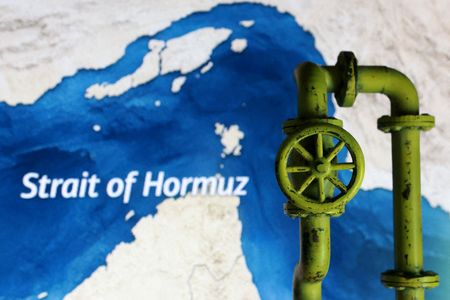
Iran’s leadership is putting on a confident front, having held onto power through weeks of intense American and Israeli airstrikes. Officials also believe U.S. President Donald Trump is unlikely to restart the war, given Iran’s demonstrated capability to shut down the Strait of Hormuz and send shockwaves through the global economy.
“It’s too much to say that Iran has emerged a victor, but it could have been much worse,” said Farzan Sabet, an Iran expert at the Geneva Graduate Institute think tank. “I think that the real victory for Iran was … survival.”
As part of the interim agreement, the U.S. has agreed to issue waivers permitting Iranian crude oil exports. According to Lloyd’s List Intelligence, at least three state-owned Iranian oil tankers have already departed as the U.S. naval blockade was lifted.
Tracking firm TankerTrackers.com reported Friday that Iran has shipped nearly 18 million barrels of oil over the past five days, worth an estimated $1.44 billion.
Dozens of additional tankers carrying oil could soon leave from Kharg Island, Iran’s primary export hub on the Persian Gulf, which would put further downward pressure on global oil prices.
Benchmark Brent crude, which was trading above $110 per barrel last month, has dropped to around $80 since the agreement was reached. The average price of a gallon of gasoline in the United States has also fallen below $4 — a closely watched figure as midterm congressional elections approach.
Before the deal, international sanctions had forced Iran to move its oil through a so-called “shadow fleet,” selling primarily to China at discounted prices. The new arrangement allows Iran to pursue more buyers and command better rates.
That revenue will be critically important as Iran confronts the economic wreckage left by the war.
Since authorities lifted a months-long internet blackout, many Iranians have been sharing photos online of their bare refrigerators.
Basic food items like meat have become unaffordable for many families. The Iranian rial, which exchanged at 32,000 to the dollar at the time of the 2015 nuclear agreement with world powers, has now collapsed to more than 1.5 million to the dollar.
“The conflict is estimated to have cost at least one million Iranian jobs, with 20% of workforce losses tied to the state-imposed internet shutdown,” said Holly Dagres, a senior fellow at the Washington Institute for Near East Policy.
“Ordinary Iranians, already struggling under systemic mismanagement and corruption as well as U.S. sanctions, have felt those burdens compounded by hyperinflation that has rendered the Iranian rial effectively worthless,” Dagres added.
The collapse of the rial triggered the nationwide demonstrations that spread across Iran in January, threatening the rule of then-Supreme Leader Ayatollah Ali Khamenei. Iran’s security forces responded with the deadliest crackdown in the country’s history, killing thousands.
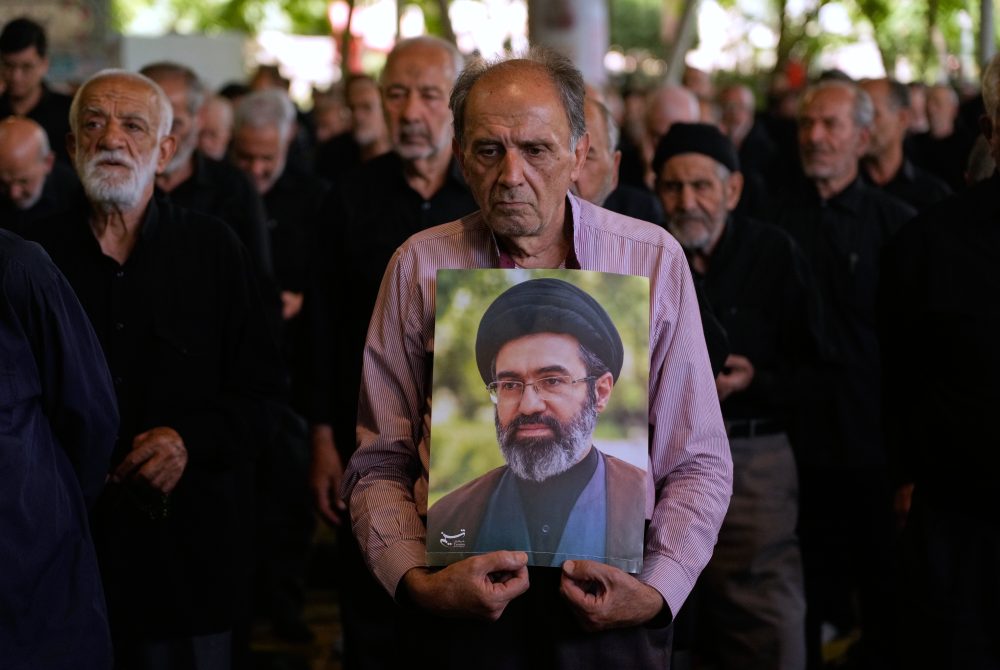
The 86-year-old Khamenei and other senior leaders were killed in Israel’s opening strikes on February 28. State funeral ceremonies are scheduled for July 4 through 9, timed to coincide with the six-month mark of the protest crackdown. The government has organized continuous rallies since the war began as a show of strength.
More moderate voices inside Iran are urging the country to pursue the economic opportunities that negotiations could bring. In addition to a full lifting of sanctions, the agreement promises a $300 billion investment fund for Iran if a final deal with the U.S. is reached — though the source of that funding has not been made clear.
The key question is how far Iran’s new Supreme Leader Ayatollah Mojtaba Khamenei — the son of the late leader — and establishment hard-liners are willing to compromise. In a statement carried by state media, he expressed support for the interim deal, saying the talks “will not mean accepting the enemy’s opinion,” while also acknowledging he held a “different viewpoint” without providing specifics.
The ongoing conflict in Lebanon has already put the broader agreement in jeopardy. Negotiations that were set to take place Friday in Switzerland were called off as fighting between Israel and Iran-backed Hezbollah militants escalated — though the two sides did agree to halt hostilities by Friday.
Israel has stated it will maintain its military presence across large portions of southern Lebanon and continue operations against Hezbollah until the group no longer presents a threat. Hezbollah has refused to stop its attacks unless Israel withdraws its forces.
The interim U.S.-Iran deal — which neither Israel nor Hezbollah is party to — calls for an end to military operations on all sides and for Lebanon’s sovereignty and territorial integrity to be respected.
“The end of the war in Lebanon is an inseparable part of (the) complete end of the war,” Iranian Foreign Minister Abbas Araghchi said Tuesday. “And the end of the war also includes the end of the occupation.”
That stance leaves American negotiators with little room to maneuver, and Vice President JD Vance’s planned trip to Switzerland was subsequently postponed.
Looking at the broader negotiations, Iran appears to have succeeded in keeping two long-standing U.S. and Israeli demands off the table: discussions about its missile program and its backing of Hezbollah and other militant organizations.
On the nuclear front, Iran agreed to “downblend” its highly enriched uranium stockpile, addressing one of Washington’s primary concerns.
However, Raja News, a media outlet aligned with ultra-conservative hard-line factions, slammed that concession, claiming Iran had “given up its most important levers” — reflecting the intense internal pressure not to yield on other nuclear issues, particularly the broader enrichment program.
“I’m not very optimistic about the kind of second round of discussions that are going to focus on the nuclear issue,” Sabet said. “It’s not actually clear to me yet that those will go anywhere, at least this year.”