
It took weeks of late-night phone calls, competing document drafts, and a critical last-minute push from Qatar to produce this week’s preliminary agreement between the United States and Iran — and sources familiar with the talks say the toughest negotiations are still ahead.
Pakistani mediators were central to brokering the interim deal, but four Pakistani sources familiar with the process said the path was filled with obstacles that sometimes shifted within days. Sticking points ranged from proposed fees in the Strait of Hormuz — through which roughly one-fifth of the world’s oil and liquefied natural gas travels — to the ongoing conflict in Lebanon.
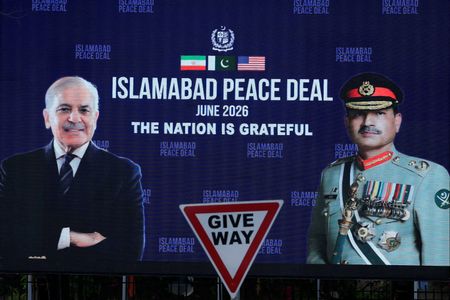
In the early morning hours of Monday, Pakistani Prime Minister Shehbaz Sharif announced a 14-point memorandum designed to end the war and competing blockades of the strait. Speaking to parliament later that day, Sharif acknowledged just how close things came to breaking down. “There were many moments during the negotiations when it looked as if the process would grind to a halt,” he said.
Five Pakistani sources, who spoke anonymously due to the sensitivity of the discussions, said the announcement came only after talks nearly collapsed on multiple occasions — including during the final night of negotiations. Two of those sources, along with a diplomat briefed on the process, said Qatar’s intervention was essential to securing the framework agreement.
At one point, disagreements came down to a single word choice. A diplomat described a 45-minute debate in late May over whether the text should use the word “including” or the abbreviation “etc.” — though the diplomat did not specify which part of the document was being discussed.
Analysts warn that achieving a final settlement will be even more difficult, given the need to address sanctions relief, management of the strait, and limits on Iran’s nuclear activities — all against a backdrop of deep mutual suspicion between Washington and Tehran.
“Washington and Tehran appear to have different interpretations of the same text,” said Alex Vatanka of the Middle East Institute in Washington. “Iran will try to turn ambiguity into leverage, while the U.S. will try to preserve pressure until nuclear concessions are secured. Mediation will therefore remain central, but difficult.”
Pakistan and Qatar’s foreign ministries, Iran’s permanent mission to the United Nations, and the White House did not respond to requests for comment.
Qatar’s role grew significantly after talks stalled for roughly 10 days in mid-May and the risk of military escalation appeared to be rising. According to the diplomat, Doha had initially been reluctant to formally join the process but agreed to become more directly involved on the condition that a ceasefire held and Qatar itself was not targeted. A Qatari team then made five quiet trips to Tehran — often traveling through Turkey — to work through gaps in the Pakistani draft documents.
On May 19, after leaving Tehran with what they believed was a promising opening, the Qatari team traveled to Washington, met with senior U.S. officials, and made edits to the text while simultaneously calling Iranian counterparts from inside the White House, according to one source.
One Pakistani source who was directly involved in the negotiations described how precarious the final night truly was. By around 11 p.m. Sunday in Pakistan, with officials gathered at the prime minister’s residence and in a situation room, the talks were again unraveling after Israel launched strikes on Lebanon. “Things were very fluid,” the source said, adding that army chief Field Marshal Asim Munir relayed messages between the two sides throughout the night. Hours later, the agreement was finalized.
Four Pakistani sources said that U.S. President Donald Trump’s changing public statements repeatedly complicated the effort, as did Iran’s slow responses to time-sensitive proposals. Those delays were partly attributed to Iran’s decision-making becoming unusually fragmented after U.S. strikes weakened its leadership structure.
An international source familiar with the negotiations noted that Iranian officials were extremely cautious about information security. “Messages get passed through many hands, and then come back days later,” the source said.
The Pakistani source involved in the talks said communication improved after a representative of Supreme Leader Ayatollah Mojtaba Khamenei traveled to Islamabad, enabling army chief Munir and his team to “get more direct communications running.”
The international source described the frustration of dealing with both parties. “With the Americans, you never really knew what their position was, and it could change. And with the Iranians, you often didn’t get a clear answer for days and days,” the source said.
Both countries have now signed the interim agreement, but the diplomat cautioned that the situation remains fragile — particularly because Israeli strikes in Lebanon and retaliatory action by Hezbollah could still unravel the deal. “I don’t think I’ve ever been close to a process which involves less trust than this one,” the international source said.