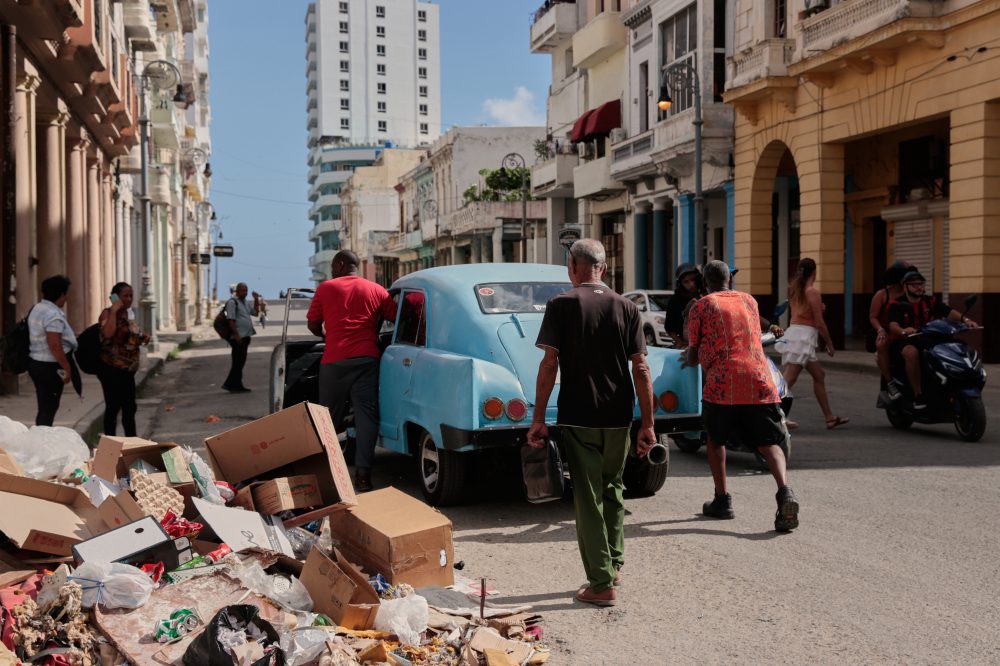

HAVANA (AP) — Cuba’s Communist Party has given the green light to an emergency economic package that includes free-market measures unlike anything previously seen on the island, as the country faces growing pressure from the United States.
Although the full policy document has yet to be made public, Cuban President Miguel Díaz-Canel and other officials have outlined several key components of the plan.
The reforms are designed to further loosen the grip of Cuba’s centrally controlled economy, where the government has traditionally dictated what gets produced, who produces it, how goods are priced, and how national resources are distributed.
At present, only government agencies and banks are authorized to exchange currencies, though a large portion of the population turns to informal markets to do so.
New legislation has been introduced that would trim the number of government ministries from 27 down to 21 in a bid to improve efficiency.
Local municipalities would gain new powers under the proposed measures, including the ability to approve businesses operating in their areas and to manage relationships with various economic players — from state-run enterprises to cooperatives and private companies. Municipalities would also be permitted to conduct their own imports and exports and handle their own foreign-currency earnings. Cuba is home to 168 municipalities spread across 15 provinces.
Individual companies would gain greater flexibility as well, including the ability to build their own pay structures, use and distribute profits with fewer government restrictions, conduct foreign trade, and form partnerships with private businesses and cooperatives.
The scope of activities that state-owned companies are allowed to pursue would also be expanded. Cuba currently has around 2,000 state-owned enterprises.
Small and medium-sized businesses would be allowed to handle their own imports and exports directly, bypassing the state-run entities that currently manage that process and collect fees.
The package also includes incentives aimed at encouraging the import of raw materials and other inputs needed for production.
Cuba’s long-standing post-revolution rationing system, which has provided access to basic goods at government-controlled low prices, is set to be gradually phased out. Food and other products would eventually shift to market-based pricing.
Recent U.S. sanctions targeting Cuba’s business conglomerate Gaesa have led major hotel chains such as Meliá and Iberostar to suspend agreements with their Cuban partners. The new measures seek to find alternative ways to make use of the island’s largely idle infrastructure.
Díaz-Canel has indicated that both the emergency plan and the policy document drafted by the Communist Party’s Central Committee drew on lessons from China and Vietnam — two communist-governed nations that have introduced market-style economic reforms while keeping one-party political systems in place.
The rollout of these economic measures follows months of escalating U.S. pressure and diplomatic discussions between the two nations, which have involved former President Raúl Castro’s grandson, Raúl Guillermo Rodríguez Castro.
For decades, the United States has imposed trade and travel restrictions on Cuba, pushing for the release of all political prisoners, an end to political and religious repression, and the opening of Cuba’s economy to private American investment.
The Trump administration has intensified that pressure in recent months, enacting a fuel embargo against the island and filing charges against Raúl Castro in connection with the 1996 shooting down of two civilian aircraft flown by Miami-based Cuban exiles.