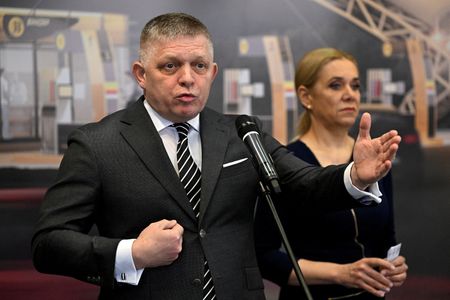

Slovakia’s three-party coalition government cleared a confidence vote in parliament on Thursday, a vote that was required after the nation’s debt surpassed its legally established limits — though the outcome did little to quiet growing concerns about the country’s fiscal direction.
Prime Minister Robert Fico’s governing coalition secured 78 votes in favor in the 150-seat legislature.
Under Slovak law, a constitutional measure on budget responsibility requires increasingly strict actions as national debt climbs. Those steps range from freezing ministerial salaries and cutting spending to, at the most severe level, holding a confidence vote in parliament.
The debt threshold that triggers a confidence vote has been gradually lowered over time, dropping from 60% of gross domestic product down to 52% for 2025, the most recent year for which data is available.
However, exemptions built into the law for newly formed or caretaker governments have repeatedly allowed administrations to sidestep the harshest consequences even as debt continued to grow.
The final exemption lapsed in late 2025, but the government put off holding the vote until Slovakia’s Constitutional Court issued a ruling on Wednesday demanding immediate action.
Following the court’s order, Prime Minister Fico called the vote right away, characterizing it as little more than a routine procedural step.
Official figures show Slovakia’s debt was at 57.9% of GDP in 2024 before climbing to 61.4% in 2025. Opposition lawmakers argued that the higher debt level should have prompted a confidence vote as early as last year.
The country’s current budget is targeting a deficit of 4.3% of GDP this year, with only a modest improvement to 4.2% projected by 2027. Meanwhile, national debt is expected to climb further, potentially reaching 65.1% of GDP next year.
Slovakia’s independent fiscal watchdog pushed back against the government’s low-key handling of the vote, issuing a statement ahead of the vote that read: “Before the confidence vote, fundamental questions should be heard: Do we know when and how the growth in debt should stop? Are proposed measures sufficient to lower debt?”
The country’s Finance Ministry did not respond when asked for comment.