
LONDON — A commanding special election win by Andy Burnham on Friday has triggered a political chain reaction that could soon bring down Prime Minister Keir Starmer, the man who led the Labour Party back to power less than two years ago after a 14-year absence from government.
Burnham is widely considered the top contender to succeed Starmer, particularly after his overwhelming performance in the Makerfield seat in northwest England. Even as Labour has struggled with poor poll numbers and significant losses in recent local elections, Burnham managed to defy the political odds in a major way.
The 56-year-old not only fended off the challenge from the anti-immigration Reform UK party, but he dramatically boosted Labour’s vote share to nearly 55%. That’s especially striking given that at local elections just last month, Reform UK captured virtually every seat within the Makerfield constituency.
With his return to Parliament after nearly a decade away — during which he served as the widely popular mayor of Greater Manchester — Burnham is now positioned to mount a direct challenge to the struggling Starmer for both the Labour leadership and the country’s top office. While he has stopped short of formally declaring his intentions, his words leave little doubt about where his ambitions lie.
Burnham framed his win as “the change moment” and said he and his supporters hoped to “lay out a new path” for Britain.
“I think we need in this country right now for people to feel a sense of hope that there is something better to work towards on the horizon,” he said.
The next scheduled national election in the UK isn’t required until 2029, but British political rules allow a party to swap out its leader — and therefore its prime minister — without triggering a nationwide vote.
Here’s how a leadership change could unfold:
Despite Starmer’s repeated insistence that he would fight any challenge to his position, he may soon conclude that he would lose a leadership vote — a deeply humbling outcome for a man who delivered a landslide Labour victory in July 2024. Starmer now ranks among the most unpopular prime ministers in modern British history, battered by a series of policy stumbles and controversies. Chief among them was his widely criticized decision to appoint Peter Mandelson as the UK’s ambassador to Washington, despite Mandelson’s connections to convicted pedophile Jeffrey Epstein.
Reports suggest that members of his own Cabinet may inform him this weekend that his position is no longer tenable and that resigning would be better both for him and for the Labour Party.
If Starmer chose to leave office right away, the Cabinet and Labour’s governing body would likely select a temporary leader to serve as prime minister — someone not expected to compete in the full leadership race. Deputy Prime Minister David Lammy has been mentioned as someone who could fill that role.
Another option would be for Starmer to announce he plans to step down at a future point, such as the party’s annual conference scheduled for September.
Burnham is expected to enter any leadership contest that follows. The bigger question is who else might join the race. Wes Streeting, who stepped down as health secretary last month, has signaled he intends to run. Other names being floated include Starmer’s former deputy Angela Rayner, who resigned last year over an unpaid property tax matter, and Al Carns, who left his post as armed forces minister last week over disagreements with Starmer’s defense spending plans.
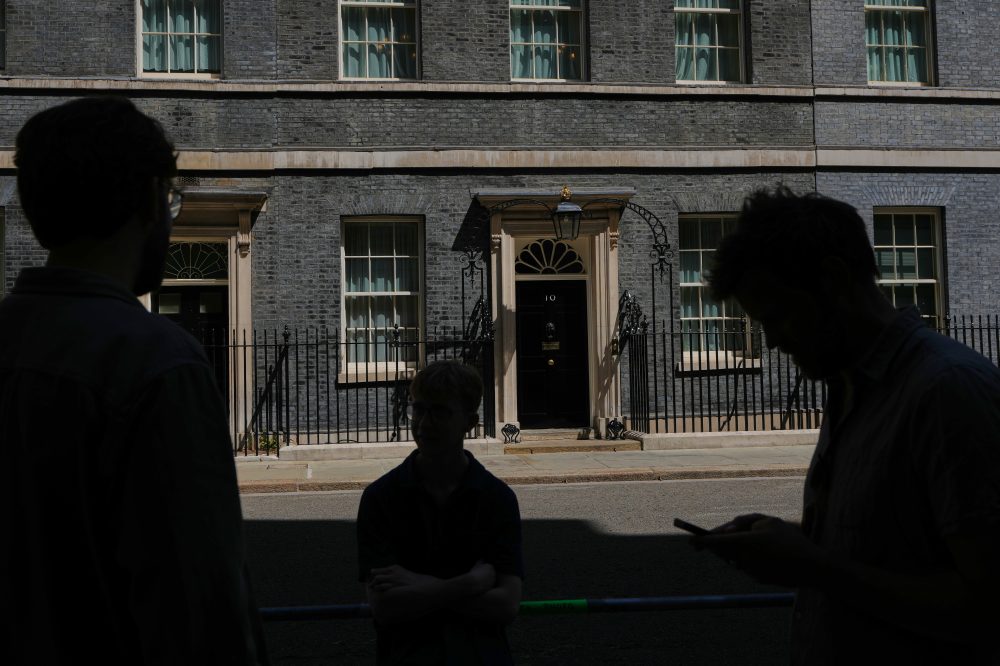
A significant faction within Labour is pushing for no one to challenge Burnham at all, hoping he could walk into 10 Downing Street this summer, ahead of the party conference.
On Friday, Starmer found himself in the awkward position of publicly congratulating Burnham — knowing full well the victory only intensifies scrutiny of his own leadership.
The prime minister confirmed he had not yet spoken with Burnham but made clear he has no intention of stepping aside.
“Yes, I will run, I will stand,” Starmer said when asked whether he would contest a leadership challenge. “I’ve said repeatedly I’m not going to walk away from that.”
Under Labour’s rules, if a formal challenge is mounted, Starmer would automatically appear on the ballot. Any challenger would need to secure the support of at least one-fifth of Labour’s House of Commons lawmakers — that’s 81 members. Candidates who clear that bar would then need backing from either 5% of local party branches or at least three affiliated organizations, such as trade unions or cooperative societies.
Eligible party members and affiliates would then vote using a ranked-choice system, with the winner being the first candidate to surpass 50% of the vote. King Charles III would then formally invite that person to become prime minister and build a new government.
If a full contest takes place, the process could take three to four months, with the party holding town hall events before ballots are opened to its membership.