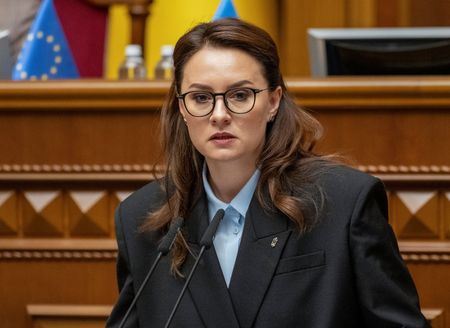
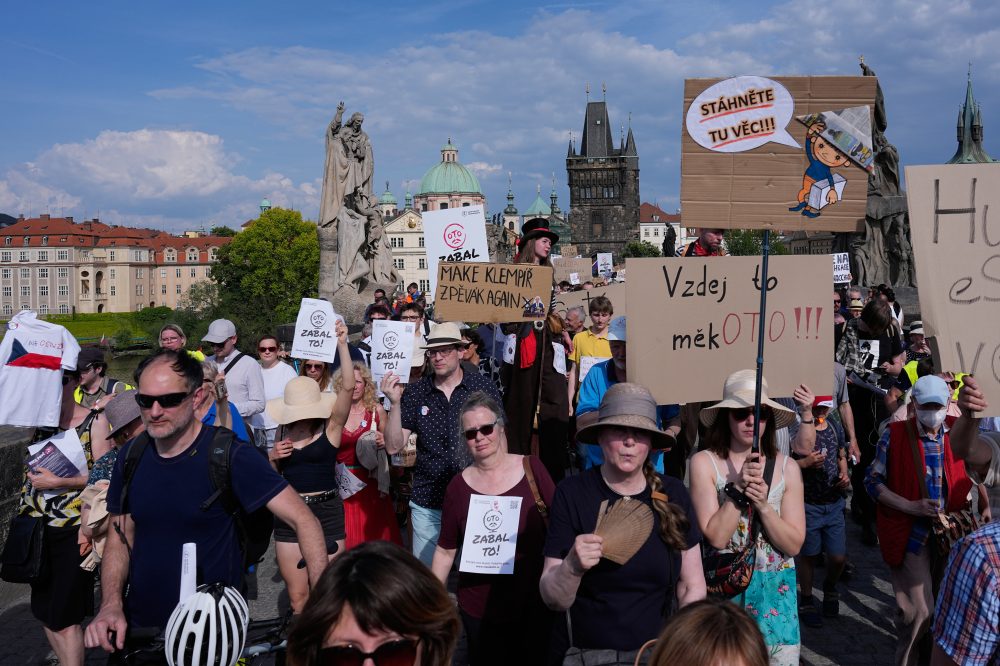
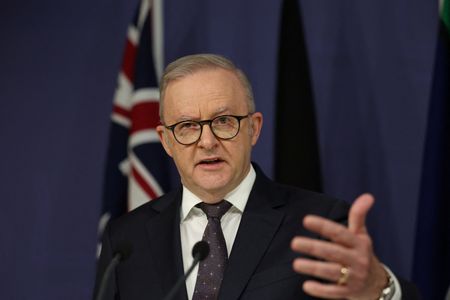
KYIV — Ukrainian Prime Minister Yulia Svyrydenko is set to lead her country’s delegation to a significant reconstruction conference taking place in Poland this week, even as tensions between the two neighboring nations have been growing over a dispute concerning the name of a Ukrainian military unit.
Svyrydenko outlined who would be traveling with her, stating: “The Ukrainian delegation at the conference will include representatives of Ukrainian business, heads of state-owned companies, representatives of our communities from across the country, and, of course, government officials and members of parliament.”
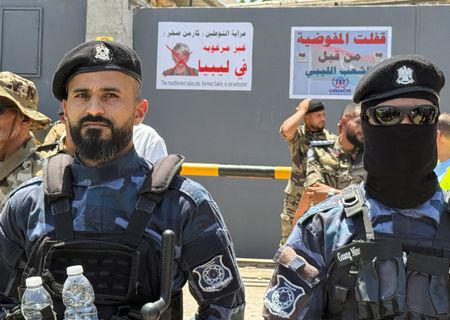
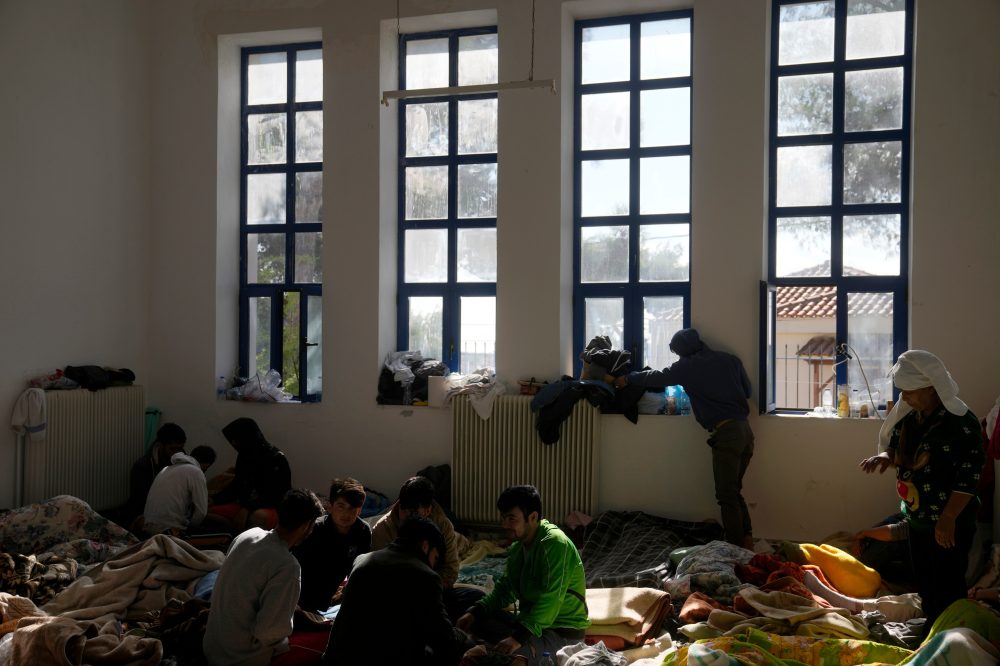
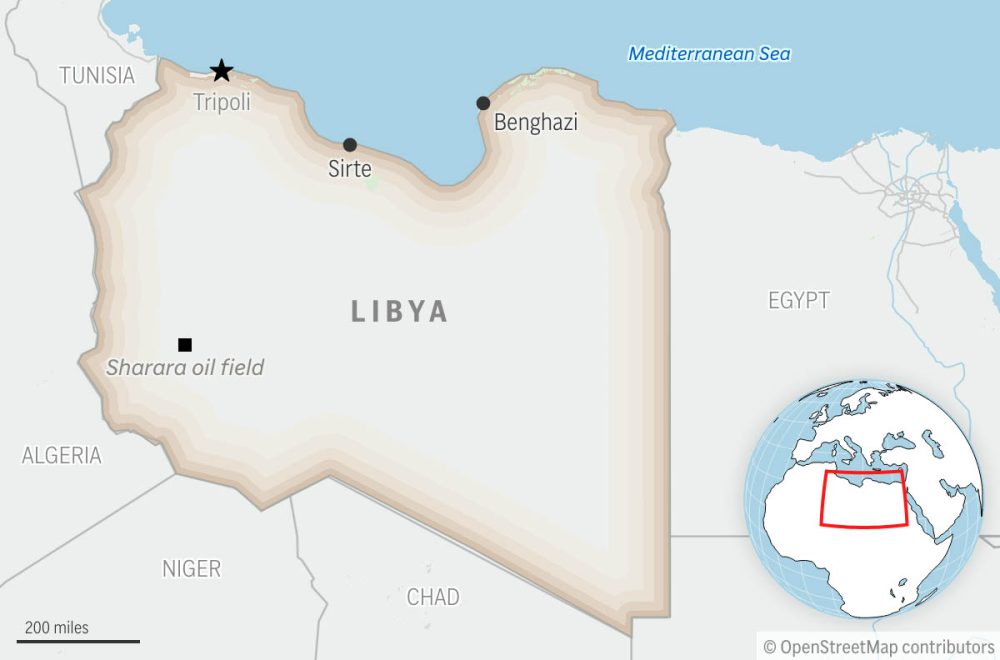
Authorities in both eastern and western Libya have significantly escalated their campaign against migrants and refugees over the past month, carrying out mass arrests, detentions, and forced removals, according to Amnesty International. The human rights group, in a statement released Tuesday, placed blame squarely on the European Union for enabling the abuse.
Libya has long served as a key transit point for people attempting to escape conflict and poverty in search of a better life in Europe. Since a NATO-backed revolt in 2011 that ousted Muammar Gaddafi, migrants have risked their lives crossing the Mediterranean Sea. The country remains divided between competing factions controlling the west and east of the nation.
The EU and its member countries have provided funding and training to the Libyan coastguard for years. That coastguard intercepts migrants trying to cross the sea. Although the EU officially recognizes only the government based in Tripoli, it has also increased its dealings with the rival eastern authorities since last year.
Amnesty detailed the crackdown as including sweeping arrests across several cities, forced evictions, and the expulsion of hundreds of migrants — among them citizens of war-ravaged Sudan — who were given no opportunity to seek asylum or contest their removal.
Diana Elahawy, Amnesty International’s deputy regional director for the Middle East and North Africa, had sharp words for the EU’s role. “The EU has long bankrolled migration control in Libya with its support to the Libyan Coast Guard, which has already made it complicit in horrific violations and abuses,” she said.
Elahawy went further, saying: “Extending this cooperation to eastern-based armed groups with records of committing war crimes and other abuses with impunity shows a shocking disregard, not only for international law, but also for human life and dignity.”
Neither the EU’s executive body, the European Commission, nor the Libyan government in Tripoli, nor the eastern administration responded to requests for comment. EU officials have previously argued that their cooperation with Libya is aimed at saving lives on the water and stopping illegal smuggling operations.
In a letter sent to EU leaders last week, Commission President Ursula von der Leyen wrote that “continued EU engagement with Libya remains indispensable,” pointing to a surge in irregular crossings toward Greece through the Eastern Mediterranean route.
“We are providing targeted financial and operational support to strengthen border management, search-and-rescue and anti-smuggling capacities, and reduce illegal departures and the loss of lives at sea,” von der Leyen wrote.
Last summer, EU Migration Commissioner Magnus Brunner traveled to eastern Libya for meetings with officials there, but was expelled shortly after he arrived.
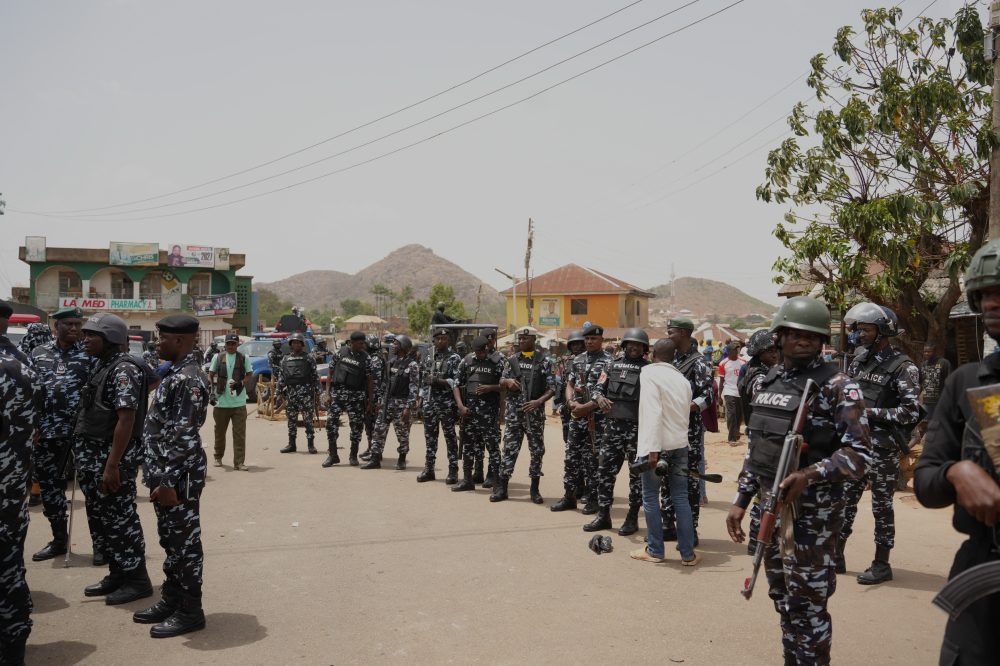
ABUJA, Nigeria — At least 20 people lost their lives when an armed group stormed a community in north-central Nigeria, according to police who announced the attack on Monday.
The assault took place Sunday in the Kawel community, situated in the Bokkos area of Plateau State, according to police spokesman Alfred Alabo, who released the information in an official statement.
Officers responded quickly and engaged in a gunfight with the attackers, eventually forcing them to flee the area, Alabo said. Despite the confrontation, no one was taken into custody.
No organization has stepped forward to claim responsibility for the deadly assault, which occurred in an area that has seen repeated episodes of violence over the years.
“The remains of the victims have since been released to their families for burial, as the families declined autopsy,” Alabo said.
Plateau State Gov. Caleb Mutfwang directed the government’s emergency management and humanitarian agencies to deliver immediate assistance and support to those affected, according to a statement from spokesperson Joyce Ramnap.
The United Nations has documented how an ongoing insurgency in northeastern Nigeria has claimed thousands of lives and forced millions of people from their homes over the years. Armed criminal groups continue to operate across the northwest and north-central regions of the country as well.
This latest bloodshed follows a nighttime attack in March that also claimed 20 lives, striking the Gari Ya Waye community in Plateau State.
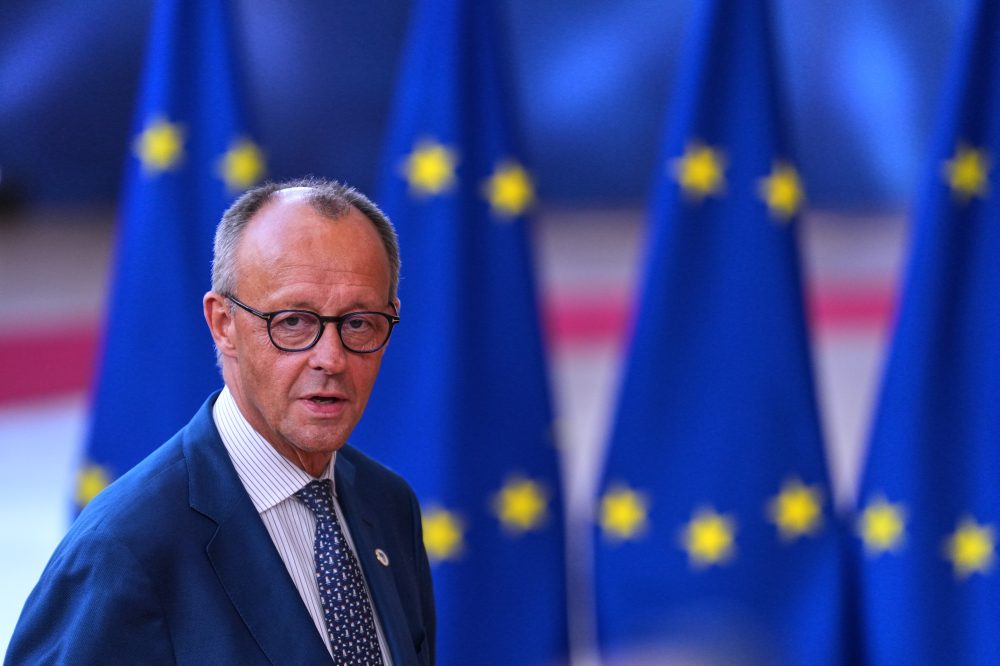
BERLIN (AP) — German Chancellor Friedrich Merz stood firm Tuesday, vowing to push forward a sweeping overhaul of the country’s strained pension system — one that would gradually raise the retirement age in step with increasing life expectancy. “Failure is not an option,” he declared.
Merz’s coalition, made up of center-right and center-left parties, has been in power for just over a year. The government came in promising to shake up and reinvigorate Germany’s sluggish economy — the largest in Europe — but has since fallen deeply out of favor with the public, largely due to a perception that the coalition has bickered without producing meaningful results.
After contracting for two consecutive years, Germany’s economy returned to modest growth last year. However, the government projects only 0.5% growth for this year, a figure dragged down by the economic fallout from the war in Iran.
The nation of 83.5 million people was already grappling with stiff competition from Chinese manufacturers, soaring energy costs following Russia’s full-scale invasion of Ukraine, and pressure from U.S. President Donald Trump’s tariffs and trade threats. Layered on top of those challenges are longer-standing structural issues: high production costs, sluggish private investment, and increasingly expensive healthcare and pension systems driven by an aging population.
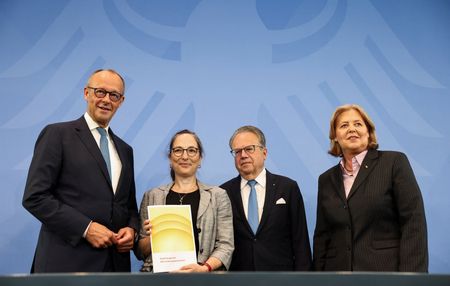
On Tuesday, a panel of experts and politicians appointed by the government presented 33 recommendations designed to put the pension system on more stable footing. The goal is to prevent pension payouts from declining while also avoiding a major long-term hike in the contributions workers pay into the system. Right now, employees contribute 18.6% of their gross wages.
Germany has long wrestled with the reality that “fewer and fewer contributors have to finance pensions for more and more retirees,” Merz said. “Doing nothing is not an option.”
Among the panel’s key proposals is introducing market-based investments into individual pension insurance — modeled after a system used in Sweden — as a way to ease financial pressure on the overall program.
Two decades ago, Germany began phasing in an increase to the standard retirement age, moving it from 65 to 67. The commission is now recommending going further, tying the retirement age to life expectancy beginning in 2031. According to the national statistics office, life expectancy in Germany currently stands at 78.5 years for men and 83.2 years for women.
Commission co-chairperson Constanze Janda described the proposed retirement age adjustment as “moderate,” estimating it would rise by roughly six months over a decade if life expectancy continues on its current trajectory.
Since the mid-2010s, Germany has allowed workers with 45 years of pension contributions to retire at age 63 without a financial penalty. The panel is recommending that provision be eliminated and that the minimum retirement age be raised to 64.
The commission also proposed raising the age at which workers can begin scaling back their hours in preparation for retirement — from 55 to 58.
Merz said his coalition plans to “implement in full” the commission’s proposals, and to do so swiftly. Labor Minister Bärbel Bas, who also co-leads the center-left Social Democrats, echoed that commitment.
Still, the road ahead won’t be easy. The governing coalition holds a relatively slim majority in parliament, and the reform package has already drawn sharp criticism from labor unions. Despite the obstacles, Merz repeated his firm stance: “Failure is not an option.”
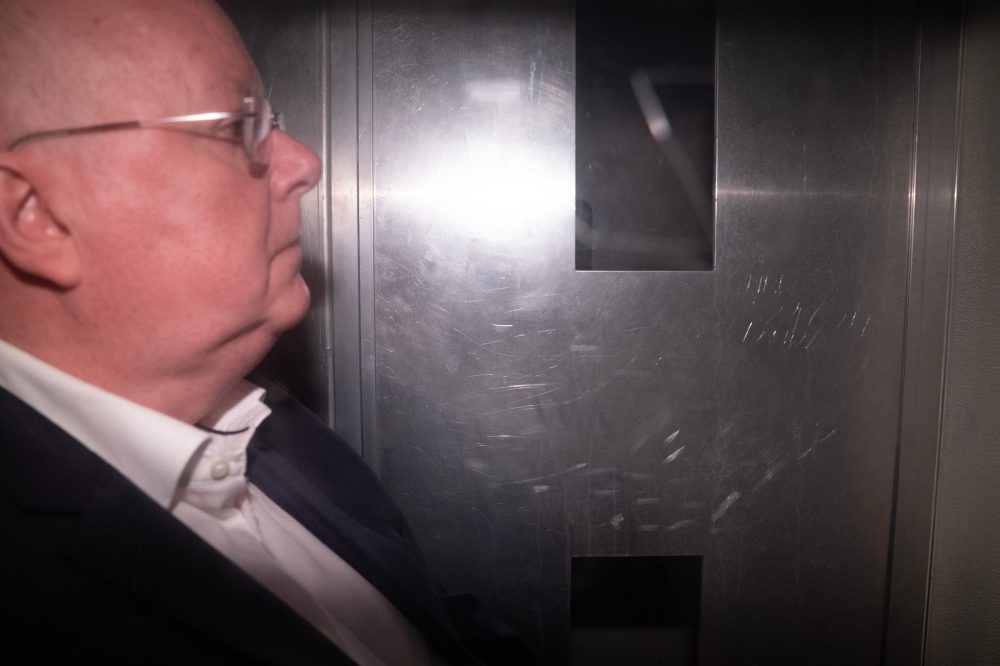
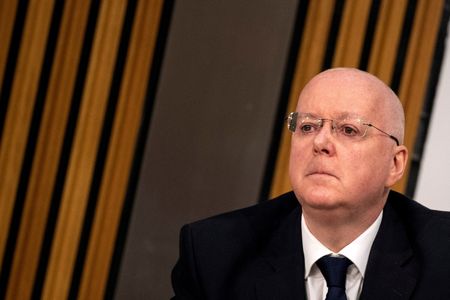
LONDON — Peter Murrell, the 61-year-old estranged husband of former Scottish First Minister Nicola Sturgeon, was sentenced Tuesday to five years and three months behind bars after admitting he stole more than 400,000 pounds — roughly $540,000 — from the Scottish National Party while serving as its chief executive.
Murrell confessed to using party money to purchase an expensive motorhome, two vehicles including a Jaguar, luxury Bremont watches, and various household items — even two toilet seats. He received credit for time already served.
Judge James Young did not mince words during sentencing. “All told, this was a calculated crime of dishonesty,” the judge stated. “And let me make it clear to you, one factor in the sentence which I imposed today will be to act as a deterrent to any senior officials in other large organizations who might be tempted to abuse their position in the way that you did.”
Sturgeon has publicly separated herself from her estranged husband’s wrongdoing, maintaining that she had no knowledge of his criminal actions.
The sentencing brings to a close a turbulent stretch for the Scottish National Party — which advocates for Scotland’s independence from the United Kingdom — and for the prominent political couple that once led it together.
BRUSSELS (AP) — A Taliban delegation arrived in Brussels on Tuesday for private, closed-door discussions with European Union staff, with the talks expected to center on the deportation of Afghan migrants, according to a Taliban official.
Afghans represent one of the largest migrant groups applying for asylum within the EU. However, a growing number of governments across the 27-nation bloc are pushing to accelerate and expand deportations for those whose asylum claims are denied or who have been convicted of crimes in their host countries.
Since the Taliban took control of Afghanistan in 2021 — following the chaotic withdrawal of U.S.-led military forces — Afghan authorities have imposed sweeping restrictions on civil rights, with women and girls bearing the brunt of those measures.
Human rights organizations said Tuesday’s meeting weakens the EU’s obligations to uphold human rights and could put people at risk both in Europe and in Afghanistan.
“Any engagement with the Taliban needs to prioritize protecting human rights and accountability — not deporting people to danger there,” said Fereshta Abbasi, a researcher at Human Rights Watch. “EU countries are undermining their credibility by condemning Taliban abuses and pursuing accountability on one hand, while cooperating with the Taliban to forcibly return Afghans on the other.”
Not a single EU member state recognizes the Taliban as a legitimate government, making Tuesday’s meeting in Brussels a notable — if small — break from the group’s diplomatic isolation since it came to power five years ago.
The Taliban’s five-member delegation includes Abdul Qahar Balkhi, a New Zealand-born spokesperson for the Taliban’s foreign ministry, according to a Taliban official who spoke on the condition of anonymity.
Belgian Foreign Minister Maxime Prévot stated that while Belgium does not recognize the Taliban, it would honor EU requests to issue the group visas.
“Belgium cannot confer legitimacy on a regime accused of serious human rights violations,” he said in a written statement, noting Belgium’s role as host to EU institutions. “Making a meeting possible in the framework of our host-state policy does not amount to recognition, does not amount to legitimacy, and does not constitute an invitation by the Belgian government.”
The Taliban delegation members received visas following security screening. Those visas carry limited territorial validity, allowing just 24 hours in Belgium with no access to other countries within the Schengen border-free travel area.
Because neither Belgium nor the EU officially recognizes the Taliban government, the meeting will not be held in any official EU or Belgian government building. The European Commission has repeatedly declined to provide further details about the gathering.
A European Commission spokesperson said Monday that the meeting was organized in response to pressure from a clear majority of EU member states — 20 of which signed a letter in October calling for stronger migration policies, including a significant increase in deportations.
“They had asked the Commission to coordinate such technical contacts on returns,” said spokesperson Markus Lammert. “Member states are looking into ways to return persons who have committed serious crimes and who are possibly a security threat.”
This is not the first such contact between the EU and the Taliban. An earlier meeting took place in Afghanistan in January, when the Commission sent a mission to Kabul. The Commission also maintains staff there.
The October letter was drafted in part by Belgian Migration Minister Anneleen Van Bossuyt, who said at the time that “we have sent a clear and powerful message to the European Commission: we can no longer afford a standstill. It is high time for a firm and joint approach, so that Europe can regain control over migration and security.”
Van Bossuyt noted that across the EU, only 2% of the 22,870 Afghans ordered to leave had actually done so.
A separate Commission spokesperson emphasized that the meeting “does not mean by any means recognition” of the Taliban government.
Afghanistan has also been managing the return of roughly 3 million Afghans from Pakistan and Iran over the past year alone — people who were largely forced back to their home country — adding further strain to a nation already grappling with food shortages, economic collapse, and international sanctions against the Taliban’s Islamic Emirate.
Taliban authorities have banned Afghan women and girls from attending school beyond the primary level and from working in nearly all professions, while also imposing strict rules on what women may wear in public.
“The desperate scenes of people — including EU staff — fleeing Afghanistan are a recent memory. It is unconscionable that the EU would now try and deport people to Afghanistan, which has only become more dangerous in the meantime,” said Eve Geddie, Director of Amnesty International’s European Institutions Office.
Facing mounting political pressure to crack down on migration across the bloc, the EU has recently enacted sweeping changes to its collective migration rules. Those reforms aim to increase deportations and include provisions for so-called “return hubs,” expanded domestic surveillance, tighter border controls, and engagement with the Taliban — a government the EU does not recognize due to human rights concerns.
With Afghanistan facing food insecurity and economic deterioration, the Taliban government is seeking humanitarian assistance and hoping to reduce its international isolation.
JERUSALEM — A former Israeli prime minister has openly confirmed that Israel smuggled Starlink satellite internet receivers into Iran in an effort to support protesters seeking to overthrow the Iranian government.
Naftali Bennett, who served as Israel’s prime minister from 2021 to 2022, made the admission Tuesday while speaking before an audience at the JNS International Policy Summit in Jerusalem. He said he personally launched “a process of acquiring and smuggling into Iran tens of thousands of Starlink receptors that would allow continuity of the internet and social networks.”
Starlink is a satellite-based internet service operated by SpaceX, which is owned by Elon Musk. Iran has previously pointed the finger at both Israel and the United States, accusing them of bringing the devices into the country to destabilize its government. While Starlink is not authorized to operate in Iran, Musk has previously stated that the service is functioning there.
According to Bennett, the goal of distributing the devices was to give protesters the tools to organize and ultimately bring down the Iranian government.
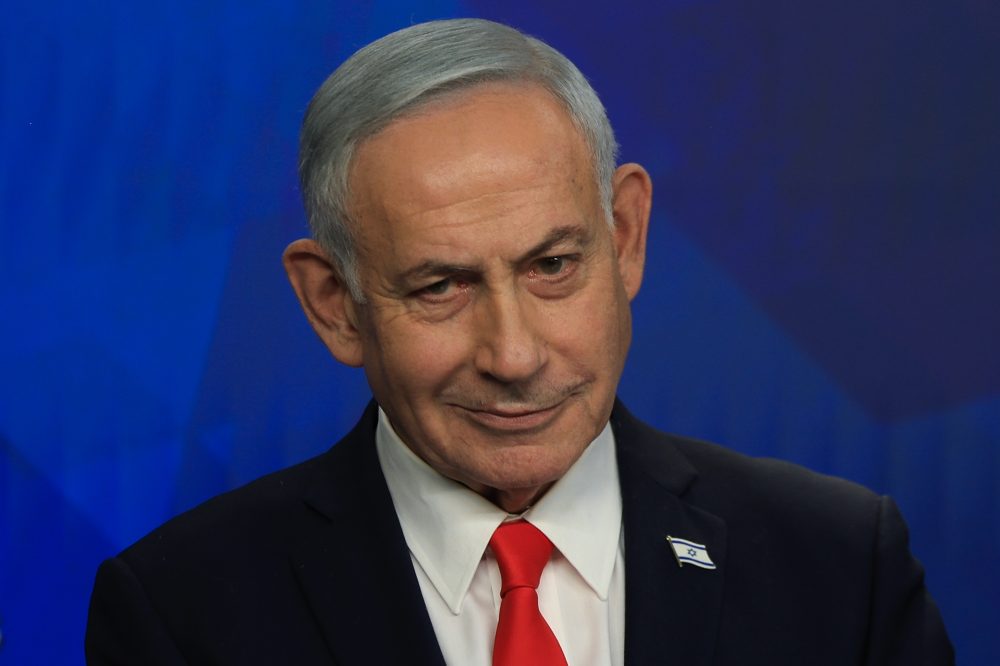
However, Bennett placed blame on Prime Minister Benjamin Netanyahu’s administration for failing to continue the program. “Unfortunately, the current incompetent Israeli government stopped doing that,” Bennett said. “And when the protest happened, that infrastructure was not there.”
Netanyahu’s office did not respond to requests for comment on Bennett’s statements, and SpaceX was unavailable for comment outside of U.S. business hours.
Iranian authorities have repeatedly cut off public internet access during periods of civil unrest, including during deadly nationwide protests in January and throughout the conflict involving the U.S. and Israel that began in late February. Reuters has previously reported that some Iranians relied on Starlink during those internet shutdowns.
Bennett, who heads a right-wing political party and is among several opposition figures hoping to unseat Netanyahu ahead of an election scheduled by October, said that if he were to return to power, he would pursue efforts to destabilize and ultimately topple the Iranian government. He indicated those efforts could include economic and industrial sabotage rather than direct military action.
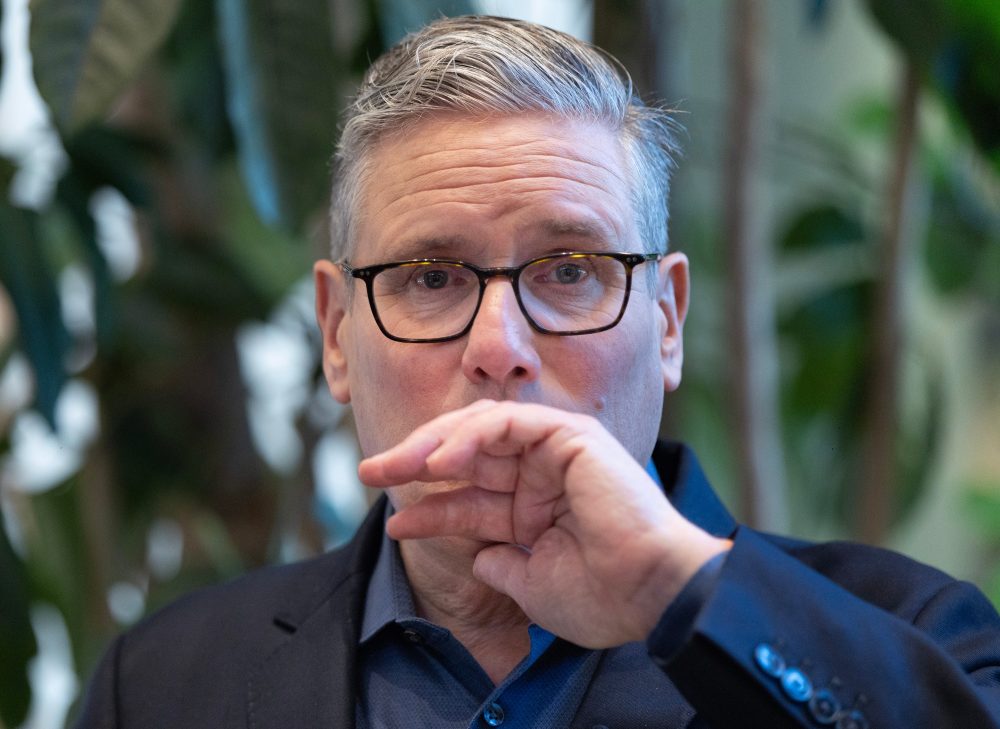
LONDON (AP) — Andy Burnham, Britain’s newest member of Parliament and the man most likely to become its next prime minister, spent Tuesday meeting with fellow Labour Party members as he gears up for a leadership race that could end before it even begins.
Burnham holds a commanding lead in the contest to succeed Prime Minister Keir Starmer, who announced Monday that he plans to step down within weeks. Starmer’s two years in office were clouded by a series of poor decisions and misjudgments that steadily damaged his standing with both the public and his own party.
A former Cabinet minister, Burnham served as mayor of Greater Manchester from 2017 until recently. He won a special parliamentary election last week specifically to position himself to challenge Starmer for the top job.
His path to the leadership became even clearer on Monday when former Health Secretary Wes Streeting — widely seen as Burnham’s chief rival — threw his support behind him instead of launching his own bid.
Under Britain’s parliamentary system, a governing party can swap out its leader — and by extension, the prime minister — without triggering a national election. The next scheduled general election is not required until 2029.
Labour’s leadership nomination window opens July 9 and closes one week later. Should Burnham be the sole candidate, he could be installed as prime minister as soon as July 17. If a competitive race does develop, a winner is expected to be in place by September 1, when Parliament resumes after its summer recess.
As Manchester’s mayor, Burnham earned a strong reputation, guiding the city through a period of significant growth and revitalization. He has promised to bring his distinctive governing philosophy — which he calls “Manchesterism” — to the national stage.
Many within Labour hope Burnham’s personality and ability to connect with everyday people will prove more effective than Starmer’s more reserved, bureaucratic style. However, his stances on many policy issues remain largely undefined and untested, prompting some Labour lawmakers to call for a full leadership contest that would force him to face public debate and scrutiny.
Burnham is expected to deliver a speech next week laying out elements of his economic agenda.
Former Armed Forces Minister Al Carns, who resigned earlier this month over what he described as insufficient defense spending, said the country needs “a clear and concise discussion about what this country wants to be.” Carns has hinted he could enter the leadership race but told broadcaster ITV, “I’m not ready to make a decision on this in any way, shape or form.”
Some Labour members have floated the idea of Darren Jones, a senior Cabinet minister and close ally of Starmer, entering the contest, though Jones has not yet made any public statement on the matter.
Any candidate hoping to run must secure the backing of at least 81 Labour lawmakers — one-fifth of the parliamentary party — to qualify.
Many party members argue that a drawn-out leadership battle would only highlight Labour’s internal divisions and prolong political instability. “I think the transition should be swift and orderly,” Cabinet Office Minister Nick Thomas-Symonds told the BBC.
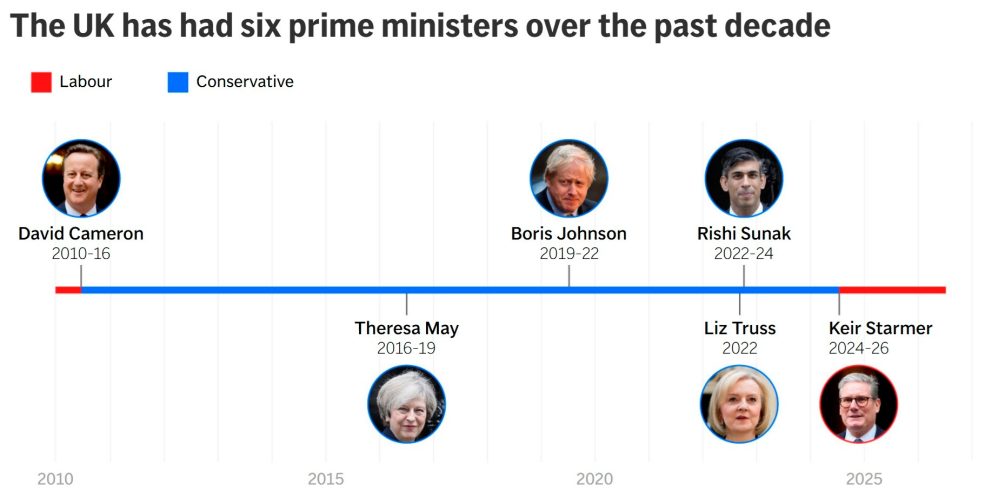
Starmer stepped down Monday following a weekend of reflection, acknowledging that the Labour Party no longer believes “I am best placed to lead us into the next general election.” He becomes the sixth prime minister in ten years to announce a departure from outside No. 10 Downing Street — a milestone that coincides with Britain marking a decade since its historic vote to leave the European Union, a decision that continues to shape the country’s economy and political landscape.
After weeks of publicly insisting he intended to fight for his position, Starmer ultimately yielded to mounting pressure to hand the reins to someone capable of turning around the government’s struggling fortunes. While he led Labour to a sweeping election victory in July 2024, his approval ratings and those of the party have fallen sharply since then.
Starmer faced persistent difficulties in delivering on promises of economic growth, fixing deteriorating public services, and reducing the cost of living. His tenure was also damaged by controversies, including his appointment of Peter Mandelson — a figure with a scandal-filled past and reported ties to Jeffrey Epstein — as the UK’s ambassador to the United States.
Labour is currently being squeezed on two fronts: losing progressive voters to an expanding Green Party while simultaneously facing a surge from Reform UK, the anti-immigration party led by Nigel Farage that has consistently topped national opinion polls.
LONDON — The former chief executive of the Scottish National Party has been handed a prison sentence of just over five years after confessing to stealing hundreds of thousands of pounds from the political organization he once led.
Peter Murrell was sentenced to five years and three months at Edinburgh High Court on Tuesday, following his guilty plea last month to charges of embezzling £400,310.65 — roughly $540,000 — in SNP funds. The stolen money was spent on multiple vehicles, a motorhome, and high-end products from luxury brands including Estee Lauder and Harrods.
Presiding judge Andrew Young stated that the sentence was intended to send a clear message, saying it needed to serve as a deterrent to others.
Murrell is the former husband of Nicola Sturgeon, who served as the SNP’s longest-tenured leader before abruptly stepping down in 2023. Shortly after her resignation, Sturgeon was arrested as part of a broader investigation into the party’s finances. She was ultimately cleared of any wrongdoing in March of last year.
Following Murrell’s guilty plea, Sturgeon publicly reaffirmed her innocence, stating that she had “no knowledge or suspicion whatsoever that he was using SNP funds for personal purposes.”
The scandal — which involved the arrest of a former party leader and the conviction of her ex-husband — has raised deeply uncomfortable questions for the SNP, a party that has held a dominant position in Scottish politics for close to twenty years.
BERLIN — A pension commission appointed by Chancellor Friedrich Merz has put forward a plan to gradually increase Germany’s retirement age and establish a new fund similar to Sweden’s pension model, as the country works to address the challenges of an aging population.
The commission’s report, unveiled on Tuesday, recommended creating a fund based on the Swedish pension structure, where both workers and employers would be required to make contributions. Those funds would then be invested in financial markets to help cover future pension payments.
“The aim is to strengthen the state pension by introducing an additional, compulsory, individually allocated funded pension,” Merz said at a news conference held to present the findings. The report will now be taken up for debate by the coalition government.
Germany’s existing pension system relies on current workers’ contributions to pay the benefits of today’s retirees. That model has come under growing pressure as the population ages and the ratio of working-age people to retirees continues to shrink.
Merz said the proposed changes would help keep contribution levels affordable while also giving younger workers greater confidence that a reliable pension would be waiting for them in the future.
Among the other recommendations in the report: eliminating the current option that allows workers to retire at age 63 without any reduction in benefits, and gradually raising the retirement age in line with life expectancy — potentially reaching age 70 by the early 2090s. Under the current plan, the retirement age is already scheduled to reach 67 by the early 2030s.
The report arrives at a politically sensitive moment, as Merz’s coalition government faces pressure to finalize a package of tax and welfare reforms before parliament heads into its summer recess next month.
Calls to move Germany’s pension system away from its contribution-based model toward one that also draws on capital markets have grown louder for years as demographic trends have shifted. However, previous reform efforts have repeatedly stalled due to political disagreements and the difficult balance between the interests of current retirees and those of younger workers still paying into the system.
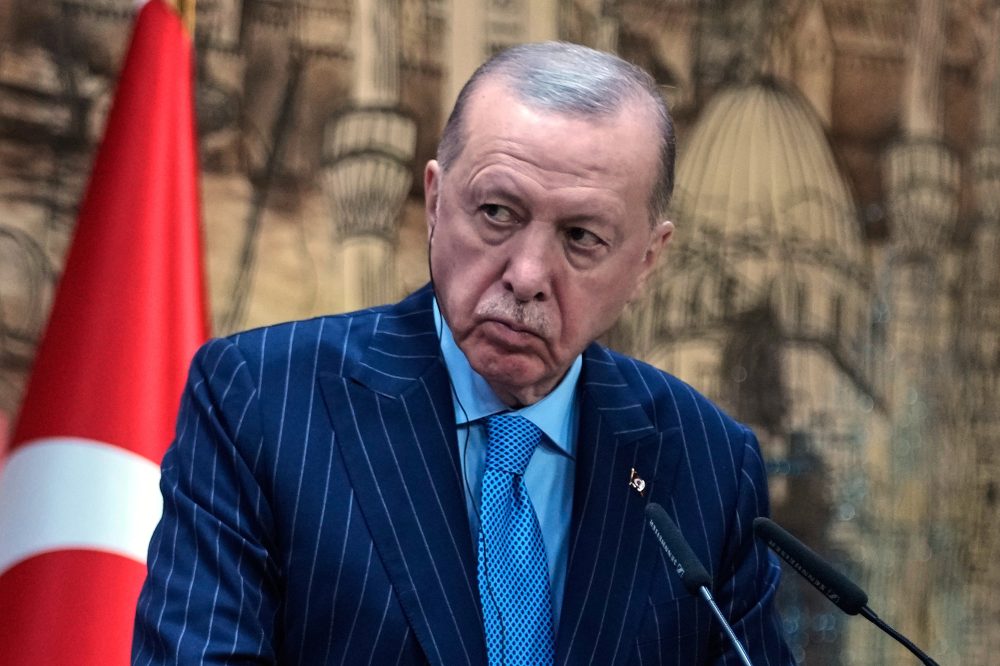
Security forces in Ankara, Turkey’s capital city, launched sweeping raids Tuesday, taking more than 200 people into custody who are suspected of ties to extremist organizations, including the Islamic State group — all in preparation for next month’s high-profile NATO summit.
U.S. President Donald Trump is expected to travel to Ankara for the July 7-8 summit, joining fellow leaders from the 32-nation military alliance.
Turkish authorities are putting extensive security measures in place for the event. Plans include prohibiting public demonstrations, limiting access to roads near airports, and creating secure perimeters around the summit venue and hotels where visiting delegations will be staying.
The government of Turkish President Recep Tayyip Erdogan has made security a top priority, with law enforcement conducting raids on a regular basis. Just last month, a nationwide operation resulted in 324 arrests of individuals suspected of connections to the Islamic State group.
Turkish prosecutors issued detention orders for 241 suspects early Tuesday. By later in the day, police and gendarmerie units had taken 209 of those individuals into custody across the Ankara area, according to a statement from the chief prosecutor’s office. Efforts to detain the remaining suspects were still ongoing.
Of those arrested, 56 were identified as alleged Islamic State militants, while 35 were said to be members of the Revolutionary People’s Liberation Party/Front — a far-left organization with a history of armed attacks and assassinations inside Turkey.
The Islamic State group has been responsible for a number of deadly attacks on Turkish soil, including a 2017 New Year’s Eve shooting at a nightclub in Istanbul that left 39 people dead.
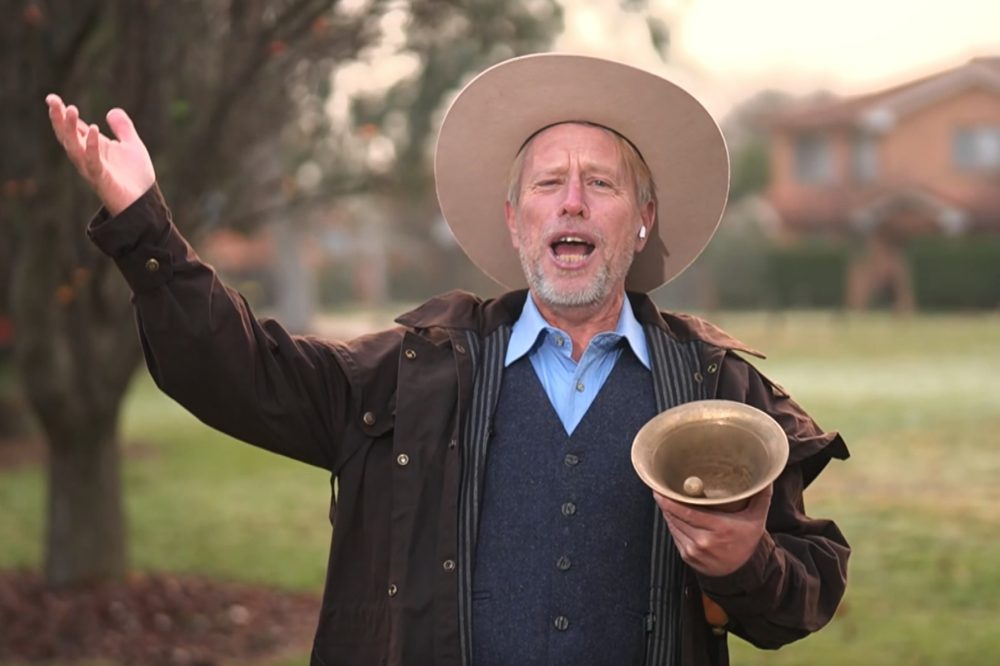
An Australian man who works as a professional air conditioner cleaner and serves part-time as an honorary town crier has earned a spot in the record books as the world’s loudest person.
Guinness World Records officially recognized Joseph McGrail-Bateup, 58, of Canberra, Australia, last week for producing the loudest shout ever recorded by a single individual. His thunderous cry of the word “now” registered at 122.4 decibels.
That single syllable was enough to topple a record that had been held since 1994 by Northern Ireland schoolteacher Annalisa Flanagan, who had yelled the word “quiet” at 121.7 decibels. To put that volume in perspective, 122.4 decibels falls in the same noise range as a chain saw, a jet aircraft during takeoff, or an ambulance siren heard up close.
McGrail-Bateup said on Tuesday that there was simply no way to prepare for such a feat. “There’s no way that you can actually practice for it. You have to just keep it for the day, especially with the world record attempt,” he said.
The record did not come easily. “It took me seven attempts just for one word, which was the word ‘now,’ and my voice was shot for the next couple of days as well. It was husky. It was terrible. So no, you can’t really practice for it. But it’s a lot of fun when you’re doing it,” he added.
McGrail-Bateup was careful to note that he views himself as the world’s loudest man, not the loudest person overall — a distinction that allows Flanagan to retain her own place in history. “I’m pleased that she gets to keep her record. So she’s still the loudest woman in the world and I’m the loudest male in the world,” he said. There had been no previous Guinness record specifically for the loudest man.
His path to the record began when he searched the Guinness World Records database for achievements related to town crying and came across Flanagan’s entry instead. He had been appointed the official town crier of Canberra in 2017, a part-time honorary position created by the local government. He goes by the title Lord Joseph in that role and describes it as “a bit of fun.” His duties include making announcements at community gatherings, school fetes, and car shows.
Taking on that role also brought him membership in the Ancient and Honorable Guild of Australian Town Criers, a competitive organization dedicated to keeping alive the historic and ceremonial traditions of town crying. In a 2024 guild competition, he claimed top honors with the loudest “Oyez, Oyez, Oyez” at 98 decibels — the traditional call used to command silence and attention before a proclamation is made.
Before landing on “now” as his record-attempt word, McGrail-Bateup tested several other options. His shout was captured on May 2 inside a Canberra radio studio, with a professional acoustic engineer handling the recording and witnesses on hand to verify the attempt. The documentation was submitted to Guinness World Records, which announced the new record last Friday.
This is not McGrail-Bateup’s first time in the record books. Back in 2019, he broke a speed record for an archer firing 10 arrows, completing the feat in 60.03 seconds — shaving a fraction of a second off a record that had stood since 2015. That record lasted just nine months before a 7-year-old boy beat it by 11.4 seconds.
Despite that experience, McGrail-Bateup said he has no interest in chasing the archery record again and is equally unbothered about someone eventually topping his new shouting record. “If someone beats me, that’s fantastic,” he said. “Records are meant to be broken.”
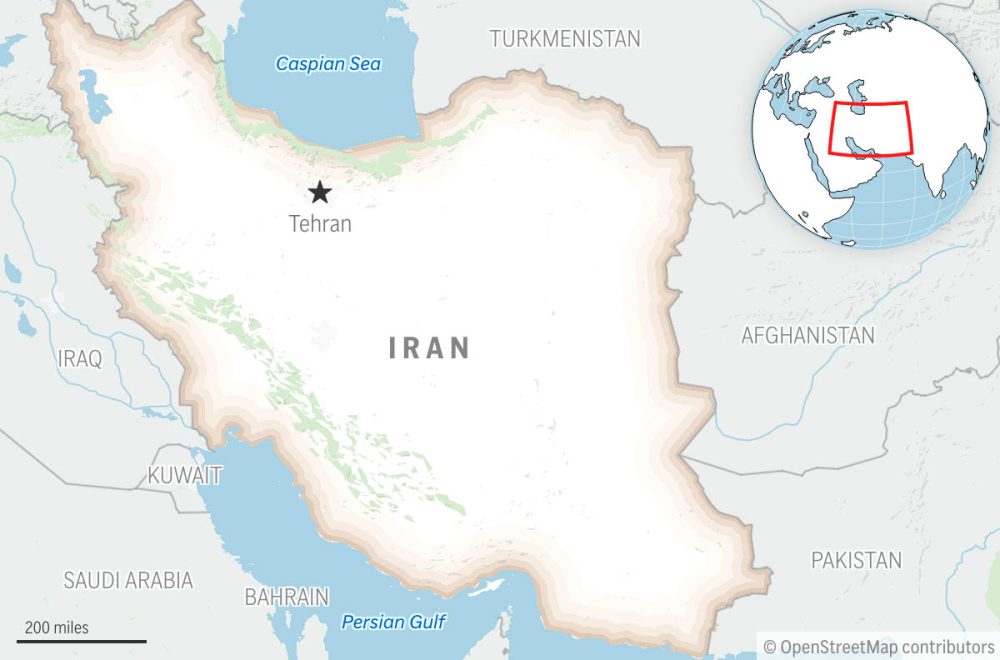
Iran’s government announced Tuesday that no visit has been arranged for inspectors from the International Atomic Energy Agency to examine nuclear facilities that were struck by U.S. military forces.
The statement came from Esmail Baghaei, who addressed reporters during a news conference held in Tehran, Iran’s capital city.
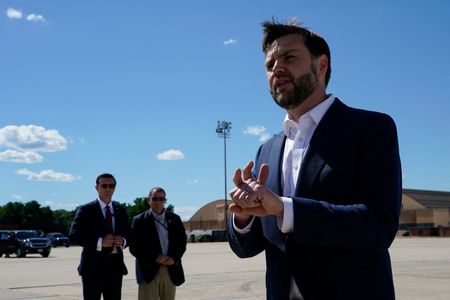
Baghaei’s comments stand in direct contrast to statements made by U.S. Vice President JD Vance, who claimed that diplomatic talks held in Switzerland had produced an agreement allowing the IAEA to visit Iranian nuclear locations.
The IAEA has made multiple trips to Iran following Israel’s 12-day conflict with Iran in 2025, but inspectors have not been permitted to enter the enrichment sites that were targeted and bombed by the United States during that war.
During the same news conference, Baghaei was asked whether Iran might purchase agricultural goods from the United States. He responded that Iran would base any import decisions on “prices and quality,” stopping short of directly responding to remarks made by U.S. President Donald Trump and Vice President Vance on the subject.
Baghaei also offered a pointed critique of what he described as a shift in the stated purpose of the military campaign. “It is interesting that the philosophy and goal of the war, which was the destruction of the Iranian civilization and the collapse of Iran, has become enriching American farmers,” he said.
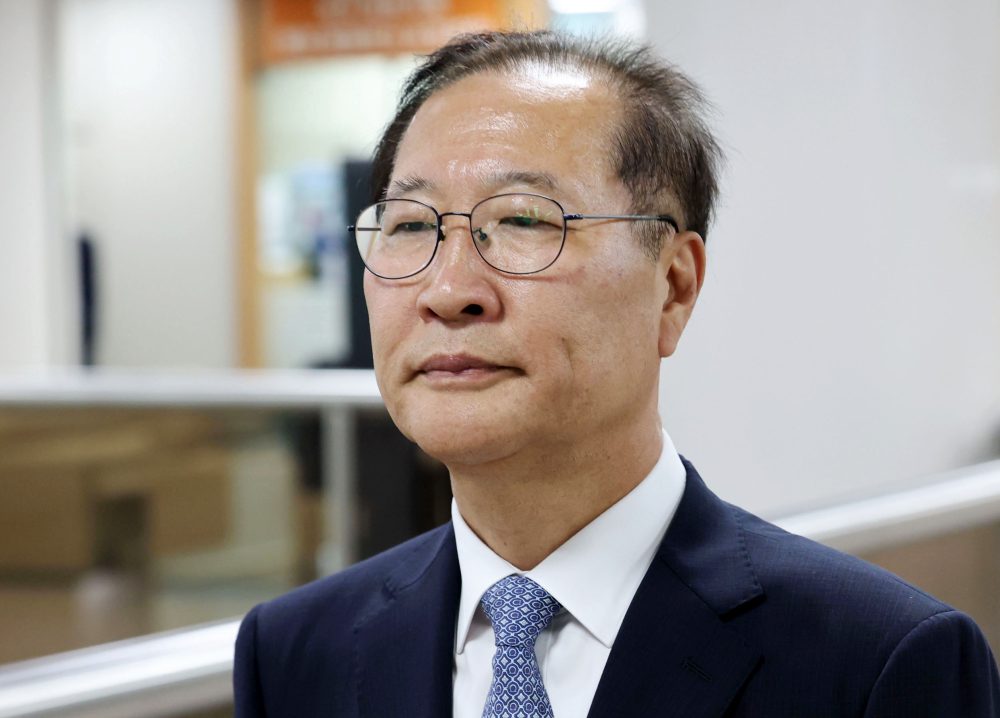
Nepal’s former finance minister Bishnu Prasad Paudel was taken into custody late Monday evening on money laundering charges, according to police, as the nation’s new Gen Z-backed government pushes forward with a sweeping crackdown on alleged corruption tied to past administrations.
Paudel, 66, is a senior leader within the Communist Party of Nepal (UML) and was a prominent figure in the former government led by K.P. Sharma Oli. Police say he was apprehended at a hotel located in western Nepal.
Police spokesperson Abi Narayan Kafle confirmed that Paudel was being transported to Kathmandu, where he would be turned over to the Department of Money Laundering Investigation.
The arrest follows the collapse of Oli’s government, which was brought down in the wake of violent anti-corruption protests. Those demonstrations resulted in the deaths of at least 76 people and left more than 2,500 others injured. Several government buildings were set on fire during the unrest, including the parliament building.
Oli himself, along with his home minister, was previously arrested for failing to stop the violence. Both men have since been released on bail.
Prime Minister Balendra Shah, a 36-year-old former rapper who transitioned into politics and assumed office in March following a landslide election victory built on an anti-corruption platform, has vowed to hold those responsible for past misconduct accountable.
Attempts to reach Paudel for comment were unsuccessful. A UML party official indicated that top party leaders planned to convene on Tuesday to address the situation. Paudel has served in a number of ministerial roles across multiple governments throughout his political career.
A Belgian investigating judge has issued a European arrest warrant for former Greek European Commissioner Dimitris Avramopoulos, according to a Greek government official who confirmed the development late Monday. Belgian and Greek media had previously reported the warrant.
The warrant is tied to a major corruption scandal that first came to light in 2022, in which a number of European Union officials are accused of accepting bribes from Qatar in exchange for influencing EU policymaking. The case, widely referred to as “Qatargate,” has become one of the most significant scandals in the history of the 27-member bloc.
During the original investigation, authorities conducted raids and seized approximately €1.5 million — roughly $1.6 million — in cash. Some of that money was found stuffed inside a large suitcase at a Brussels hotel.
In a statement released Monday, Avramopoulos firmly rejected any accusations against him. “There was no direct or indirect involvement of mine in anything reprehensible,” he said. He also stated that he would not invoke parliamentary immunity to shield himself from the process. “On the contrary, I will appeal to the Greek judiciary myself, requesting that the matter be fully investigated and a decision be made,” he added.
Avramopoulos currently holds a seat in the Greek Parliament as a member of the ruling conservative New Democracy party. He previously served as the European Commissioner for Migration, a role he held until 2019. After leaving that post, he became affiliated with Fight Impunity, a non-governmental organization that has been linked to the Qatargate investigation. Fight Impunity did not respond to requests for comment.
The Belgian prosecutor’s office also declined to comment on the warrant. Qatar has consistently denied any wrongdoing in connection with the scandal.
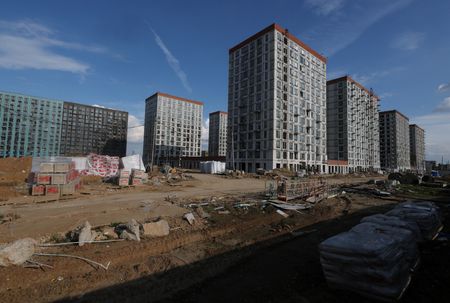
Plastic sheets cover empty window frames and balconies hang crookedly at the partially built Ostafyevo housing complex on the outskirts of Moscow, where frustrated apartment buyers say they have taken the developer to court.
Russia set a record for housing construction in 2023, driven largely by government-subsidized mortgages. But the withdrawal of those subsidies, combined with steep borrowing costs and an ongoing economic slowdown tied to the war in Ukraine, has since hammered the construction industry.
Figures from Russia’s state statistics agency show that the amount of residential space completed in the first quarter dropped 28% compared to the same period the previous year. Russia’s largest bank, Sberbank, warned that the entire construction sector had essentially stalled during that time.
Buyers at Ostafyevo say their expected move-in dates have been pushed back several times since March 2025. About 20 of them confronted the developer, Samolet, at a meeting held in May.
“Who is working there? Are they even working? Because … we have not seen any changes since January,” one buyer said at the meeting.
Another buyer showed Reuters footage filmed inside one of the half-finished units, revealing exposed breeze block walls with wiring dangling loose and a large water stain spreading across the ceiling.
In a written statement responding to media questions, Samolet said it understood the buyers’ frustration and was “making every possible effort” to speed up the move-in process. The company did not explain what caused the delays but noted that several contractors had been swapped out for what it called “reliable partners.”
The Ostafyevo development’s website promotes a large residential campus with landscaped grounds, schools, and shops — illustrated with a video of children playing on a sunny playground. Apartment prices begin at roughly 7.5 million rubles, or about $101,500.
Samolet said construction has wrapped up on three of the complex’s six phases, with residents already living there. Apartments in the fourth phase and some in the fifth are ready for occupancy, and the company said a gradual handover of remaining units would begin by September 30. “All obligations to clients will be fulfilled,” the company stated.
The financial strain on Samolet mirrors broader troubles across Russia’s real estate sector. After strong revenue gains in 2023 and 2024, the company reported a loss in 2025, partly due to high borrowing costs. Cut off from state subsidies, it restructured a portion of its debt in February. By the end of 2025, the company’s total debt exposure had reached 373 billion rubles, equivalent to roughly $5 billion.
The construction slowdown is adding further pressure to Russia’s economy, which shrank for the first time in roughly three years during the January-to-March period. Russia’s construction minister was quoted by the RIA news agency as saying that construction and related industries together made up 13% of the country’s gross domestic product in 2025.
Russia’s central bank noted in a June financial stability report that requests for loan restructuring from construction and real estate companies climbed 10% in the first quarter compared to the prior quarter. It described the difficulties facing some developers as “limited” and said they posed “no systemic risks.” The bank also pointed to a 37% year-over-year jump in new project launches during the first quarter as an encouraging sign, and said the number of delayed housing completions had declined after a moratorium — which had prevented buyers from seeking penalties for missed deadlines — expired in January.
Buyers at Ostafyevo said they moved quickly once they were able to take action. “Many have filed lawsuits, I have as well,” said Elena Skripnichenko, speaking alongside other buyers outside the Samolet office at the construction site.
She said some of the buyers had recently slipped past a fence to speak directly with workers on site, who told them they were not receiving their wages. At the May meeting, a Samolet representative acknowledged that workers were being paid, though “probably not the amount they want.” The company did not address questions about worker pay or the number of lawsuits filed in its written response.
A mid-May survey by Russia’s state housing agency found that nearly 75% of developers missed their first-quarter sales targets, and more than half expect conditions to get worse over the coming year — even as some report that severe labor shortages are beginning to ease slightly.
For some at Ostafyevo, hope is fading. Tatyana Lubentsova had planned to move her young family into their new apartment in March 2025. The family had left their hometown of Belgorod, a city near the Ukrainian border that has been repeatedly struck by drone and missile attacks. “Now we are in May 2026, and we still do not have any keys,” she said.
Pakistan’s successful role in helping negotiate a peace agreement in the Iran war has earned Islamabad widespread diplomatic praise — and with it, the possibility of economic rewards. But analysts are skeptical that such gains can address the country’s long-standing economic troubles.
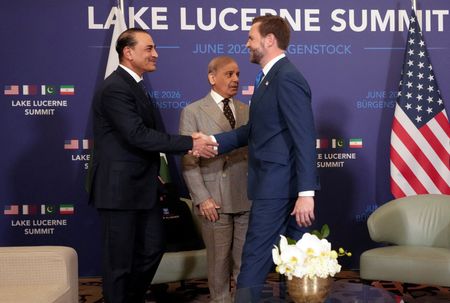
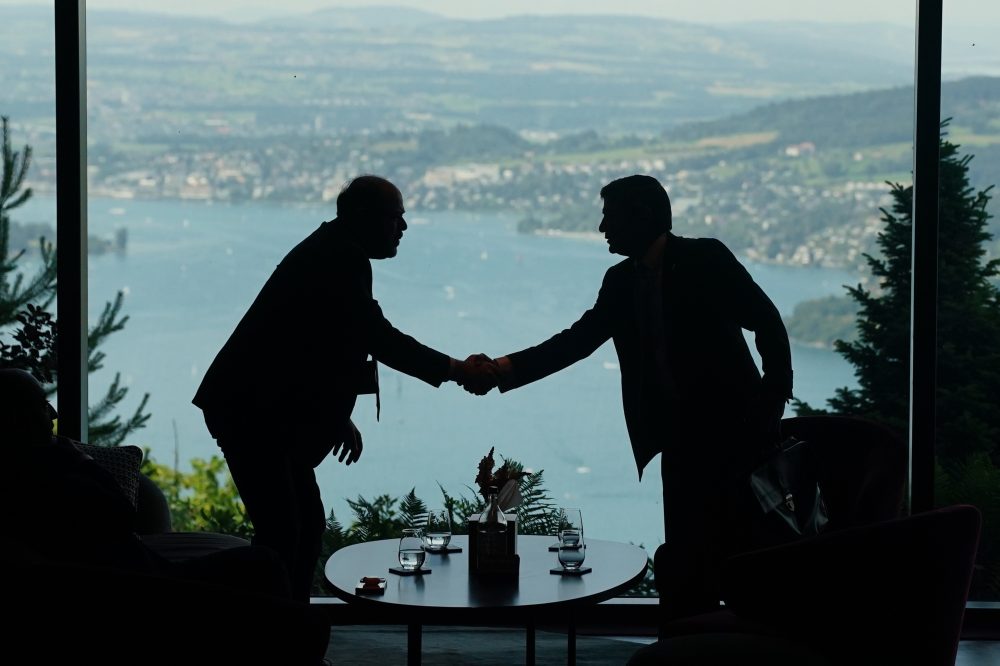
Prime Minister Shehbaz Sharif and army chief Field Marshal Asim Munir were present at talks between Iran and the United States held in the Swiss town of Buergenstock last weekend. The meeting marked the conclusion of months of behind-the-scenes diplomatic work by Pakistan in one of the world’s most significant international negotiations.
The warm reception Pakistan received was on full display when U.S. Vice President JD Vance spotted Munir at the resort location. “This guy. What’s up, man?” Vance said before embracing the army chief. Leaders from multiple countries have expressed gratitude to Islamabad for helping bring an end to a conflict that threatened to block the Strait of Hormuz, disrupt global oil supplies, and destabilize the world economy.
The diplomatic achievement has elevated Pakistan’s standing on the world stage. Analysts say the nation of 250 million now has a window to turn that international goodwill into concrete economic gains. However, they caution that no amount of diplomatic prestige is likely to fix the country’s deeper problems — including economic inequality, a narrow tax base, and a pattern of repeated bailouts from the International Monetary Fund.
Pakistan is aiming for economic growth of 4.0% and inflation of 8.2% in the coming fiscal year, compared to projected growth of 3.7% in fiscal 2026, which ends in June, and an average inflation rate of 6.7% during the July through May period of the current year.
An adviser to Pakistan’s finance minister offered an optimistic take: “A nation that delivers stability at home and helps advance stability abroad becomes a more credible destination for investment,” said Khurran Schehzad. He added that “a growth-oriented economic agenda, coupled with a reputation as a force for peace and stability, places Pakistan in a uniquely favourable position to attract investment into its people, infrastructure, technology and future growth sectors.”
Many observers are anticipating some form of financial reward from the United States, though no concrete benefits have materialized yet.
Alex Vatanka, a senior fellow and director of the Iran program at the Middle East Institute in Washington, said one significant opportunity for Pakistan is the “huge potential to be a more integrated part of the broader Middle East,” which could eventually lead to wider economic and defense partnerships in the region.
A former finance minister, Miftah Ismail, pointed to another possibility: if sanctions on Iran are lifted, it could open the door to “huge trade between Iran and Pakistan,” especially through the land border in Balochistan.
Analysts drew comparisons to what happened after the September 11, 2001 attacks, when Pakistan’s alignment with Washington led to debt relief from more than a dozen countries, renewed IMF support, and U.S. assistance. Despite those opportunities, Pakistan failed to capitalize on them due to structural weaknesses in its economy.
Economic commentator and journalist Khurram Husain said the current moment resembles the post-9/11 period, but with a key distinction: that earlier episode came “at the start of a long ruinous war in which Pakistan had to play a frontline role,” whereas today “Pakistan is playing the role of a peacemaker.” That difference means Pakistan’s leverage now comes from being valuable to multiple parties at once — including Washington, Tehran, Gulf states, Turkey, and China.
Former finance minister Ismail, however, struck a more cautious tone. While acknowledging that the diplomatic role has boosted Pakistan’s global image, he said it does nothing to address the high costs, weak exports, and debt repayments that keep the country reliant on the IMF. “Our house is in such disorder that foreigners can’t really help us unless we help ourselves,” he said. “Nothing here in this war changes that and we will be continually dependent on the IMF.”
Asim Ijaz Khawaja, a professor at Harvard University and director of the Harvard Center for International Development, urged Pakistan to resist accepting short-term financial concessions that don’t actually improve productivity. Instead, he recommended pursuing academic exchanges and scholarships, better market access for textiles and technology services, technology transfers, and green investment frameworks.
Britain’s minister for the Middle East, Hamish Falconer, visited last week and thanked Islamabad for its peacekeeping efforts. He told Reuters the UK sees “huge scope for deepening trade links” with Pakistan and that a British trade minister is expected to visit in the coming months. Diplomats from two other Western nations also indicated their governments are exploring ways to strengthen economic ties with Pakistan following its peace efforts, though they asked not to be named.
Atif Mian, a professor of economics, public policy, and finance at Princeton University, said Pakistan should avoid using diplomacy simply as another way to secure deposits, debt rollovers, or IMF-style relief. The real opportunity, he argued, is what he called a “peace pivot” — both internationally and domestically — built on regional trade, energy connections with Iran, and stronger ties with the Gulf and Turkey through exports, technology transfer, and shared industries.
Despite the optimism in some quarters, analysts were united in warning that new economic opportunities won’t solve Pakistan’s deeper challenges. “If structural reforms are not implemented, the country is poised for an implosion in coming decades,” said Adeel Malik, associate professor of development economics at Oxford University. “There are deep-seated grievances among the young and the shrinking middle classes against Pakistan’s ruling elite. The prevailing system has given ruling elites an extended lease of life but has made the country socially and economically insecure.”
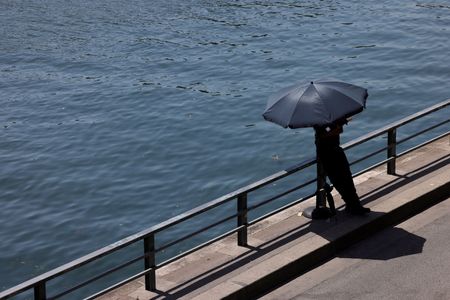
PARIS — French authorities confirmed Tuesday that roughly 20 people have drowned since the weekend, as residents across the country sought ways to cool off during a dangerous heatwave gripping large portions of Europe.
Weather forecaster MeteoFrance reported that much of France was expected to see temperatures climb to around 40 degrees Celsius — the equivalent of 104 degrees Fahrenheit — on Tuesday alone.
French sports minister Marina Ferrari spoke about the rising death toll during an appearance on France Inter radio. “There have been around 20 deaths since last weekend,” she said.
Ferrari also issued a direct warning to the public about the dangers of swimming outside of designated, supervised areas during such extreme conditions. “To go swimming in unauthorised areas, during a heatwave, is not something to take lightly,” she stressed.
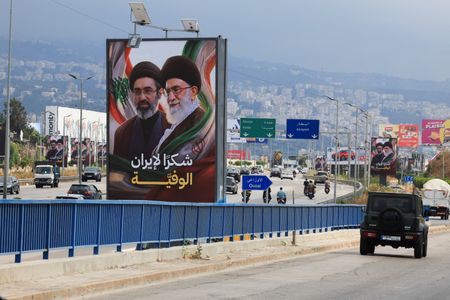
Lebanon is heading into another round of face-to-face negotiations with Israel in Washington on Tuesday, with Beirut determined to push forward with direct diplomacy even as a recent agreement between Iran and the United States threatens to overshadow those efforts.
Lebanese officials have maintained that direct talks with Israel represent the only path to ending a war that has been raging since March 2, when armed group Hezbollah launched attacks against Israel in support of Iran. Those strikes triggered Israeli air and ground operations that have since killed more than 4,000 people in Lebanon.
Despite four rounds of Lebanese-Israeli negotiations since April, no lasting ceasefire has been achieved. The longest pause in fighting actually came this week — not from those talks, but after Iran and the United States agreed to a memorandum of understanding calling for a halt to hostilities across all fronts, including Lebanon.
That agreement strengthened Iran-backed Hezbollah’s hand while weakening the Lebanese government, whose leaders — including President Joseph Aoun — had repeatedly warned that Tehran has no authority to negotiate on Lebanon’s behalf.
A Lebanese official and two foreign officials involved in Lebanon-related diplomacy told Reuters that the Iran-U.S. deal had left the Lebanese state in its most vulnerable position to date, raising serious doubts about what this week’s talks could realistically accomplish.
The Lebanese official expressed little confidence that the three-day negotiations would produce anything concrete. “There remains a fundamental problem of trust between us and the Israelis in these talks. We cannot fulfill their demands, and they reject all of ours,” the official said.
One of Beirut’s primary goals heading into the talks is securing a commitment from Israel to withdraw its military forces from Lebanese territory. However, senior Israeli officials have stated that troops will remain in southern Lebanon for the foreseeable future. The Lebanese official said Beirut intends to push Israel to provide a “reasonable” withdrawal timeline during the negotiations.
“This is the only chance we have to generate momentum in these talks, and in this tug-of-war with Iran,” the official said.
Israel, for its part, has framed the purpose of the upcoming talks differently. According to a pre-negotiation briefing by Israeli government spokesperson David Mencer, Israel’s goal is “disarming Hezbollah and achieving a genuine peace agreement” with Lebanon. Mencer argued that Hezbollah is the sole obstacle to reaching a deal, “which is why we believe that they should be disarmed and dismantled.”
Since 2025, the Lebanese government has taken a cautious approach to the question of Hezbollah’s weapons, attempting to reduce the group’s military capacity without directly confronting it — a move officials fear could ignite civil conflict. Hezbollah has flatly refused to disarm and has called on the Lebanese government to abandon its direct negotiations with Israel altogether.
Karim Safieddine, a fellow at the Washington-based Tahrir Institute for Middle East Policy, warned that Israel could adopt an even harder line in the Washington talks given Israeli officials’ frustration over the U.S.-Iran agreement. While that deal has brought a degree of calm to Lebanon, Safieddine told Reuters there has been “no structural change” in the underlying positions of Lebanon and Israel that would suggest a breakthrough is near.
President Aoun first proposed direct negotiations in March, but talks did not begin until mid-April, after the U.S. announced a ceasefire meant to open a diplomatic path that Washington said could eventually lead to a peace agreement. Israeli air strikes on Beirut’s southern suburbs largely stopped at that point, though intense fighting continued in southern Lebanon as Israeli forces pushed further into Lebanese villages.
In early June, the U.S. put forward another ceasefire proposal tied to the Lebanese-Israeli negotiating process, but it required Hezbollah to stop firing — a condition the group rejected outright.
Hezbollah is now banking on Iran to press for an Israeli withdrawal as part of any final deal with the United States, and the group is urging the Lebanese government to rely on that diplomatic track rather than continuing its own direct talks with Israel.
SEOUL — South Korea has declared it stands ready to accept every North Korean prisoner of war captured by Ukrainian forces, provided those soldiers wish to come to South Korea, according to a statement from Seoul’s foreign ministry released Tuesday.
The ministry made clear that South Korea is firmly against any forced return of these prisoners to either Russia or North Korea. The position underscores Seoul’s commitment to honoring the wishes of captured North Korean soldiers who served alongside Russian forces.
Ministers from South Korea and Ukraine are scheduled to sit down for formal discussions in Seoul on June 30.
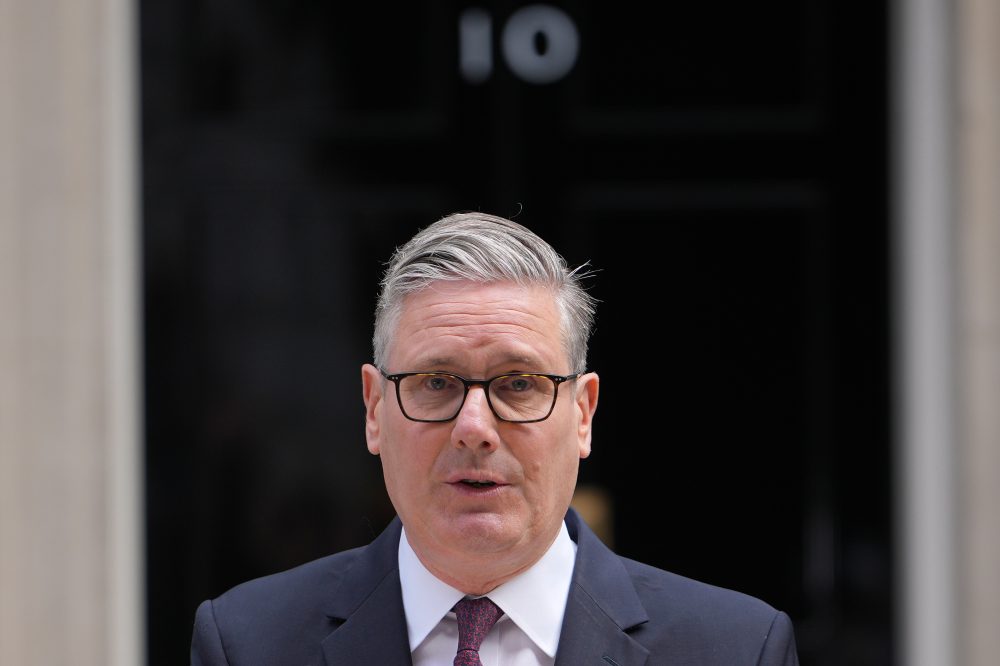
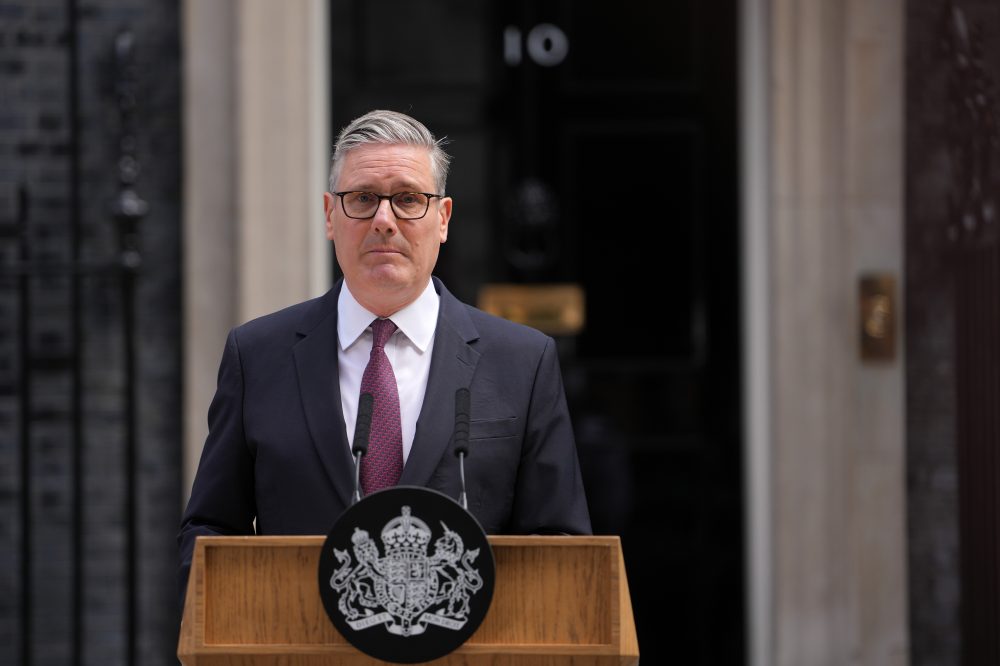
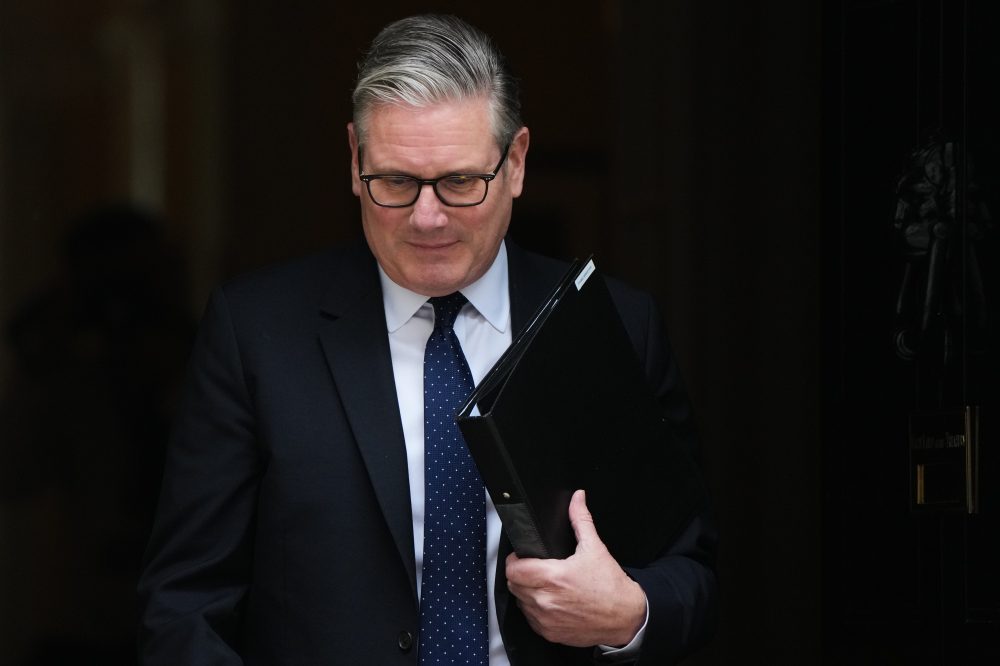
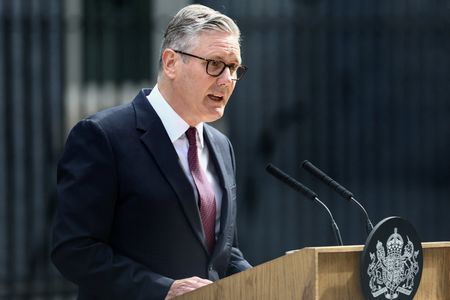
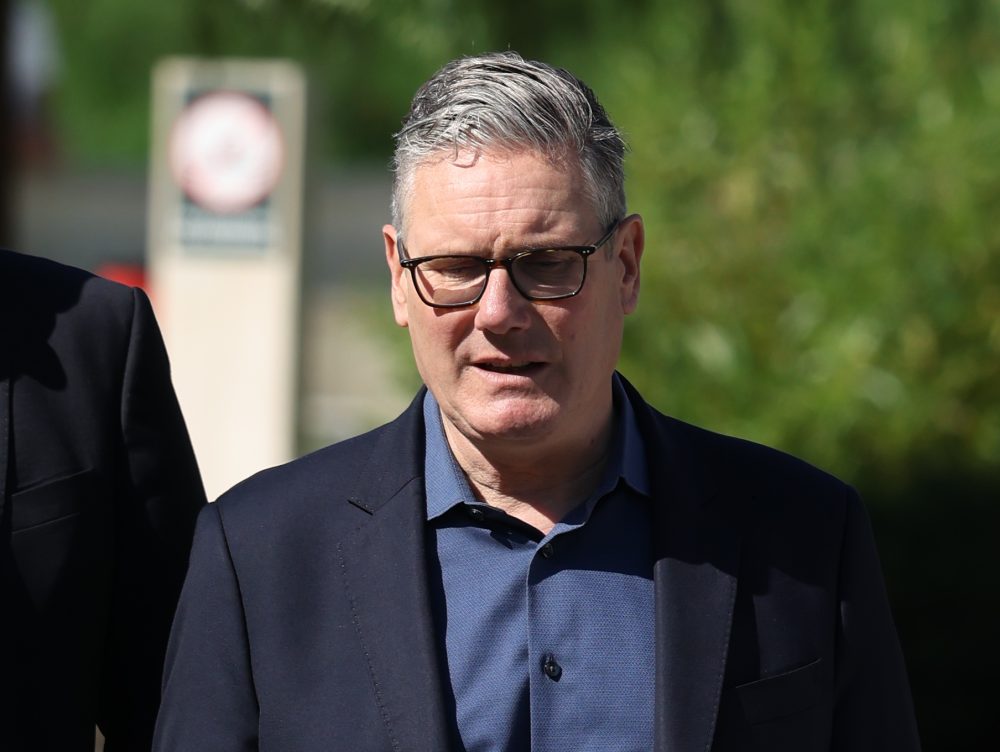
On a Monday morning in London, Keir Starmer stepped out into the sunlight on Downing Street, surrounded by his staff and his wife, his voice breaking with emotion as he announced he was no longer the right person to lead the United Kingdom.
Starmer, who came to power in one of the largest electoral landslides in British political history, is leaving office after fewer than two years — making him the sixth British prime minister to resign in just a decade. That rate of leadership turnover is the highest the country has seen in nearly 200 years.
Like those who came before him, Starmer was unable to quiet widespread public frustration over living standards that have barely moved since the 2008 financial crisis. At the same time, a swelling national debt — driven by global crises including the COVID-19 pandemic — has severely limited what any government can spend. The ongoing failure to address illegal immigration has added another layer of political tension and division.
Anthony Seldon, a historian who has written extensively about British prime ministers in works including “The Impossible Office,” told Reuters that Britain finds itself in a very deep hole after Starmer and predecessors such as Liz Truss and Boris Johnson all failed to establish the public trust and clear direction the country needs.
Looking ahead to who might follow Starmer, Seldon offered a sobering assessment: “If Andy Burnham fails as prime minister, the outlook for Britain is bleak.”
There was a time not long ago when Britain was considered a model of political and economic stability — home to leaders like Margaret Thatcher and Tony Blair, whose combined 21 years in power helped define modern Britain. But the global financial crisis hit the country especially hard, given how heavily the British economy leaned on its financial sector. The years of public sector austerity that followed left the nation poorly equipped to handle the challenges that came next.
In fact, the last prime minister to win an outright election victory — without relying on another party’s support — and serve a full term was Blair, between 2001 and 2005. Britain, which once laughed at Italy’s famously unstable parade of leaders, now finds itself looking at Italian Prime Minister Giorgia Meloni with something closer to envy. She is on track to become the longest-serving head of government in the history of the Italian Republic, with nearly four years in power.
While many political observers trace Britain’s instability to the Brexit vote a decade ago to leave the European Union, Jill Rutter — a former finance ministry official and senior fellow at the Institute of Government think tank — argues the trouble really began with the financial crash.
“There has just been a general sense that we don’t see our lives getting better and we don’t see the lives of our children getting better,” she said. “And each government since has seemed to be unable to change that.”
The 2016 decision to exit the EU upended Britain’s long-standing foreign policy approach and reignited the independence movement in Scotland, where voters had chosen to remain in the bloc. The financial toll of responding to the COVID-19 pandemic and Russia’s full-scale invasion of Ukraine then pushed national debt to just under 100% of the country’s GDP.
While countries like Japan, Italy, the United States, and France all carry higher debt-to-GDP ratios, Britain faces steeper borrowing costs — partly due to persistent inflation and investor concerns about the country’s reliance on foreign capital to cover its deficit. That squeeze on government finances has taken a real toll on everyday living standards.
Data released in 2025 from a major supermarket chain and the Centre for Economics and Business Research revealed that while average real disposable income in the UK was technically rising, the bottom 40% of earners actually had less purchasing power than they did in 2021.
Sam Freedman, a former government adviser, argued in his recent book “Failed State: Why Nothing Works and How We Fix It” that Britain’s problems stem partly from a system that is too centralized, with key government offices too understaffed to handle the demands placed on them.
Rutter and Roger Gale — one of Britain’s longest-serving lawmakers, who first entered parliament in 1983 — both pointed to a deteriorating political culture as another major factor. The constant pressure of rolling television news and social media has pushed politicians into making hasty decisions rather than thoughtful ones.
Gale, a Conservative lawmaker, told Reuters that the government simply needs to slow down. “There is too much legislation. A lot of it is bad and a lot of it is badly drafted,” he said. “We need more grown up government.”
Starmer himself drew criticism for taking office without a well-defined plan for tackling a long list of urgent challenges — from skyrocketing electricity costs to spurring economic investment, overhauling the health service, and boosting defence spending.
His likely successor, Burnham — a career politician who most recently served as mayor of Greater Manchester — could potentially step into the role within weeks. He will need to quickly assemble a cabinet and lay out a compelling vision for the country’s future.
Rishi Sunak, the last Conservative prime minister, who lost the 2024 general election to Starmer, weighed in with a warning for Burnham. Writing in the Sunday Times, Sunak said Burnham must come in with a clear plan. “Without that, he will become yet another prime minister lying awake fretting about why it isn’t working,” Sunak wrote.
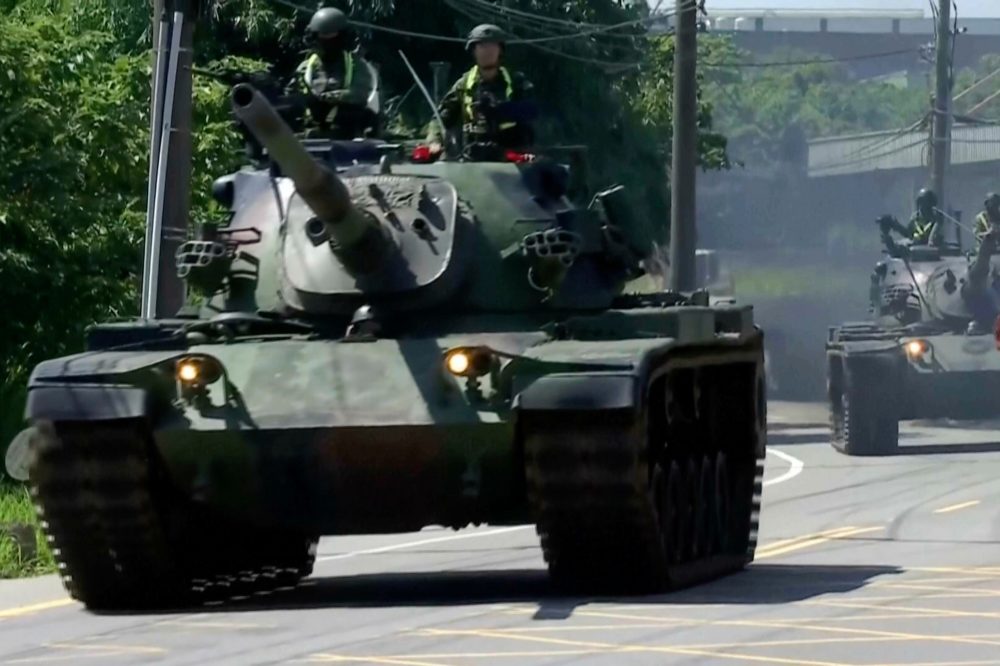
TAIPEI, Taiwan — Taiwan launched a five-day series of military exercises on Monday, designed to sharpen the island’s combat readiness in the event of an attack by China.
In Taoyuan — the city that houses Taiwan’s largest international airport — tanks rolled through city streets and highways as armored vehicles from the Army’s 269th Infantry Brigade carried out combat readiness patrols Monday morning. Videos and photos captured the striking scenes of military hardware moving through civilian areas.
The exercises, known as the Immediate Combat Readiness Exercises, are intended to measure how quickly military units can be deployed, particularly in response to a sudden increase in Chinese grey-zone warfare. Grey-zone tactics are aggressive actions — ranging from naval ship patrols to drone flights — that stop short of outright combat.
Taiwan’s Ministry of Defense announced the drills on Sunday afternoon, describing them as realistic in nature, with a focus on what it called “real-time, live-fire and on-site” conditions.
According to Taiwan’s semi-official Central News Agency, the exercises are structured to simulate the period just before an enemy force would launch its naval vessels. Officials noted that unplanned drills could also be added going forward, including live responses to Chinese military activity.
Taiwan’s defense ministry reported that China’s People’s Liberation Army sent 23 aircraft toward the island between Sunday and Monday morning, along with seven navy ships and five additional Chinese government vessels. China routinely dispatches warplanes, drones, and naval ships toward Taiwan on a daily basis.
Taiwan holds combat readiness exercises on a regular basis as it works to strengthen its defenses against persistent military pressure from China. Beijing considers Taiwan part of its territory and has not taken the option of using military force off the table. Earlier this June, Taiwan fired rockets in the direction of China for the first time during a military exercise.
LONDON — Ten years ago this Tuesday, British voters made a decision that would reshape their nation’s future — and not necessarily in the ways they were promised. On June 23, 2016, the U.K. voted 52% to 48% to exit the European Union after more than four decades as a member. What followed was a decade of political upheaval that shows little sign of settling down.
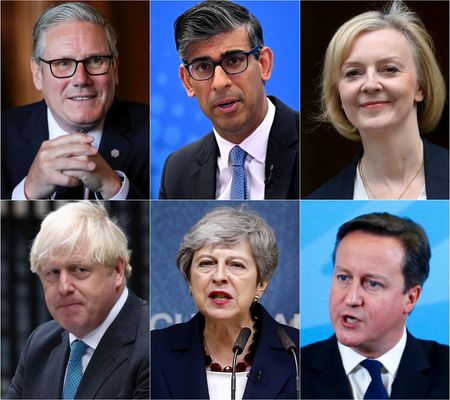
The country is now preparing to install its seventh prime minister since that fateful vote. Conservative leader David Cameron, who called the referendum while personally arguing for the U.K. to remain in the EU, resigned the very next day after the result came in.
Every leader who followed has struggled — most without much success — to manage the aftermath of that break. The most recent, Labour Prime Minister Keir Starmer, announced Monday that he too is stepping down. His two years in office were marked by a sluggish economy, government dysfunction, and a weary, divided public — conditions that experts trace, at least in part, back to Brexit.
Even though Brexit has largely disappeared from daily headlines, academic Chris Grey, who has spent years studying the consequences of Britain’s EU departure, says its influence hasn’t gone away. He described “the subterranean trace of Brexit” as something that still runs beneath the surface of the country’s increasingly chaotic political landscape.
Those who campaigned for leaving the then-28-member political and economic union told voters it would allow Britain to “take back control” of its laws, its economy, and its borders. The “remain” side focused heavily on economic warnings, while the “leave” campaign leaned on emotional appeals.
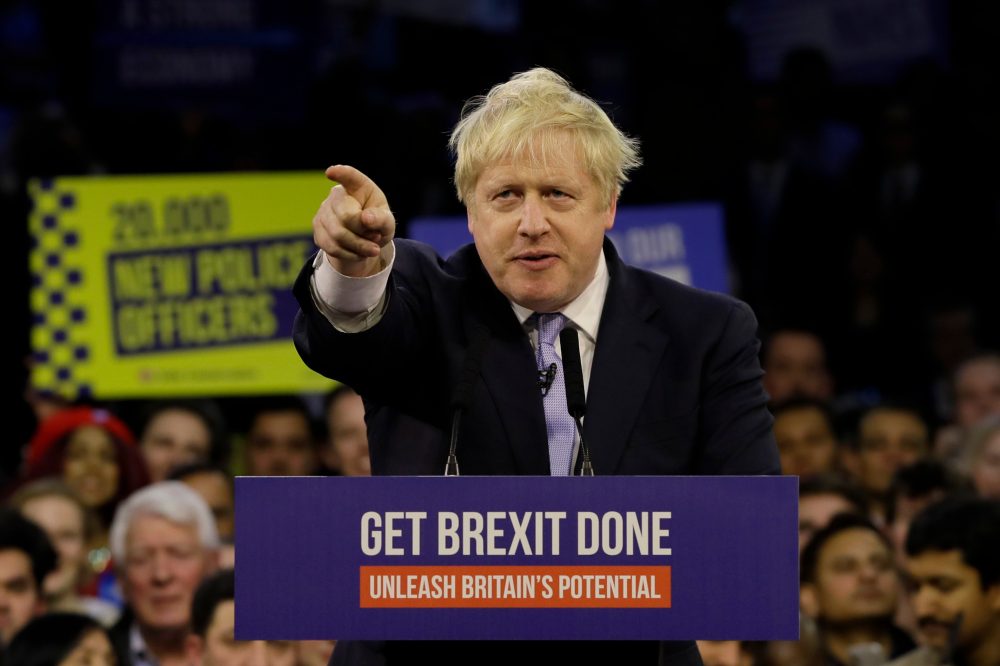
Boris Johnson, one of the most prominent voices for leaving — and who would later serve as prime minister — declared weeks before the vote: “We can see the sunlit meadows beyond. I believe we would be mad not to take this once-in-a-lifetime chance to walk through that door.”
Margaret MacMillan, an emeritus professor of history at the University of Toronto, said Brexit drew on a complicated mix of motivations, including nostalgia “for an imagined past.”
“It was against what people saw as unrestricted immigration. It was against what they saw as EU regulations. And then there was this mix of nostalgia — ‘We fought alone in the Second World War.’ Which was of course not true,” she said. “It was never clearly explained what Brexit might entail.”
The bold promises — tighter immigration controls, new trade deals, more funding for public services, and freedom from Brussels-issued regulations — quickly ran into hard reality. Bitter negotiations stretched on for years. Britain officially departed the EU on January 31, 2020, with an 11-month transition period before the full separation took effect.
Theresa May, who took over from Cameron, stepped down in 2019 after being unable to get exit terms through a deeply split Parliament. Johnson then took the helm, pledging to “get Brexit done,” and eventually secured a minimal trade agreement — though one that left relations between the U.K. and EU deeply strained.
Johnson himself was pushed out by his own party in mid-2022 amid a wave of financial and ethical controversies. His replacement, Liz Truss, lasted just 49 days in office. The next leader, Rishi Sunak, managed to slightly warm relations with the EU but stopped short of any major shifts in policy.
Starmer came in promising a “reset” with Europe but ruled out rejoining the EU’s single market — the tariff-free, barrier-free trading zone. Now, as he prepares to leave office, Brexit remains unresolved.
Historian Anthony Seldon noted that Cameron originally called the referendum hoping to put to rest the long-running arguments about Europe that had torn apart the Conservative Party for years. That didn’t happen.
“The people who obsessed about it still obsess about it. Britain’s problems have continued,” Seldon told Times Radio.
During the drawn-out exit negotiations, Conservatives who favored a gentler form of Brexit and closer ties with Europe were effectively driven out of the party by the dominant pro-Brexit wing. Labour, while more sympathetic to Europe overall, faces its own internal split between those who want to move closer to the EU — or even rejoin — and senior figures like Starmer who prefer not to reopen old divisions.
A decade later, millions of voters have walked away from both major parties, turning instead to alternatives like the left-leaning Green Party and the hard-right Reform UK, led by Nigel Farage. Farage may be the single biggest political beneficiary of Brexit. He championed the divorce, then argued it had been betrayed. His anti-immigration message has evolved over the years, shifting from concerns about European workers to asylum seekers crossing the Channel in small boats. His party now consistently tops opinion polls.
The British economy has also had a rough decade. Businesses have faced new hurdles trading with the country’s nearest neighbors, though Brexit isn’t the only factor — the COVID-19 pandemic, the Russia-Ukraine war, and the conflict involving Iran have all contributed to sluggish growth.
Hannah White, director of the Institute for Government think tank, said a broader failure of political honesty has made things worse. “We just haven’t had politicians who’ve been upfront with the public about the fact that when they get into power, they won’t be able to have no increases in taxes, no increases in debt, and better public services all in the same breath,” she said. “And so people are disappointed.”
Immigration — one of the central issues driving the Brexit vote — remains as contentious as ever. Net migration actually climbed after Brexit, reaching more than 900,000 in 2023, before dropping to 171,000 last year. In recent years, misinformation and agitation have helped spark anti-immigration street violence tied to crimes committed by, or falsely attributed to, immigrants.
Grey warned that a line once held firm in British public life — separating mainstream political debate from street-level violence — is now weakening. “I think that boundary is being eroded. And I think that did to some large extent begin with Brexit,” he said.
Polls suggest growing second thoughts about the original decision. A recent Ipsos survey found 52% of people in the U.K. would now like to rejoin the EU, while 33% are opposed. Last Saturday, hundreds of people marched through London waving blue and yellow EU flags in a “rejoin” demonstration — though the turnout was far smaller than the massive protests seen during the height of the Brexit battle. Many Britons simply want to move on.
But Brexit remains a subject politicians tread around carefully. Even if Britain were to seek re-entry into the EU, the path back would be long and uncertain, with a wary bloc on the other side.
Grey offered a stark assessment of what lies ahead if leaders continue to dodge the issue. He compared Britain to someone dealing with a persistent, draining illness. “A chronic thing, in this case perhaps not incurable,” he said. “But it’s just that they don’t fancy going to the doctor because they know it’s not going to be very nice.”
LONDON (AP) — British Prime Minister Keir Starmer rode a wave of historic electoral success into office in 2024, only to step down Monday after barely two years on the job, driven out by a rebellion within his own Labour Party following crushing losses in local elections.
His time in power was marked by a faltering economy, a string of policy reversals, a deeply problematic diplomatic appointment, and a widespread sense that his government lacked a clear direction. Those factors combined to deal Labour a severe defeat in spring local elections, sparking internal calls for his departure that ultimately opened the door for a challenger to force him out.
When Starmer’s party swept to power on July 4, 2024, capturing 411 of 650 seats in Parliament and ending 14 years of Conservative Party rule, the mood was jubilant. It was a dramatic reversal from the party’s previous electoral collapse.
Home Secretary Shabana Mahmood declared that Starmer would never be forgotten for guiding the “party from the brink, back to power.”
In his victory remarks, Starmer painted a picture of national renewal and a government that would work for “working people.” “And now we can look forward,” he told supporters. “Walk into the morning, the sunlight of hope, pale at first but getting stronger through the day, shining once again, on a country with the opportunity after 14 years to get its future back.”
The optimism faded quickly. Britain’s public finances had been badly strained by the COVID-19 pandemic and the economic fallout from Russia’s full-scale invasion of Ukraine, leaving little room for major spending initiatives.
Voters who had thrown out the Conservatives in hopes of economic relief found that Labour’s early efforts produced little improvement. Starmer and his Treasury chief, Rachel Reeves, may have made matters worse by painting an overly gloomy picture of what they had inherited — dampening consumer and business confidence and prompting further economic caution.
Policy choices added to the damage. Labour’s election platform had explicitly promised not to raise income tax or sales tax. Faced with a budget shortfall, the government instead chose to increase a payroll-related tax on businesses, a move that proved deeply unpopular and led many employers to scale back hiring.
A series of additional policy retreats followed, each one feeding the narrative that Starmer’s government was rudderless. The administration reversed course on plans to eliminate winter heating subsidies for millions of retirees, backed away from proposed cuts to welfare spending, and softened a new agricultural inheritance tax after farmers staged angry protests and drove tractors through the streets of London.
On other issues, the government also reversed itself — including Starmer’s decision to launch a national inquiry into organized child sexual abuse, which came after pressure from opposition politicians and Elon Musk.
Among the most damaging episodes of Starmer’s tenure was his decision to appoint controversial Labour figure Peter Mandelson — a man long known by the nickname “Prince of Darkness” for his aggressive political maneuvering — as Britain’s ambassador to the United States. Starmer made the appointment knowing Mandelson had maintained a friendship with convicted sex offender Jeffrey Epstein.
At first, the move appeared shrewd. Mandelson’s background in trade negotiations and his comfort among wealthy and powerful circles helped Britain secure a favorable trade deal with the United States, with lower tariffs than many other nations received from the unpredictable U.S. President Donald Trump.
But in September 2025, new revelations surfaced showing Mandelson had been far more closely connected to the late financier Epstein than he had previously admitted. Starmer dismissed him. The fallout continued to dog the prime minister long after the firing.
Internal government records later revealed that Mandelson had been flagged as a “reputational risk” before his appointment, that he had failed a security background check, and that he was under investigation for allegedly sharing sensitive government information with Epstein during his time as a Cabinet minister more than 15 years ago. Mandelson has denied any wrongdoing.
The final blow came from local elections held last month. Labour suffered a devastating performance as Reform UK, a relatively new hard-right, anti-immigration party, captured the largest share of local seats, while the growing Green Party pulled voters away from Labour on the left flank.
More than 100 Labour members of Parliament publicly called on Starmer to step aside. Several government ministers, including Health Secretary Wes Streeting, resigned from their posts in protest, with speculation mounting that Streeting might challenge Starmer for the leadership.
A sitting member of Parliament gave up his seat to allow Andy Burnham, the widely popular Mayor of Greater Manchester, to return to London and mount a direct challenge to Starmer. Burnham won that contest last week.
Starmer spent the weekend at the prime minister’s country estate, weighing his options as party insiders pressed him to announce a departure timeline. On Monday morning, an emotional Starmer announced his resignation. Burnham was sworn in later that same day in the House of Commons, receiving a triumphant reception from lawmakers.
Whether any other candidates will enter the race remains to be seen. Labour’s national executive committee is scheduled to open nominations on July 9 to formally select Starmer’s permanent replacement.
Ship traffic is gradually returning to the Strait of Hormuz following a temporary agreement between Iran and the United States, but the waterway’s long-term future remains deeply uncertain. Disputes over who controls the strait and whether ships will be forced to pay fees to pass through it are already threatening to complicate negotiations toward a permanent peace deal.
Tensions flared again this past weekend when Iran announced it had reclosed the strait, pointing to Israel’s most recent strikes on Lebanon as justification. The U.S. quickly pushed back on that claim. Maritime tracking data showed that dozens of vessels made the crossing on Saturday and Sunday — though the numbers were still far below what was typical before the conflict began.
President Donald Trump floated the idea that the U.S. could impose its own tolls on ships passing through the strait if a final agreement with Iran isn’t reached within the countries’ 60-day negotiating window. Before the war, passage through the strait was free. Iran, however, created a new governmental body last month — the Persian Gulf Strait Authority — to collect fees from vessels, and has indicated it still expects ships to register with that authority.
No single nation owns the Strait of Hormuz, which runs along the coastlines of both Iran and Oman. A memorandum of understanding reached last week gave Iran temporary authority to manage the strait while talks continue with Oman and six other Gulf nations about how the waterway will be governed going forward. As part of that arrangement, Iran agreed not to charge tolls for 60 days.
Legal experts and maritime industry groups have repeatedly warned that a toll system would break with decades of established international trade practice. Even if the U.S. and Iran reach a final agreement, analysts say it could take months before the flow of oil, natural gas, fertilizer, and other goods returns to pre-war levels.
Data and analytics firm Kpler confirmed that 71 ships traveled through the strait between Friday and Sunday, with the highest single-day count being 35 crossings on Saturday. Before the U.S. and Israel launched strikes on Iran in late February — and before Tehran responded with its own attacks and effectively shut the waterway — roughly 100 to 130 vessels made the trip each day.
Under the terms of the provisional framework, Iran committed to completing demining operations within 30 days and removing what the agreement called “technical and military obstacles” to shipping. Iran’s lead negotiator and parliament speaker, Mohammad Bagher Qalibaf, told Iranian state media on Monday that his country would manage the strait in line with international maritime law.
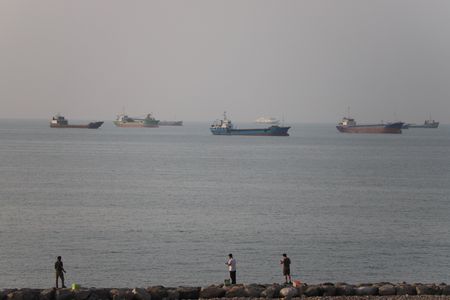
The strait’s main central route remains mined and closed. Ships have been rerouting through a smaller northern passage that runs through Iranian waters or a southern route through Omani waters. Kpler noted that caution remains evident, with many vessels either following Iran’s designated route or turning off their transponders to hide their locations and identities.
Early in the conflict, Iran began screening ships and demanding payment before allowing them through — a practice shipping analysts called a “tollbooth” arrangement. In early April, Iran formally demanded the right to collect tolls as a condition for loosening its grip on the strait.
Although the Trump administration imposed sanctions on the Persian Gulf Strait Authority late last month — with Treasury Secretary Scott Bessent describing Iran’s actions as an attempt to extort global maritime trade — the president suggested on Saturday that the U.S. might charge its own fees for what he called “services rendered as the Guardian Angel to the countries of the Middle East.” The administration has not explained how any such U.S.-imposed charges would actually work if negotiations break down.
Shipping analysts have expressed surprise at how much authority the initial agreement handed to Iran. “Almost all the power goes into Iran to determine the arrangements going forward in the future. This is what we really need clarity on,” said Philip Belcher, marine director of Intertanko, a trade association for independent tanker owners, speaking Thursday.
Charging tolls in the strait would likely conflict with one of international maritime law’s foundational principles: the freedom of peaceful navigation. That right was formally established through the United Nations’ Convention on the Law of the Sea, which entered into force in 1994. The treaty guarantees ships the right to unobstructed “transit passage” through more than 100 straits around the world, including the Strait of Hormuz. Importantly, this protection applies only to natural waterways — fees can legally be charged for man-made passages like the Panama Canal and the Suez Canal.
Oman is among more than 170 countries that have ratified the U.N. convention. The U.S. and Iran have not, though maritime associations argue that all nations are still bound by its provisions.
James Kraska, a professor of international maritime law at the U.S. Naval War College and a visiting professor at Harvard Law School, points out that both the U.S. and Iran belong to the International Maritime Organization — the United Nations agency responsible for shipping safety and security — and are both parties to the International Convention for the Safety of Life at Sea. In straits like Hormuz, he said, fees may only be collected at designated ports of entry or for services a ship specifically requests, such as specialized navigation assistance through dangerous waters.
“If Iran wants to apply those to everybody, then it has to adjust the traffic separation scheme rules, and that can only be done through the member states of the International Maritime Organization,” Kraska said.
“You can’t impose fees for a ship exercising its right of transit passage,” he added. “So the bottom line is, no — fees in this context are just not lawful.”
Kraska noted that countries have previously worked together to share the costs of maintaining a strait. As one example, Indonesia, Malaysia, and Singapore collaborated with the International Maritime Organization and other nations on a cost-sharing arrangement for the Strait of Malacca — but that model relied on negotiated contributions from the states using the passage, not charges levied on individual ships.
The situation in the Strait of Hormuz has shifted rapidly throughout the conflict. While the outlook has improved since both countries agreed to extend their ceasefire, Marcus Baker, global head of marine, cargo, and logistics at insurance brokerage and risk management firm Marsh, said there remains “a degree of nervousness around the situation.”
Baker said there is strong insurance support for ship owners trying to move cargo during this period, but he cautioned that the interim deal between Iran and the U.S. does not guarantee the strait will remain toll-free once the negotiating window closes. “We’ll see what the next six weeks brings us,” he said.
MANILA — The U.S. government has handed over four Ocean Aero Triton autonomous underwater and surface vehicles to the armed forces of the Philippines, in a transaction valued at $13 million, according to the U.S. Embassy in the Philippines.
The embassy announced the transfer on Tuesday, stating that the delivery underscores America’s dedication to its alliance with the Philippines and will strengthen the country’s capacity to identify and respond to challenges in its surrounding waters.
“The delivery demonstrates how aligned investments, training, and shared standards translate into credible, ready capabilities that deter aggression and support regional stability,” the embassy said in a formal statement.
New Zealand is accelerating approval of gold mining projects and actively recruiting mining investors as skyrocketing bullion prices breathe new life into an industry that has been shrinking for years — all while raising questions about the country’s famous “100% Pure” marketing image as the government scrambles to strengthen a struggling economy.
Based on Reuters calculations, New Zealand’s gold output is on pace to double by the mid-2030s, reaching its highest level in at least 30 years. Two new projects have already received approval, and a third is still awaiting a final green light. If that trajectory holds, the country would surpass the government’s goal of raising annual mineral exports — including coal and silver — to NZ$3 billion (about $1.8 billion U.S.) by 2035.
Mining companies see untapped opportunity in the nation, which they consider underexplored, especially as the government works to create jobs amid unemployment levels not seen in nearly a decade and declining business confidence. New Zealand issued 163 new permits for prospecting, mining, and exploration last year — a 16% jump compared to the previous year, according to government data.
However, the mining push is drawing pushback from environmental advocates and some in the agricultural industry, who worry that a larger mining presence could tarnish the clean, natural image that New Zealand has built for its tourism and export industries.
Two major challenges loom for the sector this year: the outcome of a closely watched November 7 election that could reshape existing mining policies, and whether a contentious mining project clears its final regulatory hurdle.
Jake Klein, founder of Australia’s second-largest gold mining company, Evolution Mining, and chairman of Endura Mining — whose Snowy River project is scheduled to begin production in December — said the country has long been overlooked. “New Zealand has been under-recognised as a mining jurisdiction for a long period of time,” he said. “The mining industry likes to discover new jurisdictions … but it’s going to be dependent on success and consistency of government policy,” he added.
Resources Minister Shane Jones told Reuters that the government — which last month cut its economic growth forecast for next year to 2.3% — remains firmly behind the industry. “Our economy needs every arrow in the economic quiver shot with amazing accuracy,” he said.
Gold stands out as one of the few bright spots in New Zealand’s economy. Export revenues from the metal have nearly tripled over three years to NZ$1.83 billion, now making up 2.3% of total goods exports compared with just 0.9% in 2022.
To help jolt the sluggish economy, New Zealand enacted a law in late 2024 designed to cut approval timelines for major infrastructure, mining, and energy projects from years down to months. The fast-track permitting system allows qualifying projects to bypass certain standard regulatory steps and restricts public comment periods and legal challenges. The opposition Labour Party has stated it would amend the law to ensure environmental protections cannot be overridden.
Canadian-listed OceanaGold has already secured approval through the fast-track process, while Santana Minerals is still waiting on a decision under the same streamlined system.
The Snowy River project is expected to bring 250 jobs to the region and add at least NZ$350 million per year in export revenue, according to government projections. Klein said the company hopes to recruit New Zealanders currently working in Australian mines who want to return home. “If we can find New Zealanders working in mines in Australia who want to get back home, we’ll hire them,” he said.
New Zealand’s largest gold producer, OceanaGold, plans to invest NZ$1 billion in its Waihi North project, with production expected to begin in 2032. Senior Vice President Alison Paul noted that the company’s operations draw workers — including some from Australia — who are drawn to regional living and enjoy spending their days off “hunting or fishing or farming, or being with kids and family.”
Westpac senior economist Michael Gordon offered a measured take, noting that while mining is a highly productive industry, much of the financial gain would likely flow to mine owners rather than broadly transform the wider economy.
The most heated debate over gold mining is playing out in Central Otago on New Zealand’s South Island, where Australian-listed explorer Santana Minerals is waiting on consent for its Bendigo-Ophir gold project. A decision is due by October 29, 2026.
Santana Minerals CEO Damian Spring, a New Zealander who lives about an hour’s drive from the proposed mine site, emphasized the well-paying regional jobs the project would generate. “Responsible mining is not a contradiction in terms here. It’s a choice New Zealand is making,” he said.
Government estimates project the proposed mine would contribute an average of NZ$360 million annually to GDP and directly employ 351 people. Still, the project faces significant opposition from wineries, heritage organizations, and environmental groups.
Wine producers in Central Otago are worried the open-cast mine could threaten water supplies and expose their vineyards to airborne pollutants, potentially undermining a premium wine industry that has been built up over decades.
Actor Sam Neill, who owns the Two Paddocks winery in Central Otago, issued a stark warning about what approval of the mine could set in motion. “This would be disastrous. #ravageandpillage,” he said in an emailed statement to Reuters.
Zoe Hawkins, an organizer with Natural Capital — a group representing local residents opposed to the Santana project — said the fast-track permitting system gave community groups only 20 working days to file a response. “I would really like to say that we do have a chance of stopping it. I think that the odds have really been stacked against us,” she said.
Russia’s Tu-160 missile-carrying strategic bombers completed a 16-hour flight over the neutral waters of the Barents Sea and the Norwegian Sea on Tuesday, according to a post from the country’s defense ministry on Telegram.
The mission included an air-to-air refueling test and was characterized by the ministry as a routine operation. Russian MiG-31 fighter jets flew alongside the bombers throughout the flight, and at various points along the route, foreign fighter jets joined as escorts — though the ministry did not identify which countries sent those aircraft.
Russia shares its northern border with NATO alliance members Norway and Finland, making the region a strategically sensitive area for both Russian and Western military forces.
An air raid alert was activated over Ukraine’s capital city of Kyiv in the early morning hours of Tuesday, with officials posting a warning on Telegram urging residents to immediately seek shelter. The alert came just days after President Volodymyr Zelenskiy cautioned that Russia was gearing up for a major assault.
In another part of the country, the city of Kharkiv — Ukraine’s second-largest — came under attack from drones and two missiles, according to Mayor Ihor Terekhov, who shared the information via Telegram. Terekhov reported that one woman was wounded in the strike.
Reuters was unable to independently confirm the specifics of either incident.
BUCHAREST, Romania — Romania’s ongoing political crisis took a turn for the worse Monday night after Parliament voted down a new government put forward by Prime Minister-designate Adrian Vestea, who had been hoping to finally bring stability to the struggling nation.
The confidence vote fell well short of the required threshold, with 189 lawmakers voting in favor and only 23 opposed — but more than half of Parliament chose to abstain. At least 233 votes were needed for the government to be approved. The failure marks the latest chapter in a political standoff that began when a no-confidence vote brought down the previous government back in May.
Romanian President Nicusor Dan had tapped Vestea, a longtime member of the National Liberal Party, known as PNL, citing his background in public administration. Vestea was actually Dan’s second choice for the position — his first nominee, Eugen Tomac, had failed to put together a cabinet within the required 10-day window.
The collapse of Vestea’s cabinet bid is expected to further destabilize a country already struggling with one of the highest budget deficits among European Union member states.
Speaking to Parliament on Monday, Vestea painted a sobering picture of Romania’s condition, describing it as going through “a complex period” marked by “distrust between the citizen and the state.”
He went on to say the country is confronting “serious economic challenges, social tensions accumulated over years, an international context more unstable and risky than we have known for a long time. But beyond all this, I believe that our real problem is something else — a crisis of trust.”
Vestea had submitted his proposed cabinet lineup and governing agenda to Parliament on Sunday. However, a significant political problem emerged: President Dan had not consulted Vestea’s own party, PNL, before naming him as his pick. While Parliament’s largest party, the Social Democratic Party — or PSD — backed Vestea’s cabinet, his own party refused to support him.
Earlier Monday, Vestea met with the leader of the hard-right nationalist opposition group known as the Alliance for the Unity of Romanians, or AUR, calling it essential to address “an unprecedented crisis.” However, AUR leader George Simion announced after that meeting that his party would not support the proposed cabinet, and AUR lawmakers walked out of Parliament before the vote was held.
Simion delivered a sharp rebuke from the Parliament floor, saying, “For 35 years in Romania, betrayal has been the order of the day and has somehow become commonplace, part of everyday life. Those in this hall who are not traitors are leaving this hall synonymous with betrayal.”
PSD leader Sorin Grindeanu, speaking to reporters before the final tally was in, said his party was unlikely to back a minority government going forward. He offered Vestea a backhanded compliment, congratulating him for “accepting to enter this battle.” He also took a veiled shot at the lawmakers who skipped the vote, saying, “There are others who were not even present at the vote … acting like moralists, but it is not my job to judge them.”
Political consultant Cristian Andrei, based in Bucharest, said the outcome largely benefits AUR by demonstrating that “the mainstream parties are unable to govern.” He warned that the road to forming a stable government remains rocky.
“There is a tough road ahead for finding a majority because the pro-Western parties are in a perpetual conflict,” Andrei told The Associated Press. “Instability and populism win again. Trust in the mainstream politics is the victim again.”
With the vote failed, President Dan must now put forward yet another candidate for prime minister. If that person also fails to assemble a functioning government, the country could be forced into snap elections — something that would be unusual, as Romania’s next general election is not scheduled until 2028.
Romania continues to grapple with one of the EU’s highest budget deficits and widespread inflation. Reducing the deficit had been declared a top priority when the coalition took power in June 2025.
A man armed with a long gun opened fire Monday at a Montreal hotel, fatally shooting a police officer before police returned fire and killed him, according to authorities. A civilian also lost their life during the incident, though investigators have not yet determined who fired that fatal shot.
Police Chief Fady Dagher announced that a second officer suffered serious injuries in the attack, which took place in the city’s Côte-des-Neiges neighborhood, but said that officer is now in stable condition. The chief confirmed the gunman was killed by police at the scene.
Dagher noted that this marks the first time in 24 years that a Montreal police officer has been killed while on duty. “It’s a very, very sad day. It’s a nightmare,” he said when speaking to reporters.
According to the chief, emergency services received a call around 11:35 a.m. from someone reporting that a person was pointing a gun out of a window at the Hilton hotel. Officers responded to the location and were immediately met with gunfire. Video footage also showed the shooter had come outside the hotel at some point during the incident.
Investigators are still working to establish what motivated the attack, and Dagher said he does not yet know who fired the shot that killed the civilian.
Jacob Coutu, a construction worker at a nearby job site, said he heard “four or five gunshots” that morning. He said police began flooding the area shortly afterward, and additional shots rang out soon after.
“We saw cops getting in a gunfight, getting shot down,” Coutu said. He estimated that he heard as many as 30 to 40 gunshots in total.
Public safety officials sent out an emergency alert warning residents about an armed and dangerous suspect in the area and instructed people to shelter in place. The alert led to temporary closures on the Décarie expressway, a major highway, and caused significant portions of two subway lines to shut down temporarily.
Dagher later confirmed that the suspect had already been killed before authorities sent out the emergency alert. Officials lifted the alert shortly after 3 p.m.
DEIR AL-BALAH, Gaza (AP) — A 16-year-old Palestinian girl lost her life Monday morning when an Israeli airstrike hit a crowded street in Gaza City as she made her way to school to sit for an exam, according to family members.
The victim, identified by a relative as Raghad Hassan Ashour, 16, was on her way to take an 11th grade test when the strike hit the Rimal district, said relative Jameel Ashour.
The Israeli military confirmed the strike, stating it was aimed at a Hamas militant. However, the military also said it was aware of reports that an “uninvolved individual was harmed.”
Ashour’s body was transported to Shifa Hospital, where her mother and dozens of other Palestinians gathered to grieve. The Palestine Red Crescent Society reported that three additional people suffered injuries in strikes in the same area.
Footage from the scene and its aftermath showed crowds gathering near two vehicles that had been destroyed in the blast, with rescue workers present and blood visible on the ground.
Israel has pressed forward with military strikes in Gaza even after a ceasefire agreement was reached in October. The Israeli military maintains that its operations target Hamas and other armed groups that pose a security threat, and has accused Hamas of breaking the ceasefire terms. Nevertheless, civilian casualties have continued to mount.
According to the Gaza Health Ministry, more than 1,000 Palestinians have been killed by Israeli operations in the Gaza Strip since the ceasefire took effect. On the Israeli side, five soldiers have died since the truce began.
The conflict traces back to October 7, 2023, when Hamas-led militants launched an assault into southern Israel, killing 1,200 people and seizing 251 hostages. Israel’s military response in Gaza has since resulted in the deaths of 73,018 Palestinians, including those killed after the ceasefire, according to Gaza’s Health Ministry.
The ministry operates under the Hamas-led government and is run by medical professionals who maintain detailed casualty records. United Nations agencies and independent analysts generally regard its data as credible. The ministry does not separate civilian deaths from militant deaths, though it notes that women and children account for roughly half of all fatalities.
The European Union’s top diplomat in Israel is openly conceding that the relationship between the EU and Israel has deteriorated significantly — and the situation grew even more tense just days after his candid remarks became public.
EU Ambassador to Israel Michael Mann described the relationship as “a bit challenging at the moment” in comments made to The Media Line. Shortly after, Israeli Foreign Minister Gideon Sa’ar announced he was cutting off all communication with EU foreign policy chief Kaja Kallas, following reports that during a visit to Mexico, Kallas compared Israel to the apartheid regime that once governed South Africa.
“I am grateful to the many European elected representatives who condemned this grave statement,” Sa’ar said in a statement issued Thursday. “However, to date, no denial, clarification, or response has been issued by her regarding this severe statement.” Sa’ar added that ties would remain severed “until [Kallas] retracts the blood libel she directed at the world’s only Jewish state, which is also the only democracy in the Middle East.”
Mann, who spoke with The Media Line the previous Tuesday, was clear that the EU’s official position does not characterize Israel as an apartheid state.
Mann arrived in Israel in September 2025, shortly following the first Iran war in June of that year, and was present to experience the ballistic missile attacks that came during a second clash in the spring of 2026. Speaking through a Zoom call, he acknowledged that “a problem really has developed” between Israel and the EU since October 7, 2023, during which Israel has been engaged in a two-and-a-half-year, seven-front conflict that includes fighting Hamas in Gaza.
“There was growing public and political concern in European countries about the way the war was being waged in Gaza,” Mann said. “We were of the belief that, as time went on, there was too much collateral damage, too many civilian victims … The relationship has become rather strained as a result of that.”
Around the time Mann — who previously served as ambassador to Iceland — took his post in Israel, the president of the European Commission put forward a series of measures intended to pressure Israel to scale back its Gaza campaign and limit civilian casualties. Many of those proposals have remained on the EU foreign ministers’ agenda ever since but have not been formally adopted.
“We have had a problem in Europe actually agreeing to those measures, but the fact that those measures are on the table has upset the Israeli government,” Mann explained. “There’s a lot of rhetoric flying backward and forward. We see messages coming out from the Israeli government that are extremely critical of certain European countries and of the actions of the European Union.”
Among the proposed measures were recommendations to partially suspend trade-related provisions of the EU-Israel Association Agreement and calls to impose sanctions on specific Israeli ministers described as “extremist.”
Mann noted that as Israel heads toward its October 2026 election period, the language being used by both sides has grown increasingly sharp. He pointed specifically to recent allegations from Israel’s Foreign Ministry claiming the EU is directly funding terrorism — a charge Mann flatly denies.
“We need to try to tone down the rhetoric a little bit and try to find a way out of the impasse,” Mann told The Media Line. “We have so much in common, and we have so many shared interests.”
The EU is Israel’s largest trading partner and second-largest investor. Israel also participates in several EU programs, including Horizon 2020 and Erasmus+, which give Israeli students access to study opportunities in Europe. Deep cultural and family ties further connect Israelis and Europeans.
Mann was careful to point out that the EU is made up of 27 countries, and opinions vary widely among them.
“The situations are very different from country to country,” Mann stressed. “There’s a little bit of misunderstanding on both sides. Maybe my job is to try to overcome some of that.”
Even as cooperation continues, new friction points keep emerging. Several EU member states have recently renewed calls to restrict imports of goods produced in Israeli settlements in the West Bank. The EU’s executive body has faced months of pressure to put forward a formal proposal, but has been deadlocked. Just last week, the European Commission announced it would present options ahead of the next ministerial meeting scheduled for July 13, according to European media reports.
Mann explained that passing such sanctions would require approval from at least 55% of EU member states representing at least 65% of the bloc’s total population.
The Commission has moved slowly on trade-restriction recommendations in part because the Council has been unable to achieve the qualified majority needed to suspend the EU-Israel Association Agreement.
Despite that, the EU last month did move forward with sanctions against a small number of individuals and groups it deemed to be extremist settlers, including the settler think tank and advocacy organization Regavim and its director-general, Meir Deutsch. Canada enacted similar sanctions the following week.
Mann told The Media Line that the sanctions were mischaracterized as an attack on Israel as a whole.
“It’s not an attack on Israel,” Mann said. “They’re not sanctions on Israel. They are sanctions on individuals and organizations that we believe have been responsible for sponsoring unjustified, illegal, violent attacks on Palestinians in the West Bank. We have a very thorough system for deciding how sanctions are imposed.”
He went on to describe the process: “First, you have to get data from open sources. There’s no intelligence data. It’s all information that is available from open sources. It goes to the lawyers in the European Council of Ministers, who examine whether it is legally watertight, and then, of course, it has to be agreed unanimously by all 27 countries. So there are many checks and balances. Anyone who is subject to sanctions also has the right to challenge them in court.”
Mann also pointed out that the number of Israeli organizations sanctioned is considerably smaller than the EU’s list of Palestinian groups and other terrorist organizations that have faced similar measures.
The ambassador also addressed the EU’s practice of holding Israel to a higher standard than some neighboring countries. He explained that when the EU and Israel signed an association agreement 25 years ago, Article 2 specifically established that respect for human rights and democratic principles is a core element of their partnership.
Because of that framework, Mann said, “there is a framework for our relationship with Israel that you don’t have with countries like Syria, or whatever … We always say that Israel is a country that shares our values, and sometimes … we fear that that is not the case anymore.”
He pushed back on the idea that Israel is unfairly singled out, calling that characterization “not entirely true.”
A recent report from the Jewish People Policy Institute, however, offered a different perspective. An analysis published by Euractiv by JPPI Senior Fellow Sharon Pardo examined more than 24,000 official statements, press releases, and diplomatic communications issued by the European External Action Service between 2017 and April 2026. The analysis found that 4% of those documents concerned Israel — a disproportionately high share.
The JPPI report also found that 38% of EEAS statements about Israel were negative, while only 13% were positive and 49% were neutral. After the October 7 massacre, the share of negative statements climbed from 29% to nearly 46%.
Pardo noted that more than half of all EEAS statements about Israel referenced the two-state solution or the creation of a Palestinian state. Mann confirmed this remains a core disagreement between Israel and the EU. “We are very passionate believers in the two-state solution,” Mann insisted, even as Israel’s Knesset has “firmly rejected” Palestinian statehood and many surveys suggest Palestinians themselves oppose the concept.
“We believe that the only way to ensure peace and security for Israel and also for the Palestinians is to find, in the long term, some sort of solution where there are two states that can live side by side in peace and security,” he said.
Mann acknowledged that while the Israeli-Palestinian conflict was once viewed as a self-contained issue, there is growing recognition that any lasting resolution will need to be embedded within a broader regional framework. He pointed to the Abraham Accords between Israel, the United Arab Emirates, Morocco, and Bahrain — signed nearly six years ago — as an example of agreements that have held up despite regional turmoil. He also noted that just before October 7, Israel and Saudi Arabia had been exploring normalization, and he believes that possibility is back on the table.
“There is hope and optimism that the two-state solution … can become a reality as part of a kind of regional security arrangement,” Mann told The Media Line.
On the topic of the memorandum of understanding signed between the United States and Iran, Mann said the EU has long been “very concerned” about Iran’s treatment of its own people, as well as its nuclear and ballistic missile programs. Mann previously served as chief spokesperson for the EU’s High Representative for Foreign Affairs and Security Policy, Catherine Ashton, during the negotiations that produced the Joint Comprehensive Plan of Action. He said he continues to believe a negotiated agreement is necessary.
“Obviously, the blocking of the Strait of Hormuz had a very damaging effect on the European economy,” Mann said. “So, we are very happy that there has now been an agreement, an initial agreement. We are happy that the war is over, and we just hope that this will lead to an agreement in the end that will tick the boxes.”
He added, however, that the ayatollahs and the Islamic Revolutionary Guard Corps still “very much run” Iran, meaning serious challenges remain on that front as well.
With three years remaining in his posting, Mann said he is committed to making headway in rebuilding the relationship between Jerusalem and Brussels.
“I would like to see progress over the next three years,” Mann concluded. “I’m trying to reach out to as much of Israeli society as I possibly can while I’m here, and I’m finding it very fascinating. What an amazing, diverse country you have here, and I’m thoroughly enjoying my job here, despite all the challenges.”
BOGOTA, Colombia — A Trump-endorsed political outsider named Abelardo de la Espriella appears to have captured the Colombian presidency, making that nation the newest addition to a growing list of Latin American countries that have shifted toward conservative leadership.
With nearly all ballots counted as of Monday, de la Espriella held a lead of roughly one percentage point — approximately 251,000 votes — over his opponent Iván Cepeda. No official winner has been declared yet. Cepeda has disputed the results, though a review of the vote is not expected to reverse the outcome.
De la Espriella ran on a law-and-order platform that included scrapping peace negotiations with Colombian rebel factions and constructing large-scale prisons similar to those built in El Salvador. U.S. President Donald Trump backed the lawyer and business owner, who goes by the nickname “The Tiger,” calling him the right person to bring security and order back to Colombia.
Here is a look at other Latin American nations that have recently elected conservative presidents:
Argentina: Javier Milei, an economist and TV personality known as “The Lion,” captured Argentina’s presidency in November 2023 after pledging to dramatically reduce government spending and bring under control the country’s long-running inflation crisis. The libertarian candidate defeated the incumbent Peronist movement. Since taking office, Milei has halted the central bank’s practice of printing money to cover the government’s budget gap, dismissed civil servants, paused public infrastructure investment, and reduced subsidies on utility bills. Argentina’s inflation rate has dropped from 211% in 2023 to 32% in 2025, though critics argue his austerity measures have lowered the quality of life for many Argentines, particularly those working in the public sector.
Ecuador: Daniel Noboa, a member of one of Ecuador’s most prominent wealthy families, was reelected to a four-year term in April 2025 with 56% of the vote. The conservative president has deployed the military to help restore order in coastal cities where drug gangs are battling for control of ports and trafficking routes. Despite this approach, homicide rates have not seen significant improvement, and the government has faced criticism over alleged human rights violations, including extrajudicial killings. Under Noboa, Ecuador’s military has launched joint anti-drug operations with the United States. Noboa also pushed to reopen a U.S. military base in the country, but voters rejected that proposal in a referendum last year.
Honduras: Nasry Asfura, a real estate investor and former city mayor representing the National Party, narrowly won Honduras’s presidential election in November, edging out his closest competitor by less than a percentage point. Asfura belongs to the same political party as former President Juan Orlando Hernández, who was pardoned by Trump following a drug trafficking conviction. Trump endorsed Asfura and threatened to withhold aid from Honduras if he was not elected. Since taking office, Asfura’s administration has accepted dozens of deportees from third countries under an agreement signed with the U.S. in early 2025, the majority of whom were Guatemalan nationals.
Chile: In December, José Antonio Kast, a conservative and devout Catholic, won Chile’s presidential election with 58% of the vote, ousting a progressive government that had held power for the previous four years. Kast’s campaign focused heavily on rising crime and a promise to expel migrants from countries such as Venezuela and Haiti who were living in Chile without proper residency documentation. Shortly after taking office, his government extended a trench system along Chile’s borders with Peru and Bolivia, citing efforts to curb drug smuggling and unauthorized migration. His administration has more recently faced public protests over growing unemployment and spending cuts affecting government workers.
Costa Rica: Laura Fernández, who previously served as economy minister under conservative former President Rodrigo Chaves, won Costa Rica’s presidential election in February with 48% of the vote — enough to avoid a runoff by surpassing the required 40% threshold. She defeated her nearest opponent by 15 percentage points. Her campaign included tough crime-fighting proposals such as allowing police to make arrests without warrants and building a large prison modeled after El Salvador’s CECOT facility. Fernández’s government has also accepted multiple flights carrying migrants from third countries deported by the United States, fulfilling an agreement her predecessor signed. In June, one such flight included migrants from China, Vietnam, Colombia, and Azerbaijan.
British Prime Minister Keir Starmer has declared his intention to step down as the head of the governing Labour Party, citing mounting internal pressure and eroding political support. He made clear he will continue serving as prime minister until a new leader is selected.
Starmer pledged to manage a smooth handover of power after acknowledging that members of his own parliamentary party had raised serious doubts about his ability to carry Labour into the next general election.
Speaking about his decision, Starmer said: “I have heard the answer from my parliamentary party. I accept that answer with good grace. I will resign as leader of the Labour Party.”
The departure caps a difficult stretch for Starmer and Labour, marked by falling poll numbers, policy reversals, and underwhelming electoral results. Members of his own parliamentary caucus had become increasingly vocal in their criticism of both his leadership style and his policy direction.
The race to replace him is set to formally kick off next month. Candidate nominations are scheduled to open on July 9, 2026, and close on July 16, 2026, ahead of Parliament’s summer recess. Labour is aiming to have a new leader in place by September 2026, before lawmakers return to Parliament.
The announcement is a striking turn of events, coming just two years after Starmer guided Labour to a sweeping election victory in July 2024 that returned the party to power.
In an emotional address, Starmer looked back on his time in office and called becoming prime minister the “proudest moment of my life.”
He also stood by his record, arguing that Britain’s standing on the world stage had improved under his watch, that new investment had been brought in, and that the rights of workers had been expanded.
At the same time, Starmer conceded that doubts had grown within Labour over whether he was the right person to lead the party into the next national vote.
The leadership contest takes shape in the wake of a special election held on June 18, in which Labour’s former Greater Manchester mayor, Andy Burnham, claimed a commanding win. That result has elevated Burnham as a leading candidate for the party leadership and, potentially, the role of prime minister.
Labour officials are expected to launch the formal succession process when nominations open on July 9, with the party anticipating a new leader will be in place by September.
A new nationwide poll reveals that most Israelis want to hold onto military buffer zones in key border regions and are firmly against giving up territory unless Israel retains control over its own security arrangements.
The survey was conducted by Lazar Research under Dr. Menachem Lazar on behalf of the Jerusalem Center for Security and Foreign Affairs (JCFA). It included a representative sample of 503 Jewish and Arab Israeli adults and reflects broad concern about the country’s security following the October 7 attack.
When it comes to border safety, 54% of those polled said they believe Israel’s borders are still not secure, while 42% felt current protections are sufficient. A majority — 56% — said the security breakdown on October 7 resulted from a combination of factors rather than any single cause.
Support for maintaining defensive zones was especially strong along the Gaza and Lebanon borders. Sixty-four percent of respondents favored a permanent military buffer zone in Gaza, with another 11% backing a temporary one. On the northern border, 73% supported an Israeli military presence and security zone in southern Lebanon stretching to the Litani River, compared to just 14% who were opposed.
Regarding Syria, 60% of respondents said Israel should either hold onto positions secured after the fall of the Assad regime or expand the existing buffer zone to guard against future threats.
In the West Bank, 57% said Israel’s military should maintain a permanent presence in the Jordan Valley no matter what any future political deal might look like. Only 11% said that presence could be given up.
The poll also revealed low confidence in the ability of international forces to take over border security responsibilities. Sixty-five percent said they do not trust international troops to replace Israeli forces along the country’s borders. Among those skeptics, 40% said only Israel itself can provide adequate defense, while 25% pointed to past failures by international forces as their reason for doubt.
On the question of a West Bank peace deal, 61% said they would oppose any agreement requiring a full Israeli withdrawal if it did not include Israeli-controlled buffer zones or security measures. Just 27% expressed support for such an arrangement.
Dr. Dan Diker, president of JCFA, offered this assessment of what the results reveal: “The Israeli public has drawn a clear lesson from October 7 and the security developments of recent years: national security cannot be based on hopes, international guarantees, or assumptions that have proven inadequate.”
Abelardo de la Espriella has claimed victory in Colombia’s presidential runoff election, edging out left-wing rival Iván Cepeda in a close contest. The 47-year-old defense attorney ran on a platform centered on fighting crime, cutting bureaucracy, and strengthening Colombia’s economy.
According to figures released by Colombia’s National Registry, with 99.99% of polling stations reporting, De la Espriella captured 49.66% of the vote, while Cepeda, 63, received 48.7%. Out of more than 41 million eligible voters, roughly 26.3 million ballots were cast in the runoff, with De la Espriella pulling in approximately 12.9 million of those votes.
President Donald Trump had thrown his support behind De la Espriella during the campaign. After the results came in, Trump took to Truth Social to comment on the outcome, writing: “He Won, BIG.”
Celebrations broke out among De la Espriella’s supporters, with some wearing hats styled after those popular at Trump rallies, emblazoned with the phrase “Make Colombia Great Again!”
De la Espriella, who branded himself as the law-and-order candidate and goes by the nickname “El Tigre” — meaning “The Tiger” — marked his victory in Barranquilla alongside vice president-elect José Manuel Restrepo, a former finance minister.
Speaking to a crowd of supporters, De la Espriella declared, “Tonight marks the beginning of a new story for the nation, tonight a new era begins, a change of order.”
He also made a point of pledging unity, saying, “I’m going to govern for all Colombians. For those who voted for me, and for those who chose the other candidate.”
In a written statement, De la Espriella added that “today begins a new stage for our country, a stage built on the free and democratic will of millions of citizens who chose to believe in a great, safe, prosperous Colombia full of opportunities.”
Cepeda, a close ally of current President Gustavo Petro, had not formally conceded as of Sunday night. While acknowledging the preliminary vote count, he indicated his team was waiting for the process to be completed, stating: “Once the official canvass takes place and its final result is produced, and the corresponding verifications have been carried out, we will recognize the official result that emerges from that structure.”
The official certification of the results was still pending following the release of the preliminary figures.
GAZA CITY — As temperatures climb across the Gaza Strip, displaced Palestinians are abandoning their stifling tents and heading to the Mediterranean shoreline to bathe and wash their clothing — even though the water is thick with sewage and waste.
Nearly the entire population of Gaza has been uprooted over two years of fighting between Israel and Hamas. Most people are now packed into a narrow coastal corridor, living in makeshift tents or damaged buildings with little access to basic necessities.
“The only outlet in the Gaza Strip, from north to south, is the sea,” said Wadie al-Ras, a 36-year-old displaced Palestinian standing along the Gaza City shoreline. “The tents we have been staying in since the war are a torment.”
Before the war erupted in October 2023, Gaza City’s sandy beach was a popular gathering place for residents. Today, it serves as the only escape from cramped, bug-infested shelters where disease runs rampant.
Morning temperatures in Gaza hover between 28 and 31 degrees Celsius, and inside the tents, conditions feel far more extreme.
But the sea provides little real relief. The water is heavily contaminated with sewage and garbage, a direct consequence of the collapse of the infrastructure that once supported a population of more than two million people.
“The seawater is not clean. There’s sewage in it, filled with dirt,” said Shehab al-Suwaireki, a 36-year-old displaced father of six.
With no reliable access to fresh water, however, families feel they have no real alternative.
“We go in and wash (clothes) and bathe then we get out,” Suwaireki added. “In any case, germs are getting to our bodies.”
Husni Muhanna, a spokesperson for the Gaza municipality, explained that Israeli bombardment has knocked out many water pumps, while sewage stations, pumping facilities, and water treatment plants have all sustained severe damage.
“Residents resort to the beach despite all the dangers,” Muhanna said.
The conflict began when Hamas-led militants launched an attack on Israel from Gaza on October 7, killing 1,200 people and taking 251 hostages. Israel responded with a sweeping military offensive that has killed at least 73,000 Palestinians, according to health officials in the Hamas-governed territory.
Despite a truce reached in October 2025, Israel has continued conducting deadly strikes in Gaza, saying the operations are aimed at preventing imminent attacks by Hamas and other armed groups. Hamas has so far rejected demands to disarm in exchange for an Israeli troop withdrawal.
Aid and basic supplies remain critically scarce throughout the territory.
Nahed Hamouda, a 56-year-old father of four who was displaced from Jabalia, north of Gaza City, described the tents as feeling “like an oven.”
“There’s no electricity, no fan, no water, even the food is inedible,” he said, fanning himself with a piece of cardboard as he spoke.
Mexican President Claudia Sheinbaum announced Monday that her country intends to resume oil shipments to Cuba in the near future, a development that could offer significant relief to the island nation as its ongoing crises worsen due to a severe shortage of petroleum.
Sheinbaum said her administration plans to route the oil through commercial and privately owned companies, departing from the previous approach of using state-owned enterprises to handle such shipments.
Mexico had stepped up as a critical fuel supplier to Cuba after the United States took action against Venezuela in early January, cutting off vital oil shipments to the island. Those shipments had already been scaled back before being halted entirely after U.S. President Donald Trump threatened tariffs against any nation that supplies or sells oil to Cuba.
In the wake of the disruption involving Venezuela, only a single oil delivery has made it to Cuba — a Russian tanker carrying 730,000 barrels of oil, a supply that lasted just one month.
The fuel shortage has intensified an already serious energy crisis on the island. Cuba produces only 40% of the petroleum it requires, and the shortfall has triggered widespread power outages, shortened work schedules, water supply problems, canceled surgeries, and food spoilage.
Sheinbaum said she hopes to take advantage of a set of free-market reforms recently approved by the Cuban government, working through Mexican business owners who are already operating on the island.
“The mechanism would be through private companies that have permits to transport fuel to Cuba,” she said, though she offered no additional specifics. “We hope that commercial transport can resume soon,” she added, without giving a timeline for when that might occur.
The Mexican president also confirmed that her country would continue providing humanitarian assistance to Cuba alongside any resumed fuel deliveries.
MEXICO CITY — A duck dressed in Mexico’s green national soccer jersey and sporting a FIFA tie waddled into a presidential press conference Monday and quickly became the biggest star in the room — upstaging President Claudia Sheinbaum herself.
The duck, named Merlín, has become Mexico’s unofficial mascot for the World Cup. He arrived ahead of the president, settled in facing the gathered reporters, and let his owner do all the talking.
Carla Gómez, who makes her living as a street vendor selling water and soft drinks, spoke on Merlín’s behalf. She introduced her family with evident pride, describing them as a reflection of the countless working-class families across Mexico. “We are the working part” of Mexico, she told those in attendance.
Seated next to the lectern with Merlín front and center were Gómez’s two sons — Carlos, 22, and Cristian, 14. She described Cristian as someone who “doesn’t rest after school” and pitches in daily by selling items and hauling packages.
Carlos described Merlín’s role in their small operation: “He’s the boss of our little business. He’s the one who follows behind us, making sure we’re working and doing things the right way.”
The family takes Merlín’s diet seriously, feeding him small fish and crickets throughout the week, with a special treat of a meat taco reserved for Sundays.
Gómez said she was deeply touched by the outpouring of affection World Cup fans have shown toward Merlín. “It has been the best thing that has happened to us in this life,” she said. She also noted that other ducks the family has raised became well-known in Mexico City’s historic center, including one named Bruna, who was known for wearing tennis shoes.
Gómez believes the family’s story resonated with so many people online because viewers recognized them as “a hard-working family, a family that gets up every day to make ends meet.”
President Sheinbaum eventually had to redirect the briefing back to its original agenda, but not before she attempted to pet Merlín and posed for a photograph alongside the Gómez family.
NAIROBI, Kenya — A Kenyan court ruled Monday that Health Minister Aden Duale is in contempt for allowing construction to continue on an Ebola quarantine facility backed by the United States, in direct defiance of existing court orders to stop the work.
The High Court summoned Duale to appear Tuesday to face sentencing. Earlier this month, the minister had publicly supported the project, stating that the facility at Laikipia Air Base would serve both Kenyan citizens and international partners.
The court had previously ordered the government to suspend all construction while a legal challenge brought by the Law Society of Kenya and the Katiba Institute — a constitutional watchdog organization — was being heard. Those filing the lawsuit argued that Kenya’s healthcare system is already under severe strain and may not be equipped to safely manage foreign Ebola patients.
People living in communities near Laikipia Air Base reported seeing U.S. military aircraft arriving at the base even after the court issued its suspension order on May 29.
President William Ruto has stood behind the project, pointing to a long-standing partnership between the U.S. and Kenya on health and security issues. He noted that the Laikipia site is one of 24 preparedness centers created to respond to potential Ebola outbreaks.
Opposition to the facility grew sharply after the U.S. announced it would not bring American Ebola patients back home, opting instead to quarantine them overseas. The United States has committed roughly $13 million to the partnership.
The controversy has sparked widespread protests throughout Kenya, with some demonstrations becoming violent. At least three people were reportedly shot and killed during the unrest.
The U.S. embassy in Kenya stated that the quarantine center posed no danger to local residents, adding that the U.S. was “aware of the court action” and was “actively working with the Kenyan government to resolve any objections.”
BERLIN — British Prime Minister Keir Starmer stepped down Monday following a sharp drop in his approval ratings, but leaders across Europe were quick to offer kind words for a leader many had found far more cooperative than those who came before him.
Starmer made history as the first non-Conservative prime minister since Britain’s vote to leave the European Union. While he firmly ruled out any possibility of the UK rejoining the 27-nation bloc, he worked actively to repair the strained relationship that followed the painful Brexit process.
He also kept Britain firmly committed to supporting Ukraine, working alongside fellow “E3” partners French President Emmanuel Macron and German Chancellor Friedrich Merz throughout his tenure.
European Commission President Ursula von der Leyen took to the social media platform X to honor his service. “It can take many leaders years to grow into the statesman you became in just two years,” she wrote. “European and Ukrainian security is stronger because of you. Thank you, dear Keir.”
Starmer first took office in 2024, defeating a deeply unpopular government that had overseen a struggling economy and a country still fractured by the divisive Brexit debate. But much like other European leaders of his era, he found himself unable to hold onto voters who had grown frustrated with mainstream political parties and were increasingly turning to anti-establishment movements promising dramatic change.
While critics at home often described him as lacking charisma and conviction, those qualities seemed to weigh less heavily on the international stage, where he was seen as a steady and dependable partner.
Irish Prime Minister Micheál Martin issued a formal statement praising Starmer’s diplomatic efforts. “I want to acknowledge the significant role Keir played in resetting the Irish-British relationship as well as relations between the UK and the European Union during his time as prime minister,” Martin said.
Starmer continued the strong pro-Ukraine stance established by Conservative predecessors, including Boris Johnson, who threw Britain’s support behind Ukrainian President Volodymyr Zelenskiy following Russia’s attack on Kyiv in 2022.
Zelenskiy personally thanked Starmer on X, saying he was grateful “for always being in touch, always engaged, and always striving to do what is needed.” He added that their conversations had always been “filled with real substance” and extended an open invitation: “Keir, you are always a welcome guest in Ukraine.”
A spokesperson for the German government described Starmer as “a reliable and close partner,” though German Chancellor Merz — himself dealing with record-low approval ratings and growing speculation about his political future — did not issue a personal statement.
The reaction from across the Atlantic was far less generous. U.S. President Donald Trump had actually announced Starmer’s departure a day before it was made official, and said the outgoing prime minister had “failed badly” on immigration and energy — two areas where Trump has sharply disagreed with British policy.
Russia, which views Britain as one of its chief adversaries largely due to its backing of Ukraine, went even further. A post on X from Russian President Vladimir Putin’s special envoy Kirill Dmitriev claimed responsibility for Starmer’s exit. “We did this jointly,” the post read, “by exposing Starmer’s warmongering and consistently wrong policies on immigration, crime, energy and economy.”
BERLIN (AP) — A German journalist whose fate had been a mystery for months following her detention in Syria is now free, according to her lawyer, who made the announcement Monday.
Eva Maria Michelmann walked out of a Damascus prison on Friday and made it back to Berlin that same day, her attorney Roland Meister confirmed in a written statement.
“She’s doing as well as can be expected under the circumstances,” Meister said, while cautioning that “this cautious wording is not an all-clear as to the physical and psychological consequences of her detention.”
The 36-year-old journalist, along with a Kurdish-Turkish colleague, was taken into custody by Syrian government forces back in January. The arrests came during the takeover of Raqqa, following military operations against the Kurdish-led Syrian Democratic Forces.
For a period of time, no one knew where Michelmann was being held. It wasn’t until the Syrian government confirmed her detention that her situation became clearer. The Committee to Protect Journalists called for her release in April, and international pressure on her behalf continued to grow.
Her colleague, Kurdish-Turkish reporter Ahmet Polad, has not been released, and his current whereabouts remain unknown.
Meister called on authorities to immediately and unconditionally free Polad, and also demanded that doctors, lawyers, and his family be given unrestricted access to him.
Michelmann, who grew up in the western German city of Cologne, had been working as a reporter in Syria since 2022. She and Polad both worked for the Istanbul-based Etkin News Agency ETHA and Özgür TV, a broadcaster with operations across multiple European cities, according to the Committee to Protect Journalists.
Her lawyer expressed gratitude toward staff at the German Foreign Ministry and the German embassies in Damascus and Beirut for their role in securing her release.
Martin Giese, a spokesperson for the German Foreign Office, told reporters: “The federal government is, of course, very relieved that Ms. Michelmann has been released. From the very first day we learned of her arrest, we have worked very, very hard to secure her release.”
Her family responded with great relief. Her brother, Antonius Michelmann, said: “I am immensely relieved that my sister is now free. This was only possible because of the tremendous solidarity shown to Eva and Ahmet and to both our families.”
He also made clear that the fight isn’t over: “It is now high time for Ahmet to be released as well.”
U.S. Secretary of State Marco Rubio is embarking on a diplomatic tour of the Middle East this week, visiting the United Arab Emirates, Kuwait, and Bahrain from Tuesday through Thursday to make the case for the Trump administration’s preliminary agreement with Iran directly to Gulf Arab leaders.
While in Bahrain, Rubio is also scheduled to meet with the Gulf Cooperation Council — known as the GCC — a bloc of six Sunni-led monarchies that also includes Saudi Arabia, Qatar, and Oman. State Department spokesperson Tommy Pigott confirmed the trip on Monday.
Although GCC member nations have generally backed efforts to end the U.S.-Israeli conflict with Iran, many of those same leaders are uneasy about the specifics of the memorandum of understanding that President Donald Trump signed last week.
A major sticking point for regional officials is a provision that could establish a $300 billion reconstruction fund for Tehran. Gulf leaders fear Iran would use that money to rebuild its military and continue bankrolling proxy groups throughout the region. Adding to their anxiety is the deal’s silence on Iran’s ballistic missile program — a particularly sensitive issue for nations that have faced Iranian missile and drone attacks in recent months.
The UAE, Saudi Arabia, Kuwait, Bahrain, and Qatar all host American military installations, which form the foundation of U.S. military presence in the Middle East. Any shift — even a minor one — in how those countries approach their security relationship with Washington could carry significant consequences for U.S. strategy in the region.
Rubio’s visit is part of a broader wave of Iran-focused diplomacy. Trump signed the Iran memorandum of understanding on Wednesday during a visit with French President Emmanuel Macron at Versailles. The agreement starts a 60-day countdown for the United States and Iran to finalize a more comprehensive deal.
Over the weekend, a U.S. negotiating team led by Vice President JD Vance participated in talks in Switzerland, facilitated by Qatari and Pakistani mediators. The first phase of those discussions wrapped up Monday, with technical-level negotiations set to continue throughout the week.
The specific schedule for Rubio’s stops in each country, along with the full list of officials he plans to meet, had not been released as of Monday. In his statement, Pigott said Rubio — who also serves as the White House national security advisor — would “discuss a range of regional priorities including the memorandum of understanding with Iran, efforts to secure full and free safe transit through the Strait of Hormuz, and the importance of peace and stability in the region.”
Israeli Prime Minister Benjamin Netanyahu has asserted that Iran would have developed a nuclear weapon and deployed it against Israel had it not been for two recent military campaigns — but that claim is not backed by any publicly available evidence and contradicts findings from U.S. intelligence agencies and the United Nations nuclear watchdog.
Netanyahu has spent decades warning about the dangers of Iran’s disputed nuclear program, most notably during dramatic presentations at the United Nations. His rhetoric has intensified following a recent interim peace deal reached between the U.S. and Iran, and with Israeli elections scheduled later this year.
Iran has consistently maintained that its nuclear activities are intended for peaceful purposes, even as it has enriched uranium to near-weapons-grade levels well beyond what civilian energy programs require. The United States and other nations say Iran operated a nuclear weapons program until 2003, when it was reportedly abandoned.
Even before the recent conflicts damaged Iran’s nuclear capabilities, the country was still months or years away from producing a functional atomic weapon — and there was no evidence it had made the decision to build one. Israel itself is widely believed to possess nuclear weapons.
Speaking Sunday at the JNS International Policy Summit, Netanyahu delivered remarks in English: “We have prevented Iran from carrying out a plan to annihilate us, and today they would have had a nuclear weapon, an atomic bomb to do so. Had we not acted in Operation Rising Lion and then in Operation Roaring Lion, Iran would have had atomic bombs. And let me tell you something, they would have used them.”
Iran and Israel have been bitter adversaries since Iran’s 1979 Islamic Revolution. Iranian leaders have repeatedly called for Israel’s destruction, while Netanyahu has made confronting Iran’s nuclear ambitions a defining mission since the 1990s, consistently warning that Tehran was on the verge of obtaining a bomb.
When U.S. President Donald Trump withdrew from the 2015 nuclear agreement — a deal Netanyahu had long opposed — the United States reimposed and expanded severe economic sanctions on Iran that had been eased under the accord. Iran reacted by ramping up uranium enrichment to 60%, which is technically just one step below weapons-grade.
The International Atomic Energy Agency, the U.N.’s nuclear oversight body, has pointed out that Iran is the only country without nuclear weapons that enriches uranium to that level. The IAEA’s director-general, Rafael Mariano Grossi, has said Iran’s stockpile of highly enriched uranium could potentially be used to construct as many as 10 nuclear bombs, if Iran chose to pursue that path.
Despite this, there is no publicly available evidence that Iran has maintained an active nuclear weapons program since 2003, when the IAEA, the U.S., and others say Tehran shut down the effort as U.S. forces invaded Iraq. IAEA inspections, though increasingly restricted in recent years, have not uncovered any evidence of a weapons program.
To produce a deployable weapon, Iran would need to enrich uranium to 90% purity, construct an actual bomb, and likely miniaturize it for use on a ballistic missile. That entire process would require months or years and would carry a significant risk of detection by Israeli or American intelligence.
A 2025 report from the Office of the Director of National Intelligence, which coordinates all U.S. intelligence agencies, stated plainly: “We continue to assess Iran is not building a nuclear weapon.”
Israel launched a 12-day military campaign against Iran in June 2025, known as Operation Rising Lion. During that conflict, the United States struck Iranian nuclear facilities, destroying centrifuges and halting uranium enrichment. That enrichment activity has not been known to resume, and the bombing is believed to have buried Iran’s stockpile of highly enriched uranium underground. Iran has since prevented IAEA inspectors from accessing the bombed locations.
Following that conflict, Netanyahu boasted that Israel had sent Iran’s nuclear program “to oblivion.” The U.S. and Israel then carried out a surprise military operation on February 28, which Israel has named Operation Roaring Lion.
The initial strikes in that operation killed Iran’s longtime supreme leader, Ayatollah Ali Khamenei, who held ultimate authority over the country’s nuclear decisions. Iranian diplomats say he had issued a fatwa, or religious ruling, prohibiting nuclear weapons.
His son and successor, Ayatollah Mojtaba Khamenei, is believed to have been wounded in those strikes and has not made any public appearances since assuming leadership. He is regarded as a more hardline figure than his father and has not issued any statements regarding Iran’s nuclear intentions.
Some other Iranian officials have suggested the country should consider pursuing nuclear weapons if its survival is at stake.
MILAN (AP) — As the world grapples with economic uncertainty and geopolitical tensions, Milan’s fashion designers responded by stripping things down — at least in terms of silhouette, if not always in fabric choice.
During a sweltering Milan Fashion Week, designers largely opted for cleaner lines and simplified looks ahead of next summer’s season. Prada set the tone early, with co-creative directors Miuccia Prada and Raf Simons championing simplicity and familiar wardrobe staples reimagined through new proportions and fabrication choices.
That said, dressing for warm weather was far from simple on Milan’s runways. Leather and knitwear featured prominently in the Spring-Summer 2027 collections, raising the question of whether fashion’s elite will need air-conditioned spaces, mountain retreats, or cooler climates to pull off some of these looks.
The menswear collections, which concluded Monday, highlighted several key trends: a love of luxury materials, creative approaches to ventilation, and more relaxed tailoring — though a handful of designers threw restraint out the window entirely in favor of full-on glamour.
One of the season’s most unexpected themes was the staying power of leather. Prada drew inspiration from the everyday appeal of denim, creating slim five-pocket trousers paired with cropped, flat-pocketed jackets worn in place of shirts. Other houses used woven and perforated leather techniques to add breathability, even as the heat outside continued to rise.
After several seasons dominated by oversized, boxy fits, menswear appears to be moving back toward the body. Designers widely agreed that the well-dressed man still reaches for a suit — the question was simply how to make one wearable in the heat.
The answer, for many, was ventilation. Dress shirts were left unbuttoned, made sheer, or eliminated altogether. Long trousers stayed dominant, but cuts moved closer to the body. Dolce & Gabbana pushed this idea to the extreme with microshorts that put muscular legs on full display, while other brands left torsos uncovered.
Tailoring remained a cornerstone of the Milan collections, though it appeared in softer, more relaxed forms. Designers loosened construction, opened up necklines, and explored fabrics that allowed for better airflow. The overall effect was formal dressing adapted for a warming world.
The message was unmistakable: the suit isn’t disappearing, but it is evolving.
Not everyone got the memo on minimalism, however. Philipp Plein unveiled a crystal-covered denim outfit that requires days of painstaking handwork to produce. Dolce & Gabbana also leaned into decoration, incorporating beaded details reminiscent of coral.
Where Prada offered reduction, these designers delivered unapologetic excess and spectacle.
A less crowded Milan schedule gave newer designers room to shine alongside established powerhouses. Martin Quad made his Milan debut, bringing the inventive tailoring techniques that first earned him recognition in his home city of Copenhagen. Domenico Orefice presented a co-ed collection rooted in leather and richly textured woven fabrics.
Japanese designer Shinya Kozuka also made his Milan debut with what many considered one of the season’s most poetic and warm-weather-appropriate collections, highlighted by a bare-chested model in a flowing sheer teal coat styled over baggy white trousers.
LONDON (AP) — British Prime Minister Keir Starmer announced Monday that he is resigning, making him the sixth leader in ten years to deliver a farewell address outside 10 Downing Street — a remarkable streak of political instability in the United Kingdom.
Starmer rode into office in 2024 on a sweeping Labour Party election victory, promising to bring order after years of Conservative-led turmoil, grow the economy, and deliver on a pledge to “rebuild Britain.” Less than two years into his tenure, his approval ratings collapsed and his government fell short of those ambitious goals, ultimately forcing him out.
Here is a look at how six prime ministers have cycled through Britain’s top office since 2016:
Cameron won a parliamentary majority in 2015, but resigned in June 2016 — the day after British voters chose to leave the European Union in a historic referendum that he had strongly opposed. Ironically, it was Cameron himself who called the referendum, hoping to put to rest long-running divisions within his party over Britain’s ties to Europe.
May governed from 2016 until May 2019, spending three largely unsuccessful years trying to steer Britain through its departure from the EU. She managed to reach a withdrawal agreement with the bloc, but her own Conservative colleagues repeatedly blocked it. Parliament rejected the deal three times — opposed by pro-EU lawmakers on one side and Brexit-hardliners on the other, who felt the agreement kept Britain too tightly linked to Europe. “I have done my best,” she said upon her exit.
Johnson, a polarizing and larger-than-life figure, guided Britain through its formal EU exit and led the country during the COVID-19 pandemic. But a mounting pile of ethics controversies ultimately ended his time in office. Accusations included being too cozy with party donors, shielding allies from misconduct allegations, and misleading Parliament about social gatherings held at government offices during pandemic lockdowns. After dozens of officials and close supporters walked away from his administration, Johnson had no choice but to go.
Truss holds the record as Britain’s shortest-serving prime minister, stepping down in October 2022 after just six weeks on the job. She came in promising to shake up the economy with bold free-market reforms, but her sweeping tax cut plan triggered financial and political chaos, gutting her support within the Conservative Party almost immediately.
Sunak took over from Truss in 2022 after earning the backing of his Conservative colleagues. He pledged to bring down inflation, clear a massive backlog in the public healthcare system, and crack down on illegal migration. Despite those promises, he was unable to reverse his party’s sliding poll numbers, and in 2024 he led the Conservatives to their worst electoral defeat in two hundred years of party history.
Starmer arrived at Downing Street in 2024 as the first Labour prime minister in 14 years, promising to repair the economy, restore crumbling public services, and renew public confidence in government. But close to two years later, he acknowledged that members of his own party no longer believe he is “best placed to lead us into the next general election” — and announced he would step aside.
LONDON (AP) — Jeffrey Donaldson, the former leader of Northern Ireland’s largest unionist political party, was found guilty Monday of rape and sexual abuse charges stemming from crimes committed against two girls over the course of several decades.
The 63-year-old was convicted at Newry Crown Court on one count of rape, four counts of gross indecency, and 13 counts of indecent assault. The offenses involved two girls and took place between 1985 and 2008.
Donaldson’s arrest two years ago effectively ended his prominent political career, during which he had been one of the most recognizable voices in Northern Ireland advocating for maintaining close ties with the United Kingdom. Following his arrest, he stepped down as leader of the conservative Democratic Unionist Party, known as the DUP, and relinquished his seat in the U.K. Parliament.
During the trial, Donaldson took the stand over two days and denied every allegation brought against him. At times visibly emotional, he insisted he was “crystal clear” that he had not raped one of the girls when she was a child. “It just didn’t happen, I am absolutely crystal clear about that,” he testified. “It is not something I would ever have done, it is just simply not true.”
Donaldson’s wife, Eleanor Donaldson, was determined to have aided and abetted her husband by witnessing the abuse and failing to intervene. However, due to mental health concerns, she underwent only a fact-finding hearing, a process that does not allow for a criminal conviction.
The two victims, who testified that the abuse began when they were around primary school age, described being groped by Donaldson. The older of the two, referred to throughout the proceedings as Complainant B, stated that he raped her.
Complainant B also recalled a meeting that took place in the 1990s at a Christian center, where she had been staying while dealing with drug-related issues. She said that during that encounter, Donaldson apologized “for what had happened in the past.” Donaldson, however, claimed the apology was only for making her feel uncomfortable at the meeting itself.
In a separate written communication, Donaldson sent a letter to Complainant A in 2020 expressing regret for “hurt, pain and distress” he said he had caused. He maintained the letter had nothing to do with sexual abuse allegations and referred instead to other conduct. In the letter, he wrote, “I know how deep the wounds are caused by my sinful and selfish actions,” and expressed hope that God would “lift a sinner out of the deep pit of sin.”
At least 15 people — most of them students — lost their lives Monday when a fire broke out at an animation training center in the city of Lucknow in northern India, according to authorities.
The blaze ignited in the Aliganj neighborhood of Lucknow, which serves as the capital of Uttar Pradesh, India’s most populous state, according to local media reports.
Video footage from the scene showed uniformed personnel carrying bodies away from the building while onlookers gathered in the area.
Police said approximately 21 students were inside the facility when the fire started. Two of those students suffered serious injuries, while four others were reported to be in stable condition.
The facility provided animation training to its students, according to the state’s Deputy Chief Minister Brajesh Pathak, who spoke with reporters at the scene. He said investigators are working to determine what caused the fire.
The deadly incident comes weeks after a hotel fire in Delhi on June 3 claimed the lives of more than 20 people, including roughly a dozen foreign nationals. That earlier tragedy had already sparked widespread concern about fire safety standards in India’s national capital.
BUDAPEST — Hungarian Prime Minister Peter Magyar stood before parliament on Monday and announced that his government would pursue a constitutional amendment to remove the country’s president from office, while also unveiling a sweeping package of anti-corruption reforms.
Magyar told lawmakers that his administration would take wide-ranging economic, political, and legal steps to address corruption in Hungary, including the establishment of a new National Asset Protection and Recovery Office.
Magyar has labeled the reform package “Operation Purgatory.” Here are the key elements of the plan:
The government intends to amend 47 laws to build the legal framework for the new National Asset Protection and Recovery Office, which would investigate suspected misuse of public funds going back two decades.
Magyar claims that corruption has drained between 8% and 10% of Hungary’s gross domestic product in recent years.
A constitutional amendment would be used to remove President Tamas Sulyok from office. Magyar has accused Sulyok — described as one of Hungary’s least popular politicians — of helping to sustain the influence of right-wing former leader Viktor Orban. Sulyok has denied having any political agenda, saying he simply provided necessary checks and balances.
If Sulyok is removed, parliament would elect a new president to serve a term of up to five years.
Lawmaker Gergely Gulyas, a member of the previous ruling party Fidesz, sharply criticized Magyar’s address, calling it “slanderous and appalling.”
A wide-ranging constitutional review, including public consultations, is scheduled to begin in the fall. Any new constitution would be put to a public referendum.
Proposed legal changes would set a mandatory retirement age of 70 for judges on the Constitutional Court, which holds the power to block certain legislation. Under that rule, Orban ally Peter Polt would be required to step down as head judge.
Additional reforms would allow two-thirds of judges to initiate the removal of the heads of the Kuria — Hungary’s supreme court — and the National Judicial Office, provided two-thirds of lawmakers also approve.
The plan also calls for limiting lawmakers’ terms in office to a maximum of 12 years.
Jeffrey Donaldson, the former leader of Northern Ireland’s largest unionist party, was convicted Monday of historic sexual offenses committed against two women when they were children — marking one of the most high-profile criminal cases the British-run region has seen in recent memory.
A jury at Newry Crown Court found Donaldson guilty on one count of rape, 13 counts of indecent assault, and four counts of gross indecency. The offenses were committed against two victims at various times between 1985 and 2008. Donaldson had denied every charge brought against him.
At 63 years old, Donaldson was among the most recognizable political figures in Northern Ireland when authorities arrested and charged him in March 2024. He immediately resigned as head of the Democratic Unionist Party — a party founded by Protestant clergyman Ian Paisley during three decades of sectarian violence that came to an end with a peace agreement in 1998.
Donaldson held the distinction of being Northern Ireland’s longest-serving member of the British parliament, having first won election in 1997. Just two months before his arrest, he had negotiated an agreement with the British government over post-Brexit trade arrangements, which enabled the Democratic Unionist Party to end its boycott of Northern Ireland’s power-sharing government.
In 2016, he was knighted by the late Queen Elizabeth in recognition of his contributions to public service.
The same jury also determined that Donaldson’s wife, Eleanor, had aided and abetted her husband in the offenses. She too had denied the charges against her.
Last month, the court ruled Eleanor Donaldson unfit to stand trial because of mental health concerns, which meant she could not be found criminally guilty in the traditional sense. Instead, she faced what is known as a trial of the facts — a separate concurrent proceeding in which jurors were asked only to determine whether she committed the acts, not whether she was legally guilty or not guilty.
A devastating fire ripped through a commercial building in the northern Indian city of Lucknow on Monday, leaving at least 14 people dead — most of them students — according to officials.
The fire ignited in the Aliganj neighborhood. The building housed a pet shop and veterinary clinic on its lower levels, while a study center and an animation studio occupied the upper floors.
Uttar Pradesh Deputy Chief Minister Brajesh Pathak confirmed that 14 bodies had been recovered from the scene. Officials also reported that at least 10 survivors were pulled from the building and transported to a hospital for medical care.
Investigators had not yet determined what caused the fire.
Videos circulating on social media captured people climbing out of shattered windows in a desperate attempt to escape the flames. One clip appeared to show a man plunging from an upper floor during his escape attempt. Local media outlets reported that he survived and was taken to the hospital.
Firefighters were forced to break through a rear wall to gain entry to the building after thick smoke blocked their access. Officials said exhaust fans were deployed to help clear the smoke while emergency crews methodically searched rooms and restrooms for anyone still trapped inside.
Mohammad Asin, who worked at the animation studio, described the terrifying moments after the fire broke out. He and his coworkers had just come back from their lunch break when they were warned about the fire.
“At first we thought it was a small fire. By the time we tried to leave, smoke had filled the rooms and passageways,” he said.
Fatal fires occur with troubling frequency across India, where building codes and safety regulations are routinely ignored by both developers and occupants.
CAIRO — Libyan warlord Ossama Anjiem, better known as Ossama al-Masri, has been found guilty of human rights abuses carried out at a detention center in western Libya, authorities announced Sunday.
Al-Masri, who headed the Tripoli branch of the Reform and Rehabilitation Institution, received a sentence of seven years and four months behind bars. Libya’s attorney general’s office stated he was convicted of “violating the rights of inmates” who came forward with accounts of “torture, cruelty and degrading treatment.”
The detention center where the abuses reportedly occurred is one of several facilities operated by the government-backed Special Defense Force, or SDF — a military police unit charged with addressing crimes including kidnappings, murders, and illegal migration. Despite that mandate, the SDF has been linked to serious atrocities during Libya’s ongoing civil war. The institution did not respond when asked for comment.
Back in January 2025, the International Criminal Court had issued an arrest warrant for al-Masri, alleging “crimes against humanity and war crimes, including murder, torture, rape and sexual violence, allegedly committed in Libya from February 2015 onwards.”
Al-Masri was taken into custody in Turin after arriving in Italy from Germany to attend a soccer match — the day after he crossed into the country. Italy, however, set him free on a technicality and then expelled him back to Libya, a move that infuriated human rights advocates and triggered an ICC investigation into why Italy chose not to transfer him to The Hague.
Italian Justice Minister Carlo Nordio defended the release at the time, arguing that the ICC’s arrest warrant was contradictory and legally flawed.
In addition to the prison term handed down Sunday, the Tripoli Criminal Court ordered that al-Masri be stripped of his legal capacity and civil rights for the duration of his sentence and for one additional year following his release.
Libya has been mired in instability since a NATO-backed revolt overthrew and killed longtime leader Moammar Gadhafi in 2011. Since then, rival governments — one in the country’s east and one in the west — have competed for control, each supported by various armed factions and foreign powers.
At present, Prime Minister Abdul Hamid Dbeibah leads the internationally recognized government based in Tripoli in the west, while Prime Minister Ossama Hammad governs the eastern administration. Military commander Khalifa Hifter, who leads the Libyan National Army, also holds significant influence in the east.
Libya continues to serve as a key transit route for migrants from across Africa and the Middle East who risk dangerous sea crossings in hopes of reaching Europe, fleeing conflict and economic hardship.
LONDON (AP) — British Prime Minister Keir Starmer admitted Monday that he no longer has the backing of his own Labour Party members in Parliament, announcing he will leave office once a new party leader is selected — potentially as early as mid-July.
The announcement was set in motion by Andy Burnham, the former mayor of Greater Manchester, whose overwhelming win in a special U.K. by-election last Thursday triggered Starmer’s departure. Burnham has since confirmed he intends to run for the Labour leadership.
Burnham is widely viewed as the leading candidate to take over, largely because his Thursday victory in the Makerfield constituency in northwest England was so commanding that it demonstrated broad appeal across the political spectrum.
Even as Labour struggled with poor poll numbers and significant losses in local elections back in May, Burnham bucked the trend. He fended off the candidate from the anti-immigration Reform UK party and pulled in votes from other left-leaning parties as well, pushing Labour’s share of the vote to nearly 55%. Analysts say a similar performance nationally in the next general election would likely keep Labour in power.
While Starmer did not refer to Burnham by name in his resignation statement delivered outside the prime minister’s residence at 10 Downing Street, he acknowledged “with good grace” that he was not the right person to lead Labour into the next national election.
That next general election does not need to take place until 2029. Under British political rules, parties are permitted to change leaders during a term without triggering a general election.
Here is a look at how the coming weeks could play out:
Burnham, who is 56 years old, arrived in London on Monday and was sworn in as a member of Parliament — his return to the role after nearly ten years away, during which he served as the popular mayor of Greater Manchester.
Shortly after Starmer made his statement, Burnham confirmed he would seek the Labour leadership. He described Starmer’s exit as the start of a transition period and stressed the importance of handling it responsibly. “The country expects stability, seriousness and a continued focus on the issues that matter most and that is what it will get,” Burnham stated.
Starmer said he will remain in his role as prime minister until a successor is in place. He indicated that Labour’s national executive committee will open the nomination process on July 9.
If Burnham turns out to be the only candidate, he could be confirmed as party leader within a week or two after that. However, a contested race would likely push the outcome into September.
Burnham has already gained the support of Wes Streeting, who stepped down as health secretary last month and had previously suggested he might run himself. Streeting threw his support behind Burnham, saying “he can win the fight of our lives against the forces of nationalism” — a reference to the anti-immigration Reform UK party led by Nigel Farage, which has surpassed Labour in opinion polls since the July 2024 general election. “We could spend the summer exaggerating small differences, or we can roll up our sleeves and help him to deliver the change our party and our country needs,” Streeting added.
Other potential candidates have not yet responded publicly to Starmer’s announcement. Those names include Starmer’s former deputy Angela Rayner, who stepped down last September over an unpaid property tax issue, and Al Carns, who resigned last week from his position as armed forces minister over disagreements with Starmer’s defense funding plans.
Many within Labour are hoping no one challenges Burnham, which would allow him to move into 10 Downing Street before the party’s autumn conference. Burnham himself was noncommittal when asked whether he would prefer an uncontested path to the leadership as he boarded a train from Manchester to London.
To enter the leadership race, candidates must secure support from at least one-fifth of Labour’s House of Commons lawmakers — that equals 81 members. Candidates who clear that bar must then win backing from either 5% of local constituency parties or at least three party affiliates, such as trade unions and cooperative societies.
Eligible party members and affiliates would then cast ranked-choice votes, with the winner being the first candidate to surpass 50% support. King Charles III would then formally invite the winner to become prime minister and form a new government.
PRAGUE (AP) — Employees at Czech public radio, including journalists and other staff members, formed a human chain around the broadcaster’s Prague headquarters on Monday as part of a 24-hour warning strike aimed at pushing back against a government proposal to restructure how public media is funded.
The proposal, put forward by the government of populist Prime Minister Andrej Babiš, has sparked widespread concern about the potential erosion of media independence in the country.
Under the plan, which the government approved last week, public radio and television would no longer be supported through fees collected from individuals, households, and businesses. Instead, both broadcasters would receive their funding directly from the state budget beginning next year.
Opponents of the change argue it would hand the three-party coalition government significant leverage over public media outlets. They point to similar situations in neighboring countries, drawing comparisons to the influence populist governments have exerted over media in Slovakia under Prime Minister Robert Fico and in Hungary under former Prime Minister Viktor Orbán.
The financial impact would also be considerable. According to the proposal, public broadcasters would see their funding cut by roughly 15% this year. The heads of both public radio and television warned that such a reduction would force them to lay off hundreds of employees, scale back production, and cancel programming.
Protesters dressed in black as they stood shoulder to shoulder outside the radio station’s building, symbolically forming a barrier to defend its independence. Some broadcasts were delayed by a minute during the action, and the station’s online and social media activity was scaled back as part of the demonstration.
Strike organizers indicated that additional actions are being planned, though they did not provide specific details about what those next steps might involve.
A Russian drone strike targeting the city of Sumy in northeastern Ukraine has killed three people from the same family, including a teenage boy, a regional official announced Monday.
According to Oleh Hryhorov, the head of the regional military administration, the attack struck a residential home and claimed the lives of a 36-year-old man, his 13-year-old son, and a 73-year-old woman who was the mother of the man’s partner. The man’s partner and their 10-year-old son survived but were wounded in the attack.
Russia has relentlessly targeted civilian areas across Ukraine with drones and missiles since launching its full-scale invasion more than four years ago. The United Nations reports that more than 16,000 civilians have died in the conflict, and U.S.-led peace negotiations have so far been unable to halt the fighting.
The U.N. Human Rights Monitoring Mission in Ukraine reports that civilian casualties have been rising sharply in recent weeks as Russian forces struggle to make meaningful gains on the battlefield. In May alone, at least 274 civilians were killed and 1,763 were injured — the highest monthly death toll since April 2022. The monitoring mission noted that most of those casualties occurred in cities located far from the front lines.
In a separate overnight attack, a Russian drone strike on the southeastern Ukrainian city of Zaporizhzhia killed one woman and left three others injured, including an 11-year-old boy, according to regional head Ivan Fedorov.
Ukraine’s air force reported that Russia launched a total of 88 long-range attack drones and one ballistic missile overnight. Air defense systems managed to shoot down or electronically jam 79 of those drones.
Ukraine also launched a significant drone campaign of its own, with Russia’s Defense Ministry reporting that its forces intercepted 301 Ukrainian drones overnight across multiple Russian regions, the illegally annexed Crimea peninsula, and over the Azov and Black seas.
Moscow Mayor Sergei Sobyanin confirmed that 84 Ukrainian drones aimed at the Russian capital were brought down. He did not address whether any damage occurred, but all four of Moscow’s airports temporarily suspended flights following the attack. Residential buildings in Russia’s Vladimir region, east of Moscow, and the Tula region to the south were also evacuated as a precaution, local Russian authorities reported.
Last month, a commander from Sudan’s Rapid Support Forces paramilitary group known as Ali Rizkallah arrived in the capital city of Khartoum, was outfitted in a military uniform, and assigned a rank within the very armed forces he had been battling for roughly three years.
The military-backed government celebrated his switch of sides — the most recent in a string of high-profile defections that have been shifting Sudan’s wartime alliances and strengthening the army’s position in one of the most devastating conflicts of this century.
However, the sight of Rizkallah and other former RSF figures walking freely and holding press conferences has provoked deep anger among many people who fear these men will never face justice for crimes allegedly committed under their command.
“These RSF soldiers, even if they seek God’s forgiveness, I can’t forgive them because of what I saw face to face,” said Halima Ismail, a woman living in western Darfur, in an interview with Reuters. She described how forces under Rizkallah’s command fired weapons into the air during a 2024 attack on a village where she had taken shelter.
Sudan’s civil war is estimated to have claimed hundreds of thousands of lives, uprooted millions of people, and triggered widespread famine and disease since the RSF and the army turned against each other and began fighting in April 2023.
Some of the most severe violence has taken place in Darfur, the RSF’s stronghold where Rizkallah — commonly referred to by his nickname “al-Savannah” — served as a military commander. The RSF faced accusations of committing atrocities during its assault on the city of al-Fashir last October, which was the subject of a Reuters documentary.
Another senior commander from North Darfur, al-Nour Guba, also crossed over to the military side in April. Speaking to Reuters, Guba rejected the notion that he defected to avoid legal consequences, and stated that any former RSF commanders who carried out crimes should be brought to justice.
“If anyone from the Sudanese people has anything against us, I swear we are ready,” he said.
Rizkallah, who did not respond to requests for comment, has previously stated publicly that he would turn himself in if formally accused of wrongdoing. Neither Sudan’s military-affiliated government nor the RSF — which has denied committing atrocities in Darfur — responded to requests for comment.
Ismail, now taking refuge in the Darfur village of Tawila, said she had been forced to flee her home multiple times as RSF fighters raided communities surrounding al-Fashir. She recounted witnessing women being raped and said she herself was whipped by RSF fighters.
“You can see the scars on my arms, all the way down my legs,” she said.
In the neighboring Kordofan region, resentment runs equally deep. A merchant in the town of al-Nuhud told Reuters he intends to file a private lawsuit against Rizkallah under Sudan’s sharia law framework, alleging that one of Rizkallah’s units looted peanuts and gum arabic from his storage facilities.
“What happened is the responsibility of Savannah, the RSF, and the army that did not protect us,” said the trader, who spoke anonymously out of concern for his personal safety.
Mohamed Salaheldin, a member of the executive board of Emergency Lawyers, an activist organization, said such individual lawsuits were unlikely to move forward given the chaos of wartime. “This issue can’t be dealt with piecemeal — it needs transitional justice,” he said.
This stands in stark contrast to 243 cases tracked by Emergency Lawyers that have gone to trial against individuals accused of collaborating with the RSF, on charges that include providing intelligence and cooking meals for RSF fighters during their occupation of various areas.
Analysts say the army is deliberately encouraging these defections to exploit ethnic divisions within the RSF. Emadeddin Badi, a senior fellow at the Global Initiative Against Transnational Organized Crime, explained that many top RSF commanders belong to the Arab Rizeigat tribe, which has experienced growing internal tensions between its clans — particularly after an RSF raid earlier this year on the hometown of army-aligned figure Musa Hilal.
Hilal is a member of the Mahamid clan, as is Rizkallah. In his Reuters interview, Guba pointed to these internal dynamics, describing the RSF as being “based on a racist, tribal” structure that primarily served the interests of RSF commander Mohamed Hamdan Dagalo, known as Hemedti.
The army is hoping that these internal fractures could produce results similar to what happened in the central state of El Gezira, where the defection of militia commander Abuagla Keikal — who had been aligned with the RSF — helped turn the tide of battle in 2024, according to Badi.
“There’s a military rationale, but the social repercussions are probably underappreciated by the armed forces,” he added.
BERLIN — The German government announced Monday that it plans to acquire a 40% ownership stake in defense contractor KNDS, a company whose military hardware includes Leopard and Leclerc tanks, as part of a broader effort to bolster European defense production alongside NATO partner France.
France’s government already holds a 50% share in KNDS, a company created in 2015 through the merger of Germany’s Krauss-Maffei Wegmann and France’s Nexter. The remaining ownership is held by the German family connected to Krauss-Maffei Wegmann.
KNDS, which is based in Amsterdam, reported revenues of 4.4 billion euros — roughly $5 billion — last year and employs more than 11,000 people worldwide.
European nations have been working to increase defense spending, ramp up weapons production, and grow their military forces in response to Russia’s ongoing war in Ukraine and growing uncertainty about the reliability of the United States as an ally.
In a statement, the German government said its planned investment “will secure long-term influence on a company that is strategically significant for European security and defense capability.” It added that the move will also strengthen “national industrial value creation, as well as technological sovereignty and the protection of security interests and key technologies in Germany.”
A joint statement released by both governments said France and Germany have reached an agreement on how KNDS will be managed and governed, noting that both countries “intend to become joint shareholders through transactions aiming at equal shareholding levels for both countries.”
The statement did not provide a specific timeline for when the transactions would be completed or what the final ownership percentages would be. However, it indicated the agreement could open the door for a potential initial public offering of KNDS in the near future.
Together, the two governments said their deal “reflects the shared determination of France and Germany to strengthen Europe’s industrial and defense capabilities, support their armed forces, and strengthen European sovereignty over the long term.”
In addition to tanks, KNDS manufactures Puma infantry fighting vehicles, as well as Boxer and Dingo armored personnel carriers.
LONDON (AP) — When Keir Starmer was elected Britain’s prime minister, voters saw him as a steady, reliable figure who could put an end to years of turmoil under Conservative leadership. He was seen as dependable rather than dazzling — exactly what many thought the country needed.
But his time in office is now coming to a close in under two years, brought down by a string of political blunders, divisions within his own party, and one catastrophic appointment that drew him into the orbit of the Jeffrey Epstein scandal — a man Starmer had never personally met and whose crimes he had no part in.
On Monday, Starmer delivered an emotional announcement that he is stepping away from the leadership of the governing Labour Party. He will remain as a caretaker prime minister while the party selects a new leader in the weeks ahead.
“The question my party is asking now is whether I am best placed to lead us into the next general election,” he said. “I have heard the answer of my parliamentary party to that question, and I accept that answer with good grace.”
Rob Ford, a political science professor at the University of Manchester, noted that Starmer’s appeal had been built on a promise of “no more soap opera politics.” But Ford said the government turned out to be “the antithesis of what he said he was going to be about, and it’s very hard to survive that.”
The breaking point came when Labour suffered a crushing defeat in a midterm round of local and regional elections on May 7. That loss set off a wave of government resignations and internal challenges that appear poised to bring former Greater Manchester Mayor Andy Burnham into 10 Downing Street.
The fall from grace is dramatic when measured against where Starmer stood on July 4, 2024, when he led the center-left Labour Party back to power after 14 years in opposition, capturing 411 of the 650 seats in the House of Commons.
The day after that victory, standing outside the prime minister’s official residence, Starmer vowed to restore “respect to politics” and build a government rooted in “public service.” After the turbulence of the final years of Conservative rule — which saw scandals and the rapid removal of prime ministers Boris Johnson and Liz Truss — Starmer pledged to dial back the drama and make governing more routine.
Some of the seeds of his downfall were planted in the nature of his victory itself. Despite Labour’s commanding majority in Parliament, the party had only earned the support of 34% of voters, with many of those votes appearing to reflect frustration with the Conservatives rather than genuine enthusiasm for Labour.
That lukewarm foundation was further weakened by a succession of stumbles. Early controversy over accepting gifts — including designer eyeglasses and tickets to a Taylor Swift concert — was followed by a series of policy reversals, most notably awkward efforts to reduce welfare spending that sparked outrage among Labour members.
What ultimately ended his tenure, however, was his decision to appoint Peter Mandelson as the United Kingdom’s ambassador to the United States.
Mandelson was viewed as well-suited to help Britain manage relations during U.S. President Donald Trump’s second term. His background in trade and his ease among the wealthy were seen as valuable credentials, and he helped negotiate a trade agreement that shielded Britain from some of the tariffs Trump had imposed globally.
But the appointment turned disastrous. Mandelson had referred to himself as Epstein’s “best pal” back in 2003, and in September 2025, documents surfaced revealing just how deep that connection ran. Starmer dismissed Mandelson from the post, but additional revelations in the months that followed sent his leadership into a tailspin.
Ford noted that because Starmer came to politics in his 50s following a distinguished legal career, he lacked the “political radar” needed to detect potential pitfalls before they became crises.
That legal career had been a distinguished one — Starmer rose to become chief prosecutor for England and Wales, handling cases involving terrorism, organized crime, and other serious matters. He was knighted for his leadership of the Crown Prosecution Service, and political opponents used his title, Sir Keir Starmer, to portray him as out of touch — an elite “lefty London lawyer.”
That characterization persisted even though Starmer’s background was far from privileged. The son of a toolmaker — a fact he frequently referenced in speeches — he has a passion for soccer and still plays the sport at age 63. He enjoys watching his favorite team, Arsenal, over a beer at his local pub. He and his wife Victoria, who works in occupational health, have two teenage children they have worked hard to keep away from public scrutiny.
Starmer first won a seat in Parliament in 2015 and was chosen to lead and rebuild Labour five years later, following the party’s worst election performance since 1935. He took over from veteran socialist Jeremy Corbyn, who had steered Labour to defeats in both 2017 and 2019. Starmer moved the party toward the political center, abandoned some of his predecessor’s more left-leaning positions, and issued an apology for antisemitism that an internal investigation found had been allowed to take hold under Corbyn.
His sharp, prosecutorial style served him well in Parliament, where he relentlessly challenged the three Conservative prime ministers he faced. He was particularly cutting in his attacks on Boris Johnson over the parties held inside Downing Street during the COVID-19 pandemic, in clear violation of the nation’s own lockdown rules.
Yet the role of prime minister demands a different kind of skill, and Starmer frequently came up short domestically, lacking the adaptability and political instincts the position requires.
He appeared far more at ease on the world stage — particularly in rallying European backing for Ukraine in its war against Russia and in working to contain the fallout from the U.S.-Israeli war on Iran.
That conflict created tension between Starmer and Trump, with whom he had initially built a cordial relationship despite their very different political outlooks.
“He’s liberal, which is a bit different from me, but I think he’s a very good person and I think he’s done a very good job thus far,” Trump said in January.
Starmer initially avoided public criticism of Trump, but began speaking out more forcefully after the U.S. president made threats regarding Greenland. His criticism sharpened further once the Iran conflict began, and by March, Trump was dismissing him as “not Winston Churchill” and taking jabs at the Royal Navy.
Starmer’s choice to keep Britain largely out of the Iran conflict was well-received by the British public, but it did nothing to reverse his party’s declining poll numbers.
Many Labour members of Parliament, elected with relatively narrow margins in their districts, grew increasingly nervous as the party’s standing in polls continued to fall. Starmer’s personal approval rating sank to among the lowest ever recorded for a sitting prime minister.
For much of the Labour caucus, the Mandelson-Epstein revelations were the last straw, exposing what they saw as a serious lapse in Starmer’s judgment.
Significant anger arose over the fact that Mandelson had been placed in such a sensitive, high-visibility role at all. Starmer removed him after a first set of emails published in September showed Mandelson had maintained a friendship with Epstein even after the late financier’s 2008 conviction for sex offenses involving a minor.
Then, emails released in January 2026 indicated that Mandelson had also shared sensitive government information — information that could potentially affect financial markets — with the disgraced financier in 2009, while serving as a member of the Labour Cabinet.
Mandelson has since been arrested and questioned by police on suspicion of misconduct in public office. He has not been charged, and faces no allegations of sexual misconduct.
Making matters worse was the disclosure that Mandelson had been appointed despite failing security screening required for the ambassador position. Starmer’s apologies and his claims that he had been unaware of the failed vetting process found fewer and fewer sympathetic ears.
In the House of Commons on April 28, Labour lawmaker Emma Lewell said she felt “let down, disappointed and angry,” describing Mandelson’s appointment as “a fundamental failure of judgment.”
Following Labour’s drubbing at the polls in May’s local and regional elections, the party moved quickly. A Labour lawmaker in Greater Manchester stepped aside to allow Burnham to run for a parliamentary seat. Burnham won by a wide margin and described the moment as a “turning point” for British politics. Within days, Starmer announced he would be stepping down.
British Prime Minister Keir Starmer stepped down as head of the governing Labour Party on Monday, potentially making him the sixth leader in a decade to leave office ahead of schedule — and clearing the path for the United Kingdom’s seventh prime minister in just over ten years.
Starmer announced he will not immediately vacate 10 Downing Street, instead staying on as caretaker prime minister while Labour selects a new leader. He said nominations will open on July 9 and close when Parliament begins its summer recess, currently set to start July 16. Even if a leadership contest develops, Starmer said a successor would be in place by September 1.
In his remarks outside Downing Street, an emotional Starmer reflected on his time in office and explained his decision.
“Walking up this street two years ago was the proudest moment of my life. A new Labour government. The first in 14 years. A page in our country’s history turned after years of disappointment and despair. … The chance to change the lives of millions of people for the better. That’s what I came into politics for,” he said.
Starmer acknowledged the pressure he faced from within his own party, saying: “The question my party is asking now is whether I am best placed to lead us into the next general election. I have heard the answer of my parliamentary party to that question. And I accept that answer with good grace.”
He added: “Every decision I’ve taken has been about putting the country I love first. That is why I will resign as leader of the Labour Party. I have spoken to His Majesty the King this morning to inform him of my decision. I will remain in post as Prime Minister until the contest is complete. And I will do everything I can to ensure an orderly handover of power.”
His voice noticeably broke with emotion toward the end of the brief address. As he began speaking, protesters nearby played Beethoven’s “Ode to Joy” — the anthem of the European Union.
Former Manchester Mayor Andy Burnham is widely seen as the leading candidate to take over. Burnham, who until last week served as Labour mayor of Greater Manchester, won a special parliamentary election and was set to be sworn in as a member of Parliament on Monday. He has since confirmed he will run for the Labour leadership.
Another prominent contender, Wes Streeting, announced he would throw his support behind Burnham — a move that could allow Burnham to secure the leadership without a formal contest.
Starmer won a sweeping general election victory in July 2024 but saw his popularity and that of his party fall sharply during his two years in office, amid a series of political missteps that eroded public confidence.
International leaders offered reactions to the news. European Commission President Ursula von der Leyen praised Starmer’s record, writing on X: “It can take many leaders years to grow into the statesman you became in just two years. European and Ukrainian security is stronger because of you. Thank you, dear Keir.”
A spokesperson for German Chancellor Friedrich Merz described Starmer as “a reliable and close partner in foreign policy questions, particularly regarding Ukraine,” while declining to weigh in on the “internal motives in Britain.” The spokesperson added that a planned Wednesday meeting in Berlin of the so-called “E5” nations — Germany, France, Britain, Italy, and Poland — is expected to proceed as scheduled. That gathering is part of preparations for the upcoming NATO summit.
Liberal Democrat Leader Ed Davey said whoever succeeds Starmer must address deeper problems in British governance. “The British people are sick of being let down by an endless merry-go-round of prime ministers while nothing really changes for them,” Davey said. “This time must be different. It can’t just be about changing who’s in No. 10, it has to be about changing our broken politics so we can fix our country.”
Green Party leader Zack Polanski also called for significant change, saying the UK needs a “bold change of direction.” Referring to Burnham, Polanski warned: “The time for half measures and sticking plasters is long gone — if he becomes the next PM, Burnham must be bold or he will be bust.”
Starmer’s departure continues a turbulent stretch for British leadership. He had succeeded Rishi Sunak, who held the office from 2022 to 2024. Before Sunak, Liz Truss served only 45 days. Truss followed three other Conservative prime ministers: Boris Johnson (2019–2022), Theresa May (2016–2019), and David Cameron (2010–2016).
Starmer delivered his resignation speech at a lectern bearing the royal coat of arms — a crest featuring a lion and a unicorn that has been part of British royal symbolism since the 17th century. The lion, though never native to England, is its national animal. The unicorn, though mythical, is Scotland’s official animal. The two were united on the crest in 1603 when King James I took the English throne, having already ruled Scotland as King James VI.
SEOUL, South Korea — South Korea’s former justice minister has been handed a 25-year prison sentence after a court determined he played a key part in helping ousted President Yoon Suk Yeol carry out a brief but dramatic declaration of martial law in 2024.
The Seoul Central District Court ruled that Park Sung-jae was deeply involved in Yoon’s attempt to consolidate power following the martial law declaration on December 3, 2024. According to the court, Park directed ministry officials to evaluate how many people correctional facilities could hold in preparation for detaining politicians.
The court also found that Park instructed officials to look into deploying prosecutors to Yoon’s martial law command to assist with potential investigations targeting political opponents. Those investigations would have been tied to Yoon’s unverified allegations of election fraud by liberal political figures. Park additionally ordered immigration officials to be ready to enforce travel restrictions, the court stated.
Yoon’s martial law decree came after years of political conflict with liberals who controlled the legislature. The measure lasted only about six hours before lawmakers managed to push past a military blockade Yoon had set up around the National Assembly and voted to cancel it, compelling Yoon’s Cabinet to rescind the order.
Judge Lee Jin-gwan said Park had abandoned his constitutional duty by participating in what the judge called a “self-coup” — an attempt by a sitting leader to seize unchecked power. The judge noted that Park’s contributions would have been pivotal if Yoon had succeeded in neutralizing his political rivals and blocking the legislature from overturning the martial law declaration.
Park maintained his innocence throughout the proceedings, arguing he was simply carrying out obligations required during a national emergency. His legal team did not immediately indicate whether they plan to file an appeal.
Yoon himself was impeached and removed from office on December 14, 2024, and the Constitutional Court formally ousted him in April 2025. He was arrested in July 2025, and several criminal cases against him remain active. The Seoul court previously sentenced Yoon to life in prison on rebellion charges. In a separate case, he received a 30-year sentence for allegedly ordering drone flights over Pyongyang in October 2024, which prosecutors say was intended to stoke tensions with North Korea and provide justification for declaring martial law. Yoon has appealed both convictions.
Park joins a growing list of former Cabinet members sentenced to prison for their roles in the martial law episode. Former Defense Minister Kim Yong Hyun received a 30-year sentence for his central role in mobilizing the military and pursuing arrests of political opponents, along with a separate 30-year term connected to the Pyongyang drone flights. Former Prime Minister Han Duck-soo was initially sentenced to 23 years for helping lend official legitimacy to Yoon’s decree by pushing it through a formal Cabinet approval process, though an appeals court later reduced that sentence to 15 years.
LONDON — British Prime Minister Keir Starmer announced on Monday that he would be stepping down, positioning the United Kingdom to welcome its seventh head of government in just ten years.
The roots of this prolonged political turbulence stretch back to the Brexit referendum, which fell exactly ten years prior on Tuesday. In the years following that historic vote, Britain has worked to chart an independent course but has found it difficult to stimulate a sluggish economy burdened by significant debt, an expanding welfare bill, and an increasingly unstable global landscape.
JUNE 2016: BREXIT VOTE SHOCKS THE WORLD, CAMERON STEPS DOWN
British voters delivered a stunning result by choosing to leave the European Union by a margin of 52% to 48%, ending a membership spanning more than four decades and triggering the country’s gravest political crisis since World War Two. Conservative Prime Minister David Cameron announced his departure, and the party selected Theresa May to take his place.
JUNE 2017: SNAP ELECTION GAMBLE FAILS
With strong poll numbers and a desire for a larger parliamentary majority to advance Brexit legislation, May called a surprise election. The move backfired — the Conservatives lost their majority and were forced to enter into an agreement with Northern Ireland’s pro-UK Democratic Unionist Party to hold onto power.
MAY 2019: PARLIAMENTARY GRIDLOCK ENDS MAY’S TENURE, JOHNSON STEPS IN
Unable to break a parliamentary stalemate over the terms of Britain’s EU departure, May resigned. Boris Johnson, a prominent figure in the pro-Brexit movement, won the internal Conservative Party vote to become the new prime minister.
DECEMBER 2019: CONSERVATIVES WIN BIG UNDER JOHNSON
With parliament still deadlocked over Brexit, Johnson called another snap election. Running on the straightforward slogan “Get Brexit Done,” he led the Conservatives to their most decisive election victory since Margaret Thatcher’s landslide win in 1987.
JANUARY 2020: BRITAIN EXITS THE EU
Armed with a fresh mandate, Johnson pushed a Brexit agreement through parliament and finalized terms with Brussels. On January 31, 2020, Britain officially left the European Union, becoming the first nation ever to withdraw from the bloc.
JULY 2022: JOHNSON FORCED OUT
Johnson steered Britain through the COVID-19 pandemic — even spending time hospitalized with the illness himself — but an accumulation of scandals and poor decisions eventually caught up with him. A revolt among his own ministers led to his resignation.
SEPTEMBER 2022: TRUSS ENTERS AND EXITS IN RECORD TIME
Liz Truss defeated Rishi Sunak in the race to replace Johnson. Her so-called “mini-budget,” which included unfunded tax cuts, rattled financial markets and sent borrowing costs soaring, severely damaging Britain’s standing for fiscal and political reliability. She lasted just 44 days before announcing she would resign.
OCTOBER 2022: SUNAK TAKES THE HELM
Sunak became Britain’s third prime minister within a single calendar year, vowing to bring stability back to government. He outlined five core pledges centered on the economy, curbing illegal immigration, and fixing the health system. In February 2023, he reached an agreement with the EU on trade arrangements for Northern Ireland, helping to ease tensions with the bloc.
MAY 2024: SUNAK CALLS AN ELECTION
With Labour holding roughly a 20-point lead in opinion polls, Sunak announced a general election for July 4.
JULY 2024: STARMER WINS POWER
On July 5, 2024, Labour Party leader Keir Starmer addressed supporters following a landslide election victory. “We said we would end the chaos and we will,” he declared — though the win came with the smallest share of the electoral vote of any majority government in modern history.
AUGUST 2024: STARMER SOUNDS THE ALARM ON FINANCES
Starmer raised concerns about the country’s financial condition, describing what Labour had inherited as “an economic black hole” and cautioning voters that “things will get worse before they get better.”
OCTOBER 2024: LABOUR DELIVERS ITS FIRST BUDGET
Finance minister Rachel Reeves unveiled tax increases totaling £40 billion — roughly $52.76 billion — per year, largely driven by higher employer social security contributions. The move pushed Britain’s peacetime tax burden to its highest recorded level and drew sharp criticism from the business community.
FEBRUARY 2025: REFORM UK SURGES IN THE POLLS
For the first time, the right-wing, anti-immigration party Reform UK pulled ahead of Labour in a national opinion poll. The party, headed by Brexit campaigner Nigel Farage, has continued to lead in polls ever since.
JUNE 2025: STARMER REVERSES WELFARE CUTS UNDER PRESSURE
Facing the prospect of a defeat in parliament at the hands of his own lawmakers, Starmer was compelled to abandon plans to reduce Britain’s welfare expenditures.
Scrutiny intensified over Starmer’s decision to appoint Peter Mandelson as Britain’s ambassador to Washington. Mandelson was eventually dismissed due to his connections to the late convicted sex offender Jeffrey Epstein, raising doubts about Starmer’s judgment and the thoroughness of the vetting process.
MAY 2026: LOCAL ELECTIONS DELIVER A BLOW TO LABOUR
Labour suffered significant defeats in English local elections and in votes for the Scottish and Welsh assemblies, fueling further doubts about Starmer’s leadership. Reform UK emerged as the primary winner from Labour’s losses.
MAY 2026: HEALTH MINISTER STEPS DOWN
Health Minister Wes Streeting resigned, stating he had lost faith in Starmer’s ability to lead. He called for a leadership contest and indicated he intended to put his name forward as a candidate.
JUNE 2026: DEFENCE MINISTER ALSO QUITS
Defence Minister John Healey departed after a months-long disagreement over military spending, accusing Starmer of refusing to commit sufficient funds to protect the country against growing threats.
JUNE 2026: BURNHAM VICTORY CLEARS PATH FOR LEADERSHIP CHALLENGE
Greater Manchester Mayor Andy Burnham secured a victory in an election in northern England, soundly defeating Reform UK in the process. His return to Westminster eliminated a significant barrier to a potential leadership challenge against Starmer.
The Indian government is currently in negotiations with the United Arab Emirates over the possible sale of several of its top-tier defense weapons, including the supersonic BrahMos cruise missile, according to four Indian sources who spoke with Reuters.
These previously unreported discussions also include the potential transfer of India’s Akashteer air defense system, according to two sources with firsthand knowledge of the matter.
“UAE has shown interest for a number of our weapon systems including BrahMos and Akashteer. The talks between India and UAE are at initial stages and are progressing fast,” a third source with direct knowledge told Reuters.
Neither Indian officials nor the UAE foreign ministry responded to requests for comment on the matter.
The BrahMos missile was developed jointly by India and Russia and ranks among the fastest cruise missiles in the world, capable of being launched from land, sea, or air. The Akashteer system is a fully automated air defense platform created by India’s state-owned Bharat Electronics Ltd in partnership with the Indian Army.
The UAE is exploring defense purchases from India and other nations after sustaining heavy attacks from Iran during the recent war in the region. The Gulf nation is also working to bolster its ability to defend the Strait of Hormuz, a vital passage for its energy exports.
Earlier this year, the UAE signed a memorandum of understanding with South Korea for defense cooperation valued at more than $35 billion.
“A diversified supplier base gives the UAE more strategic autonomy, and closer ties with India have the added benefit of not antagonising the U.S. as the countries remain allies,” said Pearl Pandya, South Asia senior analyst at Armed Conflict Location & Event Data, a conflict monitoring organization.
Data from the Stockholm International Peace Research Institute, known as SIPRI, shows that between 2021 and 2025, the United States was the largest supplier of arms to the Middle East, accounting for 54% of the region’s imports. Italy came in second at 12%, followed by France at 11%.
Before any BrahMos sale to the UAE can be finalized, India would need approval from Russia, given the missile’s joint development origins. One source indicated this is not expected to be a significant obstacle, pointing to the strong relationship between Moscow and Abu Dhabi.
Siemon Wezeman, a senior researcher in SIPRI’s arms transfers division, said both the BrahMos and Akashteer systems could meet the UAE’s defense needs, even as competition among international arms sellers for Gulf state contracts continues to grow.
The UAE already operates the U.S.-made MGM-168 ATACMS ballistic missile, which has a maximum range of 300 kilometers, according to the International Institute for Strategic Studies. For air defense, the country currently uses the advanced U.S. THAAD and Patriot systems. Defense experts noted that Akashteer would help integrate data from multiple sources to counter aerial threats.
Stronger ties between India and the UAE in recent years have produced a wave of agreements covering trade, energy, and joint military hardware development. The ongoing weapons talks are seen as further evidence of shifting regional alliances, with two Indian government sources saying India views its deepening partnership with the UAE as a strategic counterweight to a recent defense agreement between Saudi Arabia and Pakistan.
“The growing ties must also be understood against the backdrop of wider regional geopolitical dynamics, in particular the competition between Riyadh and Abu Dhabi for regional leadership,” Pandya said. “Expanded defence ties between India and the UAE essentially serve as a form of strategic signalling, allowing both countries to showcase the strength and depth of their partnerships,” she added.
Interest in the BrahMos missile surged after India deployed it in combat for the first time during last year’s four-day war with Pakistan, according to two of the Indian sources. Since then, India has finalized deals to sell the BrahMos to Vietnam and Indonesia, and has received expressions of interest from Thailand, South Africa, Brazil, and Chile. Embassies for those countries in New Delhi did not respond to requests for comment.
Prior to these recent deals, the only export sale of the BrahMos had been to the Philippines in 2022.
India’s overall defense exports have climbed dramatically, surpassing $4 billion in the fiscal year ending March 2026, up from just $7.26 million in 2013-14, according to the Indian government. India also remains the world’s second-largest importer of arms, responsible for more than 8% of global arms purchases, per SIPRI data.
BRUSSELS — China’s top environment official delivered a firm message Monday: the worldwide effort to combat climate change will not be derailed simply because some countries choose to step away.
“The multilateral process will not stop or even slow down because of the absence of individual countries,” said Chinese environment minister Huang Runqiu, addressing a gathering of nations convened to discuss climate action.
The meeting, held in Brussels, was jointly organized by China, the European Union, and Canada. Representatives from Japan, Australia, and South Africa were among those who also attended.
The remarks come after U.S. President Donald Trump pulled the United States out of the Paris Agreement in January — the international treaty widely considered the cornerstone of global climate policy. The U.S. is the world’s largest economy.
This marks the second time the U.S. has exited the Paris accord. Trump also withdrew during his first term in office back in 2017. Notably, no other nation has followed the United States in leaving the treaty.
Keir Starmer was once celebrated as the pragmatic, steady leader Britain needed after years of political turmoil. But when he announced his resignation as prime minister on Monday, it was that same absence of strong ideology — the very quality that had helped carry him to power — that many blamed for his fall.
Starmer led the Labour Party to a historic parliamentary majority in 2024, the largest in Britain’s modern era. Yet rather than laying out a bold vision for the country’s future, he focused narrowly on what he thought was achievable. That approach quickly wore thin.
More than 20 Labour insiders said voters and party members alike came to view him as someone without conviction or direction. One senior Labour lawmaker described the absence of “a guiding light” in his leadership. Without it, the former lawyer found himself pulled in different directions by competing factions within his own party, pressured by outside interests, and unable to connect with a skeptical public that grew to resent what many saw as indecision and stiff, robotic public appearances.
His tenure was marked by policies that fell apart, a revolving door of resignations and firings among his staff, and a communications team that struggled to craft any coherent story about what his government actually stood for.
As pressure mounted, the 63-year-old prime minister increasingly leaned on his wife Victoria for guidance. On May 12 — five days after a crushing set of local election results triggered calls for him to step aside — he had a long lunch with her and came away resolved to continue fighting. But a weekend retreat at the prime minister’s official country residence at Chequers with Victoria appeared to be the turning point that convinced him to accept the inevitable and step down.
Standing outside his Downing Street residence, Starmer pledged to ensure a smooth handover of power to the next Labour leader, widely expected to be Andy Burnham, the former Greater Manchester mayor.
“The question my party is asking now is whether I am best placed to lead us into the next general election,” he said in an emotional address, his voice breaking as he thanked his family for their support. “I have heard the answer from my parliamentary party to that question and I accept that answer with good grace.”
By the time he resigned, Starmer had become deeply unpopular with voters, weighed down by broken campaign promises and repeated policy reversals. Even some of his most trusted cabinet allies had privately begun urging him to step aside rather than drag the party through a damaging leadership battle. His earlier vows to fight on quickly gave way once most of the party concluded they could not head into the next national election, due in 2029, with him leading the charge.
Burnham had recently won a parliamentary seat in northwestern England and was being hailed as a “Reform slayer” — someone with a real shot at holding back the populist movement led by veteran Brexit campaigner Nigel Farage.
Fear of Farage’s growing influence was a driving force behind the push to remove Starmer. Lawmaker Catherine West, who broke ranks during the May 9-10 weekend to pressure others into mounting a challenge against the prime minister, put it bluntly: “I would do anything to stop Farage.”
Starmer’s political journey had been remarkable in its own right. He became a Labour lawmaker in 2015 at the age of 52, and just five years later took over the party following its worst election performance since 1935 under his predecessor, veteran left-winger Jeremy Corbyn — a tenure defined by antisemitism allegations and a muddled position on Brexit.
Drawing on his background running the Crown Prosecution Service, an independent body that advises police and handles criminal prosecutions, Starmer set about modernizing Labour and making it a credible governing force. He tackled antisemitism accusations, reined in internal factionalism, stabilized the party’s finances, assembled a strong front bench, and developed a policy platform aimed at addressing Britain’s needs.
“Everything we offer will be built on a bedrock of economic stability and a plan for growth,” his spokesperson said at the time.
At first, the strategy worked. Labour won a commanding majority in Britain’s 650-seat parliament. But analysts were quick to note the victory’s fragility — the party actually recorded one of its lowest vote shares in history, and the win relied heavily on tactical voting. After 14 years of Conservative infighting, Brexit chaos, and five prime ministers in eight years, the opposition had essentially self-destructed.
Prominent pollster John Curtice summed it up: “All in all this looks more like an election the Conservatives lost than one Labour won.”
That shaky foundation made governing all the harder. Starmer’s team had deliberately avoided detailed policy planning during the campaign to avoid scaring off voters. One person from his inner circle recalled being told to “stop” developing policy so as not to “frighten people in advance of the general election.” As that person remembered: “We don’t have a plan for what we’re going to do when we get in, if we do get in, because it might jinx it.”
Once in office, the government struggled both to define its agenda and to follow through on it — chasing economic growth that never materialized, trying to curb illegal migration that continued unabated, and attempting to fix a health system that kept presenting new crises.
Starmer repeatedly tried to highlight his government’s accomplishments — improvements to workers’ rights, reductions in health service wait times, and an economic climate that allowed for interest rate cuts. But a former aide said he never managed to offer voters “a destination” — a clear endpoint that would help them understand and connect with his decisions.
Instead, the public fixated on a series of missteps: controversies over personal gifts and donations, policy reversals, and the appointment of Labour veteran Peter Mandelson despite his known ties to the late convicted U.S. sex offender Jeffrey Epstein. Starmer’s claim that he had not been fully informed about the extent of Mandelson’s connections left many feeling he was either out of touch or not in control. “It was a bad appointment,” said one former aide, who suggested it had been pushed through by just two other former advisers.
The atmosphere inside Downing Street grew increasingly tense. Some aides pointed fingers at a hostile right-wing media, but after one attempted reset followed another, Starmer consistently failed to project what one adviser described as “his passion for these domestic causes.” He lost key staff members, including his former chief of staff Morgan McSweeney, in the fallout from the Mandelson controversy, and his relationship with Britain’s civil service deteriorated after he dismissed the top official at the foreign office.
Starmer fared better on the world stage. He earned praise from some European counterparts for helping to lead the so-called “coalition of the willing” — nations prepared to assist in the event of a Ukraine peace agreement. Alongside French President Emmanuel Macron, he also played a role in talks aimed at reopening the Strait of Hormuz.
He initially made some headway with U.S. President Donald Trump, at times appealing to his ego by offering a second state visit to Britain and praising Trump’s efforts toward peace in Ukraine and other conflicts. That goodwill soured, however, after Starmer declined to involve Britain in military action against Iran. On Sunday, Trump posted on Truth Social: “Keir Starmer will resign as Prime Minister of The United Kingdom. He failed badly on two very important subjects — IMMIGRATION AND ENERGY (OPEN NORTH SEA OIL!). I wish him well!” Trump had also said Starmer was no Winston Churchill.
Perhaps Starmer’s most lasting mark on Britain will be the splintering of its traditional two-party political system. Local elections in England and parliamentary votes in Scotland and Wales showed that system had been shattered, with the Reform party establishing a powerful presence across the country. Labour membership numbers declined while Reform’s surged past 270,000.
Starmer had tried to use that threat to rally his own base, warning Labour in February that the battle against Reform was “the fight of our lives.” In the end, it was a fight he could not win.
Indonesia is working on a plan to weave artificial intelligence into several of its flagship government programs, including a massive $15 billion initiative to provide free meals to citizens, according to a draft presidential regulation reviewed by Reuters.
The document outlines a roadmap for government ministries and regional agencies to adopt AI technology between 2026 and 2029. Officials believe the effort could grow Indonesia’s gross domestic product by 12%, or roughly $366 billion, by 2030. The stated goals include driving economic growth and making Indonesia more competitive with neighboring countries in the region and around the world.
Compared to Singapore and Malaysia — which have attracted billions of dollars in investment from major technology companies looking to build cloud and AI infrastructure — Indonesia has been slower to advance in the AI space.
The draft regulation has not been previously reported and is currently awaiting the signature of President Prabowo Subianto. His office did not respond to a request for comment on timing.
Tech analyst Wahyudi Djafar, who helped write portions of the regulation and serves on a government AI task force, said companies including Meta Platforms, IBM, and Microsoft contributed to the drafting process. Those companies did not immediately respond to requests for comment. In 2024, Microsoft announced a $1.7 billion commitment to expand cloud and AI services in Indonesia over several years.
Within the free meals program, the draft says AI would be used to design menus tailored to specific regions, track kitchen cleanliness, forecast food demand, flag irregularities, and connect health data to support early emergency warnings.
The free meals program has faced significant scrutiny. Earlier this month, the head of the program was removed from his position and arrested. Tens of thousands of children experienced food poisoning last year, raising concerns about safety standards. Questions about spending efficiency have also surfaced given Indonesia’s tight budget situation.
Beyond the meal program, the regulation calls for AI to assist with health screenings and tuberculosis testing across the country.
The document also revisits a proposal for a “sovereign AI fund” to be managed primarily through the country’s new wealth fund, Danantara Indonesia, and suggests offering financial incentives to AI researchers while working to address workforce skill gaps.
A companion regulation in the draft would require government bodies to report AI-related risks, including the misuse of biometric data, violations of intellectual property, and the spread of deepfakes.
Not everyone is optimistic about the plan’s prospects. Derwin Suhartono, a professor of artificial intelligence at Bina Nusantara University in Jakarta, said Indonesia has yet to establish itself as a competitive player in AI development and warned the country “may stay as a consumer of products that foreign companies sell to.” He also cautioned that while a structured roadmap for using AI in government programs is possible, the execution so far has been “all rhetoric.”
Analysts more broadly note that Indonesia lacks the infrastructure — including computer chips — and the skilled workforce needed to become a true AI developer rather than simply a user of technology built elsewhere.
DILI, East Timor (AP) — Francisco Guterres, who served as president of East Timor and was a central figure in the nation’s long fight for independence, has passed away at the age of 71.
Guterres, commonly known by his resistance nickname “Lu Olo,” died Sunday at Prince Court Medical Centre in Kuala Lumpur, Malaysia, according to a statement posted on his official Facebook page by his family. No cause of death was immediately provided. He had been receiving treatment in the hospital’s intensive care unit.
He held the presidency from 2017 to 2022, the culmination of a lifetime dedicated to the political and armed struggle that ultimately brought independence to Southeast Asia’s youngest nation in 2002.
Malaysian Prime Minister Anwar Ibrahim extended his condolences to Guterres’ family and the people of East Timor, also known as Timor Leste. “Throughout his life, he remained committed to the freedom of his people and the building of a democratic nation,” Ibrahim said.
Fretilin, the political party Guterres had led for many years, described his passing as a “profound loss” for everyone who shared the vision of a free, democratic, and sovereign East Timor. The party noted his unwavering commitment to the independence cause and his contributions to national unity, dialogue, peace, and political stability over the course of his public life.
Born on September 7, 1954, in Ossu, a town in the Viqueque District of what was then Portuguese Timor, Guterres became a prominent voice in the resistance against Indonesia’s occupation of the territory, which lasted from 1975 to 1999. As a senior leader within Fretilin, he played an important role in guiding the country through its transition to independence following a United Nations-backed referendum in 1999.
Guterres served as president of the Constituent Assembly in 2001, where he oversaw the creation of East Timor’s constitution. After independence was achieved in 2002, he became the first speaker of the National Parliament. Though he made several unsuccessful attempts at the presidency, he was finally elected in 2017 and served one term. In 2022, he lost his reelection campaign to current President Jose Ramos-Horta, another veteran of the independence movement.
He is survived by his wife, Cidalia Lopes Nobre Mouzinho Guterres, and their children. Funeral arrangements had not yet been announced at the time of this report.
RAMALLAH, West Bank — Two Palestinian teenagers were fatally shot by Israeli soldiers in the occupied West Bank on Monday, Palestinian officials reported. The Israeli military, however, stated that the individuals had launched an attack on a neighboring Jewish settlement using fire bombs and burning tires.
Palestinian officials did not provide additional comment on the deadly incident, which occurred in the Beit Ummar area. The official Palestinian news agency WAFA reported the two teens were 15 and 19 years old, a detail confirmed to Reuters by a relative of the victims.
Reuters was not able to independently confirm the Israeli military’s version of events. According to the military, its forces opened fire on three individuals who were hurling fire bombs and burning tires near the settlement of Karmei Tzur. Of the three, two were killed and one was wounded, the military said. WAFA reported that the surviving individual was taken to a hospital and is listed in stable condition. The Palestinian Red Crescent Society identified that person as 15 years old.
Israeli military forces conduct raids throughout the West Bank on a regular basis and have increasingly restricted movement for Palestinians living near settlements in recent months.
United Nations bodies and the majority of countries consider Israeli settlements in the West Bank to be illegal under international law and a major barrier to the establishment of a Palestinian state. Israel disputes this characterization, arguing the land is contested rather than occupied and pointing to a Jewish historical presence in the region spanning thousands of years.
Attacks carried out by Israeli settlers against Palestinians and their communities have also increased significantly. According to U.N. data, at least 57 Palestinians have been killed so far this year in incidents involving settlers and the military.
Palestinians have also conducted attacks targeting Israeli soldiers and settlers in the West Bank. Israel’s Shin Bet domestic security service reports that at least one such attack proved deadly in 2026.
MELBOURNE, Australia — Australia and Canada have officially signed a $1.75 billion export agreement to construct an Australian-designed long-range radar system on Canadian soil.
Australian Defense Minister Richard Marles and Canadian Secretary of State for Defense Procurement Stephen Fuhr put their signatures on the first phase of the agreement Monday, which calls for deploying early warning radar coverage from the Canada-United States border northward into the Arctic.
Speaking to reporters at Australian Parliament House in the capital Canberra, Marles described the significance of the agreement. “What this really means is that Australia and Canada are now partners in terms of the future development of the Over-the-Horizon Radar,” he said, adding, “There is now a very strategic dimension to the relationship.”
Fuhr, speaking alongside Marles at a joint press conference, highlighted the longstanding bond between the two nations, both members of the British Commonwealth and the Five Eyes intelligence-sharing alliance — which also counts the United States, Britain, and New Zealand as partners. “As the world adjusts to its new strategic and economic realities, I can’t think of a stronger partner to work with more than Australia,” Fuhr said.
Canadian Prime Minister Mark Carney had announced his preference for the Australian radar technology over comparable American systems shortly after taking office last year. In March, Carney became the first Canadian prime minister to travel to Australia in 12 years. During that visit, Carney and Australian Prime Minister Anthony Albanese agreed to expand cooperation in defense technologies, artificial intelligence, and critical minerals.
BAE Systems Australia released a statement confirming it will assist both governments in developing the Arctic Over-the-Horizon Radar. The Australian system, which took more than four decades to develop, operates by bouncing high-frequency electromagnetic waves off the ionosphere, allowing it to detect objects far beyond the reach of standard radar systems — objects that would otherwise be hidden by the natural curvature of the Earth.
The agreement represents Australia’s single largest defense export in the country’s history. The previous record was a $700 million deal finalized in 2024 to supply Germany with 100 Australian-manufactured Boxer heavy weapon carrier vehicles.
MANILA, Philippines — Two teenage students opened fire inside a high school in the central Philippines on Monday morning, killing three of their fellow students and injuring seven others, according to police.
The two suspects, ages 14 and 15, each carried a pistol during the attack. Both were taken into custody. Regional police chief Brig. Gen. Jason Capoy confirmed that the suspects and all of their victims were enrolled at San Jose National High School in Tacloban city, where the shooting occurred mid-morning.
Authorities launched an investigation to determine what motivated the attack at the government-run school, which serves more than 1,500 students. Capoy said the two suspects, who were reportedly close friends, told investigators during initial questioning that they had been bullied at school. He did not provide additional details.
Neither suspect had a prior criminal record, and it remains unclear how they obtained the weapons. Capoy noted that the guns were brought onto campus because only a single security guard was on duty across multiple entry and exit points.
“The suspects barged into two rooms because after the shooting in the first, the children scampered and the suspects apparently ran after some victims into another room,” Capoy told reporters.
Capoy added that the majority of those killed and wounded were female students.
One of the suspects was apprehended at the school shortly after the attack. The second fled and took refuge in a nearby home, where he was located after residents alerted police to his whereabouts.
President Ferdinand Marcos Jr. directed authorities to conduct a thorough investigation and called on law enforcement to strengthen security measures at schools, workplaces, and public spaces throughout the country, according to Communications Undersecretary Claire Castro.
“The president was saddened by this incident. Anybody, especially the parents of the victims, will feel sad and terrified,” Castro said.
National police urged the public to stay calm and assist investigators by sharing any relevant information tied to the case.
While gun-related crimes are common in the Philippines — largely due to the widespread presence of unlicensed firearms — shootings inside schools remain relatively uncommon.
BUCHAREST — Romania’s prime minister-designate Adrian Vestea formally requested a parliamentary confidence vote late Sunday, counting on support from the country’s largest party. However, political analysts say his cabinet stands little chance of passing without votes from far-right opposition lawmakers.
Centrist President Nicusor Dan nominated Vestea, a member of the Liberal Party, earlier this week — a move made without consulting the party itself. Observers described it as a bold attempt to restore a pro-European government capable of pursuing economic reforms and reducing Romania’s budget deficit, the largest in the European Union.
The backdrop to this political standoff is the collapse of the previous pro-European coalition government in early May. That administration, led by Prime Minister and Liberal Party leader Ilie Bolojan, fell apart when the leftist Social Democrats broke from the coalition and joined with far-right opposition parties in a successful no-confidence vote.
On Sunday, the Liberal Party made clear it would not support Vestea, voting to expel him from the party and threatening to remove any member who backs or joins his proposed government. The Liberals also announced they would no longer govern alongside the Social Democrats.
Despite that, the Social Democrats announced Sunday they would support Vestea’s cabinet, which includes nine Social Democrat ministers and the government’s secretary general. The Social Democrats had previously indicated they were open to rejoining a pro-European coalition — provided the prime minister was someone other than Bolojan.
The Liberals’ refusal to back Vestea was echoed by their former junior coalition partners — the centre-right Save Romania Union and the ethnic Hungarian UDMR party — making it extremely difficult for Vestea’s government to win a parliamentary majority without defectors, independents, or far-right support.
The hard-right Alliance for Uniting Romanians, known as AUR, is currently parliament’s largest party and leads all other parties by a wide margin in public opinion polls.
AUR vice president and senator Petrisor Peiu took to Facebook on Monday to weigh in, saying, “Nicusor Dan and PSD have placed themselves in the difficult situation of proposing a government that cannot pass through parliament.” He added that the best path forward for Romania would be holding an early election, asking pointedly, “Why would AUR self-destruct to save PSD?”
The prolonged political instability puts at risk Romania’s ability to access billions of euros in European Union funds and maintain its sovereign credit rating at investment grade. Romania’s next regularly scheduled parliamentary election is not set to occur until 2028, and the country has never held an early election in its history.
TYRE, Lebanon (AP) — Dust still lingers over the ancient Mediterranean city of Tyre following weeks of relentless Israeli airstrikes that have left the Lebanese coastal city deeply scarred.
Though a fragile quiet has descended on the area, daily life has come to a near-complete standstill.
A fresh ceasefire between Israel and the Iranian-backed militant group Hezbollah is now in effect, but residents remain anxious — previous ceasefires have collapsed before. Fear and uncertainty continue to grip the population, even as the United States and Iran hold talks in Switzerland that Lebanese residents are hoping will finally bring stability to their country.
More than 4,000 people in Lebanon have lost their lives in Israeli strikes since the current Israel-Hezbollah conflict erupted in March, two days after the Iran war began, when Hezbollah launched attacks against Israel. The militant group has also engaged in fighting with Israeli forces who have pushed deeper into southern Lebanon than at any point in more than 25 years.
Vast portions of southern Lebanon now lie in ruins — and Tyre is no exception.
In the summer months, Tyre — Lebanon’s fourth largest city — typically draws crowds of tourists who come to relax on its beaches, explore its Roman ruins, dine on fresh seafood at charming waterfront restaurants, and take in the scenery from boat tours.
Today, the scene is starkly different. The few restaurants that remain open sit with empty tables. Parking areas that once overflowed with beachgoers’ cars now serve as makeshift camps, with displaced families living in tents. Fishermen say they are afraid to venture far from the harbor, fearing they could be targeted.
LONDON (AP) — Simon Boyd builds prefabricated steel structures on England’s south coast and exports them to clients in places like Ghana and Barbados. Mike Hawes leads the Society of Motor Manufacturers and Traders, representing the country’s automotive industry. The two business figures stood on opposite sides when the Brexit debate raged a decade ago — yet today, both share the same frustration over how things have turned out.
Ten years ago, supporters of leaving the European Union promised a bold new era for Britain — one where the country would reclaim authority over its own laws and borders, free from Brussels bureaucrats, and where the economy would thrive. That vision has not materialized. Instead, Britain has struggled to find its footing after losing seamless access to the EU’s single market, which encompasses 27 nations and roughly 450 million consumers.
The country’s economic growth has been sluggish at best. Taxes are elevated, public services are under strain, and government after government has failed to stop the steady stream of migrants crossing the English Channel in small inflatable boats. In short, there is little cause for celebration on this anniversary.
Boyd, who still supports the original Brexit decision, acknowledged the shortcomings. “No, it’s not delivered everything that was said it would deliver on the tin, but it is delivering,” he told The Associated Press. “It’s very sluggish. You only need to look at the statistics to see that.”
As managing director of REIDSteel — a company with around 130 employees based in Christchurch, England — Boyd places the blame for poor results on politicians who lacked the commitment to follow through. He also points to a series of unforeseen crises over the past decade, including the COVID-19 pandemic and the conflicts in Ukraine and the Middle East.
The fallout from the Brexit vote began almost immediately, as businesses braced for an uncertain future during years of drawn-out negotiations over the U.K.’s new terms with the EU. When Britain formally departed the bloc on January 31, 2020, newly established trade rules made conducting business with European partners more expensive and time-consuming than before.
Creon Butler, who oversees the global economy and finance program at Chatham House, a London-based think tank, said the consequences of leaving the European single market have been far-reaching. “Whatever was promised, whatever one hoped for, (you have) to accept that it has been a major loss of wealth and prosperity for us through the choice we made to leave,” he said. “That’s a decision the British public have made, and they’re entitled to make it, but it does make us poorer.”
A recently published report from the National Bureau of Economic Research in Cambridge, Massachusetts, backs up that assessment. Compiled by researchers from Britain, Germany, and the United States, the report measured the U.K. economy’s performance against 33 other countries, including European neighbors, the U.S., Canada, and Japan. The findings concluded that Brexit has shrunk Britain’s gross domestic product — a key measure of economic output — by 6% to 8%, cut investment by 12% to 13%, and reduced productivity by 3% to 4%.
The automotive sector was among the loudest voices against Brexit from the start, warning that the added red tape around parts shipments and finished vehicles would hurt an industry built on cross-border supply chains spanning multiple European countries. Those warnings proved well-founded. International automakers became less inclined to view Britain as an attractive gateway to European consumers, dampening investment. The industry is now looking to international trade agreements to help pick up the slack.
“We have been able to move with the times, so to speak, but undoubtedly it’s putting us at more cost into the industry, more pressure,” said Hawes.
Brexit backers frequently cited the ability to strike independent trade deals as one of the biggest upsides of leaving the EU, and Britain has since reached agreements with dozens of countries, including Australia, India, and the United States. Even so, EU nations still account for 41% of Britain’s exports and half of its imports, according to the latest government data.
Over more than five decades as an EU member, British businesses also grew accustomed to drawing workers from across Europe — particularly after the bloc expanded eastward in 2004. That access ended when Brexit eliminated the free movement of labor.
Few industries have felt that loss more acutely than Britain’s curry restaurant sector. Owners across the country — from Aberdeen in Scotland to Aberystwyth in Wales — have struggled after Eastern European workers returned home rather than navigate complex new visa requirements. Adding to their frustration, many in the industry had supported Brexit after being told it would open the door to more visas for South Asian cooks — a promise that was never kept.
“We feel betrayed,” said Oli Khan, president of the Bangladesh Caterers Association UK, who runs a restaurant in Stevenage, north of London, serving dishes like tandoori lamb chops, vegetable biryani, and chili paneer.
Prime Minister Keir Starmer has responded to the economic stagnation by opening talks with the EU aimed at forging a closer relationship, hoping to inject new life into Britain’s sluggish economy.
Those efforts come as new polling data suggests public disillusionment with Brexit is deepening. A survey of 2,245 Britons aged 18 and older, conducted in May by Ipsos, the Policy Institute at King’s College London, and the think tank UK in a Changing Europe, found that 48% of respondents said Brexit was going worse than they had anticipated — up sharply from 28% in March 2021. Only about 9% said it was going better than expected, while roughly one in three said it was going about as they had foreseen.
Boyd, however, maintains that the most meaningful vote was the one cast on June 23, 2016, when 51.9% of voters — totaling 17.4 million people — chose to leave the EU. He remains convinced that Britain’s best days lie ahead outside the bloc, arguing that entrenched political and corporate interests sabotaged a genuine Brexit by keeping the country too closely aligned with the EU. That, he says, prevented Britain from unlocking its full potential as an entrepreneurial, innovative nation.
And he is firm that there is no turning back. “Imagine if we were to rejoin … today. The conditions upon which we would be allowed back in would be akin to us re-boarding the Titanic on the condition that we surrender our life vests first,” he said. “Need I say any more?”
Colombia has taken a sharp turn to the right, choosing nationalist attorney and political outsider Abelardo De La Espriella as its next president — a move that analysts say further solidifies a sweeping conservative wave rolling across Latin America.
Meanwhile, in Peru, officials are still tallying disputed votes from that country’s June 7 presidential runoff. Early projections show conservative Keiko Fujimori on track to win by a razor-thin margin of just over 0.2%, which would give her the presidency after three previous unsuccessful bids.
With Colombia and Peru now trending right, they join Argentina, Chile, Ecuador, Bolivia, and Panama in a regional shift that sharply contrasts with the so-called “pink tide” — a period in the early 2020s when a wave of leftist governments rose to power across the continent, including Colombia’s outgoing President Gustavo Petro, the country’s first leftist head of state.
Under Colombian law, a final verified vote count supervised by notaries and judges is required before results are official. That process was nearly finished late Sunday, though it remains to be seen whether it will fully match the initial tally.
Analysts point to struggling economies and surging crime rates as the driving forces behind the region’s political realignment. Once-fringe hard-right candidates have found growing audiences by pledging to crack down on lawlessness, riding a global wave of right-wing nationalism and benefiting from President Donald Trump’s push to counter China’s expanding footprint in Latin America and assert greater U.S. influence over the region.
“This is an unusual alignment of the stars for Trump,” said Steven Levitsky, a professor of Latin American Studies and government at Harvard University. “Rarely do you see a large number of governments as ideologically convergent as we’re seeing now.”
Over the past year, Trump has ordered military strikes that killed more than 150 people aboard suspected drug vessels in the Caribbean, launched a right-wing regional coalition called the Shield of the Americas, and captured Venezuelan President Nicolas Maduro in a raid on Caracas.
Colombia’s Petro had been among Trump’s harshest critics in the region, drawing threats of military action and economic sanctions in response. De La Espriella stands in stark contrast — he is a self-described Trump supporter. A naturalized U.S. citizen who previously lived in Miami, De La Espriella received Trump’s endorsement before the runoff election. He has promised to join the Shield of the Americas, take a hard line against drug traffickers, cut business regulations and taxes, and restart oil and gas projects that were shelved under Petro.
His victory arrives as Colombia grapples with natural gas shortages, even as global energy markets are being rattled by the war on Iran and the closure of the Strait of Hormuz.
With significant oil reserves in Guyana and Venezuela — which Trump has pledged to help develop — and one of the world’s largest shale formations located in Argentina, experts suggest Latin America is positioned to emerge as a major global energy supplier.
Right-wing governments in Argentina, Chile, Peru, and Colombia have built support on promises of tax relief, reduced government spending, and relaxed rules for mining and fossil fuel development. But many of those same governments are now wrestling with budget deficits, leading to unpopular spending cuts that have sparked public protests.
Bolivia declared a state of emergency this past weekend and began clearing blockades that had brought the country to a standstill for more than 50 days, as labor unions and other groups protested austerity measures introduced by center-right President Rodrigo Paz.
In Chile, President Jose Antonio Kast saw his approval numbers drop sharply after the Iran conflict prompted his government to raise fuel prices. In Argentina, President Javier Milei’s belt-tightening policies have been met with repeated demonstrations.
Security remains a stubborn challenge despite tough-on-crime campaign pledges. In Ecuador, homicides jumped 30% last year, with President Daniel Noboa’s government attributing the spike to territorial conflicts among fragmented criminal gangs. Murder rates have also climbed in Costa Rica under right-wing populist Rodrigo Chaves, and his successor, President Laura Fernandez, has pledged a war on crime — though killings remain high as the small Central American nation has become a major transit point for South American cocaine bound for the U.S. and Europe.
For De La Espriella, governing Colombia will be no easy task. Analysts say drug trafficking, illegal mining, and minimal government presence in remote parts of the country pose serious obstacles.
He won by less than 1% and will have to navigate a divided Congress, where his opponent Ivan Cepeda’s Historic Pact party controls more seats than any other faction.
De La Espriella’s fashion choices and his proposal to build mega-prisons have invited comparisons to El Salvador’s President Nayib Bukele, who has dubbed himself the “world’s coolest dictator.” De La Espriella has pushed back on that characterization.
“Colombia is a much larger country and far more complex to manage than El Salvador, and importing El Salvador’s security solutions into Colombia is not feasible, whether legally, budget-wise, or in terms of international engagement,” said Sergio Guzman, founder of Colombia Risk Analysis.
Harvard’s Levitsky added that De La Espriella will need to work within Colombia’s established democratic institutions to advance any reforms, warning that “if he tries to be more radical then he can get into some trouble.”
China announced on Monday that it is imposing sanctions on 10 American companies with ties to the military, calling the move a direct response to a recent U.S. decision that blocked several prominent Chinese technology firms from doing business with American defense contractors.
The retaliatory action signals a further escalation in the trade and security standoff between the two nations, as both sides continue to restrict each other’s access to defense-related industries.
HONG KONG — A conflict in the Middle East has dramatically shifted the global electric vehicle landscape, giving Chinese automakers a significant foothold across developing nations as skyrocketing fuel costs push more drivers to go electric — even as the charging networks needed to support them struggle to catch up.
The blockade of the Strait of Hormuz disrupted the movement of roughly one-fifth of the world’s crude oil and liquified natural gas. The disruption hit Asia hardest first, then rippled into Africa.
That shock accelerated a trend already taking hold in developing countries. In April, Chinese EV exports reached a record $9.4 billion, according to an analysis of Chinese customs data by the think tank Ember. Shipments climbed sharply to countries including Australia and Brazil, as well as regions across Southeast Asia and East Africa.
China exported approximately 435,000 passenger electric vehicles and plug-in hybrids in May — more than twice the number from the same month a year earlier — according to the Chinese Association of Automobile Manufacturers.
As fuel expenses climb, more everyday drivers are making the switch to electric to cut costs. Meanwhile, governments from Laos to Ethiopia are embracing electrification as a way to reduce dependence on oil imports and ease the financial burden of fuel subsidies.
But the rapid uptick in EV purchases is moving faster than the infrastructure needed to charge them. In Africa, governments and state-owned utility companies are stepping up to lead the charge in building those networks — a model that analysts say could offer a blueprint for other emerging markets in Asia looking to move away from fossil fuels.
When a country doesn’t yet have enough charging stations or a large enough EV fleet, it creates what Paul Gong, head of China automotive industry research at UBS bank, calls a “classic chicken-and-egg problem” about which needs to come first.
“At that stage, government support for infrastructure could help accelerate adoption,” Gong said.
Across the developing world, drivers are looking for alternatives to the gas pump.
In Southeast Asia, Chinese EV imports have surged in Thailand, Laos, and the Philippines. In May, Laos went so far as to ban the importation of fuel-powered vehicles for the remainder of 2026 in an effort to reduce oil import costs and speed the transition to electric.
Africa imported roughly 44,000 Chinese electric vehicles in 2025 — a 130% jump from the previous year — according to data from China’s Commerce Ministry.
Throughout Asia and Africa, transportation is among the biggest household costs. Limited public transit options, lengthy commutes, and a heavy reliance on personal vehicles leave families exposed to unpredictable swings in fuel prices. In South Africa, transportation accounts for nearly one-fifth of household spending, according to a 2024 study by Stellenbosch University in South Africa’s Western Cape province.
As fuel prices spike globally, interest in electric vehicles has been rising, said Mark Wakefield of the consultancy AlixPartners.
Last year, one out of every four new cars sold worldwide was electric, according to the International Energy Agency. Global electric car sales are projected to grow even further in 2026, reaching 23 million units and accounting for nearly 30% of all vehicles sold, based on the IEA’s most recent EV outlook.
“In the next five years, we will accelerate (our) overseas expansion,” said Jerry Gan, CEO of Geely Auto, one of China’s largest automakers, speaking at a company event in March as the automaker pushes into markets like Southeast Asia.
Chinese automakers supplied roughly 60% of electric cars sold globally, according to the IEA. They have also been targeting markets in Europe, Africa, and Latin America.
In Vietnam, automaker VinFast also saw stronger sales numbers. Demand from Southeast Asia helped drive a 42% year-over-year increase in the company’s revenue for the January through March quarter.
Most mornings, Nguyen Thien Bao navigates his VinFast electric motorbike through the congested streets of Vietnam’s capital, Hanoi, transporting passengers and packages. The electric bike has significantly trimmed his costs as fuel prices rise.
“Before, so much of my income went into fuel,” he said. “Now, I can actually save some money.”
But even as EV imports boom, charging infrastructure continues to fall short, despite an acceleration in new installations.
Thailand, for example, has roughly 4,600 public charging locations to serve more than 424,000 battery EVs and plug-in hybrids, according to the Electric Vehicle Association of Thailand — about one charging location for every 92 vehicles. The country currently has approximately 12,000 public chargers total, the IEA said.
Chitsanupong Nuamnorm’s workaround is to keep his gasoline-powered Mazda 2 for longer weekend trips, even though the Chinese-made MG4 EV he purchased on Feb. 27 — the day before the Iran war broke out — has been saving him considerable money.
Yutthana Samranwong, a 54-year-old driver in Thailand’s northern Phitsanulok province, says trying to book public charging ports to keep his MG4 EV running is an unreliable process. “It’s a bit of a headache,” said Samranwong, who sometimes works with the Grab ride-hailing and delivery platform.
In Bangkok, the strain on charging networks is pushing some drivers to think about going back to fuel-powered vehicles.
In Malaysia, the number of public fast chargers grew by more than 70% in 2025, according to the IEA, following government incentives that included a tax break for charging point operators meeting certain investment requirements.
Indonesia has more than 4,500 public charging stations installed by the state-owned power utility PLN, the IEA reported.
Ethiopia, which has prohibited the import of non-electric vehicles, had only about a dozen charging stations as of mid-2025. The government estimates it will need more than 1,170 stations to meet growing demand. In the capital city of Addis Ababa, 40 stations are currently under construction, according to the state electricity utility.
“In developing markets, affordability can accelerate the shift, but the pace of adoption will still depend heavily on infrastructure, power reliability and use case,” said Chris Liu of the technology research and advisory group Omdia.
African nations are increasingly turning to state-owned utilities to construct EV charging networks, wagering that public investment can overcome one of the biggest hurdles to widespread electric vehicle adoption.
“Utilities are recognizing that electric mobility will become a meaningful source of future electricity demand,” said Ndia Magadagela, co-founder and CEO of Everlectric, a South African commercial EV leasing company.
There are currently around 2,000 public EV charging stations across Africa, with South Africa holding the largest share. State-controlled utility Kenya Power has plans to build 44 charging stations within the next year.
Constructing charging networks in developing markets is challenging, according to Omdia’s Liu, who pointed to grid connections and ongoing maintenance as key hurdles. While some large Chinese automakers — such as BYD, which is expanding its ultrafast charging network in places like Europe — are growing their charging footprint, most major Chinese automakers have relatively little incentive to build charging networks outside of China, he said.
State-owned utilities are therefore positioned to play a larger role, according to Liu, given their close ties to a country’s grid planning, electricity pricing, and distribution capacity.
“You need charging infrastructure to support an even larger fleet size,” said Gong, the automotive analyst from UBS.
LONDON — British Prime Minister Keir Starmer is widely expected to lay out a departure timeline as soon as Monday, yielding to growing demands from within his own Labour Party to step aside and pass the torch of leadership.
Should he follow through, Starmer would join a long line of predecessors, becoming the sixth prime minister in the past decade to make an early exit announcement from outside 10 Downing Street.
Starmer spent the weekend weighing his political future after Labour rival Andy Burnham claimed victory in a special parliamentary election. Burnham, who stepped down last week as the Labour mayor of Greater Manchester, entered the race with the explicit goal of challenging Starmer for both the party leadership and the country’s top job.
Burnham is scheduled to be formally sworn in as a member of Parliament on Monday.
Starmer’s office offered no comment on reports of a potential resignation. However, Business Secretary Peter Kyle said Sunday that Starmer is “making time to reflect on the political realities, challenges and opportunities that he finds himself in.”
Whether Burnham would face a clear path to leadership or a competitive contest remains to be seen. Wes Streeting, who stepped down as health secretary last month in protest of Starmer’s leadership style, has publicly stated he intends to run if a leadership contest takes place.
Frustration with Starmer has been growing among Labour lawmakers for months. Party members have been eager to reverse the government’s falling popularity since Starmer led Labour to a sweeping election victory in July 2024.
His tenure has been marked by struggles to deliver on promises of economic growth, restore deteriorating public services, and ease financial pressures on ordinary citizens. His leadership has also been dogged by a series of missteps, including his decision to name Peter Mandelson — a figure with ties to Jeffrey Epstein and a history of controversy — as the UK’s ambassador to the United States.
Labour is hemorrhaging liberal voters to the expanding Green Party while simultaneously facing a surge from Reform UK, the anti-immigration party led by Nigel Farage that has consistently topped national opinion polls.
U.S. President Donald Trump weighed in even before any official announcement, tying Starmer’s potential exit to two of his frequent talking points: immigration and energy policy.
“Keir Starmer will resign as Prime Minister of The United Kingdom. He failed badly on two very important subjects- IMMIGRATION AND ENERGY (OPEN NORTH SEA OIL!). I wish him well! President DJT,” Trump wrote on his social media platform.
It was not clear whether Trump’s post was a reaction to media speculation about Starmer’s plans. The two leaders did not speak over the weekend, and their once-cordial relationship has reportedly cooled in recent months over disagreements including the Iran conflict, which the United Kingdom chose not to join.
On the world stage, Starmer has earned recognition for his diplomatic efforts, particularly in uniting European nations in support of Ukraine amid Russia’s ongoing invasion and working to manage the fallout from the Iran conflict.
Not all Labour voices have joined the chorus calling for Starmer’s exit. London legislator Neil Coyle pushed back sharply on the situation, writing on X: “the prospect of an utter stitch-up & the media circus being rewarded.” He added, “When the next leader cannot change Trump, Iran, Ukraine, Putin, Musk, broadcast editorial & algorithm bias overnight they’ll bay for his blood too. Better keep that guillotine sharp.”
BOGOTA, Colombia — Colombia’s deeply divided electorate handed conservative political newcomer Abelardo de la Espriella a razor-thin advantage in a presidential runoff Sunday, though the results face an imminent legal challenge from the opposing camp.
De la Espriella — a business owner and attorney who secured an endorsement from U.S. President Donald Trump despite never previously seeking elected office — captured 49.7% of the vote with 99.9% of ballots counted. His opponent, progressive lawmaker Iván Cepeda, an ally of outgoing President Gustavo Petro, received 48.7% support. Electoral authorities have not yet formally declared a winner.
Should de la Espriella prevail, his administration is expected to reverse many of Petro’s policies, including a controversial effort to conduct simultaneous peace talks with multiple illegal armed groups — an initiative that has largely fallen short. Cepeda had promised to continue that approach along with broader social reforms if he had won Sunday’s vote.
The campaign unfolded against a backdrop of widespread public anxiety over the possibility of renewed internal conflict in the country.
Addressing thousands of supporters from behind bulletproof glass in the northern city of Barranquilla on Sunday night, de la Espriella — known by the nickname “The Tiger” — opened with a unifying message before shifting to a more combative tone.
“I will govern for all Colombians,” he said, before adding: “Pack your bags and prepare to exercise the opposition. Make no mistake, Mr. Cepeda. You already know how fiercely the tiger roars.”
Speaking to his own supporters in Bogota after the results were tallied, Cepeda declared the vote count “unofficial and non-binding” and announced his campaign would contest results from more than 30,000 polling stations. It is worth noting that no presidential election recount in Colombian history has ever reversed an outcome. Petro also pledged to join the challenge.
“We will not allow … the rollback of the social gains we have achieved,” Cepeda said. “We will not allow democracy to be violated.”
The winner of Sunday’s election will begin a four-year presidential term on August 7.
The two candidates offered starkly contrasting visions for addressing the ongoing violence — including car bombings, kidnappings, forced disappearances, and mass displacements — that has plagued Colombia for decades.
De la Espriella, 47, advocated for a tough-on-crime stance, particularly regarding drug trafficking. He pledged to end Petro’s dialogue efforts with armed groups and proposed building large-scale prisons modeled after the aggressive security policies of Salvadoran President Nayib Bukele — measures that have reduced homicide rates in that country but have also drawn human rights criticism. De la Espriella holds both Colombian and U.S. citizenship and is a member of the Republican Party.
Trump weighed in on the results via his social media platform, writing: “He Won, BIG!”
Yolanda Hernández, a 49-year-old who earns her living recycling trash, said she voted for Petro in 2022 but chose de la Espriella this time around. While she acknowledged that congressional gridlock prevented Petro from delivering on his promises to the poor, she said the country cannot afford another four years of his leadership.
“We want change in Colombia because it’s always the same violence, always the same thing,” Hernández said. “(Petro) said he was going to lower the cost of services, that he was going to lower the price of food, and everything is more expensive.”
Will Freeman, a fellow for Latin American Studies at the Council on Foreign Relations, said the close result indicates Colombia “has not shifted overwhelmingly or decisively” either against Petro’s agenda or in favor of de la Espriella’s outsider “iron fist showmanship.” Freeman also noted the outcome highlighted deep regional divisions within the country.
“It’s regional not just ideological polarization; or rather, the two overlapping,” Freeman said. “Ironically, de la Espriella’s iron-fist message performed best in the core of the country, not the periphery, which bears the brunt of Colombia’s violence.”
Colombia’s illegal armed groups currently number more than 27,000 members. Last year, authorities recorded 14,780 homicides — the highest total since at least 2015 — driven largely by clashes between those groups. Among those killed was conservative presidential candidate Miguel Uribe.
MELBOURNE, Australia — In what officials are calling the biggest cocaine seizure in Australian history, law enforcement discovered 2.7 metric tons — roughly 3 tons — of the drug hidden on a property on the outer edge of Sydney, authorities announced Monday.
The discovery was made on June 19 in the suburb of Londonderry, on Sydney’s western outskirts. According to a statement from the Queensland Joint Organized Crime Taskforce, the cocaine was packed into plastic tubs and buried in underground bunkers concealed beneath three shipping containers on a semirural piece of land. The containers were equipped with false floors that allowed access to the hidden drugs below.
Authorities estimate the cocaine’s street value at 816 million Australian dollars, which equals approximately $572 million in U.S. currency. Two men, Sydney residents aged 21 and 25, were taken into custody at the scene and charged with possessing a commercial quantity of an illegal substance. If convicted, both men could spend the rest of their lives behind bars.
The previous Australian record for a cocaine seizure was 2.34 metric tons — about 2.58 tons — taken off a fishing vessel near K’gari, formerly called Fraser Island, along the Queensland coast in 2024.
Investigators say the drugs were brought ashore by boat at Midge Point, a remote area in the Queensland tropics. Police allege that a Sydney-based organized crime group then moved the shipment overland to the city, a road journey of approximately 1,800 kilometers, or about 1,100 miles.
Authorities also believe the same vessel responsible for this shipment previously offloaded 178 kilograms — about 392 pounds — of cocaine that was seized earlier in Queensland. Six individuals have already been charged in connection with that earlier haul, which also included 142 kilograms, or 313 pounds, of methamphetamine.
Police suspect the vessel in question is the MV Wealth, a cargo ship registered in Belize that has since been seized by authorities in the Solomon Islands on suspicion of involvement in international organized crime. The Solomon Islands are located roughly 2,000 kilometers — about 1,200 miles — northeast of Queensland.
Australian Federal Police Commander Stephen Jay warned that criminal organizations are increasingly exploiting Queensland’s vast 13,000-kilometer, or 8,000-mile, coastline as a smuggling route for narcotics.
Australia is considered an especially attractive market for drug traffickers because its residents pay some of the highest prices for cocaine anywhere in the world.
Negotiators from the United States and Iran gathered Monday in Obbuergen, Switzerland for a second day of diplomatic talks, working toward a permanent resolution to the conflict between the two nations following a turbulent opening day.
The mediating countries, Qatar and Pakistan, described the initial round of discussions as showing “encouraging progress.” A senior U.S. diplomat, speaking anonymously due to the sensitive nature of the ongoing negotiations, said headway had been made on several issues — notably the creation of “mechanisms” to keep the Strait of Hormuz open to global energy shipping and to maintain a ceasefire in southern Lebanon.
However, the first full day of negotiations was thrown into turmoil by sharp remarks from President Donald Trump, who was thousands of miles away from the Swiss talks but whose comments drew strong objections from the Iranian side.
Iranian state media reported that the talks were temporarily halted following the “publication of an insulting message by the U.S. President.” The Iranian delegation then met separately with Qatari mediators before leaving the negotiating site, according to state media. The senior U.S. diplomat later said the Iranians had remained on the premises and that talks were continuing.
Iranian President Masoud Pezeshkian had declared he would “never back down from the right to enrich uranium,” state media reported. Trump then told Fox News in a phone interview that Pezeshkian should be careful about his words, and also threatened to take over Iran, according to one of the network’s correspondents.
Trump continued posting warnings to Iran on social media even as negotiators were at the table, writing: “Iran must immediately stop their highly paid PROXIES in Lebanon from causing trouble. If they don’t, we’ll hit Iran very hard again, just like we did last week, only harder!!!”
The American negotiating team includes Vice President JD Vance, special envoy Steve Witkoff, and Jared Kushner, the president’s son-in-law. Iran’s delegation is led by Mohammad Bagher Qalibaf, the country’s parliamentary speaker, and Foreign Minister Abbas Araghchi. Vance told Fox News on Saturday that he expected to remain in Switzerland only a “day or two,” with Kushner and Witkoff managing the bulk of the technical discussions.
In a joint statement, Qatar and Pakistan announced that the high-level portion of the talks had concluded and that technical negotiations would continue in Switzerland for the remainder of the week. The two countries said both sides had agreed to establish a “communication line” to ensure safe passage of vessels through the Strait of Hormuz, as well as a framework for ending the conflict between Israel and the Iranian-backed militant group Hezbollah in Lebanon.
The United States did not immediately respond to the joint statement, while Iran expressed appreciation for the mediators’ efforts. Foreign Minister Araghchi wrote on X that the first “real test” of the negotiations would be whether the new mechanism could actually halt the fighting between Israel and Hezbollah.
Among the topics discussed was Iran’s posture regarding the Strait of Hormuz. Iran’s military claimed it had closed the strait on Saturday in response to ongoing fighting in Lebanon, though U.S. Central Command disputed that claim.
An interim agreement signed last week by the leaders of both countries calls for a 60-day window in which negotiators will work out the future of Iran’s nuclear program. The international community has raised concerns that Iran may be seeking to develop nuclear weapons — something Iran denies. Additional issues, including the status of frozen Iranian financial assets, are also part of the agenda.
While the talks cover a wide range of complex subjects, Iran has made clear its priority is resolving the conflict in Lebanon. A renewed ceasefire there that took effect Saturday appeared to be holding, and Israel’s military announced it would lift movement restrictions for residents near the Israel-Lebanon border on Monday morning. Neither Israel nor Hezbollah is a party to the U.S.-Iran agreement.
BEIJING — China’s government struck back Monday, announcing sanctions against 10 American defense companies after the United States recently blocked several prominent Chinese technology firms from receiving U.S. military contracts.
China’s Commerce Ministry announced that Chinese businesses would be prohibited from shipping so-called “dual-use” goods to the 10 American companies. Dual-use items are products that can serve both military and civilian purposes. The targeted American firms include military drone manufacturers and companies involved in rare earth mineral extraction.
The ministry stated the action was necessary to protect China’s national security and described it as a direct response to what it called the U.S. government’s “wrongful expansion of its so-called List of Chinese Military Companies.”
Chinese officials had previously stated that the American sanctions contradict an understanding reached between Chinese leader Xi Jinping and U.S. President Donald Trump when Trump visited China in May.
Earlier this month, the U.S. Defense Department added several major technology companies — including Alibaba and Baidu — to its list of businesses it claims have ties to the Chinese military. Baidu pushed back on the designation, calling the claim that it is a military company “totally baseless.”
Being placed on that list bars the companies from obtaining U.S. military contracts.
China’s Commerce Ministry noted that Chinese firms may still apply for special export approval when goods are “genuinely necessary.” The ministry also warned that businesses or individuals in other countries are forbidden from transferring dual-use Chinese goods to any of the sanctioned American companies.
The 10 American companies facing the Chinese export restrictions are: AVEOX, based in Simi Valley, California; Red Cat Holdings and Teal Drones, both located in South Salt Lake, Utah; IMSAR in Springville, Utah; Jaia Robotics in Bristol, Rhode Island; Ball Aerospace & Technologies in Broomfield, Colorado; Oshkosh Defense in Oshkosh, Wisconsin; L3Harris Maritime Services in Norfolk, Virginia; MP Materials in Las Vegas; and USA Rare Earth in Stillwater, Oklahoma.
LONDON — British Prime Minister Keir Starmer may announce a timeline for leaving office as soon as Monday, potentially setting the stage for an orderly handover of power to rival Andy Burnham and making him the United Kingdom’s seventh leader in a single decade.
Not even two years after Starmer led Labour to a sweeping election victory — one that was supposed to bring stability to Britain’s turbulent political scene — a source close to him said the prime minister spent the weekend weighing his options: either step aside voluntarily or fight to keep his job in a formal party leadership contest.
“Keir likes to think about things,” the source said, speaking on condition of anonymity.
The pressure on Starmer has been mounting for months, but it intensified sharply on Friday when Burnham, who currently serves as the mayor of Greater Manchester, won a parliamentary by-election and returned to Westminster. His victory came at the expense of a candidate from Nigel Farage’s Reform UK party, which has topped national opinion polls for over a year.
That win energized Labour lawmakers who believe Burnham — a veteran politician widely praised for his ability to communicate — could reverse the party’s declining fortunes. Starmer’s personal approval ratings have fallen to the lowest level recorded for any British prime minister.
However, a leadership change carries its own risks. Burnham has spoken broadly about the need for sweeping national change and reducing the cost of living, but has not laid out detailed positions on foreign policy, economic strategy, or defense spending.
Much like Starmer, Burnham could find his hands tied by bond market investors who strongly resist any increase in government borrowing. He would also face a frustrated public that feels the country’s core systems are failing them.
Britain currently carries the heaviest borrowing costs among the Group of Seven wealthy nations, a situation driven by high debt levels, years of sluggish economic growth, difficulties in cutting public spending, and growing demands for investment in areas such as defense.
Investors consulted by Reuters were split on whether Burnham would take a market-friendly approach. Last September, Burnham said Britain needed to move “beyond this thing of being in hock to the bond markets” — a comment he later said was taken out of context.
“In our view, a Burnham premiership would inherit a precarious fiscal situation with few tools to deliver meaningful change,” economists at Citibank said on Friday.
Starmer had publicly stated on Friday that he would compete in any formal leadership contest held to replace him. Meanwhile, former health minister Wes Streeting said he has secured the support of the 81 Labour lawmakers required to enter such a race. However, a senior party figure suggested Streeting might cut a deal with Burnham — possibly accepting a high-ranking role in exchange for staying out of the contest.
While Starmer’s inner circle argues that his 2024 national election landslide gives him a mandate to govern through 2029, business minister Peter Kyle acknowledged on Sunday that the prime minister was thinking carefully about “the political challenges that he faces in this moment.”
Should Starmer step up to a podium at Downing Street on Monday to announce a departure date, he would join a long line of recent British leaders to exit under pressure. If Burnham succeeds him, he would become the seventh person to hold the office of prime minister since the Brexit referendum — a vote to leave the European Union that took place ten years ago this week.
That rate of leadership turnover is the highest Britain has seen in nearly two centuries, reflecting the deep difficulty successive governments have faced in improving living standards, public services, and controlling illegal immigration.
The political advisory group Eurasia suggested the most favorable scenario would be for Starmer to announce a September departure, allowing him to attend a planned UK-European Union summit in July while giving Burnham adequate time to prepare for taking office.
A powerful explosion erupted at Qatar’s primary natural gas export facility late Sunday night, injuring at least 54 people and leaving 18 others unaccounted for, according to Qatar’s Interior Ministry. The blast occurred as workers were attempting to bring the terminal back online after it had been struck by Iranian forces during the ongoing conflict.
The explosion took place at the Barzan gas supply facility within the Ras Laffan industrial area, according to state-run energy company QatarEnergy. Initial reports from officials suggested only a small number of injuries, but the Interior Ministry later released significantly higher casualty numbers hours after the incident.
The full extent of the damage has yet to be determined. The Barzan facility had the capacity to process nearly 1.4 billion standard cubic feet of sales gas per day — energy that Qatar relied on mainly for domestic electricity generation and to operate its vital water desalination plants across the Arabian Peninsula.
Qatar holds the vast majority ownership of the plant, with a minor stake belonging to ExxonMobil. The oil company had not responded to requests for comment as of the time of this report.
The explosion comes after Iran struck Ras Laffan with a missile in March, triggering a fire that officials described as causing “extensive” damage before it was brought under control. Qatar had already suspended production at the site due to repeated Iranian attacks.
The disruption adds more uncertainty to global energy markets, as Qatar ranks among the world’s leading natural gas producers. The country had been forced to halt shipments when Iran’s blockade of the Strait of Hormuz cut off its export routes. With Iran beginning to ease its grip on the strait amid ongoing ceasefire negotiations, Qatar moved to restart operations — an effort that ended in Sunday’s disaster.
Qatar shares a vast offshore natural gas field in the Persian Gulf with Iran. Revenue from that gas production has funded Qatar’s rise as a global player, including hosting the 2022 FIFA World Cup, launching the Al Jazeera news network, and serving as an international mediator — including facilitating talks between Iran and the United States in Switzerland.
Russian officials say Moscow’s air defenses intercepted close to 60 drones in the early morning hours of Monday, prompting a temporary shutdown of flights at several airports near the capital.
Mayor Sergei Sobyanin announced on Telegram that nearly 60 drones headed toward Moscow had been shot down. He did not offer additional details but confirmed that emergency crews were sent to the areas where the drones went down.
The aviation watchdog reported that four airports — Sheremetyevo, Domodedovo, Vnukovo, and Zhukovskiy, which is located near the capital — all suspended flight operations during the incident. Flights were later allowed to resume at all four locations.
The latest attack comes on the heels of another drone strike last week that targeted Moscow’s only oil refinery. During that earlier offensive, Moscow’s defense systems knocked down nearly 200 drones in what was described as one of the largest aerial attacks on the city since Russia launched its full-scale invasion of Ukraine back in 2022.
Meanwhile, in the Russia-annexed city of Sevastopol in Crimea, city governor Mikhail Razvozhayev announced on Telegram that all outdoor public events scheduled for Monday were being cancelled and that street lights would remain off. He also urged residents to reduce their electricity consumption.
Crimea, which draws large numbers of Russian tourists, has also suspended fuel sales to the general public and private businesses. Fuel supplies are now being directed exclusively to government agencies responsible for essential services and security, as Ukrainian drone strikes on supply routes and energy infrastructure have triggered a fuel shortage across the region.
SYDNEY — Australia announced Monday that it has reached its biggest defense export agreement in history, agreeing to sell cutting-edge radar technology to Canada in a deal worth A$2.5 billion, or roughly $1.75 billion U.S. dollars.
The technology at the center of the deal is known as Over-the-Horizon Radar, which is capable of detecting and tracking aircraft, ships, and missiles at distances of up to 3,000 kilometers — approximately 1,864 miles. This marks the first time Australia has sold this particular radar system to another country.
Canada plans to use the technology to strengthen its ability to monitor the Arctic, a region that makes up roughly 40% of the country’s total landmass. Despite its enormous size, the Canadian Arctic remains sparsely populated and largely undeveloped. A significant portion of Russia’s Arctic territory — about one-fifth of its total land area — faces both Canada and the U.S. state of Alaska.
Australian Prime Minister Anthony Albanese highlighted the significance of the agreement. “Today’s agreement marks a significant milestone in Australian defence trade and lays the foundation for deeper and mutually beneficial defence industry collaboration with Canada,” he said in a written statement.
Canadian officials also weighed in on the importance of the project. Stephen Fuhr, Canada’s secretary of state for defence procurement, described the deal as part of a larger initiative. “Canada is reinforcing Arctic security through the Arctic Over-the-Horizon Radar project,” Fuhr said. “This project is part of a broader effort to build an integrated Arctic surveillance and communications network that will strengthen Canada’s ability to monitor, understand and respond to activity in the Arctic.”
Australia noted that the agreement will create around 300 jobs domestically and represents only the first phase of what is expected to be a broader, ongoing collaboration between the two nations on radar development.
BOGOTA — Colombia has chosen a new direction, electing nationalist attorney Abelardo De La Espriella as its next president in a Sunday vote count that signals a dramatic rightward shift for the country.
Affectionately called “The Tiger” by his supporters, De La Espriella presented himself as an outsider capable of turning around Colombia’s struggling economy and bringing stability to a nation long troubled by illegal armed factions and drug trafficking.
His rise began early in the year, fueled by a firm stance on crime and public safety. He secured a first-round victory in late May with 43.7% of the vote, then defeated leftist senator Ivan Cepeda in the runoff election — earning 49.66% compared to Cepeda’s 48.7%, according to the national registrar’s official count.
De La Espriella has placed the blame for Colombia’s economic and security struggles squarely on outgoing President Gustavo. He won over a large portion of voters by promising to cut the size of government by 40%, expand the tax base, and abandon peace negotiations with armed groups in favor of a stronger military approach.
Among his economic plans, he intends to resume oil exploration and permit fracking, with the goal of nearly doubling production to 1.3 million barrels per day.
The president-elect says he funded his own campaign and that his political movement, “Defenders of the Homeland,” developed independently without backing from established parties or business interests. Reuters was unable to confirm that claim on its own.
Beyond his legal career, De La Espriella has built a wide-ranging business portfolio covering wine, rum, clothing, and real estate. Investigative news outlet La Silla Vacia reported that a number of those businesses have been dissolved, carry debt, and collectively lost money in 2024 — with his law practice standing out as his most financially successful venture. His campaign refused to respond to La Silla Vacia’s inquiries about his businesses, and later publicly questioned the outlet’s funding sources. La Silla Vacia denied any bias.
Despite never having served in the military, De La Espriella used a military salute as a signature gesture throughout his campaign. At 47 years old, he is frequently photographed wearing luxury timepieces, designer sunglasses, and a neatly trimmed beard — an image that has drawn comparisons to El Salvador’s President Nayib Bukele, who has famously referred to himself as the “world’s coolest dictator.”
Bukele has pursued aggressive law enforcement policies in El Salvador, including the construction of massive prisons, which have pushed crime rates to some of the lowest in Central America. Critics, however, point to the detention of more than 90,000 people and raise serious human rights concerns.
While De La Espriella denies that he is copying Bukele’s model, he has put forward a proposal to build 10 large-scale prisons across Colombia.
His legal career has also drawn scrutiny. De La Espriella previously represented Alex Saab, who is facing charges in the United States for allegedly laundering money on behalf of ousted Venezuelan President Nicolas Maduro. He has also taken on clients connected to corruption cases, financial fraud, and right-wing paramilitary organizations. De La Espriella maintains that his work as an attorney does not imply any personal wrongdoing or criminal involvement.
A married father of four, De La Espriella was raised in the Caribbean city of Monteria and is known for his love of vallenato, a traditional folk music style from that region. He holds citizenship in three countries — the United States, Italy, and Colombia — and is scheduled to be inaugurated as Colombia’s president on August 7.
BEIJING — China has placed 10 American companies on its export control list, describing them as entities connected to the U.S. military, in a retaliatory move against Washington’s recent actions targeting Chinese firms.
The companies affected include Aveox, a manufacturer specializing in motors for mission-critical uses, along with rare earth producers MP Materials and USA Rare Earth. Being placed on the list means Chinese exporters are prohibited from selling dual-use items — goods with both civilian and military applications — to those companies.
China’s Commerce Ministry released a statement Monday saying the actions were taken in response to what it called the “U.S. government’s malicious practice.” The ministry said the measures were necessary to protect national security and fulfill international obligations, including commitments related to non-proliferation.
The ministry also stated that any ongoing export activities involving those listed companies must be halted immediately.
In a separate announcement, China’s finance ministry said it is moving against an additional 46 U.S. companies, banning Chinese buyers from purchasing any products those firms make. However, U.S.-funded businesses operating within China are still permitted to make such purchases.
The escalation comes two weeks after the United States added Chinese tech and automotive giants — including e-commerce company Alibaba, internet search provider Baidu, and automakers BYD and NIO — to a list of companies Washington believes are supporting Beijing’s military operations.
Authorities in Australia announced Monday they have made the nation’s biggest cocaine bust in history, recovering 2,700 kilograms of the drug from a semi-rural property on the western edge of Sydney.
The Australian Federal Police reported the seized cocaine carries an estimated street value of approximately A$816 million — roughly $572.3 million in U.S. currency. Officers found the drugs packed into plastic tubs that had been buried inside three shipping containers equipped with false floors.
The discovery was made on Friday during an ongoing investigation targeting an organized crime syndicate believed to be responsible for bringing illegal drugs into Australia along the country’s eastern coastline.
Two men, one 21 years old and the other 25, were taken into custody after they allegedly tried to run from the scene on foot. Both now face charges of possessing a commercial quantity of an unlawfully imported border-controlled drug — an offense that carries a maximum sentence of life in prison.
Investigators say the cocaine was initially smuggled into the country near Midge Point in northern Queensland before being moved south to Sydney under the direction of the criminal organization. The investigation into the syndicate remains active.
This latest find comes on top of earlier drug interceptions tied to the same case, including 178 kilograms of cocaine and 142 kilograms of methamphetamine. Combined with Monday’s announcement, the total amount of drugs seized through this investigation has surpassed three metric tonnes.
Israeli Prime Minister Benjamin Netanyahu delivered a sweeping defense of his country’s recent military actions at the JNS International Policy Summit on Sunday, claiming that operations against Iran and its regional allies have dramatically reduced threats to Israel’s security.
Speaking to the gathering, Netanyahu pushed back against critics who had urged him to avoid military action in Rafah, hold back from striking Hezbollah, and steer clear of any confrontation with Iran.
“What have we achieved?” he asked the audience, before walking through what he called the results of those decisions.
Netanyahu said Israel successfully prevented Iran from developing a nuclear weapon, and that joint operations with the United States resulted in what he described as the most extensive airstrike campaign in Israel’s history. He credited American military cooperation for making those strikes possible.
“We destroyed Iran’s nuclear infrastructure,” he said. “We knocked out 20 of their top nuclear scientists — 12 in Rising Lion, another eight in Roaring Lion.”
Beyond nuclear targets, Netanyahu said Israeli forces also struck Iran’s missile production, military industries, navy, and air force, while causing what he estimated to be hundreds of billions of dollars in economic damage to the Islamic Revolutionary Guard Corps. He argued that the sustained military pressure had weakened the Iranian regime to the point where its eventual collapse was possible.
“But we didn’t just confront Iran. We shattered Iran’s terror axis,” he said.
Netanyahu told the summit that Israel eliminated senior terrorist leaders, killed tens of thousands of fighters, and managed to bring all hostages held in Gaza back home.
“And despite those who said it couldn’t be done, we brought back to Israel every single hostage, every single hostage, every last one of them,” he declared.
Addressing the situation in Lebanon, Netanyahu said Israel had wiped out more than 90% of the roughly 150,000 rockets and missiles that Hezbollah had stockpiled, severely weakening the group’s military capability.
He also confirmed that Israel has established security zones in Gaza, Syria, and Lebanon, and made clear those positions would be held indefinitely.
“As long as we need to protect our people, we will remain in the security zone in South Lebanon,” Netanyahu said.
The prime minister also defended the conduct of Israeli forces in both Lebanon and Gaza, saying troops go to great lengths to minimize civilian casualties while carrying out operations against armed groups.
He closed his remarks by reaffirming his personal commitment to keeping nuclear weapons out of Iran’s hands, regardless of how ongoing diplomatic talks unfold.
“No matter what happens in the talks, with an agreement, without an agreement, I pledge to you that Iran, as long as I’m Prime Minister, will never have a nuclear weapon, never,” he said. “As long as I am the Prime Minister of Israel, I will not let that happen.”
Turkey has put the finishing touches on a landmark transit project, completing the last segment of the Gayrettepe-Istanbul Airport-Halkalı Metro Line on Friday. The fully operational 69-kilometer route is now recognized as the nation’s longest and fastest metro line.
President Recep Tayyip Erdoğan presided over the opening ceremony in Istanbul, officially inaugurating the 22-kilometer Halkalı-Arnavutköy section — the project’s final phase. The completion brings the entire underground corridor connecting Gayrettepe, Istanbul Airport, and Halkalı into full service.
Stretching 69 kilometers with 16 stations total, the line reaches top speeds of 120 kilometers per hour, making it Turkey’s fastest metro route and placing it among the world’s lengthiest underground airport rail links.
At the ceremony, Erdoğan spoke to the scale of Istanbul’s growth and connectivity goals. “We are weaving our city, one of the world’s largest metropolises, with a population of 16 million and nearly 20 million annual visitors, stitch by stitch with a network of railways,” he said.
The newly unveiled segment features five stations: Ibn Haldun University, Kayaşehir, Olimpiyatköy, Halkalı Stadium, and Halkalı. Officials noted that around 1.5 million residents living in the Başakşehir and Küçükçekmece districts will now have direct rail access to both Istanbul Airport and the city center.
The metro system runs without drivers and uses the COBALT signaling platform, a technology developed domestically by ASELSAN. Of the 25 train sets assigned to the route, 15 were built to fully autonomous specifications by CRRC.
Turkish government projections suggest the line will produce economic benefits totaling 935 million euros by the year 2043. Additionally, reduced traffic congestion is expected to save commuters and travelers roughly 117 million hours of travel time.
The project was rolled out in phases over several years. Service on the Kağıthane-Istanbul Airport section launched in January 2023, with the Kağıthane-Gayrettepe portion following in January 2024. The Arnavutköy-Istanbul Airport segment came online in March 2024.
With the full line now active, travel times are expected to drop considerably. Riders going between Halkalı and Istanbul Airport should reach their destination in about 30 minutes, while the trip from Gayrettepe to the airport is projected at roughly 35 minutes. End-to-end travel between Halkalı and Gayrettepe is estimated at 57 minutes.
The metro line also connects to a broader web of transportation options, including Marmaray commuter rail, high-speed rail services, and several other metro lines throughout the city.
South Korea’s Ministry of Oceans and Fisheries announced Monday that two vessels operating under South Korean management have navigated through the Strait of Hormuz, a development that comes in the wake of a memorandum of understanding on a ceasefire agreement signed by the United States and Iran last week.
According to the ministry, both ships are currently underway without incident, though officials noted they have not yet fully cleared the high-risk zone in the area. The ministry chose not to release additional details about the specific vessels involved.
Officials also confirmed that neither ship carries South Korean crew members, and neither vessel is headed to South Korea as its destination.
Despite this development, the situation remains tense for South Korean maritime operators in the region. A total of 22 South Korean-operated ships are still stranded in the Strait of Hormuz, the ministry said.
Peace negotiations between the United States and Iran pushed into their second day Monday in Switzerland, following a rocky first session that saw Tehran announce it had once again shut down the Strait of Hormuz while President Donald Trump renewed his warnings of military action against Iran.
Vice President JD Vance led talks with Iranian representatives on Sunday at the Qatari-owned Buergenstock mountain resort in Switzerland. The discussions were held under a memorandum of understanding reached last week, which extended a fragile ceasefire — originally established in April — by at least 60 more days.
Just before negotiations formally got underway Sunday, Fox News reported that Trump warned Iranian officials directly, saying “you won’t have a country” if they attempted to close the strait again. Trump also repeated an earlier threat that the U.S. could take control of the waterway and potentially charge its own toll, according to Fox News.
The two sides offered conflicting accounts of how the talks unfolded. Iran’s semi-official Tasnim news agency, citing an unnamed informed source, reported that after Trump’s remarks became public, the Iranian delegation refused to re-enter the negotiating room — though communication continued through Pakistani and Qatari intermediaries.
According to Tasnim’s source, the Iranian side insisted that before nuclear discussions could begin, the U.S. needed to fulfill other parts of the memorandum, including releasing frozen Iranian assets and issuing waivers to allow Iranian oil exports.
A U.S. diplomat directly involved in the negotiations pushed back on that characterization, telling Reuters: “The Iranians never left and are still here meeting and negotiating deep into the night. We’ve talked about the Strait, Lebanon, nuclear issues, and details of implementing the MOU, among other topics.”
A U.S. official said high-level talks were expected to conclude Monday, with technical teams staying on to continue more detailed discussions.
The memorandum of understanding had called for the Strait of Hormuz — a critical chokepoint for global energy shipments — to remain open, and for all hostilities to cease, including in Lebanon. There, Israel has continued to carry out deadly strikes even as Iranian ally Hezbollah fires on Israeli targets.
Iran cited the ongoing fighting in Lebanon as justification for again halting maritime traffic through the strait over the weekend, and said Sunday’s session would not address substantive issues like Iran’s nuclear program.
At the Swiss talks, Vance downplayed the violence in Lebanon, telling reporters that progress had been made toward ending the fighting there. “These things are always a little bit messy,” he said.
Meanwhile, Trump took to social media from the United States to issue a stern warning: “Iran must immediately stop their highly paid PROXIES in Lebanon from causing trouble. If they don’t, we’ll hit Iran very hard again, just like we did last week, only harder!!!” The message appeared to be directed at Hezbollah.
Even as Trump was issuing those warnings, Vance told reporters that the president had “asked us to turn over a new leaf to transform our relationship with the people of Iran.”
Late Sunday, a U.S. diplomat said discussions focused on “clarifying some of the confusing messaging from Iran on the Strait and building deconfliction mechanisms to ensure the Strait will remain fully open.”
Despite a new ceasefire announced in Lebanon on Friday, there has been little evidence of a genuine halt to the fighting. Iran said Saturday that, as a result, it had closed the strait once more — a closure that, over nearly four months, had caused the most significant disruption to global energy supplies in history.
U.S. officials disputed that the strait was actually closed, but shipping data told a different story. According to analytics firm Kpler, only five vessels passed through the strait on Sunday — a dramatic drop from the 26 ships recorded just one day earlier. The figures may not account for vessels that turned off their tracking transponders while in the Gulf.
Iran’s Fars news agency quoted a military source Sunday saying no new permits were being issued for ships to cross the strait until further notice.
Trump said he agreed to last week’s memorandum of understanding in order to prevent a global economic depression driven by surging oil prices caused by the strait’s closure. Oil prices had fallen sharply over the past week to their lowest levels since the conflict began on February 28, when U.S. and Israeli forces launched attacks on Iran. By early Monday, Brent crude futures had climbed more than $1 to $81.66 per barrel following the turbulent start to the peace talks.
Sunday appeared to be one of the calmer days Lebanon had seen in some time, with no major incidents reported by nightfall — a relative quiet following two days of intense Israeli strikes and Hezbollah rocket fire on Israeli positions.
More than one million people have been displaced from their homes in Lebanon since Israel launched a ground operation in March targeting Hezbollah fighters who had been firing across the border in support of Tehran. Reuters journalists in southern Lebanon on Sunday observed some of the heaviest traffic seen since the memorandum was signed, as residents began returning home — some stopping along backed-up highways to wave Hezbollah flags.
Shipping traffic through the Strait of Hormuz came to a near standstill on Sunday after Iran declared it had once again sealed off the vital waterway, pointing to what it called violations of an interim peace deal by Israel and the United States.
According to data from shipping analytics firm Kpler, just five vessels made their way through the strait on Sunday — a steep drop from the 26 ships recorded passing through the day before. Among those five were three Very Large Crude Carriers, each transporting 2 million barrels of Saudi crude oil and fuel oil, with at least one of those vessels bound for Japan. Analysts noted the figures may not account for ships that disabled their tracking transponders while traveling through the Gulf.
Iran had lifted its effective blockade of the strait last week after reaching an agreement with the United States to extend an April ceasefire by 60 days, creating a window for peace negotiations. However, Iran’s Islamic Revolutionary Guard Corps reversed course on Saturday, declaring the waterway closed again in response to Israeli military strikes in Lebanon. The U.S. military, for its part, stated that commercial vessels were continuing to operate in the area.
On Saturday, among the ships that exited the strait were three Very Large Crude Carriers transporting crude oil from the United Arab Emirates, Kuwait, and Iraq. Three additional tankers carrying assorted oil products also passed through. On the inbound side, 13 ships entered the strait on Saturday, including two Very Large Crude Carriers.
In response to the uncertainty, Gulf energy producers Abu Dhabi National Oil Co. and Kuwait Petroleum Corp. have both issued tenders offering crude oil with flexible loading options — allowing buyers to pick up shipments from locations either inside or outside the Strait of Hormuz.
SAO PAULO — Brazilian authorities have intercepted what may go down as the largest cocaine seizure in the country’s history, after discovering evidence that drug smugglers had concealed narcotics inside a shipment of lumber in a joint operation involving U.S. and Bolivian officials.
Brazil’s Federal Revenue Service announced that law enforcement officers are now carrying out a forensic examination of the cargo after finding signs that illicit drugs had been embedded within the wood itself.
Acting on shared intelligence, officials ramped up border inspections on June 19 and stopped eight trucks on Sunday that were hauling roughly 260 metric tons of timber.
Drawing on experience from similar past cases using the same concealment technique, the revenue service estimated that narcotics could make up anywhere from 10% to 20% of the total cargo weight. Should the Federal Police analysis confirm those findings, the total cocaine recovered could fall somewhere between 20 and 50 metric tons — a staggering amount that would set a national record.
One person lost their life and three others were wounded Sunday evening when Russia launched an Iskander ballistic missile at Ukraine’s southern Odesa region, according to Oleh Kiper, the area’s regional governor.
Kiper announced the attack via Telegram, stating that the missile struck an agricultural facility in the Odesa district. The impact set vehicles and fuel storage tanks ablaze.
Reuters was unable to independently confirm the details of the strike.
Qatar’s interior ministry announced Sunday that an explosion caused by what it described as a “technical accident” took place at a factory in Ras Laffan, an industrial city located north of the capital Doha and home to the country’s main liquefied natural gas processing operations.
Authorities confirmed that several people sustained injuries in the blast. Officials also stated there was no leak detected that “threatens safety” in the surrounding area.
While the interior ministry did not specify the exact location within the industrial zone, a source familiar with the incident told Reuters the explosion happened at the Barzan gas plant and was the result of an “operational error.”
The force of the blast was significant enough that a Reuters reporter in Doha reported hearing a loud boom from the city.
Crowds gathered in Beirut on Sunday to honor the memory of a beloved Lebanese conservationist who lost her life after an Israeli strike destroyed her home along Lebanon’s southern coast.
Mona Khalil, 76, had dedicated more than two decades to safeguarding sea turtles along Lebanon’s shoreline. She was critically wounded when a strike hit her home in the village of Mansouri earlier this month and passed away from those injuries on Friday.
Over the years, Khalil helped transform a building that had once belonged to her grandmother into the Orange House — a small but influential conservation center and ecotourism destination in Mansouri. The site became a sanctuary for endangered loggerhead and green sea turtles and served as a training ground where volunteers learned to document nesting activity along the coast.
Word of her death prompted an overwhelming wave of grief from environmentalists and the many people who had volunteered and worked alongside her over the years.
Journalist and environmental activist Fadia Jomaa first crossed paths with Khalil in 2016 while conducting research on sea turtles in Lebanon. That encounter led her to join Khalil’s conservation efforts as a volunteer.
For those who gave their time to the project, Jomaa explained, “this relationship didn’t stop at being a volunteering relationship — Mona became our mother.”
Jomaa eventually became one of Khalil’s most trusted collaborators, helping oversee the sea turtle conservation project. She even brought her own children along to volunteer, introducing them to the vital work of protecting nesting turtles and their hatchlings on Lebanon’s southern coast.
During the previous conflict between Israel and the Lebanese militant group Hezbollah in 2024, Khalil initially refused to abandon Al-Mansouri beach, according to Jomaa. It took the Lebanese army to convince her to leave for her own safety. “She was the last one to leave the area,” Jomaa recalled.
“She had an awful time in Beirut,” Jomaa said, noting that Khalil desperately longed to return south to the Orange House and the beach she had spent years protecting.
A new conflict between Israel and Hezbollah broke out in March. Hezbollah launched cross-border fire into Israel on March 2, two days after Israel and the U.S. struck its ally, Iran.
Khalil had the option to leave Lebanon entirely. She held both Dutch and Lebanese citizenship, having previously lived in the Netherlands before returning to Lebanon and making her home in what had once been her grandmother’s residence — the structure that would come to be known as the Orange House. But she refused to flee again.
“She said I am a civilian, I have no weapons, I will shut my door,” Jomaa recounted.
On June 4, an Israeli strike hit Khalil’s home. She and her domestic worker were immediately taken to the hospital. The intended target of the strike remained unclear, and the Israeli military did not respond to a request for comment.
Jomaa said Khalil’s condition seemed encouraging following surgery, but she ultimately succumbed to her wounds two weeks later.
“It is a great loss for conservation, for the country, and for all of us who cared about the sea and the natural heritage of Lebanon,” said Johnny Baaklini, a former Orange House volunteer who had worked closely with Khalil.
Like Jomaa, Baaklini remembered that Khalil “treated us, the conservation advocates, like her kids.” He added, “It feels impossible to describe the impact Mona personally had on me and on so many other young naturalists.”
The center of Khalil’s life work was a narrow strip of shoreline — Al-Mansouri beach in Tyre province. Every nesting season, she and her volunteers would walk the beach after dark, tracking fresh marks in the sand and carefully moving vulnerable nests away from human disturbance and artificial lighting.
Beyond conservation, the Orange House also operated as a small beachfront bed-and-breakfast. During nesting season each summer, Khalil organized turtle hatchling viewings for visitors, drawing families who brought their children to witness the remarkable sight. These events typically took place at sunset, with volunteers guiding groups to watch the tiny hatchlings emerge from protected nests and make their way toward the sea.
Jomaa recalled conversations in which Khalil would gesture toward an olive tree or a small hill overlooking Al-Mansouri beach and say, “My soul will stay here” and “This is where you will bury me.” Where Khalil will ultimately be laid to rest remains uncertain, tied to the ongoing security situation in the region, Jomaa said.
BOGOTA, Colombia — Voters across Colombia cast their ballots Sunday in a tightly contested presidential runoff, with two very different candidates vying for the nation’s highest office.
On one side is Sen. Iván Cepeda, representing the progressive wing of Colombian politics. On the other is Abelardo de la Espriella, a business owner running as a conservative outsider. The two emerged from an earlier round of voting to face off in this decisive contest.
The Associated Press assembled a photo gallery capturing scenes from the historic election day, curated by AP photo editors.
Cuban President Miguel Diaz-Canel announced Sunday on social media that Ramiro Valdes, a celebrated figure of the Cuban revolution and one of Fidel Castro’s earliest companions in arms, has passed away at the age of 94. No cause of death was given.
Valdes carried the honorary distinctions of “Hero of the Republic” and “Commander of the Revolution” and served as a senior member of the Cuban Communist Party’s powerful Political Bureau until 2019. He was a fixture of Cuban government leadership for more than six decades following Castro’s rise to power in 1959.
Diaz-Canel expressed deep grief in a post on X, writing that Valdes’ death “hurts deeply, like that of a father.” The Cuban president closed his tribute with the words, “Until victory, always, Commander!”
Born on April 28, 1932, Valdes was only 21 years old when he stood beside Fidel Castro during the 1953 assault on the Moncada barracks — the bold attack that ignited the uprising against the regime of Fulgencio Batista.
After going into exile with Castro in Mexico, Valdes was among the 82 men who boarded the yacht Granma and sailed to Cuba in 1956 in an effort to reignite the revolution. Only 12 of those men survived the journey and its immediate aftermath.
Among those survivors were Fidel Castro, who died in 2016; his younger brother Raul Castro, who later became president and head of the Communist Party; and Argentine revolutionary Ernesto ‘Che’ Guevara, who was killed in Bolivia in 1967 while attempting to spark an insurrection there.
Valdes joined the Castro brothers in the Sierra Maestra mountains of eastern Cuba, where he served as Guevara’s deputy commander. He fought alongside Guevara in the pivotal Battle of Santa Clara during the final days of the revolution, just before Batista fled Cuba on January 1, 1959.
Following the revolution’s success, Valdes took charge of the newly established security agency under Fidel Castro’s government.
Much like Castro and Guevara, Valdes carried a certain personal magnetism and was known for wearing olive-green military fatigues even in government settings. He maintained the Leon Trotsky-style goatee he had worn since his revolutionary days and was known as a fitness enthusiast who kept up an exercise routine well into his 80s.
Throughout his career, Valdes held a wide range of senior government posts, including interior minister, vice minister of defense, minister of information and communications, and vice president.
Even as Raul Castro worked to transition power from his so-called “historic generation” to a younger leadership — including handing the presidency to 60-year-old Diaz-Canel in 2018 — Valdes continued to serve in key roles. Most recently, he served as deputy prime minister with responsibility for addressing the island’s ongoing energy crisis.
Valdes frequently appeared in military uniform alongside Diaz-Canel, urging Cubans to conserve electricity, reduce demand, and maintain their “revolutionary” spirit during the country’s persistent power shortages.
Throughout his life, Valdes remained unwavering in his commitment to the revolution and Cuba’s one-party system, even during the nation’s most trying times.
At the 61st anniversary commemoration of the Moncada attack in 2014, Valdes offered a reminder of the revolution’s foundation: “We cannot forget we arrived here thanks to the unity of the people and their trust in the revolution.”
“We must preserve this unity above all things because we are aware this fight has not ended,” he added.
American and Iranian negotiators sat down together in Switzerland on Sunday, working to hammer out details of an interim agreement intended to bring an end to the Iran war. Pakistani and Qatari mediators also participated in the technical-level discussions, which center on a conflict that the U.S. and Israel launched in late February.
Vice President JD Vance is heading the American delegation, which also includes Jared Kushner and Steve Witkoff. Across the table, the Iranian side is led by Parliament Speaker Mohammad Bagher Qalibaf and Foreign Minister Abbas Araghchi.
Just before the talks got underway, Tehran announced it had once again closed the Strait of Hormuz, citing Israel’s continued military operations in Lebanon. The interim agreement under discussion is designed to halt fighting on every front, Lebanon included.
President Donald Trump has threatened to impose American tolls on the strait if a final deal with Iran is not finalized within 60 days. The current interim agreement calls for 60 days of toll-free passage through the waterway, which is critical to the global supply of oil, natural gas, and related commodities such as fertilizer.
Hezbollah Leader Demands Full Israeli Withdrawal from Lebanon
Hezbollah leader Naim Kassem took to the airwaves to declare that his group will not accept any ceasefire arrangement that gives Israel what he called “freedom of action” inside Lebanon, or one that falls short of a full pullout of Israeli troops from southern Lebanon.
“There are no ‘security zones,’ for Israel,” Kassem stated, pushing back against Israel’s own terminology for the areas.
He added that Hezbollah would honor a ceasefire “if it happens,” but made clear that “we will not accept any violation.” The Iranian-backed militant group is not taking part in the separate Israel-Lebanon negotiations scheduled to resume Tuesday in Washington.
A fragile quiet has taken hold across Lebanon, with no Israeli strikes reported overnight or into Sunday following several days of intense fighting.
U.S. Ambassador Downplays Rift Between Trump and Netanyahu
The American ambassador to Israel is pushing back on talk of a growing divide between President Donald Trump and Israeli Prime Minister Benjamin Netanyahu.
Mike Huckabee, speaking in Jerusalem, acknowledged that Trump has at times used blunt language when referring to the Israeli leader, but insisted the two maintain a strong bond and that Trump remains firmly committed to Israel’s security.
“The one thing that I’ve always heard him say – always — and that I’ve always watched him do, is that America has an unbreakable bond with the state of Israel,” Huckabee told the JNS International Policy Summit. “And I trust that he means what he says.”
Energy Secretary Says Ships Continuing to Move Through Strait
U.S. Energy Secretary Chris Wright reported that 67 vessels passed through the Strait of Hormuz in the past 24 hours, a volume comparable to pre-war traffic levels for oil and oil-related cargo.
Iran’s joint military command had announced Saturday that it shut down the strait in response to Israel’s military campaign against the Iranian-backed Hezbollah in Lebanon — a claim the U.S. disputed.
Wright told Fox News that while Iran has not yet cleared mines from the strait’s main shipping lane, the U.S. has established an alternative route to the south and has been guiding ships through it. He also acknowledged that some commercial shipping companies continue to have concerns about safety in the area.
Previous Vance-Iran Talks Stretched Nearly a Full Day
The last time Vance met face-to-face with top Iranian officials in this context was in early April, just days after a ceasefire took hold. Those talks, held in Islamabad, Pakistan’s capital, dragged on for 21 hours before ending without a deal. Qalibaf served as the lead Iranian negotiator in those discussions as well.
By Sunday afternoon, the clock in Switzerland had passed 4 p.m.
Four-Way Talks Officially Underway in Switzerland
Both Iran and the White House confirmed that four-party negotiations have officially begun in Switzerland, with Vance sitting down directly with Iranian officials.
Trump is hoping to revive the agreement that was signed the previous week, which has been put at risk by Israel’s continued operations against Hezbollah in Lebanon. While Iran says its primary concern in these talks is the situation in Lebanon, and Israel maintains it must protect itself from Hezbollah, the U.S. is focused on locking Iran into negotiations over its nuclear program — the long-standing core of the tensions between the two countries.
Trump Issues Warning to Iran Over Hezbollah
President Trump took to social media to warn Iran that it must rein in Hezbollah and stop the group from “causing trouble.”
“If they don’t, we’ll hit Iran very hard again, just like we did last week, only harder!!!” Trump wrote from Camp David, where he was spending the weekend.
Vance Calls This a Turning Point for the Middle East
Speaking as officials gathered ahead of the start of Sunday’s U.S.-Iran talks — referred to as the “Lake Lucerne Summit” — Vance struck a cautiously optimistic tone.
“The question before us now is how much more can we accomplish together? Can we turn over a new leaf?” Vance said in brief remarks before the session began.
“Can we change relations in the Middle East permanently, or do we go back to doing things the old way, which is not our preference, but is certainly very much something that can happen,” he added.
It was unclear at the time whether Iranian officials were in the room when Vance delivered those comments.