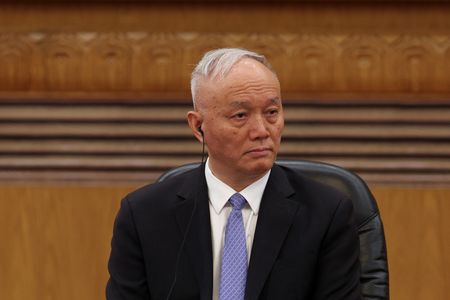
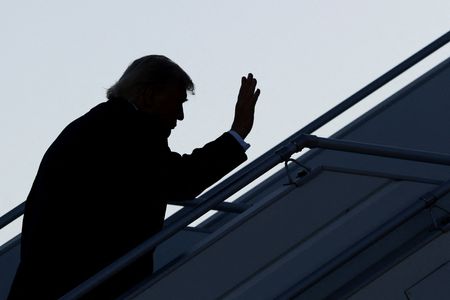
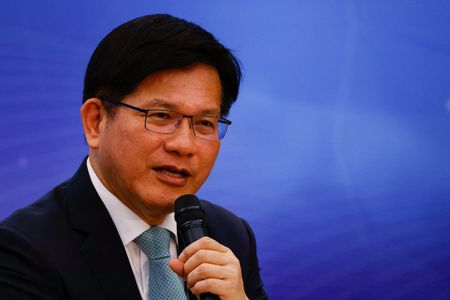
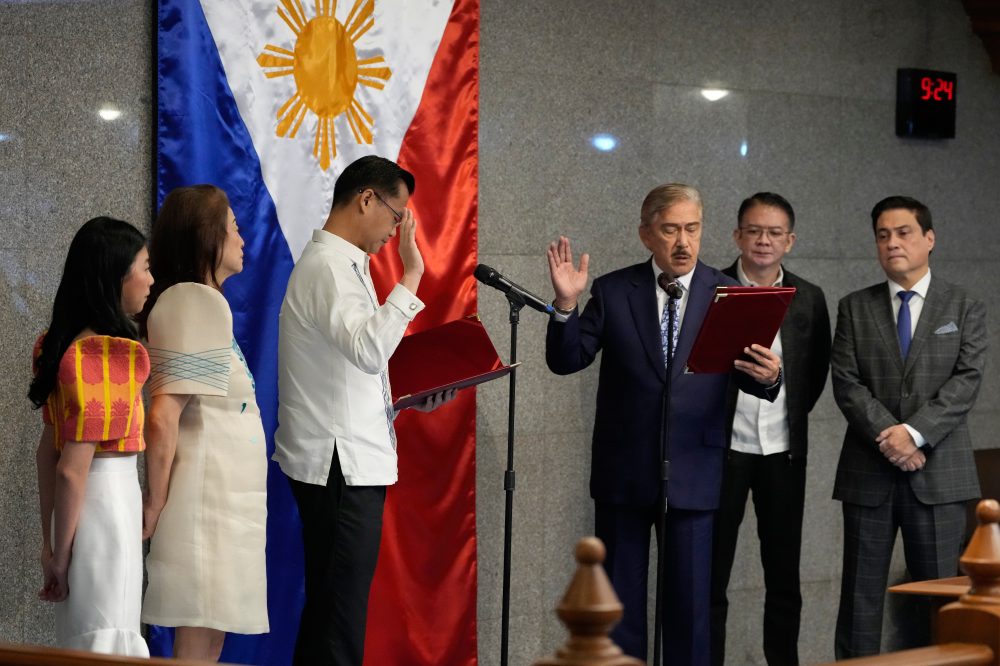
BEIJING — China has formally named Cai Qi, the nation’s fifth-highest-ranking official, as the new leader of the Communist Party’s premier ideology and training institution, further strengthening his role as one of President Xi Jinping’s most trusted inner circle members.
Cai joined the party’s seven-member Politburo Standing Committee — the highest level of political authority in China, led by Xi — back in 2022. He also serves as director of the party’s General Office, a role that effectively makes him Xi’s chief of staff.
The appointment carries significant historical weight. Both of China’s two most recent top leaders, Xi and Hu Jintao, previously led the prestigious Central Party School before rising to the country’s top position.
At 70 years old, Cai now brings together the party’s organizational structure, ideological direction, and administrative operations under one Standing Committee member — a concentration of influence that is considered rare within China’s political system.
The human resources ministry announced Thursday that Cai has replaced Chen Xi, 72, as president of the National Academy of Governance. Founded in 1994, the academy has been jointly run with the Central Party School since 2018 as a single institution under party leadership. Its primary responsibilities include training senior Chinese government officials and guiding party ideology.
Thursday’s formal announcement came after state media reported earlier this month that Cai had already attended a spring semester graduation ceremony at the school and academy in his capacity as president.
Cai’s relationship with Xi goes back many years, rooted in overlapping careers in China’s Fujian and Zhejiang provinces. In 2017, as Xi began his second term leading the Communist Party, Cai was elevated to the then 25-member Politburo, the party’s second-highest decision-making body.
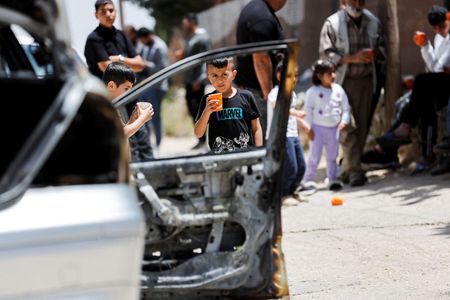
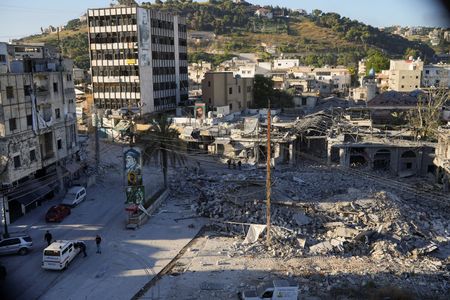
TYRE, Lebanon (AP) — Adnan Kaour made his way back to the coastal city of Tyre in southern Lebanon on Thursday, just one week after Israel ordered all residents to leave. Once celebrated as a beloved summer destination, the city now bears the scars of heavy bombardment.
Israel had followed those evacuation warnings with widespread airstrikes, which it said were aimed at the Lebanese militant group Hezbollah.
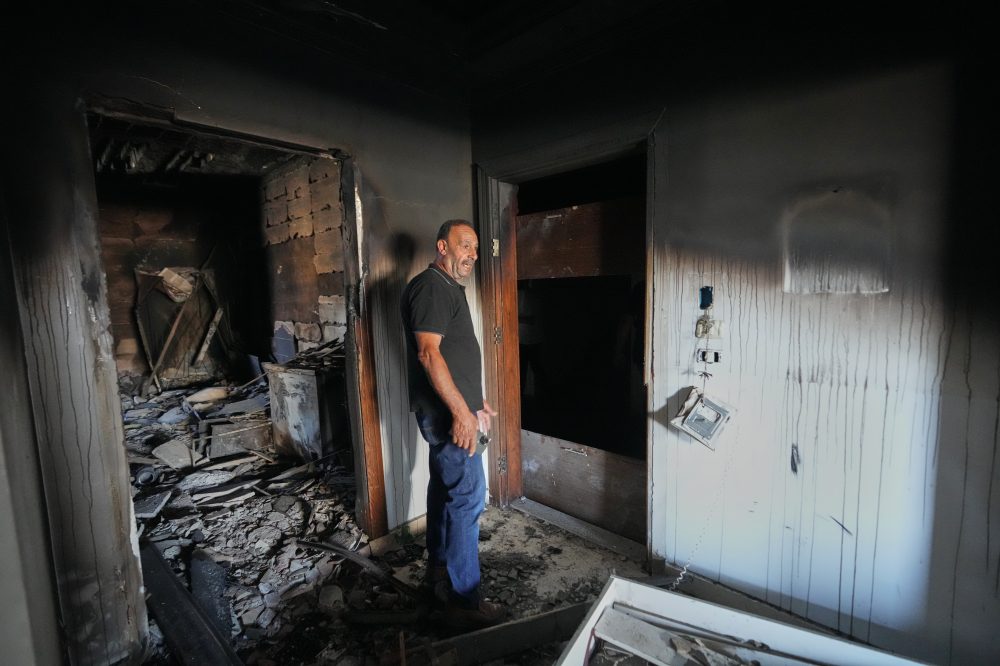
What Kaour discovered upon his return was devastating. The family apartment he cherished — with its view of the Mediterranean Sea — had been reduced to a pile of rubble and broken glass.
His visit home came the same day the United States and Iran announced a deal aimed at ending the broader Middle East conflict. The agreement also includes provisions calling for an end to the fighting between Israel and Hezbollah in Lebanon, though what that means on the ground remains uncertain.
Notably, neither Israel nor Hezbollah are parties to the agreement. Iran is demanding that Israel pull back from the large portion of southern Lebanon it currently occupies, but the interim deal’s language does not explicitly require that — it only guarantees Lebanon’s “territorial integrity.”
Israeli Prime Minister Benjamin Netanyahu had not yet responded publicly to the deal’s signing. Israel has pledged to maintain its military presence in Lebanon, while Hezbollah has declared its continued commitment to resisting Israeli forces. Clashes between the two sides were still being reported as recently as Wednesday in towns and villages across southern Lebanon, raising doubts about whether the deal will hold.
For the people of southern Lebanon, already worn down by years of crisis, cautious optimism is tempered by deep skepticism — too many ceasefire announcements have come and gone without stopping the violence.
Kaour, who lives in Germany but typically spends summers in Tyre, was abroad with his family when an Israeli strike hit their street without warning last month. When he returned Thursday, he found his building was still standing — a sweets shop and an electronics store occupy the ground floor — while the structures around it had been completely leveled.
Inside his apartment, however, the walls had been blown out and the windows shattered. He said he felt relief knowing his family had not been there. They all made it out safely.
“I’m hopeful for peace, and God willing this is the end of the war, and everyone can go back to their homes,” he said. “We are living abroad, but our minds are here in our country.”
Outside, neighbors quickly gathered to begin clearing away the debris.
One floor above Kaour’s apartment, his neighbor Samih Haidar had also just returned to find his door sealed shut with wooden boards. He tried kicking them down but couldn’t break through. He waited anxiously until two men working nearby came and unscrewed the bolts.
Haidar squeezed through the opening and stepped inside. He had rented the apartment to a family displaced from another part of the south — people connected to a trusted friend — and had no idea what to expect.
What he found stopped him cold: broken furniture, shattered glass, debris everywhere, and a burned-out kitchen. Neighbors told him the kitchen caught fire after a nearby strike. He walked slowly through each room, quietly recording the damage on his phone. He has no idea where the family went — like so many others, he assumes they fled Tyre.
Still, he said he wants to hold onto hope.
“We want things to work out and live in safety, so there can be stability for us and everyone else,” Haidar said.
Lebanon’s state-run National News Agency reported multiple Israeli drone strikes Thursday morning in the country’s south, including one that struck a vehicle in the town of Kfar Tebnit, killing one person and critically injuring another. Israel declined to comment on the strikes.
About 80 kilometers — roughly 50 miles — to the north, displaced families were camped along the waterfront in Beirut, Lebanon’s capital. Many have been living in tents for months, surviving day to day with no clear path forward. Others sleep on benches or mattresses laid out on the ground.
Many of those displaced say they have little confidence the US-Iran deal will last or that they will have anything to return to. In border communities near Israel, entire Lebanese villages have been nearly wiped out.
“I haven’t felt relieved at all,” said Mohammed Ashmar, who was displaced from the border village of Deir Seryan. Sitting near his tent with a cup of coffee in hand, he added: “Until I get back to my home … I won’t be convinced of anything.”
According to Lebanese officials, the war between Israel and Hezbollah has displaced more than one million people and claimed nearly 3,900 lives. Netanyahu’s office reports that approximately 30 Israeli soldiers and one defense contractor have been killed in or near southern Lebanon, while two civilians have died in northern Israel.
Lebanon’s Social Affairs Minister Haneen Sayed, speaking Thursday during a visit by foreign dignitaries, said the country faces both immediate humanitarian needs and the enormous challenge of planning for the return of displaced families and the rebuilding of devastated communities.
“The Lebanese people deserve peace,” she said. “They deserve to return safely to their homes, rebuild their communities, and look to the future with confidence and hope.”
BRUSSELS (AP) — The European Union has made tentative diplomatic contact with Moscow, hoping to establish a line of communication that would prevent Europe from being shut out of any future negotiations to end Russia’s ongoing war against Ukraine, officials confirmed Thursday.
The disclosure came on the same day Russian officials reported that Ukraine had carried out one of its most significant drone attacks since Russia launched its full-scale invasion more than four years ago. A major oil refinery near Moscow was struck for the second time in a single week, and commercial air traffic at Moscow-area airports was thrown into disarray.
Even as the fighting continues, the EU has been working behind the scenes to restore a diplomatic connection with Moscow while simultaneously maintaining its firm backing of Kyiv. Russian President Vladimir Putin, for his part, has been attempting to bypass both Europe and Ukraine entirely, pushing to negotiate Ukraine’s future directly with Washington.
“In the past few weeks, brief contacts were made at diplomatic level to open communication channels but nothing was discussed on substance,” said an EU official familiar with the effort, who spoke anonymously given the sensitivity of the matter. A second official, also speaking anonymously because they were not authorized to discuss the issue publicly, confirmed the outreach to Russia is underway but would not elaborate.
The first official went on to explain the reasoning: “In any future scenario, the EU has specific interests that will need to be defended, therefore it is important to have established diplomatic channels with Russia. The EU is not a mediator. It supports Ukraine in its efforts to achieve a just and lasting peace.”
The Kremlin had not responded to a request for comment at the time of publication. Putin has consistently argued that Europe has no role to play in resolving the conflict, though he has stopped short of saying he would refuse to speak with EU representatives altogether.
“We have never refused contacts with representatives of the European Union in any format,” Putin said earlier this month. “We are not rejecting contacts. If they want to talk, they know how to reach us. They can pick up the phone and call. If they want to come, they are welcome to do so. It is not Russia that is refusing engagement.”
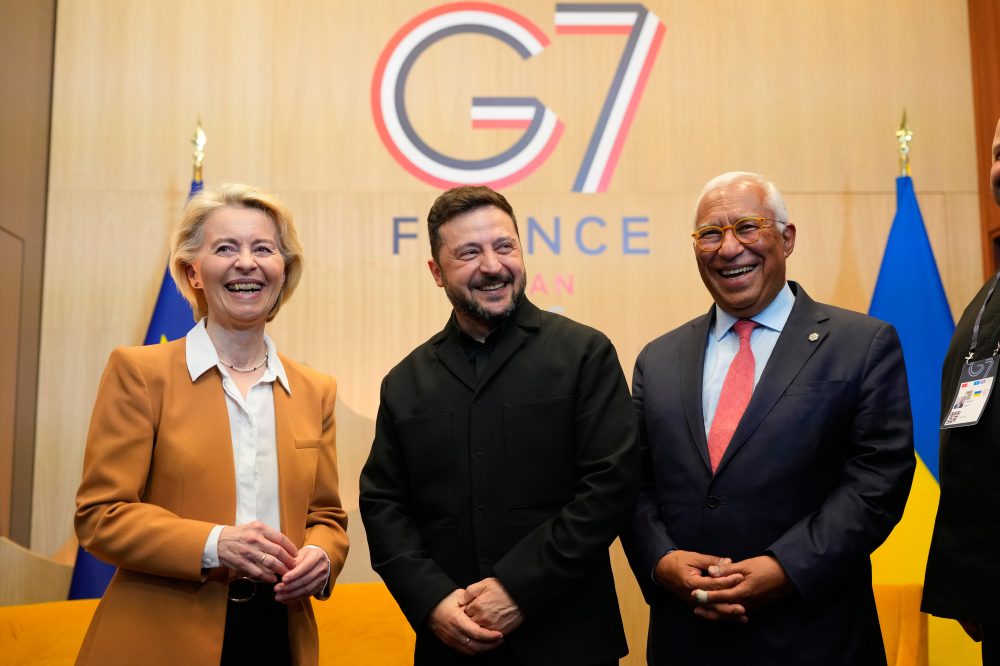
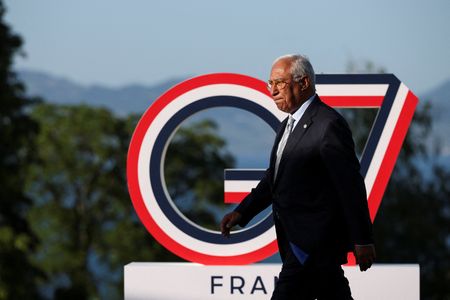
Officials said European Council President Antonio Costa “has been coordinating closely with European leaders on possible engagement with Russia and the issues to be discussed when the right moment comes.”
The news broke just as EU leaders were arriving in Brussels for their summer summit, with Ukraine expected to dominate the discussions. Ukrainian President Volodymyr Zelenskyy is scheduled to speak before the bloc’s 27 member-state leaders, who are working to deepen their relationship with Kyiv.
Earlier this week, Ukraine formally began the process of applying for EU membership, a milestone that will require years of political reform even as the country continues to fight off the Russian invasion.
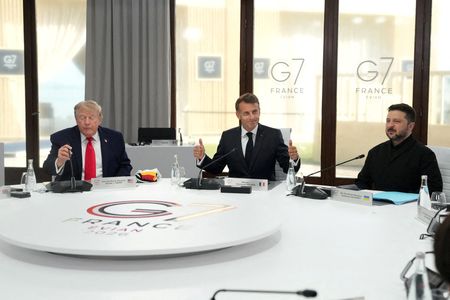
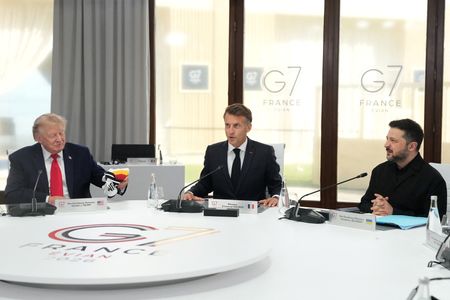
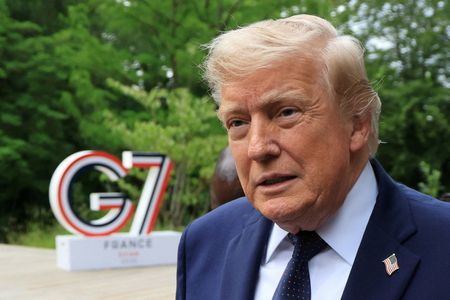
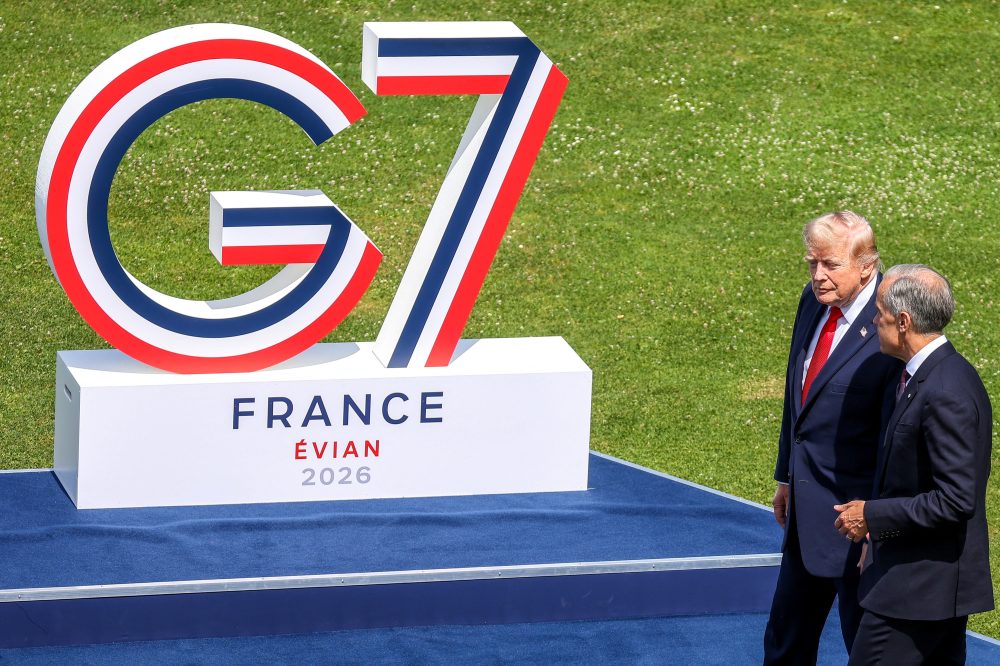
The developments also follow a gathering of the world’s seven major industrialized nations held this week in the French town of Evian-Les-Bains, where European leaders succeeded in getting Trump to join fellow G7 leaders in pledging “unwavering support for Ukraine.”
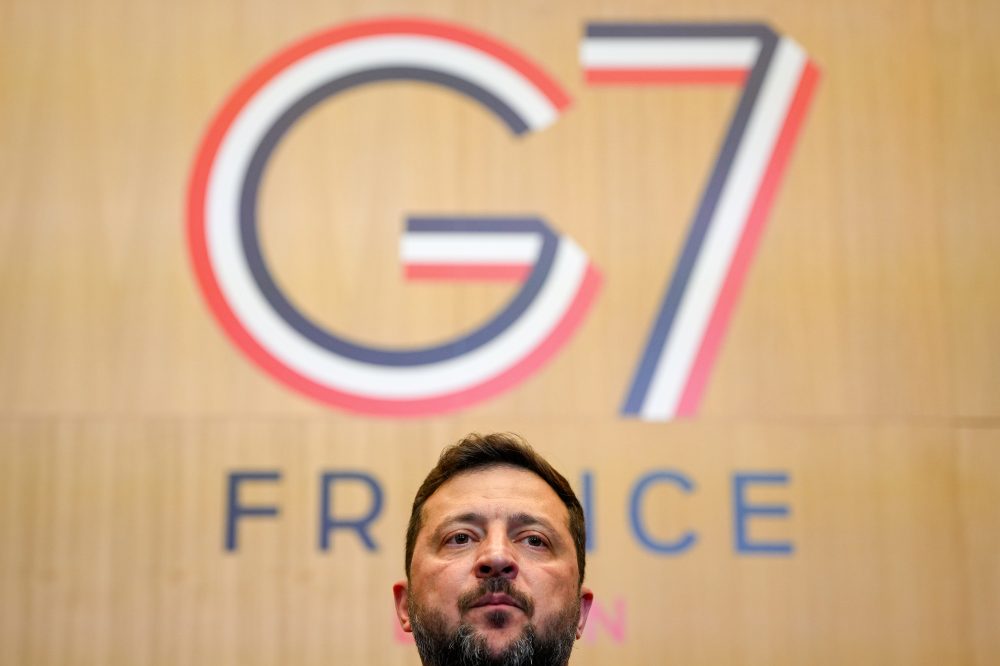
Zelenskyy said Ukraine secured important commitments of continued support from world leaders at the G7 summit in France, including from the United States.
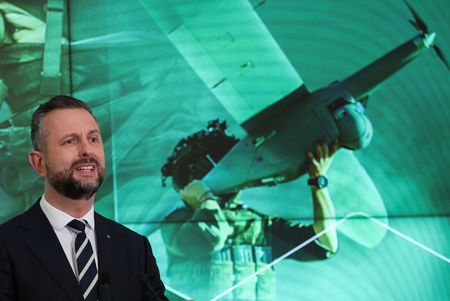
WARSAW — Poland’s Defense Minister Wladyslaw Kosiniak-Kamysz announced Thursday that the United States is receptive to the idea of establishing a permanent American military base in Poland.
The Polish minister made the statement following a face-to-face meeting with U.S. Secretary of War Pete Hegseth in Brussels, describing the U.S. Department of War as open to Poland’s proposal.
However, Kosiniak-Kamysz noted that no formal decision has been made at this point.
Polish authorities announced Thursday that they have arrested a man suspected of carrying out the fatal shooting of a Russian activist who had been a vocal critic of President Vladimir Putin.
The suspect, a 36-year-old man traveling on a passport from the former Soviet republic of Georgia, was identified by Interior Minister Marcin Kierwiński during a press conference held in Warsaw.
The victim, Robert Kuzovkov — who went by the pseudonym Semyon Skrepetsky — was shot at close range on Monday in the eastern Polish city of Biala Podlaska, located near the border with Belarus. The shooting occurred in the middle of the day, close to where Kuzovkov lived.
Polish Prime Minister Donald Tusk addressed the incident Wednesday, stating that the circumstances surrounding the death point strongly toward a deliberate political killing.
“Everything points to this being a political murder,” Tusk said. “But we must wait for evidence or more concrete indications. Because if that was the case — if it was ordered by Russia — then it is an extremely serious matter internationally. It would constitute state terrorism.”
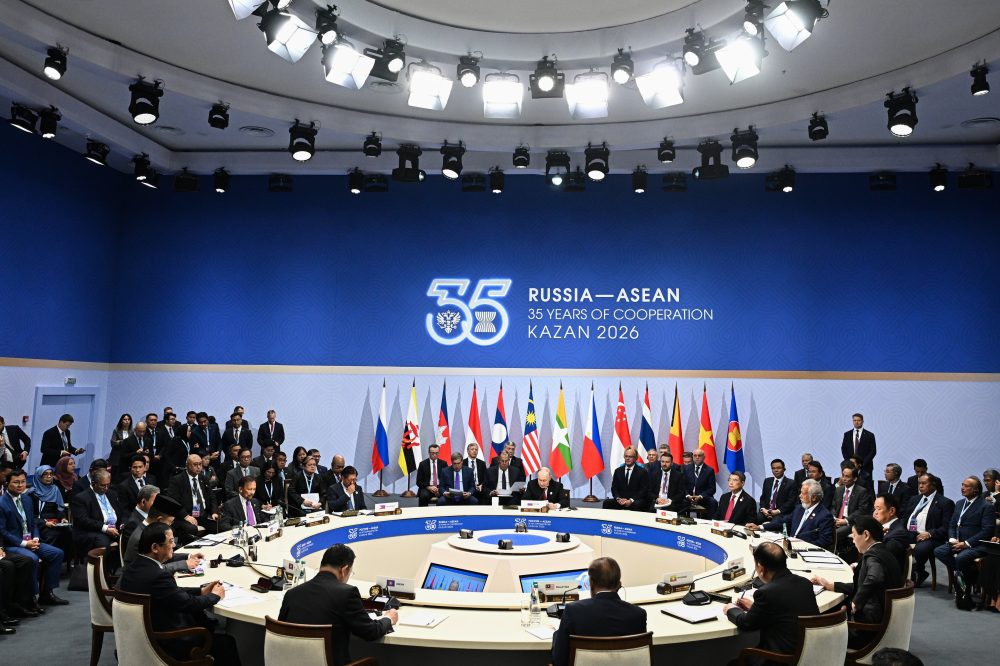
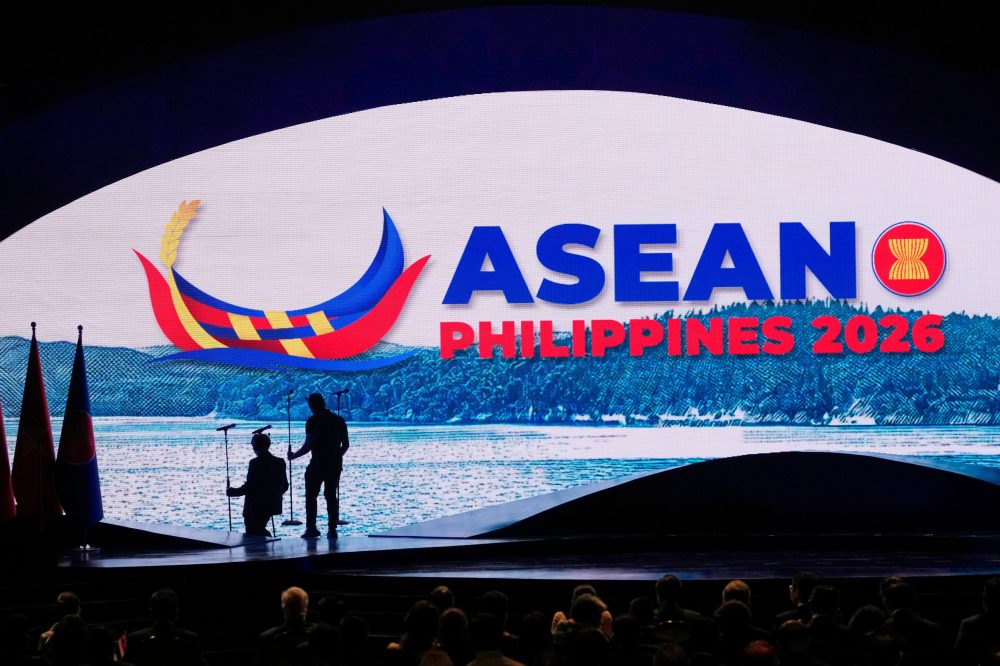
MOSCOW (AP) — Russian President Vladimir Putin on Thursday praised his country’s relationship with the Association of Southeast Asian Nations as he hosted a gathering in Kazan designed to deepen economic and political cooperation with the regional bloc.
Leaders attending the Kazan summit agreed to further build upon the “strategic partnership” between Russia and ASEAN member nations, which include Brunei, Cambodia, Indonesia, Laos, Malaysia, Myanmar, the Philippines, Singapore, Thailand, East Timor, and Vietnam.
“It is a strategic partnership that serves as an essential stabilizing factor in the Asia-Pacific amidst geopolitical turbulence, contributing to the formation of a balanced security architecture and equitable mutually beneficial cooperation,” Putin said during the summit, which celebrated the 35th anniversary of Russia-ASEAN relations.
The summit’s agenda covered an exchange of views on global and regional matters, a review of progress in Russia-ASEAN relations, and discussions about future areas of cooperation.
Putin pointed out that Russia and ASEAN have “expanded the scope of practical cooperation in such areas as combating new security challenges and threats, as well as trade and investment, energy, agriculture, digitalization, science and technology, tourism, and humanitarian contacts.”
A declaration signed by summit participants reaffirmed a shared commitment to a “just multipolar world as guided by international law and the principles of the U.N. Charter to promote mutual benefit and respect for all states.”
The leaders described the Kazan summit as a “significant milestone” in Russia-ASEAN relations and pledged to maintain high-level contact between Russia and the bloc in order to advance their “strategic partnership.”
In addition to the main summit sessions, Putin held one-on-one meetings with several ASEAN leaders. The summit was co-chaired by Putin and Philippine President Ferdinand Marcos Jr., whose nation currently holds the association’s rotating presidency.
ASEAN’s membership is diverse in its global alignments — some countries, including the Philippines, are considered close to the United States, while others maintain strong trade and security relationships with China and Russia.
Several ASEAN members, including the Philippines, Indonesia, Thailand, and Vietnam, have either purchased Russian crude oil or signaled interest in doing so after global fuel prices surged in the aftermath of the war in Iran.
BOGOTA — Colombian senator Ivan Cepeda, a 63-year-old leftist activist whose early life was defined by political exile and the murder of his father, is making a bid for the country’s presidency, pledging to build on and expand the progressive reforms of his predecessor.
Cepeda held the lead in surveys heading into the first-round vote in late May, but ultimately came in second place behind right-wing candidate Abelardo De La Espriella, who is now considered the frontrunner heading into Sunday’s deciding vote.
The two candidates offer dramatically different paths for Colombia. Cepeda has pledged to continue and intensify the economic and social agenda of President Gustavo Petro — the nation’s first leftist president and a former guerrilla. De La Espriella, meanwhile, has promised a tougher stance on crime and fewer restrictions on business and industry.
Investors, conservative voters, and the business sector have largely aligned with De La Espriella. Cepeda has drawn support from coastal and Amazonian regions, the traditional political left, and voters in Bogota. He argues that the country’s entrenched inequality demands what he describes as “social capitalism” — a framework centered on poverty reduction.
Among his policy proposals: higher taxes on Colombia’s wealthiest citizens, opening state contracts to community organizations, distributing 1 million hectares of land to victims of the country’s armed conflict, and expanding financial support for low-income individuals and the elderly.
“It is a program that proposes social reforms that I want not only to be deepened and consolidated, but also to be radicalized in some cases,” Cepeda told Reuters in an interview last week.
Cepeda served as a facilitator in negotiations that produced a 2016 peace deal between the Colombian government and the former FARC guerrilla organization. He has vowed to press forward with Petro’s contentious efforts to broker peace with other illegal armed groups that have been in conflict with the state for decades.
Following the first round, Cepeda has moderated certain positions, expressing a desire for broader political consensus on reforms and stepping back from earlier plans to pursue a new national constitution.
“I am a democrat, I am going to run a government strictly adhering to the Constitution and the law,” he said.
Cepeda’s academic background spans philosophy, law, and political science, studied across Bulgaria, France, and Colombia. He rose to greater national prominence after former President Alvaro Uribe was sentenced to 12 years of house arrest on fraud and bribery charges — a case in which Cepeda was recognized as one of several victims.
Cepeda has been connected to left-wing politics since childhood. Both of his parents were communist leaders, and the family endured two separate periods of political exile — first in Havana and later in the former Czechoslovakia.
His father, Manuel Cepeda, was shot and killed in 1994 while traveling by car in Bogota. The younger Cepeda has recounted that he was riding a bus to university when he spotted his father’s body at what he initially assumed was a traffic accident. In 2010, the Inter-American Court of Human Rights ruled that the Colombian state bore responsibility for Manuel Cepeda’s killing, which was carried out by military and paramilitary forces.
Cepeda is married to Pilar Rueda, who recently stepped down from her role as an advisor to the special tribunal established to investigate and prosecute human rights abuses connected to Colombia’s ongoing internal conflict.
His political opponents have alleged that he maintains close connections to former FARC leadership — accusations he has firmly denied.
The most recent polling shows Cepeda trailing with 44.8% support compared to De La Espriella’s 52.6% ahead of Sunday’s runoff.
The U.S. Department of Justice has launched an investigation into how Iran’s Supreme Leader Mojtaba Khamenei built a global investment portfolio that reportedly has ties to major Wall Street financial institutions, according to a Bloomberg News report published Thursday citing officials with knowledge of the matter.
The investigation is part of a wider inquiry into alleged money laundering and corruption. Authorities are also examining financial transactions connected to companies under Khamenei’s oversight, the report indicated.
Federal investigators are looking closely at the involvement of American banks in those transactions. Bloomberg News, citing sources familiar with the probe, identified JPMorgan Chase and Citigroup as two of the financial institutions being scrutinized.
When contacted for comment, JPMorgan and the Department of Justice did not provide a response to media inquiries. Citigroup chose not to comment on the matter.
Bloomberg News noted that the existence of an investigation does not automatically mean criminal charges will be brought against anyone. The report emphasized that Khamenei himself remains the central focus of the probe.
Khamenei rose to become Iran’s supreme leader following the death of his father, Ayatollah Ali Khamenei, who was killed in a U.S.-Israeli airstrike. As supreme leader, Mojtaba Khamenei holds ultimate authority over the country’s most critical decisions, including its foreign policy direction and nuclear program.
European Union leaders convened in Brussels on Thursday to discuss potential new and stronger steps to address the bloc’s rapidly growing trade imbalance with China, as well as the EU’s deep dependence on the world’s second-largest economy for rare earth minerals and other essential supplies.
EU diplomats indicate that all 27 member nations are increasingly aligned in recognizing the severity of the trade deficit problem with China, which has now reached roughly €1 billion — about $1.15 billion — every single day. The concern is heightened by the fact that U.S. tariffs have already reduced European access to the American market.
One EU diplomat captured the urgency of the moment bluntly: “We live in a world of wolves now. We no longer live in a world of pink ponies and rainbows.”
The numbers underscore the concern. China’s goods trade surplus with the EU reached €360.6 billion in 2025, a 15% jump compared to 2024. That gap has continued widening, growing another 10% in just the first four months of this year, as Chinese companies have ramped up exports to Europe while buying less from it.
Adding to the tension, Beijing moved in April 2025 to restrict exports of rare earth minerals — a sector where China holds dominant processing power — as a countermove to tariffs imposed by U.S. President Donald Trump. Those restrictions have also dealt a blow to European companies.
EU UNITY ON THE PROBLEM, BUT NOT THE SOLUTION
The European Union has taken steps to reduce its trade dependency, striking new mineral partnership agreements and free trade deals with Australia, India, and Indonesia over the past year. But diplomats say leaders at this week’s summit are expected to call for even more action.
Leaders are anticipated to direct the European Commission — the body that manages the EU’s trade policy — to engage in dialogue with China while simultaneously strengthening European trade defenses.
However, agreement on the specific approach remains elusive. France is pushing for a harder stance against China, while Germany, the EU’s largest exporter, and Spain, which has become an increasingly popular destination for Chinese investment, are urging more caution.
“There is a certain convergence of views and a shared analysis, but nuances come in when it comes to how to respond to this,” a second diplomat explained. “We need to get it right, because otherwise we are stuck with our industry being stuck with the second-largest economy in the world.”
The divisions became public last month when France, Italy, the Netherlands, and Lithuania jointly released a paper calling on the EU to consider a new mechanism to reduce over-dependence on any single foreign country, potentially including additional duties or quotas to shield domestic producers. Spain had originally been listed as a co-signer of that document but later publicly withdrew its support.
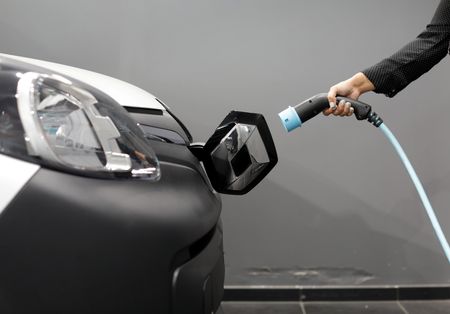
The EU has already been directing its trade enforcement tools heavily toward China. Of 21 newly launched anti-dumping and anti-subsidy investigations, 18 are aimed at Chinese producers. Since 2024, the bloc has also levied extra tariffs on electric vehicles imported from China — a move that prompted Beijing to retaliate with measures targeting European dairy products and brandy.
Critics argue the EU must accelerate its investigations and set clearer priorities rather than processing cases purely in the order they are received. They also contend that current cases are too limited in scope and that Chinese manufacturers frequently find ways to work around the tariffs.
The European Commission acknowledged that Chinese electric vehicle imports did decline after the tariffs took effect, but noted that Chinese producers responded by increasing shipments of hybrid vehicles instead. EV imports have also begun climbing again in the first quarter of this year.
The Commission is scheduled to carry out a sweeping review of its trade defense tools in the third quarter of this year. Among the options being considered are new measures to address manufacturing overcapacity and excessive reliance on single suppliers — with China specifically in mind. In sensitive industries, EU companies could potentially be required to maintain at least three separate supply sources.
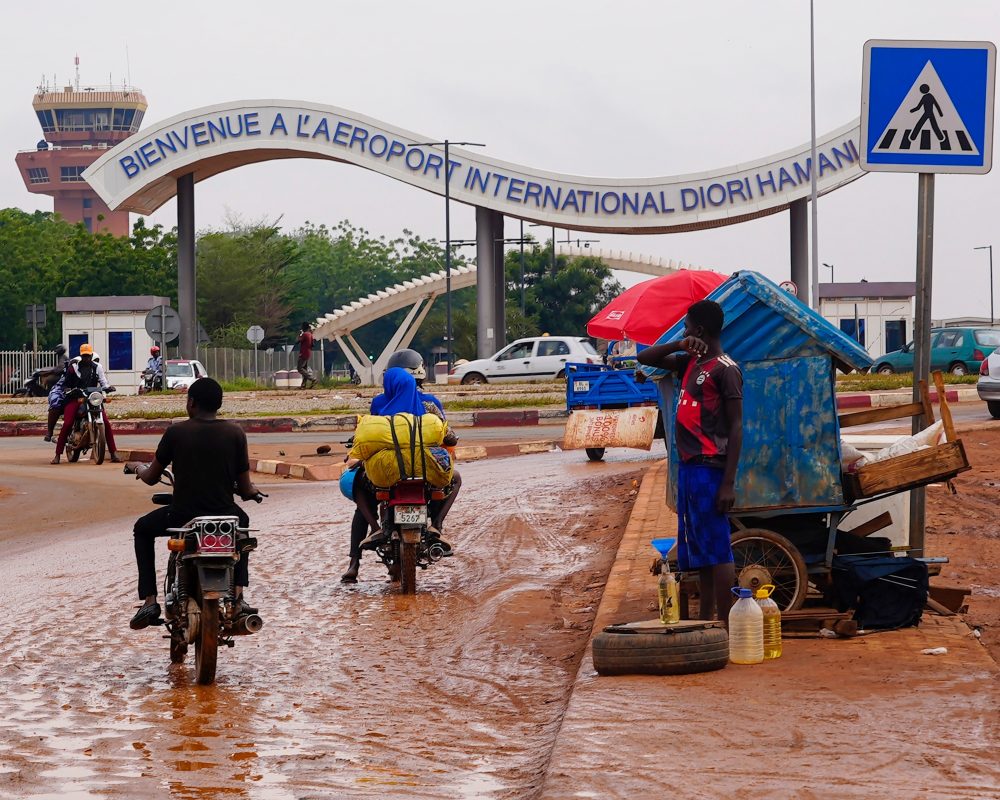
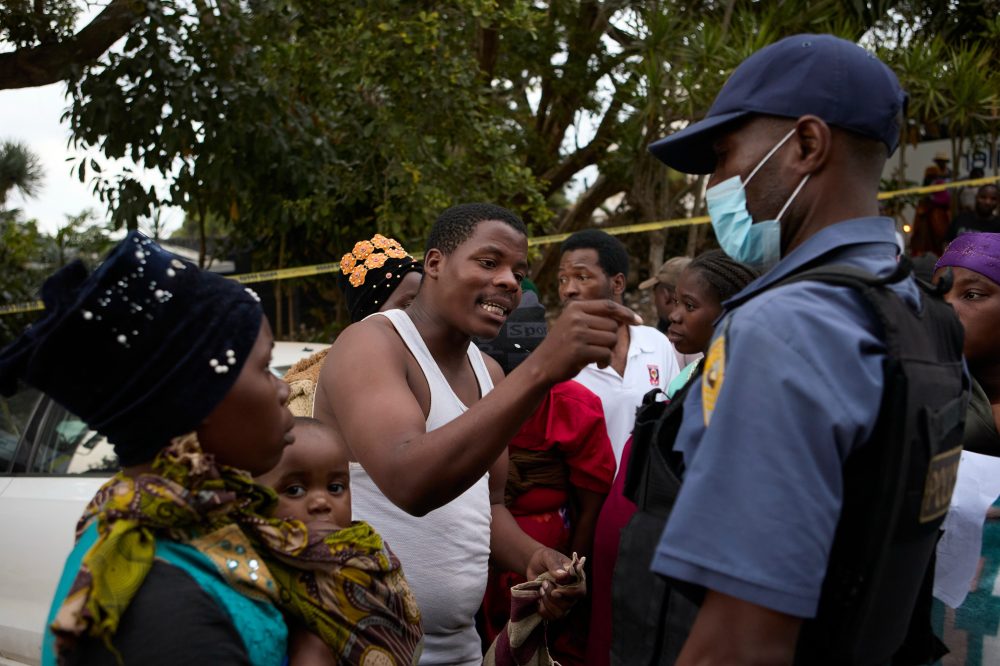
Armed attackers struck the primary airport in Niamey, Niger’s capital, in the early hours of Thursday morning, setting off an exchange of gunfire and explosions, according to witnesses and a security official familiar with the situation.
After the gunmen broke through the airport’s security perimeter, military and security forces were dispatched to push them back, said the official, who was not authorized to speak on the record about the incident. Who carried out the attack remained unclear in the immediate aftermath.
A journalist with the Associated Press on the scene reported that soldiers were stopping and searching people along the road leading to the airport following the shooting.
This marks the second assault on Diori Hamani International Airport in Niamey this year. In January, the Islamic State group claimed responsibility for a comparable attack that specifically targeted Niger’s drone military assets.
Niger has been governed by a military junta since a coup in 2023 and has faced ongoing difficulties in curbing deadly extremist violence sweeping through Africa’s Sahel region. Neighboring countries Burkina Faso and Mali, also under military rule, have faced similar threats.
The airport holds significant strategic importance, serving as the home of a Nigerien air force base and the headquarters of a joint military force involving Niger, Burkina Faso, and Mali.
Despite increased security measures put in place after the January attack, analysts warn that jihadist groups in Niger and throughout the broader region remain a serious and persistent danger.
Beverly Ochieng, a senior security analyst at Control Risks, explained the airport’s appeal as a target: “The symbolism of the airport as headquarters for AES will drive intent by militants to target it,” referring to the regional Alliance of Sahel States.
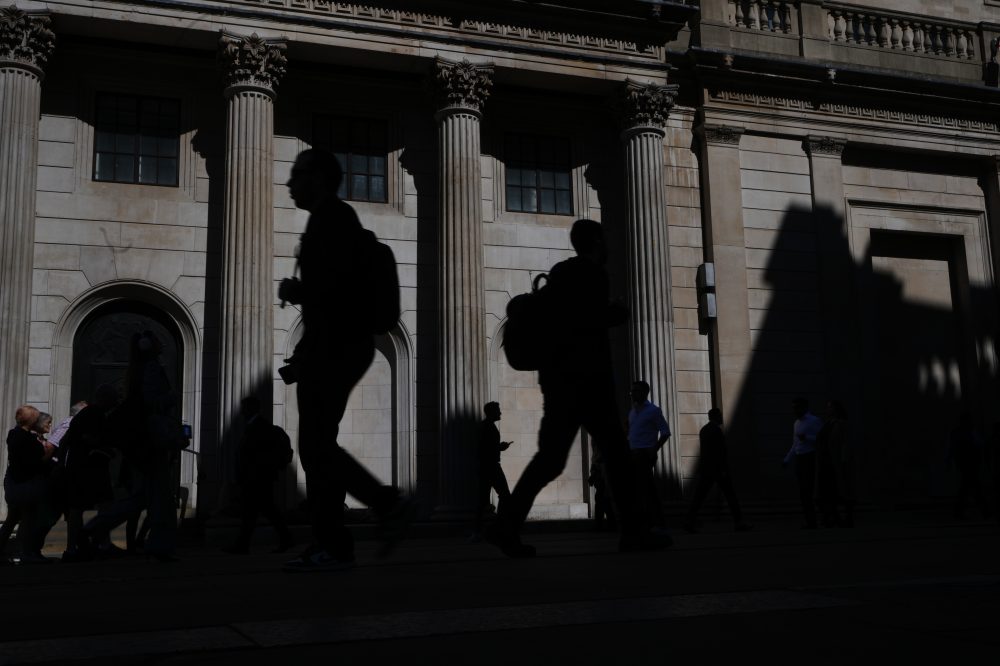
LONDON (AP) — The Bank of England opted to keep its benchmark interest rate unchanged at 3.75% on Thursday, as inflation pressures facing the British economy have begun to ease following an agreement between the United States and Iran to bring their conflict to an end.
The decision came as little surprise to observers after new data revealed that inflation in May did not climb as forecasted, instead remaining flat at 2.8%.
While that figure still exceeds the bank’s 2% target, it sparked optimism that the surge in oil and gas prices — which followed the outbreak of the Iran war on February 28 — may not have pushed inflation as high as many had feared.
Economic analysts believe the bank’s rate-setters will likely hold off on any rate increases in the months ahead, provided that the recent drop in energy costs continues.
Andrew Bailey, the bank’s governor, described the recent decline in oil prices as “encouraging,” though he acknowledged they remain elevated compared to pre-war levels.
“Whatever happens in the future, the higher energy prices of the past four months mean there’s already some inflationary pressure in the pipeline,” Bailey said. “The Bank’s job is to make sure that doesn’t turn into sustained inflation above our 2% target.”
Despite the decision to hold rates steady, the vote was not unanimous. Two of the nine members of the Monetary Policy Committee expressed enough concern about those lingering pipeline pressures that they cast votes in favor of a quarter-point rate increase.
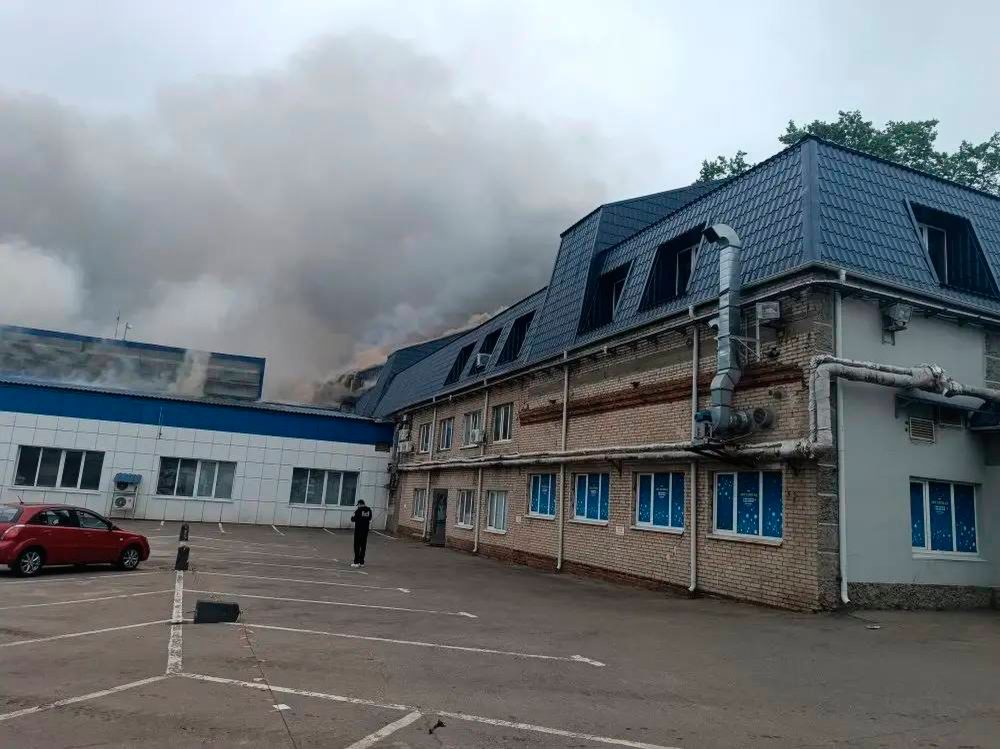
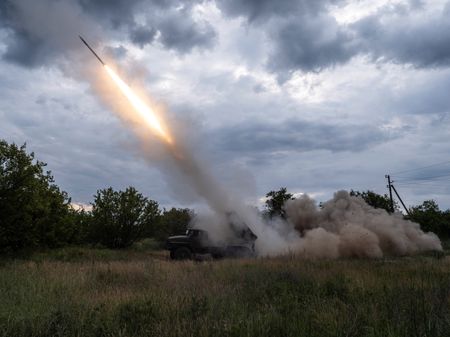
Russian officials confirmed Thursday that Ukraine carried out one of its most significant drone offensives since Russia launched its full-scale invasion more than four years ago, striking a major oil refinery in Moscow for the second time in just seven days.
The assault took place just hours after Ukrainian President Volodymyr Zelenskyy announced he had completed what he described as “an important coordination call” with the presidents of the United States and France, and had secured key commitments of continued support from the G7 summit taking place that week.
Zelenskyy was also scheduled to travel to Brussels later Thursday to meet with NATO and European Union leaders. Among the topics on the agenda was the potential construction of a continent-wide defense system capable of intercepting ballistic missiles — the type of weapon Russia has repeatedly used against Ukraine and which current air defenses have difficulty stopping.
Striking Russian oil infrastructure has been a deliberate Ukrainian strategy, designed to drain Moscow’s war funding and bring the consequences of the conflict home to Russian citizens. Fuel shortages have already been reported in some areas.
Ukrainian Foreign Minister Andrii Sybiha took to X to address Russian citizens directly, writing: “One of the most popular questions asked by Muscovites this morning is ‘What is going on?’ I can answer. Your country started a war of aggression against ours. For years, it has been killing our people. Now that you know what’s going on, ask Putin when he is planning to end it.”
Russian media released images and video showing enormous fires burning at the Moscow Oil Refinery, which sits roughly 15 kilometers — about 9 miles — from the Kremlin. Towering black clouds of smoke billowed across the city skyline.
According to the refinery’s official website, it ranks among Russia’s largest and supplies more than a third of the fuel used in the Moscow region. Ukrainian drones had already targeted the facility on Tuesday, sparking a fire that officials said was quickly extinguished.
Aviation and transportation authorities reported that flights at four Moscow-area airports were temporarily grounded as a result of the attack.
In the Moscow region — which surrounds but is separate from the capital — a drone struck a residential building in the town of Zhukovsky, prompting an evacuation, according to regional Gov. Andrei Vorobyov. Vorobyov also reported that drone debris damaged other structures throughout the region, injuring 16 people, among them two children.
Russia’s Defense Ministry stated that overnight, its air defense systems intercepted 555 Ukrainian drones across multiple regions, with nearly 200 of those shot down as they approached Moscow. That figure was approximately double the number of drones Russia itself launched toward Ukraine during the same period, according to the Ukrainian air force.
The strike added to a string of embarrassments for Russian President Vladimir Putin. Earlier this month, a Ukrainian drone attack struck his hometown of St. Petersburg at the very moment he was hosting a high-profile economic forum attended by foreign dignitaries.
On Thursday, Putin was in Kazan, located about 700 kilometers — roughly 430 miles — east of Moscow, where he was hosting leaders from the Association of Southeast Asian Nations as Russia works to strengthen economic and political ties with member countries of that regional bloc.
Zelenskyy framed the Moscow attack as part of Ukraine’s broader effort to compel Putin to come to the negotiating table. The Ukrainian president has agreed to an unconditional ceasefire as called for by Trump, but Putin has declined, and U.S.-led peace initiatives have largely stalled.
“If Putin does not want to end this war and wants to continue it, we will not sit quietly — we will respond,” Zelenskyy said in a voice message sent to a journalists’ group chat.
Beyond diplomatic pledges made at the G7 summit, Western officials and analysts say Ukraine has recently gained ground against Russia’s larger military force, largely due to its advanced drone capabilities. Long-distance drone strikes are increasingly choking off Russian supply lines in occupied Ukrainian territories, while also disrupting oil production inside Russia.
French President Macron described the G7 gathering as “very important for Ukraine” because its allies — notably the United States — reaffirmed their commitment to supporting the country, though he offered no specific details. Under the current U.S. administration, American aid to Ukraine has been reduced, leaving European nations as the primary providers of military and financial support. The relationship between Trump and Zelenskyy has at times been tense.
“America is with us on Ukraine, that is very important,” Macron told reporters as he and Trump departed the Palace of Versailles near Paris.
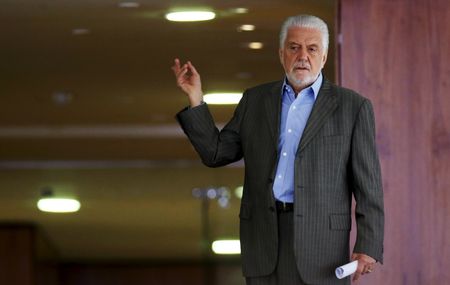
BRASILIA — Brazilian Federal Police have reportedly targeted Senator Jaques Wagner, one of President Luiz Inacio Lula da Silva’s closest political allies and the government’s floor leader in the Senate, as part of a probe connected to lender Banco Master, according to two sources who spoke with Reuters on Thursday.
CNN Brasil was the first outlet to break the story, and two individuals with knowledge of the investigation later confirmed the details to Reuters. Representatives for Wagner had not yet issued any response to requests for comment at the time of the report.
Conservative political parties in New Zealand have put forward a new bill that would establish firm legal definitions for the words ‘man’ and ‘woman.’ The legislation successfully passed its first parliamentary vote in May and is now in a public comment period that runs through the end of this month.
The push comes as nations around the world are stepping back from earlier transgender policies. Public concern has been mounting over issues such as biological males using women’s restrooms and locker rooms, as well as boys competing on girls’ sports teams.
New Zealand’s move is part of a wider global conversation as governments reconsider how gender identity intersects with existing laws and public accommodations.
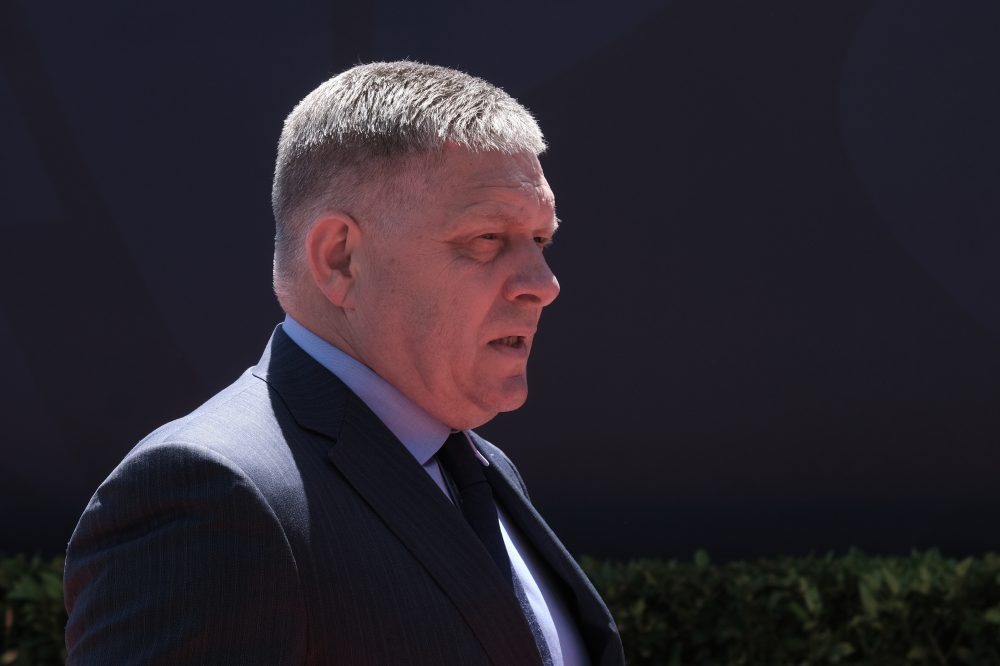
BRATISLAVA, Slovakia — The government of Slovakia is scheduled to undergo a parliamentary confidence vote on Thursday, prompted by the country’s national debt climbing beyond limits established in its Constitution.
The vote was set in motion after the nation’s Constitutional Court — its highest legal authority — ruled on Wednesday that the government must seek a confidence vote without delay.
Prime Minister Robert Fico, a populist leader, said he would respect the court’s decision and proceeded to call for the vote.
Fico’s coalition government controls 78 of the 150 seats in the Slovak parliament, known as the National Council, giving it a majority and making it the strong favorite to survive the vote. Coalition members moved to cap the debate at 12 and a half hours.
Fico noted that his government had originally intended to tie the confidence vote to a separate vote on next year’s state budget, which was expected to take place later this year.
The opposition brought the matter before the court in November, following a determination by Eurostat — the European Union’s official statistics body — that Slovak debt had reached 59.7% of gross national product the prior month. That figure has since climbed to 61.4%, according to the Slovak Statistics Office. Despite the increase, Slovakia’s debt level remains below the average across EU member nations.
The constitutional threshold that triggers a mandatory confidence vote in Slovakia is set at 50% of gross national product.
Like many European nations, Slovakia ramped up government spending in response to the economic disruptions caused by the COVID-19 pandemic and Russia’s ongoing war against Ukraine, which sent energy costs surging.
Slovakia’s Supreme Audit Office reported Tuesday that the country’s economy expanded by just 0.8% in 2025 — the weakest growth rate in three years — while government expenditures continued to rise at a faster pace, adding pressure to the country’s debt levels.
Fico has remained a controversial figure since reclaiming power in 2023. His pro-Russian positions and various policy decisions have sparked repeated protests across the country.
Governments around the world are taking aim at social media companies in an effort to protect children from potential harms online, with a growing list of nations either passing new laws or actively working toward restrictions.
Australia led the way, becoming the first country on Earth to ban social media for children under 16. The landmark legislation took effect December 10, 2025, blocking minors from platforms such as TikTok, YouTube and Instagram and Facebook. Companies that fail to comply could face fines as steep as A$49.5 million — roughly $34.9 million U.S. dollars.
In Britain, Prime Minister Keir Starmer announced on June 15 that a ban on social media for children under 16 is expected to be approved by Christmas, with the measure taking effect around Spring 2027. Starmer also said on June 8 that major tech companies must take action to stop children from sharing nude images on their devices, or face legislation requiring them to do so. Under those plans, companies like Apple and Google would need to build or activate tools on smartphones and tablets to detect and block such images for minors, while adults could still access that type of content through an age verification process.
China has already implemented what it calls a “minor mode” program, which places device-level restrictions and app-specific rules on screen time based on a child’s age.
Denmark announced in November it would ban social media for children under 15, though parents could grant access to certain platforms for children as young as 13.
France’s National Assembly approved legislation in January to ban children under 15 from social media, citing concerns about online bullying and mental health. The bill still needs to clear the Senate before a final vote in the lower house.
In Germany, children between 13 and 16 may use social media only with parental approval, though child protection advocates argue those controls do not go far enough.
Greece is reportedly very close to announcing a social media ban for children under 15, according to a senior government source who spoke to Reuters on February 3.
India’s chief economic adviser called for age restrictions on social media platforms in January, referring to them as “predatory” in how they keep young users hooked. That came just two days after the tourist state of Goa said it was considering restrictions similar to Australia’s.
In Italy, children under 14 must have parental consent to create a social media account, while no such consent is needed for those 14 and older.
Malaysia began blocking those under 16 from registering on social media platforms, its communications regulator announced on June 1.
Norway proposed in 2024 raising the age at which children can consent to social media terms of service from 13 to 15, while still allowing parents to give permission for younger children. The government has also started work on legislation to set a firm minimum age of 15.
Poland’s ruling party announced on February 27 that it is preparing legislation to ban social media for children under 15 and to make platforms responsible for verifying users’ ages.
Slovenia is drafting a law that would bar children under 15 from accessing social media, Deputy Prime Minister Matej Arcon announced on February 6.
Spain plans to move forward with rules making social networks and artificial intelligence safer despite pushback from the tech industry, according to Digital Transformation Minister Oscar Lopez, who spoke to Reuters in May. Prime Minister Pedro Sanchez had previously stated in February that Spain would ban social media access for minors under 16, with age verification required of platforms.
A government-appointed commission in Sweden recommended on June 2 that the country set a minimum age of 15 for social media use. Investigator Lisa Englund Krafft, speaking at a news conference alongside Social Affairs and Public Health Minister Jakob Forssmed, said a ban could be structured so that platforms themselves bear responsibility for verifying ages.
Turkey’s parliament passed legislation on April 24 banning social media use for children under 15 and introducing new rules for digital platforms, including companies that make game software.
The United Arab Emirates approved a resolution on June 18 setting the minimum age for social media use at 15, according to the government’s media office. The UAE became the first Arab nation to introduce such a measure. The resolution bars children under 15 from creating or using personal social media accounts and limits their access to platform features.
In the United States, legislation aimed at pushing social media companies to better protect young users cleared a significant hurdle after Republican Senator Ted Cruz announced on May 12 that he would support the bill. Cruz said he would back the Kids Online Safety Act, which would require social media companies to “exercise reasonable care” when designing features that could cause harm to minors. That bill is separate from the long-standing Children’s Online Privacy Protection Act, which prohibits companies from collecting personal data from children under 13 without parental consent. Several states have already passed laws requiring parental consent for minors to use social media, though those laws have faced legal challenges on free speech grounds.
At the European Union level, Commission President Ursula von der Leyen said on May 12 that the EU would pursue stronger protections for children from harmful social media features. She said the Commission would target what she called “addictive and harmful design practices” through its planned Digital Fairness Act, expected to be proposed later this year. The European Parliament also agreed in November on a resolution calling for an EU-wide ban on social media access for children under 16 without parental consent, and an outright ban for those younger than 13.
Meanwhile, major social media platforms including TikTok, Facebook and Snapchat say users must be at least 13 years old to sign up. Child protection advocates say those self-imposed rules are not enough, and official data from several European countries shows that large numbers of children under 13 already have social media accounts.
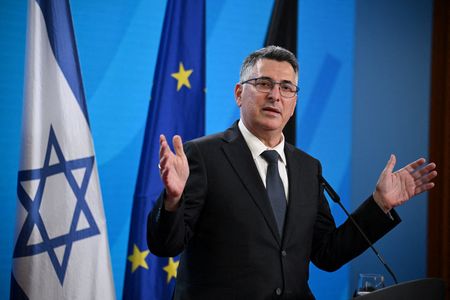
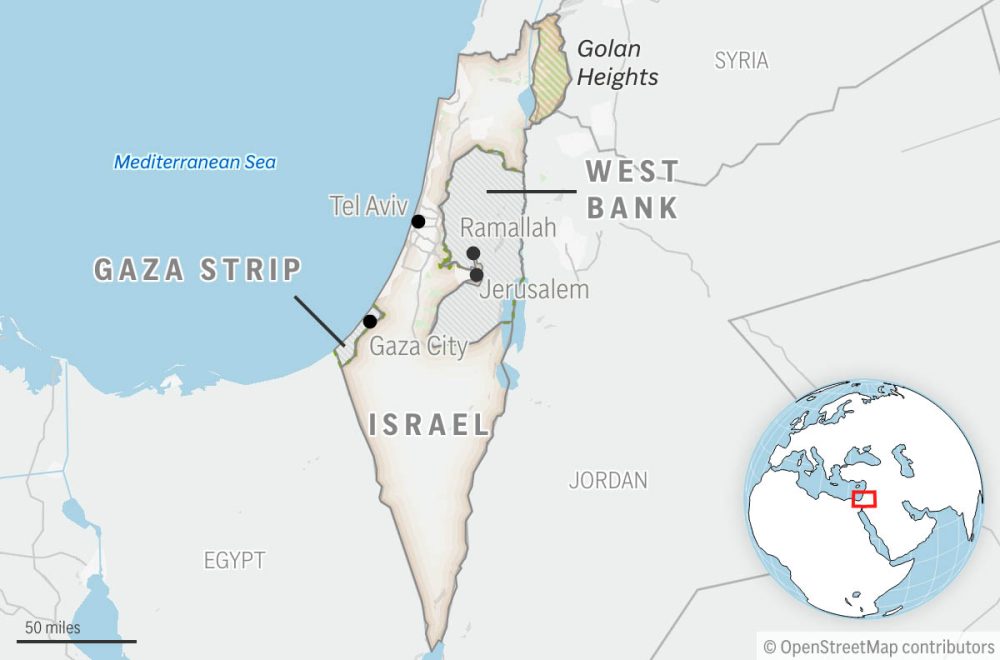
Israeli Foreign Minister Gideon Saar declared Thursday that he is ending all communication with the European Union’s top foreign policy official, Kaja Kallas, citing statements she reportedly made likening Israel to the racist apartheid system that once governed South Africa.
Saar took to social media to announce the move, stating that Kallas had allegedly “compared Israel to the racist apartheid regime” during a trip to Mexico. He said contact would remain severed unless she walked back her remarks.
No statement from Kallas’ office was released in the immediate aftermath of the announcement.
In follow-up posts on X, Saar referenced a June 12 report published by the European news outlet Euractiv, which cited unnamed officials and diplomats. According to that report, Kallas made the comparison during a visit to Mexico the previous month, suggesting that Israel’s treatment of Palestinians in the West Bank and Gaza resembled the policies of apartheid South Africa — a system of legally enforced racial segregation.
The European Union has long criticized Israel’s expansion of Jewish settlements in the West Bank, a practice widely considered illegal under international law and seen as a barrier to peace between Israelis and Palestinians and the creation of a Palestinian state.
Earlier this year in May, the EU imposed sanctions on three individuals and four organizations it held responsible for what it described as “serious and systematic human rights abuses against Palestinians in the West Bank.” At the time, Saar responded by firmly rejecting the EU’s decision on behalf of Israel.
While the EU has also spoken out against Israel’s military conduct in the Gaza conflict, it has simultaneously affirmed Israel’s right to defend itself. The bloc’s 27 member nations remain divided on the issue, with some taking a strongly critical stance toward Israel while others maintain close diplomatic relationships with the country.
On Thursday, Saar went further in his criticism, accusing Kallas of “acting obsessively and with blatant unfairness toward the State of Israel.”
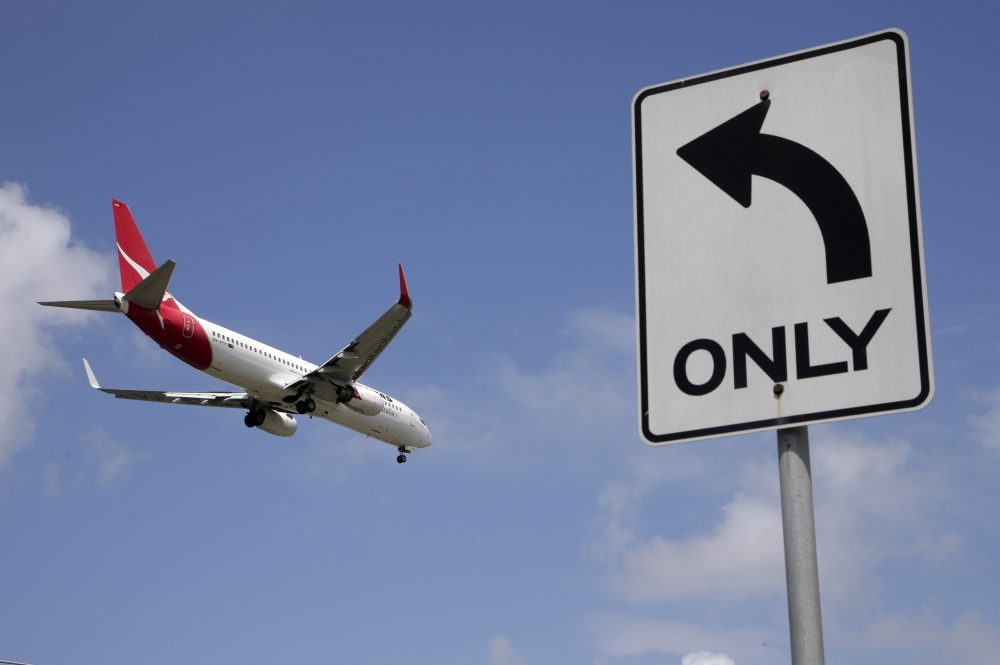
MELBOURNE, Australia — Australian carrier Qantas Airways is gearing up to introduce what will be the longest nonstop commercial flight on the planet, linking London and Sydney in a journey that could stretch up to 22 hours.
The Sydney-based airline revealed the first of its specially modified Airbus A350-1000 jets on Thursday. These aircraft are designed to regularly cover the 17,015-kilometer (10,573-mile) route beginning in October of next year. Depending on conditions, the trip between these two cities on opposite ends of the globe is expected to last anywhere from 19 to 22 hours.
Currently, the title of world’s longest regular nonstop route belongs to Singapore Airlines, which operates a flight between its home city-state and New York City — a distance of 15,349 kilometers (9,537 miles) completed in just under 19 hours. One major distinction, however, is that Singapore Airlines does not carry economy passengers on that particular route.
While a standard Airbus A350-1000 is capable of seating up to 480 travelers, Qantas has configured its customized A350-1000ULR to carry only 238 passengers. Of those, 140 seats will be in economy class for the London-Sydney service.
For now, the longest nonstop journey available to economy passengers worldwide is also operated by Qantas — between London and Perth on Australia’s western coast. That route covers 14,499 kilometers (9,009 miles) and takes between 16 and 18 hours. Sydney, by contrast, sits on Australia’s eastern coast.
Sharon Petersen, chief executive officer of AirlineRatings — an Australia-based website that evaluates airlines on their products and safety records — noted that economy seats on the London-Sydney route will offer more legroom than what most long-haul carriers provide. Economy travelers will also have access to a dedicated “Wellbeing Zone” positioned between the economy and premium economy sections, where passengers can stand, stretch, and grab drinks and snacks.
Qantas has acknowledged that tickets for the nonstop service, which go on sale in February, will cost more than fares for flights that stop in Singapore. The airline says the direct route will cut as much as four hours from total travel time.
Petersen said flying business class on the nonstop service is an appealing choice for travelers who might be able to sleep for eight hours straight without the disruption of stopping in Singapore. However, she personally would rather break up the trip than endure a 22-hour economy flight.
“The reason for that is 22 hours is really daunting. If you get sat next to someone who’s smelly, is perhaps really unwell and coughing, perhaps there’s a baby sitting next to you that’s having an uncomfortable flight or an oversized passenger who really needs two seats,” Petersen said.
She considers two shorter flights a safer bet for economy travelers. “If you’ve got it wrong on one flight, you might be okay on the next. You get a break,” she added.
Petersen explained that the aircraft’s reduced passenger count serves two purposes: improving overall comfort and making room for an extra fuel tank holding 20,000 liters (5,283 gallons). She also pointed out that ultra-long flights depend heavily on premium cabin bookings to turn a profit, since the weight constraints of such a journey leave little room for cargo revenue.
“Because the flight is so long, they can’t rely on cargo because of the weight. So it really is a passenger-heavy aircraft and a premium passenger-heavy aircraft at that to get the profit margin,” Petersen said.
After the Sydney-London route is up and running, Qantas says its next ultra-long-haul nonstop service will connect Sydney with New York City — a somewhat shorter distance of 16,013 kilometers (9,950 miles).
The governor of the Moscow region, Andrei Vorobyov, announced Thursday that 16 people sustained injuries during a significant Ukrainian drone offensive targeting the Russian capital and its surrounding area.
A large number of Ukrainian drones descended on Moscow and the greater Moscow region during the attack, striking the city’s oil refinery for the second time within the same week.
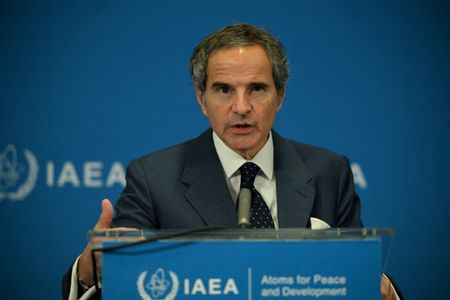
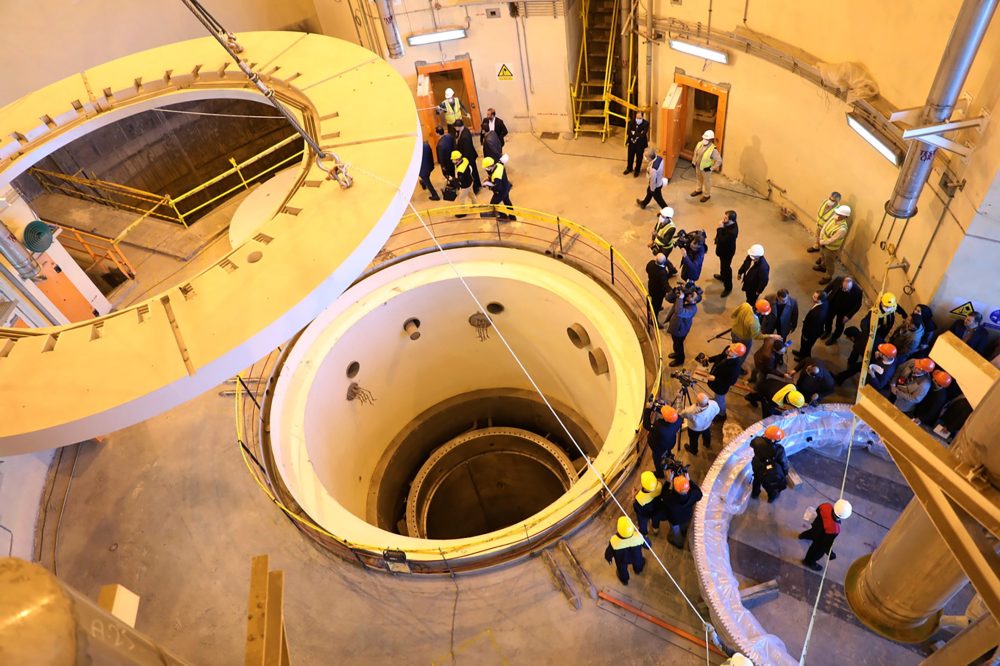
GENEVA — The United Nations nuclear watchdog is expressing support for the interim peace agreement reached between Washington and Tehran, announcing Thursday that it will now take part in technical talks to carry out the deal’s provisions.
“It is good that the memorandum is there. Now the technical work starts,” said Rafael Grossi, the director of the International Atomic Energy Agency, speaking to reporters in Geneva.
“Now it is for us to sit down with our American and Iranian colleagues and start formulating concrete steps that will have to be taken,” Grossi added.
The agreement, which consists of 14 points and was signed Wednesday evening, extends by 60 days a ceasefire that was first announced in April — including in Lebanon — giving both parties additional time to negotiate a permanent truce.
Both Trump and Iranian President Masoud Pezeshkian have digitally signed the memorandum in both English and Farsi, according to officials from the United States and Iran. Iran’s foreign ministry stated the agreement took effect as of Wednesday.
Grossi emphasized the significance of the IAEA’s oversight role under the deal. “The fact that they are mentioning that this will be under the supervision and control of the IAEA is very important, because in our conversation, what we are going to be doing is defining what we need to see, what we need to access,” he said.
He noted that the full scope of the agency’s involvement will depend on the final terms of the agreement, and that upcoming technical discussions will work to translate broad principles into concrete actions.
The path to this agreement has not been smooth. Back in February, talks held in Geneva between Iran and the U.S. aimed at resolving their long-running nuclear standoff ended without a breakthrough. While an Omani mediator indicated that progress had been made and further technical talks with the IAEA in Vienna were planned for the following week, those efforts were derailed when the U.S. and Israel launched military strikes against Iran just 48 hours later, triggering a wider regional conflict.
Despite that troubled history, Grossi urged against letting past setbacks breed pessimism. “We have a chance and we need to seize it,” he said.
BRUSSELS — NATO’s senior nuclear deterrence body announced Thursday that member nations have reached an agreement to upgrade the alliance’s nuclear capabilities while also strengthening how it plans and manages its nuclear deterrence mission.
The announcement came from the Nuclear Planning Group, which serves as the alliance’s primary forum for consultation and decision-making on nuclear deterrence matters. All NATO member nations participate in the group with the exception of France.
Defense ministers who took part in the meeting emphasized the foundational importance of the alliance’s nuclear forces. According to the group’s statement, the ministers “recalled that the strategic nuclear forces of the Alliance remain the supreme guarantee of Allied security and underpin NATO’s extended deterrence architecture.”
The group outlined a clear path forward in its official statement: “NPG Ministers agreed to continue enhancing NATO’s nuclear deterrence mission by modernising NATO’s nuclear capabilities, strengthening its nuclear planning capacity, and adapting to achieve its security interests.”
BEIJING — China’s commerce ministry has unveiled a set of measures designed to bring artificial intelligence deeper into the everyday lives of consumers and businesses throughout the country, according to state broadcaster CCTV, which reported the announcement on Thursday.
The package consists of 17 specific measures focused on expanding the role of AI across both the goods and services sectors nationwide.
On the product side, the plan calls for shifting consumer electronics away from simply being functional devices toward becoming truly intelligent ones. Officials also identified the development of a new market for humanoid robots as a key goal under the initiative.
When it comes to services, the measures are designed to keep pace with AI’s rapid spread — moving beyond consumer retail into areas like public services and everyday lifestyle services.
Lin Jian, the deputy director of the international trade cooperation institute under the ministry, explained the broader significance of the effort. “The introduction of AI is expected to break through the bottleneck in service consumption constrained by high labour costs and low standardization,” he said.
A pair of researchers at the Massachusetts Institute of Technology believe they have cracked the mystery of how Russia’s Burevestnik missile actually works — and what they found is deeply concerning.
The two scientists conducted an analysis of the nuclear-powered weapon, which has been dubbed “Skyfall” by Western military observers. Their conclusion: the missile is both radioactively contaminating and poses serious dangers.
The Burevestnik is a nuclear-powered cruise missile that Russia has been developing as part of its advanced weapons program. Unlike conventional missiles, it relies on a nuclear reactor for propulsion, which raises significant questions about the radiation it leaves behind during flight.
The MIT researchers’ findings shed new light on the risks associated with the weapon, suggesting that its operation could spread radioactive contamination along its flight path — making it a hazard not just as a weapon, but as a source of nuclear pollution.
NEW DELHI — India quietly confronted Telegram over its failure to crack down on accounts allegedly distributing leaked exam questions, while Telegram fired back by accusing Indian officials of misrepresenting what was said in their meetings. The standoff ultimately resulted in an extraordinary government-ordered ban of the app, according to documents reviewed by Reuters.
Prime Minister Narendra Modi’s government invoked emergency authority to shut down Telegram within India through June 22, citing concerns that the platform was being exploited to cheat candidates sitting for NEET — a high-stakes national entrance examination for medical school admission.
Telegram has taken the matter to the Delhi High Court, arguing the ban violates constitutional protections and freedom of expression. The conflict represents the latest confrontation between a major technology company and the Modi government, following a legal battle last year with Elon Musk’s X platform over content removal demands.
The app counts 150 million users in India — its largest market in the world. NEET exam results were thrown out in May after suspicions arose that test questions had been leaked in advance, and the exam was rescheduled for June 21. The controversy triggered a political uproar, including calls for the education minister to step down. More than 2 million students take the undergraduate medical entrance exam each year.
Documents obtained by Reuters show the June 16 ban order came after roughly two weeks of back-and-forth communication between India’s IT ministry and Telegram representatives. The government accused Telegram of “inaction” regarding channels with names like “NEET PAPER LEAKED” and “Paper Leaked NEET,” saying the names alone made their purpose obvious. Some of those channels were allegedly soliciting money in exchange for a “full (exam) paper.”
Telegram pushed back in follow-up emails, stating it was “surprised at the suggestion that it has been inactive in addressing unlawful content” and insisting it does not allow its platform to be used for such activities.
India’s IT ministry and Telegram both declined to respond to questions from Reuters.
While WhatsApp dominates India’s messaging market with more than 500 million users, Telegram offers features that set it apart. Its group chats can accommodate up to 200,000 members — a far cry from WhatsApp’s 1,024-person limit — and users can communicate without revealing their phone numbers. Critics argue those same features have made it a haven for fraud and illegal activity, though Telegram rejects that characterization and says it moves quickly to address bad actors.
The Indian government has stated that fraudulent activity tied to the NEET exam is “most pronounced on Telegram.”
Telegram founder Pavel Durov publicly called the ban “a mistake,” arguing that it punishes ordinary users while those spreading leaked content can simply migrate to other platforms. The company also posted a pointed — if indirect — jab at the situation on its X account: “Over 300,000 people die of drowning each year. In order to protect society, it is now illegal to consume or possess water.”
The dispute between the two sides grew more contentious following a June 3 meeting, when Telegram emailed Indian officials to say the government’s written record of the meeting did not accurately reflect what was discussed. According to government notes, Telegram acknowledged having limitations in proactively detecting “more subjective” content related to exams, as opposed to clearer violations such as child sexual material and pornography.
Telegram disputed that account in a June 5 email, clarifying that it does have proactive measures for such content — but that exam-related material simply requires more intensive moderation than other categories.
In its formal court challenge, Telegram went further, describing the government’s meeting minutes as a “one-sided and inaccurate account of the discussions” that “deliberately” left out details of the company’s proactive efforts. The government has not yet filed a response to those claims in court.
TOKYO — The head of Japan’s leading banking industry group is warning that financial institutions across the country could be forced to take drastic steps — including shutting down ATMs and suspending online banking — if powerful artificial intelligence systems begin posing a serious threat to the banking sector.
Advanced AI systems, like Anthropic’s Mythos, have the ability to rapidly detect weaknesses within software platforms, raising widespread alarm about the possibility of a wave of highly sophisticated cyberattacks.
“There are concerns about an increase in sophisticated cyberattacks that go beyond what has been anticipated,” said Masahiko Kato, chair of the Japan Bankers Association and president of Mizuho Bank, speaking at a press briefing.
Kato added that banks may have to act decisively to shield customers from harm. “Certain services such as ATMs could be proactively suspended in order to protect customers’ assets,” he said.
When Anthropic introduced Mythos back in April, the company itself cautioned that the AI had already identified thousands of software vulnerabilities — including flaws found in every major operating system and web browser — and warned that the consequences of its widespread use could be significant.
In response to growing concerns, banks have been stepping up their scrutiny of such AI tools. Additionally, the U.S. government recently directed Anthropic to cut off access to its advanced AI models for foreign nationals, citing national security concerns.
Despite the alarm, not everyone in the cybersecurity field is convinced the threat is as dire as portrayed. Some experts argue that the reaction has been overblown, suggesting that access to a model like Mythos would not instantly give cybercriminals the ability to carry out attacks that were previously beyond their capabilities.
Three allied nations are joining forces to deliver a new round of military support to Ukraine, according to Sweden’s Defence Minister Pal Jonson, who made the announcement in Brussels on Thursday.
Sweden, Norway, and Canada plan to formally unveil what is known as a Prioritised Ukraine Requirements List — or PURL — package, which is designed to channel U.S. weapons to Ukraine.
Sweden’s defence ministry confirmed in an official statement that the Nordic nation’s share of the package will total $108 million. The contribution amounts from Norway and Canada had not been disclosed at the time of the announcement.
Witnesses in Niamey, the capital of Niger, reported hearing explosions and continuous gunfire early Thursday morning near the city’s airport and adjacent military airbase. A security source described the situation as what appeared to be a deliberate attack on the facility.
No group had immediately stepped forward to take responsibility for the incident, and a spokesperson for the Niger government had not responded to requests for comment as of early Thursday.
The airport has been targeted before. An affiliate of the Islamic State operating in the region claimed responsibility for a similar strike on the airport back in January. At that time, the group stated it had targeted air command headquarters and drone equipment, boasting that it had “delivered a direct blow” to the country’s efforts to fight insurgency.
Thursday’s incident began with the first explosions reported at approximately 6 a.m. local time, which is 5 a.m. GMT. A Reuters witness on the ground reported that sporadic gunfire could still be heard nearly two hours after the initial blasts. Security forces moved quickly to seal off the surrounding area.
Niger is no stranger to this kind of violence. Like its neighboring Sahel nations Mali and Burkina Faso, the country has been battling relentless attacks from jihadist organizations with ties to both al Qaeda and Islamic State. Those conflicts have claimed thousands of lives and forced millions of people from their homes across all three countries.
Looking back at the January attack, Niger’s Defence Ministry reported that militants had approached on motorcycles before being driven back by security forces. Four soldiers were wounded in that assault. The ministry also noted that a stockpile of ammunition caught fire during the attack and that several civilian aircraft sustained damage.
Niger’s military ruler, Abdourahamane Tiani, previously blamed the presidents of France, Benin, and Ivory Coast for sponsoring the January attack, though he provided no evidence to support the accusation. He also issued a warning of retaliation at that time.
The Swiss government announced Thursday that the United States and Iran are expected to hold initial talks at the Buergenstock mountaintop resort in Switzerland on Friday, coming on the heels of a ceasefire agreement reached between the two nations.
According to a statement from the Swiss foreign ministry, “As things stand, the plan is still for the U.S. and Iran, along with mediators Pakistan and Qatar and other involved countries, to meet tomorrow at Buergenstock for initial negotiations about implementing the agreement.”
Swiss officials offered little additional detail about the gathering, with the foreign ministry adding, “No further information is currently available regarding the schedule and details of this meeting.”
BOGOTÁ, Colombia — The scars of six decades of armed conflict in Colombia are still very much alive for those who lived through it — etched into their bodies and minds in ways that never fully heal.
For 67-year-old Blanca Nubia Monroy, that scar takes the form of a black-and-white scale of justice tattooed on her forearm — a replica of the tattoo that was used to identify the body of her 19-year-old son after he was kidnapped and killed by Colombian soldiers in 2008.
For Sigifredo López, 62, it comes in the form of haunting flashbacks from the seven years he spent as a guerrilla captive deep in the South American country’s jungle, and the lasting trauma of having survived while his fellow captives were massacred in 2007.
The two hold sharply opposing views on who should lead Colombia after Sunday’s election. Monroy is throwing her support behind peace advocate Iván Cepeda, while López is backing Trump-endorsed Abelardo de la Espriella, a lawyer who has pledged a sweeping offensive against crime. Yet despite their political differences, both share the same core fear: a return to the brutal violence of the past.
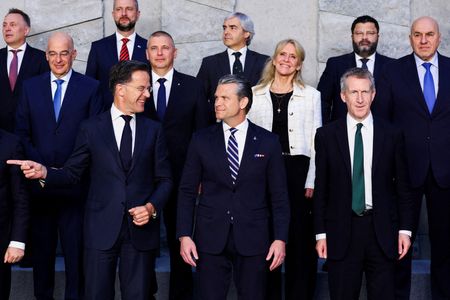
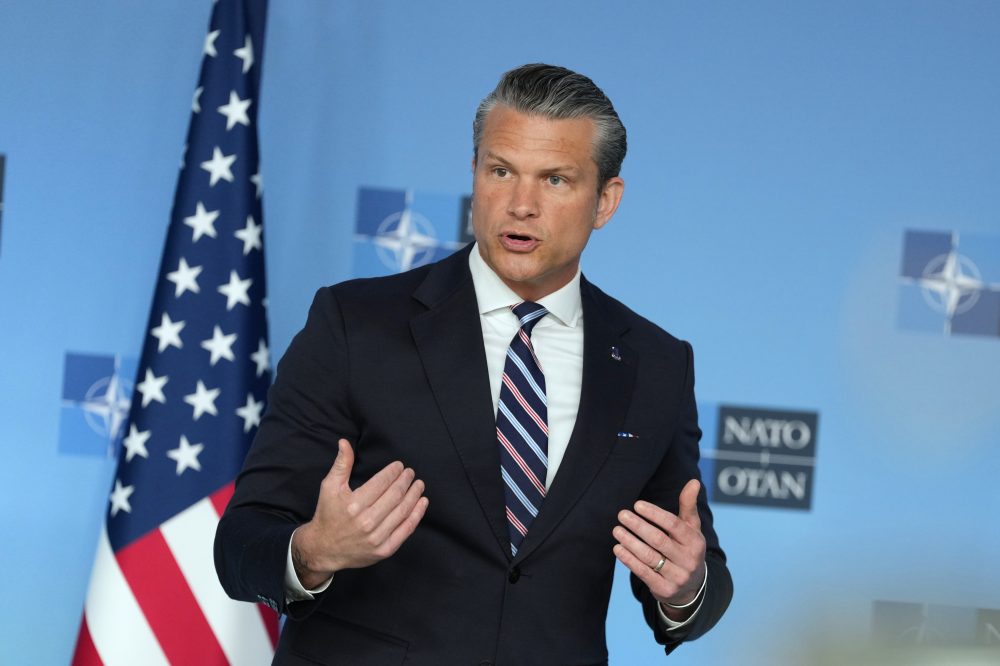
BRUSSELS — U.S. Defense Secretary Pete Hegseth stood before NATO defense ministers Thursday and delivered a clear message: European nations need to take responsibility for defending their own continent and help reshape the alliance into what he called a “real hard-line military alliance.”
Speaking at the ministerial gathering, Hegseth pushed for a fundamental transformation of the 32-member organization, framing it as a “NATO 3.0” upgrade designed to give the alliance stronger deterrence capabilities against any potential threat.
His remarks arrived just weeks after Washington informed its allies that the United States would no longer commit certain warships, aircraft, and other military assets to a crisis situation involving an attacked ally. European nations and Canada are now working to determine how to fill those gaps.
“NATO 3.0 is post-Cold War recognition that (NATO) needs to go back to a real hard-line military alliance that has real military capabilities capable of deterring right here on the continent and taking the lead for the conventional defense of Europe,” Hegseth said.
He also told reporters that the United States plans to invest $1.5 trillion in its own defense by 2027, describing it as a signal to the rest of the world that America is building what he called an “arsenal of freedom.”
Hegseth said that arsenal “first and foremost protects America and American interests but also backstops the strength of NATO and our allies.”
He made clear that he intends to tell U.S. allies they “have to be willing to stand up and do something in a strong way about” securing their own continent.
NATO’s supreme allied commander, who is American, has been developing contingency plans following the U.S. announcement on June 3 that it would pull back commitments including an aircraft carrier, support ships, aerial refueling planes, and dozens of fighter jets in the event of a crisis.
The Trump administration has stated it must be prepared to handle two simultaneous conflicts and wants to keep more military resources available in case a confrontation with China erupts in the Indo-Pacific region.
Under Article 5 of NATO’s founding treaty — the alliance’s collective defense guarantee — all 32 member nations agree that an attack on one is considered an attack on all. However, the treaty does not legally require military assistance, though many allies would likely provide it.
In practical terms, the United States is reducing the level of military support it would provide if Article 5 were triggered. The U.S. holds by far the largest military force within NATO. Washington has indicated it does not plan to remove its nuclear weapons from Europe, which remain a cornerstone of NATO’s deterrence strategy.
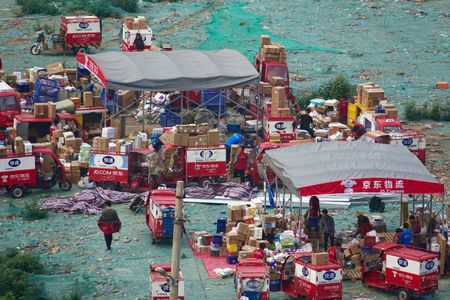
China’s second-largest annual shopping festival is coming to a quiet close, shining a light on sluggish consumer spending and a broader move by the country’s government to rein in extreme discount competition among online retailers.
The 618 festival takes its name from the founding date of e-commerce giant JD.com — June 18. What once served as a showcase for explosive online retail growth has gradually expanded from a single-day event into a weeks-long sales period spanning all major Chinese shopping platforms.
That extended format has made it difficult to keep shoppers excited, especially as China continues to grapple with a prolonged crisis in its real estate sector and ongoing trade friction with the United States — both of which have shaken job security for many workers.
Yu Yang, an engineer at an internet company in Beijing, said she barely made any purchases during this year’s festival. “I bought some laundry detergent, but not because it was discounted, it’s just I ran out of it,” she said.
This year’s event on platforms including JD.com and Alibaba’s Tmall kicked off in mid-May and runs through June 20 or 21 — roughly 40 days in total, which is three to four shopping days longer than last year depending on the platform.
Last year’s 618 festival, itself about a week longer than the 2024 edition, saw combined gross merchandise value — a standard e-commerce performance metric — jump 15% to 855.6 billion yuan, equivalent to about $127 billion, according to retail data firm Syntun. However, daily spending figures actually declined during that period.
For this year, analysts are projecting overall revenue to grow by a single-digit percentage, largely due to the longer event window. Final data from this year’s festival is expected to be released next week.
With Chinese regulators pushing back against cutthroat pricing tactics, Alibaba described this year’s festival as a “decisive shift,” saying “brands prioritizing healthy margins over headline sales figures” defined the event.
JD.com, PDD, and ByteDance-owned Douyin — the Chinese counterpart to TikTok — did not respond to requests for comment on this year’s 618 performance.
Derek Deng, who leads consumer products for Bain and Co. in Greater China, offered a positive take on the subdued atmosphere. “This time around, we feel that it is quite quiet. I believe this is a good thing for the market. This shows that people’s consumption patterns are normalised, people don’t just stock up during shopping carnivals,” he said.
The muted festival comes as China’s retail sales dropped 0.6% compared to the same period a year ago in May — the first year-over-year decline since December 2022, when the country was still operating under strict COVID-19 restrictions. Government data released Tuesday showed notable declines in spending on vehicles, home appliances, furniture, jewelry, and building materials, even as state subsidies were in place to encourage large purchases.
Meanwhile, the use of artificial intelligence by e-commerce companies expanded significantly in the first half of 2026, and industry watchers are paying close attention to how widely consumers are actually engaging with these new tools.
Alibaba, for instance, has woven its AI model Qwen throughout its Taobao platform, enabling shoppers to browse, compare, and buy products simply by having a conversation with the AI rather than manually scrolling through listings.
Jason Yu, general manager at CTR Market Research, noted that all the major e-commerce players are using 618 as a testing ground for their AI capabilities. “So it’s not just a battleground for e-commerce, but also more of a technology battleground for all these big platforms,” he said.
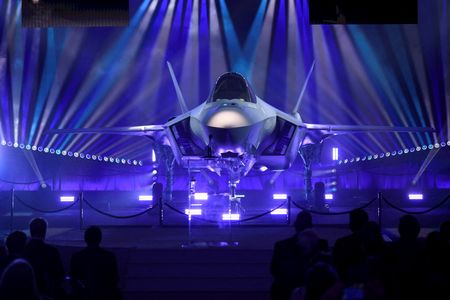
HELSINKI — Finland’s defense ministry announced Thursday that the country intends to purchase GBU-53 SDB II glide bombs from the United States to arm its fleet of F-35 fighter jets.
The acquisition expands Finland’s air-to-ground combat capabilities and builds on the NATO member country’s existing $9.4 billion deal to purchase 64 F-35 aircraft from Lockheed Martin.
According to the defense ministry, the GBU-53 SDB II is a precision-guided weapon capable of hitting moving targets at medium range, even in poor weather. The bomb’s compact design allows an F-35 to carry several of them at once on a single aircraft.
Raytheon, which operates as a division of U.S. defense company RTX, will manufacture the munitions. The overall package also includes spare parts, technical documentation, transportation, training, and ongoing repair and support services.
Defense Minister Antti Hakkanen said the purchase gives Finland a new capability that strengthens the country’s defenses “in demanding conditions.”
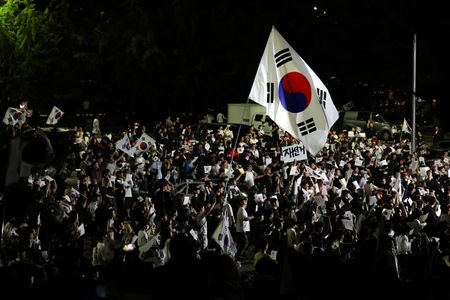
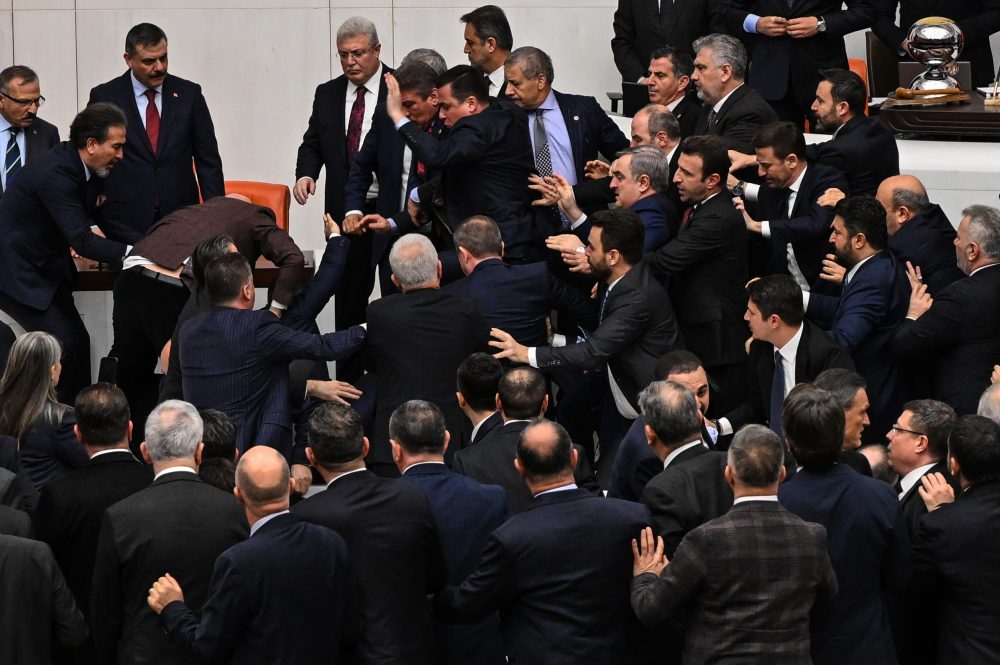
SEOUL — South Korea’s parliament voted Thursday to open a 45-day formal investigation into the National Election Commission following a ballot paper shortage that threw the country’s June 3 local elections into chaos.
The probe was approved at a full plenary session of the National Assembly. The ballot shortage fiasco has sparked public protests, led to the resignation of the election commission’s top official, and prompted President Lee Jae Myung to demand a thorough review of what happened.
A special parliamentary committee has been formed to scrutinize both the National Election Commission and regional election bodies. Lawmakers described the situation as a violation of citizens’ voting rights and said reforms to election management are urgently needed.
The investigation panel includes members from the ruling Democratic Party, the main opposition People Power Party, and several smaller parties. People Power Party lawmaker Yoon Sang-hyun is set to serve as the committee’s chair.
National Assembly Speaker Cho Jeong-sik addressed the significance of the inquiry, saying: “The fact-finding investigation is not the end, but the beginning.” He added, “The parliamentary investigation should identify the causes and lead to election management reform measures that the public can trust.”
On Wednesday, NEC acting secretary-general Kang Dong-wan met with university student representatives who had been staging protests. He told them the commission felt “devastated” over its failure to adequately prepare and pledged cooperation with the parliamentary inquiry, a joint police-prosecution investigation, and an internal audit.
An NEC official confirmed Wednesday that ballot shortages affected 91 polling stations across the country, with voting temporarily suspended at 26 of those locations during the local elections.
In Seoul’s Songpa district, one polling station was forced to halt voting at 4:46 p.m. It did not resume until 5:39 p.m. and ultimately stayed open until 10 p.m. to accommodate roughly 175 voters holding waiting tickets. However, 12 people who had received waiting tickets never came back to cast their ballots, according to the NEC official.
Residents of Makerfield, a former coal mining district near Manchester in northern England, cast their votes Thursday in a by-election that carries far-reaching consequences for British national politics.
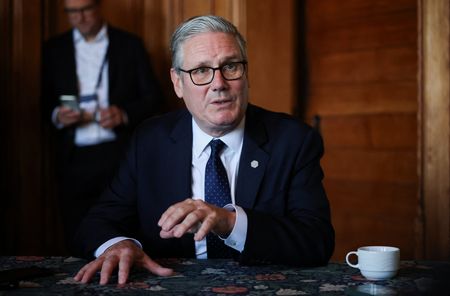
At the center of the race is Greater Manchester Mayor Andy Burnham, 56, who is seeking to return to parliament. Should he win, political observers say he would be positioned to mount a challenge to deeply unpopular Prime Minister Keir Starmer for the leadership of the Labour Party — potentially making Burnham Britain’s seventh prime minister in just over ten years.
The by-election was triggered when a fellow Labour Party member resigned his parliamentary seat. The vacancy drew an unusual level of national attention to the area, given what the outcome could mean for the future of the country’s governing party.
Burnham has attempted to frame the race around local concerns, pointing to his personal ties to the region — he lives nearby and his three children attended school there. But rival candidates have accused him of treating the election as little more than a launchpad for national ambitions, particularly after he began offering hints about how he might lead the country.
Speaking to party supporters in remarks also broadcast on the social media platform X on Wednesday evening, Burnham declared: “Change is coming, but the question tonight is ‘what kind of change?’” He added, “A vote for me is a vote to end 40 years of trickle-down economics that didn’t trickle down much at all to people here.”
Labour flooded Makerfield with senior ministers and dozens of lawmakers in the run-up to the vote and is cautiously optimistic that Burnham can defeat Reform UK’s candidate, Robert Kenyon, a self-employed plumber who also hails from the area. Reform UK is the populist party led by Brexit advocate Nigel Farage. Polling shows Burnham ahead, though Reform’s support has been somewhat reduced by competition from a newer right-wing party called Restore Britain.
If Burnham secures a win, he has made clear he intends to enter any leadership race against Starmer, though he may not move immediately. Another potential challenger, former health minister Wes Streeting, has said he is ready to force a leadership contest if Starmer does not voluntarily step aside — something Streeting has publicly called for.
Starmer, 63, has repeatedly pushed back against calls to resign, noting that he has “always battled against the odds” — pointing to how he guided Labour from its worst election defeat in 84 years in 2019 to a landslide victory in 2024. He has pledged to fight any leadership challenge.
Nevertheless, multiple senior Labour lawmakers suggest Starmer might be persuaded to hand power to Burnham voluntarily, given that Burnham appears to have strong support among Labour’s members of parliament. The thinking is that a negotiated transition could spare the party a drawn-out leadership contest that might further damage its standing with voters ahead of a general election scheduled for 2029.
One scenario floated by Labour lawmakers would have Burnham offering Streeting a prominent cabinet position in exchange for Streeting declining to formally trigger a leadership race. One senior lawmaker noted that a likely three-month summer leadership campaign would only hurt the party, and that members of parliament would probably favor a swift and orderly resolution.
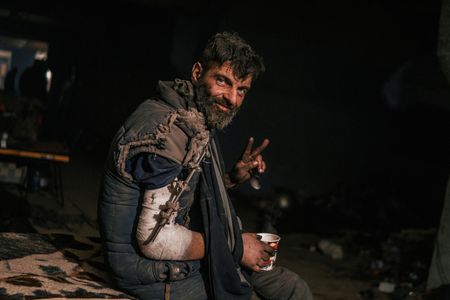
KYIV — Four years after Ukraine’s Azov Regiment was forced to surrender the last remnants of the battered city of Mariupol to Russian forces, the reconstituted unit has turned its attention back to making Russia answer for that occupation.
That crushing defeat in May 2022 — during which hundreds of Azov fighters were either killed or taken prisoner — transformed the regiment into a symbol of resilience across Ukraine and set the stage for its return as a larger, more formidable force. The unit is now once again directing its efforts toward its home city on the Azov Sea.
Drones operated by First Corps Azov flew over the city’s strategically important seaport last week in a mission that struck electrical substations, repair facilities, and a sanctioned vessel, knocking out power to the port entirely, according to Ukraine’s military. Reuters was able to verify the location of portions of attack footage the corps posted publicly.
The strike was part of Ukraine’s growing campaign to hit Russian military supply lines far behind the front lines, with the goal of wearing down Moscow’s ability to wage war and shifting momentum in Kyiv’s favor.
Col. Arsen Dmytryk, First Corps Azov’s chief of staff, told Reuters that many more such operations are planned to demonstrate the unit’s capabilities, technology, and strategic thinking.
He acknowledged that pushing Russia out of Mariupol — which sits roughly 120 kilometers, or about 75 miles, behind front lines that have barely shifted — is a slow process he described as a “long game.”
“If it takes 20 years, we will spend 20 years planning, waiting, preparing,” said Dmytryk, 32, who was among those captured by Russia and later released. “But when the time comes, we must be ready. I believe we will return it (Mariupol). It’s just a matter of time.”
Russia’s defense ministry did not respond to a request for comment.
The port strike, conducted alongside Ukraine’s drone forces and the SBU security service, hit just a few miles from the steel mill where Azov fighters and other Ukrainian troops surrendered following a three-month Russian siege of the city.
It came after months of strikes on major roadways throughout Russian-occupied areas of the eastern Donetsk region, including in Mariupol itself, as part of a coordinated effort to disrupt Russian supply lines heading to the front.
Video footage released by the corps documents these operations: an April 16 clip shows drones flying over wide open fields and long stretches of highway around Donetsk before slamming into heavy military vehicles. A May 8 post features aerial footage sweeping over central Mariupol and the heavily damaged Azovstal Iron and Steel Works — the site of the Ukrainian garrison’s final stand in 2022. “Azov is already patrolling its home city of Mariupol. From the skies — for now,” the post stated.
Mariupol’s population has dropped significantly from its prewar total of more than 400,000. Today the city is the site of new infrastructure projects that are part of Russia’s effort to solidify its hold on occupied southern Ukraine, according to a Reuters investigation conducted earlier this year. In January, Kyiv’s foreign intelligence service reported that Russia is expanding Mariupol’s seaport as a major economic hub while pursuing high-profile construction projects at the expense of ordinary residents.
Within Ukraine’s broader “middle strike” campaign, Azov’s main objective is to cut off enemy cargo — particularly fuel — moving from Russia through key transit points like Mariupol and Donetsk city, according to a corps drone officer. He noted that the constant movement of supply trucks along wide, exposed roads makes them hard to protect. “There’s no way to hide a tanker carrying fuel … It’s just impossible,” he said.
The targeted routes include the M14 highway connecting Mariupol with the Russian city of Rostov to the east, the H20 running north from Mariupol to Donetsk, and a ring road around Donetsk city.
Ukraine’s military is also intensifying strikes on logistics across the Russian-occupied “land bridge” through southern Ukraine that links Russia with Crimea — attacks that have already caused fuel shortages on the peninsula. Ukraine’s top drone commander Robert Brovdi pledged last week to “isolate Crimea in the near future” through continued strikes on the key P-280 highway.
Azov’s strikes are “cumulative rather than decisive,” according to Franz-Stefan Gady, a Vienna-based expert with the Center for a New American Security. He explained that the strikes force Russian forces to spread their vehicles across longer alternate routes and rely more heavily on nighttime driving — which over time “degrades the offensive tempo Russia can generate” on the battlefield.
Russian forces are currently on the verge of capturing the city of Kostiantynivka, the southern anchor of what is known as the “fortress belt” in the Donetsk region that Moscow has demanded Kyiv hand over. Russian drone teams are also targeting Ukrainian battlefield supply lines. However, Russia’s overall rate of advance has slowed considerably in recent months, and Ukrainian forces have reclaimed ground in some areas along the front.
Rob Lee, a senior fellow at the U.S.-based Foreign Policy Research Institute, said Kyiv’s mid-range strikes could “test the conditions” for Ukraine — and possibly Azov — to eventually launch offensive operations. “This is one of the big stories of this year: how does Russia deal with Ukraine’s middle strike campaign?” he said.
Among Azov’s primary weapons is an AI-assisted drone called the Hornet, produced by a U.S. defense-technology firm run by former Google CEO Eric Schmidt called Perennial Autonomy. Corps operators enhanced the drone by fitting it with Starlink internet terminals to extend its original 100-kilometer range — an innovation that highlighted the unit’s technical expertise. “Azov was responsible for a lot of the improvements to the Hornet,” Lee said.
By targeting roads into and out of Mariupol with drone strikes, the corps is working toward another critical goal, said chief of staff Dmytryk: speeding up an end to the war that he hopes would result in the release of more than 700 Azov fighters currently held in Russian prisons. Kyiv has made a full prisoner exchange a central demand in any peace negotiations. Frequent “Free Azov” rallies are held in Kyiv and other major Ukrainian cities, reflecting the unit’s revered status in Ukrainian society.
Corps commander Denys Prokopenko wrote on X last month that freeing his fellow fighters was “my personal priority and a matter of honour.”
Despised in Russia due to its origins as a nationalist militia, today’s Azov is a far different organization from the small volunteer battalion that liberated Mariupol from pro-Russian separatists in 2014, or the fragmented regiment that fought in 2022. Now formally part of the National Guard, it is considered one of Ukraine’s top fighting units and among its “most advanced formations” in drone warfare, according to defense analyst Olena Kryzhanivska of the Canadian Global Affairs Institute.
Last year, the unit expanded into a full corps made up of six brigades, a drone regiment, and a special-purposes unit, and now numbers in the tens of thousands of troops, the unit says.
“When we were in captivity, the Muscovites told us that they wanted to destroy, destroy, destroy us,” said Dmytryk, whose call sign is “Lemko.” “But somehow their ‘destruction’ keeps scaling up Azov instead.”
ZURICH — Switzerland’s lower house of parliament has turned down a trade agreement with the South American trading bloc Mercosur, following pushback from lawmakers on both the political right and left.
The vote, which took place late Wednesday, resulted in the accord being rejected by a margin of 96 to 86, with nine abstentions. The agreement had been reached last year.
Opposition to the deal came from two very different directions. Conservative lawmakers, many representing agricultural interests, stood against it, as did left-leaning parties who raised concerns about labor standards and the ongoing destruction of the Amazon rainforest.
Despite the lower house rejection, the process is not necessarily over. The agreement will now be considered by the upper chamber of parliament, and if approved there, it could be sent back to the lower house for another vote.
Mercosur is a South American trade bloc made up of four nations: Argentina, Brazil, Paraguay, and Uruguay.
Skyrocketing fuel costs linked to the ongoing Iran war are giving electric vehicle sales across Europe a significant boost, according to industry data obtained by Reuters — though some auto industry leaders caution that the momentum may not hold if gas prices retreat.
Experts in the field point to improvements in charging networks and a new wave of more budget-friendly EV models — including vehicles from Chinese manufacturers — as factors helping electric cars become more accessible to everyday consumers.
Although the United States and Iran have agreed to an extended ceasefire, disruptions to shipping mean oil moving through the Strait of Hormuz could take weeks to return to normal levels, keeping fuel prices elevated for the foreseeable future.
Research group New Automotive and industry organization E-Mobility Europe shared data with Reuters showing new electric vehicle registrations climbed 34% compared to the same period last year in May, covering 17 markets that represent more than 90% of car sales across the European Union and European Free Trade Association.
Fully electric models made up nearly one out of every four new vehicle registrations in those markets.
Renault CEO Francois Provost told Reuters last week that the automaker’s EV order book has grown by 50% in certain countries since the Iran conflict began in late February. However, he predicted that growth “will decrease” should fuel prices come back down.
Ford’s Europe chief Jim Baumbick acknowledged that the war has “increased customers’ interest” in EVs, but urged caution about viewing the trend as a permanent change in consumer behavior.
The conflict has coincided with a broader push by automakers to introduce less expensive electric vehicles in Europe, tackling one of the biggest obstacles to wider adoption — the higher purchase price compared to traditional gas-powered cars.
Chinese automakers are moving beyond larger vehicle segments and into smaller hatchbacks aimed at European buyers. BYD launched its Dolphin G model in Berlin last week as part of that expansion.
Andy Palmer, a former Nissan executive who helped bring the mass-market Leaf EV to consumers, commented: “Consumer interest in EVs is clearly stimulated by low-cost, very good Chinese cars arriving on the market.”
The used EV market is also heating up. Online marketplace OLX reported that sales leads for Chinese-brand vehicles in France surged more than fourfold in May compared to a year earlier.
German online marketplace Carwow, which tracks both new and used vehicles, said consumer interest in EVs — measured through vehicle configurations and purchase inquiries — has leveled off at between 70% and 75%, a notable jump from roughly 40% earlier this year.
Philipp Sayler von Amende, managing director of Carwow Germany, said: “This development has long since evolved from a short-term effect to a sustainable trend.”
Used electric vehicles are also attracting buyers with their relatively low price tags. Tesla’s aggressive price cuts in 2023 significantly dragged down resale values across the used EV market, though those prices are now beginning to inch back up as demand grows stronger.
Danish used-car platform Bilbasen anticipates used EV prices will rise by about 10% this year.
At present, used electric vehicles remain less expensive than comparable gas-powered models. In Britain, two- to four-year-old EVs are selling for roughly 33% of their original purchase price, compared to 52% for fossil-fuel vehicles, according to dealer services firm Cox Automotive.
Cox’s insight director Philip Nothard said the growing availability of affordable new and pre-owned EVs should help keep demand strong even if fuel prices ease. “The market should stabilise,” he said. “I very much doubt that we’ll see a downturn.”
TAIPEI — Taiwan’s president addressed foreign journalists Thursday, expressing his desire for a new U.S. arms sale package to be approved without delay, while also defending his government’s right to protect itself from Chinese pressure.
President Lai Ching-te made the remarks at a gathering of the Taiwan Foreign Correspondents’ Club in Taipei, saying the United States’ commitment to Taiwan’s security remains intact — but that Taiwan itself must not waver in building up its own defenses.
“The key is that Taiwan must not change course in strengthening its own defence capabilities, nor can it slow its pace,” Lai said.
He added: “We will continue to maintain close communication with the U.S. government, and we also hope the arms purchases can be approved as soon as possible.”
The comments follow unease in Taiwan sparked by remarks from U.S. President Donald Trump last month. After meeting with China’s Xi Jinping in Beijing, Trump indicated he was still weighing whether to approve new arms sales to Taiwan, describing them as a “very good negotiating chip” with China.
Taiwan is a democratically governed island that China considers part of its own territory. Beijing has intensified both military and diplomatic pressure on Taiwan in recent years.
China has labeled Lai a “separatist” and has rejected his repeated overtures for dialogue. Despite that, Lai said Thursday he still wants to engage in talks with China based on what he called “parity and respect.”
He also made clear that Taiwan’s people alone have the right to determine their own future, and he pushed back on the notion that Taiwan’s self-defense efforts are antagonistic toward Beijing.
“Taiwan’s safeguarding of its own national security and maintaining its democratic and free way of life, its refusal to accept unification, and its refusal to accept rule by the Chinese Communist Party should not be seen as a provocation against China,” Lai said.
A Thai fisherman named Chaiyaporn Arunrasamee was bent over his fishing nets along the Andaman Sea last month — waters that sit at the center of an enormous government infrastructure proposal that could reshape global shipping routes in Southeast Asia.
“Personally, I don’t want it to happen at all,” said Chaiyaporn, who has spent his entire 50 years fishing in the waters near Ranong, a coastal town on Thailand’s western shore.
Thailand’s Prime Minister Anutin Charnvirakul has breathed new life into a long-discussed plan known as the “Land Bridge” — a massive logistics corridor valued at 1 trillion baht, or roughly $30.45 billion. The project gained renewed urgency following the conflict in Iran and the closure of the Hormuz Strait, events that underscored how dependent global trade is on a handful of critical sea passages.
The proposal calls for connecting two newly built deep-sea ports — one at Chumphon on the Gulf of Thailand to the east, and another at Ranong along the western Andaman coast — through a 90-kilometer (56-mile) standard-gauge railway capable of handling up to 20 million shipping containers per year. Additional infrastructure would include a meter-gauge rail link to Thailand’s existing national rail network, multi-lane highways, and local roads.
The goal is to give cargo ships an alternative to the Strait of Malacca, a 900-kilometer (550-mile) waterway bordered by Indonesia, Thailand, Malaysia, and Singapore that serves as the primary sea route between East Asia and the Middle East and Europe. About 80% of container traffic at major ports along the Malacca Strait involves goods being transferred between ships rather than cargo headed to local destinations.
“We want to capture some of this 80% market, particularly the feeder segment,” said Jiraroth Sukolrat, Director-General of Thailand’s Office of Transport and Traffic Policy and Planning, referring to smaller freight vessels with a capacity of 12,000 containers or fewer. “We are not targeting giant mainline vessels.”
According to an internal government presentation reviewed by Reuters, the corridor could slash logistics costs by nearly 30% and trim transit times by up to 14 days for cargo traveling between southern China and Indian Ocean ports serving South Asia and the Middle East. Feeder-to-feeder shipments crossing the corridor could be around 10% cheaper and six days faster than comparable routes through Singapore, largely due to lower congestion.
Despite the ambitious projections, analysts are skeptical that the Land Bridge can truly rival the Malacca Strait as a global trade route.
“The land bridge may ultimately emerge as a modular national security asset aimed at securing local energy routes and boosting Thailand’s own western export capabilities,” said Eugene Mark of Singapore’s ISEAS-Yusof Ishak Institute.
Mark also noted that convincing shipping companies to unload cargo, haul it overland, and reload it onto another vessel remains a steep challenge. “Proving that this double-handling model can genuinely compete with the seamless transit through the Strait of Malacca remains a major hurdle,” he said.
The Land Bridge concept was first introduced around 2020 and is the latest in a string of similar infrastructure proposals that Thai governments have pursued over two decades, none of which came to fruition. Unlike earlier versions, the current plan does not include oil refineries or petrochemical facilities, focusing instead on ports, railways, and light industry.
“The concept hasn’t really changed. What has changed is the packaging,” said Wipawadee Panyangnoi, an independent researcher who wrote her doctoral dissertation on the Land Bridge proposal. “In the past they openly talked about industrial estates and petrochemicals, which people opposed. Today the project is framed as transport infrastructure and logistics because that language is easier for the public to accept.”
The Thai government says it has drawn lessons from past failures, with the state taking a regulatory and supporting role while private investors provide the bulk of financing. “It has to be a consortium involving shipping lines, port operators, financiers and land developers,” said Jiraroth.
So far, investor interest has been cautious. Mark noted that shifting policy frameworks and enormous capital requirements have kept major backers from making firm commitments. The project also carries geopolitical complexity, with neighboring countries watching warily. “Chinese state enterprises are unlikely to commit significant capital unless they secure strong operational leverage, which would trigger intense domestic political pushback in Thailand over foreign control,” Mark said. “Thailand must navigate a delicate diplomatic balancing act to prevent the corridor from becoming a geopolitical flashpoint.”
The Singapore foreign ministry did not respond to requests for comment from Reuters.
Meanwhile, communities along the proposed corridor are pushing back. In the fertile Phato district, where durian plantations and coffee farms generate significant income, residents are questioning the need for large-scale industrialization.
“My hometown’s durian industry alone generates around 10 billion baht a year without needing to build anything new,” said coffee entrepreneur Chalermchart Seekhiao, 30. “People need to understand: this isn’t an empty wasteland.”
Chaiyaporn, speaking from the small fishing village of Baan Hat Sai Dam on an island surrounded by mangrove forests, put the stakes simply: “This thing will be located in the area where we make our living. Where will we go?”
The project suffered a recent setback when regulators ordered a completely new Environmental and Health Impact Assessment after a significant gap was found between government and private research estimates on the density of marine life near the proposed port sites.
A government-appointed review panel is expected to submit its findings before the end of July.
“Local opposition alone rarely cancels a top-down mega-project in Thailand, but it acts as a powerful regulatory drag that compounds investor risk,” Mark said.
LONDON (AP) — One of England’s most iconic trees, long connected to the legend of Robin Hood, appears to have been killed by the very people who came to admire it.
The Major Oak, a 1,200-year-old giant in Sherwood Forest, is believed to have died after it failed to grow leaves this spring, according to the Royal Society for the Protection of Birds, which announced the news Thursday.
The conservation organization explained that centuries of visitors coming to gaze at the tree’s twisted branches and wide-spreading canopy in Nottingham gradually packed down the soil around its base, preventing rainwater from reaching its roots.
The forest has faced threats for years, and rumors of the tree’s death had circulated before — only for the group to confirm each time that it had survived. This time, there is no such reassurance.
“The tree’s failure to produce leaves this year is heart-breaking for everyone,” said Hollie Drake of the RSPB in a statement confirming the tree’s death.
According to legend, Robin Hood — the fictional 13th-century outlaw known for stealing from the wealthy to give to the poor — used the forest as a hideout while evading the sheriff of Nottingham, and the Major Oak is said to have provided him shelter.
The tree earned its name after being featured in a book about oaks written by Major Hayman Rooke in 1790, which sparked the first surge of visitors flocking to the forest to see it.
Pinpointing a single cause of death is not possible, experts say, but the cumulative impact of millions of footsteps played a role, as did efforts to physically support the tree’s enormous limbs using cables and poles. Climate change, which has brought increasingly severe heat waves and drought conditions, was also cited as a contributing factor.
Specialists who examined the tree found its root system had been choked and deprived of nutrients.
“Ancient trees like the Major Oak are the ‘conservation white rhinos of the U.K.’ but their decline is far less visible,” said Ed Pyne of the Woodland Trust. “Saving them is vital to the health of the world we live in and yet most disappear quietly, without the recognition or care given to the Major Oak.”
Beyond its place in folklore, Sherwood Forest holds historical significance for another reason — its oaks were used to build the ships of Vice Admiral Horatio Nelson’s Royal Navy during the late 18th and early 19th centuries, and timber from the forest was used in the roof of St. Paul’s Cathedral in London.
The Major Oak was spared from being cut down and has been protected behind a fence since the 1970s.
“The Major Oak will continue to stand at the heart of Sherwood as a natural monument for visitors to come and see, living on in the legend of Robin Hood and continuing to provide as much support to the forest’s ecosystem in death as in life,” Drake said.
LONDON (AP) — UK Prime Minister Keir Starmer isn’t running in Thursday’s special election, but his political survival very much depends on its outcome.
Residents of the Makerfield district in northwest England are heading to the polls to choose a new member of Parliament, and the heavy favorite is Andy Burnham — the current mayor of Greater Manchester and the man betting markets consider most likely to become the country’s next prime minister.
Should Burnham beat out a challenger from the anti-immigration party Reform UK and secure the seat for the governing Labour Party, he is widely expected to mount a leadership challenge against the increasingly unpopular Starmer.
On the campaign trail, Burnham made a bold pledge: “If people put their trust in me, I will change politics” — a sweeping promise from someone who, if elected, would be just one of 650 members of the House of Commons.
Yet the extraordinary level of global media attention — with scores of journalists from around the world descending on Makerfield — signals this is anything but a routine by-election. Results are anticipated in the early hours of Friday morning.
Roughly 75,000 people are eligible to cast ballots in Makerfield, a constituency made up of several towns and villages on the outskirts of Greater Manchester, about 200 miles (320 kilometers) northwest of London.
Those voters effectively hold the fate of Starmer in their hands. His public approval has collapsed since he guided the center-left Labour Party to a sweeping election victory in July 2024.
Starmer’s government has stumbled in its efforts to deliver economic growth, fix deteriorating public services, and bring down the cost of living. A series of missteps has compounded his troubles, including his choice to name Peter Mandelson — a figure with a scandal-clouded past and ties to Jeffrey Epstein — as the UK’s ambassador to the United States.
A poor showing in May’s local elections prompted dozens of Labour lawmakers to call for Starmer’s resignation. He has refused to step aside, but senior party figures are pushing for a change at the top. Former Health Secretary Wes Streeting quit his Cabinet role in May, declaring that “where we need vision, we have a vacuum.”
Shortly after, Labour lawmaker Josh Simons resigned his Makerfield seat, deliberately triggering the special election to create a path for Burnham to return to Parliament.
Britain’s system of government allows a ruling party to swap out its leader mid-term, with the new leader automatically becoming prime minister — no national election required. Under Labour Party rules, a leadership challenge can be launched if one-fifth of the party’s House of Commons members back it, which currently means 81 lawmakers.
Streeting said Tuesday that he hopes Starmer will voluntarily step down, but warned that if he refuses, “there will need to be a contest, and I would be prepared to do that.”
While Streeting is seen as a capable communicator with allies in Parliament, Burnham is viewed as the more probable successor to Starmer.
The 56-year-old politician — often called the “King of the North” — has served as Manchester’s mayor since 2017, overseeing a significant revitalization of the city where the Industrial Revolution took root. He is now promising to bring his distinctive “Manchesterism” approach to the national stage.
“It’s not right, the way the country has been run,” Burnham said during a campaign appearance last week, arguing that “London-centric politics” has left other parts of the UK behind.
Starmer, for his part, has projected an image of calm resolve. At a G7 summit in France this week, he insisted he has no plans to resign.
“I will fight if there’s a challenge,” Starmer said. “We won a significant general election result in 2024, with a mandate to bring about change. I’m not going to walk away from that.”
Starmer has also floated the idea of bringing Burnham into his Cabinet if Burnham wins the seat, telling Sky News on Wednesday that “I want him to have a big role in government.” However, sources close to Burnham signaled he has no interest in that offer.
Rob Ford, a professor of political science at the University of Manchester, said a convincing Burnham win would make “the pressure on Starmer very hard to resist.”
“Starmer can say all that he likes that he wants to carry on,” Ford said. “But if the entire Cabinet turns around and says, ‘We’re not going to serve under you and we think you should go,’ then either he’ll go with dignity or go without dignity, but he’ll end up having to go quite quickly.”
Still, Burnham’s path to victory is not guaranteed. Makerfield has returned Labour lawmakers to Parliament for over a century, but Reform UK has made rapid inroads across post-industrial northern England, scoring significant gains in last month’s local elections.
Reform’s candidate, Rob Kenyon — a local plumber — is aiming to capitalize on voter anxiety about immigration, a concern frequently voiced by residents despite the area having relatively few immigrants. Reform also faces pressure from its right flank, from Restore, an even more hardline anti-immigration and ethnonationalist party.
A Burnham win would be damaging enough for Starmer. But Ford warned that a Reform victory in Makerfield would mean “Gotterdammerung, apocalypse, disaster, chaos” for Labour.
“Andy Burnham is miles more popular than every other (leadership) candidate available. Miles better known, miles better liked,” Ford said.
“If Reform take him out, then simultaneously you have a situation where the Reform threat looks much graver, and the best person available to combat the Reform threat has failed.”
North Korea has pulled its ambassador out of Britain just weeks after he arrived, scaling back diplomatic relations in retaliation for sanctions placed on a North Korean children’s camp, according to a report from NK News, a website that focuses on North Korean affairs.
The North Korean embassy in London issued a statement to NK News announcing the withdrawal of Ambassador Mun Myong Sin and said diplomatic ties would be reduced to the charge d’affaires level until Britain removes its sanctions against the Songdowon International Children’s Camp.
Britain imposed those sanctions in May, designating the camp as part of Kremlin-run youth programs connected to the deportation and indoctrination of Ukrainian children.
The North Korean embassy described Britain’s action as a “heinous, unethical, politically-motivated provocation,” accusing London of trying to damage North Korea’s reputation and weaken its relationship with Russia, NK News reported.
North Korea’s foreign ministry had already responded in May through state media, calling the sanctions a malicious act and warning that Britain would face consequences. The ministry dismissed the sanctions as baseless and argued they violated the rights of North Korean children, whom it described as receiving the “most precious” treatment.
Britain’s Foreign, Commonwealth and Development Office declined to comment to NK News about Ambassador Mun’s status or the circumstances of his departure.
Britain had appointed a new ambassador to North Korea last year, though its embassy in Pyongyang has remained shuttered since the COVID-19 pandemic. North Korea’s embassy in Britain did not respond to a request for comment from Reuters.
NICOSIA, Cyprus — The war involving Iran has rattled global fuel prices and strengthened Europe’s resolve to develop alternative trade and energy routes that don’t rely on the Strait of Hormuz.
Here’s a closer look at what the European Union is considering to strengthen its energy security and reduce vulnerability to future conflicts, as it deepens ties with Gulf nations and India.
European Commission President Ursula von der Leyen has expressed fresh enthusiasm for a project known as the India-Middle-East-Europe Economic Corridor, or IMEC. Speaking to G7 leaders at this week’s summit, she noted that “alternative export routes have been created that are more resilient and offer choices” and added that “other routes will be built — for example, a typical one is IMEC.”
The corridor is viewed as a way to give the EU greater economic resilience, diversified supply chains, and stronger energy security — particularly at a time when Russia continues its aggressive posture and U.S. strategic commitments appear to be shifting.
While the EU has backed IMEC through a memorandum of understanding, only a small number of its 27 member states have formally signed on. Still, a senior EU diplomat — speaking anonymously because they were not authorized to discuss confidential talks — said political support behind closed doors is strong.
“The focus now is on translating that vision into practical implementation across its three pillars: transport and trade connectivity, energy connectivity and digital connectivity,” the diplomat said, noting the initiative could include new pipelines and transmission cables.
The EU’s press office would not offer a timeline for when the project might move forward.
IMEC would run through Israel, which has voiced its support. Israeli Prime Minister Benjamin Netanyahu said last year that he had spoken with Indian Prime Minister Narendra Modi about the corridor, describing it as “a very revolutionary and transformative development that we want to bring into place.”
Lianne Pollak-David, co-founder of the Israel-based Coalition for Regional Security, told a recent online briefing that U.S. leadership would be critical to advancing IMEC — particularly in helping normalize relations between Israel and Saudi Arabia, a key player in the project.
“Without normalization between Israel and Saudi Arabia, IMEC cannot be truly realized,” she said.
Saudi Arabia has stated it will only normalize ties with Israel if there is a clear path toward Palestinian statehood — a position that Netanyahu has rejected.
It is still uncertain how the Iran war, which was launched by the U.S. and Israel and caused damage to Gulf Arab nations, may affect Saudi Arabia’s calculations going forward. Saudi officials declined to comment when asked about their stance on IMEC.
Von der Leyen has said the EU spent an additional 25 billion euros — roughly $29 billion — on oil and gas imports during just the first 54 days of the Iran war, while also facing the prospect of a prolonged jet fuel shortage.
She and European Council President Antonio Costa said during an EU leaders’ meeting in April that the bloc is “ready to team up with Gulf countries” to develop new energy infrastructure that avoids conflict zones like the Strait of Hormuz.
The importance of such alternatives is already on display. Saudi Arabia’s East-West Pipeline, which runs from its eastern oil fields to the Red Sea, saw Aramco ramp up transport to its maximum capacity of 7 million barrels per day after the Iran war began.
French Foreign Ministry spokesperson Pascal Confavreux told the Associated Press that G7 leaders are discussing ways to finance and build infrastructure — “sometimes on the terrestrial part” — that can route energy “outside of the track of the Strait of Hormuz.”
Von der Leyen and Costa have not spelled out specifics on EU-backed projects. However, an EU official who spoke anonymously said the bloc would encourage European companies to invest in Gulf renewable energy projects to meet EU energy demand.
Gabriel Mitchell, an analyst with the German Marshall Fund think tank, said getting European collaborative projects off the ground in Gulf nations will take time. He noted that oil and gas pipelines are the most likely near-term projects given their shorter construction timelines, along with subsidizing repairs at Gulf facilities that were targeted by Tehran during the war. Mitchell added that any new infrastructure would need to align with the EU’s green policies — meaning pipelines, for instance, would likely be designed with future “dual-use” capability to carry both gas and potentially hydrogen.
Another significant initiative is the Great Seas Interconnector — an EU-backed undersea electricity cable planned to stretch 1,208 kilometers, or about 750 miles, connecting continental Europe’s power grid with EU member Cyprus and eventually Israel. Known as GSI, the project is currently held up by financing red tape, but its potential goes beyond ending the energy isolation of Cyprus and Israel — it could also serve as an energy link to India and become part of IMEC.
Gallia Lindenstrauss, a senior fellow with the Israel-based Institute for National Security Studies, praised the GSI as a “very pragmatic solution for the modern energy needs” that helps pave the way toward green energy transition. “As energy security and grid backup move to the forefront of the global agenda, this project provides a flexible platform,” she said.
The United States is also working to strengthen energy ties among Greece, Cyprus, and Israel. U.S. Secretary of Energy Chris Wright said last week that Washington views the Eastern Mediterranean as “an increasingly important region for global energy development.” Wright was in Houston to open the Eastern Mediterranean Energy Center at Rice University, which is designed to boost cooperation on natural gas development, U.S. liquefied natural gas infrastructure, and energy transportation networks across the European region.
SEOUL — South Korean President Lee Jae Myung departed the G7 summit in Evian-les-Bains, France, carrying more than just diplomatic goodwill — he left with a pen from U.S. President Donald Trump and what appears to be a standing golf invitation.
Lee attended the summit as an invited partner and said Thursday that he and Trump sat down for an extended conversation during the leaders’ dinner.
“We had an in-depth conversation for about 90 minutes about peace on the Korean peninsula and South Korea-U.S. relations, and made significant progress,” Lee wrote on X.
The following day, Trump handed Lee the pen he had been using to sign documents at the summit. Lee noted the gesture mirrored their first summit, when Trump had received a pen from Lee.
The golf topic also came up during the dinner, with Trump reportedly raising it not once but twice. Lee said he initially brushed it off.
“I thought it was just a passing remark, but it seems I should prepare,” Lee said.
Lee recounted that Trump expressed interest in playing golf with both him and first lady Kim Hea Kyung, and that the promise became something of a formal commitment.
“He said he would play golf with my wife and me, and my wife even sealed the promise by hooking fingers,” Lee said. “Then, after today’s luncheon, he again said we should definitely play golf together.”
During a group photo session earlier at the summit, Lee asked Trump to take the initiative in working toward a peaceful resolution to ongoing tensions with North Korea, according to Lee’s office.
The presidential Blue House also said the two leaders talked about areas of mutual economic benefit, including shipbuilding, and agreed on the value of continued cooperation among South Korea, the United States, and Japan.
Relations between Seoul and Washington have generally been strong, though they have faced occasional friction in recent years over issues including U.S. tariffs and how to divide the costs of maintaining a shared defense.
Trump referred to Lee as a “strong leader,” according to Lee’s office.
HSBC’s Australian banking arm has acknowledged major failures in keeping its customers safe from scams and now faces a potential penalty of A$35 million — roughly $24.59 million in U.S. dollars — pending a federal court’s approval, according to Australia’s corporate regulator.
The Australian Securities and Investments Commission, known as ASIC, announced Thursday that it and HSBC will jointly ask the Federal Court to sign off on the proposed punishment.
According to ASIC’s investigation, HSBC failed to keep proper controls over its internal transfer systems during a 12-month window stretching from May 2023 through May 2024. That gap in oversight left customers more vulnerable to unauthorized transactions.
The investigation also revealed that the bank had been aware of a growing impersonation scam threat as far back as May 2021 — cases in which criminals posed as HSBC representatives to deceive customers.
ASIC Chair Sarah Court called the case a landmark moment: “This is one of the first cases of its kind globally and sends a clear message that protecting customers from scams is a core responsibility of banks.”
Beyond the lapse in controls, the regulator found that HSBC violated its financial services license obligations by failing to adequately stop scams from occurring and by taking an average of 144 days to follow up on customer-reported incidents.
The bank also lacked sufficient systems to help customers who were locked out of their accounts following scam-related incidents, ASIC noted.
An HSBC spokesperson responded to the findings via email, stating: “(We) have reached an agreement to resolve the proceedings with ASIC, which recognises our customer redress program and the significant enhancements made to our fraud and scam prevention, detection and response.”
The settlement is not yet final. The Federal Court must still review and determine whether the proposed penalty and any additional orders are appropriate before anything is officially decided.
SURAT, India — Inside a textile factory on the outskirts of Surat, India, dozens of workers endure not just scorching temperatures and thick humidity, but also waves of steam, radiant heat, and chemical odors pouring off the massive machines that crowd the low-ceilinged factory floor.
The machines — known as stenters — thunder like engines. Boilers hiss constantly. Drum washers belch clouds of steam. The noise never lets up, and the air sits heavy and hot.
Soni Pande, a 27-year-old single mother, said the fans and mist-spraying coolers installed in the factory offer some relief, but they are no match for the worst days of heat.
“The heat does make us weak. We sweat a lot. Some people feel dizzy, unwell,” said Pande, who relocated from Bihar state in eastern India. “There are fans and coolers, but it’s still so hot inside.”
Across this major industrial city on India’s western coast, workers put in day and night shifts feeding wet fabric into machines that dry, print, dye, and finish cloth using extreme heat. The millions of meters of polyester fabric churned out daily are shipped to textile companies worldwide, eventually becoming sarees, dresses, and other affordable garments.
Like much of India, Surat is experiencing hotter days and nights and longer summers, a trend tied in part to climate change. Workers describe conditions inside the factories as sometimes unbearable. The problem is difficult to solve — even when cooling equipment is installed, its impact is often limited. On top of that, factory owners are facing financial strain from U.S. tariffs and supply chain disruptions caused by the Iran war, making it harder to spend the thousands of dollars required for adequate cooling systems.
Some factories have installed exhaust fans, while others use water-evaporation coolers that pull in fresh outside air to lower temperatures. These coolers, unlike air conditioners, don’t need sealed spaces, making them practical for factory settings with open entryways.
At the factory in the Sachin industrial area where Pande works — which The Associated Press visited — coolers were set up in quieter spots where employees gathered during 10 to 15 minute breaks. At a second factory, a central air duct ran cool air along the floor from coolers positioned at each end. In both locations, the cooling provided only short-term relief and was easily overwhelmed by the heat produced by the textile machinery.
“We sweat a lot and feel dizzy sometimes,” said Kundan Kumar, a worker from Bihar who operates a dyeing machine at Vinit Fabrics, the second factory, located in the Palsana industrial area near Surat.
Kumar acknowledged that the coolers help somewhat, but conditions remain difficult.
“Dyeing work is tough. It is difficult, but we have to do our work,” he said. “We need money to help our families, so we have to work.”
India, the world’s most populous nation, is also considered one of the countries most at risk from climate change. Each year, extreme weather events — including storms, floods, and dangerous heat — affect millions of people, causing thousands of deaths and billions of dollars in losses.
A 2022 World Bank report estimated that 75% of India’s workforce — roughly 380 million people — is exposed to heat-related risks, from construction laborers to factory employees, with temperatures sometimes reaching life-threatening levels.
India has laws and guidelines designed to shield workers from extreme heat, but labor unions wrote to the government earlier this year calling for stronger regulations and better enforcement. A further complication is that many of these labor protections do not apply to the more than 550 million informal workers — nearly 90% of India’s total workforce — a group that includes many of Surat’s textile employees.
Pooja Yadav, a researcher with the think tank WRI India, said the combination of humidity and heat in Surat’s factories creates genuinely dangerous working conditions.
“In textile processing units where steam and hot water are used, indoor conditions can be worse than outside,” she said.
Workers inside the factories face a mix of hot air and chemical fumes that can lead to headaches, dehydration, and fainting during shifts that can stretch to 12 hours, Yadav said.
“They can also develop long term issues with their lungs and kidneys,” she added, noting that high heat and humidity also reduce how efficiently workers are able to perform their jobs.
The financial pressures on Surat’s textile industry have grown due to shipping disruptions, rising material and energy costs from the Iran war, and steep tariffs imposed by the Trump administration — all of which are cutting into factory owners’ ability to invest in better cooling infrastructure.
Surat ranks among the world’s largest producers of polyester and other synthetic fabrics. The textile sector there employs more than 1.4 million workers and generates an estimated 30 million meters of polyester cloth every day, according to local government figures.
Because polyester is made from a petroleum-based plastic, producers are especially exposed to price swings tied to the Iran war. Factory managers say many workers went back to their home regions after production dropped sharply and have been reluctant to return because of the intense heat.
Subhash Sharma, the textile production manager at Vinit Fabrics, said the company normally employs around 700 people but is currently operating at just 60% capacity due to a combination of economic pressures and a shortage of workers.
“In the last few years, we are seeing that the number of laborers are reducing due to increasing heat,” he said.
According to WRI India, working conditions can be improved by installing systems that remove hot air or bring in cooler air — such as turbo ventilators and air coolers — improving overall ventilation, and better insulating the machines that generate heat.
Vinit Fabrics invested approximately $5,300 in cooling systems, Sharma said. The company has also wrapped heat-radiating machines in jute bags for insulation and ensured that floor gutters carrying hot water are kept sealed.
However, Yadav said the majority of factories in Surat still depend primarily on fans, and more effective cooling technology remains uncommon across the industry.
Yadav also stressed that policymakers need to factor industrial zones into their heat action plans.
Back on the factory floor, workers like Pande earn $7 for shifts lasting 10 to 12 hours. She said that for her, sitting out a shift is simply not an option.
“We don’t have a choice. I must provide for three kids. Heat or not, we have to work,” she said.
WASHINGTON (AP) — Taiwan’s highest-ranking diplomat in the United States says the island must be able to buy American weapons to protect itself, as the threat from Beijing continues to grow. He also said he has seen no shift in Washington’s stance toward Taiwan, the self-governing island that China insists belongs to it.
A proposed $14 billion arms sale to Taiwan remains on hold after President Donald Trump returned from Beijing in May and revealed he had discussed the package “in great detail” with Chinese leader Xi Jinping — a disclosure that rattled officials in Taiwan and sparked concern among members of Congress.
“We need those arms for defensive purposes,” said Alexander Yui Tah-ray, who leads the Taipei Economic and Cultural Representative Office in the United States, during a Wednesday interview in Washington with The Associated Press. “We’re trying to increase our defense expenditure. We try to increase our ability to defend ourselves better and survive times of crisis.”
Despite receiving approval from senior lawmakers earlier this year, the Trump administration has not moved ahead with the $14 billion weapons proposal. Trump himself has referred to the sale as a “very good negotiating chip” in dealings with China.
Under U.S. law, Washington is required to supply Taiwan with enough military equipment to deter Chinese aggression. China claims sovereignty over Taiwan and has vowed to take control of the island by force if needed, calling it part of an unfinished unification process. Beijing has consistently opposed American weapons sales to Taiwan, which has never been governed by China’s communist leadership.
Yui made clear that Taiwan understands it bears the primary responsibility for its own defense.
“This is our responsibility, so we will not wait and depend for the U.S. cavalry to come and save us,” he said. “That’s why we’re willing to acquire, to buy U.S. equipment and arms to make ourselves stronger.”
He added that any weapons transfers must be “commensurate” with the threat level, which he described as “actually pretty high” coming from China.
“First and foremost, we’re not the aggressors. It is the People’s Republic of China who is sending all the planes and ships,” Yui said. “They’re the ones huffing and puffing. They are the ones who’s trying to annihilate our freedom and democracy in Taiwan.”
Chinese warships and military aircraft approach Taiwan on nearly a daily basis, and Beijing has staged large-scale military exercises around the island in recent years. China views Taiwan as a core national interest and has blamed advocates of Taiwanese independence for stirring up instability in the Taiwan Strait. The Chinese Embassy in Washington had not responded to a request for comment at the time of publication.
Yui emphasized that the U.S. position on Taiwan has not changed and said Taiwan’s government respects the Trump administration’s pace in making policy announcements.
The proposed arms sale enjoys strong backing in Congress. Lawmakers raised the issue with Secretary of State Marco Rubio at a recent hearing this month. Rubio confirmed that U.S. policy on Taiwan remains unchanged and stated that Washington does not “consult with the Chinese on these arms deals.”
“We’re aware of their position. They talk about it all the time,” Rubio said of Beijing. “They are not negotiated, and they are not consulted.”
Rubio characterized the arms package not as blocked, but as under review, noting that other factors must be considered — including the current state of American weapons stockpiles, which have been reduced during the Iran war. “We have to balance that with our own procurement process,” he said.
Separately, the administration did approve an $11 billion arms sale to Taiwan in December, which included high-mobility artillery rocket systems, known as HIMARS, as well as howitzers.
Yui came to Washington in late 2023 during the Biden administration. Former President Biden had stated on multiple occasions that he would deploy U.S. troops to Taiwan’s defense if China launched an attack.
Yui is now working within the more unpredictable environment of the second Trump administration, which has taken a softer tone toward Beijing following a heated trade conflict defined by escalating tariffs on both sides.
While Trump drew attention by setting aside a Reagan-era commitment against prior consultation with Beijing on Taiwan arms sales, he also suggested he could place a direct call to Taiwan’s President Lai Ching-te — something no sitting U.S. president has done, breaking a longstanding diplomatic tradition.
The Pentagon’s national defense strategy, released in January, stated that the U.S. aims to deter China through strength rather than confrontation. It outlined plans to maintain a strong defensive presence along a chain of strategic islands — including Taiwan — to prevent China from extending its reach into the broader Pacific.
Yui attributed what might appear to be contradictory signals to Trump’s unconventional approach, while voicing confidence in the overall Taiwan-U.S. relationship.
“It’s important to look at the actions, what is happening, not just the rhetoric,” Yui said. “The big stick is still there.”
Asian financial markets held steady Thursday while oil prices slipped after the leaders of the United States and Iran put pen to paper on an interim peace agreement, offering cautious hope for an end to the conflict in the Middle East — though significant uncertainty remains.
Both governments released the full text of the deal, which had already been widely circulating before its official publication. The agreement extends a ceasefire that was first announced in April by an additional 60 days, giving both nations time to work toward a permanent truce.
Despite the diplomatic progress, U.S. President Donald Trump issued a stern warning, threatening to resume military strikes and target Iranian officials if Iran fails to follow through on its obligations under the deal.
Kyle Rodda, a senior financial market analyst at Capital.com, offered this assessment: “Major geopolitical risk persists and will also remain a major driver of market action.”
On the markets, MSCI’s broadest measure of Asia-Pacific shares outside Japan was essentially unchanged. Japan’s Nikkei average climbed to a new record, crossing the 71,000 mark for the first time ever, driven by strong performance in semiconductor and artificial intelligence-related stocks. South Korean shares rose 0.9%. U.S. stock futures tied to the S&P 500 were up 0.81%, sitting at 7,484.8.
The yield on Japan’s benchmark 10-year government bond ticked up 2 basis points to 2.620%, approaching its highest closing level since June 16 after briefly touching 2.63% earlier in the session.
Oil markets moved lower, with U.S. crude falling 1.25% to $75.83 per barrel and Brent crude dropping 1.4% to $78.41 per barrel.
On Wall Street overnight, all three major stock indexes declined by close to or more than 1%. Traders grew increasingly convinced that the Federal Reserve’s next move would be a rate increase, after new Fed Chair Kevin Warsh emphasized the importance of bringing inflation under control and other policymakers signaled expectations for higher rates later this year.
The Dow Jones Industrial Average shed 507.12 points, or 0.98%, closing at 51,492.55. The S&P 500 dropped 91.25 points, or 1.21%, to finish at 7,420.10. The Nasdaq Composite lost 354.69 points, or 1.34%, ending the session at 26,021.66.
The yield on the 10-year U.S. Treasury note rose to 4.471%, up slightly from its Wednesday close of 4.463%. The 2-year Treasury yield, which reflects trader expectations for Federal Reserve rate moves, reached 4.1759%, compared to Wednesday’s close of 4.163%.
The Bank of England is also meeting Thursday, and similar to the Fed, no rate change is anticipated. Attention will be focused on the tone of officials’ remarks following the decision.
The U.S. dollar edged up 0.01% against the Japanese yen to 160.65, after briefly touching 160.79 overnight — its strongest level against the yen since July 2024. The dollar index, which tracks the greenback against a group of major currencies, slipped 0.03% to 100.32. The euro gained 0.1%, trading at $1.1511 against the dollar.
The recent slide in oil prices has helped ease some anxiety about an economic slowdown, particularly in energy-importing European nations. The International Energy Agency said Wednesday that the global oil market is expected to shift into a substantial supply surplus by 2027, following a recovery from the closure of the Strait of Hormuz.
Gold was trading at $4,309.75 per ounce. In the cryptocurrency market, bitcoin gained 0.16% to $64,464.75, while ethereum climbed 0.37% to $1,752.54.
Oil prices dipped during early Thursday trading after the United States and Iran reached an interim agreement that would bring the Iran war to a close, reopen the Strait of Hormuz, and remove American sanctions on Iranian oil exports — a development being described as a resolution to the most significant energy supply disruption the world has ever seen.
Brent crude futures dropped 89 cents, or 1.12%, settling at $78.66 per barrel as of 0005 GMT. Meanwhile, U.S. West Texas Intermediate crude slid 98 cents, or 1.28%, to $75.81 per barrel.
Both benchmarks resumed a downward trend after briefly climbing Wednesday, when U.S. President Donald Trump warned he could restart his bombing campaign if Iran’s leaders “don’t behave.”
IG market analyst Tony Sycamore explained the continued price drop in a written note: “The sell-off extended as energy markets continued to aggressively price in a faster-than-expected return of Iranian barrels following the recent U.S.-Iran memorandum of understanding.”
The agreement, which spans 14 points, launches a 60-day period of negotiations. During that time, Iran has agreed to allow ships to pass through the Strait of Hormuz — a vital corridor for oil and natural gas shipments — without charging tolls. Under the terms of the deal, full shipping capacity through the strait must be restored within 30 days.
However, the preliminary accord leaves some of the thorniest issues unresolved, including Iran’s nuclear program. It also requires the U.S. and its partners to develop a $300 billion plan to help fund Iran’s recovery.
The International Energy Agency cautioned Wednesday that if the deal holds and the strait is fully reopened, the current supply crisis could reverse course dramatically — potentially creating a supply glut of 5.05 million barrels per day in 2027 as Middle Eastern oil flows back into global markets.
Adding another layer of complexity, the U.S. Federal Reserve is weighing whether it may need to raise interest rates later this year to combat inflation. Higher rates could slow economic growth and reduce demand for oil. Wednesday projections revealed that nine of 19 Fed policymakers now believe a rate hike will be necessary — a sharp shift from three months ago, when none of them held that position.
Chinese automakers are rapidly expanding into right-hand-drive markets stretching from Australia to Southeast Asia, taking direct aim at Japanese car companies that have dominated those regions for decades — and they’re doing it with high-end electric vehicles designed to attract wealthy buyers.
The Hong Kong auto show, which kicks off Thursday, will serve as a showcase for brands including BYD, Zeekr, Hongqi, and MG as they unveil new products and lay out their international strategies. The focus is on well-heeled consumers in markets long controlled by Japanese manufacturers such as Toyota.
For many years, Japanese vehicles ruled Hong Kong’s roads. The Toyota Crown Comfort was the backbone of the city’s taxi industry, and the Toyota Alphard was the go-to ride for celebrities and the wealthy. But that landscape is shifting fast.
Electric vehicles now make up more than 80% of all newly registered private cars in Hong Kong during the first four months of the year, according to data from the Hong Kong Transport Department. Chinese brands — including BYD, GAC Aion, Zeekr, and Denza — are now outpacing their Japanese rivals in both fleet and luxury categories.
BYD has carved out a notable presence in Hong Kong’s taxi fleets, replacing some Toyota models in the process. Meanwhile, combined sales of the Zeekr 009 and Denza D9 have surpassed the Alphard in the first four months of the year, making them the preferred vehicles among the city’s upper class, according to Hong Kong government figures.
A UBS analyst weighed in on the broader trend, noting that fuel costs have played a key role: “High oil costs since March have rejuvenated China’s EV sector, sparking fresh global interest and creating opportunities for Chinese automakers,” said UBS analyst Paul Gong.
Oil prices climbed sharply following the start of the U.S.-Israeli war on Iran in late February, though they have softened this week as reports emerged of a potential interim agreement to end that conflict.
Data from the China Passenger Car Association shows Toyota’s market share slipped by 1.4% in Southeast Asia and 4.1% in Oceania during the first four months of the year. Over that same stretch, Chinese brands picked up ground — Chery grew its share by 1.7% in Southeast Asia, while BYD grabbed an additional 2.5% of the Oceania market.
According to PwC, light vehicle sales across the six largest ASEAN nations totaled 3.28 million in 2024. The firm noted that “Chinese automakers are aggressively challenging Japanese dominance” in those markets.
Having secured a strong foothold in the mass-market EV space, Chinese brands are now setting their sights on the premium and luxury tier abroad. FAW’s Hongqi — a marque historically associated with China’s elite — will make its right-hand-drive debut at the Hong Kong show with its flagship electric SUV, the E-HS9, alongside a new luxury SUV model.
Geely’s upscale brand Zeekr will also be in the spotlight, unveiling its flagship 009 Glory and 9X models under what the company is calling a “luxury, new prologue” strategy aimed at consumers around the world.
U.S. President Donald Trump and Iranian President Masoud Pezeshkian have signed a memorandum of understanding on Wednesday with the goal of ending the ongoing conflict with Iran, a U.S. official confirmed to Reuters.
According to the official, the document had already been signed digitally on Sunday by Vice President JD Vance and Iran’s lead negotiator Mohammad Baqer Qalibaf, with President Trump serving as a witness to that earlier signing before both heads of state formally signed on Wednesday.
Ukrainian President Volodymyr Zelenskiy announced late Wednesday evening that he had a joint phone conversation with U.S. President Donald Trump and French President Emmanuel Macron following the conclusion of the G7 summit in Evian.
Zelenskiy described the call as highly significant, writing on Telegram: “This was an important coordinating conversation which could change a great deal.”
In the same post, he expressed appreciation to both leaders, stating: “I am grateful to President Trump for his attention to Ukraine and for his readiness to help bring peace closer. I am grateful to Emmanuel for the excellent organisation of the summit and the consistently strong joint work.”
In a follow-up message on Telegram, Zelenskiy revealed he had also sat down with NATO Secretary General Mark Rutte in Brussels to go over the results of the Evian summit. He noted that securing U.S. licenses to manufacture air defense systems was among the top priorities discussed, writing: “The main thing is working on strengthening our defence and getting U.S. licences to produce air defence systems.”
Zelenskiy thanked Rutte for his continued backing and committed to making the upcoming NATO summit in Ankara productive for Ukraine’s defense efforts next month.
The Ukrainian president also highlighted the importance of a Thursday gathering of the Ramstein group — a coalition of more than 50 nations that provides both financial and military support to Kyiv. European Union leaders are also set to convene separately on Thursday.
Ukrainian Defence Minister Mykhail Fedorov stated Wednesday that Ukraine is requesting an additional $20 billion in military assistance from its allies. A Ukrainian defense source had previously told Reuters last week that the request would be formally presented at the Ramstein group meeting.
Russian forces launched a missile strike against Kyiv, Ukraine’s capital city, in the early morning hours of Thursday, according to Tymur Tkachenko, the official leading the capital’s military administration, who announced the attack via the Telegram messaging app.
A Reuters reporter on the ground in Kyiv confirmed hearing explosions, and air raid sirens and alerts were activated across the majority of Ukrainian territory in response to the assault.
The latest attack follows a devastating strike earlier this week, on Monday, in which Russia targeted a monastery estimated to be 1,000 years old — a site considered a cornerstone of Ukraine’s spiritual and cultural identity. That attack left 10 people dead across the country and left the ancient landmark heavily damaged.
A formal Memorandum of Understanding (MoU) between the United States and Iran has been made public, laying out a 14-point framework aimed at ending the current conflict, reining in Iran’s nuclear ambitions, and setting the stage for a broader final agreement.
The document opens by calling for an immediate and permanent halt to military operations on all fronts — including in Lebanon — by both nations and their respective allies. Both sides pledge not to initiate future military action against one another and commit to respecting Lebanon’s territorial integrity and sovereignty.
Under the terms of the agreement, both countries commit to reaching a final deal within 60 days, a timeline that can be extended if both parties agree. The United States would begin lifting its naval blockade immediately upon signing, with a full end to the blockade within 30 days. American forces would also be withdrawn from the vicinity of Iran within 30 days of a final deal being reached.
Iran, for its part, agrees to facilitate safe passage for commercial vessels through the Strait of Hormuz at no charge for a period of 60 days. Demining and the removal of military obstacles would be completed within 30 days. Iran also agrees to engage with the Sultanate of Oman regarding future maritime administration of the Strait, in coordination with other Persian Gulf coastal nations.
A significant economic component of the agreement calls on the United States, working alongside regional partners, to develop a reconstruction and economic development plan for Iran valued at a minimum of $300 billion. The implementation details would be finalized as part of the final deal.
On the sanctions front, the United States commits to ending all forms of sanctions against Iran — including United Nations Security Council resolutions, International Atomic Energy Agency (IAEA) Board of Governors resolutions, and all unilateral U.S. sanctions — according to a schedule to be agreed upon in the final deal.
Regarding nuclear issues, Iran reaffirms that it will not develop or acquire nuclear weapons. The two countries agree to work out a mutually acceptable plan for dealing with Iran’s stockpile of enriched uranium, with the minimum approach being on-site blending down under IAEA supervision. Both sides acknowledge the urgency of resolving nuclear-related questions and express their intent to address them immediately in negotiations.
While negotiations toward a final deal are ongoing, both nations agree to maintain the current status quo — meaning Iran will not advance its nuclear program further, and the United States will not impose new sanctions or deploy additional forces to the region.
The U.S. Treasury Department would issue waivers immediately upon signing to allow the export of Iranian crude oil, petroleum products, and related services such as banking, insurance, and transportation. Additionally, frozen or restricted Iranian funds and assets would be made fully accessible upon implementation of the MoU, with procedures for releasing those funds to be agreed upon during negotiations.
The agreement also establishes an oversight mechanism to monitor compliance with both the MoU and any eventual final deal. Formal negotiations on remaining provisions would begin only after key initial steps — including the ceasefire, naval blockade removal, Strait of Hormuz access, oil export waivers, and asset releases — are put into motion.
The memorandum concludes by stating that the final deal will be formally endorsed through a binding United Nations Security Council resolution.
United Nations Secretary-General Antonio Guterres issued a stark warning Wednesday that Israeli settler groups could find themselves added to a worldwide blacklist for serious violations committed against children, as he expressed deep concern over what he called a “staggering” increase in harm done to Palestinian children.
The UN’s yearly report on Children and Armed Conflict documented 38,558 “grave violations” around the world in 2025, impacting 24,174 children — the highest number of affected children recorded since the program’s mandate was established in 1996.
According to the data, 14,224 children were killed or seriously injured, with the number of children killed climbing 34% compared to 2024, reaching 6,266. The UN verified that 2,668 Palestinian children were killed in Gaza and another 57 in the West Bank.
The conflict in Gaza traces back to October 7, 2023, when Hamas-led fighters launched an attack on southern Israel, killing approximately 1,200 people based on Israeli figures. Israel then launched a major military campaign that has since resulted in the deaths of tens of thousands of Palestinians.
A senior UN official told reporters during a briefing on the report that “countries with the highest levels of violations in 2025 were the Occupied Palestinian Territory and Israel, Democratic Republic of the Congo, Nigeria, Myanmar, and Somalia.”
While Israel already appears in what is commonly referred to as the report’s “list of shame” for alleged violations, this year’s edition marks the first time Israeli settler groups have been flagged as a potential future addition to that list.
“I am appalled by the magnitude of grave violations against children in the Occupied Palestinian Territory and Israel, notably by the widespread use of explosive weapons in populated areas,” Guterres wrote in the report.
He went on to say: “I am deeply alarmed at the staggering rise in attacks carried out by Israeli settlers resulting in grave violations against Palestinian children.”
Guterres stated that Israeli settler groups should be formally listed if similarly high numbers of violations occur again in 2026.
The report attributed 9,465 grave violations to Israeli forces and 326 to Israeli settlers. Grave violations are defined to include killing and injuring children, sexual violence, and attacks targeting schools and hospitals.
Israel’s UN mission did not respond to a request for comment.
Hamas’s armed wing and affiliated factions remain on the blacklist for killing and maiming children and for abductions. Palestinian armed groups were attributed 2,806 violations in the report.
This latest report arrives just weeks after Guterres angered Israel by placing it on a separate UN blacklist of countries and parties suspected of committing sexual violence during conflict. That decision prompted Israel’s foreign ministry to announce it was cutting off all ties with him.
Guterres also raised concern about the high number of children detained by Israel, citing reports of serious physical abuse and poor conditions, saying these situations “may constitute inhuman or degrading treatment or punishment.”
Being placed on the blacklist does not automatically trigger sanctions, but it carries significant reputational consequences and requires negotiating action plans in order to be removed from the list.
President Donald Trump signed a memorandum of understanding on Wednesday with the goal of ending the war with Iran, according to a White House official who confirmed the news to Reuters.
The official disclosed the signing but provided limited additional details about the agreement or what steps would follow.
More than three months after the United States and Israel launched military operations against Iran, the financial toll and long-term consequences of that conflict are being felt in countries around the world.
The war’s impact has extended well beyond the battlefield, with effects touching economies, trade, and daily life on a global scale. Analysts and observers continue to assess just how deep and lasting those repercussions will be.
KINGSTON, Jamaica — Jamaica is in active negotiations with the United States to accept migrants who were deported from countries other than Jamaica, making the island nation the latest in a string of Caribbean nations aligning with the Trump administration’s immigration enforcement efforts.
Jamaica’s National Security Minister Dr. Horace Chang confirmed on Tuesday that the country has already signed a memorandum of understanding with the U.S. Department of Homeland Security. Under the agreement, Jamaica would receive as many as 25 individuals from non-Jamaican nations every two weeks.
Chang indicated that the incoming deportees would not be placed in detention facilities, though the specifics of their housing arrangements have not yet been determined. Negotiations over financial compensation for accepting the migrants are also still ongoing.
Should the agreement be fully finalized, Jamaica would join Mexico, El Salvador, Uganda, and several other countries that have already agreed to take in third-country migrants removed from the United States.
The proposal has already drawn strong opposition from the People’s National Party, known as the PNP, which accused the Jamaican government of conducting the negotiations behind closed doors, away from public scrutiny.
The PNP argued that taking in these migrants puts Jamaica’s domestic security, international reputation, and already-strained social infrastructure at serious risk.
Opposition spokesperson Donna Scott Mottley issued a statement saying, “Jamaicans deserve to know whether discussions have taken place and whether any commitments or understandings have been reached.”
Minister Chang pushed back on those concerns, drawing a clear distinction between accepting Jamaican citizens back home and processing foreign nationals through the country. “Jamaica, like other sovereign nations, is obligated under international laws to accept the return of its own citizens,” he said. “However, this new arrangement does not mean third-country nationals are being dumped on our shores. This is a structured, managed process to transit individuals through Jamaica to their final destination.”
The U.S. Department of Homeland Security did not respond to a request for comment.
As part of its broader immigration enforcement push, the Trump administration has used a series of largely secretive agreements to deport more than 19,000 people to third countries, according to the organization Third Country Deportation Watch. Some of those individuals have ended up in nations they had never even heard of before.
The majority of deportees have been sent to Mexico, but more than 1,500 others have been distributed across more than 20 additional countries — many of them lower-income nations in Latin America and Africa that are seeking to maintain good standing with Washington.
The debate unfolding in Jamaica reflects a wider divide across the Caribbean, where multiple governments have quietly entered into various arrangements with the U.S. in order to avoid damaging travel restrictions or economic consequences.
The Dominican Republic signed a non-binding agreement to temporarily house a limited number of non-criminal third-country nationals, while specifically excluding unaccompanied minors and nationals from neighboring Haiti — a deal that also faced heavy criticism.
Dominica’s Prime Minister Roosevelt Skerrit called a similar deal a “pragmatic step” to protect important ties with Washington, though he noted that violent offenders would not be accepted.
Antigua and Barbuda took a more cautious approach, with Prime Minister Gaston Browne confirming a framework that caps total acceptances at no more than 10 non-criminal individuals, evaluated on a case-by-case basis.
Guyana, meanwhile, is using the negotiations to address a massive labor shortage driven by its oil boom, exploring a U.S.-funded framework to bring in skilled, non-criminal migrants to help fill an estimated gap of 80,000 workers.
Human rights advocates point to the case of Orville Etoria as a stark example of the dangers these third-country deportation agreements can pose. Etoria, a Jamaican citizen who arrived in the United States as a child in 1976 and lived there for nearly 50 years, had his green card revoked after a criminal conviction. Rather than being sent back to Jamaica, he was deported to Eswatini in July 2025.
Upon arriving in Eswatini, Etoria and four other third-country nationals were stripped of due process rights and held indefinitely at the Matsapha Correctional Complex, a maximum-security prison. After two months of sustained diplomatic pressure from the Jamaican government, Etoria was finally returned to Jamaica.
A U.S. federal district court ultimately ruled the third-country removal policy unlawful in February 2026, finding that the U.S. cannot send migrants to undesignated countries without proper notice. However, the policy continues to be enforced while the case moves through the appeals process.
RIO DE JANEIRO — Brazilian President Luiz Inácio Lula da Silva issued a sharp warning to U.S. President Donald Trump on Wednesday, telling him to keep his hands off Brazil’s October presidential election after Trump once again criticized Brazil over court actions targeting Lula’s political opponents.
The exchange highlights the growing strain between the two countries. The Trump administration has proposed additional tariffs on Brazil and recently designated two of the country’s major drug-trafficking organizations as foreign terrorist groups — both decisions that Lula has pushed back against.
Lula has repeatedly defended his country’s independence since Trump first imposed tariffs on Brazil last year, citing what Trump called a “witch-hunt trial” against former President Jair Bolsonaro, a Trump ally. Lula has also objected to U.S. sanctions placed on Brazilian Supreme Court Justice Alexandre de Moraes, whom the Trump administration accused of pursuing politically motivated charges against Bolsonaro. Bolsonaro was convicted of attempting a coup after losing the 2022 presidential election to Lula.
On Wednesday, Trump said Brazil had turned “dangerous politically” and that the government was trying to arrest “Bolsonaro junior,” who was “doing well in the polls.”
Brazil’s Supreme Court had convicted one of Bolsonaro’s sons, former lawmaker Eduardo Bolsonaro, on Tuesday. He was found guilty of coercion connected to his father’s coup trial and sentenced to four years and two months behind bars. The court determined he had illegally tried to influence the proceedings by lobbying U.S. officials to pressure Brazilian authorities into halting the case.
However, Trump’s mention of someone doing well in the polls suggested he may have also been referring to Bolsonaro’s eldest son, Sen. Flávio Bolsonaro, who is currently running against Lula in the upcoming presidential race. Flávio Bolsonaro has not been arrested.
A reporter shared Trump’s comments with Lula during a press conference held after the G7 summit in France’s Evian-les-Bains, which Lula attended. The Brazilian president responded by saying Trump “doesn’t know Brazil well.”
“If he knows Brazil through his relations with the Bolsonaro family, he doesn’t know Brazil,” Lula said. “He can go on liking Bolsonaro — the father, the son, the grandson — that’s not my problem, it’s his. (…) But don’t interfere in Brazil’s elections, because Brazil’s elections are Brazil’s business.”
Both Eduardo and Flávio Bolsonaro had recently traveled to Washington to meet with U.S. officials, including Trump. Shortly after those meetings, the Trump administration labeled Brazil’s two largest drug-trafficking organizations — First Command Capital and Red Command — as foreign terrorist organizations. Lula pushed back on that classification Wednesday, arguing that while the groups terrorize communities, they are motivated by profit rather than political goals and should not be labeled as terrorist organizations.
The U.S. government has also proposed a 25% tariff on Brazilian imports, accusing the world’s 10th-largest economy of engaging in unfair trade practices. The proposal came even after Lula had traveled to Washington in an effort to convince Trump to hold off on further tariffs.
Lula made clear his frustration over the tariff decision once more on Wednesday. “I think what he did was disrespectful toward Brazil. He knows that. That’s why I said he still behaves like an emperor. We were negotiating an agreement.”
VIENNA — As the United States and Iran prepare for nuclear negotiations, Saudi Arabia’s Foreign Minister Prince Faisal bin Farhan says the single most important factor will be how Iran’s nuclear activities are monitored and enforced going forward.
The foreign minister made his remarks Wednesday at a conference held in Vienna, organized by the Brussels-based think-tank the European Council on Foreign Relations.
Washington and Tehran have announced they reached an agreement to end their conflict and open broader discussions, including on Iran’s nuclear program. A senior U.S. official read the text of a memorandum of understanding aloud but noted that either side could still walk away before a binding agreement is finalized.
Prince Faisal said he had not yet reviewed the final version of the memorandum and declined to comment on its specifics, but offered a broader warning: “The detail will matter.”
Saudi Arabia, a U.S. ally and long-standing rival of Iran, has closely watched Iran’s nuclear program for years. Iran maintains its nuclear activities are entirely peaceful.
“It will be most important to see the verification mechanisms that are in place beyond the actual commitments on enrichment, the actual commitment on the removal or downblending of nuclear materials,” Prince Faisal said.
U.S. President Donald Trump has stated his goal of eliminating Iran’s most highly enriched uranium, which sits just one step below weapons-grade material. A senior Iranian official told reporters on Sunday that Iran had agreed in principle to dilute, or downblend, that stockpile.
A major 2015 agreement between Iran and several world powers had placed tight restrictions on Iran’s nuclear program. Iran complied with those terms until Trump withdrew the United States from the deal in 2018. Iran then responded by dramatically expanding its nuclear activities well beyond what the agreement had allowed.
That earlier agreement had also given the United Nations nuclear watchdog additional oversight authority, including the ability to conduct surprise inspections at sites that had not been officially declared. Iran revoked those powers as the deal collapsed.
Prince Faisal stressed that a durable monitoring system is essential for restoring confidence globally and across the region. “How we will have a long-term, sustainable verification regime is what will matter the most, and that is what will give the international community but also the regional countries the most confidence and the ability to look towards a better future,” he said.
DAKAR, Senegal — Every member of Equatorial Guinea’s Cabinet has stepped down after the government failed to meet the overwhelming majority of its stated goals, according to Vice President Teodoro Nguema Obiang Mangue.
The vice president, who is also the son of President Teodoro Obiang Nguema Mbasogo, announced Tuesday that Prime Minister Manuel Osa Nsue Nsuga had formally submitted the Cabinet’s resignation following a dramatic shortfall in government performance. According to the vice president, just 10% of the government’s targets were met, though he did not explain how those targets were defined or measured.
“The degree of execution achieved is clearly insufficient in relation to the expectations and commitments undertaken,” the vice president wrote in a statement published on X.
The ruling Democratic Party of Equatorial Guinea, known as the PDGE, stated that President Obiang was deeply dissatisfied with how the government had performed, pointing to widespread corruption, delays in development projects, and an inability to broaden the country’s economic base beyond oil.
Officials indicated that a new government would likely be put in place within the next several days.
Despite the sweeping Cabinet shake-up, analysts do not expect the change to meaningfully shift how power is distributed in Equatorial Guinea. President Obiang has held power since 1979, making him Africa’s longest-serving head of state. He controls the country’s political system and personally selects government members.
In this oil-rich Central African nation, dissenting voices are virtually nonexistent. Human rights organizations and the U.S. State Department have accused the country’s authorities of detaining, torturing, and even killing individuals who speak out against the government.
Equatorial Guinea is also among ten African nations that have signed widely criticized agreements with the Trump administration to accept deportees from third countries.
EVIAN-LES-BAINS, France — Despite mounting tensions between the United States and India, President Donald Trump made a point of showering Indian Prime Minister Narendra Modi with praise during their meeting at the G7 summit Wednesday, calling him a loyal friend even as the two nations navigate disagreements over trade, oil sanctions, and a recent American military strike that took the lives of three Indian sailors.
The face-to-face meeting took place just one week after those three Indian mariners were killed when a tanker was struck in the Gulf of Oman during a U.S. blockade aimed at cutting off oil shipments through the Strait of Hormuz. India’s Foreign Ministry has filed a formal protest over the incident.
The two leaders sat down together on the sidelines of the G7 gathering, where Modi was among a group of leaders attending as a guest of French President Emmanuel Macron, who is hosting the summit.
Trump repeatedly brushed aside any notion of friction between Washington and New Delhi, piling on compliments for Modi and calling him a tough negotiator.
“We have the best relationship. We cannot be closer than we are. Would you say that, sir? I don’t think we can be any closer,” Trump said, reaching over to take Modi’s hand. “Both him and I, and our nations. But it really starts with the two of us.”
When Modi addressed reporters, he brought up the deadly strike directly. He pointed out that hundreds of thousands of Indian citizens work aboard vessels around the world, including in the Strait of Hormuz. “Their safety is of utmost importance to us,” Modi said. He also thanked Trump for his role in brokering an end to the conflict with Iran, saying, “You made tremendous efforts towards reaching this understanding and this agreement, and I’m confident that the issue of seafarers will receive the highest priority during the implementation of this agreement.”
When a reporter asked Trump to offer words of condolence to the families of the killed mariners, he responded: “It’s a tough profession. There’s no question about it. And we work together on it.” He added, “We love all of those people. They’re great people.”
Trump and Modi built a notably warm bond during Trump’s first term in office. In 2020, Trump visited India for two days and was impressed by a massive rally Modi organized in his honor at a cricket stadium. Earlier that year, Trump had joined Modi at the “Howdy Modi” rally in Houston, which drew a large turnout from the Texas Indian community.
This time around, however, the relationship has been complicated by Russia’s war in Ukraine and ongoing trade friction. The Trump administration imposed heavy tariffs on Indian goods last year, in part due to India’s continued purchases of Russian oil. While the two countries reached a temporary trade agreement, negotiations on a more comprehensive deal are still underway.
On Wednesday, Trump said a new trade deal is “very close” and described Modi in colorful terms as a formidable negotiator. “He’s the most beautiful looking man. He looks so nice. He’s like an angel. But actually, he’s as tough as — he’s a killer,” Trump said.
BRUSSELS — The European Parliament voted Wednesday to approve a sweeping overhaul of the European Union’s migration policy, a move that would allow member nations to establish detention facilities in other countries and accelerate the removal of migrants who have no legal right to remain.
The legislation, which still requires a final formal vote of approval from all 27 EU member governments, reflects a dramatic tightening of migration rules that has been building since more than one million refugees and migrants arrived in Europe between 2015 and 2016.
European Commission President Ursula von der Leyen voiced support for the changes ahead of a gathering of EU leaders in Brussels, writing in a letter to member states on Tuesday: “The Return Regulation will provide the necessary tools to make returns more efficient, with faster and more effective procedures.”
EU nations have long complained that they cannot effectively enforce the departure of people whose asylum applications have been denied or who have overstayed their visas.
The shift in policy reflects the growing influence of anti-immigration sentiment across the EU over the past decade, a trend that has fueled support for far-right political parties throughout the bloc.
Opponents of the new rules contend that EU migration policy has swung too far toward punishment and removal, while ignoring the underlying reasons people flee their home countries — including war, poverty, and political persecution.
Volker Turk, the United Nations’ top human rights official, addressed the UN Human Rights Council on Monday with pointed criticism: “The dehumanization of migrants and refugees, including in the UK, US, and many EU countries, is appalling, often leading also to the denial of their rights.”
He added: “The European Union’s new rules on returning migrants risk expanding the use of detention, establishing offshore return hubs, and weakening safeguards against refoulement.”
In a separate and controversial development, the European Commission last month extended an invitation to Taliban officials to visit Brussels to discuss the deportation of Afghan migrants. Human rights organizations warned that such a meeting could put Afghan nationals at risk and undermine core EU principles.
Both the Commission and the Swedish government, which is co-hosting the visit, maintained that the meeting is purely technical in nature and does not amount to formal recognition of Taliban authority.
According to a letter reviewed by Reuters and addressed to Abdul Qaher Balkhi, a Taliban foreign ministry spokesman, the visit was scheduled for June 22 to 23 and would center on “the return and readmission of Afghan nationals without a right to stay in the European Union.”
A spokesperson for the Belgian foreign minister confirmed Wednesday that Belgium had received visa applications from five members of the Taliban delegation, though the spokesperson said it was not yet clear when the visas would be granted or when the meeting would take place. The delegation is also subject to security screening.
The spokesperson made clear that Belgian Foreign Minister Maxime Prevot opposes the invitation entirely. “He does not approve of the choice to invite representatives of the Taliban regime to Brussels. He would never accept that the Belgian government, in its own name, invite these individuals for discussions in Belgium,” the spokesperson said.
The Commission stated last month that any deportations resulting from such talks would be limited to individuals “who pose a security risk.” Neither the Commission nor the Swedish migration minister confirmed the specific date of the meeting.
Western governments have refused to grant the Taliban official recognition since the hardline Islamist movement seized control of Afghanistan in 2021, ousting a government that had been backed by the United States and NATO.
Speaking to reporters in Paris on Wednesday, U.S. President Donald Trump made a surprising statement regarding Iran’s military capabilities, arguing that denying the country ballistic missiles while other nations possess them is inequitable.
“I’m saying that if other countries have them, it’s a little bit unfair for them not to have some,” Trump said during the Paris press appearance.
Trump went further, suggesting that Iran having missiles on par with neighboring countries would be acceptable. “If Saudi Arabia and Qatar, and they all have some, I would say in relative proportion, I think it’s okay,” he added.
The president also addressed the ongoing U.S. military presence in the Gulf region, saying American forces would remain there “for a while” following an agreement between Washington and Tehran that brought an end to nearly four months of conflict in the region.
WARSAW, Poland — Poland’s deputy defense minister announced Wednesday that the United States has signaled interest in potentially setting up a permanent American military base on Polish soil.
Cezary Tomczyk spoke with The Associated Press one day after the Polish government passed a resolution clearing the way for such a permanent U.S. base in Poland, located on NATO’s eastern flank. He described Tuesday’s government resolution as a formal invitation extended to the Americans.
“The Americans are interested in the Polish offer to place a permanent base here,” Tomczyk said during an interview at the Defense Ministry in Warsaw, noting that the base would be jointly funded by both nations.
When reporters asked U.S. Defense Department officials in Washington about those comments, they said they had nothing new to announce.
Polish Defense Minister Władysław Kosiniak-Kamysz said Poland is doing everything it can to make a permanent base a reality, but acknowledged that “the decision will always be on the side of the Americans.”
Currently, roughly 10,000 U.S. troops are stationed in Poland, with most serving on a rotational rather than permanent basis. The Polish government is pushing for thousands of those troops to be stationed there on a permanent footing, especially as the United States reconsiders its overall military presence across Europe — both in terms of personnel and equipment.
The issue gained urgency in May, when the U.S. abruptly stopped the deployment of 4,000 soldiers to Poland, even though the Trump administration had previously called Poland a “model ally” for meeting its NATO defense spending targets.
U.S. President Donald Trump had also previously threatened to withdraw troops from Germany — a move linked to German Chancellor Friedrich Merz’s criticism of U.S. policy on Iran. The pullback in Poland, however, created widespread confusion on both sides of the Atlantic.
Tomczyk was part of a Polish delegation quickly sent to Washington for emergency talks. While he was still in the U.S. capital, Trump posted on social media that the U.S. would send an additional 5,000 troops to Poland.
Since then, the U.S. has confirmed it is reorganizing its troop presence in Europe but has offered no specific details about troop movements. Still, multiple statements from Polish defense officials suggest they believe their country has a real opportunity to see an increase in permanently stationed American forces.
“Sometimes a rotating model can change into a permanent model and this is always much better,” Defense Minister Kosiniak-Kamysz said in mid-May.
When asked whether the Polish resolution was prompted by clear signals from the U.S. side, Tomczyk said the two countries are “in a working dialogue” and that “the next step, after the two sides confirmed they are interested in this, is the official offer from the Polish state.”
“We can’t tell fortune from tea leaves,” Tomczyk added. “But we are a serious state which is presenting a serious offer to the Americans, in connection with the dialogue we are having with the Americans.”
A London jury delivered not-guilty verdicts Wednesday against former Nigerian oil minister Diezani Alison-Madueke, clearing her of five counts of accepting bribes and one count of conspiracy to commit bribery — a major defeat for British law enforcement after more than ten years of investigation.
Alison-Madueke, 65, made history as the first woman to serve as Nigeria’s minister for petroleum resources, holding that position from 2010 to 2015 under then-President Goodluck Jonathan. She also briefly served as president of the Organization of the Petroleum Exporting Countries.
Prosecutors had argued that Alison-Madueke was provided with “a life of luxury” in London by oil and gas industry figures who were looking to secure profitable contracts in Nigeria. The former minister denied ever accepting bribes and maintained she had no real power over how contracts were awarded.
Her legal team contended that the expenditures highlighted by prosecutors were either reimbursed by the Nigerian government for official duties or paid out of her own pocket for personal matters. She testified that she was known as “Madame Due Process.”
After more than 46 hours of jury deliberations following a trial that started in January at Southwark Crown Court, Alison-Madueke was acquitted. She described the outcome as the end of her “nightmare.”
“For 11 long, gruelling years this case has hung over my head and has tormented me and my family,” Alison-Madueke said in a statement released through her spokesperson. “But today, the past decade of relentless and unjust vilification, condemnation and scrutiny has finally come to an end.”
Britain’s National Crime Agency responded briefly, with a spokesperson stating: “We respect the decision of the jury.”
Zainab Saleem of the campaign group Spotlight on Corruption noted the broader implications of the outcome. “This case has exposed just how tough it is to investigate and prosecute alleged corruption involving political elites,” she said.
Alison-Madueke had weathered numerous scandals and investigations involving Nigeria’s state-owned petroleum corporation before leaving government when Jonathan lost the presidency in 2015. She was also a target of U.S. authorities, who alleged that proceeds from improperly awarded contracts were laundered through the United States.
While British prosecutors focused only on whether it was “improper” for her to accept benefits — not whether she had awarded contracts to undeserving parties — the U.S. Department of Justice stated in 2017 that Alison-Madueke “used her influence to steer lucrative oil contracts” to senior executives who had paid her bribes.
Two other defendants were also cleared in the case. Oil industry executive Olatimbo Ayinde, 54, was acquitted of one bribery count related to Alison-Madueke and a separate count of bribing a foreign public official. Alison-Madueke’s brother, Doye Agama, 69, was acquitted of conspiracy to commit bribery charges tied to payments made to his church.
The trial came close to collapsing on more than one occasion. Ayinde’s claim that she had acted as a whistleblower — reporting corruption to Bola Tinubu, who became Nigeria’s president in 2023 — caused a lengthy delay that nearly ended proceedings. In March, Nigeria’s attorney general sent a letter confirming that Ayinde had indeed made a report to Nigerian authorities. Despite Ayinde’s effort to have one of the charges against her dismissed, the judge ruled against her, though the jury ultimately acquitted her on both counts.
Alison-Madueke had previously attempted to have the entire case thrown out, arguing that Nigerian investigators were corrupt and that British prosecutors had failed to pursue all relevant leads. Those arguments were rejected before the trial began.
SAO PAULO — Brazilian President Luiz Inacio Lula da Silva fired back at U.S. President Donald Trump on Wednesday, acknowledging that Trump has every right to hold a personal preference when it comes to Brazilian politics, but drawing a firm line by telling the American president to “stay out” of Brazil’s upcoming elections.
Lula, who is planning to seek reelection in October’s vote, made his remarks shortly after Trump spoke to reporters, describing Brazil as having become “a little rough” and “dangerous politically.”
“They play pretty tough, but nobody plays tougher than the United States,” Trump told reporters.
The exchange represents the latest chapter in the complicated and often contentious relationship between the two world leaders, who were both present in Switzerland on Wednesday for the final day of the G7 summit.
Lula’s top rival heading into the October election is Senator Flavio Bolsonaro, the son of Trump ally and former Brazilian President Jair Bolsonaro. The elder Bolsonaro is currently serving house arrest following a conviction last year for allegedly plotting a coup in the wake of the 2022 election.
Trump met with Senator Bolsonaro last month, along with his brother Eduardo Bolsonaro, a former lawmaker who currently resides in the United States. That meeting came just weeks after Trump had also sat down with Lula.
Eduardo Bolsonaro, who has been actively seeking international backing for his family, was found guilty on Tuesday by Brazil’s Supreme Court of attempting to solicit interference from the Trump administration in his father’s trial last year — a charge he denies.
A spokesperson for the U.S. State Department responded to the conviction, calling it part of a “pattern of persecution and lawfare by the Brazilian courts against their political opposition.”
The spokesperson went on to say that “political debates should be settled by democratic elections, not by convictions.”
WASHINGTON (AP) — After days of keeping the details under wraps, senior U.S. officials sat down with reporters Wednesday — including those from Townhall — and read aloud the draft memorandum of understanding reached with Iran. Speaking on the condition that their names not be used, the officials walked journalists through the document, which Iran has not publicly released.
Iran has floated the idea that the agreement could ultimately be signed by both presidents — Donald Trump and Masoud Pezeshkian. Such a ceremony would carry enormous historical weight, given that the two nations severed diplomatic ties in 1980 following the U.S. Embassy hostage crisis in Tehran. The memorandum itself is scheduled to be formally signed this Friday in Switzerland.
Below is a detailed breakdown of the 14-point draft agreement, as described by a senior official and quoted as closely as possible:
Point 1 — Ceasefire: Both the United States and the Islamic Republic of Iran, along with their respective allies in the current conflict, agree upon signing this memorandum to an immediate and permanent halt to military operations on all fronts, including in Lebanon. Both sides commit to not initiating any future war or military action against one another, and to refraining from threats or use of force. The agreement also affirms Lebanon’s territorial integrity and sovereignty. A final deal will confirm these terms.
Point 2 — Mutual Respect: Both nations pledge to honor each other’s sovereignty and territorial integrity and to stay out of each other’s internal affairs.
Point 3 — Timeline for Final Deal: The U.S. and Iran commit to negotiating and completing a final agreement within a maximum of 60 days, with the option to extend that window by mutual agreement.
Point 4 — Naval Blockade: Immediately upon signing, the United States will begin lifting its naval blockade and removing any other impediments affecting Iran. The blockade is to be fully lifted within 30 days. During that period, vessel traffic will be gradually restored to pre-war levels. The U.S. also agrees to withdraw its forces from the vicinity of Iran within 30 days after the final deal is reached.
Point 5 — Strait of Hormuz and Persian Gulf Passage: Iran will use its best efforts to ensure safe passage for commercial vessels through the Persian Gulf to the Sea of Oman — and back — at no charge, for 60 days. Commercial traffic is to resume promptly, while Iran works to remove technical and military obstacles, including de-mining efforts beginning within 30 days. Iran will also enter into discussions with the Sultanate of Oman and other Persian Gulf states regarding the future administration and maritime services in the Strait of Hormuz, consistent with international law and the sovereign rights of coastal nations.
Point 6 — Reconstruction Fund: The United States, working with regional partners, commits to developing a mutually agreed-upon reconstruction and economic development plan for Iran worth at least $300 billion. The details of how the plan will be carried out are to be finalized within 60 days as part of the final deal. All necessary financial licenses, waivers, and permissions will be granted by the U.S.
Point 7 — Sanctions Relief: The U.S. agrees to lift all categories of sanctions against Iran, including United Nations Security Council resolutions, IAEA Board of Governors resolutions, and all unilateral U.S. sanctions — both primary and secondary — according to a schedule to be set in the final deal.
Point 8 — Nuclear Commitments: Iran reaffirms that it will not pursue or develop nuclear weapons. Both countries have agreed to work out what happens to Iran’s existing stockpile of enriched material through a mutually agreed mechanism. At a minimum, the material would be down-blended on-site under IAEA supervision. The two sides also agreed to discuss enrichment levels and other nuclear-related matters within the framework of the final deal. Both governments acknowledge the urgency of resolving nuclear issues and express their intent to address them immediately in negotiations.
Point 9 — Status Quo in the Interim: Until a final deal is reached, both sides agree to maintain the current status quo. Iran will keep its nuclear program at its present state, and the U.S. will not impose new sanctions or deploy additional forces to the region.
Point 10 — Oil Export Waivers: Immediately upon signing, the U.S. Treasury Department will issue waivers allowing the export of Iranian crude oil, petroleum products, and related services — including banking, insurance, and transportation — until sanctions are fully lifted.
Point 11 — Frozen Assets: The U.S. commits to making Iran’s frozen or restricted funds and assets fully available for use upon implementation of the memorandum. Procedures for releasing those funds will be agreed upon during negotiations. The funds — wherever they are held — may be used for payments to any recipient designated by Iran’s Central Bank, and the U.S. will issue all necessary licenses and authorizations to make that happen.
Point 12 — Oversight Mechanism: Both countries agree to establish an executive body to monitor compliance with the memorandum and the eventual final deal.
Point 13 — Sequencing of Negotiations: Once the memorandum is signed and specific provisions — including those covering the ceasefire, naval blockade, Strait of Hormuz passage, oil waivers, and frozen assets — begin to be implemented, the two sides will then open negotiations exclusively focused on the remaining points of the final deal.
Point 14 — UN Endorsement: The final deal will be backed by a binding United Nations Security Council resolution.
Police in South Africa turned to rubber bullets and stun grenades Wednesday to disperse migrants who clashed with officers near a community hall in Durban, where thousands of people are being processed for deportation.
The violence unfolded against a backdrop of rising anti-immigration tensions in Africa’s wealthiest nation, which has seen a wave of anti-migrant demonstrations and reported attacks on foreign nationals in recent weeks.
Authorities say the majority of those gathered near the hall are Malawian citizens who first arrived at the location more than a week ago, hoping to board government-provided buses back to their homeland voluntarily. The premier of KwaZulu-Natal Province, where Durban is located, said nearly 10,000 Malawians have been waiting in a park beside the hall for a chance to go home.
However, delays in getting people out of the country prompted South African officials to set up an immigration court at the hall and begin what the Ministry of Home Affairs described as “formal deportation processes.”
Footage aired by South African television stations captured groups of protesters hurling rocks, sticks, and logs at officers in the surrounding streets, while police responded with stun grenades and rubber bullets. Local media reported that the confrontations broke out among small groups of migrants who were frustrated by how long the process was taking.
The Home Affairs Ministry confirmed that at least 1,876 individuals among those at the site have been found to be in South Africa without valid documentation and will be deported. Verification of others’ immigration status is still underway, and the mayor of Durban indicated that more than 6,000 Malawians could ultimately face deportation.
Malawi is among at least five African nations that have moved to bring their citizens home from South Africa, pointing to threats and violent attacks against them as the reason. Hundreds of Malawian nationals have already been transported home by bus. Nigeria, Ghana, Mozambique, and Zimbabwe have also arranged flights or buses to help their citizens leave the country.
South Africa’s government has spoken out against a series of attacks on foreign nationals, which have been fueled by a recent surge in anti-migrant sentiment among certain groups.
As the continent’s most developed economy, South Africa has been ramping up immigration enforcement. Over the past two years, the Home Affairs Ministry says more than 100,000 people living in the country illegally have been deported. During that same period, more than 500,000 additional individuals were turned away at the border after being caught attempting to enter South Africa without authorization.
Speaking to reporters in Evian-les-Bains, France on Wednesday, U.S. President Donald Trump indicated that economic sanctions placed on Iran would eventually be lifted — but only after the country changes its behavior.
“As far as sanctions are concerned, at some point, you know, we have sanctions which will never let them rebuild. They would have no money, they would be in poverty, the 91 million people would starve, so something will happen as soon as they behave. When they behave, we’re going to let that go. We’re going to have to. I put sanctions on a lot of people, and then I let them go,” Trump told reporters.
Beyond the sanctions themselves, Trump also floated the possibility that frozen Iranian assets could eventually be returned to the country.
“We have taken their money, it’s not our money, it’s their money, and we froze it. At a certain point in time I guess we’re going to have to give it back,” Trump said. “If we didn’t give it back, nobody would ever invest in the dollar again.”
ANKARA, Turkey — Turkey on Wednesday sharply condemned a European Parliament report that called on the European Union to consider imposing sanctions on the country’s justice minister and other officials accused of undermining human rights and civil liberties.
The report, approved during a full parliamentary session earlier that day, recommends that the EU look into freezing the assets of certain Turkish officials. Among those named is Akin Gurlek, who previously served as Istanbul’s chief public prosecutor before being elevated to justice minister earlier this year.
In its findings, the European Parliament described Gurlek as a central figure in what it characterized as “the state’s repressive machinery.” The report argued that his promotion suggested “that throughout his career he has always been a political actor following a political agenda.”
Turkey’s Foreign Ministry fired back with a forceful statement, accusing the report of unfairly singling out the justice minister. “We categorically reject the report’s distortion of legal processes conducted by the independent Turkish judiciary and its targeting of our Minister of Justice with baseless accusations,” the ministry said.
During his time as Istanbul’s top prosecutor, Gurlek oversaw several high-profile legal cases against members of the main opposition party, the Republican People’s Party, known as the CHP. Opposition figures have long argued those proceedings were driven by politics rather than law.
Hundreds of officials tied to CHP-governed municipalities have faced arrest in corruption investigations. One of the most prominent cases involved Istanbul’s Mayor Ekrem Imamoglu — widely regarded as President Recep Tayyip Erdogan’s top political rival — who was taken into custody last year.
In a more recent development, a court order removed CHP party leader Ozgur Ozel from his position, reinstating his largely unpopular predecessor, Kemal Kilicdaroglu, in his place. Critics have called the move a deliberate effort by the government to weaken opposition leadership.
Erdogan’s administration, however, continues to maintain that Turkey’s courts operate free from political influence.
Whether EU leaders would risk straining relations with Ankara by sanctioning a senior Turkish government official remains an open question. Turkey plays a significant role as an EU partner in managing migration flows and serves as a key member of NATO.
The European Parliament issues annual reports as part of the process of evaluating Turkey’s progress toward EU membership — a process that has largely stalled due to ongoing concerns about the country’s democratic direction.
Two major United Nations food agencies issued a stark warning Wednesday that acute hunger is expected to get worse across 13 global crisis zones over the coming months, driven by ongoing conflict, deep cuts to humanitarian funding, and climate-related disasters.
The Food and Agriculture Organization and the World Food Program released a joint report projecting that conditions will deteriorate between June and November 2026. Approximately 266 million people are already experiencing high levels of acute food insecurity, and the agencies are urging immediate action from the international community.
The report identified Sudan, South Sudan, Yemen, and Palestine as the countries of greatest concern. Nigeria and Somalia have now been added to that top-concern category as conditions in those nations continue to deteriorate and the risk of famine grows.
According to the agencies, conflict and violence are the primary forces driving hunger in nearly every one of the identified hot spots. Those pressures are being made worse by economic instability, steep reductions in humanitarian aid funding, and the anticipated effects of an El Niño weather pattern that could bring droughts and floods to already vulnerable regions.
Funding for food assistance programs has fallen dramatically — dropping roughly 59% since 2022 — even as the number of people in need has climbed, the report noted.
WFP Acting Executive Director Carl Skau stressed the urgency of the situation. “The warnings in this report cannot be ignored,” he said. “Without action now, millions more are expected to face worsening levels of hunger in the months ahead, pushing some closer to famine.”
In the Gaza Strip, a ceasefire reached in October 2025 has led to some improvement, but the situation remains unstable. Earlier this year, approximately 1.6 million people — about 77% of the population studied — were found to be acutely food insecure and in need of immediate help. That figure includes more than half a million people at emergency levels and a smaller number facing catastrophic conditions.
Officials also flagged additional threats worsening the overall outlook, including ripple effects from the broader Middle East conflict and an Ebola outbreak in eastern Congo, both of which are disrupting local markets, livelihoods, and the ability of aid organizations to reach people in need.
The Food and Agriculture Organization and the World Food Program jointly called for fast, coordinated global action to expand aid delivery, protect people’s livelihoods, and stop conditions from deteriorating further. Without swift intervention, the agencies warned, millions more could face catastrophic levels of hunger in the months to come.
U.S. Ambassador to Israel Mike Huckabee made a sweeping declaration on Tuesday, asserting that the United States owes its very existence to the Jewish heritage tied to the land of Israel.
Huckabee delivered his remarks at the International Conference on Israeli Heritage in Judea and Samaria, where he described communicating Israel’s significance to Americans as a core part of his role as ambassador.
“It is your heritage, without a doubt, but it is also the heritage of the United States. Without Israel, without the Jewish foundation, there would not be America. We owe our very existence to what happened in this land,” Huckabee said.
His comments followed statements made by President Donald Trump at the G7 summit on the same day, where Trump addressed U.S.-Israel relations and weighed in on Israel’s military campaign against Hezbollah in Lebanon.
“Without the US, there would be no Israel. Without me, there would be no Israel because no other president was willing to do what I did. I have had a great relationship with Bibi. Now Bibi has to be more responsible with respect to Lebanon,” Trump said.
Trump also indicated that Israel had been engaged in fighting in Lebanon for too long, and said he had proposed that Syria take on the responsibility of dealing with the Hezbollah threat.
Reports indicate that Israeli strikes on Hezbollah have been the subject of reportedly heated private exchanges between Trump and Israeli Prime Minister Netanyahu over the past two weeks.
Netanyahu and Israeli Defense Minister Israel Katz have both maintained that Israel reserves the right to keep forces in Lebanon and carry out operations against Hezbollah whenever needed to safeguard communities in northern Israel.
Somaliland’s President, H.E. Abdirahman Mohamed Abdillahi, was honored with the Friends of Zion Award at a ceremony held Tuesday at the Friends of Zion Heritage Center in Jerusalem. The event celebrated Somaliland’s friendship with Israel, its cooperative relationship with the Jewish state, and its decision to establish an embassy in Jerusalem.
Dr. Mike Evans, who founded the Friends of Zion Heritage Center, presented the award to Abdillahi. The ceremony drew diplomats, business leaders, Christian leaders, and international guests.
Addressing those gathered, Abdillahi described the honor as deeply meaningful. “It is a great honor for me to receive the Friends of Zion Award. I am deeply moved and grateful for this recognition. This award symbolizes the growing friendship and strengthening ties between Somaliland and Israel. We are committed to further deepening the relationship between our peoples and building a future based on cooperation, mutual respect, and friendship. I thank Dr. Mike Evans and Friends of Zion for this distinguished honor.”
Evans praised Abdillahi’s leadership in building stronger ties with Israel, pointing specifically to the embassy decision. “At a time when Israel faces complex security and diplomatic challenges, true friendship carries special significance. President Abdirahman Mohamed Abdillahi has demonstrated leadership, courage, and vision in advancing relations with Israel and strengthening the bonds between our peoples.”
He went on to say, “The decision to open an embassy in Jerusalem sends a clear message of friendship, mutual respect, and cooperation.”
Evans also revealed his intention to bring Somaliland’s case directly to the White House. Recalling a personal connection to the region, he stated, “I was in Mogadishu in October 1993 when the Black Hawk was shot down. It’s time to bless all states that bless Israel.”
He continued, “Somaliland has shown genuine friendship toward the Jewish state, and I intend to speak with US President Donald Trump about the importance of formal American recognition of Somaliland.”
The Friends of Zion Award was created by the late Shimon Peres, who served as Israel’s ninth president and was the former international chairman of Friends of Zion. Organizers noted that roughly 26 world leaders have received the award over the years, among them President Donald Trump, former President George W. Bush, and former Vice President Mike Pence.
The Friends of Zion Heritage Center was established in Jerusalem in 2015 by Evans. The organization states that its mission includes fighting antisemitism, opposing the BDS movement, and building global support for Israel.
Nearly three years have passed since Hamas carried out its shocking assault on Israel on October 7, dragging the country into a war on multiple fronts simultaneously. Today, Israel finds itself at a critical turning point, particularly as a newly announced US-Iran memorandum of understanding reshapes the dynamics of the broader region.
On the international stage, Israel remains largely on its own. Its military is still deployed in Gaza, Lebanon, and Syria, and long-sought normalization with Saudi Arabia continues to be out of reach. None of the conflicts Israel has been engaged in has reached a definitive conclusion, and its relationship with Washington has grown increasingly complicated.
The preliminary framework between the US and Iran, reached earlier this week, marks a significant shift in the regional equation.
Israel has demonstrated its military reach across the Middle East, causing widespread destruction in Gaza and southern Lebanon while also launching airstrikes in Syria, Iran, Yemen, and Qatar. A strike carried out in September 2025 targeted Hamas leaders in Doha, Qatar, and sparked international condemnation for violating that country’s sovereignty.
Chuck Freilich, a former Israeli national security adviser who now teaches at Tel Aviv University and Columbia University, offered a stark assessment. “There is a great gap between the military picture and the strategic picture, which is one of overall defeat and collapse of Israel’s strategy,” he told The Media Line.
Despite Israel’s battlefield accomplishments, its core objectives remain elusive. “It did not succeed in destroying Hamas or unseating it from power, Hezbollah is coming back despite downgrading its capabilities greatly, and Iran believes with good reason that it won the war by surviving an attack by the world’s superpower and greatly out-negotiated the US, coming ahead on the diplomatic level as well,” Freilich added.
Israeli Prime Minister Benjamin Netanyahu had pledged to dismantle Hamas in Gaza, completely destroy Hezbollah’s military capacity, and eliminate the nuclear threat posed by Iran.
On a more positive note, the Abraham Accords — the normalization agreements Israel struck with several Arab nations — have held up throughout the conflict, even when they appeared vulnerable. However, a deal with Saudi Arabia, something Netanyahu has long pursued and multiple US administrations have tried to broker, remains out of reach.
Prof. Jonathan Rynhold, a senior researcher at the BESA Center for Strategic Studies at Bar-Ilan University, offered a mixed assessment: “All of Israel’s enemies are significantly weaker; there is wider interest in the Abraham Accords because of the threat from Iran, but Israel’s diplomatic and political situation internationally is much worse, particularly in the United States. Israel has been far more isolated than this during its history.”
The situation on each of Israel’s major fronts remains complicated. For decades, Israel has considered Iran its most serious strategic adversary and the main backer of the armed groups that encircle it. Joint American-Israeli strikes caused significant damage to Iranian military infrastructure and reportedly disrupted parts of Tehran’s nuclear program. However, the conflict ended without toppling the Islamic Republic, and Iran may have emerged with even stronger nuclear ambitions.
Iranian officials and state media declared victory, claiming Tehran had survived direct military action from both Israel and the United States while keeping its government and strategic position largely intact.
“Iran believes that it won the war, doing so by withstanding a major American and Israeli operation,” said Freilich. “They come out feeling stronger and invigorated. Israel and the US helped them achieve progress towards their goal of being a regional hegemon.”
The US-Iran memorandum highlighted Israel’s reliance on American diplomatic support while also exposing a rift between Netanyahu and President Donald Trump over what the ultimate outcome should look like. Israel sees Iran as a threat requiring ongoing pressure, while Washington has focused on preventing a wider war, reopening the Strait of Hormuz to maritime traffic, and stabilizing the region.
At this point, neither side has achieved a clear-cut victory. Iran came out militarily weakened but politically intact, while Israel demonstrated an impressive military reach without fully neutralizing the threat it set out to eliminate.
“Israel faces a real problem,” said Rynhold. “If Iran is not limited in its conventional missile stockpile, Israel will want to attack, and it will be constrained by the US.”
The future of sanctions on Iran also remains uncertain, with both sides agreeing to a 60-day window to negotiate the final terms of a deal. “From Israel’s perspective, the worse the Iranian dilemma between survival and building military power is, the better,” Rynhold said. “Sanctions relief would be a strategic failure if it becomes part of any future agreement between the US and Iran.”
When Hamas launched its surprise attack on October 7, 2023, thousands of militants crossed into Israel from the south. Netanyahu vowed to retaliate, promising to free all 251 hostages taken and remove Hamas from power. The military campaign that followed drew widespread international criticism, with some close allies accusing Israel of excessive force and war crimes — allegations Israel strongly rejects.
More than two and a half years later, a fragile ceasefire is holding, and all hostages — including the remains of those who died — have been returned. Israel currently controls more than half of the Gaza Strip, with Hamas still holding sway over the remainder. The next phase of the ceasefire, which would require Israel to withdraw, is tied to Hamas disarming — something the group has refused to do. Netanyahu has indicated Israel will maintain its presence in Gaza and has suggested the military could push even further into Palestinian territory.
“Hamas’ military capabilities are a fraction of what they were,” said Freilich. “They no longer constitute a military threat, but they constitute a threat to the forces in Gaza, and they are still in power politically. Israel will be forced to withdraw from Gaza sooner or later, whether it likes it or not.”
Freilich also noted that further military action in Gaza could happen now that no hostages remain there, and suggested Trump might give Netanyahu some leeway in Gaza, particularly ahead of an election.
Netanyahu leads a far-right coalition whose members support intensifying military pressure on Hamas. Meanwhile, international criticism of Israel has grown, ranging from genocide allegations brought by South Africa to cultural, academic, and weapons embargoes.
“Any Israeli government will not move in a hurry,” said Rynhold. “There are a number of reasons for this — psychologically for the Israeli public, it keeps Hamas further away from the border and also because withdrawal is a hard thing to do.”
Some senior members of Netanyahu’s government have pushed for resettling Gaza with a Jewish population, a position Netanyahu has resisted but one that continues to generate significant international attention and backlash. “As long as Israel won’t allow settlers in, Israel has the ability to shape what goes on there — possibly keeping military control but giving other Palestinian factions civilian control,” Rynhold said.
Israel is set to hold national elections by late October, and the results are expected to significantly shape the future direction of the Gaza situation.
Hezbollah, the Iran-backed militant group in Lebanon, was once considered Israel’s most immediate danger. It joined the fight alongside Hamas just days after the October 7 attack. Israel believed it had nearly defeated Hezbollah by late 2024, but the strategic balance between the two has since shifted again. Iran is now using Hezbollah as a deterrent, threatening to strike Israel if Israel targets its key proxy.
“Israel cannot allow itself to live with that equation,” said Freilich. “This is another failure of its strategy.”
Still, Hezbollah has taken a serious beating. “Hezbollah is infinitely militarily, financially, and politically weaker than it was before October 7,” said Rynhold.
Hezbollah began firing at Israel two days after the joint American-Israeli attack on Iran got underway in March of this year, triggering an Israeli campaign in Lebanon that continued into June. Fighting has slowed since the US-Iran memorandum was announced, but Israeli forces remain in southern Lebanon. Israel has continued striking Hezbollah targets there, deepening its foothold in a zone Hezbollah says should fall under earlier ceasefire terms.
Iran’s threats have made it harder for Israel to strike Hezbollah’s stronghold in the Dahieh neighborhood of Beirut. President Trump reportedly made clear to Netanyahu that any Israeli action there would jeopardize broader efforts to reach an arrangement with Iran. Analysts suggest Hezbollah and Iran may actually emerge from the current situation with more leverage, despite the heavy losses both have suffered.
As Israel approaches nearly three years since October 7, it finds itself in a paradoxical position — militarily powerful yet strategically adrift. Hamas still operates in Gaza, Hezbollah continues to challenge Israel from Lebanon, and Iran has survived and may feel emboldened. With elections approaching, Israel faces a fundamental question: how to turn battlefield success into a lasting and stable regional order.
When the United States and Israel launched military operations against Iran on February 28, President Donald Trump stated that one of the primary goals was stopping Iran from developing a nuclear weapon. That objective has drawn fresh attention to Iran’s uranium stockpile and the technical process used to transform this naturally occurring element into material capable of sustaining a nuclear reaction — a procedure known as enrichment.
Several of Iran’s key nuclear facilities were struck by U.S. and Israeli forces last summer and again during the most recent conflict. Iran’s leadership continues to maintain that its nuclear program exists solely for peaceful purposes. However, prior to the start of the war, the International Atomic Energy Agency reported that Iran held a supply of enriched uranium that was only a short technical step away from weapons-grade material. The IAEA and Western nations say Iran operated an organized nuclear weapons program until 2003.
So what exactly is uranium enrichment, and why does it matter?
Uranium occurs naturally in slightly different forms. One version, called U-235, is the most effective at powering nuclear reactions. It is less stable than the more common form, making it easier to split apart and release the energy required for generating electricity or building a weapon. The catch is that U-235 makes up less than one percent of all uranium found in nature.
To increase the concentration of U-235, scientists must remove its more stable counterpart, U-238, through the enrichment process.
The most widely used method involves spinning uranium in gas form inside a centrifuge. Because U-235 is lighter than U-238, the two separate during spinning. This is carried out in multiple stages using many centrifuges working together to gradually increase the concentration of U-235.
Nuclear security specialist Sébastien Philippe at the University of Wisconsin-Madison explained that the early stages of enrichment are the most labor-intensive because there is so much more U-238 present. As the process continues, it becomes progressively easier. Depending on the size of the facility, the technology in use, and the desired enrichment level, the entire process can take anywhere from a few days to several months or even years.
Uranium enriched to around 5% is sufficient to power a standard electricity-generating nuclear reactor. Reactors used for scientific research operate on uranium enriched up to 20%. According to the Center for Arms Control and Non-Proliferation, anything enriched to 20% or higher is classified as “highly enriched” uranium, while material enriched above 90% is considered weapons-grade — though some highly enriched uranium is used for research and medical applications.
The IAEA estimates that Iran currently holds approximately 972 pounds, or 441 kilograms, of uranium enriched to 60% purity. Philippe noted that a basic nuclear weapon could potentially be constructed using uranium at that enrichment level, and that further enriching it to the 90% threshold needed for a missile-ready bomb is a relatively straightforward step.
IAEA Director General Rafael Grossi told the Associated Press last year that Iran’s existing stockpile could theoretically be used to build as many as 10 nuclear bombs if the country chose to weaponize its program — though he emphasized that this does not mean Iran currently possesses such weapons.
Once uranium has been enriched, it undergoes additional processing before being converted back into solid form, pressed into pellets, and loaded into sealed metal fuel rods for use in a nuclear reactor. Alternatively, enriched uranium can be shaped into the core of a nuclear weapon — a highly complex process that involves significant engineering challenges, including making the warhead small and light enough to be mounted on a missile.
More than 100 countries, including both the United States and Iran, are signatories to the Treaty on the Non-Proliferation of Nuclear Weapons, which first took effect in 1970 and has been updated periodically since. Under the agreement, nations without nuclear weapons commit to using nuclear materials only for peaceful purposes, while those that already possess nuclear weapons agree to work toward disarmament. The IAEA conducts regular on-site inspections to verify compliance.
Iran was found to be in violation of the treaty in the early 2000s because of a covert nuclear weapons program. It was again found out of compliance in June 2025, this time for failing to provide what the IAEA called “technically credible” explanations for uranium particles discovered by inspectors at several locations in Iran that had not been officially declared.
According to a confidential IAEA report circulated to member states and reviewed by the Associated Press in February, Iran has not permitted inspectors access to the nuclear facilities that were bombed by Israel and the United States during a 12-day conflict in June 2025. The report noted that the agency “cannot verify whether Iran has suspended all enrichment-related activities,” or determine the size of Iran’s uranium stockpile at the affected sites.
HAVANA (AP) — Cuba’s ruling Communist Party, known as the PCC, convened an emergency plenary session Wednesday, just days after President Miguel Díaz-Canel unveiled a package of economic reforms intended to loosen restrictions on the island’s struggling economy.
In an unexpected development the same day, Cuba’s National Assembly was also called to meet Thursday, immediately following the party’s gathering.
Both meetings are taking place at a particularly difficult moment for Cuba, as the country continues to feel the strain of a U.S. energy blockade designed to pressure the island into changing its economic system.
Cuba has been locked in a deepening financial crisis for several years — a situation made worse by an energy embargo put in place under U.S. President Donald Trump. The consequences have fallen hardest on the island’s most vulnerable citizens. Ongoing power blackouts, cuts to government-provided food rations, and critical shortages of both water and medicine have made everyday life increasingly difficult for the island’s nearly 10 million people.
Speaking to reporters last week, Díaz-Canel said the forthcoming reforms would broaden permissions for private businesses, which were first allowed under Cuban law five years ago. While he did not offer specific details or a timeline, the president said the plan would permit Cubans living on the island as well as those living abroad to invest in the tourism sector. He also said state-owned companies would gain more flexibility to work alongside private businesses.
Díaz-Canel also indicated that changes to the currency exchange system are on the horizon and suggested that private enterprises might eventually be allowed to handle imports and exports on their own, without going through the state middlemen currently required by law.
Before the sessions got underway, Díaz-Canel noted that Cuba’s parliament is already reviewing legislation that would reduce the size of the government bureaucracy, cutting the number of ministries from 27 down to 20.
The PCC is the only political party permitted to operate legally in Cuba. It does not participate in elections and is led by Díaz-Canel in his role as first secretary. Under Cuba’s constitution, the party is charged with setting the direction for all branches of government, including the legislature.
BRUSSELS — The office of European Council President Antonio Costa has quietly reached out to the Kremlin in recent weeks, making what an EU official described as “brief contacts at diplomatic level” aimed at opening lines of communication with Russia.
The official, who spoke on the condition of anonymity, emphasized that no policy matters were on the table. “Nothing was discussed on substance,” the official said. “In any future scenario, the EU has specific interests that will need to be defended, therefore it is important to have established diplomatic channels with Russia.”
The official was also clear about the EU’s role in the ongoing conflict: “The EU is not a mediator. It supports Ukraine in its efforts to achieve a just and lasting peace.”
European leaders have been increasingly discussing the idea of engaging directly with Russia over the Ukraine war and broader security concerns — a significant shift after years of cutting Moscow off diplomatically. However, no unified approach has been agreed upon, and several European nations have expressed hesitation about entering into dialogue with Moscow. The United States has been the primary driver of diplomatic efforts to broker a peace agreement between Ukraine and Russia.
There has also been pushback from some European leaders against Britain, France, and Germany — collectively known as the E3 — taking the diplomatic lead on behalf of Europe in any future talks with Russia.
Italian Prime Minister Giorgia Meloni, speaking Wednesday at the conclusion of a G7 summit held in France, renewed her call for the European Union to designate a single envoy to manage contact with Russia on the Ukraine issue. She suggested that individual should not come from one of Europe’s larger nations.
Meloni warned reporters that having multiple competing diplomatic groups within Europe risked sending a muddled message, making it critical for the bloc to speak with one unified voice when dealing with Moscow.
“It would be very difficult to put forward someone from one of the largest European countries,” she said, adding: “In my view, proposing one of those candidates would make an agreement harder to reach, so I would look instead to the EU’s medium-sized powers.”
Gaza’s Health Ministry announced Wednesday that Israeli military operations have claimed the lives of 1,005 Palestinians in the eight months that have passed since a ceasefire was established between Israel and the militant group Hamas.
Despite the ceasefire agreement, the Gaza Strip has experienced near-constant violence, including airstrikes, artillery shelling, and gunfire along the boundary separating Israeli-controlled and Palestinian-controlled portions of the territory. Among the most recent fatalities were victims of a series of Israeli drone strikes carried out over several days, killing multiple people in central Gaza and Gaza City.
Earlier this week, the Health Ministry reported that the total number of deaths from the broader Israel-Hamas war has now exceeded 73,000 in Gaza. The ministry, which is staffed by medical professionals and keeps detailed records, does not distinguish between civilian and combatant casualties. International observers generally consider its data to be reliable.
KAMPALA, Uganda — A Ugandan magistrate’s court on Wednesday formally charged a well-known opposition attorney with concealing treason, deepening a confrontation between the lawyer and the nation’s military commander, whom he had been attempting to hold legally responsible for alleged human rights abuses.
Erias Lukwago appeared before a magistrate’s court in Kampala, Uganda’s capital, just days after soldiers forcibly removed him from his home on the orders of army chief Gen. Muhoozi Kainerugaba.
The charge against Lukwago — known legally as “misprision of treason” — was described by the presiding magistrate as stemming from his alleged failure to report acts of treason committed by others. Lukwago has denied all charges against him.
Lukwago serves as president of the People’s Front for Freedom opposition group and is also the legal representative for Kizza Besigye, a four-time presidential candidate currently imprisoned on treason charges — a case that Besigye’s supporters widely consider to be politically driven. Lukwago, who previously served as mayor of Kampala, has long been a vocal critic of President Yoweri Museveni and Museveni’s son, Kainerugaba.
The way soldiers carried out Lukwago’s arrest — climbing over the perimeter wall of his home — alarmed many observers and intensified concerns about Kainerugaba’s expanding reach. The army chief posted on the social platform X that Lukwago would experience “hurt and pain” and could face up to ten years behind bars. Kainerugaba frequently uses X to publicly target those he views as adversaries.
Though Museveni was sworn in for a seventh straight term last month, Kainerugaba has increasingly operated as Uganda’s de facto leader. He has openly stated his intention to one day assume the presidency — a scenario that appears more plausible as his 81-year-old father leans more heavily on his son’s military authority.
The charges against Lukwago appear to be a direct response to his stated intention, shared with reporters before his arrest, to take legal action against Kainerugaba over his alleged involvement in violations of Besigye’s rights. Those alleged violations include Besigye’s abduction in Nairobi, the Kenyan capital, in November 2024, and his subsequent imprisonment in Uganda without bail. Kainerugaba has publicly threatened Besigye, accusing him of plotting against Museveni.
On Monday, Kainerugaba expressed fury on X after Lukwago attempted to serve him with court documents. “This fool will learn the lesson he has been begging for,” he wrote. He later shared photographs showing a blindfolded Lukwago appearing to plead for mercy.
The Uganda Law Society responded by calling for Lukwago’s immediate release, arguing that his arrest showed contempt for court procedures.
Museveni, who has governed Uganda since 1986, has given no indication of when he plans to step down. With no challengers within the ruling party, many observers believe the military will ultimately play a decisive role in determining who leads the country next.
Kainerugaba’s associates describe him as a committed military officer who tends to avoid flashy displays of wealth. He received military training at institutions in the United States and Britain before taking command of a presidential guard unit that has since grown into an elite special forces division. His father appointed him as the country’s top military commander in 2024.
Beyond his military role, Kainerugaba founded a political activist organization called the Patriotic League of Uganda, whose members and supporters include government ministers and business figures alike.
This week, Kainerugaba claimed that even the speaker of parliament and the deputy speaker serve as his group’s representatives to the legislature.
MOMBASA, Kenya — Representatives from fifteen nations spanning Africa, Asia, Europe, the Caribbean, and the Pacific came together Wednesday to sign a landmark agreement aimed at cracking down on illegal fishing, a global problem that experts estimate drains up to $50 billion from the world economy every year.
The agreement, known as the Mombasa Declaration, takes its name from the Kenyan city where the 11th Our Ocean Conference is being held. The declaration calls on participating governments to open up access to information about fishing vessels, their ownership, and their licensing, while also strengthening the sharing of data to better monitor fishing activity and enforce the rules.
Of the more than 30 countries represented at the summit, 15 ultimately signed onto the agreement: Belgium, Cameroon, Chile, the Dominican Republic, France, Gambia, Ghana, Guinea, Liberia, Panama, Papua New Guinea, Peru, the Republic of the Congo, Somalia, and South Korea.
In a joint statement, the signing nations said the measures are designed to address illegal, unreported, and unregulated fishing — commonly referred to as IUU fishing — which poses a serious threat to ocean ecosystems and the millions of people worldwide whose livelihoods depend on fisheries.
Ghana’s fisheries minister, Emelia Arthur, spoke to the deep importance of the issue for her country. “In my country, our very existence depends on fish,” she said. “Over 60% of our animal protein comes from fish, and 10% of our population depends on the fisheries value chain for livelihood.”
Arthur went on to describe fisheries as both a cultural issue and a matter of national security for Ghana, saying the declaration gives countries a platform to “fight together for transparency in the fisheries sector.”
Illegal fishing hits coastal communities and small-scale fishers especially hard, particularly in developing nations, by wiping out fish populations, threatening food supplies, and distorting markets. Experts have also connected illegal fishing operations to serious human rights violations, including forced labor and dangerous conditions for workers aboard fishing vessels.
The Mombasa Declaration is designed to advance support for the Global Charter for Fisheries Transparency, which outlines ten policy principles focused on improving ocean governance through practical, low-cost reforms — such as updating vessel registries and making fishing authorizations publicly available.
French Minister Delegate for the Sea and Fisheries Catherine Chabaud emphasized that no single country can tackle the problem alone, with France taking a leading role among European nations in backing the agreement. “We will not be able to effectively combat illegal fishing without greater transparency and international cooperation,” she said. “Limited transparency in vessel ownership, tracking, and fishing activity and supply chains allow these illegal practices to thrive, making stronger access to reliable fisheries data and accountability mechanisms essential to protecting marine ecosystems and the communities that depend on them.”
Environmental and conservation organizations praised the declaration as a sign of growing international commitment to holding bad actors accountable on the water. “For too long, illegal fishing has thrived in the dark,” said Tony Long, CEO of the nonprofit Global Fishing Watch. “When governments commit to transparency, they create an interconnected network where bad actors have nowhere left to hide.”
Beth Lowell, vice president of the environmental advocacy group Oceana, said the agreement shows that governments are “ready to act against illegal fishing and work together for a more transparent, equitable and sustainable ocean.”
Countries that have signed the declaration are expected to begin acting on their commitments right away. Additional nations are anticipated to join the initiative ahead of the next Our Ocean Conference, scheduled for 2027, which serves as a major annual gathering focused on pressing ocean-related challenges.
EVIAN-LES-BAINS, France — On the final day of the Group of Seven summit held June 15-17 at the French resort of Evian-les-Bains, world leaders committed to strengthening cooperation on both the dangers and the potential of advanced artificial intelligence technology.
In a joint statement issued Wednesday, the G7 leaders said they would direct finance officials, regulators, and cybersecurity specialists to examine how the most advanced AI models might affect financial stability, worker productivity, and job markets.
A significant point of discussion was a proposed “trusted partners” program that could allow non-U.S. countries to gain access to advanced American AI systems from companies such as Anthropic — potentially offering a way around recent U.S. access restrictions.
The proposal came in response to a directive from U.S. President Donald Trump last week, ordering Anthropic to cut off foreign nationals from its most advanced AI models due to national security concerns. As Reuters reported Tuesday, the “trusted partners” designation could apply to both nations and companies, enabling them to use those models to build stronger cybersecurity defenses against rivals such as China.
Meanwhile, cybersecurity experts have raised alarms about Anthropic’s Mythos — a tool designed to identify coding weaknesses and strengthen cyber defenses — warning that it could potentially be turned around to supercharge attacks on the very systems it was built to protect.
On Wednesday, executives from Anthropic, OpenAI, and Google joined G7 leaders for a working lunch focused on AI regulation and infrastructure development. All three companies are actively building highly advanced AI models.
Europe’s struggle to strike the right balance between technological independence and keeping pace with U.S.-led innovation was also a central theme at the summit. European policymakers have increasingly framed AI as both an economic and a national security priority. The European Commission recently unveiled plans for AI “gigafactories” and large-scale computing infrastructure aimed at giving the region its own access to computing power, and has proposed legislation to grow domestic cloud, AI, and semiconductor industries while reducing reliance on major U.S. technology firms — though critics argue Europe remains years behind its American counterparts.
European Commission President Ursula von der Leyen, speaking at the tech executives’ lunch, argued that it serves both the U.S. and the European Union for Europe to have access to the best AI tools available. She also praised American efforts to ensure AI companies act responsibly when rolling out powerful new systems.
“We use each other’s trusted technology, and our financial systems are interconnected,” von der Leyen said.
WARSAW — Poland and Germany have formalized a new bilateral defense agreement, with the defense ministers of both nations announcing the deal on Wednesday as Poland works to strengthen its alliances amid what it considers a growing threat from Russia.
The new pact is part of a broader effort by Poland to build a network of defense partnerships across Europe. Warsaw has already completed similar defense treaties with France and Britain, and negotiations are currently underway with Italy.
Speaking at a joint press conference alongside Germany’s Defense Minister Boris Pistorius, Poland’s Defense Minister Wladyslaw Kosiniak-Kamysz outlined the scope of the agreement. “The defence agreement… opens up new areas for cooperation. In the field of cybersecurity, joint responsibility, joint command in the Baltic, new technologies,” he said.
Kosiniak-Kamysz added that the deal also addresses military logistics and infrastructure. “It opens up new opportunities regarding military mobility as well as the development of infrastructure for this mobility between our states,” he said.
The signing carried symbolic weight as well — the document was finalized on the 35th anniversary of the signing of the Polish-German Treaty of Good Neighbourly Relations and Friendly Cooperation.
On the sidelines of the G7 summit in the French lakeside resort of Evian-les-Bains, President Donald Trump told reporters Wednesday that his conversations with both Russian President Vladimir Putin and Ukrainian President Volodymyr Zelenskiy had gone well.
Zelenskiy traveled to the summit alongside European allies with a specific goal in mind — to convince Trump that Ukraine’s military situation had improved, pointing to the country’s drone strikes that have reached deep into Russian territory.
When reporters pressed Trump on whether he believed Putin bore more responsibility for the ongoing conflict in Ukraine, the president declined to assign blame. “Well, I don’t want to comment on that, because I’m trying to get it settled, and that doesn’t make it easy,” Trump said.
Trump also addressed Ukraine’s interest in manufacturing U.S. missiles on European soil, saying the request would receive consideration. “They would like to be able to do that. We’ll take a look at it,” he said.
Meanwhile, a waiver that had allowed Russian seaborne oil to avoid U.S. sanctions expired at midnight Wednesday, and the U.S. Treasury did not issue a renewal. However, Trump administration officials did not immediately clarify whether that meant sanctions on Russian oil had been formally reinstated.
When asked directly whether Russian oil sanctions would be brought back, Trump told reporters: “We are looking at that, we’re seeing how far the price of oil comes down, it’s, it’s really tumbling.”
Meeting in Evian-les-Bains, France on Wednesday, leaders of the G7 nations announced an agreement to boost coordination on the supply of critical minerals, outlining a framework for joint stockpiling and the creation of a new international cooperation platform with an expanded role for the International Energy Agency.
The decision reflects growing urgency among Western nations to diversify where they source metals that are essential to the defense, technology, and renewable energy sectors. Concerns intensified last year when China imposed export restrictions on permanent magnets, bringing some industries to a near standstill and exposing just how dependent the world had become on a single supplier.
In a joint statement, the G7 leaders declared: “We are committed to working towards establishing harmonized, interoperable mechanisms… This would start with two pilot critical minerals – lithium and nickel – and aim to avoid undermining competitiveness or imposing excessive cost burdens.”
The group also announced plans for a dedicated platform designed to coordinate policy decisions, share data, and manage crisis situations. The International Energy Agency will play a central role in monitoring global markets and identifying emerging risks — a development first reported by Reuters ahead of the official announcement.
According to the joint statement, the new platform will rely on the agency to deliver analysis and provide “early warnings of market distortions” before they escalate into broader economic disruptions.
Polish Prime Minister Donald Tusk declared Wednesday that the fatal shooting of a Russian artist who openly criticized President Vladimir Putin appears to carry all the signs of a politically motivated killing.
The victim, Robert Kuzovkov — who worked under the artist name Semyon Skrepetsky — was shot at close range near his residence in Biala Podlaska, a city in eastern Poland, on Monday, according to statements from prosecutors released Tuesday.
“Everything points to this being a political murder,” Tusk told reporters at a news briefing in Warsaw. “But we must wait for evidence or more concrete indications. Because if that was the case — if it was ordered by Russia — then it is an extremely serious matter internationally. It would constitute state terrorism.”
Polish authorities initially took two Belarusian nationals into custody, but Tusk confirmed Tuesday that both had been released after investigators found no direct evidence linking them to the killing.
Tusk noted that law enforcement is continuing to build its case and acknowledged the complexity of the investigation.
“The case is difficult. If there’s a hired killer involved, it’s unfortunately not easy to identify such a person,” Tusk said. He also revealed that Polish authorities had previously offered the artist protective security, which Skrepetsky declined.
Polish prosecutors stated that through his work, Skrepetsky “expressed criticism of the current policies of the Russian authorities.” His paintings included unflattering depictions of Putin, Chechen leader Ramzan Kadyrov, and other senior Russian officials. Among his works was a painting showing Putin cradled in the arms of Soviet dictator Josef Stalin.
Just the day before his death, on Sunday, Skrepetsky posted a video to his YouTube channel showing him in Berlin placing a Russian flag into a trash can — a symbolic act timed to June 12, the holiday commemorating Russian sovereignty.
According to prosecutors, an unidentified man approached the artist near his home at approximately 9:45 a.m. Monday, fired two shots, then shot him three additional times at close range before fleeing the scene. The artist died from gunshot wounds to the head, chest, and back.
Since launching its invasion of Ukraine in 2022, Russia has faced repeated accusations of attempting to eliminate critics and dissidents living abroad, including alleged targeting of exiled activists in France and Lithuania.
German officials have also disrupted plots aimed at the leader of a German arms company supplying Ukraine and a Ukrainian military figure. In 2024, Polish authorities arrested a man in connection with an alleged plot to kill Ukrainian President Volodymyr Zelenskyy. That same year, a Russian helicopter pilot who had defected to the West was killed in Spain, with Russian intelligence operatives considered the primary suspects.
ROME (AP) — Carlo Ginzburg, an Italian historian whose groundbreaking approach to the past gave a platform to people long excluded from mainstream historical narratives, passed away Wednesday at the age of 87.
The Scuola Normale Superiore in Pisa — an institution where Ginzburg studied and later served as professor emeritus — confirmed that he died in the northern Italian city of Bologna.
Ginzburg was widely recognized as a trailblazer in the field of microhistory, a discipline that examines small, specific subjects — an individual person, a single community, or one particular event — in order to shed light on much larger historical patterns and social questions.
As one of the most influential figures in modern historical scholarship, Ginzburg developed what became known as the “evidential paradigm” — an approach that relies on reading clues, traces, and seemingly insignificant details to reconstruct the lives and experiences of those left out of dominant historical accounts.
His early scholarship centered on the “benandanti,” a pagan fertility cult that existed in the Friuli region of Italy during the 16th and 17th centuries. Members of the group, who were regarded as shamanic healers, faced accusations of heresy from the Inquisition.
That research formed the foundation of his first book, released in 1966, in which he connected the cult’s origins to older belief systems rooted in Central Europe.
His most celebrated work, “The Cheese and the Worms,” published in 1976, is widely considered one of the most significant contributions to Italian historical writing. The book reconstructed the trial of a Friulian miller from the 16th century who was accused of holding unconventional views about the creation of the world and the nature of Jesus Christ.
By drawing on records from inquisitorial proceedings, Ginzburg demonstrated how the same documents can simultaneously reflect both power and resistance, using individual cases to illuminate broader conflicts between elite and popular culture, and between authority and those who challenged it.
Born in Turin in 1939, Ginzburg was the son of writer Natalia Ginzburg and anti-fascist activist Leone Ginzburg. Over the course of his career, he held teaching positions at Harvard, Yale, Princeton, and the University of California, Los Angeles. His body of work was translated into more than 30 languages.
He was the recipient of numerous prestigious international awards, among them the Prix Aby Warburg, the Balzan Prize, the Antonio Feltrinelli Prize, and the Humboldt Research Award.
In a 2023 interview with the Italian cultural publication Lucy, Ginzburg reflected that his scholarly method had uses beyond the academic world, saying it should be applied “in everyday life” as a way to better understand other people.
In a formal statement, the Scuola Normale Superiore said Ginzburg “changed the way of practicing the historian’s craft,” noting that he “restores voice to those who lack it, shows that the rigor of proof is a form of justice, and upholds a demanding idea of truth.”
He is survived by two daughters — Silvia, an art historian, and Lisa, a writer and essayist — from his marriage to the late historian Anna Rossi-Doria.
BRUSSELS (AP) — NATO Secretary-General Mark Rutte sought Wednesday to minimize concerns over the Trump administration’s move to scale back the number of American troops and military resources it would make available to allies in the event of an attack.
NATO’s top military commander — an American — has been developing alternative defense plans for Europe after the U.S. signaled on June 3 that it would no longer commit an aircraft carrier, support vessels, aerial refueling aircraft, and dozens of fighter jets, among other assets, to alliance emergencies.
Rutte was quick to clarify, however, that American forces are not being pulled out of Europe. “This is not about where forces and assets are currently located,” he said on the day before a NATO defense ministers meeting he will lead in Brussels.
“It’s about who would do what if our defense plans were activated. So, let’s say in case of an Article 5 situation,” Rutte told reporters.
Article 5 of NATO’s founding treaty — the alliance’s collective defense guarantee — holds that an attack against one of the 32 member nations is considered an attack against all of them. It does not require military assistance, though many allies would likely respond with force.
In practical terms, the United States is reducing the role it would play if an ally invoked Article 5. The U.S. commands by far the largest military force within NATO. The country has not signaled any intention to remove its nuclear weapons from Europe, which remain a cornerstone of the alliance’s deterrence strategy.
The NATO Force Model serves as the alliance’s primary framework for organizing military contributions from all 32 member nations during peacetime, crises, or armed conflict. It defines what military resources commanders can draw upon across the first six months of any potential conflict.
Earlier this month, the Pentagon notified NATO allies that it would be reducing its commitments to the alliance as it shifts focus toward other potential threats, particularly from China in the Indo-Pacific region.
Rutte said NATO’s supreme commander, U.S. Gen. Alex Grynkewich, believes “there are largely capabilities available that other allies already have, or will have in the near future,” that can offset the reduction in American contributions.
“The overall picture is looking good,” Rutte added.
Still, some of the withheld equipment has caught U.S. allies off guard. Many of those assets are scarce in Europe. The U.S. is pressing allies to outline how they plan to replace or compensate for the missing resources before President Donald Trump and fellow heads of state gather for a NATO summit on July 7-8.
Ahead of that summit, European allies and Canada are seeking a clearer picture from U.S. Defense Secretary Pete Hegseth about the administration’s agenda for the gathering in Ankara, Turkey’s capital. Hegseth was absent from the alliance’s previous ministerial meeting in February.
Trump added to the confusion last month when he announced plans to send 5,000 additional U.S. troops to Poland — a move that conflicted with his administration’s stated goal of reducing America’s military presence in Europe.
Reductions are already underway. NATO’s military headquarters announced Friday that it will shrink the size of its peacekeeping force in Kosovo, with American troops expected to be among those withdrawn.
The U.S. currently has 590 soldiers serving with KFOR in Kosovo, placing it second among the 31 contributing nations behind Italy, which has 907 personnel deployed. U.S. Black Hawk helicopters are also based at Camp Bondsteel, the large American installation in the country.
KFOR was established in 1999 to maintain stability between Kosovo and Serbia. Once numbering 50,000 troops, the force has been gradually reduced as tensions declined over the years, though 1,000 additional soldiers were deployed in 2023 following an outbreak of renewed violence.
Rutte confirmed Wednesday that more than 1,000 KFOR personnel would be withdrawn. Gen. Grynkewich has stated that the situation in Kosovo is now stable enough to “optimize” the mission’s troop levels.
LONDON — Britain’s publicly funded broadcaster, the BBC, announced Wednesday that it will eliminate 550 jobs across its news and content divisions as part of a sweeping cost-cutting initiative aimed at saving £500 million over the next three years.
The move comes as the iconic broadcaster struggles to remain relevant in an era when viewers — especially younger ones — are increasingly turning to streaming services and digital platforms rather than traditional television.
The BBC’s new director-general, former Google executive Matt Brittin, was appointed to lead the organization back in March. At the time, BBC Chair Samir Shah described the need for dramatic change at the publicly funded institution, while Brittin himself warned the broadcaster was facing a moment of “real risk.”
Within the news division specifically, the restructuring will involve shutting down some long-standing programs, combining production teams across different shows, and conducting a review of senior on-air positions.
The BBC employed roughly 21,500 people as of March of last year. The organization said the changes announced Wednesday would account for approximately £160 million of the overall £500 million savings goal. Additional cuts — including the elimination of around 700 jobs in corporate divisions — are expected to be announced in the months ahead.
When all is said and done, the BBC projects total job losses of somewhere between 1,800 and 2,000 positions over the coming three years.
Brittin also faces the challenge of negotiating a new funding arrangement before the broadcaster’s Royal Charter comes to an end in late 2027. Among the options being considered are keeping the existing licence fee paid by households that watch television, switching to a subscription model, or pursuing advertising-based funding.
Russia is pointing the finger at Ukraine over a drone strike it says struck a bus carrying Belarusian children, but Ukraine is calling the accusation completely false.
The acting governor of Russia’s Bryansk region, which shares a border with Ukraine, identified as Yegor Kovalchuk, said the bus had been transporting a youth soccer team on a holiday trip from Belarus to southern Russia. According to Russia’s Foreign Ministry, one woman traveling with the children lost her life, and eight others were hurt — among them six children. The ministry described the incident as “another monstrous crime.”
Ukraine’s military General Staff pushed back firmly, stating on Telegram that “during the specified period, the Defence Forces of Ukraine did not employ unmanned aerial vehicles against targets in Bryansk Oblast.”
Reuters was not able to verify the claims independently. It should be noted that both countries deny deliberately targeting civilians.
Kovalchuk shared photos online depicting a silver bus with shattered windows, a damaged front tire on the right side, and what appeared to be bloodstains on some of the interior seats.
Russian investigators launched a terrorism probe into the incident. Authorities said the bus had been traveling from Gomel in Belarus to Gelendzhik in Russia and had 44 people on board, including 28 children.
This is not the first such accusation this month. Russia also blamed Ukraine earlier in June for a separate drone attack on a bus in a Russian-controlled area of the Donetsk region in eastern Ukraine, claiming that strike killed eight civilians and injured 11 more.
Russia has carried out repeated strikes on Ukrainian cities, including the capital Kyiv, since launching its full-scale invasion in February 2022. In recent months, Ukraine has ramped up its own drone campaign targeting Russian territory, aiming to strain Moscow’s economy and push for an end to a war that has claimed thousands of Ukrainian civilian lives.
European Commission President Ursula von der Leyen addressed G7 leaders and technology executives on Wednesday, making the case that the United States and the European Union both stand to benefit from ensuring Europeans have access to top-tier artificial intelligence tools.
Speaking at a lunch in Evian-les-Bains, France, von der Leyen emphasized the deep ties between the two economies. “We use each other’s trusted technology, and our financial systems are interconnected. It is in our mutual interest that our citizens and companies can safely use the best AI models,” she said.
The EU chief also offered an analogy to underscore her point about safety standards: “We test planes before flying them. The US and EU are world leaders in aviation safety, and we can also show the way also in AI… I’m looking forward to working together with the U.S. on this.”
Her comments came in the wake of a significant disruption in the AI sector. Anthropic pulled its most advanced AI models from users last week after the U.S. government directed the company to cut off access for foreign nationals.
One of those models, Anthropic’s Mythos, was designed to identify weaknesses in computer code as a way to strengthen defenses against cyberattacks. However, cybersecurity experts have raised concerns that the same technology could potentially be used to supercharge attacks on the very banking systems it was built to protect.
BEIRUT/DUBAI — A preliminary agreement reached between Iran and the United States is poised to give Hezbollah a significant financial and political boost in Lebanon, with Tehran reportedly pledging increased support for the group once its frozen assets become accessible, according to four sources with knowledge of the relationship between Iran and the organization.
An influx of Iranian money could help Hezbollah rebuild after suffering devastating losses during a 2024 war with Israel, potentially undermining Israeli efforts to weaken the group. Israel, which dealt Hezbollah severe blows during that conflict, has actively lobbied against any easing of sanctions on Tehran.
The U.S.-Iranian memorandum of understanding, which was set to be formally signed on Friday, is expected to bring hostilities to a halt across multiple fronts, according to mediator Pakistan — though the specific terms of the agreement have not been released to the public.
The halt to fighting, which Iran insisted upon, extends to Lebanon. There, Hezbollah launched attacks against Israel on March 2 in a show of solidarity with Tehran, triggering an Israeli military offensive that has killed thousands of people and resulted in Israel invading southern Lebanon — a conflict running alongside the broader standoff between the U.S. and Iran.
Southern Lebanon remains unstable. Iran issued a warning to Israel on Tuesday, threatening a military response if Israeli attacks in the south did not stop. Israel has stated it intends to keep forces in the area, and lower-level violence has continued.
The ceasefire leaves Hezbollah in a stronger political position after two difficult years, which included the fall of its Syrian ally Bashar al-Assad in December 2024.
The deal also puts Lebanon’s U.S.-backed government in a difficult spot. Over the past two months, Lebanese officials held direct talks with Israeli counterparts in Washington in hopes of reaching a broader ceasefire that could limit Hezbollah’s military role — those efforts ultimately failed.
Hezbollah, a Shi’ite Muslim organization that Washington has designated as a terrorist group, has been armed and funded by Tehran since the Revolutionary Guards established it in 1982.
Two regional diplomats who were briefed by Tehran said Iran assured Hezbollah it would receive additional funds once its assets are unfrozen. A senior Lebanese source said Iran promised to deliver funds as soon as possible, while another Lebanese source said Iran was expected to increase its support. None of the sources provided specific dollar amounts.
Hezbollah’s media office said Iran had publicly declared its ongoing support for the group. When asked whether Hezbollah would receive a portion of any released Iranian funds, the media office told Reuters that Tehran would continue to back Lebanon “regardless of the details of the retrieval of its funds.”
A U.S. official pushed back on the idea, stating that Washington had made clear to Iran that “funds will not be unfrozen if they are going to any terror organization.” The official added, “The MoU also incentivizes Iran to keep proxy groups in check, as if they fail to do so, they will be unable to access any benefits of the agreement.”
The Israeli prime minister’s office and Iran’s foreign ministry did not respond to requests for comment.
Despite years of heavy U.S. sanctions, Iran has continued to channel money to Hezbollah. According to the U.S. Treasury Department, Iran transferred $1 billion to the group in just the first ten months of 2025.
The war has taken an enormous toll on Lebanon. Israeli forces have displaced roughly one-fifth of the country’s population and destroyed villages in the south, with Israel claiming Hezbollah uses civilian areas for its operations.
Hezbollah acknowledged in May that it had been forced to scale back cash payments due to financial strain. Earlier this month, the group offered $200 to displaced families — the first direct cash assistance it had provided since the war began, according to recipients.
Mohanad Hage Ali of the Carnegie Middle East Center described a major injection of Iranian cash as “a game changer” for Hezbollah, saying it would allow the group to support its constituents and mend strained political relationships within Lebanon. He also predicted that the question of Hezbollah disarming would “take a backseat,” noting the group could point to Israeli military presence as justification for keeping its weapons. He characterized Hezbollah as a strategic asset Iran is unlikely to surrender.
Iran is pushing for Israel to withdraw its troops from Lebanon. The Iranian foreign minister said Tuesday that continued Israeli troop presence there would be seen as a violation of the memorandum of understanding.
Hezbollah believes Iran will not finalize a nuclear agreement with Washington unless Israel pulls out of Lebanon.
Iran’s push for a Lebanon ceasefire and its demands for Israeli withdrawal have complicated Beirut’s attempts to assert its own authority and negotiate an end to the conflict.
President Joseph Aoun sharply criticized Iran earlier this month, accusing it of using Lebanon as leverage in its negotiations with the U.S. However, on Monday he spoke with Iran’s foreign minister and expressed support for the memorandum of understanding.
Andreas Krieg of the School of Security Studies at King’s College London said Israeli withdrawal “can realistically only be achieved through diplomacy,” raising the question of what Hezbollah might be prepared to offer in return.
Israel wants Hezbollah to be dismantled entirely, but the group has ruled out any disarmament. Krieg suggested a more realistic resolution might involve some form of demilitarization of southern Lebanon in exchange for an Israeli withdrawal.
Previous ceasefires have called for Hezbollah to remove fighters from the zone between Israel and the Litani River, which runs east to west across southern Lebanon. Hezbollah’s media office said the group could not engage in discussions about its weapons while Israeli soldiers remain on Lebanese soil.
Hezbollah officials have said the group calculated that entering the war would place Lebanon at the center of U.S.-Iranian negotiations, and that Iran could secure a stronger ceasefire than the one that ended the previous round of fighting in November 2024.
Israel continued striking Hezbollah members after that earlier ceasefire, even as the group refrained from retaliating.
Hezbollah’s media office said Israel could not return to the situation that existed before March 2 “without there being a response.” The group also renewed its demand that the Lebanese government reverse a decision that banned its military activities.
Nick Blanford, a senior fellow at the Atlantic Council, said Israeli occupation had reinvigorated “Hezbollah’s resistance narrative and it’s going to be very difficult for the government to move against Hezbollah now, particularly if fighting flares up again.”
JOHANNESBURG — South Africa’s most powerful labor unions are telling workers to stay on the job and avoid anti-immigrant demonstrations that have been spreading across the country, warning that those who miss work to take part in the protests could put their jobs at risk.
Tension is building across South Africa as June 30 approaches — a deadline set by anti-immigrant groups demanding that all undocumented foreigners leave the nation. Weeks of sometimes violent xenophobic attacks have already occurred, and further unrest is anticipated around that date.
Four major unions, including the Congress of South African Trade Unions (COSATU) — which represents roughly 2 million workers — issued a joint statement making clear that employees would have no protection if they fail to show up for work on June 30.
“We urge workers to report for duty and not place their employment at risk,” the unions stated.
The unions also backed a call made the previous day by President Cyril Ramaphosa, who urged South Africans not to blame migrants for the country’s difficulties.
“Removing foreign nationals from workplaces, communities or public spaces will not reopen factories, repair municipalities, strengthen public healthcare or create sustainable jobs,” said the unions COSATU, FEDUSA, SAFTU, and NACTU in their joint statement.
As the continent’s largest economy, South Africa has historically drawn significant numbers of foreign workers seeking opportunities unavailable in other parts of Africa. In recent months, some politicians have used immigration as a political issue, pointing to migrants as the cause of widespread poverty and crime.
South African news outlets reported Wednesday that clashes broke out between police and thousands of Malawian nationals waiting to be sent home in the coastal city of Durban. According to News24, officers deployed stun grenades and teargas after the crowd grew agitated.
Earlier in the week, Malawi announced that approximately 10,000 of its citizens were in distress and seeking to return home from South Africa. The Malawian government has been organizing buses to transport them back, and even issued a public appeal for donations to help fund the effort.
“Government is resolute in its commitment to bring home every Malawian who wishes to return from South Africa,” the Malawian government said, adding that “the scale and urgency of the operation have created unprecedented financial, logistical, and humanitarian demands.”
Several other nations — including Ghana, Nigeria, and Mozambique — have also been working to bring their citizens home due to safety concerns in South Africa.
Taiwan’s government is accusing Kenya of blocking its delegates from participating in a major international ocean conference held in the east African nation, saying the decision came under pressure from China.
China considers Taiwan part of its own territory and objects to the island being treated as an independent nation. Taiwan’s government firmly rejects those claims of sovereignty.
According to a statement posted on X by Taiwan’s Ocean Affairs Council (OAC), visas that had already been granted to Taiwanese scientists were suddenly revoked at the last minute. The agency also reported that some of the would-be attendees had their passports and mobile phones seized by authorities for more than 20 hours.
Kenya’s foreign ministry and the conference organizers did not respond when contacted for comment.
Taiwan’s foreign minister, Lin Chia-lung, addressed reporters in Taipei on Wednesday, saying Kenyan authorities had gone far beyond any reasonable interpretation of the ‘One China’ principle. “They insisted on unilaterally distorting their so-called interpretation of ‘One China,’ expanding it without limit to the point of blocking our people from attending the meeting,” he said. “This is absolutely wrong, and we strongly protest it.”
The OAC also issued a sharp rebuke, calling the actions taken against its scientists “barbaric obstruction” that prevented them from taking part in the “Our Ocean Conference, 2026,” which was being held in the Kenyan port city of Mombasa.
China’s foreign ministry, responding to a request for comment from Reuters, described the “One China principle” as a foundational norm of international relations. In a separate statement, it said, “China highly appraises Kenya for resolutely upholding the One China principle.”
The Our Ocean Conference is a gathering that brings together governments, scientists, and civil society organizations to address marine conservation and the sustainable use of ocean resources.
EVIAN-LES-BAINS, France — President Donald Trump made clear on Wednesday that a preliminary agreement with Iran remains tentative, warning he would not hesitate to restart military strikes against the country if the deal falls apart or if Iran fails to comply with its terms.
Speaking on the margins of a G7 summit in France, Trump described the arrangement bluntly: “It’s a memorandum of understanding. And if I don’t like it, we’ll go back to shooting at them, dropping bombs on their head. If I don’t like it, if they don’t behave, we’ll go right back to dropping bombs right smack in the middle of their head, OK?”
Trump confirmed that the current memorandum of understanding does not provide Iran with any immediate relief from existing sanctions.
Despite the tough tone, the president spoke highly of the framework his administration negotiated, saying: “That’s a very strong deal. Nobody knows what it is, but it’s very strong, and most people seem to be very happy.”
Trump also pointed to the agreement’s potential positive impact on financial markets, stating: “There’s nothing so smart as the market, and the market loves it beyond anything that I’ve actually seen.” He added that rejecting the deal would have had severe global consequences, warning: “The alternative would be a worldwide depression.”
Oil prices hovered near a three-month low on Wednesday, with Trump forecasting further declines ahead. “I think oil prices might get lower than where they were before the war,” he said.
EVIAN-LES-BAINS, France — Canadian Prime Minister Mark Carney is heading home from the G7 summit this Wednesday without a formal bilateral sit-down with U.S. President Donald Trump, even as the future of a major free trade agreement between the two countries hangs in the balance.
While it has long been customary for Canadian leaders to hold one-on-one meetings with U.S. presidents at gatherings of the world’s top industrialized democracies, Carney pushed back on any interpretation that the absence of such a meeting was a diplomatic slight.
“I wouldn’t take a big message from that,” Carney said. “I had seven or eight discussions with President Trump over the course of last 36 hours. I’ll have more today, a wide range of subjects from the economy, relations, his birthday, artificial intelligence, Ukraine, obviously Iran.”
The timing is significant. The North American free trade pact — which has linked the economies of Canada, the United States, and Mexico since the early 1990s — is due for renewal on July 1. Trump indicated last week that he may choose not to renew the agreement, raising alarms for Canada, which sends roughly 75% of its exports to the American market.
On the trade negotiation front, Canada’s minister responsible for U.S. trade, Dominic LeBlanc, along with Canada’s chief negotiator Janice Charette, held talks at the summit with U.S. Trade Ambassador Jamieson Greer. LeBlanc reported that the discussions moved forward productively. He has previously expressed concern that the Trump administration may push for annual reviews of the trade deal, deliberately keeping its long-term status uncertain.
Among the G7 leaders, French President Emmanuel Macron — who is hosting the summit — was the only one to secure a formal bilateral session with Trump. Trump also held separate one-on-one meetings with leaders from Qatar, the United Arab Emirates, Egypt, and India, none of which are G7 members. Carney acknowledged that the host nation traditionally meets individually with the U.S. president.
Despite the absence of a formal meeting, Carney found moments to connect with Trump on trade issues, sometimes using humor. At one point, a microphone picked up the two leaders joking about stealing Macron’s watch. The conversation then shifted to a more serious topic — Chinese electric vehicles entering the Canadian market.
A recording captured Carney explaining to Trump that Canada had capped Chinese electric vehicle imports at fewer than 49,000 cars, representing less than 3% of Canada’s market, following a deal struck with Beijing.
“It’s a cap, we capped, a hard line,” Carney told Trump. “I thought you’d actually like that.”
“That’s good, I like it,” Trump replied.
Earlier this year, Canada broke from the U.S. approach by agreeing to reduce its 100% tariff on Chinese electric vehicles in exchange for lower Chinese tariffs on Canadian agricultural products. Carney said he raised the subject with Trump on two separate occasions during the summit.
“I’m not surprised that the president of the United States doesn’t follow every detail of every agreement that Canada has, and he likes the structure. Actually, we had a follow-up conversation about it as well,” Carney said.
Peter Boehm, a Canadian senator who has overseen multiple G7 summits on Canada’s behalf, said Carney likely had ample opportunity for meaningful exchanges with Trump throughout the event.
“I wouldn’t see it as a snub,” Boehm said. “It’s amazing how much time leaders can actually have to have conversations.”
NAIROBI, Kenya — Taiwan is accusing Kenya of committing human rights abuses against Taiwanese nationals who traveled to Mombasa for a global oceans conference, and is pointing the finger at China for pressuring the East African nation into taking action.
According to Taiwan’s foreign ministry, the scholars had their passports and mobile phones taken away and were held in detention for more than 20 hours before ultimately being expelled from the country.
Taiwan’s Ministry of Foreign Affairs in Taipei released a statement saying it “strongly protests and condemns China’s pressure on the Kenyan government to refuse Taiwanese scholars’ attendance at the international ocean academic exchange conference, as well as the barbaric acts of confiscating passports, mobile phones, and restricting personal and communication freedoms — actions that violate human rights and international norms.”
Kenya, however, stood by its decision to remove the Taiwanese nationals. The country’s Foreign Ministry Principal Secretary Korir Sing’oei stated that Kenya’s foreign policy “recognizes only one China.”
Sing’oei went on to say, “Any person purporting to hold a Taiwanese passport would ordinarily not be allowed through our borders for lacking proper documentation and would not in any event be part of a formal state meeting convened by Kenya government.”
Kenya is currently hosting the annual oceans conference, an event centered on tackling pressing ocean-related challenges such as climate change, biodiversity loss, and pollution.
The conference has drawn hundreds of delegates from across Africa, the United States, the European Union, and climate-vulnerable nations in the Caribbean and Pacific islands. Event organizers have worked to highlight Africa’s role — as the first-ever host of the gathering — as a leading voice in global ocean governance.
The tension between Taiwan and China stretches back to 1949, when the two sides split following a civil war. For decades, China has maintained that Taiwan is part of its territory and has insisted the island must eventually come under its authority, by force if necessary.
KYIV, Ukraine — Ukrainian President Volodymyr Zelenskyy announced Wednesday that leaders from the world’s top industrial nations, gathered at the Group of Seven summit in France, have made important new commitments to support Ukraine in its war against Russia.
The assembled leaders agreed to boost Ukraine’s air defense systems, safeguard the country’s energy infrastructure, and ramp up economic pressure on Moscow through additional sanctions — all as Ukraine’s battle against Russia’s full-scale invasion pushes into a fifth year with no clear end on the horizon.
Zelenskyy, who attended the summit in person, posted on X that the gathering produced meaningful outcomes. “The G7 Summit in France delivered important results for Ukraine. Most importantly, we agreed on additional strengthening of Ukraine’s air defense,” he wrote.
He added that allied nations would continue backing Ukraine’s military and energy stability, saying, “Our partners will ensure support for our defense and energy resilience,” and confirming that new sanctions against Russia would follow.
Since Russia launched its full-scale invasion in February 2022, Zelenskyy has worked tirelessly to build international backing for Ukraine while working to diplomatically isolate Russian President Vladimir Putin on the world stage.
Following the G7 gathering, Zelenskyy was set to travel to Brussels on Thursday for a European Union summit. Ukraine formally began EU membership talks on Monday, kicking off what is expected to be a lengthy process even as the country remains at war.
The ongoing conflict in Iran has pulled Washington’s attention away from its largely unsuccessful year-long push to bring the Ukraine war to an end. Zelenskyy used the G7 gathering — where key European leaders were also present — to engage directly with U.S. President Donald Trump.
Putin, meanwhile, has attempted to sideline both Europe and Kyiv, seeking to negotiate Ukraine’s fate in direct talks with Washington alone.
In a joint statement released overnight, the leaders of Japan, the United Kingdom, France, Germany, Italy, Canada, and the United States expressed their backing for Ukraine. “We commend Ukraine for its resilience and progress on the battlefield in recent months and emphasize there is now a new momentum” in Kyiv’s resistance, the statement read.
Western officials and analysts have noted a marked improvement in Ukraine’s battlefield performance in recent months, despite facing a much larger Russian military force.
Advanced Ukrainian drones have been effective at pinning down Russian troops along the front lines, disrupting supply routes in Russian-occupied Ukrainian territory, and striking oil production facilities deep within Russia — a key source of revenue for Moscow. These developments have brought the war into sharper focus for ordinary Russians and increased pressure on Putin.
However, Ukraine is facing a critical shortage of American-made Patriot air defense missiles, partly due to U.S. stockpiles being drawn down by the conflict in the Middle East. That shortage leaves Ukraine exposed to the ballistic missiles Russia deploys in its strategic bombing campaign against Ukrainian cities and infrastructure.
The G7 joint statement pledged additional air defense capabilities for Ukraine, though it did not specify which types of weapons systems would be provided.
Leaders also indicated they would look into allowing Ukraine to obtain licenses to produce Western weapons domestically. Kyiv has specifically requested permission to manufacture Patriot missiles on its own soil.
Among the attacks reported Wednesday, a Russian drone hit a children’s equestrian sports school in Ukraine’s northeastern Sumy region overnight, striking a stable and killing horses. Oleh Hryhorov of the Sumy regional military administration said school staff were unharmed, based on preliminary information.
Russia’s Defense Ministry, meanwhile, reported that its air defenses intercepted 157 Ukrainian drones between late Tuesday and early Wednesday.
MOSCOW (AP) — Russian President Vladimir Putin has opened a two-day summit in Kazan with leaders from the Association of Southeast Asian Nations, aiming to deepen business and diplomatic ties between Russia and the regional bloc.
The Russia-ASEAN summit is focused on expanding what Russia calls a “strategic partnership” with ASEAN’s member nations, which include Brunei, Cambodia, Indonesia, Laos, Malaysia, Myanmar, the Philippines, Singapore, Thailand, East Timor, and Vietnam.
ASEAN has long maintained relations with Moscow as a “dialogue partner,” with top-level meetings held annually. This year’s gathering in Kazan carries added significance as it commemorates the 35th anniversary of the Russia-ASEAN relationship.
In remarks to participants at a business forum running alongside the summit, Putin expressed confidence that the event would “create new opportunities for expanding mutually beneficial trade, investment, and industrial cooperation, while also strengthening direct dialogue between our business communities.”
Kremlin foreign affairs adviser Yuri Ushakov outlined the summit’s agenda, saying it would include discussions on global and regional issues as well as a review of progress in Russia-ASEAN relations. He noted that participants are expected to reaffirm their commitment to “forming a just and democratic multipolar world order based on the principles of international law and the United Nations Charter.”
Ushakov also confirmed that Putin planned to hold one-on-one meetings with individual ASEAN leaders throughout the summit.
The member nations of ASEAN vary widely in their global alignments. The Philippines, which currently holds the bloc’s rotating annual presidency, is considered closely aligned with the United States. Other members maintain significant trade and security ties with both China and Russia.
Several ASEAN countries — including the Philippines, Indonesia, Thailand, and Vietnam — have either already purchased Russian crude oil or expressed interest in doing so, following a sharp rise in global fuel prices in the aftermath of the war in Ukraine.
A weeks-long leadership battle inside the Philippine Senate came to an end Wednesday when a Duterte-aligned senator was ousted from the chamber’s top position — just as the body prepares to put the former president’s daughter on trial.
Sherwin Gatchalian, an ally of President Ferdinand Marcos Jr., secured the Senate presidency after winning the backing of 13 out of 24 senators. His opponent, Alan Peter Cayetano — a key supporter of former President Rodrigo Duterte — acknowledged the loss after one of his own allied senators switched sides, handing the rival faction a clear majority.
“It’s a relief,” said Jean Franco, a political professor at the state-run University of the Philippines. However, she cautioned that the country’s democracy, “with its weak and fragile institutions,” still faces significant challenges ahead.
The Senate power struggle has widely been viewed as an extension of the bitter political feud between Marcos and Vice President Sara Duterte. The two were once political partners before a very public and acrimonious falling out — a conflict that highlights the deep divisions and turbulent nature of Philippine politics.
Vice President Duterte has held Marcos responsible for her father’s arrest and his transfer to the International Criminal Court in The Hague last year. The elder Duterte is set to face trial before the global court beginning in November on charges of crimes against humanity.
Those charges are rooted in the violent anti-drug campaign he carried out while in office, during which thousands of mostly low-income drug suspects were killed. Rodrigo Duterte has denied ever ordering extrajudicial killings.
Cayetano had originally seized the Senate presidency on May 11 after his faction gained a narrow majority when Sen. Ronald dela Rosa resurfaced following months out of public view to cast a supporting vote. Dela Rosa, who once served as Rodrigo Duterte’s national police chief, has been identified by the ICC as a co-perpetrator in the widespread killings of drug suspects. An ICC arrest warrant for dela Rosa was unsealed on May 11, after which he went back into hiding and has not been found.
A separate blow to Cayetano’s faction came on June 1, when another allied senator, Jinggoy Estrada, was arrested and jailed following an indictment on a plunder charge. Estrada is accused of accepting large kickbacks connected to a flood control project — an allegation he denies.
Control of the Senate carries enormous significance. The chamber is expected to begin the impeachment trial of Vice President Sara Duterte in July, after the House of Representatives voted last month to impeach her. The charges against her include unexplained wealth and publicly threatening to have President Marcos assassinated.
The House of Representatives is largely controlled by Marcos allies. The vice president has denied all of the allegations. Her supporters argue the charges were fabricated to block her from running for president when Marcos’ six-year term concludes in 2028.