
SAN JUAN, Puerto Rico — The mother of a teenage girl who passed away after medical professionals in the Dominican Republic postponed her cancer treatment because she was pregnant has taken legal action against the nation’s sweeping abortion prohibition.
The challenge was filed Wednesday in the country’s Constitutional Court and is backed by several civil society groups, including a Christian organization. Together, they argue the ban infringes on the rights to life, health, dignity, and equality — protections they say must also apply to pregnant girls and women.
The Dominican Republic enforces one of the harshest abortion bans in the entire region, making the procedure illegal under all circumstances with no exceptions. Women who undergo an abortion can face up to two years behind bars, while medical professionals or midwives involved could be sentenced to anywhere from five to 20 years in prison.
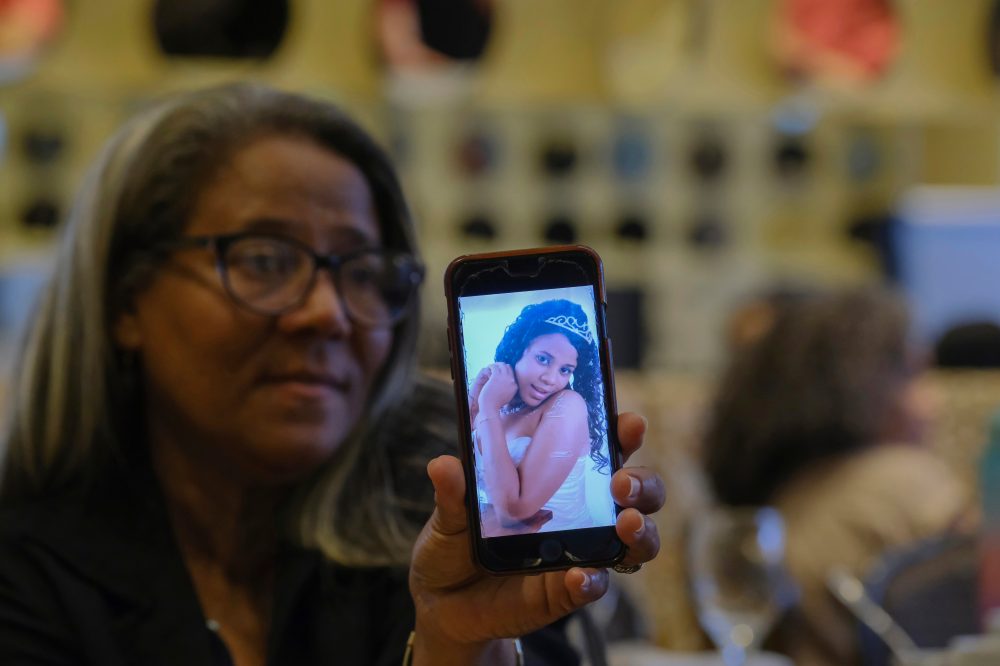
Rosa Herminia Hernández, the mother at the center of the case, spoke out in a statement: “My daughter died because she was denied the medical care she needed. No other mother should have to go through this.”
Her daughter, Rosaura Almonte, was just 16 years old when she died in 2012 from leukemia. At the time of her death, she was three weeks pregnant, according to the court filing.
The legal challenge is asking the court to permit abortions in cases involving rape or incest, situations where the life or health of a woman or girl is at risk, and pregnancies where the fetus has a condition incompatible with survival.
Attorney Patricia Santana Nina described the goal of the action in a statement: “This action seeks something very simple: that no woman or girl should have to choose between her life, her health and the law.”
Government data shows that at least 67,455 abortions were recorded in the public health sector between 2019 and late 2024, though those figures did not distinguish between spontaneous and induced procedures.
Separately, prosecutors filed 62 criminal cases related to abortion and 16 cases for attempted abortion between June 2017 and October 2022. The Prosecutor General’s Office stopped releasing that data after November 2022.
The court filing directly questioned the current policy, asking: “Is it legitimate to maintain a permanent criminal threat against women in medical emergencies solely to legally express a moral stance?”
The challenge also highlighted a 2023 case involving a woman with three children — one of whom was the result of a rape — who suffered an incomplete spontaneous abortion. Authorities detained her for 10 days in what the filing described as inhumane conditions, and she reportedly did not receive adequate medical attention. “The woman went to a health center seeking care and ended up being deprived of her freedom,” the filing stated.
Human rights advocates say it is frequently health care workers themselves who report women to law enforcement.
There are no dependable statistics available on how many women in the Dominican Republic have died as a result of clandestine abortions.
According to government figures, at least 585 girls between the ages of 11 and 14 gave birth in 2024. Additionally, at least 681 rapes were reported between January and July 2025, with activists pointing out that the true number is likely far higher due to underreporting.
The filing also argued that the ban deepens existing social inequalities. Women with financial means can access private medical care — either within the country or abroad — while those living in poverty face greater health dangers and a higher risk of criminal prosecution. “The women who are persecuted often share conditions of socioeconomic vulnerability, job insecurity, low educational level, or migratory status,” the challenge stated.