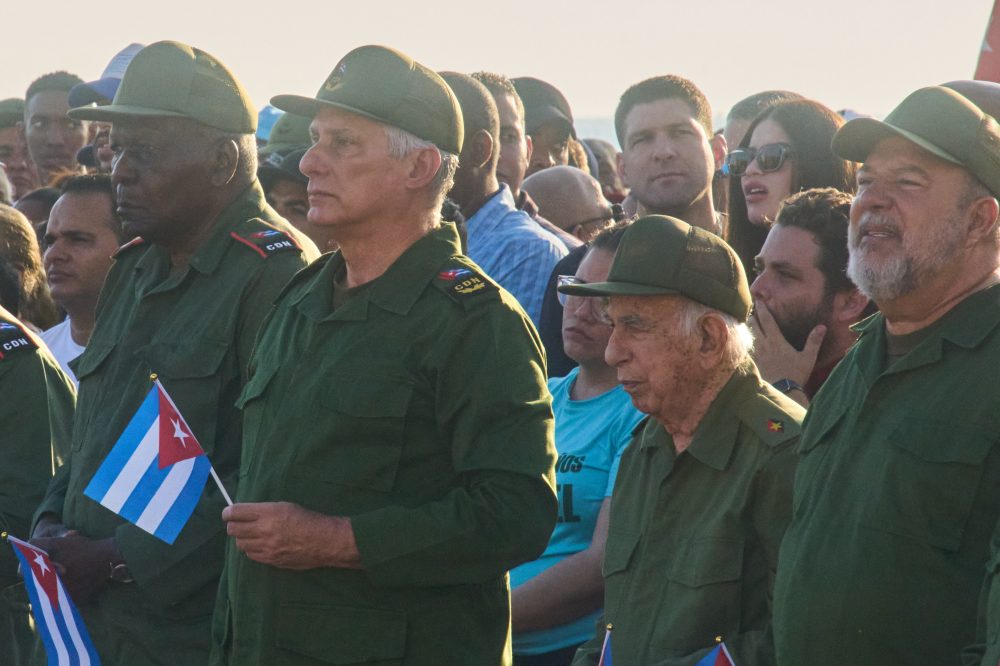

HAVANA (AP) — Cuba’s Communist Party, known as the PCC, gave its approval Thursday to an emergency economic package that includes unprecedented free-market measures designed to breathe new life into the country’s struggling economy at a time of intensifying pressure from the United States.
The plan, which has not yet been released to the public, is set to be submitted Thursday to Cuba’s National Assembly. Among its key elements are expanded opportunities for private businesses, greater independence for local municipalities and state-run companies, and steps to draw in more foreign investment — including money from Cubans living overseas.
The announcement follows a wave of unrest on the island, where residents in multiple Havana neighborhoods took to the streets in recent days, banging pots and pans in protest as electricity blackouts continued to spread across Cuba.
In the closing address of the Communist Party session late Wednesday — a speech that was released publicly on Thursday — President Miguel Díaz-Canel defended the island’s resilience while condemning outside pressure. “Cuba resists heroically and creatively, but has endured for too long a barbaric, undeserved and unbearable punishment, to which is now added the threat of military aggression,” he said.
Díaz-Canel noted that the emergency plan and the accompanying policy document, drafted by the Communist Party’s Central Committee, were modeled in part on the economic experiences of China and Vietnam — two communist-led nations that have introduced market-style reforms while keeping one-party political control intact.
The policy document will head to the National Assembly for debate during a special session. Like the recent party meeting itself, that session was called without any advance public announcement.
The move comes after months of escalating tensions with the U.S. and high-level conversations between the two countries that have included Raúl Castro’s grandson, Raúl Guillermo Rodríguez Castro. Washington has imposed numerous sanctions on Cuba and has indicted Raúl Castro in connection with the 1996 shooting down of two civilian aircraft operated by Cuban exiles based in Miami.
U.S. Vice President JD Vance addressed the situation at a White House press briefing, saying the administration is closely monitoring Cuba’s next moves. “We’re going to see what they do. And obviously, if they do one thing, we’re going to do something,” Vance said. “If they make smart decisions, we’re going to have a much better relationship with that island.”