Researchers are scrambling to western Thailand after a long-submerged train depot from World War II’s notorious “Death Railway” emerged from beneath a reservoir, offering an uncommon glimpse into one of the war’s darkest chapters.
The station, known as Nithe Station, sits in Kanchanaburi province and was uncovered after the Electricity Generating Authority of Thailand drained the reservoir at Vajiralongkorn Dam for routine maintenance. Historians are taking advantage of the rare window to search for artifacts and confirm historical details about the site.
The clock is ticking, however. Dam maintenance is expected to wrap up in August, and Southeast Asia’s rainy season could soon refill the reservoir, sending Nithe back beneath the water.
Nithe was a significant stop along the 415-kilometer (257-mile) railway that once linked Thailand — then called Siam — with Myanmar, which was known as Burma at the time. The line was constructed using the forced labor of roughly 60,000 Allied prisoners of war, primarily from Australia, the United Kingdom, the United States, and Indonesia, then called the Dutch East Indies. Hundreds of thousands of Asian laborers, referred to by the Japanese as römusha, also worked on the project.
The human cost was staggering. More than 12,500 Allied POWs and approximately 75,000 laborers died during construction — a toll that earned the route its grim nickname, “The Death Railway.”
The railway has been immortalized in popular culture, including the classic 1957 film “The Bridge on the River Kwai” and the 2013 movie “The Railway Man.” It also served as the subject of the award-winning novel “The Narrow Road to the Deep North,” which was adapted into a 2025 miniseries featuring Australian actor Jacob Elordi.
Independent Australian researcher Martyn Fryer made the journey from Perth specifically to walk the site. His grandfather perished as a prisoner of war while laboring on the railway following his capture in Singapore in 1942.
Fryer waded through muddy terrain in sweltering 38-degree Celsius (100-degree Fahrenheit) heat, saying he wanted to “understand what those lads went through and to appreciate the country and the terrain that they endured.”
Fryer, who authored a book about his grandfather’s regiment titled “From the Woodlands to the Jungle,” swept the historic railway embankments with a metal detector and uncovered iron dog spikes, bridge staples, and other wartime relics.
“I’ve been to Nithe Station three times in the past, but the water level has always been too high to actually really appreciate the fantastic offerings that it has with the remaining infrastructure and the layout of the railway itself,” Fryer said.
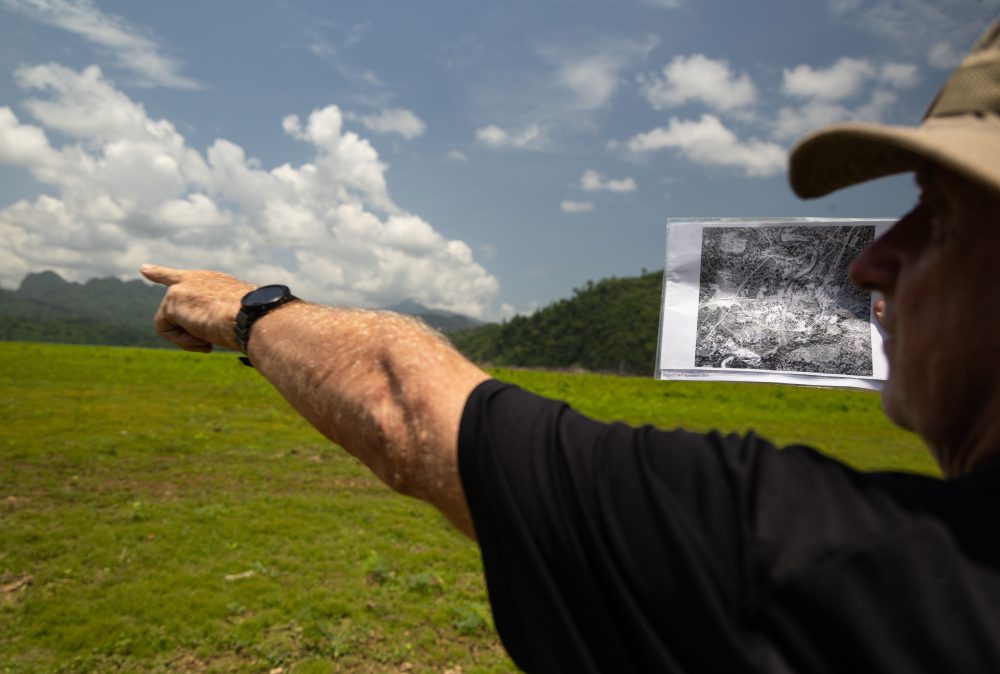
To help pinpoint where POW camps once stood, Fryer compared wartime aerial photographs sourced from the National Archives in London with hand-drawn maps brought by Andrew Snow, a researcher with the Thailand–Burma Railway Centre. Snow’s father, like Fryer’s grandfather, was captured in Singapore and compelled to work on the railway.
Snow noted that the dry season in Southeast Asia typically exposes small portions of the station, but this year water levels dropped lower than usual — and drained so rapidly that vegetation has not had time to grow back, making the site far easier to examine.
“It is a good opportunity for us to do some surveying,” Snow said. “When you’re dealing with relatives of people that worked on the railway, it’s always nice to be able to show them the areas that maybe their relative worked on.”
The exposed station has also drawn significant public attention. Kitti Laokham, a 47-year-old local resident, posted footage of Nithe online that has since accumulated 32 million views on social media. Hundreds of Thai visitors have traveled to the area to witness what Laokham described as a “rare incident.”
Channarong Noimala was among those drawn to the site, riding a motorbike 350 kilometers (217 miles) northwest from Bangkok after seeing the videos.
“At least for those who died here, no matter whether they are laborers or prisoners of war, we can remember them,” Noimala said.
Roughly 100 kilometers (60 miles) of winding mountain roads southwest of Nithe lies Hellfire Pass, a grueling stretch of mountain terrain where hundreds of POWs lost their lives. The Hellfire Pass Interpretive Centre, which is funded by the Australian government, welcomed a record 169,000 visitors last year — coinciding with the 80th anniversary of the end of World War II.
Mick Clarke, an Australian Army veteran who oversees the center, reflected on the site’s growing significance.
“As time passes, places like Hellfire Pass become even more important,” Clarke said. “They keep personal stories alive and help future generations understand the cost of war.”
According to Australia’s Department of Veterans’ Affairs, around 22,000 Australians became prisoners of war during the conflict, with about 13,000 working on the railway and 2,800 dying during its construction.
“For many Australians, Hellfire Pass is deeply personal,” Clarke added. “It connects families and the nation to a difficult but important chapter of wartime history.”
Russian regional authorities confirmed Tuesday that debris from a drone triggered a fire at an oil depot in the Krasnodar region, located in southern Russia just across from the Crimean peninsula.
The fire broke out at the oil storage facility in the Poltavskaya area of Krasnodar. Officials reported no casualties as a result of the blaze and shared the update through a post on Telegram.
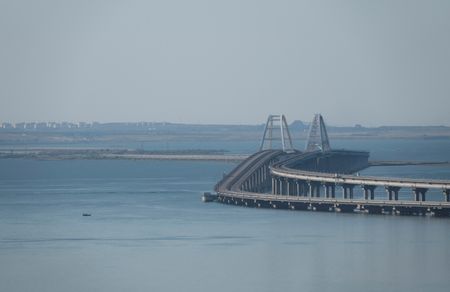
In response to the incident, authorities closed a local road that connects the affected area to a regional route leading to the bridge spanning the Kerch Strait — the crossing that links the Krasnodar region to Crimea. That bridge was constructed by Moscow following its annexation of Crimea in 2014.
The Kerch Strait bridge serves as one of several key supply routes into the Black Sea peninsula, alongside a handful of roads running through nearby Russian-controlled areas of Ukraine.
The fire comes just a day after Ukraine struck two bridges connecting Russian-held territory in Ukraine’s Kherson region to Crimea. The peninsula has been grappling with a fuel shortage as Kyiv has stepped up its attacks on Crimea’s supply lines in recent weeks.
The Krasnodar region, which draws large numbers of tourists during the summer months, has also been feeling the strain. The regional governor noted last week that disruptions to fuel supplies have led to panic-buying among residents, as Ukraine continues to target Russian energy infrastructure.
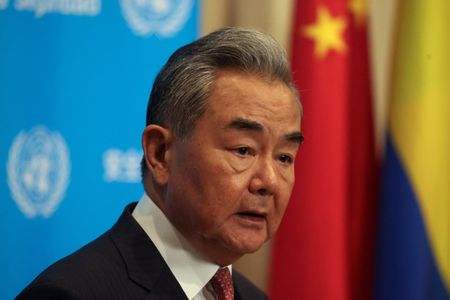
BEIJING — Nepal’s Foreign Minister Shisir Khanal sat down with China’s leading diplomat Wang Yi on Monday in Beijing, marking his first official visit to the neighboring superpower since his party claimed victory in March elections — and coming just days after he wrapped up a trip to China’s regional rival, India.
For Chinese diplomats, the change in government on their doorstep creates a tricky situation. Analysts say Beijing has been working hard to maintain strong ties with neighboring countries while also pressing its territorial claims in the East and South China Seas — and the removal of a Communist Party-led coalition government in Nepal complicates that effort.
According to a statement released by China’s foreign ministry late Monday, Wang told Khanal that “China has always placed Nepal at the forefront of its ‘neighbourhood diplomacy’” and pledged that China “will support Nepal in safeguarding its national sovereignty and territorial integrity.”
Analysts note that Nepal’s close relationship with the South Asian powerhouse India gives the country of roughly 30 million people some leverage when dealing with China — putting Beijing in the unusual position of having to demonstrate its value as a partner.
Nepal and India have had a long-running dispute over their shared 1,751-kilometer (1,088-mile) border that has stretched on for about 80 years. Still, when Khanal met with officials in Delhi earlier this month, he indicated that the new Nepalese government was “free from the political baggage from the past” and eager to strengthen ties with India.
Relations between Nepal and China have stalled in recent years, largely due to delays in delivering infrastructure projects tied to Chinese leader Xi Jinping’s signature “Belt and Road” initiative. Nepal joined that program in 2017, but disagreements over financing have slowed progress significantly.
During Monday’s meeting, Wang reaffirmed China’s intention to help build up Nepal’s infrastructure, pointing to planned cooperation in areas including electricity generation, road construction, ports, and aviation.
Eric Olander, co-founder of the China-Global South Project — a media and research organization — suggested China may not have anticipated the shift in Nepal’s political landscape.
“Beijing doesn’t like change that directly impacts them,” Olander said. “Change that is potentially hostile or challenges their interest is what gets their attention.”
“My guess is they didn’t see this coming in Nepal and they don’t like it when popular movements overthrow incumbent governments,” he added.
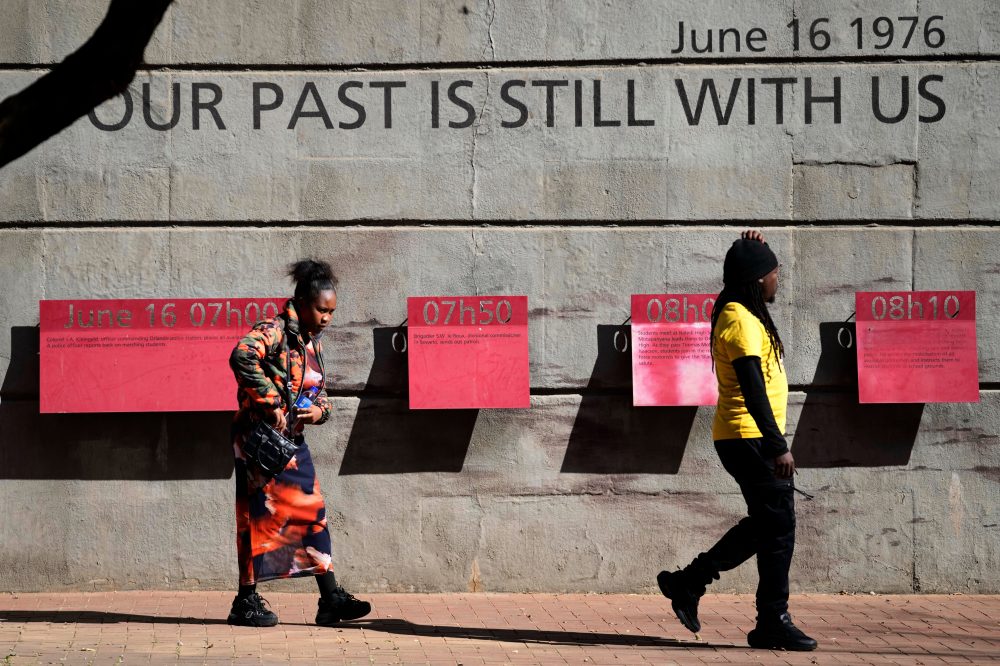
JOHANNESBURG (AP) — South Africa is marking half a century since the Soweto uprising, a deadly confrontation in which more than 200 young demonstrators were shot and killed by police while protesting the apartheid government’s education policies.
The events of June 16, 1976 — observed each year as Youth Day — are widely regarded as a turning point in the nation’s long struggle against white minority rule. The violence sparked further demonstrations across the country, intensified resistance to apartheid, and drew global attention to the racial oppression endured by Black South Africans.
Yet five decades later, serious concerns remain about the state of young people in the country. Uprising survivors, historians, and young South Africans alike have spoken out about the hardships still facing the nation’s youth — including deep inequality, high rates of unemployment, widespread poverty, and social issues such as drug and alcohol abuse.
Soweto, one of South Africa’s oldest townships, is dotted with landmarks tied to that historic day, drawing visitors from both home and abroad. Among them is a memorial named for Hector Pieterson, the 13-year-old whose lifeless body — captured in a photograph that circulated around the world — became one of the most recognizable images of the 1976 uprising.
Murals and billboards showing protesting students are visible throughout the township, which is also home to the June 16 Memorial dedicated to those events. For survivors, however, these symbols carry a heavy emotional weight.
Seth Mazibuko, who lived through the deadly protests, recalled in vivid detail how students pushed back against police attempts to break up the crowd using tear gas.
“They struggled with the tear gas because when they threw it our way, the wind would blow the gas back to them, so it was also affecting them,” Mazibuko said. “They then started sending the police dogs to us, we used stones to chase the dogs back to them.”
Mazibuko was arrested following the protests and held for 18 months before being sent to Robben Island, where he spent seven years imprisoned alongside other political prisoners.
South Africa has changed enormously in the 50 years since the uprising, but the so-called “born free” generation — those who grew up after the fall of apartheid — still faces steep obstacles.
“I would say the issues of poverty and crime are the most pressing ones,” said Sima Poto, a 19-year-old who was visiting the June 16 Memorial. “It is poverty that is leading many of them into crime.”
Zola Mguli, a 29-year-old who works with the Southern African Alcohol Policy Alliance — an organization focused on combating alcohol and substance abuse — said he feels fortunate to have grown up in a free South Africa, even as major problems persist. “Things are not going as well as our forefathers hoped, there is still racism, alcoholism and other things we are battling with,” he said. “But if we, the youth, rise up, we can do better.”
Historian Noor Nieftagodien described the 1976 student protest movement as both a traumatic and transformative moment that fundamentally shifted the anti-apartheid struggle by elevating young people to the center of liberation politics.
“This was a generation that was young, gifted, and Black,” he said. “They wanted education.”
“The idea of Black power resonated with this new generation of young people,” Nieftagodien added. “Black consciousness was kind of electrifying; it inspired university students and then increasingly also students in high schools.”
He expressed concern that since June 16 was declared a public holiday after apartheid’s end, the day’s deeper significance has faded, overshadowed by festivities that he believes dilute its political meaning.
“It has lost its meaning,” he said. “What has happened is that we’ve had the day marked with concerts, etc. I’m all for concerts. But, in fact, in so doing, the kind of celebrations that have been organized have been disinvested from politics, from a critical understanding of what happened.”
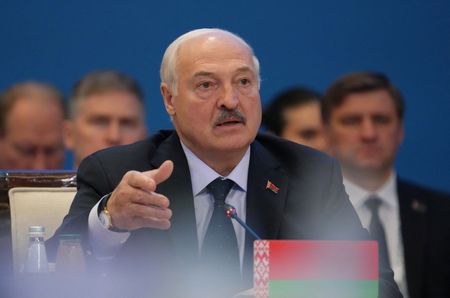
Belarusian President Alexander Lukashenko, one of Russian leader Vladimir Putin’s closest allies, is calling on both Russia and Ukraine to make compromises in order to bring their long-running war to an end. The comments came in an interview published Monday with Al Arabiya television and later republished by Belarus’ Belta news agency.
Lukashenko stated that a battlefield victory is simply not realistic for either side, even as he acknowledged that Russian forces continue to move forward in certain areas.
“Today, we need to use any steps to reach a peaceful agreement through compromises. For the long term,” Lukashenko said in the interview.
He went on to say that if both sides come to understand the limits of what force can achieve, a deal becomes possible. “If they realise on both sides … you can’t go further, otherwise there will be escalation and an even worse situation … If this sinks into the minds of the fighters and their supporters, it means a compromise can be reached,” he said.
Belarus permitted Russia to launch its full-scale invasion of Ukraine from Belarusian soil back in 2022 and has since allowed Moscow to station nuclear weapons within its borders. Russia’s early push toward the Ukrainian capital of Kyiv ultimately failed, and over the past four years the conflict has settled into a grinding war of incremental gains in Ukraine’s south and east, at enormous cost to both sides in lives and equipment.
Lukashenko extended his assessment beyond Ukraine, arguing that military solutions are off the table in multiple global conflicts. “Neither side has a military solution. There is no military solution in Ukraine or in the Middle East,” he said.
While describing Russian forces as advancing “step-by-step” against determined Ukrainian resistance, Lukashenko pointed to a critical problem facing both armies — a shortage of personnel. “Russians are experiencing this shortage. Maybe not like in Ukraine, but it’s there. But that’s the main issue of this conflict — they are running out of people,” he said.
Lukashenko has consistently maintained that Belarusian troops will not be sent into the conflict in Ukraine, while also stating that Russia and Belarus would stand together in their own defense. Meanwhile, Ukrainian President Zelenskiy has said his forces have strengthened their positions on the battlefield in recent months and has raised concerns that Russia could use Belarusian territory as a launching point for new attacks.
Lukashenko pushed back on those concerns, insisting Ukraine has nothing to fear from Belarus. “Absolutely nothing to fear. Absolutely. They know it, the soldiers know it. The people of Ukraine know it,” he said, adding that “this topic gets stirred up by political ambitions.”
Efforts to broker peace through U.S.-led negotiations have hit a wall, with Washington’s focus now largely directed toward the conflict involving Iran. Zelenskiy has repeatedly urged direct talks with Putin.
A group of indigenous Taiwanese set off Monday on a historic ocean voyage, paddling a handcrafted wooden canoe across the Bashi Channel toward the Philippines in an effort to breathe new life into a maritime route that has gone unused for hundreds of years.
The travelers are members of the Tao people, who call Orchid Island home — a Pacific island located roughly 50 nautical miles off Taiwan’s southeastern county of Taitung. The Tao share deep cultural and ancestral ties with the indigenous inhabitants of the Batanes Islands, which lie to the north of Luzon, the Philippines’ main island.
The canoe making the journey, called Ovayan — meaning “Golden Friendship” — was built by craftspeople from six different communities on Orchid Island as part of a government-supported initiative. The crossing is expected to take approximately 24 hours, with 60 paddlers rotating in shifts while support vessels travel alongside for safety.
Maraos, who serves as chairperson of Taiwan’s Indigenous Peoples Cultural Foundation and is himself a Tao from Orchid Island, described the deeper purpose behind the expedition. “So with this project, we are re-establishing the sea route between Orchid Island and Batanes, allowing our cultures and languages to continue being passed on,” said Maraos, who goes by one name.
One of the rowers, Hsieh Hsiu-hsiung, 61, a diving instructor, acknowledged both the challenges and the comfort of having modern vessels nearby. “Nowadays we have modern vessels accompanying us and sailing together with us, so we are not afraid,” Hsieh said. “In the past, we don’t know what methods our ancestors used; perhaps looking at the stars and the moon, to navigate while sailing.”
The Tao are among Taiwan’s smaller indigenous communities, numbering only around 5,000 people. Indigenous groups as a whole make up less than 3% of Taiwan’s total population of 23 million.
While Orchid Island draws visitors as a tourist destination, its remote location and frequent bouts of rough weather can leave it cut off from the Taiwanese mainland for stretches of time.
The Bashi Channel, which the canoe must cross, is a strategically significant waterway linking the South China Sea to the Pacific Ocean — an area regularly patrolled by Chinese warships. Maraos expressed hope that the voyage would be met with respect rather than interference. “We hope that this voyage can be respected by all countries,” he said. “Most importantly, we do not want to be harassed by warships from other countries or vessels from other countries while we are at sea.”
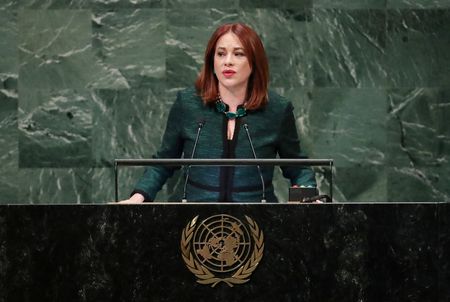
An Ecuadorean candidate seeking to become the next United Nations secretary-general told a candidacy hearing Monday that while the global organization remains vital, it must be reduced in size in a thoughtful and deliberate way.
Maria Fernanda Espinosa, who previously served as both foreign affairs minister and defense minister of Ecuador, is one of six people competing to take over from Antonio Guterres when his term concludes at the end of this year.
Whoever steps into that role will inherit a massive challenge: breathing new life into an organization that has seen its influence and reputation diminish in recent years.
“I am under no illusion about the difficulties ahead, yet I remain optimistic,” Espinosa stated during her candidacy hearing.
Like the other candidates in the running, she pledged to push forward with reform efforts at the UN, while stressing that the need for the organization — founded in the aftermath of World War Two — was still “undeniable.”
“Too often the U.N. is missing in action, or relegated to the sidelines. Too often it is slow, fragmented, and constrained … the U.N. needs to rebuild credibility and show, not just say, that it can deliver real change,” she said.
She also made clear her vision for restructuring: “We can shrink the U.N. responsibly, while strengthening national ownership and delivery, and restoring faith in the U.N.”
Espinosa, who previously served as Ecuador’s ambassador to the UN and led the UN General Assembly between 2018 and 2019, suggested that national governments could take on expanded roles in areas where the UN currently operates, though she did not elaborate on specifics.
Within Ecuador, she was part of the leftist administration of former President Rafael Correa, though she has distanced herself from his political party over the past several years.
The small Caribbean island nation of Antigua and Barbuda put her name forward as a candidate to replace Guterres. Ecuador’s current government, led by President Daniel Noboa — a right-wing ally of U.S. President Donald Trump — has not weighed in on her candidacy.
Last week, Guyana’s President Irfaan Ali announced that his country would put forward its UN Ambassador, Carolyn Rodrigues-Birkett, for the position.
Back in April, four additional candidates also pledged their commitment to UN reform while emphasizing the organization’s core missions of promoting peace and supporting global development. Those candidates are Rebeca Grynspan, a former vice president of Costa Rica; Michelle Bachelet, the former president of Chile; Macky Sall, a former president of Senegal; and Rafael Grossi of Argentina, who currently serves as director-general of the International Atomic Energy Agency.
The selection process is expected to conclude later this year. Notably, no woman has ever held the position of UN secretary-general.
By tradition, the secretary-general is not drawn from one of the five permanent members of the Security Council — Britain, China, France, Russia, and the United States — though the support of those powerful nations plays a crucial role in the complex and opaque selection process.
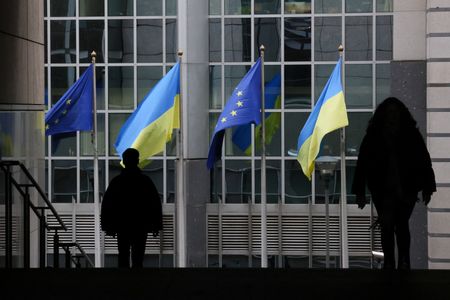
BRUSSELS — The European Union has opened up its emergency cyber security assistance program to Ukraine, according to an announcement from the European Commission on Monday.
Under the newly extended access, Ukraine is now able to activate incident response services through vetted private providers whenever the country faces significant or large-scale cyber incidents.
Moldova had already been brought into the same support framework back in 2024, making Ukraine the latest nation to gain access to the program.
When Herut Davidson hits post on a video in Arabic, she braces for the reaction. Some viewers respond with hostility, calling her a propagandist. But others — sometimes reaching out quietly, and sometimes from countries where any contact with Israelis is considered off-limits — tell her that hearing an Israeli Jewish woman speak their language has transformed their perspective.
Davidson is an Israeli content creator who has grown an audience of more than 90,000 followers between TikTok, where she goes by hurriya.it.is.me, and Instagram, where she posts as hurriya.its_my_name. Her goal is as ambitious as it is controversial: communicating directly with Arab-speaking audiences in their own language during a period when war, deep political divisions, and clashing narratives have made mutual understanding harder than ever.
For Davidson, social media represents both a challenge and a chance. She has noted that traditional news outlets tend to leave everyday people relying on official or dominant versions of events, while social platforms give individuals the power to speak for themselves and reach audiences directly.
One message that has stuck with her captures the essence of what she is trying to accomplish — a viewer telling her: ‘Thanks to your content, I don’t hate Israelis anymore.’
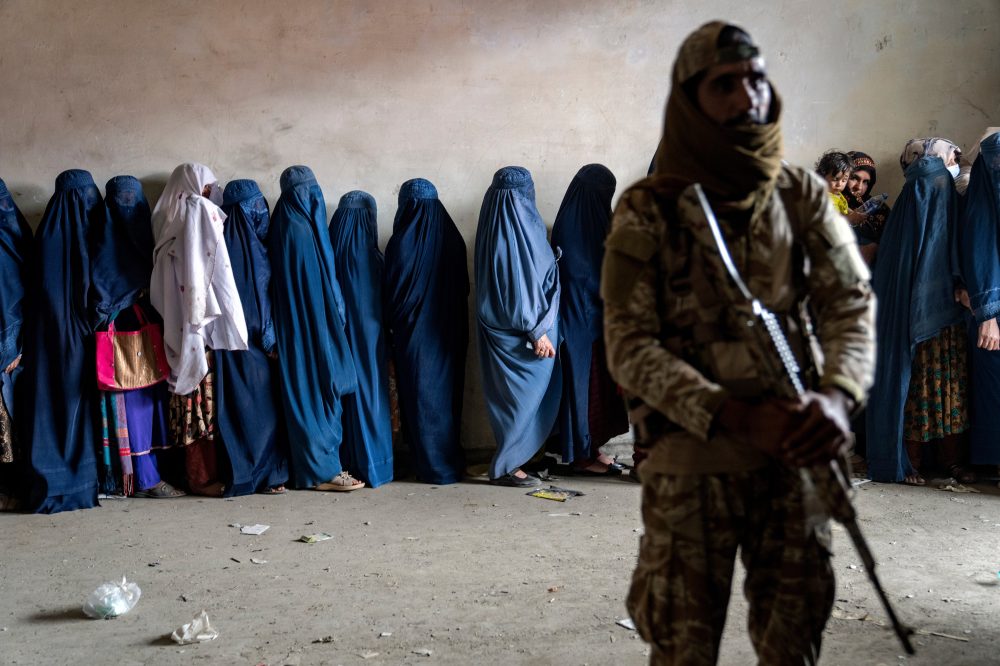
The United Nations Security Council voted unanimously on Monday to demand that Afghanistan’s Taliban leadership swiftly undo its crackdown on women’s rights and take action against militant groups operating within Afghanistan’s borders — groups that Pakistan blames for deadly cross-border attacks.
China’s UN Ambassador Fu Cong, whose country put forward the resolution, expressed hope that the Afghan government would “take more proactive measures to protect human rights, especially the rights of women, and project an image of openness, inclusivity and responsibility.”
The measure extends the UN’s political mission in Afghanistan through June 17, 2027, and gives it authority to support the delivery of humanitarian aid “without discrimination.” It also directs the mission to promote governance at both the national and local levels “without any discrimination based on sex, religion or ethnicity, with the full, equal, meaningful and safe participation of women, … minorities, youth and persons with disabilities.”
The vote came after Taliban authorities arrested at least 30 women in the western city of Herat this month, accusing them of violating the Taliban’s rigid dress requirements. A rare public protest that erupted in response to those arrests was forcibly broken up by Taliban police, who shot and killed one person and wounded several others, according to the UN mission known as UNAMA.
The Taliban have governed Afghanistan since 2021, following the chaotic exit of U.S.-led military forces. Since taking power, they have enforced a strict reading of Islamic law, or Shariah, imposing sweeping restrictions on women and girls — including banning girls from attending school beyond the primary level and barring women from many types of employment. Religious and ethnic minorities have also faced significant restrictions.
The resolution also authorizes the UN mission to help facilitate dialogue between the Taliban and neighboring countries as well as the broader international community.
U.S. deputy ambassador Jennifer Locetta stressed that action from the Taliban is essential for any progress. “For that political process to succeed, the Taliban must act,” she said. “The Taliban must meet their counterterrorism commitments, respect Afghanistan’s international obligations, end hostage diplomacy, and cease their unconscionable abuses of the human rights of women and girls.”
Meanwhile, tensions between Afghanistan and Pakistan continue to simmer. Pakistan accuses Afghanistan of sheltering militants responsible for deadly attacks on Pakistani soil — a charge the Taliban rejects. Hundreds of people have died in clashes between the two nations since February, when Afghanistan launched attacks against Pakistan in retaliation for Pakistani airstrikes conducted inside Afghan territory.
Pakistan’s UN Ambassador Asim Ahmad welcomed the resolution, saying it “expresses the council’s serious concern over the presence of terrorist groups in Afghanistan, which continue to constitute a threat to international peace and security.”
The resolution also tasks UNAMA with supporting Afghanistan’s economic recovery, including helping to facilitate business and financial activity and backing efforts to return assets belonging to Afghanistan’s Central Bank “for the benefit of the Afghan people.”
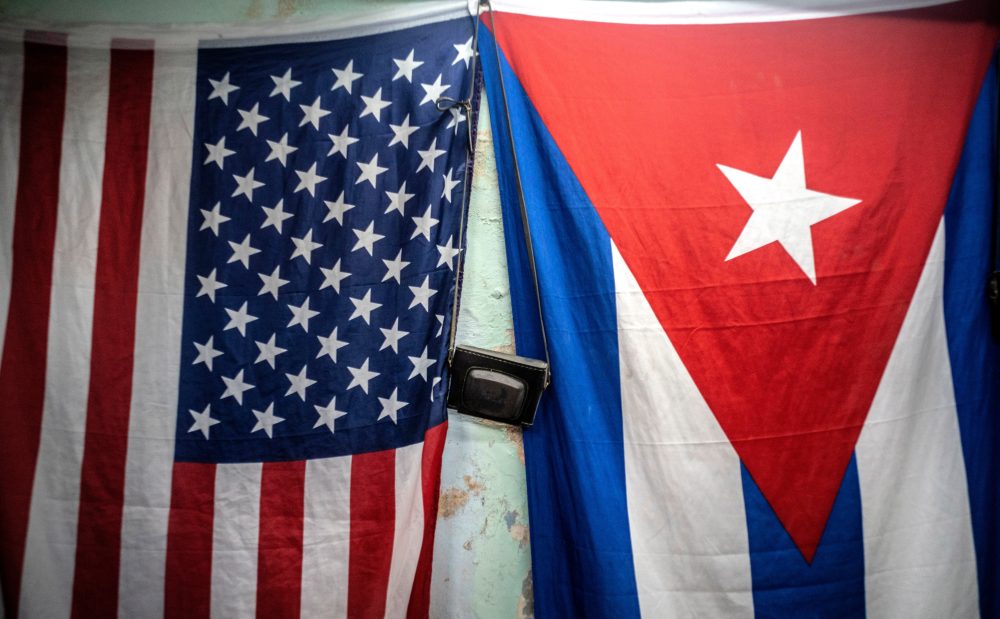
MIAMI (AP) — One of the primary websites that Cubans living in the United States rely on to send money, food, and clothing to family members back home has halted its operations as the Trump administration intensifies its economic pressure on the Cuban government.
Envioscuba.com has announced it is no longer accepting new orders, a move that comes amid escalating rounds of U.S. sanctions designed to cut off international financial support for Cuban businesses. The most recent sanctions have targeted Cuba’s state-owned oil and gas company, Cuban President Miguel Diaz-Canel, and GAESA — a large business conglomerate controlled by Cuba’s Revolutionary Armed Forces that operates everything from car rental agencies and retail shops to transportation companies.
The burden of these measures is falling hardest on ordinary Cubans, who are already struggling with severe shortages of food and medicine, near-constant power outages, and extreme heat. Many have depended on support from relatives and friends in the United States, who send money and packages from Miami filled with appliances, groceries, and clothing — or purchase goods through online portals for delivery directly on the island.
While Envioscuba.com says it will honor and deliver all orders that were previously placed and approved, no new purchases are being accepted. The site offered little explanation for the decision, stating only: “Due to reasons beyond our control, our platform can no longer provide services.” It remains unclear exactly when the site stopped accepting new orders.
Attempts by the Associated Press to reach the company were unsuccessful. The website provides no phone number or email address for contact.
Emilio Morales, president of Havana Consulting Group — a Miami-based firm that focuses on market strategies for doing business in Cuba — explained that platforms like Envioscuba.com were operating in direct partnership with Grupo de Administración Empresarial S.A. He noted that most of these portals, including Envioscuba.com, do not actually ship products from the U.S. to Cuba. Instead, they sell and arrange delivery of goods already stored in GAESA warehouses on the island.
Morales predicted more closures are on the horizon. “The trend is for all of this to disappear, because GAESA is behind it all,” he said, adding that other similar platforms are likely to shut down as well rather than risk being penalized for conducting business with the Cuban government.
The sanctions carry serious consequences for foreign companies, threatening to freeze their U.S.-held assets and potentially bar their investors, employees, and shareholders from traveling to the United States — effectively cutting them off from the American financial system entirely.
In a related development, Spanish hotel chain Meliá recently announced it will stop managing 15 of the 34 hotels it currently operates in Cuba, adding to a growing number of international companies that are pulling back or scaling down their presence on the island.
HAVANA (AP) — Cuba’s most vulnerable patients are bearing the brunt of U.S. energy restrictions, with surgical procedures being postponed, kidney dialysis schedules thrown into chaos, and children battling cancer facing a dramatically higher risk of death, according to a report released Monday by Cuban state-run outlet Cubadebate.
The report reveals that the survival rate for children with cancer has plummeted from 85% to just 65% since energy restrictions took effect in January. It also states that 100,000 children under the age of 7 are no longer receiving the daily liter of milk they had previously been provided by the government, and that Cuba’s 16-vaccine immunization program for infants is now considered “at risk.”
The report further notes that 100,000 Cubans are currently waiting for surgical procedures, and that treatment schedules for nearly 3,000 patients who require kidney dialysis have been thrown off course. On the medication front, 300 out of 395 essential medicines normally produced on the island are now unavailable due to shortages of the chemical components needed to make them.
Cuba operates a free, universal healthcare system, but that system has been pushed to its limits by a combination of resource shortages, scarce fuel supplies, and power outages lasting more than 20 hours at a time.
The island went three months without receiving a fuel shipment after the U.S. took action against Venezuela, one of Cuba’s key oil suppliers, and threatened tariffs against any nation that sells or delivers oil to Cuba.
Cuba was already struggling under a significant tightening of longstanding U.S. sanctions, which restrict the country from importing certain goods. The Trump administration has demanded that Cuba’s socialist government free political prisoners, undertake sweeping economic reforms, and change how it governs — or risk being deemed a national security threat. Cuba has consistently maintained that it does not pose any threat to the United States.
As the standoff between the two nations intensifies, United Nations officials have sounded alarms about a looming humanitarian disaster. In late March, the UN launched an emergency fundraising appeal on behalf of the island.
Paolo Spadoni, an associate professor at Augusta University in Georgia, described the current situation in stark terms. “What we are experiencing now is a unique situation,” he said. “There is no doubt that there were problems with healthcare and basic services in Cuba, but there is also no doubt that these recent events have vastly amplified what was already happening, and that we are now in a different dimension.”
While Spadoni acknowledged that Cuba faces real challenges and systemic failures that require reform, he argued that “it is impossible to deny” that the United States carries responsibility for the “acute humanitarian crisis” now unfolding there.
Monday’s Cubadebate report also revealed that roughly 1,400 megawatts of electricity generating capacity have gone offline due to shortages of diesel and fuel oil at smaller power plants, and that larger thermoelectric plants are unable to receive the spare parts they need.
Bread supplies have also been cut roughly in half compared to pre-restriction levels, the report said, due to “logistical and payment hurdles” in wheat procurement. A lack of fuel has also prevented the delivery of 170 containers of essential goods across the country.
The report concluded with a pointed statement: “Beyond numbers and coercive measures, the blockade amounts to an extreme and unjustifiable form of collective punishment inflicted on the Cuban people.”
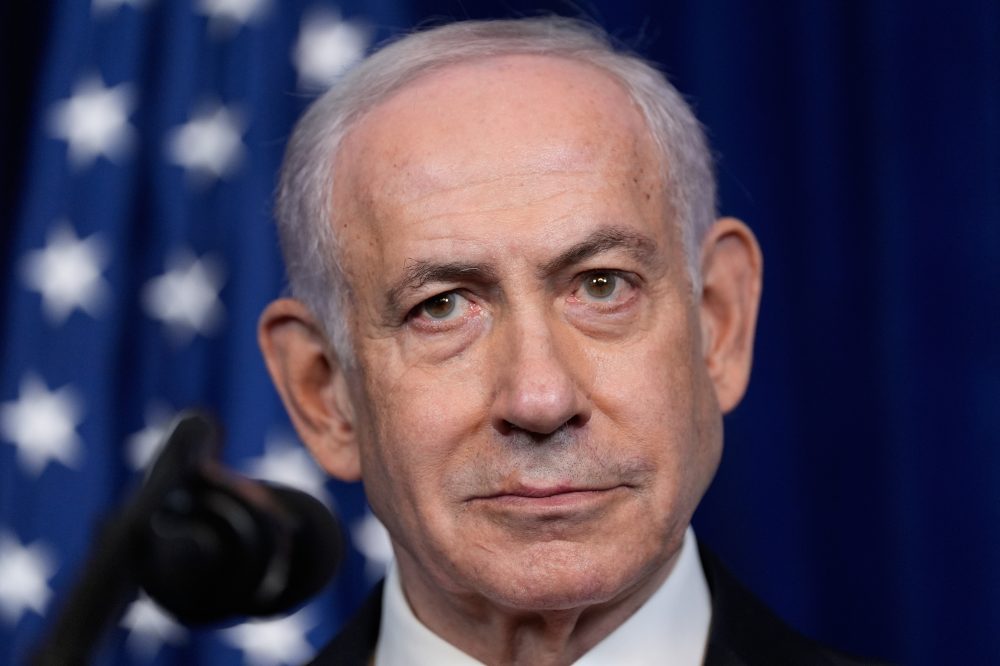
Israeli Prime Minister Benjamin Netanyahu declared Monday that while negotiations over a potential deal with Iran are ongoing, the final terms of any agreement remain unknown — but he made one thing clear: Iran will not be permitted to acquire nuclear weapons.
At a press conference, Netanyahu declined to draw comparisons between the current diplomatic effort and past negotiations, saying it was too early to do so.
“I would not make that comparison yet,” Netanyahu said. “We do not know what the agreement will be.”
Netanyahu argued that the key distinction between now and previous rounds of diplomacy is the presence of a credible military threat against Iran. He pointed to a large-scale air campaign as evidence of that pressure.
“I can say that the fundamental difference between the situation then and the situation today is that every agreement must be accompanied by a credible military threat,” he said. “Back then there was no credible military threat. There was no military threat. Today, because of what we did — not only the United States, because of us, because we went in there with 14,000 sorties — that is the biggest difference.”
He later clarified the figure, saying the total number of sorties was approximately 140,000, split roughly evenly between Israel and the United States.
“About 140,000 sorties, roughly half and half,” Netanyahu said. “For us, a little, roughly half and half between the United States and us. There is a credible military threat.”
The prime minister framed his stance as the product of a lifelong commitment to keeping nuclear weapons out of Iranian hands.
“I can speak about my commitment as prime minister of Israel, who has devoted most of his adult life to only one thing: preventing Iran from obtaining nuclear weapons,” he said.
Netanyahu contended that without the steps he has taken over the years, Iran would already be a nuclear-armed state.
“If I had not done the things I did over the years, Iran would long ago have had atomic bombs,” Netanyahu said. “So they do not have them, and I do not intend for them to have them.”
He left no doubt that Israel would take whatever action is needed to ensure that outcome.
“We will do what is necessary,” he said. “Again, I am not limiting myself in any way regarding that objective, and that objective is simple: Iran will not have nuclear weapons.”
When asked whether Israel was bound by any provisions in the US-Iran agreement relating to Lebanon or Iran, Netanyahu made clear that the deal is being driven by Washington.
“This agreement is being made by the United States, by the president of the United States,” he said. “He thinks he can truly combine both the opening of the straits and the elimination of the nuclear program.”
Netanyahu said he has communicated his views directly to President Trump, while acknowledging that the United States is leading the diplomatic effort.
“I said this is his decision,” Netanyahu said. “I repeat and say: This is his decision. He is leading this, and of course I expressed my opinion in various conversations.”
On the question of his relationship with President Trump, Netanyahu acknowledged that disagreements do occur between the two leaders, but said their longstanding ties remain intact. He noted that while they frequently see eye to eye, there are moments when their positions differ, and that his decisions are driven by Israel’s security needs rather than public appearances.
“We have known each other for a long time,” Netanyahu said.
Netanyahu also pushed back against suggestions that Operation Rising Lion had failed to achieve its goals. He argued that the campaign had neutralized what he described as an existential threat, severely damaged Iran’s economy and infrastructure, and helped set conditions under which the Iranian people might challenge their own government.
He also reaffirmed Israel’s commitment to maintaining a security buffer zone in Lebanon, dismissing Iranian demands that Israel withdraw.
“Second, regarding Lebanon, we created a buffer zone there, a security zone,” Netanyahu said. “We will remain in it as long as required. Iran wanted us to withdraw from there. That did not happen.”
He attributed Israel’s refusal to withdraw, in part, to his own firm resolve.
“Do you know why that did not happen?” Netanyahu said. “Among other things, because I stood very, very firm. I was very, very decisive on this matter, and I think our American friends respect that determination and that firm stand.”
Netanyahu said the security zone is essential for protecting communities in northern Israel.
“We are staying there because we need to protect the residents of the north, and there are other things as well,” he said. “In any case, we want to preserve, and are acting to preserve, our freedom of action.”
The prime minister also reported that Israeli forces carried out operations Monday against individuals who threatened or approached Israeli troops in a hostile manner.
“If people come and attack us, attack us or come to attack us, as happened today — then we eliminated four terrorists,” he said. “Two motorcyclists who approached our forces in a threatening manner were eliminated, and afterward two more terrorists.”
Netanyahu closed by reiterating Israel’s dual objectives of maintaining military freedom of action and holding the security zone to shield northern residents.
“We are preserving our freedom of action, and we are preserving the security zone in order to protect the residents of the north,” he said.
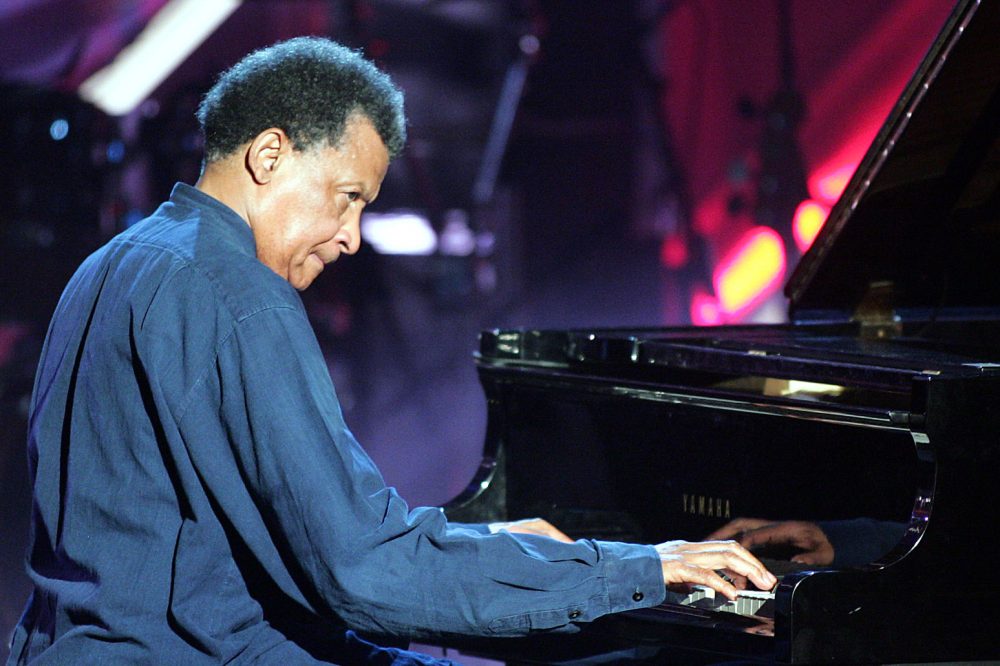
JOHANNESBURG — The world of jazz is mourning the loss of one of South Africa’s most celebrated musicians. Abdullah Ibrahim, formerly known as Dollar Brand, died peacefully in Germany at the age of 91 following a short illness, with family members by his side. His family made the announcement in a statement released Monday.
A native of Cape Town, Ibrahim built an extraordinary career as a pianist, composer, and bandleader over more than seven decades. He became known for weaving together jazz and South African musical traditions in a way that earned him recognition as a cultural ambassador, connecting audiences around the globe to the sounds and spirit of his homeland.
Among his most memorable moments was performing at Nelson Mandela’s presidential inauguration in 1994 — a milestone that cemented his place in South African history. His final concert on South African soil came just recently, at the Cape Town International Jazz Festival in March, where he once again demonstrated the extraordinary talent that defined his life’s work.
His partner, Dr. Marina Umari, offered a heartfelt tribute, saying he “passed away peacefully with South Africa and its people in his heart.” She added, “His love for his country never wavered, no matter where in the world he found himself.”
His family expressed that while Ibrahim’s life has come to an end, his influence and voice will continue to echo across the world for generations to come.
South African President Cyril Ramaphosa honored Ibrahim’s memory, recognizing both his contributions to the fight against apartheid and the enduring impact of his music. “Today our nation mourns the passing of an international icon and global citizen whose profound creations honored the South Africa that shaped his political commitment and musical brilliance,” Ramaphosa said.
In 2009, Ibrahim received an Honorary Doctorate in Music from Wits University. That same year, former President Jacob Zuma presented him with the Order of Ikhamanga, one of South Africa’s most prestigious civilian honors.
Alan Winde, the mayor of the Western Cape — the region that includes Ibrahim’s hometown — also paid his respects, saying, “South Africa has lost a legend. Abdullah Ibrahim represented everything that makes South Africa and the Western Cape so remarkable. His music told the story of our unique cultural diversity and past.”
According to his family, Ibrahim will be buried in the German state of Bavaria, where he had made his home.
BOGOTÁ, Colombia — Colombia’s largest active rebel organization has declared a self-imposed ceasefire as the South American nation braces for a highly contentious presidential election this coming weekend.
The National Liberation Army, commonly known by its Spanish initials ELN, announced through its official X account that its fighters have been ordered to stand down from attacks against the Colombian military between June 20 and June 23. The country’s presidential election is scheduled for Sunday, June 21.
In its statement, the ELN said it stands behind citizens’ “right to vote freely” and emphasized that the group does not wish to “threaten any of the candidates, or stop people from voting.”
The rebel organization also took aim at outside nations, warning against any foreign involvement in the electoral process. “We cannot accept any involvement by leaders of other countries in political decisions that should only concern Colombians,” the statement read.
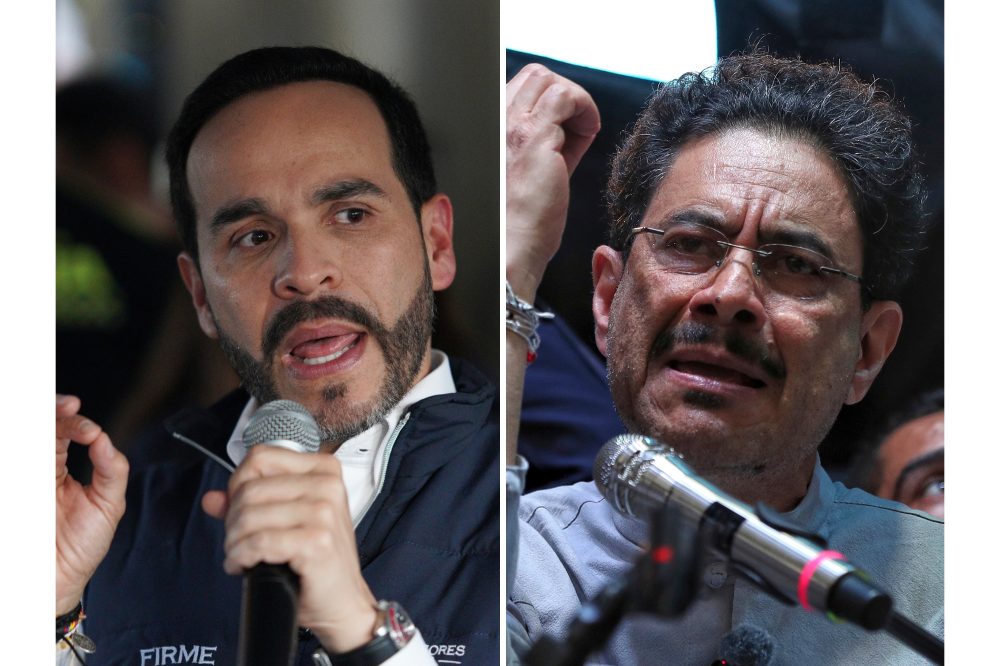
The election is shaping up to be a sharp contest between Sen. Iván Cepeda, a political ally of sitting President Gustavo Petro, and conservative attorney Abelardo de la Espriella, who received an endorsement from U.S. President Donald Trump earlier this month. De la Espriella has pledged to take a harder line against remaining rebel factions by ending peace negotiations that began under President Petro.
Political critics have long argued that rebel groups in Colombia have exploited past ceasefires as opportunities to rebuild their ranks, restock weapons, and tighten their control over rural areas, where they run extortion schemes and intimidate those who interfere with illegal operations.
The Petro government launched formal peace talks with the ELN back in 2023, but those negotiations collapsed in 2025 after the rebels carried out a string of violent attacks in northeastern Colombia that drove more than 56,000 residents from their homes.
Despite that breakdown, the Petro administration is still engaged in talks with other armed factions — including the Gulf Clan — groups known for controlling drug trafficking corridors and profiting from illegal mining operations.
Last week, the De la Espriella campaign called on Colombian prosecutors to look into whether rebel groups pressured voters in 109 isolated municipalities to cast ballots for Cepeda. The ruling party candidate pulled in over 70% of the vote in those areas during the first round of voting on May 31. Cepeda has flatly denied any connection between his campaign and rebel groups.
In that first-round contest, which featured 14 candidates, Cepeda received 40.9% of the total vote while De la Espriella led with 43.7%.
Colombia’s Defense Ministry estimates that the ELN maintains a force of more than 6,000 fighters operating across Colombia and Venezuela, where the group profits from illegal gold mining and the drug trade.
The ELN was established in the 1960s by union organizers and intellectuals motivated by social justice causes and inspired by the Cuban revolution. Over the decades, however, the group has become associated with criminal enterprises in the territories it controls, including extortion rings and attacks on oil infrastructure. President Petro himself has described the group’s leadership as “drug traffickers disguised as guerrilla fighters.”
A tentative agreement between the United States and Iran aimed at ending their conflict and reopening the Strait of Hormuz caused oil prices to fall sharply, as markets anticipated a return of energy supplies. However, industry insiders warn that getting back to pre-war production and refining levels could take anywhere from weeks to years.
Here is a breakdown of what the deal means for global energy.
What Changes Right Away?
U.S. President Donald Trump announced that the Strait of Hormuz — a critical shipping corridor for the world’s oil and gas — would reopen on Friday. Iran had effectively shut down the waterway for months. Trump also said he had ordered an end to a U.S. blockade of Iranian ports.
Iran’s deputy foreign minister, Kazem Gharibabadi, stated that a broader agreement addressing the wider conflict would be worked out during a 60-day ceasefire, which would also include sanctions relief for Iran.
How Quickly Can Oil Production Restart?
Several major Middle East oil producers — including Iraq, Kuwait, Saudi Arabia, and the United Arab Emirates — were forced to cut millions of barrels per day of crude output because of the Strait’s closure.
The International Energy Agency’s latest report indicates that more than 14 million barrels per day of oil production is currently offline, which represents about 14% of total global demand.
According to an official familiar with the situation, some production — such as in Iraq — could resume within less than a week once a restart decision is made. Other operations will require considerably more time.
Analysts at Wood Mackenzie offered this assessment: “Assuming operators choose a measured and controlled ramp-up, our analysis suggests the fields affected by the Strait’s closure could get back to 70% of prior production within three months and to 90% within six months. The last 1 million bpd or so will take considerably longer.”
Why Are Refineries a Problem?
The conflict shut down as much as 3.52 million barrels per day of refining capacity as of May 7, according to industry monitor IIR — roughly 3.5% of the world’s total refining capacity, with some facilities sustaining damage.
Refineries that were closed as a precautionary measure could be back online within a couple of weeks, analysts say. Repairing damaged facilities, however, will take longer.
Bader Nooruddin, head of research at Vitol Bahrain, said earlier this month that Gulf refineries could recover to between 90% and 95% of capacity within 40 to 60 days.
Energy research firm Rystad Energy estimates that total repair costs across the Middle East will average around $46 billion, with refining and petrochemical facilities accounting for the largest portion due to the complexity and extent of the damage.
What About Natural Gas and LNG?
Early in the conflict, major liquefied natural gas operations — including those in Qatar — either halted or significantly reduced output following attacks on their facilities.
Once a decision to restart is made, it will take approximately two weeks to convert gas into its super-chilled liquid form and reach full operating capacity.
The liquefaction process — which involves cooling natural gas to around minus 162 degrees Celsius (minus 260 degrees Fahrenheit) — requires a deliberately slow cooldown to prevent thermal shock. The processing lines, known as LNG trains, cannot all be restarted at the same time and must be brought back online in sequence.
Qatar Energy kept three of its processing trains running throughout the war to supply Kuwait and Bahrain. However, a full return to capacity will take years. QatarEnergy’s CEO has said that Iranian attacks destroyed 17% of Qatar’s LNG capacity for as long as five years.
Oil Stockpiles Will Take Years to Rebuild
The global supply disruption has drained the world’s oil reserves significantly, and restoring them to normal levels will be a lengthy process — potentially taking years.
According to the U.S. Energy Information Administration, stockpiles in the world’s largest economies are on track to hit their lowest levels since at least 2003, depleted at a record pace due to the loss of Gulf production.
Paul Gooden, head of natural resources at investment manager Ninety One, put it plainly: “It will take several months to fully normalise flows, and we estimate that global oil inventories have shrunk by more than 1 billion barrels since the start of the conflict.” At current prices, one billion barrels would be valued at more than $83 billion.
Gooden added: “Oil markets will therefore likely suffer a ‘hangover’ for several years as governments seek to rebuild inventories and to insulate themselves from further geopolitical shocks.”
RIO DE JANEIRO — Brazilian authorities were on the scene Monday examining the wreckage from a deadly midair collision between two helicopters that claimed six lives the day before, near a suburb of Rio de Janeiro.
American singer Oliver Tree appeared on the passenger list submitted to aviation authorities for one of the helicopters, which came down in the parking lot of a car dealership. However, police had not yet confirmed that his body was recovered from the crash site.
Law enforcement confirmed the identities of five victims: Gaspar Prim Díaz, an Argentine content creator who went by the name Gaspi and had amassed more than 2.8 million subscribers on YouTube; fellow Argentine Lucas Vignale; and three Brazilian nationals — Lucas Brito, Charles Marsillac, and Alexandre Souza. The identity of one additional foreign victim had not yet been established.
A Rio de Janeiro police investigator, Alan Luxardo, told reporters at the crash site Monday that human error may have played a role in the collision. He said authorities were working to determine whether a pilot or an air traffic controller bore responsibility for the disaster.
Tree, who is 32 years old, had been traveling through South America and Europe as part of a world tour with scheduled stops in Argentina, Brazil, Portugal, and Spain. The day before the crash, on Saturday, the singer and comedian had posted a lighthearted video of himself playing soccer in a Brazilian neighborhood.
Fellow public figures began paying tribute to Tree on social media Sunday. Among them was Jake Paul, a promoter known for high-profile boxing matches against professional fighters, who described Tree as “one of the most kind and funny people in the world.”
Drew Binsky, a content creator recognized for having visited every country on earth, shared on Instagram that Tree had reached out to him for travel tips, since the singer shared a similar goal of visiting every nation.
“We just spoke a few days ago and I was planning to show him around Prague in three weeks,” Binsky wrote. “He has become a great friend of mine and is genuinely one of the kindest and most positive people I’ve ever met.”
Argentine streaming channel Blender also expressed grief over the loss of Gaspi in a post on X, writing: “Every one of us will miss you.”
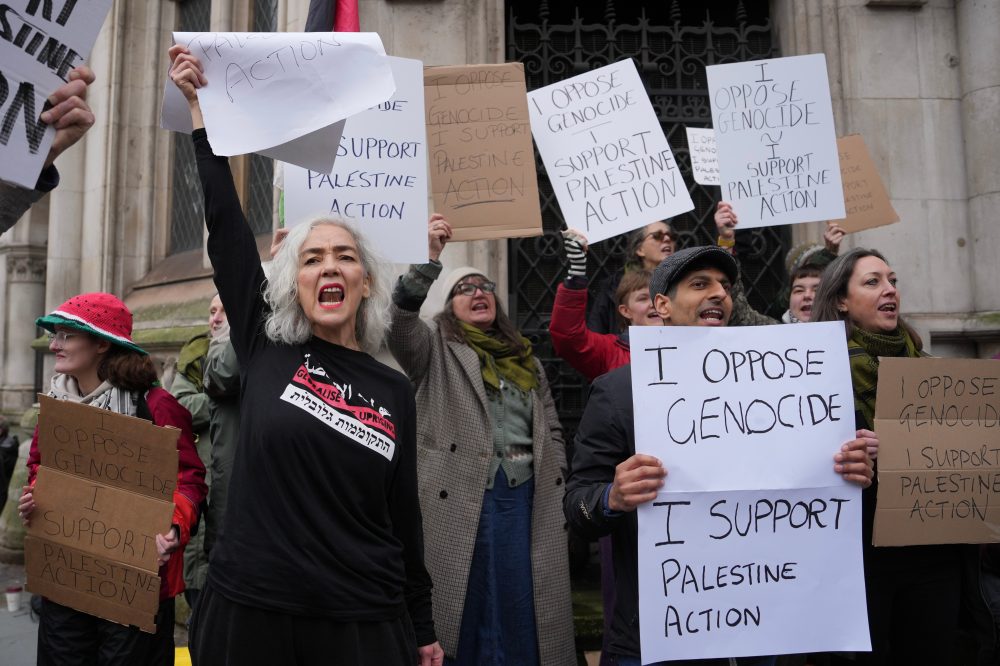
The United Kingdom’s Court of Appeal has determined that the British government acted within the law when it labeled Palestine Action a terrorist organization, overturning a February ruling by the High Court that had declared the ban unlawful.
The High Court had previously found the designation to be “disproportionate,” but the appeals court reached the opposite conclusion. Lady Chief Justice Baroness Carr, joined by fellow appeal judges, determined that Palestine Action openly encouraged violence that meets the legal threshold for terrorism and that the group functioned through hidden, cell-like networks rather than open acts of civil disobedience.
The British government originally designated Palestine Action under the Terrorism Act 2000 in July 2025, citing a pattern of direct-action demonstrations and property destruction at sites connected to the defense industry.
Anne Herzberg, who serves as Legal Advisor of NGO Monitor, expressed support for the court’s decision. “The Court of Appeals made the right decision to uphold the government’s proscription of Palestine Action as a terrorist organization. Since October 7, the group has gotten more and more extreme, vandalizing insurance companies, the BBC, and defense company offices,” she said.
Herzberg also described how the group broke into the offices of Israeli military technology company Elbit Systems, causing more than a million pounds worth of damage and fracturing the spine of a police officer. Four individuals involved in that incident were handed prison sentences last week.
Herzberg further noted that approximately a year ago, the group broke into a UK air force base and damaged aircraft at a sensitive moment for Western defense. “The group has long had shadowy organizing structure and financing. Their actions go far beyond any definition of peaceful protest. It is no surprise that those defending the group and decrying the court decision are also some of the loudest voices promoting antisemitic rhetoric and apologizing for the terrorism of Hamas and Hezbollah,” she added.
With the Court of Appeal’s decision now in place, the government’s position that Palestine Action’s conduct warrants designation under the Terrorism Act 2000 has been fully restored.
Gulf and Arab nations are rallying behind a newly reached agreement between the United States and Iran to cease military operations and enter into detailed talks aimed at a permanent settlement — with leaders across the region expressing optimism about what the deal could mean for stability and security.
Saudi Arabia’s Foreign Ministry announced Monday that the kingdom supports the agreement and offered praise for the mediation work carried out by Pakistan and Qatar, as well as the willingness of both Washington and Tehran to reach a deal.
Saudi Foreign Minister Prince Faisal bin Farhan also spoke by phone Monday with Iranian Foreign Minister Abbas Araghchi. During that conversation, Prince Faisal expressed his support for the agreement and said Saudi Arabia hopes it will bolster both regional and international security while keeping momentum behind efforts to achieve lasting peace.
The United Arab Emirates called on all parties to fully carry out the preliminary agreement, specifically urging an immediate halt to hostilities and firm guarantees ensuring freedom of navigation through the Strait of Hormuz. The UAE’s Foreign Ministry also noted that the country suffered considerable damage from strikes during the conflict.
Kuwait similarly embraced the provisions calling for a permanent end to military activity and the protection of maritime traffic through the Strait of Hormuz. The Kuwaiti government commended the mediation efforts of Pakistan, Qatar, and other nations involved, and expressed hope that unresolved disputes could be addressed through what it described as principles of “good neighbourliness, mutual respect, non-interference in the internal affairs of states and an end to support for proxies.”
Qatar said the agreement has the potential to bring military operations to a permanent close and reaffirmed its commitment to diplomacy and dialogue, while also recognizing Pakistan’s contributions to moving the process forward.
Egypt characterized the deal as a meaningful step toward regional and international stability, saying it hopes the arrangement will help build trust and encourage further diplomatic engagement. Cairo also expressed a desire for international focus to shift back toward Gaza and the West Bank, and for renewed progress on the next phase of President Donald Trump’s peace initiative.
Lebanese Parliament Speaker Nabih Berri, President Joseph Aoun, as well as Iraq, Turkey, the Gulf Cooperation Council secretary-general, and Jordan all joined in welcoming the agreement, each describing it as a positive development for regional security, stability, and future diplomatic efforts.
Israeli Prime Minister Benjamin Netanyahu has told President Donald Trump that Israel refuses to withdraw its forces from Lebanon and does not consider itself bound by any Lebanon-related terms in a developing agreement with Iran, according to Israeli sources.
Netanyahu communicated to Trump that Israeli military forces would hold their current positions in Lebanon and press forward with operations targeting Hezbollah, including dismantling terrorist infrastructure and responding militarily to any attacks on Israel, the sources said.
The Israeli cabinet gave Netanyahu unanimous support for this approach during a cabinet meeting, with ministers aligned behind the view that Israel must continue pursuing its security interests in Lebanon, according to those same sources.
Defense Minister Israel Katz echoed the position firmly, stating: “Prime Minister Netanyahu and I are leading a clear policy that establishes that the IDF will remain in the security zones in Lebanon, Syria and Gaza — indefinitely to protect the border and Israeli communities from jihadist elements.”
Katz also declared, “We oppose the IDF’s withdrawal from Lebanon, despite all the existing pressures and those that will come.”
Katz confirmed that the message had been delivered directly to Washington. He said Netanyahu raised the matter with Trump and other American officials, while Katz himself brought it up in a separate conversation with U.S. Secretary of Defense Pete Hegseth.
Israel’s stance stands in sharp contrast to statements from other parties. Pakistan Prime Minister Shebaz Sharif said the involved parties had “declared the immediate and permanent termination of military operations on all fronts, including in Lebanon.” Iran’s Deputy Minister of Foreign Affairs Kazam Gharibabadi similarly called for a “permanent and immediate end to the war on all fronts, including Lebanon.”
Adding to the tension, Trump publicly condemned Israeli airstrikes carried out Sunday against Hezbollah targets in the Dahieh area near Beirut. The strikes came after Iran threatened to walk away from the ceasefire and retaliate.
According to a report by Axios, Trump told Netanyahu he had “no f—ing judgment” over the timing of the strikes.
In a separate interview with Fox News, Trump said: “A deal will be signed within two or three hours. I told Netanyahu — what the hell are you doing?”
Trump also took to his Truth Social platform, writing that the strike “should not have happened, particularly on a special day when we are so close to a Peace Deal with Iran.”
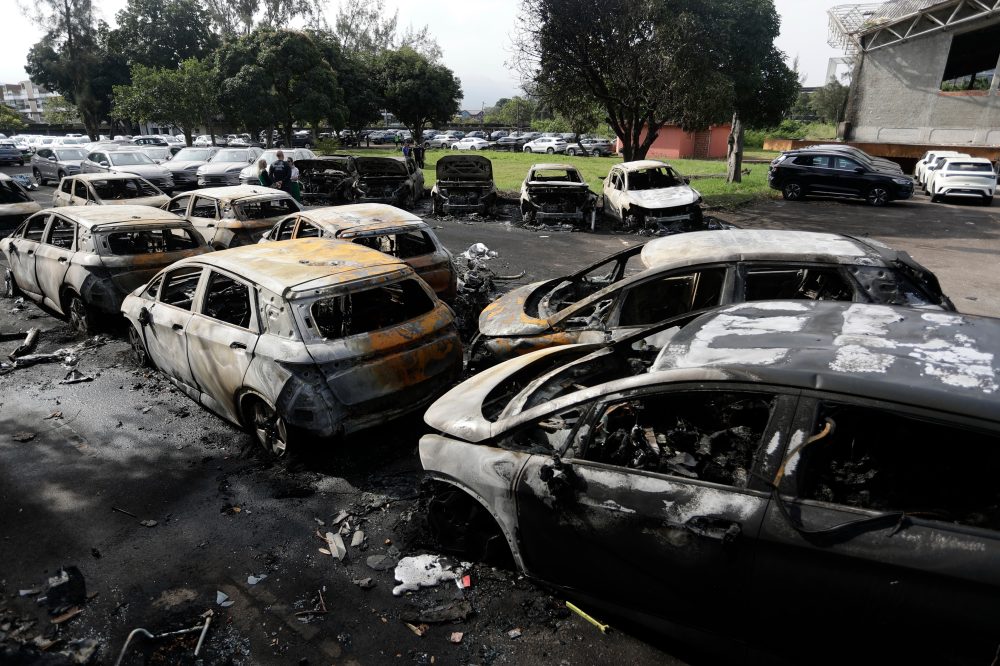
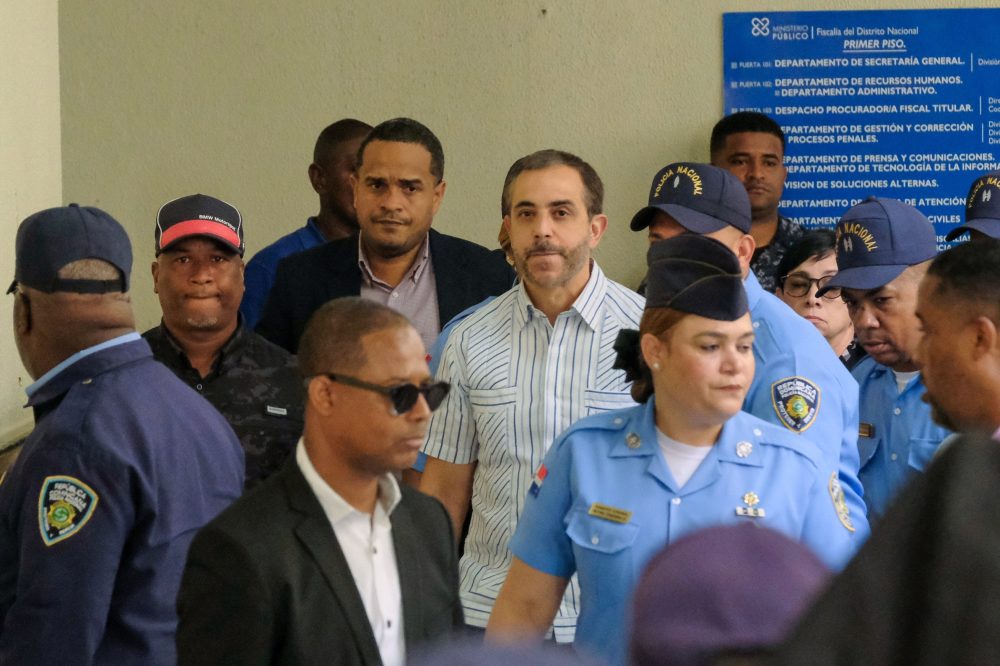
SANTO DOMINGO, Dominican Republic — A judge has ordered the sibling owners of a Santo Domingo nightclub to stand trial following a deadly roof collapse that claimed 236 lives and left more than 100 others injured last year.
Magistrate Reymundo Mejía Zorrilla of the First Court of Instruction of the National District in Santo Domingo issued the ruling Monday, determining that Antonio and Maribel Espaillat, owners of the Jet Set nightclub, will face charges of involuntary manslaughter. If convicted, each could receive up to two years behind bars.
The catastrophic collapse occurred on April 8, 2025, sending shockwaves throughout the Dominican Republic as rescue workers spent days desperately trying to pull survivors from the debris.
The decision drew sharp disappointment from families of the victims, who had gathered outside the courthouse beforehand — roughly 30 relatives holding hands and praying together. Many had been pushing for homicide charges, which carry far heavier penalties of up to 20 years in prison.
Prosecutors had previously accused the Espaillat siblings of attempting to intimidate or manipulate employees. Antonio Espaillat is described as a prominent business figure with ownership of upscale entertainment venues and dozens of local radio stations. The Public Prosecutor’s Office has said it holds hundreds of pieces of evidence connecting the two to the collapse.
At the time of the disaster, the venue was packed with hundreds of attendees — including athletes and politicians — who had come to see a performance by singer Rubby Pérez, who was among those killed. Former Major League Baseball pitcher Octavio Dotel was also at the event; he was pulled from the wreckage alive but later died at a hospital.
The Espaillat siblings will be tried together, though no trial date has been announced.
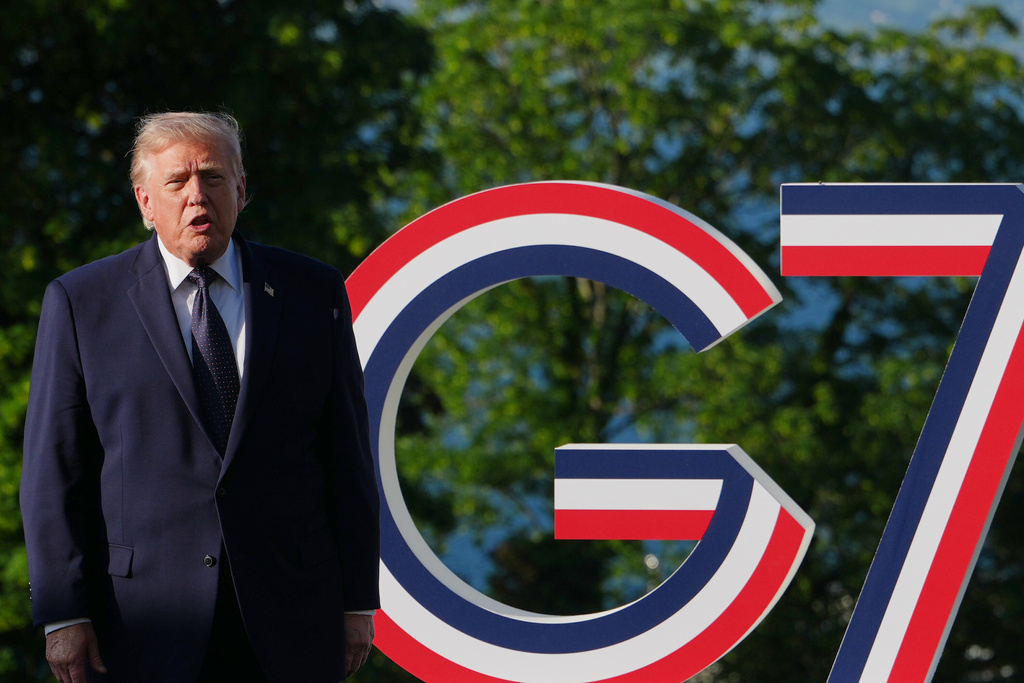
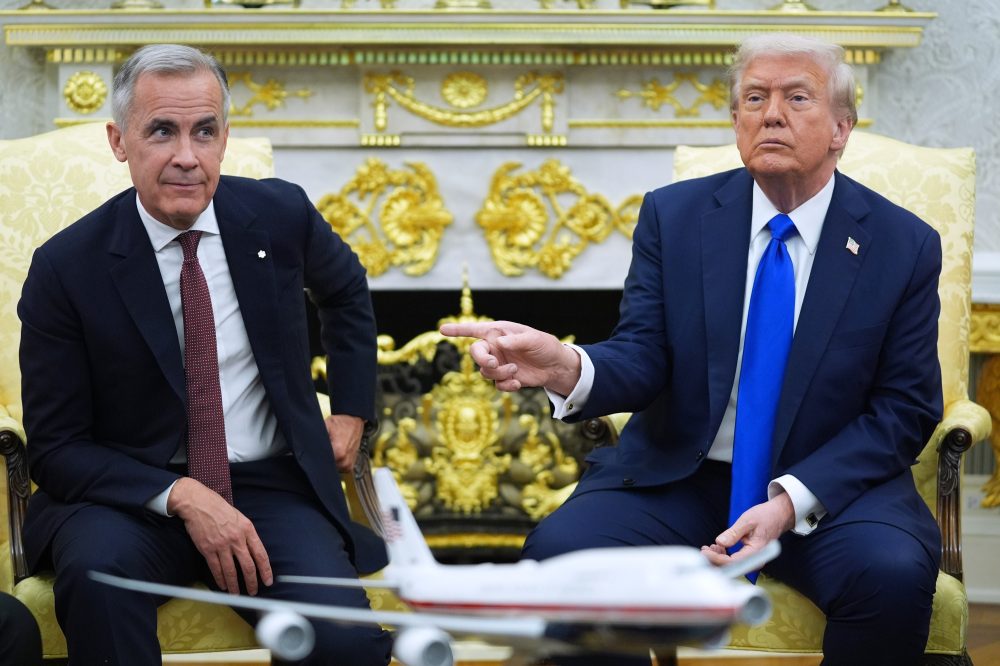
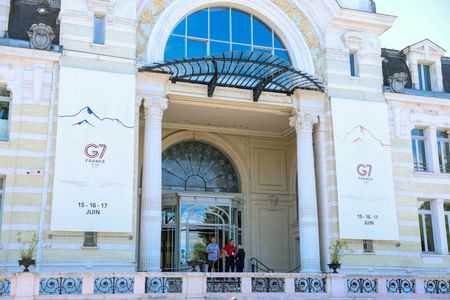
World leaders have descended on a French spa town for a high-stakes Group of Seven summit, arriving with fresh momentum after President Donald Trump announced an agreement he says will bring an end to the U.S. war against Iran.
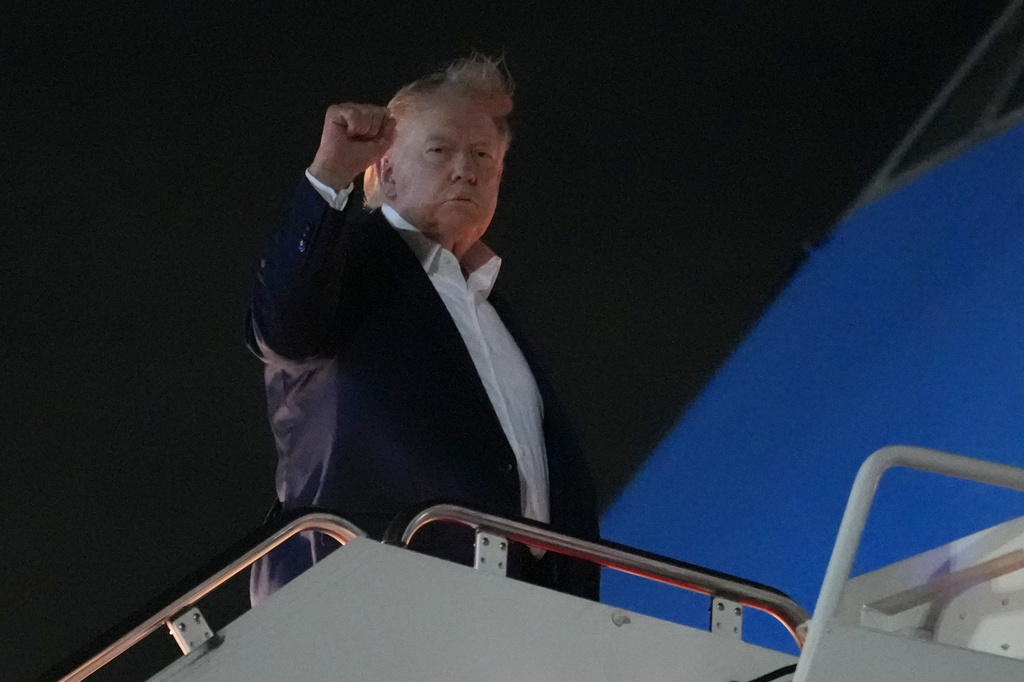
Trump touched down in Evian-les-Bains, France, on Monday to begin talks with fellow G7 leaders — some of whom have been openly critical of how he handled the roughly 15-week conflict, which has sent global energy prices surging.
Tensions have been running high between Trump and the leaders of France, the United Kingdom, Germany, and Italy over his decision to go to war without consulting them. Trump has threatened to pull back U.S. troops stationed in all four countries — all NATO members — as a consequence of their lack of support.
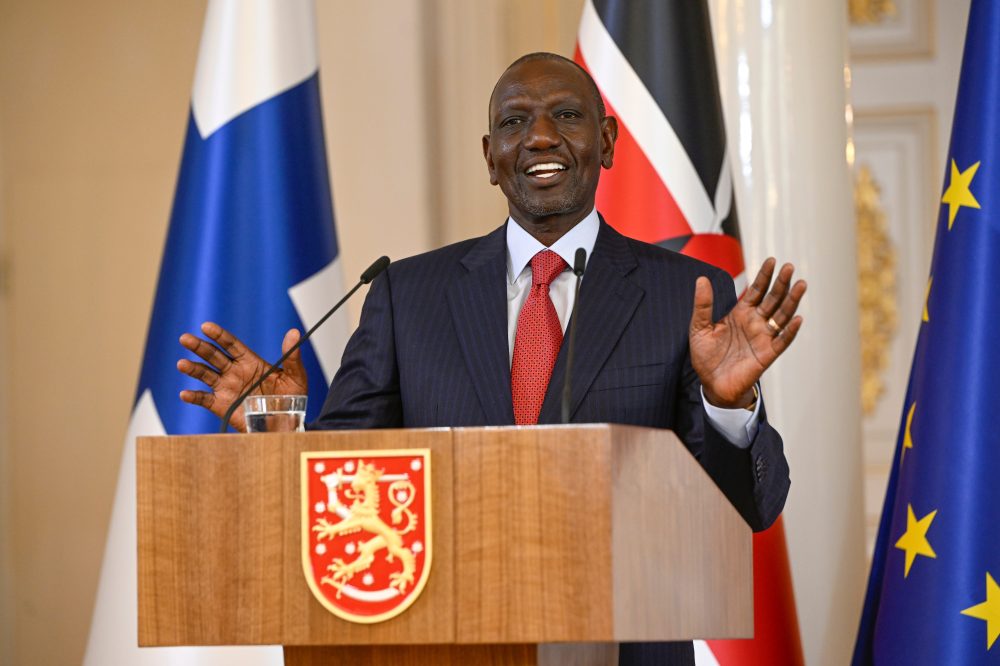
The G7 consists of France, the United States, Canada, Germany, Italy, Japan, and the United Kingdom. Several guest nations are also participating in this summit, including Brazil, Egypt, India, Kenya, South Korea, Qatar, Syria, Ukraine, and the United Arab Emirates.
Macron Tells Trump French Forces Are Ready to Move Into Strait of Hormuz
During a face-to-face meeting with Trump, French President Emmanuel Macron said France could send fighter jets as early as Tuesday to conduct observation flights over the strategically critical waterway. He noted that France’s nuclear-powered aircraft carrier, already positioned in the Middle East, could also be deployed rapidly.
The offer is part of a broader push by France and other G7 allies to reopen the Strait of Hormuz as quickly as possible to restore the free flow of energy to world markets, following the tentative U.S.-Iran ceasefire agreement.
“Within 48 hours, frigates could also be deployed. And within two to three days, the aircraft carrier,” Macron said.
Trump responded by saying, “I don’t think we’re gonna need much help” because the strait is “going to be open.” He added, “But I don’t think it’s a bad idea to have a ship or two up here from a few countries. You’d be a great country to do it,” directing the comment at Macron.
Trump’s Schedule Includes Leader Greetings and Working Dinner
Following his one-on-one meeting with Macron, Trump was set to take part in a formal welcome with the other G7 leaders before heading to a working dinner at 7:30 p.m. local time — the final item on his public agenda for Monday.
When asked whether he would be present at Friday’s formal signing ceremony for the Iran agreement, Trump said he wasn’t sure. “Well, it depends,” he said during a joint appearance with Macron. “I may be involved. I may not.”
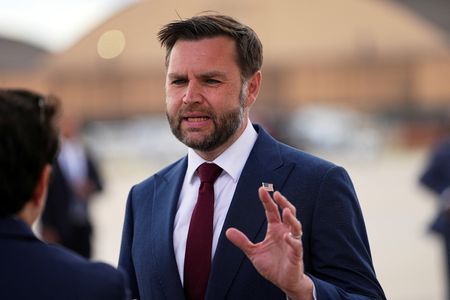
Trump mentioned that Vice President JD Vance had originally been slated to attend: “JD was coming in for that.”
While expressing optimism about the deal, Trump tempered expectations. “Hopefully we get along,” he said. “If we don’t, we go back to where we started.”
Trump Touts Iran Deal, Points to Oil Prices and Stock Market
Speaking alongside Macron at the G7, Trump spoke enthusiastically about the agreement reached with Iran. “I think a lot of great things are going to happen in the Middle East right now, and very importantly the oil is plummeting down and the stock market is shooting up like a rocket today,” he said.
Trump also said he “felt badly that we had to go back on the attack for two nights” and expressed hope for a constructive relationship going forward. He arrived at the summit fresh off celebrating his 80th birthday at a UFC event held at the White House on Sunday.
Anti-G7 Protesters Accuse Police of Provocation
Organizers of Sunday’s “No G7” demonstration are demanding an apology from Geneva security and judicial officials after police deployed tear gas and water cannons against stone-throwing protesters.
Organizers said police surrounded roughly 300 people overnight — including minors, tourists, and bystanders. In a statement Monday, they declared the protest a success: “The No G7 demonstration of June 14 surpassed all our expectations,” adding that “30,000 took part despite the climate of anxiety created by the Geneva State Council (and sometimes by the media).”
Law enforcement put the crowd at 20,000, including approximately 600 so-called “black bloc” militants.
Geneva Police Detail Their Response to Protests
Geneva police brought more than two dozen individuals to police stations and made three arrests related to violence during Sunday’s anti-G7 march. Geneva police chief Monica Bonfanti said officers checked the identities of nearly 550 people and used tear gas and water cannons in response to stone-throwing youth.
Three people were arrested — two for firing pyrotechnic devices and one for damaging a police vehicle — and were later released, Bonfanti said. She noted that “black bloc” tactics made identity checks difficult, as some militants blended in with peaceful protesters and changed their clothing mid-demonstration.
U.S. Military: Iran Blockade Remains in Place
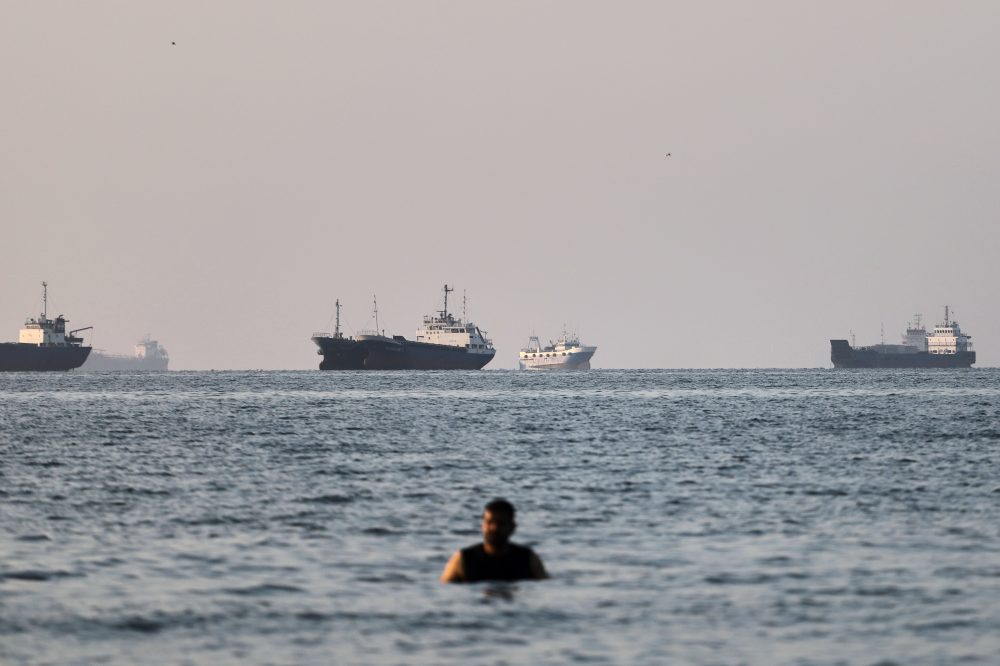
The U.S. military issued an advisory to merchant vessels Monday stating that the blockade of shipping to Iranian ports will remain active “pending execution” of the ceasefire deal set for Friday. “Do not attempt to cross until explicit direction is given,” the notice read.
Ship captains were urged to consider the safety of their crews and avoid sailing to or from Iranian ports until further guidance is issued. The advisory also warned that failure to comply with instructions from those enforcing the blockade “may result in rapid escalation to disabling or destructive fire.”
Ambassador Charles Kushner on Hand to Welcome Trump
Ambassador Charles Kushner, Trump’s top envoy to France and the father of Trump’s son-in-law, was present to greet the president when Marine One touched down in Evian-les-Bains. Kushner, a real estate developer, holds the prestigious diplomatic post. His son, Jared Kushner, is serving as an envoy in the Iran negotiations and is also involved in efforts to bring an end to the Russia-Ukraine war.
Vance: Iran Deal Already Signed Digitally
Vice President JD Vance revealed that an interim agreement to end the conflict in Iran was electronically signed on Sunday, ahead of a formal ceremony scheduled for Friday in Geneva. “We already signed the deal digitally yesterday, and there’s been no money released, and that won’t change,” Vance said on “Good Morning America.” “Again, this is a performance-based thing.”
Some critics and Iranian media reports have suggested that Iranian assets would be released upon signing, but Vance pushed back. “We’ll be releasing the text this week, and what everybody will see is that Iran doesn’t get a dime of money unless they perform their obligations,” he said.
Vance Outlines Expectations for the Deal
In a Monday appearance on CNBC, Vance said the White House hopes to release the full text of the agreement this week. “I think when people see this deal — we hope to release the text this week — they’re going to realize that this is going to make the whole region safer,” he said.
Vance said the expectation is that the Strait of Hormuz will be “opened in a toll free way for the long term,” though he acknowledged that many details still need to be worked out during a 60-day technical talks period — including how Iran’s stockpile of highly enriched uranium will be handled. He also signaled a willingness to ease economic sanctions on Iran, but said doing so would “require a long-term commitment” to nuclear inspections and verification.
Macron Pushes for Continued U.S. Support of Ukraine
The French president said he plans to press Trump to maintain support for Ukraine and step up pressure on Russia to bring about a peace agreement. Ukrainian President Volodymyr Zelenskyy is expected to join the summit Tuesday for discussions.
In an interview with French broadcaster TF1, Macron said he wants the United States to declare: “We are with you, we will continue to support Ukraine, and we will increase the pressure on Russia to achieve a meaningful negotiation.” He added, “The right negotiation is one in which Ukraine and Russia are at the table, but with Europeans and Americans present as well.”
Macron Stands Firm Against Trump Tariff Threats
Macron said he will not yield to Trump’s threat to impose 100% tariffs on French wines unless France eliminates its digital tax on American technology companies. Speaking on TF1, Macron said the tax was a European decision and that it is not “for the United States to decide what European or French law should be.” He said his position will not change “as long as I am here.”
Wines and spirits from the European Union currently face a 15% tariff when exported to the U.S. Macron said he intends to handle the dispute in a “respectful but firm” manner during the summit, emphasizing the importance of coordination among major democracies.
G7 European Leaders Call Iran Deal a ‘Diplomatic Breakthrough’
Ahead of their summit meeting, the leaders of France, Germany, Italy, and the United Kingdom — along with Canada — issued a joint statement praising the U.S.-Iran agreement as a “diplomatic breakthrough.” The leaders called for swift implementation of the deal so that the Strait of Hormuz can be reopened to tanker traffic, and said they are prepared to contribute, including through possible mine-clearing operations.
Japan to Join G7 European Statement on Iran Deal
Japanese Prime Minister Sanae Takaichi confirmed that Japan will join a joint statement from the G7’s European members calling for swift reopening of the Strait of Hormuz and an end to Iran’s nuclear program. Takaichi said Japan was asked to participate and agreed, though she did not specify what contribution Japan might make. She said she plans to use the summit to discuss ways to achieve broader peace and stability in the Middle East.
Nearly 13,800 Security Personnel Deployed for Summit
Macron stopped by a security operations center Monday morning to thank officers for their work protecting the summit. He described the three-day gathering as “a big source of pride for France, a big responsibility” and said nearly 13,800 officers — including police, gendarmes, firefighters, and health workers — have been deployed for the event. “Only your collective mobilization makes this possible,” he told them.
Trump Announces July 4 Rally in Washington
Even while traveling to France, Trump shared plans for a major celebration marking the 250th anniversary of American independence. “On July 4th, at The Lincoln Memorial and Washington Monument, in beautiful and safe Washington D.C., we are going to host the most spectacular TRUMP RALLY of them all, a ‘TRIBUTE TO AMERICA,’” Trump posted on social media from Air Force One.
Trump said the event will feature military flyovers, a personally selected music playlist, and “the LARGEST FIREWORKS SHOW IN HISTORY.” He had previously announced plans to headline “The Great American State Fair” on June 24 as part of the America 250 celebration.
Brazil’s Lula First Leader to Arrive at Summit Hotel
Brazilian President Luiz Inácio Lula da Silva was the first foreign leader to arrive Monday at the Hotel Royal in Evian-les-Bains, a five-star property overlooking Lake Geneva and the foothills of the Alps. Brazil is among the guest nations — along with Egypt, Kenya, India, and South Korea — invited to participate in select discussions alongside the G7 members.
Brazil and WHO Chief Call for Stronger Pandemic Protections
Brazilian President Lula and the head of the United Nations health agency are jointly urging world leaders to strengthen an accord adopted last year aimed at preventing future pandemics like COVID-19. In a joint statement, they wrote: “Humanity promised itself, in the rawness of that grief, that it would not face such a day again unprepared.” They called on G7 leaders and other world leaders to “instruct your negotiators to come to the July session ready to conclude” a key annex to the agreement, which has stalled over disputes about sharing disease-causing pathogens and access to vaccines.
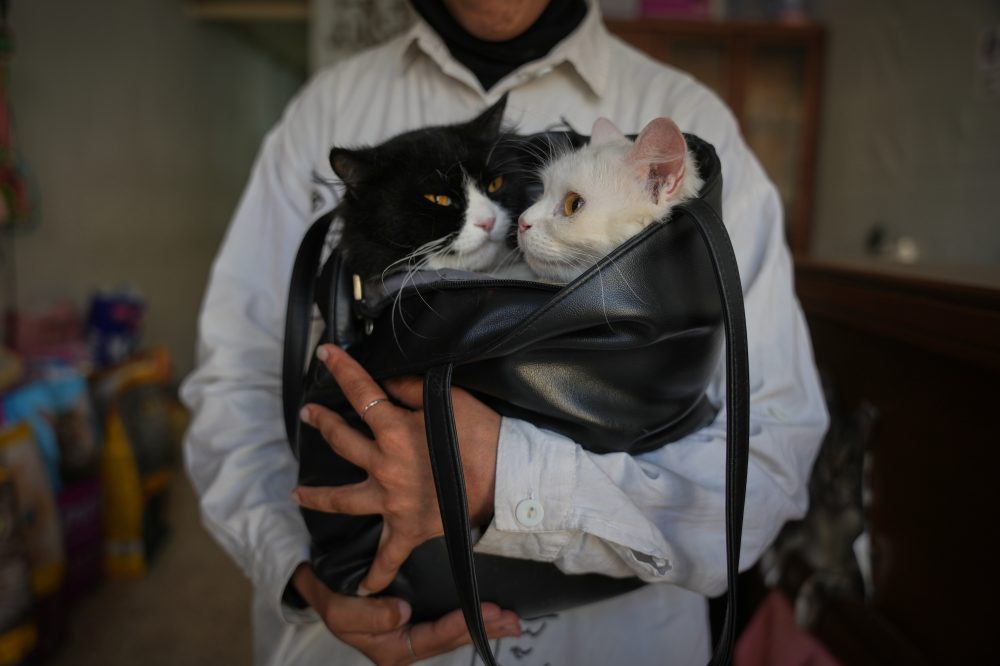
GAZA CITY, Gaza Strip (AP) — For pet owners living through the ongoing conflict in Gaza, caring for their animals has become an overwhelming challenge, with veterinary supplies running dangerously low and food for pets nearly impossible to come by.
Across a territory home to more than 2 million people, only two veterinary clinics serving household pets are still functioning. A small number of other facilities focus mainly on livestock. At one modest clinic in Gaza City, staff have continued this month to offer basic medical care and grooming for cats and dogs, and have even treated other animals, including a rooster.
While COGAT — the Israeli military body responsible for coordinating civilian affairs in Palestinian territories — has stated that it approves the entry of animal vaccines into Gaza, local veterinarians say that many essential medicines and vaccines used to prevent and treat illness simply cannot be found. The shortages have proven fatal for many animals. Veterinarian Dr. Motasem Qadoura said numerous pets have died as a result.
One visitor, Saja al-Hattab, came to the clinic with her cat, Lulu, for a routine checkup. She described the desperate measures she took during the worst periods of hunger over the past two years, sometimes feeding Lulu nothing more than bread soaked in water because nothing else was available.
“Like us, cats also were being starved,” she said.
Dr. Qadoura echoed her account. “We experienced famine in Gaza and during that period, unfortunately, pet owners had to search for alternatives to feed their pets, and some of these alternatives weren’t suitable,” he said. “We saw cases of food poisoning caused by food like onions.”
Another pet owner, Heba Hathat, shared that her cat has not been vaccinated and that she has been unable to locate affordable cat litter or pet food.
This report is based on a photo gallery curated by AP photo editors.
JERUSALEM — The announcement of an interim peace agreement between the United States and Iran set off a wave of fury across Israel on Monday, with politicians, former leaders, and commentators from all sides of the political aisle calling it a disaster — and pointing the finger at Prime Minister Benjamin Netanyahu.
By early Monday evening, Netanyahu had not yet issued any public statement. However, government officials, political rivals, and media figures wasted no time condemning the deal, in what amounted to an informal public judgment on the prime minister’s leadership ahead of elections this fall.
The backlash has also put a spotlight on what critics describe as Netanyahu’s growing isolation — within his own country, across the region, and increasingly with the United States.
Those critical of the prime minister argue he drew President Donald Trump into the conflict with Iran while making promises about what the war could accomplish that proved unrealistic. Now, they say, Trump is pulling Israel out of the fight before it has achieved its objectives. Critics contend Netanyahu underestimated Trump’s willingness to sustain a lengthy war, was outmaneuvered by Iran at the negotiating table, and found himself increasingly pushed to the margins by other major players in the region.
Former Prime Minister and Netanyahu rival Ehud Barak was blunt in an interview with Israel’s public broadcaster on Monday. “Israel is paying the price of Netanyahu’s hubris and blindness, and the price of the manipulations that he tried to pull on Trump,” Barak said. “Iran emerged stronger; Israel emerged weaker. That is Netanyahu’s strategic responsibility. He failed.”
Yair Lapid, who is set to challenge Netanyahu in the coming elections, wrote Sunday that the deal was shaping up to be “one of the most shocking failures in Israel’s foreign and security policy … entirely registered in Netanyahu’s name.” He added: “It can be fixed, it must be fixed. Netanyahu can no longer fix it, we will do it.”
The U.S.-Iran agreement has left Israel in a difficult spot, partly because it sent troops into southern Lebanon after Iran-backed Hezbollah launched missiles at communities in northern Israel during the opening week of the war. Throughout the negotiation process, Iran insisted that any agreement to wind down hostilities on the U.S.-Iran front must also include a halt to Israeli military operations in Lebanon.
As talks moved forward and Trump sought an exit from the conflict, he became increasingly frustrated with Israeli strikes on Beirut, warning they could threaten the emerging agreement. Ultimately, the president chose to end the war with Iran even if it limited Israel’s freedom of action in Lebanon.
That decision has put Netanyahu in a precarious spot. His relationship with Trump may force him to scale back a military campaign in Lebanon that has been broadly popular among Israelis. On Monday, Defense Minister Israel Katz publicly pledged to keep Israeli troops in Lebanon.
Daniel Shapiro, a former U.S. Ambassador to Israel and a Distinguished Fellow at the Atlantic Council, warned that the situation could quickly spiral. “All Hezbollah has to do is get one rocket across into an Israeli town in northern Israel, and then the pressure on Netanyahu — which he’s already hearing from his own base and from the opposition … will ramp up,” Shapiro said. “It’s gonna be very hard to resist that. And that gives a lot of power to control this dynamic to Hezbollah, and essentially to Iran.”
Some of the more hawkish members of Netanyahu’s governing coalition have already condemned the peace deal and are pushing the prime minister to press ahead with the Lebanon campaign — even at the risk of angering the United States and potentially unraveling the broader agreement. Israel’s ultranationalist national security minister, Itamar Ben-Gvir, posted on X: “We must not compromise on anything less than the dismantling of Hezbollah.”
While the deal left the fate of Israel’s Lebanon operation uncertain, it also constrained Netanyahu before he could reach his stated war goals against Iran. Netanyahu and the U.S. launched the war on February 28 with the stated objective of eliminating Iran’s nuclear ambitions. But nearly four months later, after Iran withstood an intense aerial assault, analysts and critics say Tehran has actually emerged in a stronger position. Its network of proxy forces remains intact and is still capable of firing missiles into Israel.
Iran has also managed to assert control over the Strait of Hormuz, one of the world’s most strategically vital waterways, disrupting global trade and driving up the cost of basic goods worldwide. Meanwhile, the extent of damage to Iran’s nuclear infrastructure and ballistic missile program remains unclear.
Political commentator Anna Barsky wrote in Ma’ariv, a major Hebrew-language daily newspaper, that “Israel believes that the war delayed the Iranian nuclear program, but did not change its objectives.” She noted that Israeli officials are also concerned that under the terms of its deal with the U.S., Iran could receive a significant infusion of cash.
Three regional officials, speaking on the condition of anonymity due to the sensitivity of the negotiations, said the agreement is expected to include a phased easing of sanctions and the release of frozen Iranian assets.
Yair Golan, a center-left party leader and former general, posted on X: “Trump signs an agreement that funnels billions to the Ayatollahs’ regime, leaves the nuclear infrastructure intact, preserves the ballistic threat as is, and throws a lifeline to the murderous regime in Tehran.”
NAIROBI, Kenya — Kenyan President William Ruto announced Monday that his government will compensate nearly 2,000 people who suffered human rights abuses tied to violent protests, in what officials are calling an unusual national reparations effort conducted outside the court system.
Over the years, waves of violent unrest across the East African country have resulted in hundreds of deaths, injuries, and significant financial losses for business owners. Most recently, two separate demonstrations over a proposed Ebola quarantine facility intended for Americans ended with three people killed and dozens more hurt.
Victims are expected to start receiving payments as soon as next week, once they have been reviewed and approved by the country’s state-funded human rights commission. The total amount set aside for compensation is approximately $15 million.
Speaking at the release of a national Reparations Framework Report, Ruto described the payments as “a state acknowledgment that harm occurred,” while making clear it was not an “admission” of guilt on the part of the government.
Dozens of people lost their lives and hundreds more were wounded during anti-government demonstrations that took place in June 2024 and June 2025, both centered on opposition to higher taxes. The government has said those protests were taken advantage of by criminal elements, who caused millions of dollars in property damage.
Ruto was careful to frame the compensation in measured terms, saying it was not the “price of life, of pain or of loss” and should not be interpreted as a “reward for violence or criminality” — a concern in a country where large-scale protests occur regularly.
“A nation heals by tending to its wounds rather than pretending they does not exist,” he said.
Claris Ogangah, who leads Kenya’s National Commission on Human Rights, said the financial payments are a meaningful step toward national recovery.
“The stories captured in the Reparations Framework Report remind us that behind every statistic is a human being — a family and a community whose suffering has often remained unseen and unacknowledged,” she said.
“By giving voice to these experiences, the report contributes to a national process of healing founded on truth, recognition, and remembrance,” Ogangah added.
LONDON — A first-edition copy of Emily Brontë’s “Wuthering Heights” — typos and all — is going under the hammer for the first time in more than a century, drawing renewed attention as a new Hollywood film brings the beloved story to a fresh generation of fans.
Christie’s auction house announced Monday that this is the first copy of the novel still in its publisher’s original cloth binding to be auctioned since 1908. Approximately 250 copies of the first edition were ever produced, and this particular volume has sat in a private library since shortly after it was first published in 1847.
“The vast majority of surviving copies were rebound for collectors or libraries, meaning original cloth examples are now extremely scarce,” said Christie’s books and manuscripts specialist Mark Wiltshire.
The “Wuthering Heights” volume is being sold alongside a copy of Anne Brontë’s “Agnes Grey” and is expected to bring in between 400,000 and 600,000 British pounds — roughly $540,000 to $800,000 — at a June 30 sale in London. Both books were originally published under male pen names the sisters used to break into the publishing world: Emily wrote as Ellis Bell, and Anne as Acton Bell.
“Wuthering Heights” was rushed to press following the runaway success of Charlotte Brontë’s “Jane Eyre,” and the hasty production left its mark. The first edition became well known for its printing errors — including, as Wiltshire pointed out, occasional misspellings of the word “heights” itself.
The novel is enjoying a fresh wave of popularity thanks to director Emerald Fennell’s recent film adaptation starring Margot Robbie and Jacob Elordi as the ill-fated pair Cathy and Heathcliff, which takes its own creative liberties with Brontë’s dark, Gothic story.
When the book first appeared, it scandalized some readers. A critic in 1848 condemned it for its “vulgar depravity and unnatural horrors.”
In the nearly two centuries since, Wiltshire said, the novel has “moved beyond literature to become a cultural touchstone,” influencing visual art, music — most notably Kate Bush’s 1978 pop-operatic song — and numerous film versions over the decades.
“It remains a work that artists return to again and again because of its emotional force, its atmosphere, and its psychological intensity, ensuring its place not only in literary history but in wider cultural imagination,” Wiltshire said.
FRANKFURT, Germany — A tentative agreement to end the war in Iran and reopen the Strait of Hormuz is being welcomed as a positive development for the world economy. However, despite oil prices dipping on Monday, significant uncertainty remains about when energy shipments will actually resume through the world’s most critical waterway for oil transport.
Before the conflict began, the strait handled roughly one-fifth of the global crude oil supply. Now, hundreds of vessels stuck inside the Persian Gulf face a slow and complicated process of navigating out through the narrow passage. Oil-producing nations in the Gulf that cut back their output will also need time to get production running again. Shipping analysts note that vessel captains may be cautious about declaring the route safe and that the threat from Iran has genuinely passed.
The bottom line: oil prices, inflation, and energy supplies will not snap back to prewar levels overnight — the recovery could take weeks, or even months. That timeline assumes the agreement, scheduled to be formally signed on Friday, actually holds. Specifics of the deal had not yet been made public.
Even if the strait reopens fully, tankers must still enter the Gulf, take on cargo, and complete long voyages to their destinations. Asian nations are the primary buyers of oil from Gulf producers including Saudi Arabia, Iraq, Bahrain, the United Arab Emirates, Kuwait, and Oman. A round trip to Japan alone can take between 45 and 50 days.
Ship captains, insurers, and vessel owners are expected to proceed cautiously given the unpredictable conditions in the region.
Richard Meade, editor-in-chief of shipping data and analysis company Lloyd’s List, wrote that
LIMA — Right-wing presidential candidate Keiko Fujimori has stretched her slim lead over leftist challenger Roberto Sanchez in Peru’s hotly disputed presidential contest, as the slow review of contested ballots continued Monday.
Fujimori reclaimed the top spot in the race midway through last week, largely on the strength of votes cast abroad. As of Monday, she held 50.051% of the vote compared to Sanchez’s 49.949% — a margin of just over 18,300 votes.
According to Peru’s National Office of Electoral Processes, 98.59% of all votes have now been counted.
Election officials began examining disputed ballots from the June 7 runoff last Thursday. Authorities say the final certified results may not come for days or even weeks, making this one of the tightest presidential races in Peru’s history.
Over the weekend, Sanchez traveled to the Andean region of Cusco — a stronghold of his support — where he met with backers and expressed that he had “suspicions” about the ongoing vote review.
Last week, Sanchez asked authorities to throw out roughly 400,000 overseas ballots, claiming there were irregularities in how they were transported. Election officials rejected that request.
Supporters of Sanchez have taken to the streets in the capital Lima in recent days, responding to his call to “defend the people’s vote.” The protests, which drew hundreds of demonstrators, remained peaceful.
Following the runoff, both the Organization of American States and the European Union sent election observation missions to Peru. In separate press conferences, both groups said the voting had proceeded normally and encouraged the country to wait for the official results given how close the race is.
Sanchez is running with the backing of former leftist President Pedro Castillo, who was sentenced to 11 years in prison after attempting to dissolve Congress and seize expanded powers in late 2022. Sanchez’s rise has made private investors uneasy.
Financial markets bounced back last week as Fujimori moved ahead in the count. Prior to the election, markets had sold off amid concerns that a Sanchez victory could threaten economic stability, according to traders in stock and foreign exchange markets.
A Nigerian federal court issued a ruling Monday directing the country’s electoral authority to remove one of the nation’s prominent opposition parties — along with four other political organizations — from its official register, citing failures to meet constitutional standards.
Federal High Court Judge Peter Lifu ordered the Independent National Electoral Commission to strike the African Democratic Congress and the four other parties from its rolls. The decision came in response to complaints brought by former lawmakers who argued the parties had not reached the minimum performance benchmarks required under Nigerian law.
Under Nigerian law, a political party must either win at least one elected position at any level of government or receive no less than 25% of votes cast in a state during a presidential election. Parties that fall short of these thresholds face the possibility of being removed from the electoral register.
The court’s decision creates a significant obstacle for former Vice President Atiku Abubakar, who had been running as the ADC’s presidential candidate and was considered one of the strongest challengers to President Bola Tinubu. The ruling could significantly reduce the number of opposition candidates competing in the race ahead of next January’s elections.
ADC spokesperson Bolaji Abdullahi sharply criticized the decision, describing it as “a direct invitation to anarchy.” He confirmed the party intends to challenge the ruling through all available legal and constitutional channels.
THE HAGUE — An international arbitration court has determined that Russia violated certain maritime laws during the construction of its bridge spanning the Kerch Strait between mainland Russia and annexed Crimea, but rejected the majority of Ukraine’s broader legal claims against Moscow.
The case was brought before the Hague-based Permanent Court of Arbitration in 2016, after Russia began building the 19-kilometer (12-mile) bridge connecting the Russian mainland to the Crimean Peninsula.
Although the ruling was dated April 22, it was only made public on Monday in accordance with the arbitration court’s standard procedures. The five-judge panel dismissed most of Ukraine’s arguments — which centered on Russia allegedly seeking exclusive control over the strait — on procedural grounds.
Where the court did find fault with Russia, it was over the country’s failure to conduct proper environmental impact assessments before and during the bridge’s construction.
Despite finding those violations, the panel chose not to award any financial reparations to Ukraine. Both sides were directed to cover their own legal expenses accumulated over the course of the ten-year proceeding.
This case is among a number of legal actions Ukraine has pursued at various international courts and institutions, stemming from Russia’s annexation of Crimea in 2014 and its full-scale military invasion that began in 2022.
The Kerch Strait bridge holds significant strategic importance, serving as a key supply route for fuel, food, and other goods flowing into Crimea. The peninsula is also home to Sevastopol, the historic base of Russia’s Black Sea Fleet.
Syria’s Interior Ministry announced Monday that one of its security officers was killed after forces successfully stopped an assault by two Islamic State militants targeting a command headquarters of the country’s internal security forces in the city of Raqqa.
A ministry statement described how two suicide bombers attempted to force their way into the facility. Security personnel confronted the attackers, neutralizing one of them. The second bomber, after being surrounded, detonated an explosive vest. Three additional security officers sustained injuries in the incident.
Earlier reports from Syria’s state news agency, citing an Interior Ministry spokesperson, indicated that preliminary information suggested at least two ministry personnel had been killed in a suicide attack on a ministry camp in Raqqa — a figure that differed from the later official count.
Islamic State announced in February that it was launching a new campaign of attacks against the government of President Ahmed al-Sharaa. Since then, the group has carried out a series of strikes, including one near Raqqa that killed four Syrian security personnel.
Syria’s government under al-Sharaa joined the U.S.-led coalition against Islamic State last year. Al-Sharaa himself previously fought against ISIS when he led the al Qaeda-linked Nusra Front during Syria’s civil war, later cutting ties with al Qaeda in 2016.
At the height of its power roughly a decade ago during the Syrian civil war, Islamic State held control over approximately a quarter or more of Syrian territory before being pushed out by the U.S.-led coalition and other opposing forces.
Sweden’s parliament voted Monday to enact a law requiring government workers to notify police whenever they encounter migrants who do not have legal authorization to reside in the country. Opponents of the measure say it will foster fear among vulnerable populations and could take a serious toll on migrants’ physical and mental health.
The legislation is part of a broader push by Sweden to adopt a stricter stance on migration, coming at a time when the European Union is also restructuring its immigration policies — including measures aimed at speeding up deportations.
Jacob Lind, a migration expert from Malmo University, spoke with the AP following the parliamentary vote. “This is the latest measure in a long list of extremely problematic regulations on migration,” he said. “It has a symbolic meaning because it amounts to snitching by some very important state agencies.”
John Stauffer of Swedish nonprofit Civil Rights Defenders noted to the AP that the bill barely cleared the legislature, passing by just two votes — 174 in favor and 172 against. He said that razor-thin margin reflects the significant opposition that exists within Swedish society over the law.
After criticism from various groups, teachers, physicians, and social workers were carved out from the reporting requirement.
Under the new law, employees at agencies such as tax authorities, employment offices, social insurance agencies, and prison and probation services will be legally required to inform police when they have reason to believe someone they are dealing with lacks the proper documentation to remain in Sweden.
Louise Bonneau, representing Brussels-based nonprofit PICUM — an organization that advocates for migrants — told the AP that such requirements carry wide-ranging consequences. “Reporting obligations imposed on public agencies create a climate of fear that harms not only undocumented people but everyone who depends on these institutions,” she said.
The Swedish government has maintained that additional tools are necessary to ensure that individuals without legal permission to stay in the country can be sent back to their home nations.
A group of researchers from three Swedish universities cautioned in March that the law conflicts with fundamental human rights and encourages racial profiling — a practice in which authorities target individuals based on race or ethnicity rather than actual evidence of wrongdoing.
Those researchers spoke with public servants about the ethical dilemmas the law would introduce into their daily work.
As one example highlighted by the researchers: if a mother without legal residency status gives birth, the midwife is not obligated to report her — but information about the newborn will eventually reach the tax authority, which is then required to report the family to authorities.
“It creates a huge deterrence effect to be in contact with a healthcare professional,” Bonneau said. “We’ll see what happens in practice. Will we see people fearing to be in contact with authorities, issues of maternal health, of the children being born?”
Germany enacted similar legislation back in 2005, requiring certain public agencies to report migrants without valid residency status. That law applies to institutions such as welfare offices, while schools and hospitals remain exempt. Even so, migrants in Germany are known to avoid seeking medical care because doing so requires obtaining paperwork from a welfare office first — a step that can expose them to immigration authorities. In response, several organizations in larger cities like Berlin have established healthcare services specifically for migrants without legal residency status.
In 2018, the United Kingdom revised a policy that had allowed immigration officials to access patient records from the National Health Service. Amid concerns that the arrangement was discouraging migrants from seeking care and compromising patient confidentiality, the government scaled back the rules. Under the revised policy, the Home Office was limited to accessing only the names of individuals suspected or convicted of crimes who faced deportation proceedings.
THE HAGUE, Netherlands — A Dutch court handed down a 26-year prison sentence Monday to a Syrian man found guilty of crimes against humanity, including the torture and rape of people imprisoned for opposing the government of former Syrian president Bashar Assad during the country’s devastating civil war.
The defendant, identified under Dutch privacy laws only as Rafiq al Q., stood trial beginning in April on charges that included torture, sexual abuse, and rape. The 58-year-old maintained his innocence throughout the proceedings, alleging that both the victims and law enforcement had conspired against him.
The verdict from the District Court of The Hague marks the latest in a growing series of legal actions taken against Syrian suspects in courts around the world, following Assad’s removal from power in December 2024 after a swift rebel offensive that ended years of civil war. Assad subsequently fled to Russia, a longtime ally.
These prosecutions have drawn renewed attention to the widespread abuse that took place inside dozens of Syrian detention facilities while Assad held power. Former prisoners, human rights organizations, and activists have described systematic torture, sexual violence, mass executions, and brutal conditions.
Judges determined that Rafiq al Q. was a member of the pro-Assad National Defense Force, a paramilitary organization, and that between 2013 and 2014 he served as an interrogator for the group. Evidence presented in court showed he was responsible for the torture of detainees held at facilities in Salamiyah, including beatings, suspending victims upside down, and administering electric shocks.
In summarizing its ruling, the court stated: “The defendant was also guilty of sexually abusing multiple victims. He raped one of them. The defendant repeatedly subjected the victims to conditions of extreme fear, threats, pain, hopelessness, and powerlessness. During the court hearings, the victims gave compelling testimonies about the impact this had on them and the consequences they continue to suffer to this day.”
Rafiq al Q. sat quietly beside his attorney, wearing a striped shirt with guards positioned nearby, and appeared to offer no reaction as the conviction and sentence were read aloud. He was cleared of some charges where judges found the evidence insufficient to support a guilty verdict.
He arrived in the Netherlands seeking asylum in 2021 and was living in the eastern town of Druten when authorities arrested him in 2023.
The prosecution was made possible through the legal concept of universal jurisdiction, which permits courts to try individuals for serious international offenses — such as war crimes — even when those crimes were committed in a foreign country.
Both prosecutors and the defense have 14 days to file an appeal of the conviction and sentence.
The Netherlands is not the only country pursuing accountability for those tied to the former Assad regime. Last year, a German court sentenced a Syrian doctor to life in prison for torture and war crimes, including the killing of two people and the torture of nine others in Syria between 2011 and 2012. In 2024, a court in Paris sentenced three senior Syrian officials in absentia to life imprisonment for complicity in war crimes.
Syria itself is also working to hold former regime loyalists accountable. In April, the first public trial of former government officials opened in Damascus. Among those who appeared in court was Atef Najib, a former Syrian army brigadier general who led the Political Security Branch in the southern Daraa province under Assad and is also a cousin of the former president. He faces charges related to what state-run news agency SANA described as “crimes against the Syrian people.”
EVIAN-LES-BAINS, France — Heads of state representing the Group of Seven major democracies have descended on a scenic French spa town this week for a multi-day international summit.
The gathering, which kicked off Monday, brings together some of the most powerful leaders on the world stage for high-level discussions among the G7 nations.
The Associated Press has put together a curated photo gallery showcasing highlights from the summit, offering a visual look at the world leaders in attendance.
THE HAGUE — A district court in The Hague handed down a 26-year prison sentence Monday to a former member of a pro-Assad Syrian militia, finding him guilty of crimes against humanity for torturing and sexually assaulting prisoners over a decade ago.
Judges determined that 58-year-old Rafik A. — whose surname was withheld by the court — served as an interrogator for the National Defense Forces in Salamiyah, Syria, during 2013 and 2014. That militia fought alongside the government of former President Bashar al-Assad, who was removed from power in December 2024.
Throughout the proceedings, Rafik A. consistently denied any involvement in the alleged crimes and claimed that witnesses who testified against him were lying.
Presiding judge Wim van Hattum outlined the court’s findings in a summary of the ruling, stating: “The suspect was engaged in torture, rape or other sexual abuse of eight victims in this case, either by committing the acts himself or by ordering others to do so.”
The conviction is historic on two fronts: it is the first time a Dutch court has found someone guilty of atrocities in Syria carried out by forces loyal to the Assad government, and it is also the first Dutch conviction in which sexual violence has been classified as a crime against humanity.
Similar legal proceedings against officials tied to the Assad era have been pursued in other European nations, including Germany.
Rafik A. had been residing in the Netherlands for several years under asylum seeker status before his arrest there in 2023.
Dutch law, operating under the principle of universal jurisdiction, permits courts to prosecute foreign nationals for serious crimes committed in other countries, provided that the accused or some of the victims have a presence in the Netherlands.
WASHINGTON — The United States and Iran have reached a signed memorandum of understanding to bring their nearly four-month war to a close, senior U.S. officials announced Monday. A formal signing ceremony is set to take place on Friday.
According to one U.S. official, the agreement has been signed by President Donald Trump, Vice President JD Vance, and Iranian parliament speaker Mohammad Bagher Qalibaf.
Alongside the announcement of the signed document, officials indicated that maritime activity in the Strait of Hormuz is already beginning to pick up.
“You will see significant increase in traffic in the Strait of Hormuz, actually starting already, and that will ramp up slowly over time,” said a U.S. official who spoke on the condition of anonymity during a briefing with reporters.
The official tempered expectations for an immediate full return to normalcy, stating, “We probably won’t return to normal in two weeks, but we will see a significant increase in strait traffic.”
Both nations confirmed they had agreed on terms to end hostilities and reopen the strategic waterway, news that offered relief to financial markets. However, the agreement may depend on a cessation of fighting in Lebanon, and discussions about Tehran’s nuclear program have been pushed to a later date.
Though still considered a framework agreement, the deal stands as the most significant breakthrough in efforts to end the conflict, which began in February following joint U.S.-Israeli strikes on Iran. The war has resulted in thousands of deaths and severely disrupted global energy markets.
WASHINGTON — The head of the International Monetary Fund says the global economy is holding its own against the pressures created by the war in the Middle East, even as commodity prices have surged, inflation has climbed, and financial conditions have tightened. IMF Managing Director Kristalina Georgieva made the comments Monday, noting there are no signs yet of a worldwide economic slowdown.
Georgieva, who leads the international lending organization, expressed support for Sunday’s agreement between the United States and Iran to end hostilities and reopen the Strait of Hormuz. However, she cautioned in a newly published blog post that any further escalation in the conflict or disruptions to supply chains would pose a “clear risk to global growth.”
The IMF is scheduled to release a revised economic outlook on July 8. Back in April, the fund had laid out three possible scenarios for global economic output in 2026 and 2027. Its middle-ground “adverse scenario” projected growth slowing to 2.5% in 2026, with headline inflation reaching 5.4%.
Last month, Georgieva indicated that the adverse scenario was already unfolding. Her latest remarks, however, suggest the fund may now lean toward its more optimistic baseline projection — one that assumed the Iran conflict would be short-lived and forecast global growth of 3.1% in 2026.
The ceasefire framework represents the most significant step yet toward ending a war that began in February with joint U.S.-Israeli strikes on Iran. The conflict has since expanded into a broader regional confrontation, claiming thousands of lives, rattling global energy markets, and fueling fears of a worldwide recession.
“More than three months into the war in the Middle East, the global economy appears to be holding up. Commodity prices, inflation and expectations for it, and financial conditions have all been impacted — but not yet in ways that signal a global slowdown,” Georgieva wrote in her blog post.
KIGALI, Rwanda — A trial involving Rwandan opposition leader Victoire Ingabire got off to a delayed start Monday after she informed the court that spending a year in detention had left her physically and mentally unprepared to proceed with the case.
Ingabire appeared before the high court in Kigali, Rwanda’s capital, where she stated she was not well enough to stand trial. Her legal team had already notified prosecutors ahead of time that a postponement would be needed. The presiding judge granted the request, pushing the start of the trial back by one day.
She faces accusations from prosecutors of conspiring to incite unrest against the government of President Paul Kagame. If found guilty, she could spend many years in prison. Ingabire, however, has firmly rejected those charges, calling them baseless and part of a political effort to shut down her pro-democracy movement.
During her court appearance, Ingabire also raised concerns about being prevented from communicating with family members living outside Rwanda and said she had been unable to speak with others who are accused alongside her.
Prosecutors countered that Ingabire had been in unauthorized contact with nine other suspects, including members of the DALFA-Umurinzi group that she leads — an organization the Rwandan government does not officially recognize.
Ingabire has long been one of Kagame’s most persistent critics. She previously led the FDU-Inkingi group, a coalition of opposition parties that was also never allowed to register with the government. Most of those who oppose Kagame have fled Rwanda and continue their activism from abroad, making Ingabire unusual in that she has at times been the only opposition figure maintaining her activism from inside the country.
She spent 16 years living in exile in the Netherlands before returning to Rwanda in 2010 with plans to enter politics. She was arrested before she ever had the chance to run in the presidential election.
In a previous legal case, she was convicted of conspiracy against the government and of denying Rwanda’s 1994 genocide — charges she has consistently denied. She received a 15-year prison sentence but was released in 2018 following a presidential pardon.
Kagame’s party has governed Rwanda since 1994, and his administration has received recognition for maintaining relative peace and stability while working to heal the country’s deep ethnic divisions. However, human rights organizations have accused his government of widespread abuses, silencing independent journalists, and suppressing political opposition — accusations Kagame denies.
ATHENS, Greece — Greece’s migration minister is standing firmly behind his country’s immigration crackdown, telling a private television broadcaster on Monday that criticism from human rights organizations is something he wears proudly.
Minister Thanos Plevris, speaking on Action 24, described Greece’s current policies as “the toughest — if not the toughest — in Europe.” His remarks came as Greece’s conservative government works to deepen its relationship with authorities in eastern Libya, a region that has become a key departure point for migrants attempting to cross the Mediterranean Sea.
“Let me tell you something: the days when bureaucrats from Brussels or the United Nations could just show up and dictate how Greece handles the migration crisis are over,” Plevris declared during the broadcast.
The minister also pushed back against the influence of charities and rights organizations that assist migrants, arguing they have no place in determining Greek immigration policy.
“Every time U.N. envoys express concern over my legislation, it makes me proud of that legislation,” he said. “The more Amnesty International, the U.N. high commissioner for refugees or U.N. envoys are irritated by our migration policy, the more I view it as a badge of honor.”
Greece is currently in discussions with several African nations about setting up processing centers on their soil for migrants whose asylum applications have been denied within Europe — a proposal that has drawn sharp criticism from international human rights groups.
On Monday, Saddam Hifter, deputy commander of eastern Libya’s armed forces, visited Athens for meetings with Foreign Minister George Gerapetritis and Prime Minister Kyriakos Mitsotakis. Greece has offered eastern Libya’s authorities coast guard training along with support for employment programs and investment projects, all aimed at reducing the number of migrants setting out across the Mediterranean.
The surge in arrivals has been particularly pronounced on the island of Crete. Greek authorities reported Monday that arrivals and interceptions off Crete climbed more than 20% compared to the same period last year, reaching approximately 5,500 through May — with the pace accelerating since early June.
The European Union approved stricter migration measures last week, even as overall crossings from North Africa and the Middle East have declined in other areas.
Libya has long served as a major transit point for migrants from Africa and the Middle East hoping to reach European shores. More than a decade of political instability there has allowed human trafficking networks to thrive, with smugglers moving people across borders shared with Chad, Niger, Sudan, Egypt, Algeria, and Tunisia.
An analyst specializing in Libyan politics and security, Jalel Harchaoui, noted that eastern Libya is actively seeking stronger diplomatic relationships with European nations as well as financial support.
BRUSSELS — Ukraine took a historic step Monday by formally opening negotiations to join the European Union, launching what is expected to be a years-long process requiring major political and institutional reforms — all while the country remains at war with Russia.
Ukrainian Deputy Prime Minister Taras Kachka attended an intergovernmental conference in Luxembourg to begin discussions on the first set of policy areas, a necessary step toward bringing Ukraine’s laws, standards, and values in line with those of the EU.
For Ukraine, joining the EU represents a key “security guarantee” for a stable future once the fighting ends. While NATO membership would be considered an even stronger guarantee, the Trump administration has made clear that is not on the table, and many nations are reluctant to extend membership to a country still engaged in active conflict.
Moldova also formally launched its own EU membership bid on Monday. Russia has long worked to keep Moldova within its sphere of influence, and last year was accused of running a large-scale disinformation campaign powered by artificial intelligence during that country’s elections.
Any nation seeking EU membership must complete negotiations across 35 policy areas — covering everything from agriculture and energy to trade and taxation — a process that typically spans many years.
Monday’s conference opened five key policy chapters, grouped into what the EU calls “clusters,” that address the foundational values of the bloc. These include the rule of law, fundamental rights, and the functioning of democratic institutions. Specifically, the chapters cover the judiciary and fundamental rights, justice, freedom and security, public procurement, statistics, and financial control.
This particular cluster carries special significance for several EU member nations that have expressed concern about Ukraine’s commitment and capacity to combat corruption. Last month, two national anti-corruption agencies named Ukrainian President Volodymyr Zelenskyy’s former chief of staff as an official suspect in a major corruption investigation, though officials stressed that Zelenskyy himself is not under suspicion.
The talks are unfolding at a moment when several European nations have been pushing hard to fast-track Ukraine’s path into the EU, viewing the country as essential to the continent’s broader security and having already invested heavily in supporting its military.
Last month, German Chancellor Friedrich Merz urged fellow EU leaders to consider offering Ukraine “associate membership” as a way to inject new momentum into peace negotiations aimed at ending more than four years of war with Russia.
France and the Netherlands have also floated alternative arrangements that could bring Ukraine closer to the EU more quickly, though without granting full membership rights.
However, EU officials and other countries currently in the membership queue have pushed back, insisting the process must be merit-based and lead to nothing short of full membership.
Finland’s Foreign Minister Elina Valtonen emphasized that completing the full reform process is essential, saying membership is not simply about getting a “club card for the EU.” Speaking to reporters in Luxembourg ahead of the ceremony, she said what Ukrainians “truly are after is freedom, democracy and a transparent market economy without any corruption.”
Ukraine’s path to EU membership had previously been blocked by Hungary, under its strongly nationalist former Prime Minister Viktor Orbán, who was widely seen as Russia’s closest ally within the EU. Orbán repeatedly used voting rules that require unanimous agreement among all 27 member nations to delay progress on sanctions, policy decisions, and political statements.
The European Commission had frozen billions of euros in funding for Hungary over concerns about democratic backsliding under Orbán, and worries remain about the damage a single dissenting government can inflict by using its veto power.
Swedish Foreign Minister Maria Malmer Stenergard stressed the need for vigilance going forward. “We need to be very cautious in the future and make sure that these are countries that really want to be a part of Europe, and a part of the European Union, and are willing to work with us,” she said. “In order for the EU to be really strong, we need to make sure that this doesn’t happen again.”
Defense manufacturer KNDS unveiled a new combat tank on Monday at the Eurosatory exhibition near Paris, intended as a bridge solution to replace France’s aging Leclerc tanks while a major joint French-German development program continues to fall behind schedule.
The new vehicle, designated CAPINT — short for “intermediary capability” — pairs a chassis built by KNDS’s German division with a tank gun produced by its French division. According to KNDS, the tank is designed to bolster French Army readiness and help lay the groundwork for the next-generation Main Ground Combat System, known as MGCS.
The MGCS program, which got underway in 2017, is meant to eventually replace both Germany’s Leopard 2 and France’s Leclerc tanks, with an original target of entering service between 2040 and 2045. France’s Leclerc tanks are scheduled to be retired by 2038.
In April, France’s Armed Forces Minister Catherine Vautrin told parliament that Paris had chosen to pursue an “intermediate” tank program because the MGCS effort was running roughly a decade behind schedule.
The CAPINT announcement comes just days after France and Germany scrapped their joint FCAS fighter jet program following months of disputes between Airbus and Dassault Aviation — raising further concerns about the durability of European defense cooperation.
Adding to the uncertainty, a German government spokesperson said Monday that the MGCS project would focus on “platform-independent” technologies, and acknowledged it was not yet clear whether a jointly built tank would actually come to fruition. A French government source, however, maintained that the project remains a priority for both nations as well as for KNDS.
Over the weekend, the CEO of German defense firm Rheinmetall — one of the shareholders in the MGCS initiative — was quoted as saying France was weighing significant cuts to the project’s funding.
KNDS CEO Jean-Paul Alary, speaking with reporters at Eurosatory, said the status of MGCS was a political matter he could not address directly, but warned that if the program collapsed, it would be “very bad news” for Europe.
Germany has already begun developing its own parallel tank program, with KNDS Germany and Rheinmetall working together since 2025 on an intermediate tank — referred to as either the Leopard 2AX or Leopard 3 — to eventually succeed the Leopard 2.
On the business front, KNDS is preparing for an initial public offering with a dual listing planned on stock exchanges in Frankfurt and Paris, expected to take place this year. When asked about timing, Alary said the best outcome would be to move forward “as soon as we can.”
German newspaper Handelsblatt reported Monday that Paris and Berlin had reached an agreement after the German government sought protections ahead of the IPO to prevent sensitive technology from leaving Germany. The German chancellery had not responded to a request for comment as of press time.
KNDS Chairman Tom Enders was cited in the same report as cautioning against a drift toward national protectionism, warning it could erode the foundation of European defense collaboration.
Broader security concerns — including a perceived growing threat from Russia and increasing hesitation from U.S. President Donald Trump to support European defense — have pushed governments across the continent to accelerate military investment, even as joint production efforts face headwinds.
A single by-election in northern England on Thursday has the potential to reshape British politics at the highest level — and it may come down not to the winner’s popularity, but to a bitter feud tearing apart the populist right.
Andy Burnham, currently serving as the Labour Party’s mayor of Greater Manchester, is seeking to win the parliamentary seat of Makerfield. Under Labour Party rules, he must hold a seat in parliament before he can mount a challenge to Prime Minister Keir Starmer for the party’s leadership.
The roughly 77,000 registered voters in Makerfield, a constituency in northern England, could effectively be choosing the next leader of a country of nearly 70 million people.
Opinion surveys show Burnham with a lead of between five and 12 percentage points over the right-wing Reform UK party — a margin that analysts say exists largely because the right-wing vote is being split between two parties whose leaders were once allies. Nigel Farage’s Reform UK and Rupert Lowe’s Restore Britain, born from an ugly falling-out between the two men last year, are both competing for the same pool of voters.
Peter Thompson, a 78-year-old record shop owner in Ashton-in-Makerfield, said he plans to vote for Reform but worries that Restore’s presence in the race could cost the right-wing bloc the seat. “All my voting in life there’s only been two parties that have run this country, Labour and Conservatives. Look around you, it’s a mess,” he said.
“If it was a straightforward fight, I think Reform may well edge it but because there’s that many parties that you can vote for now, I think it will swing it to Labour’s advantage, unfortunately,” Thompson added.
Both Reform and Restore position themselves as anti-establishment parties with hardline stances on immigration — Restore going so far as to advocate mass deportations. Polling shows Restore pulling in around 7% to 8% support in the constituency, a figure that is seen as seriously damaging Reform’s chances.
Farage warned last week that the race is effectively a two-horse contest, arguing that supporting Restore risks electing “perhaps the most left-wing prime minister of modern times.”
Burnham’s campaign is built around themes of economic abandonment, pointing to the decline of the region’s mining and manufacturing industries. “It all adds up to 40 years of neoliberalism that have not been kind to the North of England. Forty years of trickle-down economics that did not again trickle down very much at all,” he said at the start of his campaign last month.
Official statistics offer a more complicated picture. Makerfield falls roughly in the middle of national rankings when it comes to income deprivation, and performs relatively well on employment and health measures. Its weakest scores come in housing access and services — areas that sit at the center of Burnham’s political vision, which he calls “Manchesterism” and describes as “business friendly socialism.”
Rob Ford, a professor of politics at the University of Manchester, described the seat in an interview with independent consultancy Blonde Money as one of aspirational middle-class commuters rather than a traditional working-class stronghold. “It is ‘Red Wall’ in its heritage and identity, it is not Red Wall in terms of the kind of people who live here,” Ford said, referencing the traditionally Labour-held northern seats that briefly shifted to the Conservatives in 2019 and are now key Reform targets.
The political landscape in the area has already shifted dramatically. Reform swept 24 of 25 Wigan Borough Council seats — which includes the Makerfield area — during local elections on May 7, leaving Labour’s hopes resting heavily on Burnham’s personal name recognition.
On the ground, placards backing Reform outnumber Labour signs in many neighborhoods, particularly in more working-class areas like the Stubshaw Cross estate. Labour has responded by pouring significant resources into the race, with cabinet ministers and prominent lawmakers showing up to campaign and help distribute leaflets.
While Burnham built his reputation as mayor on openness and accessibility, his return to national-level politics is being tightly managed by party operatives based in London — a reflection of just how much is riding on the outcome.
For all the high-level political maneuvering, the final result will come down to individual voters like Neil Price, a 41-year-old bricklayer from the area. “I’m going to be voting for Andy Burnham. I know he does a lot for the community round here. He does well with everything he talks about … so yeah, he’s the one I’m going to be voting for,” Price said.
PRAGUE — The Czech government has approved what is being called its most sweeping overhaul of public media in decades, agreeing to eliminate license fees and replace them with state budget funding — a decision that has drawn sharp criticism from press freedom groups and opposition politicians who say it threatens the independence of public broadcasters.
The government, which is led by the populist ANO party under Prime Minister Andrej Babis and also includes far-right and eurosceptic parties, has frequently clashed with both public and privately owned independent media outlets, accusing them of bias.
If the proposal clears parliament, funding for public broadcasters would shift away from fees currently paid by households and businesses and instead come directly from the state budget. That new level of funding would be approximately 15% less than what the broadcasters currently receive through the fee system.
Opponents of the plan warn that tying broadcaster funding to the state budget creates an opening for political influence over editorial decisions.
Babis, a billionaire businessman and a self-described admirer of U.S. President Donald Trump, has framed the change as a cost-saving measure that would also fulfill a campaign promise to relieve citizens of paying the combined monthly fee of 205 crowns — roughly $9.87.
At a news conference, Babis pushed back against accusations that the plan was designed to undermine journalistic independence. “We have never threatened the independence of Czech Television… nor will we,” he said.
Czech Television and Czech Radio both enjoy strong public trust — each earned the confidence of 59% of Czech citizens in a 2025 Reuters Institute survey, the highest marks of any media outlets included in that poll.
Pavol Szalai, the Prague bureau chief for Reporters Without Borders, said the government had effectively institutionalized financial pressure on public media. He added that the move appeared to conflict with European Union guidelines on how public media should be funded.
Babis has maintained that the Czech approach mirrors funding models already in use in other European nations.
Under the specifics of the proposal, Czech Television — the larger of the two public broadcasters — would see its budget allocation drop by approximately 1 billion crowns, bringing it down to 5.74 billion crowns. The station also generates additional revenue through content licensing and advertising.
Czech Television’s director Hynek Chudarek said the financial cuts would likely force the station to lay off between 300 and 500 employees out of its current workforce of 2,900.
More than 1,000 civilians have been killed by drone strikes in war-ravaged Sudan during the first five months of this year alone, according to a senior United Nations official who addressed the issue on Monday.
Volker Türk, the U.N. High Commissioner for Human Rights, told the Human Rights Council in Geneva that his office has recorded a dramatic surge in drone warfare as well as widespread rape and sexual violence throughout the ongoing conflict in Sudan, which has now stretched into its fourth year.
“In Sudan, the horrific conflict has expanded and escalated, marked by a sharp increase in the use of drone warfare,” Türk told the council.
The Sudanese war began on April 15, 2023, when a struggle for power between the country’s military and a paramilitary group known as the Rapid Support Forces erupted into open combat in the capital city of Khartoum and across the country.
According to the Armed Conflict Location and Event Data Project, commonly referred to as ACLED, the war has claimed at least 59,000 lives over three years — though the U.S.-based conflict monitoring organization cautioned that the true death toll is likely far greater due to challenges in gathering accurate data from the region.
ACLED also reported that at least 2,670 people — both fighters and civilians — died in drone-related incidents in 2025, representing a staggering 600% jump in drone-caused deaths and an 81% rise in drone attacks compared to the previous year.
Just last week, a drone strike attributed to the paramilitary group struck a cemetery and a gas station in the central city of el-Obeid, killing at least 15 people, according to local health officials.
Both sides in the conflict have increasingly deployed drones loaded with explosives, with attacks repeatedly hitting civilian targets such as hospitals, dams, schools, markets, and camps housing displaced people. Drone strikes have emerged as the single deadliest threat to civilians in the conflict.
The United Nations estimates that roughly 34 million people — nearly two out of every three people living in Sudan — are in need of humanitarian assistance, making it the largest such crisis in the world.
Beyond the physical destruction, the conflict has been defined by widespread atrocities. The U.N. and various international human rights organizations have characterized mass rape and killings motivated by ethnicity as war crimes and crimes against humanity.
“Rape and sexual violence are rampant,” Türk stated.
LONDON (AP) — The United Kingdom has announced plans to prohibit children and teenagers under 16 from accessing a wide range of social media platforms, including Snapchat, TikTok, and YouTube. The decision is aimed at protecting young people from harmful content and the dangers of excessive screen time.
In taking this step, the U.K. joins a growing number of nations that have moved to enforce age-based restrictions on social media access. While many parents and child advocacy organizations have praised these efforts, critics argue the measures are difficult to enforce and raise serious privacy concerns.
Here is a look at what several other countries are already doing or planning to do:
Australia — Australia’s ban was described as a first of its kind globally when it was introduced in December. The law prevents anyone under 16 from holding accounts on Facebook, Instagram, Kick, Reddit, Snapchat, Threads, TikTok, X, YouTube, and Twitch. Technology companies that fail to take reasonable steps to remove underage accounts can face fines of up to 49.5 million Australian dollars, which equals roughly $35 million. While no fines have been issued yet, the government reports that companies have already shut down nearly 5 million accounts identified as belonging to children.
Vietnam — In March, the Vietnamese government announced that users under 16 would no longer be permitted to hold accounts on platforms that could expose them to addiction, pornography, online scams, and cyberbullying. The affected platforms include YouTube, TikTok, Facebook, Instagram, Threads, X, Bigo Live, and gaming platform Roblox.
Malaysia — Social media platforms with at least 8 million users in Malaysia — including Facebook, Instagram, TikTok, and YouTube — are now required to put age-verification systems in place and prevent anyone under 16 from creating an account. Companies that do not comply can face penalties of up to 10 million ringgit, or approximately $2.5 million.
Norway — A law that went into effect in March stops short of an outright ban but requires users under 16 to link their social media accounts to a parent or legal guardian for supervision. The law also bans platforms from using features designed to keep users hooked, such as infinite scroll and autoplay video. Additionally, digital services must verify users’ ages through methods that go beyond simply asking someone to confirm they are over 18, in order to block access to inappropriate or prohibited content.
Canada — The Canadian government introduced legislation this month to establish a new regulatory body called the Digital Safety Commission of Canada. The commission would have the authority to ban children under 16 from social media accounts unless companies can demonstrate they are actively removing harmful content — including nonconsensual intimate images, material that encourages self-harm, content that incites violence, and material that promotes hatred.
Beyond these countries, France, Spain, Denmark, Greece, Thailand, and South Korea are also considering or actively working on their own measures to limit minors’ access to social media platforms.
A London court handed down guilty verdicts Monday against two men charged in connection with a scheme to burn properties belonging to British Prime Minister Keir Starmer.
The arson attacks took place in May 2025 and caused damage to the home Starmer had lived in before becoming prime minister, an apartment building he once had partial ownership of, and completely destroyed his former Toyota SUV. No injuries were reported.
Authorities say the plot was masterminded by a mysterious individual who communicated in Russian and went by the alias “El Money.” This person reached out to Ukrainian national Roman Lavrynovych through the Telegram messaging app, offering him cryptocurrency in exchange for torching the properties and filming the destruction to post online for maximum visibility.
Despite the investigation, El Money’s true identity was never determined and no charges were filed against the figure. Cmdr. Helen Flanagan, who leads the counterterrorism unit at the Metropolitan Police, said investigators found no proof that a hostile foreign government was behind the fires, as they were unable to establish El Money’s motive or employer.
“Clearly the tasking was to intimidate and create fear for the prime minister and to attack the U.K.,” Flanagan stated.
Lavrynovych, 22, and Stanislav Carpiuc, a 27-year-old Romanian citizen, were found guilty at London’s Central Criminal Court of conspiring to destroy property through arson. A third defendant, Petro Pochynok, 35, was cleared of the same charge.
Lavrynovych also faced and was convicted on two separate counts of arson that could have recklessly put lives at risk.
During the proceedings, Lavrynovych admitted to starting the fires, saying he was desperate for money. He said he was motivated by a promised reward of 3,000 pounds — roughly $4,000 in cryptocurrency — which he intended to use to cover medical costs for his father. He also claimed El Money had threatened him, and that he had no knowledge of who owned the properties until after the fires were set. He told investigators he had no idea who Starmer even was.
El Money had given Lavrynovych specific instructions on the target locations, directions on how to prepare flammable mixtures, and guidance on how to avoid detection.
Messages found on Lavrynovych’s phone revealed discussions about the fires, as well as other paid acts of vandalism he had carried out — including blacking out car windshields with paint and posting anti-Islam materials in Muslim neighborhoods throughout London.
Following the attacks, El Money told Lavrynovych payment was coming and instructed him to send a coded message using the word “geranium” if he was ever stopped by police. Lavrynovych was arrested shortly after receiving that message. The court was informed he never actually received any payment for carrying out the three fires.
Carpiuc served as a go-between in the scheme, while Pochynok was allegedly brought in to record video of the fires so Lavrynovych could collect his payment.
The fires were set in the middle of the night. Residents who had been asleep were jolted awake to find smoke pouring through their front doors.
Starmer’s sister-in-law, who was staying at his former home, said she heard a loud bang and had difficulty breathing as smoke overtook the stairwell. Her 9-year-old daughter was left terrified by the ordeal.
A resident of the apartment building was forced to retreat to the rooftop after finding the hallways engulfed in smoke.
Sentencing for both convicted men is scheduled for Friday.
WASHINGTON — U.S. Vice President JD Vance announced Monday that he is hopeful the written text of an agreement aimed at ending the war in Iran and reopening the Strait of Hormuz will be made available to the public sometime this week, even as technical negotiations over the finer points of the deal are expected to continue.
Speaking during an interview on CNBC, Vance expressed the United States’ position that the economically critical shipping waterway should remain open without any fees on a permanent basis.
“Our expectation is that the Strait is going to be opened in a toll-free way for the long-term,” Vance said.
He added, “That’s the sort of thing that we’re going to figure out in these technical negotiations. You know that there are a lot of very important details to figure out that we’re actually going to sit at the table and discuss together and figure out a path forward.”
Both the United States and Iran have confirmed they reached terms to end the conflict and reopen the strait. The announcement brought some relief to financial markets, though the agreement may depend on a cessation of hostilities in Lebanon and puts off discussions about Tehran’s nuclear program to a later date.
While still considered a framework rather than a finalized agreement, the deal represents the most significant step yet toward resolving a conflict that has claimed thousands of lives and rattled global energy markets since it began with joint U.S.-Israeli military strikes against Iran back in February.
Vance indicated that Iran’s foreign minister and House speaker will serve as the country’s representatives at a signing ceremony set for Friday in Switzerland. He did not identify who would be present on behalf of the United States at that event.
JOHANNESBURG — South Africa’s justice minister is warning that a recent surge in violence against foreign nationals is tarnishing the country’s international reputation and triggering a backlash that is affecting South African businesses and entertainers abroad.
At a briefing held Sunday, minister Mmamoloko Kubayi urged South Africans to step back from vigilante actions and allow the government to address illegal immigration through official channels.
Over the past several weeks, South Africa has experienced a wave of protests and violent incidents directed at other African nationals — including some living in the country legally — as anti-immigrant groups point the finger at foreigners for the nation’s high unemployment rate and crime levels.
“A majority of South African artists perform on the continent, and many of them are seeing their gigs being cancelled,” Kubayi said, declining to name any performers specifically.
She added that the government is extending support to South African businesses operating in other countries that have been caught in the resulting backlash.
“We do believe that it can not only hurt the brand, but can hurt our social cohesion,” she said. Kubayi also noted that even some South African citizens have been caught up in the anti-immigrant aggression simply because of their appearance or the way they speak.
Xenophobia has long been a recurring problem in South Africa, and observers say the issue has been stoked by politicians looking to build support ahead of local elections scheduled for November.
Multiple countries — among them Ghana, Malawi, and Mozambique — have moved to bring their citizens back home due to safety concerns. Malawi announced Monday that it was transporting hundreds more of its nationals home by bus from the city of Durban.
World Health Organization chief Tedros Adhanom Ghebreyesus took to social media platform X to express his dismay, writing: “It is profoundly heartbreaking to witness another surge of xenophobic violence in #SouthAfrica.” He described the situation as a “tragic betrayal” of the African nations that stood by South Africa during its fight against apartheid.
Tedros also reported that five Ethiopians and five Mozambicans had lost their lives in the attacks.
South Africa’s foreign ministry pushed back on that characterization, stating that the deaths of the five Ethiopians were tied to organized crime rather than xenophobic violence. The circumstances surrounding the deaths of the five Mozambicans remain under investigation, the ministry said.
“We deeply regret the tragic loss of life in these recent incidents, as one life lost is simply one too many,” said foreign ministry spokesperson Chrispin Phiri.
MADRID — Spain’s Migration Ministry announced Monday that approximately 900,000 undocumented migrants have applied for legal status through a government program that was originally projected to attract around 500,000 applicants.
The initiative is designed, in part, to bring undocumented workers into Spain’s formal labor market. The country has maintained a relatively open posture toward immigration even as many other European nations have moved to tighten their borders.
CEAR, a non-profit organization that assists refugees, anticipates the total number of applications will surpass one million before the program concludes in two weeks.
Spain’s economy has grown at a pace that has outstripped most of its European counterparts over the past two years. Migrants have played a significant role in that growth, filling critical labor gaps in industries like hospitality and elderly care while also contributing to social security funding.
Since April, Spain has issued 360,000 temporary work permits — approximately 40% of all applications submitted, according to the ministry. Applicants are permitted to start working as soon as their paperwork is accepted for review.
Pilar Cancela, Spain’s secretary of state for migration, told Reuters that the government has the capacity to process up to one million applications between April and June, though she acknowledged that the number of requests will exceed the number of permits ultimately granted.
Spain’s immigration system has long struggled with significant backlogs. Thousands of migrants from countries such as Colombia and Senegal have waited years for asylum decisions, with more than 90% of those requests ultimately denied.
According to the think tank Funcas, those rigid policies have left roughly 840,000 undocumented migrants in a prolonged limbo — living and working in Spain off the books while waiting years to obtain other forms of residency.
CEAR Director Monica Lopez spoke at a press conference Monday, calling for longer-term solutions beyond the current effort. “This is an extraordinary programme, but there should be a structural measure to facilitate access to work and residence permits, in order to avoid creating groups of people living on the margins of society,” she said.
World leaders have descended on a French spa town for a Group of Seven summit that carries added weight following President Donald Trump’s announcement of an agreement he says will end the U.S. war against Iran.
Trump arrived in Evian-les-Bains Monday afternoon for discussions with G7 leaders, some of whom have been openly critical of how he managed the roughly 15-week conflict — a war that has caused a spike in global energy prices.
Trump has clashed with French President Emmanuel Macron, British Prime Minister Keir Starmer, German Chancellor Friedrich Merz, and Italian Prime Minister Giorgia Meloni over his decision to go to war without consulting them. He has threatened to pull U.S. troops out of all four countries — each a member of the NATO alliance — in response to their lack of support.
The G7 consists of France, the United States, Canada, Germany, Italy, Japan, and the United Kingdom. This year’s summit also includes guest nations Brazil, Egypt, India, Kenya, South Korea, Qatar, Syria, Ukraine, and the United Arab Emirates.
Macron Stands Firm Against Trump’s Tariff Threats
French President Emmanuel Macron made clear Monday that he will not yield to Trump’s threat to impose 100% tariffs on French wines unless Paris scraps its digital tax on American technology companies.
In an interview with French broadcaster TF1, Macron stated that the tax was a European decision and that it is not “for the United States to decide what European or French law should be.” He added that his position is “normal” and will not shift “as long as I am here.”
European Union wines and spirits currently face a 15% tariff when exported to the United States. Macron said he plans to raise the issue in a “respectful but firm” way at the summit.
“What is important to understand is why the G7 was created,” Macron said. “To resolve many of our international imbalances, it is better to coordinate and consult with one another, especially when we are among the world’s major democracies.”
France Ready to Act on Strait of Hormuz Security
Macron said France and other Western allies are “ready to take action very quickly” to help peacefully reopen the Strait of Hormuz, a critical global shipping lane.
France and Britain have both pushed for a mission to restore maritime security in the strait once conditions permit.
“We already have forces in the area,” Macron said during his TF1 interview, pointing to France’s nuclear-powered aircraft carrier, the Charles de Gaulle.
“We are ready to take action very quickly … to send aircraft, deploy a frigate, send mine-clearing vessels. We also have our aircraft carrier, the Charles de Gaulle, along with its accompanying strike group, which remains in the region and could be deployed within two or three days following confirmation” of the tentative U.S.-Iran deal, he said.
G7 European Leaders Hail Iran Deal as ‘Diplomatic Breakthrough’
Despite their ongoing disagreements with Trump over the Iran conflict, the leaders of France, Germany, Italy, and the United Kingdom issued a joint statement before the summit began, praising the United States, Iran, and the mediators for what they described as a “diplomatic breakthrough.” Canada also signed onto the statement.
The leaders stressed that detailed follow-up negotiations must happen quickly and that the agreement needs to be put into effect soon so the Strait of Hormuz can be reopened to oil tanker traffic. They said they are committed to contributing, including through possible mine-clearing operations.
Macron Thanks Security Forces Protecting the Summit
As world leaders flew into Evian-les-Bains, the quiet lakeside resort town was transformed into a heavily secured zone, with officers stationed throughout the streets checking credentials and monitoring crowds.
Macron stopped by a temporary security command center Monday morning to personally thank the officers on duty.
He described the three-day summit — which covers topics including the Middle East, Ukraine, and trade — as “a big source of pride for France, a big responsibility.”
“We’ll try to make maximum progress on all the issues that are important for our country, our continent and also for global peace and prosperity,” Macron told the assembled police officers, gendarmes, firefighters, health workers, and other personnel.
Macron said nearly 13,800 officers have been deployed for the security operation. “Only your collective mobilization makes this possible,” he said. “Good luck for the coming days. Keep up the work.”
Japan to Join G7 European Nations’ Joint Statement
Japanese Prime Minister Sanae Takaichi announced that Japan will sign onto the joint statement issued by the G7’s four European nations, which calls for cooperation in quickly reopening the Strait of Hormuz and ending Iran’s nuclear program.
When asked about the statement, Takaichi confirmed Japan had been asked to participate and said simply, “We will join.”
The statement, issued Monday in response to the U.S.-Iran peace deal, emphasized that the agreement must be implemented rapidly and comprehensively. It also noted the signatories’ readiness to help ensure safe commercial shipping and conduct mine-clearing operations in the key waterway, in line with each country’s constitutional requirements.
Takaichi did not detail what Japan’s specific contribution might be, but said she intends to have thorough discussions at the summit about achieving peace and stability across the broader Middle East region.
Trump Announces July 4 Rally at Lincoln Memorial
Even while traveling to France for the G7 summit, Trump shared plans for a major celebration marking the 250th anniversary of American independence.
“On July 4th, at The Lincoln Memorial and Washington Monument, in beautiful and safe Washington D.C., we are going to host the most spectacular TRUMP RALLY of them all, a ‘TRIBUTE TO AMERICA,’” Trump posted on social media.
Trump said the event will feature military flyovers, a personally selected music playlist, and “the LARGEST FIREWORKS SHOW IN HISTORY.”
Trump had also previously announced in late May that he would headline “The Great American State Fair,” part of the America 250 celebration, after several musical performers withdrew partly due to the event’s association with Trump. Organizers indicated the president’s appearance was set for June 24 to kick off the fair.
Macron Samples the Spring Behind Evian’s Fame
In a lighter moment Monday, French President Emmanuel Macron drank a glass of water from the natural spring that gave Evian-les-Bains its worldwide reputation.
Macron visited the Cachat Spring, which takes its name from the owner of the garden through which the water once flowed in the late 1700s. The water was first scientifically analyzed in 1807 and was originally recommended as a remedy for kidney and bladder conditions. It became a popular table water starting in the 1860s and is now sold globally under the Evian brand.
Brazil’s Leader and UN Health Chief Urge Action on Pandemic Preparedness
Brazilian President Luiz Inácio Lula da Silva and the head of the United Nations health agency are jointly urging world leaders to strengthen a pandemic preparedness agreement passed last year.
“Humanity promised itself, in the rawness of that grief, that it would not face such a day again unprepared,” the two wrote in a shared statement.
Negotiations over a key annex to the accord have stalled due to disagreements about sharing disease-causing pathogens — which frequently emerge in tropical developing countries — in exchange for access to technologies like vaccines, which are typically developed in wealthier nations.
The pair called on G7 leaders and other international groupings to “instruct your negotiators to come to the July session ready to conclude” the annex.
Trump Calls White House UFC Event ‘Incredible’
While en route to France aboard Air Force One, Trump posted on Truth Social praising a UFC fight night held at the White House, calling the fighters “outstanding” and the South Lawn setting “unsurpassed.”
“The White House has never looked more beautiful,” Trump added.
Brazil’s Lula First to Arrive at G7 Venue
Brazilian President Luiz Inácio Lula da Silva became the first foreign leader to check in Monday at the Hotel Royal in Evian-les-Bains ahead of the summit’s formal opening.
Brazil, Egypt, Kenya, India, and South Korea have been invited to join select discussions as partner countries alongside the G7 members.
All world leaders, including Trump, were scheduled to receive an official welcome later Monday from French President Emmanuel Macron at the start of the summit.
The Hotel Royal, a five-star property with views of Lake Geneva and the foothills of the Alps, will host the leaders through Wednesday. The hotel is surrounded by sweeping gardens featuring flowerbeds, water features, and both English- and Japanese-inspired landscaping.
UN Human Rights Chief Welcomes US-Iran Deal
UN Human Rights Chief Volker Türk welcomed the announced peace agreement between the United States and Iran, while also renewing his call for the U.S. to publicly release the findings of an investigation into a deadly strike on a school in southern Iran that occurred when the war began.
Türk said he “deplores” the use of force by Israel and the United States against Iran, which he said has reportedly left thousands dead and caused widespread infrastructure damage. At the same time, he called Iran’s strikes on Gulf countries and Jordan, along with its blockade of the Strait of Hormuz, “completely unacceptable.”
“I welcome the announcement that the United States and Iran have agreed on a peace deal that provides for an immediate and permanent ceasefire, the reopening of the Strait of Hormuz, and a framework for further negotiations,” Türk told the Human Rights Council as it convened its latest session.
“At this fragile moment, it is clear all sides need to exercise maximum restraint and work to implement this agreement quickly and in good faith,” he added.
UK’s Starmer Calls Iran Deal a ‘Hugely Significant Opportunity’
British Prime Minister Keir Starmer welcomed the breakthrough in U.S.-Iran talks, describing it as a hugely significant opportunity to bring stability to the region.
Speaking at the start of a news conference at his No. 10 Downing Street office, Starmer emphasized that it is critical for all parties in the region to seize the moment and restore freedom of navigation through the Strait of Hormuz.
“We will now work closely with our partners to support this agreement and to ensure that it turns into a durable, lasting peace,” he said.
Trump Warned France of 100% Wine Tariffs Before Departure
Before leaving for the summit, Trump told the New York Post in an interview that he has warned Macron the United States will “have no choice” but to impose 100% tariffs on French wines unless Paris eliminates its digital tax on American technology companies — reviving a threat that first surfaced during his first administration.
Wines and spirits from the European Union currently face a 15% tariff when entering the United States.
Israel Says It Won’t Pull Back from Lebanon
Israel’s defense minister stated Monday that his country has no intention of withdrawing from territory it has seized in Lebanon while the interim U.S.-Iran deal remains pending.
The remarks from Defense Minister Israel Katz marked the first official Israeli response following the deal’s announcement. The two sides — the U.S. and Iran — are expected to meet Friday in Geneva to formally sign the agreement, according to Pakistan.
Katz said Israel plans to remain “indefinitely” in the lands it currently holds in Lebanon, as well as in Syria and the Gaza Strip. Iran has linked the interim deal to a halt in Israeli attacks on Hezbollah forces in Lebanon.
Katz also warned that if Iran retaliates against Israel over Israeli strikes in Lebanon, Israel will respond with “great force.”
BANGKOK (AP) — The man who previously led the American Chamber of Commerce in Myanmar has been taken into custody after arriving back in Yangon, following the organization’s disclosure that it had been investigating suspicious financial dealings by former board members.
Adam Castillo, who founded and owns a security risk management company called AGS Myanmar, was apprehended Thursday at Yangon International Airport, according to a source familiar with the situation who asked not to be named due to safety concerns.
AGS Myanmar told The Associated Press only that the situation was “an ongoing matter” and declined to say anything further. An email sent to Castillo through his personal website went unanswered.
The U.S. State Department confirmed it had received reports of an American citizen being held in Myanmar but said it was unable to comment further, citing privacy considerations.
Myanmar’s military-backed government issued no official statement on the detention. Requests for comment sent to the government, the Yangon regional government office, and the Yangon Regional Police Department all went unanswered. Authorities in Myanmar, a country currently engulfed in civil war, rarely engage with international press.
However, several media outlets with ties to the military — including NP News — reported that Castillo had been arrested following a formal complaint filed against him by the American Chamber of Commerce. He served as the organization’s president from 2023 to 2025.
When asked about the complaint, the chamber’s executive director, Myat Phyu The, said she was unable to share specifics but pointed to the organization’s May 29 annual report, saying it “covers the issue at hand.” The chamber works to support American business interests.
According to that report, the current board discovered last year that certain transactions had been made by “former board representatives” under suspicious circumstances, and the matter was sent to a law firm for review.
Investigators found that “a former board representative” had entered into a contract in November 2024 with a Washington-based public relations firm. That firm paid him $300,000 that was “apparently collected and disbursed outside AMCHAM Myanmar’s accounts.”
“The signature exceeded the signing limits of individual board representatives, the board never approved the agreement,” the report stated. “AMCHAM Myanmar received no funds, made no payments, and received no services, and the matter was not disclosed to the statutory auditors.”
The report references “two former members of the board” as being connected to the case, though neither is identified by name, and no information is provided about what legal steps the organization may have taken. Myat Phyu The declined to elaborate further.
A statement posted to the organization’s website on June 12 said the board “has taken appropriate steps to safeguard the interests of the organization and its members.”
Myanmar has been in turmoil since its military forcibly removed democratically elected leader Aung San Suu Kyi from power in 2021 and violently cracked down on peaceful protests that followed. The crackdown sparked armed resistance from pro-democracy fighters and ethnic minority militias working to push out the military government.
Since the military seized control, Myanmar has seen a growing number of foreigners detained, with foreign journalists covering the country’s political crisis being particularly targeted.
AGS Myanmar, founded in 2013, lists security services on its website alongside offerings such as commercial cleaning and pest control.
Castillo’s company biography describes him as a former U.S. Marine officer who served in Afghanistan and currently chairs “Republican Overseas Myanmar,” a group established in 2024 to advance what it calls “America First policies in Myanmar and across the region.”
It remains unclear where Castillo had been traveling before returning to Myanmar and being detained. His Instagram account, however, shows that just one day before his arrest, he was attending a business forum in Kuala Lumpur, Malaysia, where he also promoted a book he recently published.
That memoir, titled “Finding Our Voice,” chronicles his time in Myanmar during the political upheaval, violence, and economic hardship that followed the military takeover, according to its description.
Whether the book had any connection to his detention remains unknown.
BEIRUT — An unnamed Hezbollah official revealed to Reuters on Monday that the militant group has refrained from carrying out any operations following the announcement of the Iran-U.S. deal.
The official, who chose to remain anonymous, stated that Hezbollah’s position on the ongoing ceasefire is directly tied to whether Israel complies with its terms. The official also made clear that Hezbollah firmly opposes what it described as Israeli “freedom of movement” within Lebanon.
According to the official, Iran deliberately held off on finalizing the deal with the United States in order to observe how Israel would respond to the ceasefire agreement in Lebanon.
As of Monday, Hezbollah had not released any formal or official statement regarding the agreement between Iran and the U.S.
LONDON — A 22-year-old Ukrainian man was convicted Monday of arson attacks targeting properties linked to British Prime Minister Keir Starmer that took place last May.
The attacks unfolded over the course of five days, during which police responded to fires at a north London home connected to Starmer, a nearby residence where he previously lived and where his sister-in-law currently resides, and a blaze involving a Toyota vehicle that had once belonged to the British leader.
Roman Lavrynovych was found guilty at London’s Old Bailey Court on one count of arson with intent to endanger life and one count of arson with reckless disregard for whether lives were put at risk, in connection with one of the house fires. He was acquitted on charges tied to the other property.
Lavrynovych and 27-year-old Stanislav Carpiuc — a Romanian national who was born in Ukraine — were both convicted of conspiracy to commit arson. A third defendant, fellow Ukrainian Petro Pochynok, 35, was found not guilty on that same charge.
RAMALLAH, West Bank — A new report from a prominent conflict monitoring organization warns that the Palestinian economy in the occupied West Bank is on the brink of collapse, driven by a series of Israeli restrictions that severely limit opportunities for the millions of Palestinians living under long-standing military occupation.
The International Crisis Group released findings showing that Israeli measures — including limits on movement, the withholding of tax revenue, and land seizures — are not only strangling the Palestinian economy but also stoking dangerous instability in the region.
The report states bluntly: “The economic conditions necessary for any Palestinian future other than permanent subjugation are being dismantled.”
Researchers gathered information through interviews with Palestinian business leaders, mayors, and government officials to document the financial strain being felt by companies, families, and the internationally supported Palestinian Authority, which oversees cities and towns throughout the West Bank.
The report suggests Israeli policies reflect a deliberate push to “advance Israel’s own declared goal of extending its control and preventing a Palestinian state from emerging.”
Decades of military occupation have taken a toll on Palestinian economic life, with checkpoints and military gates restricting the flow of people and goods. Palestinians have long depended on employment and imports connected to Israel while facing limitations on land use and trade. The approximately 3.4 million Palestinians currently living in the West Bank are dealing with an unemployment rate of around 30%, and their economy has contracted sharply since the outbreak of the Israel-Hamas war.
Following Hamas’ October 7, 2023 attack, Israel cancelled work permits for the vast majority of the nearly 200,000 Palestinians who had previously been employed in Israel. While Israeli officials pointed to security concerns as the reason, the move effectively stripped the Palestinian economy of close to $400 million per month — nearly one-quarter of its total economic output.
Today, many businesses are struggling to meet payroll and pay suppliers, with private sector companies reporting an estimated 50% drop in activity compared to before the war. The report attributes this to “tightened movement controls, disrupted supply chains and heightened uncertainty.”
“Palestinian society survives, but in a state of grinding immiseration. Absent remedies, the result will likely be a loss of hope and a growing risk of instability and greater violence,” the report warns.
The Palestinian Authority, which serves as the West Bank’s largest employer and provider of public services, sits at the center of this crisis. Government agencies have taken on heavy debt just to remain operational, while public workers go without pay and basic infrastructure — including roads and water systems — continues to deteriorate. The failure to fund public services is leaving patients unable to access hospital care and children out of school.
The Palestinian Authority relies heavily on tax revenues collected on goods coming into the West Bank through Israeli ports, since Palestinians have no control over their own borders. However, under hard-line ministers within Israeli Prime Minister Benjamin Netanyahu’s government, Israel has withheld billions of dollars in tax funds it owes and has made unilateral deductions from those amounts. No transfers have occurred since May 2025.
Joost Hiltermann, the International Crisis Group’s special adviser for the Middle East and North Africa and the report’s author, said the world’s attention has been largely consumed by more than two years of war in Gaza, causing many to overlook the West Bank — even though the changes happening there could have broader consequences for Palestinians’ long-term aspirations.
Hiltermann noted that Israeli officials, who hold significant sway over many of the policies discussed in the report, declined to be interviewed. He did, however, point to internal disagreements within Netanyahu’s government, with settler leaders and security officials frequently at odds over how to handle the Palestinian economy.
“The security establishment doesn’t want the Palestinian Authority or economy to collapse because they would have to assume the burden of governing the territory in full after essentially destroying it,” Hiltermann said.
LONDON — Britain’s Court of Appeal delivered a ruling Monday upholding the government’s decision to classify the protest group Palestine Action as a terrorist organization, reversing an earlier court decision that had sided with the group.
Chief Justice Sue Carr wrote that Palestine Action could not credibly be described as a civil disobedience organization, as the group had argued. She noted that the group operated through covert cells and carried out deliberate destruction of property at defense companies and on military bases.
“In our judgment, that premise was seriously flawed. It was not a sustainable proposition to portray Palestine Action as a non-violent organization,” Carr stated in the ruling.
The decision overturns a February ruling by three senior High Court judges who had concluded that while the group did commit some crimes in pursuit of its political goals, the extent of those activities did not justify a terrorism designation. The ban had remained in effect throughout the government’s appeal process.
Palestine Action co-founder Huda Ammori responded defiantly, saying the group would “fight proscription all the way” to both the Supreme Court and the European Court of Human Rights. She described the ban as “one of the most extreme attacks on free speech and the right to protest in modern British history.”
The British government moved to outlaw the group after activists broke into a Royal Air Force base in June 2025 to demonstrate against British military support for Israel’s offensive against Hamas in Gaza — a conflict that has resulted in tens of thousands of Palestinian deaths. That incident came after a series of other vandalism-related actions carried out by the group.
By being placed on the terrorism list alongside organizations such as al-Qaida and Hamas, membership in or support for Palestine Action became a criminal offense carrying a sentence of up to 14 years in prison.
Since the ban took effect, more than 3,300 people have been arrested at protests for holding signs reading, “I oppose genocide. I support Palestine Action.” Over 700 individuals have been charged under the U.K.’s Terrorism Act, though no convictions have been handed down yet.
Civil liberties advocates and supporters of the group argue that arresting people for peaceful demonstration tramples on free speech rights and the right to protest.
The group Defend Our Juries criticized the ruling, saying it would likely result in more police resources being used to detain peaceful protesters. “It appears the courts have been instrumentalized to suppress opposition to genocide, when they should be doing the precise opposite,” the group said in a statement released following the decision.
Palestine Action has been staging direct action protests at military and industrial locations across the U.K. since its founding in 2020, including break-ins at facilities operated by Israeli weapons manufacturer Elbit Systems UK. Authorities say the group’s activities have caused millions of pounds in damage with implications for national security.
The original High Court panel acknowledged that some of those actions rose to the level of terrorist acts but said they could be prosecuted through the criminal justice system without a formal proscription order.
Just last Friday, four group members who broke into an Elbit factory in Bristol in 2024 and destroyed equipment were sentenced to prison after a judge determined they had acted as terrorists. More than 100 Palestine Action supporters were arrested outside the London courthouse where that sentencing took place.
Shipping companies across Asia and Europe are holding off on resuming passage through the Strait of Hormuz, saying it could take weeks to rebuild confidence in the route — even after the United States and Iran reached a framework agreement to reopen the critical waterway.
U.S. and Iranian officials are expected to sign a memorandum of understanding on Friday that would end their war, lift the U.S. blockade of Iran, and reopen the strait. Global oil prices dropped roughly 5% on Monday in response to the news.
While shippers have welcomed the agreement, many are waiting for more specifics — particularly around mine clearance operations in the strait before committing to any voyages.
“Initial reactions in the shipping industry are muted. AIS data shows no wave of ships heading towards Hormuz this morning,” Jyske Bank analyst Haider Anjum wrote in a note to clients.
“The shipping companies probably want to wait until it is clear that the agreement holds, as we have already had Hormuz ‘open’ for a very short time twice before,” Anjum added.
The U.S.-Israeli war with Iran, which began on February 28, has largely shut down shipping through the strait — a passage that normally handles roughly one-fifth of the world’s oil and liquefied natural gas supply, as well as key commodities like aluminium and urea.
Traffic through the waterway remains minimal. India’s Petronet sent the LNG tanker Disha through Hormuz on Monday, making it the only visible shipment so far, according to data from Kpler and LSEG. The tanker had loaded its cargo at Qatar’s Ras Laffan facility on March 1-2 and had been waiting west of the strait since then, with India’s Dahej terminal as its final destination. Petronet did not respond to a request for comment.
Shipping association BIMCO said Monday that it still views transits through the strait as highly risky, with mines remaining a top concern.
“The next step is for shipowners to be reassured that transiting the Strait of Hormuz is not only permitted but also safe,” said Jakob Larsen, BIMCO’s chief safety and security officer.
A spokesperson for the Japanese Shipowners’ Association said the group welcomed the peace agreement but wanted to “wait a little longer for more concrete information” before making any decisions.
“Given the situation, we cannot simply say, ‘Right then, let’s go’ based on news of the agreement alone,” the spokesperson added.
Nippon Yusen, the country’s largest shipper, said it hoped operations would return to normal as soon as possible. Mitsui O.S.K. Lines said it would only resume navigation once safety has been fully confirmed.
Germany’s shipowners’ association VDR described itself as “cautiously optimistic” about whether the deal could effectively reopen the strait. German shipper Hapag-Lloyd expressed hope that vessels would be able to cross the strait by this week.
As of June 15, an estimated 155 tankers carrying oil and chemicals were in the Middle East Gulf area, down from 201 at the end of May, according to Kpler shiptracking data. Oil Brokerage put its own estimate at 215 tankers. Under unrestricted navigation conditions, the backlog on both sides of the strait could be cleared in 8 to 10 days, according to Anoop Singh, Oil Brokerage’s global head of shipping research.
While some tankers have been quietly moving cargo along Oman’s coastline for weeks — sailing without broadcasting their location and with U.S. Navy support — experts say meaningful traffic won’t resume for some time. David Jorbenaze, global oil market leader at ICIS, said it would take weeks of de-mining operations and a normalization of insurance rates before significant shipping activity could return.
“Returning to full pre-conflict volumes is realistically a 2027 story, and only if the agreement holds without incident and production recovers at pace,” Jorbenaze said.
The United States and Iran have struck a landmark agreement aimed at bringing an end to their conflict and reopening the Strait of Hormuz — a development being described as a major breakthrough in a crisis that had destabilized the Middle East and sent shockwaves through the global economy.
The announcement came as President Donald Trump departed Joint Base Andrews in Maryland on June 15, 2026, heading to Evian-les-Bains, France, for the G7 summit.
While the deal represents a significant step forward, it falls short of resolving all outstanding disputes between the two nations. A number of critical issues were deliberately set aside and will be subject to future rounds of negotiations.
The conflict had drawn widespread international concern, both for its humanitarian impact across the Middle East and for the economic turbulence caused by the closure of the Strait of Hormuz — one of the world’s most vital shipping corridors for global oil supplies.
SEOUL, South Korea — Starbucks Korea announced Monday that it will shut all of its stores across the country early on June 22, requiring employees to undergo mandatory training on history and social sensitivity. The move comes as the company faces intense public backlash over a marketing campaign that many South Koreans viewed as deeply offensive to victims of a violent military crackdown on pro-democracy demonstrators in 1980.
Shinsegae Group, which holds a 67.5% ownership stake in Starbucks Korea, said executives and headquarters staff will attend a training session on Wednesday led by professors specializing in history and sociology. All Starbucks locations throughout South Korea will then close at 3 p.m. the following Monday so that store employees can view a recording of that session, according to a company statement.
The controversy began when Starbucks Korea tried to market a line of stainless-steel tumblers it called the “SS Tank” by declaring May 18 as “Tank Day.” That date holds deep significance in South Korea — it marks the anniversary of a 1980 pro-democracy uprising in the southern city of Gwangju, which was violently crushed by the country’s military government. Troops, tanks, and helicopters were deployed during the suppression, leaving hundreds of people dead or wounded.
The campaign drew even more outrage because of its slogan, “Thwack it on the table!” Many people connected that phrase to a notorious 1987 police statement that tried to conceal the torture and death of student activist Park Jong-chol. Officials had falsely claimed that Park died after investigators “hit the desk with a thwack” during questioning.
After the promotion triggered immediate public anger, Shinsegae pulled it within hours and removed the chief executive of Starbucks Korea from the position. Shinsegae Chairman Chung Yong-jin later delivered a nationally televised apology, and police launched an investigation in response to complaints filed by relatives of Gwangju crackdown victims. Chairman Chung is also scheduled to undergo separate training alongside the chief executives of Shinsegae’s affiliated companies on June 24.
Shinsegae said the decision to close all Starbucks stores early — the first such companywide shutdown since the chain’s debut in South Korea in 1999 — along with the requirement for company-wide training, demonstrates “how seriously it views the marketing controversy and its determination to prevent a recurrence.”
The Gwangju crackdown took place just months after General Chun Doo-hwan seized control of the government through a coup in late 1979. South Korean government records indicate approximately 200 people were killed in Gwangju, though activists contend the actual number was considerably higher. Chun’s government also imprisoned tens of thousands of people under the claim of eliminating social evils.
The widespread public fury over Chun’s dictatorship eventually led to massive nationwide protests in 1987, which pressured him into accepting a constitutional change that restored direct presidential elections — a moment widely regarded as the beginning of South Korea’s path toward democracy.
Turkey’s Foreign Minister Hakan Fidan is headed to Moscow this week, where he plans to renew his country’s offer to serve as a host for negotiations between Russia and Ukraine, according to a diplomatic source who spoke on Monday.
The two-day visit, scheduled for Tuesday and Wednesday, comes just ahead of a NATO summit that Turkey will host on July 7 and 8. It also follows a request made by Kyiv in April asking Ankara to step in as a mediator and host a meeting between top leaders. Turkey has managed to maintain working relationships with both Russia and Ukraine since Russia launched its invasion in 2022.
According to the Turkish diplomatic source, Fidan is expected to sit down with Russian Foreign Minister Sergei Lavrov and will also have a separate meeting with Russian President Vladimir Putin.
During those discussions, Fidan plans to caution against any further escalation of tensions in the Black Sea. He will also reiterate Turkey’s proposal for a limited ceasefire covering ports and energy infrastructure in the region. In recent months, both Ukraine and Russia have blamed each other for drone strikes targeting tankers near Turkey’s northern coastline.
On the Ukrainian side, an official indicated that Kyiv would be open to Turkey hosting direct bilateral talks — something President Volodymyr Zelenskiy has called for on multiple occasions.
Last month, Ukraine’s ambassador to Ankara told Reuters that his country was seeking a closer relationship with Turkey, including potential joint efforts in defense manufacturing.
Fidan’s agenda in Moscow will also include a discussion of the South Caucasus region, following the recent election victory of Armenian Prime Minister Nikol Pashinyan. That conversation is expected to touch on ongoing peace negotiations between Armenia and Azerbaijan — a process that could also help move forward Turkey’s own efforts to normalize relations with Armenia.
The United States and Iran, with Pakistan acting as mediator, have outlined the key terms of a preliminary agreement they say will bring an end to the war between the two countries.
TIMELINE AND STRUCTURE OF THE DEAL
Pakistan’s Prime Minister Shehbaz Sharif announced that both nations have declared an immediate and permanent halt to all military operations. The formal memorandum of understanding is scheduled to be signed in Switzerland on Friday, after which Iran’s Deputy Foreign Minister Kazem Gharibabdi confirmed it will be made public.
Both sides have stated that the Strait of Hormuz will begin reopening and the U.S. naval blockade on Iranian ports will start to be lifted as soon as the document is signed. More contentious issues — including Iran’s nuclear program and existing U.S. sanctions — will be addressed through negotiations over the following 60 days.
STRAIT OF HORMUZ AND PORT BLOCKADE
U.S. President Donald Trump announced that the Strait of Hormuz would reopen Friday and that he had ordered the blockade on Iranian ports to be lifted. A senior Iranian official confirmed the strait would be reopened to all commercial vessels upon signing of the memorandum. Iran’s semi-official Fars news agency reported that under the agreement, marine traffic through the strait would be managed by Iran in coordination with Oman.
IRAN’S NUCLEAR PROGRAM
Both countries have stated that Iran agrees it will neither develop nor obtain nuclear weapons — a commitment Tehran has made repeatedly over the past several decades. The senior Iranian official said that, pending a final agreement, Iran would freeze its nuclear activities, halting further uranium enrichment and stopping any expansion of nuclear facilities.
The official also said the U.S. agreed that Iran could dilute its stockpile of highly enriched uranium inside Iran as part of a future comprehensive agreement. Trump said Saturday there was no immediate urgency to remove Iran’s nuclear material from the country, stating the U.S. would retrieve it “when all is calm.” He also said any final deal would include a strong inspections regime, though he offered no specifics.
U.S. Senator Lindsey Graham stated that any final agreement on Iran’s nuclear program would need to be reviewed and approved by Congress.
SANCTIONS AND FINANCIAL TERMS
The senior Iranian official said the U.S. agreed not to impose any new sanctions on Iran until a final deal is reached. The official added that Washington would waive oil sanctions on Iran for a set period of time, and that once a final agreement is in place, all U.S. and U.N. sanctions would be lifted on an agreed schedule.
The official also said the U.S. agreed to release $25 billion in frozen Iranian assets through a combination of direct cash transfers, cooperation among regional countries, and financial credit lines. Additionally, Washington and its regional allies would develop a reconstruction and development plan for Iran, to be negotiated with Tehran within 60 days.
Trump, however, said Iran would not receive direct cash payments, though he acknowledged sanctions could potentially be lifted.
LEBANON
Prime Minister Sharif said the permanent halt to military operations would also apply to Lebanon. Iran’s Supreme National Security Council Secretariat stated that military operations, including those in Lebanon, would stop permanently beginning Monday night.
Iran’s Foreign Minister Abbas Araqchi called for a complete end to Israeli military strikes against Lebanon, saying the United States bears responsibility for carrying out the terms of the framework deal. Israel’s Defense Minister Israel Katz, meanwhile, said Israeli forces would remain in security zones they have taken in Lebanon, Syria, and Gaza, and noted that Israeli Prime Minister Benjamin Netanyahu had made that position clear to Trump.
Israel is anticipating a wave of new air and missile defense orders from European countries, with a senior Israeli defense ministry official saying at least one new contract is expected to be finalized within the coming weeks.
European nations are increasingly looking to strengthen their air defenses as concerns about Russia continue to grow, fueling interest in systems capable of countering both intermediate-range ballistic missiles and shorter-range rocket threats.
Moshe Patel, the director and general manager of the Israeli Missile Defense Organization, spoke about the rising demand while attending last week’s Berlin airshow. “There’s a huge interest from Europe, from Western Europe,” he said, though he declined to name the specific countries involved.
Among the systems drawing attention is Arrow, an Israeli air defense platform built to intercept intermediate-range ballistic missiles — including Russia’s Oreshnik missile. Arrow was developed by Israel Aerospace Industries in partnership with the U.S. Missile Defense Agency. Germany has already purchased the system.
Finland, meanwhile, has acquired David’s Sling, a shorter-range system engineered to intercept ballistic missiles launched from distances between 100 and 200 kilometers — roughly 62 to 124 miles. European nations are making these purchases as they prepare for potential Russian aggression, though Moscow has denied any such intentions.
Patel pointed to the ongoing conflict between Russia and Ukraine as the primary driver of European interest. “It’s mainly (driven) by what’s happening between Russia and Ukraine,” he said. “Of course, they’re looking very carefully what is happening in Iran and whatever will be good against Russia could be good for Iran. Whatever they’re doing, it will be good for all those kinds of threats.”
When asked whether European buyers were focused on Arrow or David’s Sling specifically, Patel noted that Iron Dome — a system designed to neutralize short-range threats — was also generating significant interest.
“It’s a huge advantage to those nations that have enemies right on their borders, this is the main capability, and the ability to protect a city, protect (a) strategic area,” Patel said.
On the timeline for additional contracts, Patel indicated that momentum is building. “And there are discussions that, maybe by the end of the year, we’re going to hear about more nations,” he said. “So, it looks like the decision making by those nations, it’s expedite.”
Patel declined to provide details on the financial scale of the anticipated deals, saying only that the negotiations involve “not minor numbers.”
GENEVA — The top human rights official at the United Nations on Monday expressed strong support for the newly announced peace agreement between the United States and Iran, urging all parties across the region to exercise caution as the deal takes shape.
“I welcome the announcement that the United States and Iran have agreed on a peace deal that provides for an immediate and permanent ceasefire, the reopening of the Strait of Hormuz, and a framework for further negotiations,” said UN human rights chief Volker Turk.
Turk added, “At this fragile moment it is clear all sides need to exercise maximum restraint and work to implement the agreement reached quickly and in good faith.”
His statement followed word from both U.S. and Iranian officials that the two countries had reached an agreement to end their ongoing conflict and restore access through the Strait of Hormuz. While described as a preliminary pact, the announcement was enough to push oil prices lower. The future of Iran’s nuclear program, however, remains a subject for future negotiations.
Though still considered a framework agreement, the deal represents the most significant step forward in resolving a conflict that has claimed thousands of lives and thrown global energy markets into turmoil since it began with joint U.S.-Israeli strikes on Iran back in February.
Beyond the US-Iran situation, the UN rights chief also expressed serious concern about Israeli military strikes targeting populated areas and infrastructure in Lebanon, as well as cross-border attacks carried out by Hezbollah. Turk called for an immediate halt to the fighting, a withdrawal of Israeli forces from Lebanese territory, and thorough investigations into potential violations of international law by all parties involved.
Officials in southern Lebanon are urging residents who fled the fighting to stay put for now, even after a deal between the United States and Iran aimed at ending the broader conflict — because Israel says it has no plans to pull its forces out of the region.
The war between Israel and the Iran-backed militant group Hezbollah has been devastating for Lebanon. Thousands of people have been killed, and roughly 1.2 million Lebanese have been forced from their homes since Israel launched its offensive after Hezbollah began firing on Israel in support of Tehran on March 2.
Pakistani Prime Minister Shehbaz Sharif, who played a central role as a mediator between Tehran and Washington, announced early Monday local time that a deal had been reached. He said the agreement calls for “the immediate and permanent termination of military operations on all fronts, including in Lebanon.”
Despite that announcement, municipal councils in southern Lebanon — where Israeli forces have established a self-declared security zone — issued statements urging residents not to return home yet, according to Lebanon’s state-run National News Agency.
Mona Mazeh, a displaced woman currently sheltering in Beirut’s Hamra district, said she has no plans to go back to her village near the southern city of Tyre anytime soon. “Frankly, we are hesitant; Israel cannot be trusted,” she said.
Israel is not a party to the US-Iran agreement, and Israeli Defence Minister Israel Katz made clear that his country intends to hold its ground. Katz said Israel will not pull back from security zones it has established in southern Lebanon, Gaza, or Syria, and warned that Israel would strike back if Iran attacked it over events in Lebanon.
Katz also said the security zone in southern Lebanon would be cleared of local residents and what he described as “all terrorist infrastructure, including houses in contact villages” — a reference to Hezbollah.
Hezbollah itself had not issued any statement on the agreement as of Monday. However, Parliament Speaker Nabih Berri, a political ally of the group and leader of the Shi’ite Muslim Amal Movement, said the deal established “the foundations for security and stability in the region, including Lebanon.”
In a written statement, Berri thanked both Iran and the United States for including a halt to Israeli attacks on Lebanon as part of the agreement, calling that provision binding.
The Israeli military has spent weeks demolishing villages in southern Lebanon, saying it is targeting Hezbollah fighters who operate within civilian communities in the predominantly Shi’ite Muslim area. Hundreds of thousands of Lebanese Shi’ites have taken refuge in other parts of the country.
In Nabatieh, a heavily damaged city in the south, resident Mohammed Daqdouq said he traveled back Monday morning to check on his home. “We’ll need a lifetime to rebuild — to rebuild it again and bring Nabatieh back to how it was,” he said.
Iran had insisted that any broader deal with the United States include a ceasefire in Lebanon. Iran’s Revolutionary Guards originally founded Hezbollah back in 1982.
TOKYO (AP) — She’s not old enough to walk through the doors of a nightclub, but that hasn’t stopped DJ Rinoka from becoming one of the most talked-about names in techno music.
At just 9 years old, this Japanese DJ has already made history — earning a spot in the Guinness World Records as the youngest DJ in the world, a title she claimed at age 6.
“It’s fun when people get excited at the live performances,” she shared with The Associated Press in a recent interview.
Her passion for DJing started at age 4, when she stumbled across videos of DJs Amelie Lens and Nina Kraviz on YouTube. She thought they were incredibly cool and wasted no time asking for a Pioneer DDJ-200 machine as a Christmas gift.
“I like a cool, fast, intense style,” she said during the interview, sporting a cap featuring her own personal logo.
Beyond the DJ booth, Rinoka is still very much a kid. She has a pet gecko at home and travels everywhere with a stuffed toy dog named Korochan — including up on stage. The gecko, however, stays behind.
Her performance schedule is anything but ordinary for a child her age. She regularly plays at games for Tokyo’s professional baseball team, the Yomiuri Giants, and shares the stage with DJs many years her senior.
When she performs, there’s a joyful confidence about her — pressing and turning buttons, bobbing along to the rhythm with pure enthusiasm.
Rinoka keeps her last name out of the public eye, and her parents have chosen to stay anonymous as well, hoping to give their only child as normal an upbringing as possible.
Outside of music, she takes hip-hop dance classes, enjoys making things out of paper and aluminum foil, and keeps up with her schoolwork like any other child her age.
Techno music itself has deep roots in American cities like Detroit and relies heavily on electronic instruments, including the now highly sought-after Roland machines. Among its many styles is the hypnotic, high-energy acid house genre that Rinoka is particularly drawn to.
The music is defined by its powerful, driving beat — the kind that makes listeners want to get up and move.
Over the decades, techno has grown into a global phenomenon, with top DJs crafting dance music for audiences around the world. And now, one of its most unlikely fans has become one of its rising stars.
“The music will continue,” Rinoka said with quiet thoughtfulness.
But when asked to choose between a career as a DJ or a life spent caring for a whole lot of geckos, she didn’t hesitate for a second.
PARIS/FRANKFURT — The president of the European Central Bank expressed cautious optimism Monday over a reported U.S.-Iran ceasefire, while a fellow policymaker warned that high inflation across the euro zone is far from over.
ECB President Christine Lagarde welcomed the overnight announcement that U.S. and Iranian officials had reached a preliminary agreement to end their conflict and reopen the Strait of Hormuz — a critical passage for global energy shipments. The news sent oil prices lower and caused financial investors to scale back their expectations for future ECB rate hikes.
“If this news is confirmed by developments in the coming days and the signing of a memorandum of understanding … it is good news. We can only welcome it,” Lagarde said in an interview on France Culture radio.
The ECB had raised interest rates for the first time in nearly three years just last week, aiming to slow inflation that has been driven higher by energy supply disruptions tied to the Iran conflict.
Investors who had largely anticipated two more rate hikes over the coming year pulled back those expectations on Monday, now pricing in just one additional increase with only a slim chance of another move beyond that.
Speaking separately in Frankfurt, ECB Governing Council member Joachim Nagel acknowledged that financial markets appeared to be betting on a lasting resolution to the Iran conflict. But he urged caution, saying that even if the Strait of Hormuz were to reopen in the near term, it would take months for oil supply to return to pre-war levels.
“No relief is in sight for the foreseeable future,” said Nagel, who leads Germany’s Bundesbank. “On the contrary: even if the Strait of Hormuz were to become navigable again soon, it will take months for the oil supply to return to normal.”
Nagel said euro zone inflation would remain elevated even under the ECB’s more optimistic scenario, in which energy prices decline more quickly. He also noted that inflation could actually climb again once government measures designed to cap energy costs expire. Those measures — which include a fuel price discount at the pump in Germany — had reduced the euro zone’s inflation rate by 0.4 percentage points in May, he said.
The German central banker said all options remain on the table for the ECB’s next policy meeting on July 22-23, including both holding rates steady and raising them further.
Lagarde also tempered her optimism, noting in her radio interview that “the whole question of uranium enrichment remains to be debated, agreed and concluded in the form of an agreement.”
Voters in Switzerland have turned down a proposal that would have placed a hard limit on the country’s population, with data from Sunday’s referendum revealing that older citizens and residents of major cities played a decisive role in the outcome.
The initiative, championed by the Swiss People’s Party, was rejected by a margin of 55% to 45% following a closely contested campaign. The debate centered on competing concerns — fears over unchecked immigration on one side, and the risk of Switzerland cutting itself off from Europe on the other.
The Swiss People’s Party, which is the country’s largest political party, had pushed the proposal as a way to address public worries about overcrowding straining public services, driving up crime, and increasing rental costs. Despite the defeat, the party vowed to continue pressing the issue of immigration.
Polling data revealed a clear generational divide in how voters felt about the cap. Among those 65 and older, 60% voted against the measure. Of voters aged 50 to 64, opposition stood at 57%, according to figures published by Swiss newspaper Tages-Anzeiger.
On the other side, voters between the ages of 35 and 49 were the most supportive, with 51% backing the cap. Among the youngest group surveyed — those aged 18 to 34 — support came in at 48%, based on data gathered for online news outlet 20 Minuten/Tamedia by polling firm Leewas.
Political scientist Cloe Jans of polling organization GFS Bern offered some insight into the result, telling 20 Minuten that while many voters sympathized with the goals of the proposal, they were reluctant to see strict numerical limits written into law.
“In geopolitically uncertain times people aren’t keen on experiments and burning bridges unnecessarily,” she said.
The vote came after a difficult stretch for Switzerland in 2025, during which the country faced some of the steepest U.S. tariffs in Europe after President Donald Trump pushed the wealthy nation to reduce its trade surplus with the United States.
Switzerland is also currently working to finalize an agreement with the European Union aimed at strengthening economic ties. Opponents of the population cap used that context in their campaign, running posters featuring an image of a smiling Trump alongside the message: “Breaking with Europe, now of all times?”
Business organizations, the national government, and parliament all came out against the cap, cautioning that it could limit Swiss companies’ ability to draw workers from the EU — a critical source of labor.
A geographic breakdown of the results showed that Switzerland’s largest cities — Zurich, Geneva, Basel, Lausanne, and Bern — firmly rejected the measure. Its strongest backing came from rural, conservative cantons in central Switzerland. The proposal also failed in Valais and Grisons, two lightly populated cantons known for their ski resorts, and generally underperformed in French-speaking parts of the country.
Under the terms of the initiative, Switzerland’s population — currently at 9.1 million — would have been required to stay below 10 million by the year 2050. Once the population hit 9.5 million, the government would have been obligated to tighten immigration restrictions.
KYIV, Ukraine — A massive Russian military assault on Ukraine on Monday left a trail of destruction, including a devastating fire at one of the nation’s most cherished religious sites and the deaths of rescue workers responding to the attacks.
The Dormition Cathedral at Kyiv-Pechersk Lavra — a sprawling monastic complex known for its golden domes and commonly referred to as the Monastery of the Caves — was engulfed in flames and thick smoke. Associated Press photographers on the scene captured images of firefighters working to contain the blaze while members of the clergy watched helplessly or rushed to remove valuable items from the historic, centuries-old complex.
In the northeastern Ukrainian city of Kharkiv, the Russian strikes proved fatal for rescue workers who had responded to the scene. Meanwhile, in Kyiv, the country’s capital, many residents were wounded and others sought safety by taking shelter underground as the attacks continued.
This report is based on a photo gallery assembled by Associated Press photo editors documenting the destruction across Ukraine.
HONG KONG — Hong Kong took a politically significant step Monday, opening a public consultation period for its first-ever five-year development plan — a move that draws the territory closer to the way mainland China manages its economy.
Secretary for Constitutional and Mainland Affairs Janice Tse told reporters that mainland China launched its own 15th five-year plan covering 2026 to 2030 this year. Hong Kong has historically taken pride in keeping government involvement in the economy to a minimum, even as it has looked to Beijing for broader direction.
Tse said Hong Kong’s plan will work in step with China’s national development strategy while still maintaining the city’s free-market principles.
“Aligning with the national 15th five-year plan does not replace the free market,” she said. “Rather, it channels a clear vision and strategic planning through major policies, and that allows the market to develop more stably and clearly.”
The consultation window runs for two months, during which residents can share their thoughts through a dedicated website, by email, or by sending letters. The government also plans to hold events to gather input from residents, lawmakers, and industry representatives. Officials hope to unveil a finalized plan during the third quarter of the year.
According to Tse, the plan will reinforce Hong Kong’s role as a global hub for finance, shipping, and trade.
Among the proposals, officials want to speed up development of the Northern Metropolis — a large-scale project aimed at building a technology center and university town near the mainland Chinese tech city of Shenzhen, just across the border.
The plan also looks to deepen Hong Kong’s involvement in the Greater Bay Area, Beijing’s initiative to create an integrated economic and business zone that includes Hong Kong, Macao, and nine other mainland cities.
Hong Kong leader John Lee said on June 9 that the five-year plan would better blend what he called a “capable government” with “an efficient market,” with the government taking a leading role in boosting the market’s competitiveness. Lee added that the plan would help residents identify personal development opportunities and make business planning easier.
A Beijing official overseeing Hong Kong and Macao affairs was expected to visit the city Tuesday for a two-day trip focused on reviewing the territory’s alignment with the national 2026–2030 plan and progress on the Northern Metropolis project.
John Burns, a politics and public administration professor at the University of Hong Kong, acknowledged that the city had previously put itself at a disadvantage by lacking strategic planning. However, he was skeptical about the consultation process, noting that public consultations in Hong Kong have long lost credibility because officials rarely change direction based on public feedback.
“This is the government selling its notion of a local five-year plan to the community that dovetails with central government priorities,” Burns said, also pointing out that the consultation document lacks specific targets or timelines.
Since Britain handed Hong Kong back to China in 1997, the former colony has grown increasingly tied to the mainland through economic links, cultural connections, and shared transportation and border infrastructure.
Although Hong Kong maintains its own government, legislature, and court system under Beijing’s “one country, two systems” framework, China’s influence over the territory has grown considerably in recent years.
After widespread anti-government protests erupted in 2019, Beijing enacted a national security law that Hong Kong authorities say was needed to restore stability. Critics say the law has effectively crushed all political opposition. Many prominent activists have been imprisoned under it, and the city’s legislature is now dominated by politicians loyal to Beijing following a sweeping overhaul of the electoral system.
TEL AVIV, Israel — Israel’s defense minister announced Monday that the country has no intention of pulling back from territory it has captured in Lebanon, a stance that could complicate an interim agreement reached just hours earlier between the United States and Iran.
The U.S.-Iran deal includes provisions to open the Strait of Hormuz and extend a fragile ceasefire, though full details were not immediately made public. Iran indicated it would not begin carrying out the agreement until a formal signing ceremony, which key mediator Pakistan said is scheduled to take place Friday in Switzerland.
Even before the ink could dry, the agreement faced significant obstacles. Israel continued its military operations against the Iranian-backed militia Hezbollah in Lebanon — including airstrikes on Beirut’s southern suburbs on Sunday — nearly derailing the negotiations. Israel joined the United States in launching the war on February 28.
In Israel’s first official response following the deal’s announcement, Defense Minister Israel Katz stated that Israel intends to remain in the territories it controls in Lebanon, Syria, and the Gaza Strip “indefinitely.” Iran has made halting Israeli attacks on Hezbollah in Lebanon a condition tied to the interim agreement.
Katz went further, warning that if Iran retaliates against Israel for its strikes in Lebanon, Israel would respond with “great force.”
Over the past two and a half years, Israel has taken control of areas across Gaza, Lebanon, and Syria totaling roughly 1,000 square kilometers — approximately 386 square miles — a stretch of land slightly smaller than New York City.
The U.S.-Iran deal gives both sides just 60 days to reach an agreement on what to do with Iran’s stockpile of highly enriched uranium and its broader nuclear program. Resolving those same issues took years during Tehran’s 2015 nuclear agreement with world powers. U.S. President Donald Trump walked away from that deal during his first term in office, setting in motion the chain of events that eventually led to the current conflict.
Trump took to social media to celebrate the agreement, writing “Congratulations to all!” as he marked his 80th birthday Sunday with a UFC cage match event at the White House. He also wrote that he was authorizing “the toll free opening of the Strait of Hormuz” and “the immediate removal of the United States Naval blockade,” which had been imposed in response to Iran’s control of the critical shipping route. He later clarified that the strait would not reopen until Friday’s signing.
Iran’s deputy foreign minister, Kazem Gharibabadi, confirmed the deal on state television but echoed that implementation would not begin until the formal signing on Friday. He noted the agreement came out of talks that also involved Qatar, another mediator in the negotiations.
Pakistan was the first country to publicly announce the deal. Prime Minister Shehbaz Sharif said “both sides have declared the immediate and permanent termination of military operations on all fronts, including in Lebanon,” and noted that mediators would facilitate meetings this week to “lay the foundation for the technical talks.”
Two senior Pakistani officials, speaking anonymously because they were not authorized to discuss the matter publicly, said broader negotiations on issues such as Iran’s nuclear program would continue over the following 60 days, with the possibility of extending that timeline if needed.
Iranian state television, citing the secretariat of the Supreme National Security Council, reported that hostilities on all fronts “will end immediately and permanently beginning tonight” and that the U.S. naval blockade “will be terminated immediately and in full.”
Qatari mediators departed Tehran after 17 hours of negotiations, according to an official familiar with the situation who spoke on condition of anonymity given the sensitivity of the talks. Separate preparatory meetings with each party are expected to take place in Doha this week.
It remained unclear who from Iran would sign the agreement on Friday. U.S. Vice President JD Vance told Fox News that the White House was still working out the details of who would attend, saying, “I certainly plan to be there, but it’s possible the president himself could be there.”
Concern was already surfacing among some Republicans. U.S. Sen. Lindsey Graham of South Carolina, who referred to Vance as “the architect of the deal,” posted online: “I am somewhat concerned that Iran’s view of the agreement seems different than what the American negotiating team is claiming.”
Governments across the globe are cracking down on children’s use of social media, with an increasing number of countries passing laws or proposing new rules to limit how young people interact with platforms like TikTok, Instagram, and Facebook.
AUSTRALIA
Australia made history in December by becoming the first nation in the world to ban social media for anyone under the age of 16. The law, which took effect December 10, 2025, is considered one of the strictest tech regulations anywhere. Platforms that don’t comply could be hit with fines reaching A$49.5 million — roughly $34.9 million in U.S. dollars.
BRITAIN
Prime Minister Keir Starmer announced on June 15 that Britain is on track to approve a similar ban on social media for children under 16 before Christmas, with the rules expected to go into effect around Spring 2027. Starmer also issued a warning on June 8 that tech giants operating in Britain must take action to prevent children from sharing nude images on their devices — or face laws requiring them to do so. Under the proposed plan, companies like Apple and Google would need to build or turn on tools that detect and block nude images for minors. Adults would still be able to access such content through an age verification process.
CHINA
China’s internet regulator has already rolled out what it calls a “minor mode” system, which imposes device-level restrictions and app-specific rules that limit screen time based on a child’s age.
DENMARK
Denmark announced in November that it would ban social media for children under 15, though parents would have the option to grant access to certain platforms for kids as young as 13.
FRANCE
France’s National Assembly voted in January to ban children under 15 from social media, driven by growing alarm over cyberbullying and mental health dangers. The legislation still needs to clear the Senate before returning to the lower house for a final vote.
GERMANY
In Germany, children between the ages of 13 and 16 may use social media only with parental approval. However, child safety advocates argue the current controls don’t go far enough.
GREECE
A senior Greek government source told Reuters on February 3 that the country is “very close” to announcing a ban on social media for children under 15.
INDIA
India’s chief economic adviser called for age restrictions on social media platforms in January, describing them as “predatory” in the way they keep users hooked. The comments came just two days after the tourist state of Goa said it was considering restrictions similar to those in Australia.
ITALY
Italian law currently requires children under 14 to have parental consent before creating a social media account, while those 14 and older can sign up without it.
MALAYSIA
Malaysia’s communications regulator announced on June 1 that the country has started blocking anyone under 16 from registering accounts on social media platforms.
NORWAY
The Norwegian government put forward a proposal in 2024 to raise the age at which children can independently agree to social media terms of service — from 13 to 15. Parents would still be allowed to give consent on behalf of younger children. The government is also working on legislation to set a firm minimum age of 15 for social media use.
POLAND
Poland’s ruling party announced on February 27 that it is crafting legislation to ban social media for children under 15 and to require platforms to handle age verification themselves.
SLOVENIA
Deputy Prime Minister Matej Arcon said on February 6 that Slovenia is working on a law that would bar children under 15 from accessing social media.
SPAIN
Spain’s Digital Transformation Minister Oscar Lopez told Reuters in May that the country will move forward with new rules to make social networks and artificial intelligence safer, despite heavy lobbying from the tech industry. Prime Minister Pedro Sanchez had announced in February that Spain would prohibit social media access for anyone under 16, with platforms required to put age verification systems in place.
SWEDEN
A government-appointed commission recommended on June 2 that Sweden set a minimum age of 15 for social media use. Investigator Lisa Englund Krafft, speaking at a news conference alongside Social Affairs and Public Health Minister Jakob Forssmed, said the ban could be structured so that platforms bear responsibility for verifying users’ ages.
TURKEY
Turkey’s parliament passed a law on April 24 banning children under 15 from social media and introducing new regulations for digital platforms, including companies that make game software.
UNITED STATES
In the U.S., a bill aimed at pushing social media companies to better protect young users cleared a major hurdle on May 12 when Republican Senator Ted Cruz announced his support. Cruz said he would back the Kids Online Safety Act, which would require social media companies to “exercise reasonable care” when designing features that could harm minors. This legislation is separate from the long-standing Children’s Online Privacy Protection Act, which already prohibits companies from collecting personal data from children under 13 without parental approval. While several individual states have passed laws requiring parental consent for minors to use social media, those laws have faced legal challenges on free speech grounds.
EUROPEAN UNION
European Commission President Ursula von der Leyen said on May 12 that the EU will pursue stronger protections for children against harmful social media features. She said the Commission plans to target “addictive and harmful design practices” through its upcoming Digital Fairness Act, expected to be formally proposed later this year, while an expert panel works on recommendations. The European Parliament had already passed a resolution in November calling for an EU-wide ban on social media access for children under 16 without parental consent, and an outright ban for those under 13.
TECH INDUSTRY
Major social media platforms — including TikTok, Facebook, and Snapchat — say users must be at least 13 years old to create an account. But child safety advocates say these measures fall far short, and official data from several European countries shows that large numbers of children under 13 already have active social media profiles.
MOSCOW — Russia is pushing back against accusations that it struck one of Kyiv’s most historically significant religious sites, claiming instead that a U.S.-manufactured Patriot air defense missile was responsible for damaging the Pechersk Lavra monastery.
The UNESCO World Heritage-listed monastery caught fire overnight Monday during what officials described as the most intense Russian aerial assault on the Ukrainian capital in two weeks. While Russia maintained its forces targeted drone production facilities and hit those targets successfully, Ukraine and numerous Western nations placed the blame squarely on Russian forces for the attack on the monastery.
Russia’s Defence Ministry went further, suggesting the Patriot missile may have malfunctioned due to expired munitions supplied by Western allies to Ukraine.
“The armed forces of the Russian Federation do not plan or carry out strikes against civilian infrastructure,” the Defence Ministry stated.
The ministry elaborated in its official statement: “According to confirmed reports, the complex of buildings at the Kyiv-Pechersk Lavra was struck by a missile from the American Patriot air defence system. One possible reason for the malfunction of this system could be that Western countries supplied the Kyiv regime with missiles that had expired.”
PARIS — The president of the European Central Bank expressed optimism Monday over a newly reached ceasefire agreement with Iran, describing the development as welcome news — particularly given its potential to reopen the Strait of Hormuz to international shipping.
Speaking on France Culture radio, the ECB president said, “If this news is confirmed by developments in the coming days and the signing of a memorandum of understanding … it is good news. We can only welcome it.”
Still, she urged caution, noting that “we have not yet finished the story,” and that “the whole question of uranium enrichment remains to be debated, agreed and concluded in the form of an agreement.”
Both U.S. and Iranian officials confirmed they had reached a preliminary agreement to bring an end to hostilities and reopen the Strait of Hormuz, a vital waterway for global oil transport. The announcement sent oil prices dropping, though the future of Tehran’s nuclear program remains subject to further negotiations.
An Oslo court handed down a guilty verdict Monday against the stepson of Norway’s Crown Prince Haakon, convicting him on two counts of rape along with additional criminal charges and sentencing him to four years behind bars.
Marius Borg Hoiby, 29, became part of the Norwegian royal family when his mother, Mette-Marit, wed Crown Prince Haakon in 2001. He has maintained his innocence on the most serious accusations brought against him, including the rape charges, and retains the right to challenge the court’s decision through an appeal.
BEIJING — Myanmar’s Min Aung Hlaing touched down in Beijing on Monday, beginning a five-day state visit at the invitation of Chinese leader Xi Jinping, according to Chinese state media. The trip marks his first journey to the world’s second-largest economy since taking on the role of civilian president.
Min Aung Hlaing, 69, was the driving force behind a 2021 military coup that toppled Myanmar’s democratic government, plunging the country into civil war and triggering a broad wave of international sanctions. Earlier this April, he was chosen as president by a parliament filled largely with loyalists to the military.
His transition from top military commander to civilian head of state has effectively cemented his grip on power — a shift that brought an end to roughly a decade of fragile democratic progress and pushed foreign investors out of what had once been considered one of Asia’s most promising emerging economies.
During his time in Beijing this week, Min Aung Hlaing is scheduled to sit down with Xi Jinping. He will also hold meetings with Premier Li Qiang and Zhao Leji, who rank as China’s second and third most powerful officials, respectively.
Ahead of the visit, a spokesperson for China’s foreign ministry offered warm words about the bilateral relationship. “China and Myanmar have stood together through thick and thin, looked out for each other and forged solidarity and cooperation, promoting China-Myanmar relations to achieve considerable progress,” the spokesperson said.
China is not the first nation Min Aung Hlaing has visited since assuming the presidency. In late May, he made a five-day trip to India — a country that shares a lengthy and loosely monitored border with Myanmar — as part of his administration’s wider effort to rebuild international ties after years of diplomatic and economic isolation stemming from global sanctions.
The Trump administration’s ambitious plan to reshape how critical minerals are priced and traded is encountering significant resistance — both from allied nations and from within the American mining industry itself — as G7 leaders gather in France for high-stakes talks.
The idea was first floated by U.S. Vice President JD Vance back in February. The goal is to create a Western trading bloc that would help reduce dependence on China, which has become the world’s dominant minerals producer by operating at a loss and keeping prices artificially low. Those minerals — including cobalt, lithium, and nickel — are essential building blocks for semiconductors, computer servers, military hardware, and countless other products.
By flooding markets with cheap minerals, China has made it nearly impossible for Western mining companies to compete, stunting new development and forcing some businesses to shut down entirely — a strategy Beijing has deployed in other industries as well.
The proposed trading bloc would look at price supports, market standards, government subsidies, or guaranteed purchase agreements to prop up production across multiple countries. Vance suggested the measures could be backed by “adjustable tariffs to uphold pricing integrity.”
Currently, many of the specialty minerals vital to technology and defense are traded with little transparency and are effectively priced according to Chinese market rates, which dominate globally due to China’s outsized production share.
Since Vance’s announcement, G7 member nations have privately pushed back against U.S. Trade Representative Jamieson Greer and have grown lukewarm toward a pricing approach derived from a Pentagon artificial intelligence model, according to three sources who spoke with Reuters.
European officials say the main sticking points include who would absorb the cost of paying a premium for minerals, how far along the supply chain those subsidies would reach, and how the overall governance structure would function.
On the domestic front, the U.S. mining industry is far from unified. More than 230 public submissions sent to Greer’s office — from miners, refiners, and their customers — reveal deep disagreements about what direction the U.S. should push its allies to take.
Analysts and consultants say the stakes are enormous. More than a dozen experts told Reuters that the outcome of these negotiations could reshape global minerals markets for years.
“It is a very hard thing to do, and I’m happy I’m not the one doing it,” said Ashley Zumwalt-Forbes, a minerals investor who previously managed the U.S. Department of Energy’s batteries and critical minerals portfolio under former President Joe Biden.
A draft U.S. proposal has been built around an AI-based pricing program developed by the Pentagon’s Defense Advanced Research Projects Agency, known as DARPA. Called the Open Price Exploration for National Security, or OPEN, the program attempts to calculate what a metal should cost based on labor, processing, and other real expenses — while stripping out the effects of alleged Chinese market manipulation. That draft has been delivered to the White House and the National Security Council, and U.S. representatives are expected to brief G7 allies on it during the current meeting, according to a U.S. official.
But European allies have so far resisted the idea of using a pricing system developed in Washington, with one source pointing to concerns that it would give the U.S. too much influence over the bloc’s pricing decisions.
Another source said Europeans are pushing for a broader set of tools and what they described as “agile governance” to allow flexibility depending on the specific mineral and its supply chain.
“For Europe, it would be better to have a price index based on real deals in the European market. The question is whether we can make these opaque pricing mechanisms more transparent, more market-driven, and less prone to manipulation,” said Nicola Beer, who oversees minerals financing at the EU-controlled European Investment Bank. “Different parts of supply chains and products across sectors are shaped by very different pricing mechanisms, which adds to the complexity.”
As a potential alternative, an EU-funded agency called EIT RawMaterials is collaborating with digital platform Metalshub to develop pricing indexes that operate independently of Chinese government-driven pricing. Those indexes could eventually include the United States, Australia, Canada, and Britain.
European and industry officials say they want more time to study the long-term effects of price supports rather than rushing into quick commitments — a stance that puts them at odds with the faster-moving American side.
Meanwhile, the Trump administration is resisting a French proposal to establish a permanent administrative secretariat within either the International Energy Agency or the OECD to track G7 critical minerals efforts as leadership rotates among member nations.
Canada and France — which currently holds the G7 presidency — are pushing for a trading bloc led by the full G7, while the United States prefers to bypass multilateral negotiations in favor of swift bilateral deals that could later be expanded, according to three sources familiar with the discussions.
“What we’re trying to do is take some of these approaches and turn them into an agreement,” Greer told reporters in early June at an OECD ministerial meeting in Paris. He added that the U.S. would use price supports “to protect production of critical minerals and derivative products. … We want to phase it in. … If other countries want to join us in that, they’re welcome to do that.”
Washington is aiming to present a proposal for binding bilateral agreements to Japan and the European Union before the end of June, two sources said. The first such agreement could cover five to ten minerals, including heavy rare earths, antimony, graphite, and tungsten — all of which are currently subject to Chinese export bans or restrictions.
Back home, the corporate world is equally divided. While submissions to Greer’s office broadly agree that the trading bloc should target niche minerals rather than widely traded metals like copper, and should also address downstream products such as cell phones and laptops, there is significant disagreement over how prices should be regulated.
Several major companies and mining trade groups have come out against price-setting. Divergent recommendations came from General Motors, recycler Umicore, platinum miner Sibanye Stillwater, the U.S. Chamber of Commerce, and rare earths company MP Materials, among others.
“There’s nervousness from all sides about what to do and how different actions could affect different parts of the supply chain,” said Blake Harden, a managing director focused on trade policy at the EY consultancy.
The National Mining Association advised Greer to avoid heavy price-fixing and instead focus on tax credits and other financial incentives. “While market interventions such as pricing mechanisms may play a role in certain circumstances, incentive-based approaches … are better suited to addressing challenges facing the domestic mining industry,” said Rich Nolan, the trade group’s CEO.
A metals analyst at the WoodMac consultancy, James Willoughby, summed up the current state of affairs bluntly: “There’s a very mixed message coming out of the U.S. right now on battery metals.”
DURBAN, South Africa — Princess Adjei was just a toddler when her family moved from Ghana to South Africa. By the time she was 33, she had built an entire life there — completing all of her schooling, making local friends, and even learning Zulu, the dominant language of the eastern port city of Durban. She had rarely thought of herself as a foreigner.
In November, Adjei opened a hair salon in central Durban, pouring 50,000 rand — more than $3,000 — into renovating the space just a few months later in February. Then, on May 18, everything changed.
Protesters taking part in an anti-migrant march broke into her shop and stripped it bare. Suddenly, people she had known for years were telling her to go back “home” — to a country she had visited only once in her life.
“They took everything,” Adjei said, standing amid shattered mirrors and broken chairs in her ransacked salon. “Those were hair pieces I was selling here. There were acrylic nails, six hair dryers, a range of shampoos. All gone.”
Adjei is among scores of victims caught up in a surge of attacks targeting African foreign nationals. An anti-immigration movement has accused these migrants of living in South Africa without authorization — yet many hold legal documents and have spent decades building their lives there.
Sleeping on the Streets
With her salon destroyed and no income to pay rent, Adjei moved out of her central Durban apartment. She and her 14-year-old son now sleep under a blanket on the sidewalk alongside roughly 200 other displaced migrants. The group has set up camp outside the local office of the government’s Department of Home Affairs, hoping officials can verify their legal residency status.
Elsewhere, other African migrants have fled into the mountains and onto open land to escape violence that has claimed at least five lives and created a serious diplomatic rift between South Africa and neighboring countries on the continent.
Reuters spoke with a dozen migrants in Durban, four of whom had lived in South Africa since childhood.
The organization behind the protests, March and March, denies that its movement is driven by xenophobia.
“Xenophobia applies to those people who come to a country illegally and make people from that country feel uncomfortable,” said Jacinta Ngobese, the founder of March and March, in an interview in Durban.
Ngobese argued that her group has actually helped protect migrants by channeling South Africans’ frustration toward the government rather than toward foreigners. Even so, the group’s demonstrations have repeatedly coincided with outbreaks of violence, including the looting of shops owned by foreign nationals and the destruction of homes.
“We are not responsible for the violence,” Ngobese said. “If we were violent, we would have been arrested.”
Police Response Questioned
Some arrests were made after protesters killed five Mozambicans last month and in connection with other incidents. However, law enforcement responses have been largely rare.
Following the unrest in Durban, around 200 migrants camped outside the central police station seeking safety. Four of those migrants — including Adjei — told Reuters that police first took them to a homeless shelter, then to a market warehouse, but they were turned away from both locations by people already there.
The next day, police reportedly ordered them to disperse and later fired rubber-coated steel bullets and tear gas at the group, according to the four migrants and some local media outlets.
“They told us to look for another shelter,” said Tchomba Kasongo, a Congolese refugee who walked with a limp and showed a bullet wound scar on his leg. The displaced migrants now live under the shadow of a June 30 deadline that protesters have issued, demanding all “illegal” migrants leave the country.
Durban police spokesperson Booysie Zungu denied the allegations. “We never tear gassed anyone, we never fired on anyone,” he told Reuters. When informed about the attack on Adjei’s salon and other anti-migrant incidents, he responded, “We don’t have cases of that nature reported. They must open a case.”
A spokesperson for Durban’s mayor declined to offer any comment.
Old Friends Turn Away
After discovering her salon in ruins, Adjei returned to her apartment and ran into a South African neighbor she had considered a close friend — someone with whom she had often chatted in the hallway and shared tea. He was now scowling at her, demanding to know when she planned to leave.
It was the third time in her life that Adjei had experienced South Africa’s periodic eruptions of xenophobic hostility. The first came in 2008, when classmates who had never previously shown any interest in her background began bullying her during a wave of protests.
Not all South African friends have turned away. Wivene Bahati, a 25-year-old Congolese refugee who has lived in South Africa since 2011 and now sleeps on the curb near Adjei, said a former classmate reached out after the latest violence.
“She felt bad. She asked me is everything ok?” Bahati told Reuters.
Analysts say migrants are frequently viewed as competitors for jobs and public services, making them easy targets when economic hardship sets in or government services break down. Anti-migrant sentiment often intensifies around election periods as some politicians tap into the issue for popular support — South Africa has local elections scheduled by November.
Thamsanqa Ntuli, the Premier of KwaZulu-Natal province, where Durban is the principal city, pushes back against the idea that politics is driving the xenophobia, placing the blame instead on illegal immigration.
“We agree with the entire society when they say: ‘government, you should have started to manage migration properly … a long time ago,’” Ntuli told Reuters.
PHNOM PENH, Cambodia — A well-known Cambodian opposition figure stepped out of his Supreme Court hearing Monday to a roaring crowd of supporters, expressing his hope that judges would throw out his incitement conviction and allow him to return to political life.
Rong Chhun, who serves as a top adviser to the Nation Power Party, was convicted last year of stirring up social unrest after he met with villagers who had been displaced by government construction projects. Many observers viewed the conviction as part of a broader pattern of legal actions taken by Prime Minister Hun Manet’s government to suppress dissent.
The 56-year-old received a four-year prison sentence and was prohibited from participating in elections — both as a candidate and as a voter. During his original trial, he maintained his innocence, arguing that he had done nothing more than post photographs of himself with the villagers along with written comments on Facebook.
As he exited the morning hearing, approximately 300 supporters greeted him with chants of “Drop the charges, release Rong Chhun!” and held signs calling for his release.
He addressed the crowd, saying that given the tensions between Cambodia and neighboring Thailand, a difficult economy, and other national challenges, his goal is to foster “national reconciliation and national unity” among Cambodia’s 17 million citizens.
“I hope the court will grant me freedom and justice so that I can continue to practice politics in the future,” he told supporters.
Police officers numbering in the dozens were stationed behind barricades on roads leading to the courthouse. Rong Chhun made his way to the hearing on foot, accompanied by supporters that included both local and international human rights advocates.
“We are not worried about going to prison,” he said. “We are willing to sacrifice everything and we are determined to use the resources our parents gave us to invest so that Cambodia can achieve true freedom and democracy.”
Incitement charges are a tool that Cambodian authorities have repeatedly used to target political opponents.
This is not Rong Chhun’s first brush with such accusations. In 2021, he was sentenced to two years on incitement charges after being accused of spreading false information about Cambodia’s border with Vietnam following meetings with farmers in that region. An appeals court later released him that same year.
Cambodia’s government maintains that it upholds the rule of law within an electoral democracy. However, political parties that have posed serious challenges to the ruling Cambodian People’s Party have repeatedly been dissolved by courts, while their leaders have faced imprisonment or harassment.
For nearly four decades, former Prime Minister Hun Sen led Cambodia under what critics described as autocratic rule, drawing widespread condemnation for human rights abuses including the suppression of free speech and freedom of association. His son, Hun Manet, who was educated in the United States, took over in August 2023, but signs of political reform have been scarce.
On Monday, Tim Ratha made a journey of several hours from Siem Reap province in the north to the capital to show her support for Rong Chhun.
“He has devoted everything to us, he had no wife, no children,” the 55-year-old vegetable vendor told The Associated Press.
The Supreme Court is scheduled to deliver its verdict on June 19.
Hong Kong’s top official, John Lee, brushed aside questions about whether he plans to run for a second term, according to a report published Monday by the South China Morning Post. Instead, Lee said his attention is firmly on getting more done during his final year in the role.
In an interview with the Post, Lee offered a familiar political phrase when pressed on the subject: “A year is a long time in politics.” Rather than addressing the possibility of another five-year term, he steered the conversation toward ensuring stable and consistent governance.
Lee, who previously served as a police officer and as Hong Kong’s security chief, assumed leadership of the territory in 2022. He took charge following the disruptions of the COVID pandemic and widespread anti-government demonstrations that prompted Beijing to enact a far-reaching National Security Law.
When the Post asked directly whether he was gearing up for a second term set to begin in July of next year, Lee responded: “I don’t think I should consider this question now. I mean, time will come when I see.”
His administration is currently concentrating on policy consistency, with the city preparing to release its first-ever five-year plan before the close of 2026. The move is part of a broader effort to bring Hong Kong’s policymaking more in line with how decisions are made on the Chinese mainland.
Under Lee’s leadership, Hong Kong’s economy has shown signs of recovery. However, his administration has also faced serious criticism in the wake of last November’s Wang Fuk Court fire, a blaze that claimed 168 lives, displaced thousands of residents, and stands as the deadliest fire the city has seen in decades.
American and Iranian officials announced Sunday that they have reached a preliminary agreement to end their war and restore access to the Strait of Hormuz, a critical waterway for global oil and gas shipments that Iran has effectively shut down for months. While the deal is still a framework, it represents the most significant step yet toward resolving a conflict that has claimed thousands of lives and rattled energy markets since U.S. and Israeli forces first struck Iran back in February.
U.S. President Donald Trump announced the news on his Truth Social platform around 5:30 p.m. Washington time on Sunday. “The Deal with the Islamic Republic of Iran is now complete,” he wrote. His post followed a separate announcement from Pakistani Prime Minister Shehbaz Sharif — whose country served as a mediator — who confirmed a deal had been reached early Monday local time.
The formal signing of the memorandum of understanding is scheduled for Friday in Switzerland. The full terms of the agreement were not immediately made public.
Sharif stated on X that the pact calls for “the immediate and permanent termination of military operations on all fronts, including in Lebanon.” Iran’s Supreme National Security Council secretariat echoed that, saying all military operations — including those in Lebanon — would permanently cease beginning Monday night.
Lebanon has been a sticking point throughout negotiations, with Israel and Hezbollah continuing to exchange attacks despite calls from Trump and others to stand down. Iran’s deputy foreign minister, Kazem Gharibabadi, said a broader agreement would be worked out during a 60-day ceasefire window, which would also include the possibility of sanctions relief for Iran. The future of Iran’s nuclear program — another deeply contentious issue — is also expected to be part of those upcoming discussions, according to sources who previously spoke with Reuters.
Israel, which has maintained it was not part of the U.S.-Iran talks, had not publicly responded to the announcement at the time of this report.
Trump said the Strait of Hormuz would reopen by Friday and confirmed he had ordered an end to the U.S. blockade of Iranian ports. “Ships of the World, start your engines. Let the oil flow!” he wrote.
Markets responded quickly. Brent crude futures dropped 4% in early Monday trading, while Asian stock markets surged. “The lack of details especially on freedom of shipping is a concern but not one that should constrain markets today as the surge in risk appetite plays out,” said Sean Callow, a senior FX analyst at ITC Markets.
Former State Department spokesperson Matthew Miller, who served under the Biden administration, argued that Trump had made meaningful concessions to Iran just to return to the situation that existed before the war began. “We have no assurances the nuclear program will ever be addressed, but Iran has shown the world it can take the global economy hostage and get something from the U.S. in return,” Miller said.
The conflict, which began when U.S. and Israeli forces attacked Iran on February 28, has resulted in thousands of deaths — mostly in Iran and Lebanon. Iran has struck Israel and Gulf states that host U.S. military bases, while also blockading the Strait of Hormuz and driving up global energy costs. American forces responded by blockading Iranian ports.
The war has become a growing political problem for Trump and Republican members of Congress, with polls showing Americans increasingly frustrated by climbing gas prices ahead of November’s midterm elections. At the same time, Trump has faced pressure from within his own party to ensure Iran’s nuclear program is fully dismantled.
Republican Senator Lindsey Graham, a prominent advocate for a tough stance on Iran, offered cautious praise for the deal. “Under our law, any nuclear deal with Iran will be sent to Congress for review and a vote,” he said. “Congratulations to all in getting us to this point.” Graham added that he would be “watching closely” the upcoming negotiations over Iran’s nuclear capabilities.
During his first term, Trump withdrew the U.S. from a 2015 multilateral agreement — negotiated under Democratic President Barack Obama — that had lifted sanctions on Iran in exchange for limits on its nuclear activities, including international inspections. In the years since, Iran has significantly increased its uranium enrichment, producing more than 400 kilograms — roughly 900 pounds — of material at close to weapons-grade purity. The fate of that stockpile is expected to be a central issue in the next phase of talks.
The deal was finalized even as Israel carried out a strike on Lebanon on Sunday, drawing condemnation from both Iran and Trump. Israeli Prime Minister Benjamin Netanyahu has clashed with Trump over U.S. demands that Israel scale back its military activity in Lebanon to allow the Iran negotiations to move forward. Israel has insisted it will maintain freedom to operate in Lebanon, while Iran has demanded a full ceasefire there as a core condition.
Trump spoke with Netanyahu by phone on Sunday to update him on the progress toward a peace deal, according to Israel’s N12 news outlet, citing a senior official. In a separate interview with the New York Times, Trump described Netanyahu as “a very difficult guy” and suggested the Israeli leader should be grateful to him for protecting Israel from a nuclear-armed Iran.
World leaders outside the region welcomed the news. Britain, Germany, France, and Italy issued a joint statement saying they were ready to lift sanctions on Iran in response to “clear, verifiable steps” to limit its nuclear program. British Prime Minister Keir Starmer said, “We are clear that toll-free freedom of navigation must now be restored in the Strait of Hormuz. Iran must never have a nuclear weapon.”
Before the deal was publicly announced, a senior Iranian official told Reuters that under the draft terms, the U.S. would agree to release $25 billion in frozen Iranian assets — though the Trump administration had previously said any such release would only happen once Iran met specific conditions. A U.S. official, also speaking before the announcement, said the agreement would ultimately lead to the dismantling of Iran’s nuclear program, with its stockpile of highly enriched uranium to be destroyed and removed. The Iranian official, however, said the draft would allow Iran — which denies pursuing a nuclear weapon — to dilute its enriched uranium within its own borders.
The United States and Iran have reached an interim agreement aimed at ending the war and reopening the Strait of Hormuz. A signing ceremony is scheduled for Friday in Switzerland, though previous announcements have collapsed before, and the precise contents of the deal were still being disputed as of Monday.
Below is a look at the long and complicated history of tensions surrounding Iran’s nuclear program:
1967 — Iran receives the Tehran Research Reactor, provided by the United States through the “Atoms for Peace” initiative.
1979 — Shah Mohammad Reza Pahlavi, a U.S. ally who was gravely ill, flees Iran amid a wave of popular uprisings. Ayatollah Ruhollah Khomeini returns to Tehran, and the Islamic Revolution brings him to power. Student protesters storm the U.S. Embassy in Tehran, launching a hostage crisis that would last 444 days. Iran’s nuclear ambitions stall under pressure from the international community.
August 2002 — Western intelligence agencies and an Iranian opposition group expose Iran’s secret nuclear enrichment facility at Natanz.
June 2003 — Britain, France, and Germany begin diplomatic engagement with Iran on nuclear matters.
October 2003 — Facing international pressure, Iran halts its uranium enrichment activities.
February 2006 — Following the rise of hard-line President Mahmoud Ahmadinejad, Iran declares it will resume uranium enrichment. Britain, France, and Germany withdraw from the stalled negotiations.
June 2009 — Iran holds a contested presidential election in which Ahmadinejad is declared the winner despite widespread fraud allegations. The result sparks protests known as the Green Movement, which are met with a violent government crackdown.
October 2009 — Under President Barack Obama, the U.S. and Iran quietly establish a secret back-channel for communications through the sultanate of Oman.
July 2012 — American and Iranian officials hold secret, in-person meetings in Oman.
July 2015 — World powers and Iran announce a sweeping, long-term nuclear agreement that restricts Iran’s uranium enrichment in exchange for relief from economic sanctions.
May 8, 2018 — President Donald Trump pulls the U.S. out of the nuclear agreement on his own authority, calling it the “worst deal ever.” He promises to negotiate better terms that would also address Iran’s missile program and its backing of regional militias — but those talks never materialize during his first term.
May 8, 2019 — Iran announces it will begin stepping back from the nuclear accord. A string of regional attacks on land and at sea, attributed to Tehran, follows.
Jan. 3, 2020 — A U.S. drone strike in Baghdad kills Gen. Qassem Soleimani, the man widely credited with building Tehran’s network of proxy forces across the Middle East.
Jan. 8, 2020 — Iran retaliates for Soleimani’s death by firing a volley of missiles at military installations in Iraq housing thousands of American and Iraqi troops. More than 100 U.S. service members sustain traumatic brain injuries, according to the Pentagon. While Iran braced for a counterstrike, its Revolutionary Guard mistakenly shoots down a Ukrainian passenger aircraft shortly after it departs Tehran’s international airport, reportedly confusing it for a U.S. cruise missile. All 176 people aboard are killed.
July 2, 2020 — A mysterious blast destroys a centrifuge manufacturing plant at Iran’s Natanz nuclear site. Iran points the finger at Israel.
April 6, 2021 — Iran and the U.S., now under President Joe Biden, begin indirect talks in Vienna on how to revive the nuclear agreement. Those discussions, along with separate talks between Tehran and European countries, ultimately fail to produce a deal.
April 11, 2021 — Natanz is struck again in a second attack within a year, also believed to have been carried out by Israel.
April 16, 2021 — Iran begins enriching uranium to 60% purity — the highest level it has ever achieved and just one technical step below the 90% threshold considered weapons-grade.
Feb. 24, 2022 — Russia launches a full-scale military invasion of Ukraine. Over time, Moscow turns to Iran for bomb-carrying drones and missiles to use in the conflict.
July 17, 2022 — An adviser to Iran’s supreme leader, Kamal Kharrazi, publicly states that Iran has the technical ability to build a nuclear weapon but has not yet decided whether to do so.
Oct. 7, 2023 — Hamas militants from Gaza launch a devastating attack on Israel, killing approximately 1,200 people and taking 251 hostages, triggering the most intense fighting ever seen between Israel and Hamas. Iran, which has provided weapons to Hamas, backs the militants. Tensions across the region escalate sharply.
Nov. 19, 2023 — Yemen’s Houthi rebels, long backed by Iran, seize the vessel Galaxy Leader, kicking off months of attacks on ships moving through the Red Sea corridor. The U.S. Navy describes the campaign as the most intense combat it has faced since World War II — tactics that echo those previously used by Iran.
April 14, 2024 — Iran carries out an unprecedented direct assault on Israel, launching more than 300 missiles and attack drones. Israel, working alongside a U.S.-led coalition, intercepts the majority of the incoming fire.
April 19, 2024 — A suspected Israeli strike damages an air defense system near an airport in Isfahan, Iran.
July 31, 2024 — Hamas leader Ismail Haniyeh is killed in Tehran while attending the inauguration of reformist President Masoud Pezeshkian. Israel later claims responsibility for the assassination.
Sept. 27, 2024 — An Israeli airstrike in Lebanon kills Hezbollah leader Hassan Nasrallah.
Oct. 1, 2024 — Iran launches a second direct missile attack on Israel, though a U.S.-led coalition and Israeli forces shoot down most of the projectiles.
Oct. 16, 2024 — Israel kills Hamas leader Yahya Sinwar in the Gaza Strip.
Oct. 26, 2024 — Israel publicly strikes Iran for the first time, targeting air defense systems and locations tied to Iran’s missile program.
Jan. 20, 2025 — Trump is sworn in for his second term as president.
Feb. 7, 2025 — Iran’s Supreme Leader Ayatollah Ali Khamenei dismisses proposed talks with the U.S., calling them “not intelligent, wise or honorable.”
March 7, 2025 — Trump reveals he sent a letter directly to Khamenei proposing a new nuclear agreement.
March 15, 2025 — Trump orders heavy airstrikes against Houthi rebels in Yemen, the last remaining members of Iran’s self-described “Axis of Resistance” still capable of launching daily attacks.
April 7, 2025 — Trump announces that the U.S. and Iran will hold direct talks in Oman. Iran characterizes the planned discussions as indirect talks.
April 12, 2025 — The first round of U.S.-Iran talks takes place in Oman, wrapping up with a commitment to hold additional sessions after U.S. Mideast envoy Steve Witkoff and Iranian Foreign Minister Abbas Araghchi briefly spoke with one another.
April 19, 2025 — A second round of talks between the two countries is held in Rome.
April 26, 2025 — The U.S. and Iran meet in Oman for a third round of negotiations, this time including expert-level discussions for the first time.
May 11, 2025 — A fourth round of negotiations takes place in Oman, ahead of Trump’s planned trip to the Middle East.
May 23, 2025 — The two sides gather in Rome for a fifth round of talks. Oman says the session produced “some but not conclusive progress.”
June 9, 2025 — Iran signals it will not accept a U.S. proposal regarding its nuclear program.
June 12, 2025 — The Board of Governors at the International Atomic Energy Agency formally finds Iran in violation of its nuclear obligations. In response, Iran announces it has constructed and will activate a third nuclear enrichment facility.
June 13, 2025 — Israel launches a military campaign against Iran. Over the following 12 days, Israeli forces strike nuclear and military installations, as well as other government facilities.
June 22, 2025 — The United States enters the conflict, striking three Iranian nuclear sites.
June 23, 2025 — Iran responds to the U.S. strikes by attacking a military base in Qatar used by American forces, causing limited damage.
June 24, 2025 — Trump announces a ceasefire in the war.
July 25, 2025 — Iranian and European diplomats convene in Istanbul for talks on Iran’s nuclear program.
Aug. 8, 2025 — France, Germany, and the United Kingdom send Iran a formal letter warning that U.N. sanctions will be reimposed if there is no “satisfactory solution” to the nuclear standoff by August 31.
Aug. 28, 2025 — France, Germany, and the United Kingdom announce they have formally initiated the process to “snapback” U.N. sanctions against Iran.
Sept. 9, 2025 — Iran and the International Atomic Energy Agency reach an agreement on potentially beginning inspections, though questions about how it would be carried out remain unanswered.
Sept. 19, 2025 — The U.N. Security Council declines to block the “snapback” sanctions on Iran.
Sept. 26, 2025 — The U.N. Security Council rejects a last-ditch effort by China and Russia to halt the “snapback” process.
Sept. 28, 2025 — The United Nations reimplements “snapback” sanctions on Iran, barring any eleventh-hour diplomatic breakthrough.
Dec. 28, 2025 — Protests erupt in two major markets in central Tehran after the Iranian rial plummets to a record low of 1.42 million rials to one U.S. dollar, intensifying inflation and driving up the cost of food and everyday goods.
Jan. 3, 2026 — Khamenei declares that “rioters must be put in their place,” a statement widely interpreted as authorization for security forces to crack down more forcefully on the demonstrations.
Jan. 8, 2026 — After a call to action from Iran’s exiled crown prince, crowds take to the streets and shout from their windows in nationwide protests. The government shuts down the internet and blocks international phone calls to isolate the country. A subsequent security crackdown results in thousands of deaths and tens of thousands of arrests.
Jan. 13, 2026 — Trump announces he has canceled any planned meetings with Iranian officials and vows that unspecified “help is on its way.”
Jan. 26, 2026 — The aircraft carrier USS Abraham Lincoln and three accompanying warships arrive in the Middle East as Trump’s threats of military action intensify.
Feb. 3, 2026 — A U.S. Navy fighter jet shoots down an Iranian drone as it approaches the Lincoln in the Arabian Sea. Iranian fast-attack vessels attempt to intercept a U.S.-flagged ship in the Strait of Hormuz.
Feb. 6, 2026 — Iran and the U.S. hold indirect nuclear talks in Oman, with the head of the U.S. military’s Central Command also in attendance.
Feb. 17, 2026 — Iran and the U.S. hold discussions in Geneva while Tehran announces it has temporarily closed the Strait of Hormuz — the narrow passage at the mouth of the Persian Gulf through which one-fifth of all globally traded oil flows.
Feb. 26, 2026 — Another round of talks takes place in Geneva as the United States assembles the largest concentration of warplanes and aircraft in the Middle East in decades.
Feb. 28, 2026 — Israel and the United States launch a joint military campaign against Iran, with Khamenei killed in the opening moments of the conflict.
March 9, 2026 — Iran designates Ayatollah Mojtaba Khamenei, son of the late supreme leader, as the country’s new paramount ruler.
April 7, 2026 — A fragile ceasefire in the Iran war is announced, with negotiations set to continue. Israel is not part of the talks.
April 8, 2026 — Israel unleashes a massive bombardment on Beirut, Lebanon’s capital, killing more than 300 people in a 10-minute assault.
April 11, 2026 — U.S. Vice President JD Vance leads an American delegation to Islamabad, where he meets with an Iranian team headed by parliament speaker Mohammad Bagher Qalibaf. The session marks the highest-level direct contact between the two nations since the 1979 Islamic Revolution. After 21 hours of talks, the parties leave without a deal.
May 31, 2026 — Israel’s ground offensive in Lebanon pushes to its deepest point in more than 25 years.
June 15, 2026 — The United States and Iran reach an initial agreement to reopen the Strait of Hormuz and further extend the fragile ceasefire in the Iran war.
BERN, Switzerland — Switzerland’s top financial crime prosecutor is sounding the alarm over outdated laws that are letting defendants in major cases run out the clock, according to the country’s attorney general.
Last month, a Swiss criminal court was forced to drop charges against a former Credit Suisse compliance executive tied to a scandal that devastated Mozambique’s economy roughly ten years ago. The money-laundering case had simply exceeded its statute of limitations.
A similar situation played out in April, when Switzerland halted a trial involving Gulnara Karimova, the daughter of Uzbekistan’s late president Islam Karimov. She had been accused of leading a criminal organization that allegedly funneled hundreds of millions of dollars into Swiss bank accounts.
“In the end, we often have a race against time,” said Attorney General Stefan Blaettler, who has recently secured bribery convictions against commodity trading firms Trafigura and Gunvor, as well as money-laundering penalties against several banks.
Blaettler, a lawyer and former Bern cantonal police chief, made cracking down on white-collar crime a priority when he assumed office in 2022. While he has achieved some results, he continues to face obstacles rooted in regulatory gaps.
Rules that were written before the digital age allow defendants to seal evidence and contest the sharing of information with prosecutors in other countries. This delays access to massive amounts of digital data while the statute-of-limitations deadline continues to count down, Blaettler explained in a recent interview.
“People rightly ask us why our criminal proceedings sometimes take 15 years,” Blaettler said. A report from the Office of the Attorney General pointed to an investigation of Swiss private bank J. Safra Sarasin in a corruption scandal connected to Brazil’s state oil company Petrobras, in which evidence stayed sealed for more than five years before the bank was ultimately fined in 2025.
Blaettler noted that in roughly 90% of cases where defendants request evidence sealing, prosecutors are ultimately found to be in the right — but only after lengthy delays. “I find that untenable,” he said.
The Swiss government is currently weighing whether to work more closely with the European Union to speed up the seizure of digital evidence, according to the justice ministry. That initiative could help resolve the timing issues prosecutors have identified, the ministry added.
However, Swiss lawmakers have weakened recent government proposals aimed at preventing financial crime, arguing that the country must remain competitive as a global wealth management hub while rival financial centers continue to grow.
According to Public Eye, an advocacy and research organization, the political will to enforce financial crime laws has grown under Blaettler, but legislators remain unwilling to fix the legal gaps. “The right-of-centre majority in parliament is fighting tooth and nail any strengthening of the tools to combat white-collar crime, which is slowing the implementation of reforms that have long been identified,” Public Eye stated. Some reforms addressing due diligence standards for certain high-risk advisory services are set to take effect in October.
Transparency International, an anti-corruption watchdog, noted that Switzerland’s strong economy, stable currency, and political reliability continue to make it a target for financial crime. “Money launderers also seek security,” said Urs Thalmann, who leads the organization’s Swiss chapter. “We believe that only the tip of the iceberg ever reaches criminal prosecution.”
Over the past decade, Switzerland has moved away from banking secrecy practices that once drew illicit funds, and it now automatically shares client financial data with tax authorities in dozens of countries.
Blaettler said money-laundering prosecution has improved thanks to a steady flow of suspicious activity reports from Switzerland’s financial crime unit, adding that international cooperation is essential to achieving results.
Last year, Switzerland joined a trilateral anti-corruption task force with Britain and France to coordinate cross-border investigations. Blaettler noted that technical cooperation with the United States continues to function well.
“We have other cases in the pipeline that will come in the near future, either in the form of indictments or penalty orders,” he said. “I cannot say in advance how long such proceedings will take.”
PARIS — French automaker Renault Group announced Monday that it is teaming up with defense technology firm Thales to build a new military vehicle, marking another step in the company’s growing involvement in European defense initiatives.
The collaboration brings together Renault’s manufacturing expertise and Thales’s advanced secure communications technology with the goal of producing a versatile multi-mission vehicle that can be built quickly and at the best possible cost, according to the automaker.
The push for greater military capability across Europe has been driven in large part by Russia’s invasion of Ukraine, as well as changes in U.S. foreign policy under President Donald Trump — both of which have prompted European nations to significantly increase their defense spending.
Renault has previously indicated it responded to requests from France’s defense ministry to get involved in military-related projects. One such effort includes a plan to manufacture aerial drones in collaboration with drone maker Turgis Gaillard.
A prototype of the newly developed vehicle, given the name 4 TROOP, was unveiled Monday at the Eurosatory defense fair being held near Paris.
Two bridges serving as key links between the Russian-held section of Ukraine’s Kherson region and the Crimean peninsula were damaged in an overnight drone attack carried out by Ukraine, according to an announcement made Monday on Telegram by Vladimir Saldo, the governor installed by Russia.
Following the strike, traffic on both bridges was suspended. The attack comes as the Russian-annexed Crimea peninsula has already been grappling with a fuel supply crisis brought on by a series of intensifying strikes in the area.
A Norwegian court is scheduled to announce its verdict and sentence Monday in the rape trial of Marius Borg Høiby, the 29-year-old eldest son of Crown Princess Mette-Marit. The case has captivated Norway and is widely anticipated to result in prison time regardless of how the court rules on the most serious charges.
Høiby faces a total of 40 criminal charges, which include four counts of rape along with allegations of violence, threats, and abuse.
Prosecutors have asked Oslo District Court to impose a sentence of seven years and seven months behind bars. Defense attorneys, however, contend that Høiby should be cleared of the rape allegations entirely and receive no more than 18 months for the offenses he has already admitted to committing.
The six-week trial wrapped up in March following testimony from multiple accusers and the introduction of evidence that included messages, images, and videos recovered from Høiby’s cellphone. The rape charges involve four different women and span a period from 2018 to 2024. In each instance, the women are alleged to have been asleep or severely incapacitated at the time.
Høiby has denied the rape accusations and challenged key aspects of several other allegations. He has acknowledged committing some lesser offenses, including drug-related crimes, traffic violations, and violations of a restraining order.
The case has drawn significant international attention due to Høiby’s ties to Norway’s royal family. While he holds no royal title and carries no official responsibilities, he is the son of Crown Princess Mette-Marit from a relationship prior to her marriage to Crown Prince Haakon — the heir to Norway’s throne — and he was raised in the same household as the future king.
Public interest has grown even more intense in recent days as Crown Princess Mette-Marit’s health has declined. The crown princess suffers from pulmonary fibrosis and is currently awaiting a lung transplant. Her condition became a focal point in legal arguments over whether Høiby should be temporarily released from custody ahead of the verdict. Appeals courts ruled that he must remain detained while the judgment is pending.
The trial has also taken place against a backdrop of heightened scrutiny of the royal family, following revelations about Mette-Marit’s past connections to Jeffrey Epstein, the deceased sex offender. She has publicly apologized for the association, stating that she used poor judgment in maintaining contact with him. She has not been accused of any wrongdoing.
Editor’s Note: This story includes discussion of sexual assault. If you or someone you know needs help, please call 1-800-656-4673 for the national sexual assault hotline in the U.S., or +47 800 57 000 for the helpline for victims of sexual abuse in Norway.
LONDON (AP) — British Prime Minister Keir Starmer is set to unveil a social media ban targeting young teenagers on Monday, with the goal of shielding children from harmful online content and the dangers of excessive screen time.
The announcement would place the United Kingdom among a growing number of nations tightening online safety rules for minors. Australia, Canada, Brazil, and Indonesia have each introduced legislation or announced age-based restrictions on children’s social media access. France, Spain, Denmark, Thailand, and South Korea are among the countries exploring or developing similar policies.
“How we keep kids safe online is one of the biggest debates of our time,” Starmer said in a statement released Sunday. “This is a choice about whose side we’re on: families across the country, or a status quo that isn’t working.”
Starmer, who is facing calls from members of his own party to step down over concerns about his leadership, said the forthcoming announcement would represent “world-leading” action to protect children. He indicated the measures would be more restrictive than the Australian model, which bans social media for children under 16.
According to The Sunday Times, the United Kingdom would also move to restrict chatbots and certain features within gaming apps, and would establish a curfew designed to stop older teenagers from scrolling through social media late at night.
The under-16 ban would cover platforms including TikTok, Instagram, Facebook, X, YouTube, Snapchat, Threads, Twitch, Kick, and Reddit, the Times reported.
The decision follows a public comment period during which the government collected 116,000 responses from parents, children, and the technology industry. That figure ranks second only to the response generated by a public consultation on equal marriage back in 2012.
Culture Secretary Lisa Nandy said the overwhelming majority of those who responded favored an under-16 ban, including young people themselves. She noted, however, that a ban alone should be paired with additional measures.
“I don’t think banning social media on its own is the silver bullet solution, but I do think Australia has shown very clearly that it has a significant role to play,” Nandy told the BBC on Sunday.
The proposed ban could deepen tensions between the U.K. and the United States. The U.S. Embassy in London issued a statement warning that regulations should be narrowly tailored and must not infringe on free speech protections. The embassy also expressed concern that such rules would place added burdens on American technology companies.
Jon Crowcroft, a communications systems professor at the University of Cambridge, acknowledged that those backing social media bans have good intentions but argued the approach is likely misguided, warning that restrictions could cut children off from online resources they actually need.
“There is a real risk this will drive some users to worse sites and policing devices is close to impossible technically,” Crowcroft said. “Policing platforms is far easier, if only regulators would bother.”
WASHINGTON (AP) — President Trump is on his way to France to sit down with a group of world leaders who share at least one thing in common: every one of them has either been on the receiving end of Trump’s criticism or has had to navigate an uncomfortable moment with the U.S. president.
Some G7 leaders have drawn Trump’s anger for questioning his decision to go to war with Iran. Others have clashed with him over trade disputes. And the leaders of Japan and Germany have each found themselves in awkward situations after Trump made offhand remarks touching on painful chapters in their nations’ pasts.
Over three days in the French Alps, the leaders are expected to tackle the recently reached deal aimed at bringing the Iran conflict to a close, China’s trade practices, and Russia’s ongoing war against Ukraine. The summit also gives everyone a chance to gauge where they stand with a U.S. president who appears increasingly inclined to act alone on major world issues.
One analyst at the Center for Strategic and International Studies, Max Bergmann, compared the summit atmosphere to a holiday family dinner where “there’s an uncle you don’t quite like.”
“And no one wants to have a confrontation, even if things get quite passive-aggressive at times,” Bergmann said. “But, you know, there’s always the possibility that things might snap, and it might get rather dramatic.”
Here is a closer look at some of the more notable clashes and uncomfortable exchanges between Trump and the leaders he will be meeting with in France.
Trump has taken aim at British Prime Minister Keir Starmer over the United Kingdom’s reluctance to support U.S. military strikes against Iran, the country’s immigration policies, and its approach to renewable energy.
His most pointed attack on Starmer came after the Labour leader initially refused to allow U.S. military aircraft to use a British base in the Indian Ocean for operations against Iran. Trump said of Starmer, “This is not Winston Churchill that we’re dealing with,” drawing an unfavorable comparison to Britain’s celebrated wartime leader.
Trump also lashed out at Starmer in the early days of the Iran conflict after the United Kingdom placed the aircraft carrier HMS Prince of Wales on heightened readiness for a possible Middle East deployment.
“We don’t need people that join Wars after we’ve already won!” Trump posted on social media.
Trump has long complained about trade imbalances with Canada, repeatedly floats the idea of annexing Canada as the “51st state,” and has taken to calling Prime Minister Mark Carney “governor.”
His harshest words toward Canada’s leader came after Carney, speaking at the World Economic Forum in Davos, Switzerland, spoke out against powerful nations using coercion against smaller ones — without naming Trump directly.
Trump fired back during his own remarks at the same event. “Canada lives because of the United States,” he said. “Remember that, Mark, the next time you make your statements.”
For his part, Carney has tried to stay composed in the face of Trump’s jabs. Earlier this month, the prime minister told reporters that Trump was an “exceptionally active user of social media” and said he had no intention of responding to every post.
At an Easter lunch held at the White House in April, Trump criticized France and other NATO members for not supporting U.S. and Israeli military action against Iran. In the middle of that conversation, Trump brought up a viral video from last year that appeared to show French President Macron’s wife, Brigitte, pushing the French leader’s face away as the couple stepped off a plane during a visit to Vietnam.
Trump told those in attendance that Brigitte treats Macron “extremely badly” and joked that the French president was “still recovering from the right to the jaw.”
Macron later told reporters that he and his wife had simply been joking around and called Trump’s comments “neither elegant nor appropriate.”
Trump also frequently entertains crowds by recounting trade conversations he says he has had with Macron, impersonating the French president’s responses in an exaggerated accent. In Trump’s version of events, Macron always backs down quickly.
Italian Prime Minister Giorgia Meloni was once among Trump’s favorites on the world stage. In October, when world leaders gathered in Egypt for a summit on post-war Gaza, Trump lavished praise on the conservative premier, calling her “a very successful, very successful politician” and “beautiful.”
That goodwill has since evaporated. Italy declined to support the U.S. war effort against Iran, and Meloni publicly rebuked Trump for his public dispute with Pope Leo XIV over the conflict.
In remarks to Milan newspaper Corriere della Sera, Trump said of Meloni, “Do people like her? I can’t believe it.” He added: “I thought she had courage. I was wrong.”
Trump has not directed any direct criticism at Japan’s Prime Minister Sanae Takaichi since she took office in October. However, comments he made during her first visit to the White House put her in an awkward spot.
When a Japanese reporter asked why the U.S. had not warned its allies in Europe and Asia before launching strikes on Iran, Trump casually brought up Pearl Harbor to explain his reasoning.
“Who knows better about surprise than Japan?” Trump said, with Takaichi standing beside him. “Why didn’t you tell me about Pearl Harbor, OK?”
The remark caught many in Japan off guard. American presidents have long avoided blunt references to Japan’s surprise attack on the U.S. Pacific Fleet in Hawaii, which drew the United States into World War II, instead choosing to emphasize the strong alliance the two countries have built since the war. Takaichi, a conservative hardliner, received both praise and criticism back home for not responding to Trump’s comment, instead simply glancing toward her ministers who were seated nearby.
German Chancellor Friedrich Merz triggered Trump’s anger in April when he said the United States was being “humiliated” by Iran and argued that the U.S. had entered the war without a clear strategy, making it harder to bring the conflict to an end.
Trump responded on social media the next day, telling Merz he “should spend more time on ending the war with Russia/Ukraine” and “fixing his broken Country, especially Immigration and Energy.”
Shortly after, the Pentagon announced it would withdraw roughly 5,000 U.S. troops from Germany, and Trump suggested he might cut the American military presence there “a lot further.”
There was also an awkward exchange between Trump and Merz during a White House visit the chancellor made last year, on the eve of the D-Day anniversary — the date marking the Allied landings that began the liberation of Western Europe, the defeat of Nazi Germany, and the end of World War II in Europe.
Merz referenced the anniversary while arguing that the U.S. was once again positioned to help resolve a high-stakes conflict in Europe — Russia’s war against Ukraine — when Trump interrupted to say that D-Day was “not a pleasant day for you.”
Merz calmly reminded Trump that the day also marked the beginning of “the liberation of my country from Nazi dictatorship.”
Trump acknowledged that the chancellor had made a fair point.
Leaders from the world’s seven most powerful economies have convened Monday at the French lakeside resort of Evian-les-Bains for a high-stakes summit covering everything from the wars in Ukraine and Iran to the rapid growth of artificial intelligence and threats to global financial stability.
WHAT EXACTLY IS THE G7?
The G7 — short for Group of Seven — is an informal alliance of wealthy nations with no permanent headquarters or legal standing. Its members include the United States, Britain, Canada, France, Germany, Italy, and Japan. The European Union participates in every summit but is not counted among the core seven, since it is a 27-nation bloc rather than a single country, and therefore does not hold the rotating presidency.
Russia was brought into what was then called the G8 back in 1997, but was removed in 2014 following its annexation of Crimea from Ukraine. France took over the group’s rotating presidency from Canada in 2026.
HOW DID THE G7 GET STARTED?
The group was established in the wake of the 1973 OPEC oil embargo, originally serving as a forum where the richest nations could coordinate responses to global economic crises. Together, its member countries represent a combined annual economic output of more than $50 trillion — roughly half of the entire world economy. In the 1980s, the group expanded its focus to include political matters as well.
In recent years, it has become common practice to extend invitations to other world leaders. This year’s summit includes the leaders of India, South Korea, Kenya, and Brazil, among others.
WHAT’S BEING DISCUSSED?
Ukraine
Demonstrating a unified front in support of Ukraine remains a top priority, as Russia’s war against the country enters its fifth year. Ukrainian President Volodymyr Zelenskiy has called for direct face-to-face talks with Russian President Vladimir Putin in hopes of ending the conflict. He has also pushed for European nations to take a more central role in the peace process, expressing concern that the United States is increasingly focused on the situation in Iran.
The G7’s European members are working to convince U.S. President Donald Trump that Ukraine’s military position has improved, that Europe is now carrying the bulk of the financial, military, and political support for Ukraine, and that the group should agree on a strategy for meaningful negotiations with Putin. Zelenskiy is expected to be present at Evian-les-Bains for the Ukraine discussions.
Iran
The summit is taking place just after the U.S. and Iran announced they had reached a framework agreement to end their conflict. While the deal is not set to be formally signed until Friday, G7 leaders are eager to learn the specifics — particularly how soon the critical Strait of Hormuz will reopen to international shipping. Trump has said the waterway will reopen Friday and that he has ordered an end to the U.S. blockade of Iranian ports.
In the lead-up to the summit, France had been pushing for a coordinated position among G7 members and Middle Eastern partners regarding what demands could be placed on Iran concerning its nuclear and ballistic missile programs. The leaders of Egypt, Qatar, and the United Arab Emirates will join that conversation.
Global Economic Imbalances
France has framed the core economic problem this way: China produces too much, the United States consumes too much, and European nations invest too little. Alarm is growing in Western countries over China’s record trade surplus and its push into higher-value industries. Beijing has defended its economic policies and rejected claims that Chinese exporters receive unfair government subsidies.
France’s leader has been pushing for a cooperative approach before the European Union decides whether to take a harder line on trade with China. Since China is not at the table, no major breakthroughs are expected — though France says even getting the group to acknowledge that a problem exists would be considered a victory.
Artificial Intelligence
France has brought in roughly a dozen top technology executives — including OpenAI’s Sam Altman and Anthropic CEO Dario Amodei — to engage in discussions about the latest AI developments and the opportunities and dangers they present. Protecting children online and building out digital infrastructure are also on the agenda, though taxing major tech companies is not.
Debt in Developing Nations
G7 leaders are expected to reaffirm their commitment to addressing the crushing debt loads carried by many developing and emerging-market countries, though it remains unclear what specific steps, if any, will follow from that pledge.
Leaders of the world’s seven wealthiest nations convened Monday at a resort along a French lake, arriving just as the United States and Iran jointly announced they had reached an early-stage agreement to bring their war to a close.
The June 15-17 summit in Evian-les-Bains, France, will put the Iran situation front and center, but world leaders will also be working through other pressing matters — including the conflict in Ukraine, addressing lopsided global economic conditions, and finding sources for critical minerals that don’t rely so heavily on China.
U.S. President Donald Trump arrived in Evian-les-Bains Monday for the gathering. His attendance was welcomed by French officials, particularly after Trump departed last year’s G7 summit in Canada ahead of schedule. Many fellow G7 leaders have grown increasingly cautious about the United States, as Trump’s unpredictable moves on the world stage have shaken up the Middle East, international trade, and diplomatic relationships — raising broader doubts about America’s dedication to the global framework it helped build after World War II.
During the summit, Trump is scheduled to meet with leaders from the Middle East and to hold a working session with Ukrainian President Volodymyr Zelenskiy on Tuesday. That meeting comes as Russian military progress in Ukraine has stalled and Kyiv is pushing its allies for more financial and military support.
Zelenskiy’s negotiating position has strengthened since Trump famously told him in the Oval Office last year: “You don’t have the cards.” However, Zelenskiy may find it harder to win expanded U.S. backing as Trump focuses on putting the Iran conflict behind him — a conflict that has hurt Trump’s approval ratings at home.
On the Iran deal, G7 leaders are eager to learn the specifics. A formal memorandum of understanding is scheduled to be signed this Friday in Switzerland, though the exact terms had not been publicly released. Trump announced that the Strait of Hormuz — a critical waterway for global oil and gas shipments that Iran has effectively closed off for months — would reopen Friday, and that he had directed an end to the U.S. blockade of Iranian ports.
Iran’s Supreme National Security Council released a statement saying that military operations on all fronts, including in Lebanon, would permanently cease beginning Monday night. Iran’s deputy foreign minister, Kazem Gharibabadi, said a broader agreement would be worked out over a 60-day ceasefire window, which would include sanctions relief for Iran. Sources had previously told Reuters that Iran’s nuclear program would be part of those follow-up discussions.
The United Arab Emirates, which suffered direct harm from the war, along with key mediating nations Qatar and Egypt, have also been invited to participate in the G7 summit.
French President Emmanuel Macron welcomed Trump on Monday. For Macron, this summit carries special significance as a diplomatic highlight of his second and final term, which ends next year. While Macron is increasingly viewed as a weakened figure within France, he still commands influence internationally — and managed to secure Trump’s agreement to attend a lavish dinner at the Palace of Versailles on Wednesday.
Macron has used France’s leadership of the G7 to push for action on global economic imbalances, a topic long of interest to Washington, ahead of the United States taking over leadership of both the G20 this year and the G7 next year. France has characterized the problem as a shared one: China produces too much, the U.S. consumes too much, and Europe invests too little. Brazil, India, Kenya, and South Korea were also invited to join the conversation, and Macron has called on China to increase its domestic consumption.
French President Emmanuel Macron has chosen Evian-les-Bains, a scenic lakeside community tucked between the Alps and Lake Geneva, as the setting for this year’s gathering of leaders from the Group of Seven wealthy nations.
A Small Town With an Outsized Legacy
Situated in the Haute-Savoie region of eastern France along the southern bank of Lake Geneva — directly opposite Switzerland — Evian-les-Bains is home to fewer than 10,000 residents. Despite its small footprint, the town has long attracted visitors with its thermal springs, picturesque lakeside views, and Belle Epoque-style architecture.
The town also holds significant historical weight: it was in Evian-les-Bains that the “Evian Accords” were signed, the agreement that brought the Algerian War to a close and recognized Algeria as an independent nation.
The Birthplace of a World-Famous Water Brand
Most people around the globe know Evian-les-Bains through its namesake mineral water. The water originates as rainfall and snowmelt that filters through layers of glacial moraine and alpine rock before emerging from natural springs. A French nobleman first discovered the springs in 1789, and seven years later, the town’s first thermal spa opened its doors. Commercial bottling of the water got underway in 1826.
Today, the Evian brand is owned by French company Danone, which produces approximately 6 million bottles of the mineral water every single day.
The Town Has Hosted World Leaders Before
This won’t be Evian-les-Bains’ first time on the world stage. Back in 2003, the town served as the host for a G8 summit — a time when the group still included Russia as a member. Among the leaders who attended were French President Jacques Chirac, U.S. President George W. Bush, British Prime Minister Tony Blair, Russian President Vladimir Putin, and German Chancellor Gerhard Schroeder.
The central focus of that summit was mending relationships among the allied nations following deep divisions sparked by the start of the Iraq War.
A Golfer’s Dream Destination
For U.S. President Donald Trump, who is well known for his passion for golf, the Evian-les-Bains area presents some world-class options on the course. The Evian Resort Golf Club, perched between the shores of Lake Geneva and the surrounding Alpine peaks, features the Champions Course — a venue that dates back to 1904 and annually hosts the Amundi Evian Championship.
SYDNEY — Coogee Beach in Sydney reopened its shores to the public Monday, but with significantly heightened security measures in place, following a shark attack Saturday that left a woman with life-threatening injuries.
The victim, 35 years old, was swimming roughly 30 metres — about 100 feet — from the shoreline Saturday morning when a shark estimated to be between three and four metres long attacked her. She suffered serious wounds to both arms and her lower left leg. As of Monday, she remained hospitalized in stable condition.
Authorities are urging anyone entering the water to exercise extra caution in the coming days.
“Our Lifeguards will continue JetSki patrols throughout the day, and Surf Life Saving NSW is operating a shark-spotting drone at Coogee Beach,” Randwick City Council announced in an official statement.
The council also announced plans to hold a community meeting about the incident this coming Saturday.
Coogee Beach sits just south of the world-famous Bondi Beach and is considered a defining symbol of Sydney’s beach culture. Located on the eastern edge of the city, the area is renowned for its golden sand and striking coastal cliffs, attracting millions of visitors from across the globe each year — making water safety a critical concern for local officials.
Saturday’s mauling is part of a troubling pattern of shark encounters along Australian coastlines in recent months. Just the week prior, a man lost his life after being attacked by a shark while fishing off the coast of Western Australia.
The month before that, a 39-year-old man died following a shark attack while fishing on Queensland’s Great Barrier Reef. Just ten days earlier, a 38-year-old was fatally attacked near an island off Perth in Western Australia.
In January, dozens of beaches along Australia’s east coast — including several in Sydney — were forced to close after four separate shark attacks occurred within a two-day span. Those incidents followed heavy rainfall that left the water murky, conditions believed to attract sharks while limiting their ability to see clearly.
Although shark encounters are considered statistically uncommon, a Reuters analysis of data from the Australian Shark Incident Database reveals a slow but steady increase in incidents. Over the past decade, Australia has averaged nearly 29 shark encounters per year — a notable jump from the roughly 16 incidents per year recorded during the 2000s.
The Saturday attack has also triggered a review of aerial surveillance protocols. While emergency drones were put into service Monday, Coogee Beach typically operates under strict restrictions on drone flights due to its location directly beneath the flight path serving Sydney’s airport.
New South Wales Agriculture Minister Tara Moriarty addressed the situation Monday, acknowledging that it had been an especially difficult summer when it comes to shark activity. She indicated that no options were being ruled out as the state evaluates potential safety responses, though she emphasized that technology-based solutions — such as drones — would be the priority.
Some experts believe the Saturday attack was carried out by a white shark, a species classified as vulnerable and protected under environmental legislation that prohibits targeting, capturing, or killing the animal without specific authorization.
Despite those protections, the attack has reignited debate over whether a shark cull should be considered — a deeply divisive topic in Australia.
“It’s so wrong that we don’t cull sharks after attacks,” said former conservative Prime Minister Tony Abbott, expressing his view in a video shared to his Facebook page.
WASHINGTON — President Donald Trump appears to be charting a course out of an unpopular war with Iran after approving a peace framework that could ease the global energy crisis — but experts warn the agreement comes with significant risks and leaves several of his original war goals unfulfilled.
More than three months after the United States launched military strikes against the Islamic Republic, Trump on Sunday endorsed a “memorandum of understanding” that represents the biggest step forward in peace negotiations to date. A central element of the deal is Iran’s commitment to reopen the Strait of Hormuz — a critical global shipping lane whose closure has sent energy prices soaring and contributed to higher gasoline costs for American consumers.
However, the Pakistani-brokered agreement — whose full text has not yet been made public — reportedly requires major concessions from the United States, most notably the postponement of any talks aimed at dismantling Iran’s nuclear program, which Trump had identified as a primary reason for going to war.
Trump announced the deal in a social media post on his 80th birthday, writing: “The Deal with the Islamic Republic of Iran is now complete. Congratulations to all!” Iran subsequently confirmed the agreement, which is scheduled to be formally signed on Friday, though many critical details remain unresolved.
The two countries have offered differing interpretations of the framework, which is designed to extend the existing ceasefire for 60 days while negotiators work toward a permanent end to a conflict that has sent shockwaves through global energy markets. The war has killed thousands of people, drained U.S. military resources, and weighed on Trump’s approval ratings ahead of November’s midterm elections, in which his Republican Party is fighting to hold onto control of Congress.
Trump, who ran for a second term on pledges to steer clear of foreign wars and prioritize the American economy, has portrayed the outcome as a decisive U.S. win — even as Iranian officials have made similar boasts of their own.
Yet most analysts say Trump — who at one point called for Iran’s “unconditional surrender” — has been unable to achieve many of the objectives he set for the conflict. Iran’s religious government, which Trump encouraged Iranians to topple at the start of the war, remains largely in place. Leaders who stepped in after top officials were killed in joint U.S.-Israeli strikes are reportedly even more hardline than their predecessors.
Earlier demands that Iran shut down its ballistic missile program and cut ties with regional proxy forces also went unmet. Still, a U.S. official told reporters that the preliminary agreement achieves Trump’s core objectives.
The fate of Iran’s stockpile of near-bomb-grade uranium also remains uncertain. Trump posted on Saturday that the U.S. would retrieve the material and “downblend and destroy it,” but offered no timeline. An Iranian official said only that Iran had agreed to “dilute” the stockpile itself, with no mechanism yet in place.
Victoria Taylor, a former deputy assistant secretary of state now with the Atlantic Council think tank, offered a measured assessment of the outcome: “This deal is likely the best possible outcome to avert further conflict, but it is no better than what could have been achieved had the United States pursued diplomacy rather than war in the first place.”
Questions also remain about whether the final agreement will represent an improvement over the 2015 nuclear deal that former President Barack Obama negotiated with Iran — and which Trump walked away from in 2018 during his first term in office.
U.S. officials have said any release of frozen Iranian funds or loosening of sanctions will be done gradually and only if Tehran meets specific requirements. Iran, however, has signaled it expects some financial relief upfront — a dynamic that could expose Trump to the same criticism he directed at Obama for allegedly giving Iran economic breathing room.
Trump and his team have highlighted Iran’s stated commitment to never develop a nuclear weapon as a key achievement. But Iran had long maintained such a position, citing a religious decree issued by former Supreme Leader Ayatollah Ali Khamenei — who was killed in an airstrike at the war’s outset — that prohibited building a bomb.
While the agreement calls for Iran to lift restrictions on Strait of Hormuz shipping and for the U.S. to end its naval blockade of Iranian ports, Tehran has insisted it must retain a role in managing the waterway — a role it did not hold before the war began. Reopening the strait would essentially restore conditions to what they were before the conflict started.
Jon Alterman of the Center for Strategic and International Studies think tank in Washington cautioned against viewing the strait’s reopening as a lasting solution: “Iran has demonstrated that even in a starkly weakened state, it can shut the Strait of Hormuz at will. That’s not going away.”
The war has claimed thousands of lives, primarily in Iran and Lebanon, where fighting between Israel and Iran-aligned Hezbollah militants was reignited. Thirteen U.S. service members have also been killed. The financial cost to the U.S. military has reached tens of billions of dollars, and weapons stockpiles have been significantly depleted. The conflict has also strained relations with European allies, who were not consulted before Trump launched the war.
Israeli Prime Minister Benjamin Netanyahu, who built a close partnership with Trump during the conflict, has said Israel will not be party to the memorandum of understanding. The two leaders clashed on Sunday over Israel’s ongoing military operations in Lebanon. Meanwhile, U.S. Gulf allies — who were themselves targeted by Iranian missile and drone attacks — have pushed for a peaceful resolution but now face the reality of a weakened Iran that still retains enough military capability to pose a threat.
A Norwegian court is set to deliver its verdict Monday in the high-profile criminal trial of Marius Borg Hoiby, 29, the stepson of Crown Prince Haakon of Norway. Hoiby faces charges of rape, domestic violence, assault, and drug possession, among other offenses — a case that has riveted the Scandinavian nation.
Hoiby became part of the Norwegian royal family when his mother, Mette-Marit, wed Crown Prince Haakon in 2001. While he has denied the most serious allegations against him, including the rape charges, he has acknowledged guilt on some of the lesser counts.
Should the Oslo district court find him guilty on every charge, prosecutors have asked that he receive a sentence of seven years and seven months behind bars. However, the court has the authority to impose a longer or shorter term than what prosecutors requested.
The trial, which stretched across seven weeks, captivated the country with revelations about Hoiby’s drug dependency, self-recorded videos of sexual encounters, and more than 800 electronic messages submitted as evidence. Testimony in court also revealed that one of the alleged rapes occurred in the basement of the crown prince’s family residence.
Ketil Raknes, an associate professor in political communication at the Kristiania University of Applied Sciences, noted that public fascination with the case stemmed in part from the sharp contrast between the seemingly flawless image of the royal family and the troubling behavior alleged in court.
The scandal has been one of several factors dragging down the monarchy’s approval ratings. It overlapped with Crown Princess Mette-Marit’s public apology for what she called “poor judgment” in maintaining ties with the late American sex offender Jeffrey Epstein following his 2008 conviction.
A Norstat poll released on February 21, while the trial was still underway, found that support for keeping the monarchy had dropped to a record low of 60%, down from 70% in January. Meanwhile, the share of Norwegians favoring a different form of government climbed from 19% to 27%. By May, however, the royal family had partially recovered in public opinion, with 64% backing the monarchy and 23% preferring a different system, according to another Norstat survey.
Raknes described the situation as a compounded crisis. “It was … a perfect crisis for the royal family because they had two crises at the same time. And they had a lot of (criticism) for the way they handled the Epstein files,” he said.
The verdict arrives at a deeply painful time for Hoiby’s mother. This month, Mette-Marit was added to the national lung transplant list after her health took a severe turn for the worse. She has been living with pulmonary fibrosis, a progressive lung disease that makes breathing increasingly difficult. Her physicians have indicated that without a successful transplant, she may have roughly one year to live.
Raknes said that news of her condition appears to be softening the tone of public commentary ahead of the verdict. “The coverage is much more sober,” he said. “People are seeing: ‘OK, this is a family who’s really struggling and this is not the time for … playing … the moral card as high as we maybe have done earlier in this case.’”
Three people lost their lives and three others were wounded — among them a one-year-old child — after a drone strike hit the Russian city of Tula, situated south of Moscow, according to regional governor Dmitry Milyayev, who shared the news on Telegram.
The Tula region has been a repeated target of Ukrainian drone attacks. The area is home to several major industrial facilities and has seen ongoing strikes since Russia began its full-scale invasion of Ukraine in 2022.
NEW YORK (AP) — Sunday’s announcement of a deal to end the Iran war and reopen the Strait of Hormuz is welcome news, but energy experts are cautioning that relief from high oil and gasoline prices won’t come quickly.
According to energy analysts, it could be many months before energy companies are able to ramp operations back up to a level that meets global demand. They point to the slow nature of oil shipping and refining, as well as lingering concerns about the safety of traveling through the strait, as reasons why the impact won’t be felt right away.
For over three months, tankers loaded with crude oil have been stuck in the Persian Gulf, unable to safely pass through the waterway. Before the war began, roughly one-fifth of the world’s oil and gasoline supply moved through that route.
Daniel Evans, global head of fuels and refining research at S&P Global Energy, said the recovery process requires patience. “It’s going to take time for people to feel comfortable and for insurance to be in place … particularly to get people on the ground to restart some of these assets,” he said.
Evans explained that stranded vessels must first clear the strait before new tankers can enter to take on cargo. “To bring a ship in, you need to be confident that you’ve got a big enough window of safety to bring it in, load it and move it out,” he added.
He also noted that oil tankers travel slowly, and the journey from the strait to distant destinations — including stops at refineries for processing — can span several months.
Another complicating factor is that some Middle Eastern producers halted oil extraction, a process called a shut-in, after running out of places to store the oil. Getting those operations going again is not a fast process.
Alan Gelder, senior vice president of refining, chemicals and oil markets at Wood Mackenzie, an analytics firm, said nations like Saudi Arabia and the United Arab Emirates may bounce back more quickly because they have alternate pipelines or routes that don’t rely solely on the Strait of Hormuz. However, he noted that other countries face steeper challenges. “But places like Iraq could be much more challenged because they’ve had a much bigger shut-in, their fields are more difficult … it may well take about a year before they get back,” he said.
Gelder also pointed out that investment in energy infrastructure — which can take years to show results — came to a standstill after the strait closed, meaning that restarting that financial commitment will also take time.
Daniel Sternoff, senior fellow at the Center on Global Energy Policy at Columbia University, said oil-producing nations that shut down operations won’t be eager to restart until they are confident the strait will remain stable and that any ceasefire will hold well beyond 30 to 60 days. “We don’t know what open means or what the speed of evacuation of trapped material is going to be,” he said.
U.S. and Iranian officials announced Sunday that the two nations have struck a deal to bring their war to an end. The agreement also includes lifting the American blockade of Iran and reopening the Strait of Hormuz — a move that could drive down energy costs once oil begins flowing again through the strategically vital passage.
World leaders wasted no time responding to the announcement. Britain, France, Germany, and Italy issued a joint statement as E4 nations, declaring: “Iran must never acquire a nuclear weapon. We stand ready to work with the U.S., Iran and the IAEA to this end.”
British Prime Minister Keir Starmer also weighed in, saying: “We are clear that toll-free freedom of navigation must now be restored in the Strait of Hormuz … Iran must never have a nuclear weapon.”
Four major European nations say they are prepared to remove sanctions against Iran following a recently reached agreement between the United States and Iran aimed at ending their conflict.
The United Kingdom, France, Germany, and Italy — collectively referred to as the E4 nations — released a joint statement on Sunday indicating their readiness to ease those economic penalties in exchange for concrete steps by Iran regarding its nuclear program.
“Iran must never acquire a nuclear weapon. We stand ready to work with the US, Iran and the IAEA to this end,” the four nations’ leaders said in the statement.
The announcement signals a significant shift in international diplomacy surrounding Iran’s nuclear ambitions, with Western allies aligning their response to the broader US-Iran agreement.
One person was hurt during a Russian aerial assault on Kyiv early Monday morning, according to local Ukrainian officials who urged city residents to take cover immediately.
Kyiv Mayor Vitali Klitschko reported on Telegram that drone debris ignited fires at several homes and vehicles across the city. He also noted that the attacks knocked out electricity in certain areas of the capital.
Tymur Tkachenko, who heads the capital’s military administration, posted separately on Telegram confirming that a high-rise apartment building had caught fire. He stated that one person sustained injuries but did not provide additional details about the victim’s condition.
Ukraine’s Air Force warned via Telegram that drones were continuing to approach Kyiv from multiple directions, and that there was also a threat of missile strikes. A Reuters reporter on the ground confirmed that explosions could be heard throughout the city.
Oil prices took a significant hit on Monday following an announcement that U.S. President Donald Trump and Iran’s deputy foreign minister have agreed to a deal that would end the fighting and restore shipping through the Strait of Hormuz.
Brent crude futures dropped $3.51, or 4.02%, settling at $83.82 per barrel as of 2203 GMT. Meanwhile, U.S. West Texas Intermediate crude fell to $80.95 a barrel, a decline of $3.93, or 4.63%.
The agreement between Washington and Tehran signals a potential easing of tensions that had kept global energy markets on edge, with the reopening of the strategically vital Strait of Hormuz expected to allow oil shipments to flow more freely through the region.
ISLAMABAD (AP) — More than three months after fighting broke out, the United States and Iran have struck an agreement to bring the conflict to a close and reopen the Strait of Hormuz, a development that could provide significant relief to the world economy.
Specifics of the agreement were not immediately disclosed. Pakistan, which played a key role as a mediator, announced that the formal signing ceremony will take place Friday in Switzerland. Unresolved matters such as Iran’s nuclear program are expected to be taken up at a later stage.
U.S. President Donald Trump confirmed the deal had been reached, announcing he had authorized an end to the American naval blockade of Iranian ports in the Strait of Hormuz — a blockade that had been put in place in response to Iran’s control over the critical shipping lane.
“Congratulations to all!” Trump posted on social media. “I hereby fully authorize the toll free opening of the Strait of Hormuz, and, simultaneously herewith, authorize the immediate removal of the United States Naval blockade.”
Prior to the announcement, the U.S. had indicated it would ease the blockade on Iranian ports as the strait reopened, and would also agree to loosen sanctions so Iran could increase oil exports and help rebuild its struggling economy.
Iran’s deputy foreign minister, Kazem Gharibabadi, confirmed the agreement in an appearance on state television, though he stressed that Iran would not begin carrying out its terms until the official signing on Friday. He noted the deal came after more than 14 hours of negotiations in Tehran involving a representative from Qatar, which also served as a mediator.
Iranian state television displayed a banner reading: “US was forced to sign an agreement to end the war.”
Pakistan was the first to publicly announce the deal, doing so on a day when Israel — which had been kept out of the negotiations — carried out strikes on the southern suburbs of Beirut while targeting Iranian-backed Hezbollah. Those attacks had threatened to derail the talks.
Pakistani Prime Minister Shehbaz Sharif stated that “both sides have declared the immediate and permanent termination of military operations on all fronts, including in Lebanon,” and said mediators would facilitate meetings this week to “lay the foundation for the technical talks.”
LONDON — The United Kingdom is preparing to announce major new restrictions on social media use for children under the age of 16, a move that could result in banning popular platforms and features considered too addictive for young users’ wellbeing.
Over recent years, Britain has steadily increased pressure on technology companies, pushing them to implement age verification systems, modify their recommendation algorithms, and — most recently — stop children from sharing nude images captured on mobile devices.
Now, amid rising concern about the mental health effects of excessive screen time on young people, Prime Minister Keir Starmer has decided to take things a step further. His decision came after conversations with parents and a review of evidence from Australia, which became the first nation to ban social media for under-16s last year.
Starmer, who is widely expected to face a leadership challenge in the weeks ahead, said the public rightfully demands action on this issue.
“That’s why we will call time on a system that’s failing our kids and take bold action to give every child the best possible start in life,” he said ahead of the Monday morning announcement.
According to The Guardian newspaper, Starmer is set to announce a full ban on all major social media platforms for anyone under 16. Digital products not covered by the ban — such as gaming apps — would face their own set of restrictions, including prohibitions on children communicating with strangers.
Australia led the way on this issue, becoming the first country in the world to block children under 16 from social media platforms. Starting in December, Australian users under that age were cut off from services including TikTok, Alphabet’s YouTube, and Meta’s Instagram and Facebook.
In the wake of Australia’s action, a number of other countries have signaled their own intentions to regulate children’s access to social media, driven by growing alarm over the effects on young people’s health and safety.
Britain’s government conducted a broad public consultation on potential new rules, gathering input from teachers, parents, and young people themselves. Options considered included an outright ban for under-16s, as well as curfews, limits on app usage time, and restrictions on what officials have called addictive design features built into these platforms.
The consultation attracted more than 116,000 responses. Among parents who participated, over 83% said they believed the dangers of social media outweighed the advantages, and 90% expressed support for setting the minimum age for social media access at 16.
Lisa Nandy, the minister for culture and media, pointed to Australia’s experience as evidence that even an imperfect ban can shift the broader culture around children’s online habits.
“It changes the presumption, so that at the age of eight, nine, 10, 11, children aren’t presuming that they’re going to be in these spaces because all of their friends are, and that quite significantly changes the culture,” she said in an interview with BBC television.
While many parents and elected officials support a ban, some psychologists and researchers have cautioned that there is no solid evidence proving such a measure would be effective. Meanwhile, a group of school-aged children in London told reporters they had a complicated and conflicted relationship with social media technology.