
MADRID — Spain’s Migration Ministry announced Monday that approximately 900,000 undocumented migrants have applied for legal status through a government program that was originally projected to attract around 500,000 applicants.
The initiative is designed, in part, to bring undocumented workers into Spain’s formal labor market. The country has maintained a relatively open posture toward immigration even as many other European nations have moved to tighten their borders.
CEAR, a non-profit organization that assists refugees, anticipates the total number of applications will surpass one million before the program concludes in two weeks.
Spain’s economy has grown at a pace that has outstripped most of its European counterparts over the past two years. Migrants have played a significant role in that growth, filling critical labor gaps in industries like hospitality and elderly care while also contributing to social security funding.
Since April, Spain has issued 360,000 temporary work permits — approximately 40% of all applications submitted, according to the ministry. Applicants are permitted to start working as soon as their paperwork is accepted for review.
Pilar Cancela, Spain’s secretary of state for migration, told Reuters that the government has the capacity to process up to one million applications between April and June, though she acknowledged that the number of requests will exceed the number of permits ultimately granted.
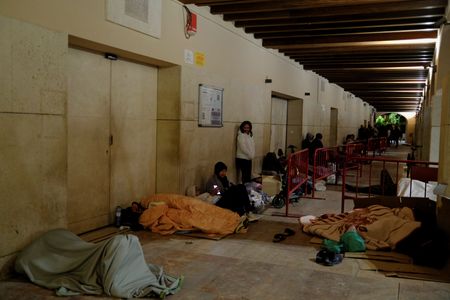
Spain’s immigration system has long struggled with significant backlogs. Thousands of migrants from countries such as Colombia and Senegal have waited years for asylum decisions, with more than 90% of those requests ultimately denied.
According to the think tank Funcas, those rigid policies have left roughly 840,000 undocumented migrants in a prolonged limbo — living and working in Spain off the books while waiting years to obtain other forms of residency.
CEAR Director Monica Lopez spoke at a press conference Monday, calling for longer-term solutions beyond the current effort. “This is an extraordinary programme, but there should be a structural measure to facilitate access to work and residence permits, in order to avoid creating groups of people living on the margins of society,” she said.