
JERUSALEM — The announcement of an interim peace agreement between the United States and Iran set off a wave of fury across Israel on Monday, with politicians, former leaders, and commentators from all sides of the political aisle calling it a disaster — and pointing the finger at Prime Minister Benjamin Netanyahu.
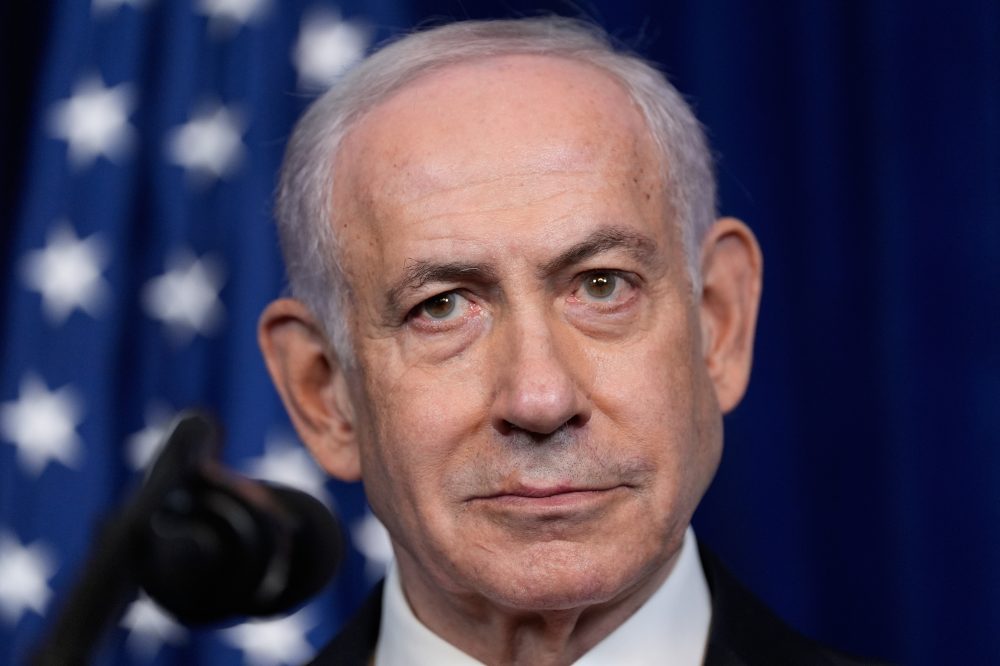
By early Monday evening, Netanyahu had not yet issued any public statement. However, government officials, political rivals, and media figures wasted no time condemning the deal, in what amounted to an informal public judgment on the prime minister’s leadership ahead of elections this fall.
The backlash has also put a spotlight on what critics describe as Netanyahu’s growing isolation — within his own country, across the region, and increasingly with the United States.
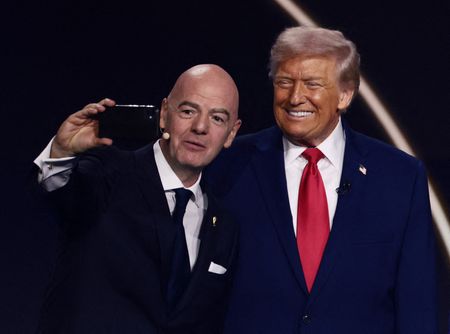
Those critical of the prime minister argue he drew President Donald Trump into the conflict with Iran while making promises about what the war could accomplish that proved unrealistic. Now, they say, Trump is pulling Israel out of the fight before it has achieved its objectives. Critics contend Netanyahu underestimated Trump’s willingness to sustain a lengthy war, was outmaneuvered by Iran at the negotiating table, and found himself increasingly pushed to the margins by other major players in the region.
Former Prime Minister and Netanyahu rival Ehud Barak was blunt in an interview with Israel’s public broadcaster on Monday. “Israel is paying the price of Netanyahu’s hubris and blindness, and the price of the manipulations that he tried to pull on Trump,” Barak said. “Iran emerged stronger; Israel emerged weaker. That is Netanyahu’s strategic responsibility. He failed.”
Yair Lapid, who is set to challenge Netanyahu in the coming elections, wrote Sunday that the deal was shaping up to be “one of the most shocking failures in Israel’s foreign and security policy … entirely registered in Netanyahu’s name.” He added: “It can be fixed, it must be fixed. Netanyahu can no longer fix it, we will do it.”
The U.S.-Iran agreement has left Israel in a difficult spot, partly because it sent troops into southern Lebanon after Iran-backed Hezbollah launched missiles at communities in northern Israel during the opening week of the war. Throughout the negotiation process, Iran insisted that any agreement to wind down hostilities on the U.S.-Iran front must also include a halt to Israeli military operations in Lebanon.
As talks moved forward and Trump sought an exit from the conflict, he became increasingly frustrated with Israeli strikes on Beirut, warning they could threaten the emerging agreement. Ultimately, the president chose to end the war with Iran even if it limited Israel’s freedom of action in Lebanon.
That decision has put Netanyahu in a precarious spot. His relationship with Trump may force him to scale back a military campaign in Lebanon that has been broadly popular among Israelis. On Monday, Defense Minister Israel Katz publicly pledged to keep Israeli troops in Lebanon.
Daniel Shapiro, a former U.S. Ambassador to Israel and a Distinguished Fellow at the Atlantic Council, warned that the situation could quickly spiral. “All Hezbollah has to do is get one rocket across into an Israeli town in northern Israel, and then the pressure on Netanyahu — which he’s already hearing from his own base and from the opposition … will ramp up,” Shapiro said. “It’s gonna be very hard to resist that. And that gives a lot of power to control this dynamic to Hezbollah, and essentially to Iran.”
Some of the more hawkish members of Netanyahu’s governing coalition have already condemned the peace deal and are pushing the prime minister to press ahead with the Lebanon campaign — even at the risk of angering the United States and potentially unraveling the broader agreement. Israel’s ultranationalist national security minister, Itamar Ben-Gvir, posted on X: “We must not compromise on anything less than the dismantling of Hezbollah.”
While the deal left the fate of Israel’s Lebanon operation uncertain, it also constrained Netanyahu before he could reach his stated war goals against Iran. Netanyahu and the U.S. launched the war on February 28 with the stated objective of eliminating Iran’s nuclear ambitions. But nearly four months later, after Iran withstood an intense aerial assault, analysts and critics say Tehran has actually emerged in a stronger position. Its network of proxy forces remains intact and is still capable of firing missiles into Israel.
Iran has also managed to assert control over the Strait of Hormuz, one of the world’s most strategically vital waterways, disrupting global trade and driving up the cost of basic goods worldwide. Meanwhile, the extent of damage to Iran’s nuclear infrastructure and ballistic missile program remains unclear.
Political commentator Anna Barsky wrote in Ma’ariv, a major Hebrew-language daily newspaper, that “Israel believes that the war delayed the Iranian nuclear program, but did not change its objectives.” She noted that Israeli officials are also concerned that under the terms of its deal with the U.S., Iran could receive a significant infusion of cash.
Three regional officials, speaking on the condition of anonymity due to the sensitivity of the negotiations, said the agreement is expected to include a phased easing of sanctions and the release of frozen Iranian assets.
Yair Golan, a center-left party leader and former general, posted on X: “Trump signs an agreement that funnels billions to the Ayatollahs’ regime, leaves the nuclear infrastructure intact, preserves the ballistic threat as is, and throws a lifeline to the murderous regime in Tehran.”