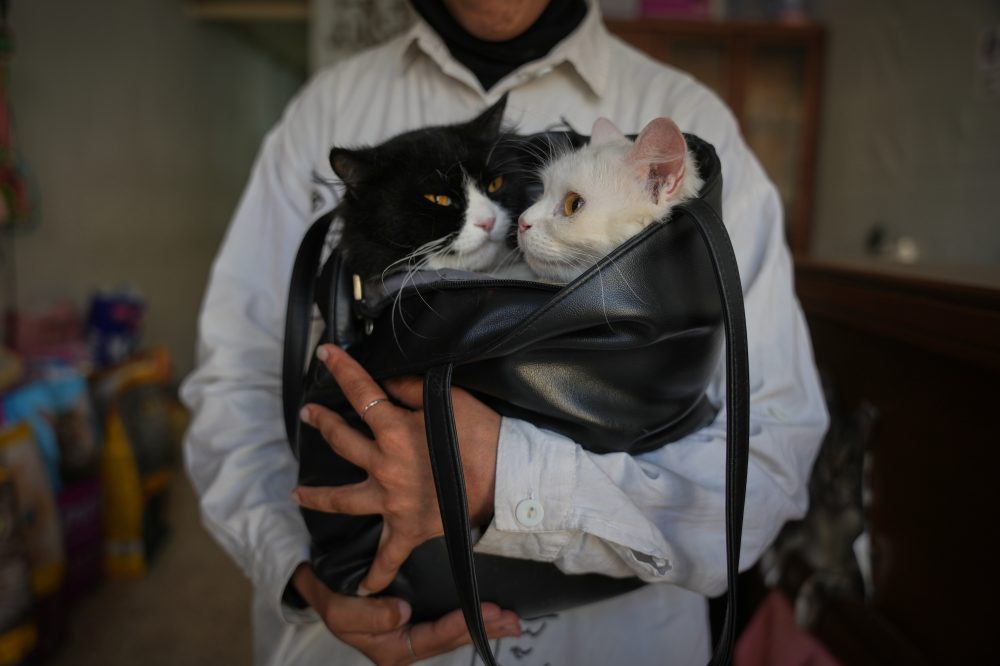

GAZA CITY, Gaza Strip (AP) — For pet owners living through the ongoing conflict in Gaza, caring for their animals has become an overwhelming challenge, with veterinary supplies running dangerously low and food for pets nearly impossible to come by.
Across a territory home to more than 2 million people, only two veterinary clinics serving household pets are still functioning. A small number of other facilities focus mainly on livestock. At one modest clinic in Gaza City, staff have continued this month to offer basic medical care and grooming for cats and dogs, and have even treated other animals, including a rooster.
While COGAT — the Israeli military body responsible for coordinating civilian affairs in Palestinian territories — has stated that it approves the entry of animal vaccines into Gaza, local veterinarians say that many essential medicines and vaccines used to prevent and treat illness simply cannot be found. The shortages have proven fatal for many animals. Veterinarian Dr. Motasem Qadoura said numerous pets have died as a result.
One visitor, Saja al-Hattab, came to the clinic with her cat, Lulu, for a routine checkup. She described the desperate measures she took during the worst periods of hunger over the past two years, sometimes feeding Lulu nothing more than bread soaked in water because nothing else was available.
“Like us, cats also were being starved,” she said.
Dr. Qadoura echoed her account. “We experienced famine in Gaza and during that period, unfortunately, pet owners had to search for alternatives to feed their pets, and some of these alternatives weren’t suitable,” he said. “We saw cases of food poisoning caused by food like onions.”
Another pet owner, Heba Hathat, shared that her cat has not been vaccinated and that she has been unable to locate affordable cat litter or pet food.
This report is based on a photo gallery curated by AP photo editors.