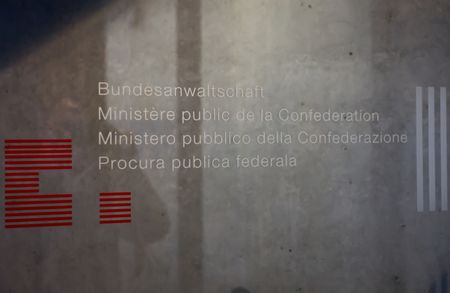

BERN, Switzerland — Switzerland’s top financial crime prosecutor is sounding the alarm over outdated laws that are letting defendants in major cases run out the clock, according to the country’s attorney general.
Last month, a Swiss criminal court was forced to drop charges against a former Credit Suisse compliance executive tied to a scandal that devastated Mozambique’s economy roughly ten years ago. The money-laundering case had simply exceeded its statute of limitations.
A similar situation played out in April, when Switzerland halted a trial involving Gulnara Karimova, the daughter of Uzbekistan’s late president Islam Karimov. She had been accused of leading a criminal organization that allegedly funneled hundreds of millions of dollars into Swiss bank accounts.
“In the end, we often have a race against time,” said Attorney General Stefan Blaettler, who has recently secured bribery convictions against commodity trading firms Trafigura and Gunvor, as well as money-laundering penalties against several banks.
Blaettler, a lawyer and former Bern cantonal police chief, made cracking down on white-collar crime a priority when he assumed office in 2022. While he has achieved some results, he continues to face obstacles rooted in regulatory gaps.
Rules that were written before the digital age allow defendants to seal evidence and contest the sharing of information with prosecutors in other countries. This delays access to massive amounts of digital data while the statute-of-limitations deadline continues to count down, Blaettler explained in a recent interview.
“People rightly ask us why our criminal proceedings sometimes take 15 years,” Blaettler said. A report from the Office of the Attorney General pointed to an investigation of Swiss private bank J. Safra Sarasin in a corruption scandal connected to Brazil’s state oil company Petrobras, in which evidence stayed sealed for more than five years before the bank was ultimately fined in 2025.
Blaettler noted that in roughly 90% of cases where defendants request evidence sealing, prosecutors are ultimately found to be in the right — but only after lengthy delays. “I find that untenable,” he said.
The Swiss government is currently weighing whether to work more closely with the European Union to speed up the seizure of digital evidence, according to the justice ministry. That initiative could help resolve the timing issues prosecutors have identified, the ministry added.
However, Swiss lawmakers have weakened recent government proposals aimed at preventing financial crime, arguing that the country must remain competitive as a global wealth management hub while rival financial centers continue to grow.
According to Public Eye, an advocacy and research organization, the political will to enforce financial crime laws has grown under Blaettler, but legislators remain unwilling to fix the legal gaps. “The right-of-centre majority in parliament is fighting tooth and nail any strengthening of the tools to combat white-collar crime, which is slowing the implementation of reforms that have long been identified,” Public Eye stated. Some reforms addressing due diligence standards for certain high-risk advisory services are set to take effect in October.
Transparency International, an anti-corruption watchdog, noted that Switzerland’s strong economy, stable currency, and political reliability continue to make it a target for financial crime. “Money launderers also seek security,” said Urs Thalmann, who leads the organization’s Swiss chapter. “We believe that only the tip of the iceberg ever reaches criminal prosecution.”
Over the past decade, Switzerland has moved away from banking secrecy practices that once drew illicit funds, and it now automatically shares client financial data with tax authorities in dozens of countries.
Blaettler said money-laundering prosecution has improved thanks to a steady flow of suspicious activity reports from Switzerland’s financial crime unit, adding that international cooperation is essential to achieving results.
Last year, Switzerland joined a trilateral anti-corruption task force with Britain and France to coordinate cross-border investigations. Blaettler noted that technical cooperation with the United States continues to function well.
“We have other cases in the pipeline that will come in the near future, either in the form of indictments or penalty orders,” he said. “I cannot say in advance how long such proceedings will take.”