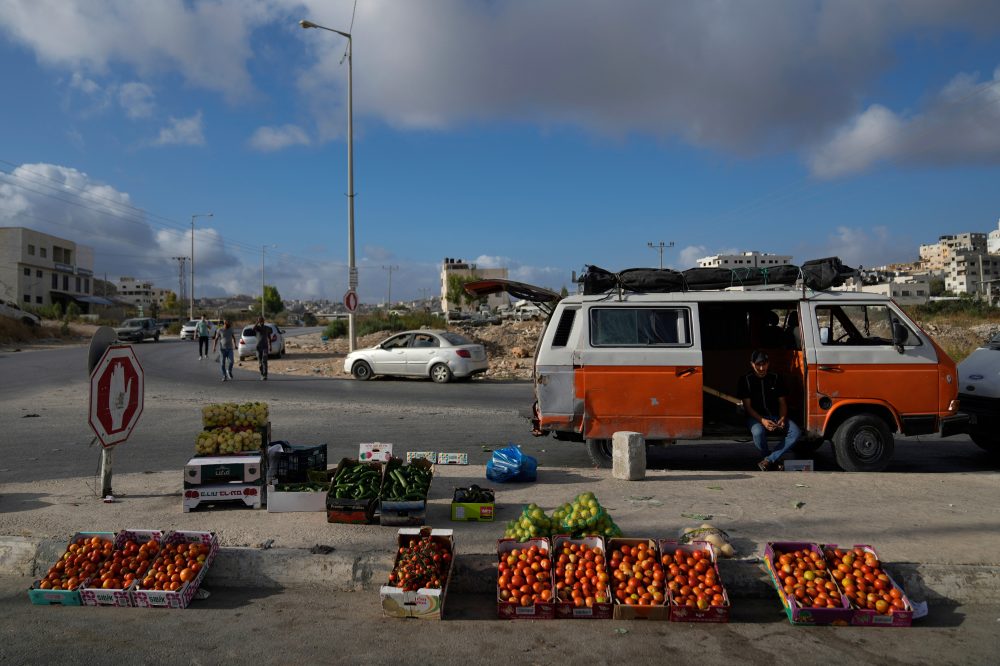

RAMALLAH, West Bank — A new report from a prominent conflict monitoring organization warns that the Palestinian economy in the occupied West Bank is on the brink of collapse, driven by a series of Israeli restrictions that severely limit opportunities for the millions of Palestinians living under long-standing military occupation.
The International Crisis Group released findings showing that Israeli measures — including limits on movement, the withholding of tax revenue, and land seizures — are not only strangling the Palestinian economy but also stoking dangerous instability in the region.
The report states bluntly: “The economic conditions necessary for any Palestinian future other than permanent subjugation are being dismantled.”
Researchers gathered information through interviews with Palestinian business leaders, mayors, and government officials to document the financial strain being felt by companies, families, and the internationally supported Palestinian Authority, which oversees cities and towns throughout the West Bank.
The report suggests Israeli policies reflect a deliberate push to “advance Israel’s own declared goal of extending its control and preventing a Palestinian state from emerging.”
Decades of military occupation have taken a toll on Palestinian economic life, with checkpoints and military gates restricting the flow of people and goods. Palestinians have long depended on employment and imports connected to Israel while facing limitations on land use and trade. The approximately 3.4 million Palestinians currently living in the West Bank are dealing with an unemployment rate of around 30%, and their economy has contracted sharply since the outbreak of the Israel-Hamas war.
Following Hamas’ October 7, 2023 attack, Israel cancelled work permits for the vast majority of the nearly 200,000 Palestinians who had previously been employed in Israel. While Israeli officials pointed to security concerns as the reason, the move effectively stripped the Palestinian economy of close to $400 million per month — nearly one-quarter of its total economic output.
Today, many businesses are struggling to meet payroll and pay suppliers, with private sector companies reporting an estimated 50% drop in activity compared to before the war. The report attributes this to “tightened movement controls, disrupted supply chains and heightened uncertainty.”
“Palestinian society survives, but in a state of grinding immiseration. Absent remedies, the result will likely be a loss of hope and a growing risk of instability and greater violence,” the report warns.
The Palestinian Authority, which serves as the West Bank’s largest employer and provider of public services, sits at the center of this crisis. Government agencies have taken on heavy debt just to remain operational, while public workers go without pay and basic infrastructure — including roads and water systems — continues to deteriorate. The failure to fund public services is leaving patients unable to access hospital care and children out of school.
The Palestinian Authority relies heavily on tax revenues collected on goods coming into the West Bank through Israeli ports, since Palestinians have no control over their own borders. However, under hard-line ministers within Israeli Prime Minister Benjamin Netanyahu’s government, Israel has withheld billions of dollars in tax funds it owes and has made unilateral deductions from those amounts. No transfers have occurred since May 2025.
Joost Hiltermann, the International Crisis Group’s special adviser for the Middle East and North Africa and the report’s author, said the world’s attention has been largely consumed by more than two years of war in Gaza, causing many to overlook the West Bank — even though the changes happening there could have broader consequences for Palestinians’ long-term aspirations.
Hiltermann noted that Israeli officials, who hold significant sway over many of the policies discussed in the report, declined to be interviewed. He did, however, point to internal disagreements within Netanyahu’s government, with settler leaders and security officials frequently at odds over how to handle the Palestinian economy.
“The security establishment doesn’t want the Palestinian Authority or economy to collapse because they would have to assume the burden of governing the territory in full after essentially destroying it,” Hiltermann said.