
BRUSSELS — Ukraine took a historic step Monday by formally opening negotiations to join the European Union, launching what is expected to be a years-long process requiring major political and institutional reforms — all while the country remains at war with Russia.
Ukrainian Deputy Prime Minister Taras Kachka attended an intergovernmental conference in Luxembourg to begin discussions on the first set of policy areas, a necessary step toward bringing Ukraine’s laws, standards, and values in line with those of the EU.
For Ukraine, joining the EU represents a key “security guarantee” for a stable future once the fighting ends. While NATO membership would be considered an even stronger guarantee, the Trump administration has made clear that is not on the table, and many nations are reluctant to extend membership to a country still engaged in active conflict.
Moldova also formally launched its own EU membership bid on Monday. Russia has long worked to keep Moldova within its sphere of influence, and last year was accused of running a large-scale disinformation campaign powered by artificial intelligence during that country’s elections.
Any nation seeking EU membership must complete negotiations across 35 policy areas — covering everything from agriculture and energy to trade and taxation — a process that typically spans many years.
Monday’s conference opened five key policy chapters, grouped into what the EU calls “clusters,” that address the foundational values of the bloc. These include the rule of law, fundamental rights, and the functioning of democratic institutions. Specifically, the chapters cover the judiciary and fundamental rights, justice, freedom and security, public procurement, statistics, and financial control.
This particular cluster carries special significance for several EU member nations that have expressed concern about Ukraine’s commitment and capacity to combat corruption. Last month, two national anti-corruption agencies named Ukrainian President Volodymyr Zelenskyy’s former chief of staff as an official suspect in a major corruption investigation, though officials stressed that Zelenskyy himself is not under suspicion.
The talks are unfolding at a moment when several European nations have been pushing hard to fast-track Ukraine’s path into the EU, viewing the country as essential to the continent’s broader security and having already invested heavily in supporting its military.
Last month, German Chancellor Friedrich Merz urged fellow EU leaders to consider offering Ukraine “associate membership” as a way to inject new momentum into peace negotiations aimed at ending more than four years of war with Russia.
France and the Netherlands have also floated alternative arrangements that could bring Ukraine closer to the EU more quickly, though without granting full membership rights.
However, EU officials and other countries currently in the membership queue have pushed back, insisting the process must be merit-based and lead to nothing short of full membership.
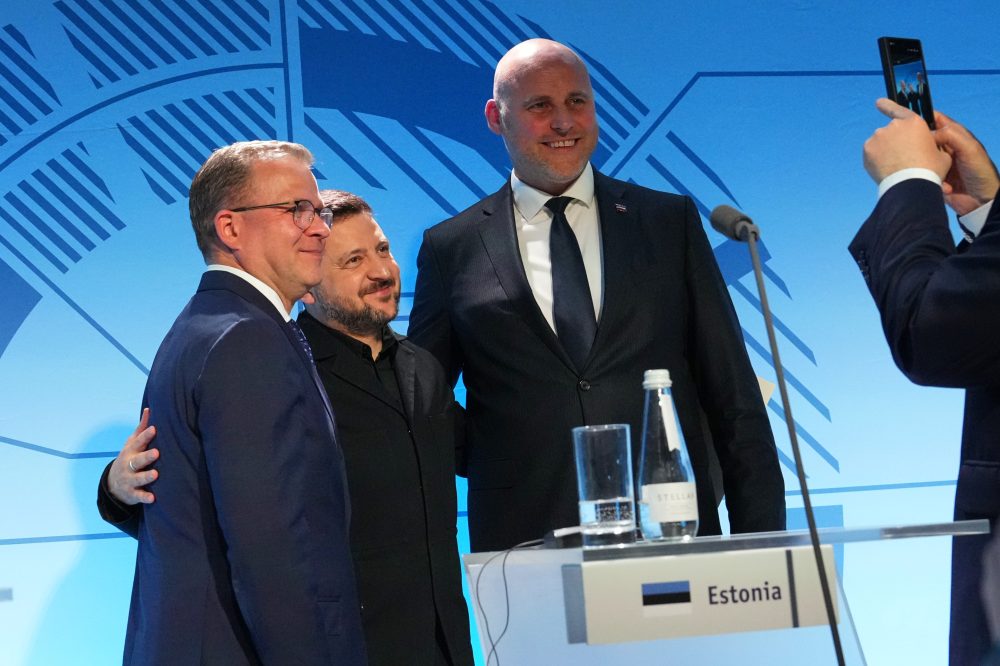
Finland’s Foreign Minister Elina Valtonen emphasized that completing the full reform process is essential, saying membership is not simply about getting a “club card for the EU.” Speaking to reporters in Luxembourg ahead of the ceremony, she said what Ukrainians “truly are after is freedom, democracy and a transparent market economy without any corruption.”
Ukraine’s path to EU membership had previously been blocked by Hungary, under its strongly nationalist former Prime Minister Viktor Orbán, who was widely seen as Russia’s closest ally within the EU. Orbán repeatedly used voting rules that require unanimous agreement among all 27 member nations to delay progress on sanctions, policy decisions, and political statements.
The European Commission had frozen billions of euros in funding for Hungary over concerns about democratic backsliding under Orbán, and worries remain about the damage a single dissenting government can inflict by using its veto power.
Swedish Foreign Minister Maria Malmer Stenergard stressed the need for vigilance going forward. “We need to be very cautious in the future and make sure that these are countries that really want to be a part of Europe, and a part of the European Union, and are willing to work with us,” she said. “In order for the EU to be really strong, we need to make sure that this doesn’t happen again.”